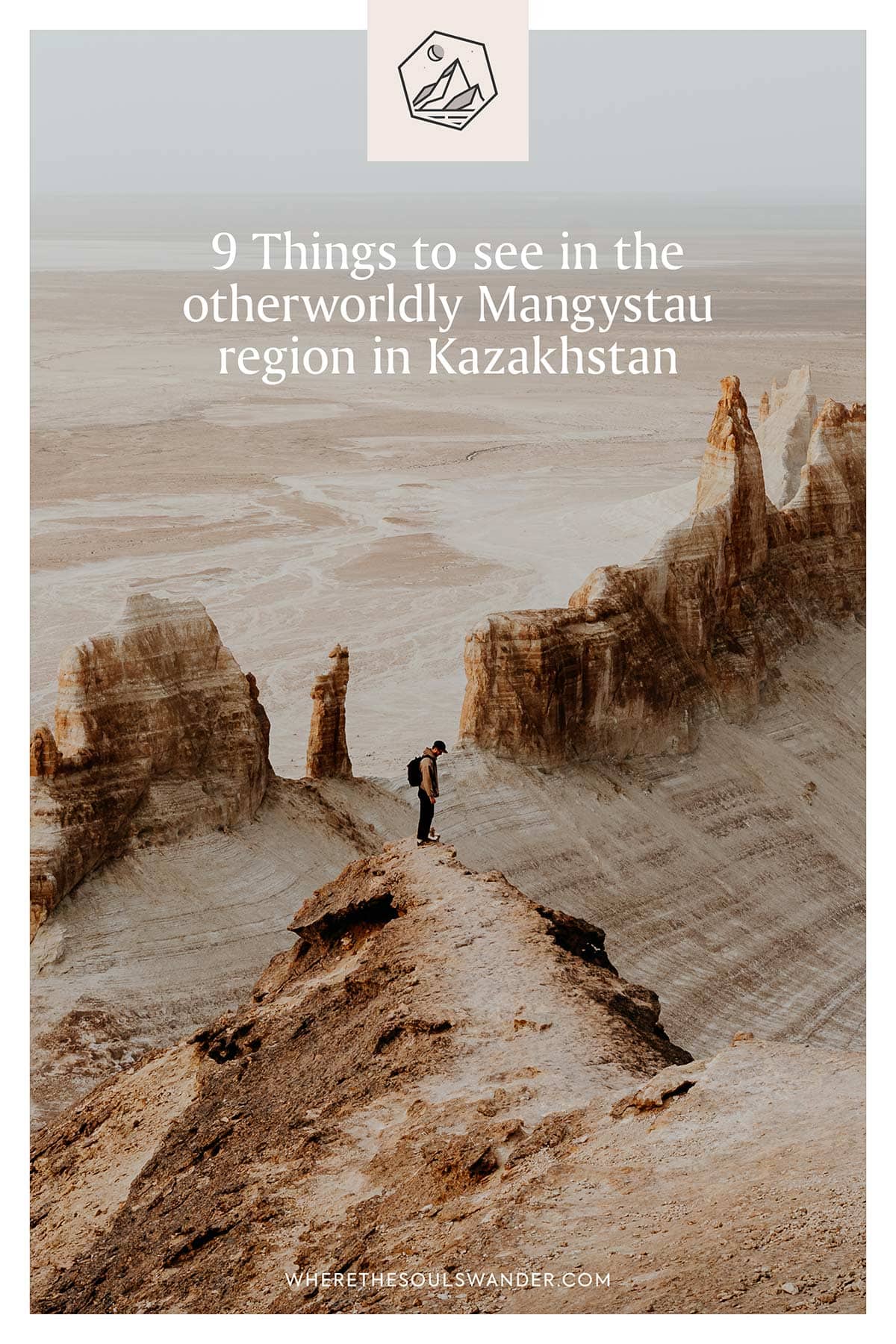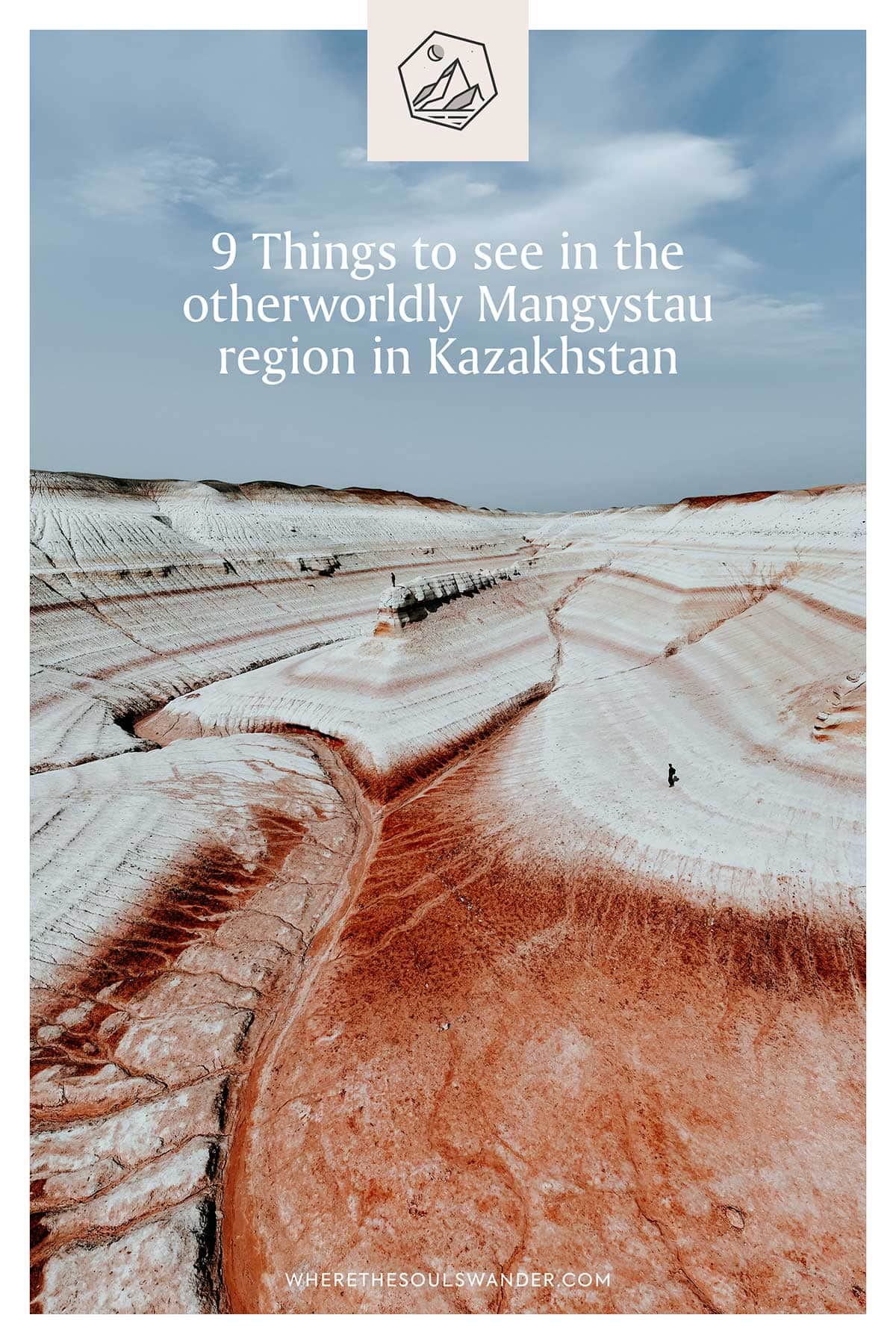

Rarely spoken of, sheer in its natural beauty, and an unrivalled ambience that feels as though one is visiting a completely different planet from the one we call home, Mangystau is unbelievable.
Situated next to the Caspian Sea in the far west of Kazakhstan, the stunning Mangystau region is defined by surreal landscapes, viewpoints that leave even the most seasoned of travellers in awe – yup, guilty as charged – and a mysterious atmosphere that is hard to put into words.
It’s a destination that has off-road adventure written all over it, and one where every new exploration makes you question how it’s possible to exceed the magnificence of the previous one.
From the stunning rock teeth of Boszhira to the perfectly-shaped stone balls of Torysh, the endless salt pans of Tuzbair to the insane colours and textures of both Kyzel Kup & Mount Bokty, the nature of Mangystau is truly insane, and like nothing I have ever witnessed before.
While the amazing Mangystau region has gained quite some traction over the past few years, it still remains largely untouched, meaning it’s somewhat challenging to explore on your own – that’s where this in-depth guide comes in handy.
Here are 9 unforgettable things to see in Mangystau, Kazakhstan, including my view on how to visit, when to visit, and how to get there, as well as a few tips to overcome potential challenges.
If you choose to use any of the links on this page, I receive a small commission at no extra cost to you. By using these links, you’ll have a direct impact on WTSW and support me to continue to create free insightful travel content for you. If you find any of my tips useful, you can support me by buying a virtual coffee here.
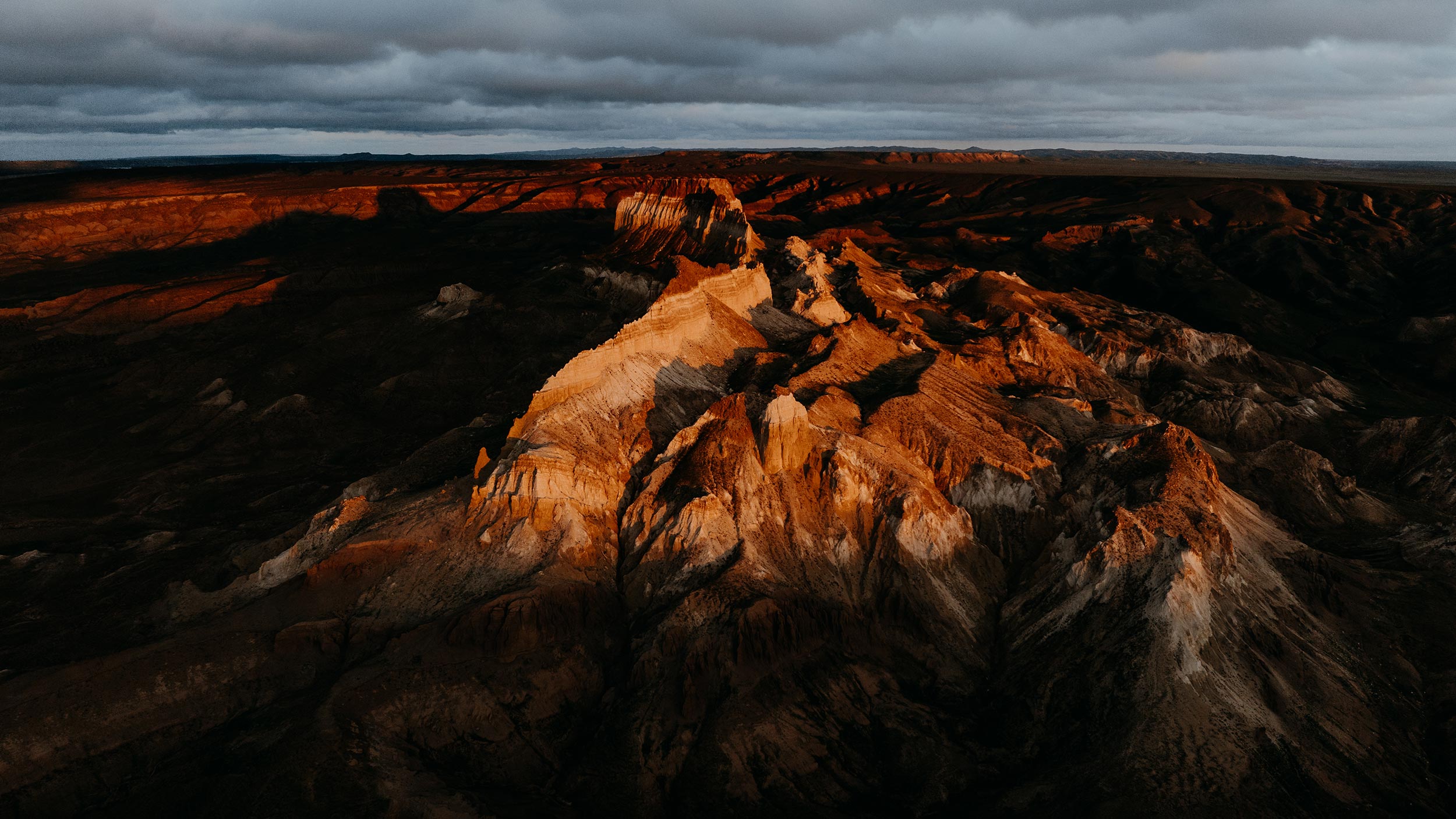
Where is Mangystau
Mangystau is located in the very southwest of Kazakhstan and is bordered by Uzbekistan, Turkmenistan, and the Caspian Sea.
The main point of call is Aktau, a city known mostly for its oil resources, yet it also serves perfectly fine as the gateway to all the natural beauty Mangystau has to offer.
Aktau is located about 1500 kilometres from Almaty, and is easily accessible by air via a 4-hour flight.
Where to stay in Mangystau
Since the Mangystau region is both uncharted and as remote as can be, there are barely any accommodation options found here, besides the many hotels in the coastal city of Aktau.
The above means that those who wish to explore the beautiful landscapes of Mangystau should prepare themselves for an adventurous camping trip.
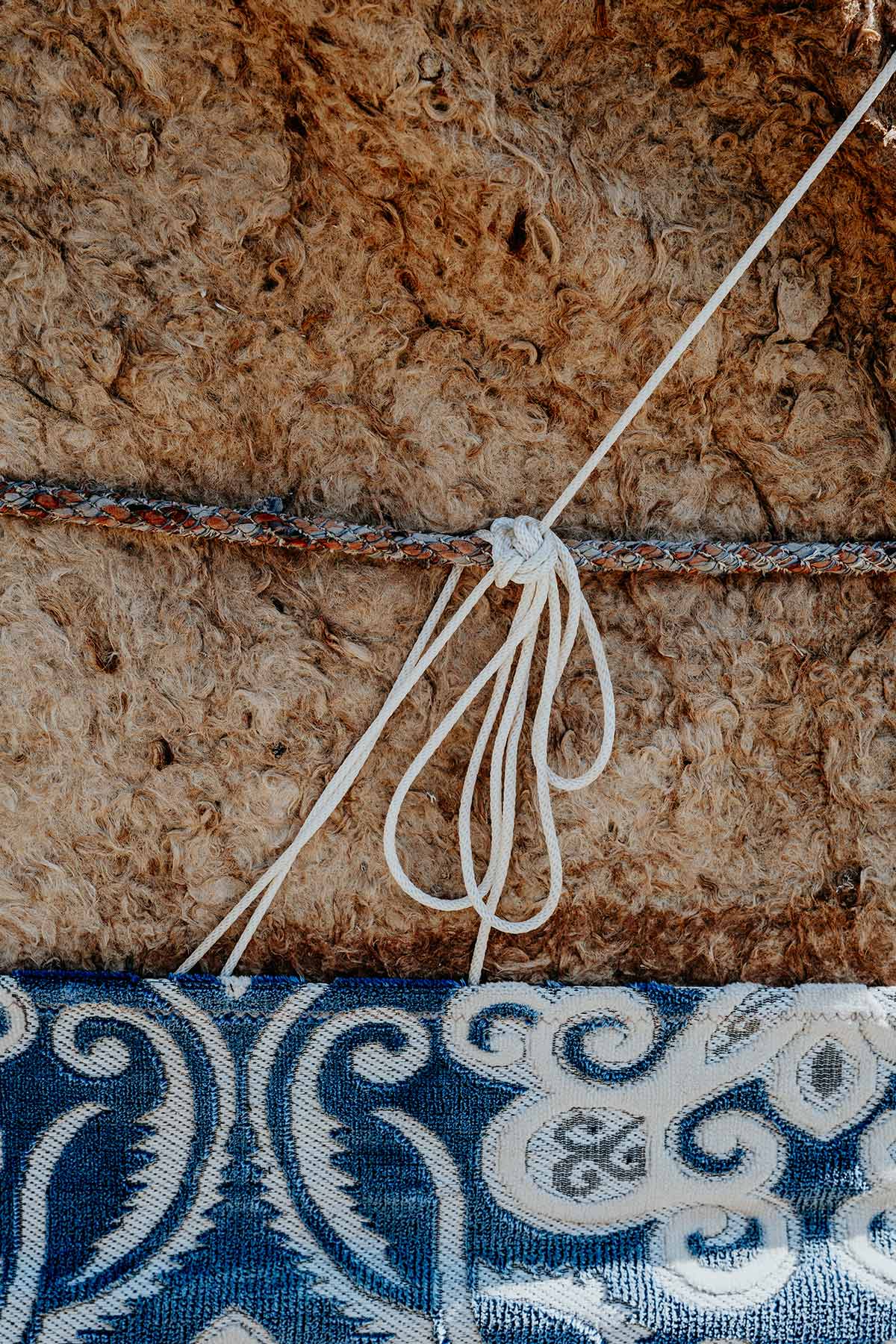
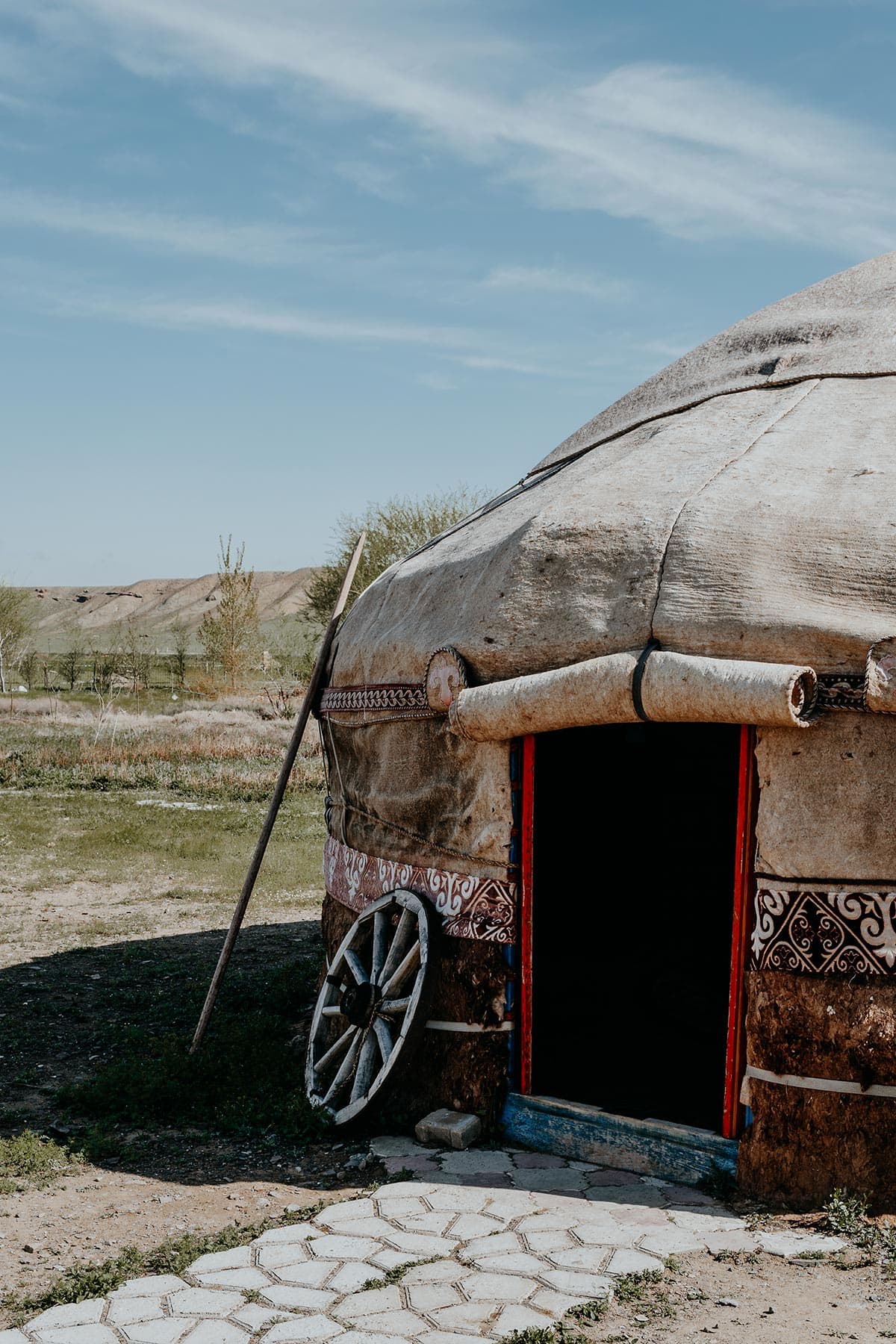
While accommodations are limited, there are often a few yurt camps set up along the region’s highlights, but from my experience, none of those are published online and therefore only booked on the spot.
Therefore, camping gear is truly essential, so you can set up camp where and whenever you please. If you do find a yurt camp along the way, it’s a welcoming bonus, as the Kazakh locals are some of the best hosts you can imagine.
Given that camping in general is not the most comfortable experience, I chose to spend one night at MIRAMAR Apart Hotel & SPA, an affordable hotel with a great spa and gym, to get a good night’s rest before I set out on my adventure road trip.
If you would like to do the same, or book a rejuvenating stay before leaving Mangystau, here are a few of my favourite hotels in Aktau.
Renaissance by Sulo | Caspian Riviera Grand Palace Hotel | Turan Hotel
How to explore Mangystau
As one of the most isolated regions in Kazakhstan, where tourism is far from developed, a successful trip exploring Mangystau will require a unique set of skills and needs.
To help you determine how you’d like to explore, I’ve listed two options below:
A self-driven road trip
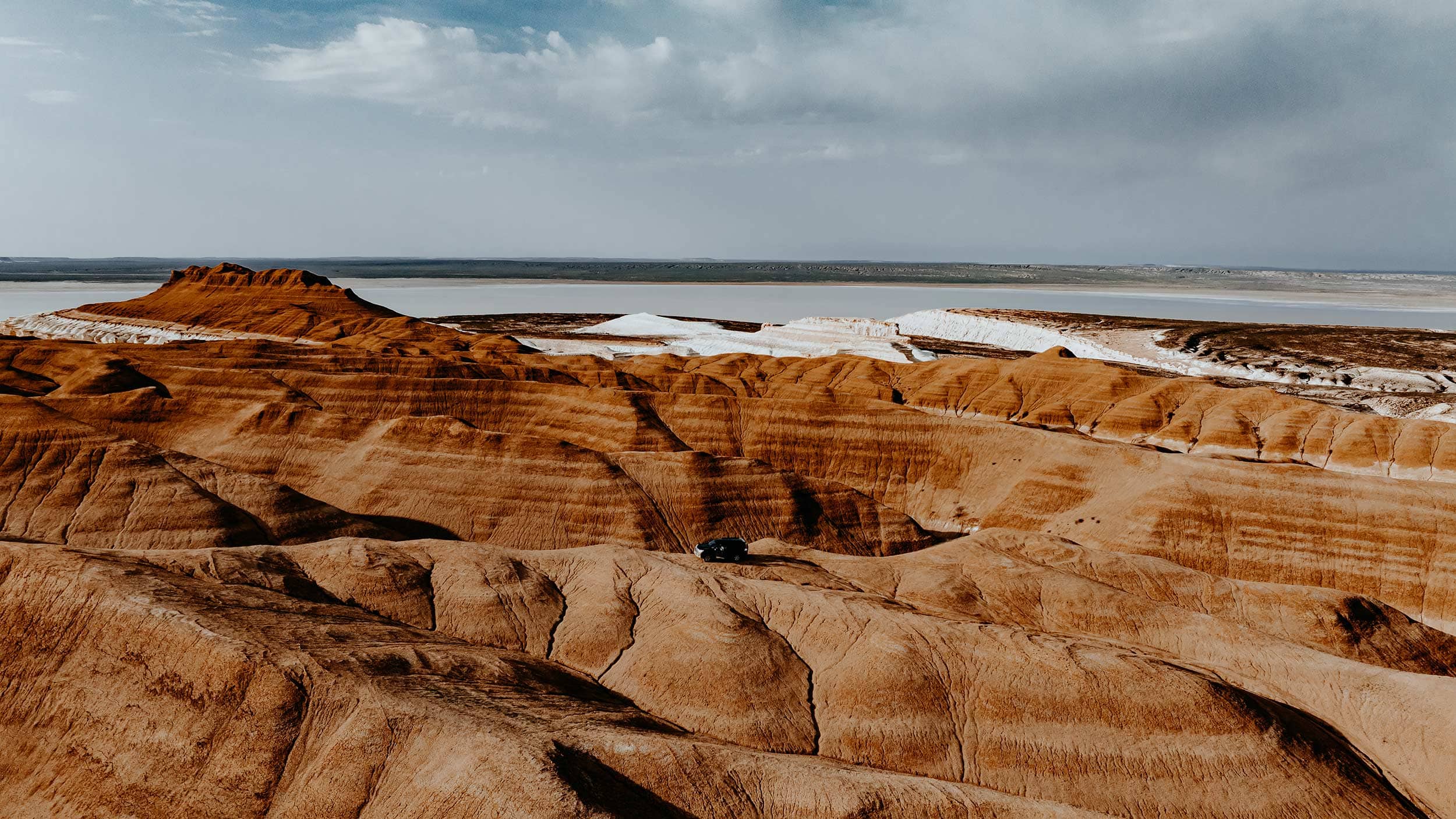
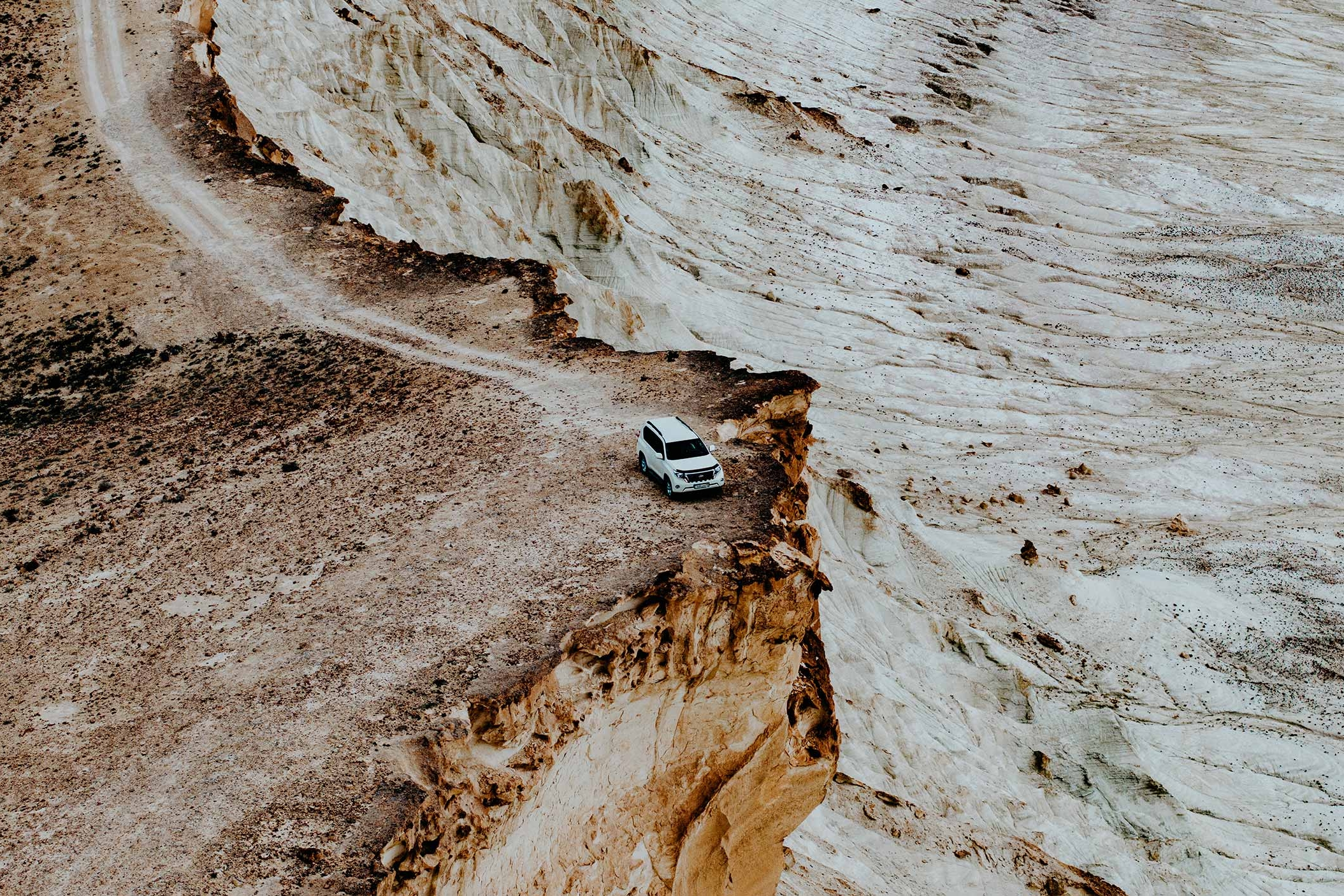
Mangystau is extensive, untouched and without a question, made for road trip adventures.
However, doing a road trip here will involve significantly more preparations compared to other countries – trust me, I’ve done quite a few, and this one was different.
First, there is your rental car, which can be quite a hassle if you don’t speak the Russian language – you will eventually get this sorted, but take into account that it will take you quite some time, plus there’s a high chance that the car will not be as described.
Secondly, you will notice that the navigation side of things will not always work out as planned in Mangystau (and Kazakhstan in general), as both Google Maps and Maps.me are often outdated. In some cases, the roads to your destination will not even be marked on the map.
Alternatively, 2GIS will do a much better job, yet this navigation app is not available in every country.
Last but not least, there is accommodation, which is found at just one place in the region, meaning most of your trip will involve setting up camp near the natural highlights, which, despite being a challenge, is truly a spectacular experience if you ask me.
9 Incredible things to see in Mangystau
1. The utterly stunning Boszhira tract
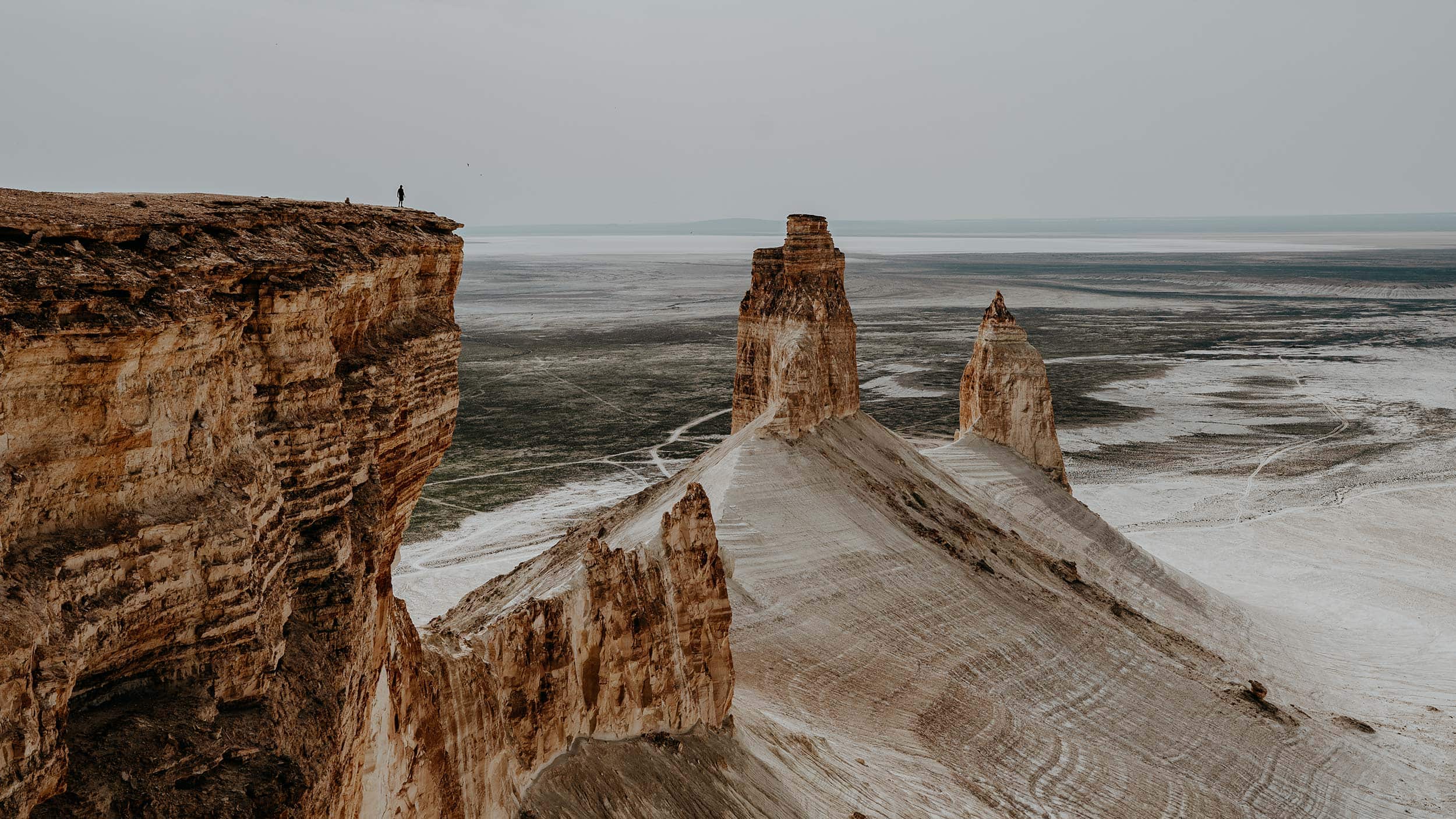
Easily the most famous sight in Mangystau, Boszhira is what I would refer to as the Dolomites on steroids.
Spread over 51,800,000 m², the Boszhira tract is immense, with lots of otherworldly natural highlights, the most stunning of viewpoints, and insanely-shaped rock structures dotted throughout.
Famous sights include the Azu Tisteri rock teeth, Ushkir Tau mountain, Boszhira valley, Borly tau, and Mount Yurt, to name but a few.
Personally, I made it to the Ushkir Tau viewpoint first, and due to its monumental beauty, I was left under the impression that this was the main draw here, not knowing that the famous Azu Tisteri rock teeth were waiting for me the next morning.
Another thing that adds to Bozshira’s charm is the fact that all this splendour comes without the huge crowds often experienced at the world’s other, more popular, natural scenery.
You see, during my time here, I’ve stumbled on only three other people, which is hard to believe given Boszhira’s sheer natural beauty.
Yes, you read that right, only three – which is just insane!
Where | Boszhira
2. Airakty Shomanay – The Valley of Castles
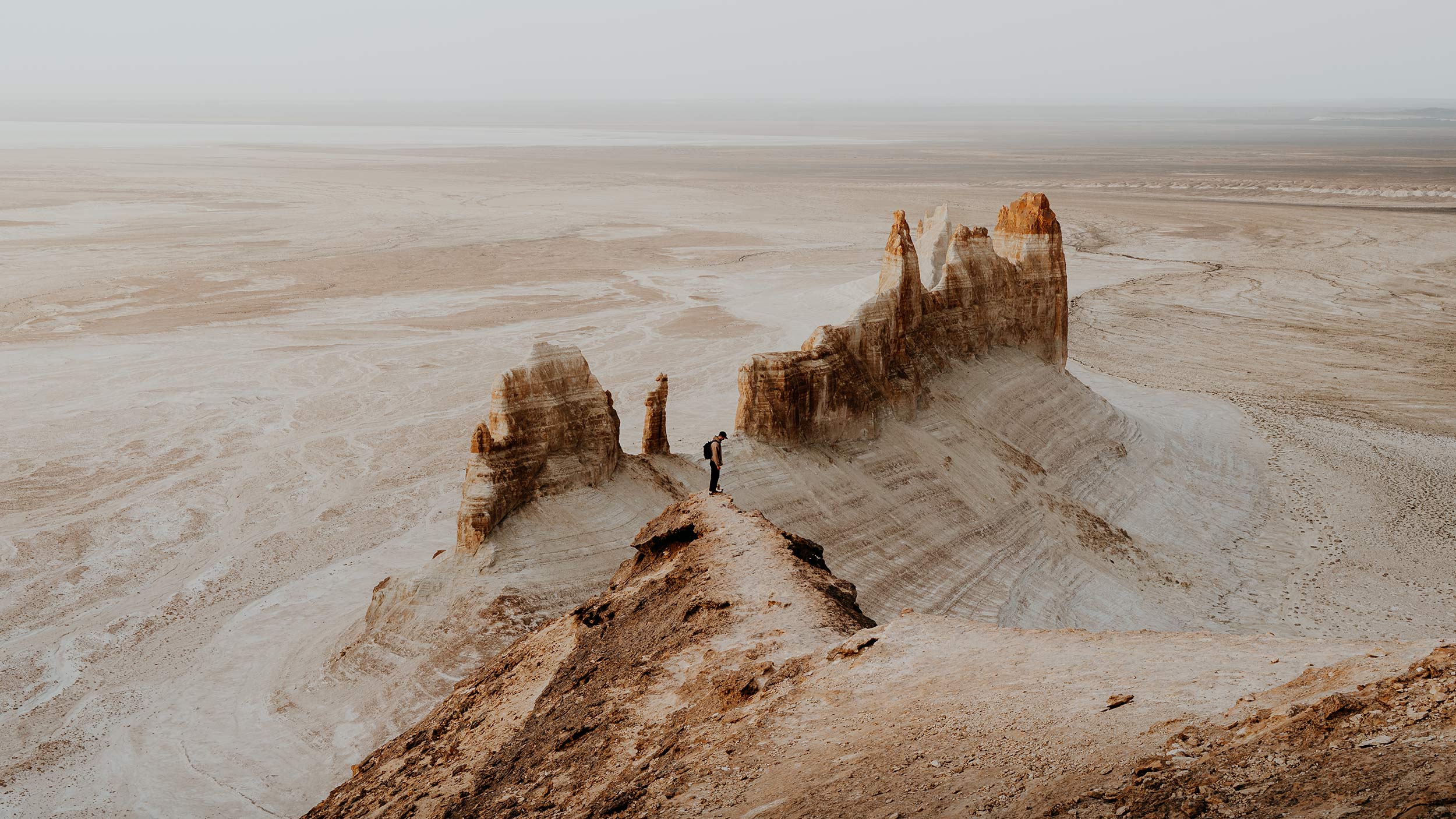
Without a doubt, among the most magical places in Mangystau, the rough mountain ridges of Airakty Shomanay rise high above the flat, wind-whispered desert plains of Mangystau.
It is, therefore, not a surprise that Airakty is often referred to as the Valley of Castles, as these iconic ridges give the impression that they are the remnants of time-worn strongholds that were left to decay in the simmering heat of the Kazakh steppe for centuries.
Which is basically what happened, given thousands of years of weathering and erosion formed Airakty Shomanay in the peculiar shapes we behold today.
However, to me, these unusual, spire-like mountain ridges look more like how I imagine the back of a dinosaur would have been when they were still roaming around the Earth – absolutely spectacular.
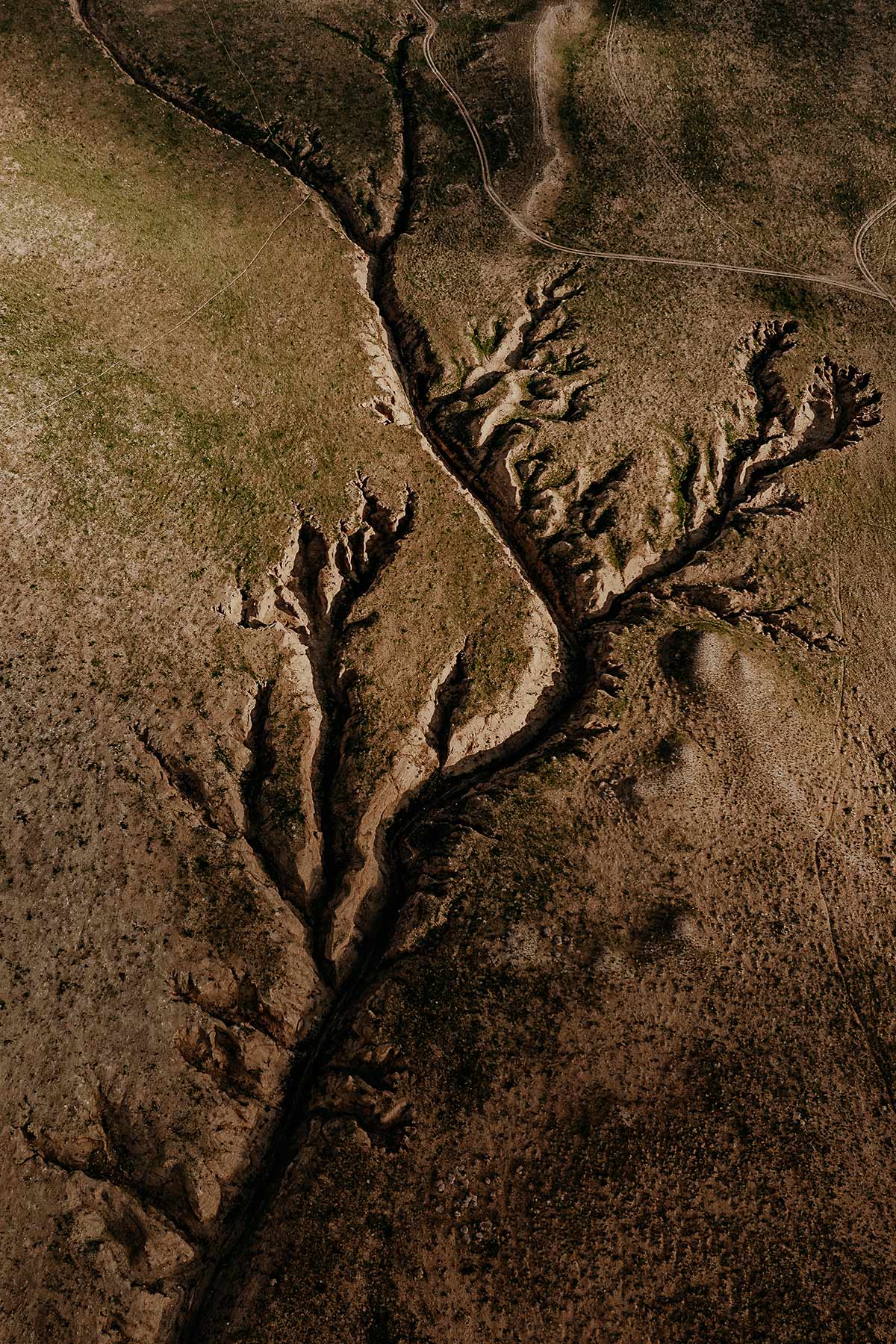
Besides these fascinating mountains, the extensive Airakty Shomanay area is also home to several dried rivers that look like the roots of a tree if you look at them from above – trust me, if you have a drone, you will be left in awe when you see those for the first time.
Where | Airakty Shomanay
3. The unique Tuzbair Salt Marsh
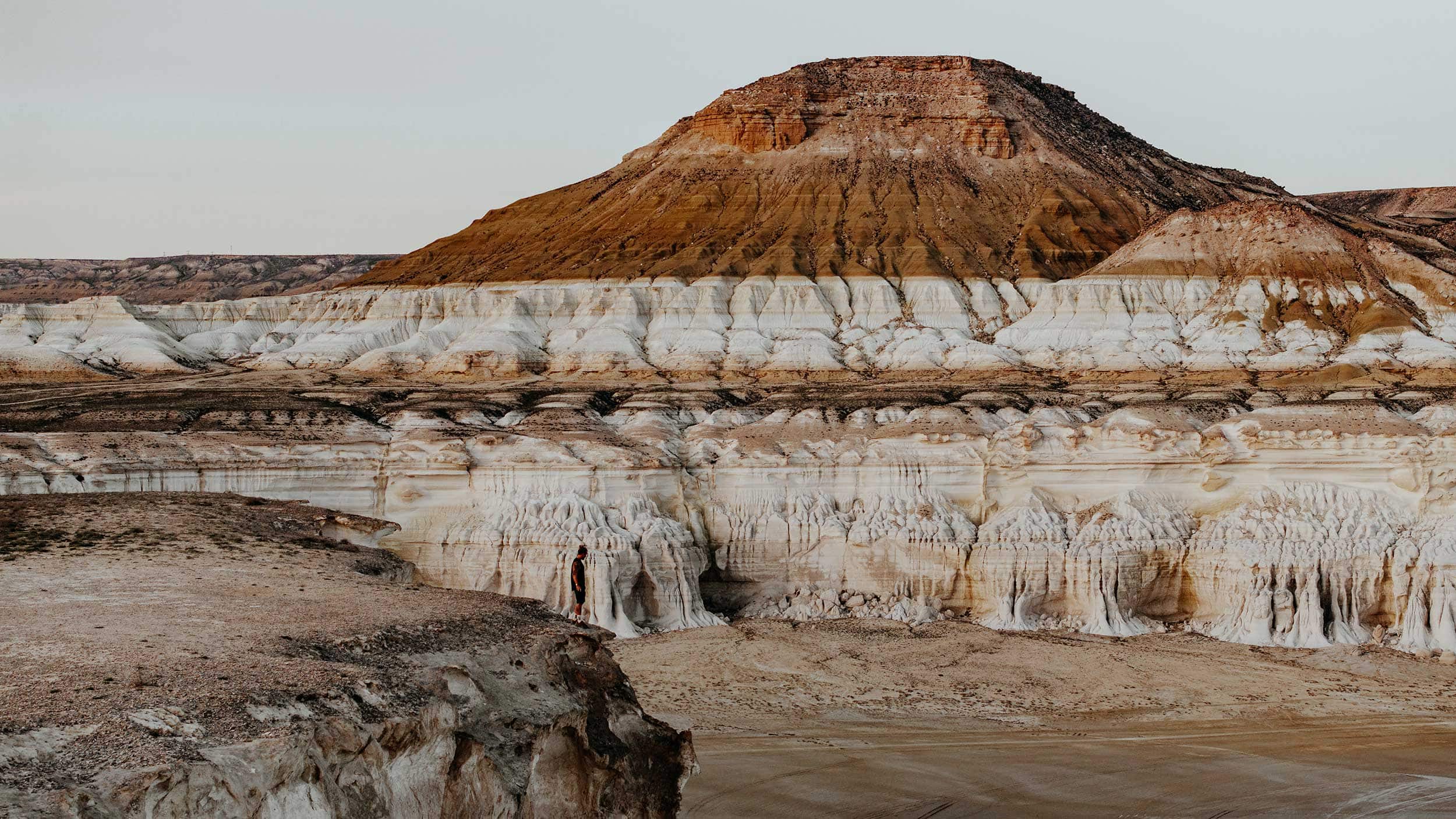
Nestled in the heart of the majestic Ustyurt plateau, Tuzbair’s magnificent landscape was once, 250 million years ago to be exact, hidden deep on the bottom of the Tethys Ocean.
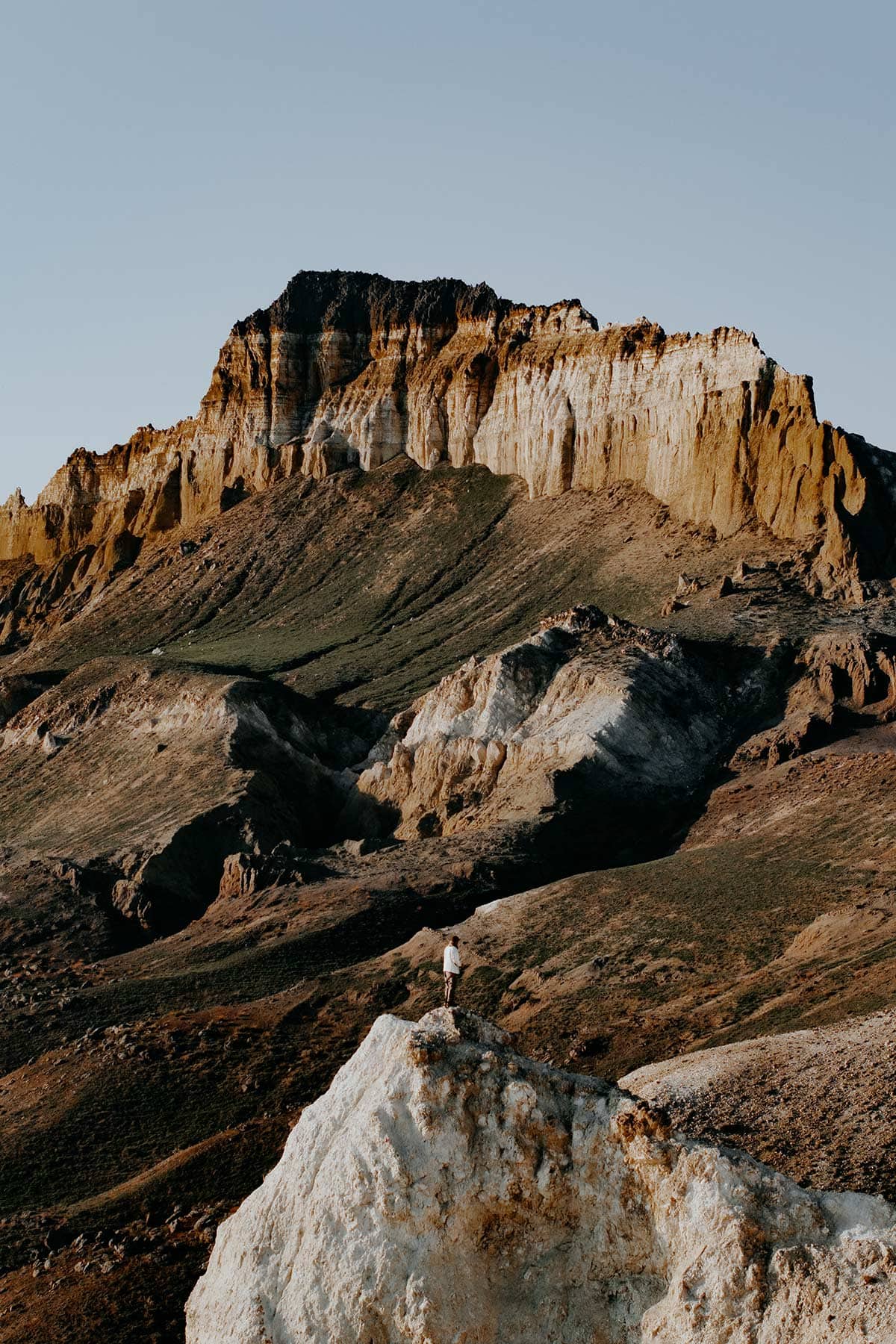
Today, Tuzbair has become one of the most fascinating landscapes in the region, as it’s marked by incredible surfaces, chalky cliffs, and salt flats as far as the eye can see.
For me, Tuzbair is breathtaking, as it is quite unusual and enchanting in every sense of the word.
It’s remote, extensive, and in a league of its own from an aesthetic viewpoint, with a terrain that provides only the craziest of textures, and heaps of interesting nooks and crannies to explore, which makes it a playground for photographers, geologists, and adventurous travellers alike.
It is worth mentioning that you can visit both the cliffs and the beach; both are, in my opinion, truly exceptional, so make sure you take enough time to uncover the entirety of this amazing area.
I would advise planning at least 2 days at the Tuzbair Salt Marsh, as finding the entrance to the beach could be quite a challenging task, meaning you might waste some precious time on that.
Where | Tuzbair Salt Marsh
4. Viewpoint over the Kyzylkup area
As a landscape photographer, I oftentimes seek spots beyond the well-known highlights, which in the case of Mangystau resulted in the discovery of this amazing viewpoint.
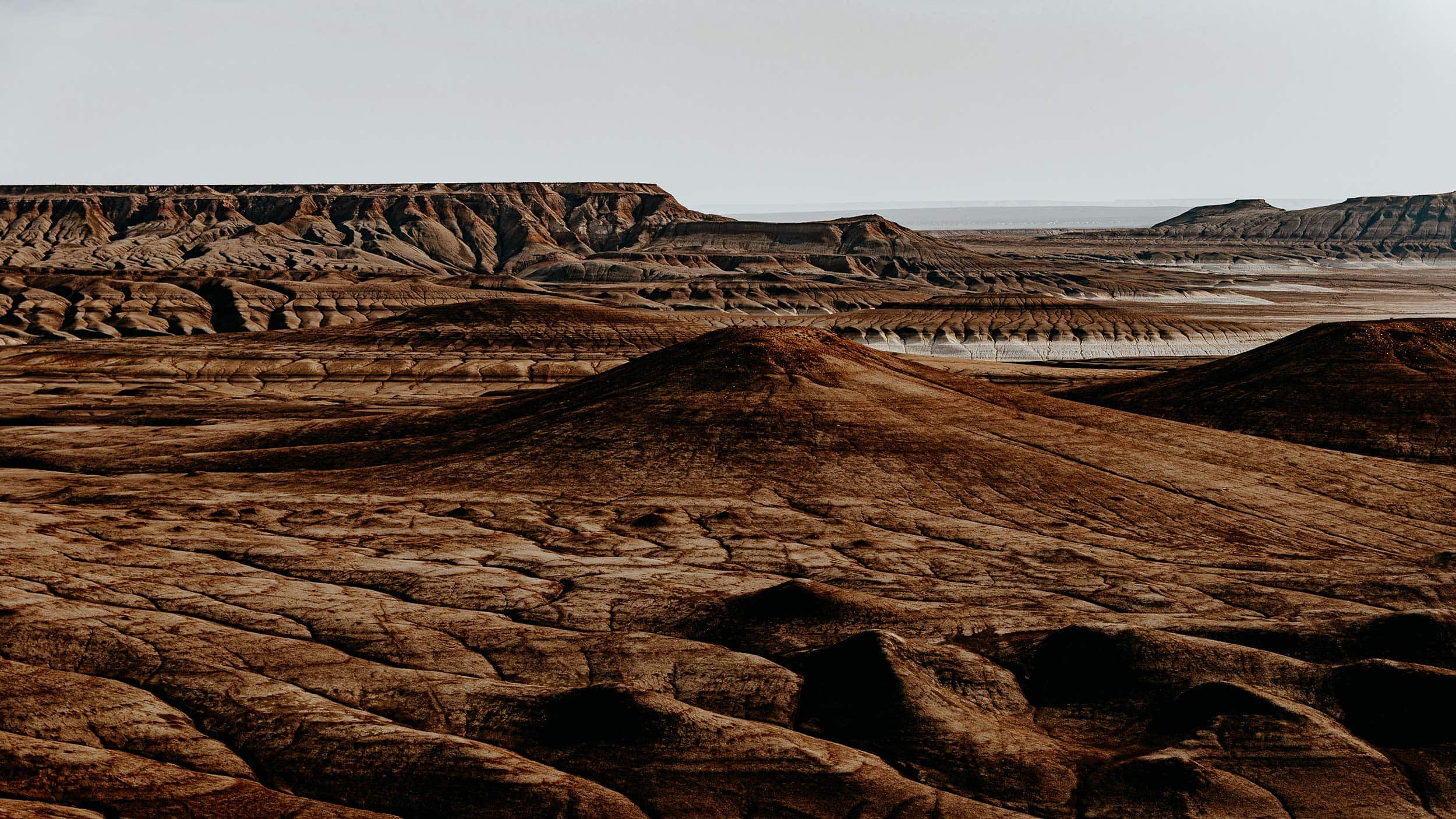
Since I didn’t have any expectations when driving to the viewpoint, the views obtained from here turned out even more impressive, with rock formations displaying their distinct colours, shapes, and textures as far as the eye can see.
Overlooking both Kyzelkup, Mount Bokty, and the surrounding formations, this viewpoint perfectly showcases the impact that thousands of years of erosion left on the region, and seeing it from above is quite a mind-blowing experience.
The whole area is a landscape photographer’s dream, and the fact that I spent nearly 3 hours here, while having Boszhira, Kyzyl Kup and Mount Bokty at just a short drive speaks volumes, doesn’t it?
Where | Viewpoint of Kyzylkup
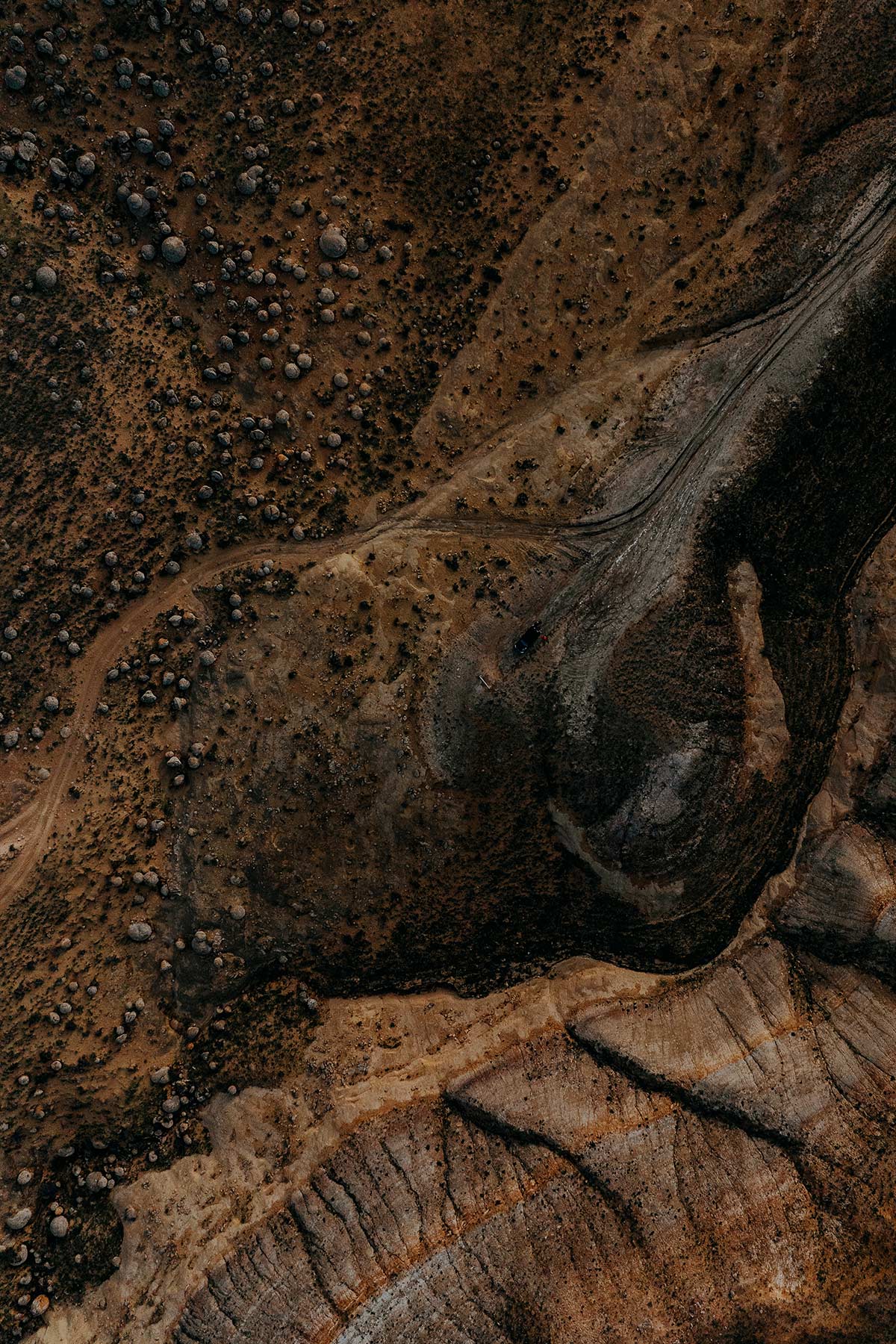
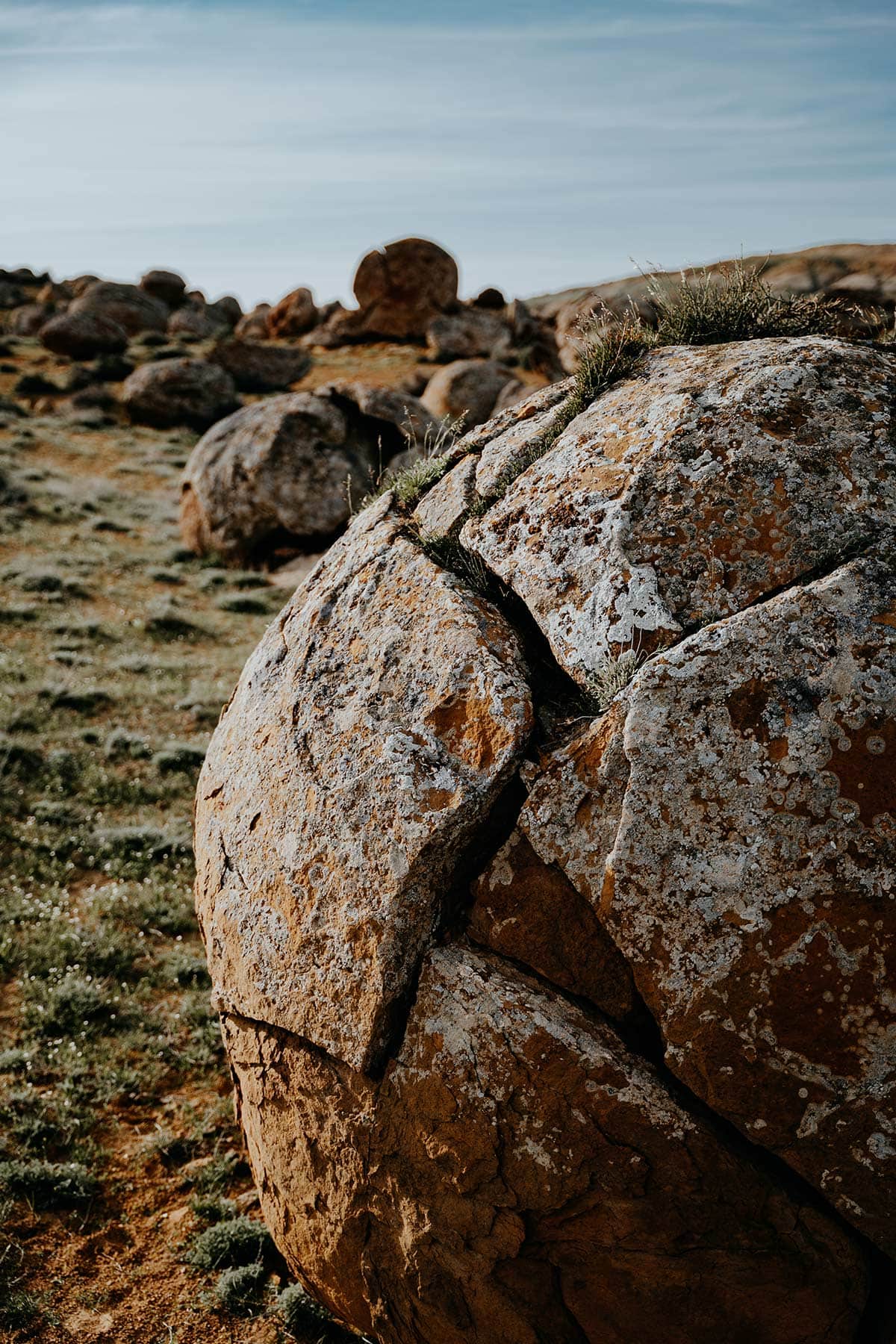
5. Torysh – the Valley of the Balls
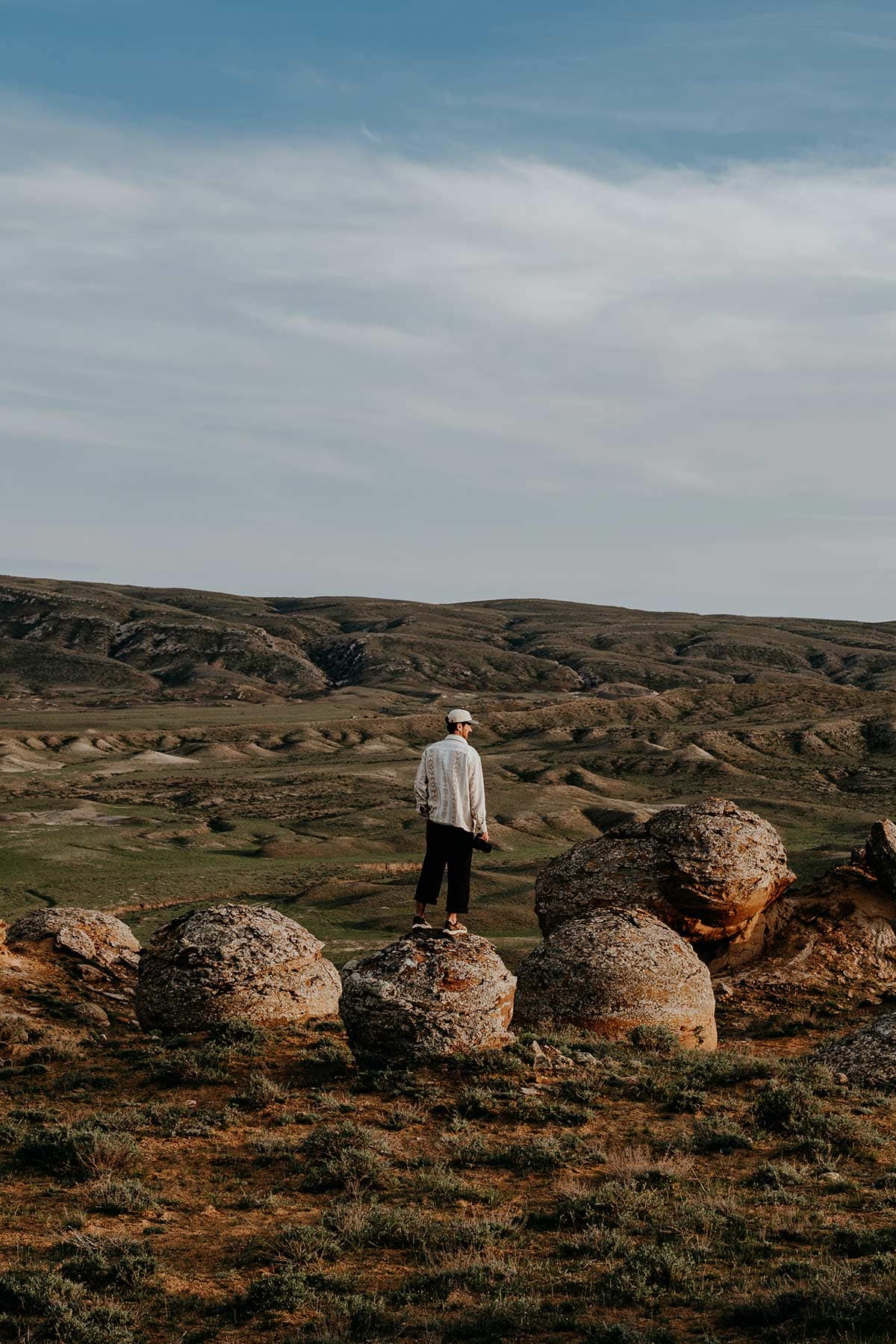
Have you ever imagined reading about a valley filled with thousands of perfectly-shaped stone balls? Well, here you go!
Situated at roughly 100 kilometres from Aktau, the Valley of Balls is exactly that, and seeing it for the first time is quite a remarkable experience.
Of course, a stone, ball-shaped rock itself might not be the most exciting thing on this list, yet if you put a thousand on the ridge of a picturesque hill, you will have an impressive sight that looks somewhat surreal.
It’s a place that grants visitors heaps of photo opportunities, where perspective, composition, and light set the tone for unique stills that can easily resemble a scene out of a movie.
One thing that I can’t stress enough is getting back to the main road via the same route.
We thought it was smart to take an off-road route to cut off some time, and got stuck in drift sand in the middle of nowhere, with no signs of civilisation nearby.
While we did find help from a local family at a nearby camel farm about 2 kilometres from where we got stuck, I’d highly advise continuing your road trip from where you entered the valley.
Where | Torysh – The Valley of Balls
6. The enormous Mount Sherkala
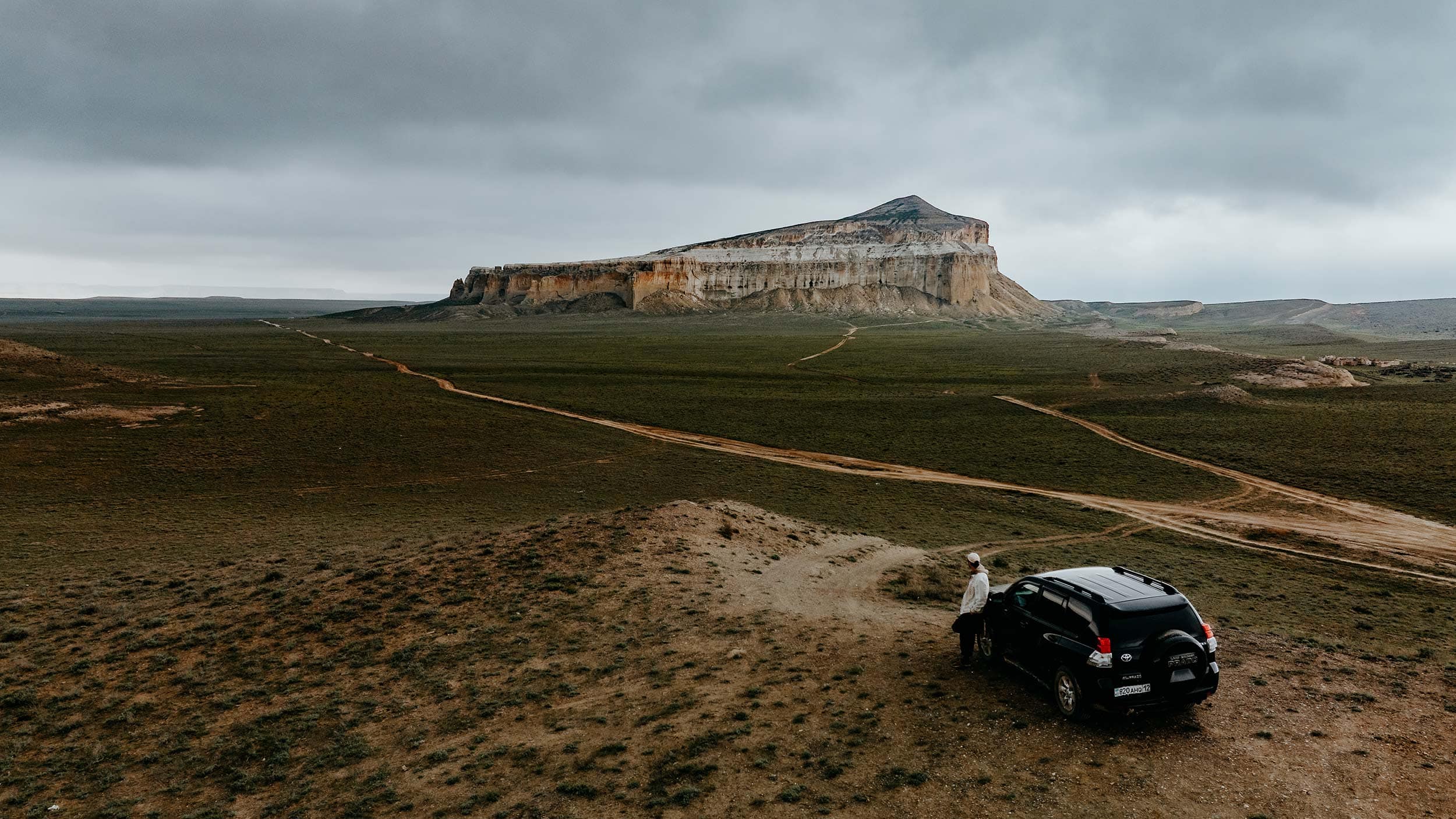
First things first, Sherkala is truly enormous.
With a sheer size of roughly one kilometre in length, and a whopping height of 332 metres, I’m not exaggerating with the above sentence; Sherkala is an absolute unit.
Often referred to as the ‘Lion Mountain’, the Yurt-shaped formation rises dramatically from the dry Kazakh steppe, and its unique appearance, combined with the desolate surroundings, makes it one of the region’s most iconic landscapes.
On top of that, Sherkela is encircled by remnants of ancient civilisations, fortresses, and Silk Road caravan routes, which makes sense given it was once located right at the Great Silk Road trade route that connected the East with the West.
My advice to you is to spend a night at the Kogez Ethnic Village, an authentic Kazakh yurt camp situated right in between Sherkala and Airakty, meaning you can visit early morning or late afternoon, when the lighting conditions hit those natural wonders just right.
Where | Mount Sherkala
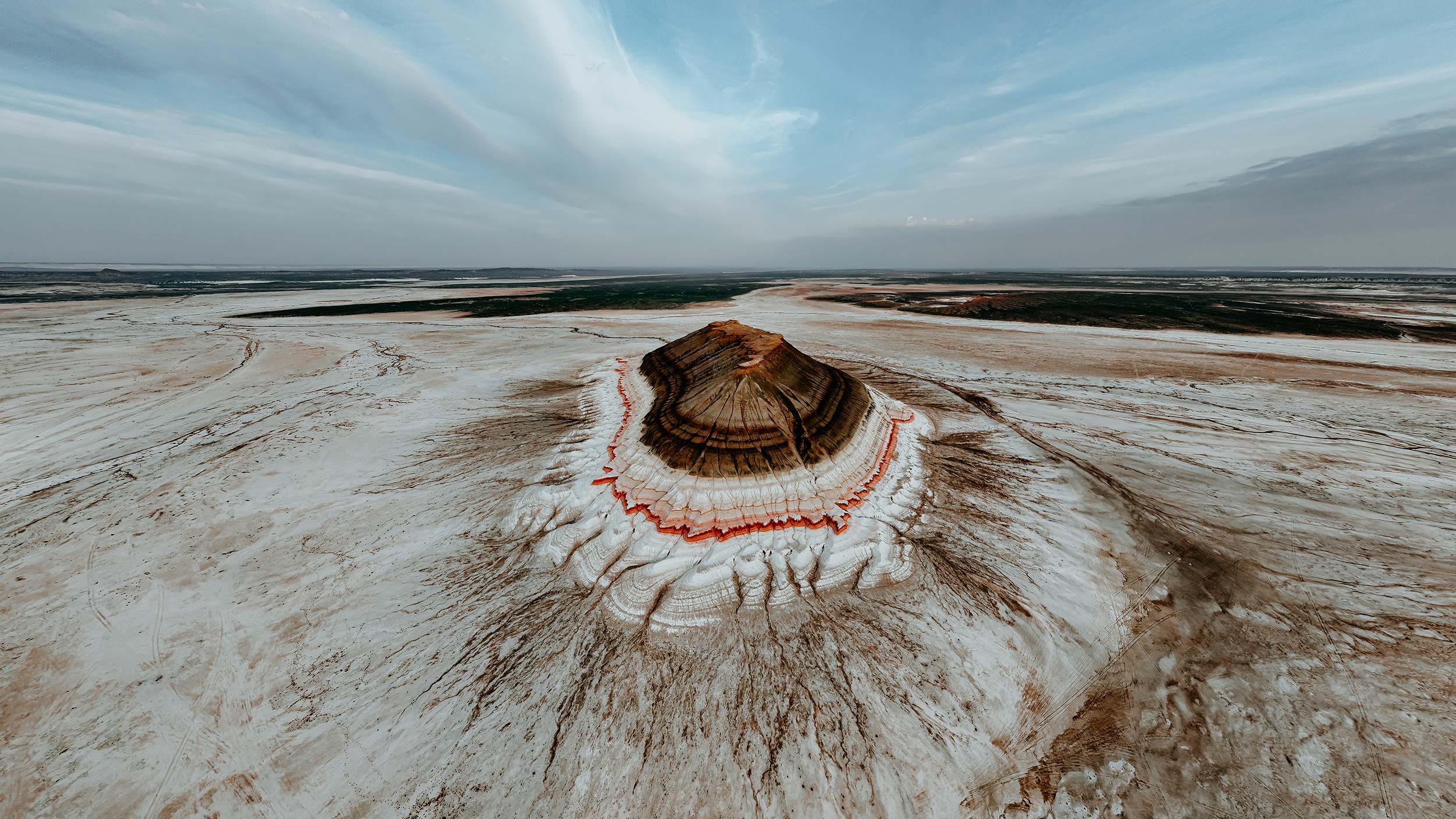
7. The colourful Kyzelkup – Tiramisu
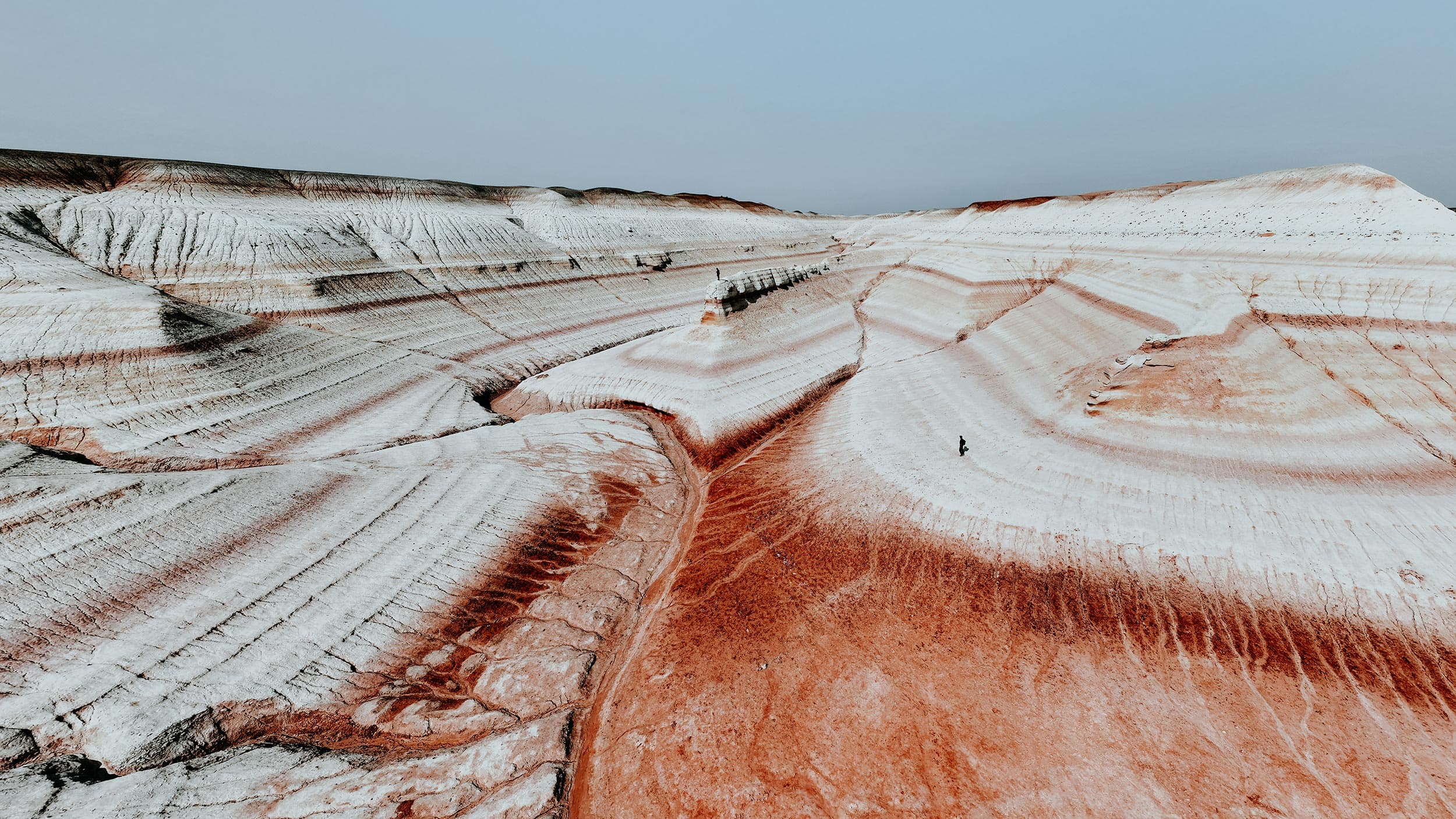
Often introduced as ‘Tiramisu’, Kyzelkup is truly spectacular, and a place that will be a highlight for anyone travelling to Mangystau.
Acquiring its name from its distinctive colours and textures, and more specifically the layers in which those colours and textures occur, the beauty of Kyzelkup is hard to put into words.
You see, exploring Kyzelkup is outstanding, and photography enthusiasts will think they have ventured into a completely different reality, one where human beings don’t occur very often.
While most people see Kyzelkup as one spot pinned on the map, the area is actually a lot more than that, with plenty of unknown areas, boasting truly spectacular rock formations and textures.
Since I am always equipped with a drone, this area was one of my highlights in Mangystau, as it was a dream to acquire aerial footage of all the incredible natural formations.
Where | Kyzel Kup
8. The stunning Mount Bokty
Situated at just a short drive from Kyzelkup, Mount Bokty rises high above the dry soil of the surrounding salt pans.
Obtaining its name from the Kazakh word Bokty, meaning pie, it is easy to see the origins of its name, as its layers make the resemblance clear in a stunning manner.
Standing tall at 165 meters, this massive sandstone mountain is defined by a broad colour palette of pastel shades, including white, yellow, terracotta, red and brown, often making it seem as if you’re staring at a savoury layered cake.
If you ask me, Mount Bokty and its unique appearance are best appreciated during a sunrise or sunset visit, when the light accentuates the stunning shapes and colours, enhancing its rough, and somewhat surreal beauty.
While relatively remote, Mount Bokty is fascinating and an absolute highlight on any Mangystau itinerary, as well as a true favourite among adventure seekers and photographers.
Where | Mount Bokty
9. The Red Mountains of Krasnyy Kan’on
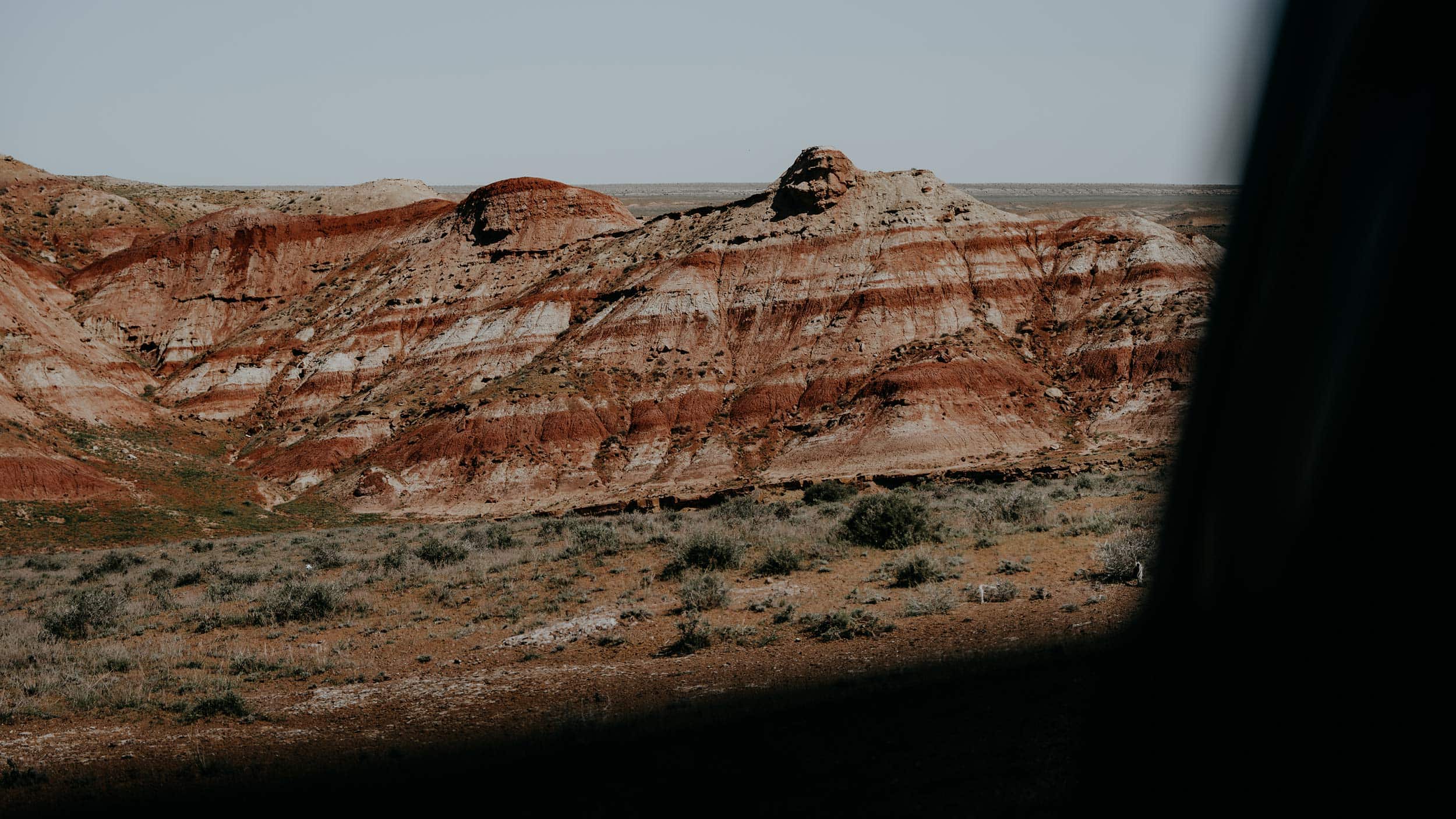
While not initially taken into consideration when planning my Mangystau trip, the Red Mountains of Krasnyy Kan’on were a welcoming discovery when driving back from Tuzbair to Shetpe.
Situated just off the A33, the red mountains of Krasnyy Kan’on are relatively small, yet incredibly stunning, and thus definitely worthy of the small detour.
I’ve walked around the area for roughly 20 minutes, and despite it being only a relatively short amount of time, the vivid red-coloured rock formations managed to leave a pretty outstanding impression on me.
They are a stunning example of Mangystau’s exceptional natural beauty, and they perfectly reflect the region’s ability to surprise you with hidden gems when you least expect them.
Since Krasnyy Kan’on is pretty small and slightly hidden, you might drive straight past it, meaning you will perhaps not even notice it if you’re not aware of its existence – gladly, I have the exact location for you, so finding it shouldn’t be an issue.
Where | Krasnyy Kan’on
Things to see in Mangystau | The essentials
The best time to visit Mangystau, Kazakhstan
Since Mangystau is located in the desert of the Ustyurt Plateau in the very west of Kazakhstan, the climate found here is quite harsh, unpredictable, and dry, which is known as an arid climate.
As a result, the summers are extended and scorching hot, with daytime temperatures often surpassing the 40-degree Celsius mark, which is absolutely unbearable, and something you should avoid at all times.
Then there’s winter – Late October to March, when temperatures can drop as low as -20 degrees Celsius. But it is not just the cold that makes a winter visit agonising; the region is marked by vast, open landscapes, which tend to make the wind feel like a sharp blade.
For that reason, the best time to visit Mangystau is either during spring – April to June, or autum – September to October, when the temperatures are relatively mild (15–25°C), the days lengthy enough for days full of explorations, and overall ideal conditions to uncover the region’s most iconic landscapes.
I visited Mangystau in mid-April, and had excellent weather throughout my entire time there; think sunny days, and zero rainfall, yet still relatively colder nights, so make sure you layer up.
How to get to Mangystau
Those wishing to visit Mangystau should note that most international flights to Kazakhstan arrive in Almaty, through the Almaty International Airport (ALA).
Given that the Mangystau region is located roughly 3.000 km away from Almaty, it is insanely remote, and getting there will require an exhausting journey by car. For that reason, the best way to get there is by air.
From Almaty, it will take a 3.5-hour domestic flight to Aktau, which serves as the gateway to the Mangystau region.
As a result, Aktau is well-connected to Kazakhstan’s major cities, with flights coming in and out from Almaty, Astana and Shymkent, to name but a few.
Stay safe in Kazakhstan | Travel insurance
Travelling in Kazakhstan is all about hiking and off-the-beaten-path adventures, so I recommend everyone sort out adequate travel insurance before setting out on their own adventure.
While we favour that everything runs smoothly during our travels, something unfortunate can happen at any moment, whether it’s a hiking injury, stolen goods or an accident on the road.
For travel insurance, I use Heymondo, as they offer full COVID-19 coverage, as well as a handy app with 24-hour medical assistance. Make sure you check it out – readers of WTSW receive 5% off any insurance policy too.
Cheers!
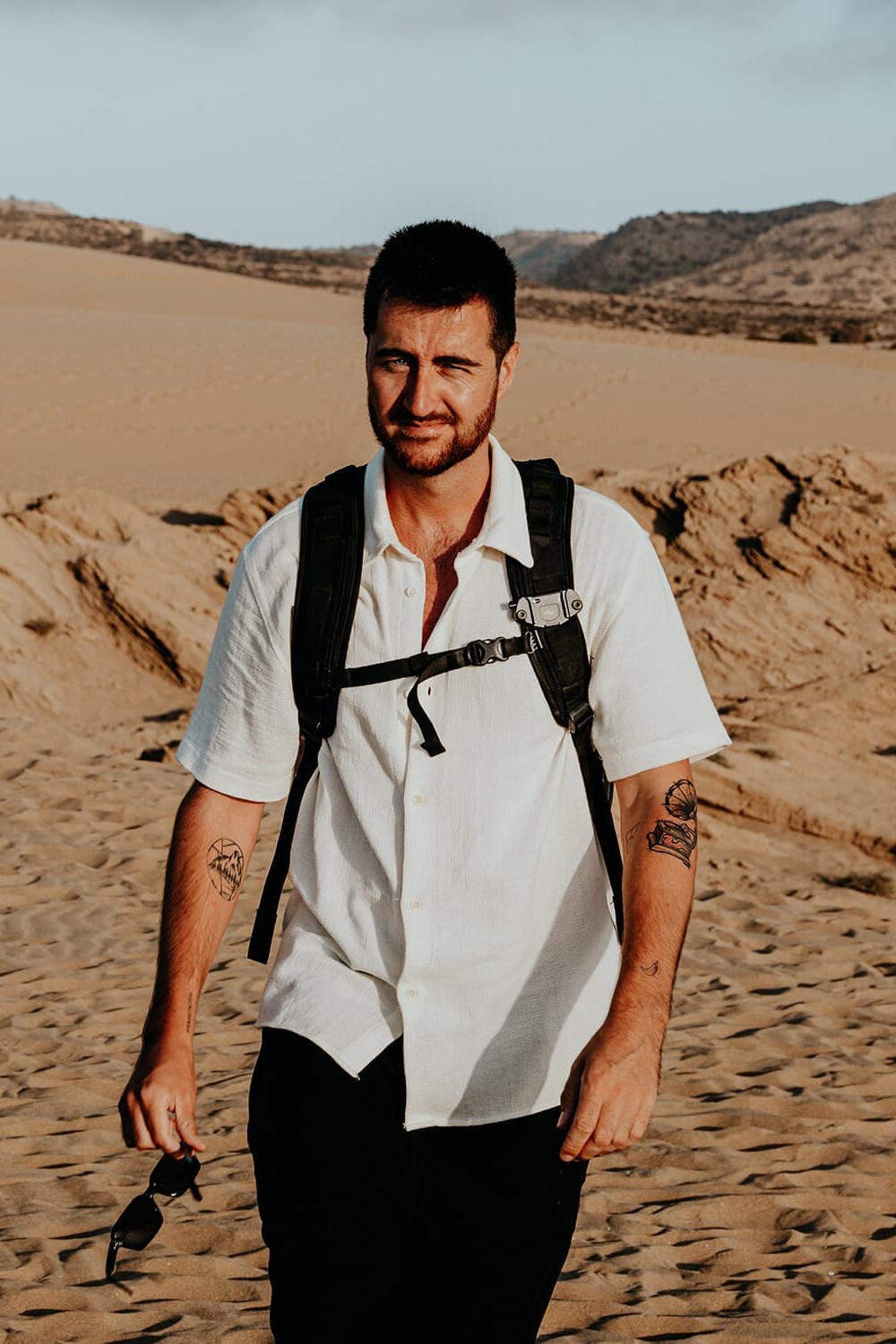
I’ve been on this travel blogging journey since 2019.
If you appreciate what I do here, these are some ways you can support me.
Plan your Kazakhstan adventures with these essential guides
Some photographs in this guide are captured by Andre Smits – make sure you have a look at his work here.