
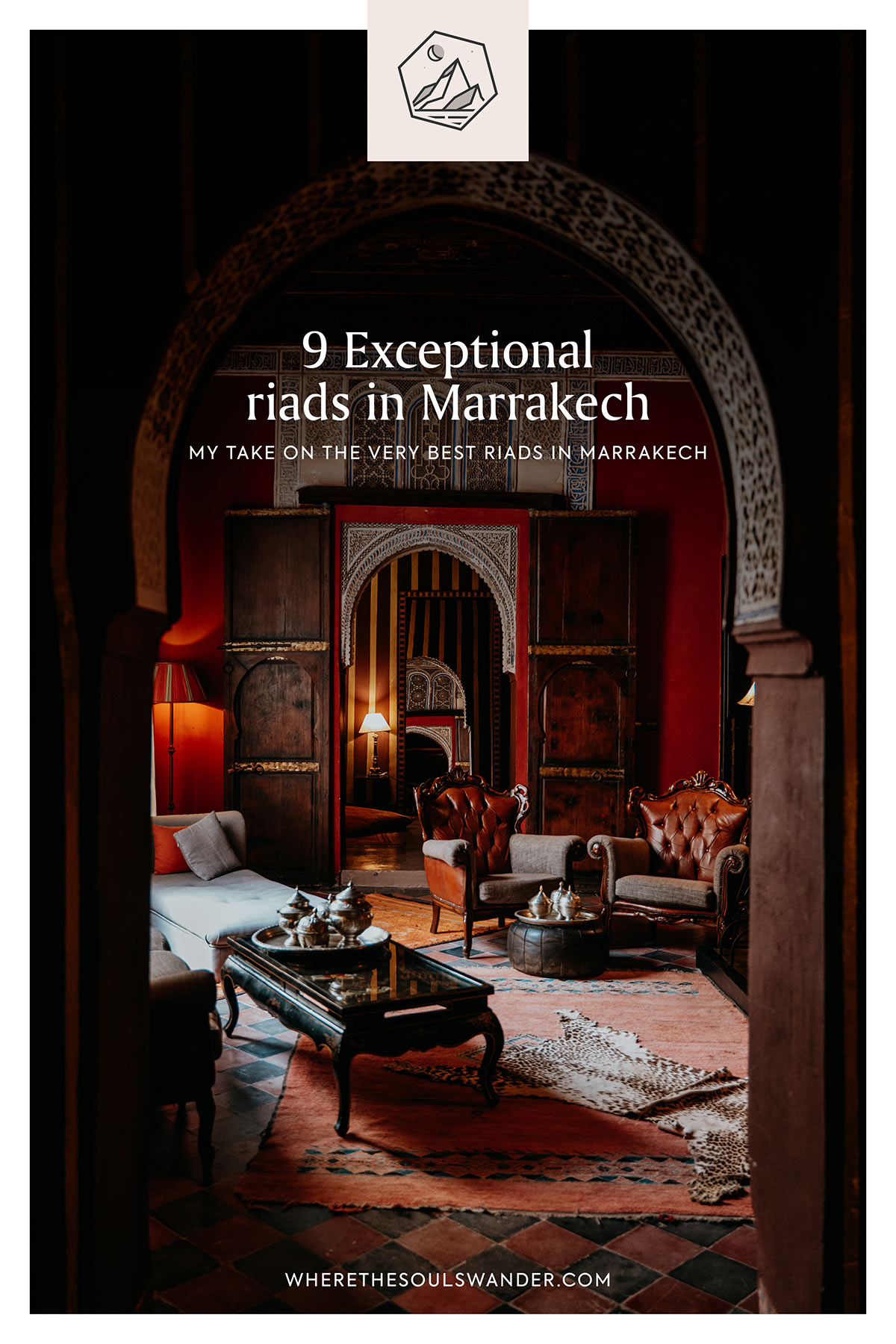
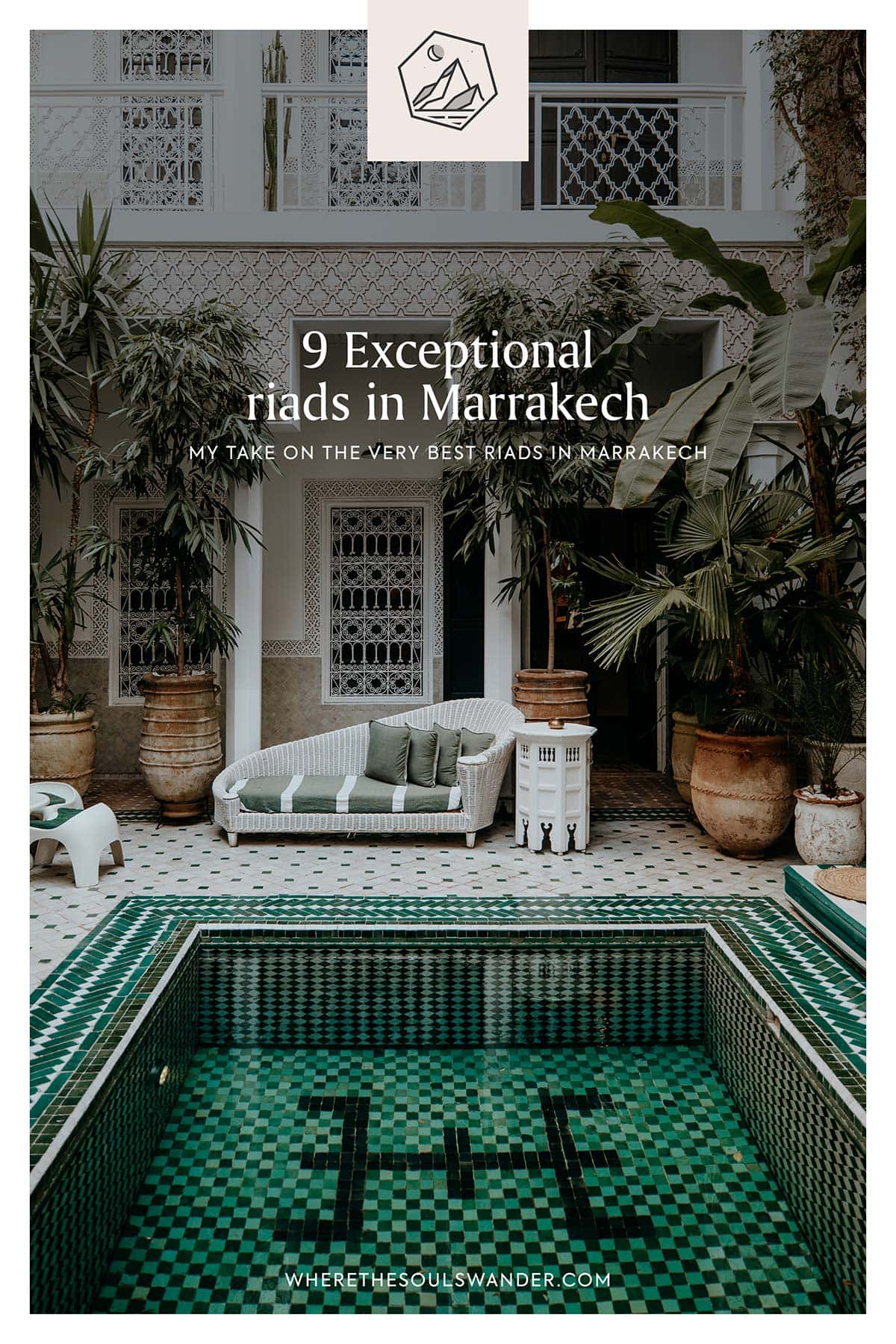
12 Exceptional riads in Marrakech | My take on the best riads in Marrakech
Enchanting, colourful, and unapologetically authentic, Marrakech is absolutely astonishing.
It also moves to the rhythm of its own drums, with a quirky tendency to overwhelm those experiencing it for the first time, making the calm spirit of a riad all the more precious.
You see, staying in a riad provides a mesmerising escape from Marrakech’s hustle and bustle, where the call to prayer echoes through dusty alleyways, the fragrance of tangy spices lingers in the air, all whilst the simmering heat adds to the relatively intoxicating experience.
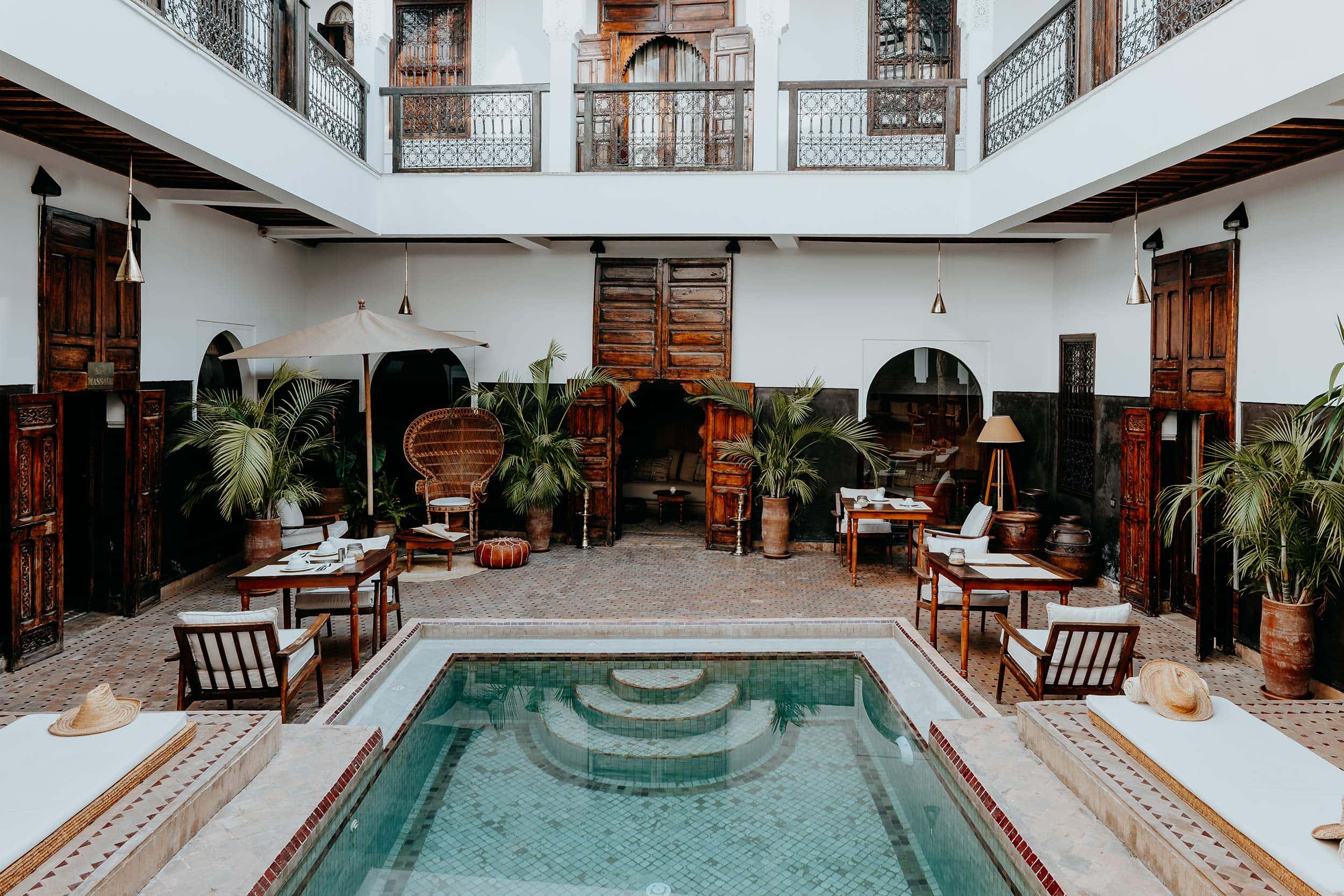
A riad, on the other hand, is intimate, magical, and calming by nature – a hidden oasis where lush courtyards, Instagram-worthy pools, and decadent, soothing fragrances make you forget about the chaotic rhythm of the Marrakech medina.
It is for this exact reason that staying in a riad has become one of the most sought-after things to do in Marrakech, offering travellers a rare chance to experience a traditional way of living.
After visiting Marrakech eight times, where I stayed in plenty of riads, I felt it was time to share my insights, so you don’t have to go through the 500-plus options available in Marrakech yourself.
That said, here’s my take on the very best riads in Marrakech.
Disclaimer: all imagery is my own, and the words in this article are based on my first-hand experiences, meaning I visited each riad myself.
If you choose to use any of the links on this page, I may receive a small commission at no extra cost to you. By using these links, you’ll have a direct impact on WTSW and my ability to continue to create free insightful travel content for you. If you find any of my tips useful, you can support me by buying a virtual coffee here.
Where is Marrakech
Nestled in the foothills of the majestic Atlas Mountains in the southwest of Morocco, Marrakech is, as one of the country’s four imperial cities, absolutely wonderful.
Commonly known as the ‘Red City’ due to its iconic red-hued sandstone buildings, Marrakech is the capital of the eponym Marrakesh–Safi region, and is located just over 300 kilometres south of the capital, Rabat.
Given the city’s unrivalled architecture, as well as its strategic position relative to both the superb Sahara Desert and the majestic Atlas Mountains, Marrakech has become the ideal destination for those who desire to see the beauty of Morocco’s culture, architecture and nature.
What is a riad?
Built around a centrally set courtyard or inner garden, a riad is a traditional Moroccan house.
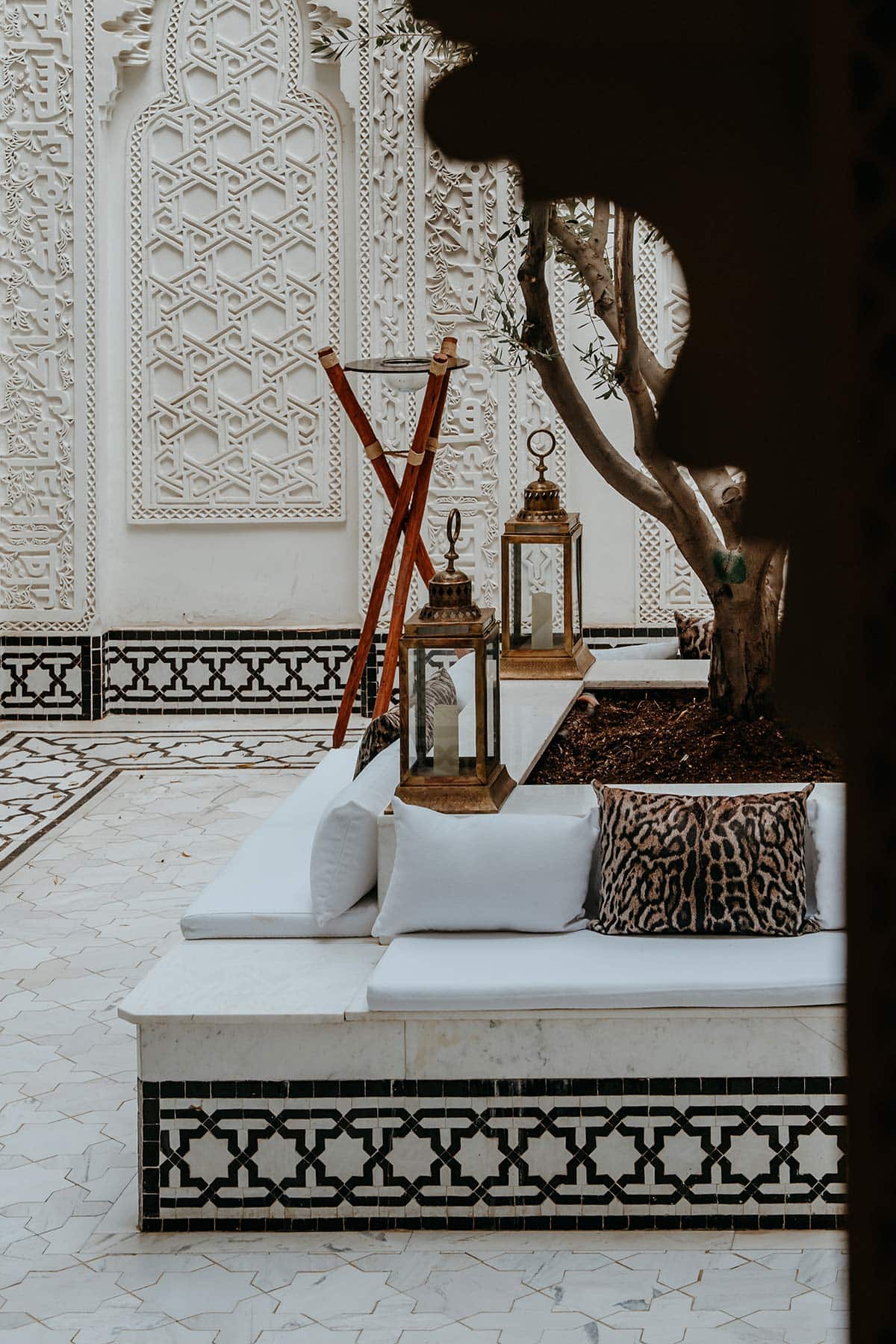
Deriving from the Arabic word, riyad, meaning “garden,” the rooms of a riad usually open up to this very courtyard, creating a magical and serene escape away from the hustle and bustle found in Morocco’s lively medinas.
With an unmatched emphasis on privacy and tranquillity, the most intricate of tilework, lush greenery, and oftentimes an Instagram-worthy pool, spending a night in a traditional riad has become one of the most sought-after experiences in Marrakech, if not the whole of Morocco.
Historically speaking, riads were either assembled by wealthy merchants or noble families, and often set within the heart of the medina of cities such as Fez, Essaouira, and, of course, Marrakech.
In my view, it is essential for anyone travelling to Morocco to spend at least one night in a riad, given that the remarkable contrast with the lively medina offers a unique glimpse into Moroccan culture and hospitality alike.
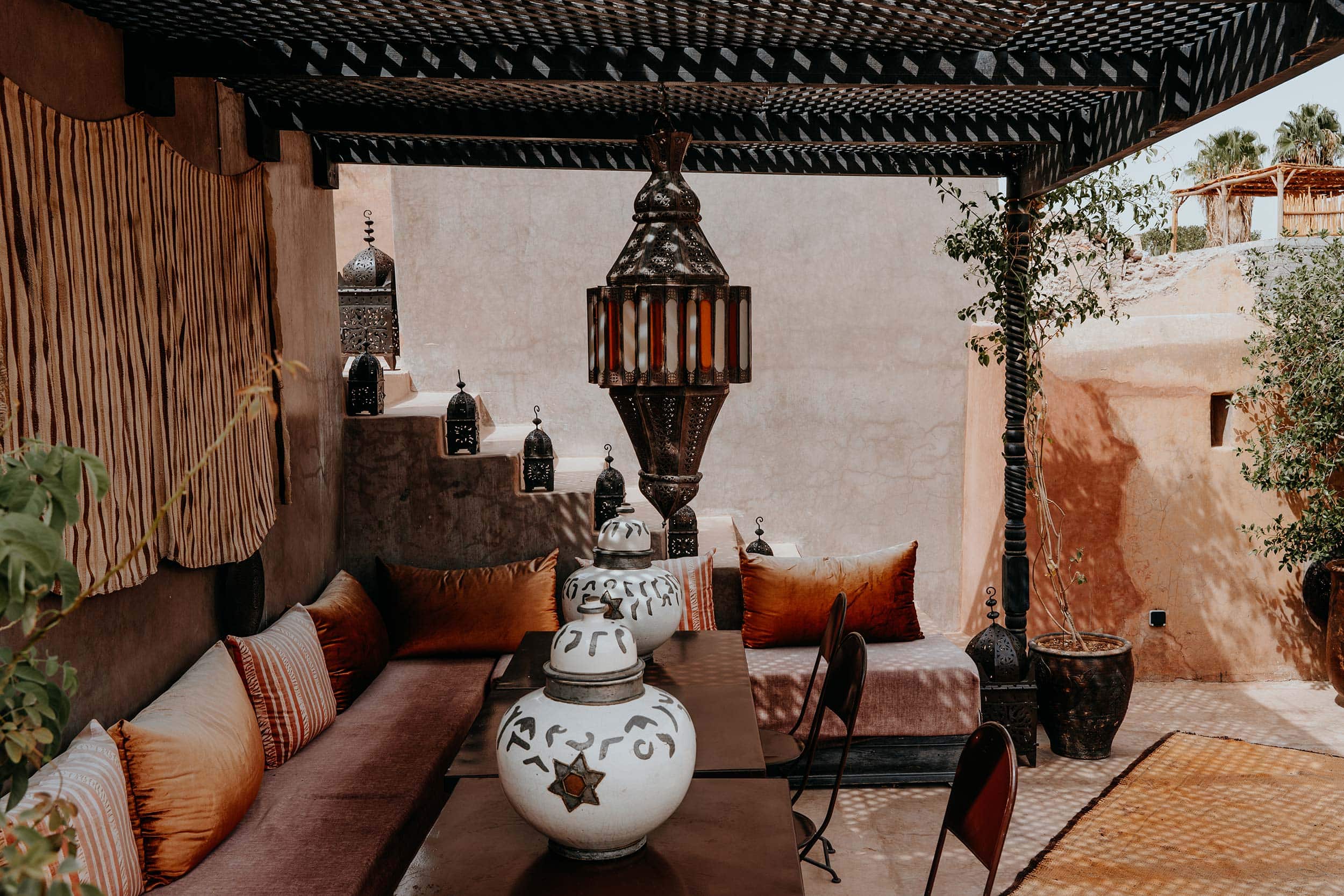
12 Exceptional riads in Marrakech | My take on the very best riads in Marrakech
1. Riad Kheirredine
Those who follow me on Instagram will know; this exceptional riad hardly needs an introduction, as it’s basically my home away from home, and a place I return to at least once a year.
Having now visited four times, Riad Kheirredine combines authentic Moroccan design with Italian elegance and an unrivalled level of sophistication in terms of hospitality and service – you can trust me on this, I am not exaggerating here.
You see, the people at Kheirredine will do everything in their power to make you feel at home, and they do so with such utter precision that I can’t imagine anyone not feeling at home here.
Besides the phenomenal hospitality, they also happen to be one of the most beautiful riads in Marrakech, with intricate tilework, calming fountains, and lush vegetation setting the tone for an intimate escape away from the hustle and bustle of the medina.
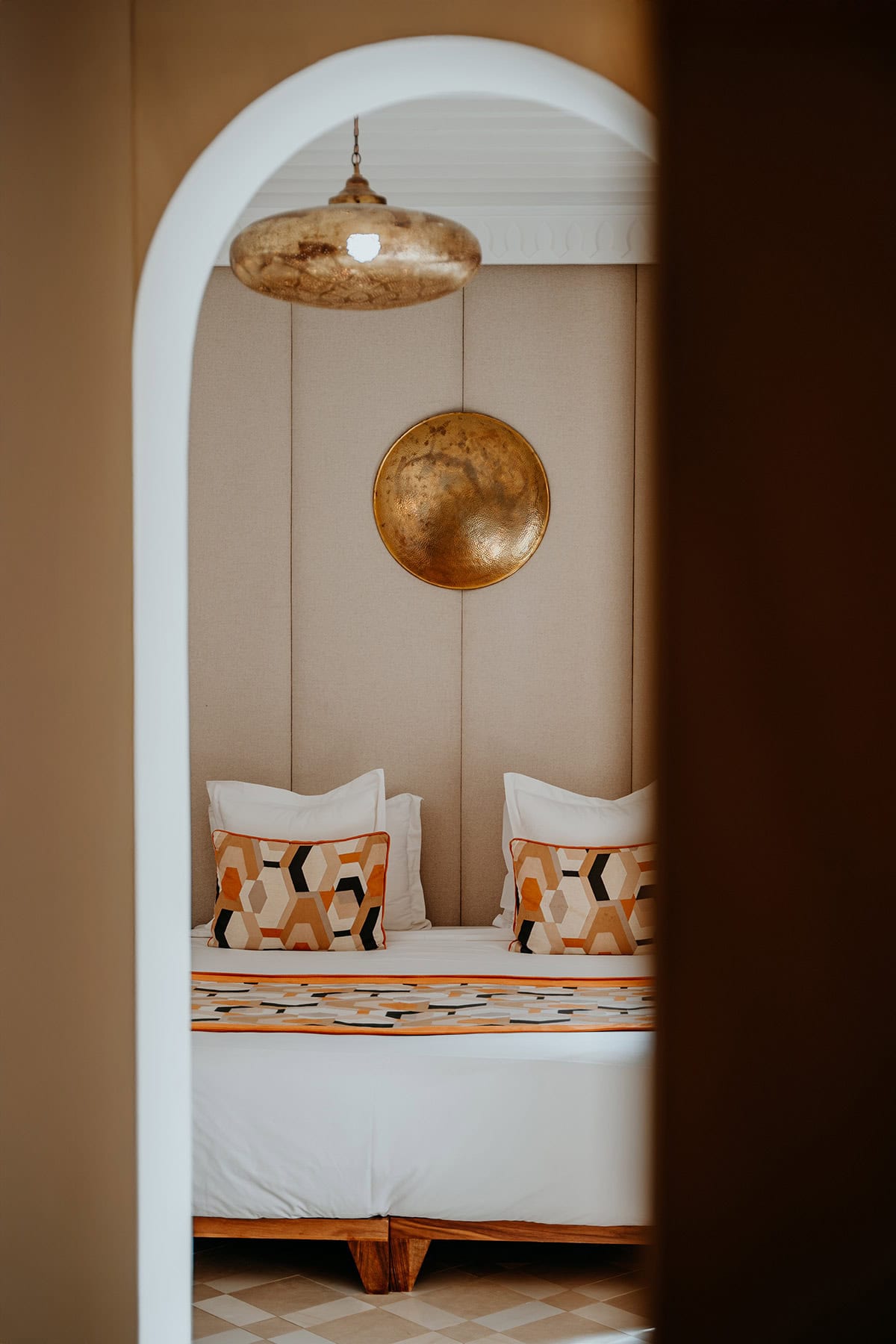
The rooms are truly mesmerising, all distinctively different, and each more beautiful than the last.
I was fortunate enough to spend time in 4 different rooms, with my favourite being the new Patchouli Junior Suite and the Sandal Imperial Suite. Having said that, you simply can’t go wrong here – each room is full of character and will easily elevate your time in Marrakech.
All in all, Riad Kheirredine is a destination within a destination, one where every nook breathes authenticity and every cranny offers a private space of calm, making it my absolute favourite riad in Marrakech. Make sure you read my in-depth review here.
Where | Riad Kheirredine
Cost | Starting at €160,- a night
Go for | Phenomenal hospitality and a luxurious home-away-from-home riad experience
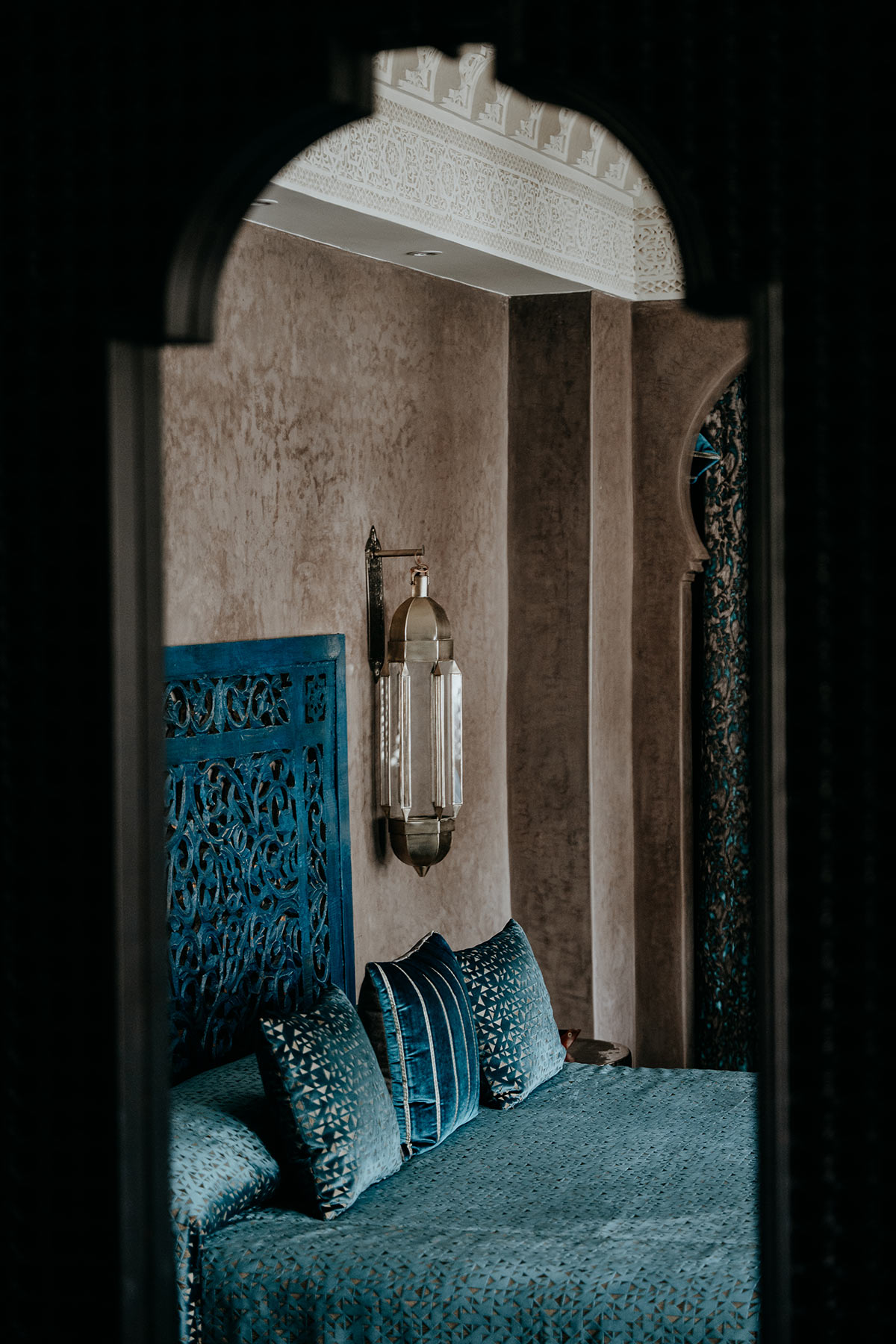
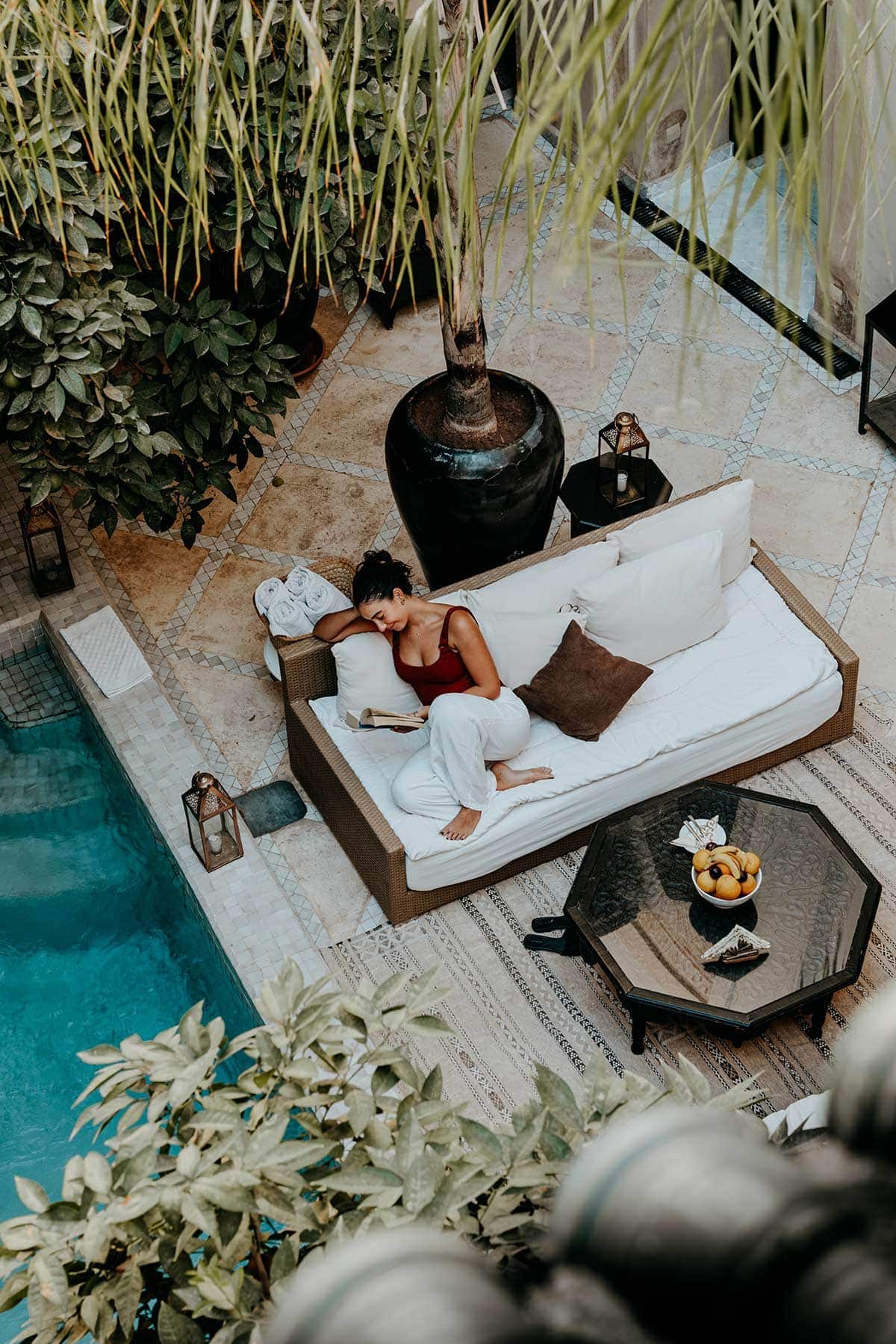
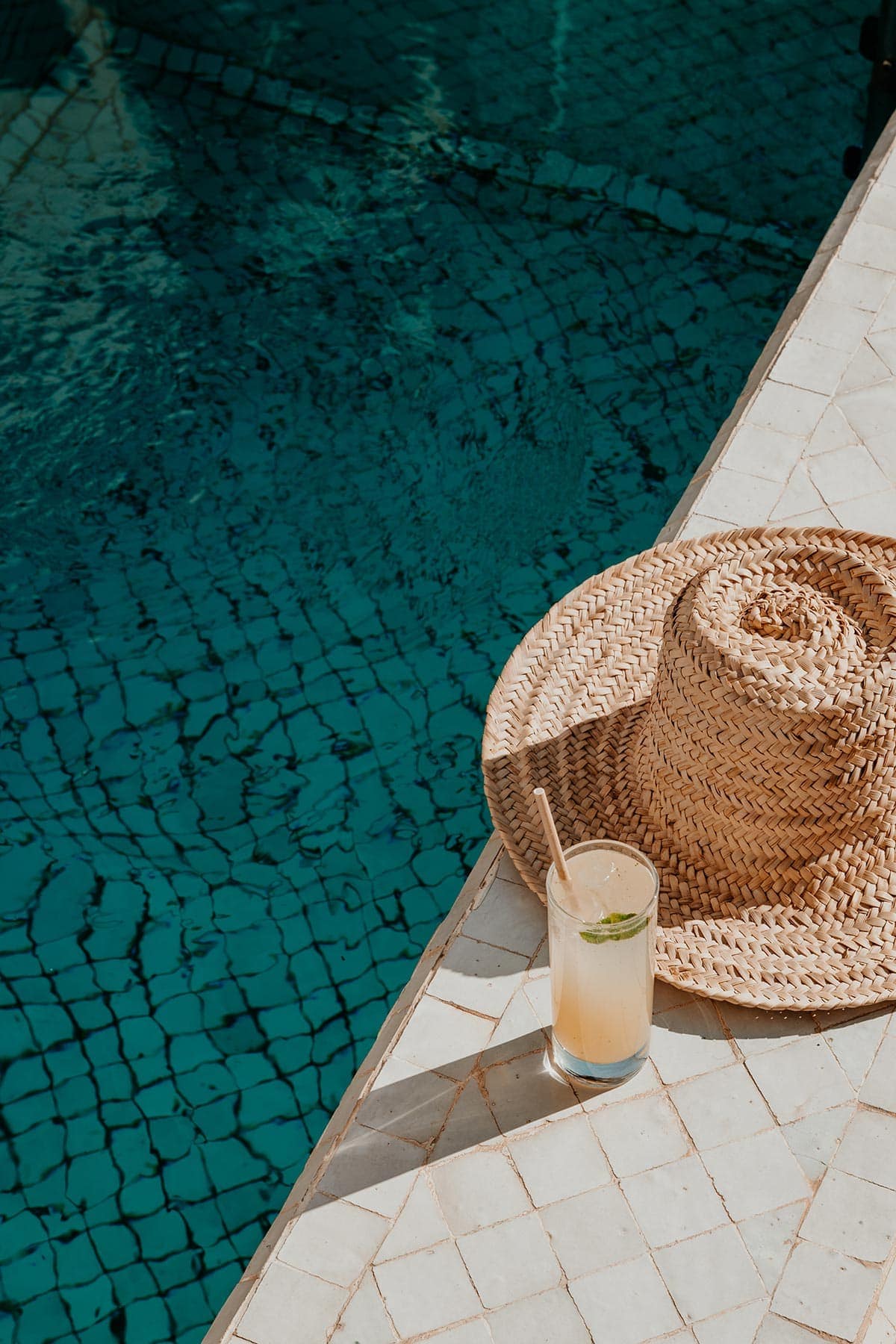
2. Dar Darma Riad
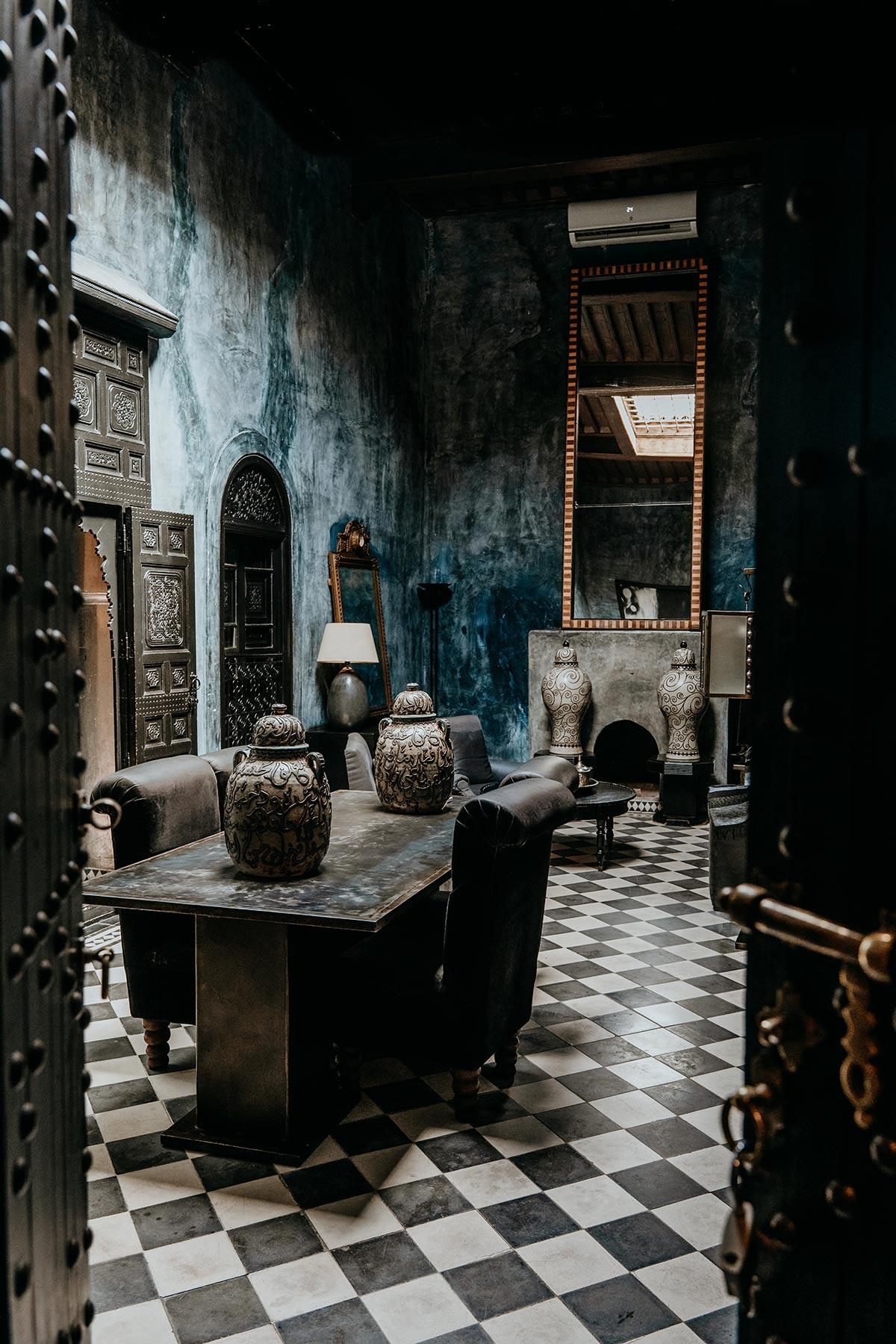
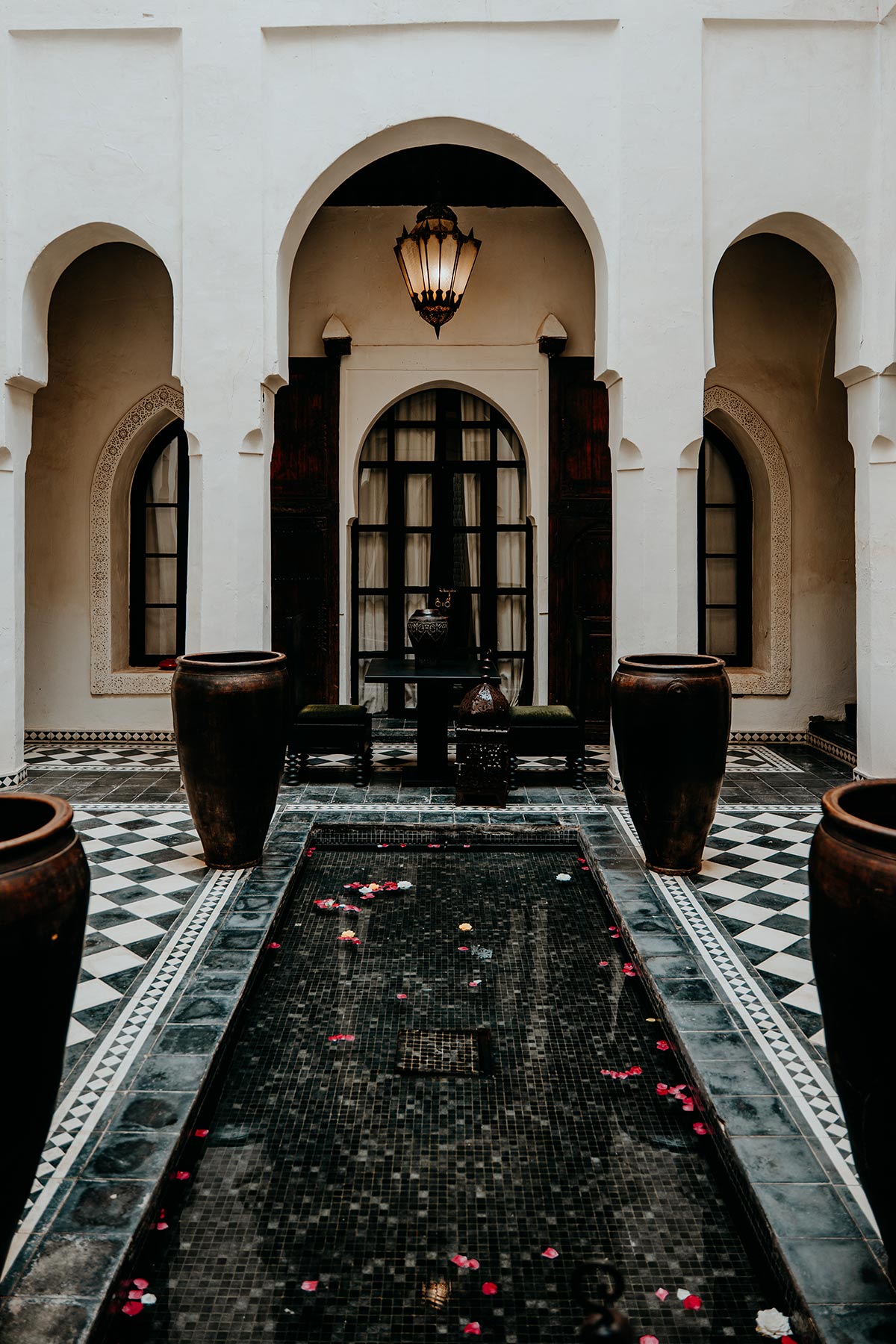
More so a palace than an actual riad, Dar Darma is downright exceptional.
Situated in the heart of the Marrakech medina, at just a short walk from the famous Ben Youssef Medersa, Dar Darma Riad looks and feels as if it has been lifted straight out of the Middle Eastern folktale One Thousand and One Nights.
Behind its enormous entrance lies a world marked by equal opulence, mystique and tranquillity.
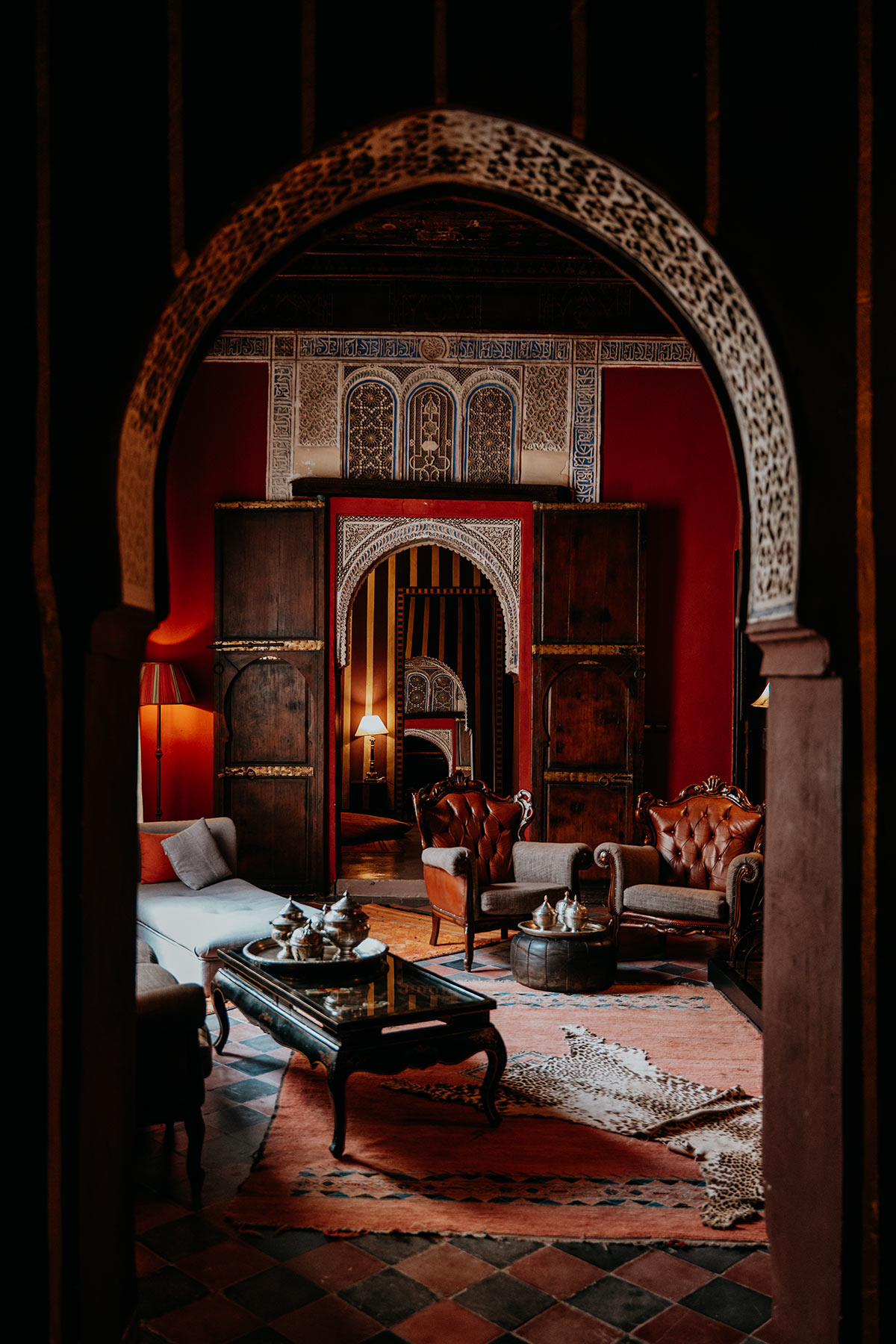
Think elevated ceilings, the most intricate of plaster work, traditional lanterns bathing every corner in soft light, and nifty little details that elevate the already magnificent ambience.
The riad is home to six lavish suites, each entirely distinctive from the other, all confidently telling their own story. During my time in Marrakech, I was fortunate enough to spend time in both the Blue and the Red Suite.
While all suites are exceptional in their own right, I believe that it’s the above two suites that really showcase the opulence of this former residence turned luxury boutique riad.
On the rooftop, you’ll have a stunning pool all set with sun loungers, perfect for a chill escape away from the hustle and bustle of the Marrakech medina.
Where | Dar Darma Riad
Cost | Starting at €325 a night
Go for | A palace-like stay filled with opulence, dramatic suites, and a lavish atmosphere
3. Riad Dar-K
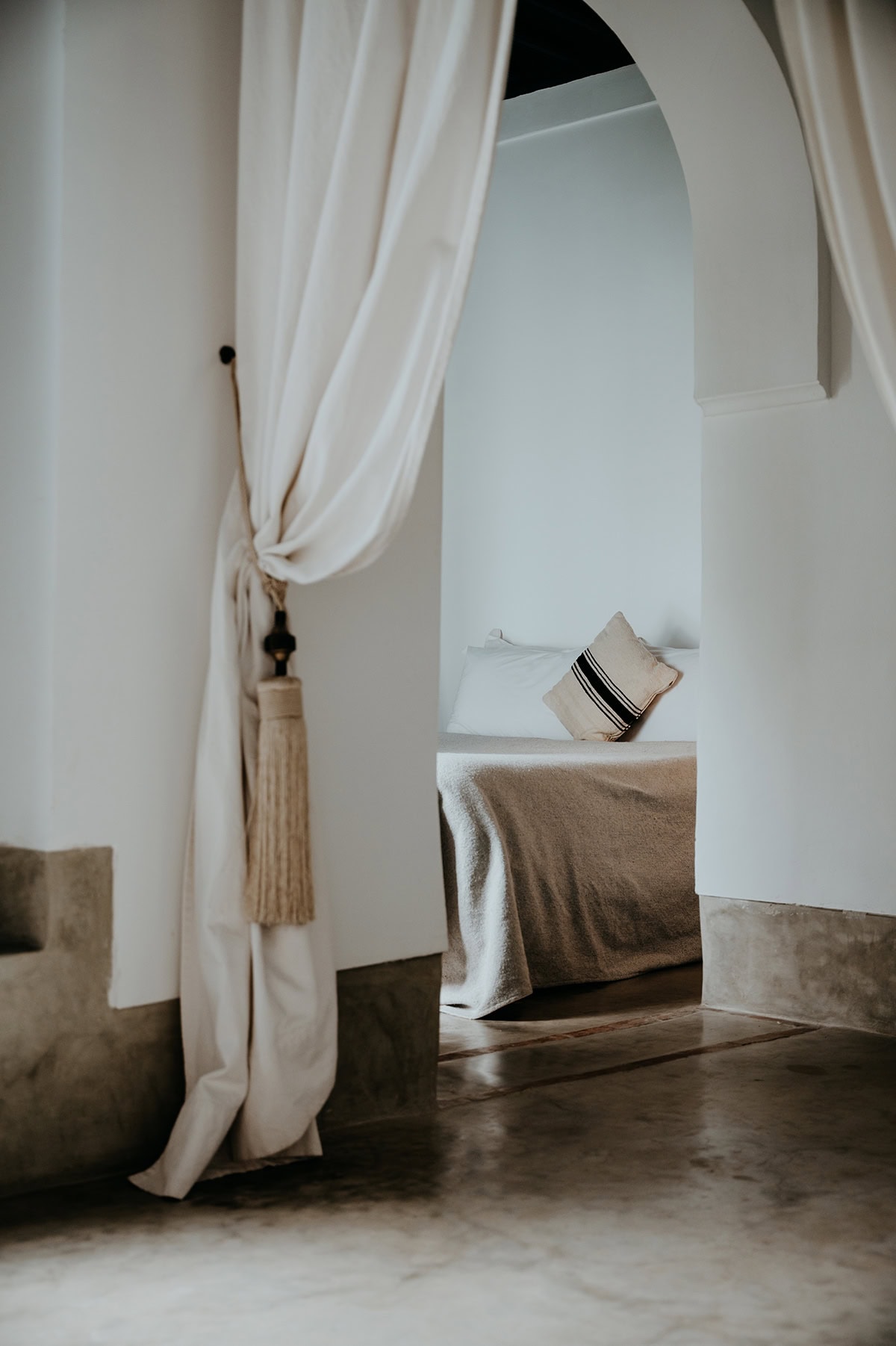
Situated smack-bang in the lively Marrakech medina, close to all the best things to do in Marrakech, Riad Dar-K is everything you imagine a riad to be, and then some.
Entirely renovated in 2019, this elegant riad invites you to experience a mix of traditional Moroccan architecture and refined comfort, where local craftsmanship and thoughtful modern touches come together seamlessly.
At the heart of the riad lies a tranquil patio with a plunge pool, where one can enjoy a welcoming pause from both the heat and the hustle and bustle of the medina.
Rooms are spacious, yet kept intentionally intimate, with cosy corners, intuitive use of textures, and beautiful, locally sourced furniture.
Then there’s the bed, which is firm, yet comfortable, and covered with some of the best bed linens I’ve ever slept under; you can sense that comfort is of the utmost importance here.
Breakfast is equally spectacular; a generous, beautifully presented spread, complete with all the favourites that make a traditional Moroccan breakfast so loved.
Another highlight is the rooftop terrace, an elevated space that offers a serene retreat, perfect for slow morning coffees or quiet afternoons with a good read.
With just two double rooms and two larger suites, Riad Dar-K, meaning ‘your home’ in Berber, is wonderfully intimate, honouring the century-old traditions that define a riad.
Where | Riad Dar-K
Cost | Starting at €140,- a night
Go for | An intimate boutique riad where timeless traditions meet understated elegance
4. IZZA Marrakech
Artistic, intimate, and bohemian, IZZA is not just a place to stay in Marrakech.
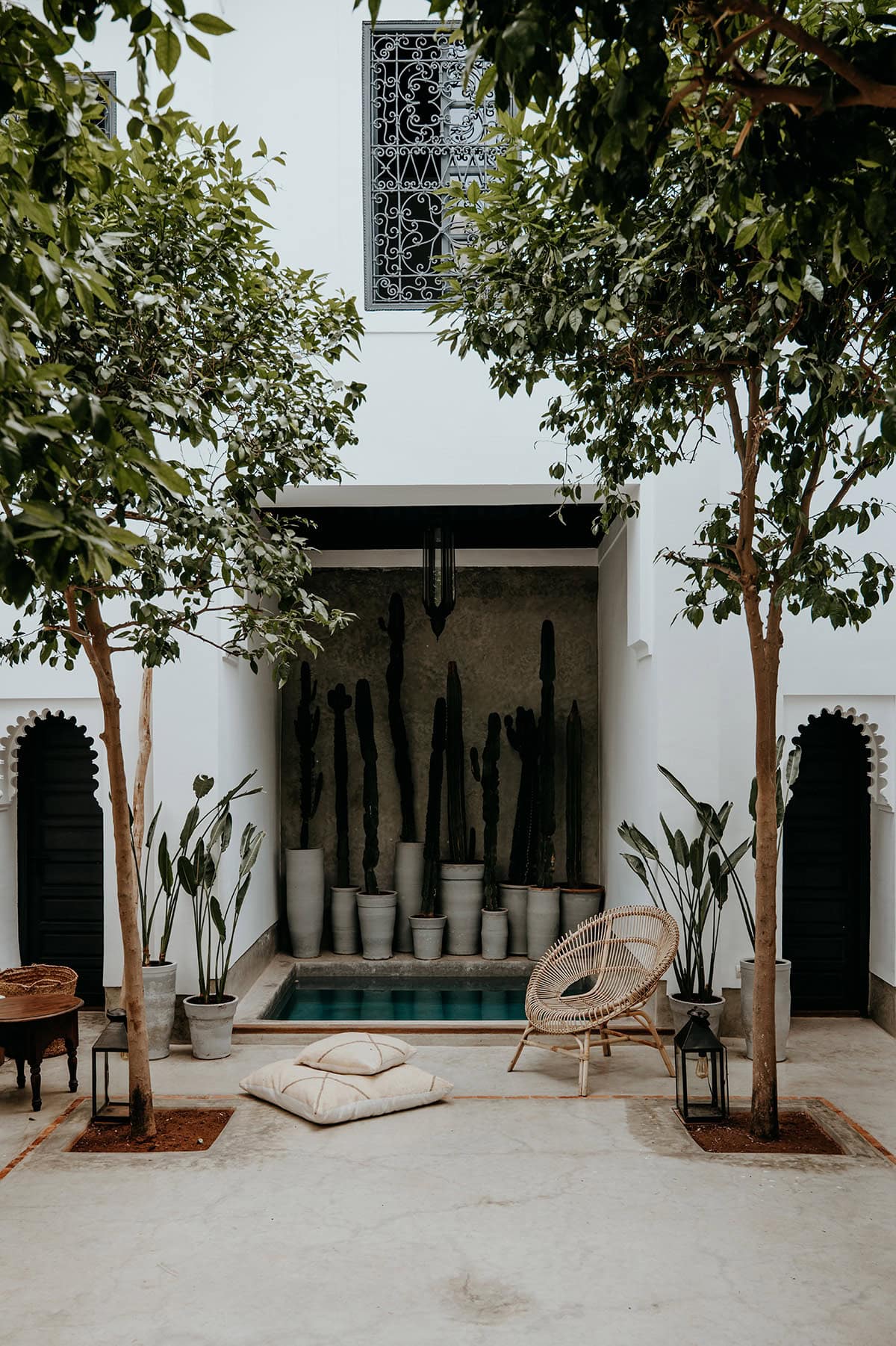
No, it’s an experience in its own right, one where Moroccan hospitality, gorgeous decor, inspiring art, and a welcoming atmosphere come together wonderfully under one roof.
Housing 13 rooms, each with a distinctive character reflecting the freedom seekers who gave the rooms their names – think Paul Bowles, Talitha Getty, and, of course, Yves Saint Laurent, among others – this Michelin Key-awarded riad is simply put spectacular.
There’s also a beautifully put-together suite, named IZZA in tribute to the Berber woman whose home originally stood on the site long before the riad came to life – a meaningful gesture that adds to the captivating story of this already marvellous riad.
While you can’t go wrong here, the rooms that captivated me most were Leila and Christina, as the use of colours, textures, and thoughtful touches perfectly matched my personal aesthetic.
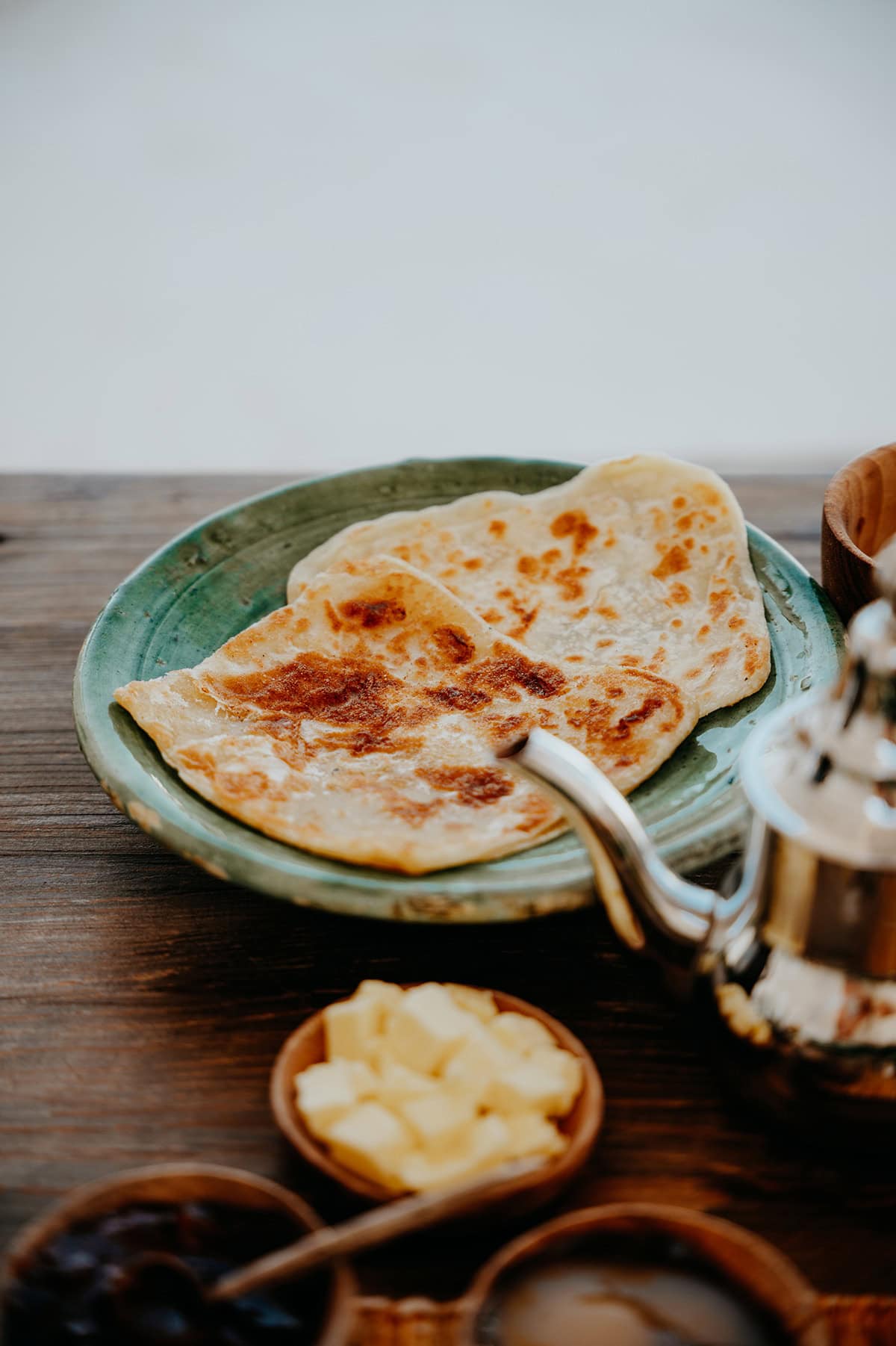
Breakfast is the real winner here. A traditional spread, complete with freshly baked msemen, khobz, and the most delicious amlou and marmalade, will provide the perfect start to your day, whether you’re going out and about in the medina or hanging poolside in the riad itself.
All rooms are fitted with a Nespresso too, making slow mornings in the riad all the more precious.
Then there’s NOUJOUM, a magical in-house rooftop restaurant led by chef Ahmad El Hardoum, where local produce and traditional cooking methods are combined with Mediterranean flair and European influences, resulting in a refined yet authentic culinary experience.
IZZA doubles as a thoughtfully curated art gallery, with a spectacular collection of works from both emerging and seasoned artists worldwide that, in my opinion, can easily rival La Maison de la Photographie de Marrakech.
Overall, IZZA is a beautiful celebration of creativity, individuality, and art, and I am all for it.
Where | IZZA Marrakech
Cost | Starting at €221 a night
Go for | A wonderful, art-filled riad that blends Moroccan traditions with bohemian flair
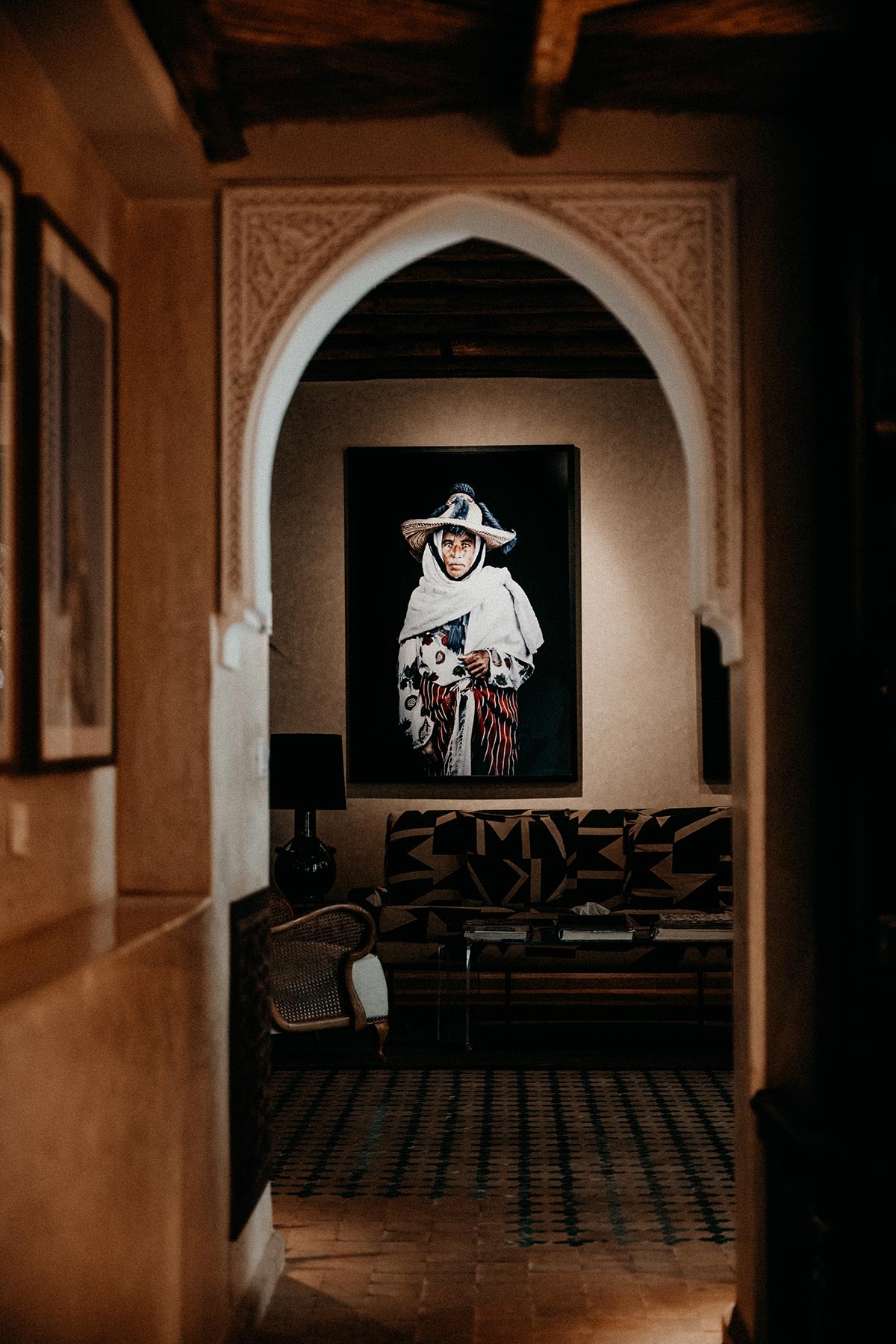
5. Riad Sakkan
Taking its name from the Arabic word Sa-kan, meaning rest, comfort, or stillness, and after spending three nights here, it was evident that Riad Sakkan truly embodies these words.
Set along Rue Sidi el Yamani, one of the medina’s most vibrant areas, Riad Sakkan offers a sanctuary that feels effortlessly warm and welcoming, one where art, music and scents form a cosy, home-like ambience.
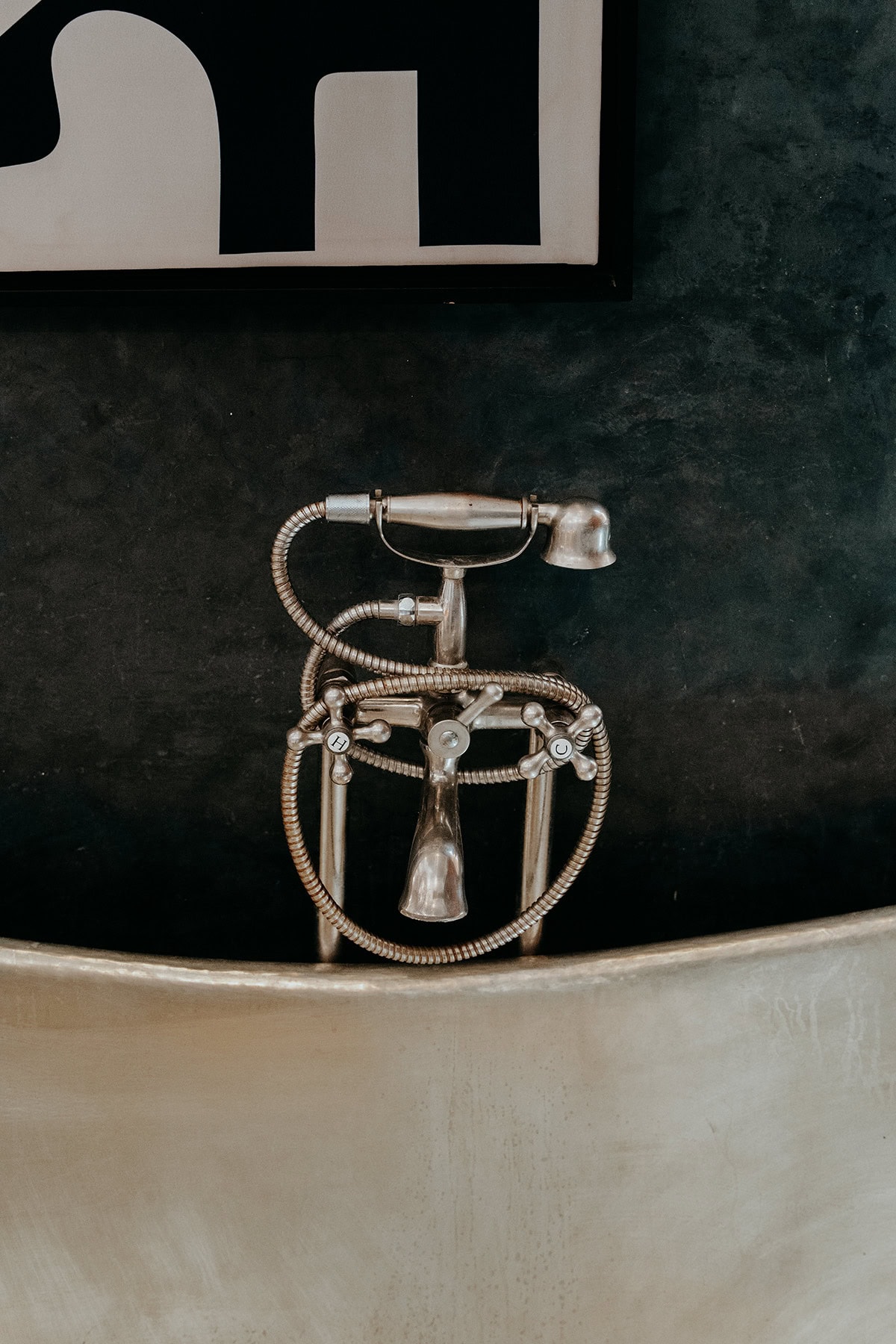
During my time at Riad Sakkan, I spent time in the master suite, which was beyond wonderful, complete with a king-size bed, sheets made from soft Egyptian cotton, and last but not least, a copper bath right in the suite itself.
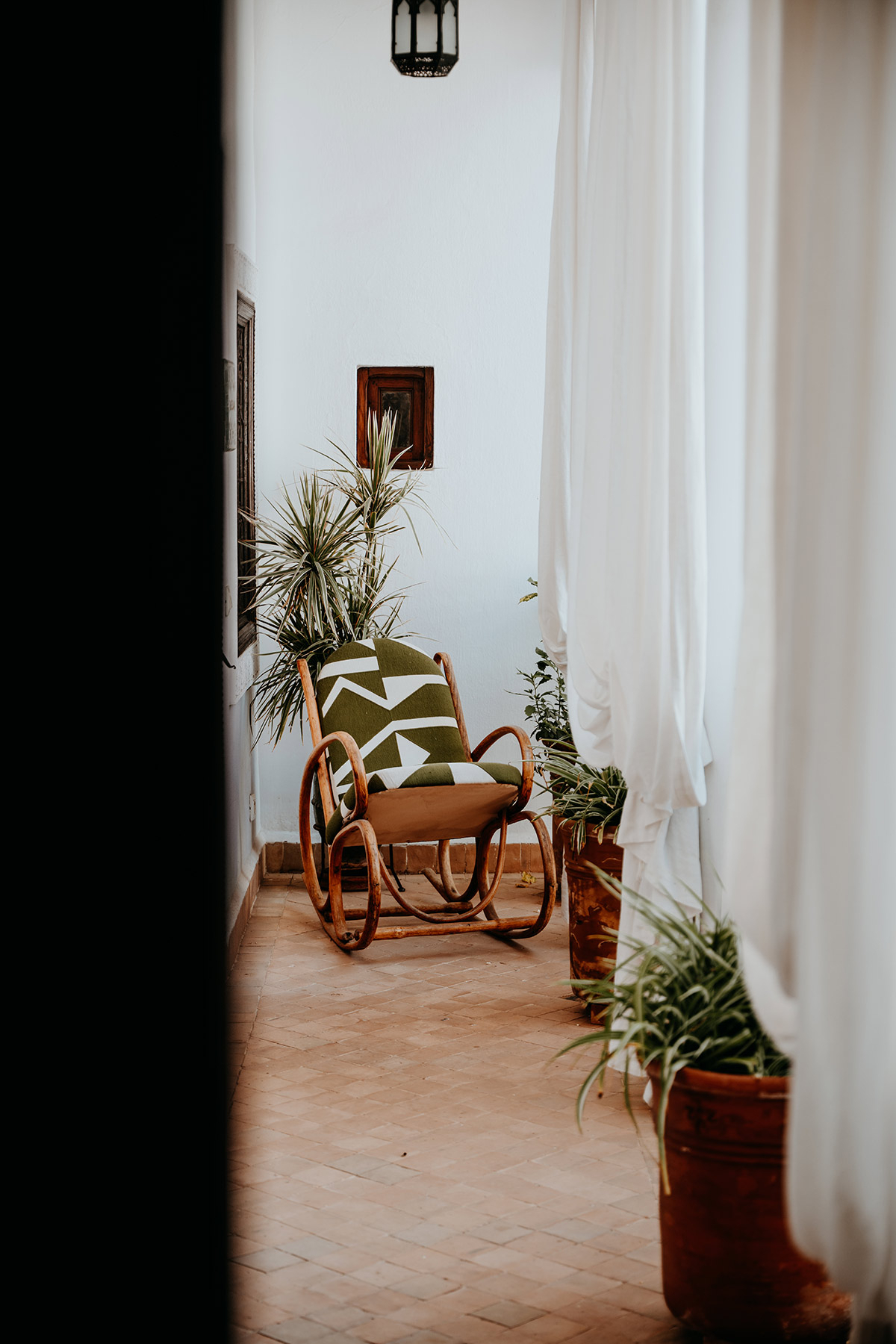
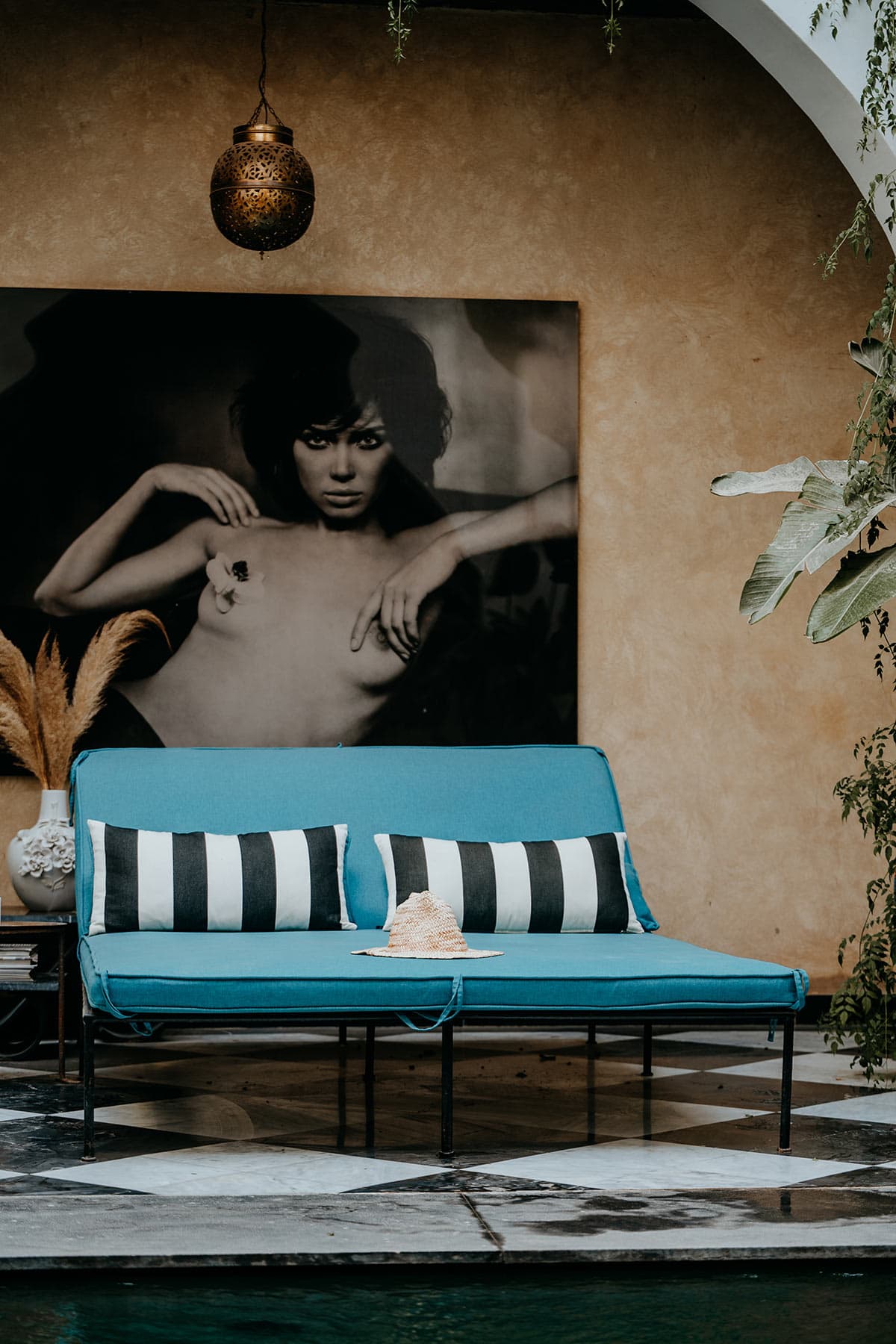
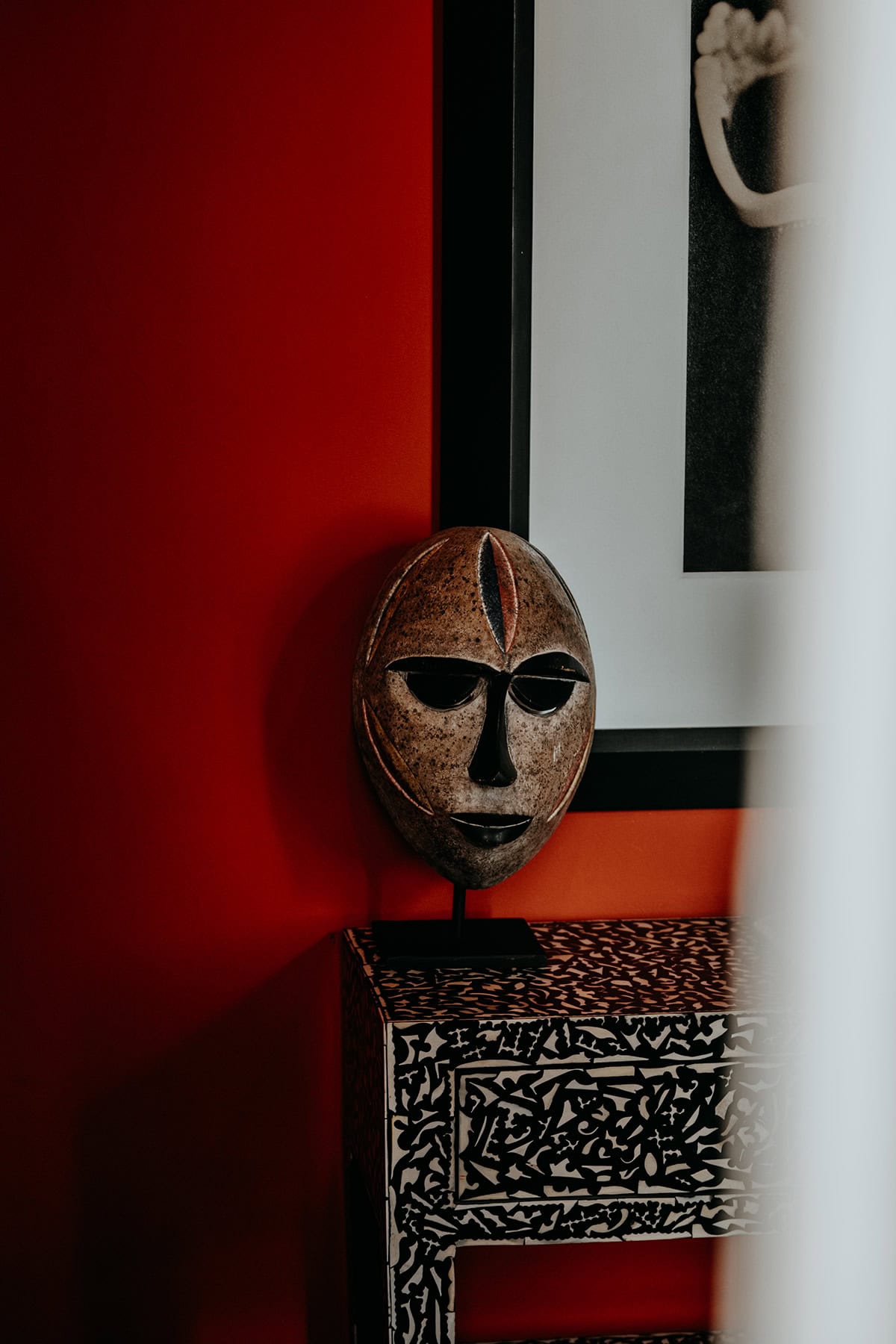
The pool area is great, and set within a spacious, yet intimate courtyard with lush vegetation and a well-curated selection of thought-provoking art pieces and bold imagery, making this riad a little more expressive than your typical riad – something I absolutely adored.
Then there’s the rooftop terrace, all set with a restaurant, lounge area, and bar, making it the ideal spot for a few sundowners while enjoying the scenic views over the medina.
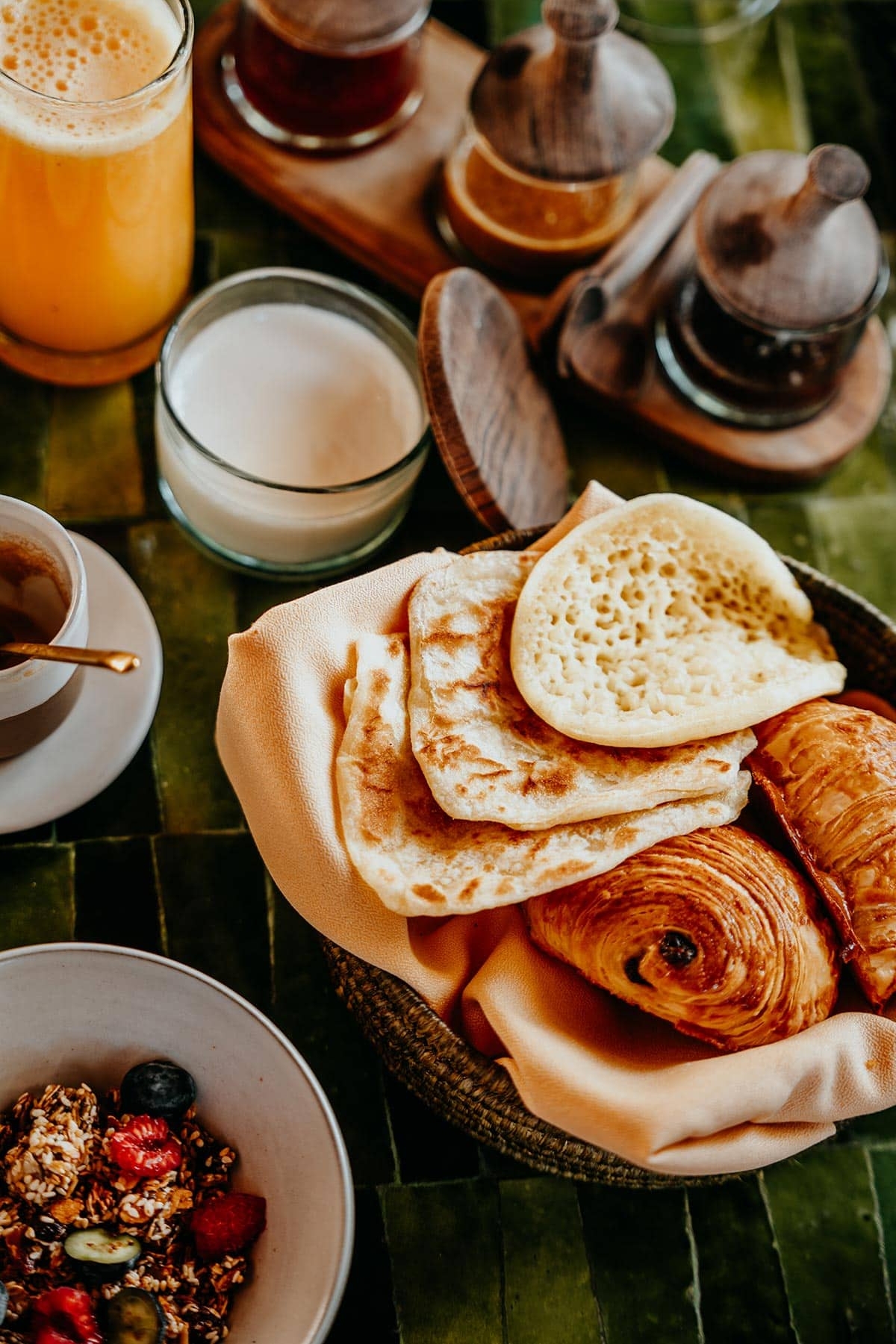
My mornings at Riad Sakkan were equally impressive, where I enjoyed my daily read paired with an espresso, all whilst waiting for the amazing breakfast, which included freshly baked Moroccan pastries, seasonal fruit, and eggs of choice.
While Sakkan is definitely larger than some riads on this list, it still manages to preserve that intimate, boutique-like feeling for which travellers tend to flock to Marrakech in the first place.
Where | Riad Sakkan
Cost | Starting at €210 a night
Go for | Traditional Moroccan architecture with a touch of bold artistic expression
6. Riad L’Atelier
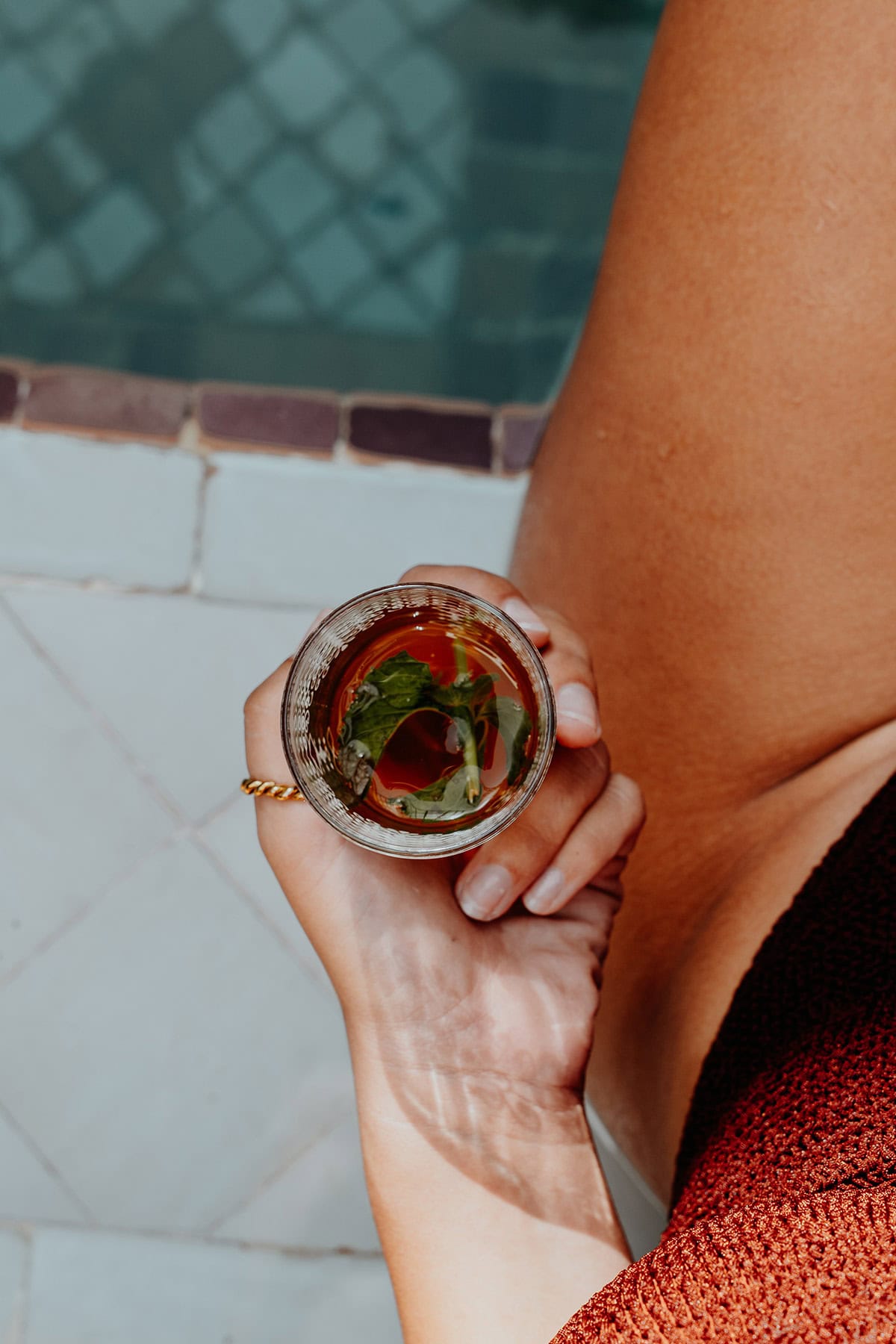
From the moment I was welcomed by the friendly staff with a soothing mint tea after a terrible (food poisoning, is that you?) journey from Imsouane to Marrakech, I knew this charming riad would provide the ideal setting to rest and recharge.
Which was exactly what I desired after a week of surfing on Morocco’s rugged Atlantic coast.
Set within the historic yet vibrant Kaat Benahid district, just steps from the Ben Youssef Medersa, Riad L’Atelier is a serene retreat, carefully curated to offer guests a place of ultimate relaxation.
Life at Riad L’Atelier moves at a slower pace, whether spent unwinding by the pool, enjoying the welcoming shade of the lush courtyard, or simply relaxing on the rooftop terrace with a good book in hand. Here, relaxation is simply inevitable.
Rooms open up to a stunning courtyard and are defined by grounding earthy tones, a thoughtful blend of modern furnishings and local handicrafts, beautifully designed bathrooms complete with a rain shower, and luxe Botanika Marrakech bath amenities.
Breakfast is a calm, beautifully presented experience, served either in the courtyard or on the terrace. To me, it’s exactly what mornings in Marrakech should feel like, with freshly baked Moroccan pastries, seasonal fruits, eggs cooked to your liking, and a good cup of espresso to kickstart the day ahead.
So, if comfort and intimacy are what you’re after, Riad L’Atelier delivers both with quiet confidence, all while the lively Marrakech medina awaits just beyond its doors.
Where | Riad L’Atelier
Cost | Starting at €146 a night
Go for | A carefully curated riad full of character and an effortless sense of calm
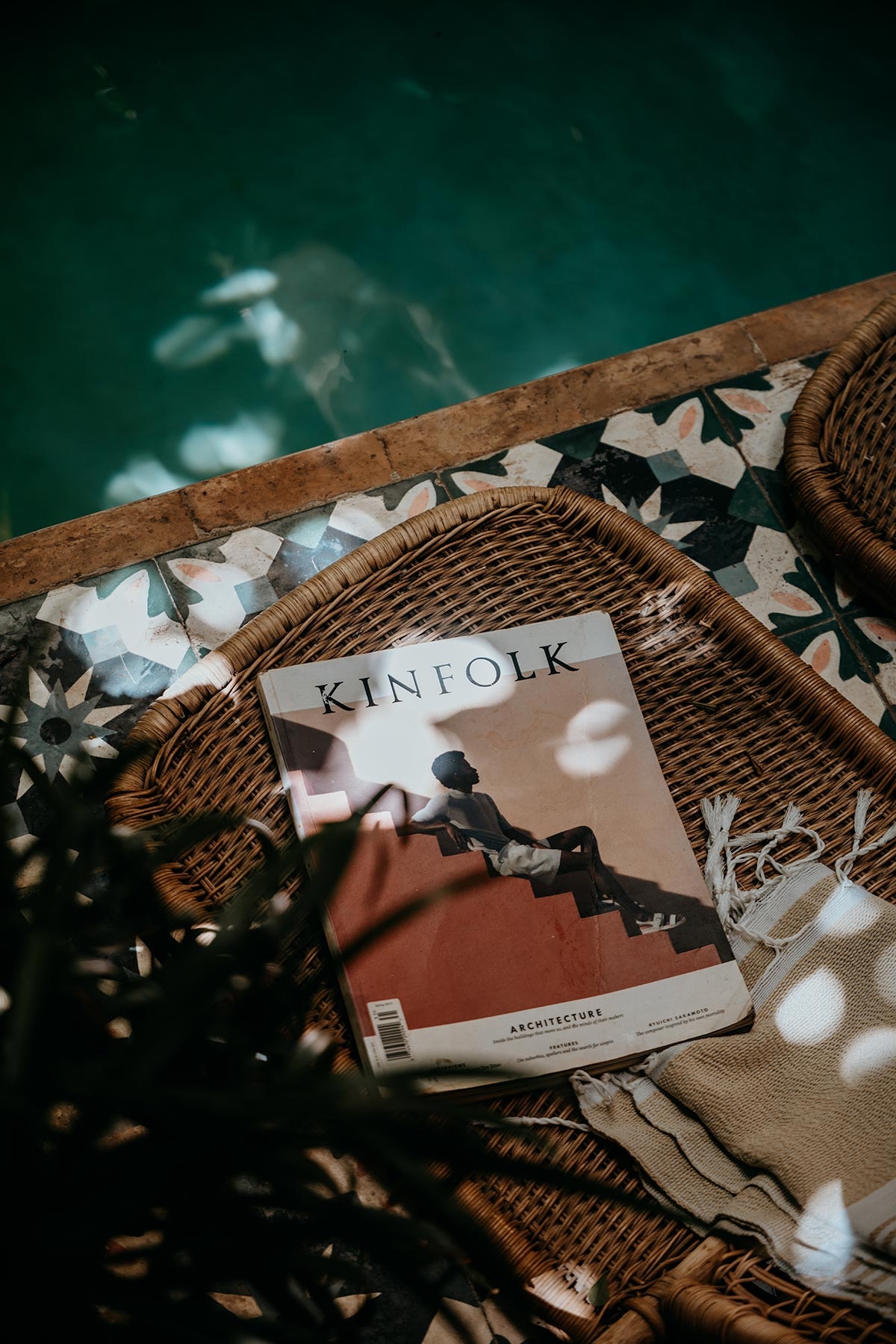
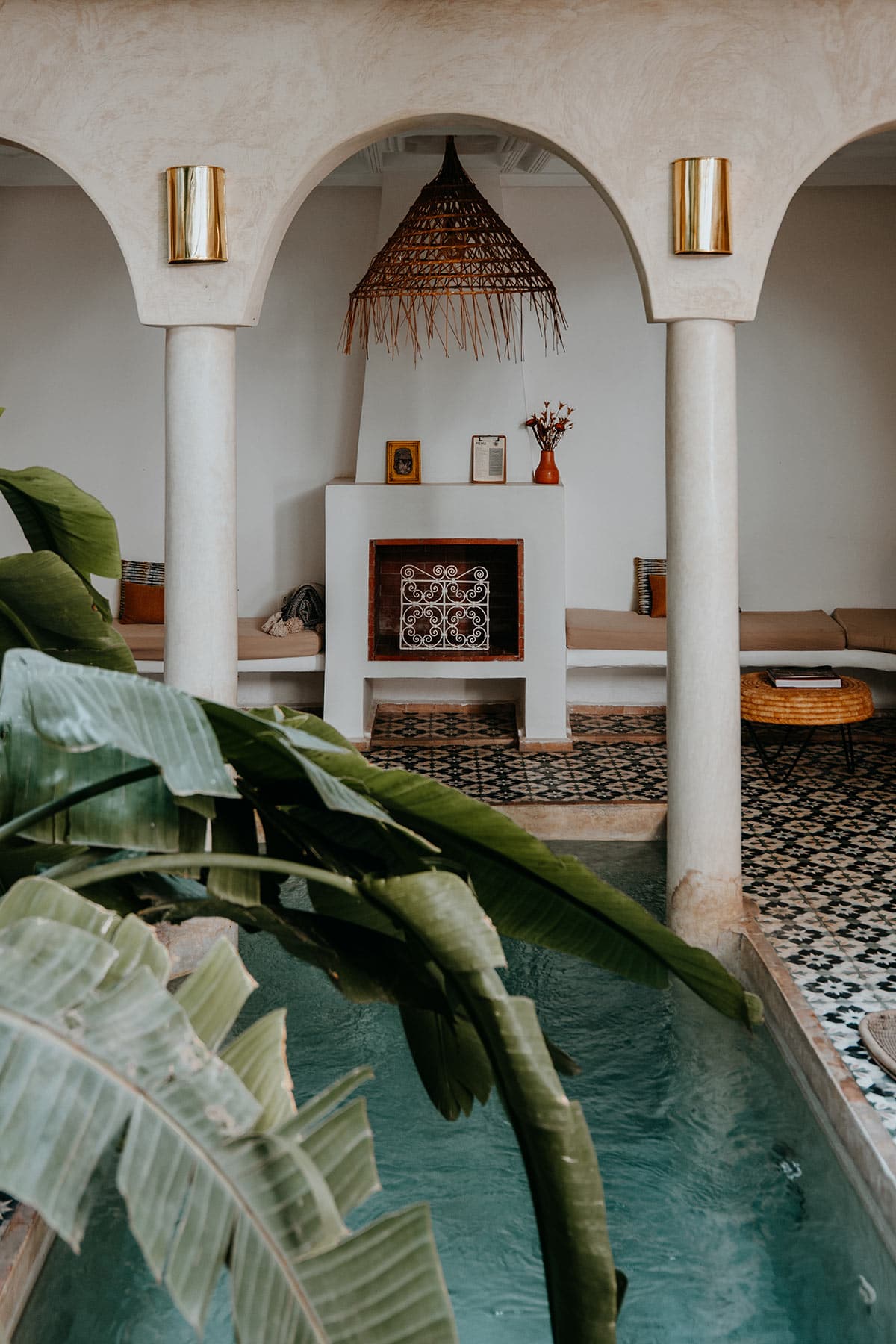
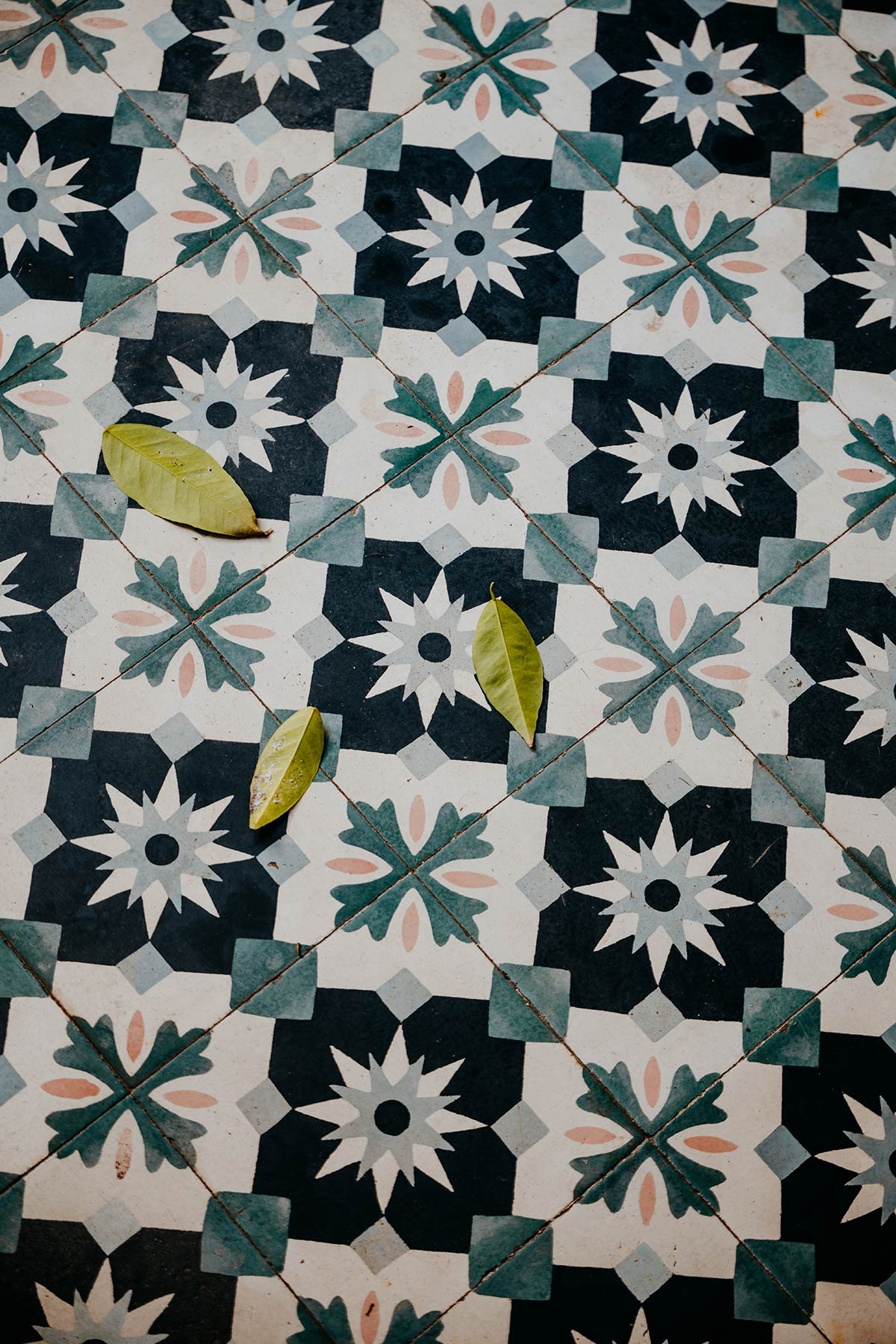
7. Riad El Aaiún
The newest addition to the Brummell family, Riad el Aaiún is a harmonious fusion of Moroccan tradition and contemporary comfort.
Set within the quiet northern section of the Marrakech medina, this riad is absolutely stunning, and it’s fairly easy to notice the touches of the masterminds behind Maison Brummel in this wonderful riad.
Instead of a riad, it feels more like a friend’s beautifully kept home, where traditional aesthetics and carefully curated design pieces give character and warmth, and where every nook and cranny gives you the chance to find something inspiring – it’s almost like you’re visiting a well-thought-out art gallery.
I stayed in the spacious Medina Deluxe suite, a beautifully designed room defined by vintage furnishings, traditional Moroccan elements, and modern amenities, which created a unique, yet welcoming home-like ambience.
On the rooftop terrace, you will find a small yet stunning pool to cool down from the simmering Moroccan heat, accompanied by a calligraphic tile artwork by Moroccan artist Noureddine Daïfallah – which is a highlight in its own right, and without question, one of the most iconic features of this riad.
One thing I truly enjoyed was the walk to the riad. You see, with its location just steps from the charms of Bab El Khemis, you’re wandering through one of the most untouched parts of the Marrakech medina, giving you a glimpse of the authentic soul that makes this city so special.
Once I checked in, I was also delighted to hear that I was among the first-ever guests, which added a noteworthy touch of excitement to my stay here.
Where | Riad El Aaiún
Cost | Starting at €110 a night
Go for | An adults-only oasis of calm in a quieter, more soulful part of the Marrakech medina
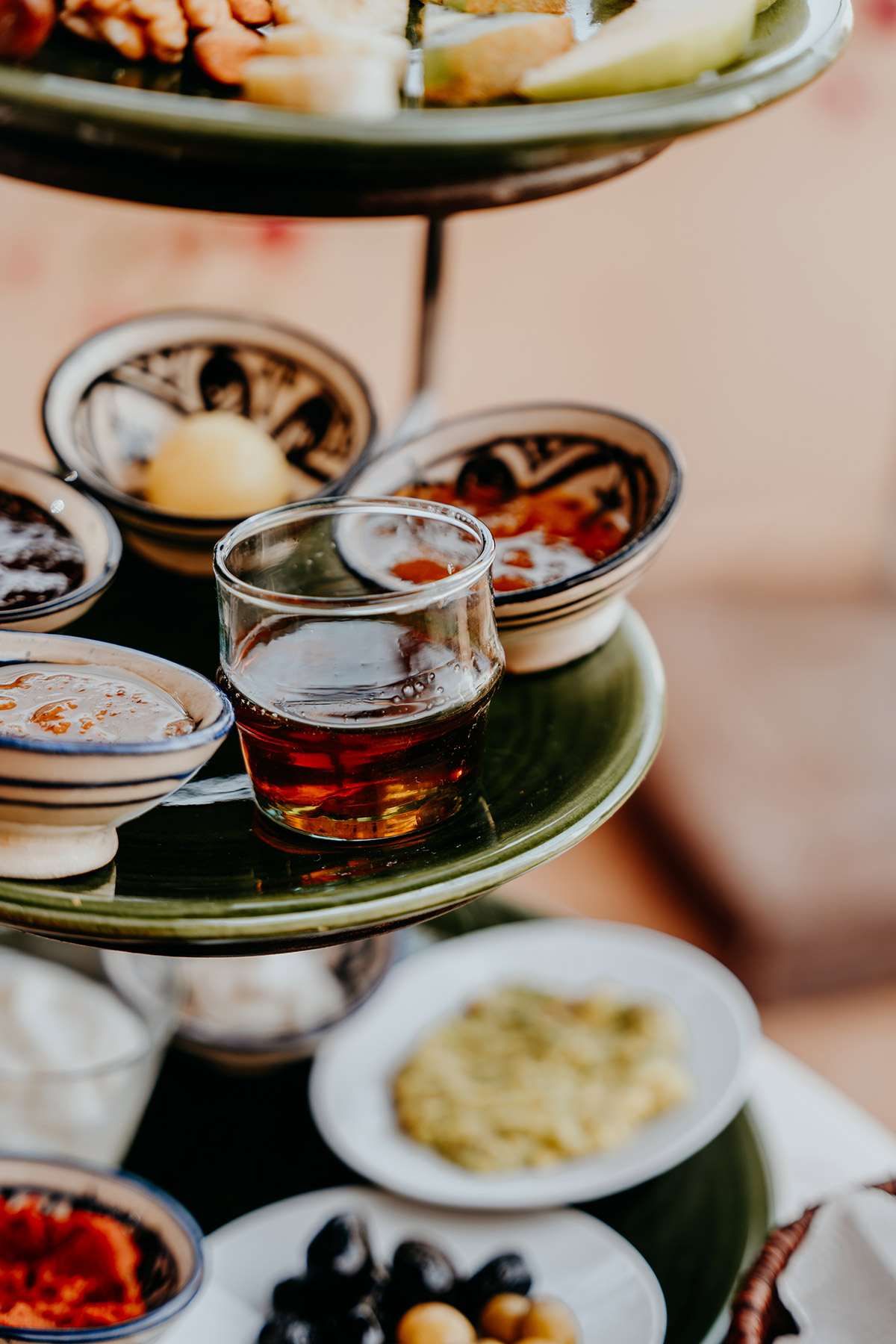
8. Riad Yasmine
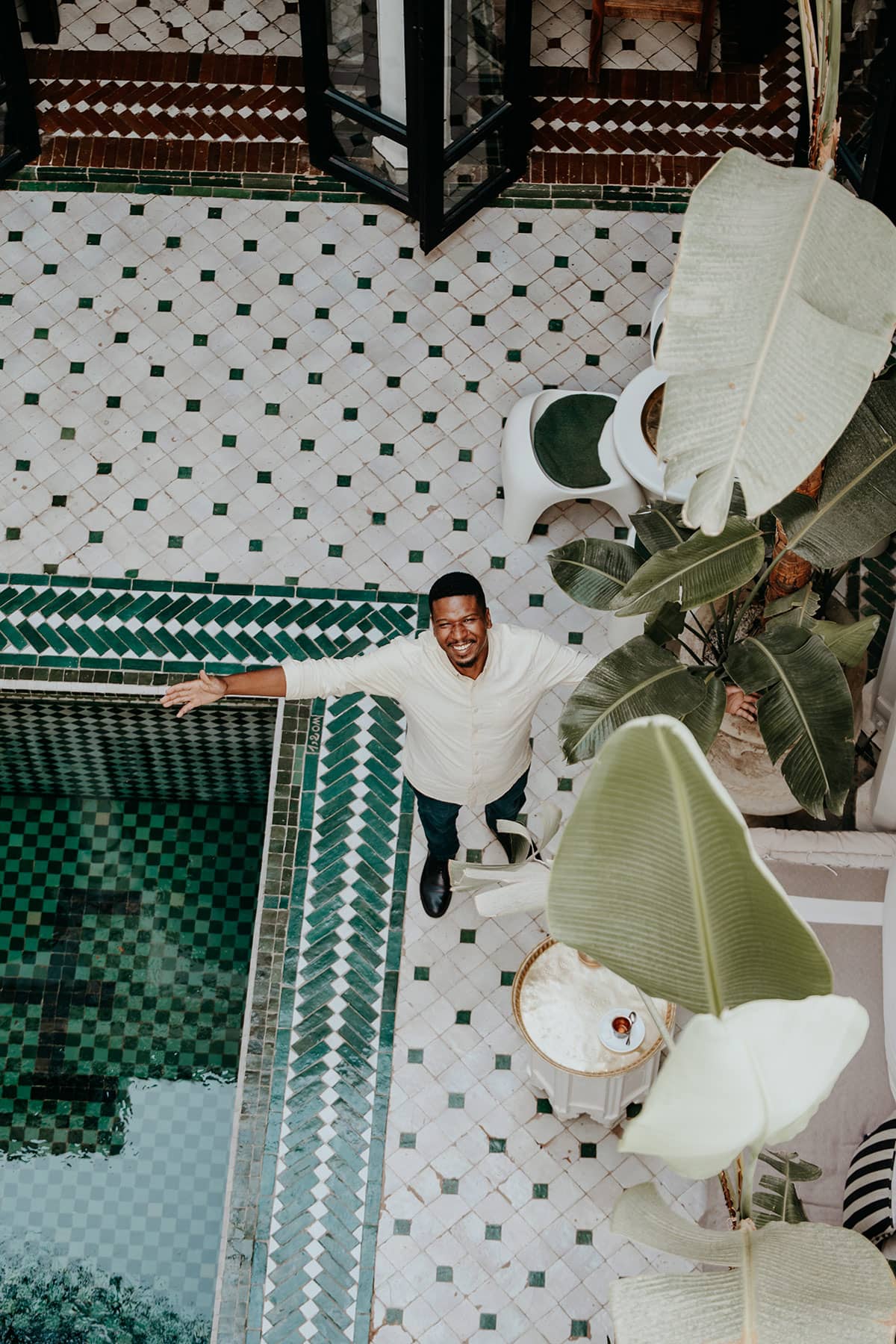
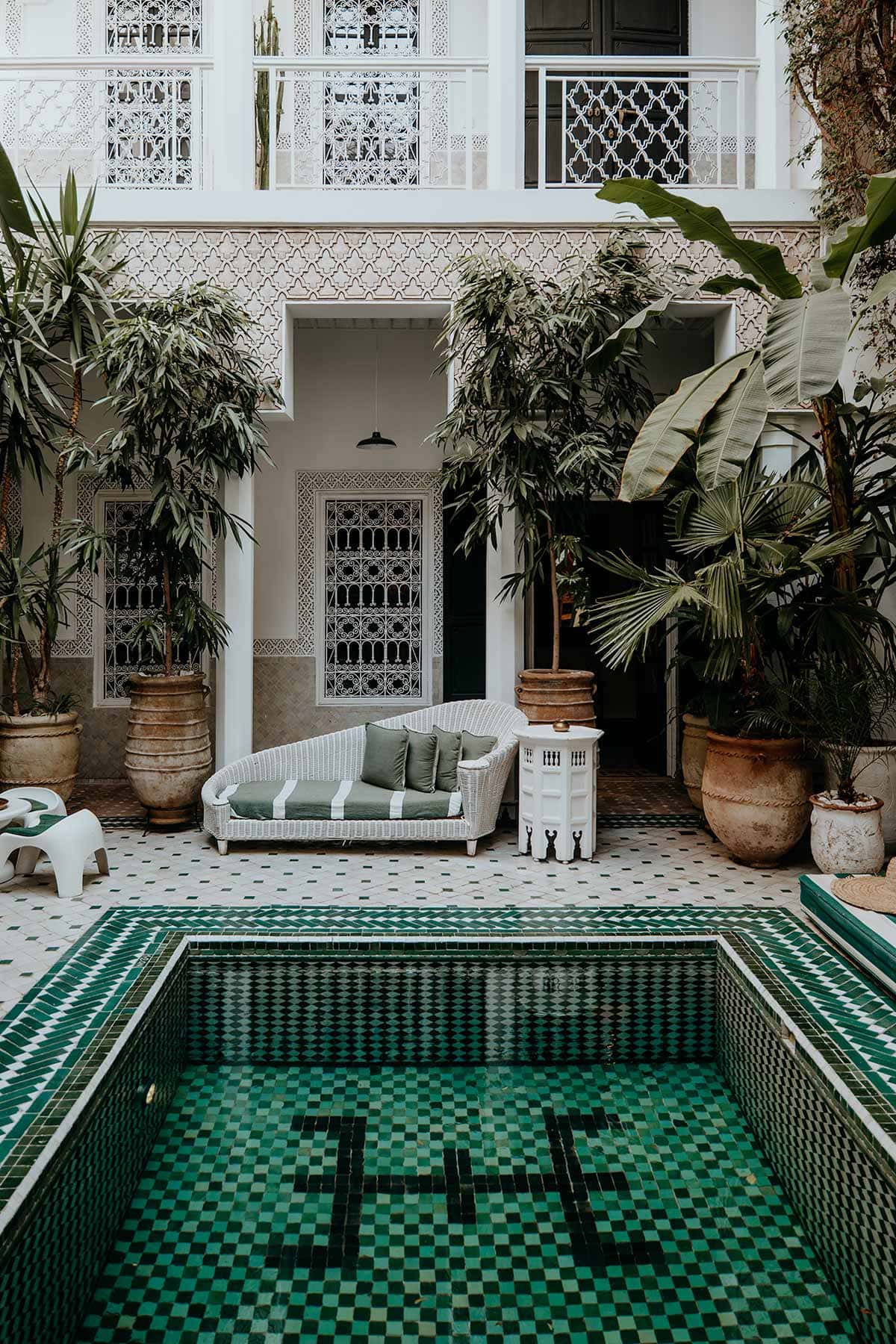
Run by Alice & Gabriel, the most friendly couple from the South of France, this family-run riad is somewhat of an early adopter in the riad scene we know today, with a setting so iconic it has become one of Marrakech’s most photographed spots.
First opened in 2002, Riad Yasmine is a private, 8-room boutique-style riad, tucked away in the heart of the vibrant Marrakech medina, perfectly reflecting the intimate atmosphere that makes staying in a riad one of the most sought-after experiences in Morocco.
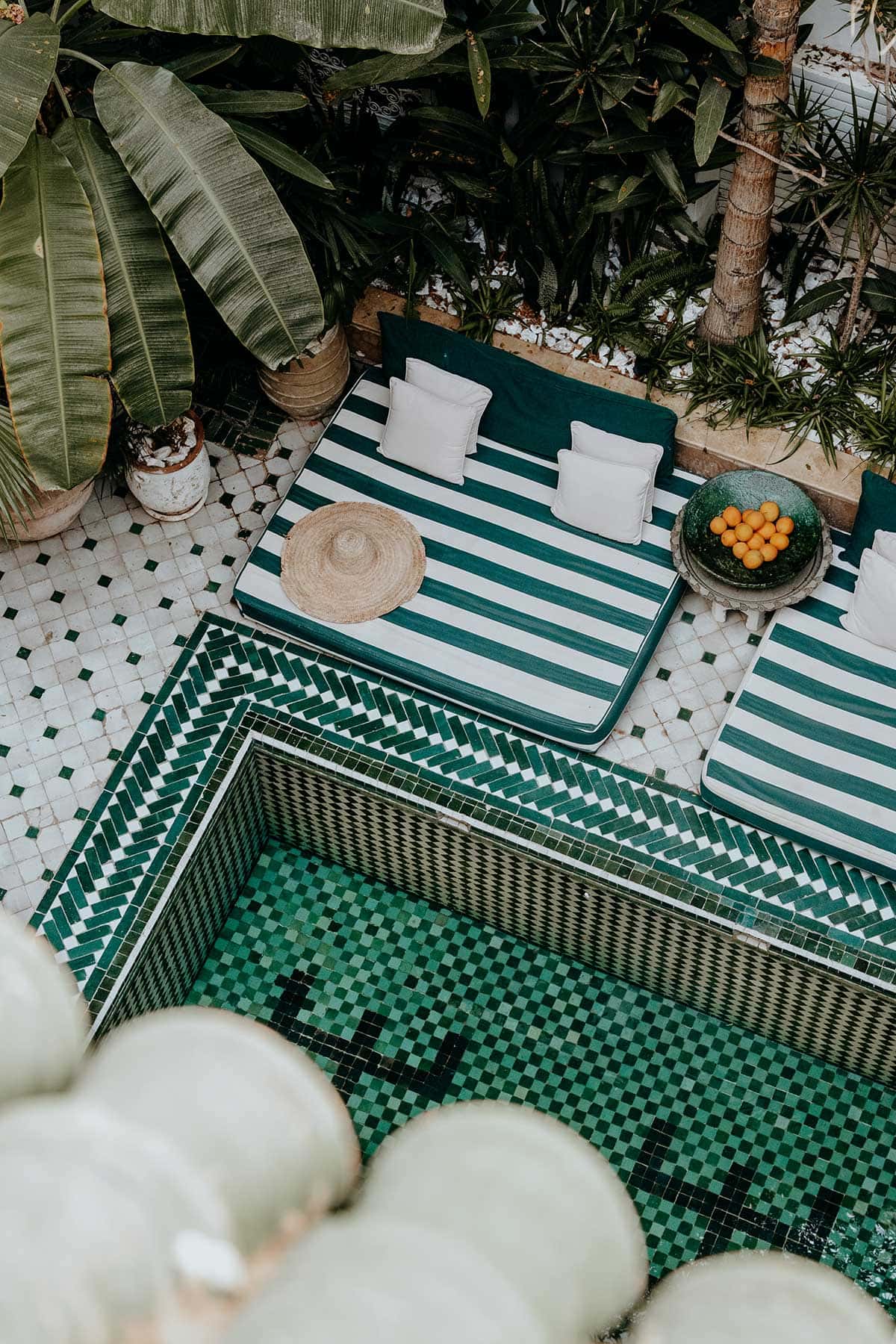
As with most traditional riads, the soul of Riad Yasmine is found in its iconic courtyard, complete with a turquoise-tiled pool, lush greenery, chirping birds and loungers to chill away an afternoon.
Surrounding the courtyard are eight rooms, each individually designed in the most exquisite manner, combining traditional Moroccan craftsmanship with modern touches and comfort.
They also happen to have an outstanding taste in music, which echoes smoothly in the background while enjoying the common areas, adding a hint of magic to the overall experience.
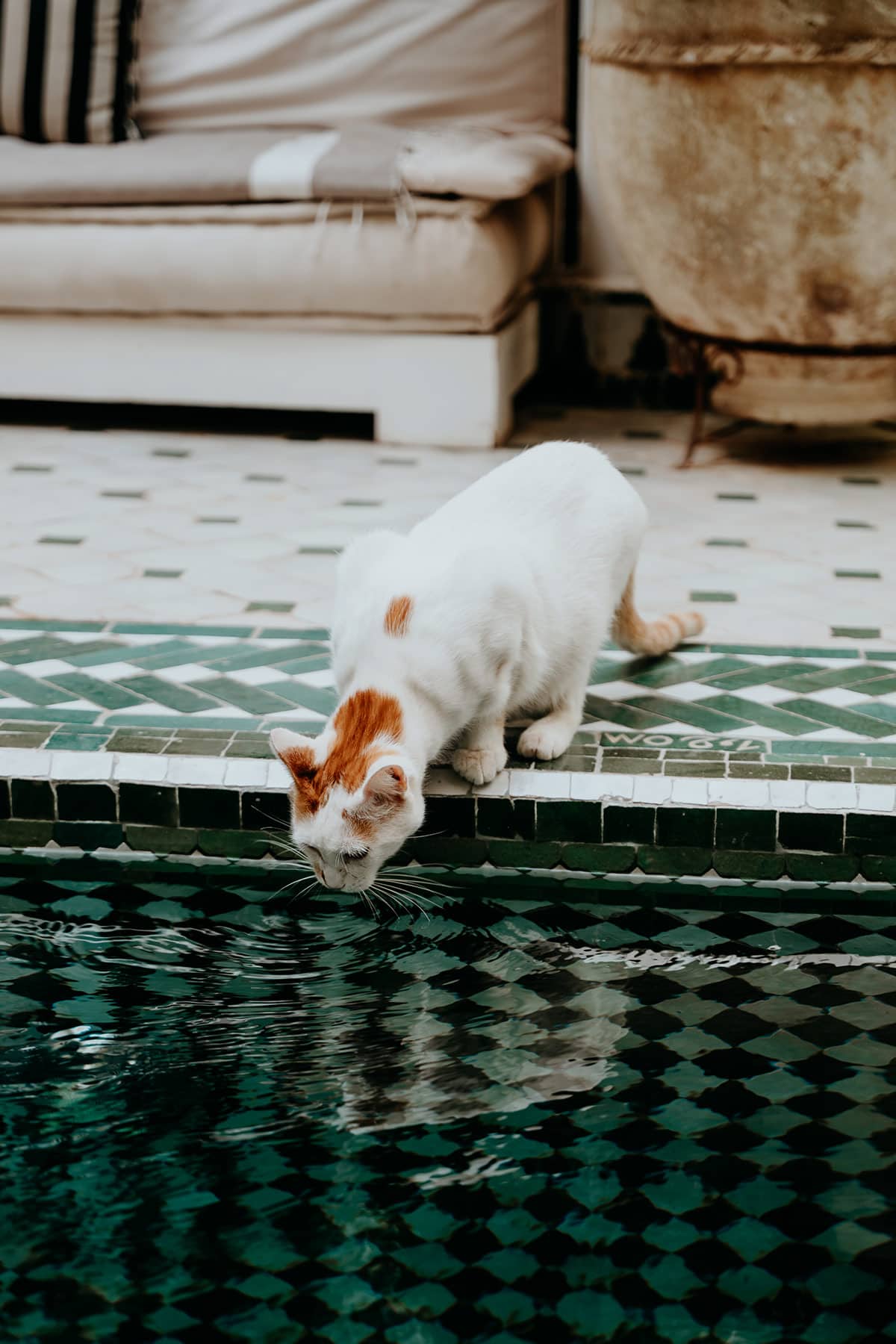
While the riad itself is beautiful as can be, it was the warmth and hospitality that stayed with me long after my stay – thanks Alice, Gabriel, Ibrahim, and Otis – yes, they have a residential cat.
Where | Riad Yasmine
Cost | Starting at €160 a night
Go for | Its iconic turquoise-tiled pool and, of course, Otis, the house cat
9. Riad Le Pèlerin
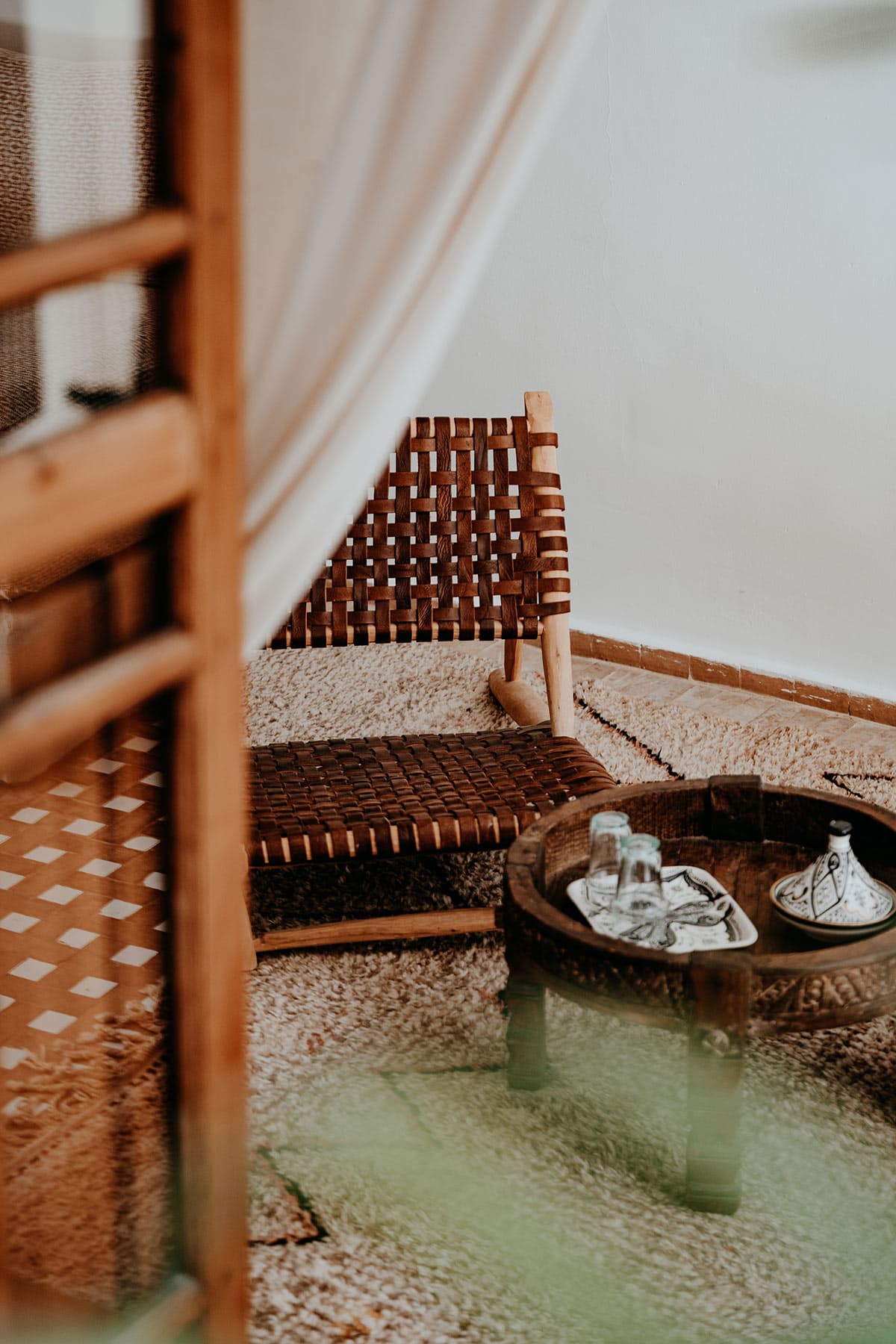
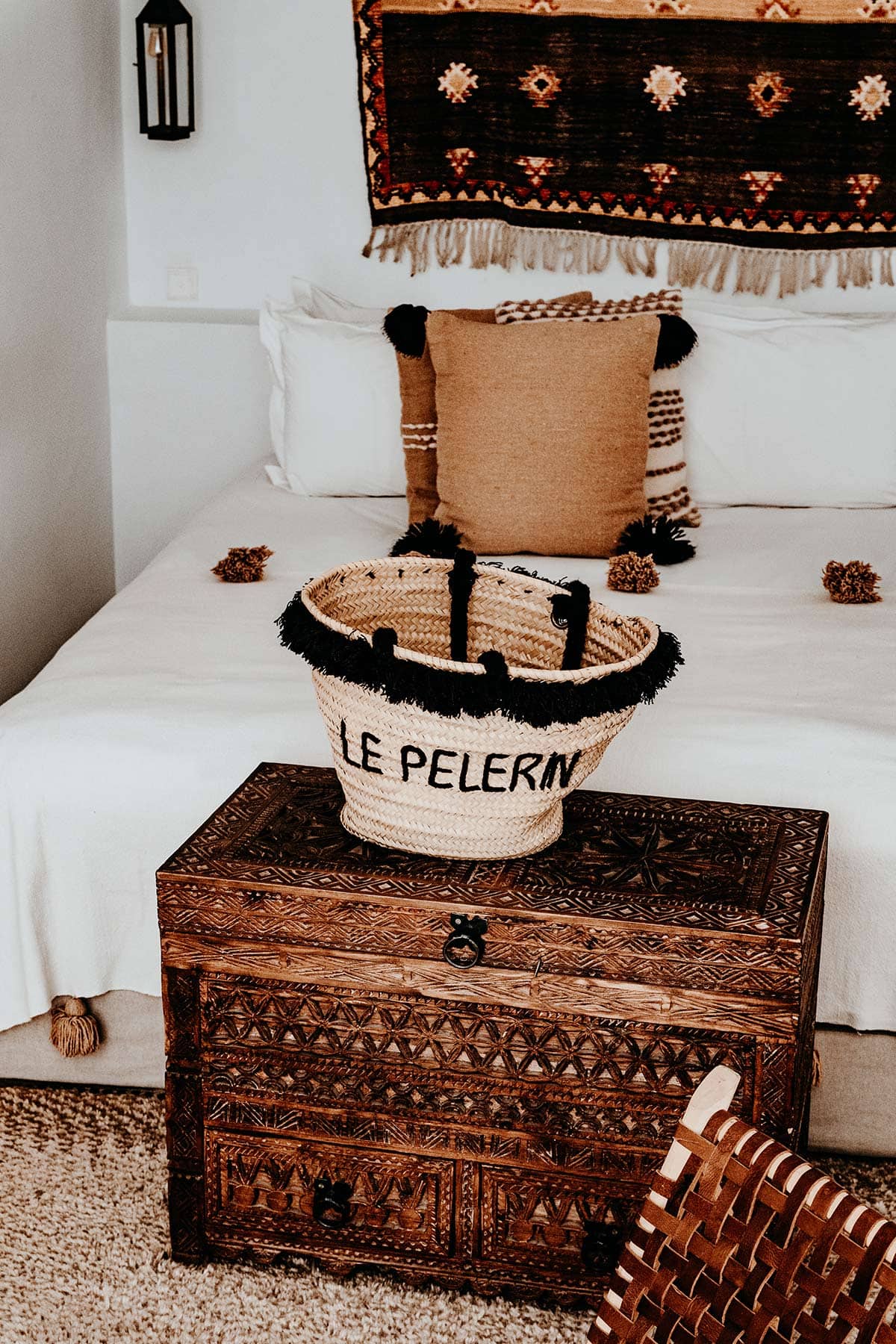
Defined by warm wooden textures and a beautifully balanced design, the robust yet refined Riad Le Pèlerin is another marvellously turned-out gem in the ancient Marrakech medina.
Housing just seven rooms, each named after a distinctive Berber village, Riad Le Pèlerin is intimate, authentic and peaceful, which is exactly how a traditional riad was intended to be.
The rooms themselves are warm, wonderfully cosy, and delicate, featuring natural materials, locally sourced furniture, and subtle, earthy tints that set the tone for a comforting stay.
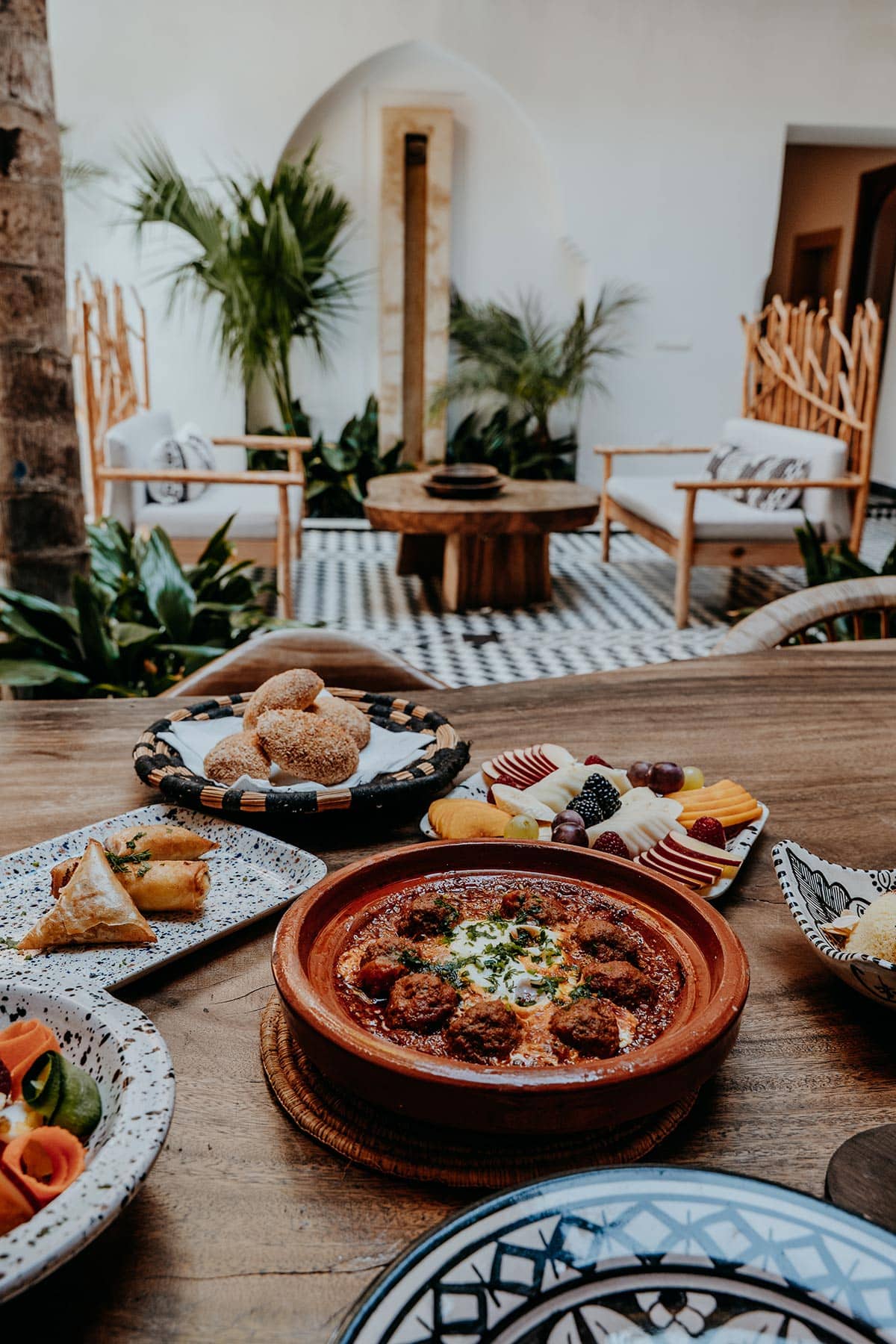
Another highlight in their own right is the food. During my time here, I had an unequivocal Moroccan feast, complete with a mouthwatering shakshuka, fresh seasonal fruits, hearty pastilla, with some freshly baked bread and couscous on the side – a feast indeed!
While there’s no pool at Pèlerin, there’s plenty of nooks and crannies to get some relaxation in, whether it’s within the plant-filled courtyard or on the sun-drenched rooftop terrace.
Where | Riad Le Pèlerin
Cost | Starting at €156 a night
Go for | A calm, authentic stay inspired by raw materials and Berber heritage
10. Riad Kasbah & Spa
Tucked away in the Kasbah district, just minutes from the stunning Saadian Tombs and the enormous El Badi Palace, Riad Kasbah & Spa is one of the most treasured riads in Marrakech.
If the hustle and bustle found at the heart of the medina sounds a little overwhelming, which it can definitely be for first-time visitors of Marrakech, Riad Kasbah & Spa might be the fit for you, as the Kasbah district offers a significantly more tranquil alternative.
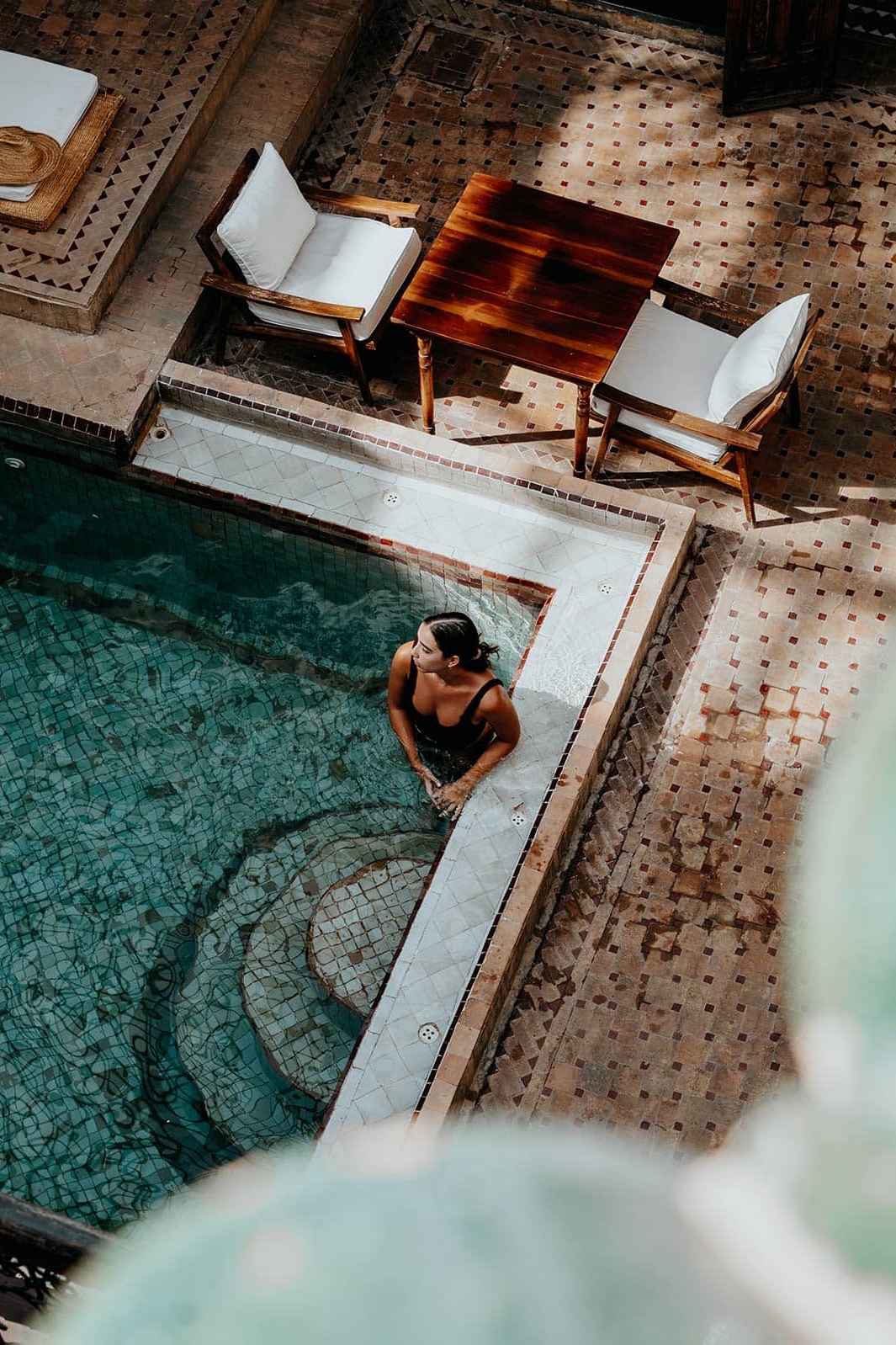
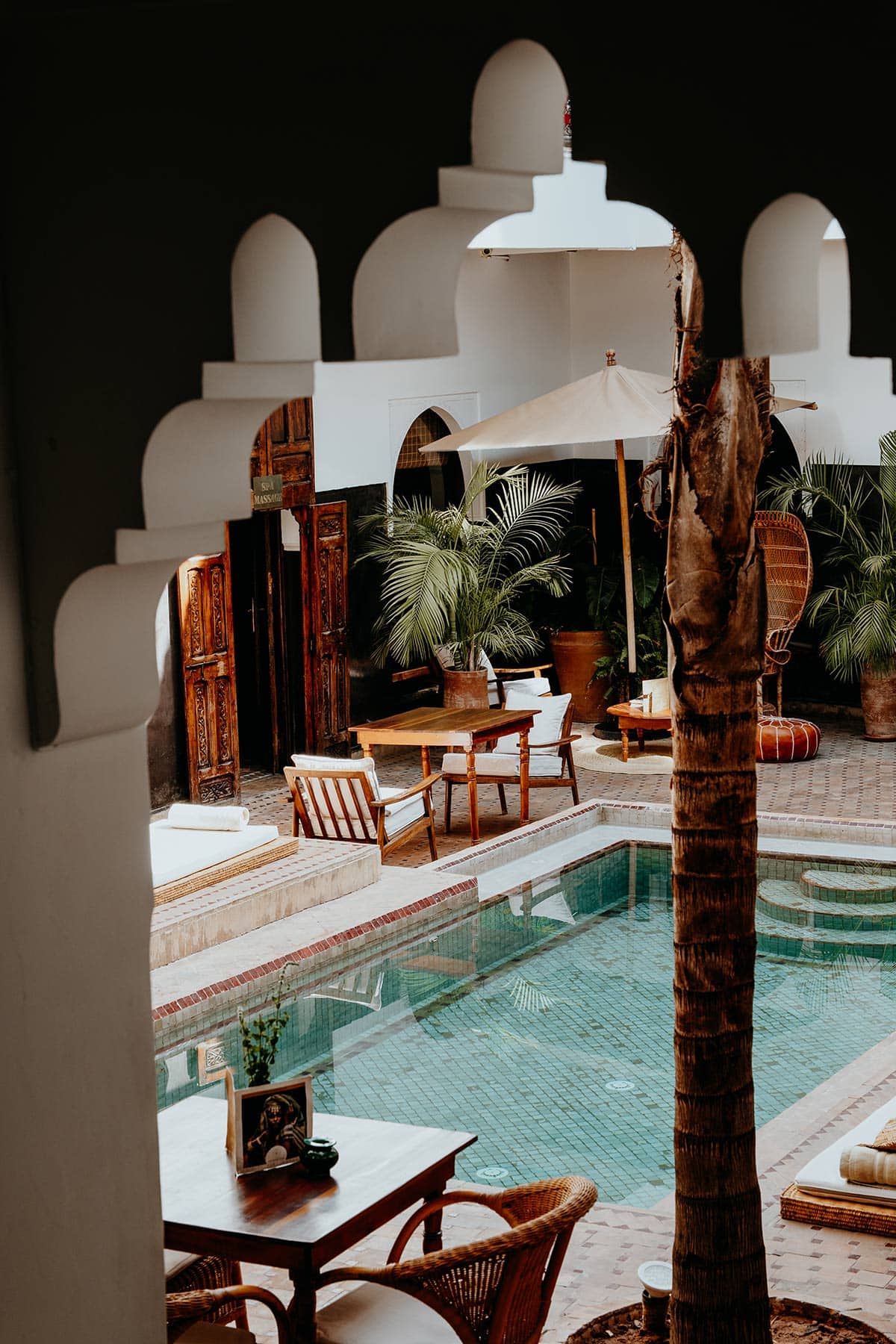
While each room has its own character, the real highlight is found just outside its patio doors, where one of the most Instagram-worthy courtyards in Marrakech awaits, with the sort of pool you typically only see in design magazines.
But it is not just the design that stands out here. No, they also serve an exceptional breakfast spread complete with some of the best Msemen (Moroccan pancakes) I had in Morocco, fresh fruits, and a delish Amlou (sweet Moroccan almond butter).
Add to that attentive service, a charming rooftop, an excellent on-site spa, and a calming sense of intimacy, and you understand why Riad Kasbah & Spa became a traveller favourite.
All in all, I truly loved this riad, given it was the perfect place to unwind after spending some days on the road, where I explored some of Morocco’s most fascinating locations, including Agafay, Taghazout and Essaouira.
Where | Riad Kasbah & Spa
Cost | Starting at €134 a night
Go for | A tranquil escape with a courtyard pool, excellent spa facilities, and an outstanding breakfast
11. Riad KRÈME
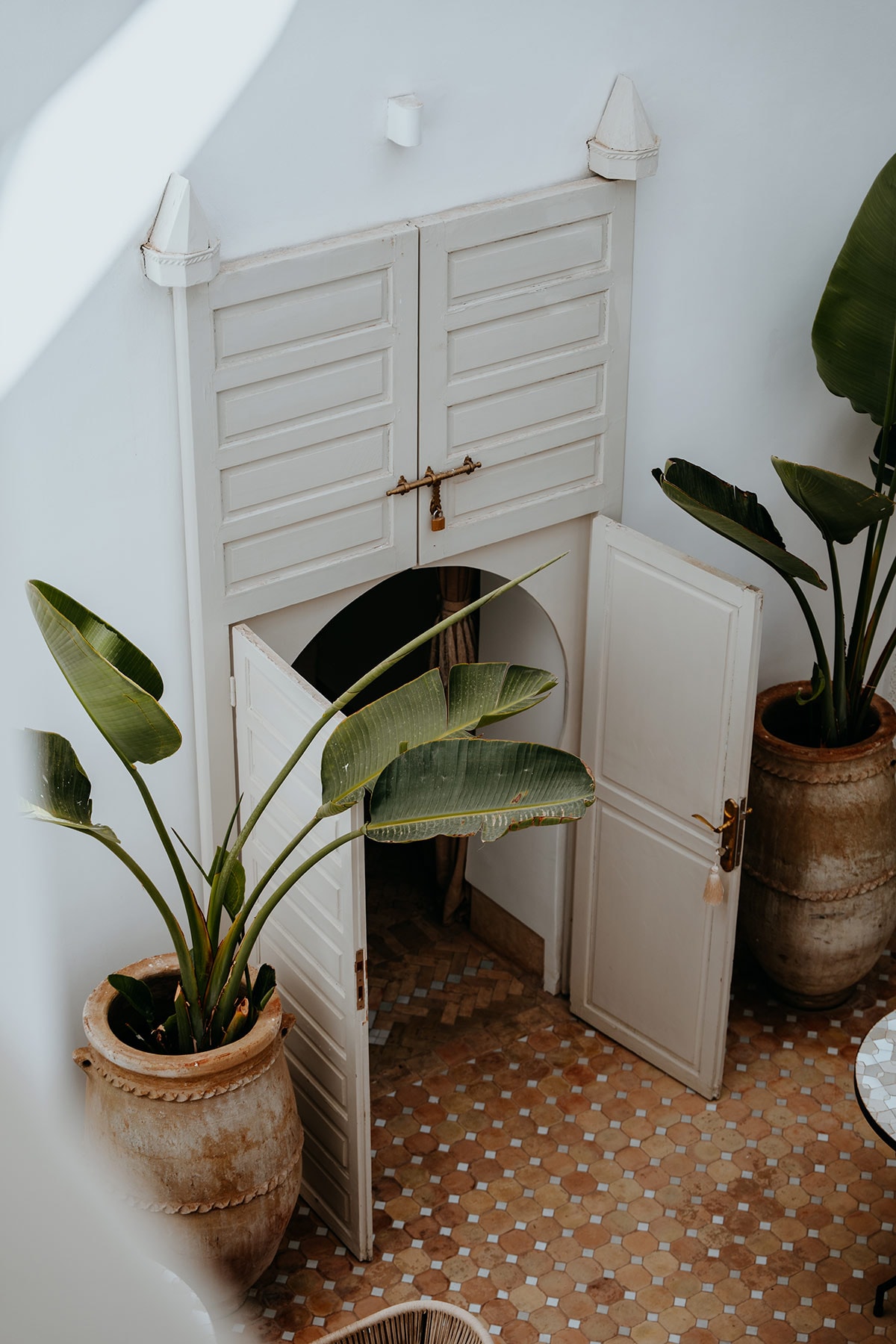
Completely different from the traditional riads found in Marrakech, the minimal, yet exceptional Riad KRÈME is intimate, stunningly beautiful and full of character.
While not as colourful as your typical riad, Riad KRÈME is a rare find, with minimalism, quiet luxury, and modern refinement setting the tone instead – some values I truly admire when searching for authentic accommodation options.
From the moment you step inside, you feel a sense of calm, where neutral tones, thoughtfully curated pieces, and warm wooden accents contrast gorgeously with the smooth tadelakt walls.
You can’t go around the fact that everything you see here has been done with intention and care, right down to the subtle scent of orange blossom that lingers in the air.
Besides their thoughtful design, they have an incredibly friendly staff as well as a traditional Moroccan breakfast spread to die for. Though I typically postpone my breakfast to noon, I simply couldn’t resist the temptation to pass on this one.
Where | Riad KRÈME
Cost | Starting at €157 a night
Go for | An intimate escape marked by minimalist luxury and quiet elegance
12. Riad Nyla Wellness & Spa
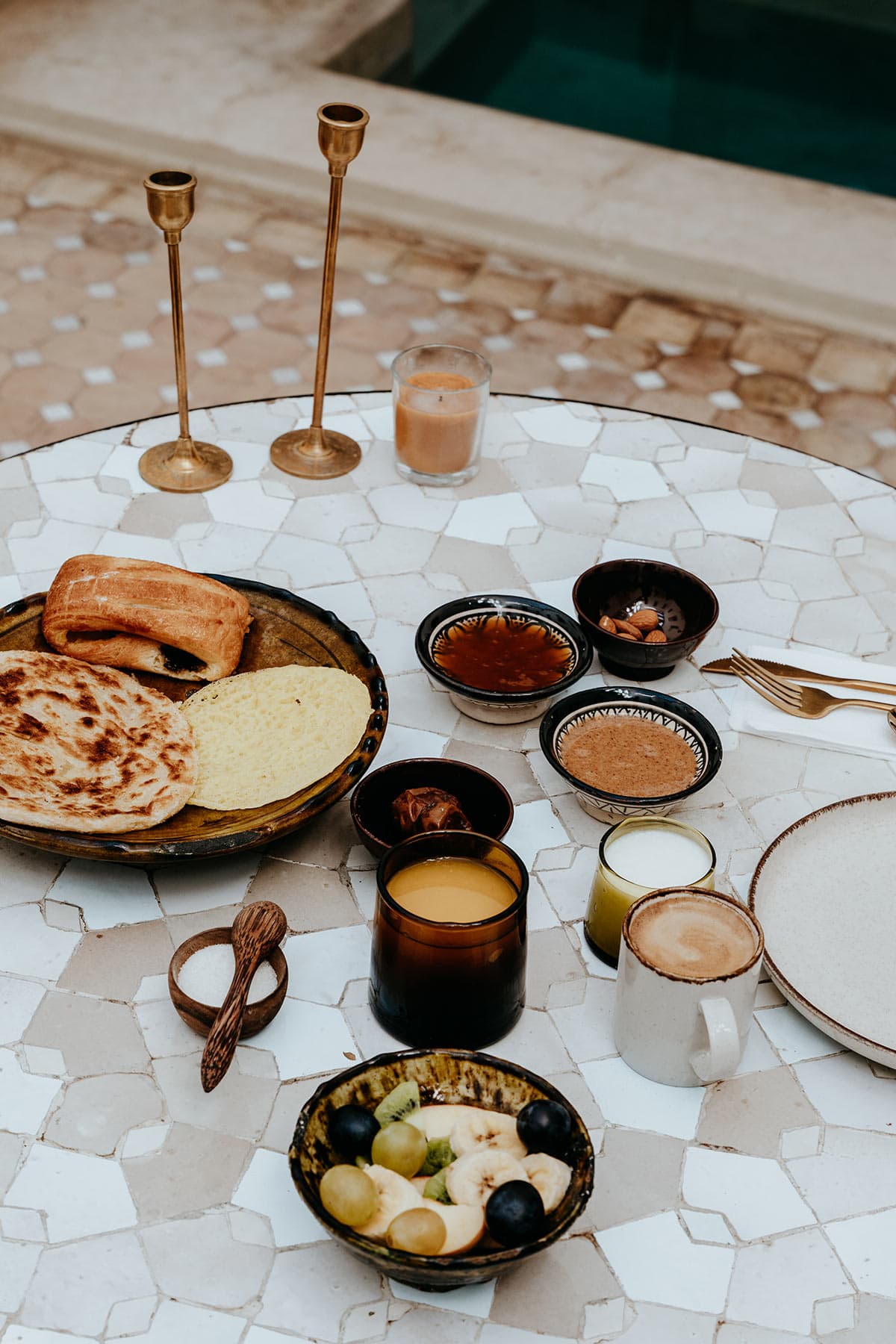
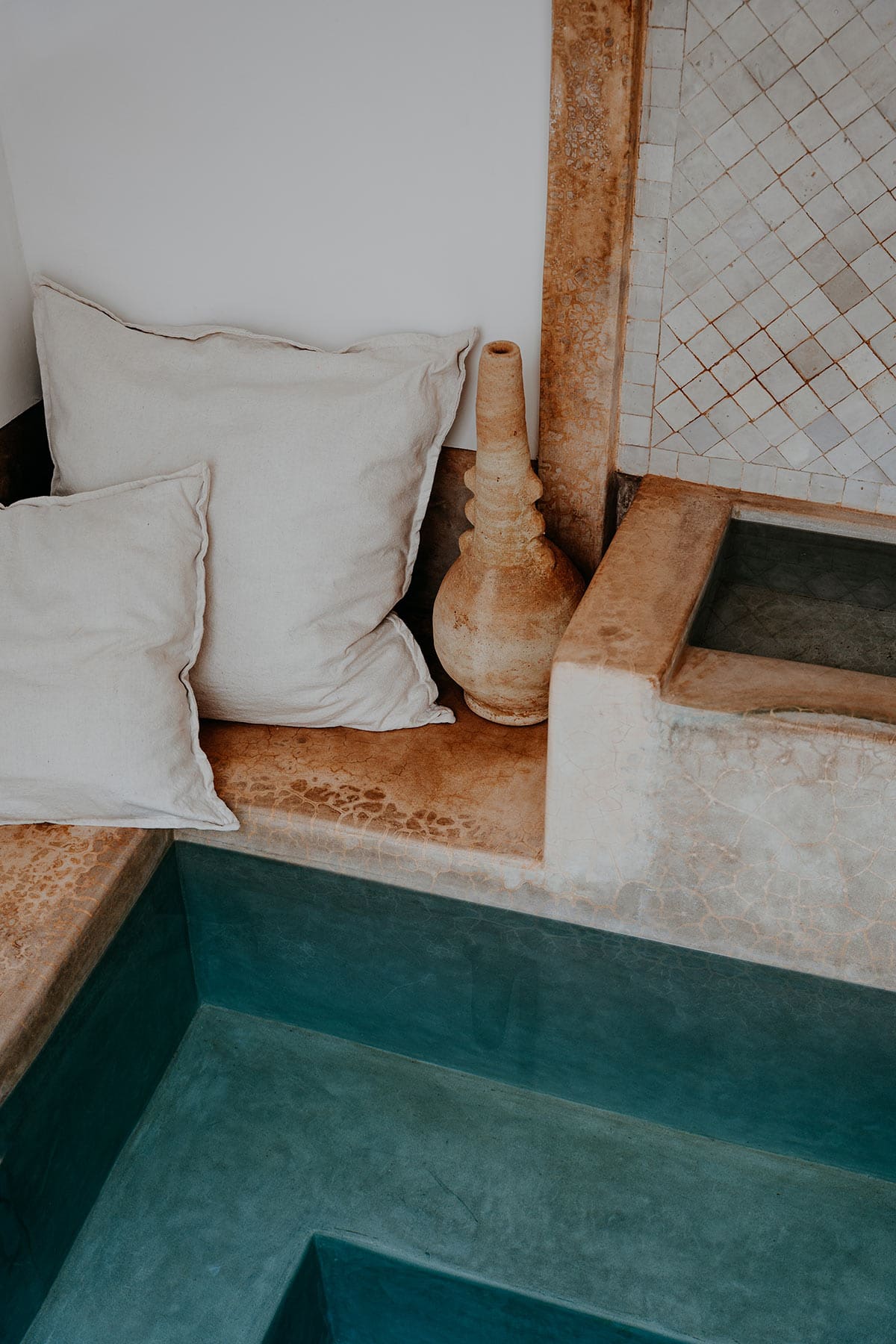
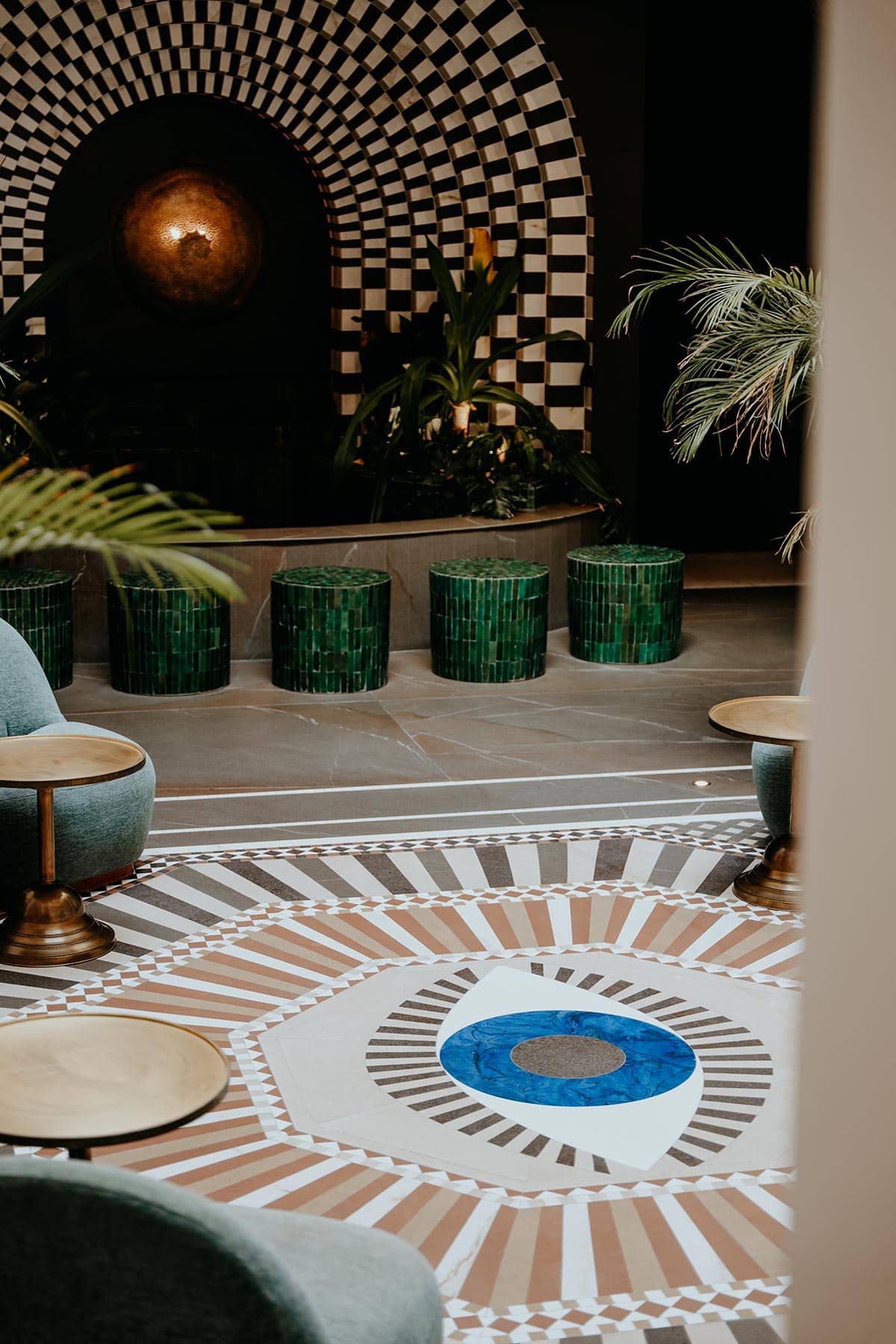
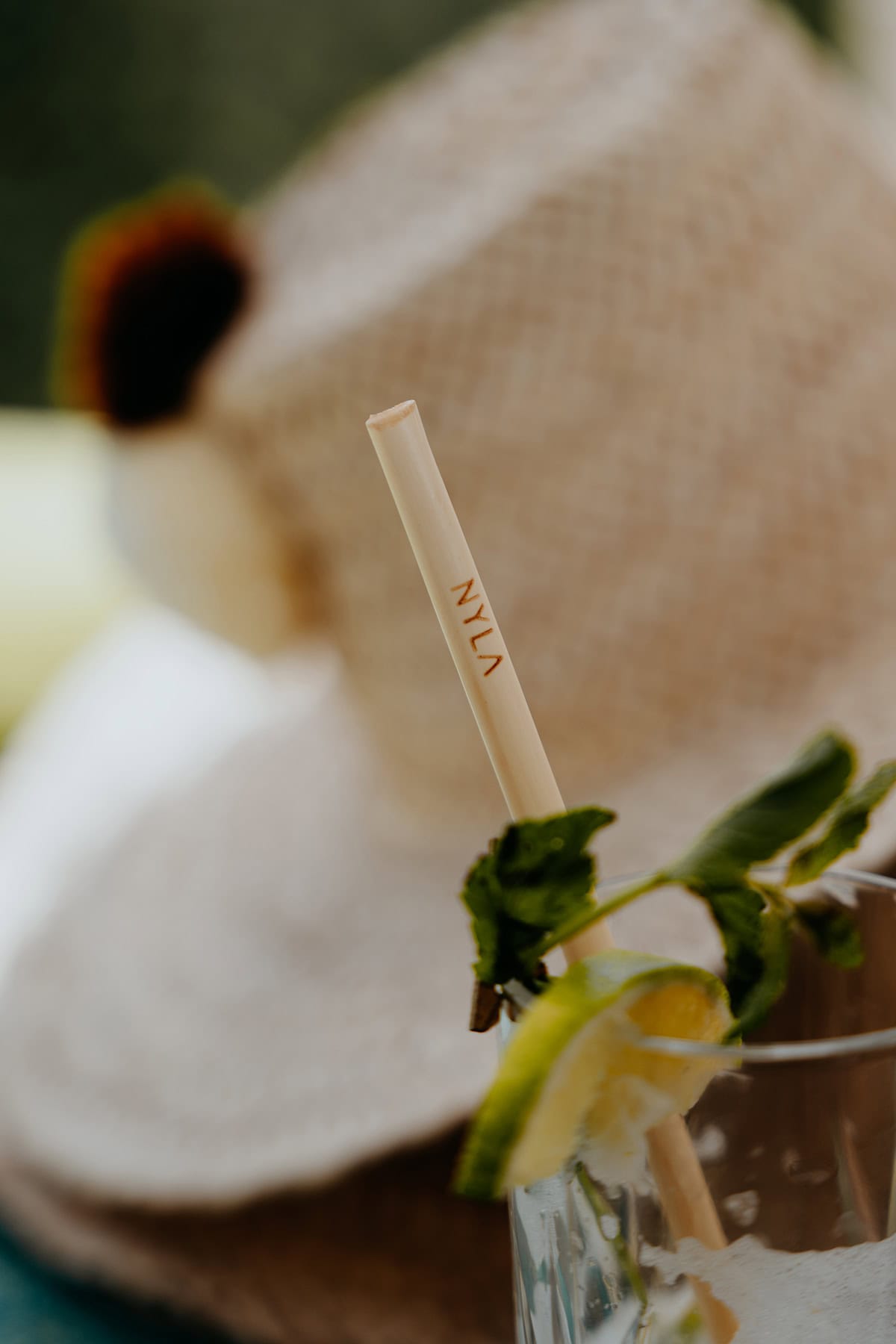
Relatively new, Riad Nyla Wellness & Spa has been brought to life by Italian architect Mattia Siviero and interior designer Corinne Dressler and blends tradition and modernity effortlessly.
Only minutes away from the famous Bacha Coffee, this luxury riad offers the comfort of a boutique hotel, while not compromising on traditional aesthetics, intimacy, and personal care.
In fact, these very values are what define Riad Nyla today: a stunning riad that pours its heart and soul into every little detail, with your overall well-being as its foremost priority.
While I typically don’t allow myself the time to unwind in a spa, I chose to opt for Riad Nyla’s traditional Marrakechi package, which included a 45-minute hammam, followed by a 30-minute relaxing massage – it was exactly what my body and mind needed after days of photography objectives within the chaotic Marrakech medina.
The following days, I was rejuvenated and all set to attack Nyla’s in-house gym. Yes, you read that right, they have a gym, which, according to my research, is not very common among riads in Marrakech.
As someone who is placing more and more importance on his fitness, overall health and daily routines, my time at Riad Nyla has been a welcoming and energising experience.
Where | Riad Nyla Wellness & Spa
Cost | Starting at €236 a night
Go for | A modern wellness-focused riad with spa, an in-house gym, and boutique-hotel comfort
The best riads in Marrakech | The essentials
The best things to do in Marrakech
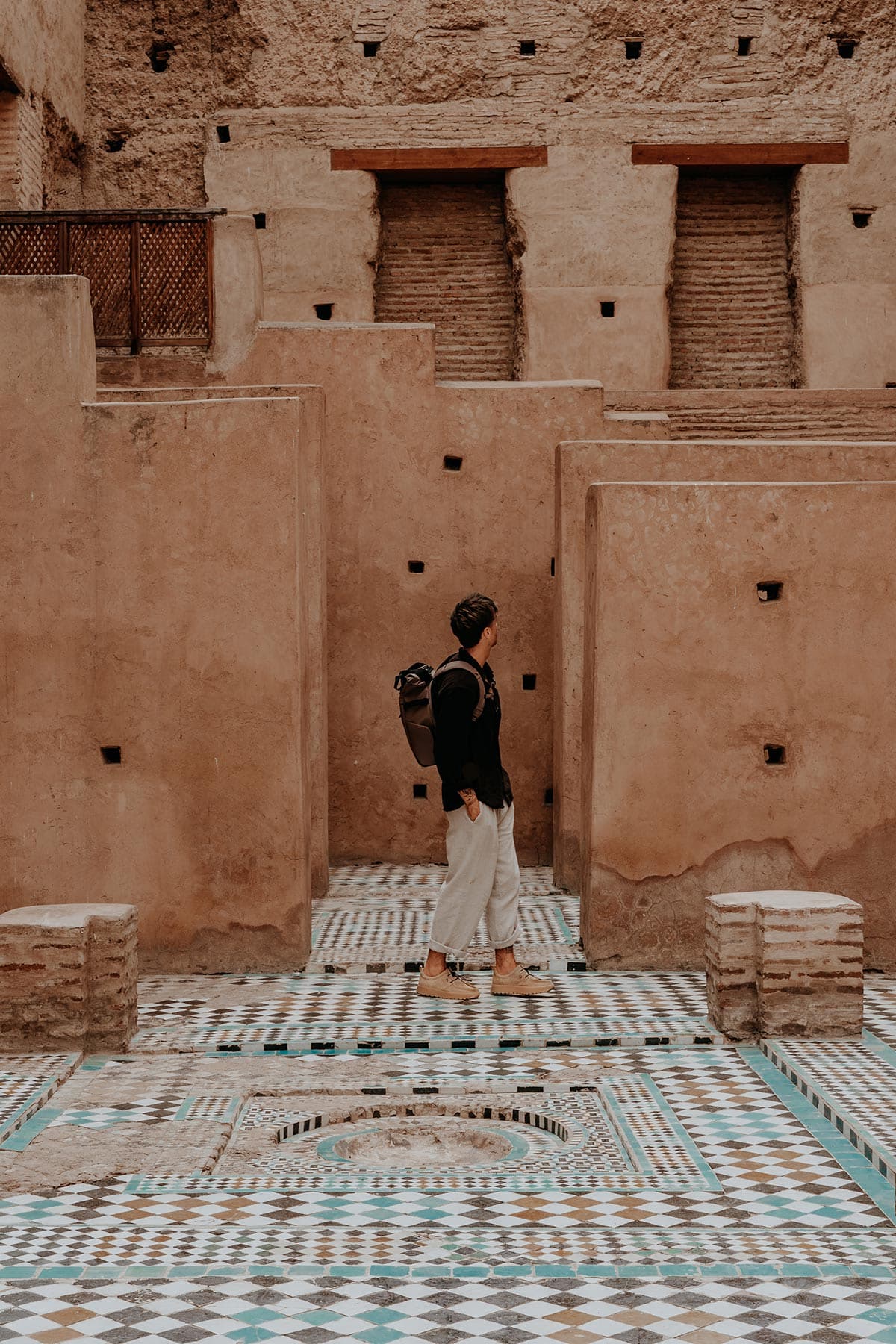
To me, one of the most significant advantages of staying in a riad is the fact that they’re often situated in the heart of the medina, meaning many of Marrakech’s popular sights are right there, on your doorstep.
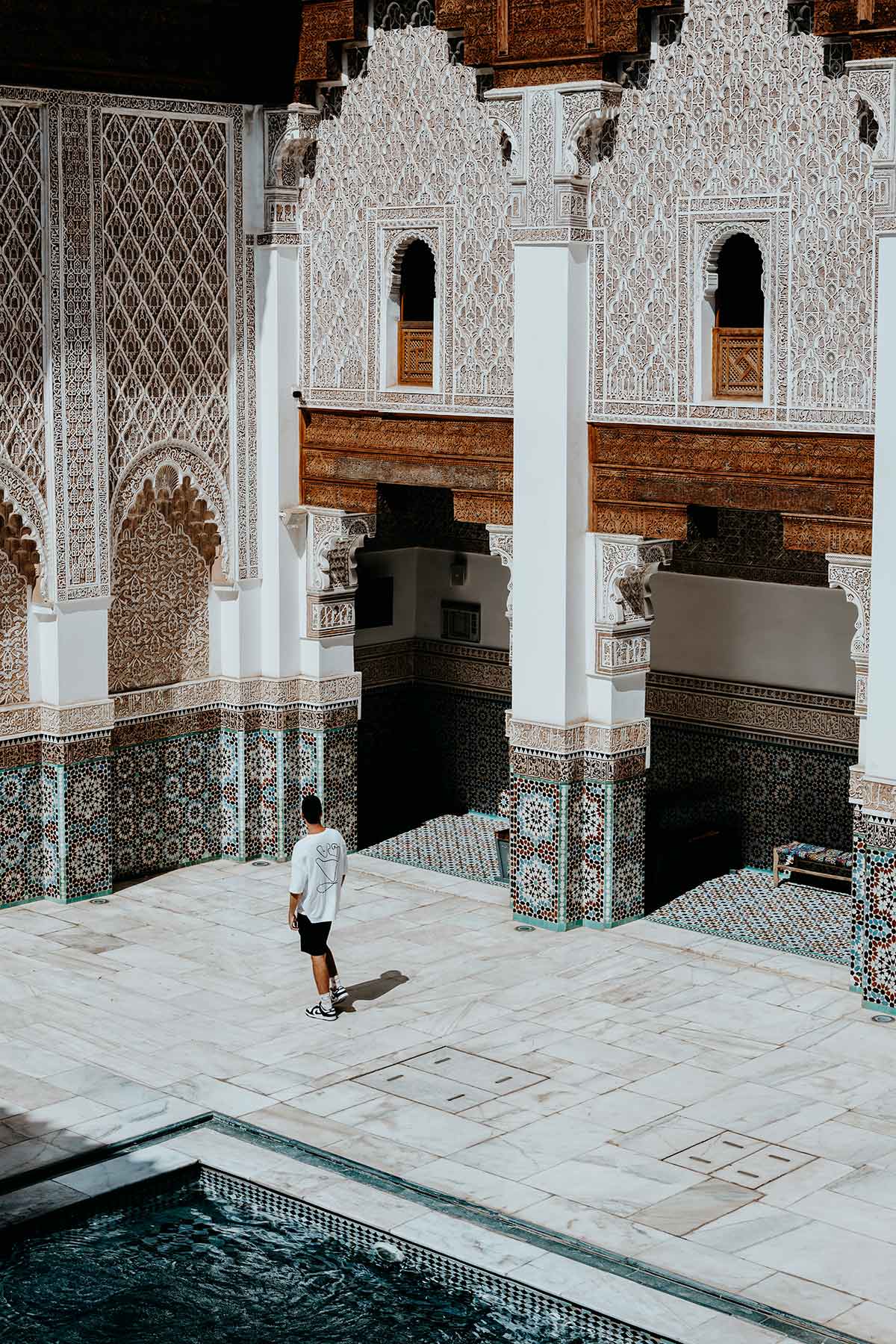
From the hustle and bustle of the Marrakech medina to the trendy rooftop restaurants and hidden cafes, the verdant gardens of Le Jardin Majorelle to the intricate grounds of the ancient Ben Youssef Madrasa, Marrakech has no shortage of sights to capture your heart.
If you’re keen to find out what this amazing city has to offer, make sure you give my in-depth guide dedicated to the very best things to do in Marrakech a read too.
The best time to visit Marrakech
While you may assume that summer is the best time to visit Marrakech, it actually is quite intolerable during those peak summer months, with temperatures rising as high as 45 degrees.
Therefore, I’d suggest that the best time to visit Marrakech is during the shoulder months of March to May or September to November.
After experiencing Marrakech in early September as well as during the shoulder months of March and November, I can confidently say that the latter two are my favourites.
It’s during these shoulder months, when Marrakech feels at its best, with temperatures comfortably between 25 and 30°C, ideal for both explorations within the Marrakech medina and calm afternoons at the pool of your riad.
Even though winter generally still has daytime temperatures around 20 degrees, it will be significantly colder once the sun goes down, making it less ideal for rooftop dinners and trips to the Sahara Desert.
Safety in Morocco | Travel insurance
When travelling this big, wide world, I never go on an adventure without my essential travel insurance sorted out, and though I never felt unsafe in Morocco, I advise anyone travelling here to do the same.
While I believe it’s unlikely to experience any problems when following the suggestions in this itinerary, something unfortunate could happen at any given time, whether it’s an injury, a stolen camera, or an unforeseen cancellation.
For travel insurance, I use Heymondo, as they offer full COVID-19 coverage, as well as a handy app with 24-hour medical assistance. Make sure you check it out – readers of WTSW receive 5% off any insurance policy too.
Cheers!
I’ve been on this travel blogging journey since 2019.
If you appreciate what I do here, these are some ways you can support me.

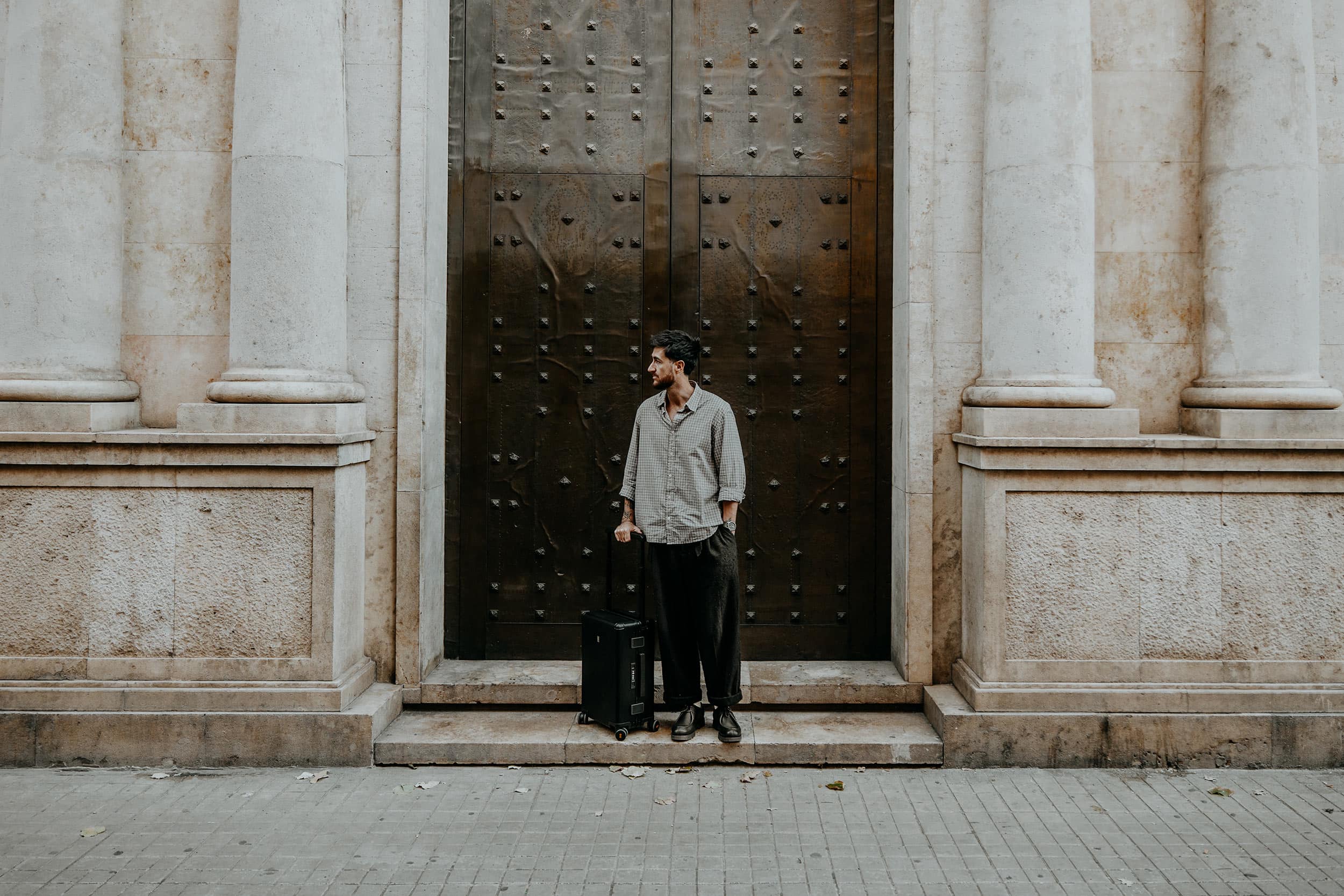
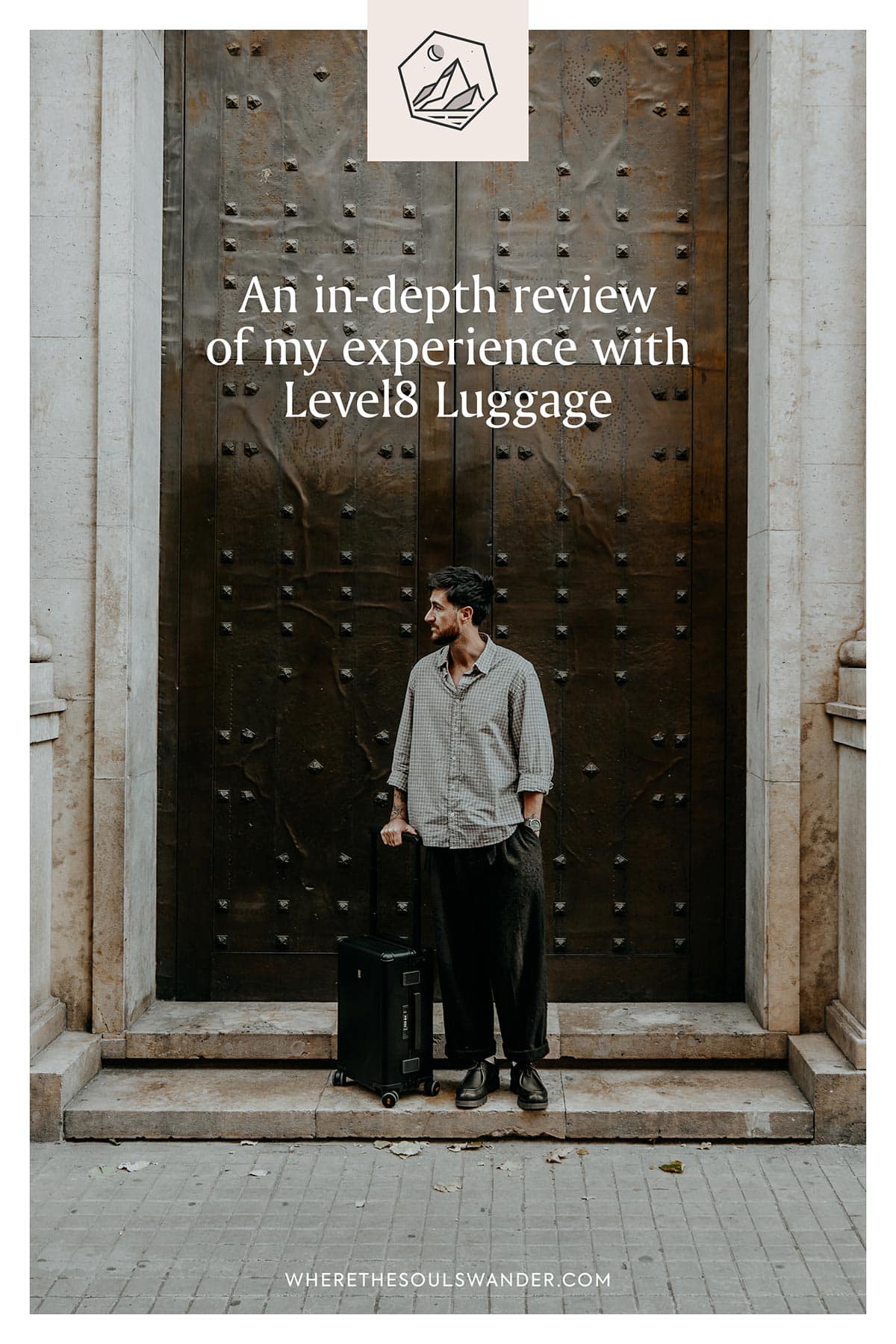
An in-depth review of my experience with Level8 Luggage - Everything you need to know about Level8
An in-depth review of my experience with Level8 Luggage - Everything you need to know about Level8
Keen to purchase Level8 Luggage? Use code PreBF20 to receive 20% off on the entirety of the collection.
As someone who travels for a living, having the right set of luggage options isn’t just convenient; it’s essential. You see, having reliable options at hand gives me the freedom to pick exactly what I need for the trip I take, whether it’s a quick city break, off-road adventures or a long-haul itinerary.
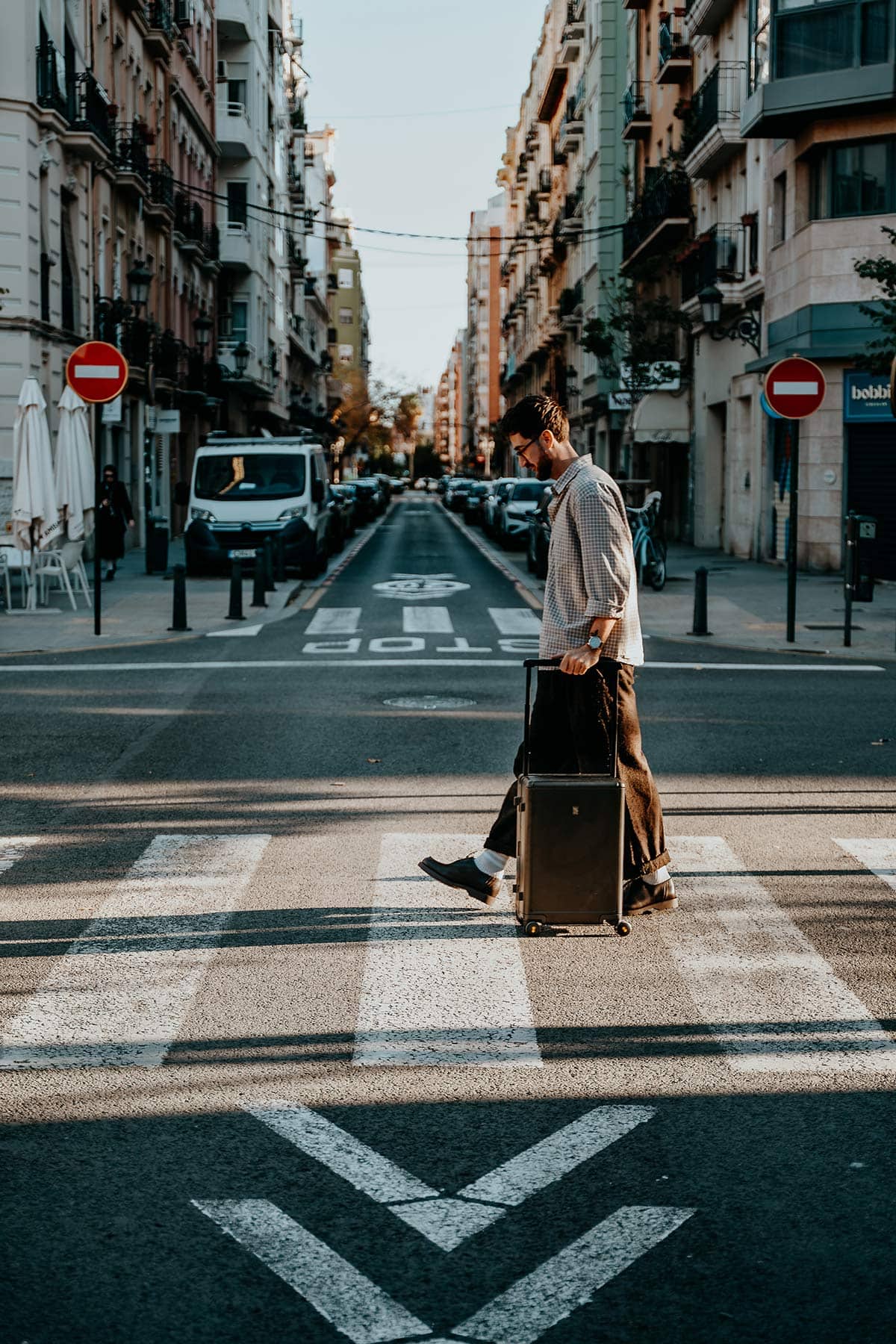
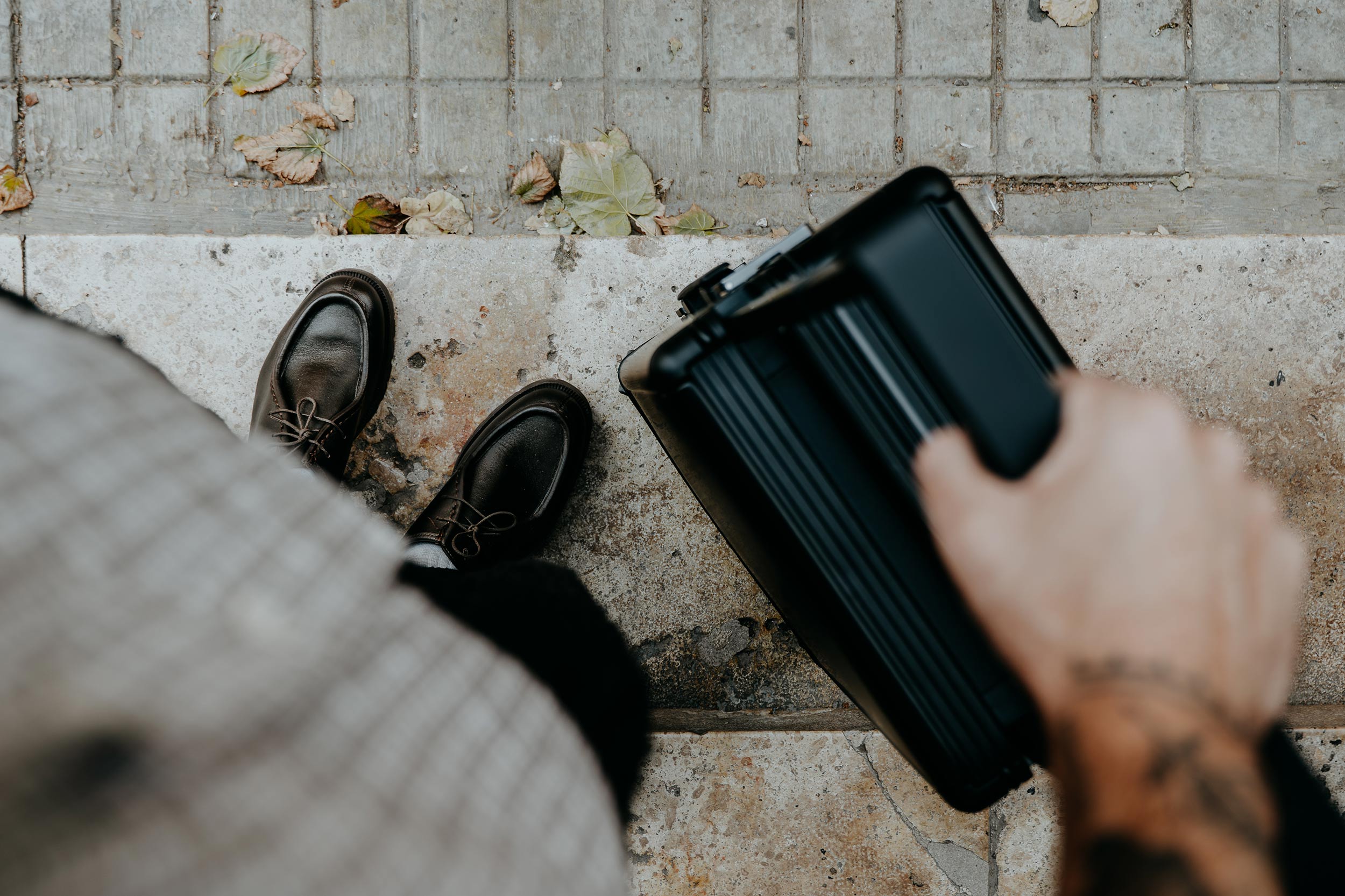
While I personally don’t travel with a suitcase that often, I have to admit that for my recent travels to Slovenia with CameraNu, pairing the Voyageur and the Captain Aluminium Pro Carry-On was as convenient as can be.
I mean, every element of the suitcases amazed me, as each feature was thought out intentionally.
From the minimal yet stylish aesthetic to the wide handle, the smooth 360-degree spinner wheels, to the fully lined interior allowing easy organising, Level8 perfectly balances out aesthetics, durability, and function – making it the perfect companion for travellers like me.
Keen to explore if Level8 has the right fit for you? Here’s my in-depth review of Level8 luggage, where I talk you through my first-hand experiences, the innovative features that caught my attention, as well as the pricing, aesthetics and durability.
If you choose to use any of the links on this page, I may receive a small commission at no extra cost to you. By using these links, you’ll have a direct impact on WTSW and my ability to continue to create free insightful travel content for you. If you find any of my tips useful, you can support me by buying a virtual coffee here.
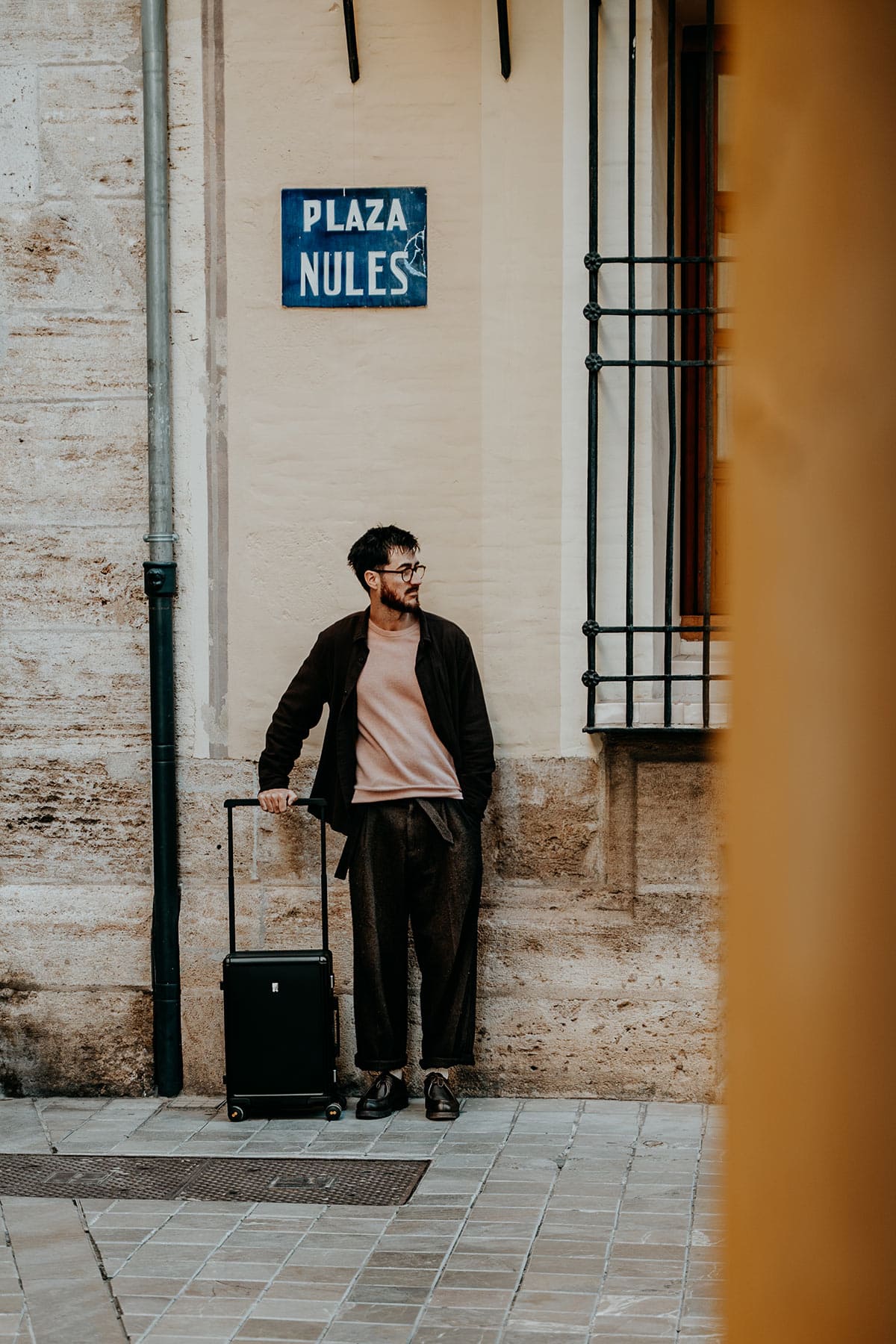
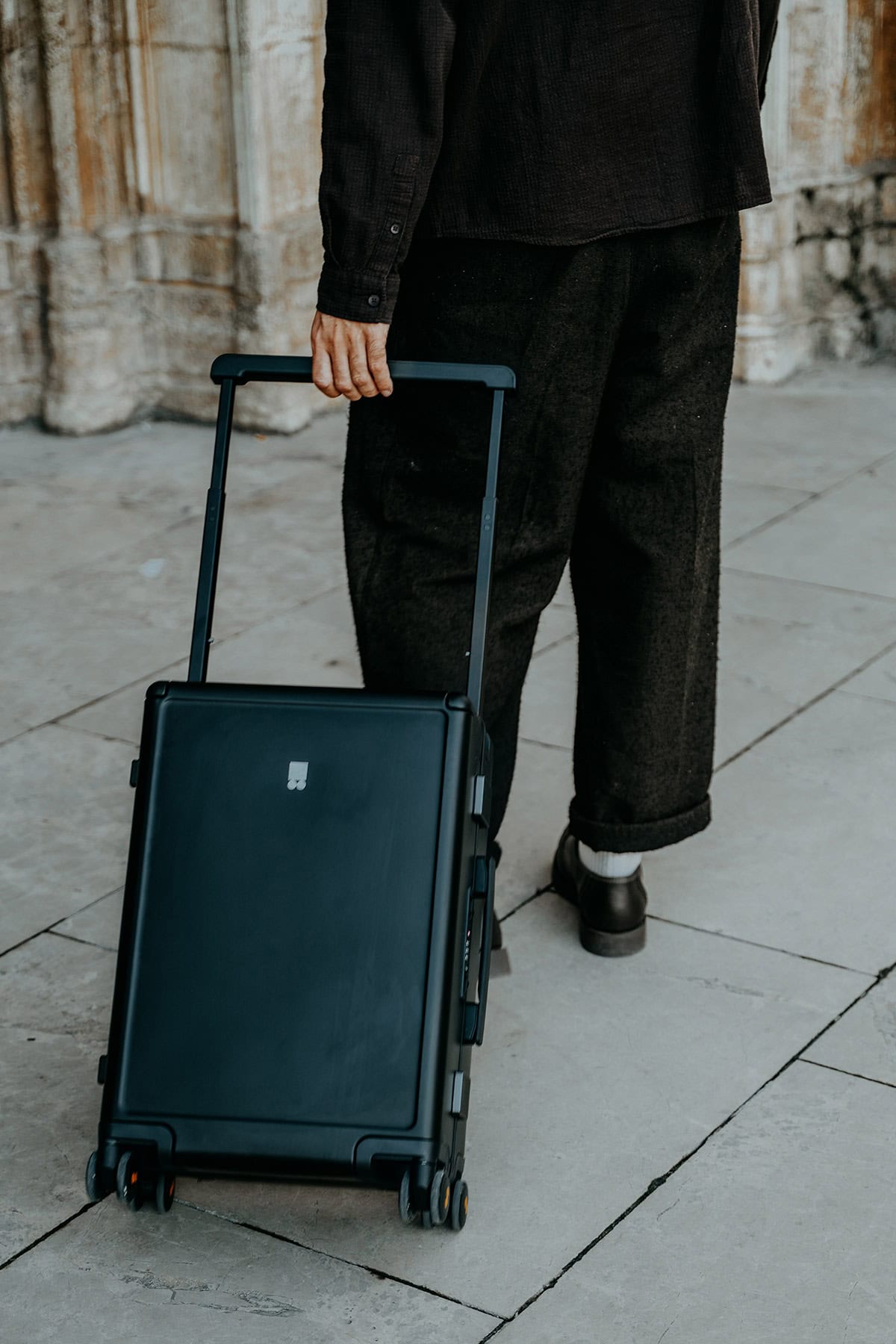
An in-depth review of my experience with Level8 Luggage
Who are Level8
Based in New York, Level8 is a premium luggage brand that stands out for its minimalist travel luggage options, which perfectly balance out aesthetics, durability, and function.
Founded by Steven Lin in 2008, Level8 started with the clear intentions to create modern luggage that’s not only premium in its functionality and durability, but also looks and feels that way.
Though still fairly young in comparison to industry giants as Samsonite, Rimowa, and Tumi, to name but a few, Level8 has managed to gain a loyal following relatively quickly, among which are mostly frequent travellers, digital nomads, and those who value aesthetics and style equally as much as functionality.
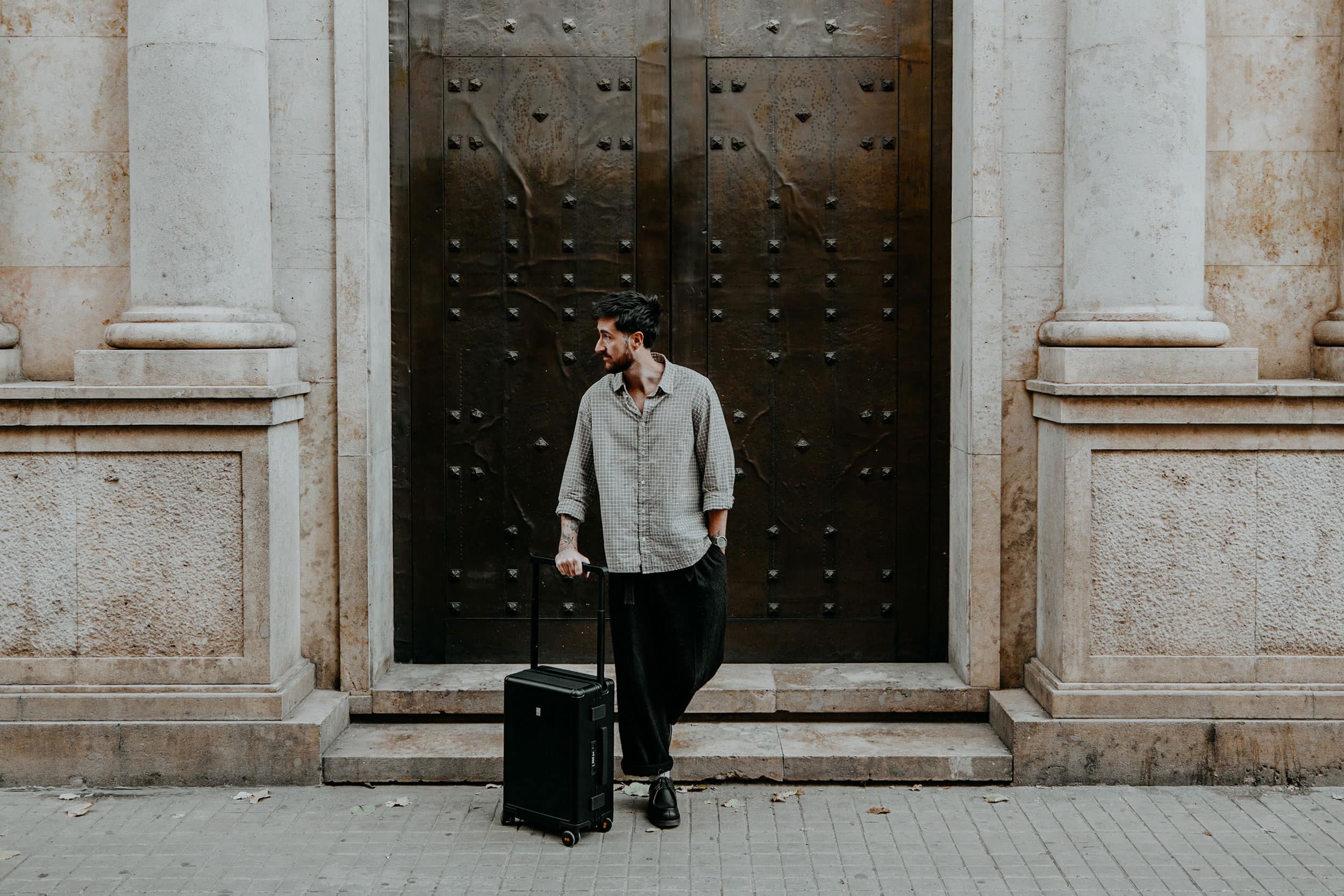
Design & Aesthetic
Let’s start with this: as someone who, besides the quality of the products he uses, highly values aesthetics, I was quite intrigued when Level8 reached out to me, as their suitcases perfectly matched my profound fondness for minimalist, innovative design.
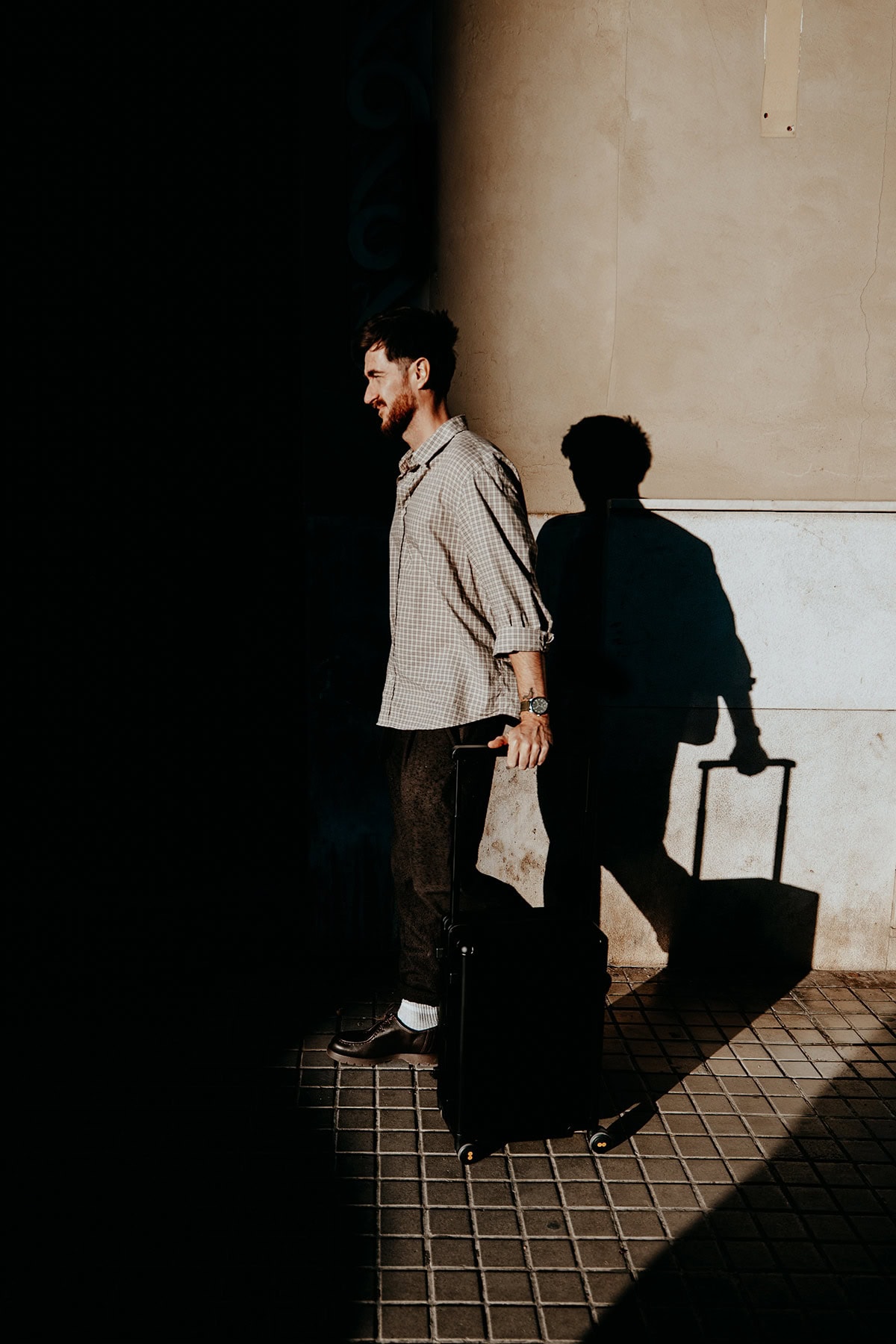
From the use of materials to the subtle branding, the elegant matte finishes to the selection of colour schemes they use, the suitcases look super sleek and reflect quality in every sense of the word.
Inside, the layout and finishes do exactly the same, with useful mesh dividers, compression straps, and various compartments designed to keep everything neat and organised.
Overall, Level 8 manages to create a premium suitcase that also shines on the aesthetic side of things, which is unquestionably one of the reasons why I decided to roll with Level8 (see what I did there).
Level8 is premium, yet practical and manages to turn heads without screaming for attention – exactly how I believe great brands should carry themselves.
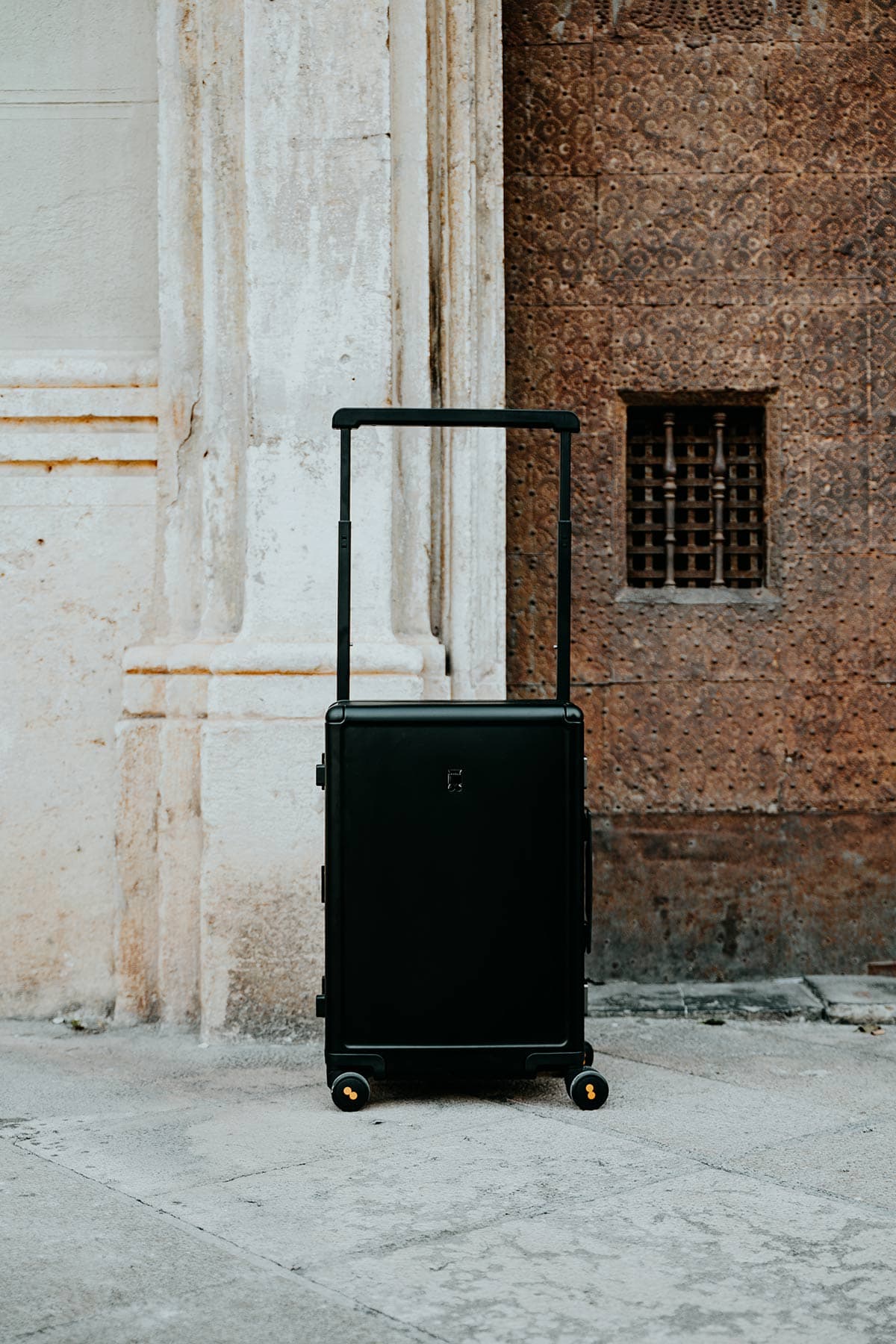
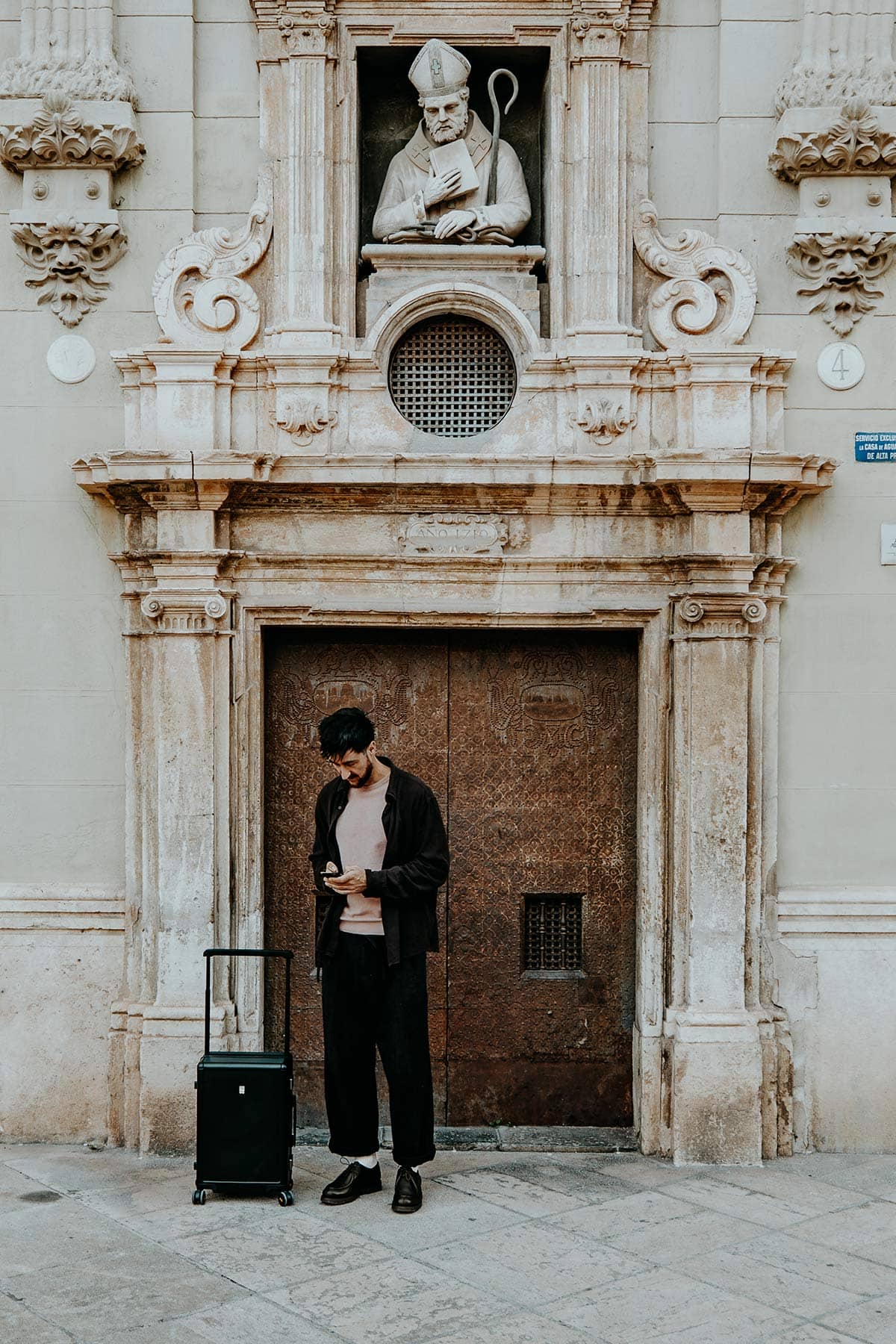
The Suitcases I Opted For
Given that most of my travels and the circumstances are completely different from each other, I firmly believe investing in various luggage options is an absolute must.
For me, every trip I embark on comes with a unique set of needs, and therefore, it is essential to have a variety of luggage options at hand.
After taking quite some time to weigh in on aesthetics, functionality and contemplating the usage purposes, I ultimately chose to go for these two options:
To help you find the right option, I’ve listed the options below:
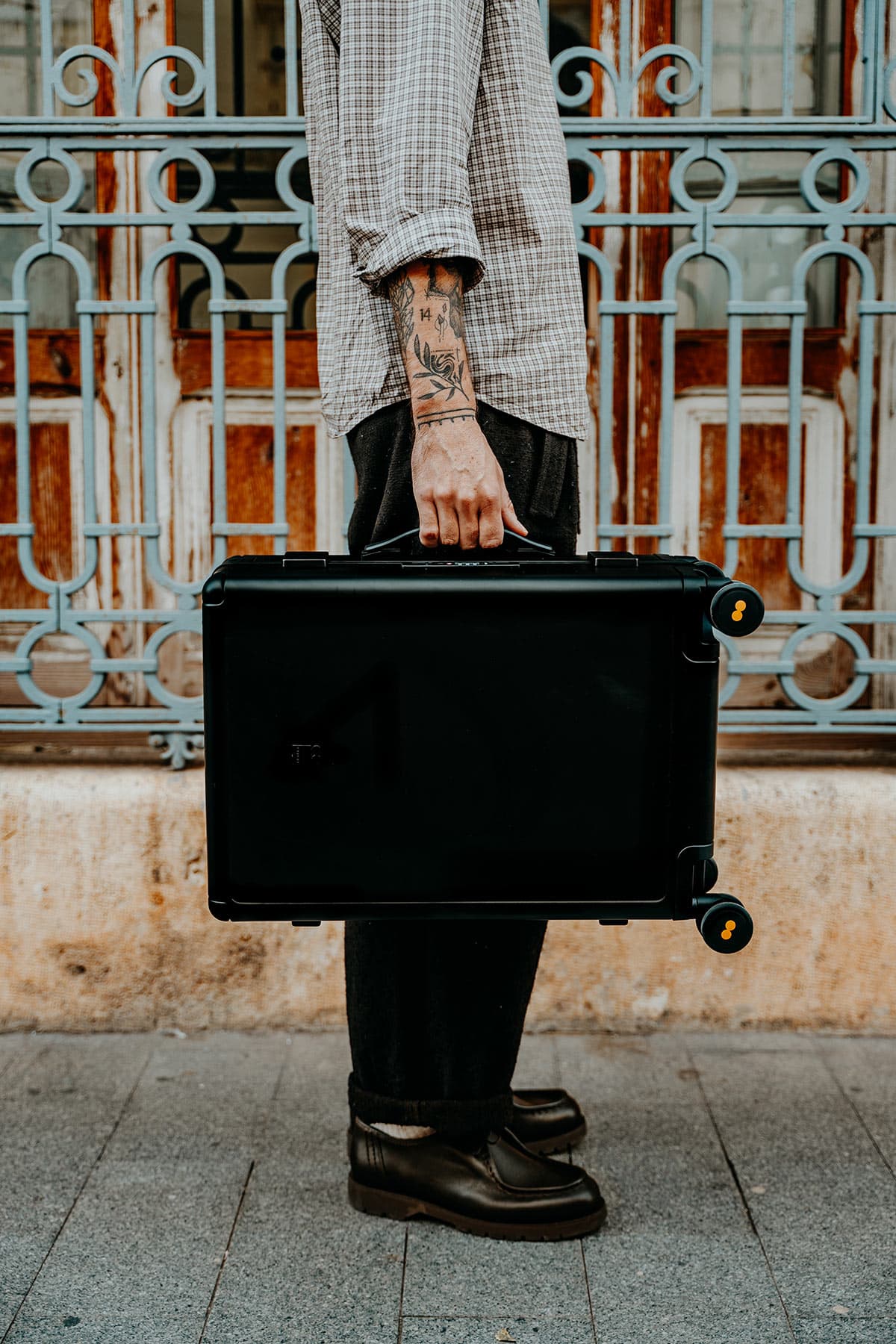
Captain Aluminium Pro Carry-On 20″
Easily my favourite out of the bunch, the super sleek Captain Aluminium Pro Carry-On 20’’ is an absolute beauty, and one that will completely change how I will approach shorter voyages from now on.
Its elegance perfectly reflects Level8’s premium side. At the same time, its outer shell, made from aerospace-grade aluminium-magnesium alloy, showcases that it is as sturdy and reliable as it is aesthetically refined and classy.
Once you open the suitcase, you will notice how smooth the butterfly-style opening is, with dual compartments that make organising your belongings as easy as it gets. On one side, Level8 opted for metal latches over zippers, allowing smoother access to stuff you like to have at hand more quickly.
Although this might sound like a fairly small detail to some, it actually felt like a really great addition, adding a significant amount of convenience.
Some of the Captain Aluminium Pro Carry-On 20’’ key features include:
- A minimal, yet utterly stylish aesthetic
- Wide Handle for stability and extra space
- Smooth 360-degree spinner wheels
- A fully lined interior with flexible dividers
- Extremely durable aerospace-grade aluminium magnesium alloy
- TSA-approved locks for speedy yet secure access
- As with all Level8 suitcases, a lifetime warranty

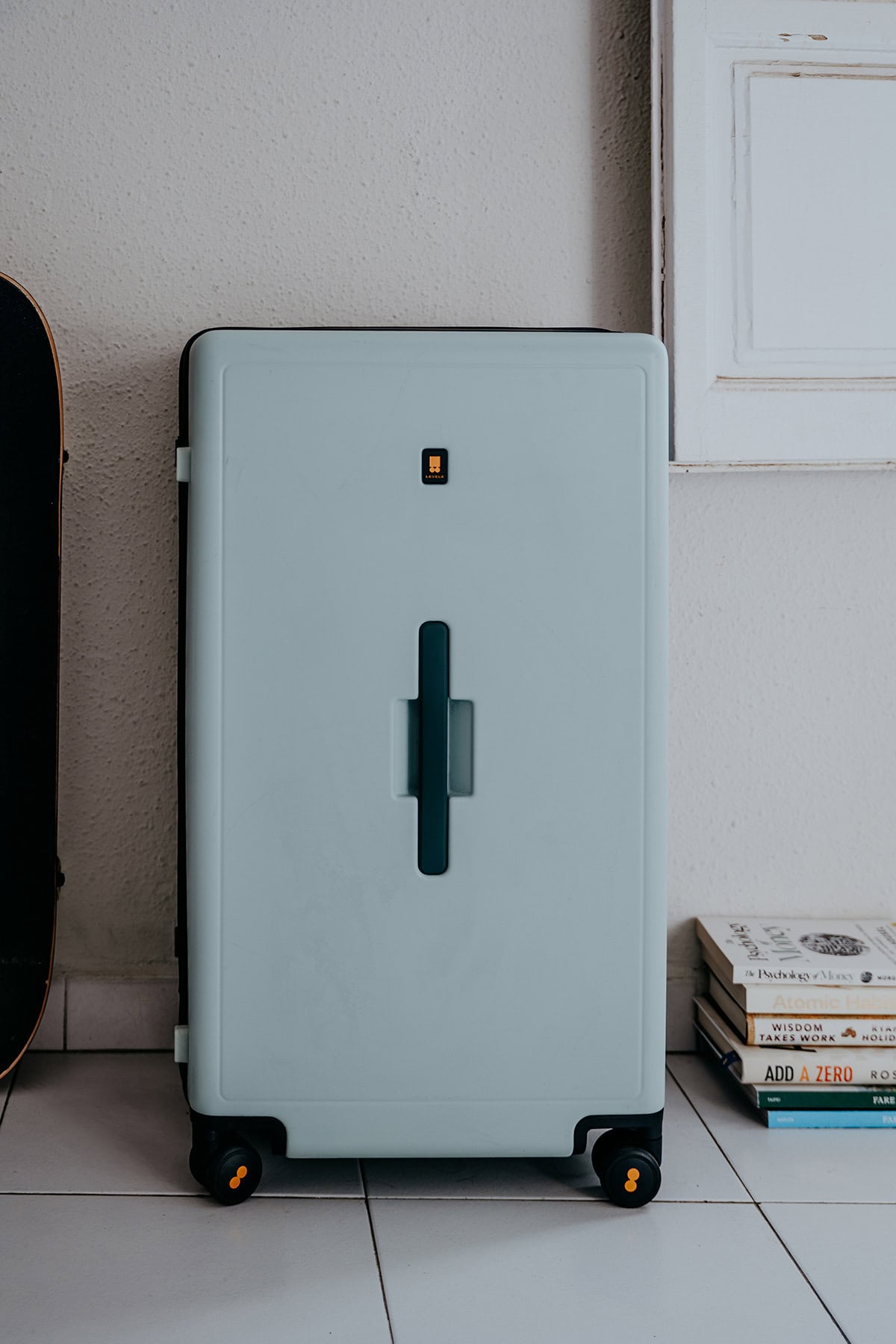
The Voyageur 28″ Limited Edition in Celadon
One of Level8’s flagship suitcases for a reason, the Voyageur is the perfect option for those demanding maximum space, without compromising on the aesthetics side of things.
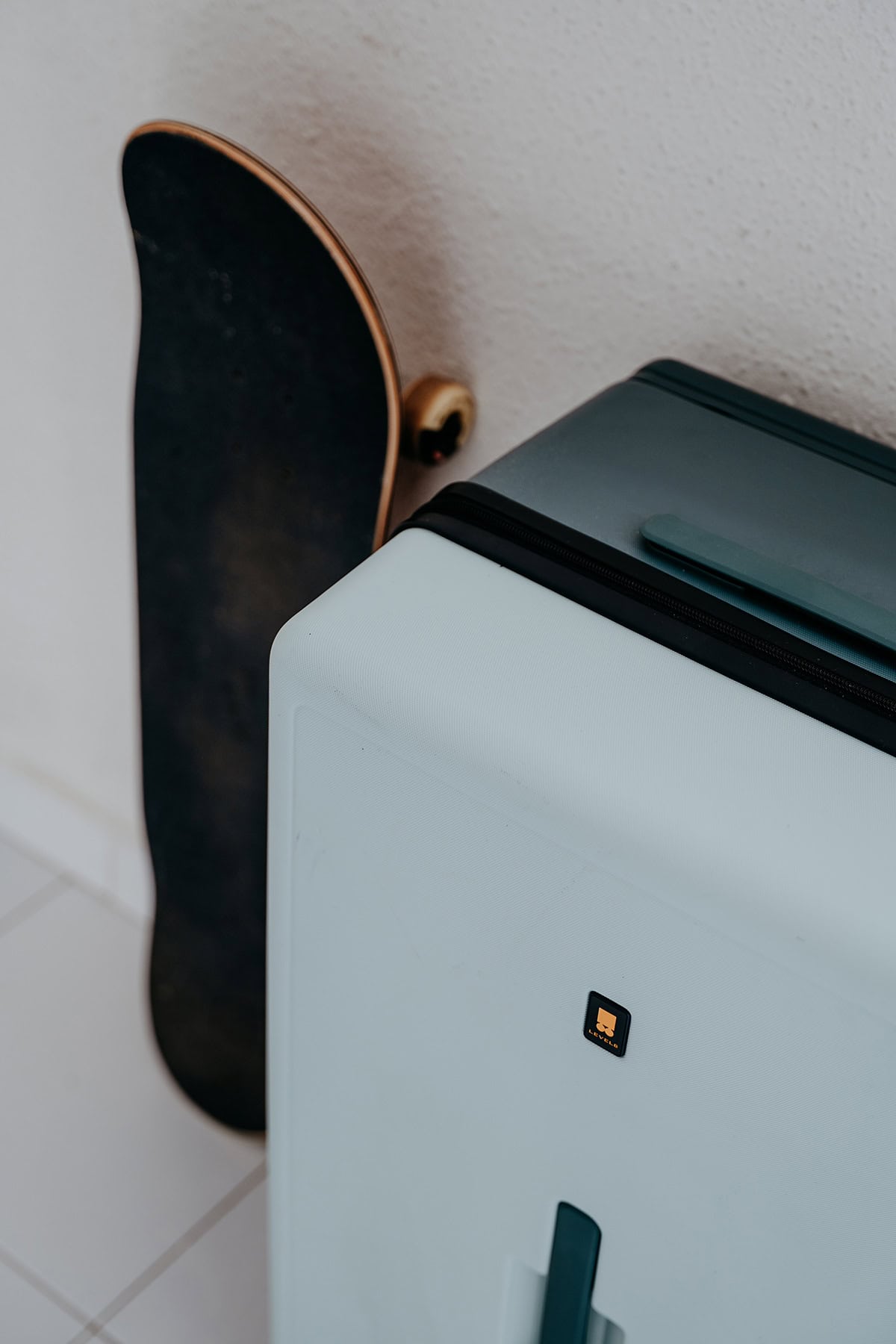
Available in several sizes, including a 20’’ carry-on, I opted for the 28″ in the limited edition Celadon colourway, as it stood out, looking both refreshing and sophisticated, while the size easily covered my capacity needs.
Beyond its aesthetics, the Voyageur 28″ has the following key features:
- Wide telescopic handle for stability and extra space
- Smooth 360-degree spinner wheels
- A scratch-resistant Makrolon® polycarbonate shell that feels light but strong
- An intuitive interior layout with dividers, compression panels, and multiple pockets to keep everything organised.
- TSA-approved locks for speedy yet secure access
- As with all Level8 suitcases, a lifetime warranty
Key features of Level8
As a brand that focuses on sleek design and innovative functionality, Level8 suitcases come with quite a few key features that will elevate your travel experiences.
Wide Trolley Handles
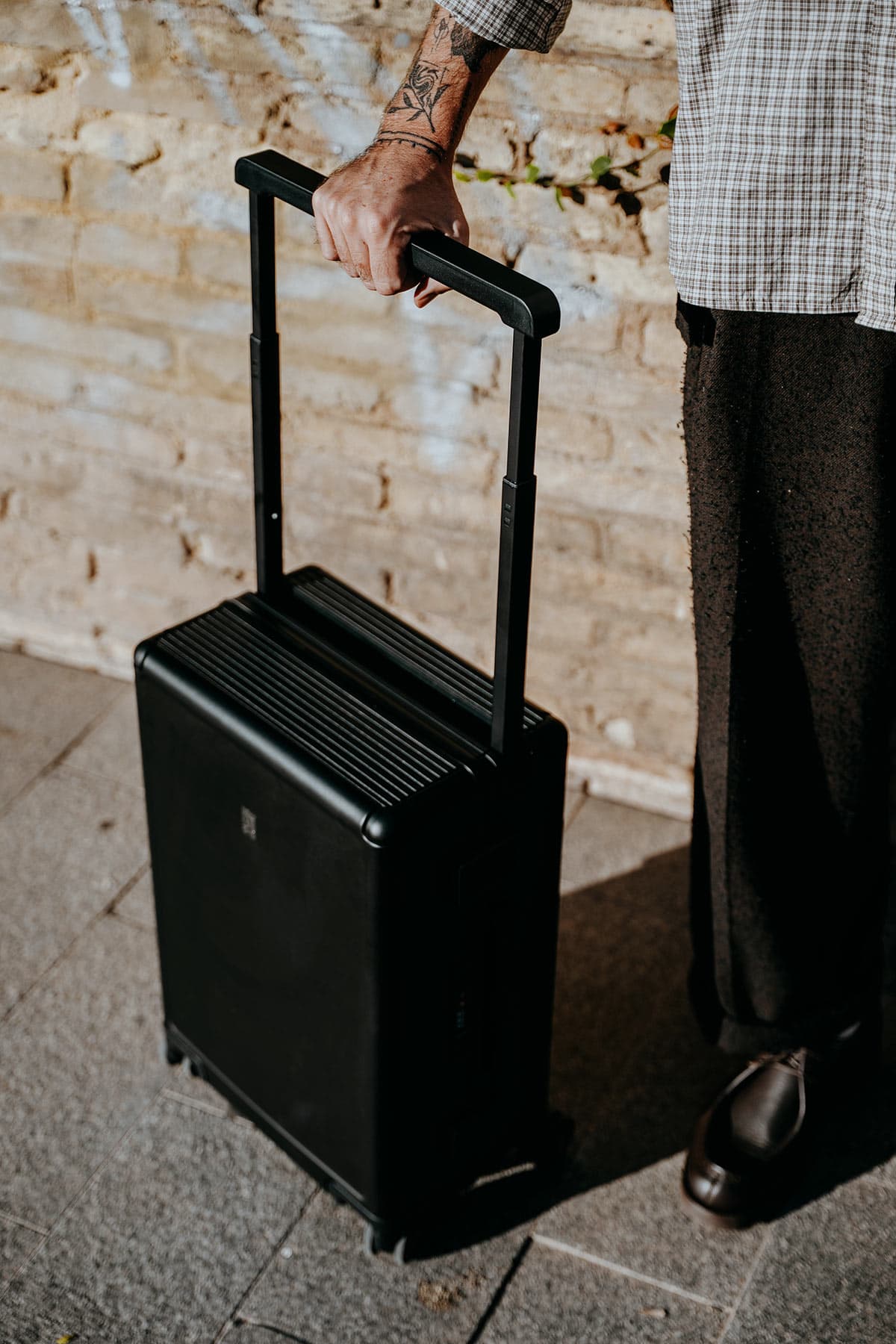
One of the first things that came to attention when travelling with my Level8 suitcases was the fact that the handle was significantly wider than the ones I was used to. Not only did this provide more stability, but it also provided extra space in the suitcase itself, as they tuck away nicely in the corners of the suitcase.
Sleek design
While not particularly a feature that enhances functionality, I still believe that the aesthetically pleasing design choices are contributing to the brand’s ever-growing popularity.
For me, one of the main reasons I got intrigued by Level8, was the fact that their suitcases reflect a certain level of class and dignity, with the Captain Aluminium Pro Carry-On being my absolute favourite.
360-degree spinner wheels
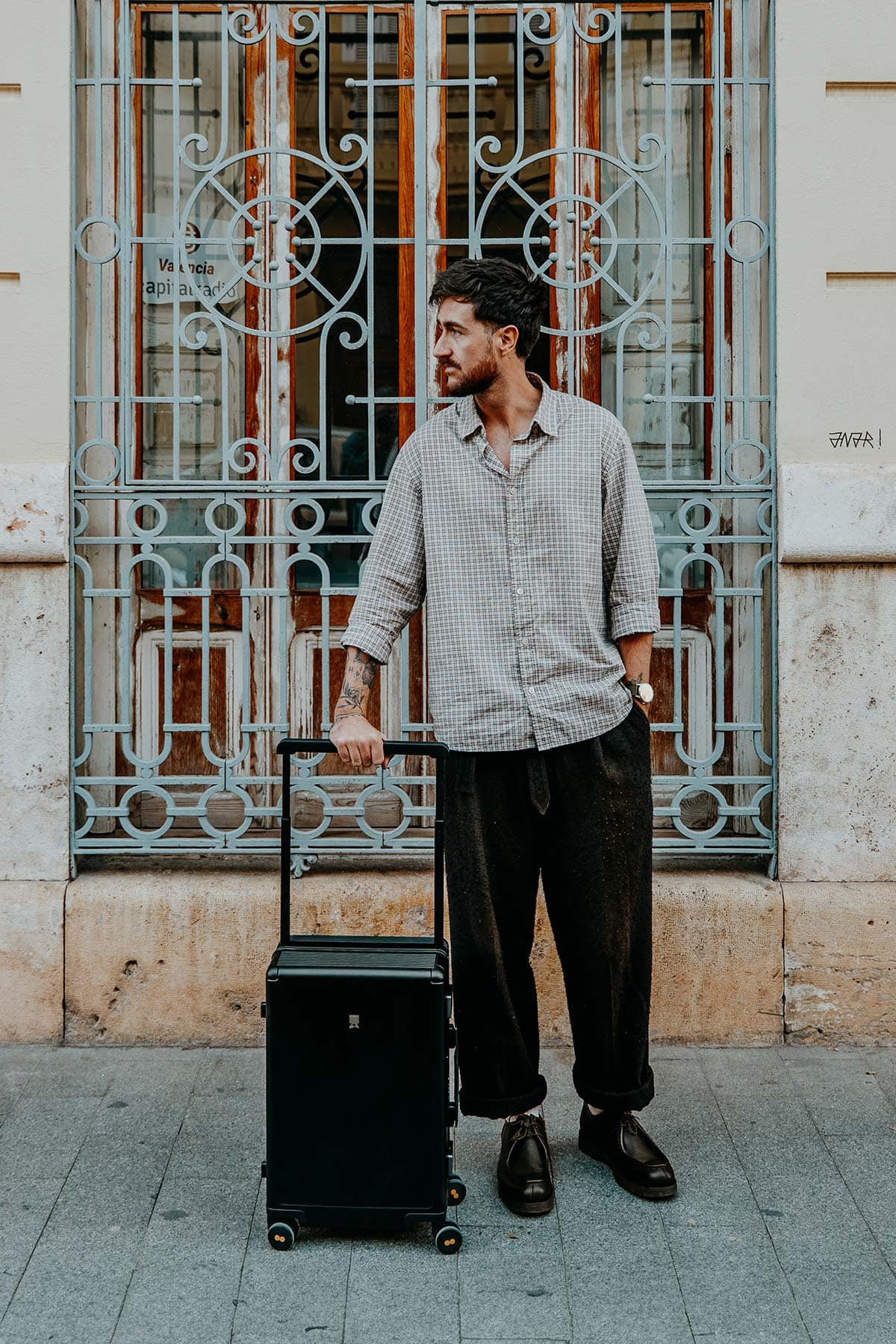
If there’s one feature that deserves all the praise, it will absolutely be the ultra-quiet 360-degree spinner wheels that make you glide smoothly through airport lobbies and sidewalks.
While navigating through irregular cobblestone streets was, as I anticipated, significantly less smooth, the Level8 actually performed much better than I initially expected.
All in all, the wheels contribute to a smooth and convenient experience, which makes moving around your belongings as easy as it is comfortable.
Lightweight durable material
Most Level8 luggage is made from Makrolon®, a sturdy and durable material known for its impact resistance, flexibility and weight.
As a result, Level8 suitcases are lightweight, yet ready to handle the hard hands your luggage is dealt with at the airport.
With weights ranging between roughly 3,5 to 5,6kg, depending on the model, there’s plenty left for your belongings, without compromising on the build quality of your luggage – which to me, is a huge win!
The lightweight also means you have to worry less about the airline’s weight limits.

Lifetime warranty
As with most products I research, I always aim to purchase from brands that feel adequately confident in their products and craftsmanship that they offer their customers a lifetime warranty.
So when I found out that Level8 works with a lifetime warranty policy, I instantly felt that this brand was up to something. More specifically, something that perfectly matched my personal values.
Their lifetime warranty covers functional damage to the shell, wheels, handles, and zippers, which basically means all bases are covered, giving travellers peace of mind for years to come.
TSA-Approved Lock
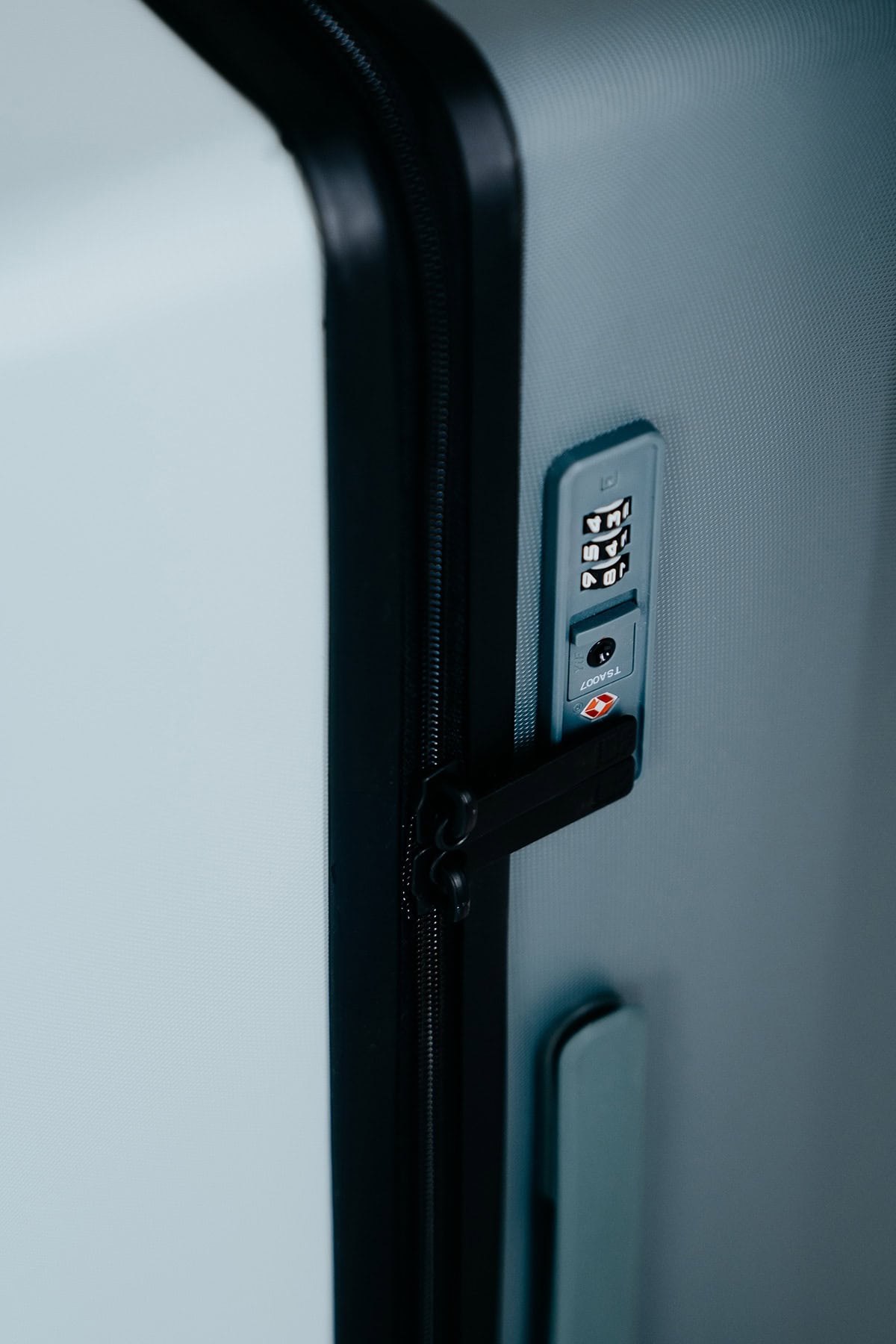
Another great thing about Level8 luggage is the fact that every suitcase comes with an integrated TSA-approved combination lock, providing security while also enhancing the brand’s premium aesthetics.
With a 3-digit locking system, the lock is super easy to set up; meanwhile, the security can easily open the case with a master key when a more thorough security check is required, speeding up the overall airport security process.
My Honest Take on Level8
After my recent trip to Slovenia with both the Captain Aluminium Pro Carry-On and the Voyageur, I completely changed how I look at travelling with suitcases
You see, I typically don’t travel with a suitcase very often, but during this trip, I realised that a sturdy set of suitcases is a great addition to my travel luggage options, partly cause Level8 didn’t give me any reason to think differently.
From the brand’s aesthetically pleasing minimal design to the top-notch materials being used, the smooth 360-degree spinner wheels, to the intuitive interior layout, complete with dividers, compression panels and pockets, Level8 simply didn’t fail to impress.
If, like me, you travel frequently or simply value products that perform and last, yet also look minimal and sophisticated, I firmly believe that Level8 is a great fit for you.
Is Level8 Luggage Worth the Money?
While price-wise, definitely on the higher end of the luggage market, I believe that the price could easily be justified given the build quality, use of premium materials, and overall excellent performance.
On top of that, the suitcases are super innovative, with sleek design, excellent 360-degree spinner wheels, and thoughtful features that add to the convenience.
It’s also worth mentioning that Level8 suitcases come with a lifetime warranty, making it not just an impulse purchase, but more so a thoughtful investment for years of travel to come.
All in all, Level8 luggage is definitely worth the higher price tag, especially if you’re a frequent traveller. If you travel just once or twice a year, you might give it a pass, but if you’re on the road more often, I would try to live more by the following saying: buy it once, buy it right.
Stay safe during your travels | Travel insurance
When travelling this big, wide world, I never leave home before I’ve sorted out my travel insurance, and I would highly recommend anyone travelling to do the same.
Though I think it’s unlikely to experience any troubles when following the advice in this guide, something unfortunate can happen at any time, whether it’s an injury, a stolen camera, or an accident on the road (yes, we had one).
For travel insurance, I always use Heymondo, as they offer full COVID-19 coverage, as well as a handy app with 24-hour medical assistance. Make sure you check it out – readers of WTSW receive 5% off any insurance policy.
Cheers!
I’ve been on this travel blogging journey since 2019.
If you appreciate what I do here, these are some ways you can support me.
Plan your next adventures with these essential guides
Buying a Spain sim card: Everything You Need To Know in 2025
In today’s world, having internet on your travels has shifted from being a luxury to a necessity.
Rightly so, as having data connectivity abroad will make anyone’s travels significantly more convenient – not to mention cheaper, given you can use services such as Uber.
While Spain is super easy to navigate, having a Spain SIM card with data connectivity makes the country even more accessible than it already is, without the risk of putting a negative stamp on your trip due to outrageous out-of-plan roaming charges – we’ve all been there, haven’t we?
Whether you’re navigating the time-worn streets of Barcelona, looking for a trendy rooftop bar in Valencia with Google Maps, booking a last-minute train ticket to watch Real Madrid play in the Bernabeu, sharing your tapas adventures on Instagram, or simply keeping in touch with your family and friends back home, it just adds to the overall travel experience.
In this guide, I cover everything you need to know about a Spain SIM card, including where to purchase one, the best providers, and the cost – plus my personal take on the best options.
If you choose to use any of the links on this page, I may receive a small commission at no extra cost to you. By using these links, you’ll have a direct impact on WTSW and my ability to continue to create free insightful travel content for you. If you find any of my tips useful, you can support me by buying a virtual coffee here.
Buying a Spain SIM card: Everything You Need to Know in 2025
Why buy a Spain SIM card?
If one thing, it would be the fact that travelling is so much more comfortable when you have access to the internet through your mobile phone.
Yes, travelling in Spain is super easy and feasible without internet, but unless you’re a die-hard who insists on paper maps and guidebooks, why would you withhold yourself from an even smoother experience?
You see, whether you’re navigating the winding streets of Barcelona, looking for a trendy rooftop bar in Valencia with Google Maps, booking a last-minute train ticket to watch Real Madrid play in the Bernabeu, sharing your tapas adventures on Instagram, or simply keeping in touch with your family and friends back home, it just adds to the overall travel experience.
Let’s not talk about potential emergency calls, or access to your bank account, all things we take for granted, until they are suddenly no longer at your fingertips.
Add to that that a Spain SIM card will set you back only a few bucks, and it should be a no-brainer to purchase one.
Though Spain has plenty of cafés, restaurants, and hotels offering free public Wi-Fi, it’s not always reliable, and unsecured networks can put your personal data at risk. Psst, that’s something you don’t wanna do.
If you do intend to use public WiFI, make sure always to use a VPN such as NordVPN to keep your data secure when travelling.
Can I use my own phone number for WhatsApp in Spain?
Easily one of the greatest benefits of buying a Spain SIM card is the fact that you can install it purely for mobile data, while still keeping your existing phone number active on WhatsApp.
Even with the new Spain SIM for your data use, your WhatsApp account will remain linked to the number you registered with until you decide to update the number in your WhatsApp settings, meaning your WhatsApp chats, contacts, and groups will remain exactly the same.
At first, this could come off a tad confusing, but don’t worry, your WhatsApp will continue to work as usual; it’s just that your phone now uses your newly installed Spain SIM card for its mobile data.
So, the short answer: yes!
Over the last few years, I’ve used many local SIM cards during my travels, and with that in the back of my mind, I’m pretty sure you won’t have any difficulties – just make sure you return to this article if you do stumble upon some challenges.
Keen to experience Spain like a local?
Where to buy a Spain SIM card
When it comes to buying a SIM card in Spain, there are several excellent options available.
From purchasing one directly upon arrival at the airport, to getting one at a mobile provider store, to getting an eSIM online and in advance from services such as Airalo, Holafly, or Sim Local,
To help you find the right option, I’ve listed the options below:
Online – an eSIM before you travel
These days, the best way to stay connected when travelling is with an eSIM, and if you’re anything like me and prefer to have everything sorted before you start your journey to Spain, I’d highly recommend opting for one.
You see, an eSIM is a digital SIM card that you can effortlessly activate by scanning a QR code you receive after your online purchase – it’s super easy, quick, and takes significantly less effort.
While it’s completely possible to buy your eSIM directly from local carriers, opting for this means you will not be connected to the internet until you purchase one from the respective carrier in person.
That’s where third-party options such as Airalo, Holafly and Sim Local come into play. Those eSIM providers offer excellent eSIMs with data packages for over 200 destinations, including Spain.
With an eSIM, you’ll be connected to the World Wide Web from the moment you land in Spain, so no need to search for a SIM card kiosk or deal with paperwork first thing after your journey.
Upon arrival at the Airport – Barcelona and Madrid
Generally speaking, travellers tend to get their hands on a Spain SIM card by going to a SIM kiosk at the airport as soon as they arrive in the country.
In both the Barcelona–El Prat Airport and Madrid–Barajas Airport, you’ll find several phone stores or bookshops that offer prepaid SIM cards from Spain’s leading mobile providers, including those of Vodafone, Orange, Yoigo, and Movistar.
From what I’ve seen, these providers have a wide variety of data plan packages on offer, so it is easy to choose an option that suits your online data needs.
As with anything you purchase at the airport, you will likely pay more for the same SIM you can also purchase in the city centre of the city you’re visiting.
When purchasing your SIM at the airport, make sure you allow some extra time, as it will take some time to get your paperwork done, which is something you should keep in mind.
Mobile provider stores
If you prefer a more traditional approach or wish to keep your hard-earned money in your pocket instead of wasting it at the airport, rest assured.
There is no shortage of mobile provider stores situated in the major cities of Spain, including Barcelona, Madrid, Valencia and Seville, to name but a few. These stores are typically in the heart of the city centre, so it shouldn’t be hard to find one near your hotel.
For those keen to buy a SIM card from a mobile provider store, make sure to bring your passport, as well as a copy, since it is often required when registering a new SIM.
Spain SIM Card Providers
Spain has plenty of mobile data providers, offering both eSIM and prepaid options for travellers.
While there are plenty of reliable prepaid options, I always choose an eSIM before my arrival, as it’s the most convenient solution for someone like me who works primarily online.
To help you find your perfect fit, I’ve listed the most reputable SIM card providers below:
The best eSIMs for Spain
Sim Local
I’ve recently stumbled upon Sim Local, an online eSIM retailer that actually practices what it preaches. You see, stating that you can be online with solely one click is one thing, but delivering on that promise is something entirely different – yet, Sim Local managed to do just that.
The process is impressively quick; from browsing their plans to downloading the actual eSIM, within minutes, you’re connected. Also, everything in their app works intuitively and smoothly.
One thing I absolutely loved about Sim Local is that they also offer small data packages at low costs, which is ideal if you’re going on a shorter trip or a city break.
With lots of options available, it can be a little overwhelming to pick the eSIM. To help you, I’ve listed some of the most notable options below:
- 1 GB of data that is valid for 7 days | €3,50
- 3 GB of data that is valid for 30 days | €7,-
- 5 GB of data that is valid for 30 days | €9,50
- 10 GB of data that is valid for 30 days | €14,25
- 20 GB of data that is valid for 30 days | €20,75
- Unlimited data that is valid for 30 days – this one works for the whole of Europe | €65,-
For me, Sim Local ticks all three boxes that I believe are crucial for any traveller: flexibility, reliability and value for money – making it a no-brainer.
Why purchase a Sim Local eSIM | Sim Local offers unmatched value for money, making it feel like you’re travelling like a local, which is exactly how I’d like to experience my travels.
Readers of WTSW will receive 5% off any eSIM when they use my code WTSWTRAVEL.
Airalo
From the moment the eSIM came on the market, Airalo has proved its name as one of the leading companies in terms of this innovative digital alternative to traditional SIM cards.
For Spain, Airalo released the Guay Mobile eSim, a data-only SIM card that operates on the popular networks of Vodafone, Movistar and Yoigo, offering instant connectivity.
At Airalo, you can choose the following data packages:
- 1 GB of data that is valid for 7 days | €4,-
- 2 GB of data that is valid for 15 days | €5,50
- 3 GB of data that is valid for 15 days | €7,50
- 5 GB of data that is valid for 30 days | €10,50
- 10 GB of data that is valid for 30 days | €16,-
- 20 GB of data that is valid for 30 days | €23,-
- Unlimited data that is valid for 10 days | €31,-
Those planning to travel around Europe, I’d advise opting for the Eurolink instead, as it is available throughout the whole of Europe, including Spain.
Why purchase an Airalo eSIM |An Airalo eSIM allows users to make a personal hotspot, making it the perfect option for those working remotely.
Holafly
Another big name in the eSIM space is Holafly, offering unlimited data packages in over 160 destinations worldwide.
What sets Holafly apart from the competition is that they exclusively offer unlimited internet packages, where you can customise the number of days you wish to be online.
This makes it a great option for travellers who want a hassle-free data connection, one where worrying about running out of data mid-trip is left out of the conversation.
While Holafly’s pricing tends to be a little on the higher end, their unlimited data packages and the ease of mind that comes with it make it worth the investment.
At Holafly, you can choose the following data packages:
- 1 Day plan with ‘unlimited’ data | €4,-
- 3 Day plan with ‘unlimited’ data | €10,80
- 5 Day plan with’unlimited’ data | €17,95
- 10 Day plan with ‘unlimited’ data | €32,20
- 20 Day plan with ‘unlimited’ data | €54,05
- 30 Day plan with ‘unlimited’ data | €65.45
These are just a few examples, as Holafly makes it easy to change your plan to the exact number of days you need the eSIM for.
It is also worth mentioning that Holafly’s eSIM for Europe comes at exactly the same price, making it perfect for those visiting several European countries in one trip.
Why purchase a Holafly eSIM | Holafly offers a unique opportunity to customise your data plan to the exact needs for your upcoming trip to Spain.
The best prepaid SIM cards for Spain
Vodafone Spain
One of the leading mobile network providers in Spain, as well as in Europe, Vodafone is known for its extensive coverage and reliable services.
For travellers, Vodafone now offers both prepaid SIM cards and eSIM options, making it more flexible for both preferences alike.
With a wide range of data packages, Vodafone is a strong option for both short-term and long-term visitors to the country.
The prepaid data packages at Vodafone include:
- 270 GB of data that is valid for 28 days | €15,-
- 330 GB of data that is valid for 28 days | €20,-
- 380 GB of data that is valid for 28 days | €30,-
- 430 GB of data that is valid for 28 days | €40,-
Orange
With millions of users across Spain, Orange is famous for its fast network and strong coverage. Additionally, most major stores have English-speaking staff, which makes setup easier.
At Orange, the following data-only prepaid packages are available:
- 60 GB data that is valid for 28 days | €10
- 240 GB data that is valid for 28 days | €15
- 300 GB data that is valid for 28 days | €20,-
My personal favourite – Purchasing an eSIM for Spain
Since most of my work involves the online world, I always opt for an eSIM, so I am connected as soon as I set foot in the country that I am visiting.
For the sake of this article, I used Sim Local, Airalo, and Holafly, and all of them exceeded my expectations; thus, I highly recommend anyone using one of these options.
So far, my favourite eSIM has been from Sim Local. While I didn’t notice any differences in terms of coverage and speed compared to Airalo and Holafly, I just liked how both their installation process and app were intuitive and smooth.
Since I live in Spain, I opted for unlimited data, which gave me the freedom to use my hotspot and work from cafes, without putting my trust in their limited WIFI connections.
Those preferring to purchase directly on-site, rest assured, Sim Local also has a physical store at the Madrid International Airport, perfect if you like to receive some extra guidance during the setup of your SIM.
Spain SIM card | The essentials
Where to stay in Spain
As one of the most popular destinations in Europe, Spain has no shortage of incredible accommodation options, suiting just about any travel style, preference or budget.
From budget-friendly hostels, luxurious hotels, intimate boutique-style hotels, or something in between, name it, and you’ll find it in Spain.
Those travelling on a budget can find hostels for as affordable as €20 per day, while those keen to splurge have heaps of excellent options within the €50 – €200 per night range.
Hostels | Check hostels in Spain on Booking.com
Hotels & Guesthouses | Find the best hotels in Spain on Booking.com
The best time to visit Spain
Given Spain’s remarkable diversity, it is typically considered a year-round destination.
Whether you’re looking for long summer evenings along the stunning sun-soaked coast, more chill days in the lush North, or snow-filled adventures in the Spanish Pyrenees, name it and you will find it in Spain.
But first things first, summertime in Spain can be quite harsh, with cities as Seville, Valencia and Madrid regularly rising above the 40°C mark during the peak summer months of July and August.
If you’re looking for a mix of sightseeing, outdoor activities and leisure, these summer months might be for you – just remember that the heat can be quite intense, making it somewhat of a challenge to fully enjoy at times.
To me, the best time to visit Spain is during the shoulder months of April to June, and September to October. During these months, the temperature hovers between 25°C and 30°C, perfect for both days at the beach and explorations around the stunning cities and pueblos.
Alternatively, it’s also possible to opt for a winter visit, when tourism slows down (unfortunately, over-tourism is also a thing in Spain), yet the temperature is mild and low rainfall still allows for comfortable explorations.
Safety in Spain | Travel Insurance
Even though Spain is completely safe, I always advise everyone to sort out good travel insurance before setting out on their adventure.
While I believe that it’s unlikely to experience any troubles when following the advice in this guide, something unfortunate can happen at any time, whether it’s an injury, a stolen camera, or an accident on the road.
For travel insurance, I use Heymondo, as they offer full COVID-19 coverage, as well as a handy app with 24-hour medical assistance.
Cheers!
I’ve been on this travel blogging journey since 2019.
If you appreciate what I do here, these are some ways you can support me.
10 Wonderful things to do in Essaouira, Morocco
I frankly believe every traveller will find a little magic in Essaouira.
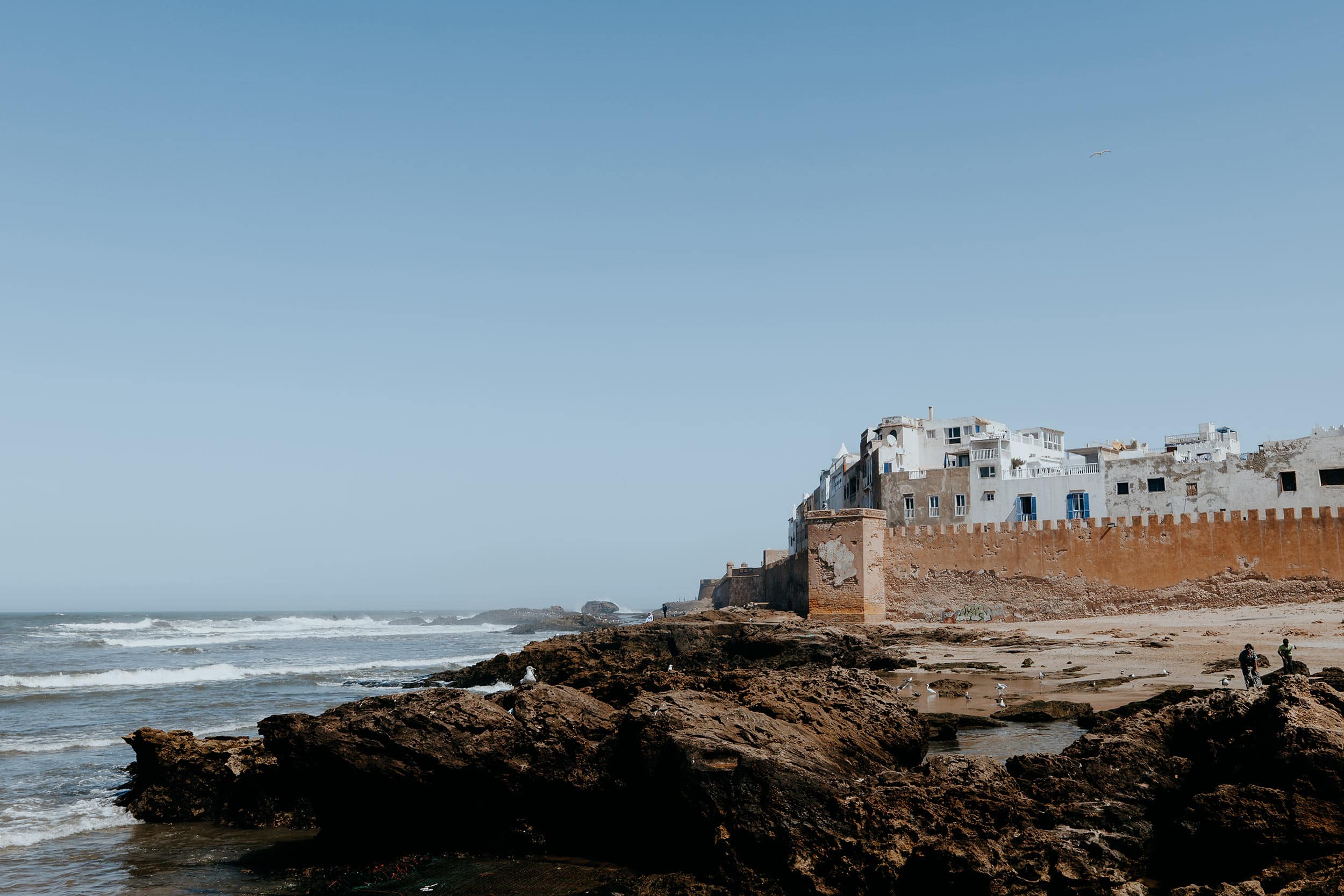
Windswept yet charming as can be, Essaouira is a coastal gem that beautifully captures the essence of Morocco’s Atlantic shores.
You see, long before Game of Thrones arrived, Essaouira thrived as a major Atlantic port connecting Africa, Europe, and the Middle East. As a result, it is influenced by the traditions of many who entered its port, including the Portuguese, French, Arab, and, of course, Berber.
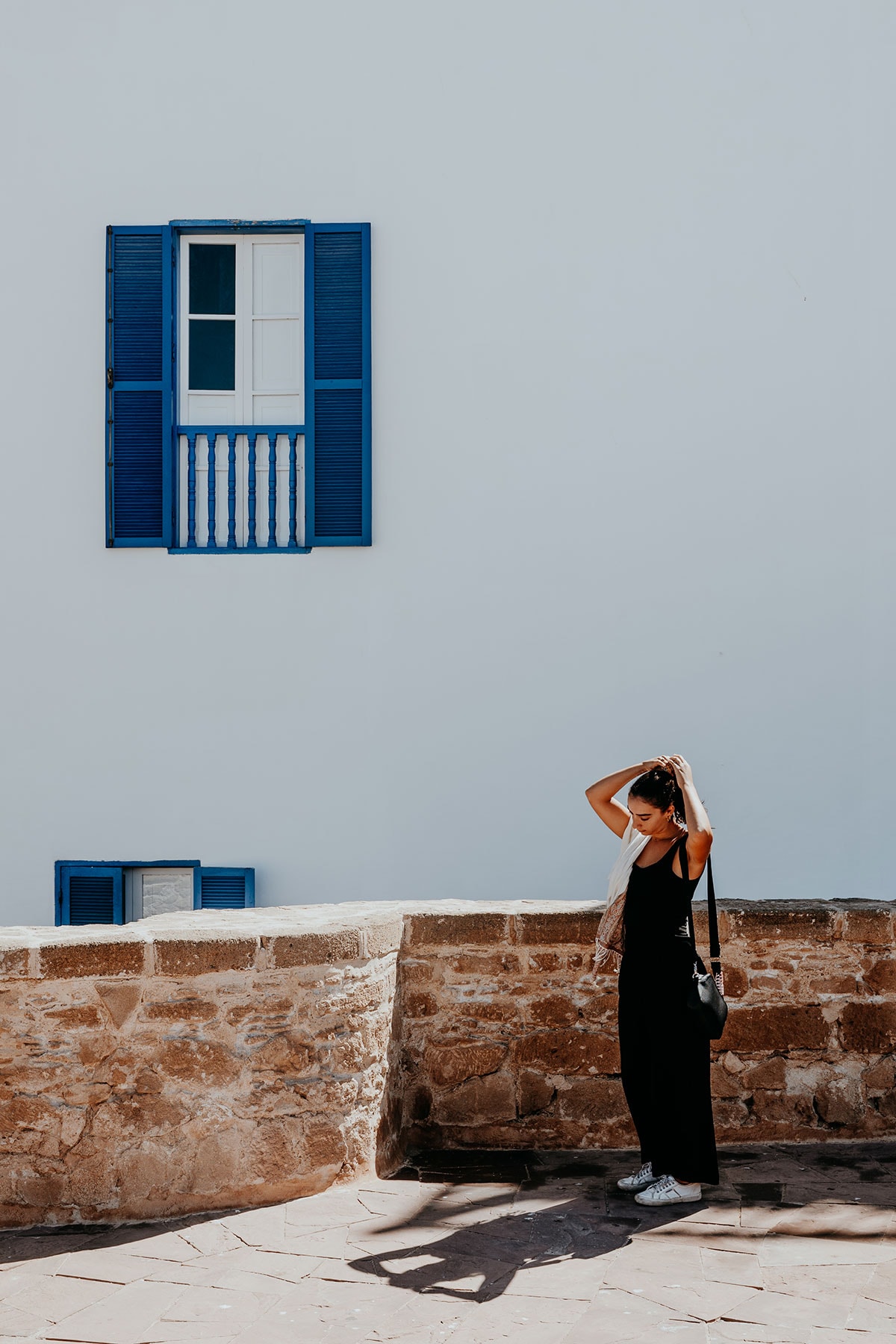
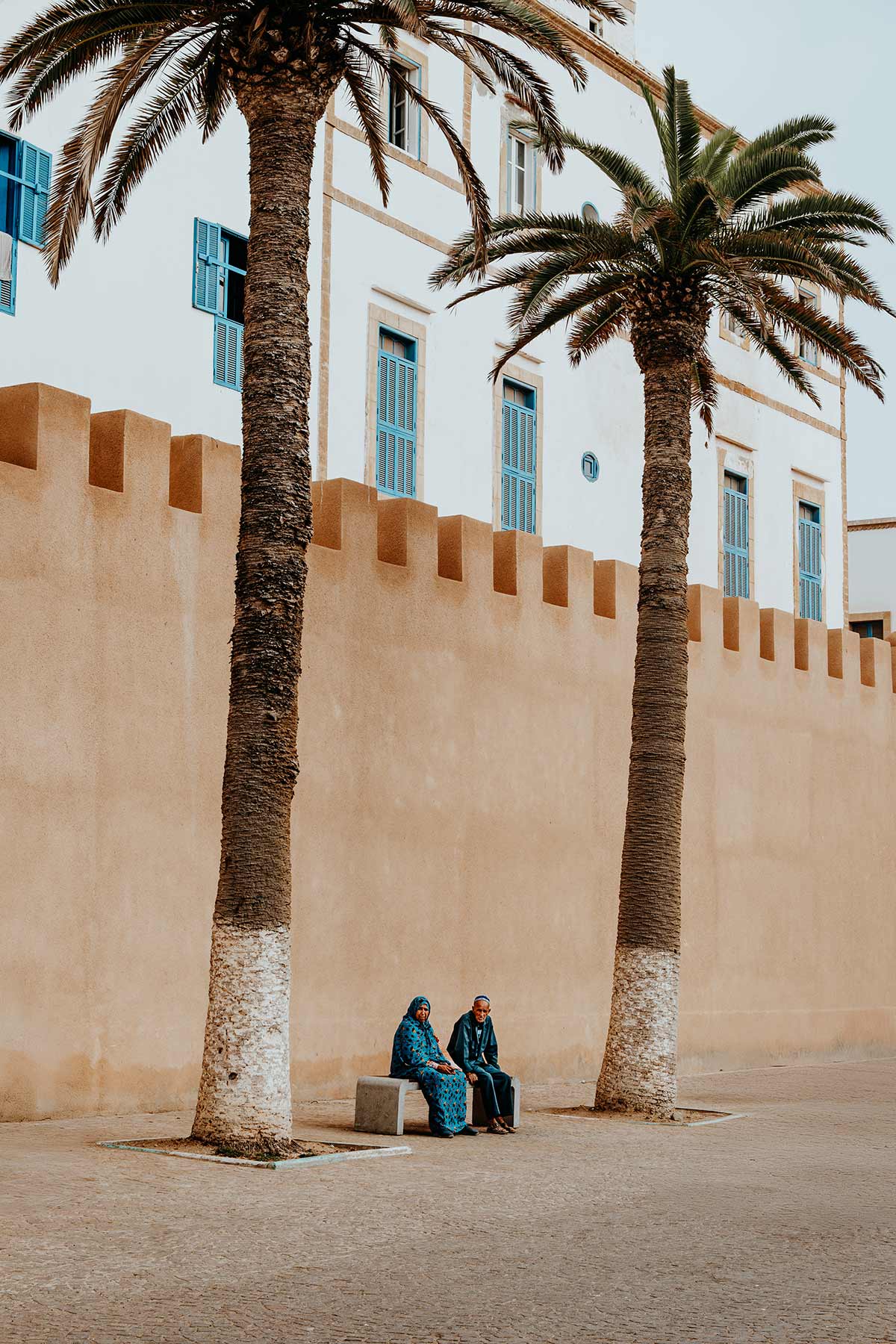
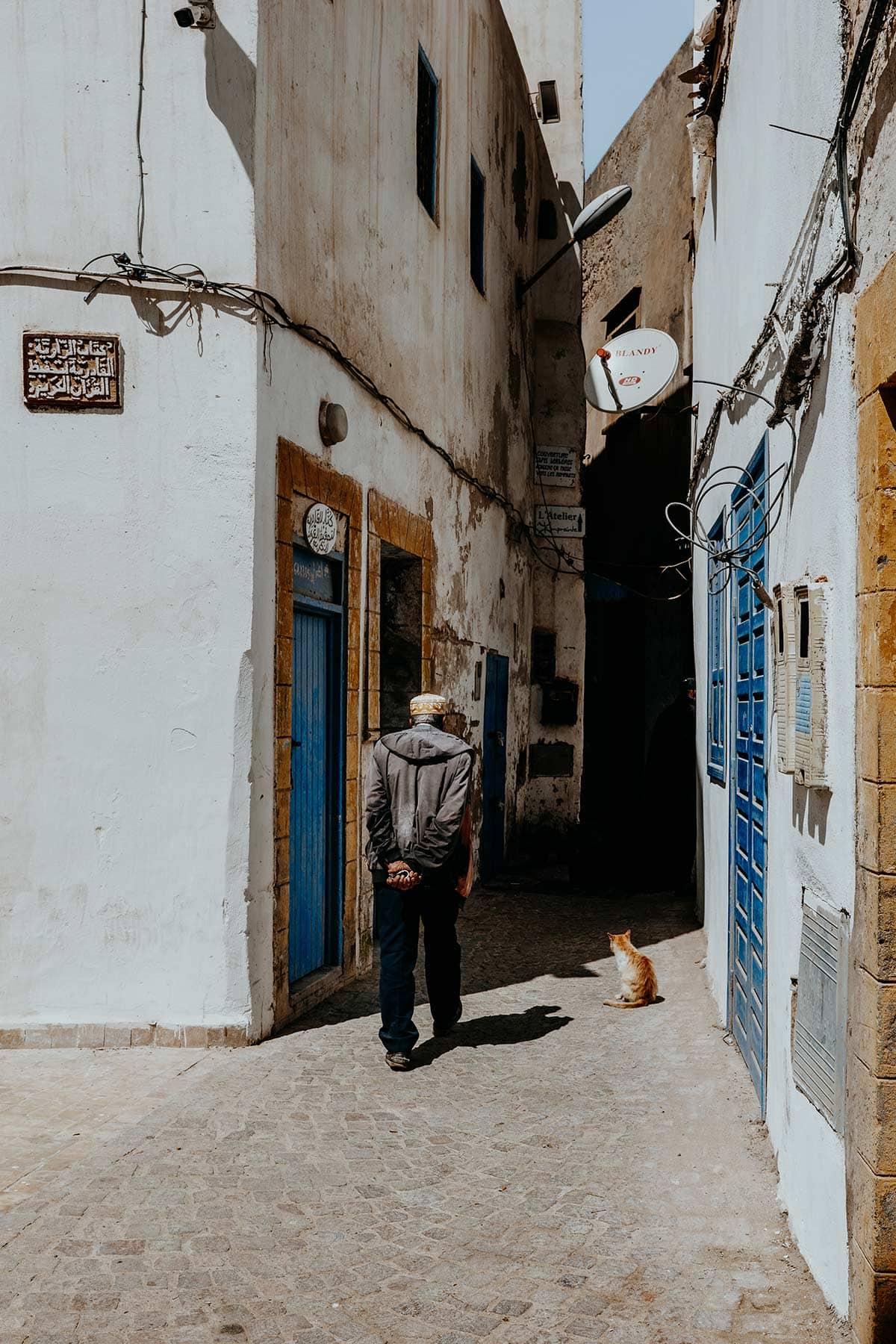
Essaouira is picture-perfect in every sense of the word, from whitewashed walls accented by blue shutters to charming souks teeming with activity, to fortified sea ramparts that echo both its maritime past and presence.
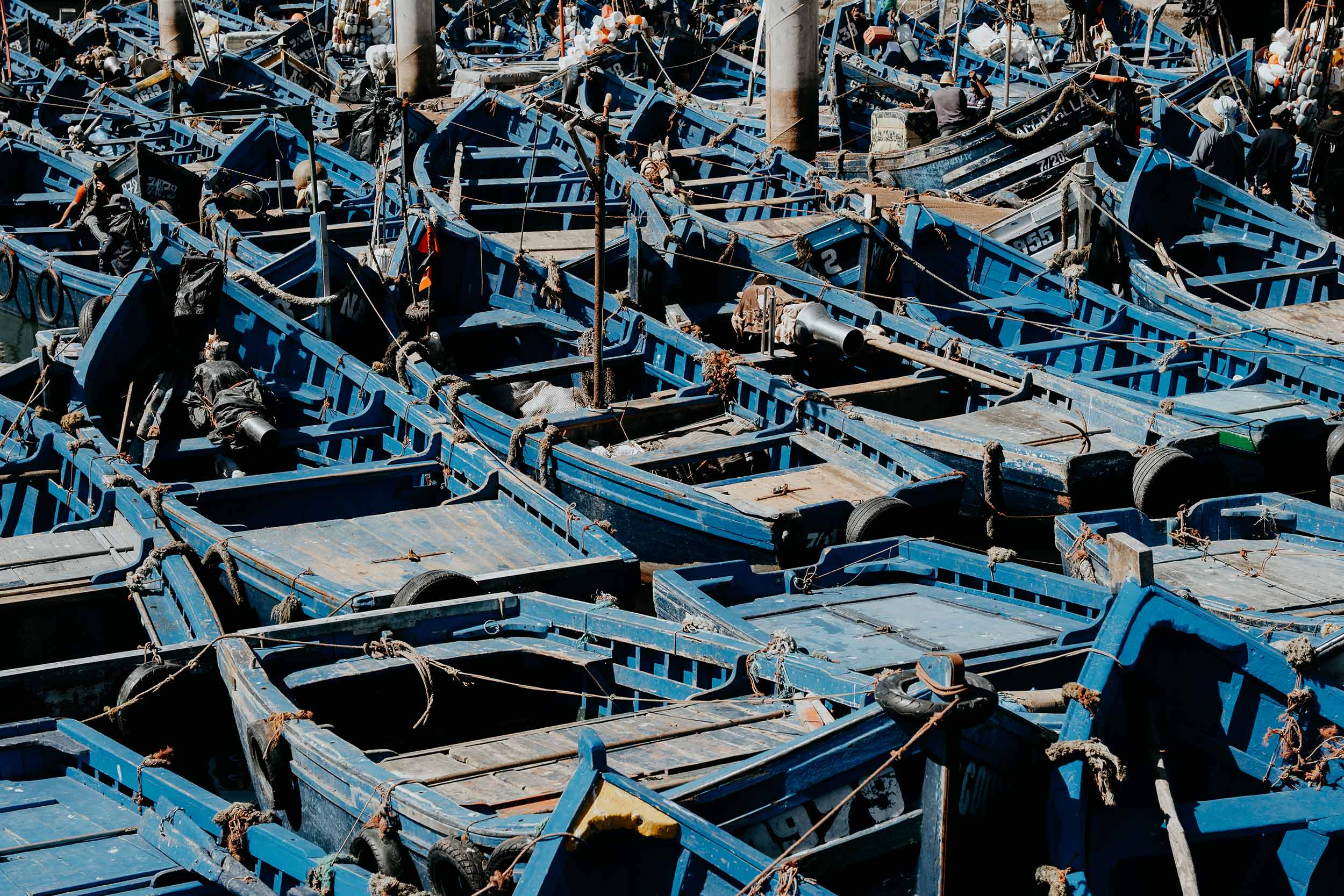
From the imposing Skala du Port to the iconic blue boats bobbling to the rhythm of the waves, the energetic ambience found in the medina, to the famous fish market that is as chaotic as it is vibrant, Essaouira will cast its spell on you from the very first moments.
Meanwhile, foodies can indulge in a broad variety of culinary delights, with the city’s fresh seafood offerings being the absolute highlight of it all, while culture and history buffs will be delighted to uncover Essaouira’s enchanting creative soul one step at a time in the many art galleries and museums.
For the traveller, this is the kinda place you wish you had found sooner, and one where you will most likely linger longer than initially planned.
In this in-depth guide, I’ll share my favourite things to do in Essaouira, as well as advice on where to stay, how to get there, when to visit, and more.
If you choose to use any of the links on this page, I may receive a small commission at no extra cost to you. By using these links, you’ll have a direct impact on WTSW and my ability to continue to create free insightful travel content for you. If you find any of my tips useful, you can support me by buying a virtual coffee here.
Where is Essaouira
Located roughly 190 kilometres northwest of Marrakech, Essaouira is a stunning coastal city known for its historic port and small yet stunning fortified medina.
Once called Mogador, Essaouira sits directly on the Atlantic Ocean and accordingly, has a rich cultural history, influenced by the traditions of many who entered its port, including the Portuguese, French, Arab, and, of course, Berber.
At present, Essaouira combines this layered past with a vibrant arts scene and a laid-back coastal charm, making it the perfect destination for those seeking history and leisure.
Where to stay in Essaouira
As one of Morocco’s most captivating coastal cities, Essaouira has no shortage of excellent accommodation on offer, suiting every travel style and budget.
Whether you’re looking for a cosy riad tucked away in the lively medina, a stylish boutique hotel with views over the Atlantic Ocean, or a seaside resort. Name it, and you will find it here.
To help find your perfect stay, here are my favourites out of the bunch:
Riad Chbanate | This charming riad is located only just outside of the medina and offers lush greenery throughout, a rooftop terrace, and a peaceful, homey vibe.
Villa De L’Ô | Situated within the walls of the medina, this stylish, ocean-view riad combines Moroccan charm with modern comfort.
Suite Azur Hotel | Nestled in the lively streets of the Medina, Suite Azur Hotel is a stylish boutique hotel marked by spacious, well-decorated rooms. It also has an incredible rooftop complete with sunbads and a swimming pool.
10 Wonderful things to do in Essaouira
1. Explore the Essaouira Medina
You only need to spend a fleeting moment in the Essaouira Medina to become enchanted by its unique appeal and authentic character.
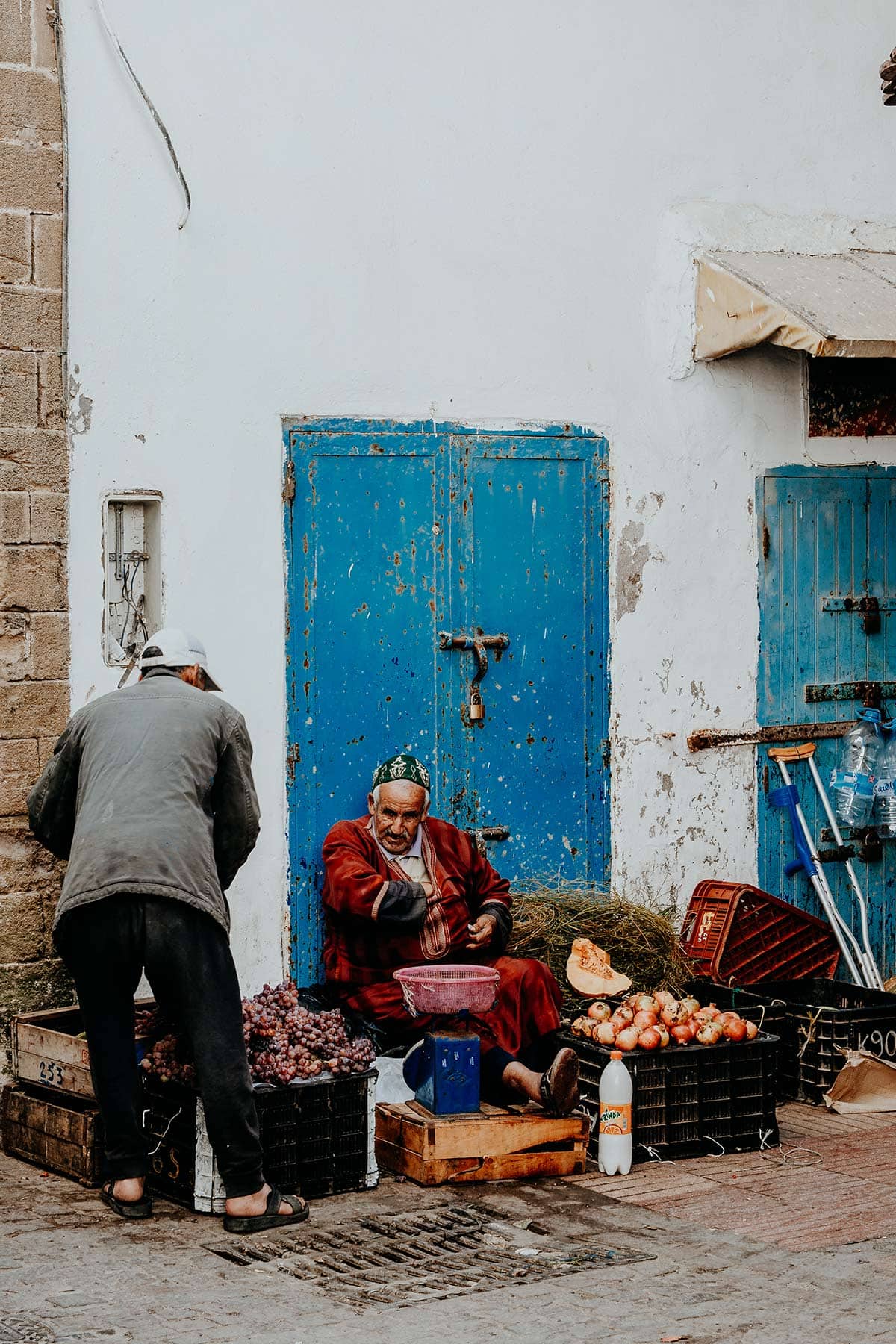
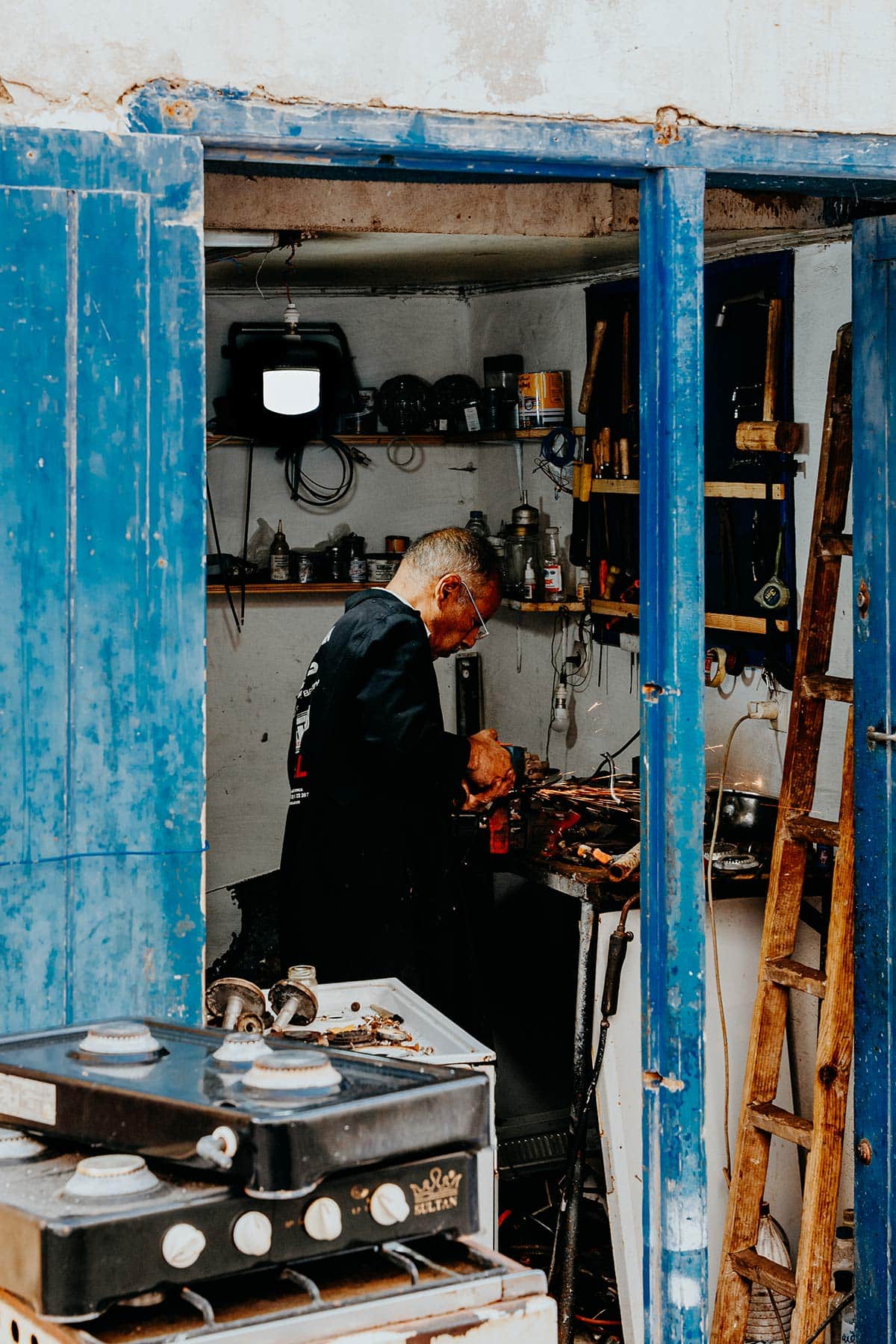
Marked by an iconic blend of whitewashed buildings, cobalt-blue doors, and narrow alleyways that guide you through, Essaouira’s medina is unlike any medina I’ve visited in Morocco, making it truly something special.
Though not as extensive as the Marrakech Medina, stepping into the Essaouira Medina is in many ways like entering a different world, one where every corner reveals a captivating story and time slows down.
It’s a place where getting lost is somewhat of a blessing, as every alley offers a chance to stumble upon something unexpected, whether it’s a friendly spice merchant, a small art gallery, or a hidden cafe waiting for you to enjoy.
One of my favourite parts of the medina was Skala de la Ville, a charming sea bastion that protects the medina from the Atlantic, where plenty of handicraft shops are sheltered just below.
Where | Essaouira Medina
2. Admire the Skala Du Port
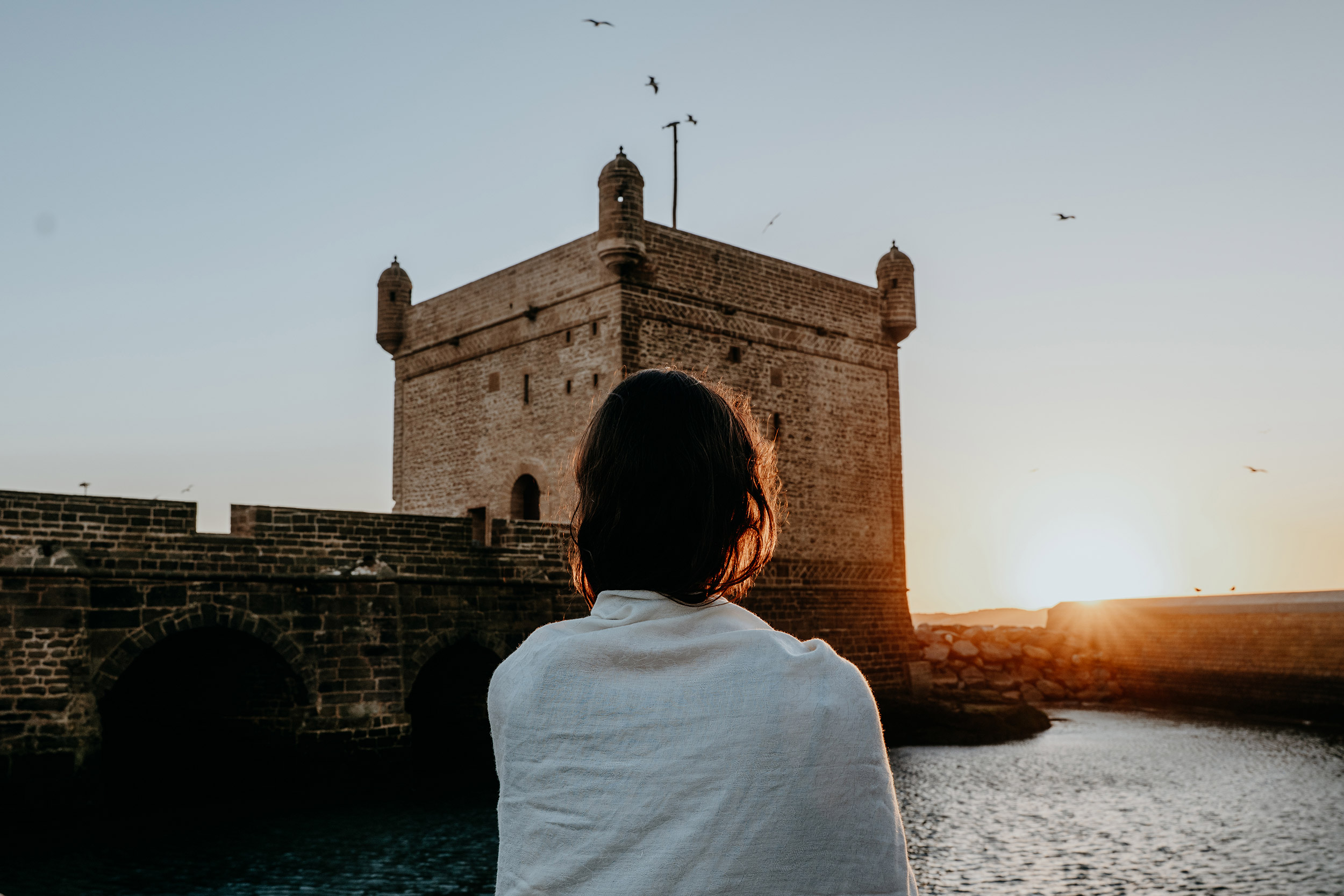
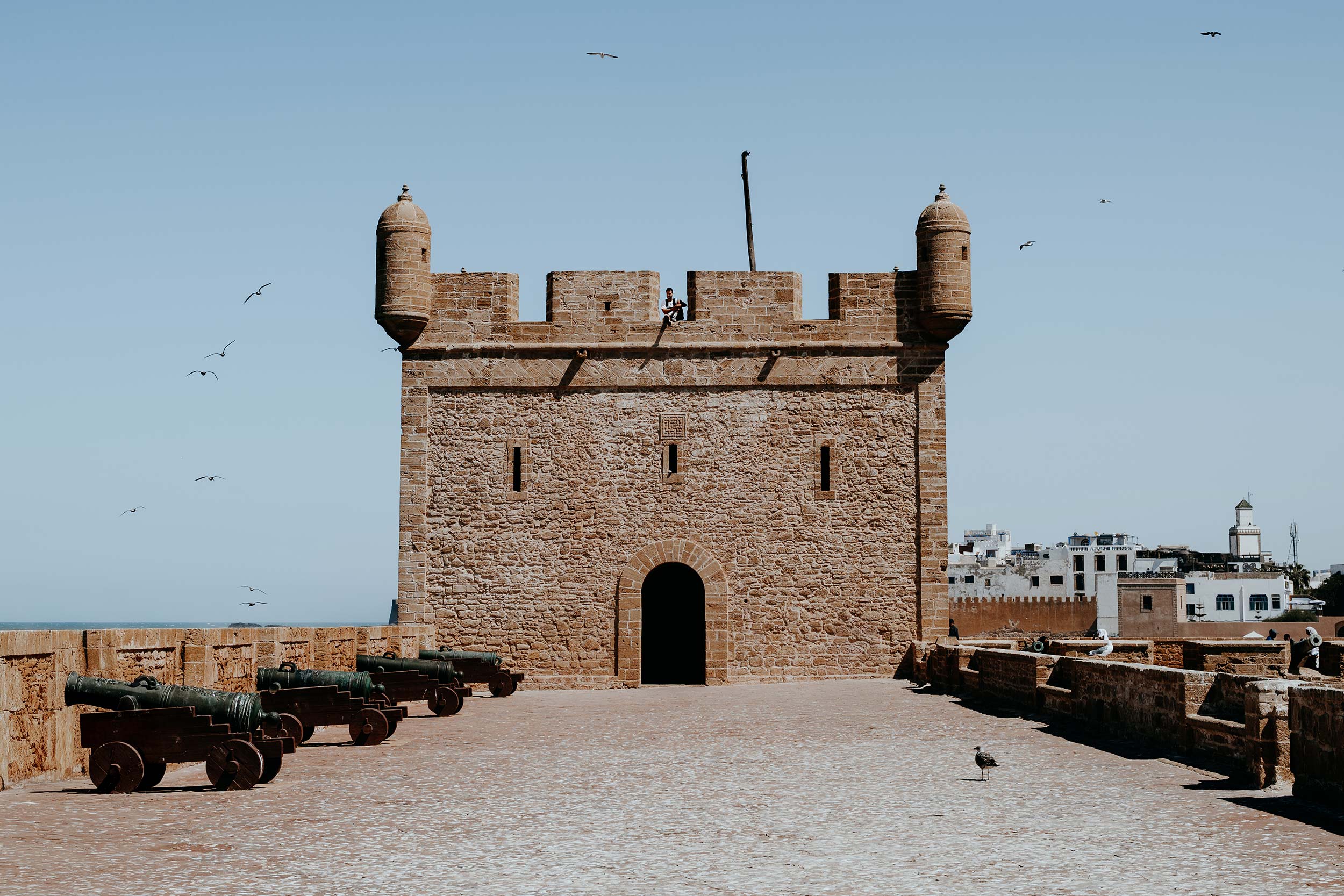
Those who binge-watched HBO’s blockbuster series Game of Thrones will most likely recognise Skala du Port, as it served as the filming location for the city of Astapor.
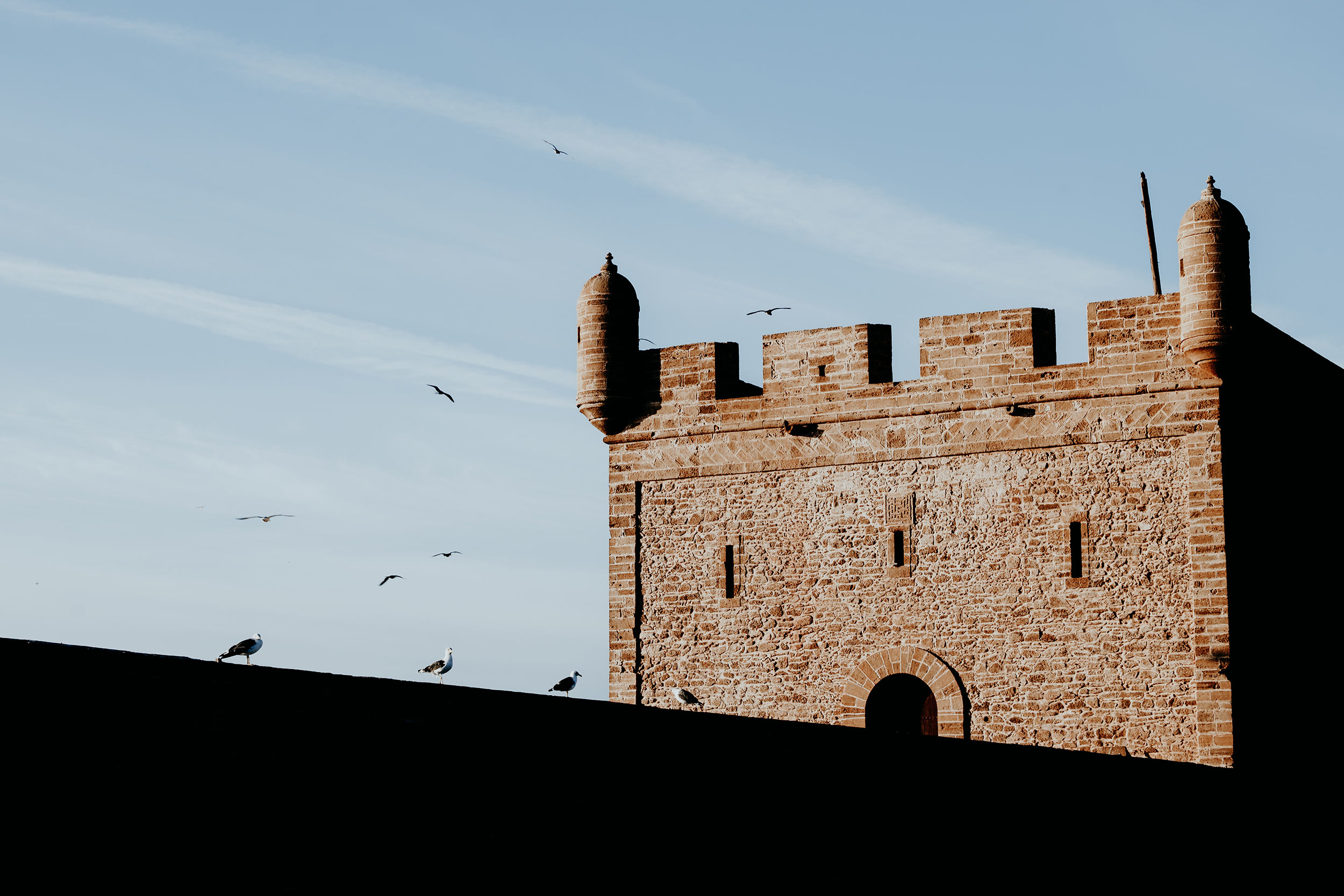
Located at the heart of the lively harbour area, this historic sea bastion was constructed under the rule of Sultan Mohammed Ben Abdallah in the 18th century, with one clear goal: defending the city, its people and their trade from potential danger coming from sea.
With its strategic position, allowing the monitoring and controlling of maritime activity, its ramparts thick and sloped, and its overall appearance both imposing and attractive, Skala du Port easily reflects the strength and authority of Sultan Mohammed Ben Abdallah’s rule.
Marked by the most elaborate arched passageways, intricate geometric layouts, and the shimmering Atlantic as its backdrop, Skala du Port rises as a true testament to the expert craftsmanship of Théodore Cornut.
With that being said, it is easy to see why Skala du Port caught HBO’s eye for Game of Thrones, and whether a fan of the series, a photography enthusiast, or a history buff, visiting the bastion is a perfect way to capture the essence of Essaouira.
For those into photography, make sure you visit later in the afternoon, when the light is gentle and the crowds have thinned out, making for a more tranquil experience.
Where | Skala du Port
Opening hours | Daily 0900 – 1700
Cost | 60 MAD (€5,65) per person
3. Snap the iconic blue boats of Essaouira
Who would have thought that marvelling at vividly painted blue boats, bobbing gently in the water, would be one of the most iconic things to do in Essaouira? Not me.
But I am glad it is.
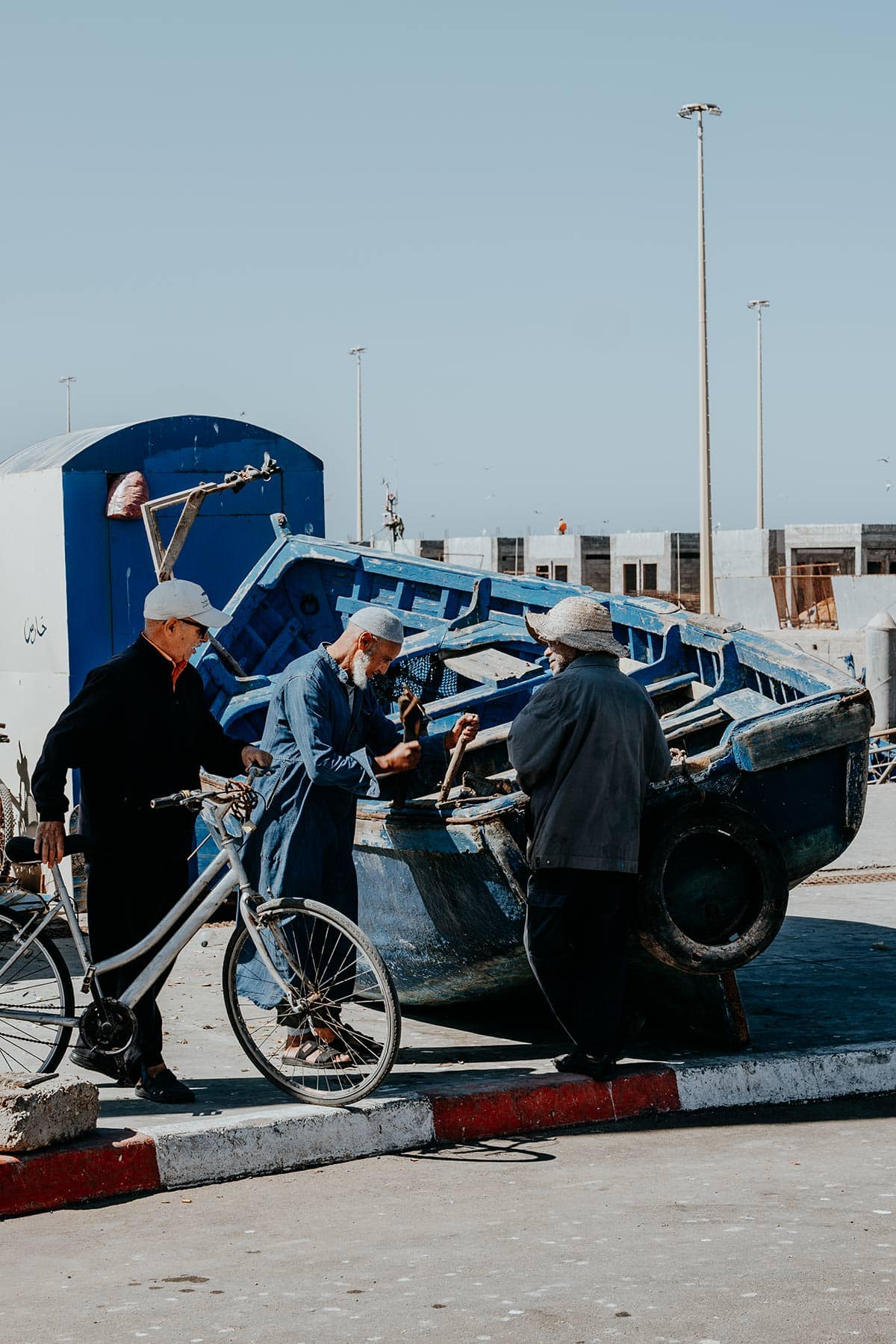
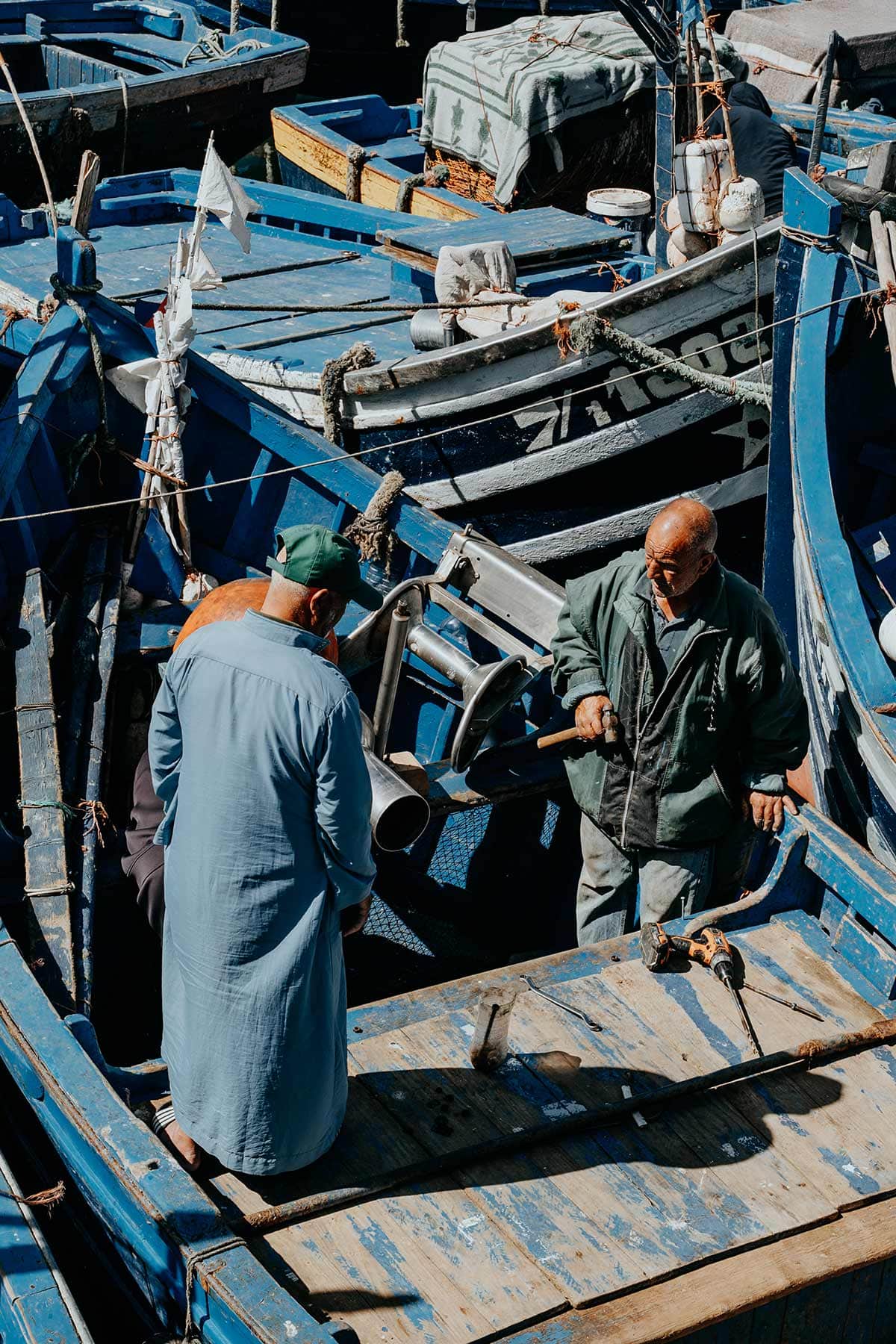
You see, those iconic boats, along with the fishermen who navigate them, reveal the story of how Essaouira and the ocean are tied together like knots in a rope, their chipped paint reflecting countless trips to the open sea.
Beyond its historical significance, Skala du Port also makes for a postcard-perfect scene, where every angle offers a unique perspective of those vessels, with every moment embodying the passage of time in a truly authentic fashion.
It’s an absolute dream for photographers and culture enthusiasts alike, and an essential stop for everyone visiting the coastal gem that is Essaouira.
Where | The blue boats at Skala du Port
4. Roam around the fish market
Given Essaouira is perched right on the Atlantic, it shouldn’t come as a surprise that the city is celebrated for its incredibly fresh and delicious fish and seafood offerings.
While I am, to put it lightly, not a fan of eating fish by any means, visiting the fish market in Essaouira is, in my opinion, truly essential, as it provides a unique glimpse into the daily labour that has kept this city thriving for ages.
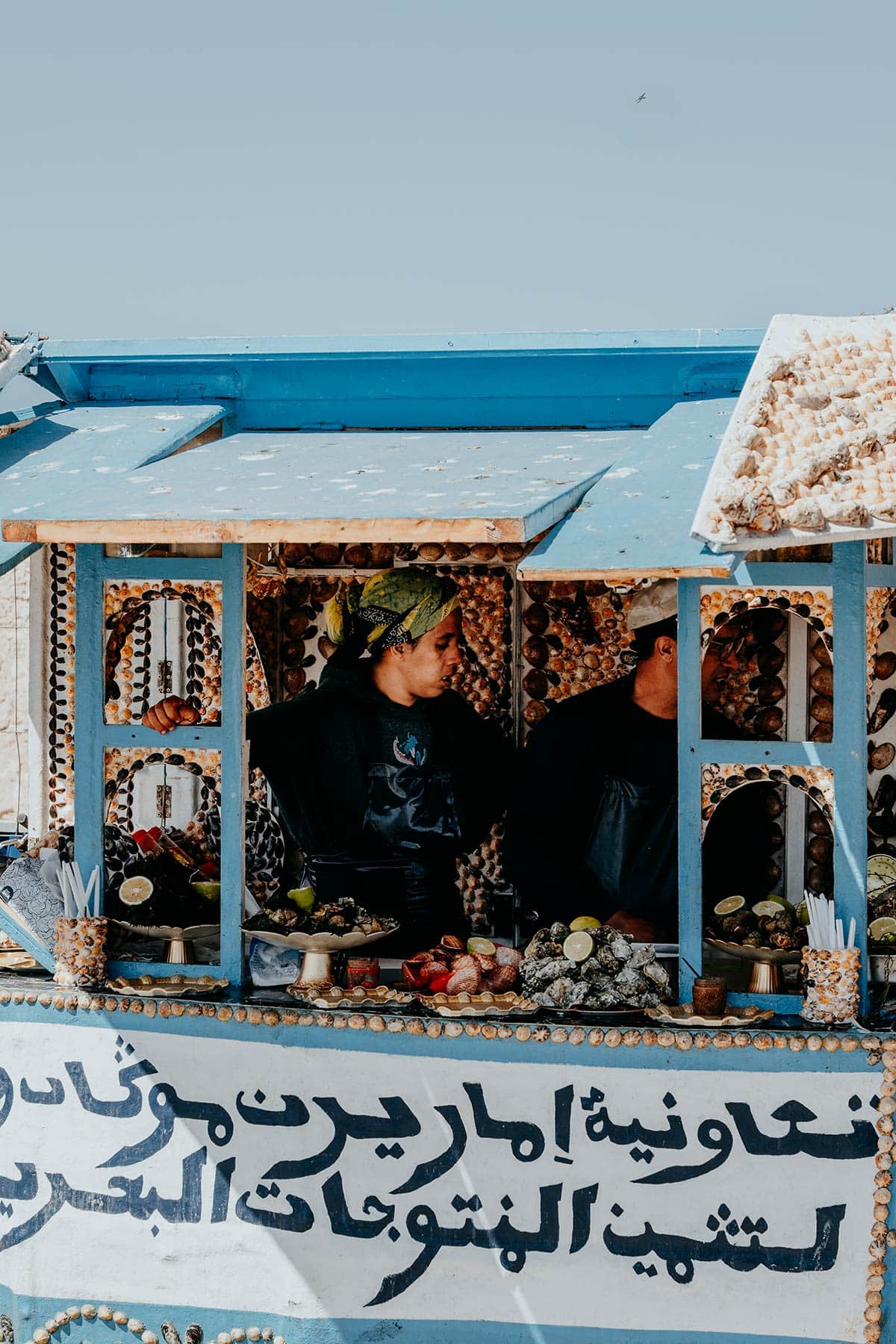
Every day, the blue boats gradually come back ashore; meanwhile, weary fishermen pull and drag nets heavy with the day’s catch, while the aromas of the ocean project pungently in the air.
While authentic as can be, this experience might not be for the faint of heart (or stomach if you’re sensitive to tangy smells), as the fish market at Skala du Port is as intense as it is vibrant.
Also, it is the perfect place to watch the daily hustle and bustle unfold, and an absolute playground for photographers like myself.
For the best experience, I recommend visiting in the early morning, when you have the opportunity to witness the complete process: from the return of the boats to the sorting of the catch, to the spirited negotiations between fishermen and merchants – it’s a unique affair not to be missed.
Where | Essaouira Fish Market
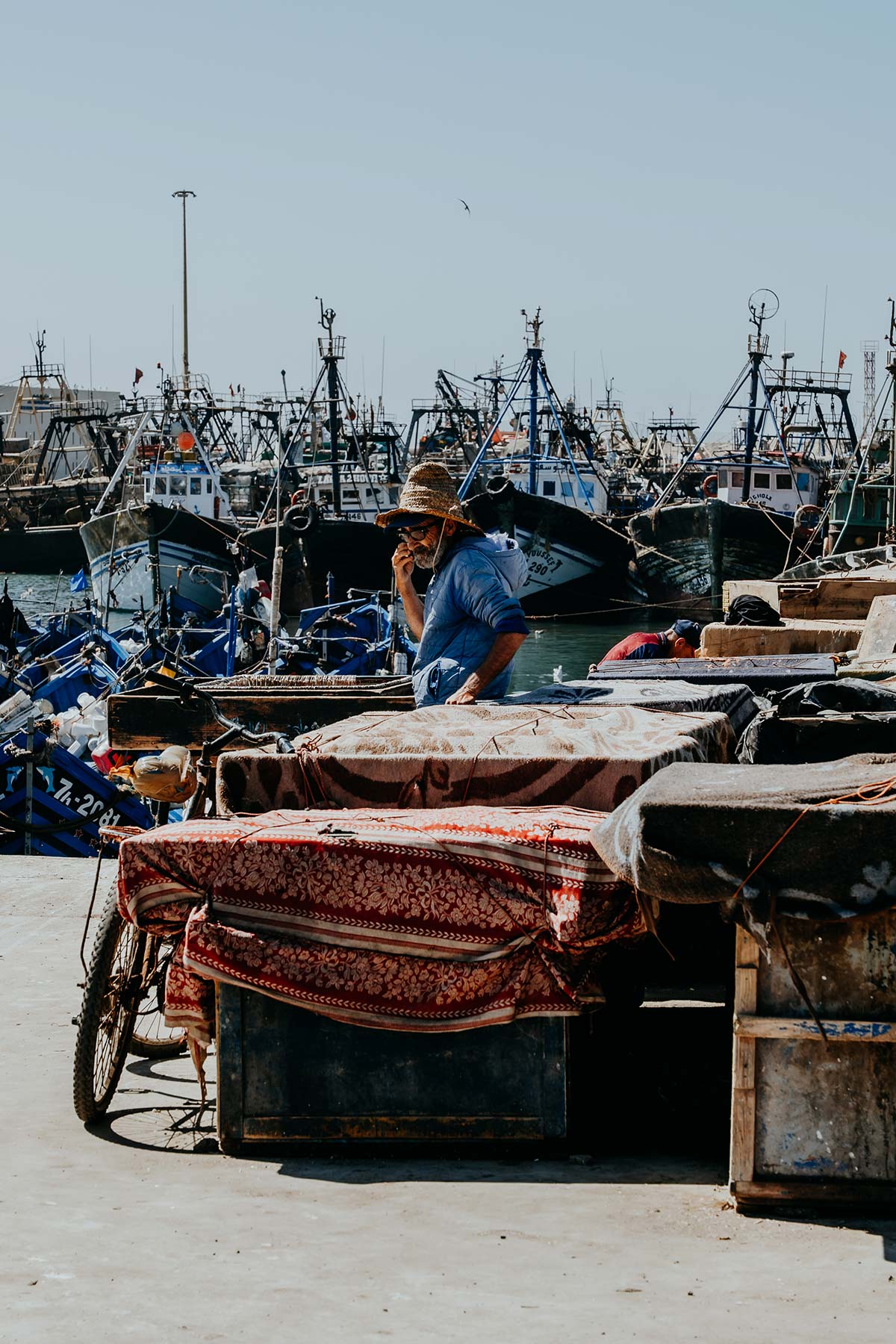
5. Have brunch at Mandala Society Essaouira
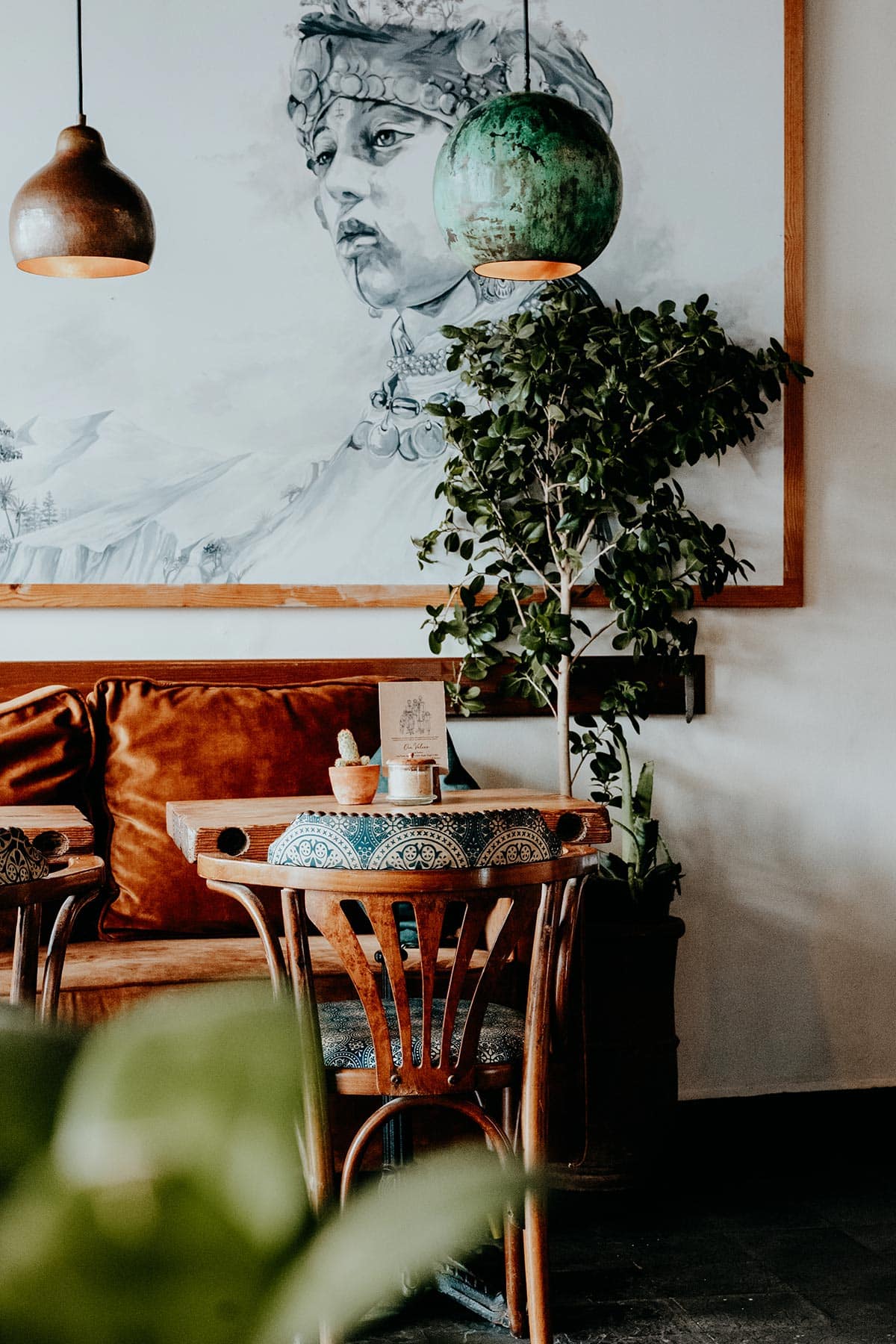
One morning, when wandering through the Essaouira medina with my camera in hand, slightly weary, craving a much-needed caffeine fix, I stumbled upon Mandala Society.
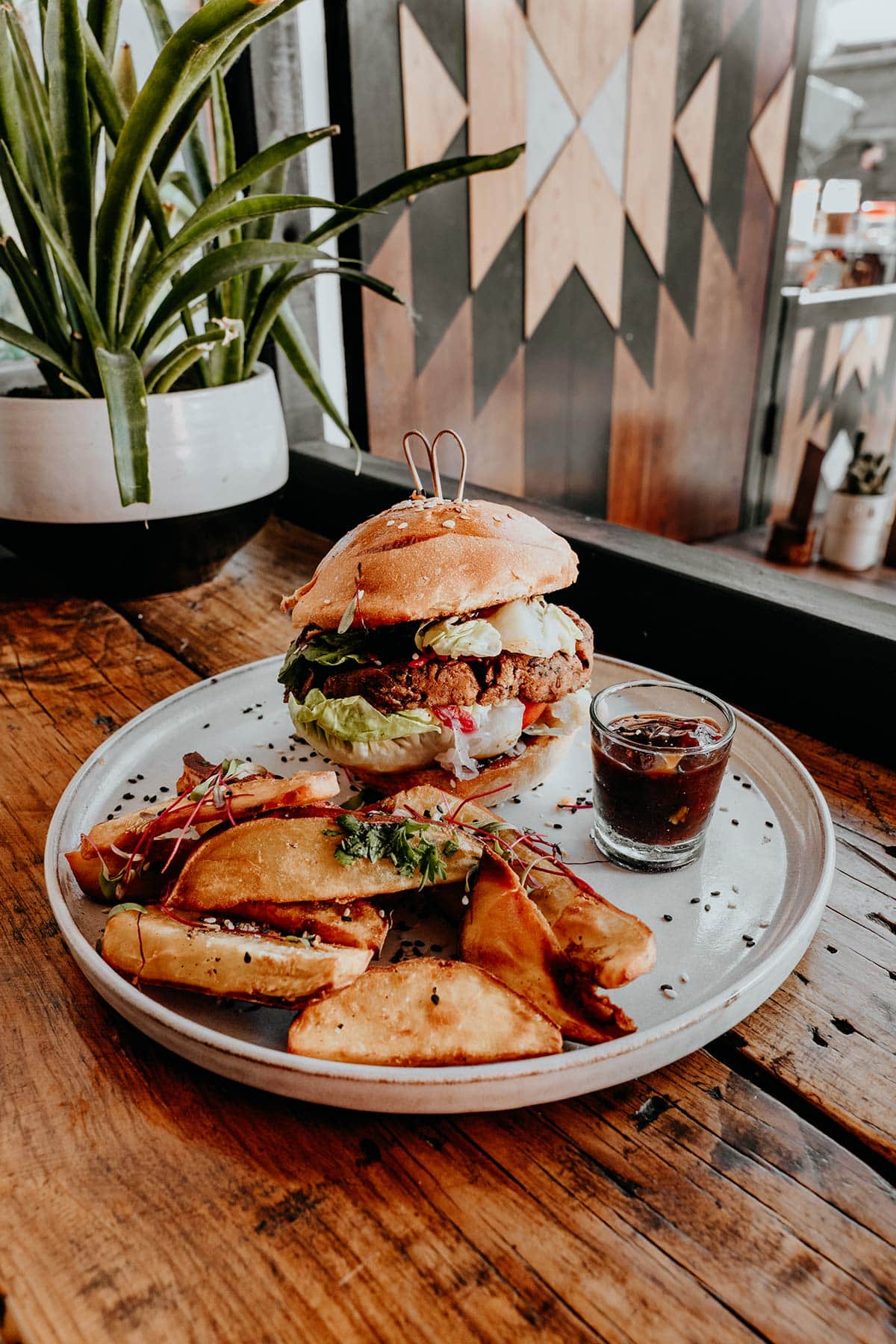
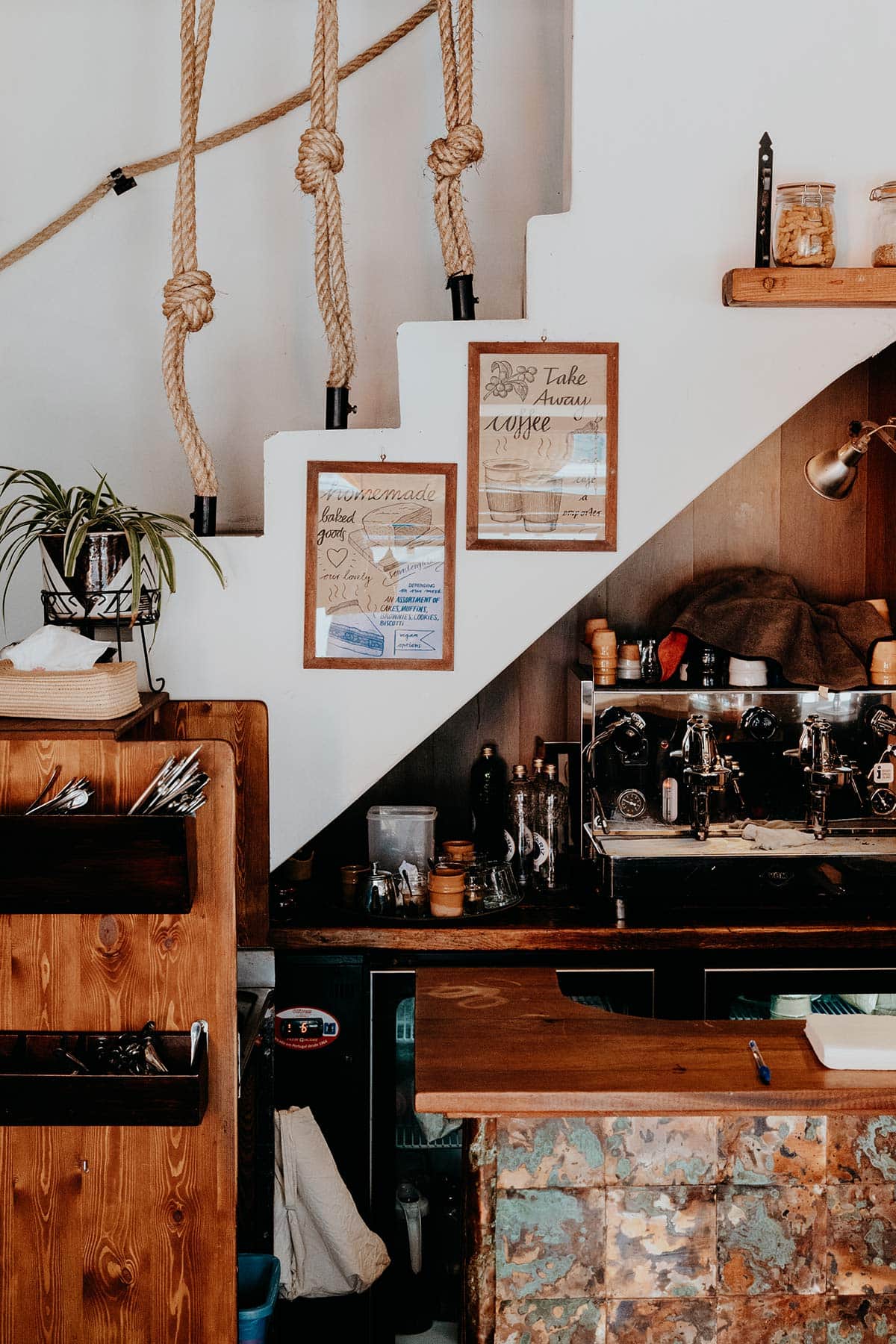
Nestled in the heart of the lively medina, Mandala Society is an absolute treasure. Here you can feast on nourishing smoothie bowls, savoury avocado toast, and, more importantly, speciality coffee made from high-quality single-origin beans, which is somewhat rare to find in Morocco.
Mandala’s extensive menu embodies the café’s core values: fair trade produce, artisanal cooking, and a commitment to organic food. Meanwhile, its bohemian-chic interior creates a calming atmosphere that invites you to unwind, watch the world go by, and soak in Essaouira’s quaint coastal charm.
If you’re like me and prefer to get some work done while travelling, Mandala Society’s inviting serenity also makes for the perfect spot for an hour – or two – of deep work and focus.
Where | Mandala Society Essaouira
Opening Hours | Daily 0930 – 2230
6. Do some serious interior shopping
Since Essaouira is buzzing with creativity, the lively souks are teeming with artisanal craftsmen setting up shop.
Unlike the chaotic souks of Marrakech, the souks found in Essaouira offer a far more relaxing experience, one where getting lost is sporadic, and being hassled to buy is nearly nonexistent.
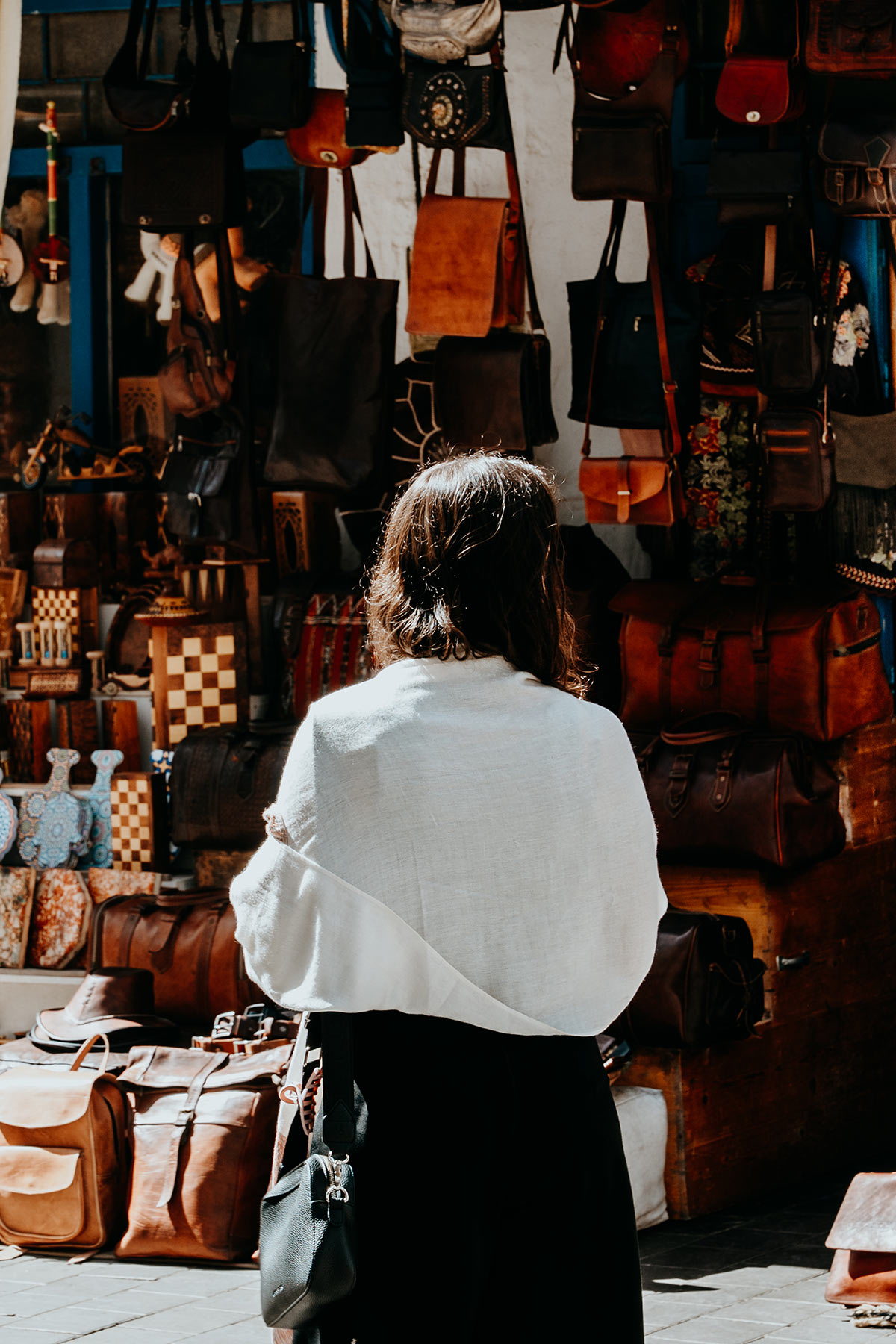
Whether you’re looking for stunning ceramics, intricately woven carpets, or something stunning carved out of wood, the souks of Essaouira have no shortage of boutique-style art and interior shops, perfect to add a touch of Moroccan flair to your home.
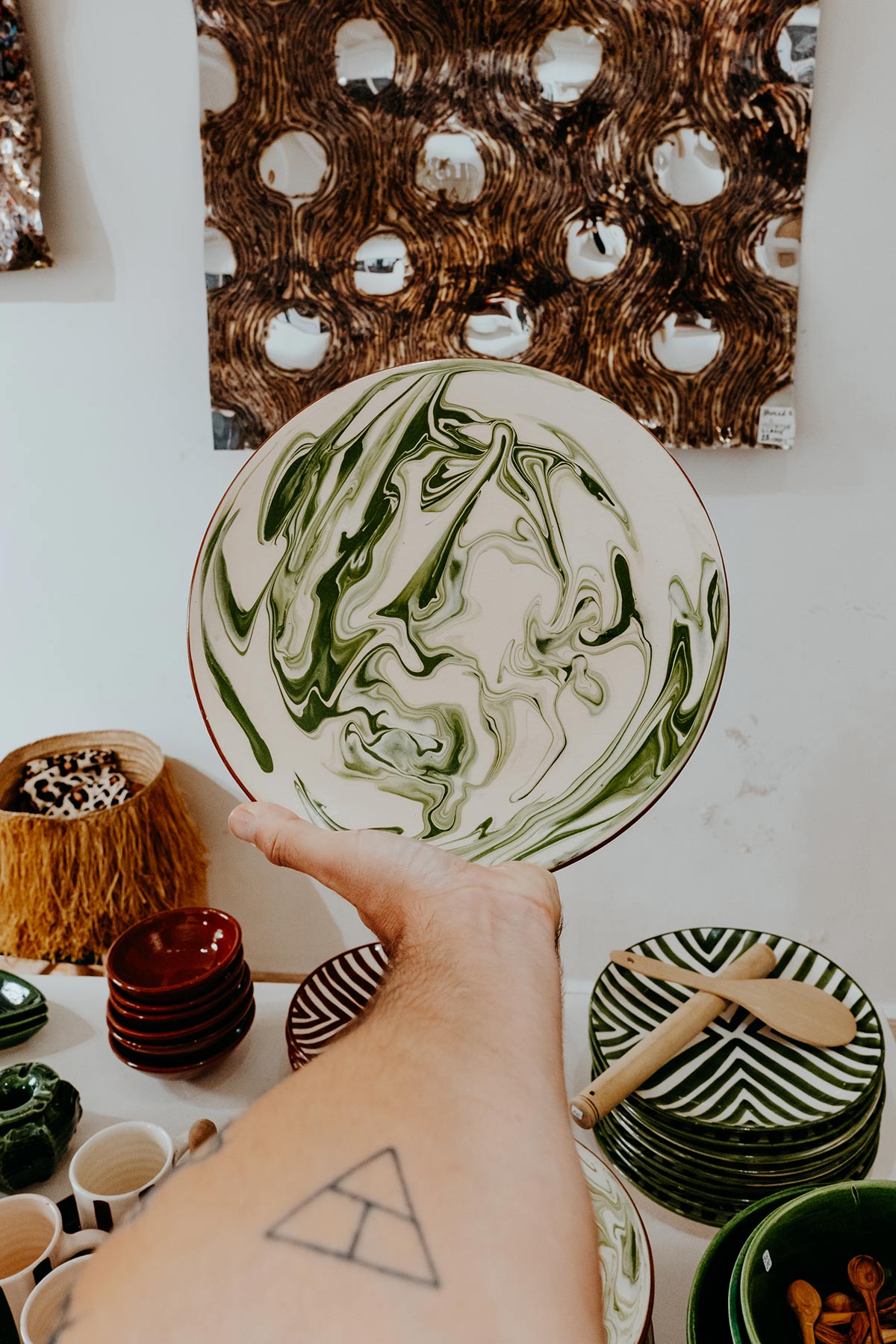
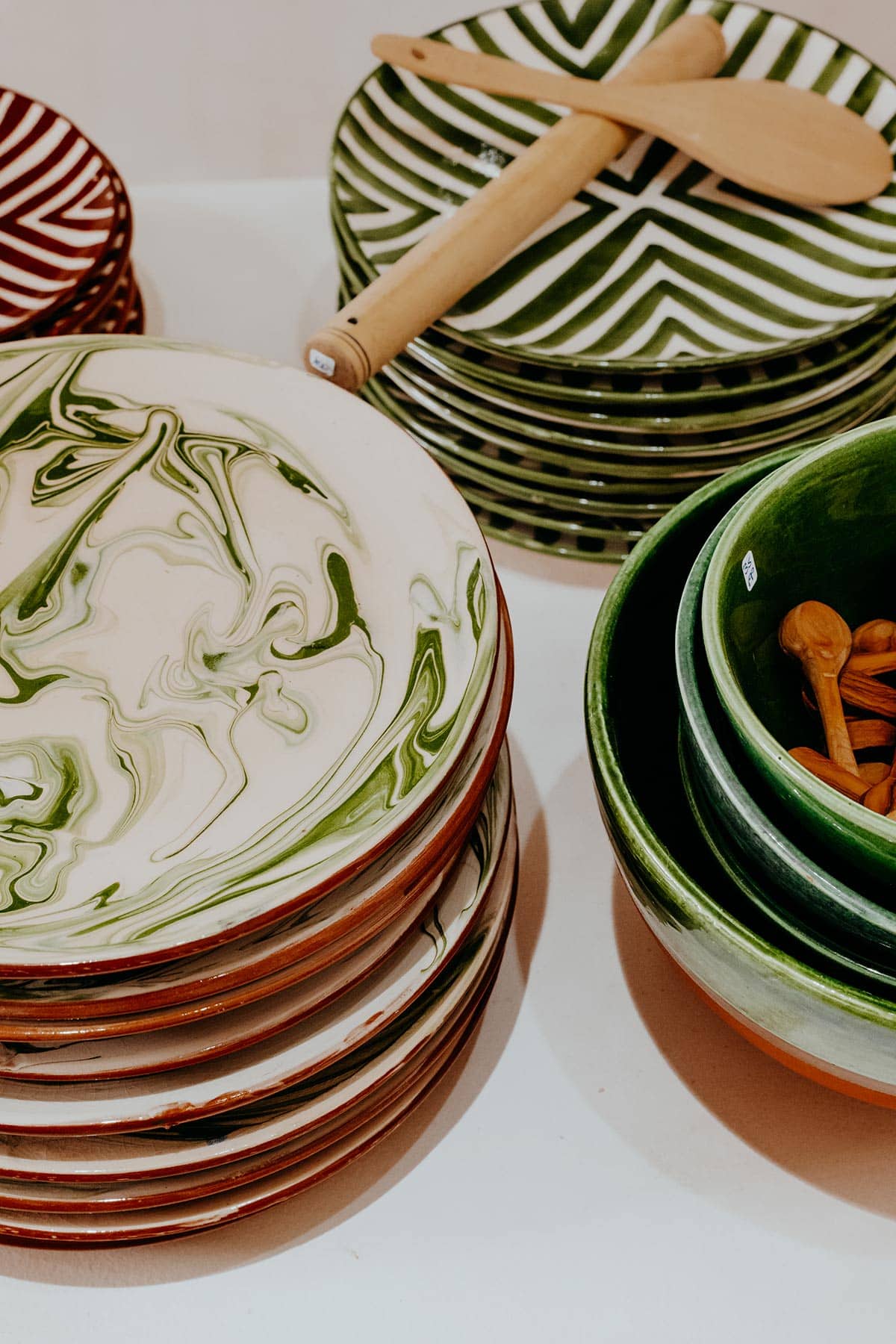
When I stumbled upon the Minimal Bazar, their handmade terracotta ceramics immediately caught my eye, especially that one apple-green coloured plate adorned with flowy dip-dyed patterns; I immediately knew this would make for a stunning statement piece in my office.
That said, if you’re the kind of traveller who’s keen to find unique souvenirs to bring back home from their adventures, Essaouira is clearly the place to do the shopping.
7. Spent a day on Essaouira beach
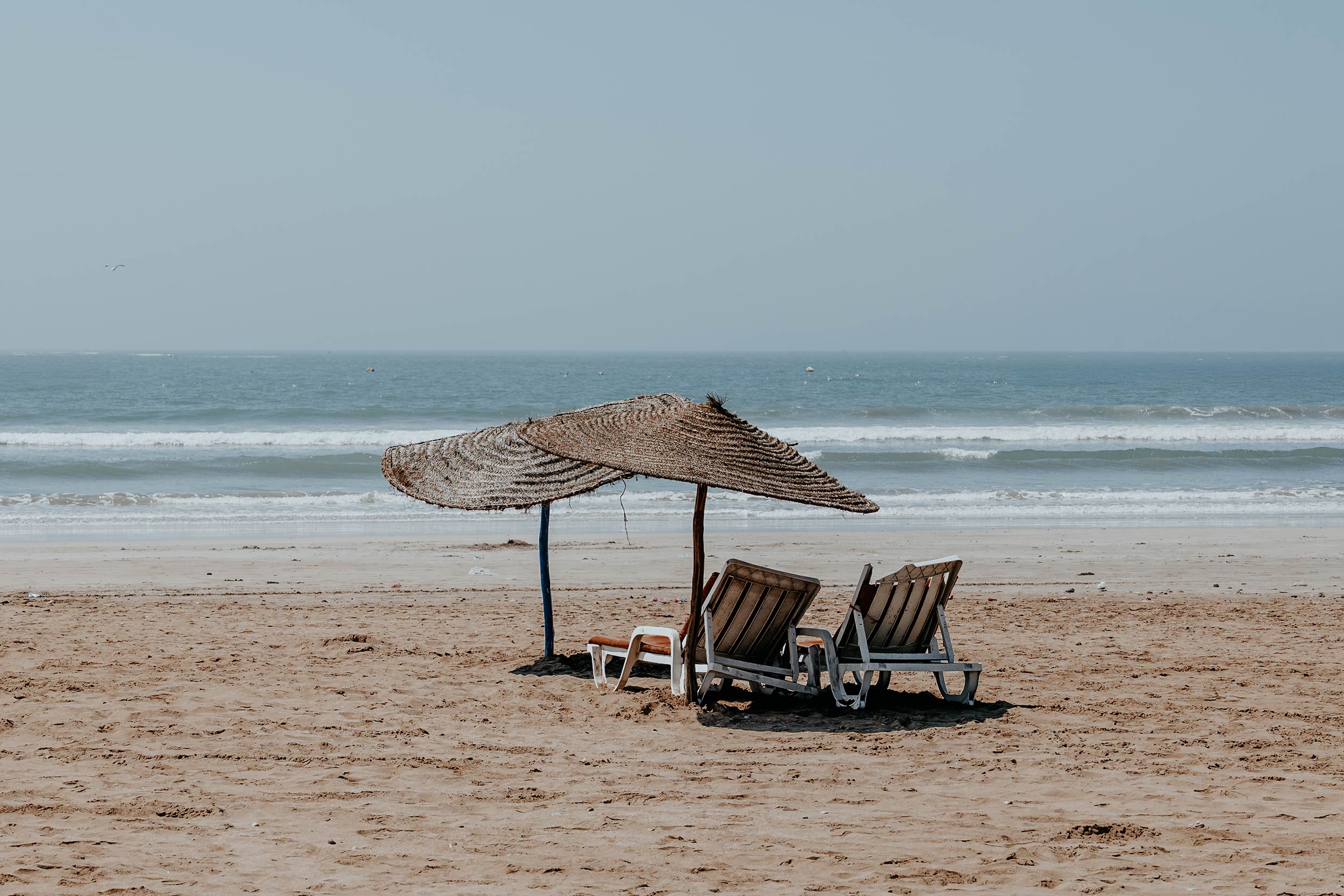
As wild as it is beautiful, the coastlines found around Essaouira are shaped by the powerful winds coming straight from the Atlantic, hence Essaouira’s nickname ‘the Windy City’.
Thanks to this constant ocean breeze, the coast of Essaouira is pleasantly cooler, with summer temperatures rarely passing the 28°C mark – while the rest of Morocco basks in the African heat.
While not particularly suited for a lazy, sun-drenched day on a lounger, the wide golden sands of Essaouira are perfect for long walks, a refreshing dip in the Atlantic, or a quick, spontaneous game of footy with some locals.
The same wind that makes sunbathing feel like a full-body sandblasting experience turns Essaouira into one of the world’s leading spots for those into kite surfing and surfing, with plenty of surf shops offering lessons and board rentals perched right along its charming seafront.
In short, spending a few moments on the beach is one of the best things to do in Essaouira – I mean, honestly, have you truly visited Essaouira if you haven’t dipped your toes in the sand?
Where | Essaouira Beach
8. Take a stroll along the city walls
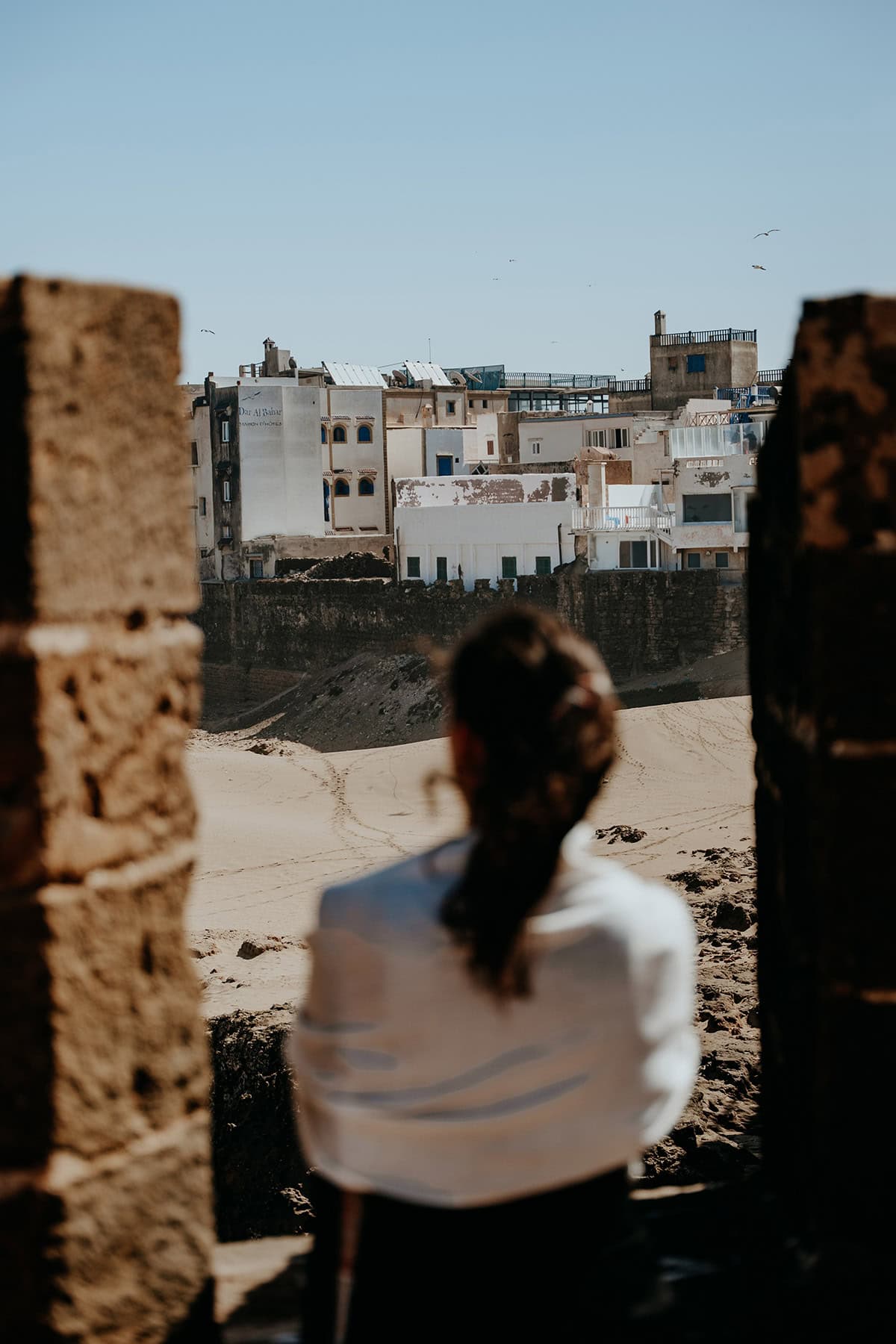
Towering high above Essaouira, the robust city walls have stood watch since the 18th century, protecting the city from both the relentless Atlantic waves and invaders from distant shores.
At present, the Essaouira ramparts, designed by French architect Théodore Cornut, remain an essential feature of the whitewashed city, though their purpose has grown far more serene.
You see, today the ramparts serve as a spectacular lookout point over the Atlantic, and a leisurely walk along them – especially during sunset – has become one of the city’s most memorable experiences.
From Skala de la Ville, where artists and craft vendors bring life to the walls, the lively medina unfolds beneath you, full of authenticity and local charm. While in the meantime, the bastion’s past quietly endures, offering a subtle hint of Essaouira’s rich heritage.
Truthfully, watching the world go by from the city walls was without question one of my absolute favourite things to do in Essaouira – I’m sure you’ll enjoy it just as much as I did.
Where | Essaouira Beach
9. Uncover Essaouira’s thriving art scene
Over the last couple of years, Essaouira has evolved into somewhat of an artistic hub, with its ever-growing art scene thriving, making it one of the city’s most captivating draws.
When you roam the streets, you’ll notice heaps of art galleries and museums, showcasing the creative expressions of inspiring artists from Morocco and beyond.
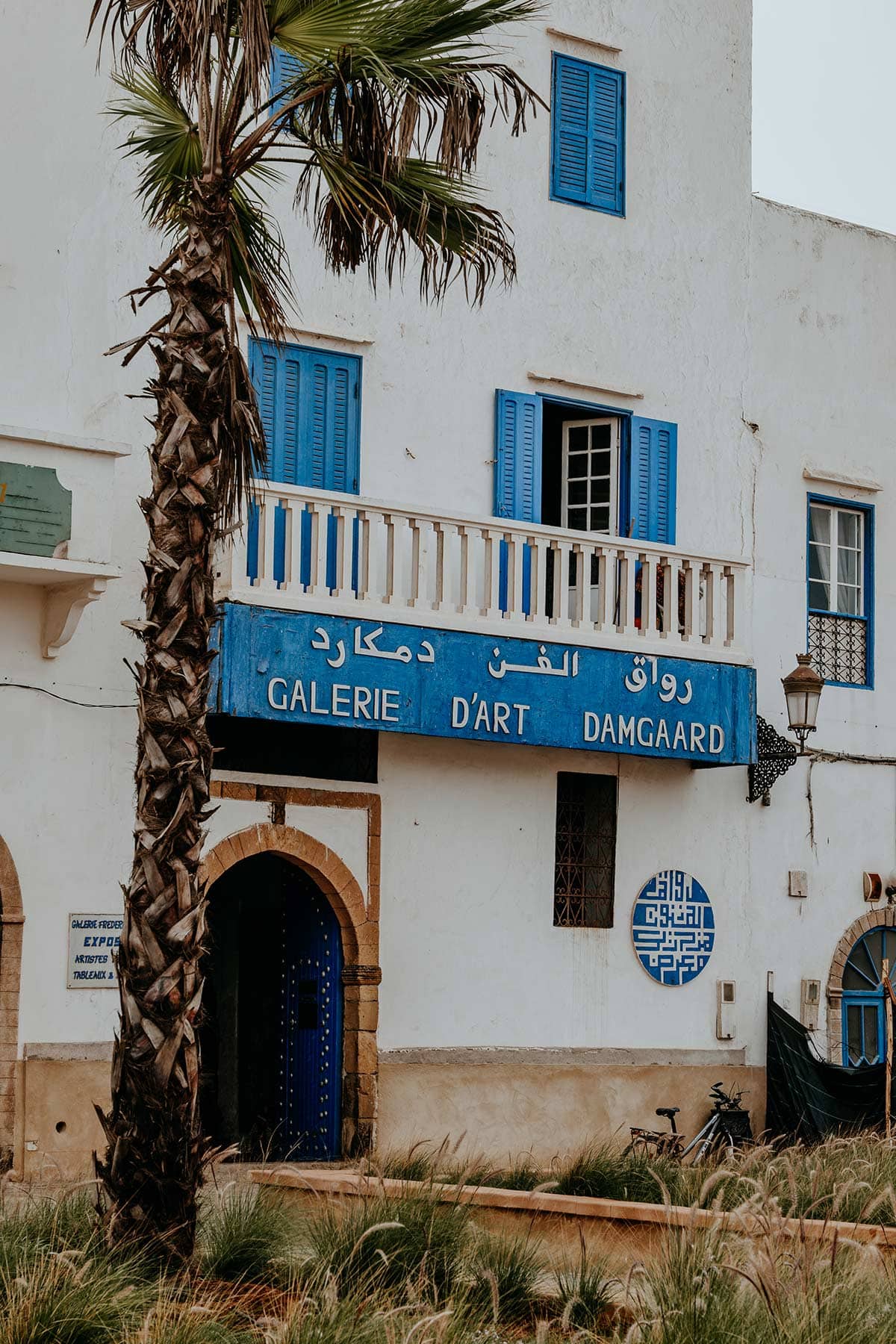
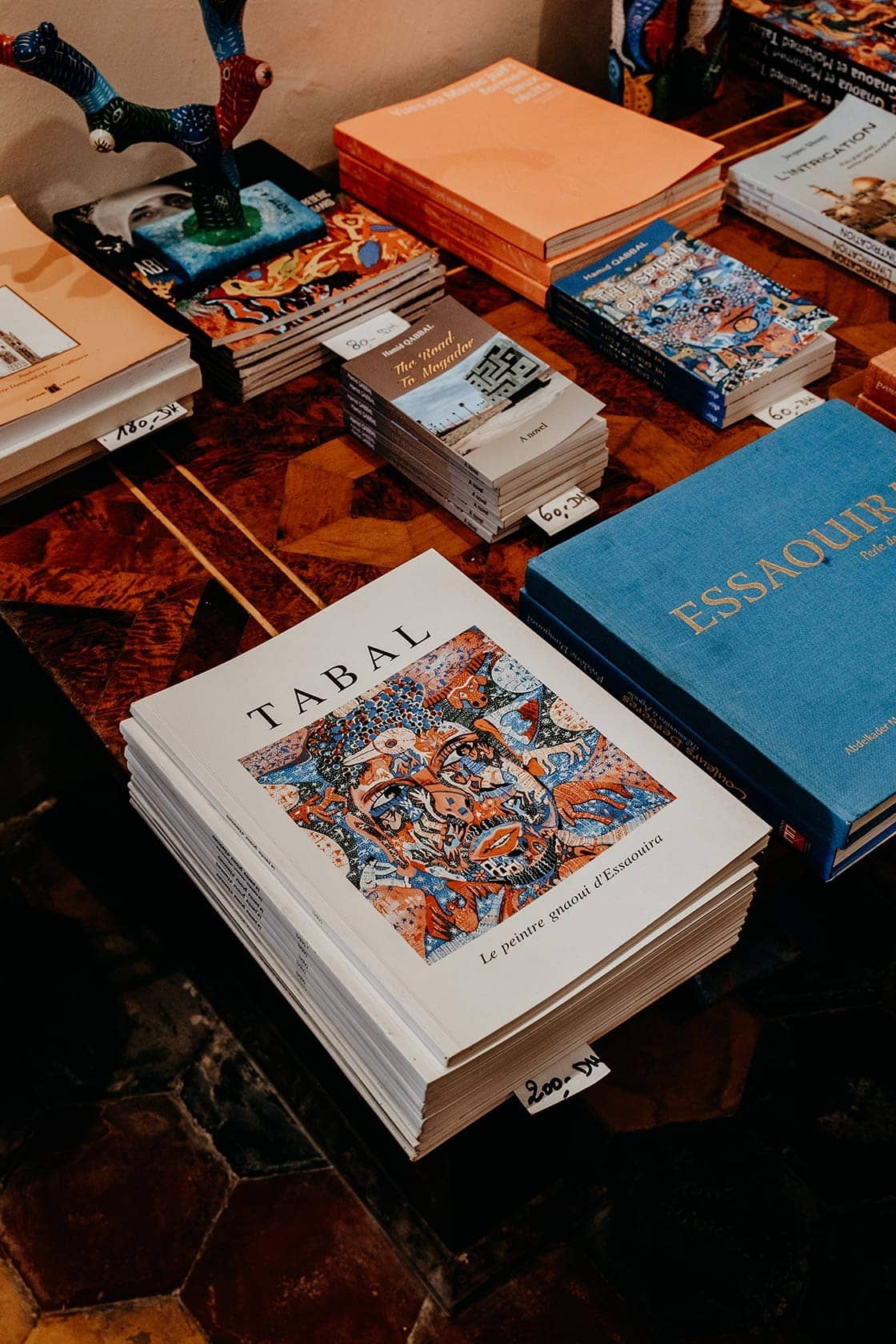
Frédéric Damgaard Art Gallery | Providing a glimpse into Essaouira’s rich Gnawa culture, this art gallery was founded in 1988 by Mr Frédéric Damgaard himself. Until today, it remains a cornerstone of local creativity, celebrating vibrant paintings and impressive sculptures.
Le Real Mogador | Just a short stroll away, Le Real Mogador welcomes visitors into the elegantly restored Italian Consulate. Here, modern works from both Moroccan and international artists are on display, while the building’s historic charm beautifully complements the artworks.
Sidi Mohammed ben Abdallah Museum | Housed in a 19th-century riad with the most incredible interior, this is easily the best-known gallery in Essaouira. With a collection of traditional instruments, textiles, and historic artefacts, it perfectly displays Essaouira’s heritage.
While I really looked forward to this museum, I quickly realised that it was closed permanently.
Kasbah Gallery | Displaying naïve art, sculptures, pottery, bronzes, carved doors and fascinating pieces of furniture, Kasbah Gallery is ideal for those seeking a mix of artistry and history. This amazing gallery is also housed in a majestic riad that dates back to the 18th century, which adds to its inviting appeal.
There are also a few smaller, more eclectic ones that I’d like to point out. First, there is the Elizir Gallery, known for its vintage posters and oil paintings, and secondly, Bayt Dakira, a cultural and spiritual space celebrating the history of Morocco’s Jewish community.
Together, these spaces mirror the creative soul of Essaouira, and I’d advise anyone visiting Essaouira to set aside some time to experience it for themselves.
10. Take a day trip to Sidi Kaouki
Though it is not actually in Essaouira itself, the stunning coastal village of Sidi Kaouki absolutely earned its spot on this list of things to do in Essaouira.
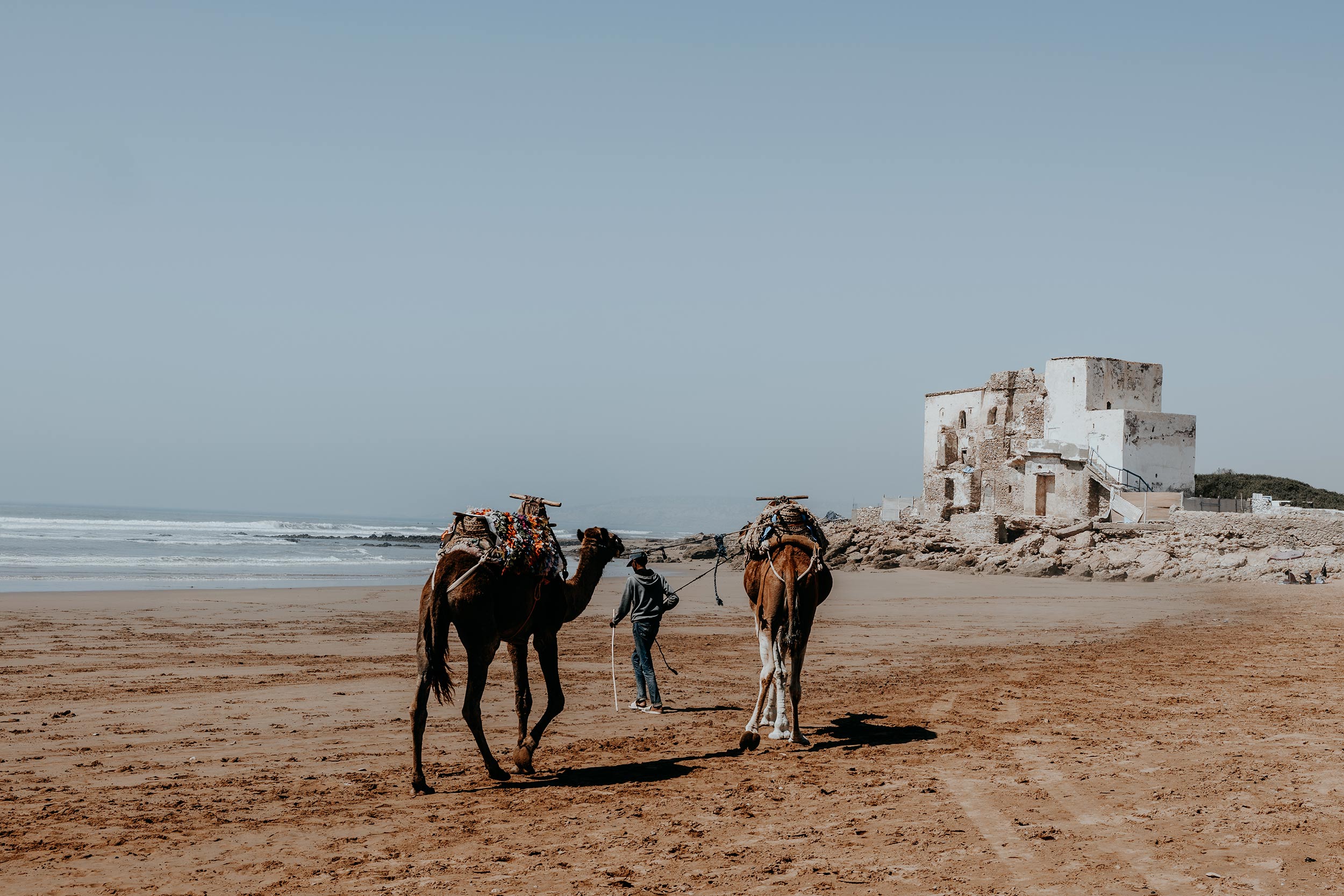
Nestled along the Atlantic, about 30 minutes south of Essaouira, Sidi Kaouki is a hidden paradise, boasting endless stretches of golden sand, excellent surf conditions, and a laid-back ambience that often makes travellers linger longer than initially planned.
Here, camels and donkeys wander freely along the beach, rustic cafés serve freshly grilled seafood, and a relaxed, almost nostalgic feel charms the village, offering the perfect escape from the hustle and bustle of Essaouira.
While ideal as a day trip, I personally chose to stop by Sidi Kaouki for just a few hours, before continuing my Morocco road trip in the direction of Taghazout – make sure you give my Morocco road trip itinerary (coming soon) a read too.
Where | Sidi Kaouki
Things to do in Essaouira | The essentials
The best time to visit Essaouira
Given Essaouira’s position along the Atlantic Ocean, the city enjoys a far more clement climate than inland Morocco, meaning there’s typically more comfortable weather year-round.
During the peak summer months of June to September, the temperature averages at 28°C, which is super pleasant, especially given that Marrakech endures 40°C and up during this exact same period.
One downside might be that Essaouira becomes significantly busier with foreign tourists and locals who flee the red-hot inland.
However, as with any place, I always recommend visiting during the shoulder months, which for Essaouira are either spring: March to May or autumn: September to November.
These shoulder months bring comfortable weather, hovering between 18°C and 25°C, while the city also sees fewer crowds, allowing for a more relaxed and authentic experience of Essaouira.
Even winter, from December to February, can be an appealing time to visit, as the temperature remains mild, rarely dropping below 12°C; however, it tends to be windier than it already is.
How to get to Essaouira
Essaouira is well connected by highway, which makes it pretty easy to reach, whether you’re driving, taking public transport, or decide to join a guided tour
With excellent road connections between Marrakech, Agadir, and Casablanca, it’s actually a pretty straightforward journey, one where you shouldn’t find any complications.
By Car
Those who come here more often for travel tips will know I’d do everything in my power to explore a country in the form of a road trip, and when it comes to Morocco, it’s no different.
Just 2,5 hour drive from Marrakech, and an additional hour if you come from Agadir, with well-paved roads connecting them, Essaouira makes for the perfect stop on any Morocco road trip itinerary – plus, I believe Essaouira deserves at least two days of your time.
For those looking to explore Morocco on their own set of wheels, I’d advise using an online car rental aggregator to compare costs, conditions, and find an attractive deal. For car rental, I personally always use DiscoverCars.
Since you most likely will stay in the medina, you should know that there’s paid parking available close by. I opted for Bab Marrakech, but there are also a few others.
By Bus
Alternatively, you can also easily get to Essaouira by bus, with the two operators: CTM and Supratours running between Marrakech and Essaouira.
The journey itself is pretty straightforward and should take you around 2.5 hours, depending on the traffic around the cities. Costs range between 90 – 125 MAD (€8,50 – €11,80) one way.
Both CTM and Supratours buses from Marrakech arrive at bus stations in Essaouira, which roughly 15-minute walk from the Essaouira medina.
Additionally, you can also choose to book an air-conditioned private transfer from Marrakech – you can share this option with a group of up to 4 people.
Leaving from Casablanca? No worries, there are also direct buses from Casablanca. Expect a journey time of approximately 6 hours.
By Guided Tour
While I truthfully believe Essaouira deserves to be visited for at least a couple of days, I understand that not everyone has the amenity of time to travel at a slower pace.
Those short on time will be happy to read that there are quite a few excellent day trips going to Essaouira from Marrakech. If time is of the essence, these are two excellent day trips:
If you’re looking to visit Essaouira from Marrakech without the hassle of organising everything yourself, this excellent full-day Tour includes hotel pick and drop off, air-conditioned transportation, and most importantly, free time in Essaouira itself.
Those who would like to do the same tour, yet prefer a more private experience, could opt for this full-day Private tour instead.
Alternatively, you could also consider day trips from Agadir or Casablanca – make sure you check all the options on GetYourGuide.
Stay safe in Morocco | Travel insurance
When travelling this big, wide world, I never leave home before I’ve sorted out my travel insurance, and while I felt completely safe during my time in Morocco, I recommend anyone travelling here to do the same.
Though I think it’s unlikely to experience any troubles when following the advice in this guide, something unfortunate can happen at any time, whether it’s an injury, a stolen camera, or an accident on the road (yes, we had one).
For travel insurance, I always use Heymondo, as they offer full COVID-19 coverage, as well as a handy app with 24-hour medical assistance. Make sure you check it out – readers of WTSW receive 5% off any insurance policy.
Cheers!
I’ve been on this travel blogging journey since 2019.
If you appreciate what I do here, these are some ways you can support me.
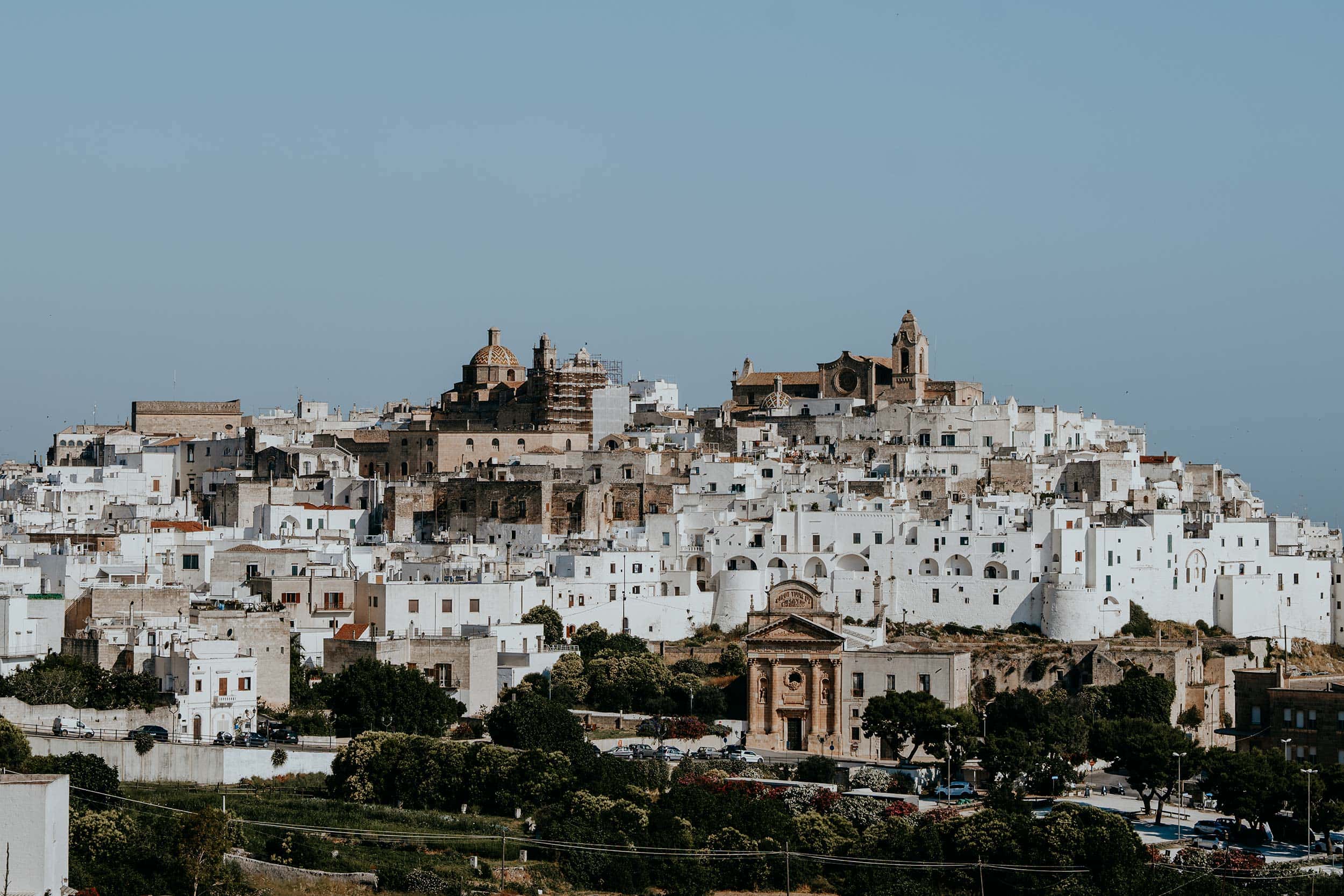
A Puglia photography journey: 87 photos that will inspire you to visit Puglia, Italy
At the ancient heel of Italy’s famous boot-shaped peninsula lies Puglia, a sun-soaked region defined by infinite stretches of coastline, enchanting historic towns, and a way of life that seems fairly unaffected by the hustle and bustle of the modern world.
Often overshadowed by Italy’s famous regions: Tuscany, Amalfi Coast, Sicily, and the Dolomites, Puglia has long been a hidden gem, quietly awaiting its moment to take the big stage.
In 2025, Puglia’s well-deserved moment finally came.
With a roughly +20% increase in international visitor numbers, there’s simply no way around the continuous rise of this amazing region in the south of Italy.
Rightly so.
From the stunning coastlines at Torre Sant’Andrea and Grotte Della Poesia, to the time-worn streets of Monopoli, Ostuni, Gallipoli, and Bari, the lesser-known coastal towns of Giovinazzo, Peschici, and Otranto, to the iconic Trulli of Alberobello, Puglia is, simply put, sensational.
I’ve recently spent two weeks in Puglia, where I savoured its exceptional cuisine, delved deep into its traditions, explored the many ancient towns, and spent hours on end enjoying its stunning coast, and the verdict: I was truly amazed by it all.
To inspire fellow travellers to explore Puglia, I’ve put together my Puglia photography story – a well-curated collection of my favourite Apulian moments frozen in time – enjoy.
If you choose to use any of the links on this page, I may receive a small commission at no extra cost to you. By using these links, you’ll have a direct impact on WTSW and my ability to continue to create free insightful travel content for you. If you find any of my tips useful, you can support me by buying a virtual coffee here.
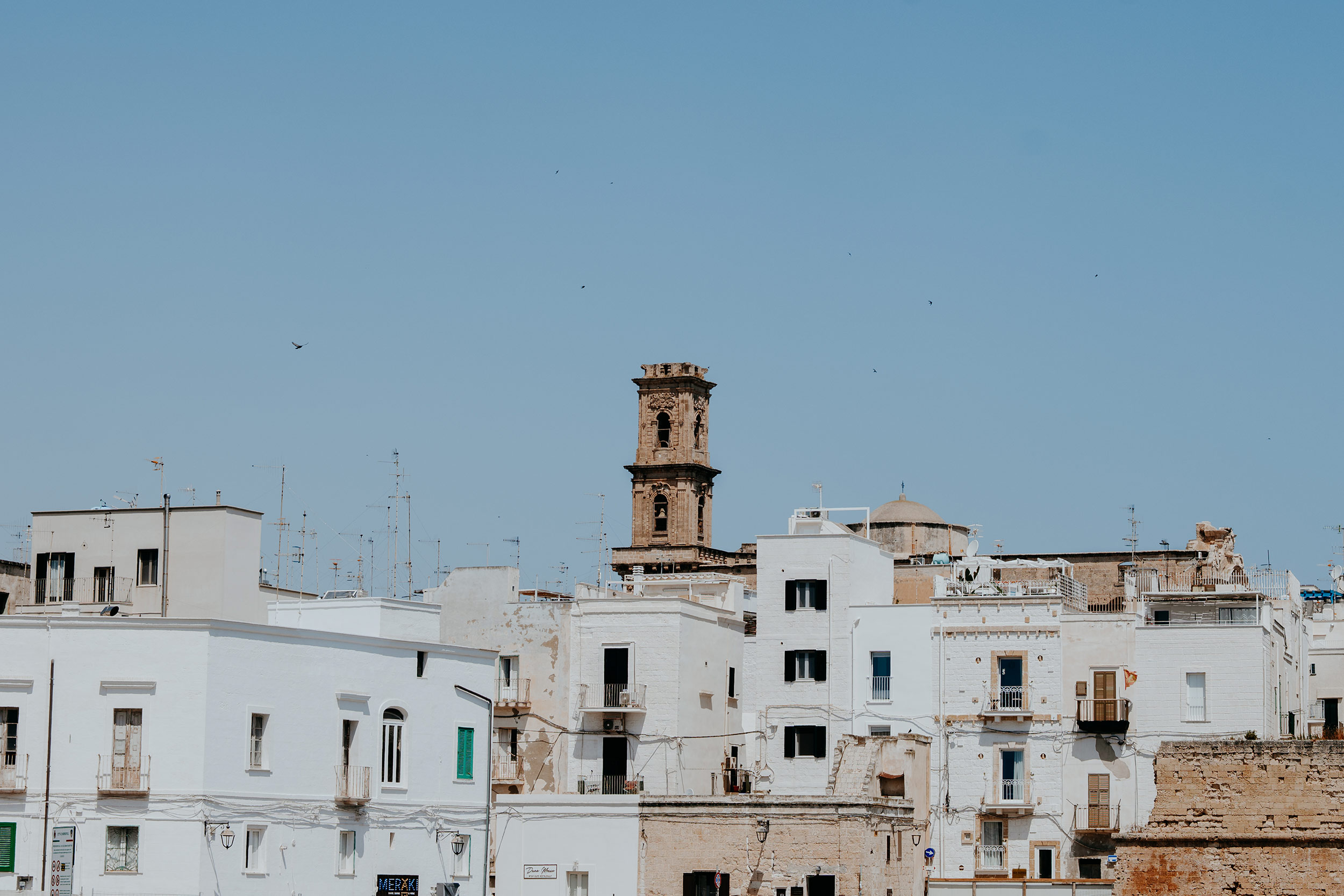
87 photos that will inspire you to visit Puglia
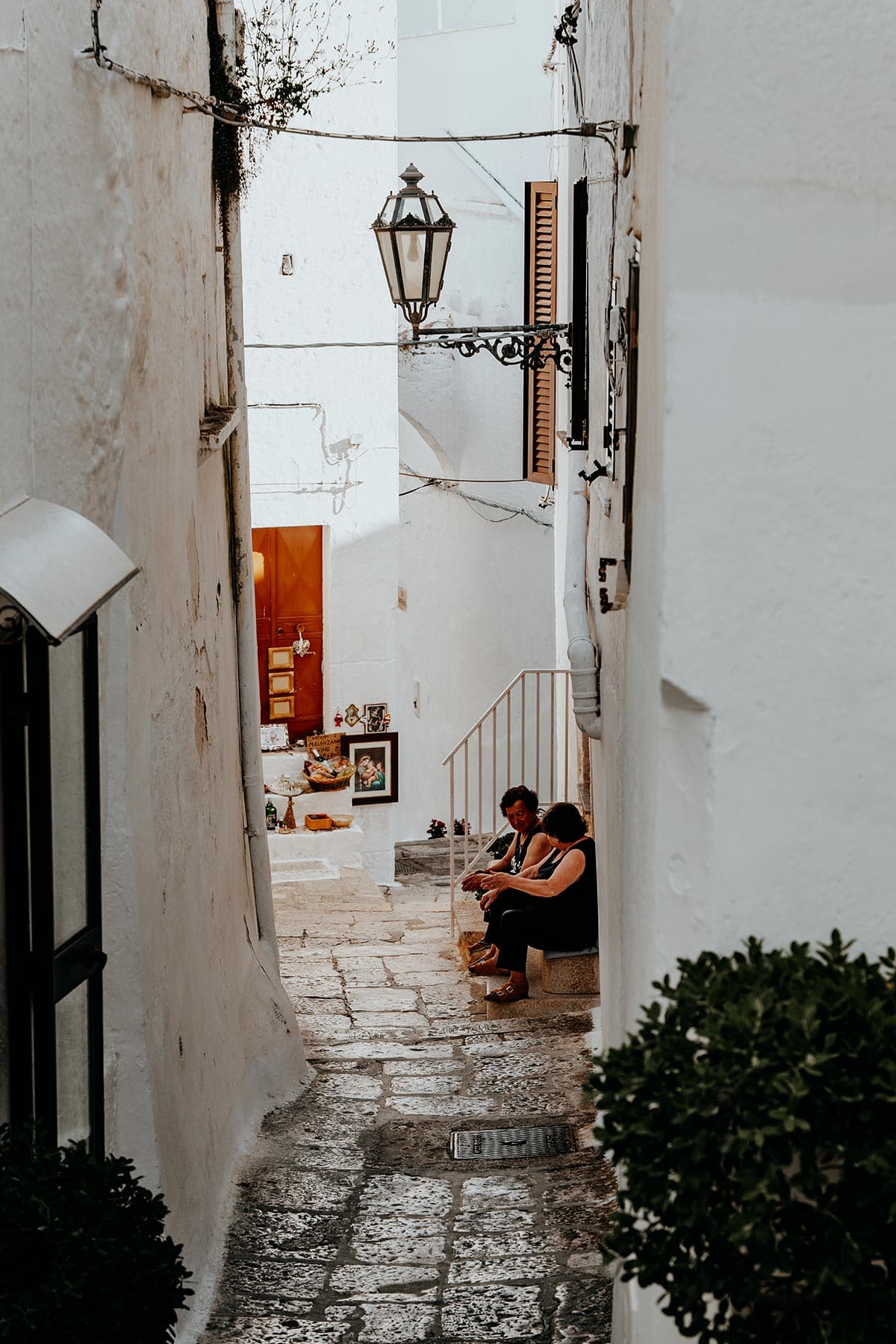
Puglia’s daily moments and charming streets
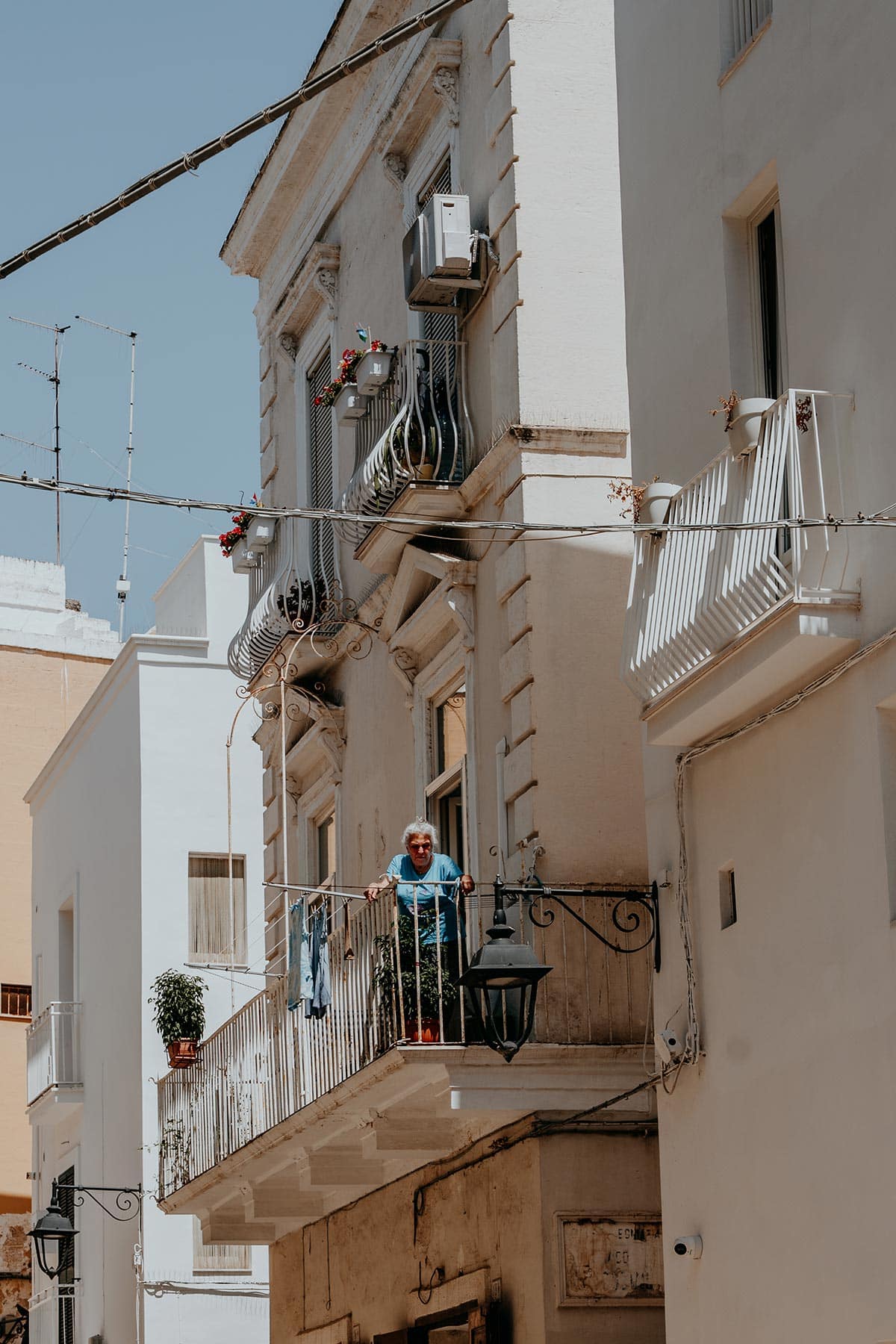
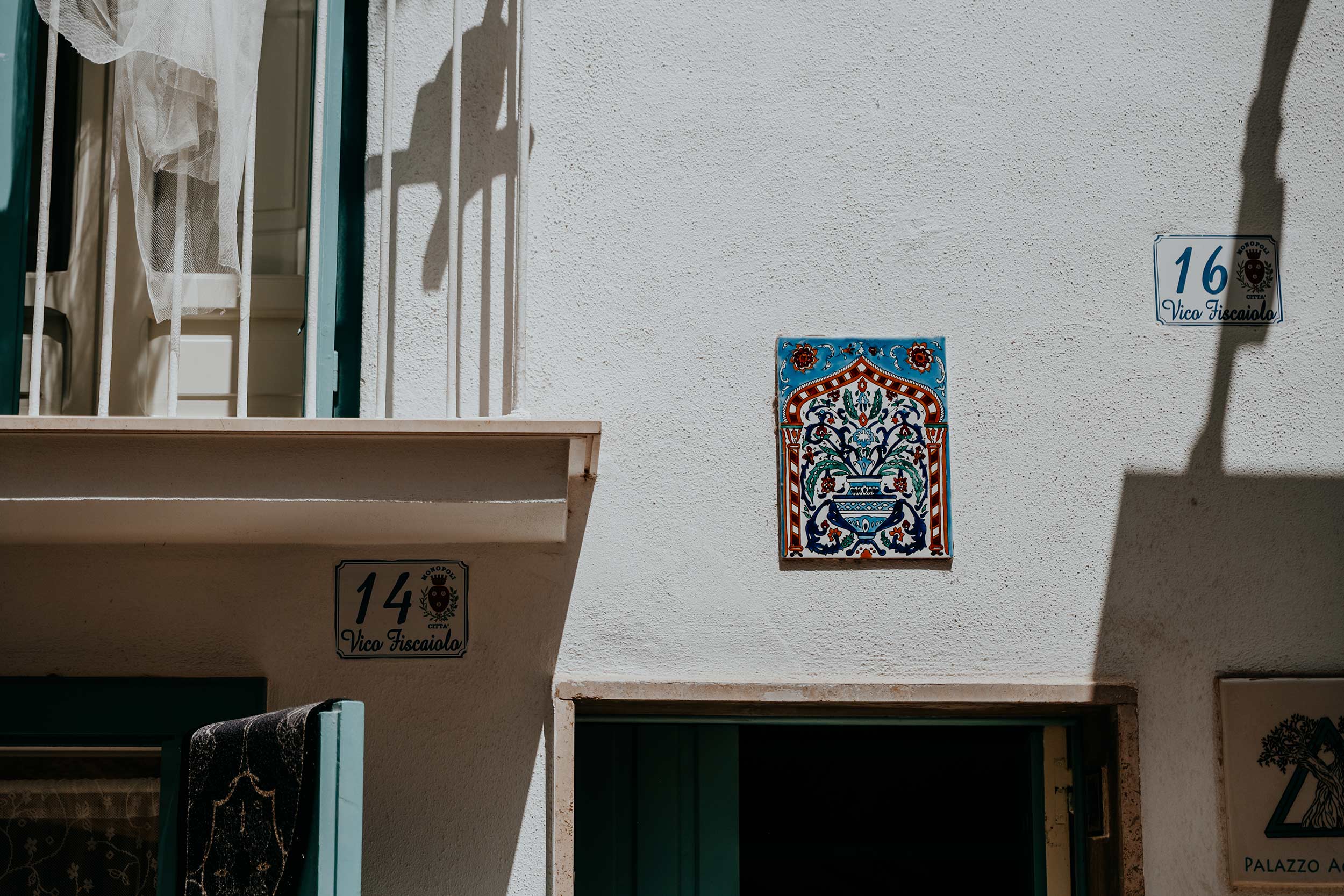
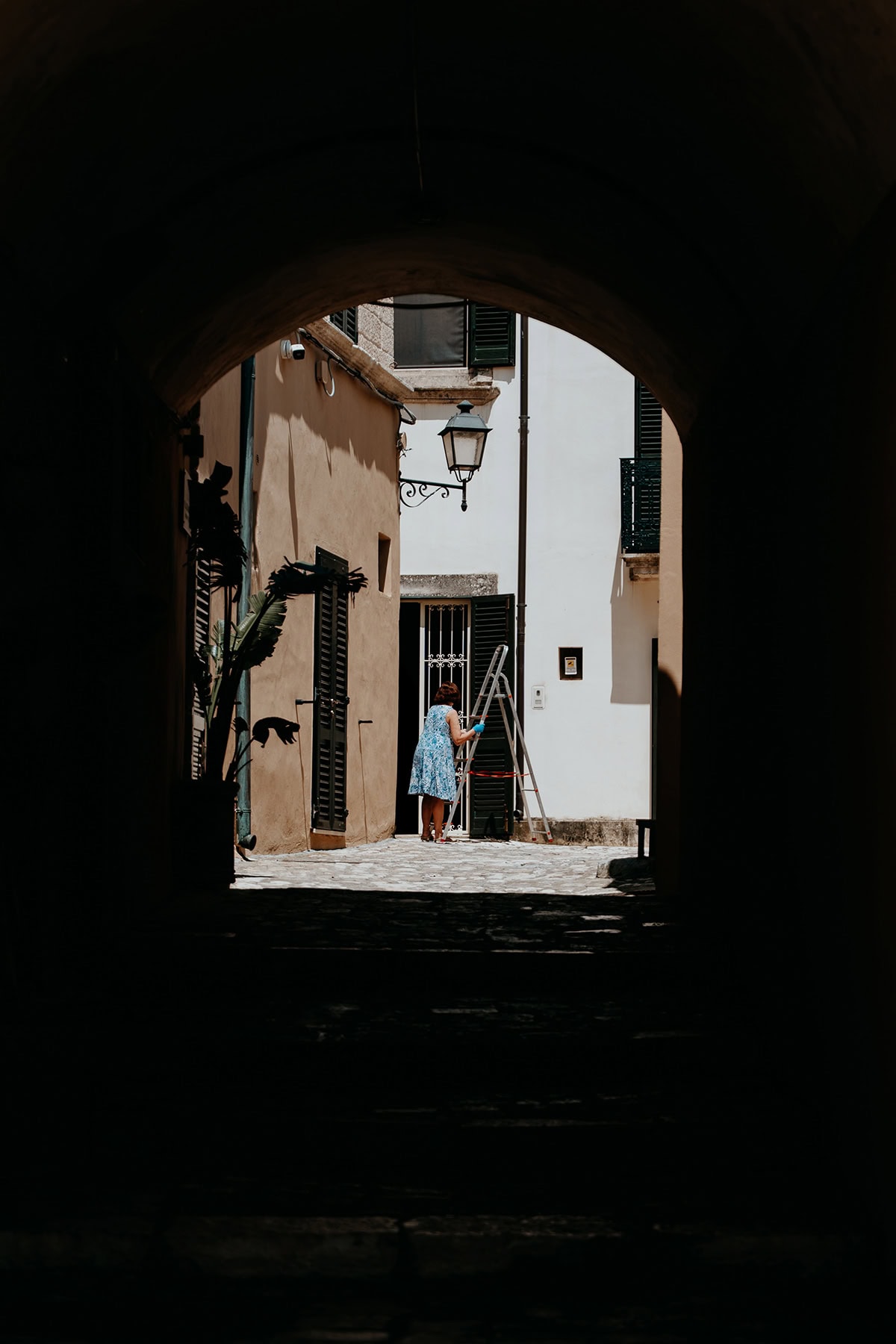
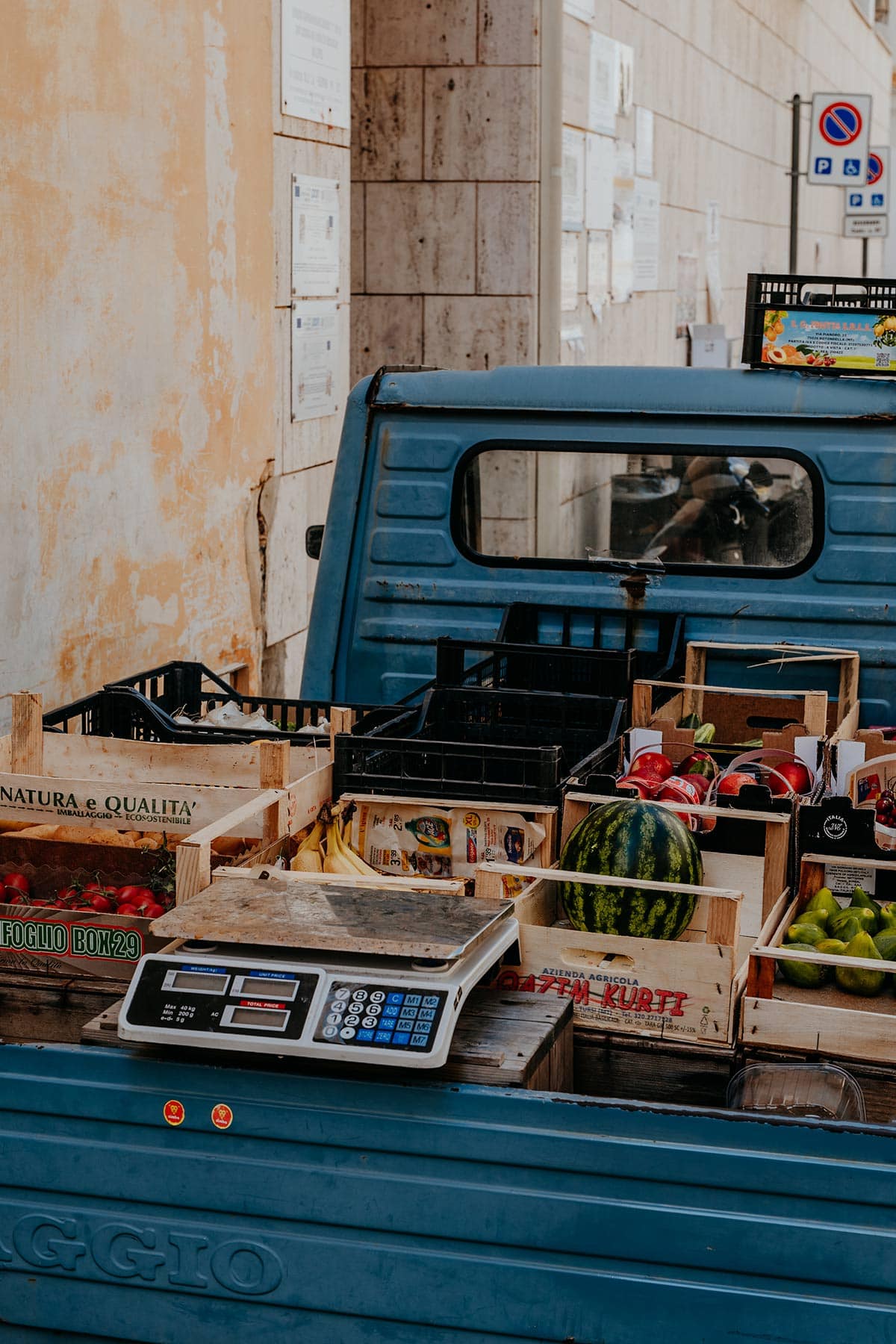
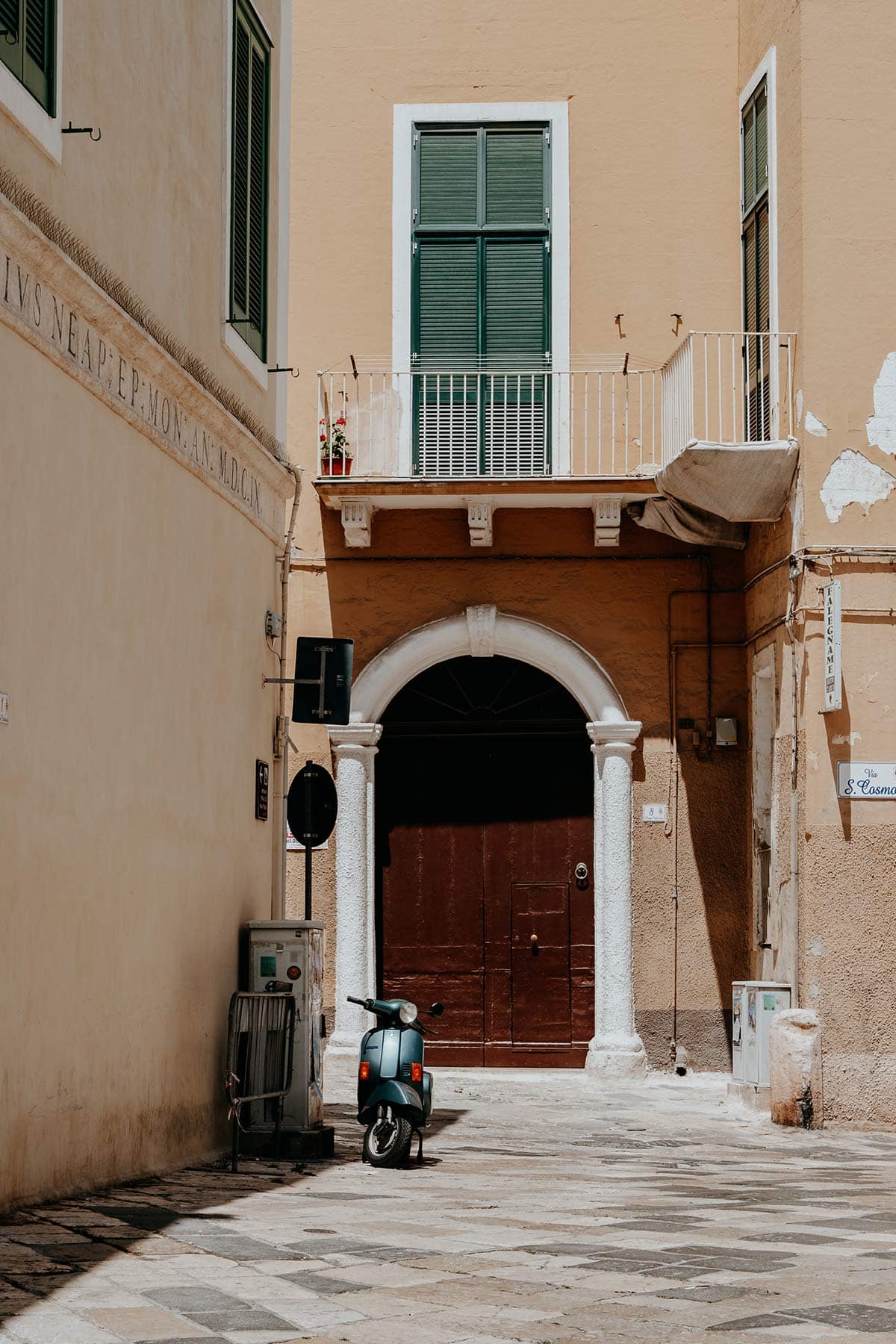
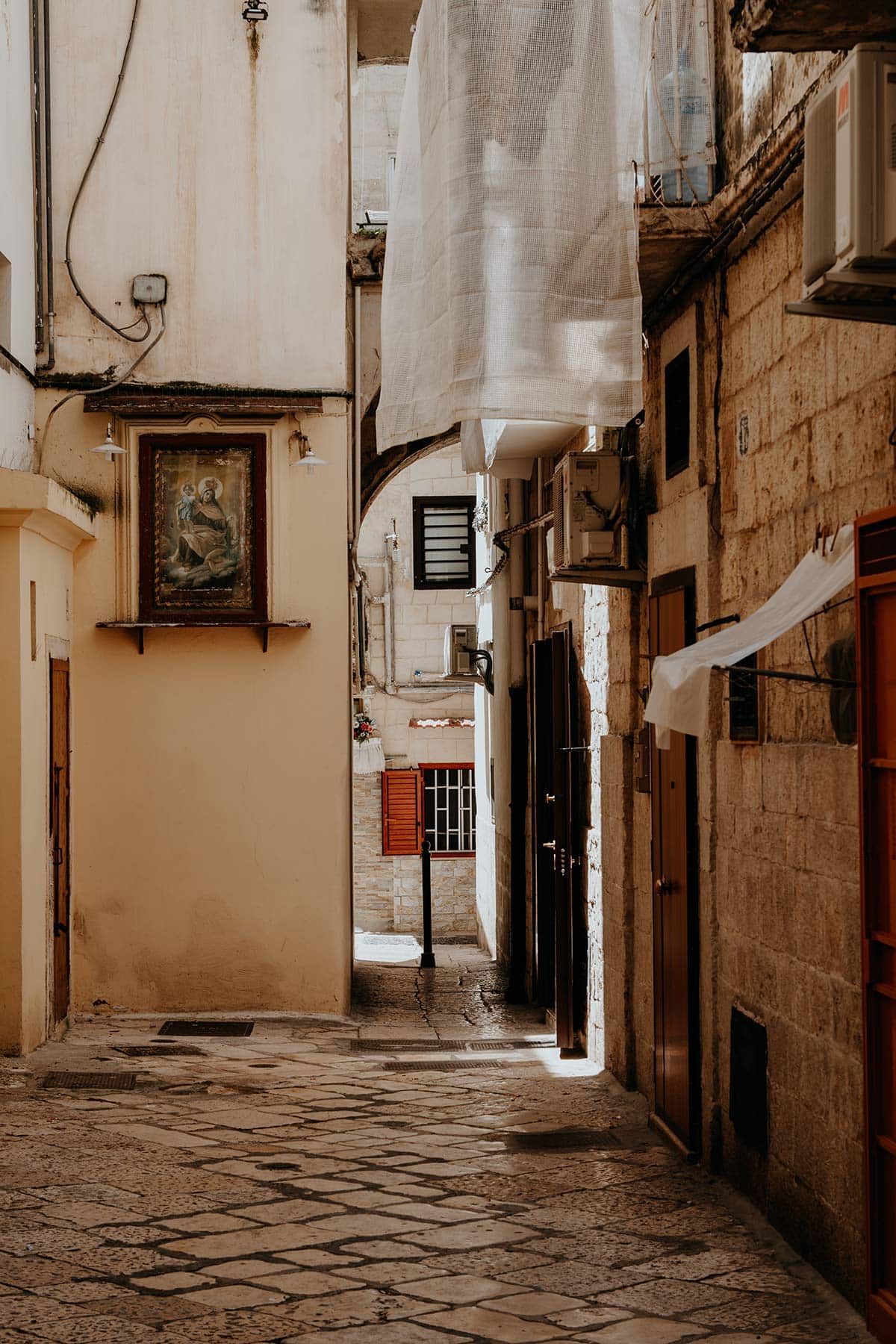
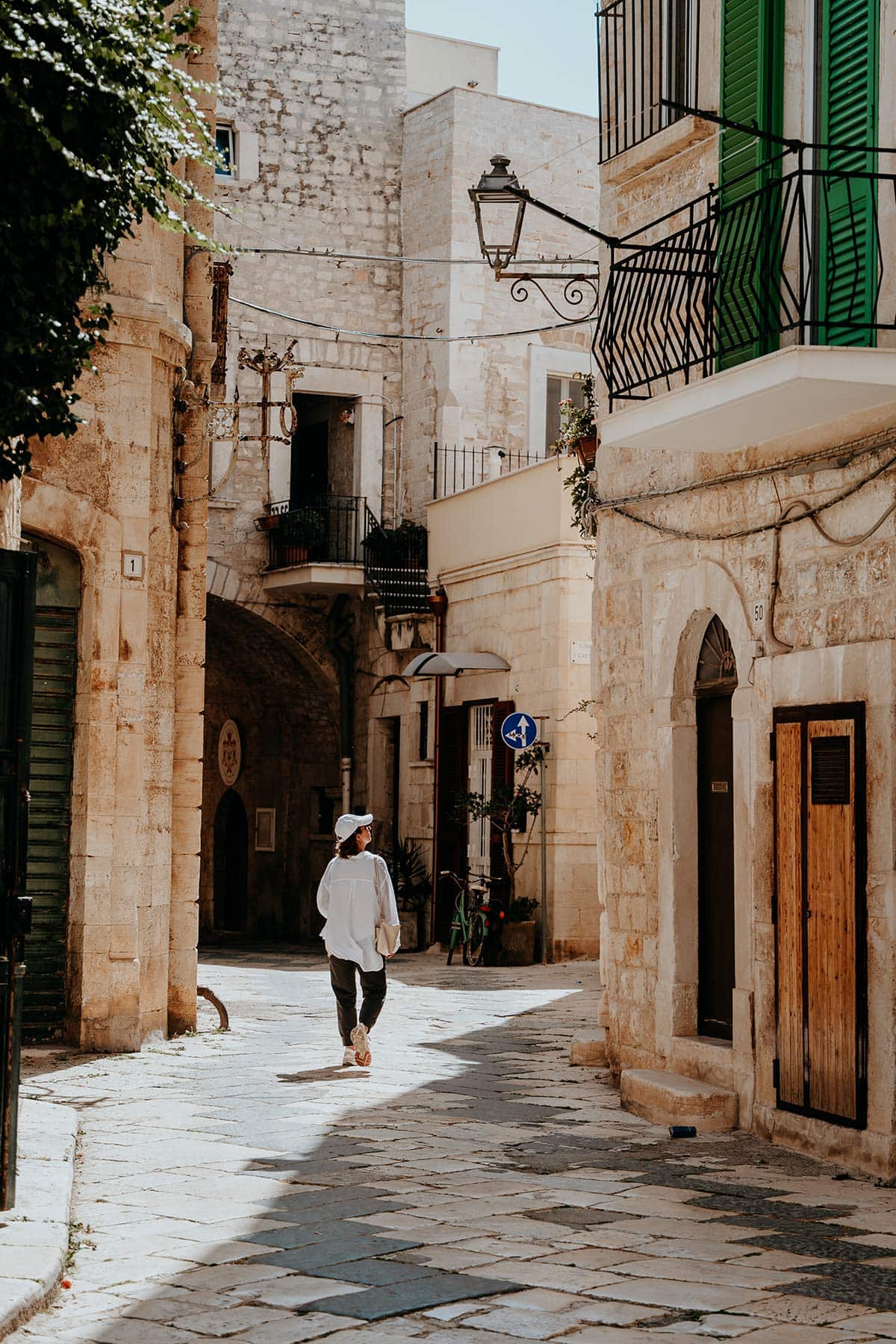
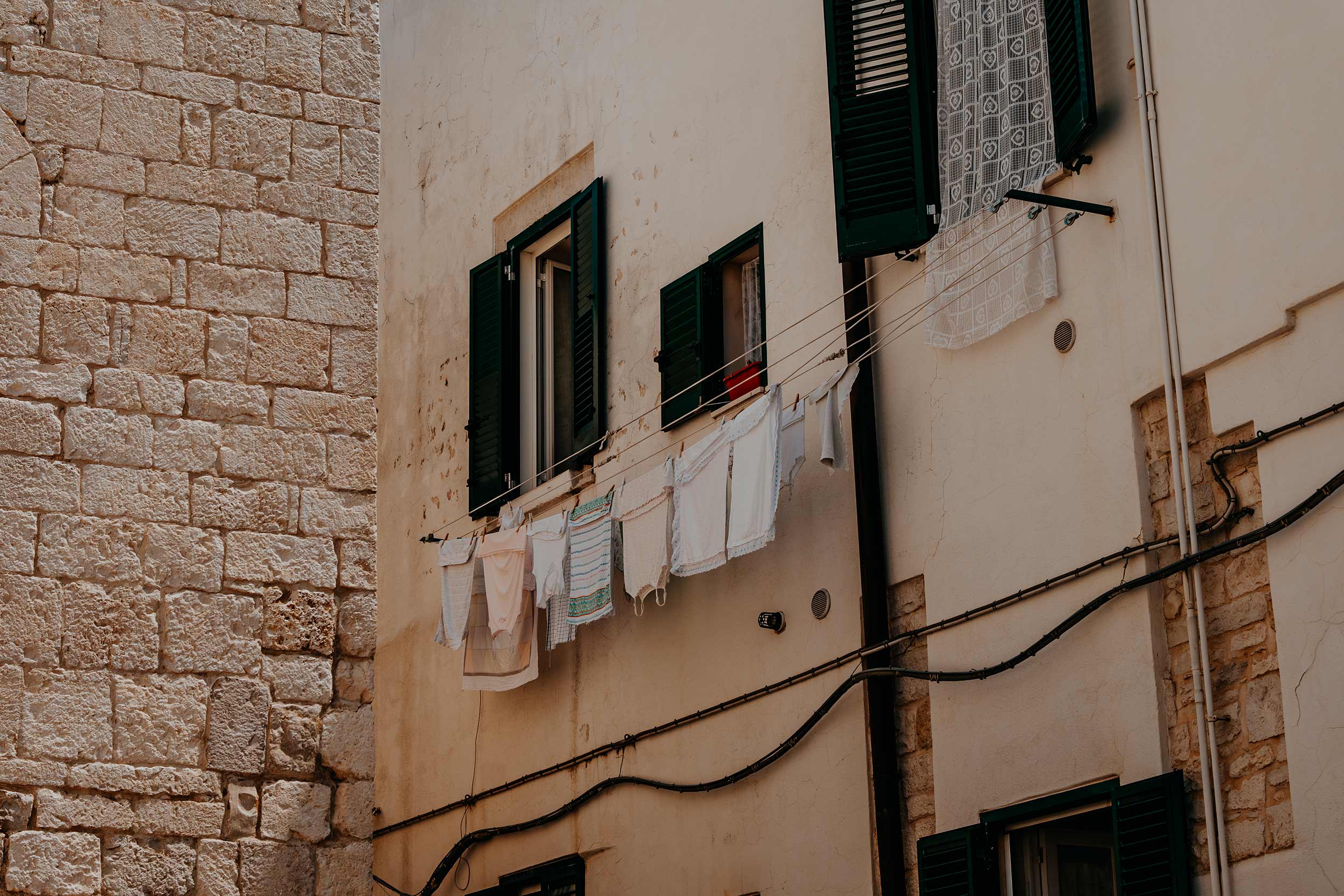
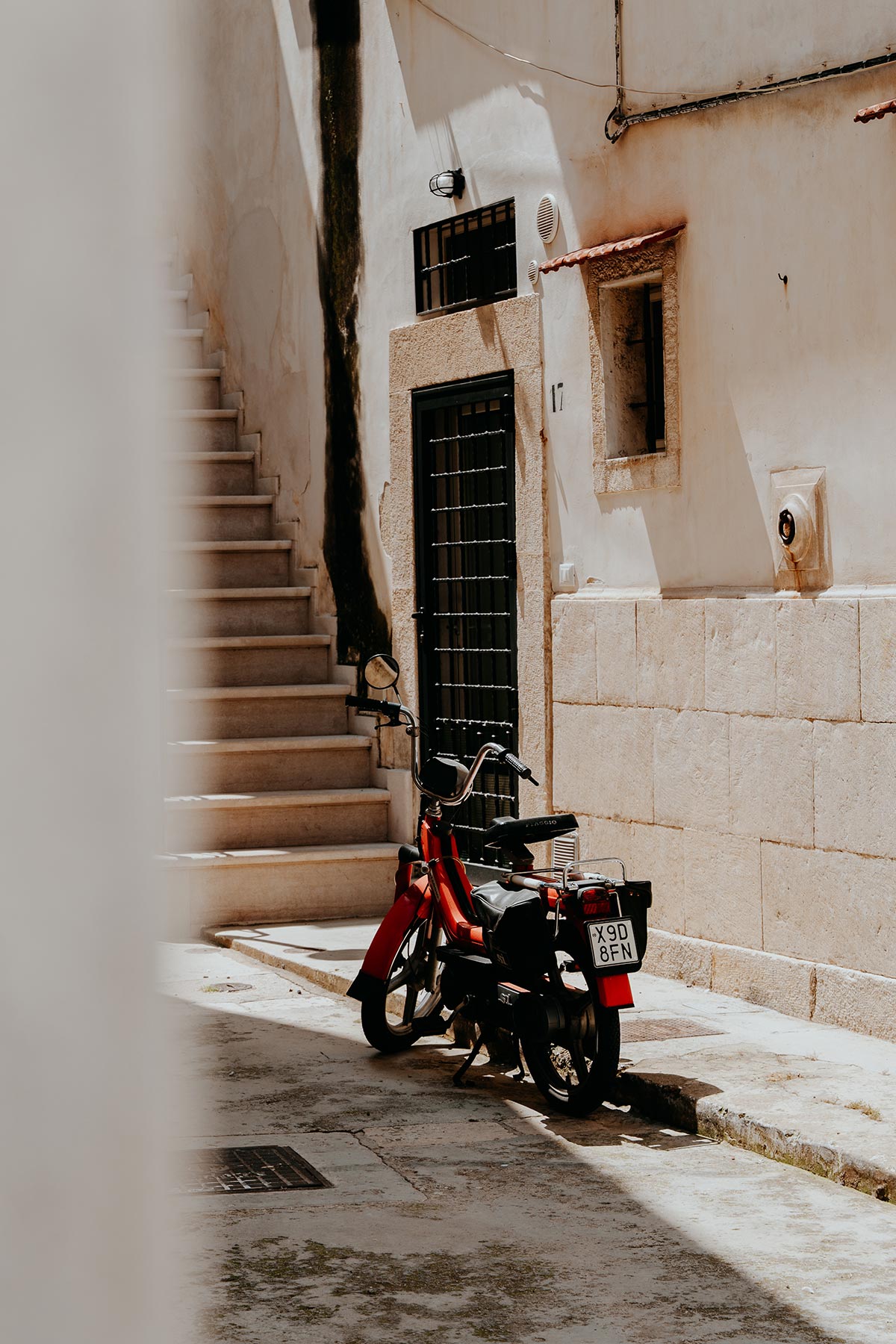
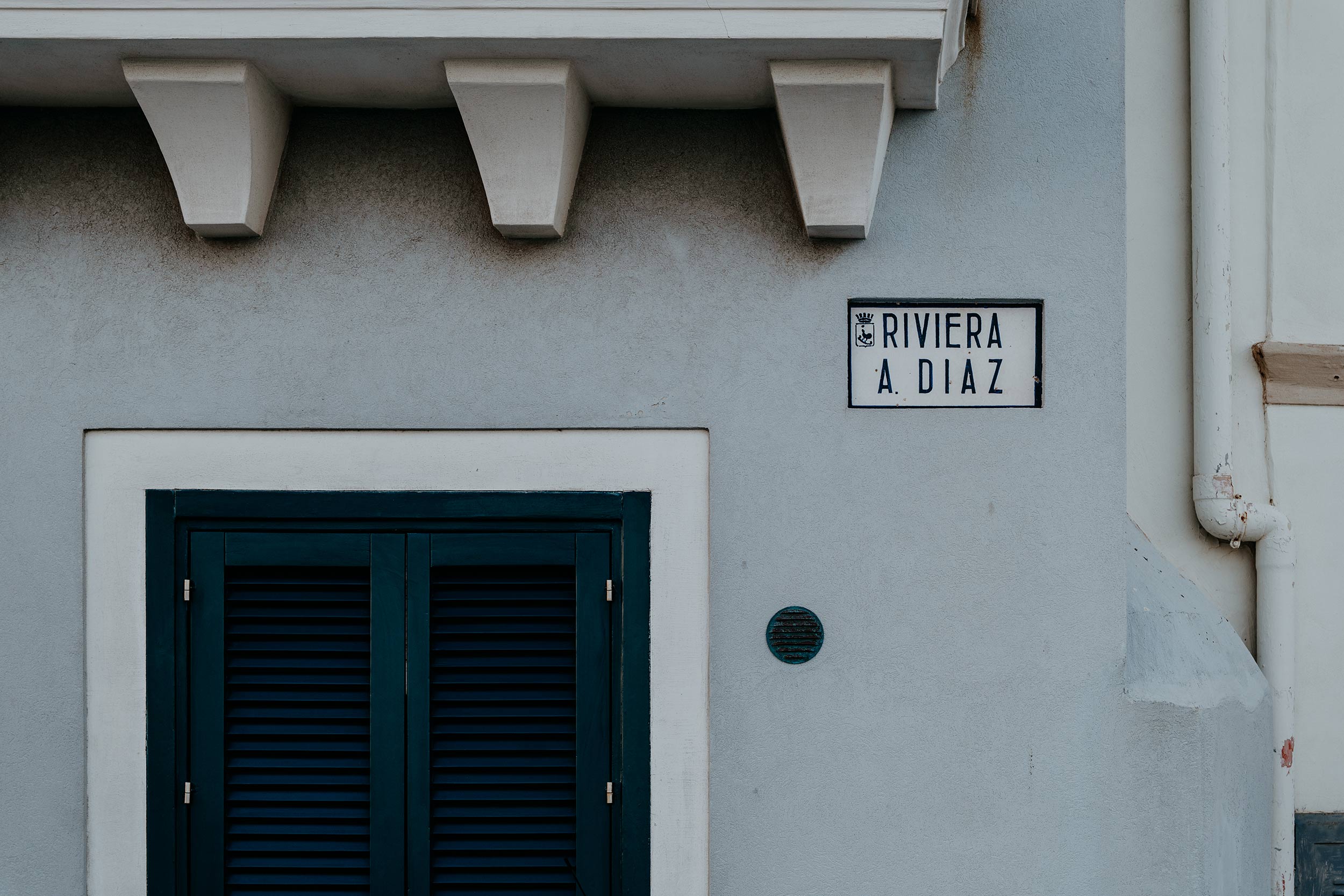
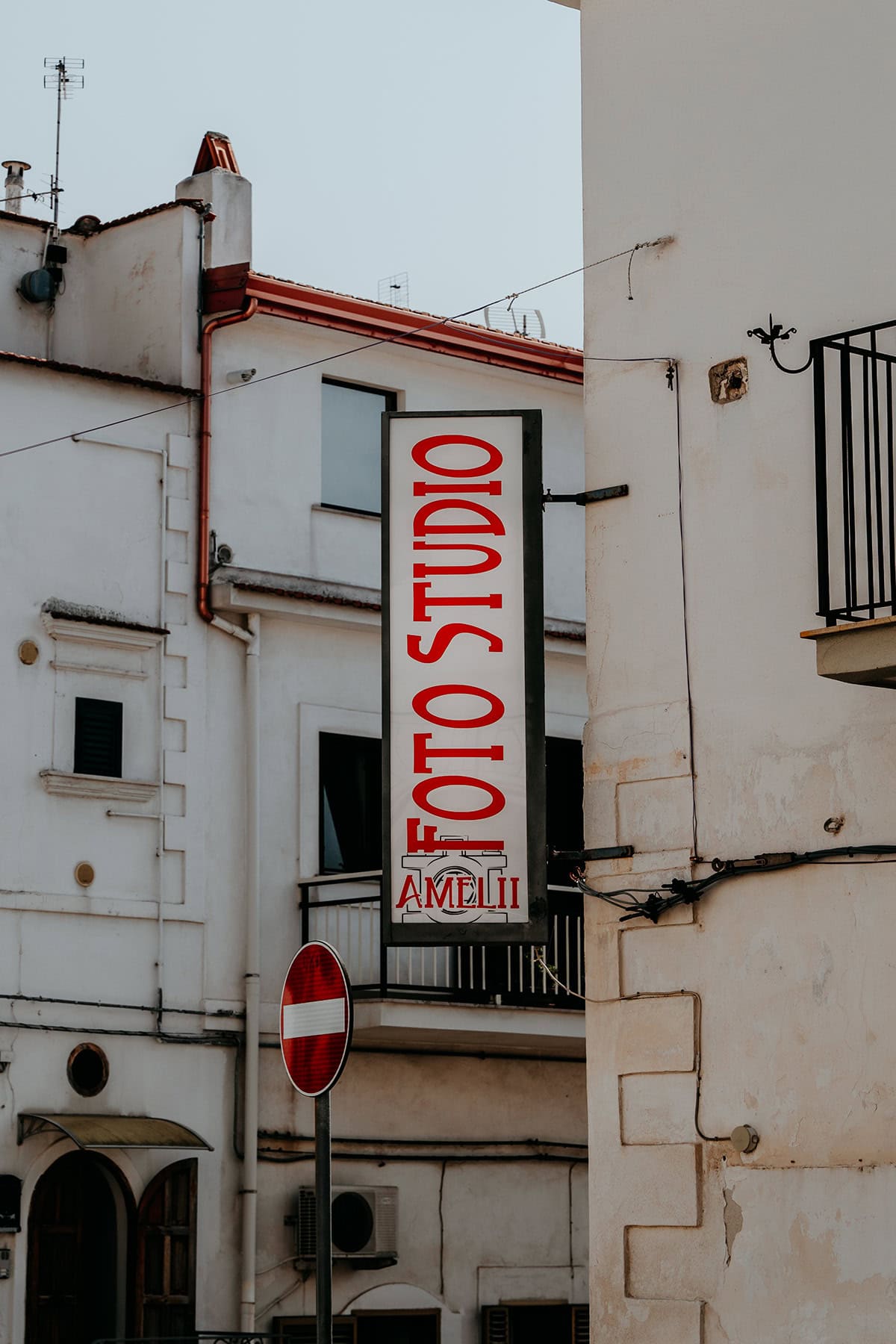
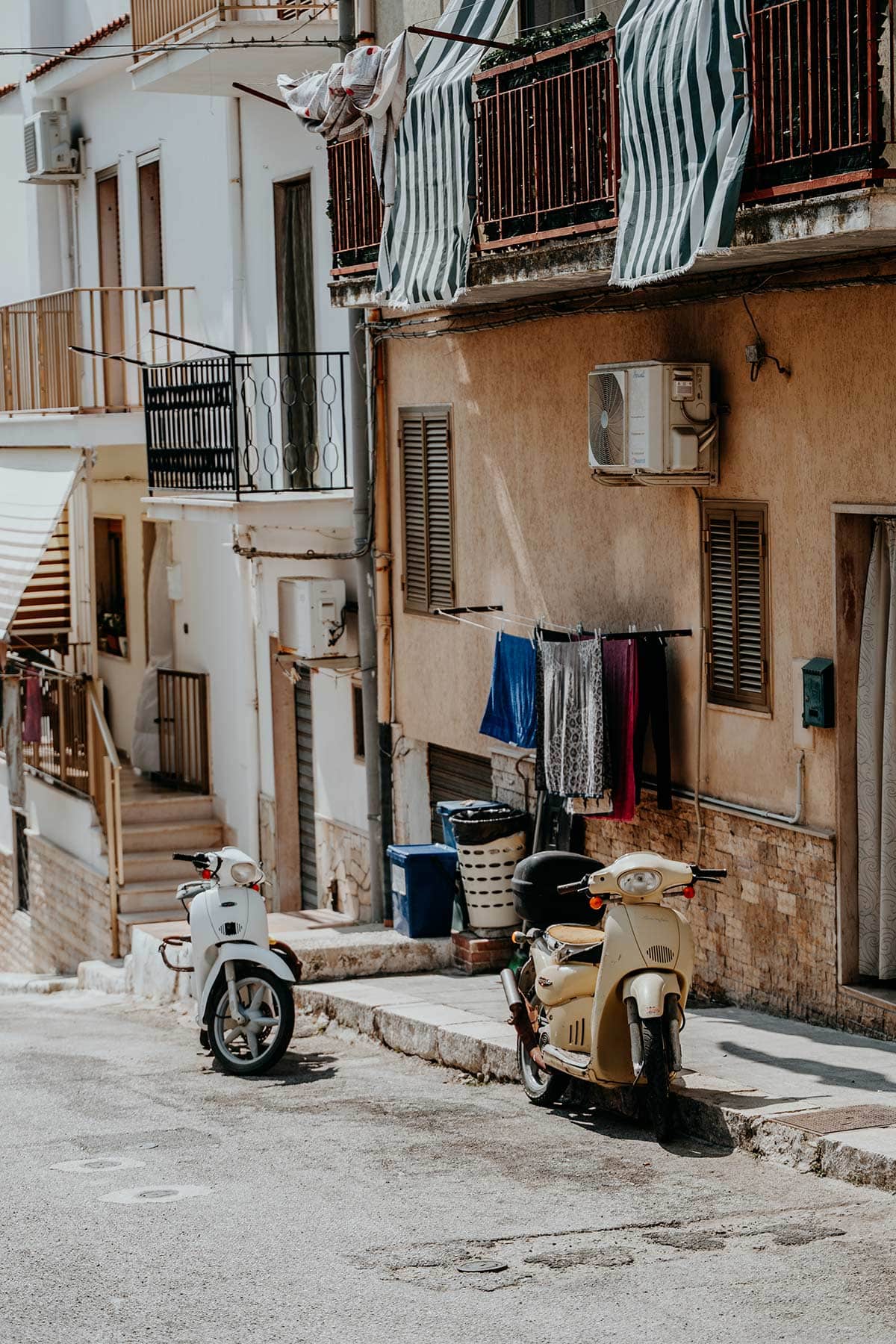
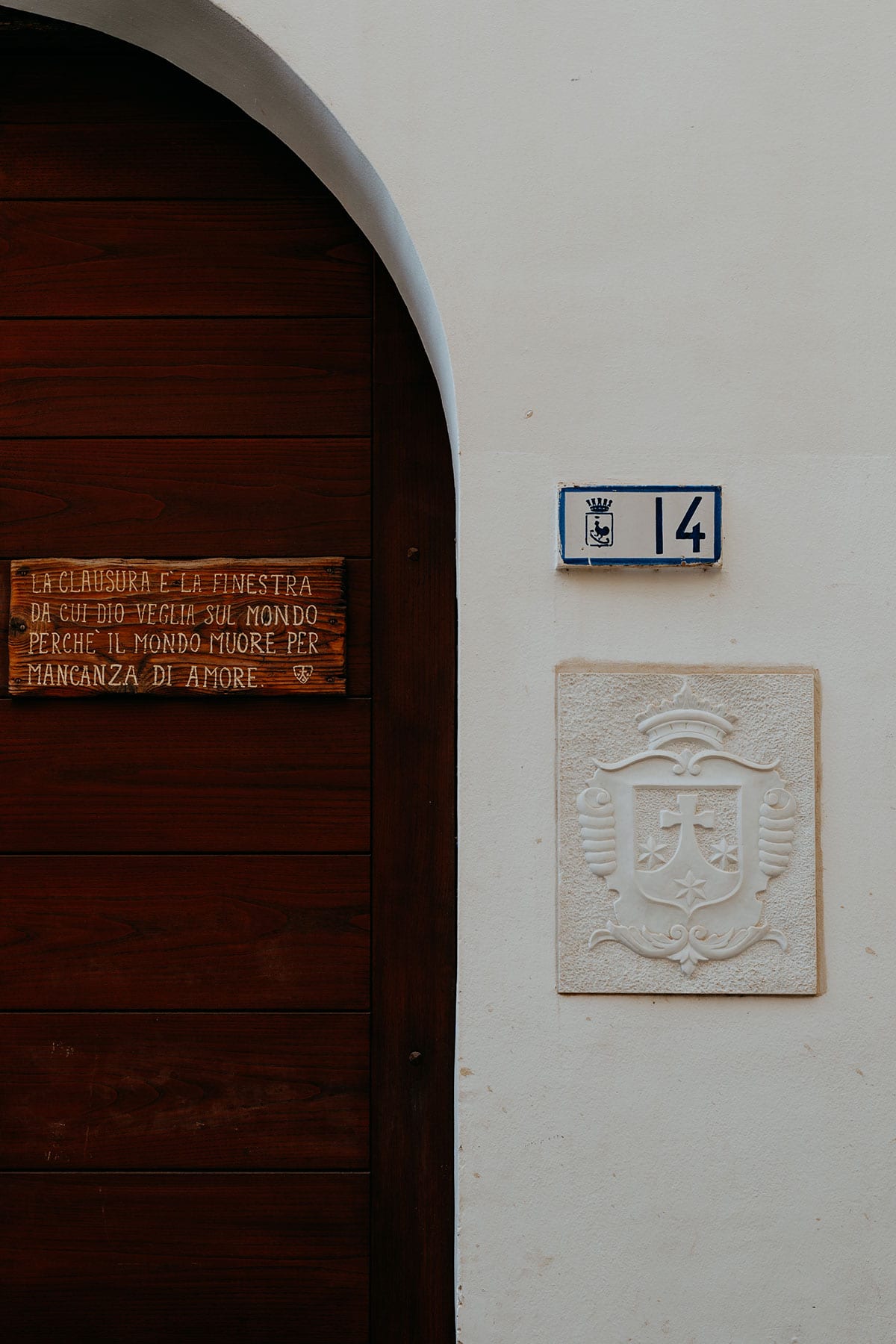
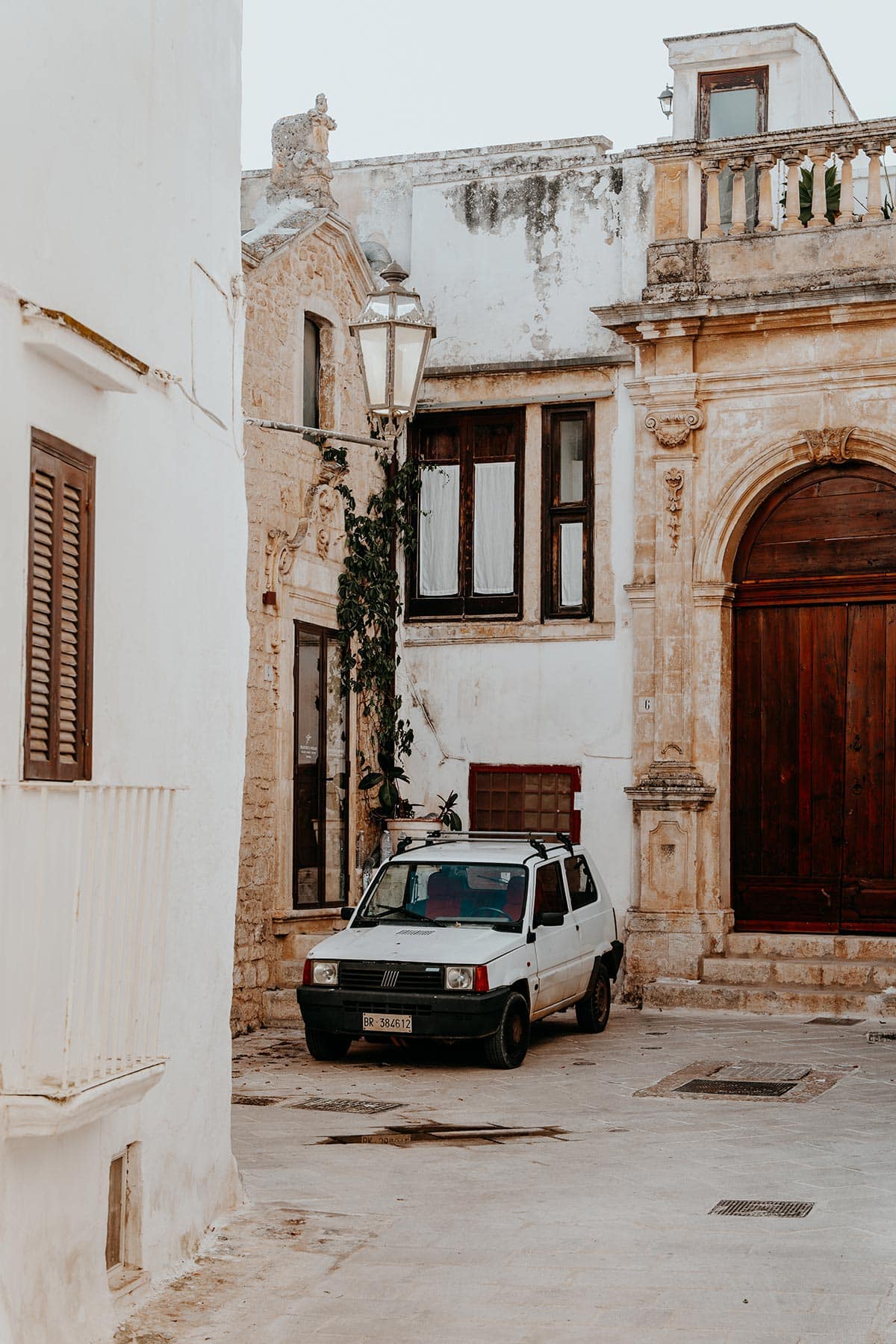
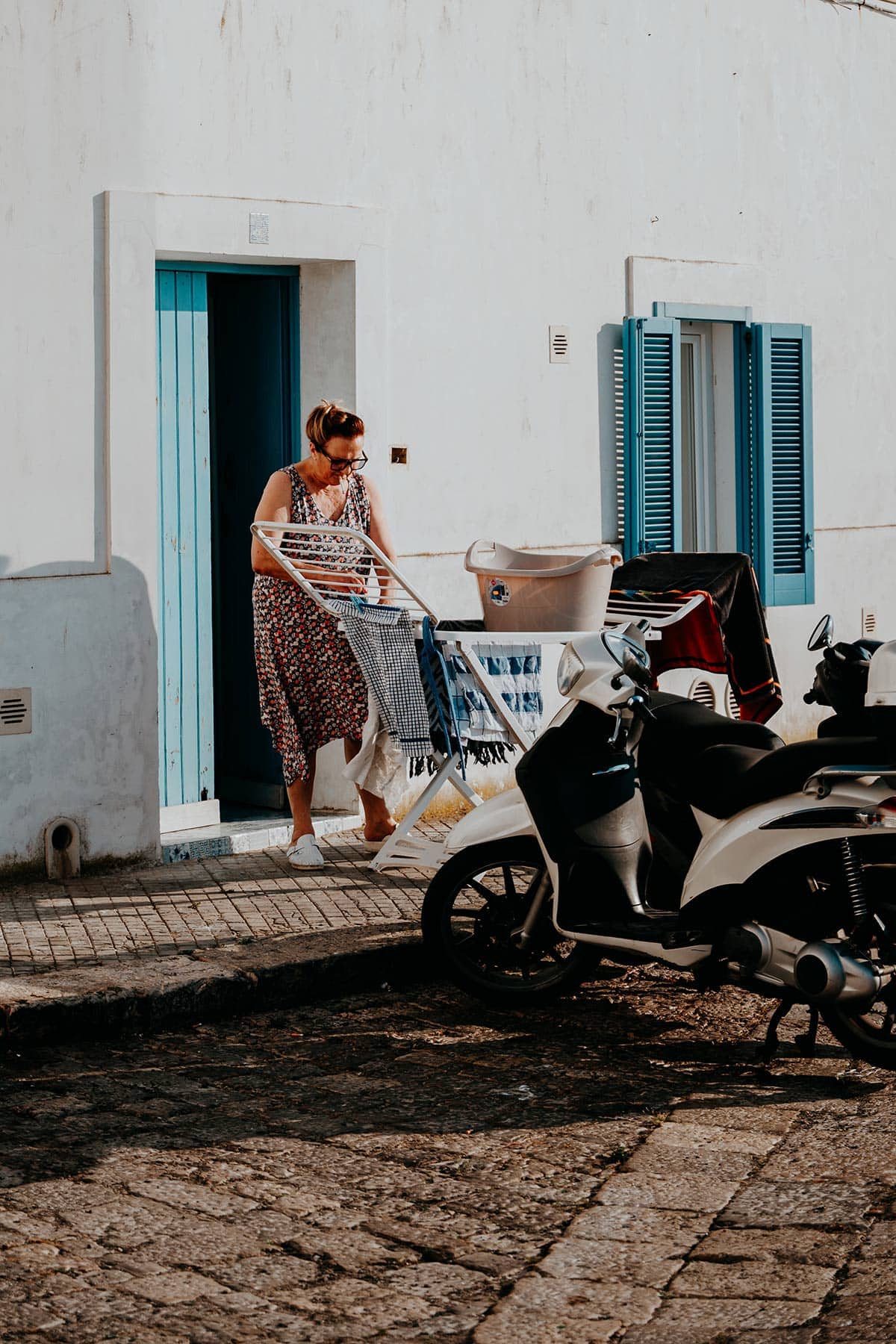
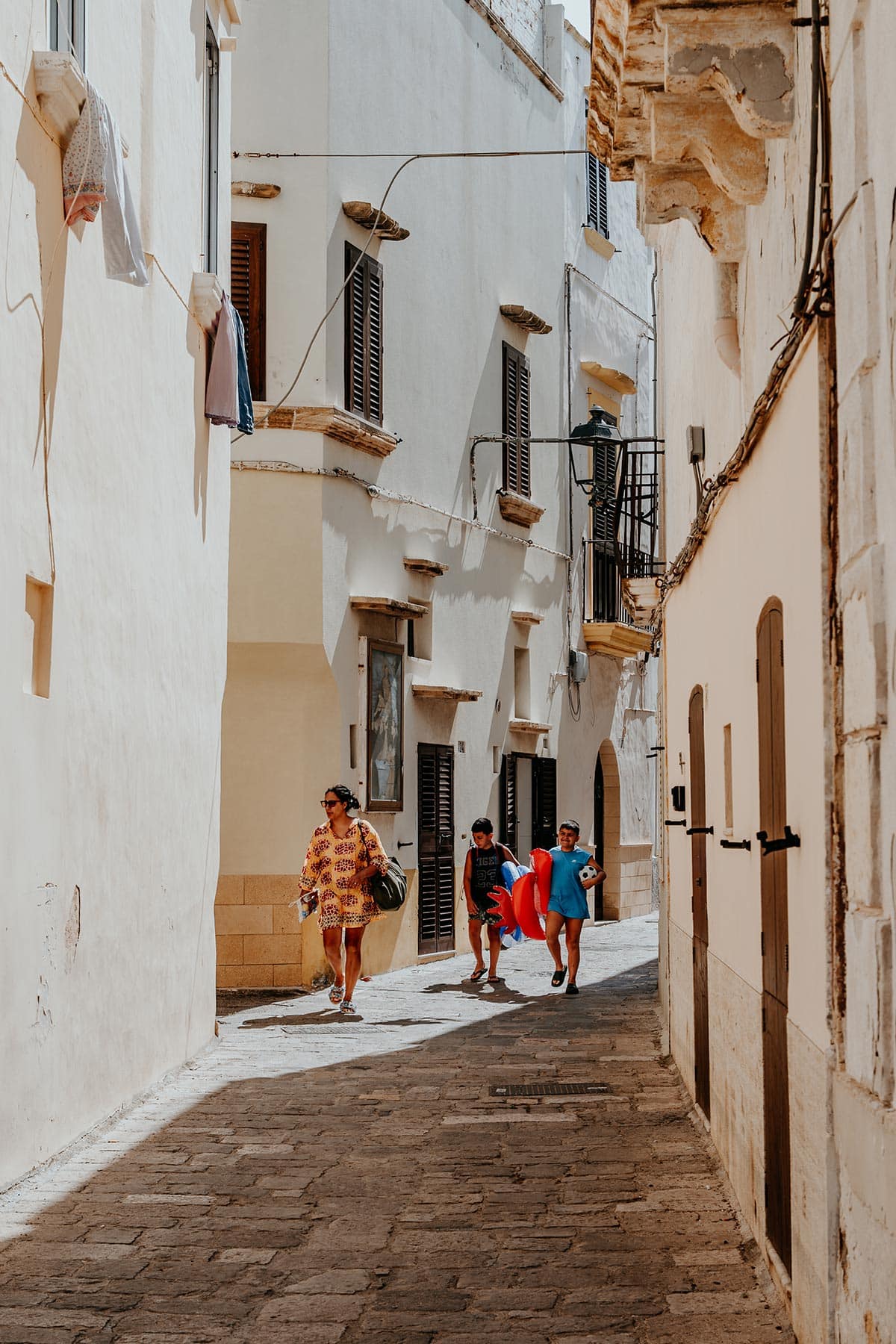
While Puglia’s architecture is downright stunning, it was the small, yet meaningful daily moments found wandering its charming cobblestone streets that stole my heart.
From the iconic Vespa mopeds parked at just about every corner to the authentic Italian washing lines hanging between the adorable, time-worn buildings, to the friendly locals going about their business, the ambience that prevails here is second to none.
In a similar fashion to the aromas of freshly baked pizza, authenticity lingers in the air here, and a precious, day-to-day moment is just around the corner, waiting to be captured in time.
It’s a photographer’s dream, and blending in with the daily rhythm of those who call Puglia home instantly got me in a flow state, making my photography journey here an effortless one.
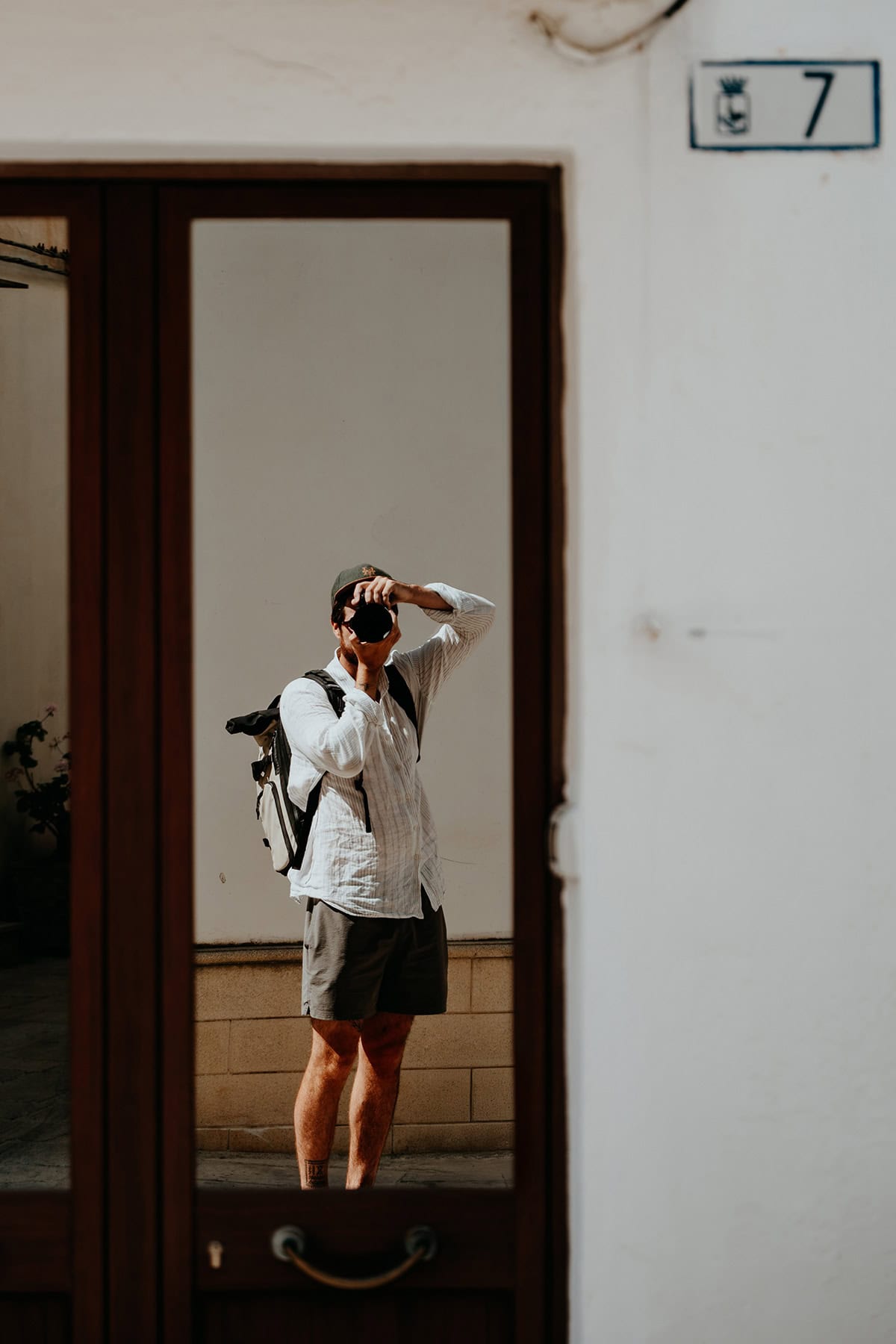
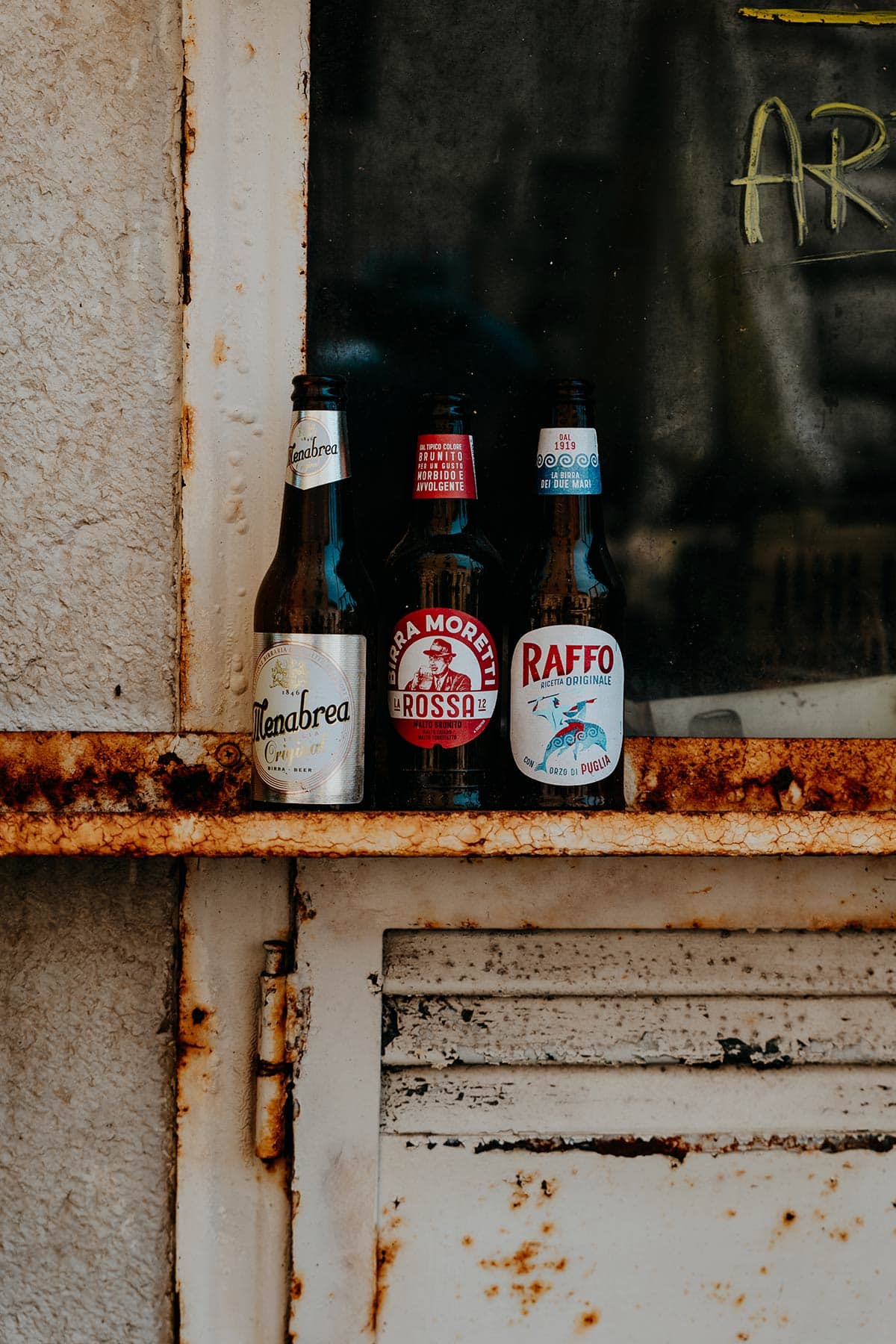
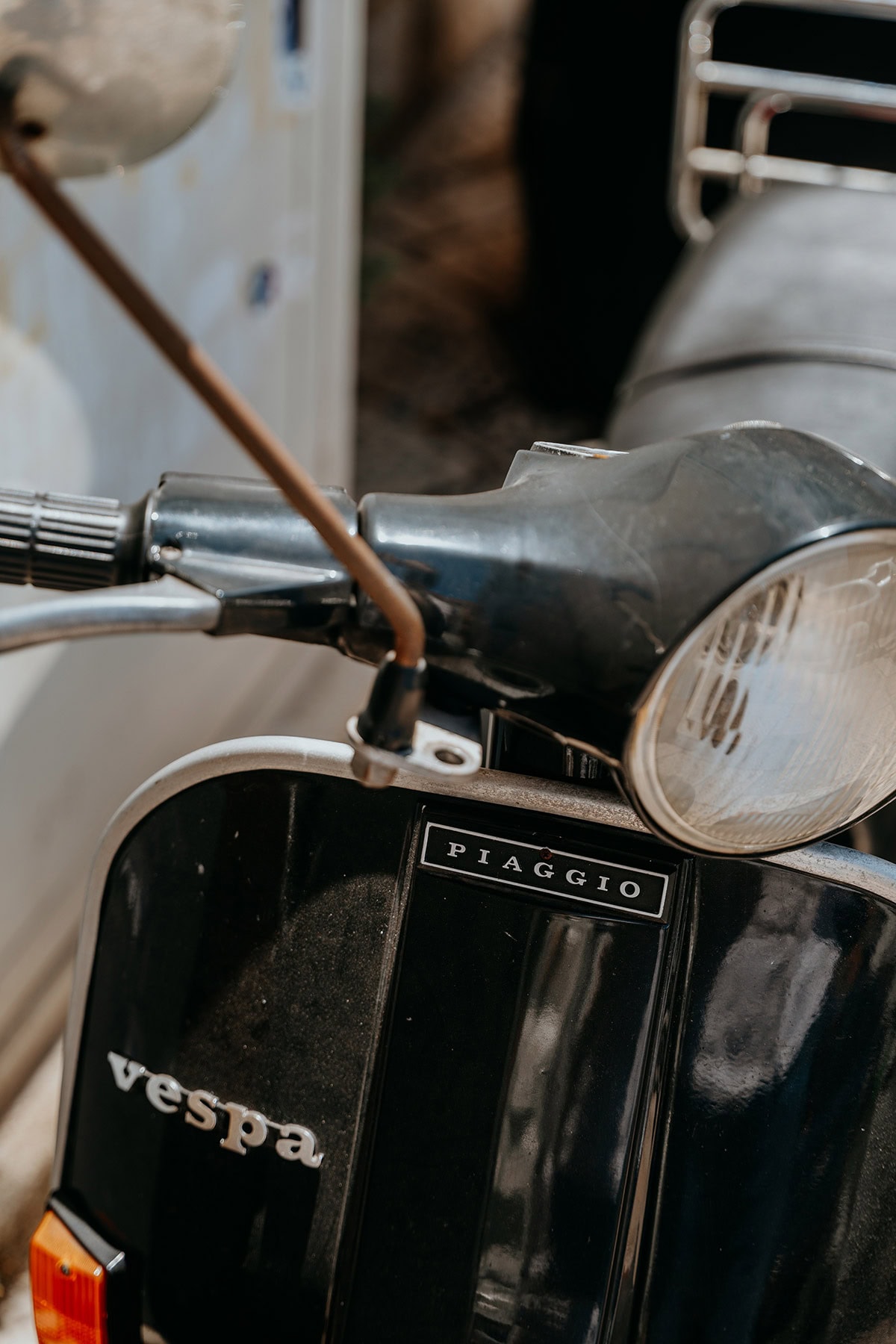
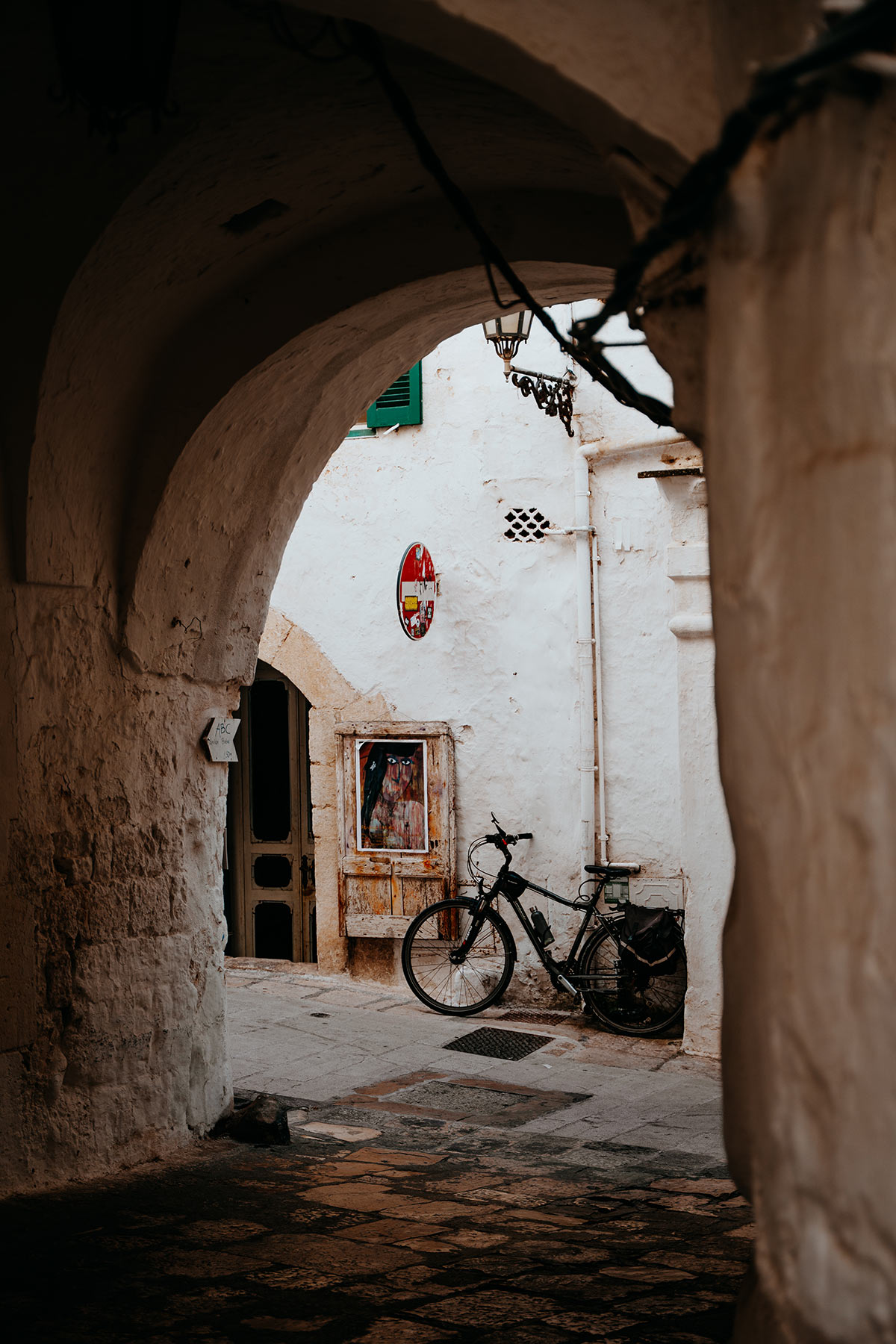
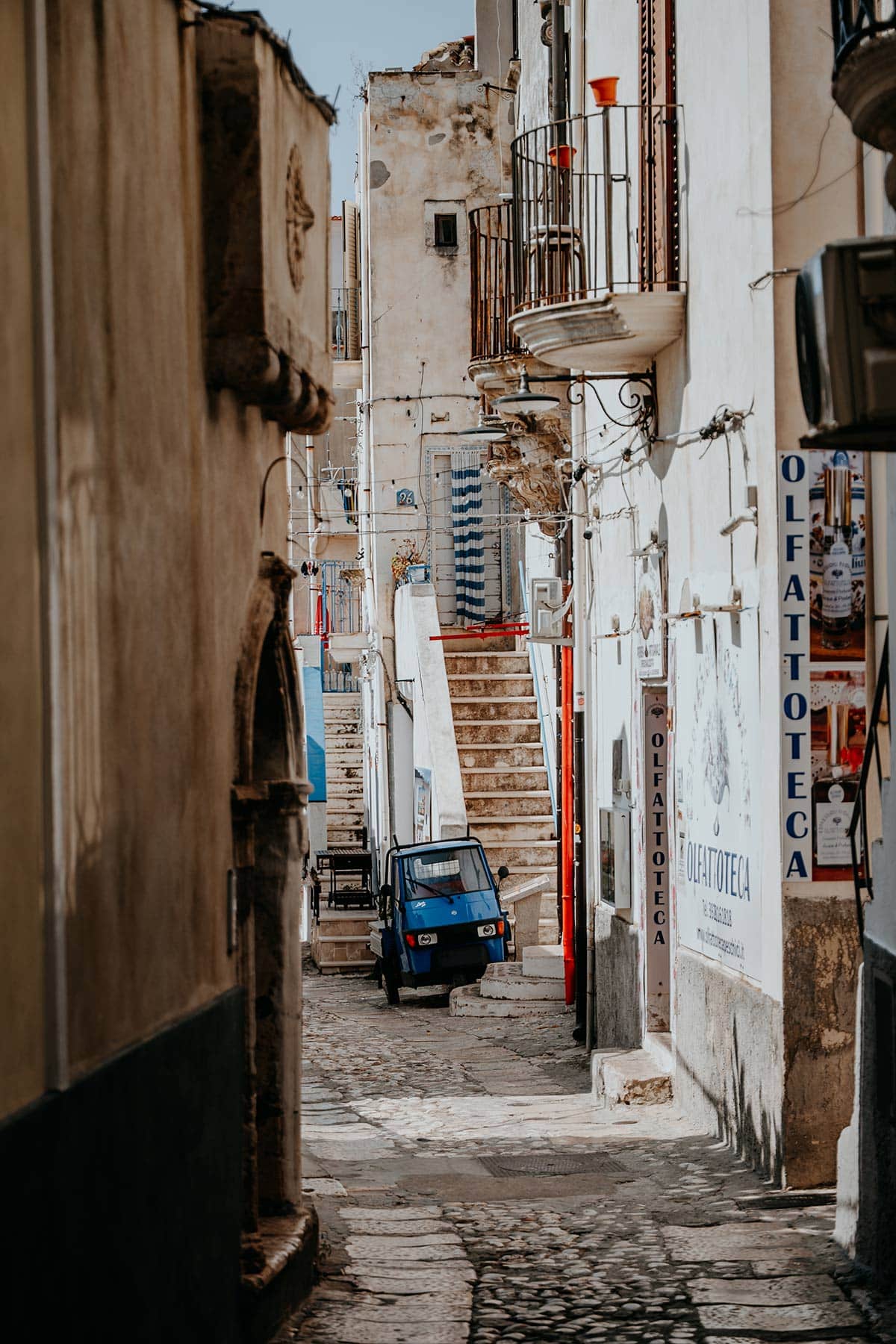
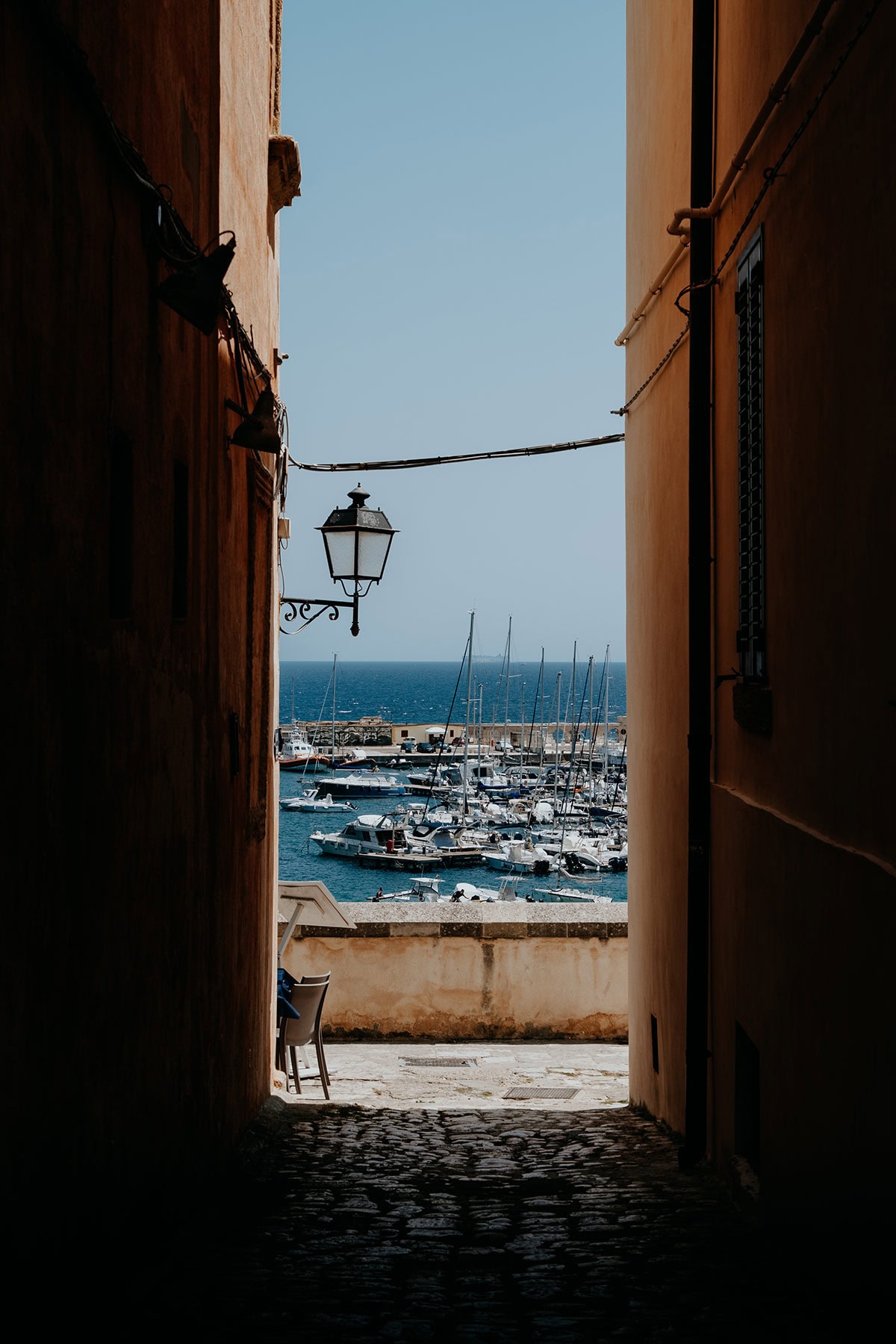

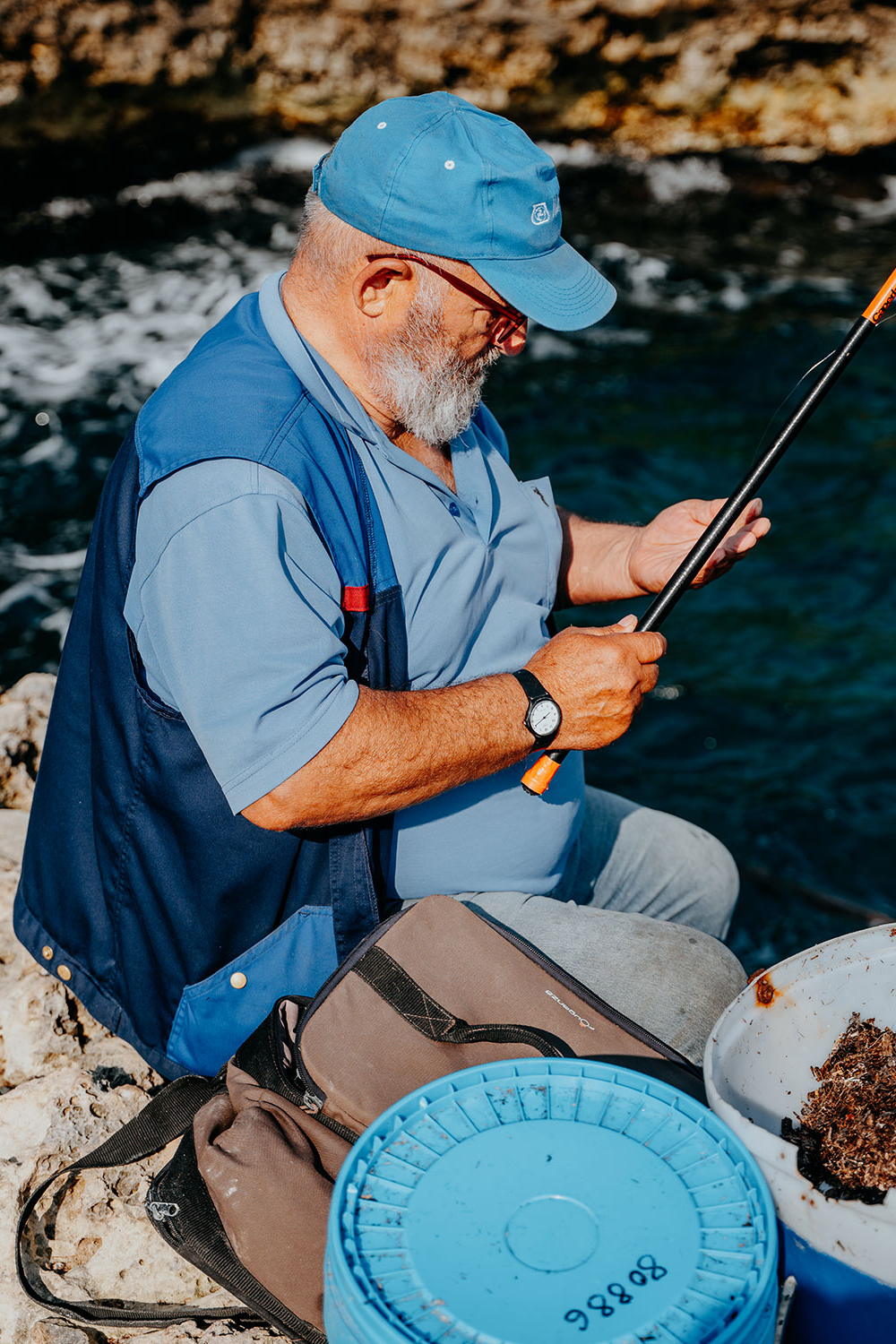
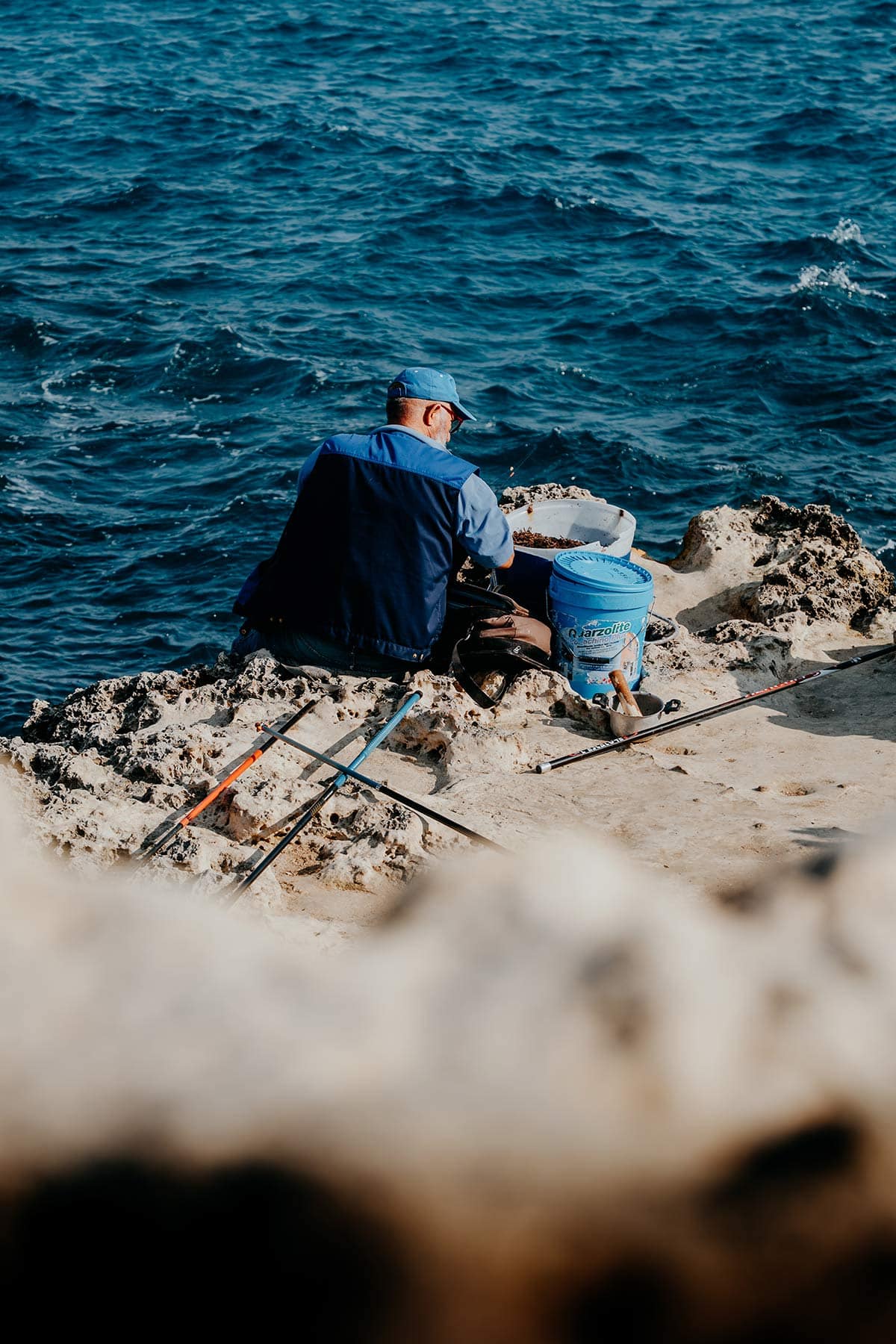
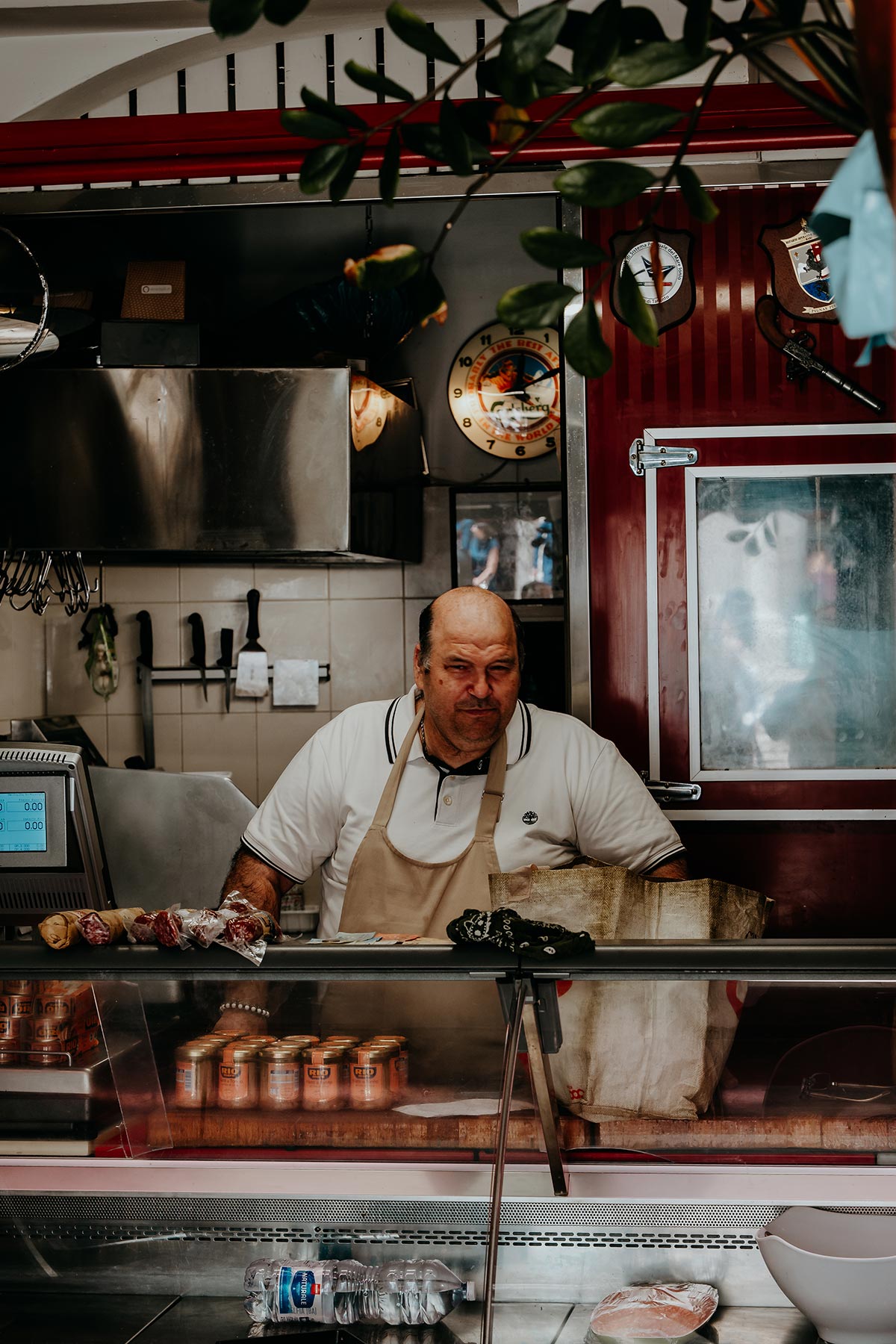
The people of Puglia
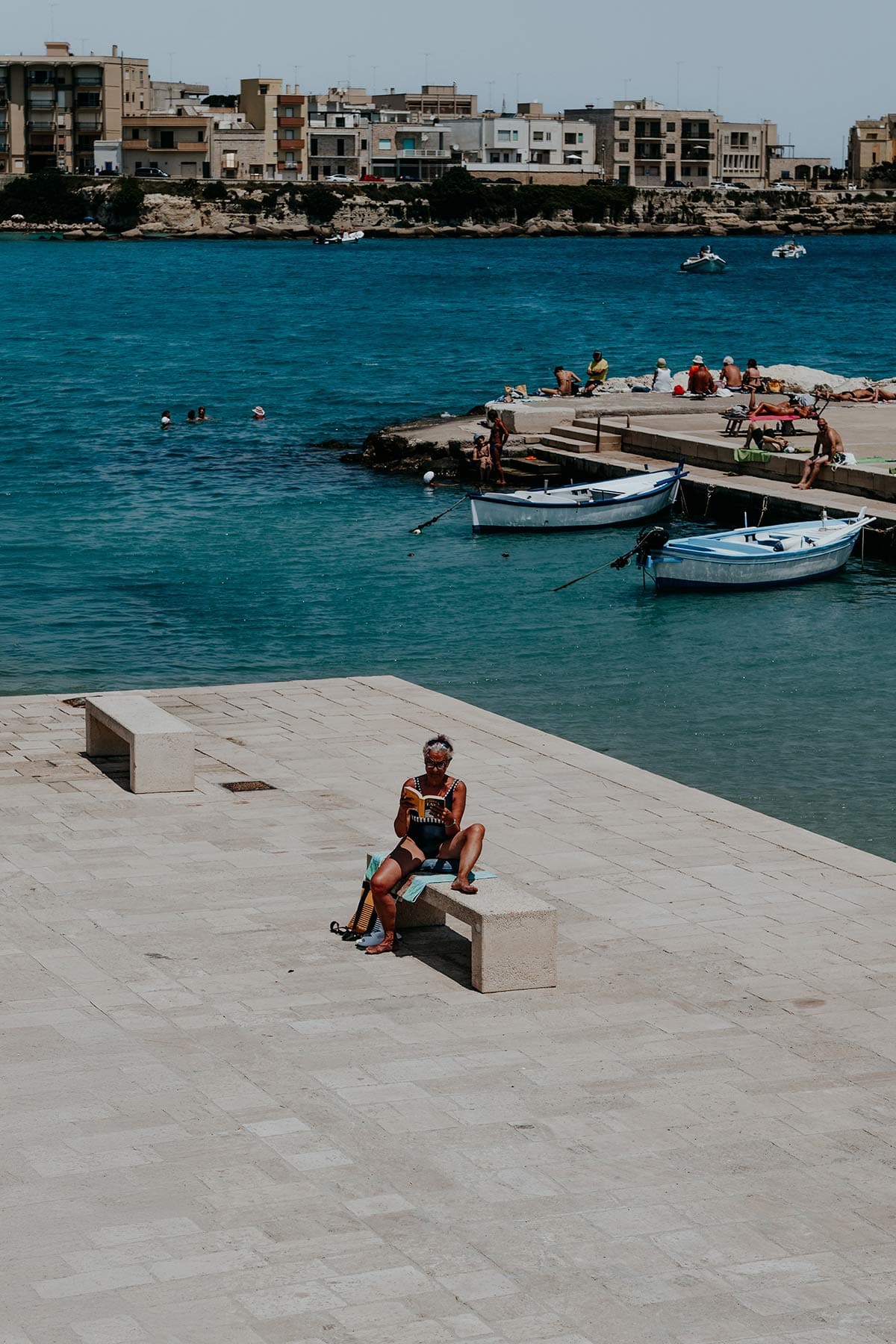
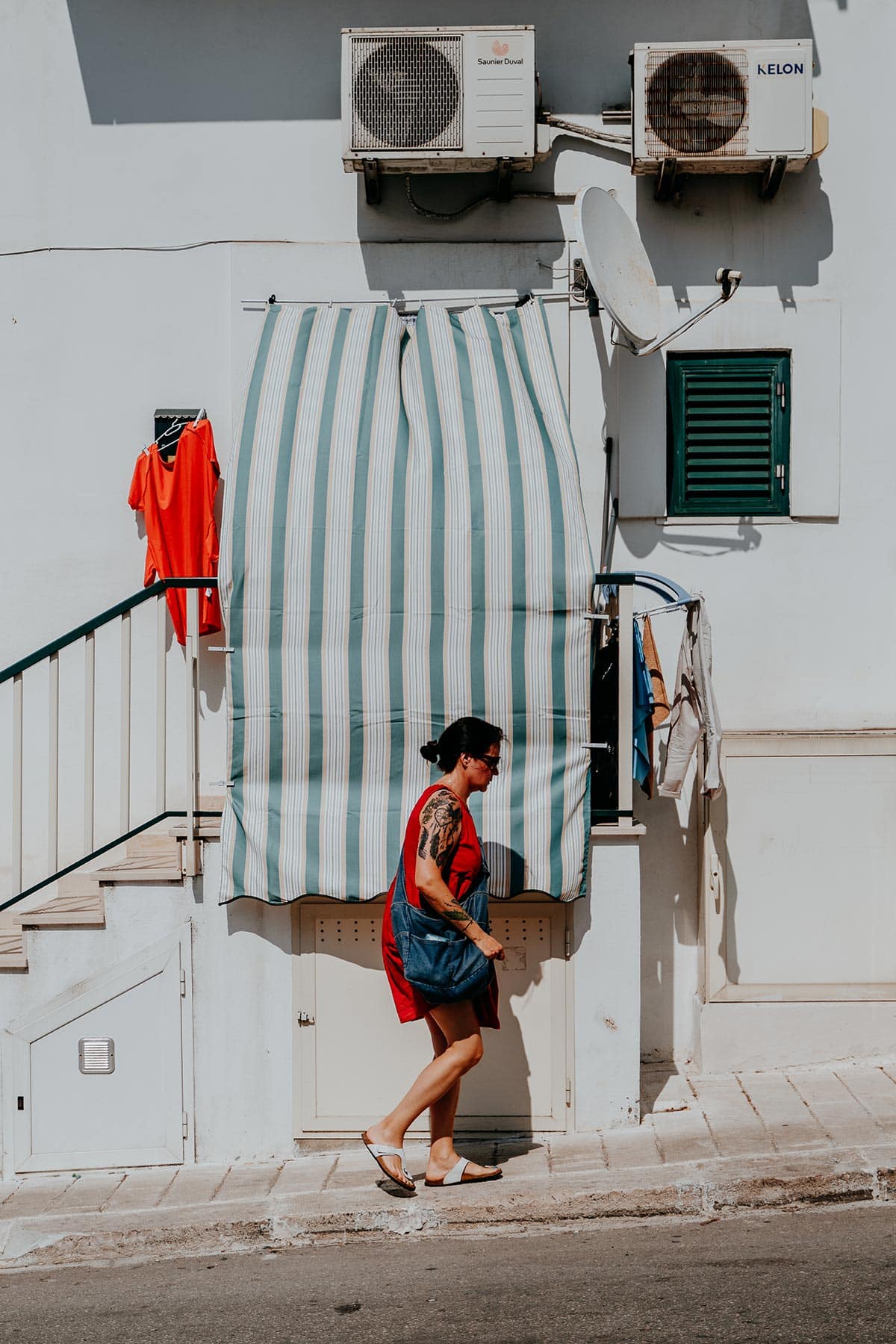
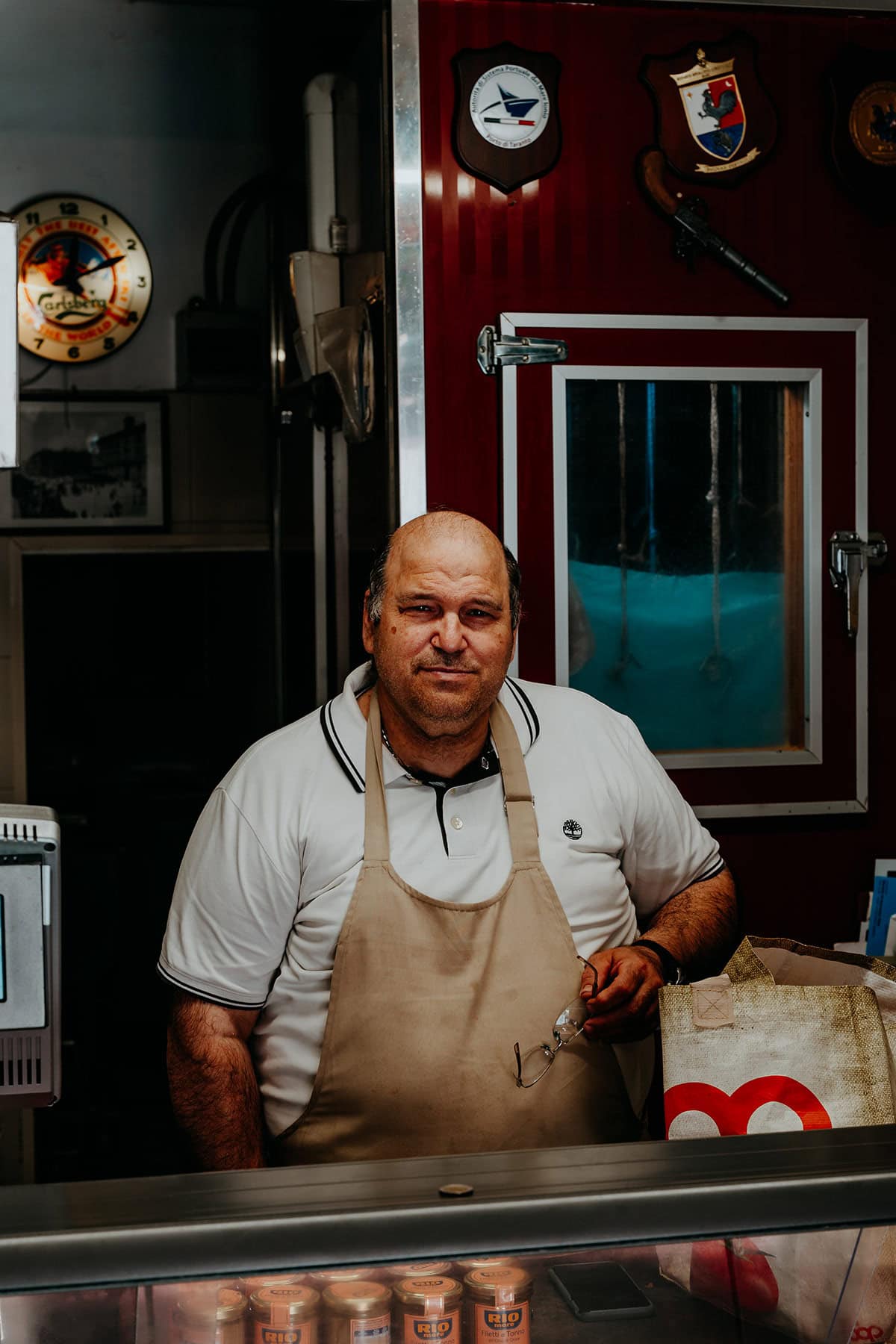
Life in the ancient heel of Italy moves in a captivating manner, as it’s shaped by age-old traditions, strong communal values, and a genuine warmth towards its visitors.
As a result, the people and their hospitality are less about being sophisticated and more about authenticity, pride and soul, which is something I truly value in interactions shared with others.
Those values offer travellers a unique glimpse into a lifestyle where family, food, and camaraderie hold significant importance, creating connections on a deeper level that feel both personal and timeless.
After spending 2 weeks in Puglia, it became clear that the Pugliese embody a similar warmth as the sun-soaked grounds they call home, and I truly admire them for that.
Puglia’s mesmerising coastline
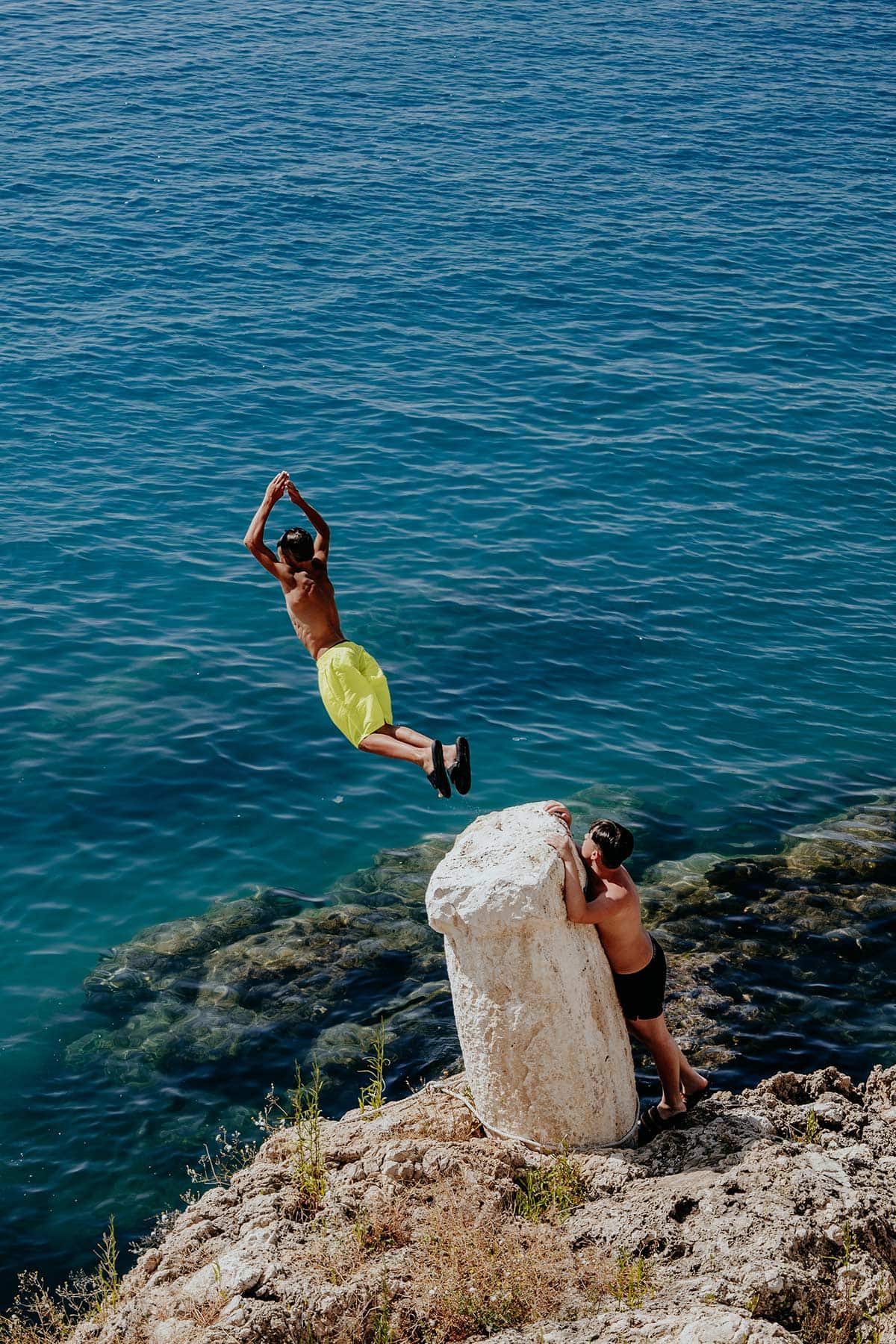
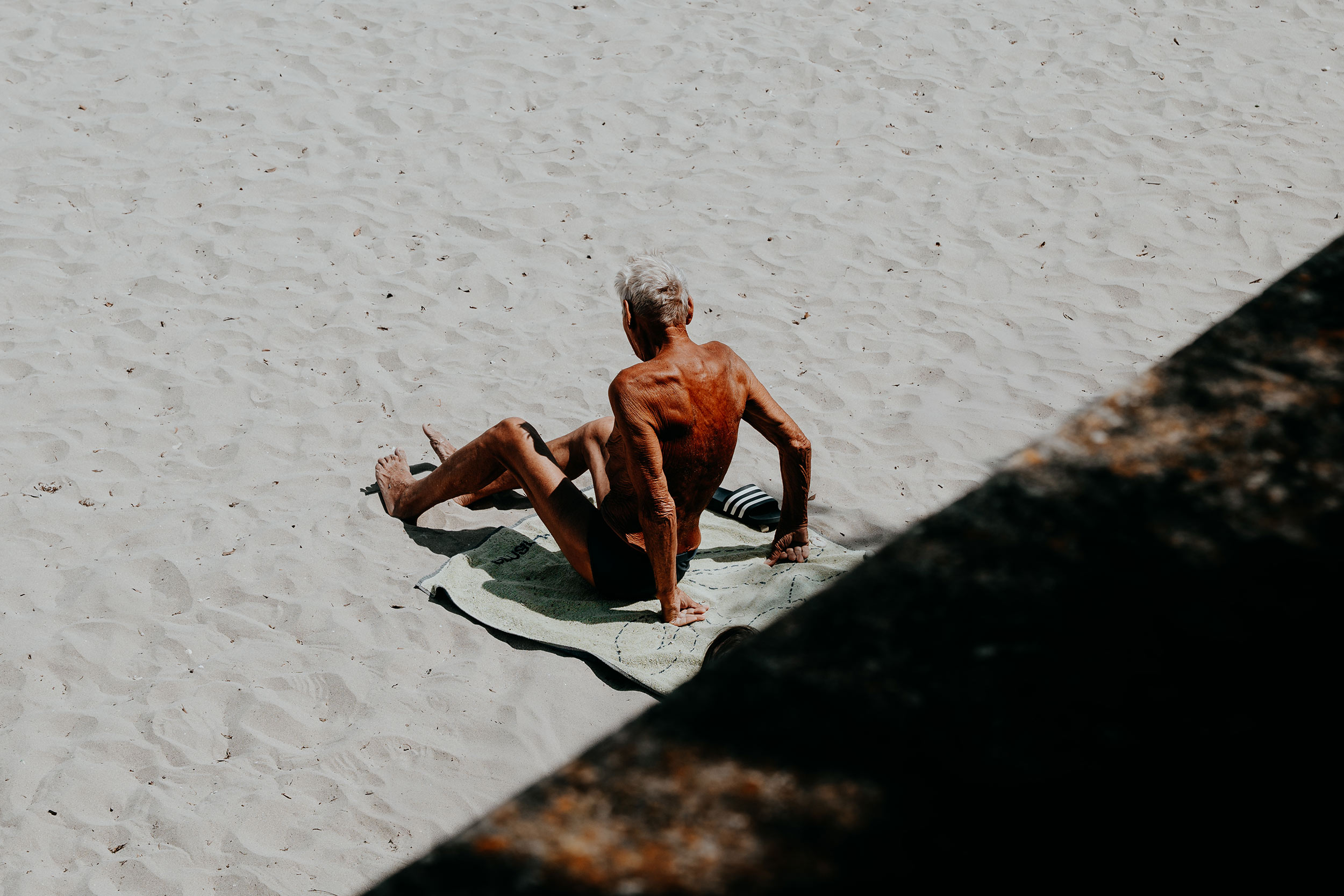
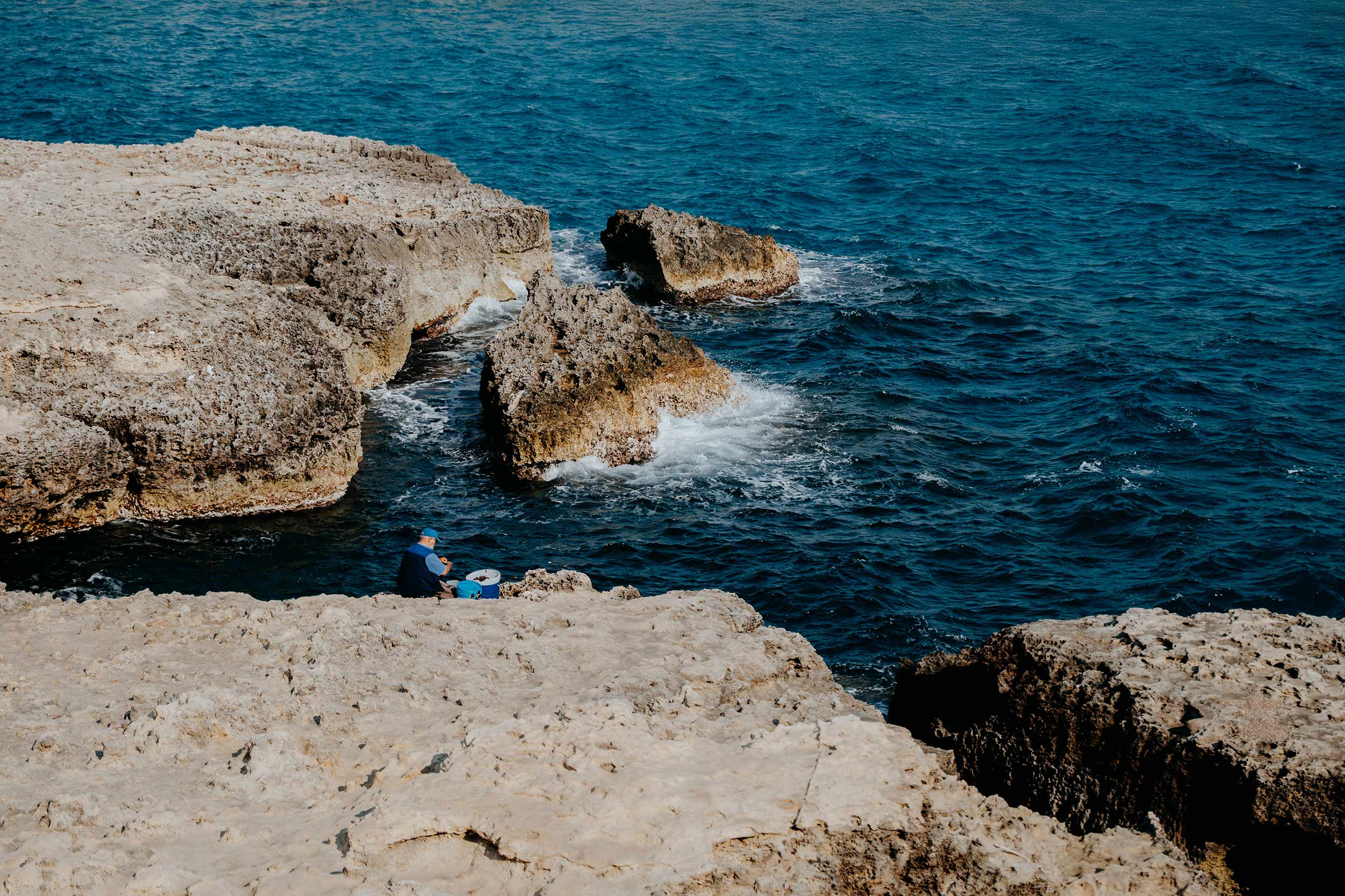
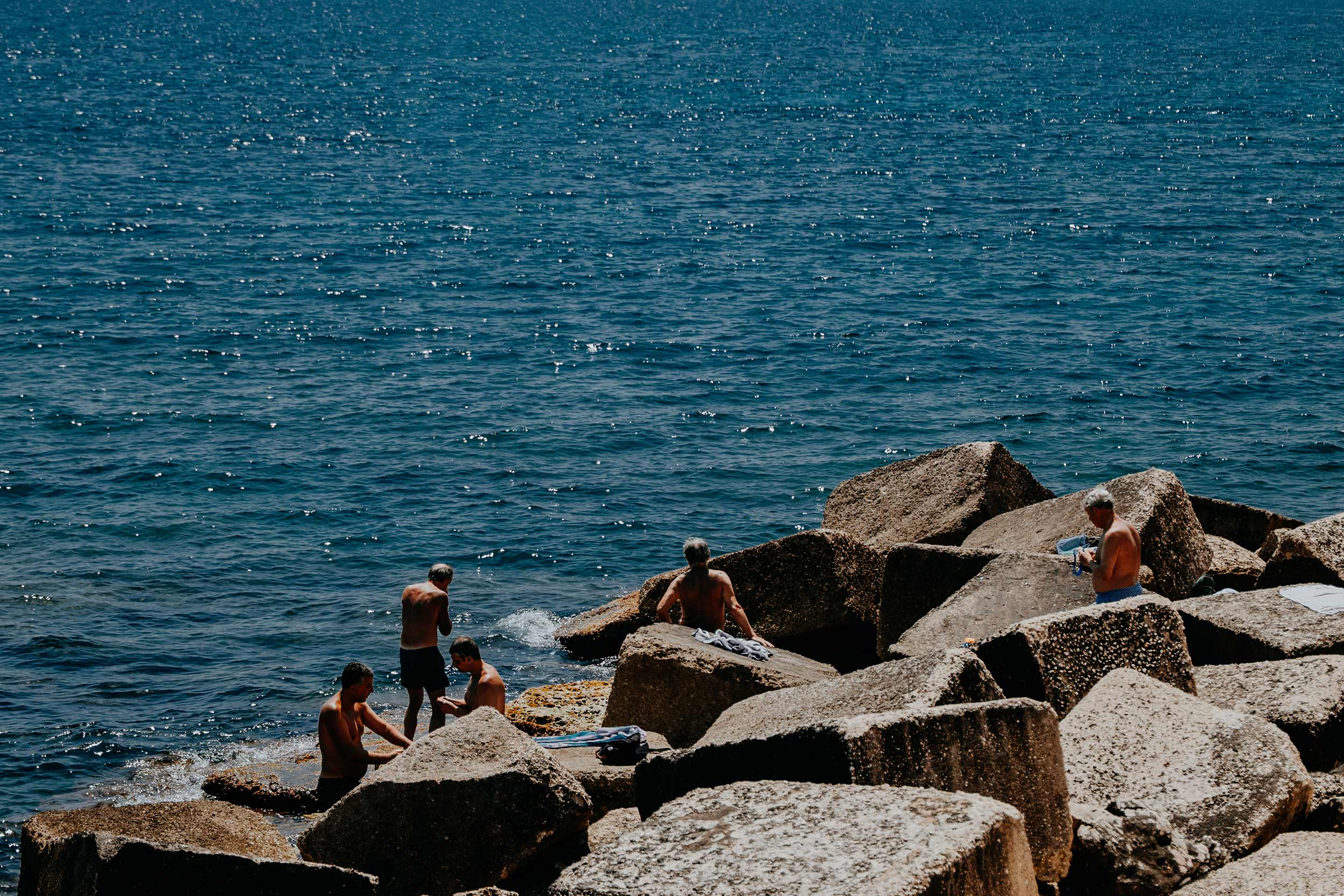
Deeply tied to both the Adriatic and Ionian seas, Puglia’s coastlines are a mix of picturesque cliffs, secluded coves, historic harbours, and endless stretches of Caribbean-esque sandy beaches.
The region’s crystal-clear waters fluctuate between emerald green and deep sapphire blue, luring you to unwind under the southern Italian sun for days on end.
From the iconic Cave of Poetry to the dramatic cliffs of Torre Sant’Andrea, the world-famous Cala Porto in Polignano a Mare, to the wonderful city beaches found in Otranto, Gallipoli and Monopoli, Puglia is absolutely wild when it comes to seaside excellence.
The good part?
These are merely a pinch of all the vibrant seaside escapes found along the roughly 800 kilometres of coastline in Puglia.
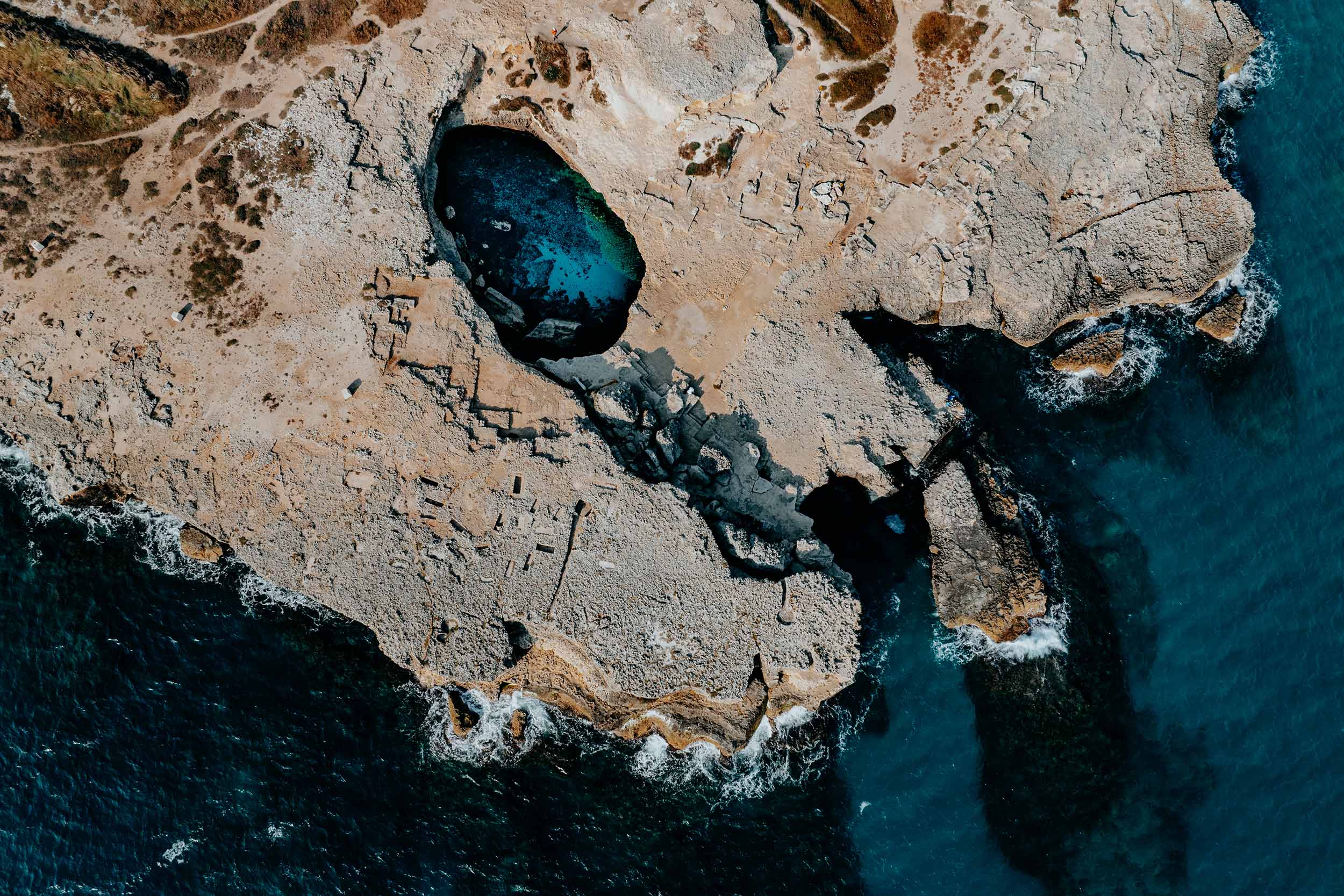
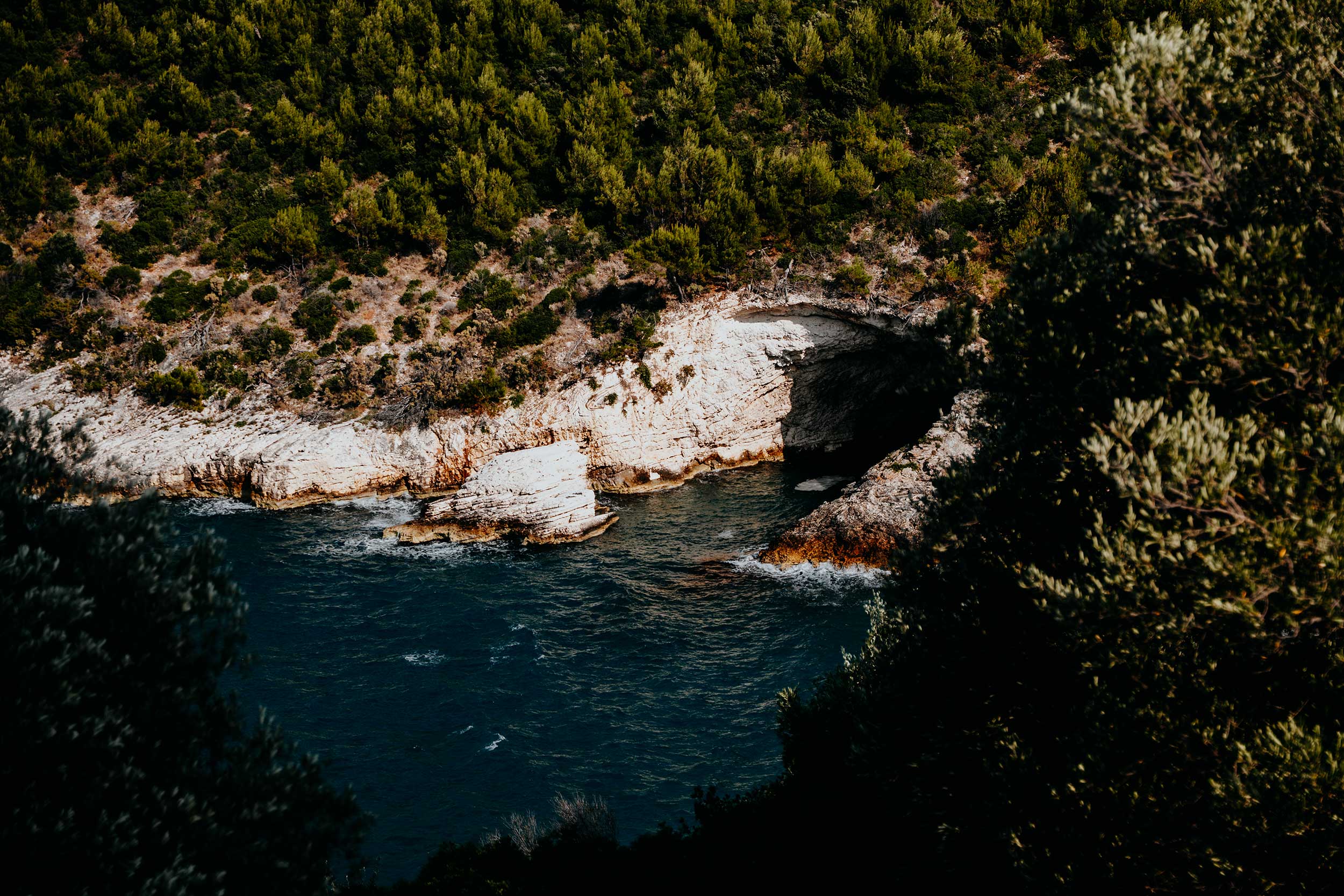
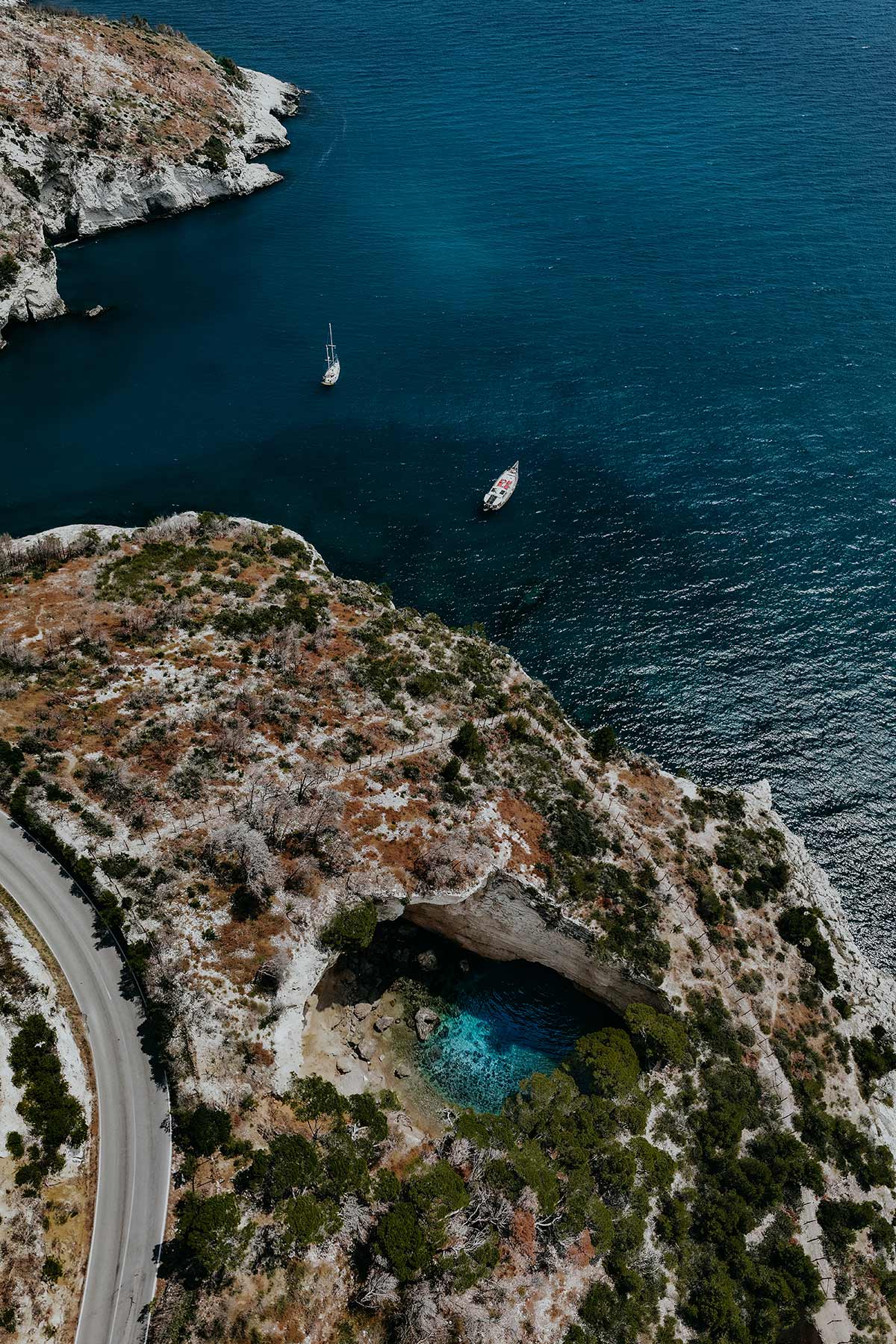
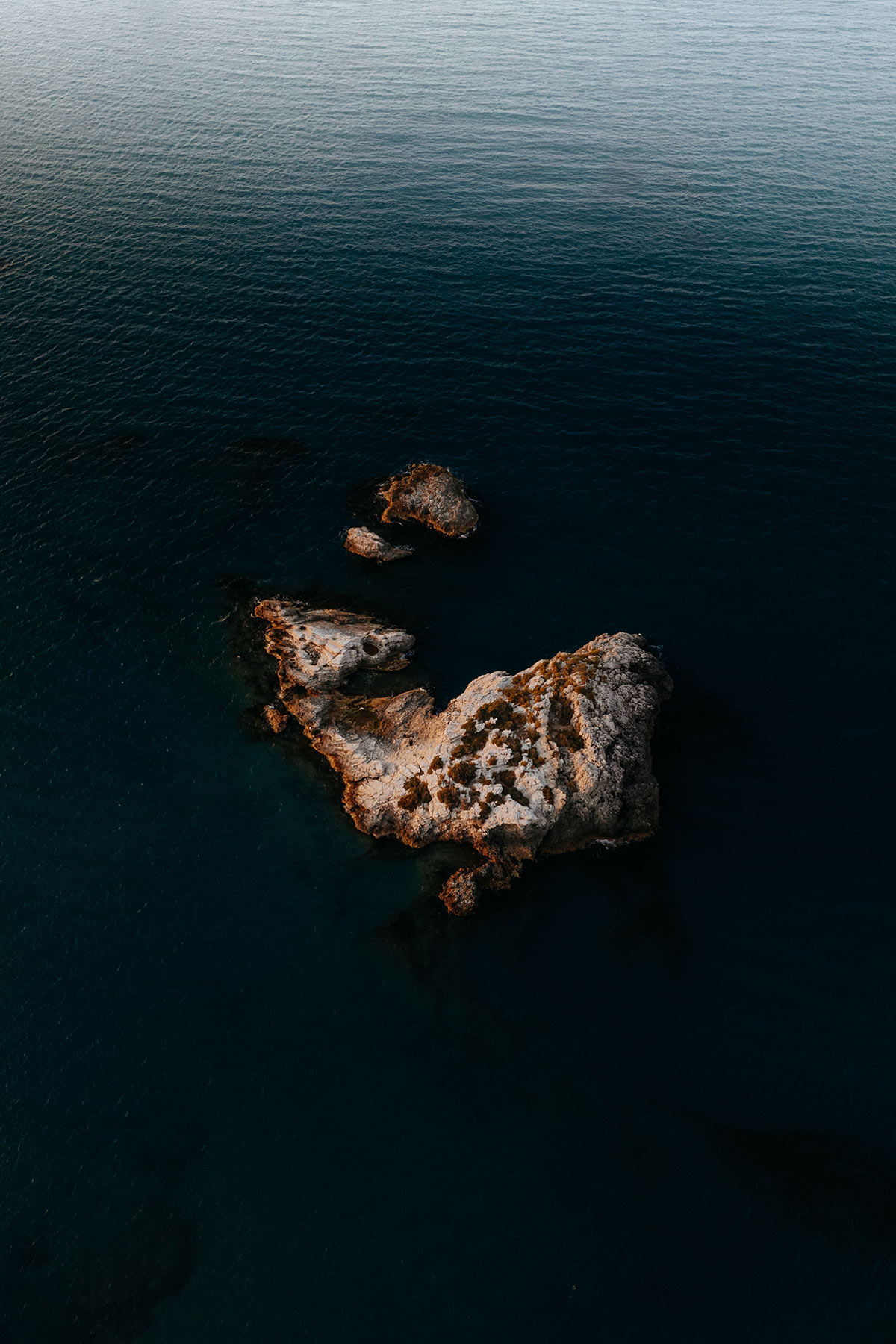
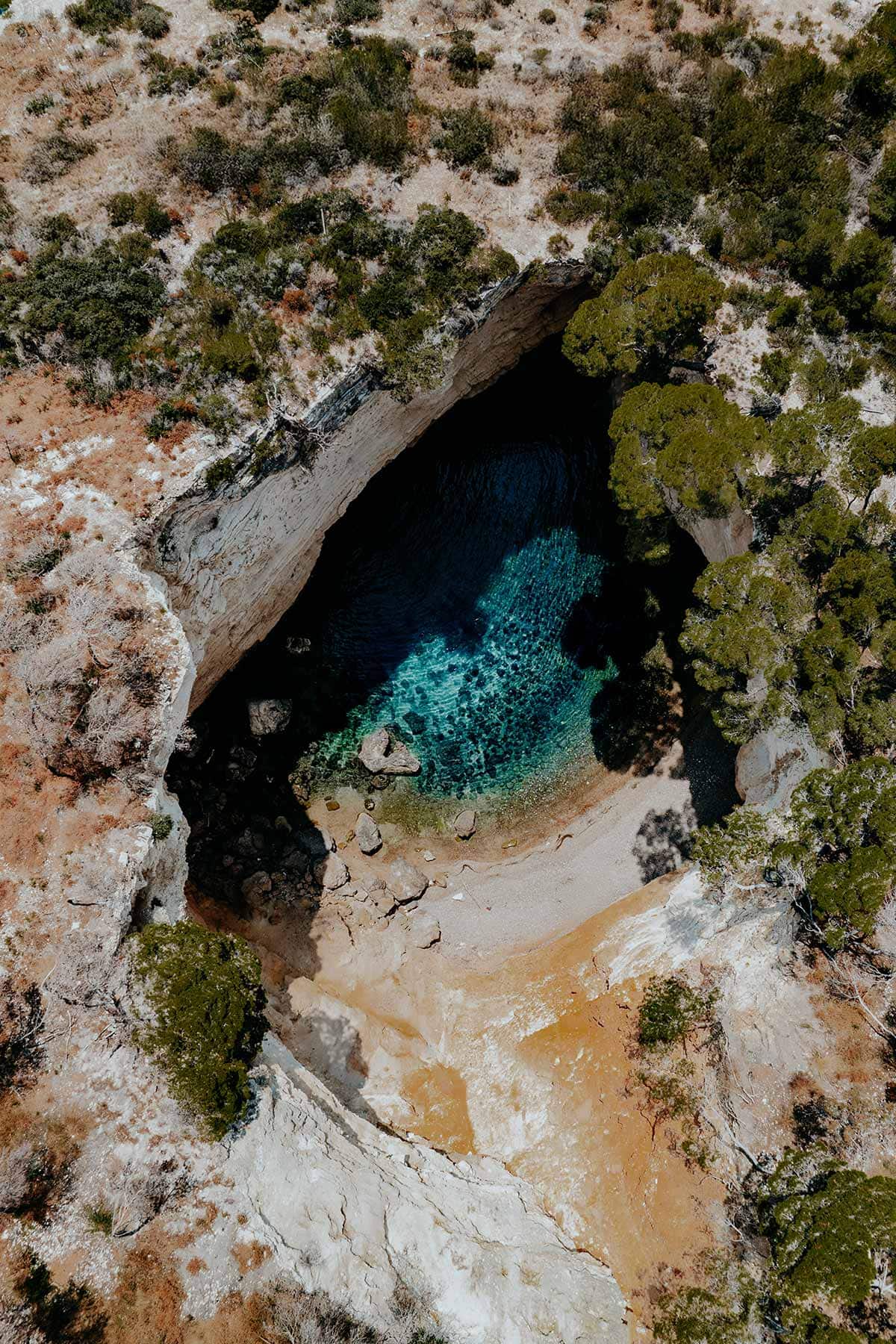
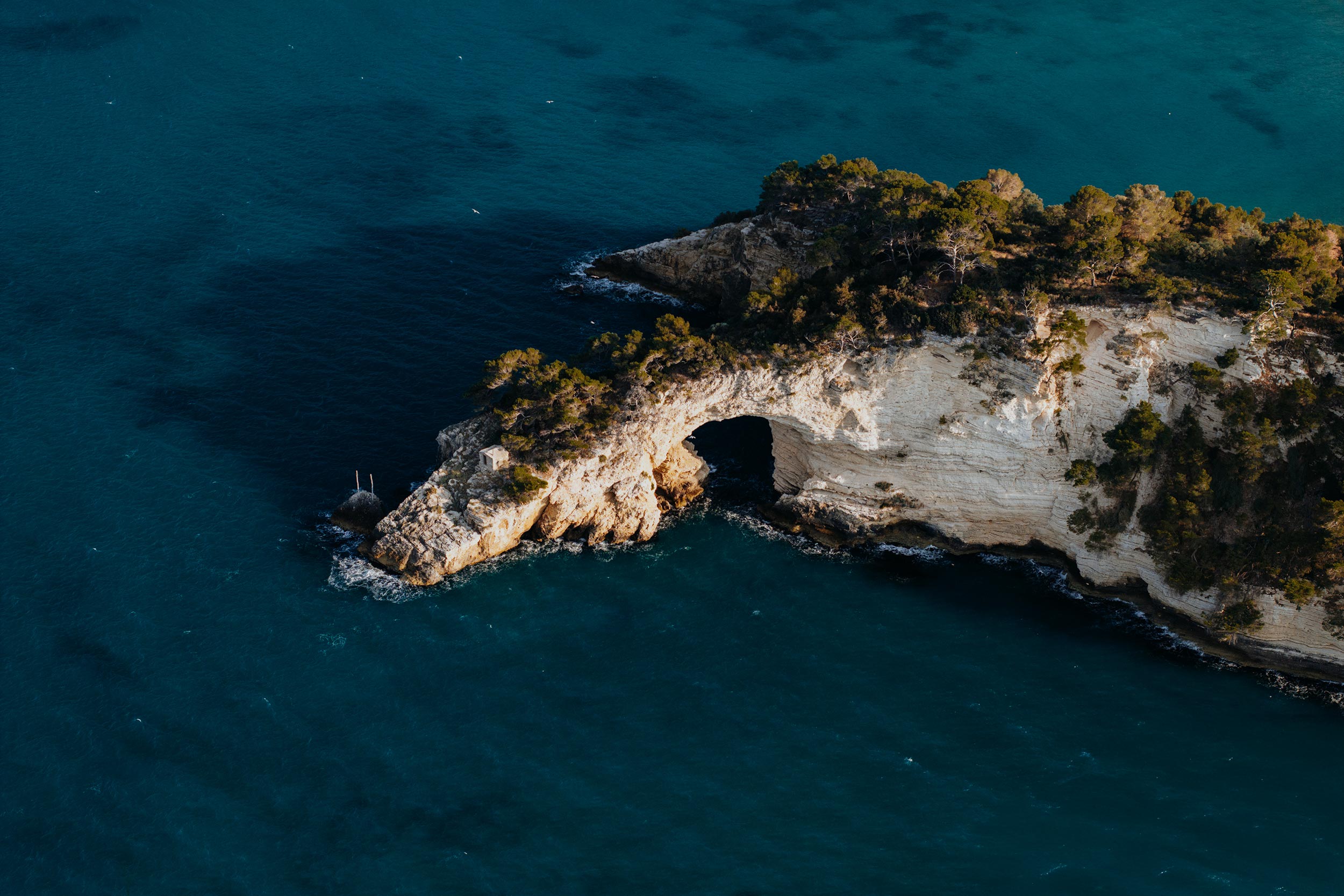
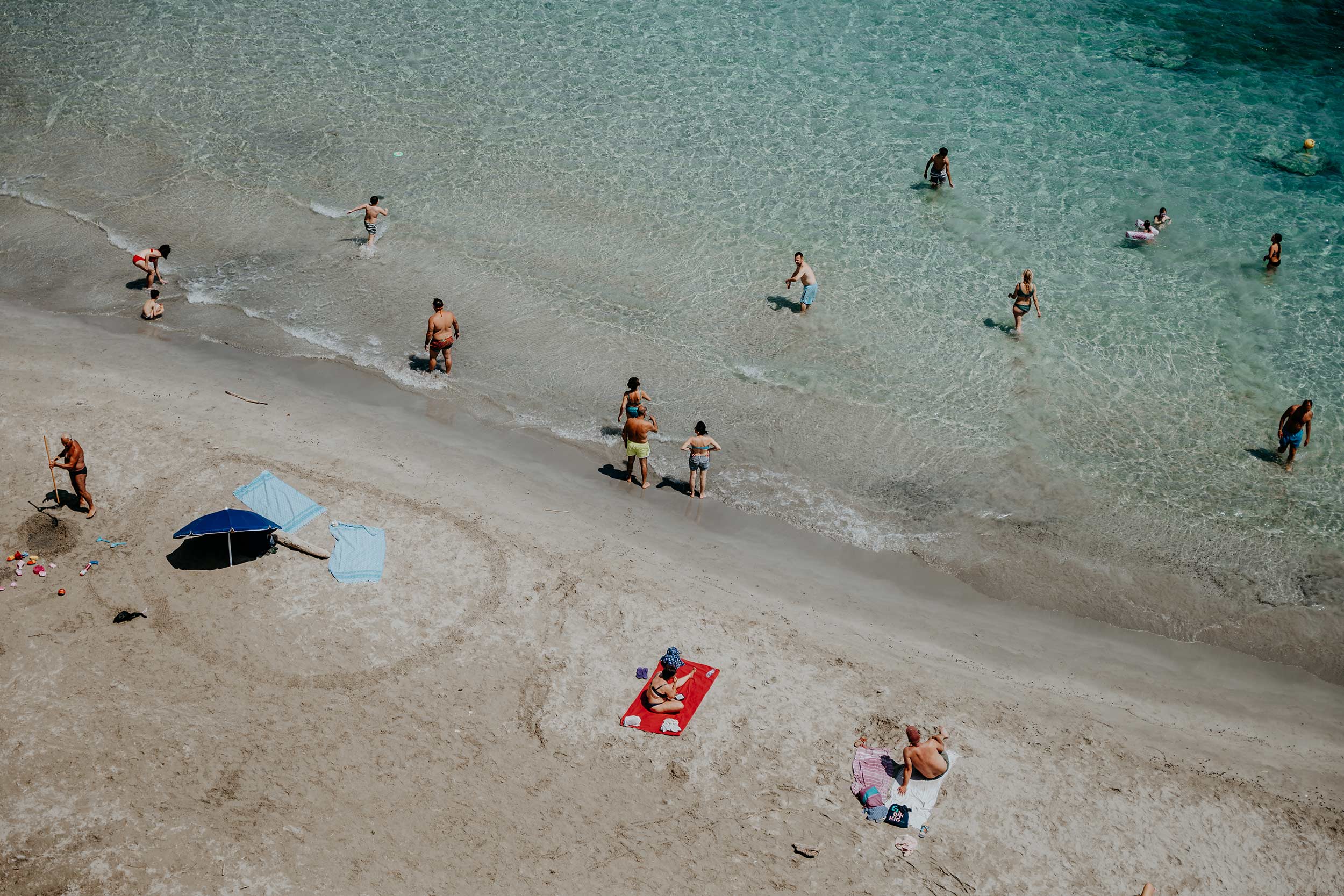
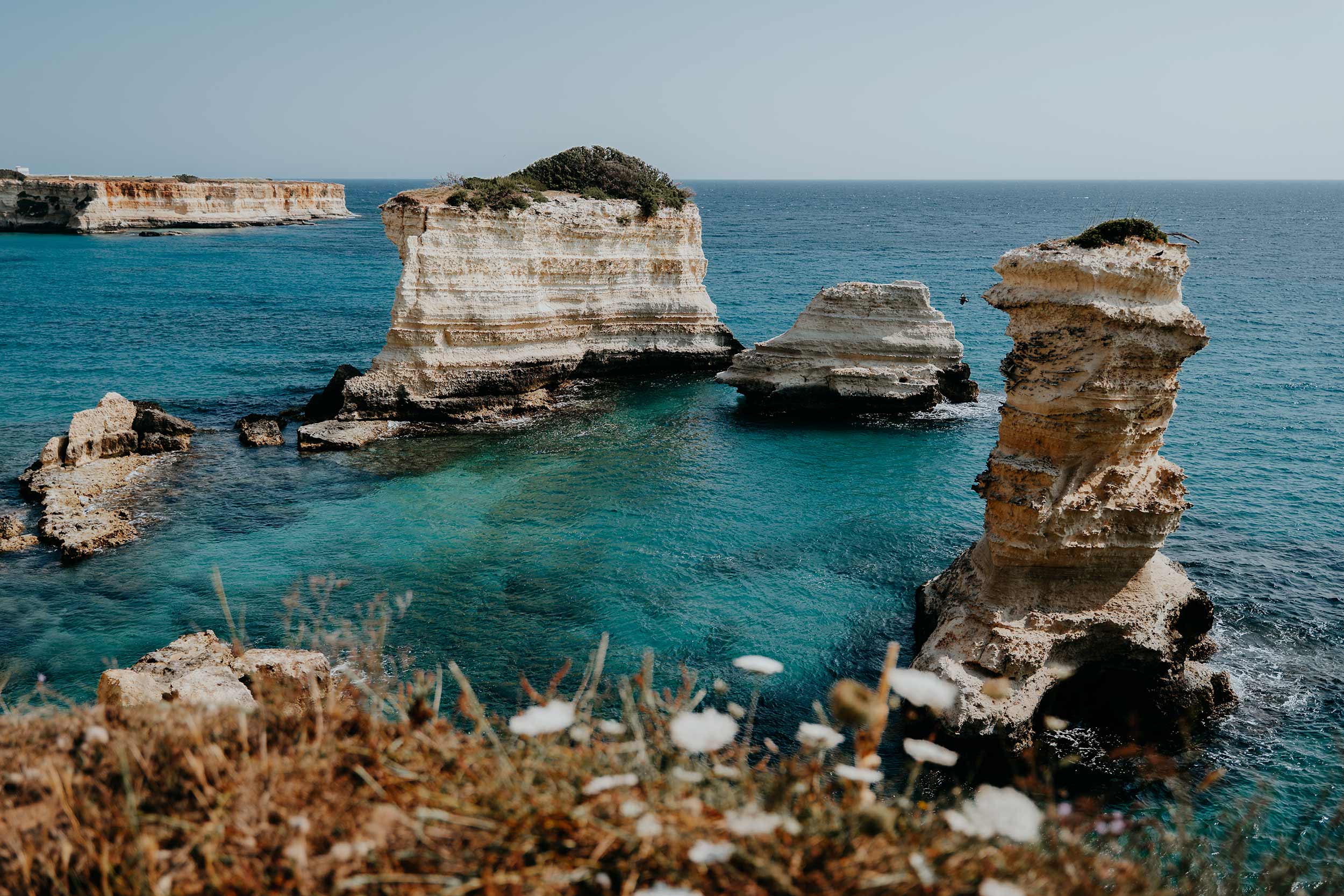
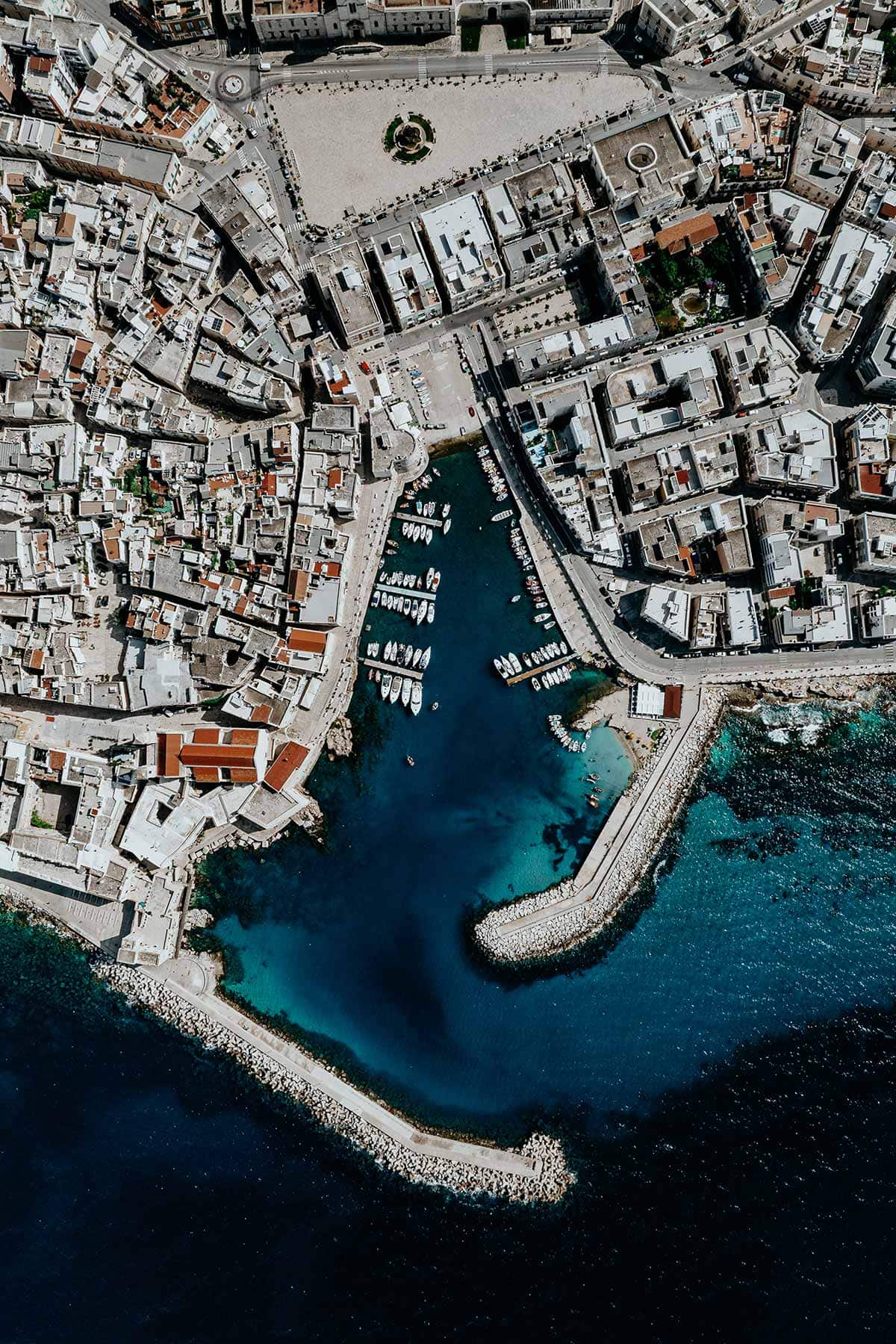
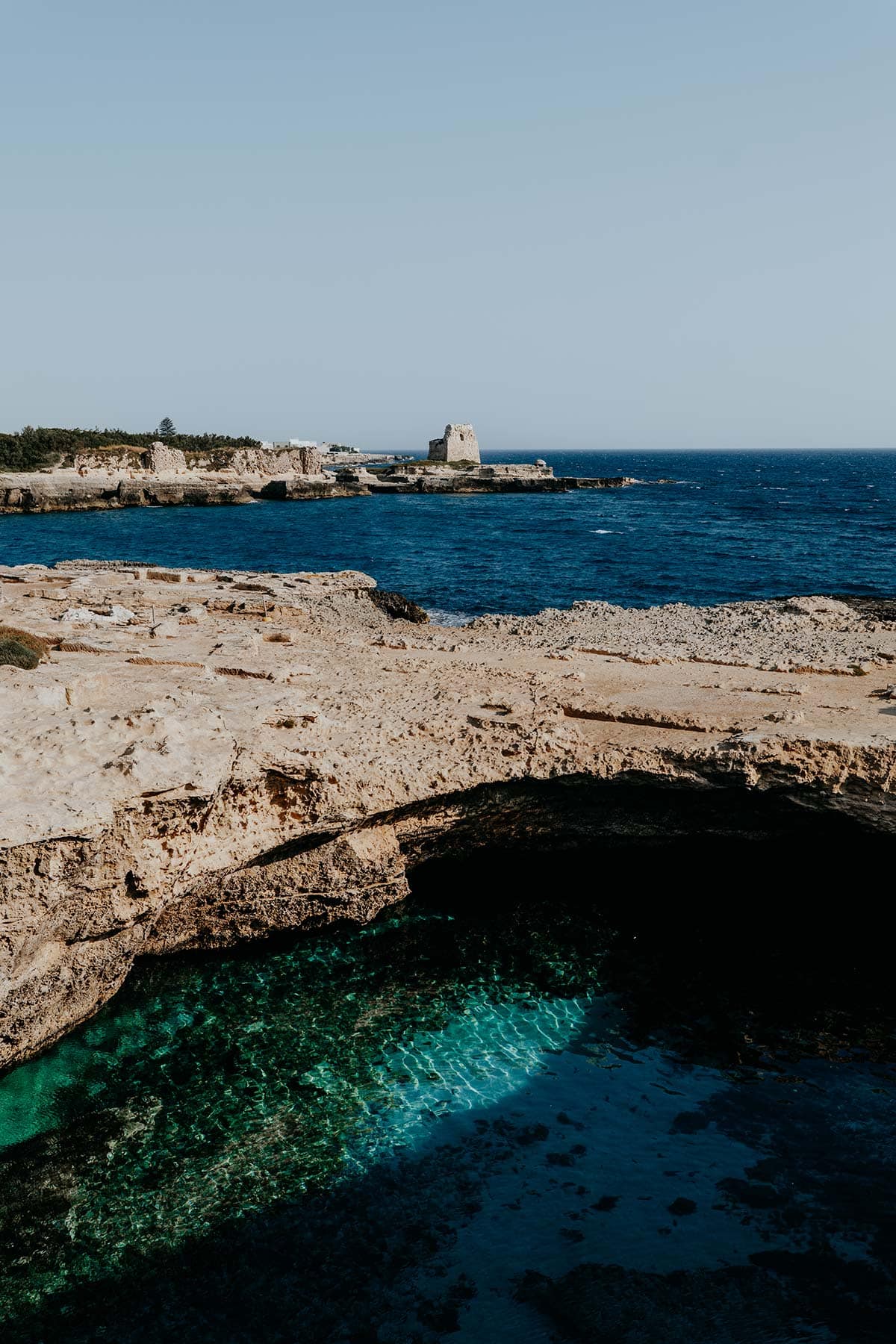
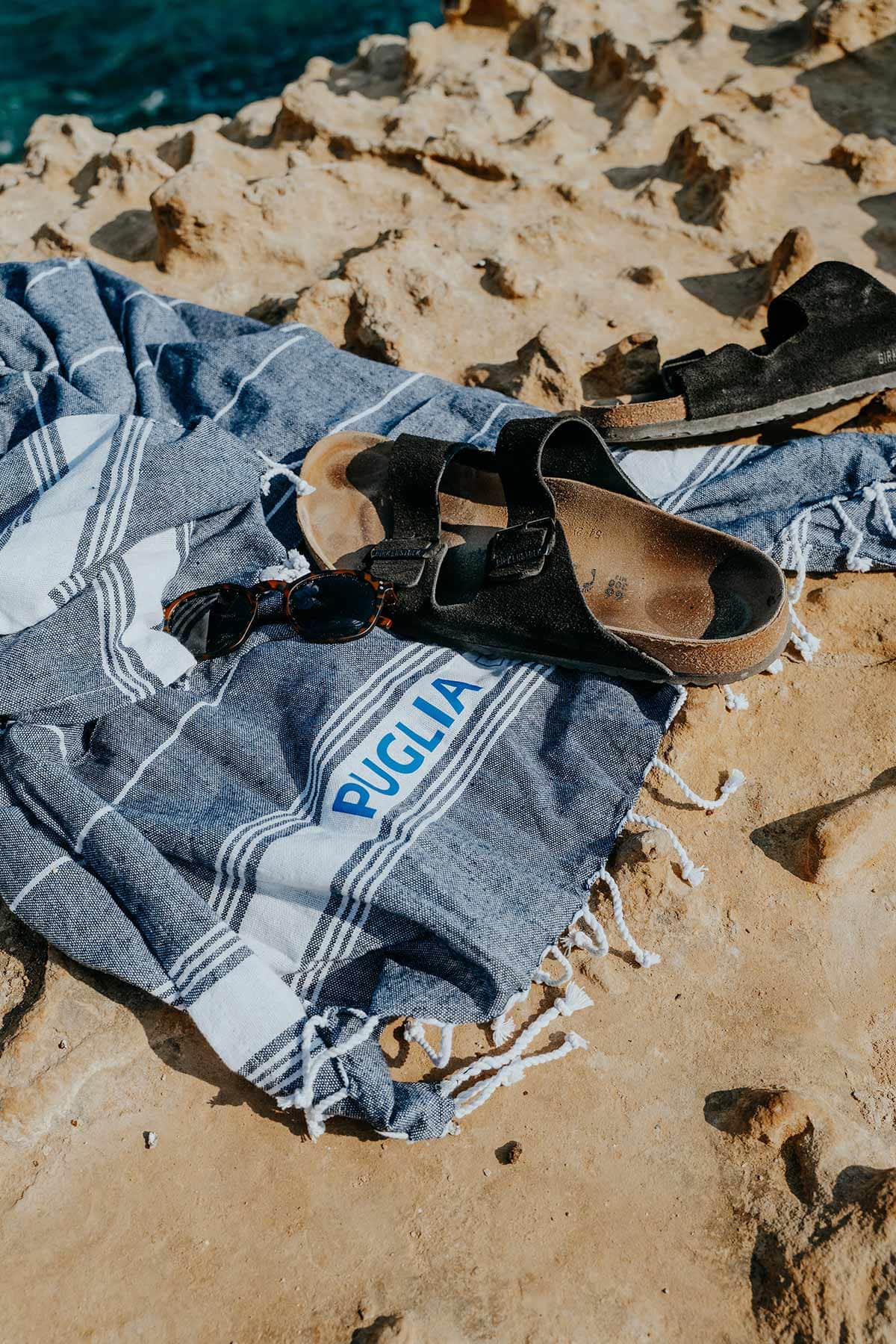
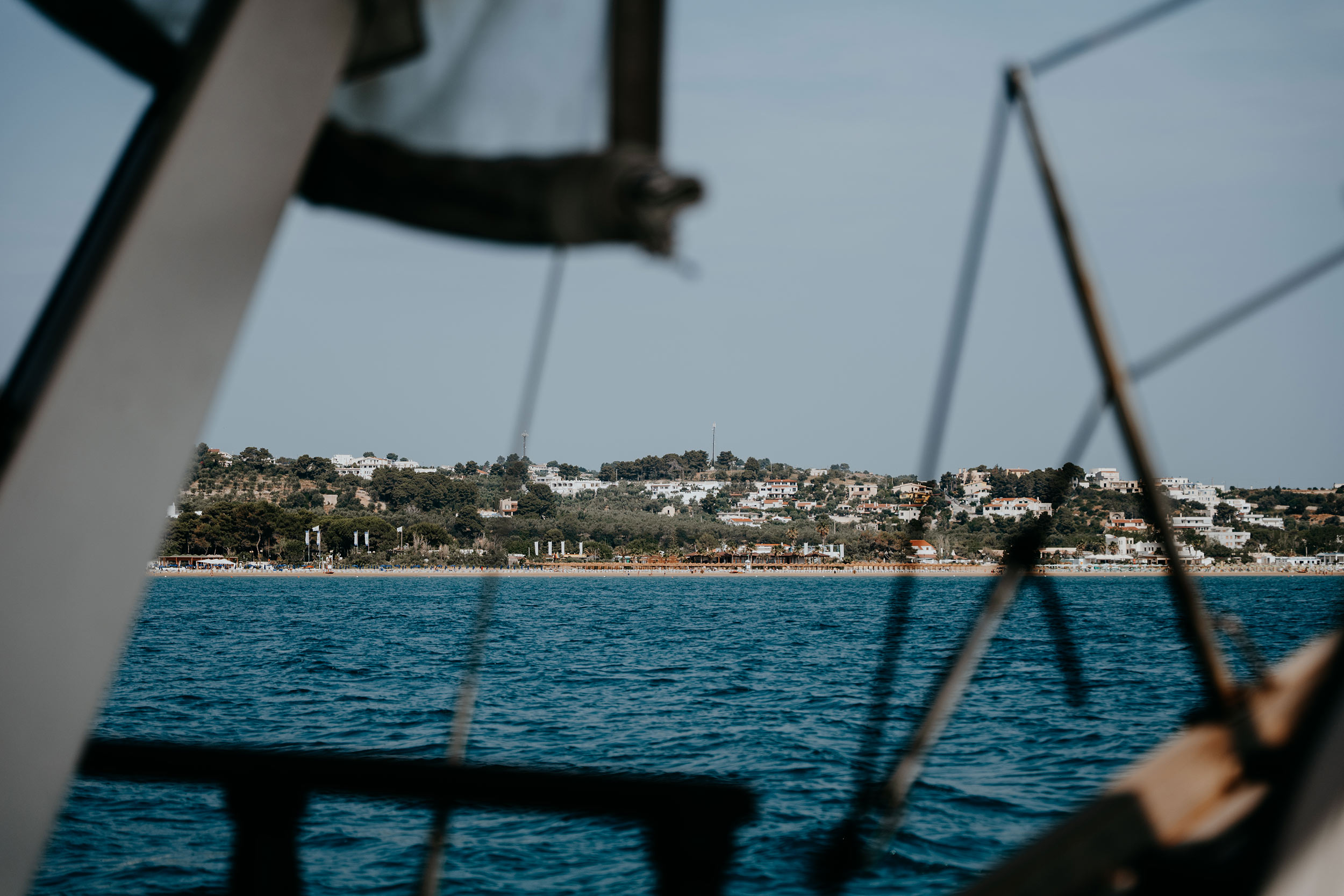
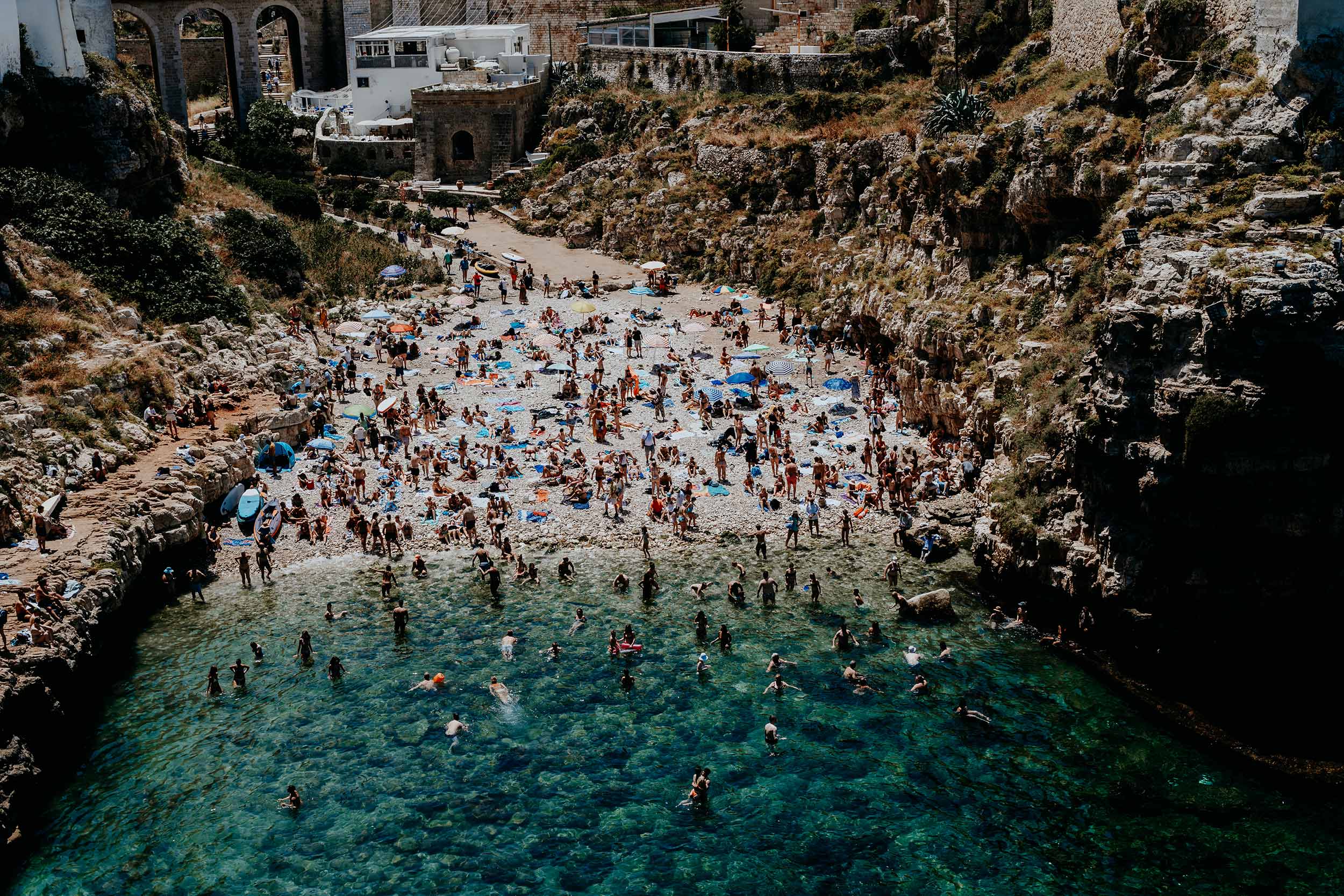
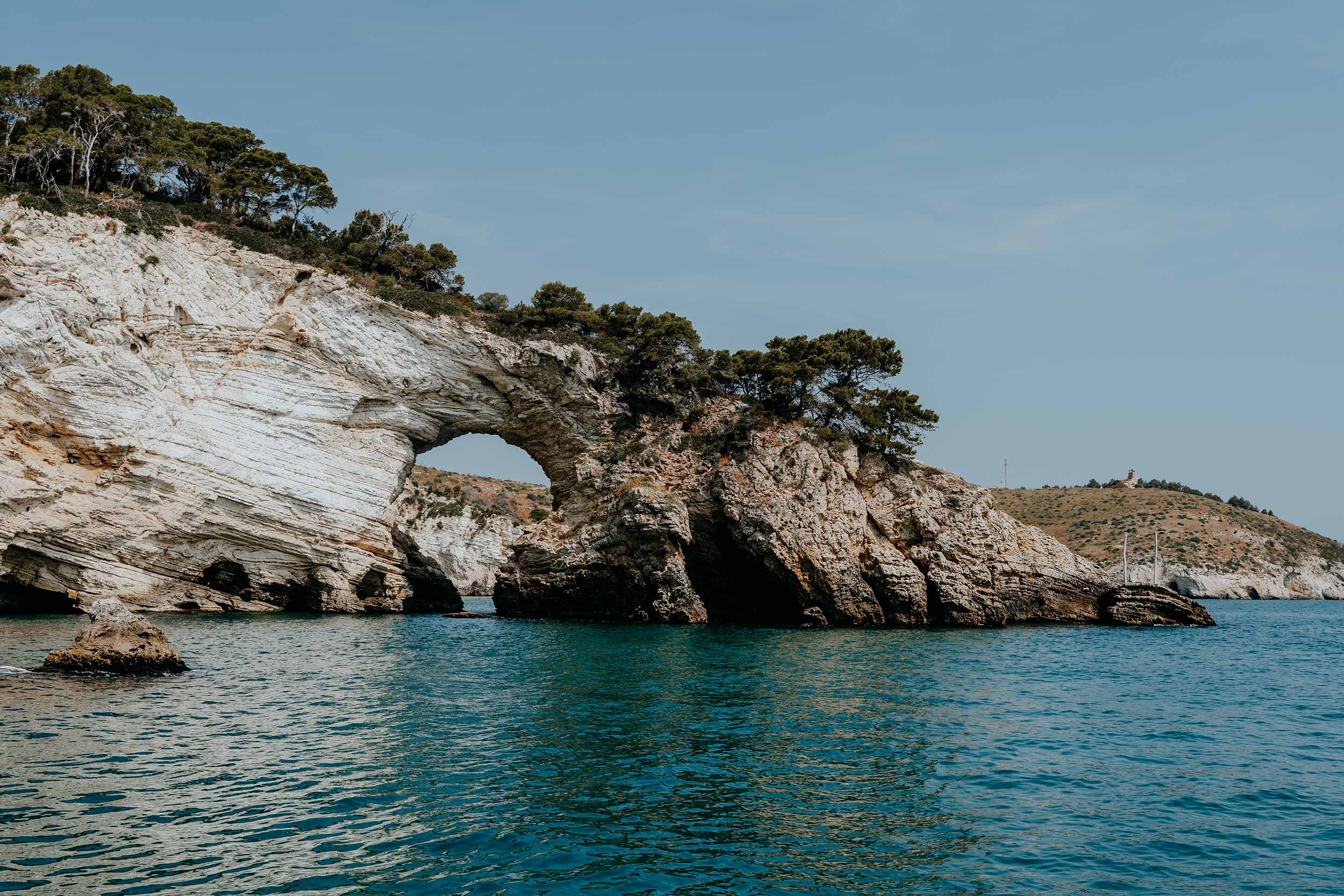
The flavours of Puglia
A celebration of rich, fresh ingredients sourced from its own grounds, rooted in simplicity, and marked by an authenticity that makes every dish stand out, the cuisine of Puglia is in many ways like its people; humble and not trying to impress, yet doing so in an effortless manner.
Traditional dishes as Orecchiette with tomato and ricotta, freshly baked focaccia drizzled in local olive oil, and creamy burrata cheese are truly exceptional and showcase the region’s devotion to homegrown and seasonal ingredients.
Then, of course, there is the core of Italian cuisine; think crusty Pizza Napolitana straight from the wood-fired brick oven, irresistible gelato offerings to cater to your sweet tooth, delectable pasta dishes crafted to perfection, and last but not least, heaps of doppio to make sure your caffeine levels stay balanced.
The above was essentially my diet for the entirety of my time in Puglia, hence why I was so determined to level up my fitness game as soon as I returned home to Valencia.
In my view, culinary traditions, local produce, and the distinctive flavours of a specific region offer an incredible insight into a destination and its people, and in the case of Puglia, this is nothing short of a delight!
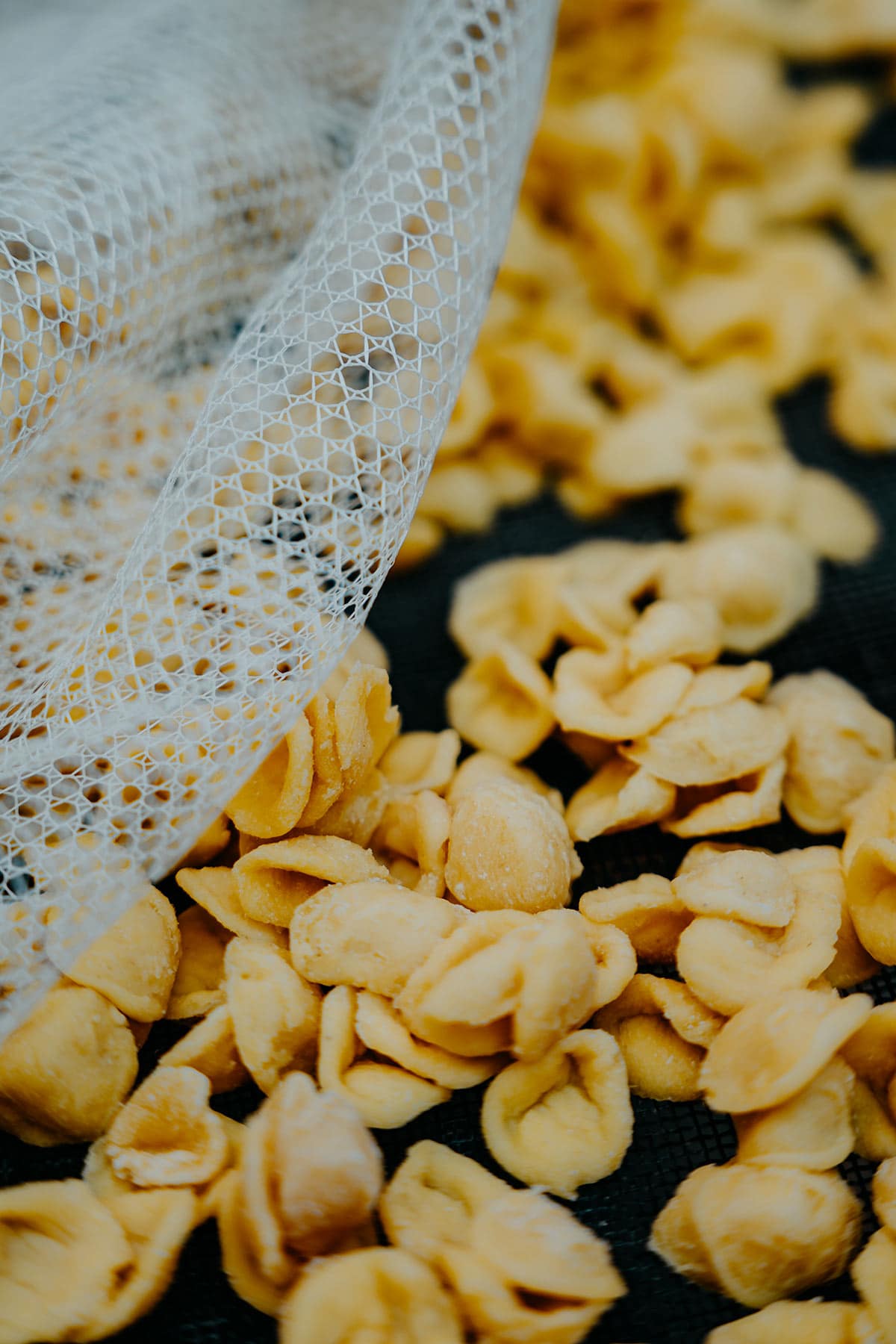
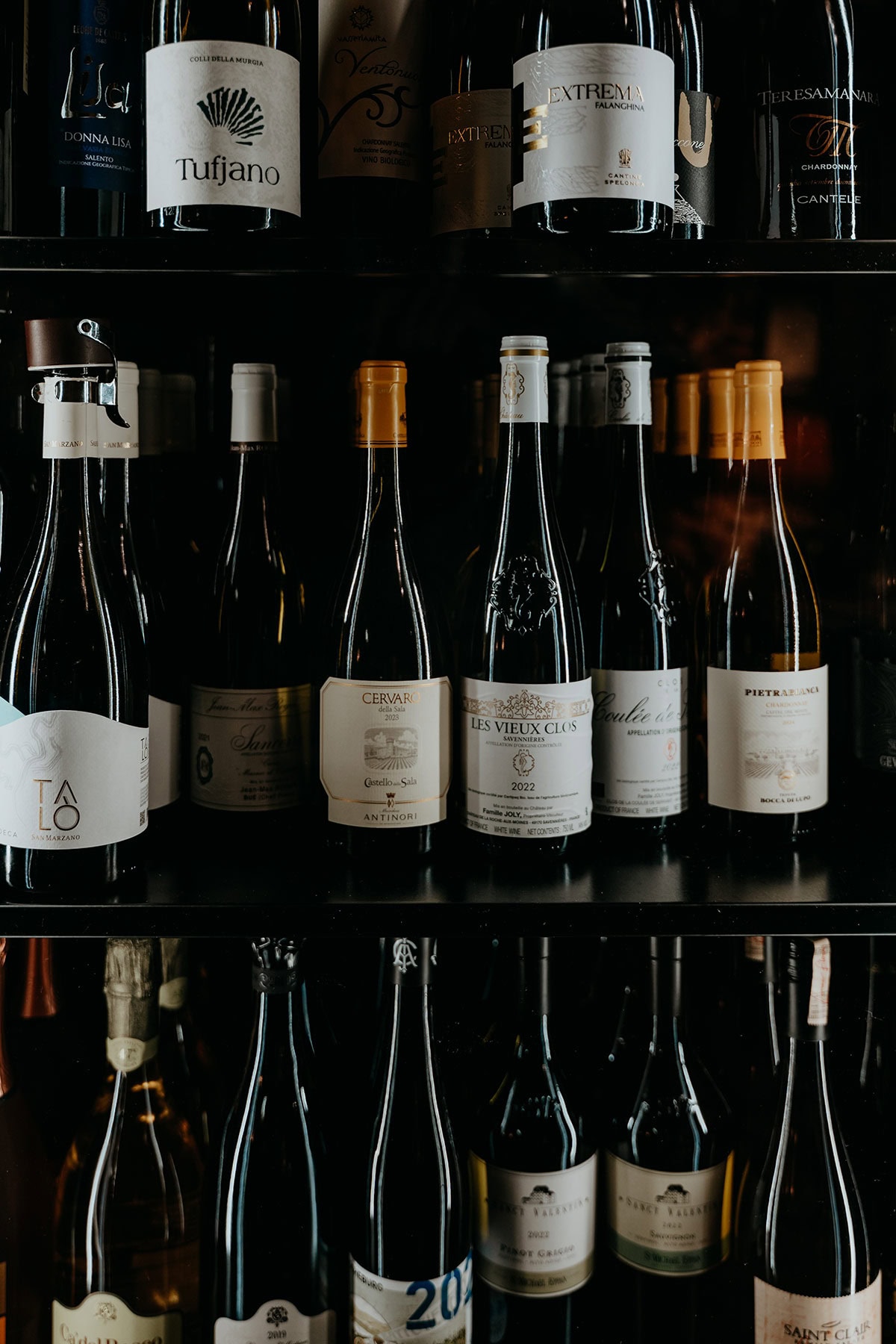


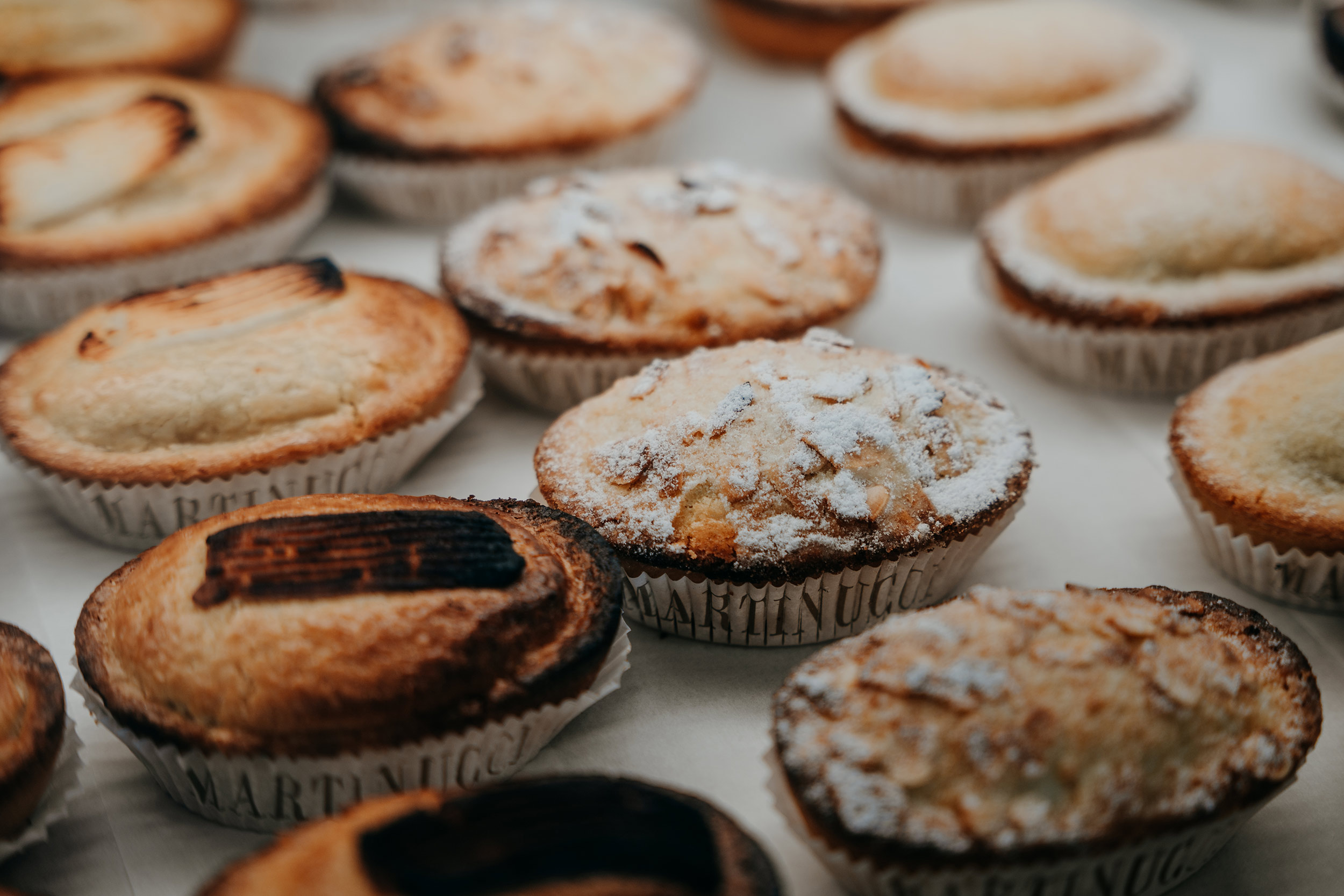
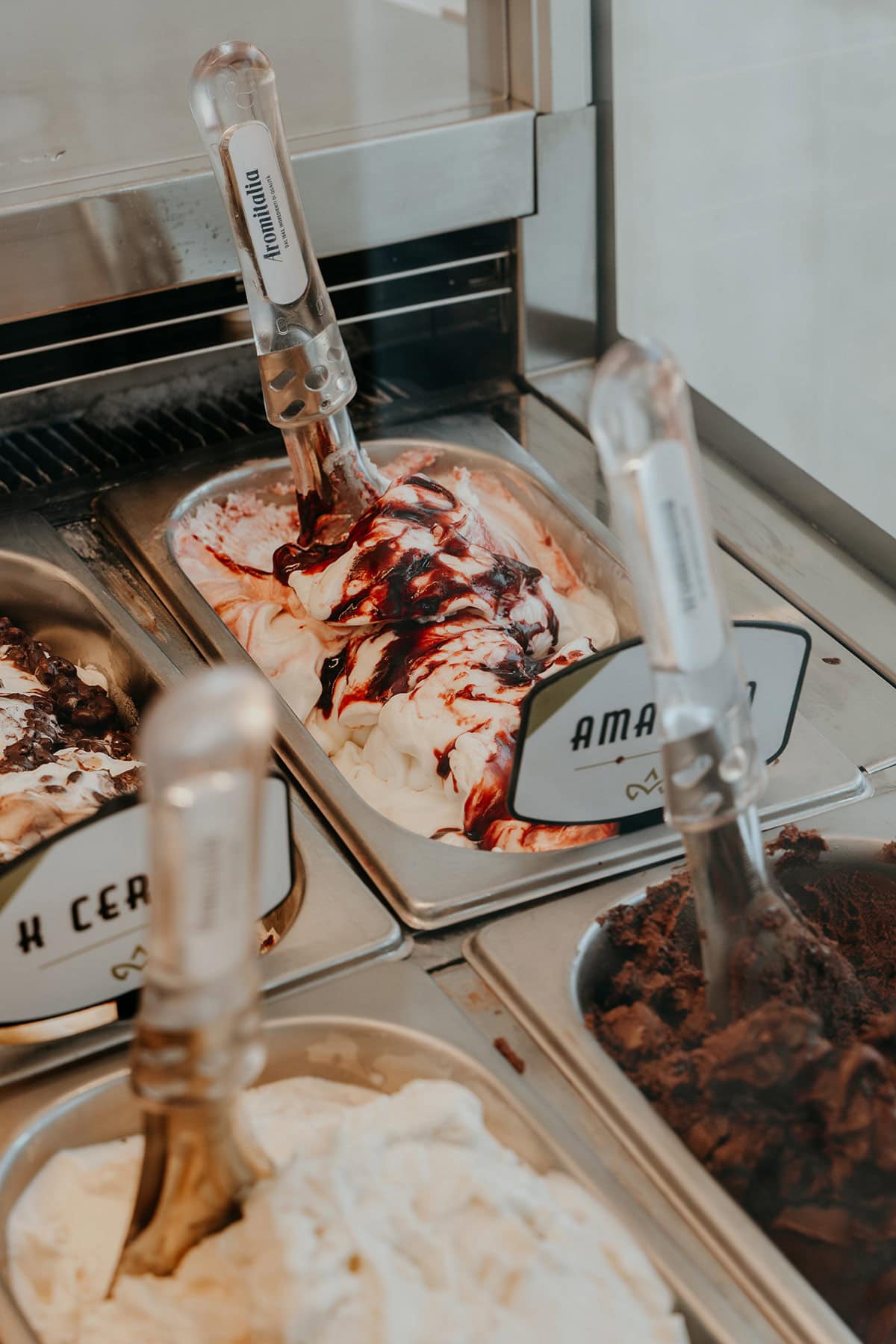
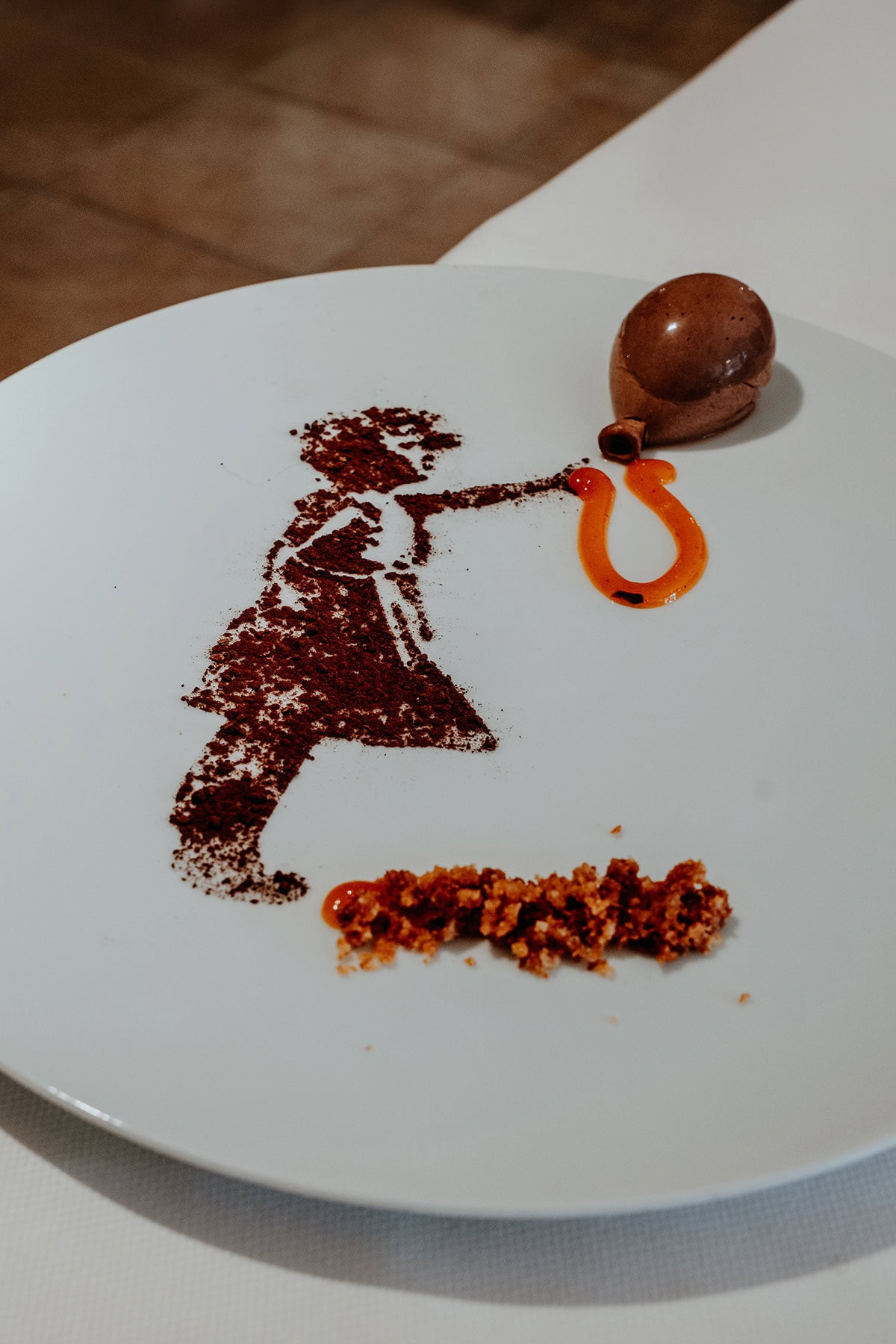
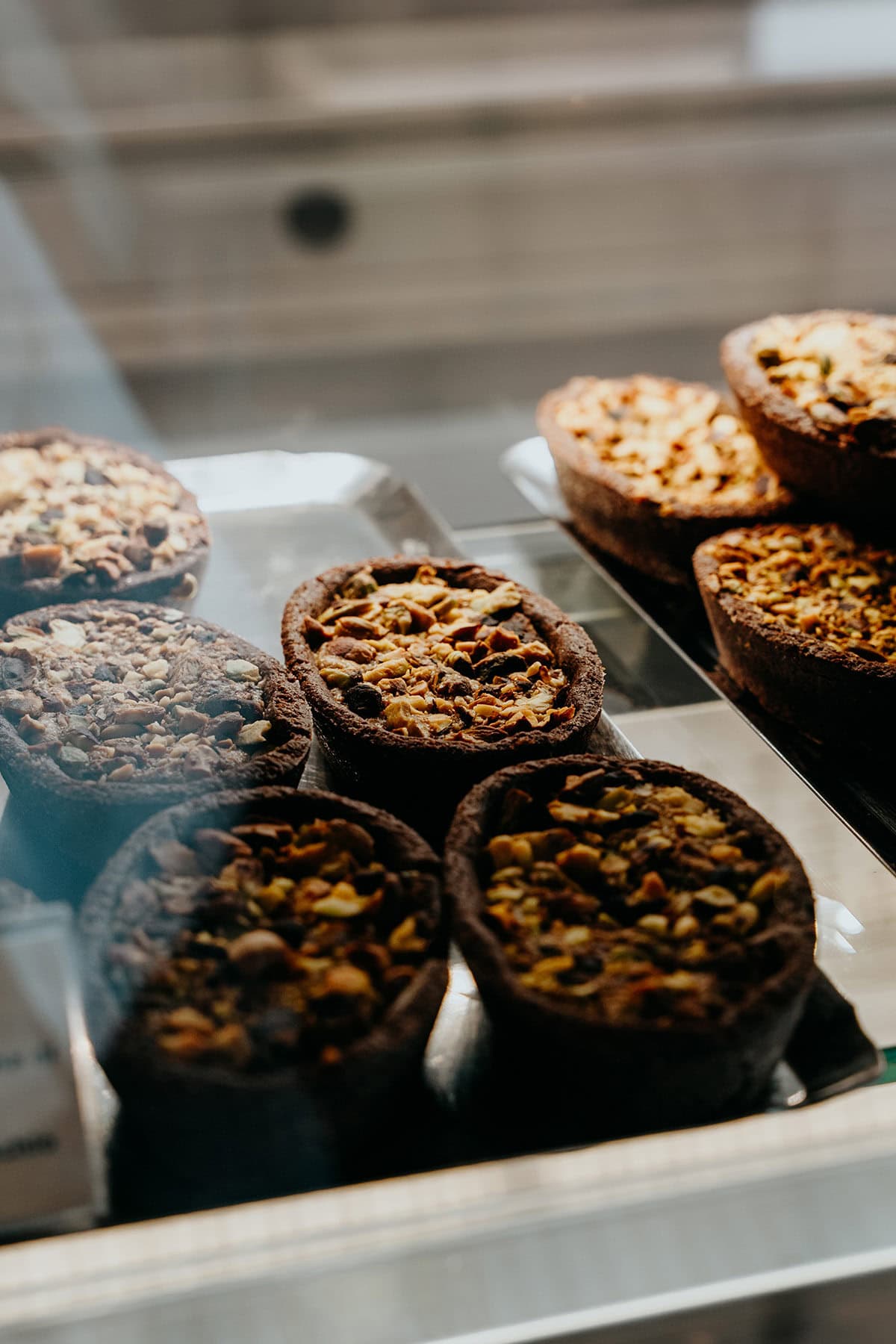
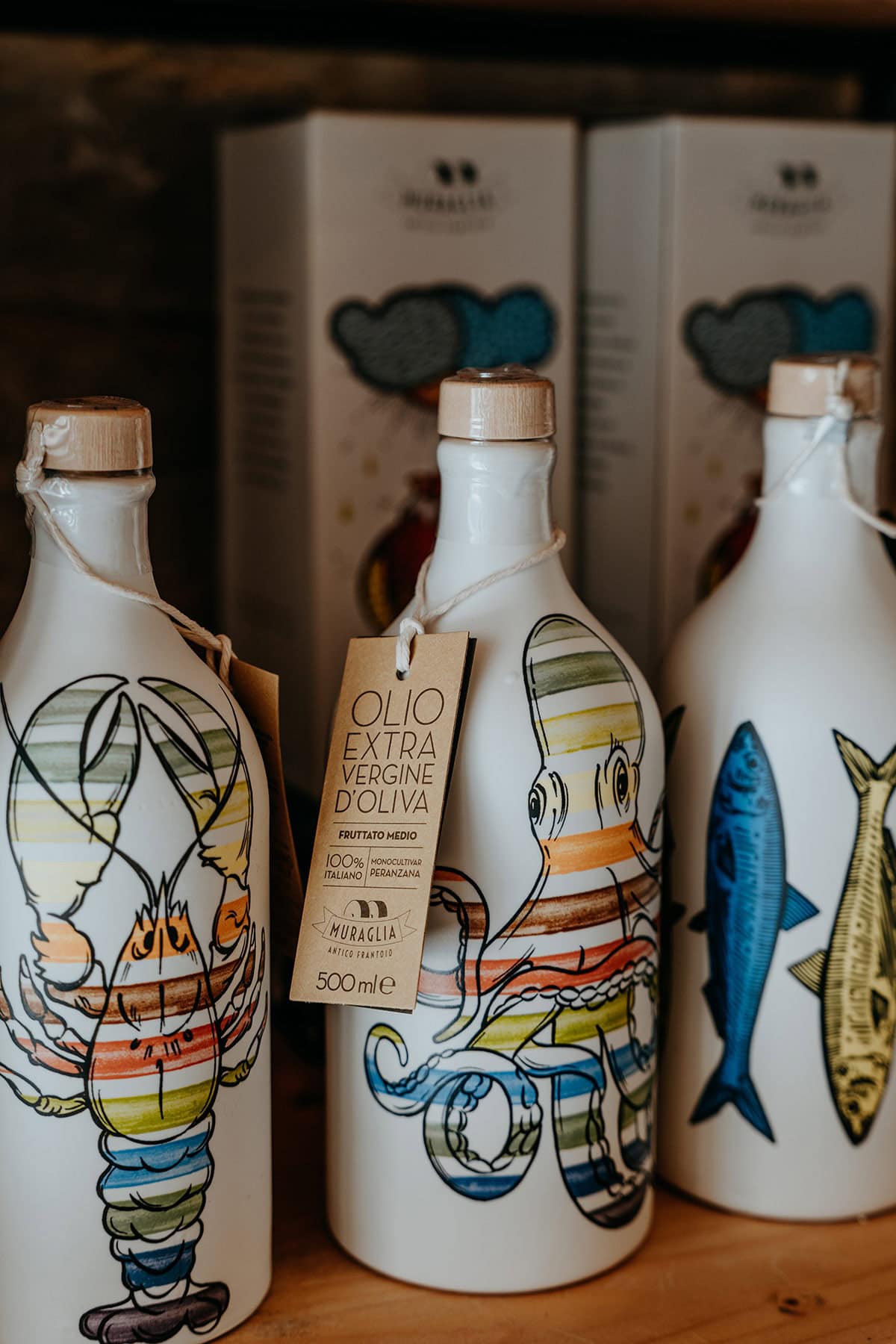
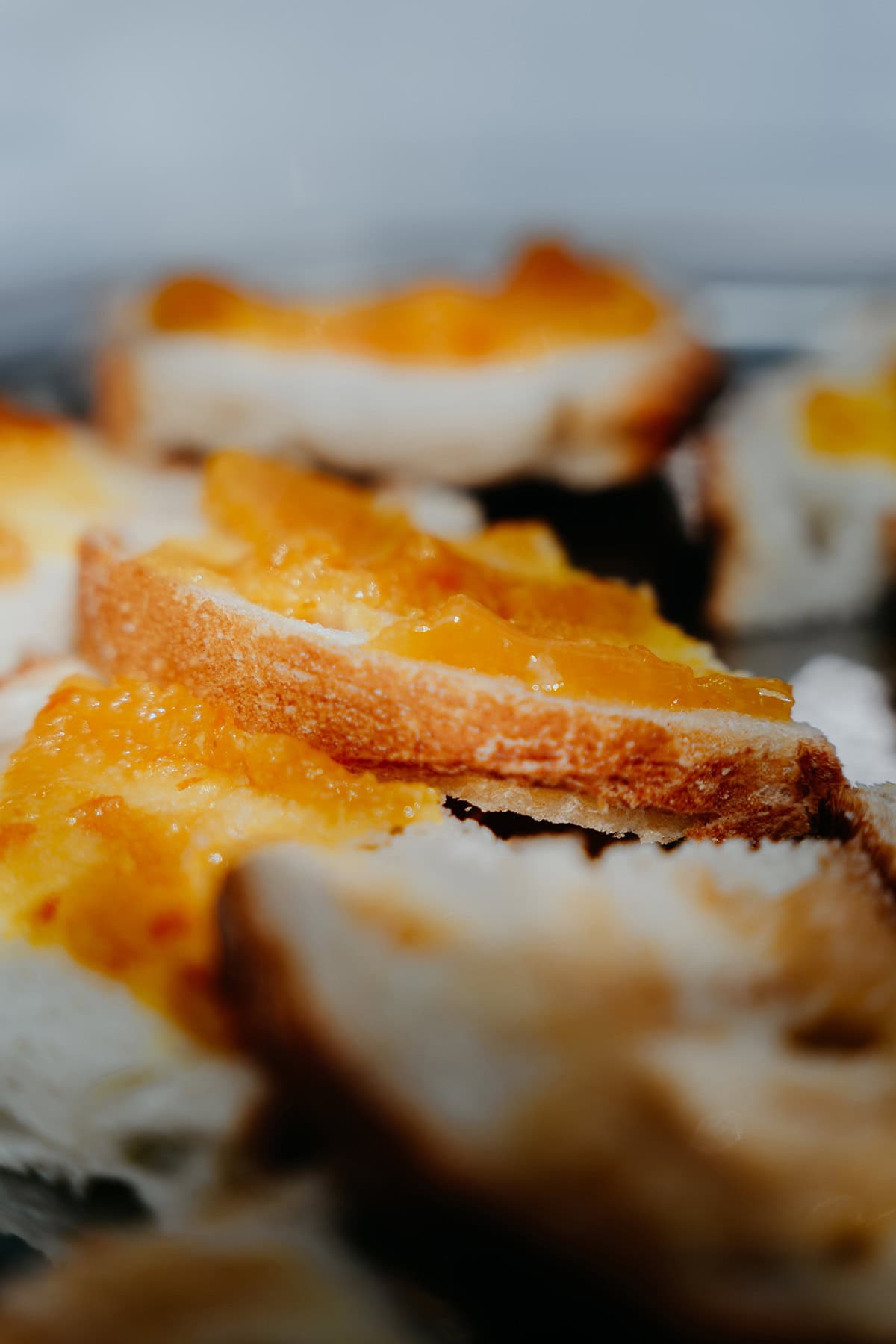
Puglia’s architectural charm
Puglia’s architectural charm is, without doubt, one of the region’s greatest draws, unveiling centuries of history where the influences of Greek, Roman, Byzantine, and Norman empires remain expressively visible today.
As a result of those influences, a broad architectural variety is found here; think Baroque masterpieces, Romanesque cathedrals, intricate mosaics dating to Byzantine times, and several cathedrals and fortresses built under Norman rule.
Whitewashed hill towns, mesmerising maze-like alleyways, and Puglia’s iconic masserias (fortified farmhouses) further enrich the region’s remarkable architectural charm, providing a captivating blend of historic grandeur and rustic simplicity.
Easily the most iconic architecture is found in Alberobello, a UNESCO World Heritage site famed for its trulli, cone-shaped stone houses that look as if they’re lifted straight out of a fairytale.
While each style tells a story of its own, I believe, it’s the interplay of various architectural influences that makes this stunning region beneath the southern Italian sun flourish.
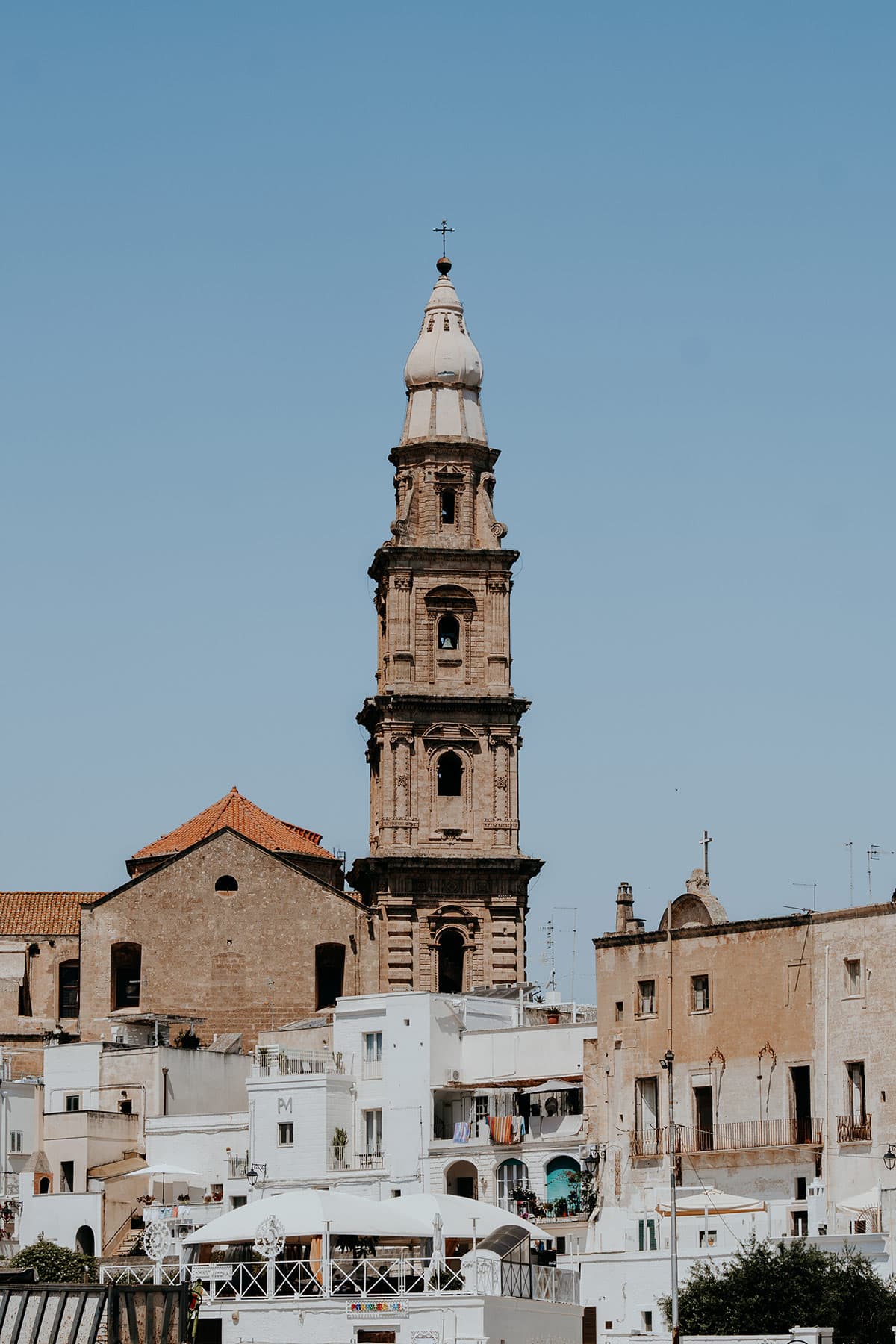
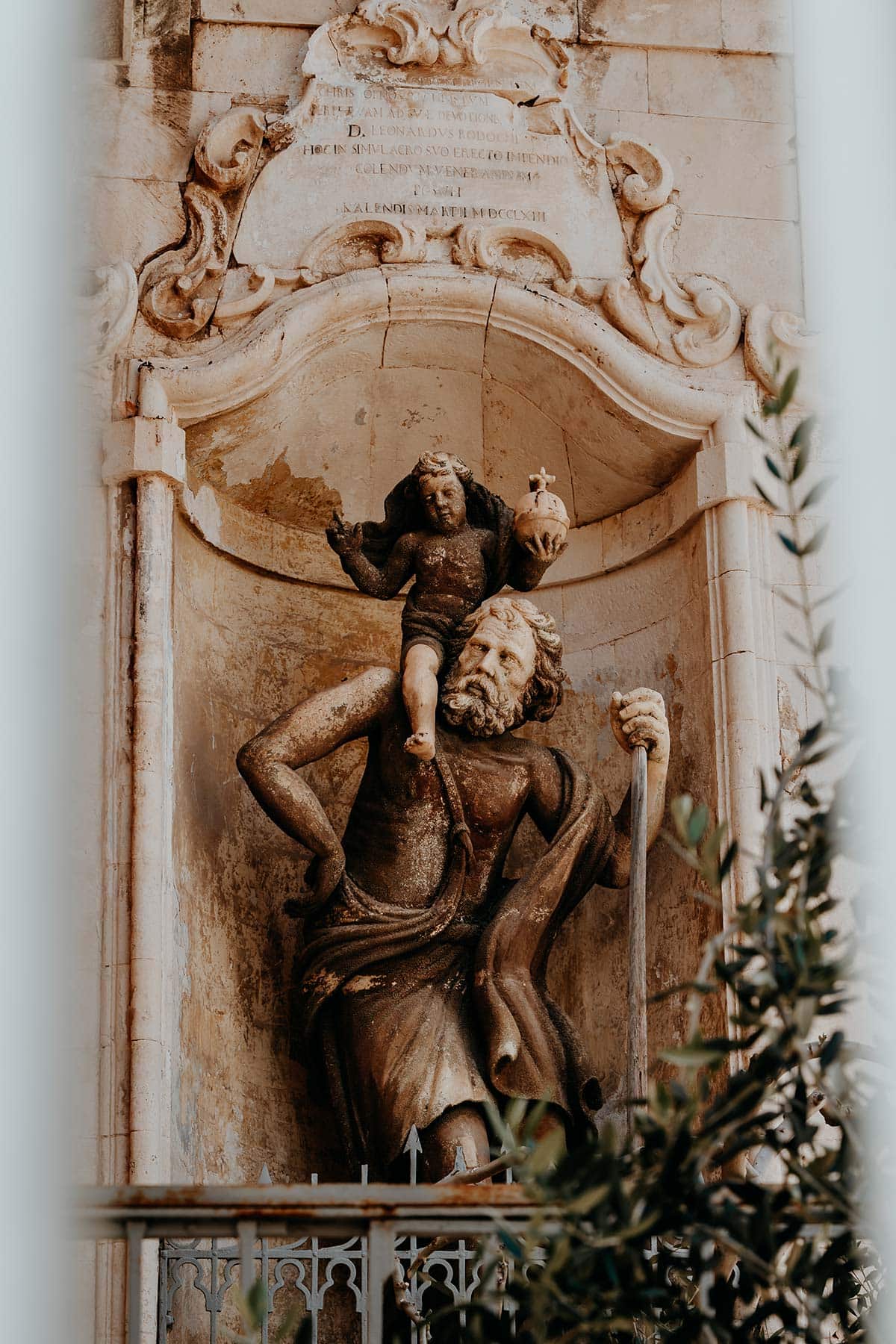
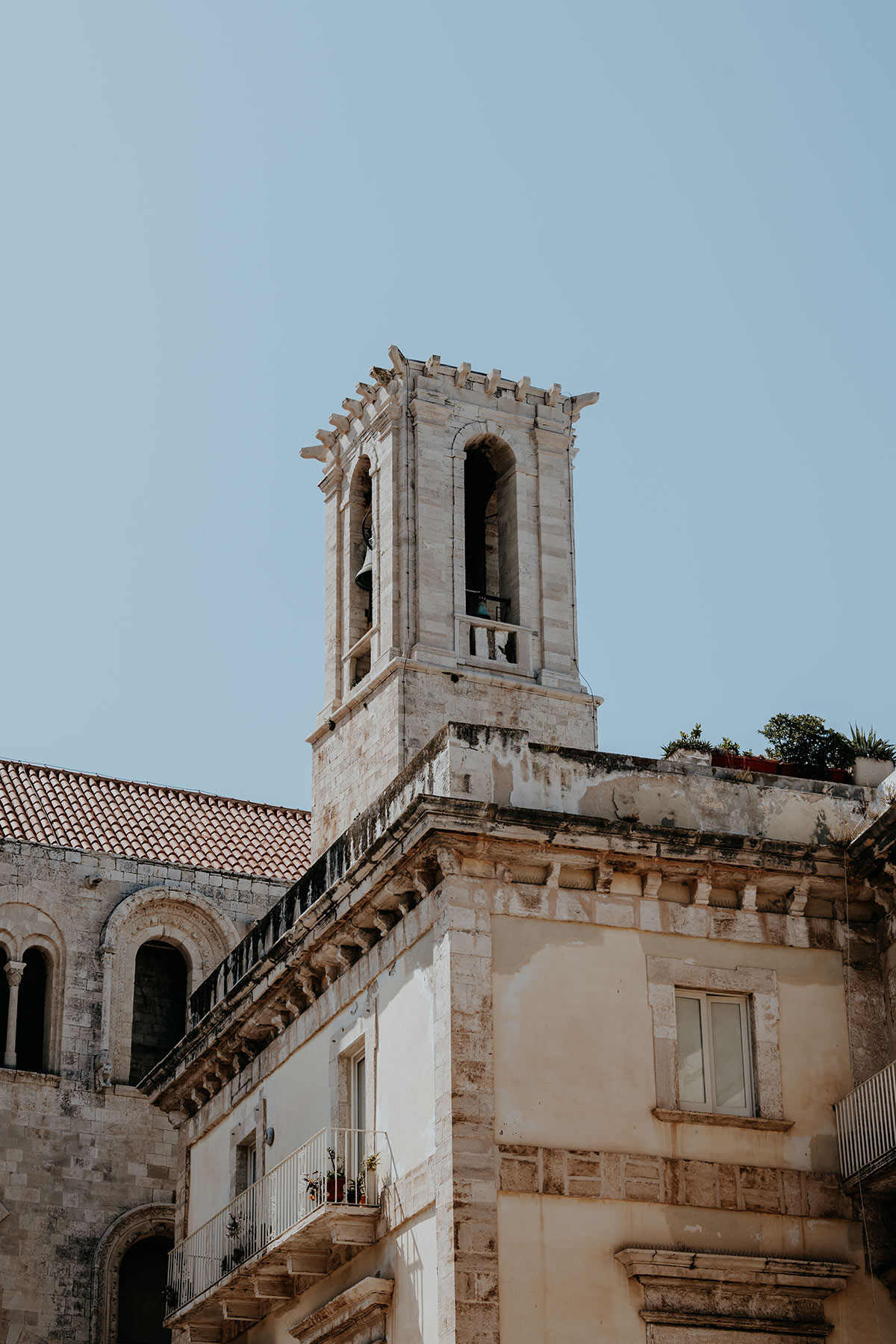
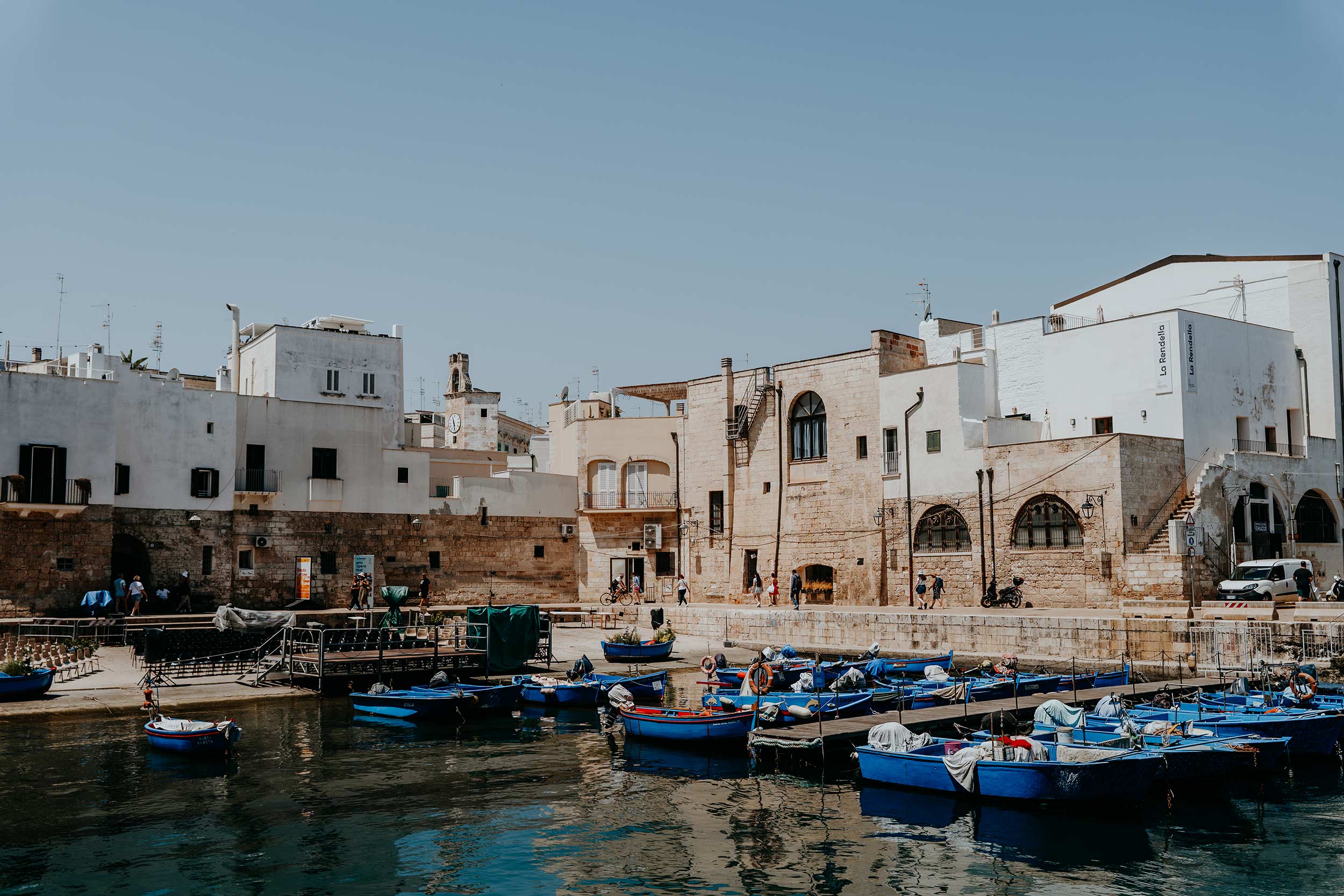
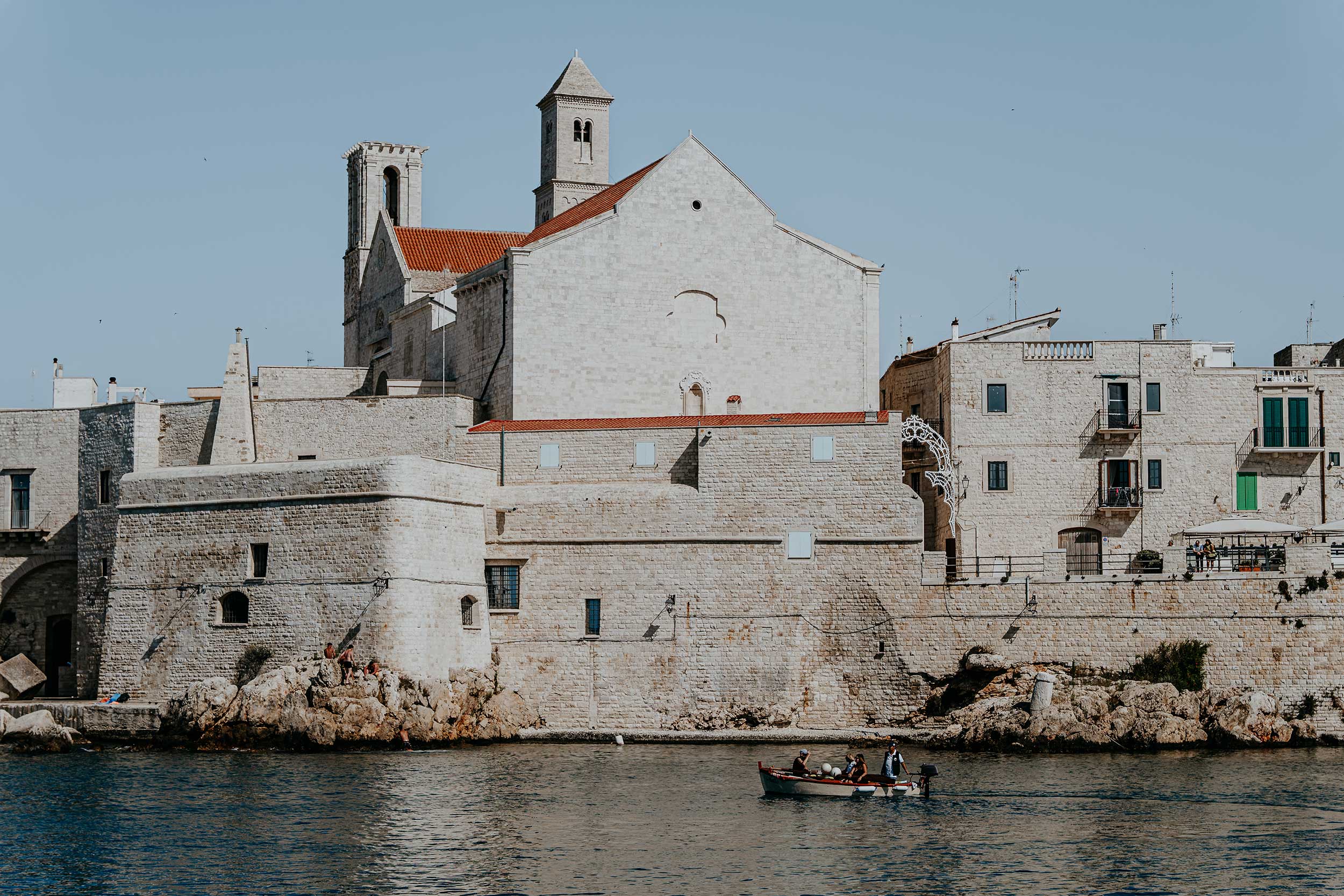
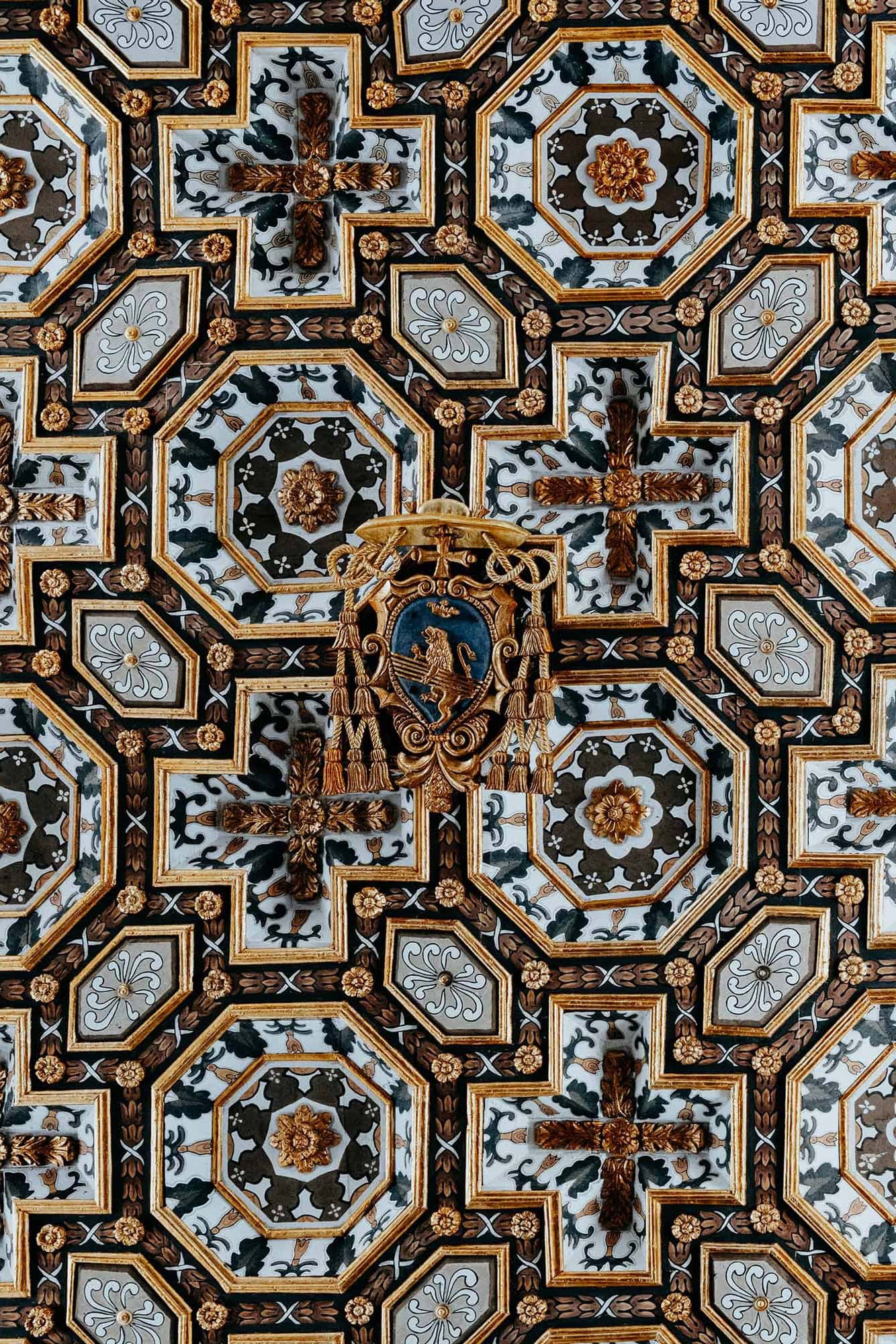
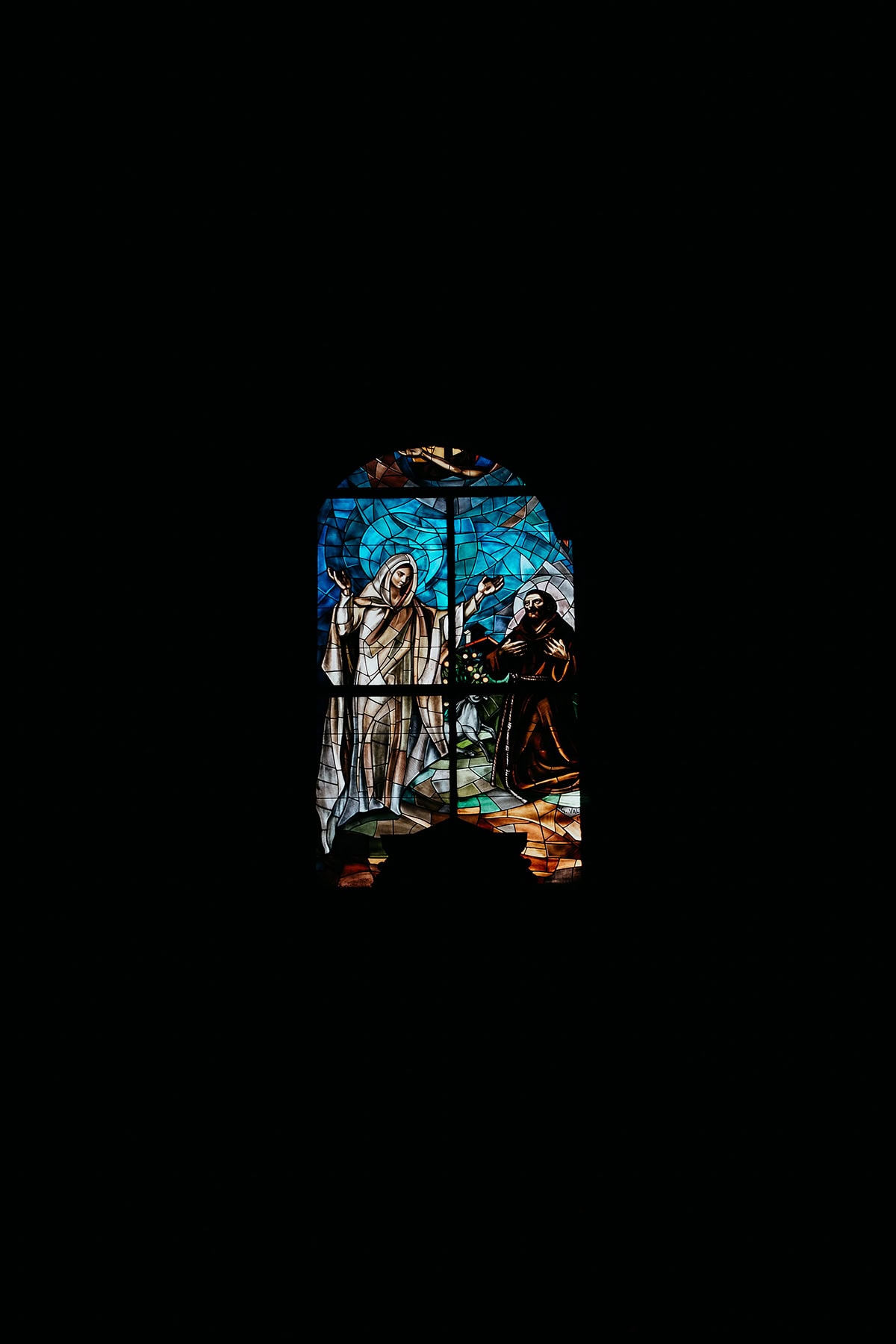
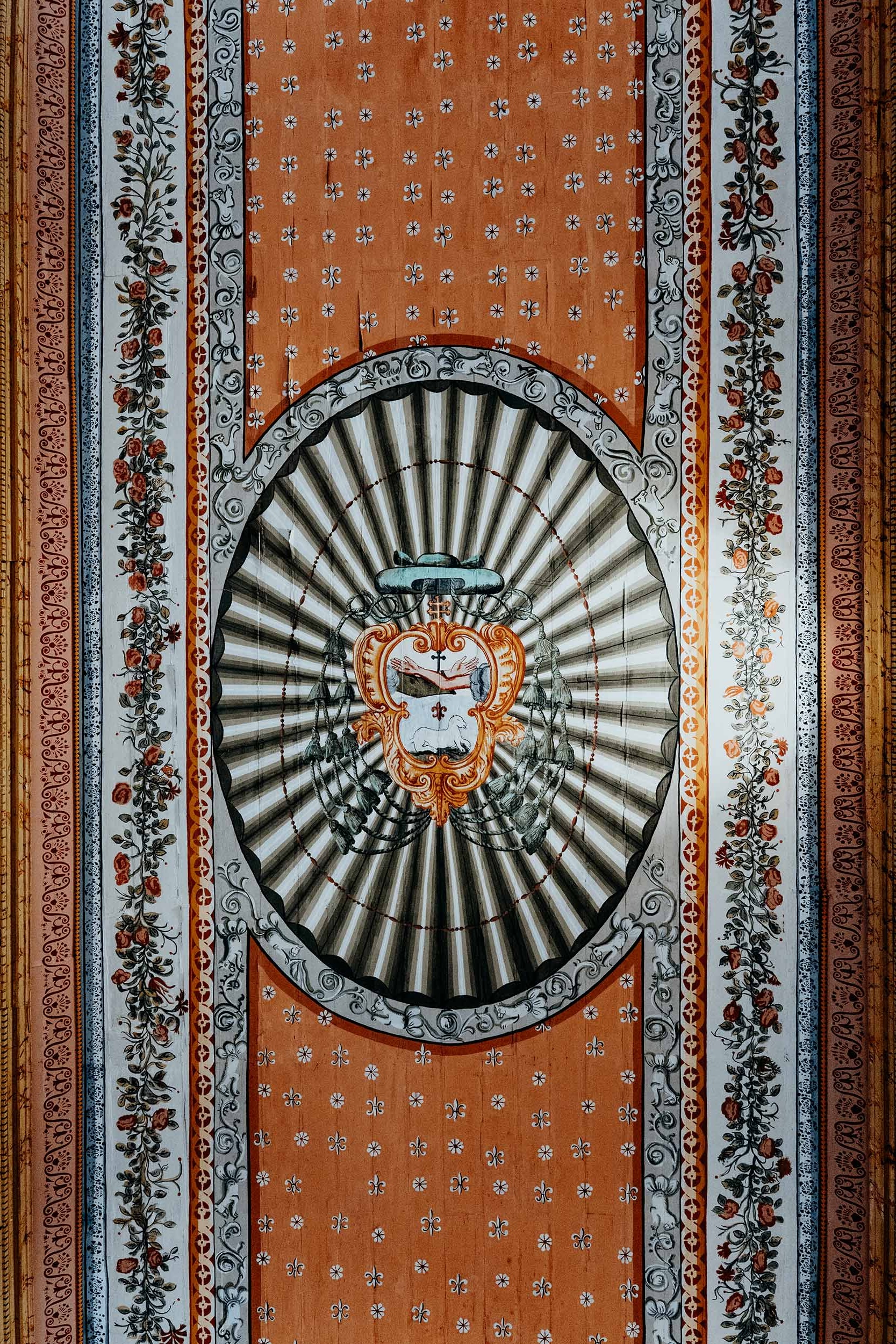
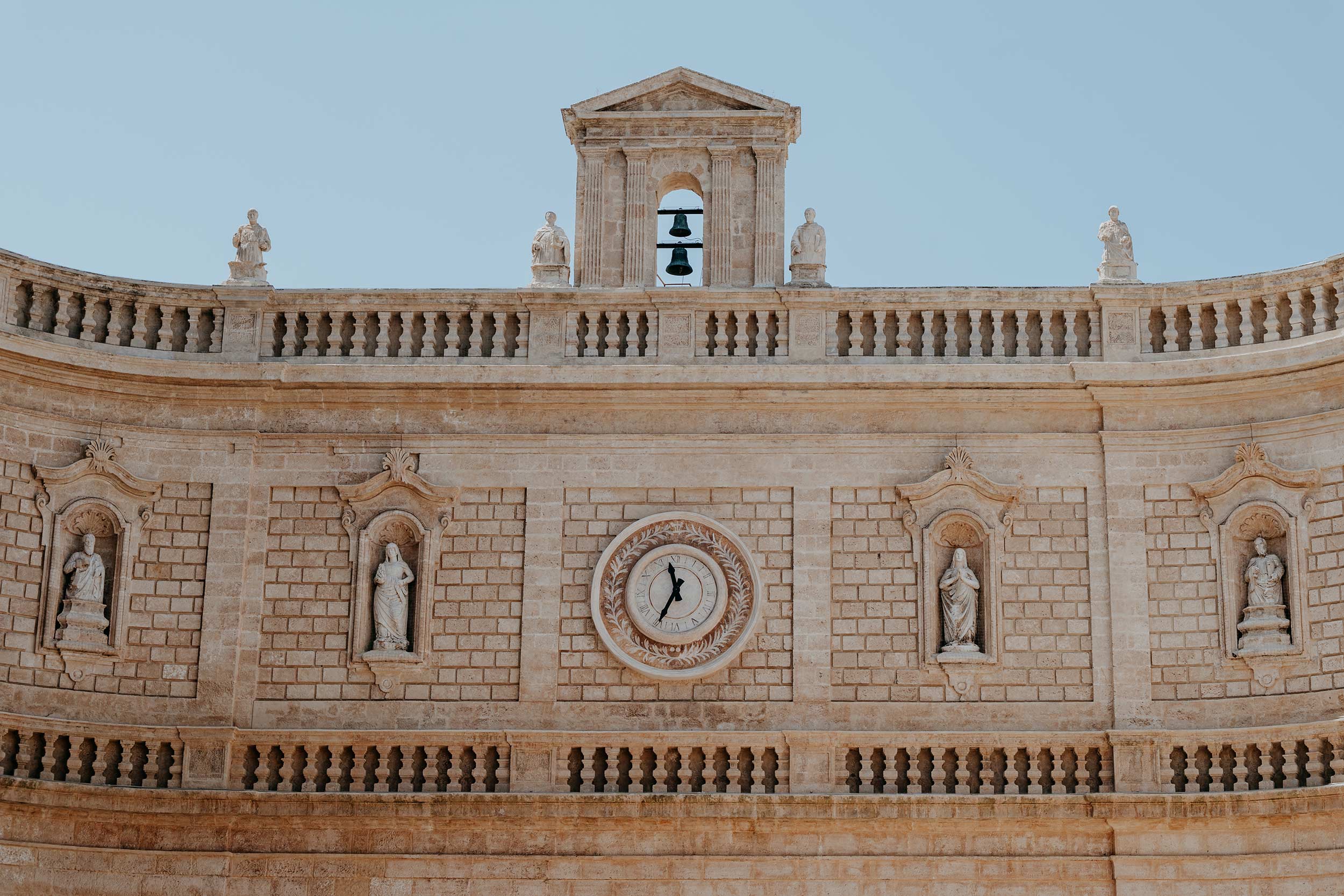
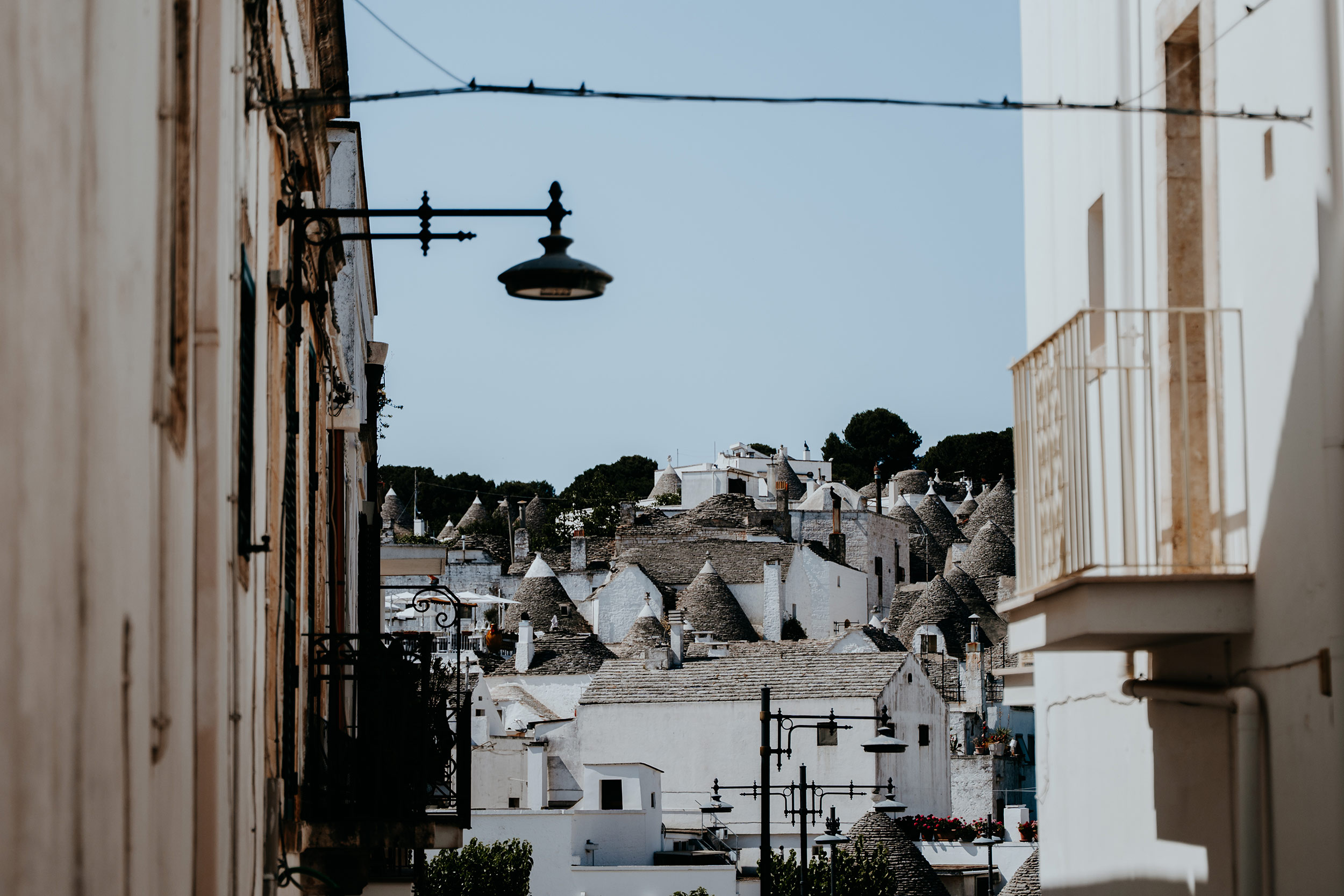
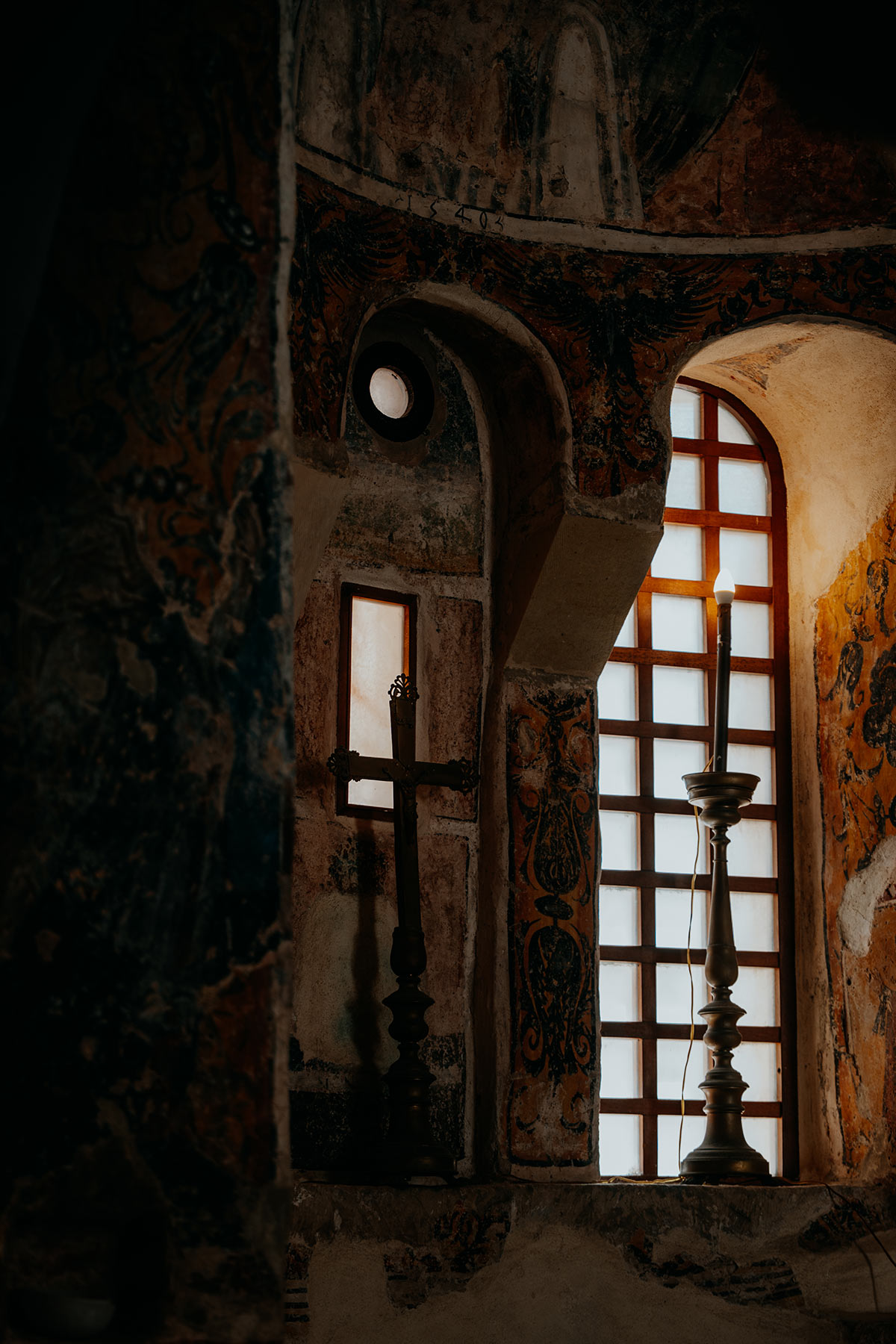
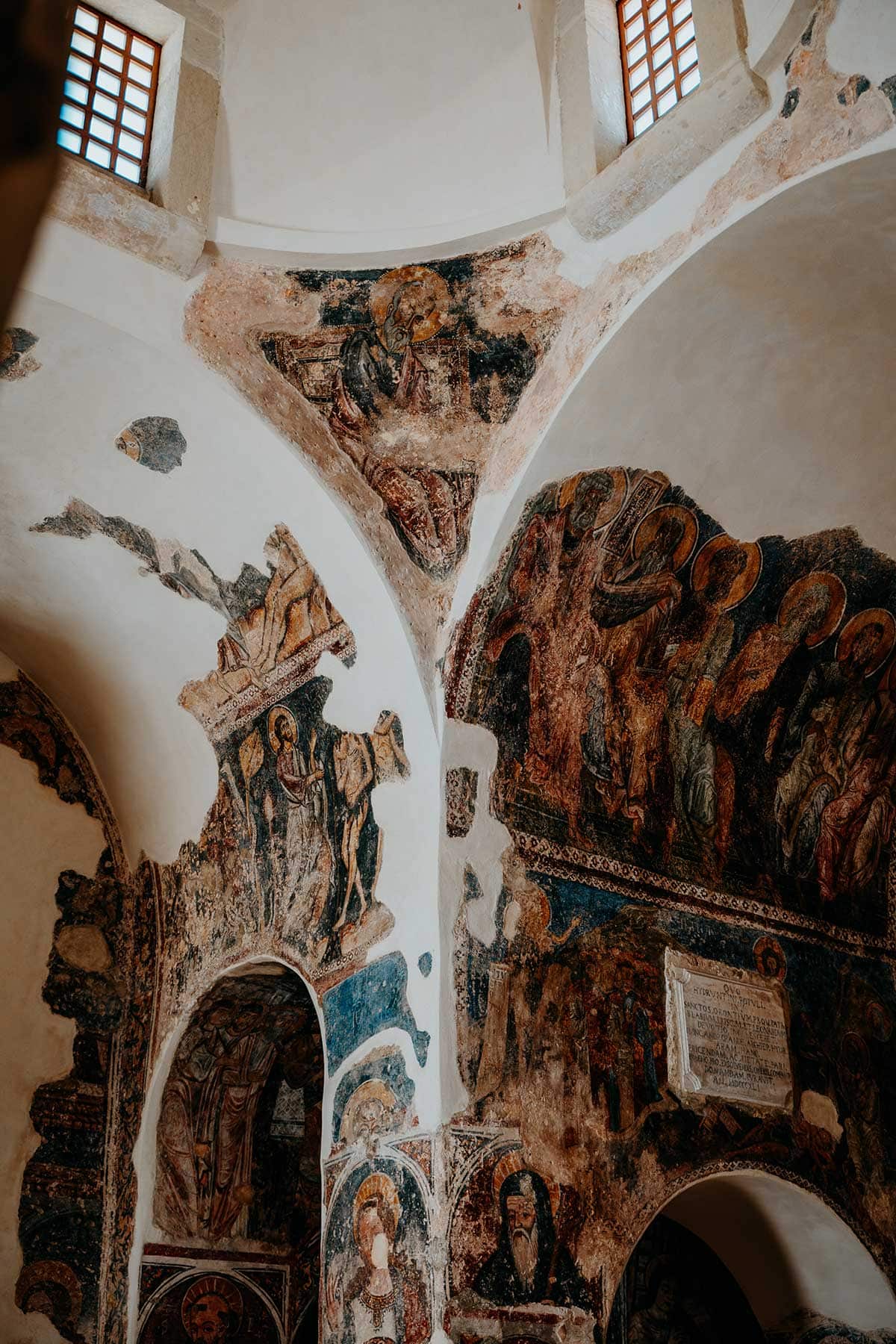
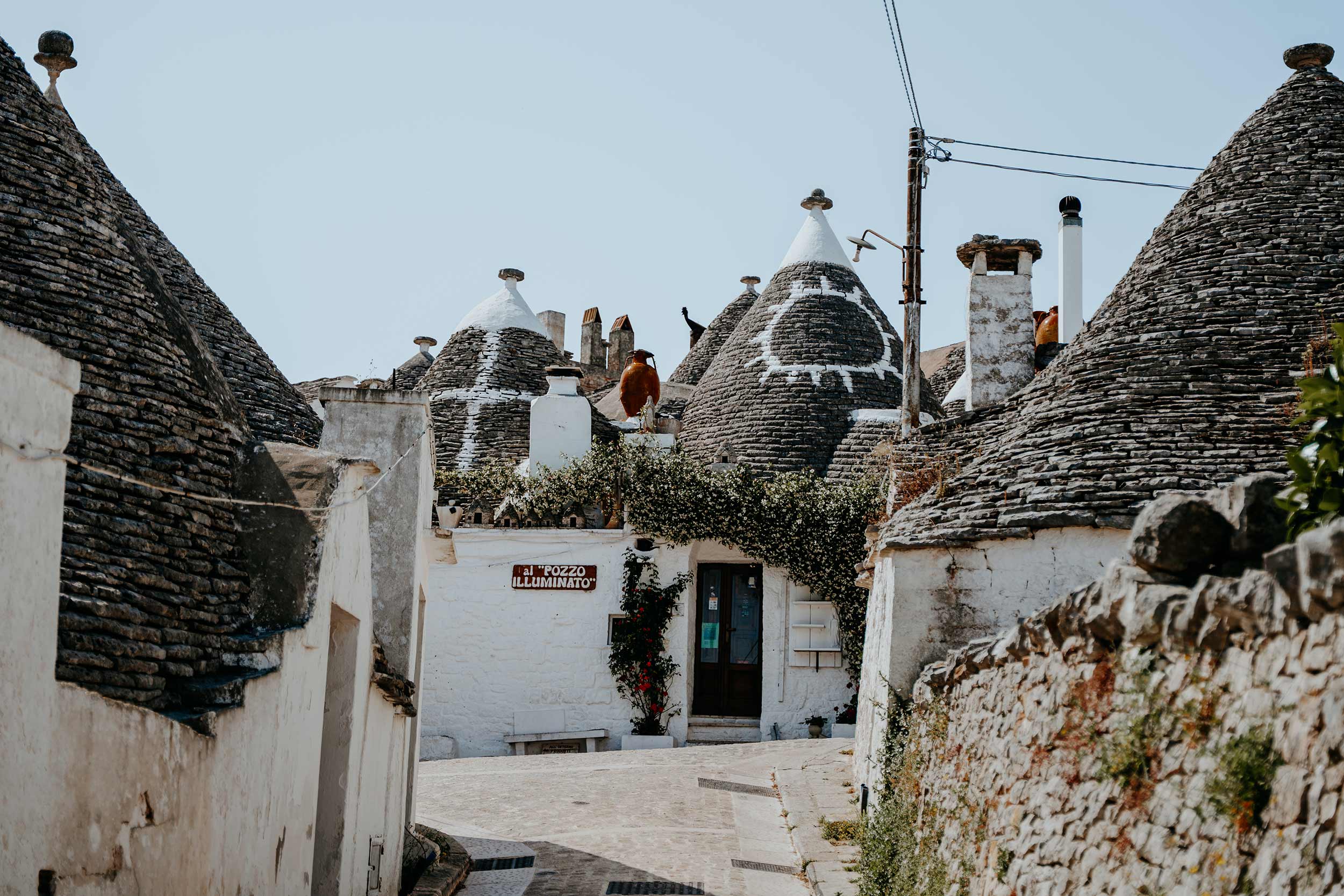
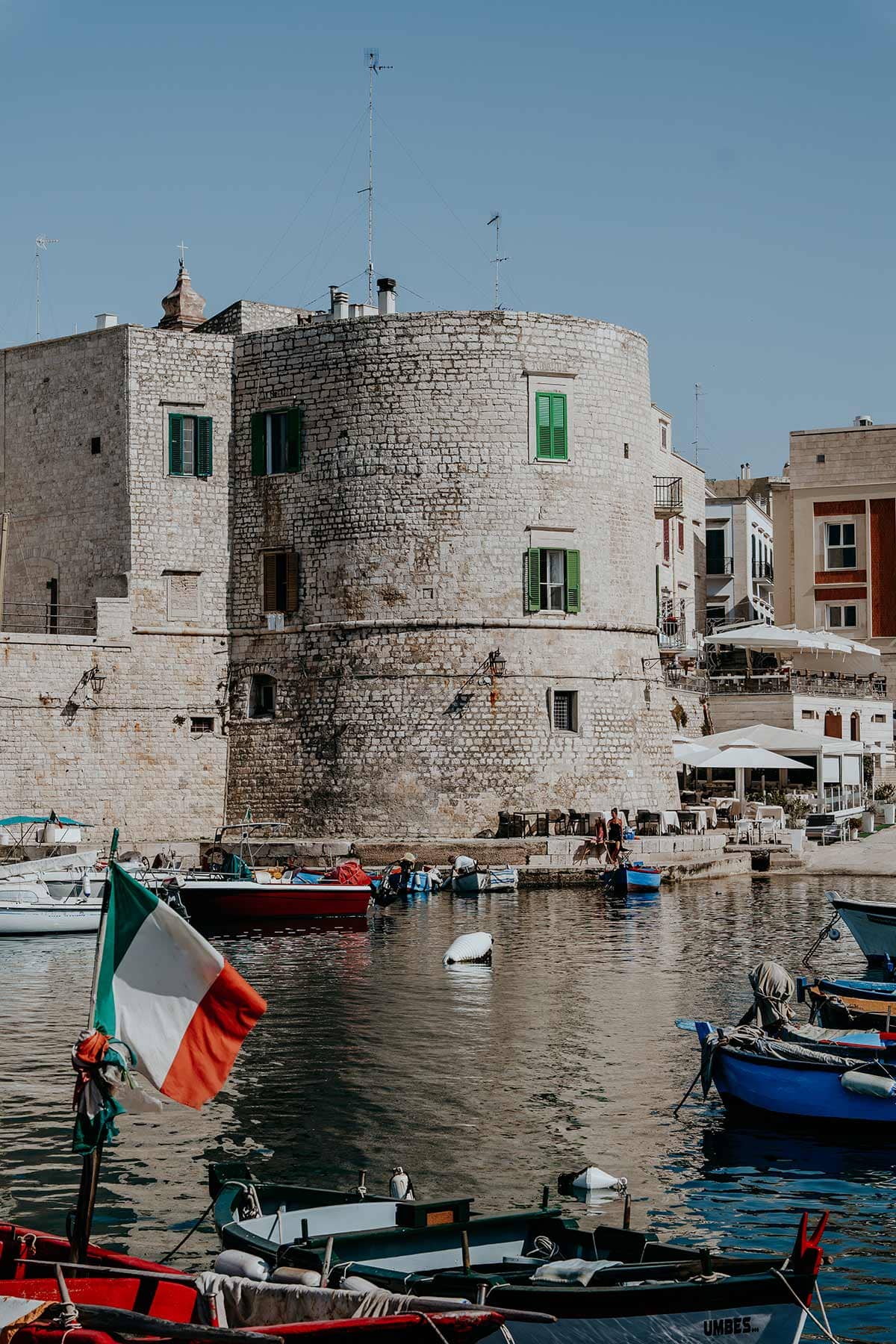
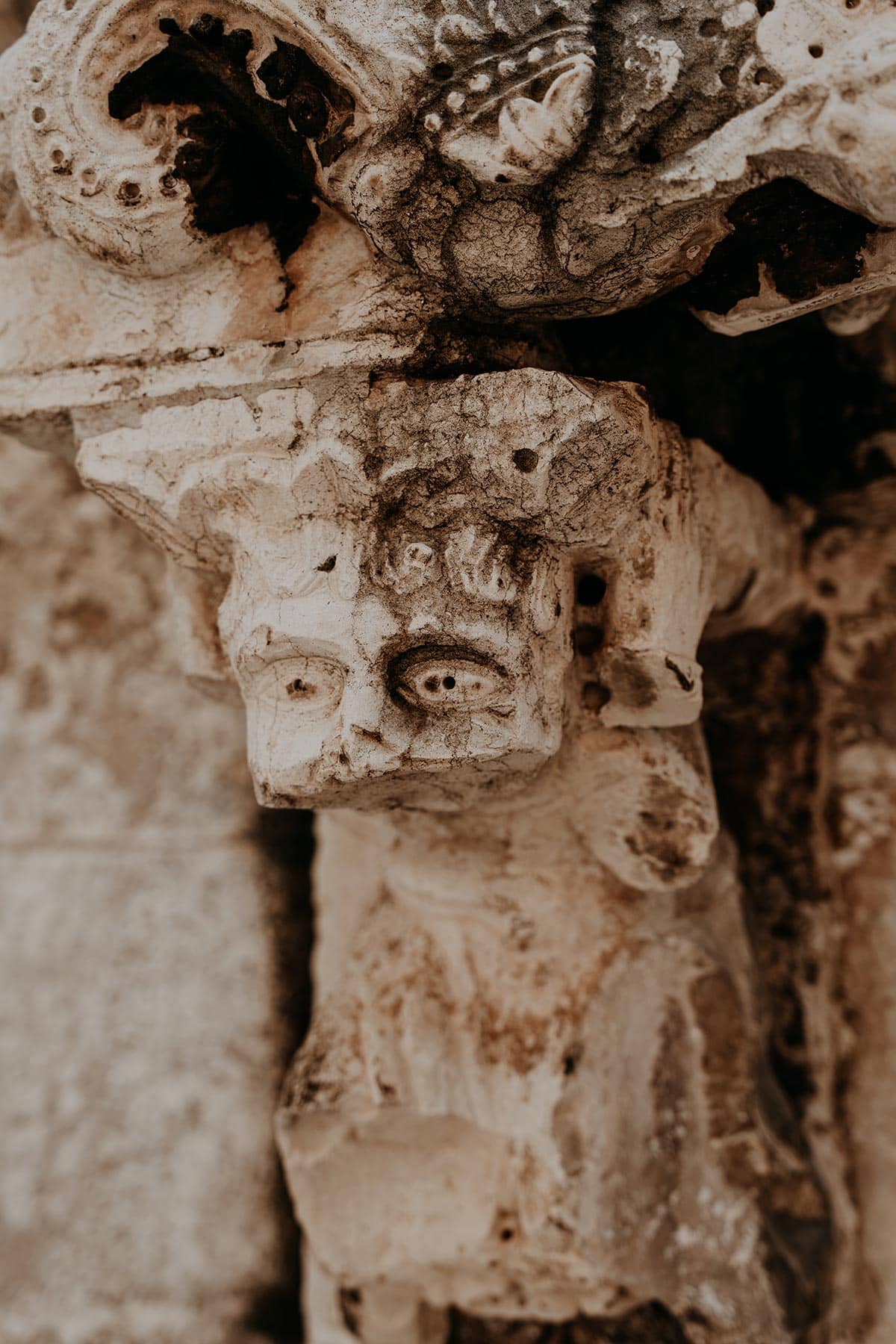
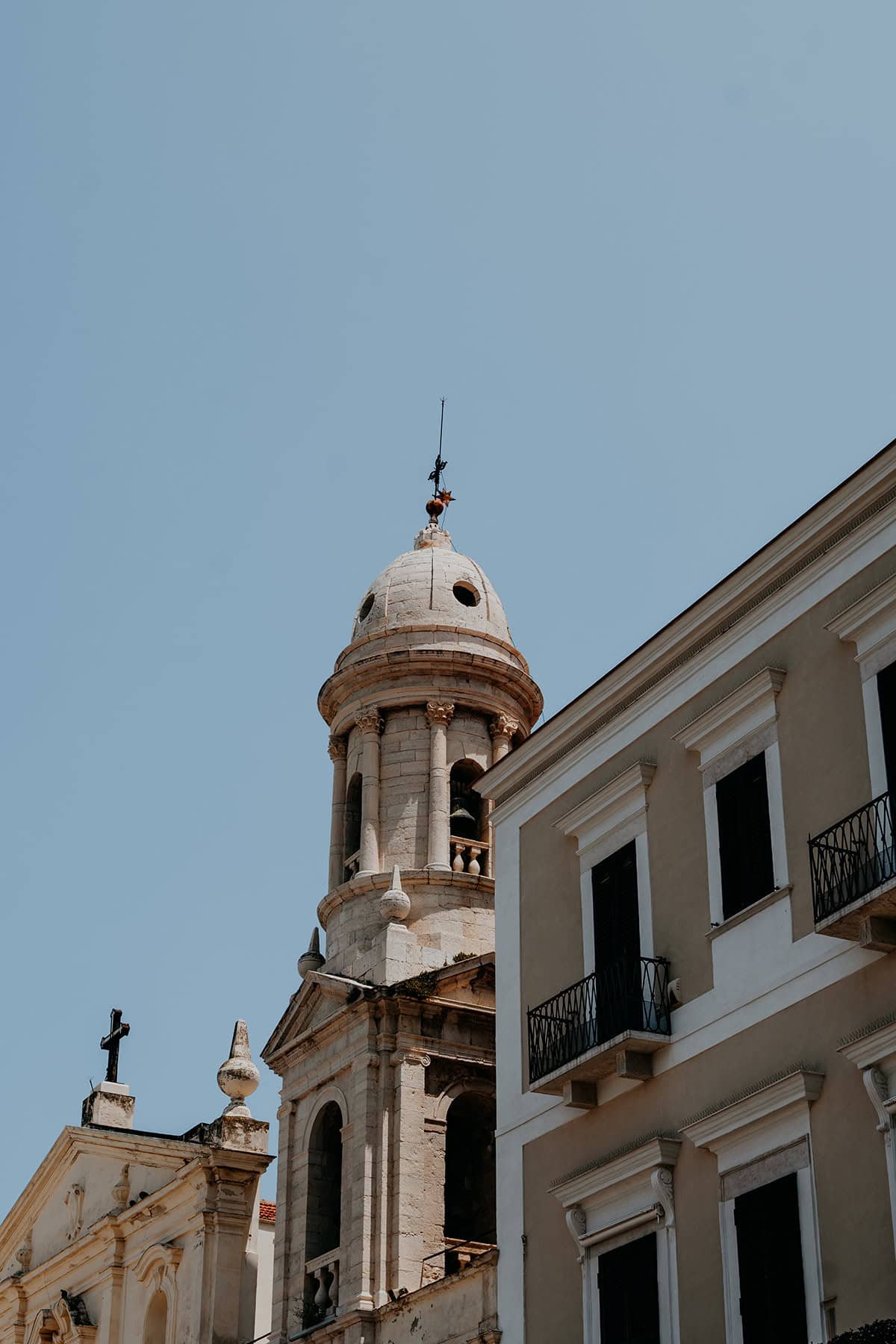
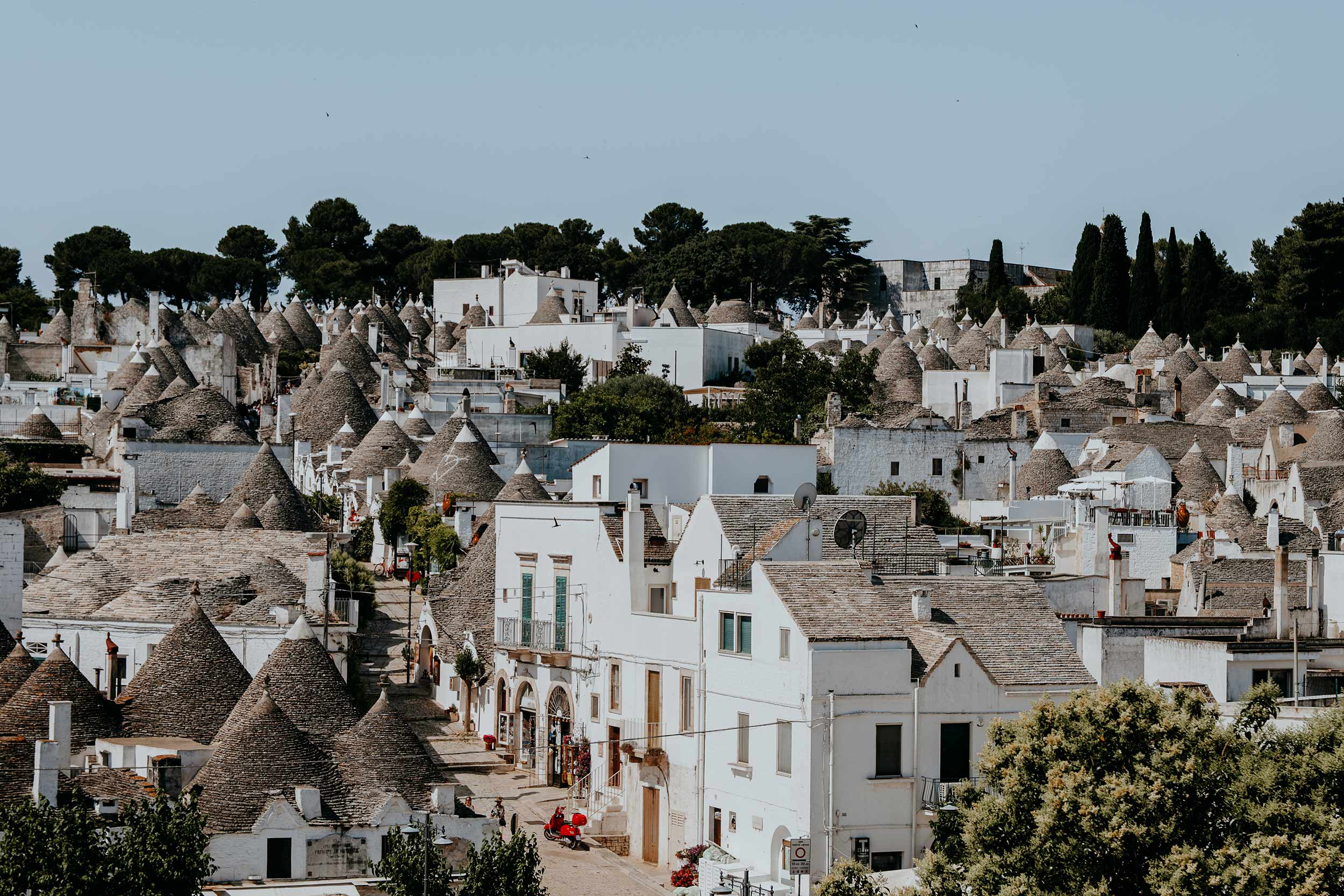
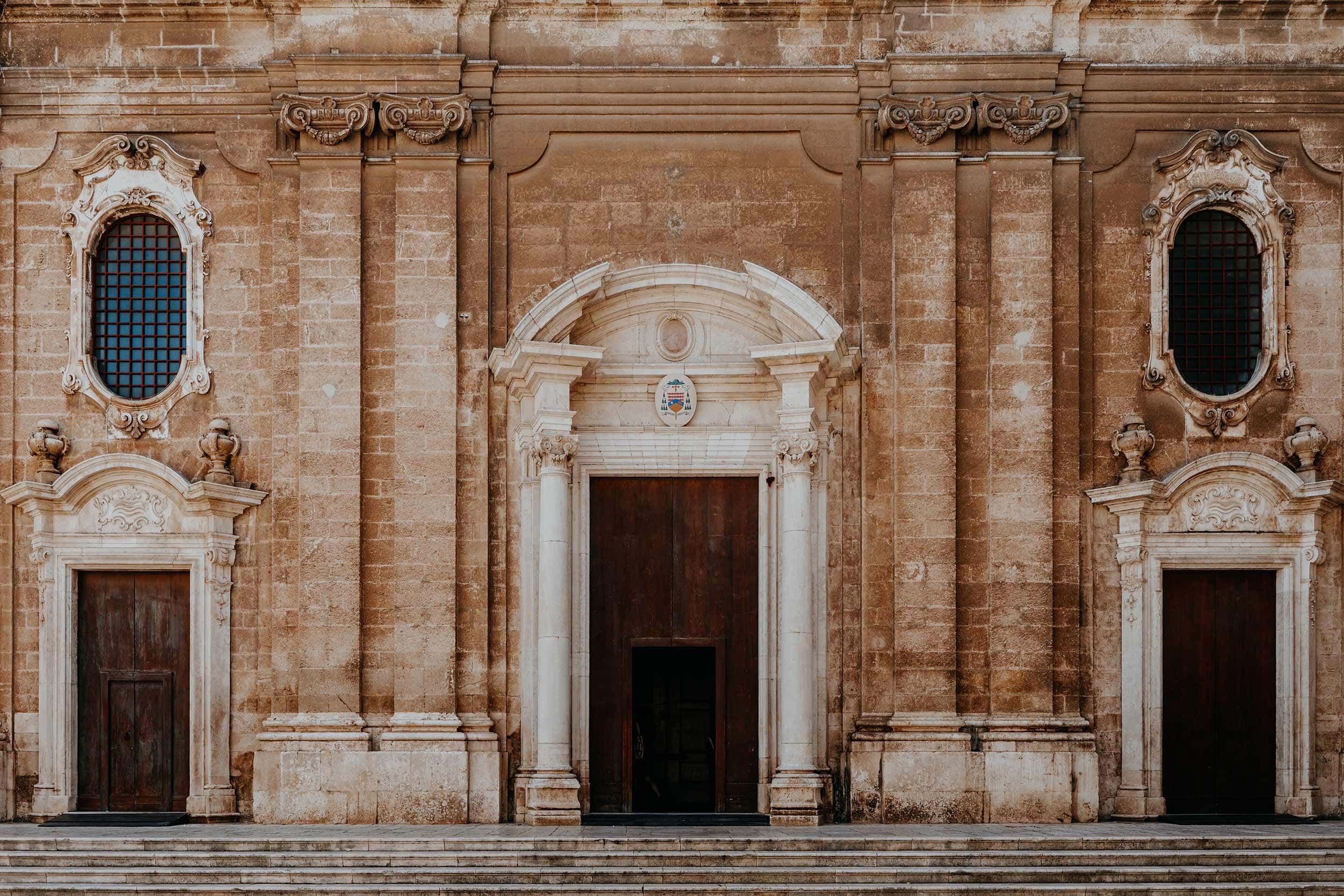
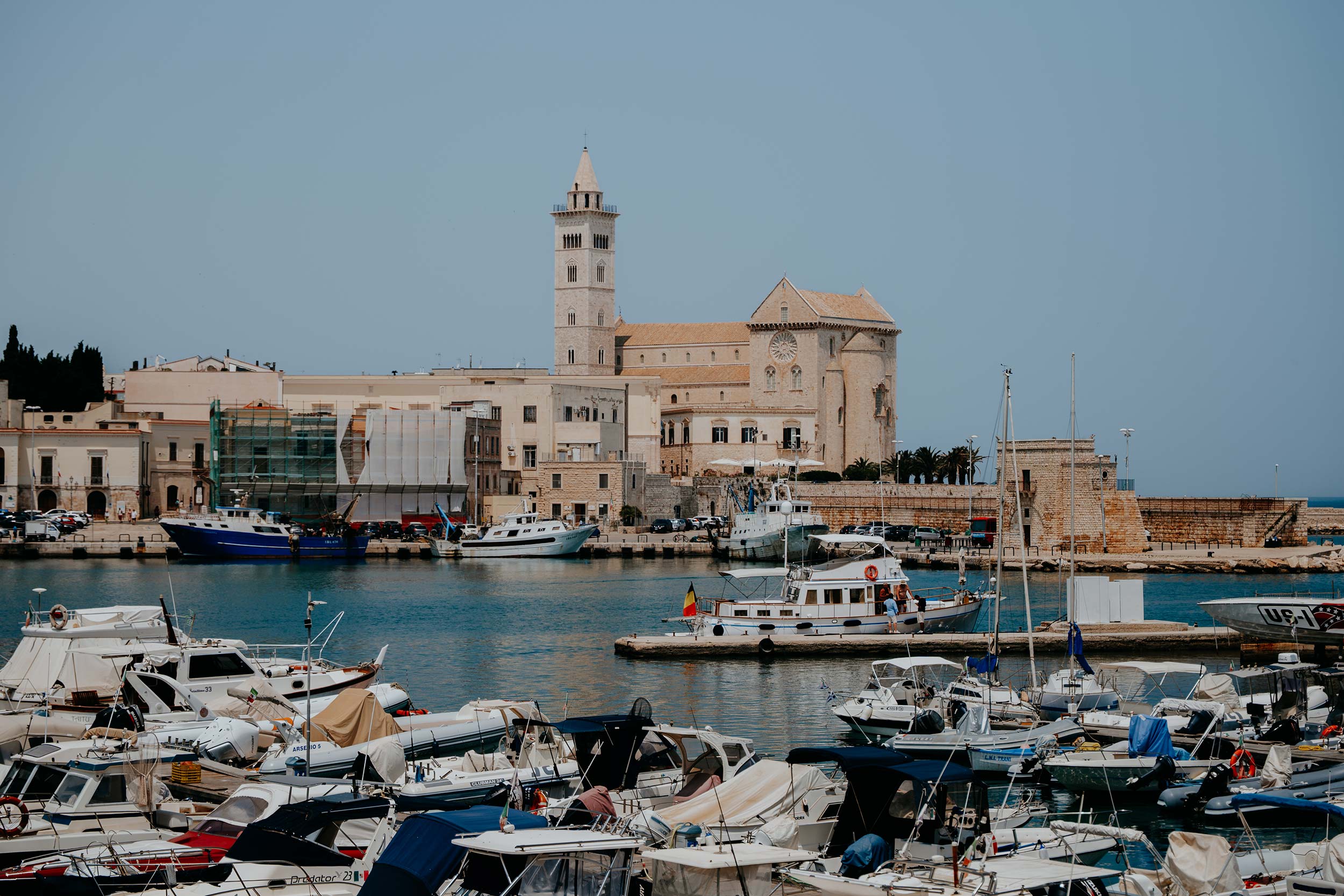
The travel photography gear that I used in Puglia
Puglia, and its many aesthetic features, offers superior photography opportunities, making it a playground for those wandering around with a camera in hand, with moments awaiting to be frozen in time happening almost continuously.
If you’re keen to make the most of your travel photography while exploring Puglia, I’d advise bringing your sharpest lenses or investing in some upgrades if you haven’t already.
If you like my Puglia photography, this is the gear I used to capture my adventures here:
Lumix S5II | Last year, after years of heavy use and plenty of travel adventures with my S5, I decided to upgrade to the Lumix S5II, and honestly, capturing sharp, high-quality images has never been easier.
SIGMA 24-70 F2.8 | Essentially mounted to my S5II for 90% of the time, the Sigma 24-70 F2.8 is an absolute beast, as it’s super fast, versatile and sharp, making it my go-to in every situation.
DJI Mavic 3 Pro | My partner in crime when it comes to aerial shots, the Mavic 3 Pro, with its 20MP 4/3 CMOS sensor and smooth flight performance, gives me opportunities I could’ve only dreamed of just a few years ago
If you’re keen to learn about my complete photography setup, you might want to check out my in-depth ‘What’s in my Camera Bag’ article here.
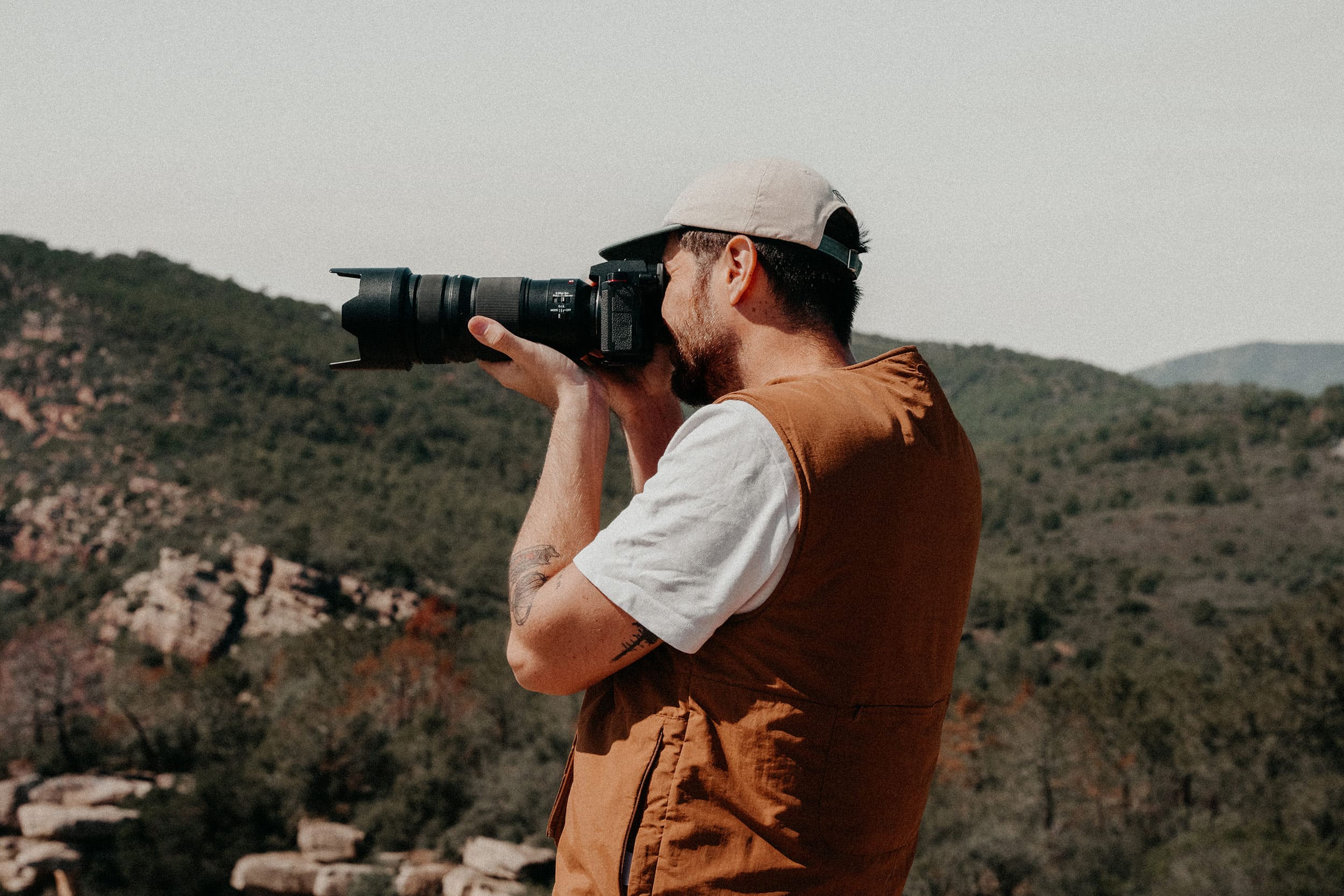
Safety in Italy | Travel insurance
When travelling this big, wide world, I never go on an adventure without my essential travel insurance sorted out, and though I never felt unsafe in Italy, I advise anyone travelling here to do the same.
While I believe it’s unlikely to experience any problems when following the suggestions in this guide, something unfortunate could happen at any given time, whether it’s an injury, a stolen camera, or an unforeseen cancellation.
For travel insurance, I use Heymondo, as they offer full COVID-19 coverage, as well as a handy app with 24-hour medical assistance.
Make sure you check it out – readers of WTSW receive 5% off any insurance policy.
Cheers!
I’ve been on this travel blogging journey since 2019.
If you appreciate what I do here, these are some ways you can support me.
10 Wonderful things to do in Funchal, Madeira's fascinating capital city
Funchal is a lively coastal town that tends to charm and captivate its visitors in the blink of an eye.
And while most travellers flock to Madeira solely for its incredible natural features, the island’s vibrant capital city is an impressive destination in its own right.
From the cobbled streets of the historic old town to the lush Gardens of Monte Palace; the intriguing local tradition of the toboggan ride, to the vibrant street art dotted through the city, Funchal is so much more than just a gateway to Madeira’s sheer natural highlights.
Add to that brilliant weather year-round, plenty of trendy restaurants and bars, and Madeira’s stunning nature at your doorsteps, and it’s easy to understand its ongoing popularity.
To help you make the most out of your time here, I’ve put together this in-depth guide, including my favourite things to see and do – plus my advice on where to stay, when to visit and more.
Here’s my definite list of things to do in Funchal, Madeira
If you choose to use any of the links on this page, I may receive a small commission at no extra cost to you. By using these links, you’ll have a direct impact on WTSW and my ability to continue to create free insightful travel content for you. If you find any of my tips useful, you can support me by buying a virtual coffee here.
Where to stay in Funchal
Since Funchal is the capital of Madeira, the city has no shortage of excellent accommodation options that cater to all sorts of travellers, budgets and travel styles.
Whether you’re after a cheap sleep in a hostel, a luxurious boutique hotel with a rooftop pool, or an elegant seaside resort, there are plenty of excellent options to choose from.
To help you find your perfect stay, these are my suggestions on where to stay in Funchal:
Vila Baleira |This was my base for my trip to Madeira, and if you’re seeking comfort without spending your entire budget straight away, Vila Baleira will be excellent for you too. Located within the popular Lido area, at just a short walk from all the best things to do in Funchal, this hotel offers spacious rooms, comfortable beds, and a large rooftop terrace with a swimming pool. They also have a delicious breakfast spread, excellent wifi throughout the entire property, and a secured parking lot right under the property.
NEXT – Savoy Signature | This budget-friendly hotel in the centre of Funchal has spacious, modern-style rooms with comfortable double beds and a brilliant private bathroom with a rain shower. They also have an incredible rooftop swimming pool with amazing sea views. Double rooms are only €50 per night, which makes this hotel one of the best picks in Funchal.
Hotel Cajú | Set within the heart of Funchal, Hotel Cajú is a great place to stay, with stylish double rooms, friendly staff, and a small yet excellent in-house fitness centre. All bookings come with an exceptional breakfast too. One small downside though, they don’t have private parking.
10 Things to do in Funchal, Madeira
1. Take part in a traditional Toboggan ride
Who would have thought that sliding down the steep streets in a wooden sledge would become such a popular activity in Funchal, still the Toboggan ride in Monte managed to do just that.
Made from timber and wicker, these traditional sledges have been transporting people from Monte to Funchal since as early as the 19th century, and luckily for us, this tradition is still very much alive today.
Driven by two carreiros; wearing traditional white uniforms and a straw hat, this iconic journey down is extremely fun and one of the many highlights for those travelling to Madeira.
But this might not be for the faint of heart, as sliding down the winding roads is a somewhat eerie experience, especially if you’re afraid of heights.
However, since these carreiros have been operating these sledges for many years, it’s completely safe, so there’s not much to worry about.
Where | Monte
Opening hours | Monday to Saturday 0900 to 1800 and Sunday 0900 to 1300
Cost | Single €25 per person, double €15 per person
2. Enjoy an exceptional burger at Deli Burger D’mar
To me, there are only a few things more satisfying than stumbling upon a good burger joint after an active day of exploring.
So, when I passed Deli Burger D’Mar, I simply couldn’t resist stopping by.
With more than 15 unique combinations on the menu, plenty of thoughtfully selected toppings, and the option to create your own burger, this eatery is basically a burger lovers paradise, and definitely a must-try for anyone visiting Funchal.
I opted for the Cosmo burger; two beef patties stewed in onions, melted cheddar, pickles, crispy bacon plus big house sauce in a nicely toasted homemade bun, and was blown away by the rich and distinct flavours.
So, if you’re anything like me, and love a good burger from time to time, do yourself a favour and treat yourself to what I believe to be the best burger in Funchal.
Where | Deli Burger D’mar
Opening hours | Daily 1200 to 1530, 1800 to 2300

3. Take a stroll around Mercado dos Lavradores
One of my favourite ways to get a feel for a city and its people is by roaming around the local market in search of a delicacy or a unique piece of produce – which was also one of my favourite things to do in Funchal.
Nestled in the lively streets of the historic Santa Maria area is Mercado dos Lavradores, an average-sized covered market where you find plenty of market stores selling all sorts of local produce, including fruits, vegetables and fish, to name but a few.
While all products found here are of tremendous quality, there was one section that particularly caught my attention, namely the exotic fruit section.
Though I’m entirely sure you’ll stumble upon fruits you’ve never seen before, I’d highly advise not to sample every tempting-looking piece of fruit – Mercado dos Lavradores is somewhat notorious in terms of prices.
If you have all sorts of fruit cravings after your visit to Mercado dos Lavradores (which makes sense), make sure you visit one of the street vendors instead, as they often offer the same fruits at a friendlier price.
Another thing worth noting is that Mercado dos Lavradores is closed at weekends.
Where | Mercado dos Lavradores
Opening hours | Monday to Saturday 0700 – 1900, Sunday closed

4. Visit the Monte Palace Tropical Gardens
Nestled high in the hills of Monte, the eponymous Monte Palace Tropical Gardens are absolutely stunning, and visiting them is hands down one of the best things to do in Funchal.
Covering a total of 70.000 square metres, this exceptional botanical garden is home to over 100.000 species of plants, including native plants from Madeira, as well as plenty of exotic species from overseas.
On top of that, the gardens are marked by a great collection of artworks, think Oriental style gates and bridges, sculptures from Zimbabwe and even works from Mondrian and Klein.
In addition to Monte Palace Tropical Gardens, you can also visit the Madeira Botanical Gardens.
Where | Monte Palace Tropical Gardens
Opening hours | Daily 0930 – 1800
Cost | €12,50 per person
5. Take a walk through Funchal Old Town
Wandering through the streets of Funchal Old Town, was in many ways one of my favourite things to do in Funchal.
The old town is charmed by several 15th-century buildings, cobblestone streets, and picturesque time-worn houses and is deemed to be of significant historical and architectural value.
Some of my favourite landmarks in Funchal Old Town include:
Corpo Santo Chapel | This 15th-century Gothic-style chapel reflects remarkable workmanship and stands proud in the heart of Funchal Old Town.
Sao Tiago Fort | Initially built to protect the coast from pirates in the 16th century, the Sao Tiago Fort now houses a museum and a trendy restaurant with a lively terrace.
Painted Doors of Rua de Santa Maria | The Painted Doors Project in Rua de Santa Maria are hard to miss and without question one of the best things to do in Funchal Old Town – more on that later.
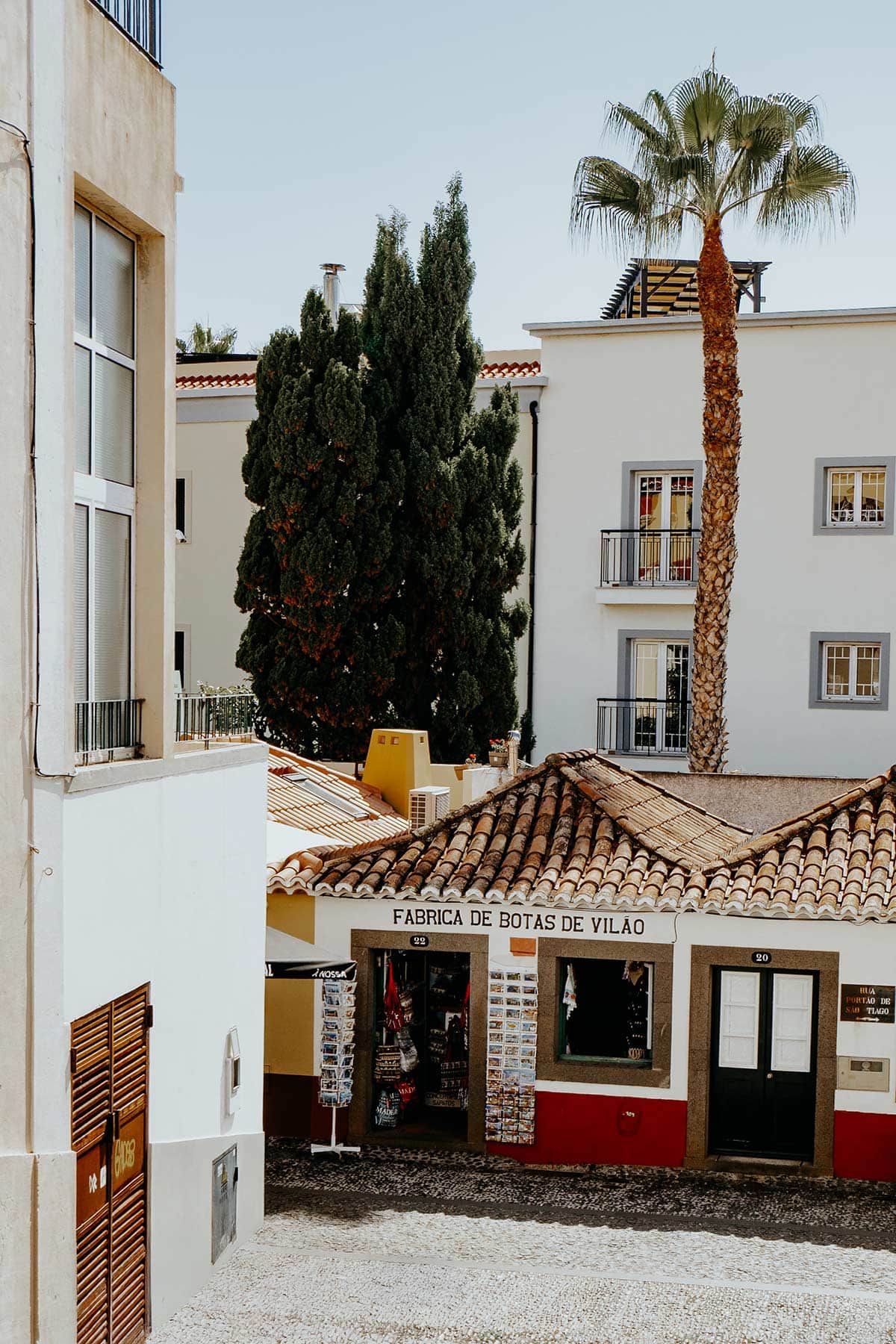
6. Sample top-notch chocolates at UAU CACAU
Those who have been following me on Instagram for a while will know that I can be quite a sweet tooth from time to time, so when I stumbled upon UAU CACAU, I simply couldn’t resist.
Founded in 2014 by Tony Fernandes, a passionate artisanal chocolatier who values artisanal craftsmanship and quality before anything else, UAU CACAU is a boutique chocolate store offering a truly exceptional selection of wonderful tasting chocolates.
Those key values shine through in every ingredient, from the best Belgian cocoa to the typical Madeira produce: Madeira wine, sour cherry, poncha, passion fruit, Surinam cherry, mango, to name but a few.
Completely free from artificial colours and preservatives, these bite-sized masterpieces are not just a delight for the taste buds, but also easily one of the most appealing chocolates I’ve ever witnessed, perfectly reflecting the natural spirit of the island.
I opted for the Manga, Tangerine, and Madeira Rum, before precisely composing my chocolate box, and solely thinking back to those first bites instantly makes my mouth water.
Whether you’re a chocolate aficionado or just enjoy a sweet from time to time, the chocolates found at UAU CACAU are undeniably beautiful, and thus, there was no way I’d leave them out of this list of things to do in Funchal.
They also make for a perfect souvenir, and given that I am not the only sweet tooth in the family, I decided to bring a box of these masterpieces to gift to my sister – she truly loved them, and thought it was almost sad to eat them.
Update: When my sister recently visited Madeira herself, I was utterly pleased to find out she returned me the favour by bringing me a box as a souvenir.
Where | UAU Cacau
Opening hours | Monday to Friday 0830 – 1930, Saturday 0900 – 1700, Sunday 1000 – 1700
7. Relax poolside at Villa Baleira
If you’re anything like me and aim to get the most out of your trips, you may realise that there’s often not much time left to spend an afternoon relaxing at the pool.
However, when I had the pleasure of staying with Vila Baleira, I decided it was time to change this somewhat tiring habit. Of course, I still managed to make the most out of my trip – if not more.
During my time at Vila Baleira, I’ve spent several afternoons at their relaxing rooftop terrace with pool, often while enjoying a good book with a refreshing Poncha in hand.
While there’s plenty to see and do on the island, taking some time to chill after a day of exploration was essential and actually one of my favourite things to do in Funchal.
If you also want to recharge properly after your activities, Vila Baleira provides all the features to satisfy your needs, plus their minimal-style rooms are pretty awesome too.
Where | Vila Baleira
Book | Prices and availability here
8. Admire the street art of Funchal
As mentioned earlier, Funchal is home to a vibrant graffiti scene with the colourful Rua de Santa Maria at the centre of it all.
After the floods in 2010, the local council began the Painted Doors Project with one clear mission; to transform the streets of Rua de Santa Maria into a colourful spectacle – and after walking there myself recently, it’s safe to say that the project has become a tremendous success.
Throughout the entire street, you’ll notice unique painted doors, each one more beautiful than the last, which makes this street an inspiring place to take an afternoon stroll.
But it isn’t just Rua de Santa Maria that is known for its striking graffiti. In fact, one of the best murals is found at Rua Alferes Veiga Pestana.
Titled A Baleia, this incredible mural reflects the ocean, showcasing a remarkable whale that is marked by incredible detail, making it a must-see for ocean lovers and graffiti enthusiasts alike.
9. Behold the Funchal Cathedral
Situated smack-bang in the centre of Funchal is the enchanting Funchal Cathedral, locally also known as The Cathedral of Our Lady of the Assumption in Sé.
Built in the distinctive Manueline and Gothic style, the Funchal Cathedral dates back as far as the 16th century and is one of the few structures that survived the early colonization of Madeira.
What’s even more impressive, is that the cathedral was built with blocks made from volcanic rocks that came all the way from the cliffs of Cabo Girão, about 20 minutes West of Funchal.
Since early 1910, the Funchal Cathedral has become a National Monument, which also made it become the most important religious building on Madeira.
Today, this symbol of Portugal’s thriving ‘Age of Discovery’ remains a centrepiece in town, attracting the likes of hundreds of visitors every day.
Where | Funchal Cathedral
Opening hours | Varies significantly
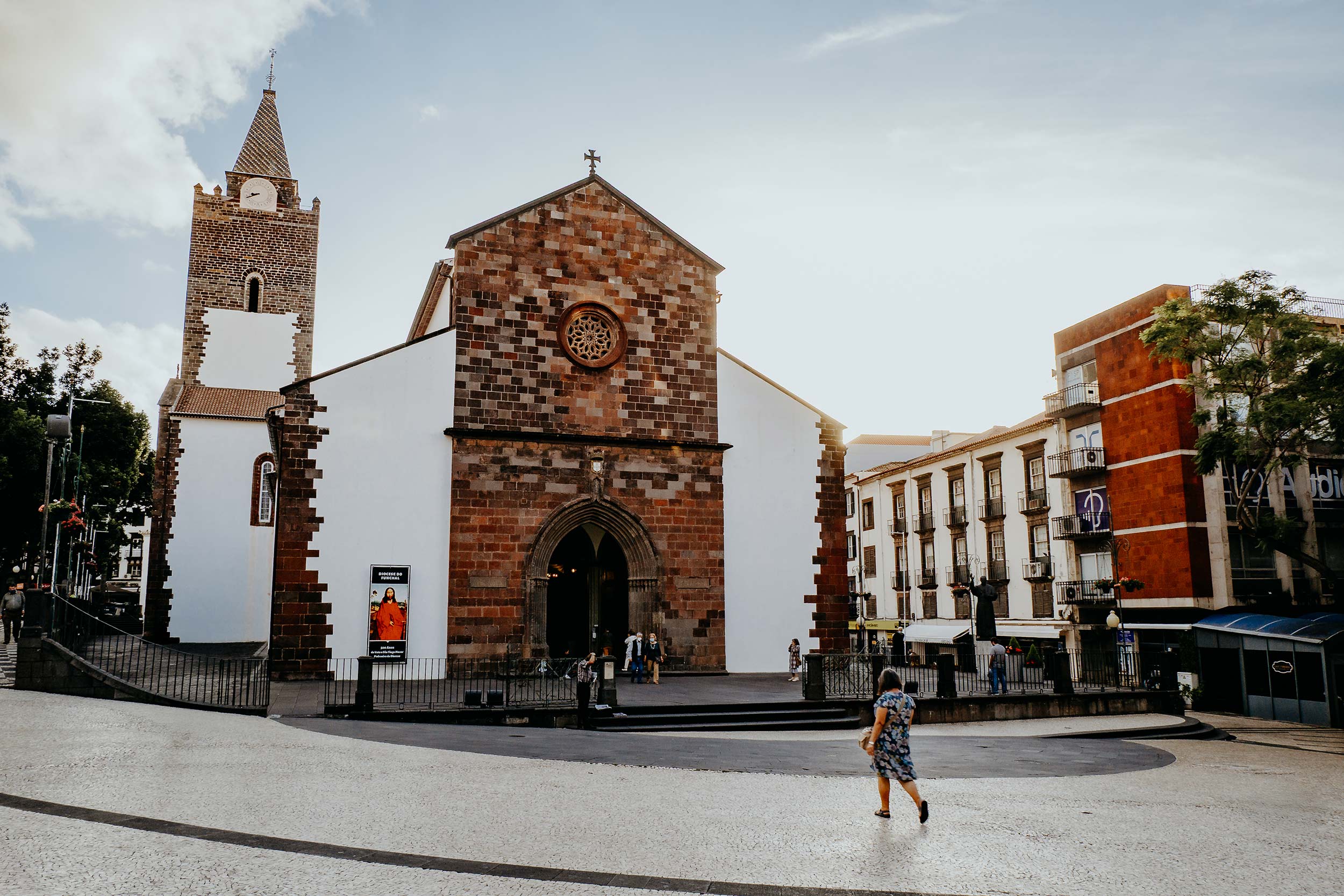
10. Join a dolphin and whale watching tour
Given that Madeira is located in the middle of the North Atlantic Ocean, the island has become a popular destination for those looking to see wild dolphins and whales.
Every day, lots of boats leave Funchal harbour in search of dolphins, whales and turtles, giving their visitors a chance to see Madeira’s rich and diverse marine life in their natural habitat.
Though it isn’t guaranteed that you’ll encounter these majestic creatures, it is pretty common to catch a glimpse of dolphins during your trip out at sea. Whales however are a different story, as they are much rarer to see and occur only at specific times of the year.
With a bit of luck though, you’ll see several species of whales, including Pilot Whales, Sperm Whales as well as more rare species such as the Sei Whale, Humpback Whale, and Minke Whale to name but a few.
Since a Dolphin and Whale watching tour has become one of the most popular things to do in Funchal, there are heaps of tour companies that venture out at the ocean.
For that reason, I believe it’s important to find a tour operator that specialises in ethical tourism practices and nature conservation.
If you’re keen to join a tour, make sure you check out this 3-hour catamaran tour, as it is handled by a company that takes the preservation of Madeira’s ocean life seriously.
Things to do in Funchal | The essentials
The best time to visit Funchal
Given Madeira is situated just off the coast of Africa, the island enjoys a subtropical climate, meaning there’s comfortable weather year-round.
However, Funchal truly comes alive during the summer months of June, July and August, when the days are long, the weather warm and there’s barely any rainfall.
But to me, the best time to visit Funchal is during the shoulder months of May, September and October, when the weather is still warm, yet it’s far less busy in comparison to the peak summer months.
Also, winters are very mild, making Funchal a perfect destination for those after a winter getaway.
How to get to Funchal
PLANE | The Cristiano Ronaldo International Airport is located 30 minutes from Funchal and hosts both European and international flights, so you will probably be looking to enter the country here.
For flights to Funchal, I would advise looking into Skyscanner. Not only is their website easy to use, but they offer a wide range of different airlines too – plus it’s easy to find good rates.
BUS | From the Cristiano Ronaldo International Airport, it is rather easy to get to the city centre of Funchal town by both public or private buses.
The Madeira Aerobus operates between the airport and Formosa Beach, with several stops in the hotel zones of Madeira. A one-way journey will cost you €5,- per person, and a return ticket comes at €8,- per person. For the latest time schedule, see here.
If you’re after some extra comfort, opt for this air-conditioned private airport transfer instead. This option isn’t only more comfy, it’s also a great value for the money, especially if you’re travelling with a group. More information and availability here.
CAR | If you’re planning to cruise around the island – which you should, I would highly recommend picking up your rental right after you have landed on Madeira.
If you haven’t sorted out your rental car yet, make sure you explore the options at DiscoveryCars. Not only do they offer a broad selection of cars, but they also provide excellent service and extra insurance options.
From the airport, it takes only 30 minutes to get to Funchal, where you will find plenty of parking options.
One side note though, parking costs can run very high, so I recommend finding accommodation with private parking instead – scroll back to my accommodation suggestions to see some of the available options.
Stay safe on Madeira | Travel insurance
Since travelling on Madeira is all about hiking and nature, I recommend everyone sort out good travel insurance before setting out on their own adventure.
Where we prefer that everything goes smoothly during our travels, something unfortunate can happen at any moment, whether it’s an injury during a hike, a stolen camera, or an accident on the road.
For travel insurance, I use Heymondo, as they offer full COVID-19 coverage, as well as a handy app with 24-hour medical assistance. Make sure you check it out – readers of WTSW receive 5% off any insurance policy too.
Cheers!
I’ve been on this travel blogging journey since 2019.
If you appreciate what I do here, these are some ways you can support me.
9 Things to see in the otherworldly Mangystau region in Kazakhstan
Rarely spoken of, sheer in its natural beauty, and an unrivalled ambience that feels as though one is visiting a completely different planet from the one we call home, Mangystau is unbelievable.
Situated next to the Caspian Sea in the far west of Kazakhstan, the stunning Mangystau region is defined by surreal landscapes, viewpoints that leave even the most seasoned of travellers in awe – yup, guilty as charged – and a mysterious atmosphere that is hard to put into words.
It’s a destination that has off-road adventure written all over it, and one where every new exploration makes you question how it’s possible to exceed the magnificence of the previous one.
From the stunning rock teeth of Boszhira to the perfectly-shaped stone balls of Torysh, the endless salt pans of Tuzbair to the insane colours and textures of both Kyzel Kup & Mount Bokty, the nature of Mangystau is truly insane, and like nothing I have ever witnessed before.
While the amazing Mangystau region has gained quite some traction over the past few years, it still remains largely untouched, meaning it’s somewhat challenging to explore on your own – that’s where this in-depth guide comes in handy.
Here are 9 unforgettable things to see in Mangystau, Kazakhstan, including my view on how to visit, when to visit, and how to get there, as well as a few tips to overcome potential challenges.
If you choose to use any of the links on this page, I receive a small commission at no extra cost to you. By using these links, you’ll have a direct impact on WTSW and support me to continue to create free insightful travel content for you. If you find any of my tips useful, you can support me by buying a virtual coffee here.
Where is Mangystau
Mangystau is located in the very southwest of Kazakhstan and is bordered by Uzbekistan, Turkmenistan, and the Caspian Sea.
The main point of call is Aktau, a city known mostly for its oil resources, yet it also serves perfectly fine as the gateway to all the natural beauty Mangystau has to offer.
Aktau is located about 1500 kilometres from Almaty, and is easily accessible by air via a 4-hour flight.
Where to stay in Mangystau
Since the Mangystau region is both uncharted and as remote as can be, there are barely any accommodation options found here, besides the many hotels in the coastal city of Aktau.
The above means that those who wish to explore the beautiful landscapes of Mangystau should prepare themselves for an adventurous camping trip.
While accommodations are limited, there are often a few yurt camps set up along the region’s highlights, but from my experience, none of those are published online and therefore only booked on the spot.
Therefore, camping gear is truly essential, so you can set up camp where and whenever you please. If you do find a yurt camp along the way, it’s a welcoming bonus, as the Kazakh locals are some of the best hosts you can imagine.
Given that camping in general is not the most comfortable experience, I chose to spend one night at MIRAMAR Apart Hotel & SPA, an affordable hotel with a great spa and gym, to get a good night’s rest before I set out on my adventure road trip.
If you would like to do the same, or book a rejuvenating stay before leaving Mangystau, here are a few of my favourite hotels in Aktau.
Renaissance by Sulo | Caspian Riviera Grand Palace Hotel | Turan Hotel
How to explore Mangystau
As one of the most isolated regions in Kazakhstan, where tourism is far from developed, a successful trip exploring Mangystau will require a unique set of skills and needs.
To help you determine how you’d like to explore, I’ve listed two options below:
A self-driven road trip
Mangystau is extensive, untouched and without a question, made for road trip adventures.
However, doing a road trip here will involve significantly more preparations compared to other countries – trust me, I’ve done quite a few, and this one was different.
First, there is your rental car, which can be quite a hassle if you don’t speak the Russian language – you will eventually get this sorted, but take into account that it will take you quite some time, plus there’s a high chance that the car will not be as described.
Secondly, you will notice that the navigation side of things will not always work out as planned in Mangystau (and Kazakhstan in general), as both Google Maps and Maps.me are often outdated. In some cases, the roads to your destination will not even be marked on the map.
Alternatively, 2GIS will do a much better job, yet this navigation app is not available in every country.
Last but not least, there is accommodation, which is found at just one place in the region, meaning most of your trip will involve setting up camp near the natural highlights, which, despite being a challenge, is truly a spectacular experience if you ask me.
9 Incredible things to see in Mangystau
1. The utterly stunning Boszhira tract
Easily the most famous sight in Mangystau, Boszhira is what I would refer to as the Dolomites on steroids.
Spread over 51,800,000 m², the Boszhira tract is immense, with lots of otherworldly natural highlights, the most stunning of viewpoints, and insanely-shaped rock structures dotted throughout.
Famous sights include the Azu Tisteri rock teeth, Ushkir Tau mountain, Boszhira valley, Borly tau, and Mount Yurt, to name but a few.
Personally, I made it to the Ushkir Tau viewpoint first, and due to its monumental beauty, I was left under the impression that this was the main draw here, not knowing that the famous Azu Tisteri rock teeth were waiting for me the next morning.
Another thing that adds to Bozshira’s charm is the fact that all this splendour comes without the huge crowds often experienced at the world’s other, more popular, natural scenery.
You see, during my time here, I’ve stumbled on only three other people, which is hard to believe given Boszhira’s sheer natural beauty.
Yes, you read that right, only three – which is just insane!
Where | Boszhira
2. Airakty Shomanay – The Valley of Castles
Without a doubt, among the most magical places in Mangystau, the rough mountain ridges of Airakty Shomanay rise high above the flat, wind-whispered desert plains of Mangystau.
It is, therefore, not a surprise that Airakty is often referred to as the Valley of Castles, as these iconic ridges give the impression that they are the remnants of time-worn strongholds that were left to decay in the simmering heat of the Kazakh steppe for centuries.
Which is basically what happened, given thousands of years of weathering and erosion formed Airakty Shomanay in the peculiar shapes we behold today.
However, to me, these unusual, spire-like mountain ridges look more like how I imagine the back of a dinosaur would have been when they were still roaming around the Earth – absolutely spectacular.
Besides these fascinating mountains, the extensive Airakty Shomanay area is also home to several dried rivers that look like the roots of a tree if you look at them from above – trust me, if you have a drone, you will be left in awe when you see those for the first time.
Where | Airakty Shomanay
3. The unique Tuzbair Salt Marsh
Nestled in the heart of the majestic Ustyurt plateau, Tuzbair’s magnificent landscape was once, 250 million years ago to be exact, hidden deep on the bottom of the Tethys Ocean.
Today, Tuzbair has become one of the most fascinating landscapes in the region, as it’s marked by incredible surfaces, chalky cliffs, and salt flats as far as the eye can see.
For me, Tuzbair is breathtaking, as it is quite unusual and enchanting in every sense of the word.
It’s remote, extensive, and in a league of its own from an aesthetic viewpoint, with a terrain that provides only the craziest of textures, and heaps of interesting nooks and crannies to explore, which makes it a playground for photographers, geologists, and adventurous travellers alike.
It is worth mentioning that you can visit both the cliffs and the beach; both are, in my opinion, truly exceptional, so make sure you take enough time to uncover the entirety of this amazing area.
I would advise planning at least 2 days at the Tuzbair Salt Marsh, as finding the entrance to the beach could be quite a challenging task, meaning you might waste some precious time on that.
Where | Tuzbair Salt Marsh
4. Viewpoint over the Kyzylkup area
As a landscape photographer, I oftentimes seek spots beyond the well-known highlights, which in the case of Mangystau resulted in the discovery of this amazing viewpoint.
Since I didn’t have any expectations when driving to the viewpoint, the views obtained from here turned out even more impressive, with rock formations displaying their distinct colours, shapes, and textures as far as the eye can see.
Overlooking both Kyzelkup, Mount Bokty, and the surrounding formations, this viewpoint perfectly showcases the impact that thousands of years of erosion left on the region, and seeing it from above is quite a mind-blowing experience.
The whole area is a landscape photographer’s dream, and the fact that I spent nearly 3 hours here, while having Boszhira, Kyzyl Kup and Mount Bokty at just a short drive speaks volumes, doesn’t it?
Where | Viewpoint of Kyzylkup
5. Torysh – the Valley of the Balls
Have you ever imagined reading about a valley filled with thousands of perfectly-shaped stone balls? Well, here you go!
Situated at roughly 100 kilometres from Aktau, the Valley of Balls is exactly that, and seeing it for the first time is quite a remarkable experience.
Of course, a stone, ball-shaped rock itself might not be the most exciting thing on this list, yet if you put a thousand on the ridge of a picturesque hill, you will have an impressive sight that looks somewhat surreal.
It’s a place that grants visitors heaps of photo opportunities, where perspective, composition, and light set the tone for unique stills that can easily resemble a scene out of a movie.
One thing that I can’t stress enough is getting back to the main road via the same route.
We thought it was smart to take an off-road route to cut off some time, and got stuck in drift sand in the middle of nowhere, with no signs of civilisation nearby.
While we did find help from a local family at a nearby camel farm about 2 kilometres from where we got stuck, I’d highly advise continuing your road trip from where you entered the valley.
Where | Torysh – The Valley of Balls
6. The enormous Mount Sherkala
First things first, Sherkala is truly enormous.
With a sheer size of roughly one kilometre in length, and a whopping height of 332 metres, I’m not exaggerating with the above sentence; Sherkala is an absolute unit.
Often referred to as the ‘Lion Mountain’, the Yurt-shaped formation rises dramatically from the dry Kazakh steppe, and its unique appearance, combined with the desolate surroundings, makes it one of the region’s most iconic landscapes.
On top of that, Sherkela is encircled by remnants of ancient civilisations, fortresses, and Silk Road caravan routes, which makes sense given it was once located right at the Great Silk Road trade route that connected the East with the West.
My advice to you is to spend a night at the Kogez Ethnic Village, an authentic Kazakh yurt camp situated right in between Sherkala and Airakty, meaning you can visit early morning or late afternoon, when the lighting conditions hit those natural wonders just right.
Where | Mount Sherkala
7. The colourful Kyzelkup – Tiramisu
Often introduced as ‘Tiramisu’, Kyzelkup is truly spectacular, and a place that will be a highlight for anyone travelling to Mangystau.
Acquiring its name from its distinctive colours and textures, and more specifically the layers in which those colours and textures occur, the beauty of Kyzelkup is hard to put into words.
You see, exploring Kyzelkup is outstanding, and photography enthusiasts will think they have ventured into a completely different reality, one where human beings don’t occur very often.
While most people see Kyzelkup as one spot pinned on the map, the area is actually a lot more than that, with plenty of unknown areas, boasting truly spectacular rock formations and textures.
Since I am always equipped with a drone, this area was one of my highlights in Mangystau, as it was a dream to acquire aerial footage of all the incredible natural formations.
Where | Kyzel Kup
8. The stunning Mount Bokty
Situated at just a short drive from Kyzelkup, Mount Bokty rises high above the dry soil of the surrounding salt pans.
Obtaining its name from the Kazakh word Bokty, meaning pie, it is easy to see the origins of its name, as its layers make the resemblance clear in a stunning manner.
Standing tall at 165 meters, this massive sandstone mountain is defined by a broad colour palette of pastel shades, including white, yellow, terracotta, red and brown, often making it seem as if you’re staring at a savoury layered cake.
If you ask me, Mount Bokty and its unique appearance are best appreciated during a sunrise or sunset visit, when the light accentuates the stunning shapes and colours, enhancing its rough, and somewhat surreal beauty.
While relatively remote, Mount Bokty is fascinating and an absolute highlight on any Mangystau itinerary, as well as a true favourite among adventure seekers and photographers.
Where | Mount Bokty
9. The Red Mountains of Krasnyy Kan’on
While not initially taken into consideration when planning my Mangystau trip, the Red Mountains of Krasnyy Kan’on were a welcoming discovery when driving back from Tuzbair to Shetpe.
Situated just off the A33, the red mountains of Krasnyy Kan’on are relatively small, yet incredibly stunning, and thus definitely worthy of the small detour.
I’ve walked around the area for roughly 20 minutes, and despite it being only a relatively short amount of time, the vivid red-coloured rock formations managed to leave a pretty outstanding impression on me.
They are a stunning example of Mangystau’s exceptional natural beauty, and they perfectly reflect the region’s ability to surprise you with hidden gems when you least expect them.
Since Krasnyy Kan’on is pretty small and slightly hidden, you might drive straight past it, meaning you will perhaps not even notice it if you’re not aware of its existence – gladly, I have the exact location for you, so finding it shouldn’t be an issue.
Where | Krasnyy Kan’on
Things to see in Mangystau | The essentials
The best time to visit Mangystau, Kazakhstan
Since Mangystau is located in the desert of the Ustyurt Plateau in the very west of Kazakhstan, the climate found here is quite harsh, unpredictable, and dry, which is known as an arid climate.
As a result, the summers are extended and scorching hot, with daytime temperatures often surpassing the 40-degree Celsius mark, which is absolutely unbearable, and something you should avoid at all times.
Then there’s winter – Late October to March, when temperatures can drop as low as -20 degrees Celsius. But it is not just the cold that makes a winter visit agonising; the region is marked by vast, open landscapes, which tend to make the wind feel like a sharp blade.
For that reason, the best time to visit Mangystau is either during spring – April to June, or autum – September to October, when the temperatures are relatively mild (15–25°C), the days lengthy enough for days full of explorations, and overall ideal conditions to uncover the region’s most iconic landscapes.
I visited Mangystau in mid-April, and had excellent weather throughout my entire time there; think sunny days, and zero rainfall, yet still relatively colder nights, so make sure you layer up.
How to get to Mangystau
Those wishing to visit Mangystau should note that most international flights to Kazakhstan arrive in Almaty, through the Almaty International Airport (ALA).
Given that the Mangystau region is located roughly 3.000 km away from Almaty, it is insanely remote, and getting there will require an exhausting journey by car. For that reason, the best way to get there is by air.
From Almaty, it will take a 3.5-hour domestic flight to Aktau, which serves as the gateway to the Mangystau region.
As a result, Aktau is well-connected to Kazakhstan’s major cities, with flights coming in and out from Almaty, Astana and Shymkent, to name but a few.
Stay safe in Kazakhstan | Travel insurance
Travelling in Kazakhstan is all about hiking and off-the-beaten-path adventures, so I recommend everyone sort out adequate travel insurance before setting out on their own adventure.
While we favour that everything runs smoothly during our travels, something unfortunate can happen at any moment, whether it’s a hiking injury, stolen goods or an accident on the road.
For travel insurance, I use Heymondo, as they offer full COVID-19 coverage, as well as a handy app with 24-hour medical assistance. Make sure you check it out – readers of WTSW receive 5% off any insurance policy too.
Cheers!
I’ve been on this travel blogging journey since 2019.
If you appreciate what I do here, these are some ways you can support me.

Some photographs in this guide are captured by Andre Smits – make sure you have a look at his work here.
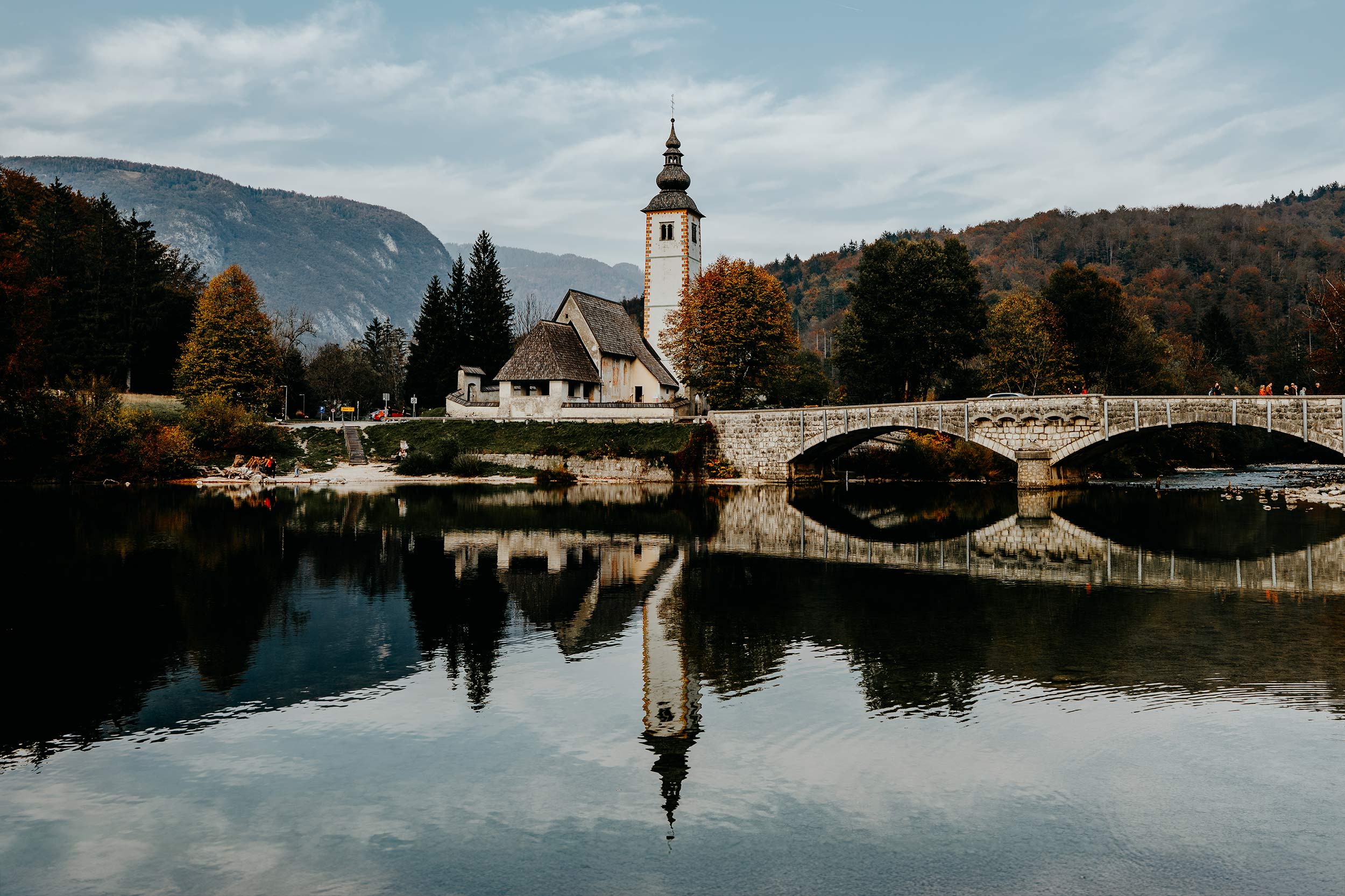
A guide to Lake Bohinj: 7 Incredible things to do in Lake Bohinj, Slovenia
Lake Bohinj is special – so special that I have now visited it three times in the last two years.
Tucked away in the heart of the Triglav National Park, Lake Bohinj is what I would say Slovenia’s best-kept secret — a tranquil alpine escape that feels worlds apart from the more touristy vibe found at its famous sibling, Lake Bled.
It’s a place that will capture your heart in the blink of an eye, with an authentic and intriguing charm that will easily ensure that that exact feeling stays with you for the rest of your lifetime.
Towering mountain peaks, early morning mist rolling in above the lake’s crystal-clear water, the most incredible culinary treats (often paired with exceptional wine), and an authentic local atmosphere set the tone for a truly unforgettable experience – one that makes you slow down to the calm and serene rhythm of nature.
But it is also so much more than simply a tranquil getaway.
You see, Lake Bohinj is also a stepping stone to some of the Julian Alps’ most fascinating natural highlights; the Slap Savica Waterfall, plenty of adventurous hikes, the Mostnica Gorge, and the stunning Vogar viewpoint, to name but a few, making it a dream for outdoor enthusiasts and photographers alike.
So whether you’re a seasoned hiker, nature enthusiast or simply someone who seeks a calm retreat away from the hustle and bustle of daily life, Lake Bohinj is for you.
In this guide, I’ll cover the absolute best things to do in Lake Bohinj, a few personal favourites regarding where to eat and drink, plus my picks on where to stay.
If you choose to use any of the links on this page, I receive a small commission at no extra cost to you. By using these links, you’ll have a direct impact on WTSW and support me to continue to create free insightful travel content for you. If you find any of my tips useful, you can support me by buying a virtual coffee here.
Go on, give me a cheeky follow
There’s more than what makes it onto the blog. Follow me on Instagram for behind-the-scenes, real-time content, and all the day-to-day moments you won’t find elsewhere.
Where is Lake Bohinj
Lake Bohinj is situated within the boundaries of the Triglav National Park in the Upper Carniola region of northwestern Slovenia.
Only a 30-minute drive from Lake Bled, Slovenia’s most famous destination, Lake Bohinj offers a more tranquil experience than its bigger sister, as it’s not yet overrun by upscale tourism, giving it a relatively pristine feel.
Lake Bohinj’s unspoiled shoreline, exceptional culinary offerings, and stunning alpine scenery make it a true hidden gem for those seeking untouched natural beauty in Slovenia.
Where to stay in Lake Bohinj
Given that I have visited Lake Bohinj three times, I feel relatively confident to state the following: my insights will make finding the right accommodation here a tad more comfortable.
With a clear focus on green tourism, wellness & spa, and all things outdoor, Lake Bohinj has no shortage of inviting accommodation options, with an elevated standard in terms of quality.
So whether you’re looking for a boutique stay, a budget-friendly hostel or something in between, I am sure you will find good options either way, no matter your travel style, budget and needs.
To make things even more comfortable for you, I’ve picked my favourite out of the bunch below:
Hotel Bohinj | After visiting Lake Bohinj three times, where I stayed at Hotel Bohinj on all occasions, I am confident to say that it is the absolute best hotel in the area. Situated at the edge of the Lake, this hotel reflects the spirit of this Alpine village in the best possible way. With comfortable spacious rooms, an exceptional sauna with a heated outdoor pool, cosy common areas, and a truly spectacular in-house restaurant, Hotel Bohinj is a true delight. Find out for yourself here.
Sunrose7 | Located in the heart of the Bohinjska Bistrica at a 12-minute drive from Lake Bohinj, Sunrose7 offers a tranquil getaway fueled by top-notch hospitality and the most incredible food one can imagine. On top of that, the rooms are absolutely stunning, with comfy beds, a working station, and an excellent bathroom with a rainshower. Add to that an incredible in-house sauna, and you instantly realise why I chose to opt for Sunrose7. See it for yourself here.
Vila Muhr | Those looking to splurge will be delighted to read about Vila Muhr; a truly spectacular addition to Alpinia Group’s exceptional offerings here in Bohinj. With just 4 suites, this newly opened villa provides an intimate experience that is marked by aesthetically pleasing interior choices, all the contemporary amenities, and an overall luxury feel that will simply make you feel a certain way. But my favourite thing about Vila Muhr is that it is directly connected to Hotel Bohinj, which means you also have access to the wellness centre and restaurant there, making it even better than it already is. Make sure you check Vila Muhr here.
7 Things to do in Lake Bohinj, Slovenia
1. Take a short hike to the impressive Slap Savica Waterfall
Hidden in the lush forest at the very north of Lake Bohinj, Slap Savica is a charming waterfall, and the journey to the gushing waters of the waterfall provides a magical, fairytale-like experience.
Also known as the Savica Waterfall, this 78-meter-high waterfall is celebrated for its distinctive shape, as the gushing water splits into two separate streams before cascading into the emerald waters of the basin down below.
When researching Lake Bohinj, I discovered that the hike to Slap Savica was often among travellers’ favourite things to do in Lake Bohinj; after roaming the enchanting forest to the waterfall myself, it is easy to see why.
Starting at the Savica Lodge in Ukanc, the well-marked trail takes you on an easy, leisurely hike through serene, dense woodlands to the waterfall in just about 25 minutes.
At every step, the gushing sound of Slap Savica’s dropping water intensifies, tending to uplift visitors to up the pace so they can get their first glimpse of the waterfall as quickly as possible.
Once you reach the waterfall, you’ll be left in awe, as the beauty of its massive limestone rock formation and the immense force of nature combine for a truly spectacular sight.
Where | Slap Savica
Opening hours | Daily 0800 – 1800 – it varies highly on the season
Entrance fee | €4,- for adults, €2,- for kids
2. Take a walk around Lake Bohinj
When travelling to a destination famed for its lake, there’s not much more to be desired than the ability to roam around the shores of its calm waters whenever one feels like it.
Of course, there are heaps of amazing things to do in Lake Bohinj, yet, if you ask me, it is pretty hard to challenge the charm that lingers around the beautiful lake itself.
I wandered around the lake quite a few times and enjoyed every single bit of it.
Its impeccable beauty didn’t stop captivating me, while the overall vibe gave me an intoxicating sense of calm that is somewhat hard to bring to words.
But it is not solely the calming waters of the lake that will leave you in awe.
You see, when walking around the lake you will stumble upon heaps of sights that are worth your while, whether it’s an authentic church, cosy alpine village, or densely forested valley.
Things that are worth your time include:
Zlatorog of Bohinj | Perched on the edge of the lake, the bronze statue of Zlatorog is a homage to the Slovenian legend of the ibex with golden horns, also known as the guardian of the Slovenian mountains.
Cerkev sv. Duha, Ribčev Laz | Built in a traditional alpine style, with a stunning bell tower as its eye-catcher, the charming Cerkev sv. Duha can be seen from various points around the lake and is an absolute must-visit when in Bohinj.
The many picturesque docks | Around the lake, you will find plenty of docks that serve the boats that go around the lake, offering heaps of views and photography opportunities.
3 Walk the stunning Mostnica Gorge
One of the main reasons I wanted to visit Lake Bohinj was being able to be out in nature as much as possible whenever I felt like it, and the Mostnice Gorge contributed to this desire.
As if lifted straight out of a fairytale, the walk along the gushing waters of the Mostnica Gorge will make you reconnect with nature’s essence in the blink of an eye, making it an absolute highlight on any list of things to do in Lake Bohinj.
Starting at Stara Fuzina, the trail slowly leads you through the lush forest, along the waters of the impressive gorge down below, with several small streams and waterfalls coming in from the dense greenery along the way.
In addition to its exceptional nature, the Mostnica Gorge trail is also relatively easy, making it accessible for all levels of fitness, which, for many travellers, might put it ahead of other more challenging hikes in the Julian Alps.
Those looking to move on can cross the bridge at the end and venture into Voje Valley, a stunning alpine meadow surrounded by towering mountains, with the 21m high Mostnica Waterfall at the end of it all.
I personally also opted to visit Voje Valley and absolutely enjoyed being out there.
Where | Mostnica Gorge
Opening hours | All day, but it depends highly on the season
Cost | The entrance varies between €2,- and 4,- depending on age and season of visit
4. Admire the Church of St. John the Baptist
Easily one of the most famous sights in Bohinj, the Church of St. John the Baptist is a true icon.
Nestled on the edge of the lake, this fascinating church dates back as far as the 12th century and is marked by its pristine white appearance, which is commonly done in the oh-so-captivating Slovenian medieval architecture style.
Absolutely stunning from the inside out, the interior is famed for its amazingly well-preserved frescoes, including the well-known ‘White Devil’ lurking over Cain’s shoulders while whispering evil schemes into his ears.
While I chose to behold the church solely from the outside while wandering around the lake, I truly believe that those paying the small entrance fee of €3,50 will be left satisfied, based on the intricate frescoes I’ve seen when researching the church.
When arriving in Lake Bohinj, you will instantly see that there’s no going around this iconic church, as each activity in the surrounding area will lead you right back here, at the foot of the stunning Church of St. John the Baptist.
Those into photography should head out early, when the gloomy Bohinj morning fog creates an absolutely amazing moody scenery, which, in my opinion, matches perfectly with the overall appeal of Lake Bohinj.
Where | Church of St. John the Baptist
Opening hours | Daily 0900 – 1900, depending on the season. More info here.
Cost | Entrance fee €3,50
5. Stay at the beautiful Hotel Bohinj
Nestled on a picturesque hill overlooking the utterly charming lake, Hotel Bohinj is special.
Defined by the perfect combination of natural materials and modern design elements, the design of Hotel Bohinj is a true delight for those appreciating minimalistic architecture yet also enjoying thoughtful, rustic touches that refer to the natural surroundings.
But it is not just the design that stands out, no, the whole experience is in a league of its own.
Top-notch hospitality, exceptional cuisine, and an absolutely amazing sauna with an outdoor pool offering views that are simply impossible to rival set the tone for an exceptional experience.
It almost feels like a destination on its own, where travellers tend to discover new layers of calm at each and every moment of their stay, which elevates their time in Bohinj to a whole other level.
I would even go as far as stating that my time at Hotel Bohinj has been one of the most incredible ones ever – if you want to find out for yourself, make sure you read my in-depth review here.
Book | Hotel Bohinj
Cost | Luxurious doubles start at €190,- a night.
+ Continue reading | Keen finding out why Hotel Bohinj is one of my favourite stays ever, read about it here.
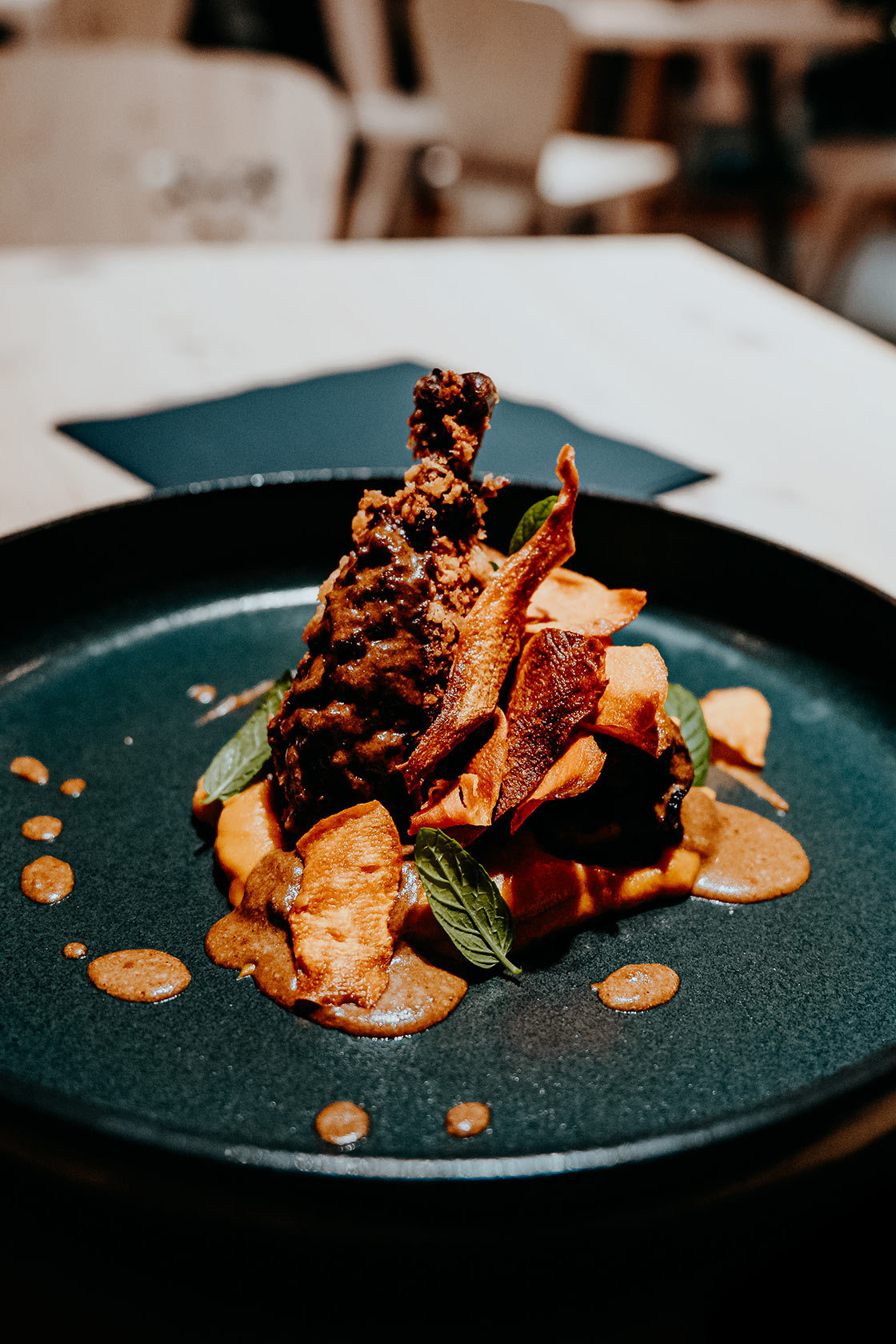
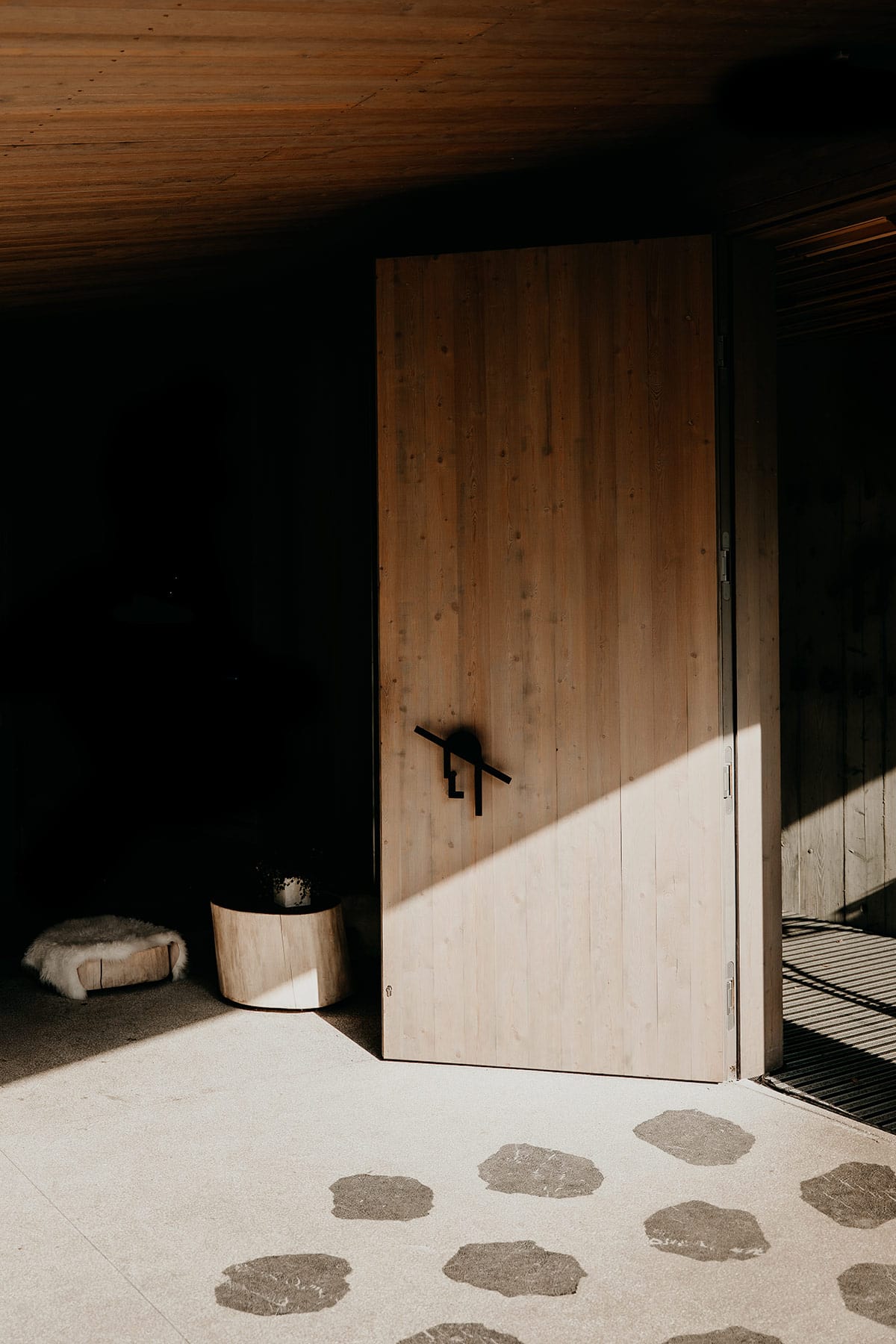
6. Ride the Vogel Cable Car and take in the views
Towering high above the lake, the Vogel viewpoint will welcome you with the most stunning panoramic view of Lake Bohinj, the surrounding valleys, and the towering peaks of the Julian Alps in the distance.
Seeing Lake Bohinj from the Vogel Viewpoint is absolutely stunning, as the viewpoint gives you a mind-blowing perspective of the immense size of the lake.
However, to reach the Vogel viewpoint, you have to take an equally impressive journey.
First started operating in 1964, the Vogel Cable Car offers a steep, yet quick journey to the first level of Mount Vogel, which is located at a height of 1537 metres above sea level and exactly where the viewpoint is.
From here, you can also venture deeper into the mountains, as some of Bohinj’s best hikes start here, including the ones to peak Šija, Rodica, and Vogel. Alternatively, you can also choose to opt for all sorts of winter sports activities when visiting in winter.
One thing worth noting is that the Vogel Cable Car becomes significantly busier during the winter season, as Bohinj has rapidly grown among winter sport enthusiasts over the last few years.
Where | Vogel Cable Car
Opening hours | Daily 0800 – 1800
Cost | €29,- for adults, €15,- for children
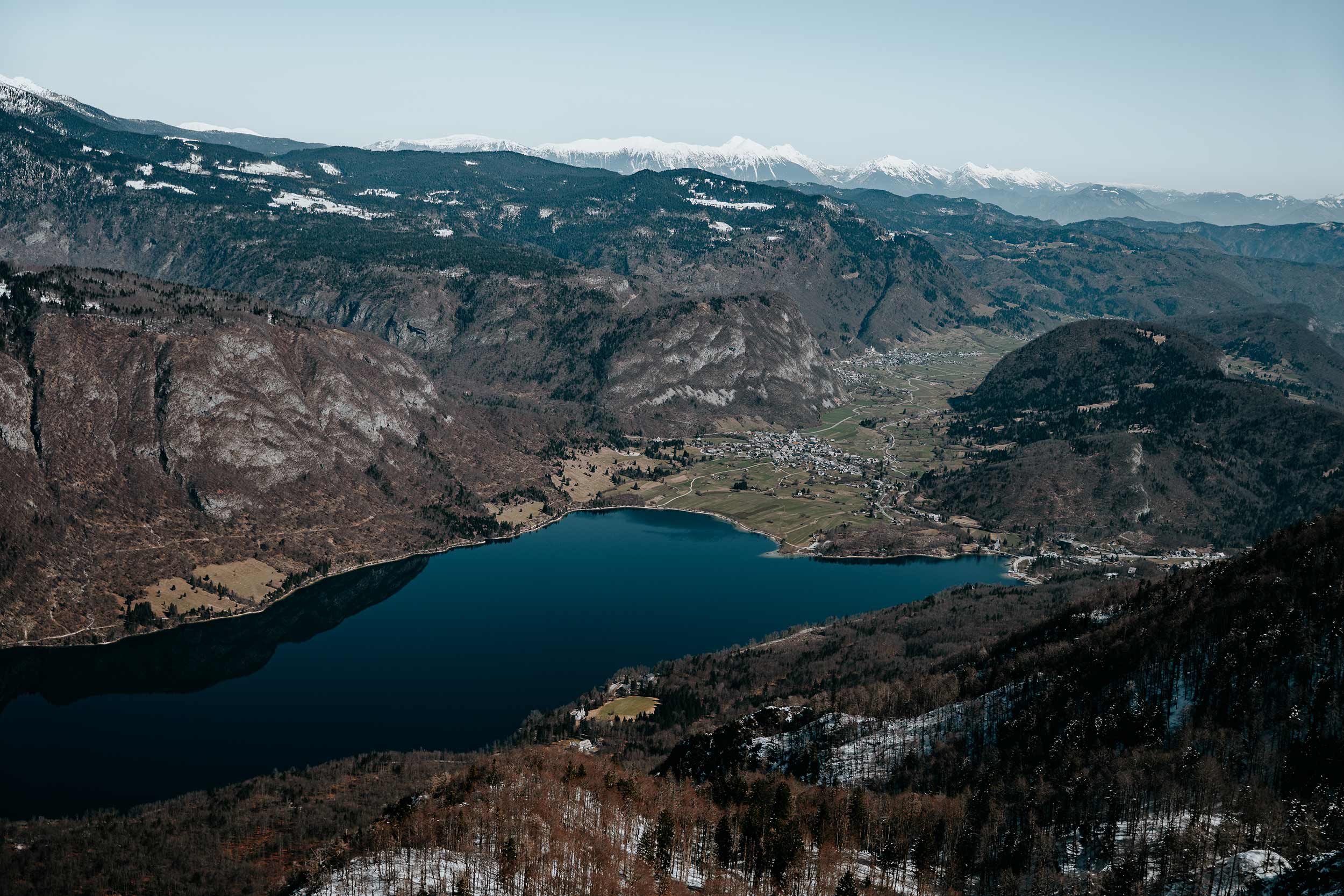
7. Have an epic burger at Foksner
As a burger enthusiast at heart, I recognise a good burger joint when I see one.
When I first stumbled upon Foksner, I immediately knew it was business, given a massive Green Egg (barbeque aficionados will know) was projecting the mouthwatering smell of perfectly grilled burgers from afar.
Once seated, my eyes instantly fell on the Tartuf, a juicy locally sourced beef burger topped with red onions, truffles, Mature Cheddar Cheese and a little personal twist; sriracha instead of ketchup, giving it the extra kick that I always aim for when ordering a burger.
All burgers are served on a superior bun and come with crunchy potato wedges, making sure you leave nothing short of satisfied. Personally, I was so satisfied, that during one week around Lake Bohinj, I came back twice – don’t judge me.
If I had to give one remark, it would be that they are not open around lunchtime, which to me is the best time to savour a burger.
Where | Foksner
Opening hours | Daily 1600 – 2200
Cost | The average burger here will set you back +/- €14,-
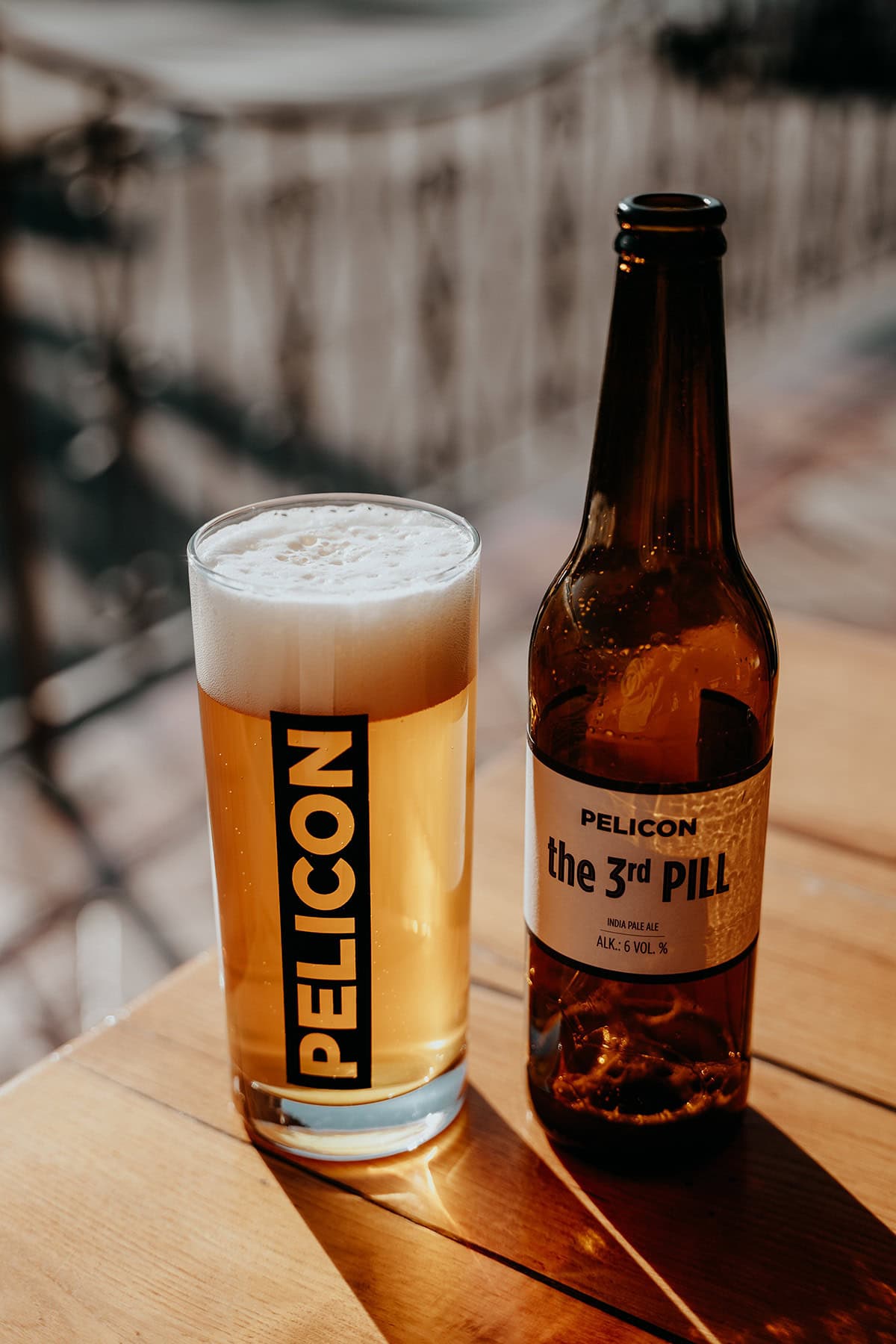
Things to do in Lake Bohinj | The essentials
The best time to visit Lake Bohinj
Slovenia, and thus Lake Bohinj is considered a year-round destination, so the time you desire to visit depends highly on the type of activities you wish to do while there.
During Spring, the entire region is in bloom, providing excellent circumstances for all sorts of outdoor activities; think horseback riding, hiking, watersports, and cycling to name a few.
In winter, a whole new playground unfolds, as Vogel opens up as the perfect retreat for those looking into skiing, snowboarding, cross-country skiing and more.
Since Lake Bohinj is also famed for its spa, wellness and culinary experiences, I honestly believe there’s no such thing as a bad time to visit Lake Bohinj.
I visited Bohinj in winter and spring and truly loved it in both settings.
How to get around Lake Bohinj
In general, it is pretty easy to navigate Lake Bohinj, as all the sights are close to the lake itself and therefore easy to reach on foot.
However, if you are sport-oriented, a lover of the great outdoors, or simply have a little less time on your hands, there are a few other options that will help you explore the many impressive sights here more efficiently, which I will list below.
On foot | As mentioned above, Lake Bohinj and its surroundings are insanely easy to explore on foot, and walking around the area is actually one of the best things to do in Lake Bohinj.
By bike | Those who enjoy biking will be delighted to hear that Lake Bohinj and biking go hand in hand, given that all sights are connected by excellent biking paths. In general, those paths are both comfortable and scenic, making it one of the best ways to explore the Bohinj region.
By car | If you’re exploring Slovenia by car, which you should, getting from A to B will be as easy as it gets. I personally explored Slovenia on a road trip and saved a lot of time by simply driving to the starting points of the hikes and activities, making it the perfect option for those on a time-restricted schedule.
How to get to Lake Bohinj
Given that Lake Bohinj is one of the most popular destinations in Slovenia, you will notice that there are plenty of options to get from A to B here.
To help you find the best suitable option for you, I’ve listed them below:
By car | To me, road trips and Slovenia are a match made in heaven, and for that reason, I would highly recommend exploring Slovenia with your own set of wheels, so you have all the freedom to visit wherever, whenever suits you.
I always use Rentalcars.com to book my car rentals, as they offer all the major rental car companies, excellent service, and additional insurance – plus, it’s super easy to find yourself a deal here too.
By private transfer | Lake Bohinj is just a 1,5 drive from the capital city of Ljubljana, meaning taking a private transfer is actually something worth considering.
Starting at €90,- a car, this option is quite affordable, especially if you travel with a larger group.
Since I had an early morning flight, Hotel Bohinj arranged my transfer with Vip Shuttle, and I was impressed by how the driver handled both the ride and the hospitality part.
By public bus | Depending on the departure time of your journey, using the public bus between Bohinj and Ljubljana could be a great and affordable option.
The bus leaves the Ljubljana Bus Station hourly and takes 1.5 to 2 hours to reach Ribčev Laz.
Along the way, the bus will also stop at Lake Bled and the Bohinjska Bistrica.
A one-way ticket from Ljubljana to Ribčev Laz will cost €8,30 per person. For an up-to-date timetable, please check the Ljubljana Bus Station website.
Slovenia travel essentials
Though I wouldn’t necessarily label the activities around Lake Bohinj as extreme, I do think it’s a smart idea to bring some essentials.
To help you have a comfortable time here, I’d suggest bringing the following items:
A reusable water bottle | One travel essential that I carry with me at all times is the Grayl Geopress. This reusable water purification bottle allows me to fill up water from almost every water source, making it one of my best investments to date.
A hoodie | Depending on the time of year, I advise bringing an extra layer in the form of a hoodie to keep you warm if needed. Since you’re out in nature most of the time, this layer might come in handy at any given time.
A sturdy pair of sneakers | Though the hikes around Lake Bohinj are relatively easy, it’s not a bad idea to wear a pair of sturdy trail runners. I use the New Balance Hierro V7, and I’m pretty pleased with the grip and comfort they provide me when I’m out in nature.
A camera | Like most places in Slovenia, Lake Bohinj and its natural features are incredible for enthusiastic and professional photographers alike. For that reason, I advise bringing your camera, so you can capture heaps of photos while there. Curious about my photography gear, make sure you see what’s in my camera bag.
Leave no footprints | Slovenia is a slice of untouched natural paradise, and it’s our responsibility to keep it that way. Therefore, make sure you respect the location at all times, and bring your trash when wrapping up your time in nature.
Stay safe in Slovenia | Travel insurance in Slovenia
When travelling this big wide world, especially if it involves lots of outdoor activities, I always make sure that my travel insurance is sorted out well in advance, and I advise anyone travelling to do the same.
While I believe it’s unlikely to experience any problems when following the suggestions in this itinerary, something unfortunate could happen at any time, whether it’s an injury, a stolen camera, or an unforeseen cancellation.
For travel insurance, I use Heymondo, as they offer full COVID-19 coverage, as well as a handy app with 24-hour medical assistance. Make sure you check it out – readers of WTSW receive 5% off any insurance policy too.
Cheers!
I’ve been on this travel blogging journey since 2019.
If you appreciate what I do here, these are some ways you can support me.