

6 x the best speciality coffee in Valencia, Spain
Given I am currently based in Valencia, and there are simply too many quality coffee places here, this article will be updated regularly.
Lately, there are only a few things that get me more excited than finding new trendy coffee places first thing in the morning.
Luckily, the coffee scene in Valencia is thriving more than ever, with new trendy cafes popping up throughout the lively city centre almost weekly.
Whether you’re after a cup of thoroughly brewed Aeropress coffee, a refreshing iced latte with flavouring syrups, or just a classic brew (cortado is definitely my daily driver here in Spain), you will find plenty of excellent speciality coffee shops in Valencia, catering to the needs of all sorts of caffeine cravings.
Ever since I based myself in Valencia, I found myself exploring the time-worn streets in search of hip coffee joints that could supply me my daily caffeine fix, which was quite an amusing journey, and thankfully one that is still very much going on today, given the Valencian coffee scene is changing continually.
So whether you’re visiting Valencia on a weekend break, a summer getaway, or choose to experience the quickly expanding digital nomad life, I’ve curated an extensive list based on my take on the best speciality coffee in Valencia so you can easily determine where you’d like to grab a brew during your time in this amazing city.
For travellers, make sure you give my in-depth guide on the ‘best things to do in Valencia’ a read too, as it’s packed with lots of in-depth information to help you have an amazing trip here.
Ironic as can be, did you know you can also buy me a virtual coffee? By doing so, you’ll have a direct impact on WTSW and my ability to continue to create free insightful travel content for you. If you find any of my tips useful, you can support me here.

My take on Valencia’s Speciality coffee scene
Before I talk you through all the details of my favourite coffee places in Valencia, I’d first like to share my overall take on Valencia’s rapidly evolving coffee scene.
Given Valencia has been on top of the list of the best cities to live in for a few years now, the city is gaining more and more interest from tourists, ex-pats, and digital nomads alike.
As a result, the Valencian coffee scene is thriving more than ever, with speciality coffee fanatics opening shop on just about every corner of the vibrant city centre.
Having travelled and lived in many great cities known for their rich coffee culture – think Vienna, Amsterdam, Budapest, Lisbon and Bologna to name a few, I feel confident to state that Valencia will easily hold its ground against these giants.
From perfectly brewed classics to iced specialities and everything in between, Valencia will cater to all sorts of caffeine cravings, making it the perfect city for travellers who fancy a few coffee breaks in between all the sightseeing and exploring.

6 x the best speciality coffee in Valencia, Spain
1. East Crema
While this list is not in chronological order by any means, East Crema could actually be marked as one of my absolute favourite coffee places in Valencia.
Now dotted throughout most of the major cities in Spain, the intriguing story of East Crema originated after an exciting trip to Tokyo, where Alberto and … of East Crema rediscovered their love for speciality coffee and developed a burning passion to learn everything about it before heading back to Spain.
Marked by the simplicity and quality of Japan’s renowned coffee culture, East Crema has become one of the most trendy coffee hotspots in Valencia, and the distinctive aromas of their coffee have quickly conquered the hearts of many.
The reason for this is that they’re sourcing their beans from the world’s most famous coffee-producing countries; Kenya, Ethiopia, Colombia and Peru, which translates into extremely good coffee and having one here will definitely scratch your caffeine itch.
While I mostly go here for a quick takeaway coffee, East Crema also has a small minimalism-style sitting area for those who need a short break from their daily hustle and bustle.
Where | East Crema Valencia
Price range | €€€
Best for | High-quality speciality coffee



2. News & Coffee
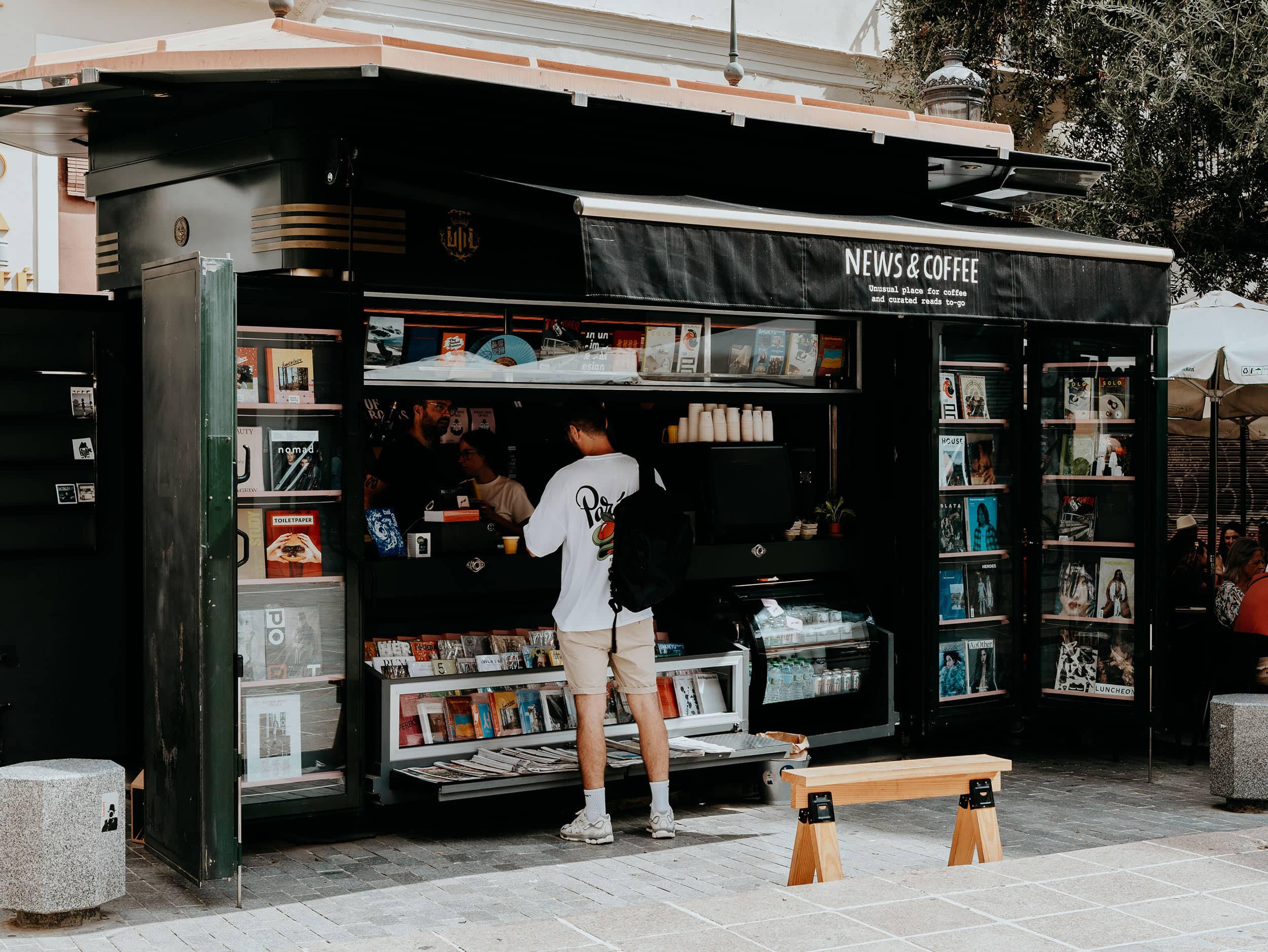
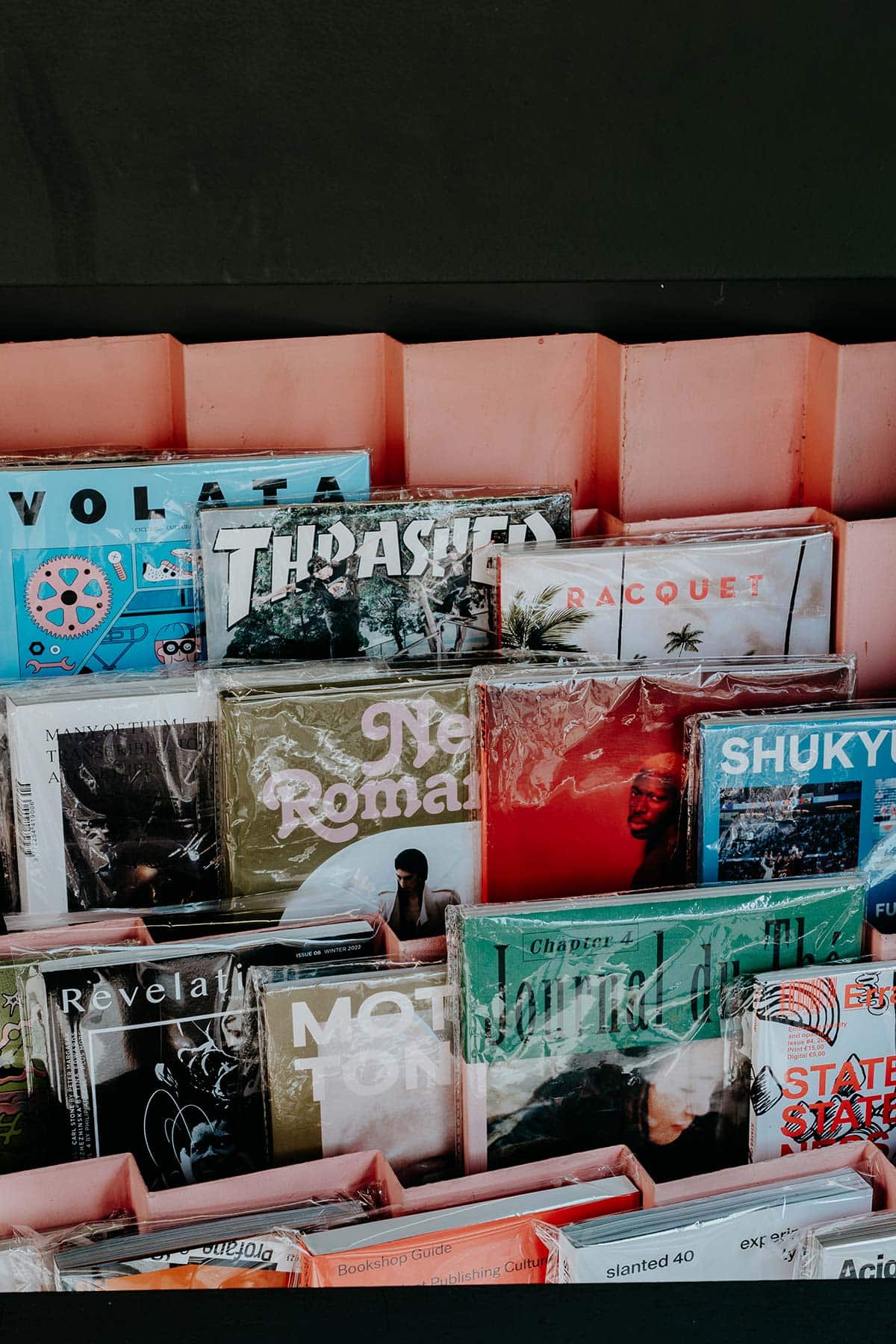
Conceptionally in a league of its own, this kiosk-style cafe brings the joy of freshly printed newspapers, arty magazines and top-notch coffee together in an authentic yet modern way.
As an enthusiast for the artistic side of life myself, News & Coffee instantly piqued my interest when I stumbled upon them, as they display plenty of indie magazines that make my creative heart tick.
Think Kinfolk, Open House, SOLO magazine, Thrasher Magazine and heaps of other inspiring and well-curated reads that will get you gushing with creative ideas and inspiration.
While it is unique and bloody awesome if you ask me, it is not solely the magazines and newspapers that make News & Coffee one of the best cafes in Valencia.
No, they serve seriously good coffee, have a super friendly team of creative like-minded people, offer top-notch service and have an immaculate hipster-ish and artistic ambience.
Situated on the intimate Plaza del Doctor Collado, right after the famous Mercat Central and La Lonja de la Seda de Valencia, this trendy coffee joint is an absolute must-visit for every coffee aficionado spending time in Valencia.
Where | News & Coffee
Price range | €€
Best for | A phenomenal concept, great coffee and well-curated reads


3. The Coffee
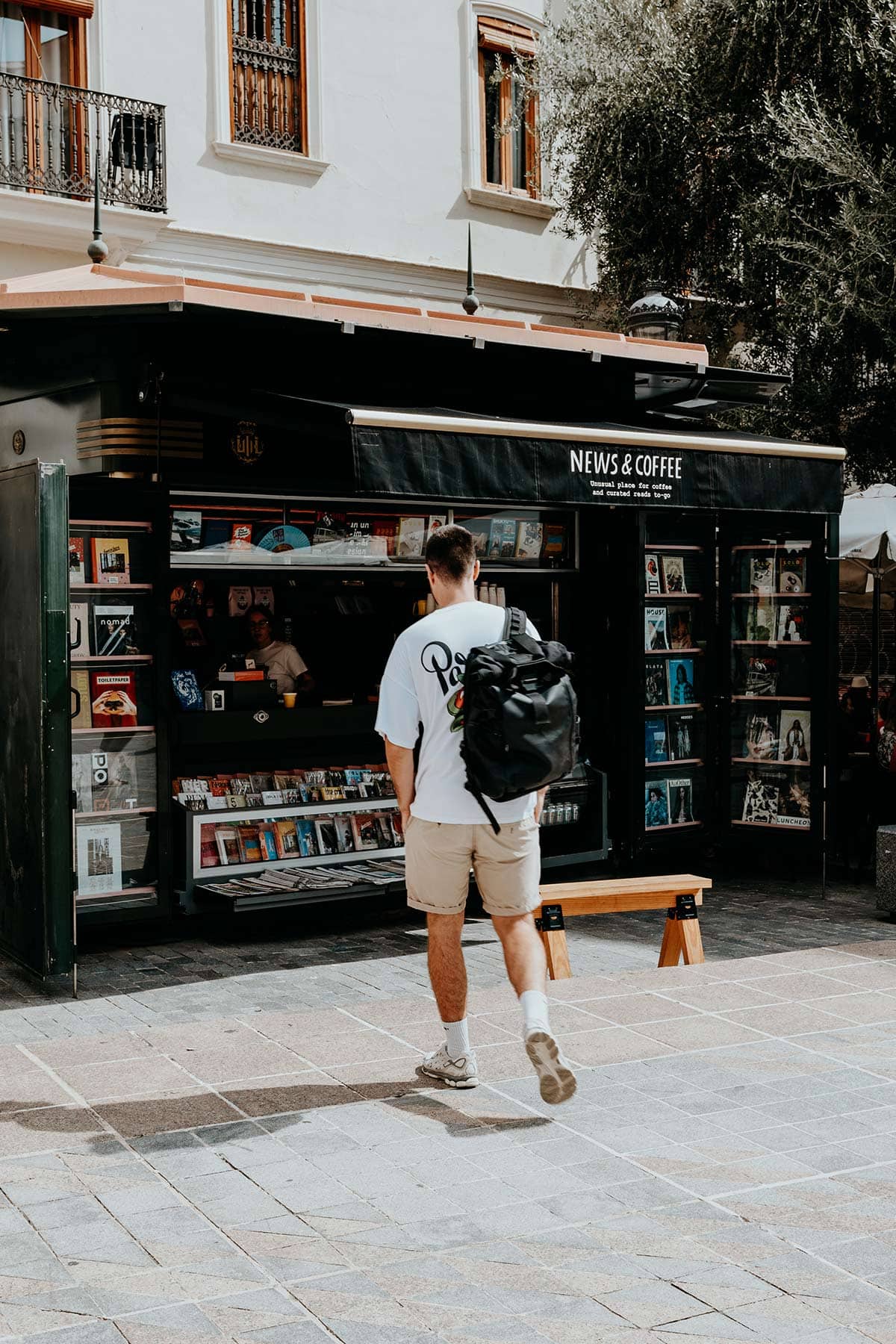
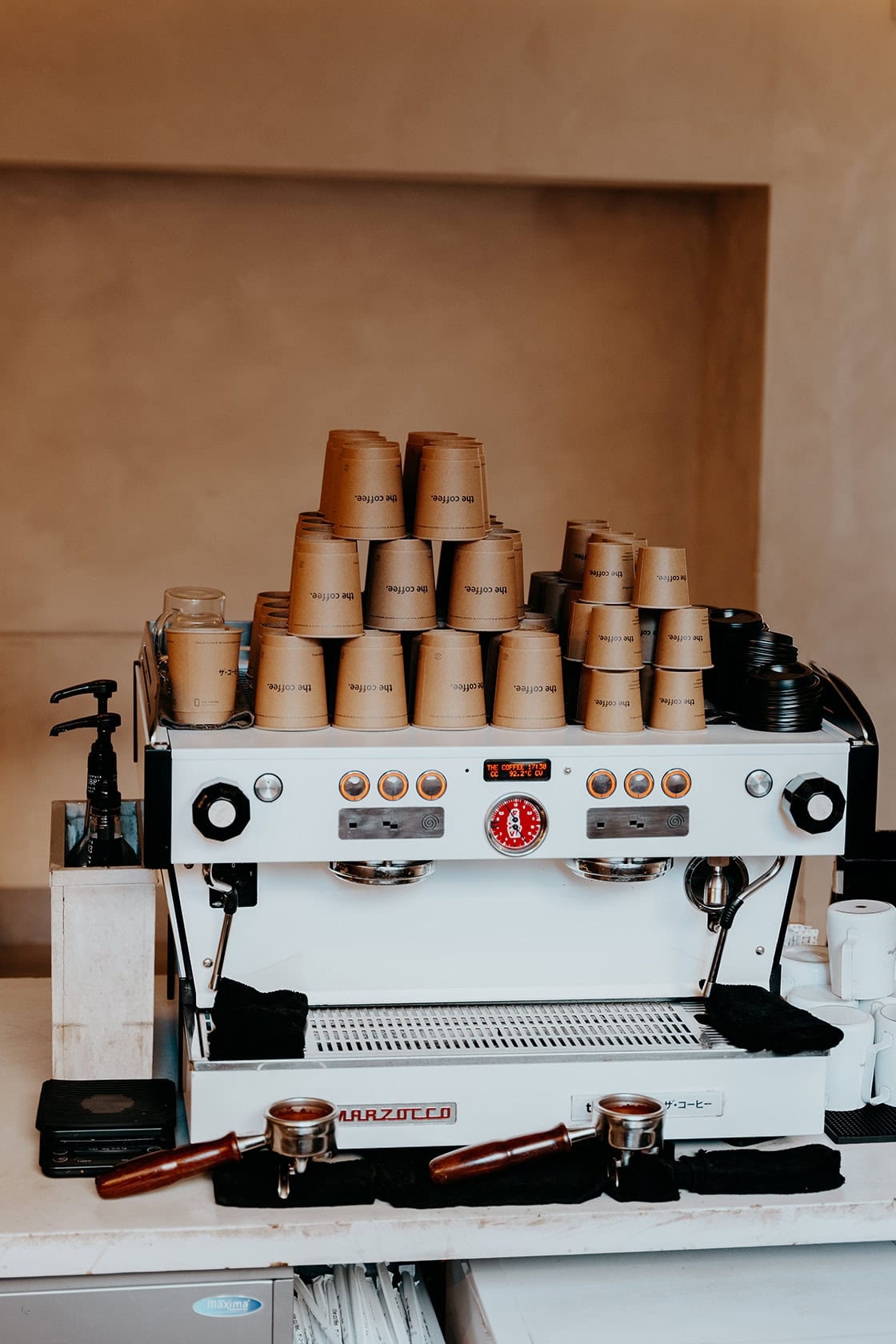
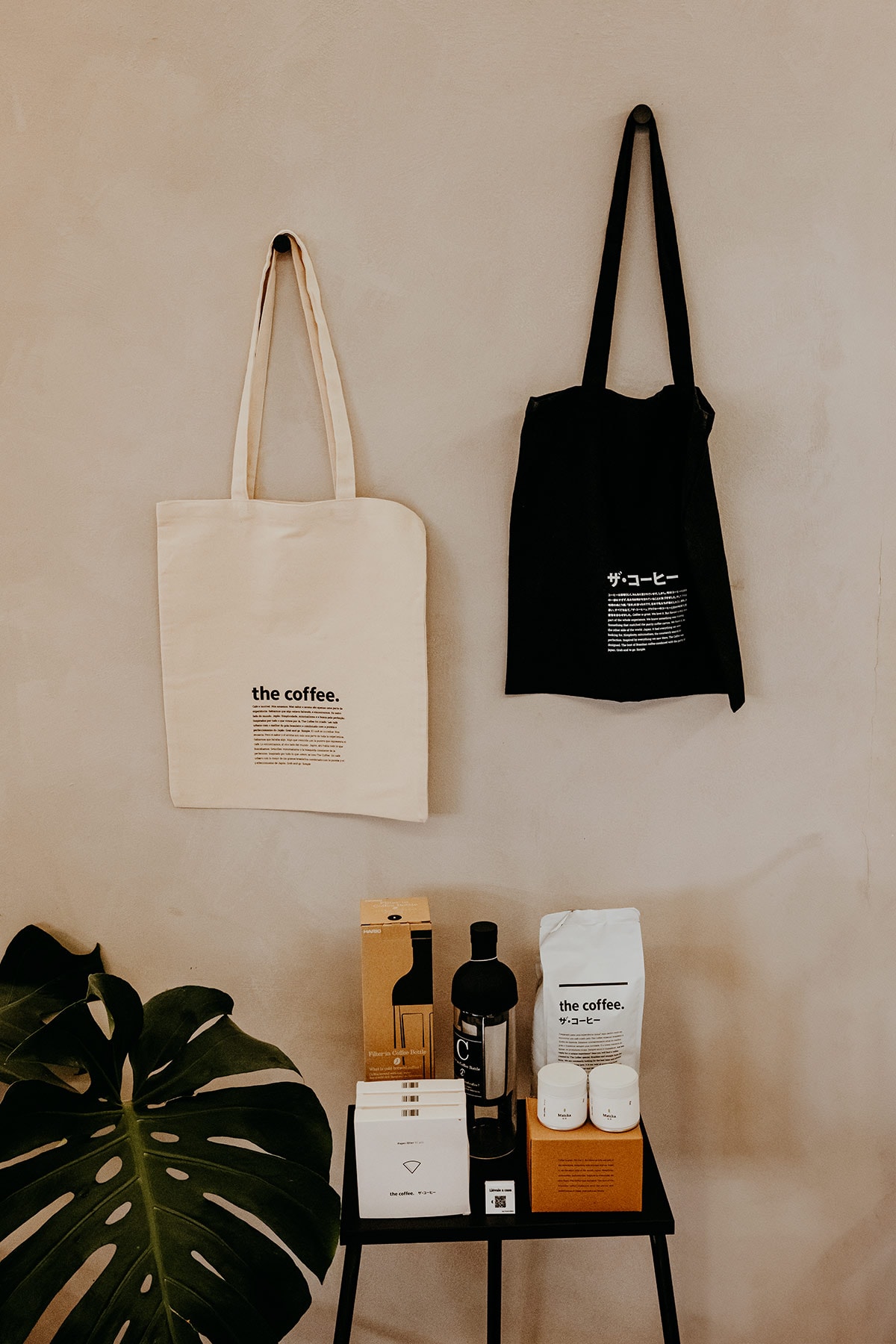
The first coffee place I discovered when arriving in Valencia, the Coffee has somewhat been my second home during the summer of ‘23.
Originated in Brazil, and inspired by Japan’s emerging world of speciality coffee, the Coffee is a truly exceptional franchise with coffee shops established in Brazil, Spain, Portugal, Bangkok, and Dubai to name but a few.
It’s a place where the complexity & rich aromas of coffee and the minimalism & simplicity found in Japan come together in a pure and sophisticated manner.
Given Valencia is sizzling hot during the peak summer months, the Coffee is my favourite place to go for a caffeine fix on a hot summer’s day, as they serve great iced options.
My go-to options here are the Pure Black, The Coffee’s version of espresso, a True White, a classic Flat White, and my absolute favourite; the Iced Vanilla, a cold double-shot latte with vanilla and a hint of chocolate, which to me, is the perfect refreshment when the heat is up.
It is also the place where I came to the hard realisation that espresso with tonic is not made for human consumption – sorry, but not sorry to my Scandinavian readers.
All of this is thanks to my friend Reeju, who worked here as a barista before venturing on her entrepreneurial journey at Karma Cafe – make sure you give that a visit too!
Where | The Coffee Valencia
Price range | €€€
Best for | Iced caffeinated specialities and unique flavours

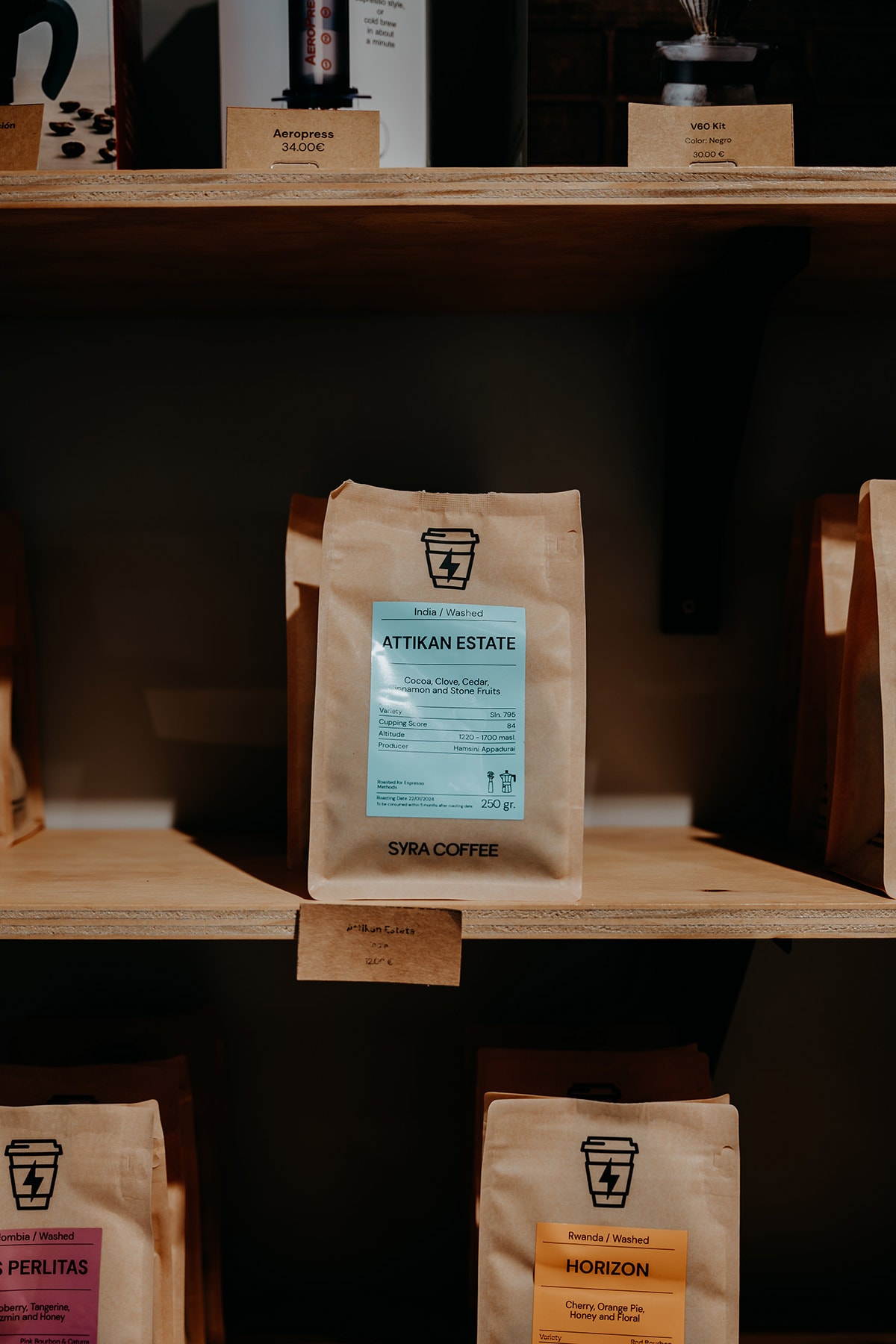
4. Syra Coffee
Popping up at just about every corner in the centre of Valencia (they now have 4 cafes in Valencia), Syra has become somewhat of an institution in the evolving Valencian coffee scene.
It’s the perfect stop for a quick caffeine fix, as there are only a few options on the menu, making it a straightforward, fast and extremely pleasant experience.
Of course, we all fancy artisanal and innovative options from time to time, yet on most days a classic speciality brew is all we’re craving for – this is where Syra should come into play.
You see, Syra is more of a daily driver, with all the classic options on offer, as well as a few iced options for days when the temperature soars above the 30-degree mark – which happens quite often here in Valencia.
Prepared by the most friendly staff that are poured with all the knowledge to serve you the perfect brew, I believe you simply can’t go wrong at Syra Coffee.
Options on offer include Espresso, Cortado, Americano, and Latte, as well as a few excellent pastries and fresh bakes – basically all the good stuff that starts off your engine.
Where | Syra Coffee
Price | €€
Go for | Quick, yet excellent takeaway options


5. Café De Camilo
After all the speciality coffee hotspots, I believe it is more than fair to add a bit of a local touch.
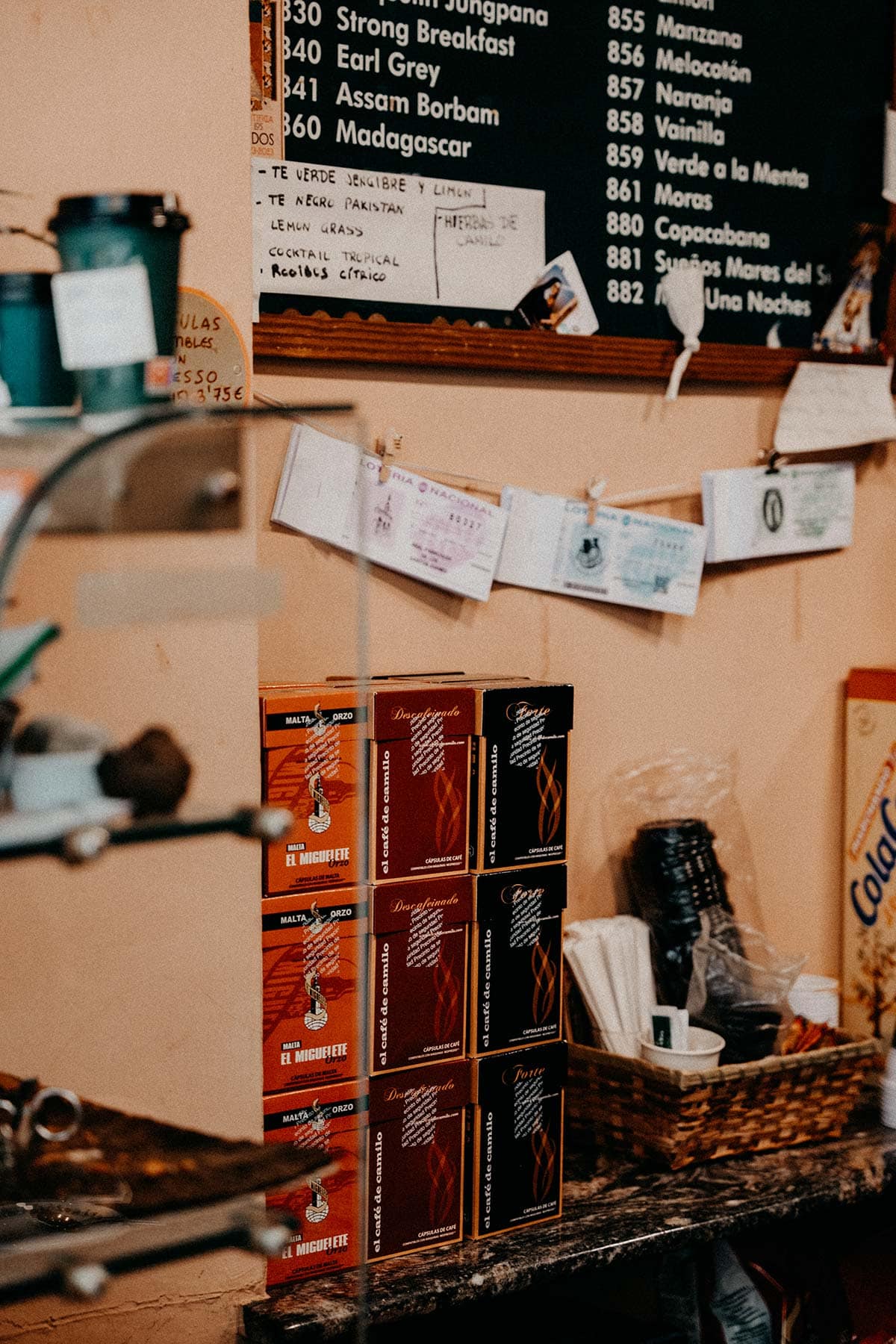
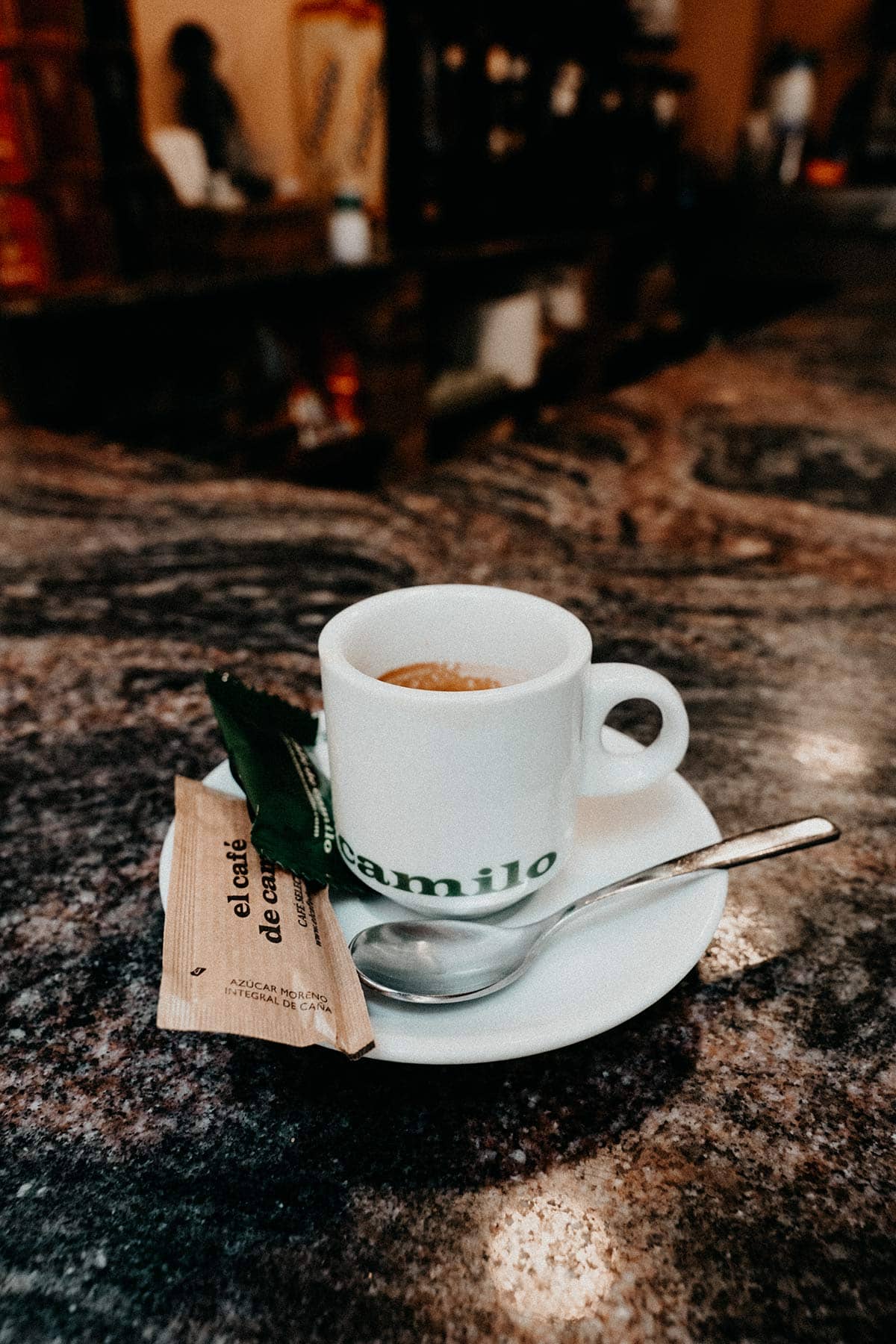
Located in the lively streets of Ciutat Vella, Cafe de Camilo is a small, cosy coffee bar, favoured among the Valencian locals.
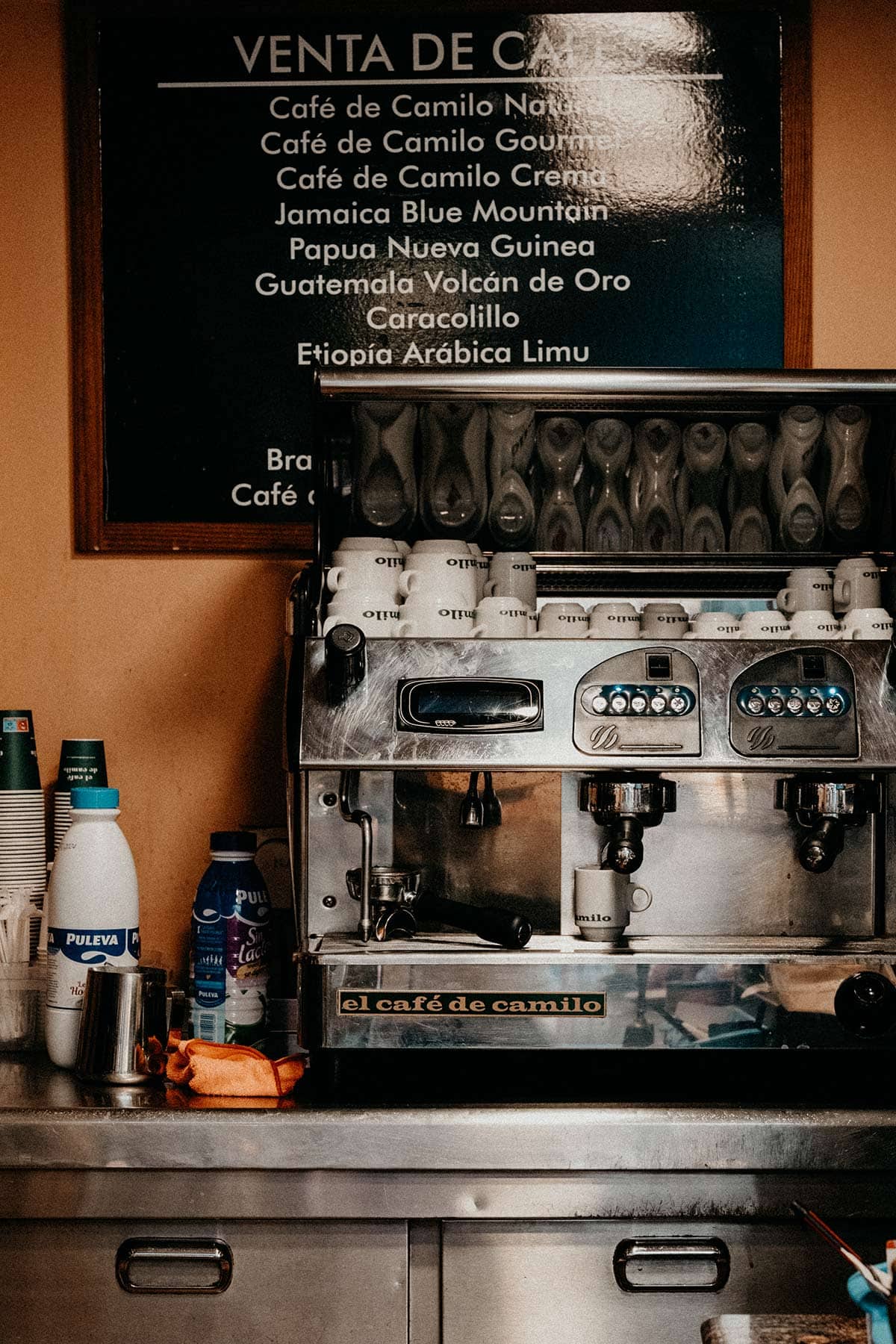
With a well-curated selection of beans of Arabic origin on offer; think Brazilian, Nicaraguan, Colombian, Costa Rican and of course Ethiopian, you immediately notice that Cafe de Camilo takes the process of brewing your favourite beverage pretty seriously.
They also aim to serve coffee from a different bean just about every day of the week, which will be displayed on a handwritten pavement sign creatively.
While the coffee is rich and full of flavour and complexity, it’s the lively and authentic ambience found here that charms and captivates me time and time again.
While you’re enjoying your morning coffee standing at a cosy bar, around you, the local ‘ancianos’ take in the news of the day, vendors open up stores, and the daily hustle and bustle slowly start moving – it doesn’t get any more local than this.
Another thing worth noting is the fact that Cafe de Camilo is criminally cheap for the quality that it puts to the table, which adds to the overall reputation of this incredible Valencian coffee bar.
Where | Cafe de Camilo
Cost | €
Go for | Affordable, yet excellent coffee and an immaculate local atmosphere
6. Ikore Coffee Market
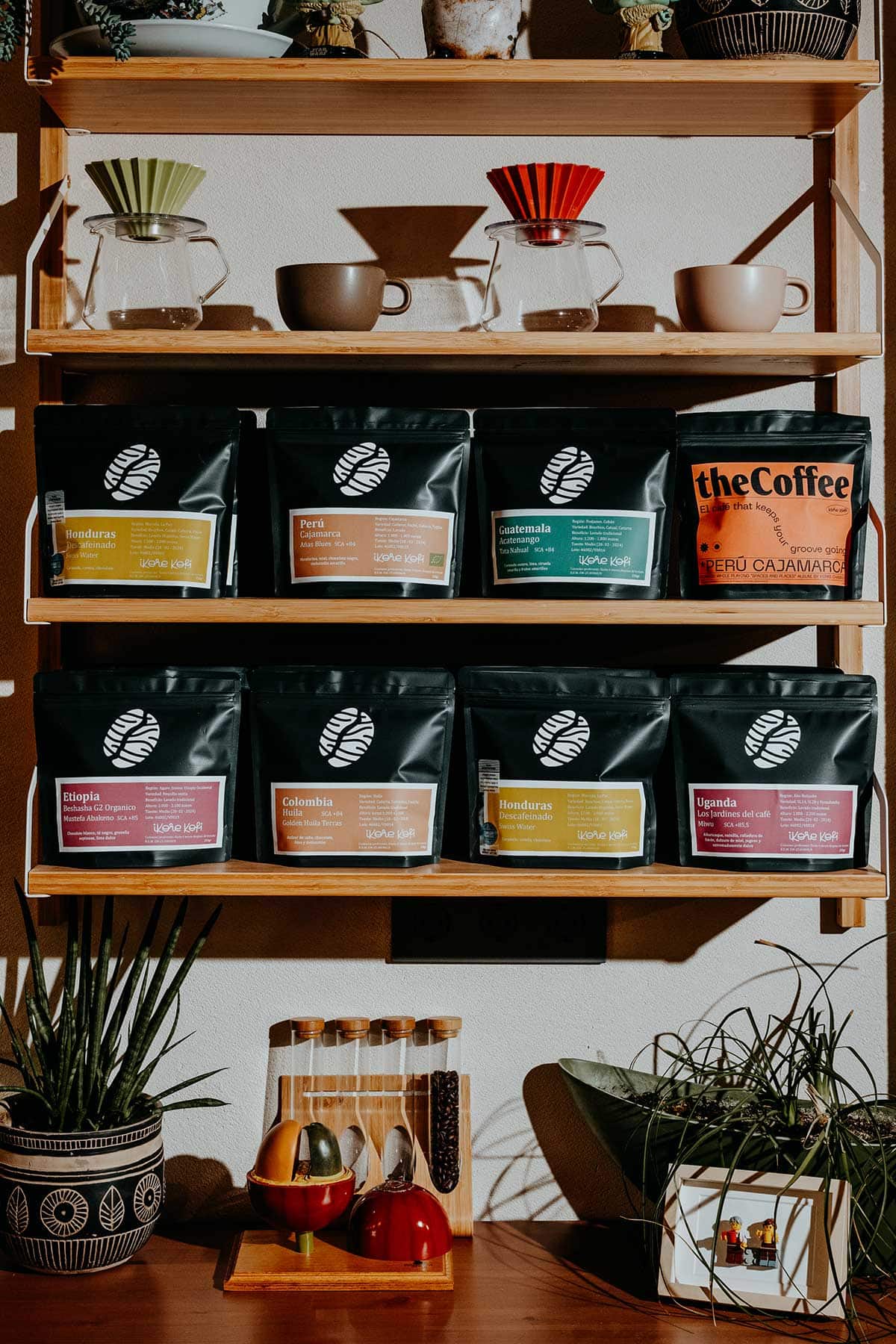
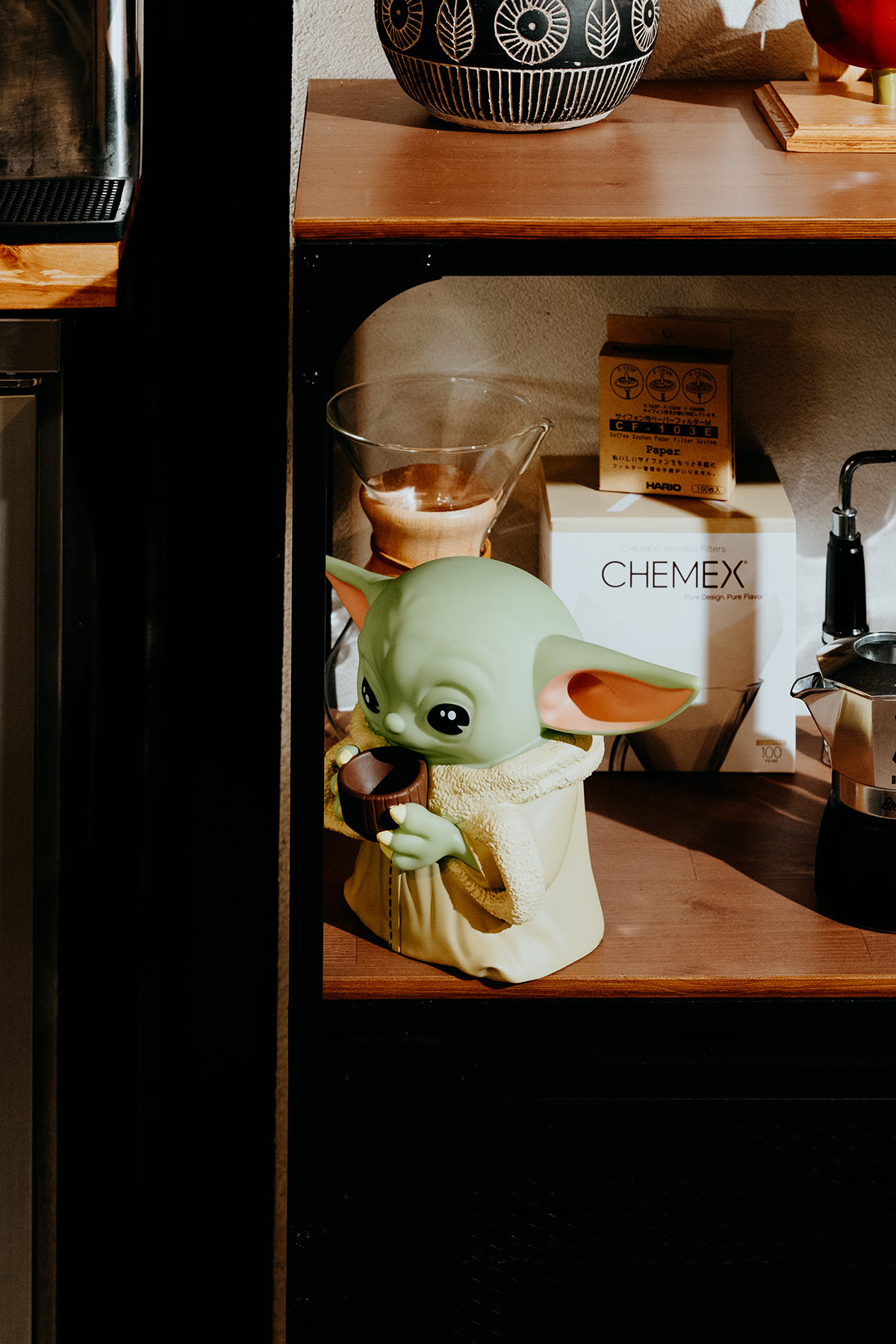
When I noticed baby Yoda enjoying a cup of brew behind the counter, I thought it was safe to say that the coffee at Ikore was approved – this was also the moment when his powerful connection with the force suddenly started to make sense
Oke, jokes aside; at Ikore Kofi they’re approaching coffee the right way!
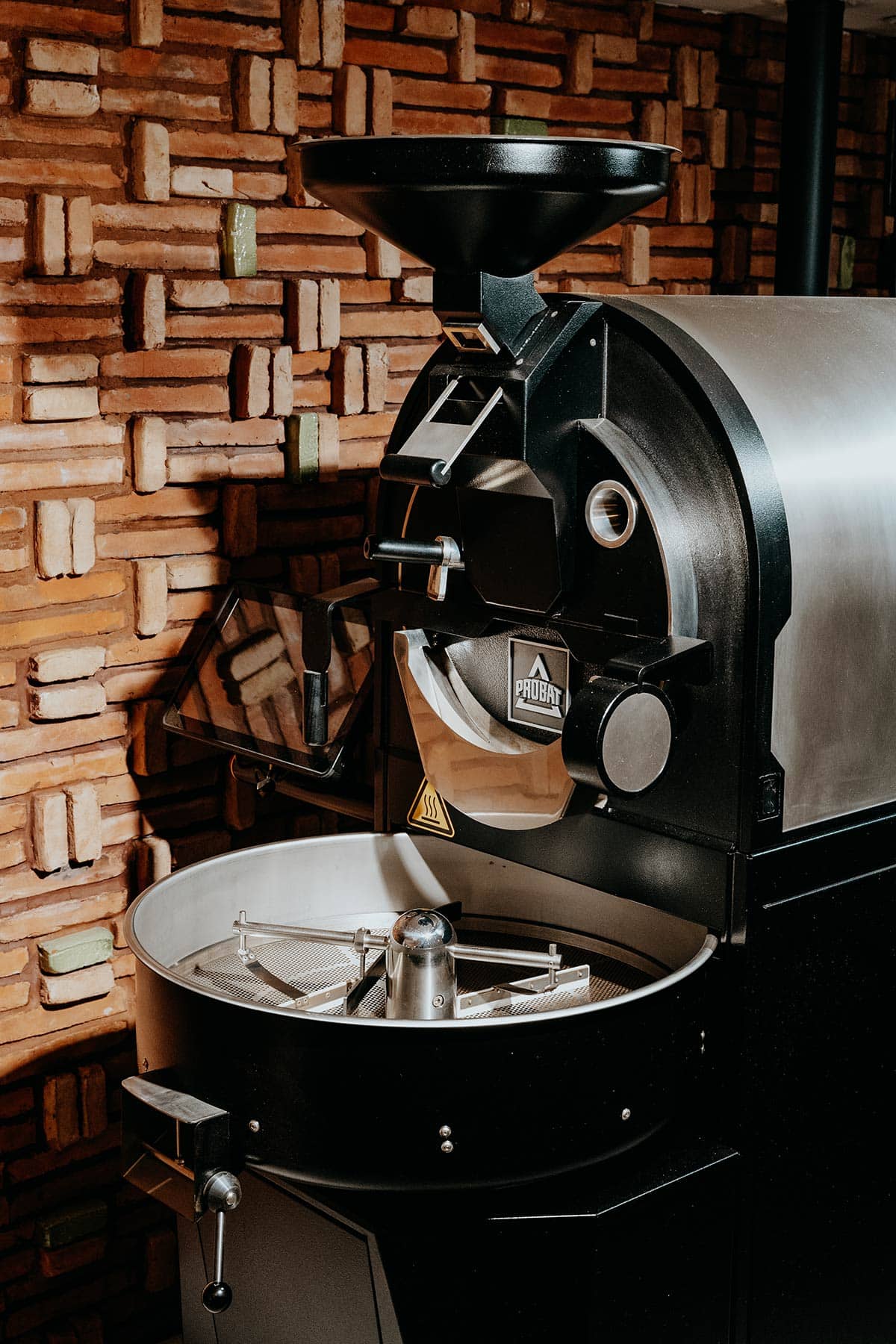
Situated in the heart of Valencia, this impressive cafe doubles as a young, yet innovative micro roastery that roasts coffee in small batches, with a dedicated focus on its ingredients.
As a result, Ikore serves seriously good coffee with rich and dense profiles, where sweetness, acidity, and aromas come together in an utterly delicious fashion.
They also put a significant emphasis on supporting ethical coffee practices, meaning they value fair trade and aim to help coffee farmers, which makes Ikore even more awesome.
Where | Ikore Kofi Artisan Roasters
Cost | €€€
Go for | Artisanal coffee with a rich and dense flavour profile
Other excellent cafes | My honourable mentions
Since there are simply too many excellent coffee shops in Valencia, I have to keep a few in the honourable mentions section for now, until I manage to find the time to visit them and thoroughly form an opinion on them.
Besides the above, I believe there are quite a few that should fit in here to complete this guide.
First, there is Casa Fran, a cosy cafe with a co-working area serving extremely good coffee and great food options too.
Another great one is Cult Cafe, which is a beloved brunch spot among locals and tourists alike.
Then there is Tallat, which is easily on the number one spot on my Valencia coffee bucket list (meaning this will soon get promoted from this honourable mentions section).
One to keep an eye on is Karma Cafe, a homey cafe that is run by my dear friends Shahil and Reeju. Though they are still in the process of crafting their dream coffee shop, it is already a place where you can enjoy a good cup of coffee first thing in the morning.
Other cafes that deserve recognition include; Bluebell Coffee, Docta, Kaide Coffee, Mayan Coffee, and Los Picos.
Where to find the best speciality coffee in Valencia
Given it is easy to lose track of all the excellent coffee places in Valencia, I created a detailed map of the best cafes in Valencia, which you can easily download to your Google account and phone for offline use.
As mentioned before, though I still have quite a few coffee spots to try, I have already chosen to include my complete selection in the map below for those of you who want to deepen your coffee journey here in Valencia.
The best speciality coffee in Valencia | The essentials
Where to stay in Valencia
If you’re looking to visit Valencia during the popular European summer months, I simply can’t stress it enough to sort out your accommodation rather soon than later.
However, with so many incredible options to choose from, it can be quite daunting at times.
Luckily for you, I’ve already done proper research and curated the best options in my Where to stay in Valencia (coming soon) guide.
Based on my own experiences, choosing the right base from which to explore Valencia is quite an essential part of your research, so my curated guide will be of good use to help you find the right spot for you.
If you’re solely here for some quick inspiration, these are some of my absolute favourites out of the bunch:
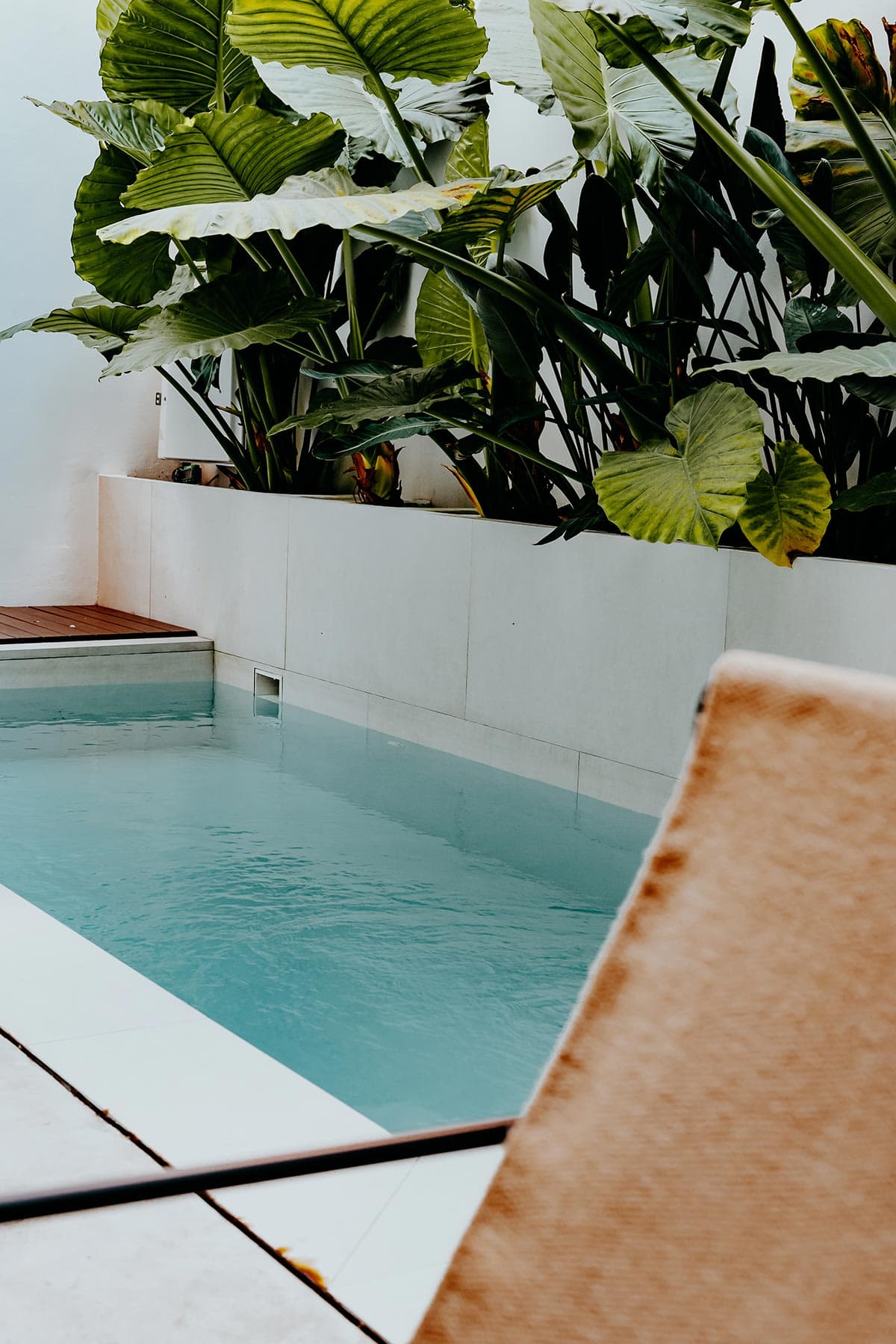
Caro Hotel | Nestled in a picturesque laneway in the heart of Valencia, Caro Hotel is set within a 19th-century palace and boasts a modern design with exciting historical elements. It’s basically as if you’re staying in an art museum, with 26 beautifully designed rooms that all have their own unique features.
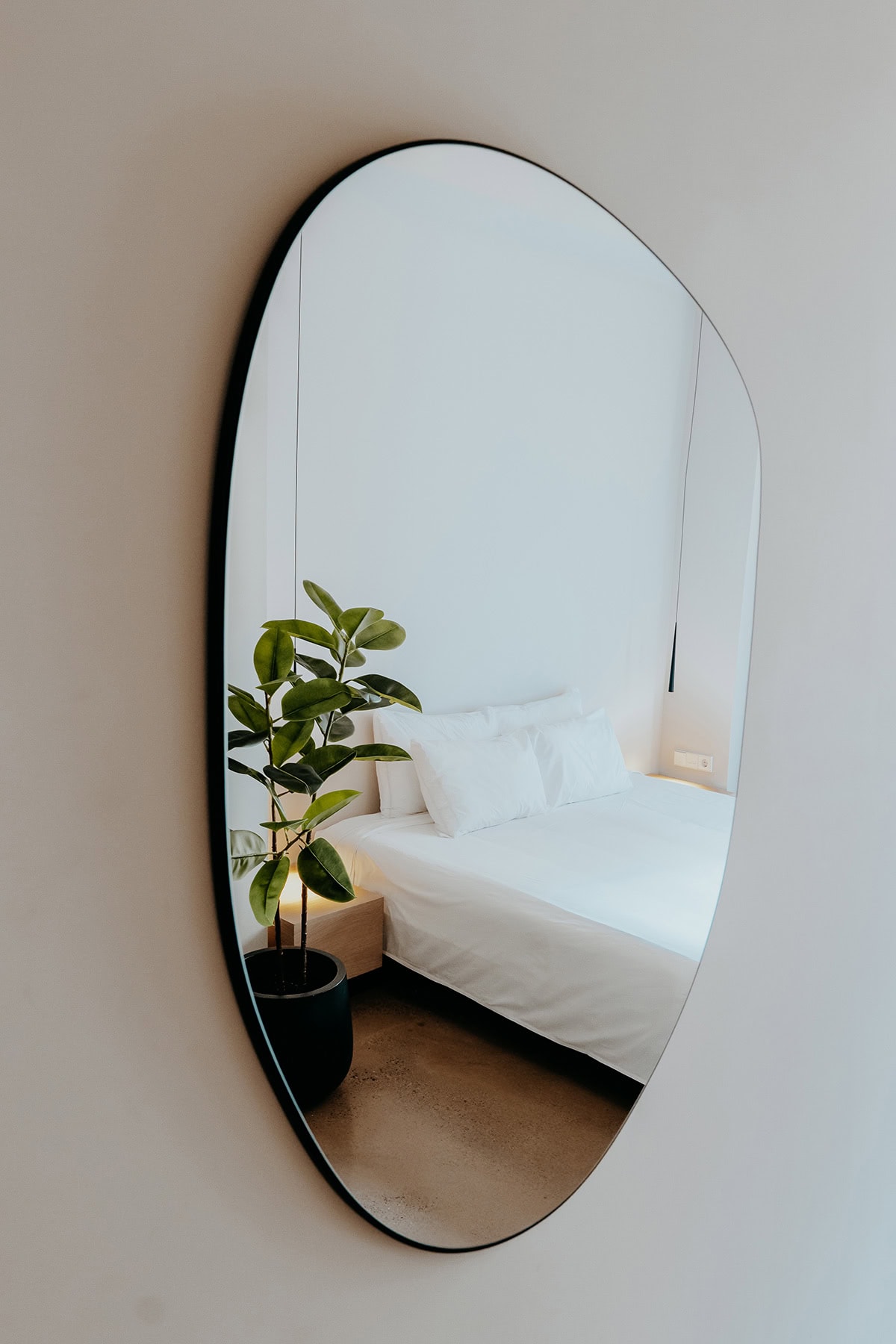
YOURS boutique stay | Set within Valencia’s trendy Russafa neighbourhood, this designer apartment is perfected down to the last detail, with an exceptionally minimal and spacious feel to it. The apartment-style YOURS hotel is, in my opinion, the perfect base from which to explore Valencia. If there’s one place that comes close to my ideal apartment, I’m pretty sure it’s this one, so make sure you check it out here.
Marqués House | If you’re looking for a stunning, contemporary hotel with spacious and tastefully decorated rooms in the heart of the historic centre of Valencia, look no further. Located just a stone’s throw away from all the best things to do in Valencia, Marqués House is known for its high standards and excellent hospitality, which is clearly noticeable throughout the entire property.

What’s next | The best things to do in Valencia
As the third largest city in Spain, Valencia is teeming with history, age-old traditions, distinctive culinary delights, and heaps of amazing things to see and do.
From the time-worn Torres de Serranos to the impressive constructions found at the innovative Ciudad de las Artes y las Ciencias, to Mercado Central; one of Europe’s largest covered markets to the excellent stretches of beach, Valencia is a city that will easily find ways to conquer one’s heart.
After now living in Valencia for close to one year, I gathered loads of intel to curate an in-depth guide, where I covered my take on the absolute best things to do in Valencia.
While this guide will be updated regularly with my latest findings, it is packed with all the insights, including my personal favourites, tips on hotels and restaurants, as well as heaps of useful information to make your time in Valencia an unforgettable one.
Stay safe in Spain | Travel insurance
Even though Spain is completely safe, I always advise everyone to sort out good travel insurance before setting out on their adventure.
While I believe that it’s unlikely to experience any troubles when following the advice in this guide, something unfortunate can happen at any time, whether it’s an injury, a stolen camera, or an accident on the road.
For travel insurance, I use Heymondo, as they offer full COVID-19 coverage, as well as a handy app with 24-hour medical assistance. Make sure you check it out – readers of WTSW receive 5% off any insurance policy too.
Cheers!
I’ve been on this travel blogging journey since 2019.
If you appreciate what I do here, these are some ways you can support me.

A quick guide to the iconic Tram 28 in Lisbon, Portugal
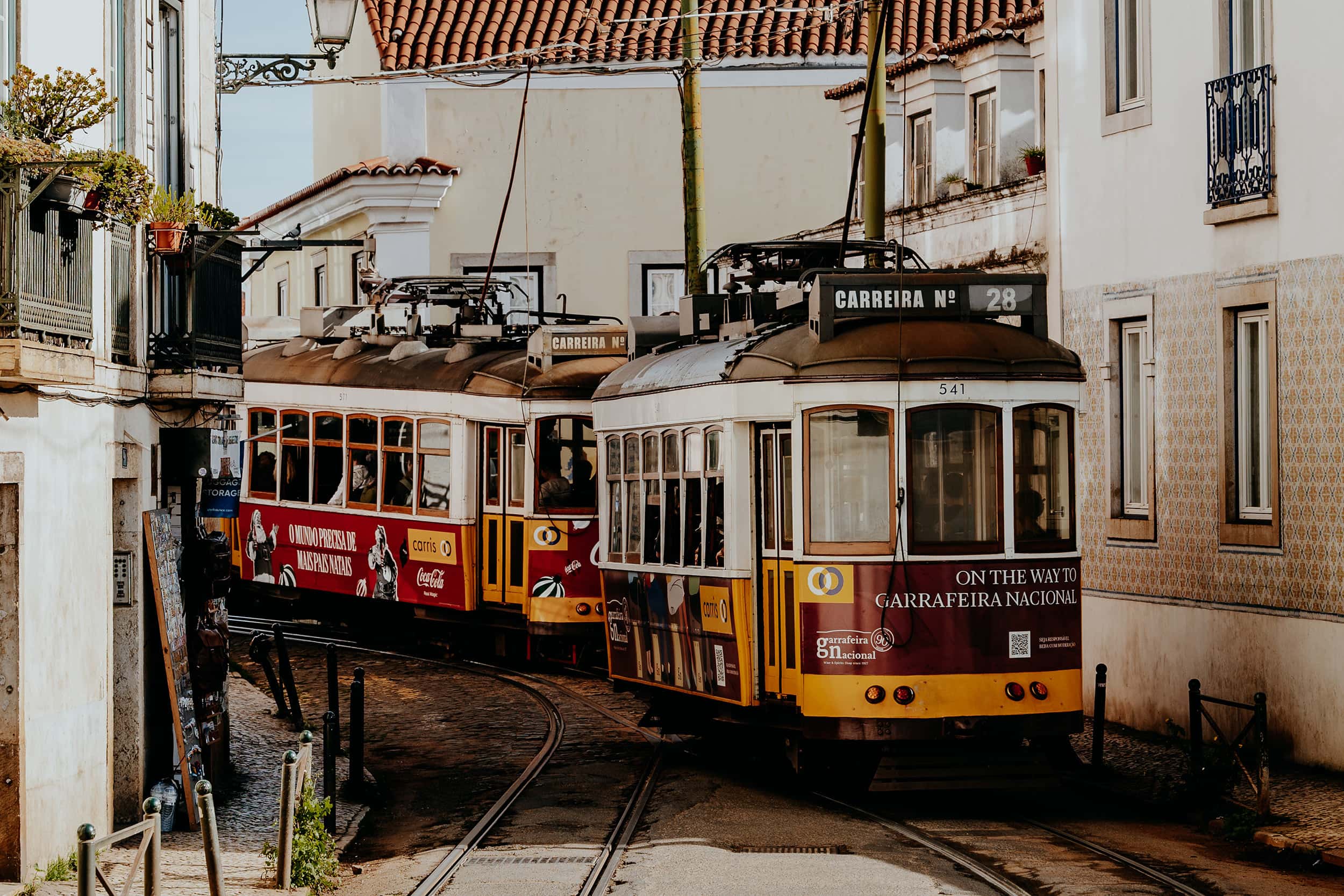
Find me one more iconic Lisbon scene than the famous Tram 28, I’ll wait!
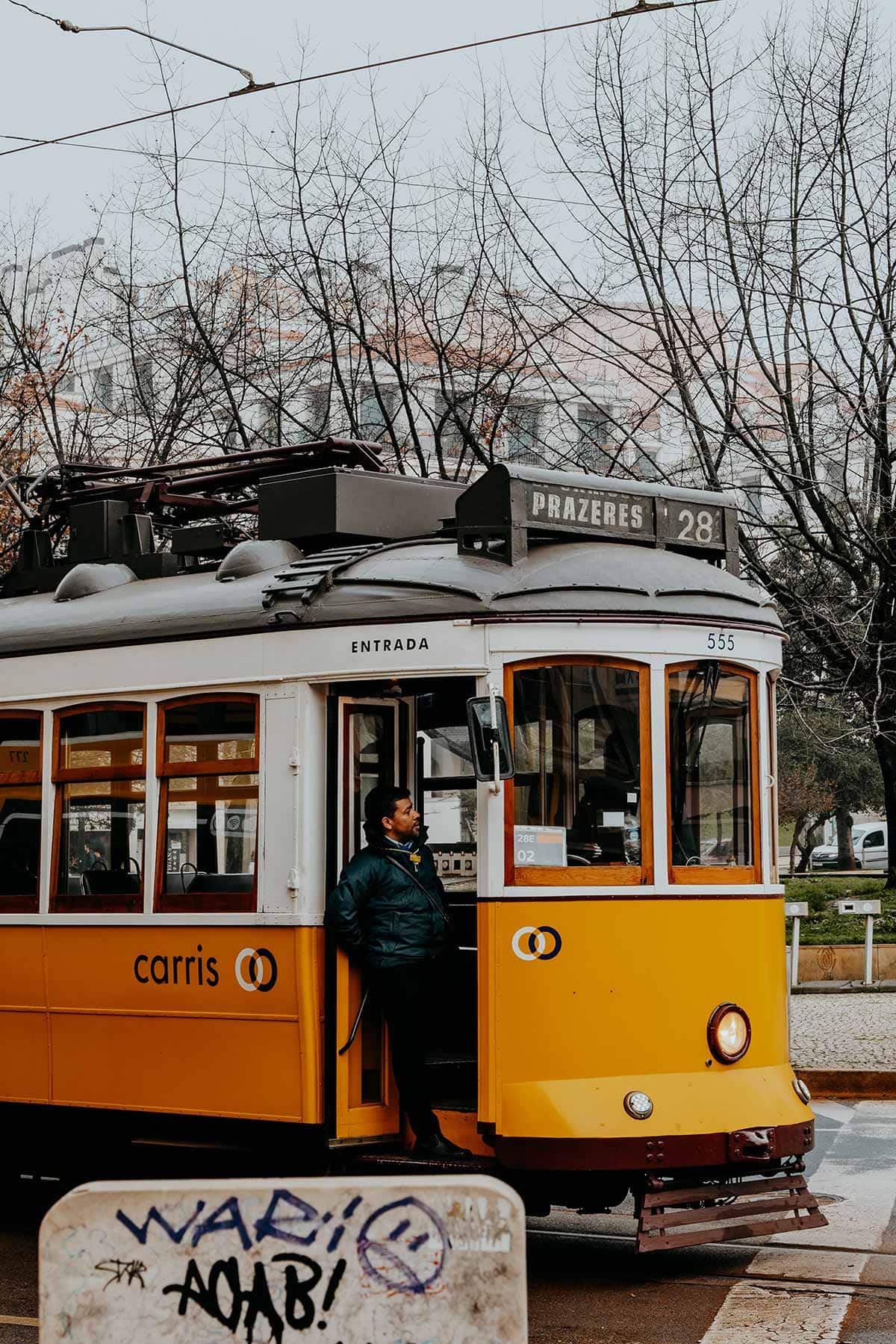
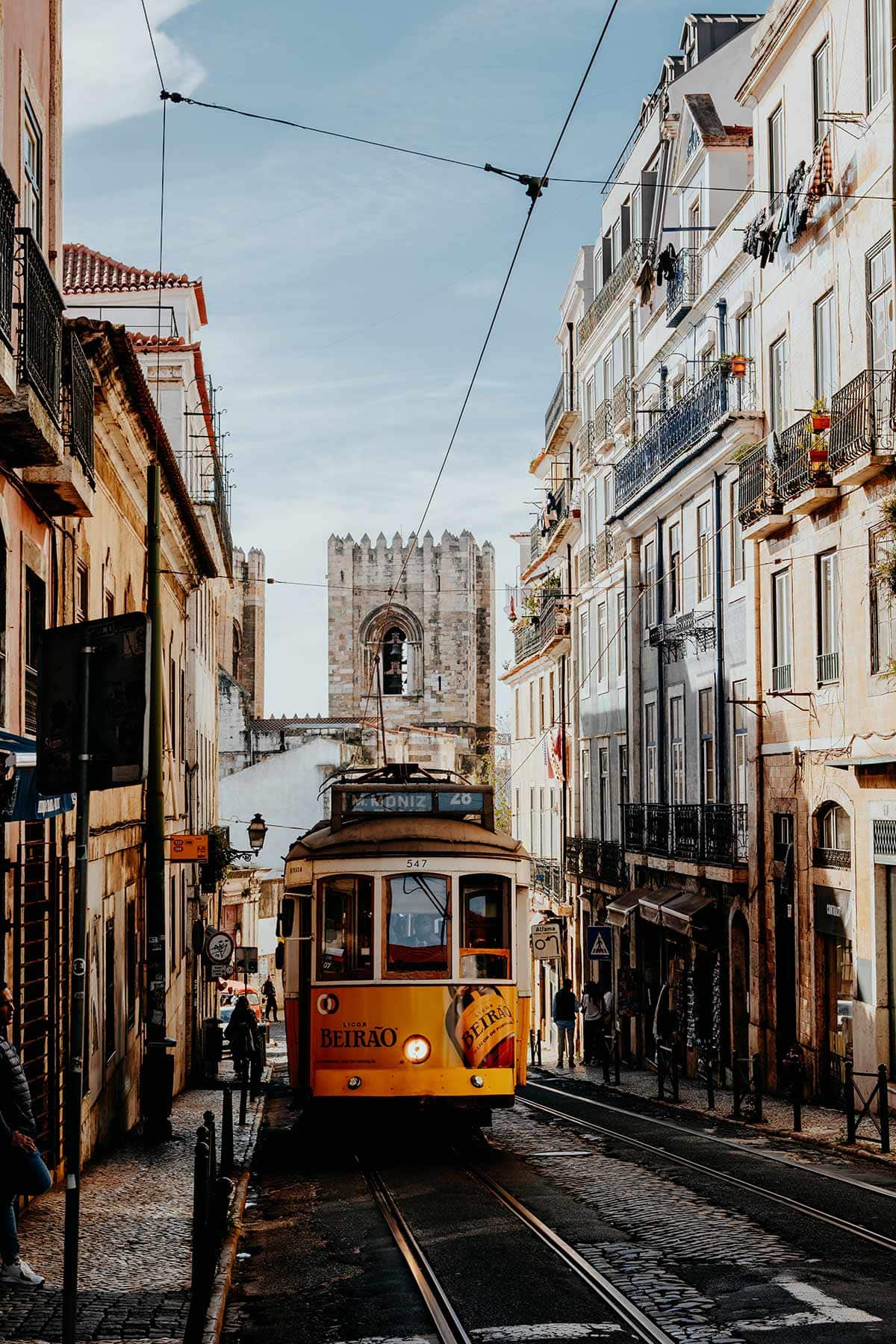
First introduced as the city’s urban transit in 1884, these vintage trams are a symbol of the past, yet still very much operating to take people up and down the steep hills of Portugal’s charming capital – during the journey, it often feels as though you time-travelled to an old movie set.
A ride aboard Tram 28 is truly iconic and will take you to some of the best things to do in Lisbon (coming soon), making it one of the best ways to uncover what this amazing city has to offer in only a short amount of time.
However, since a ride on Tram 28 is among the most popular activities in Lisbon, it receives heaps of interest from both travellers and locals. For that reason, there are a few things you should take into account before embarking on this iconic journey yourself.
That’s where my guide might come in handy.
To help you experience Tram 28 in the most convenient way possible, I’ve put together this detailed guide, where I shared everything you need to know to plan your own journey, including the cost, timetables, and the route + highlights – plus some useful photography tips too!
If you choose to use any of the links on this page, I may receive a small commission at no extra cost to you. By using these links, you’ll have a direct impact on WTSW and my ability to continue to create free insightful travel content for you. If you find any of my tips useful, you can support me by buying a virtual coffee here.
A quick guide to the iconic Tram 28 in Lisbon
Where is Tram 28
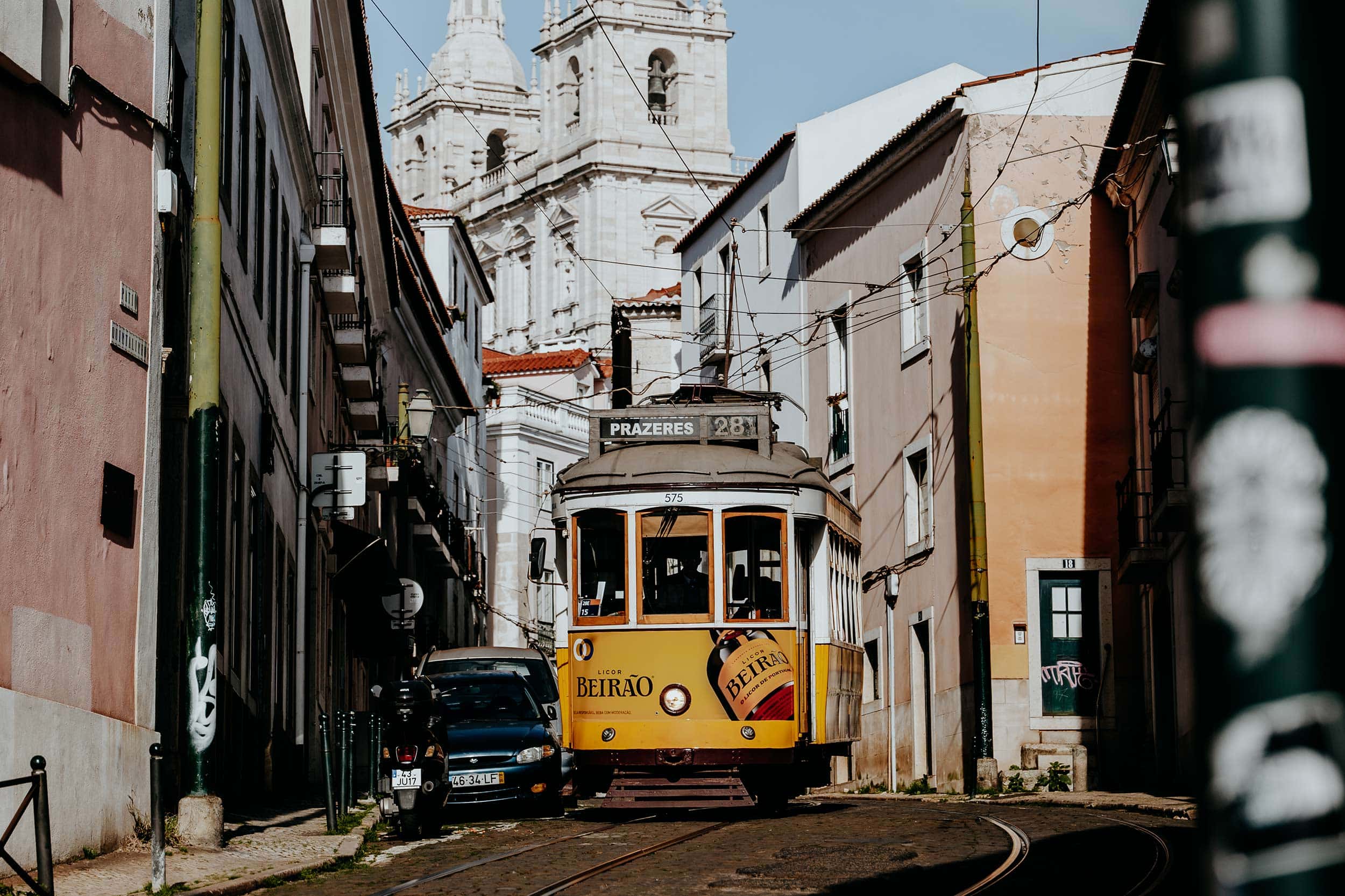
Tram 28 is an iconic tram that operates in the streets of Lisbon, Portugal’s fascinating capital city.
The starting point of the famous tram route is situated at the heart of downtown Lisbon, about 5 minutes away from Praça Dom Pedro IV.
To be exact, Tram 28 departs from Praça Martim Moniz
Although the above is the official starting point of Tram 28, you can jump aboard the iconic yellow tram at just about everywhere in the popular tourist areas of Graca, Alfama, Baixa and Estrela, as well as Campo Ourique, which is the final stop of the route.
Tram 28 timetable
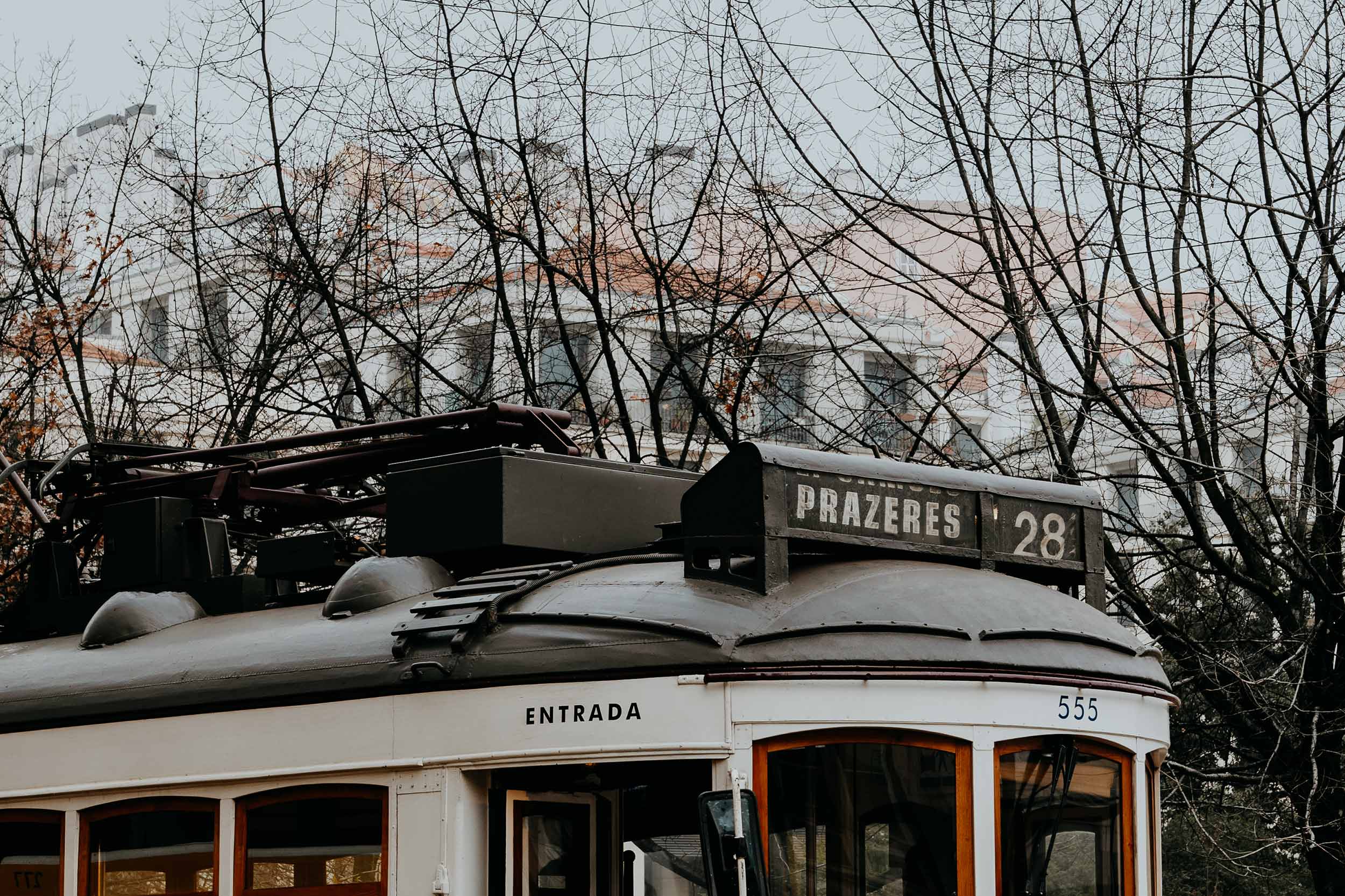
First things first, Trams 28 runs every day of the week and operates during public holidays too.
However, there are some slight differences in terms of its schedule, which I listed down below.
- Monday to Friday | From 05.40 to 23.30
- Saturday | From 05.45 to 22.30
- Sunday | From 06.45 to 22.30
Typically, the tram journey should take no more than one hour from start to finish, and a tram will arrive at one of the many stops just about every 10 minutes.
For up-to-date timetables or additional information, make sure you check out the official Lisbon Tram website here.
Tram 28 in Lisbon | The cost
When it comes to the cost of a ride on Tram 28 in Lisbon, there are a few things you should take into account before deciding which ticket you’re about to opt for.
To help you find the right option, I’ve listed the options with some useful insights down below:
Lisbon Travel Card | If you’re planning to explore Lisbon inside and out, it is wise to get your hands on a Lisbon Travel Card, which will give you access to nearly all the highlights of the city, while also providing you with free use of Lisbon’s public transport system, including the icon yellow tram. If this sounds appealing to you, make sure you check out the other benefits of the Lisbon Travel Card here.
Single ride | A single ride is the perfect option for those who do want to experience Tram 28, yet are limited on time since they’re on a shorter trip in Lisbon. A one-way ticket will set you back €3,- (€1,50 if you purchase a Viva Viagem Travel Card for €0,50) and can be bought onboard.
24-Hour Pass | If you’re in the city for a weekend break and plan to hop on and off of the iconic tram, yet don’t plan to purchase a Lisboa Travel Card, a 24-Hour Pass will be a great alternative. Since a single-ride ticket is one-way only, I would highly recommend a 24-Hour Pass for €6,40 as you can also use it for your return back to the city centre from Campo Ourique.
Tram 28 in Lisbon | How to beat the crowds
Since Lisbon has become one of the most popular cities in Europe, visiting Lisbon during the peak European summer months of June to September will provide quite a few challenges for your ride on Tram 28.
During these months, the tram is often packed like a can of sardines, and while Alfacinha’s do love their sardines, this is not exactly what you want, as obtaining a seat or even some space to stand is merely impossible.
Of course, going early in the morning or later in the evening will make somewhat of a difference, however, I believe it will still be challenging to find a seat.
A great alternative, and the best option if you ask me, would be to take the tram at Campo Ourique, and follow the iconic journey in the opposite direction.
You see, most travellers tend to start the journey from Martim Moniz or other popular stops within the downtown area, resulting in unbearable queues for trams whose capacity has already been tested to the limits.
Alternatively, during the shoulder months of March to May and October to November, you will probably find a seat on an early morning or late afternoon ride. If not, I would recommend falling back on the option that I mentioned above instead.
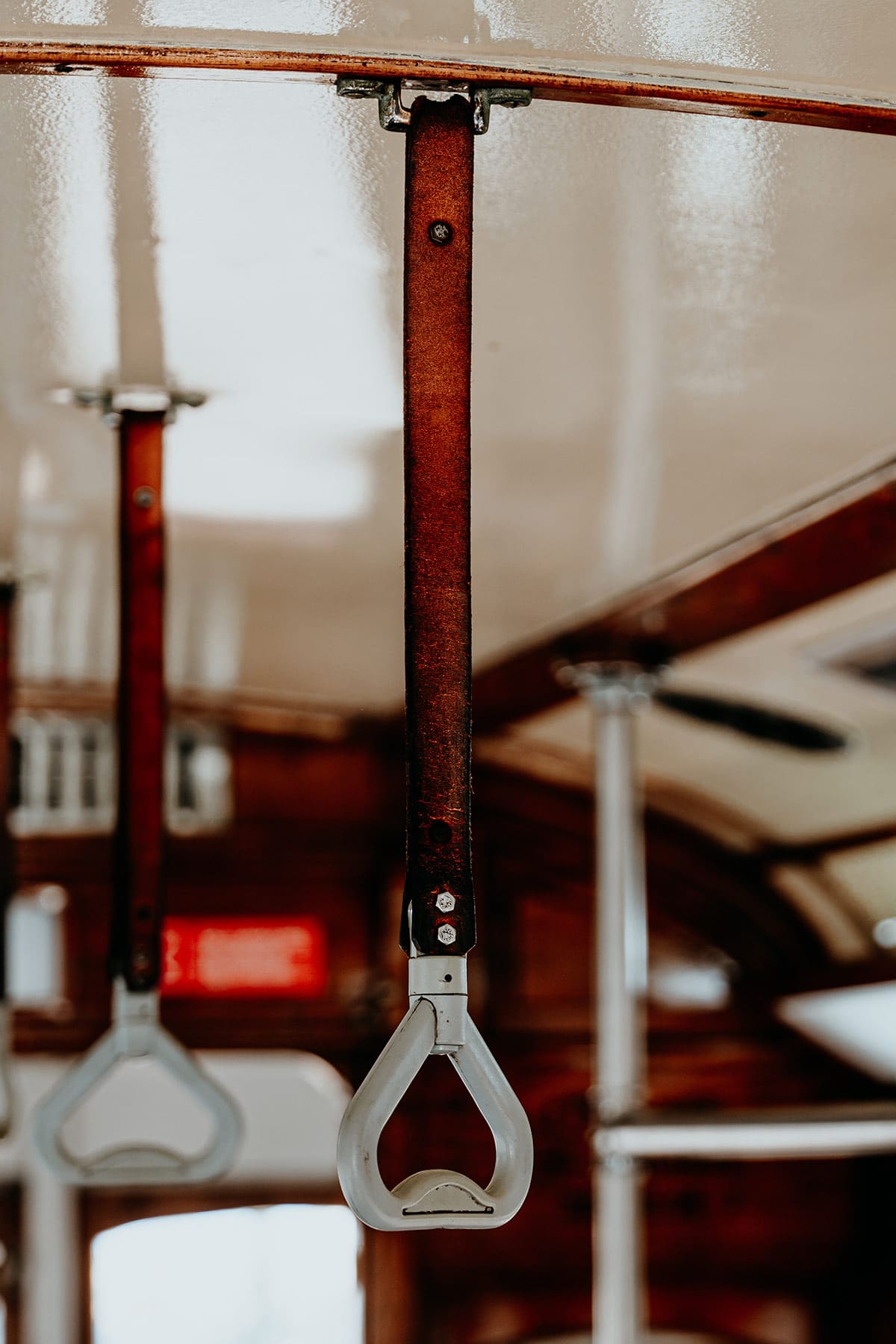
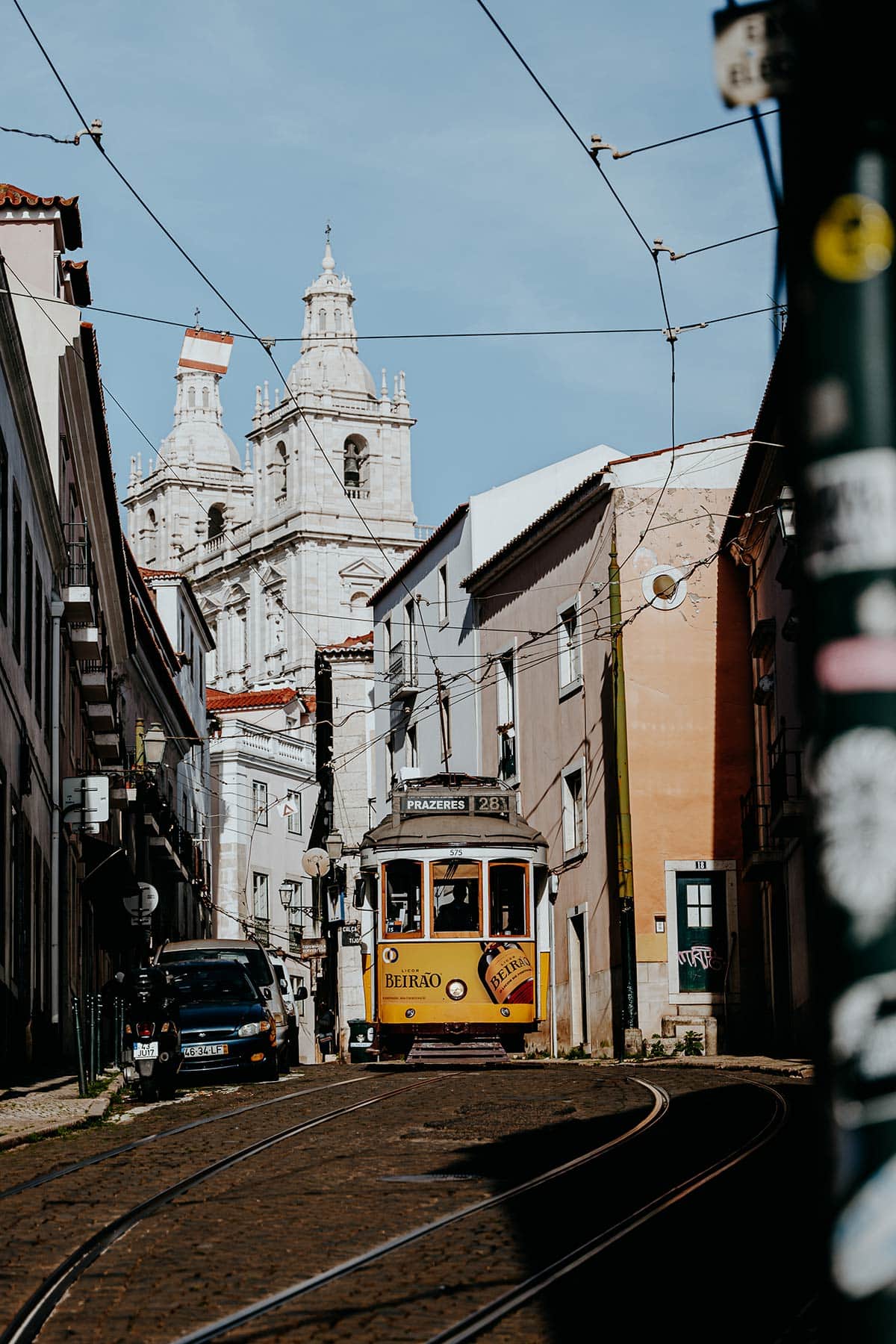
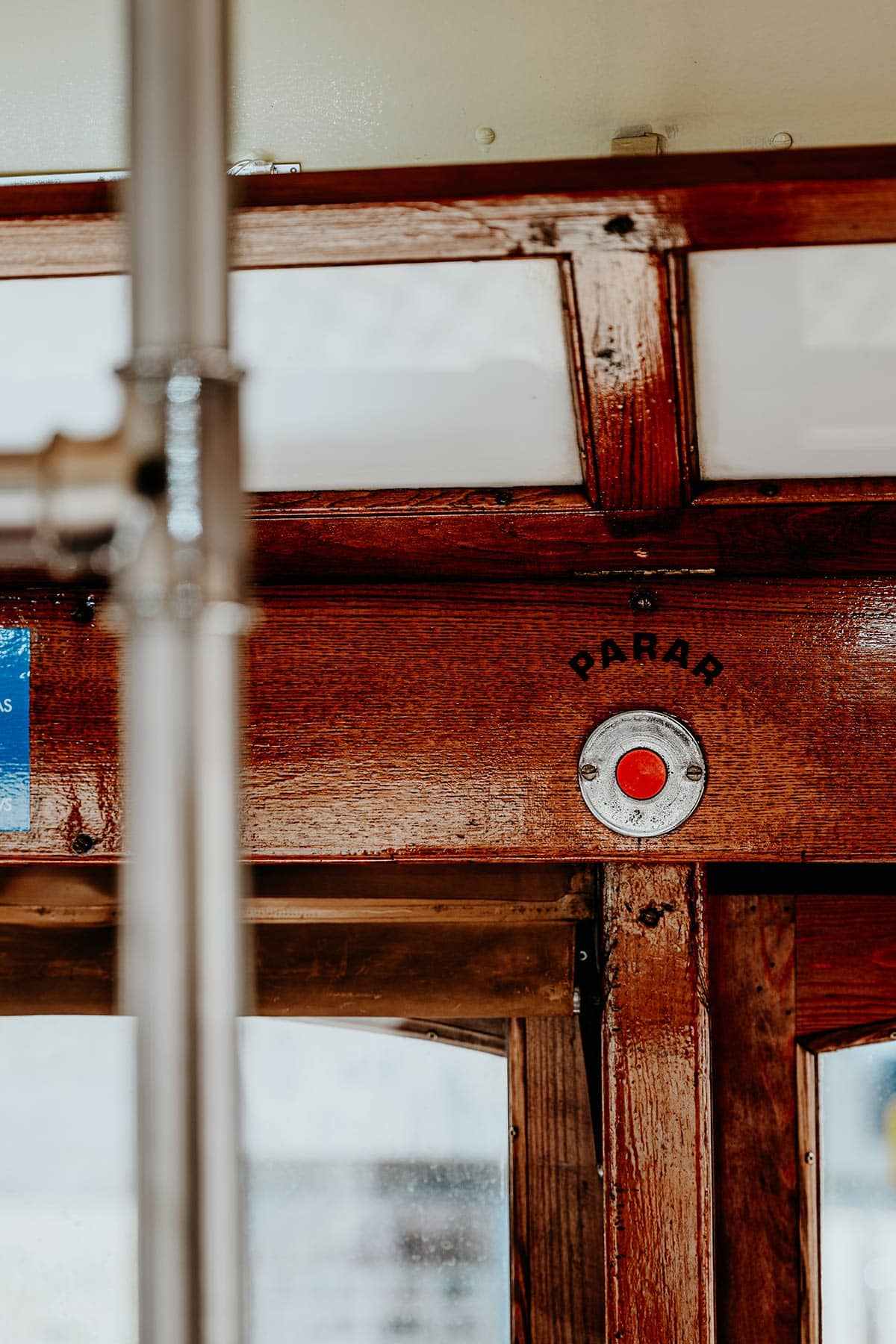
Tram 28 Lisbon Route + Highlights
To help you get a good overview of the Tram 28 route and the highlights you will encounter along the way, I sorted out all the stops and landmarks in the map down below.
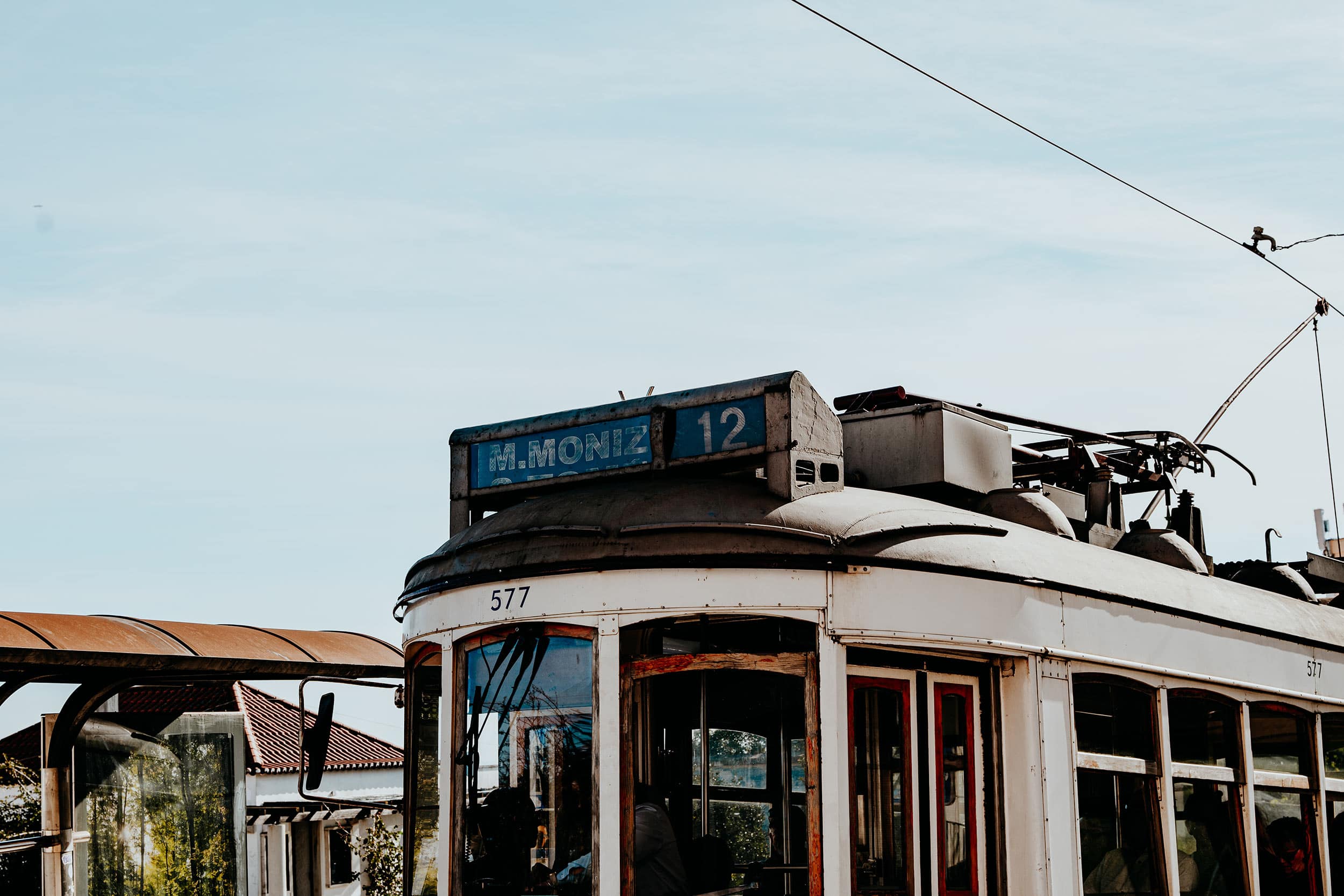
The best things to see on Tram 28 in Lisbon
Seeing the main sights of a city has never been easier, as a ride on tram 28 in Lisbon follows the perfect sightseeing route, making it the ideal option for those short on time.
Starting at Praça Martim Moniz, the iconic yellow tram will slowly take you to some of the absolute highlights found in the time-worn streets of the old town, before venturing further to the popular tourist areas of Graca, Alfama, Baixa and Estrela.
It’s a truly scenic ride that sometimes feels as if you were time-travelled to an old movie set.
My highlights along the famous Tram 28 route include:
- Monastery of São Vicente de Fore | Get out at Voz Operário
- Portas do Sol viewpoint | Get out at Portas do Sol
- Lisbon Cathedral | Get out at Sé
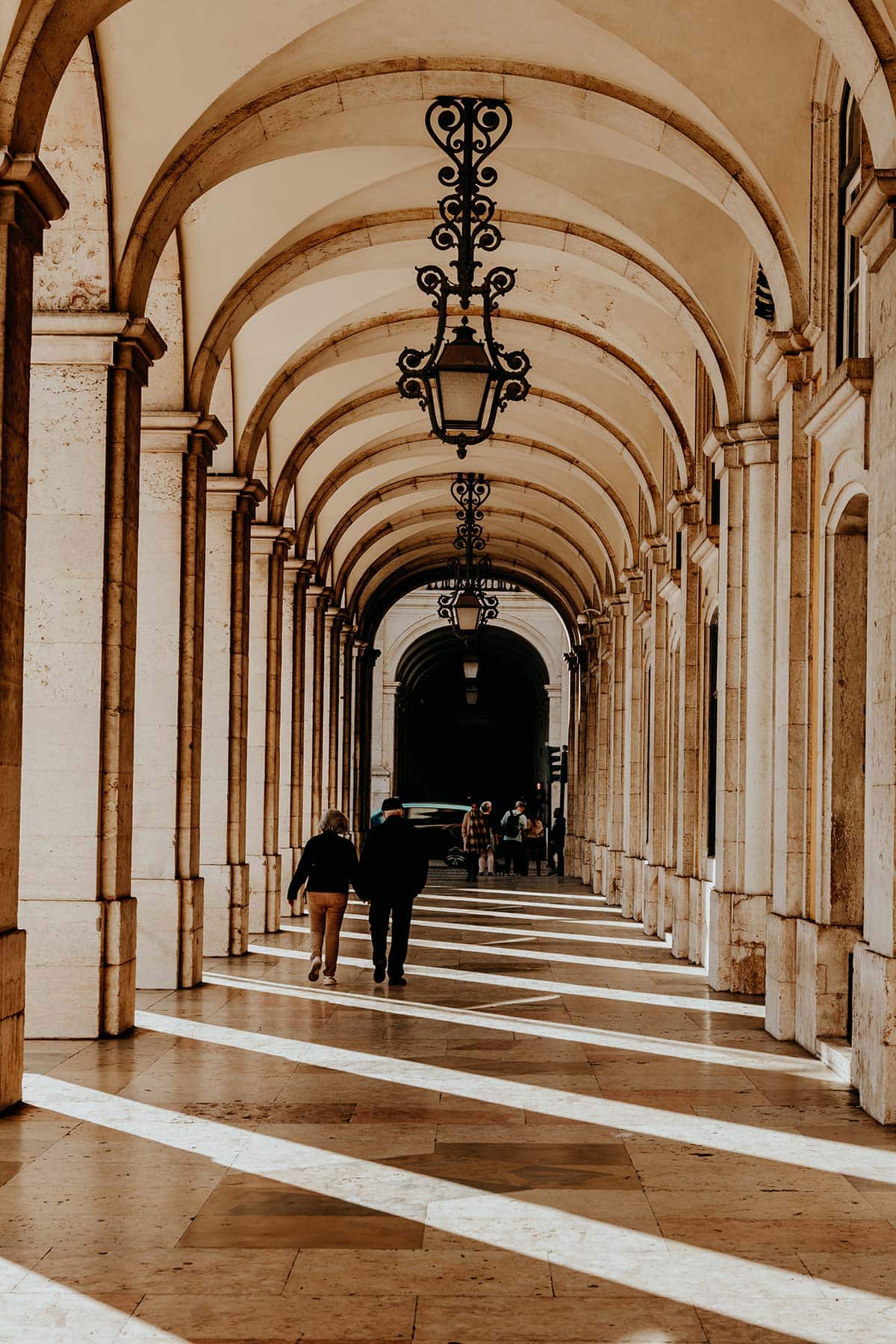
- Praça do Comércio + Arco da Rua Augusta | Get out at Rua Conceição
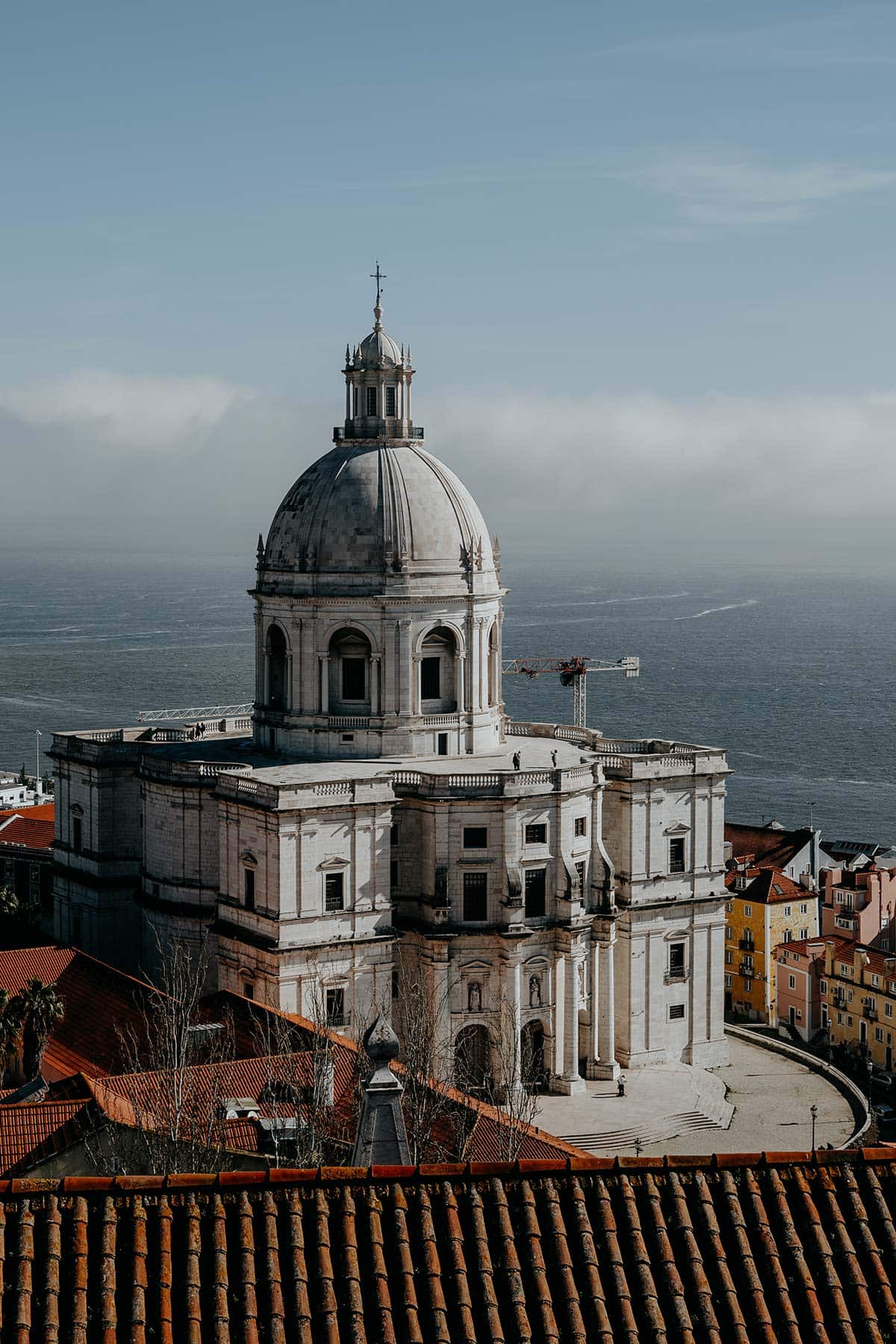
- Basilica da Estrela | Get out at Estrela
- Prazeres Cemetery | Get out at Campo Ourique
If you’re looking to get on and off to see these highlights, I’d recommend getting your hands on a 24-hour Pass or a Lisbon Travel Card, since a single-ride ticket is simply not suited for this.
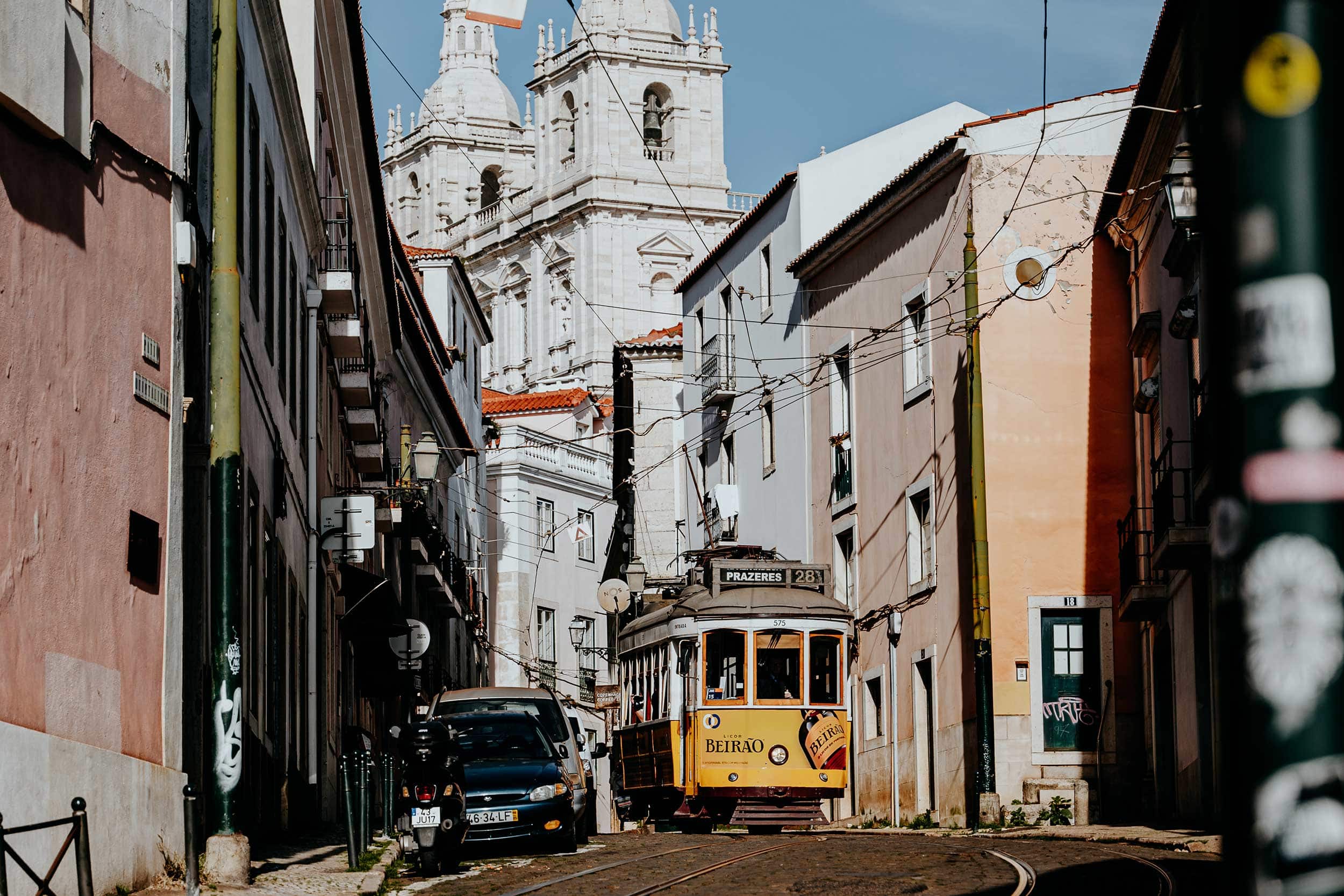
Best spots to photograph Tram 28 in Lisbon
When I was doing my research on how I wanted to document Tram 28, I came to one particular idea; jumping aboard the tram and getting off after a few stops, so I could follow the tram tracks through the picturesque streets in search of both unusual and iconic shots.
I feel confident to say my plan of attack was triumphant.
It’s an excellent tactic for those into photography, as it will provide you with heaps of unique photo opportunities and intriguing vantage points – while also getting a good feel for Portugal’s charming ‘City of Seven Hills’.
Some of my favourite spots to photograph Tram 28 from include:
- Monastery of St. Vincent | The Monastery of St. Vincent makes for an epic backdrop.
- R. Escolas Gerais | Only a short walk from the Monastery of St. Vincent, this charming street was easily my favourite to photograph Tram 28.
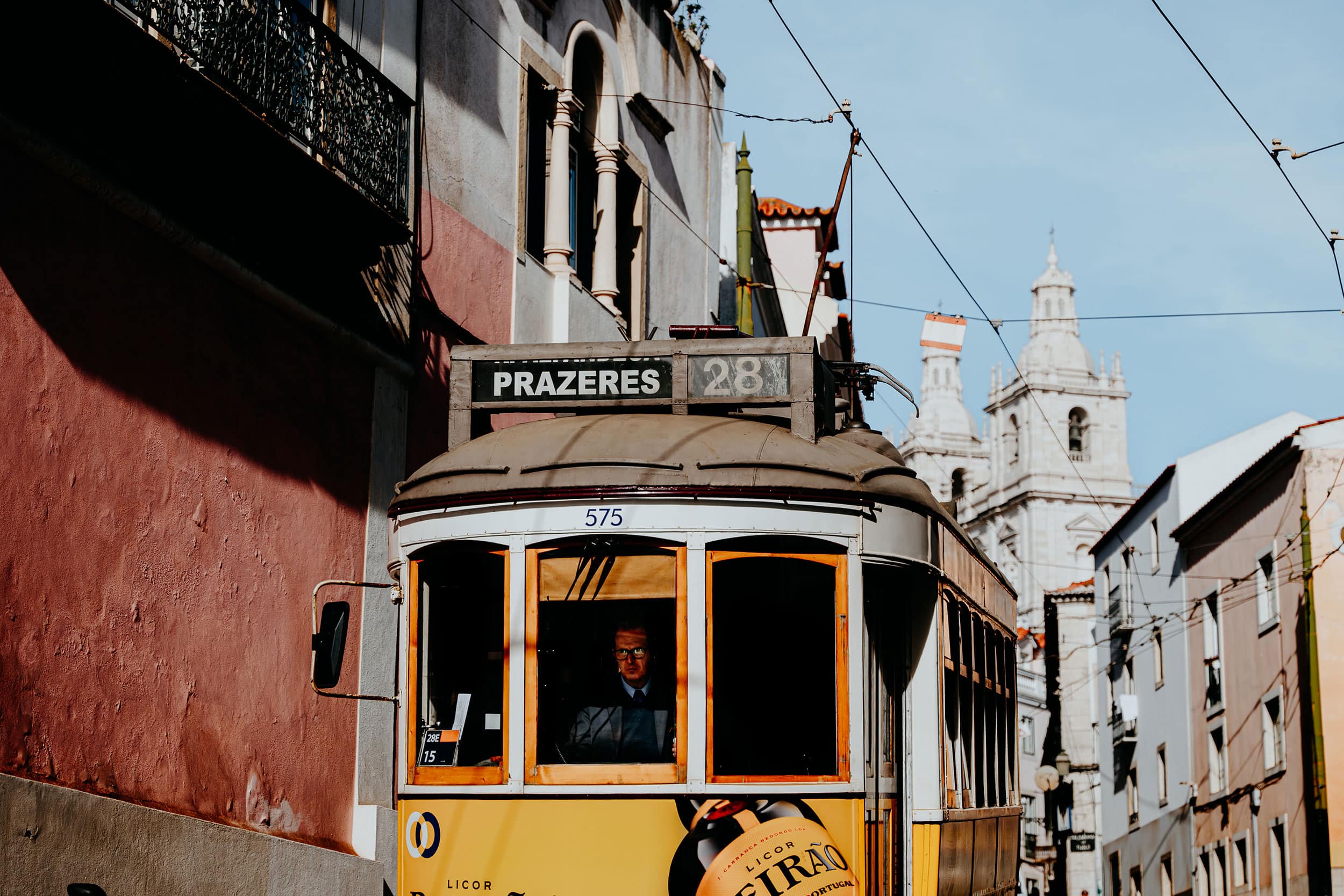
- Lisbon Cathedral | The stunning Roman Catholic Cathedral is one of the best landmarks in Lisbon, and combining it with Tram 28 makes for a truly incredible photo.
- Rua Conceição | The heart of downtown Lisbon, Rua Conceição is easily one of the most iconic places to frame Tram 28.
To get the best shots possible, I’d highly recommend getting out at Voz Operário and following the trails all the way to Rua Conceição. By doing so, you can take in all the above-mentioned spots, while also having the flexibility to find your own unique angles.
Tram 28 in Lisbon | The essentials
Where to stay in Lisbon
Like most popular destinations in Europe, Lisbon is home to a plethora of excellent accommodations.
Whether you’re after a cheap sleep in a hostel, a cosy private apartment, or a luxurious boutique hotel, there are plenty of options catering to all sorts of budgets and travel styles.
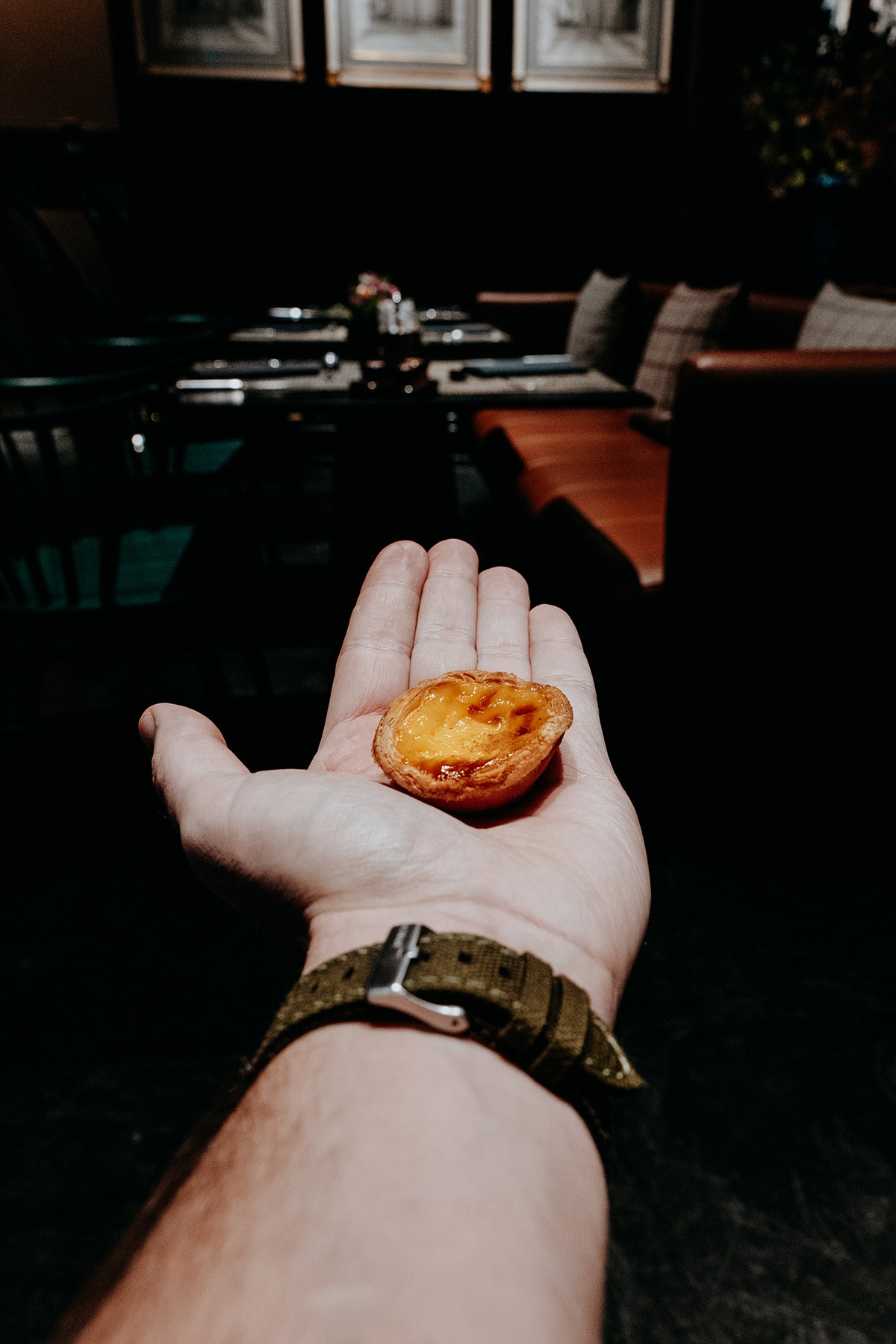
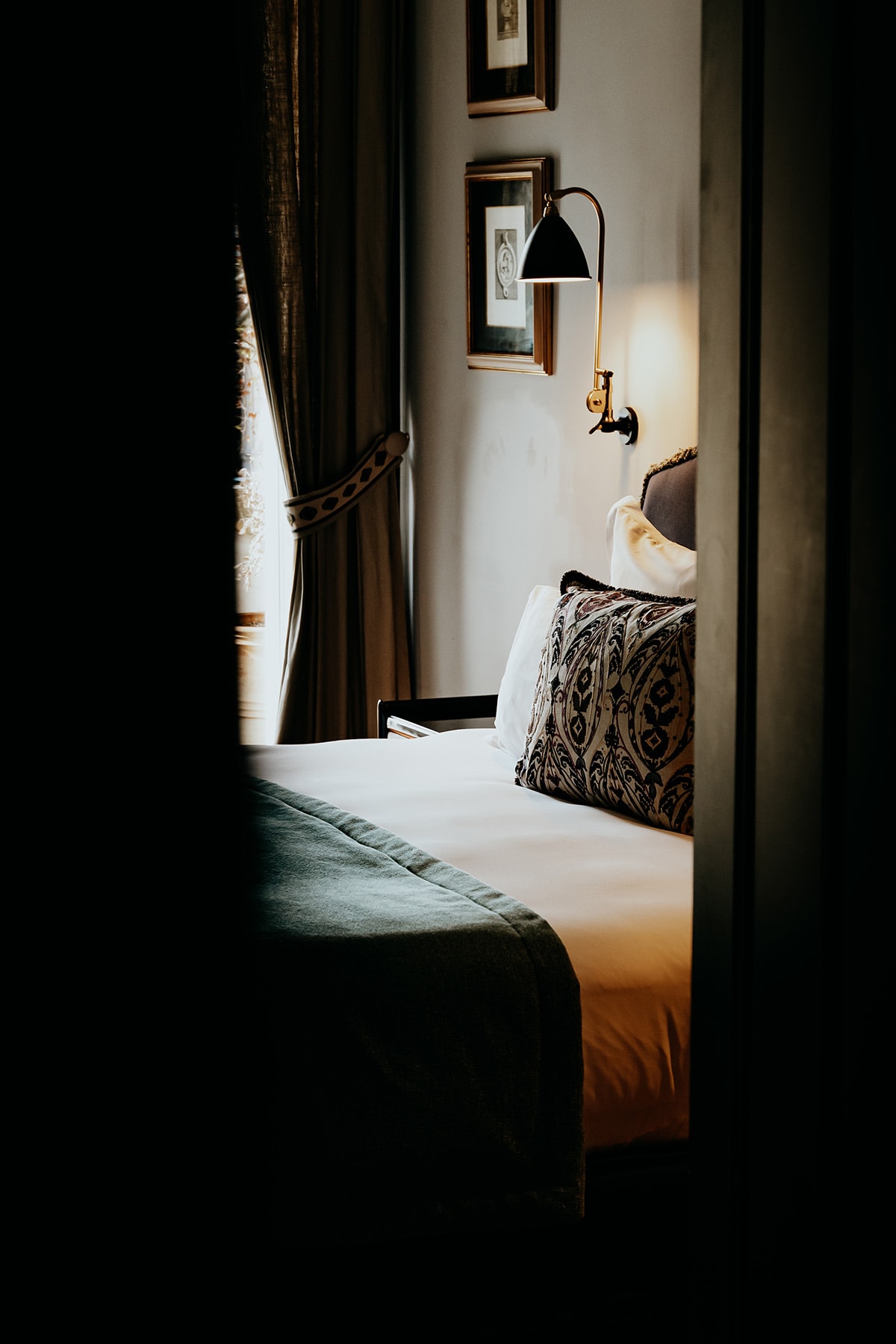
During my time in Lisbon, I was fortunate to spend some days in the elegant Valverde Hotel.
With rooms crafted to perfection, spacious public living areas teeming with fascinating art objects, and an excellent and diverse breakfast spread, Valverde makes the ideal base from which to explore the lively city.
Starting at €338,- a night, staying here is somewhat of a splurge, yet easily one of the best options if you’re looking for comfort, impeccable hospitality and discreet luxury in the heart of Lisbon.
Additionally, you could find a lot of excellent alternatives that might suit you better. Some great options include The 8 – Downtown Suites, Castello Prime Suites, and Hotel Sete Colinas.
Prefer finding an awesome place yourself, make sure you check the options available on Booking.com here.

What to do in Lisbon
Lisbon is often mentioned in the same breath as the world’s most famous capital cities.
Though it’s relatively small in size, Lisbon is an incredibly vibrant city with a wide array of fascinating things to see and do, more than you can likely squeeze into one trip here.
Those on a shorter trip to Lisbon will be delighted to hear that a ride on Tram 28 is one of the easiest ways to see a lot of the city in just a short amount of time.
If you’re keen to gain insights on more unforgettable experiences in Portugal’s charming ‘City of Seven Hills, make sure you give my guide ‘The best things to do in Lisbon’ a read too.
Stay safe in Lisbon | Travel insurance
While I felt completely safe at all times during my time in Lisbon, I always recommend everyone to sort out good travel insurance before setting out on their own adventure.
Though I believe that it’s unlikely to experience any troubles when following the advice in this guide, something unfortunate can happen at any given time, whether it’s a stolen camera, an injury, or an accident on the road.
For travel insurance, I always use Heymondo, as they offer full COVID-19 coverage, as well as a handy app with 24-hour medical assistance. Make sure you check it out – readers of WTSW receive 5% off any insurance policy too.
Cheers!
I’ve been on this travel blogging journey since 2019.
If you appreciate what I do here, these are some ways you can support me.
A travellers guide to Chichén Itzá, Mexico's New World Wonder - Updated 2024
Looking to explore the incredible ruins of Chichén Itzá? I’ve got you covered! My travellers guide to Chichén Itzá helps you choose how to explore this New Wonder of the World – plus it informs you in terms of cost, how to get there, and where to stay.
It is a given fact that most of the travellers that board a plane to Mexico, have one clear mission – ticking off the incredibly beautiful ruins of Chichén Itzá of their bucket list.
As a result, Chichén Itzá is teeming with visitors from every corner of the world – it is said that the popular complex attracts over 1.2 million visitors annually.
And though Mexico is far more than its number-one tourist attraction, it is safe to say that visiting Chichén Itzá is one of the absolute highlights on any Yucatán itinerary.
The UNESCO declared New Wonder of the World is tucked away in a dense jungle, and holds a majestic bundle of impressive ancient structures, all reflecting the Mayans exceptional knowledge in terms of astronomy and math.
However, taking it all in can be a bit overwhelming at times, especially if you consider the fact that you share the experience with heaps of other travellers.
That’s where this guide comes in handy.
To help you have a more than awesome time at Chichén Itzá, I’ve put together this travellers guide, including what to see, how to explore responsibly, where to stay nearby, as well as all your essential travel information.
If you choose to use any of the links on this page, I may receive a small commission at no extra cost to you. By using these links, you’ll have a direct impact on WTSW and my ability to continue to create free insightful travel content for you. If you find any of my tips useful, you can support me by buying a virtual coffee here.
A travellers guide to Chichen Itzá, Mexico
Where is Chichen Itzá
The incredibly fascinating Chichén Itzá complex is acknowledged as a New Wonder of the World and is situated in a dense tropical jungle at the heart of Mexico’s popular Yucatán Peninsula state.
The extensive complex is settled at a roughly 45-minute drive west of Valladolid, a lively colonial town that is considered the number-one base from which to explore Chichén Itzá.
A brief history of Chichén Itzá
Before I get into the details of my guide to Chichén Itzá, I wish to share with you a brief history overview.
The now world-famous Mayan ruins of Chichén Itzá are one of Mexico’s most popular landmarks, but with over 1.000 years of history, the question remains: how did it all start?
Though it is acknowledged that Chichén Itzá was first established around 400 AD, it took quite a time before it started to flourish into the grandeur we behold today.
It was only after the arrival of Toltec warriors at the end of the 10th century, that Chichén Itzá truly claimed its fame.
Following their conquest of Yucatán, the Toltecs began the construction of what later became the famous El Castillo pyramid, right atop an older structure.
From that moment on, Chichén Itzá elaborated its reputation, resulting in it becoming the epicentre of Mesoamerican civilization, housing approximately 35.000 inhabitants at its peak.
For that reason, both historians and experts believe that this particular settlement is the most important event throughout the rich history of Chichén Itzá.
At present, the well-preserved Chichén Itzá complex is largely responsible for tourism in Mexico, attracting over 1.2 million visitors on a yearly basis.
And given that the Mayans left behind some of the most stunning architectural masterpieces in the world, it’s easy to understand why.
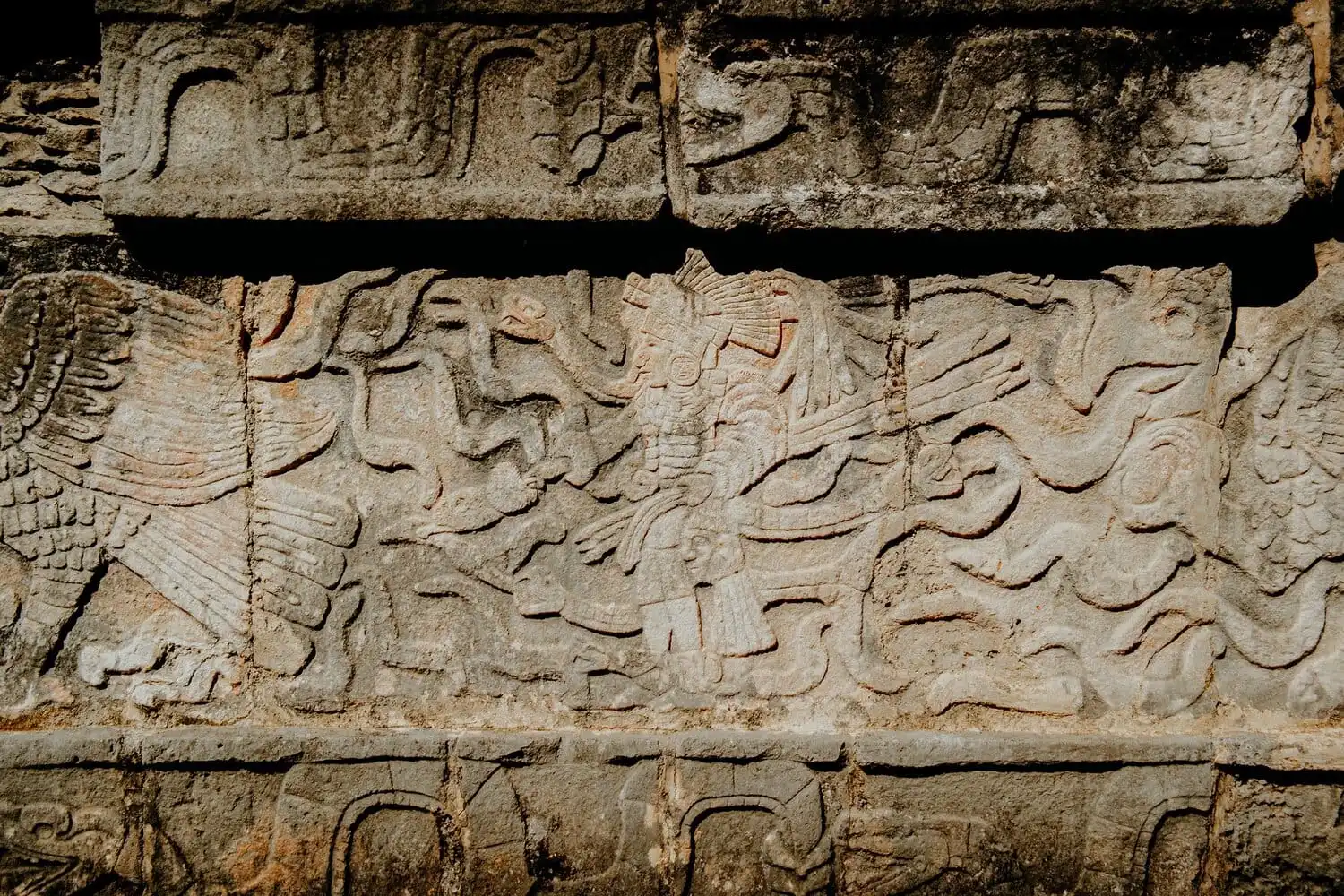
Chichen Itzá ticket | Chichen Itzá entrance fee 2024
Since my visit back in October 2019, the Chichén Itzá entrance fee has slightly inflated and is 614MXN ($36.02) per person as of February 2024.
One thing worth noting though is that the Chichen Itzá entrance fee is made up of two separate fees – the actual admission and an added government fee, both equally important and required to enter Chichén Itzá.
During my visit, the ticket counters accepted payments with credit cards and cash. However, it is said that the government fee of 80 MXN ($3.80) can be paid in cash only.
If you forgot to bring cash, don’t worry, there’s an ATM in the common area near the entrance.

Things to see at Chichén Itzá
The Chichén Itzá complex is spread over an extensive jungle and is full of impressive and well-preserved archaeological highlights. The area itself is easy to navigate and should take around 3 hours to uncover.
That said, here are some of my absolute favourite structures in Chichén Itzá:
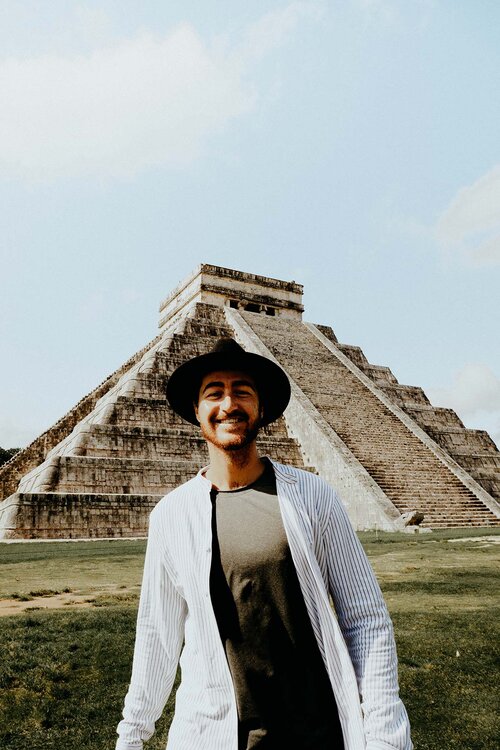
El Castillo
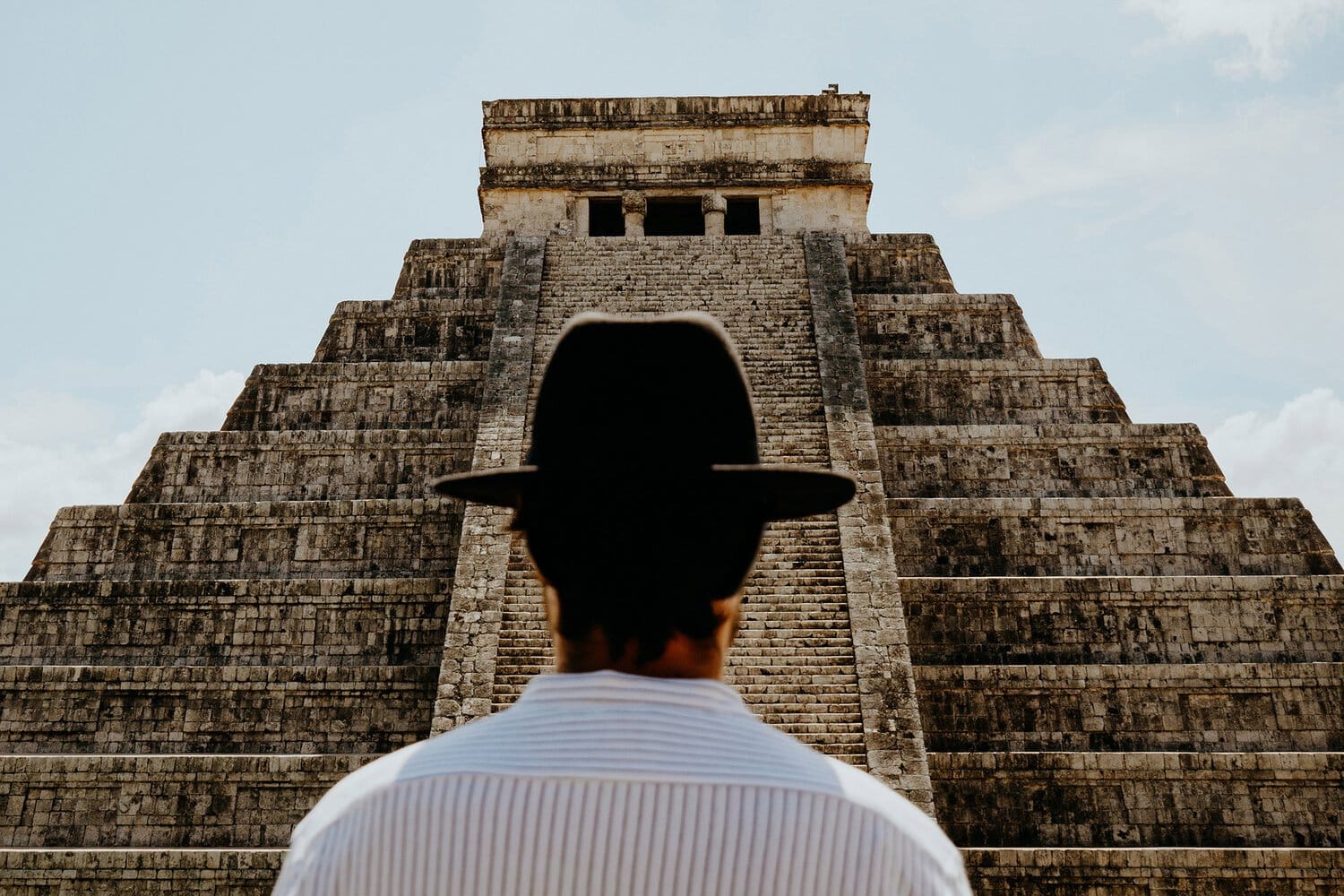
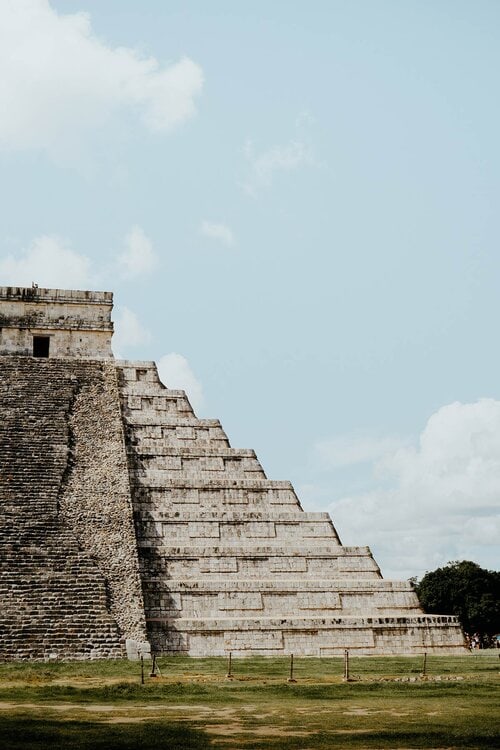
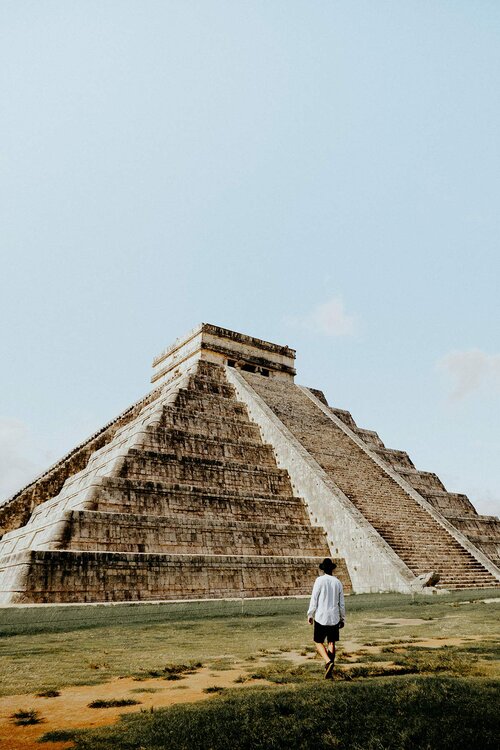
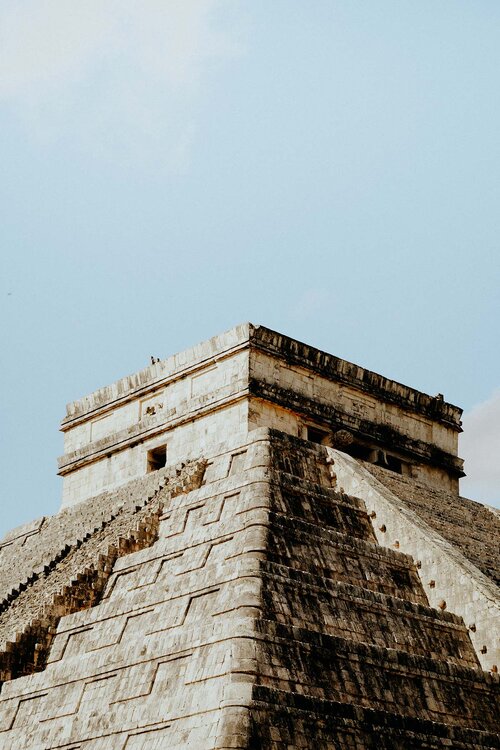
The now world-famous El Castillo pyramid is situated at the heart of the Chichén Itzá complex, and after wandering countless circles around it, it is easy to understand why.
But it is not just its picture-perfect appearance that turns El Castillo into the absolute highlight of a visit to Chichén Itzá.
No, the real lure of El Castillo lies within the fascinating story behind its construction.
The square-based stepped pyramid was built with perfect accuracy, making the construction the best reflection of the Mayans exceptional knowledge in terms of astronomy and math.
As a result, El Castillo was built in perfect alignment with the universe, and with a total of 365 steps, the pyramid is believed to be a physical representation of the calendar we use today.
For that reason alone, I believe Chichén Itzá is an essential stop for any visitor to Yucatán, Mexico.
Temple of the Warriors
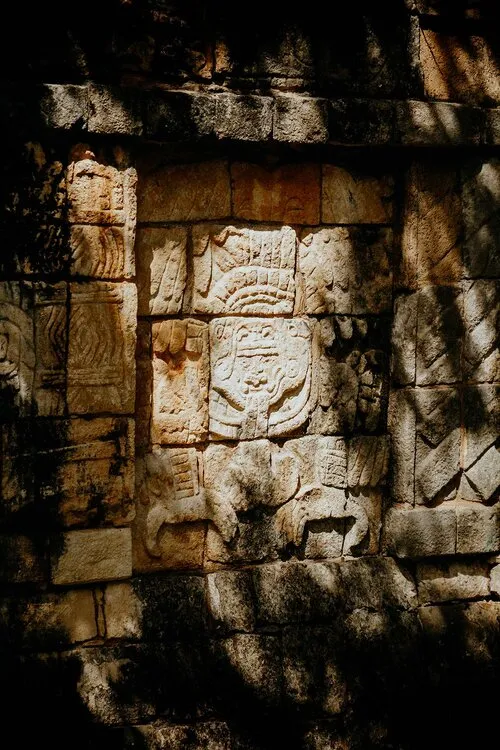
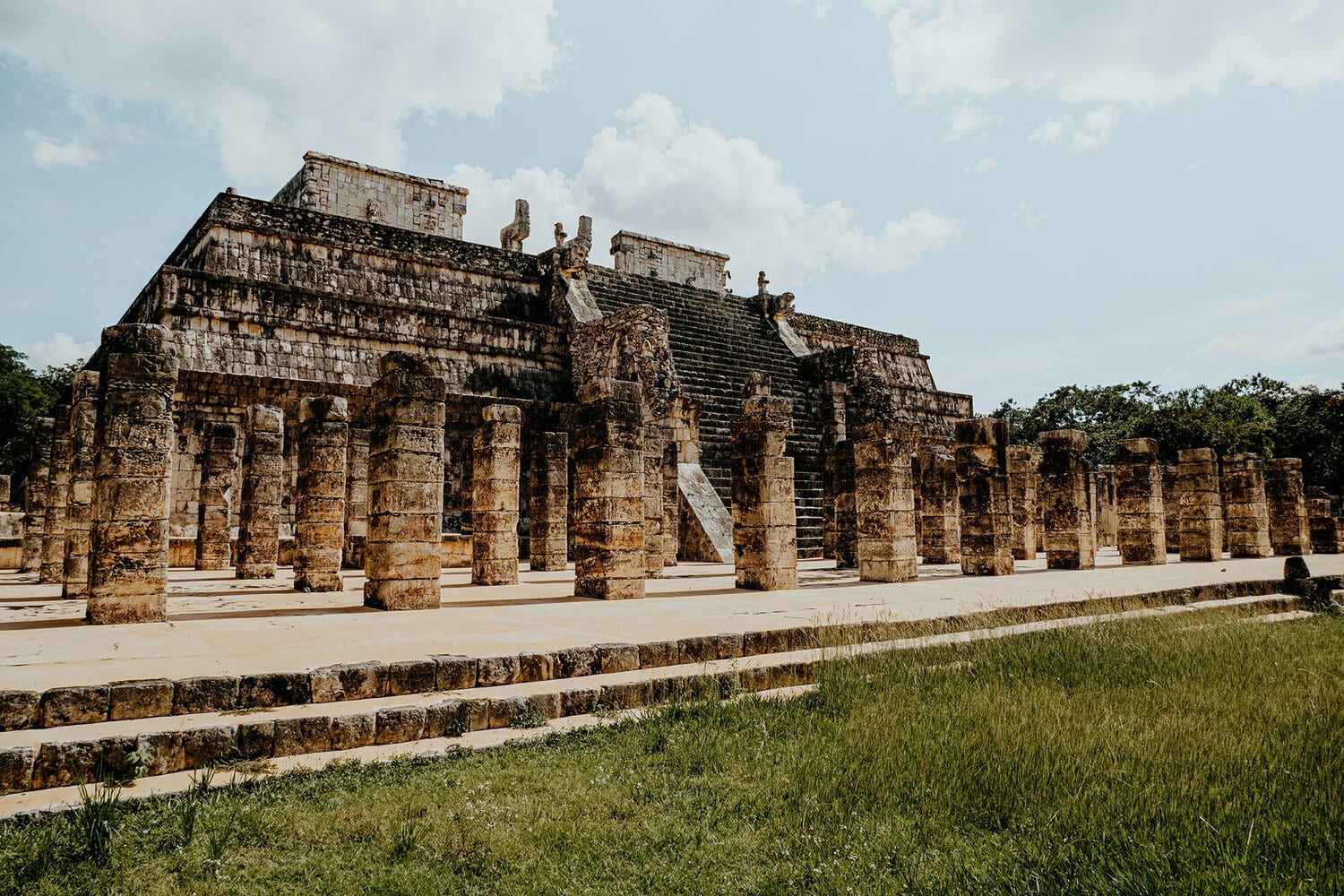
Located adjacent to El Castillo is the Temple of the Warriors, a massive stepped pyramid that owes its name to the surrounding columns, containing carvings of warriors – more on that later.
And though it is no longer possible to climb the temple, this structure in the late classic Maya style is still considered one of the most memorable places to see at Chichén Itzá.
Group of 1000 columns
As mentioned above, the group of 1000 Columns is a series of impressively crafted pillars, that are connected directly to the neighbouring Temple of the Warrior.
Experts believe that these columns once supported a roof and that the former building was mainly used to house large, important gatherings.
While 1000 is slightly exaggerated, it is still a delight to admire the roughly 200 columns that remain.
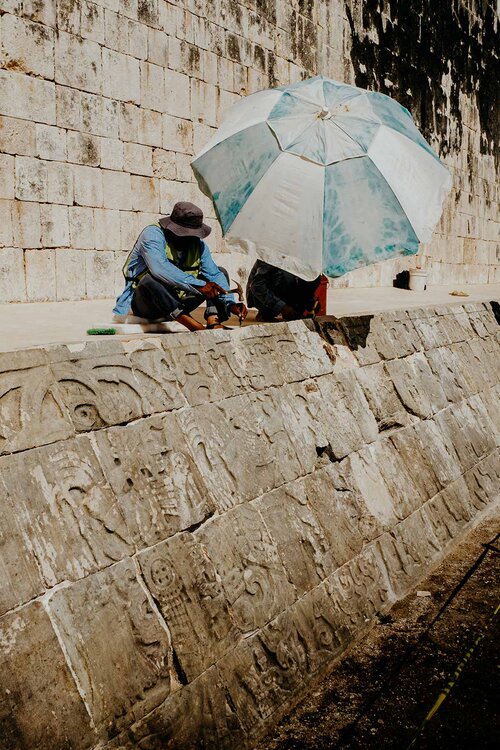
Wall of Skulls
Built to memorialise those who sacrificed themselves to the gods, as well as warriors who had died in battle, the Wall of Skulls is a large platform decorated with skulls, snakes and eagles.
Mostly intact, the Wall of Skulls is further known as a Tzompantli, a wooden rack that displayed human heads impaled on top of each other, something commonly found in Mayan culture.
It is said, that this peculiar wall’s main purpose was to control the masses, while also scaring off the enemy, and I must admit, it’s pretty frightful indeed.
The Grand Ball Court
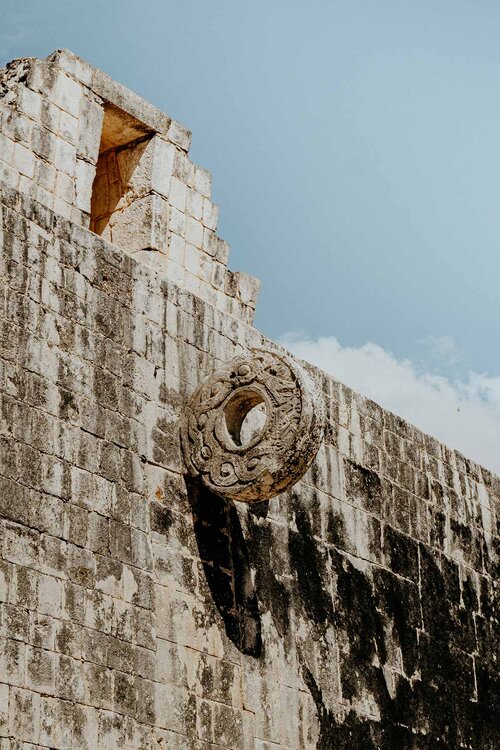
The Grand Ball Court in Chichén Itzá was considered the largest ball court in the Mayan civilisation, and truly is an impressive site to behold, especially if you imagine what it looked like back in the day.
Juego de Pelota, as it is named by the Mayans, is an important ball game that was often played here, as it determined who received the honour of taking part in their somewhat cruel ritual – a religious, human sacrifice to the gods.
Another thing worth mentioning, is the fact that the construction of the court was measured out to perfection, making it exceptional in terms of acoustic performance.
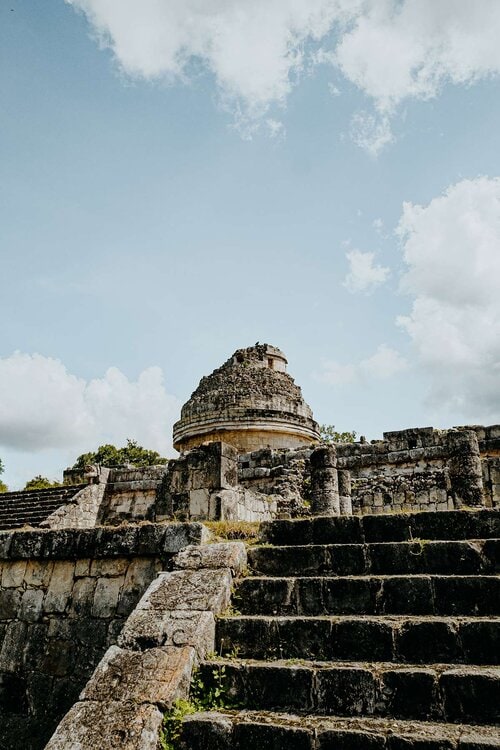
El Caracol
Situated only just south of El Castillo lies El Caracol, a unique circular-shaped structure that was used as an observatory to examine the ever-changing sky.
The by jungle encircled El Caracol is said to date back as far as 600 AD, and though it is crumbling in every aspect, it is still a pretty awesome structure to take in.
How to explore Chichén Itzá | Solo, with a guide, or with a tour
Of course, it’s completely up to you in which manner you prefer to visit Chichén Itzá, and luckily, it’s pretty straightforward to find an option that suits your travel style.
There are three options available for those who wish to visit Chichén Itzá, all of which have their pros and cons. To help you find the option that fits you, I have summed up three options below:
Go solo
Luckily, it’s pretty easy to visit Chichén Itzá independently, and given that it is still increasing in popularity, you’ll find no problems getting there.
The complex itself is rather compact and easy to navigate, while you’re also completely free to investigate the grounds at your own pace – which is a big plus if you ask me.
That said, I believe it takes about 3 hours to see the most important structures of Chichén Itzá.
If you choose to visit the complex on your own, I highly recommend taking your time, bringing a guidebook, and downloading a detailed guide like this one for offline use.
Join a guided tour
Obviously, the easiest way to visit Chichén Itzá is by doing a guided tour, especially if you’re staying in the major tourist hubs in Yucatán, including Cancun, Playa Del Carmen and Tulum.
By joining a guided tour of Chichén Itzá, you won’t have to worry about arranging anything in terms of transport, guides, timetable and walking routes.
One small side note though, this extra comfort comes at a slightly higher price than the aforementioned options.
With a guide
If you’re looking to understand more about Mayan civilization and their unique outlook on life, it’s worth considering the services of a knowledgeable, local guide.
Hiring an expert is a fun and easy way to uncover Chichén Itzá’s rich history, while it also ensures that you won’t miss out on important buildings and historical facts.
Though the cost alternate, the service of a well-trained guide should cost you between 650 MXN ($32.80) and 1.000 MXN ($48.50) for a three-hour guided tour. These guides can be found directly after the entrance, and don’t require a reservation whatsoever.
However, make sure you take enough time to select one, as experience, knowledge and language skills differ highly from guide to guide.
The reason why I prefer this option is that you have the flexibility to arrive by bus or rental car – plus you’re supporting the local economy.
My Chichén Itzá tour recommendations
For those that prefer to book a guided tour of Chichén Itzá in advance, make sure to have a look at the options I listed below – do however note that none of those tours includes the entrance fee.
Chichén Itzá, Ik Kil Cenote & Valladolid All-Inclusive Tour | This awesome full-day guided tour of Chichen Itzá takes you along Chichén Itzá’s most impressive ruins, as well as Valladolid and the Ik Kil cenote.
Chichén Itzá Tour From Cancun or Riviera Maya | Learn about the fascinating history of Chichén Itzá, by joining this full-day guided tour provided by an Archeology-specialist guide. It also includes a stop in Valladolid, a delicious lunch spread, and your round-trip transport.
Where to stay in Valladolid | Your perfect base to Chichén Itzá
As you probably already know by now, I’d highly recommend basing yourself in Valladolid when planning to explore Chichén Itzá and its surroundings.
The lively colonial town is situated at only 45 minutes from Chichén Itzá and has no shortage of wonderful accommodations, including backpacker-friendly hostels, comfortable apartments, as well as luxury hotels.
Not only is Valladolid positioned conveniently, but I also believe that it’s the most authentic city in the whole of Yucatán.
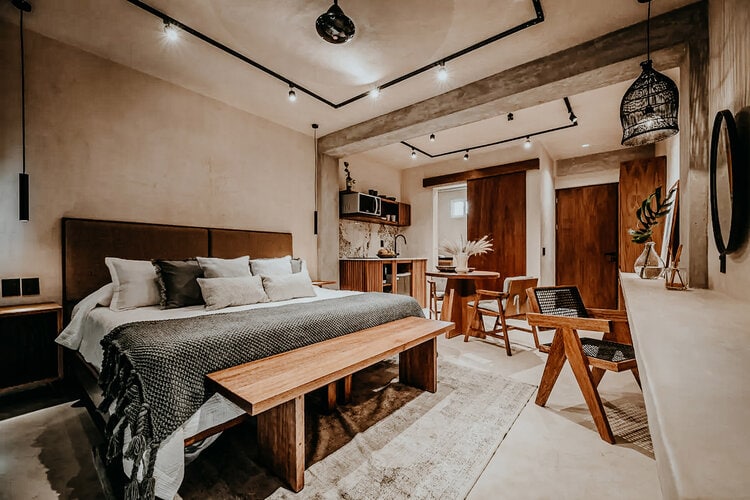
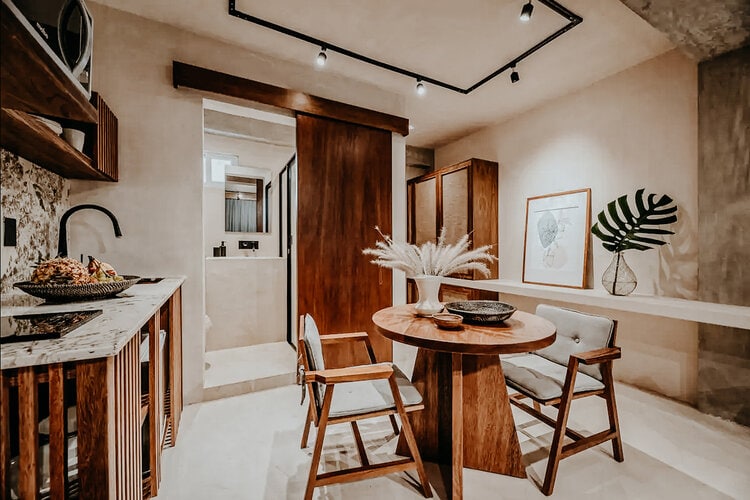
Hotel & Suites Country | If you’re looking for a super comfortable hotel, that doesn’t break the bank, this is it. Situated at the heart of Valladolid, Hotel & Suites Country offers spacious and well-designed rooms, an inviting sundeck, and a large adjacent swimming pool, making it a great pick for those keen to relax after an exhausting day of exploring.
Hotel Casa Bamboo | This is one of the hotels where I stayed in Valladolid, and it was an outstanding experience, at only $27 a night. This charming boutique-style hotel has no problem in making guests feel welcome and comfortable, providing outstanding rooms, a pleasant kingsize bed, as well as a chilled-out vibe. All in all, a lovely place to stay.
Hostal Tunich Naj | Located only a short walk from Valladolid’s lively main square, this budget-friendly hostel provides a wide array of comfy rooms, both shared and private. On top of that, there is a spacious common area, ideal for backpackers looking to make new travel buddies. Doubles at only $18 a night make Hostal Tunich Naj an absolute steal.
Alternatively, search for accommodations on booking.com.
Chichén Itzá | The essentials
The best time of year to visit Chichén Itzá
With the Yucatán Peninsula being situated in the Caribbean, it is considered a year-round travel destination, enjoying excellent weather most of the time.
However, given that Chichén Itzá is one of seven new world wonders, visiting during the high season (November to March) means that you’ll be sharing the complex with a large number of other travellers.
If you somehow wish to avoid these crowds, I believe it’s better to plan your trip for the off-season months of October and April.
I visited late October and can say from first-hand experience that the weather was pleasant – plus there were an enjoyable amount of people at the complex.
Additionally, it is good to know that the Chichén Itzá complex is open to visitors every day of the year, meaning you have all the flexibility to visit on your own conditions.
The best time of day to visit Chichén Itzá
In my belief, it’s best to explore Chichén Itzá right after sunrise or in the late afternoon, especially if you’re into photography.
During these times, there will be significantly fewer people at the complex, the lighting is perfect for photography, and you’ll also avoid the sizzling heat that a visit in the middle of the day brings.
Every day, Chichén Itzá is open to visitors between 08:00 and 16:30.
The one thing I can’t stress enough is that a visit around lunch should be avoided at all costs.
It is generally known, that large groups and guided tours start arriving at Chichén Itzá around 10:00, meaning that it becomes pretty hectic at times.
Also, given that Mexican citizens have free entrance on Sunday, I suggest to try and plan your visit on another day – there is a great chance that Chichén Itzá is packed with locals on Sundays.
How to get to Chichén Itzá
For those who look to visit Chichén Itzá without taking part in a guided tour, be at ease, there are a number of excellent options available to visit independently.
The duration of the journey to Chichén Itzá is, however, highly dependent on two factors – your starting location, and the method of travel.
Personally, I believe it’s best to choose Valladolid as your base to visit Chichén Itzá. This lovely colonial town is only a short drive away from the complex, which makes it significantly easier to beat the crowds.
If you’re keen to visit Chichén Itzá during sunrise, it is worth noting that Quintana Roo (Cancun, Playa Del Carmen, and Tulum) is an hour ahead of Chichén Itzá during the peak months of October to April.
Below is my take on the options to get to Chichén Itzá independently, including the ins and outs.
By car | In my view, the best way to uncover Yucatán is by car, this is clearly also the case if you’re thinking of visiting Chichén Itzá.
In the matter of fact, the Yucatán Peninsula has excellent roads throughout and is the perfect size to navigate by car, making it a perfect destination for an adventuresome road trip.
In terms of parking, the Chichén Itzá complex caters to the many visitors that it draws daily, and at the moment of writing, the parking fee in 2024 is only 60 MXN ($3.50) for the day.
One word of caution: on your way to Chichén Itzá, you’ll pass several toll roads. For that reason, make sure you have enough cash at hand.
For car rental in Yucatán, I would strongly recommend DiscoverCars. They offer excellent service, additional insurance, and a wide selection of cars, all at an affordable price. More information, rates and availability here.
By bus | One of the easiest ways to get to Chichén Itzá is by making use of the ADO buses. This excellent service is extremely popular among locals and travellers alike, and that’s for a great reason.
Not only are the ADO busses comfortable, airconditioned and clean, but they also service the major tourist places in Yucatán, including Cancun, Playa Del Carmen, Tulum, Valladolid, and Mérida.
If you’re looking to visit Chichén Itzá by bus, I’d recommend booking your tickets online, and in advance, especially during the peak months.
For online tickets, availability, departures, and additional travel information, visit the ADO website.
By collectivo – Only from Valladolid | Another great option, and the one that I used for my visit to Chichén Itzá is a Colectivo, a small shared minivan that is perfect for independent travellers on a budget.
Do note that this budget-friendly option is only available for those planning to visit Chichén Itzá from Valladolid.
Local Colectivos leave Calle 46 every 30 minutes between 07:00 and 18:00, meaning you can arrive at Chichén Itzá prior to the people that take part in a guided tour.
In general, the colectivo’s leave when they’re completely full. A one-way journey will cost around 35 MXN ($1.65) per person, and should take roughly 45 minutes.
Safety in Yucatan | Travel insurance
While Yucatan is perfectly safe for travellers, I always strive to sort out my travel insurance before arriving in a foreign country, and I highly advise anyone else to do the same.
Where we prefer that everything goes smoothly during our travels, something unfortunate can happen at any moment, whether it’s an injury or an accident on the road. When that happens, it is better to be safe than sorry.
Heymondo | Whether you’re going on a 3-week backpacking trip, or planning a long stay somewhere abroad, Heymondo has excellent insurance options either way – plus full COVID-19 coverage and a handy app with 24-hour medical assistance. Readers of WTSW receive 5% off any insurance policy, more information here.
Cheers!
I’ve been on this travel blogging journey since 2019.
If you appreciate what I do here, these are some ways you can support me.
A guide to the pristine Zelenci Nature Reserve, Slovenia
Somewhat of a hidden gem among Slovenia’s many natural highlights, the Zelenci Nature Reserve is a pristine wetland area encircling the incredibly stunning Zelenci Lake.
Nestled between Kranjska Gora and the border of Italy, Zelenci is a bit of a blink and you miss it, as it is carefully disguised by the lush vegetation just off road #202 in the direction of Italy.
Though the reserve is relatively compact, this quaint slice of paradise will capture your heart in the blink of an eye, as it provides visitors mesmerizing views of the emerald-green lake and the towering peaks of the Julian Alps in the distance.
On top of that, Zelenci is close to some of Slovenia’s absolute highlights, including the stunning Lake Jasna, the winding roads of the Vrsic Pass, and the notorious Mangart Saddle, making it super easy to incorporate into an adventurous Slovenia road trip itinerary.
It’s a place of unrivalled beauty, and during my visit in the autumn of 2022, I immediately knew I wanted to come back here during the winter months when the pristine snow-covered natural surroundings make for an even more magical scene.
After now having visited Zelenci twice, I’ve curated all the essentials to help you plan and organise your own visit here, including advice on how to get there, where to stay and how to combine it with other Slovenia highlights – enjoy reading!
If you choose to use any of the links on this page, I may receive a small commission at no extra cost to you. By using these links, you’ll have a direct impact on WTSW and my ability to continue to create free insightful travel content for you. If you find any of my tips useful, you can support me by buying a virtual coffee here.
A guide to Zelenci Nature Reserve, Slovenia
Where is Zelenci Nature Reserve
The Zelenci Nature Reserve is nestled in the foothills of the Julian Alps in the very northwest of Slovenia, about 5 kilometres drive from the popular town of Kranjska Gora.
It is located at the crossroads of Central Europe, as the picturesque area borders with Italy on the west and Austria on the south.
The reserve itself is set within a stunning alpine valley on the northern edge of the Triglav National Park, only just off road #202 in the direction of Italy.
About Zelenci Nature Reserve
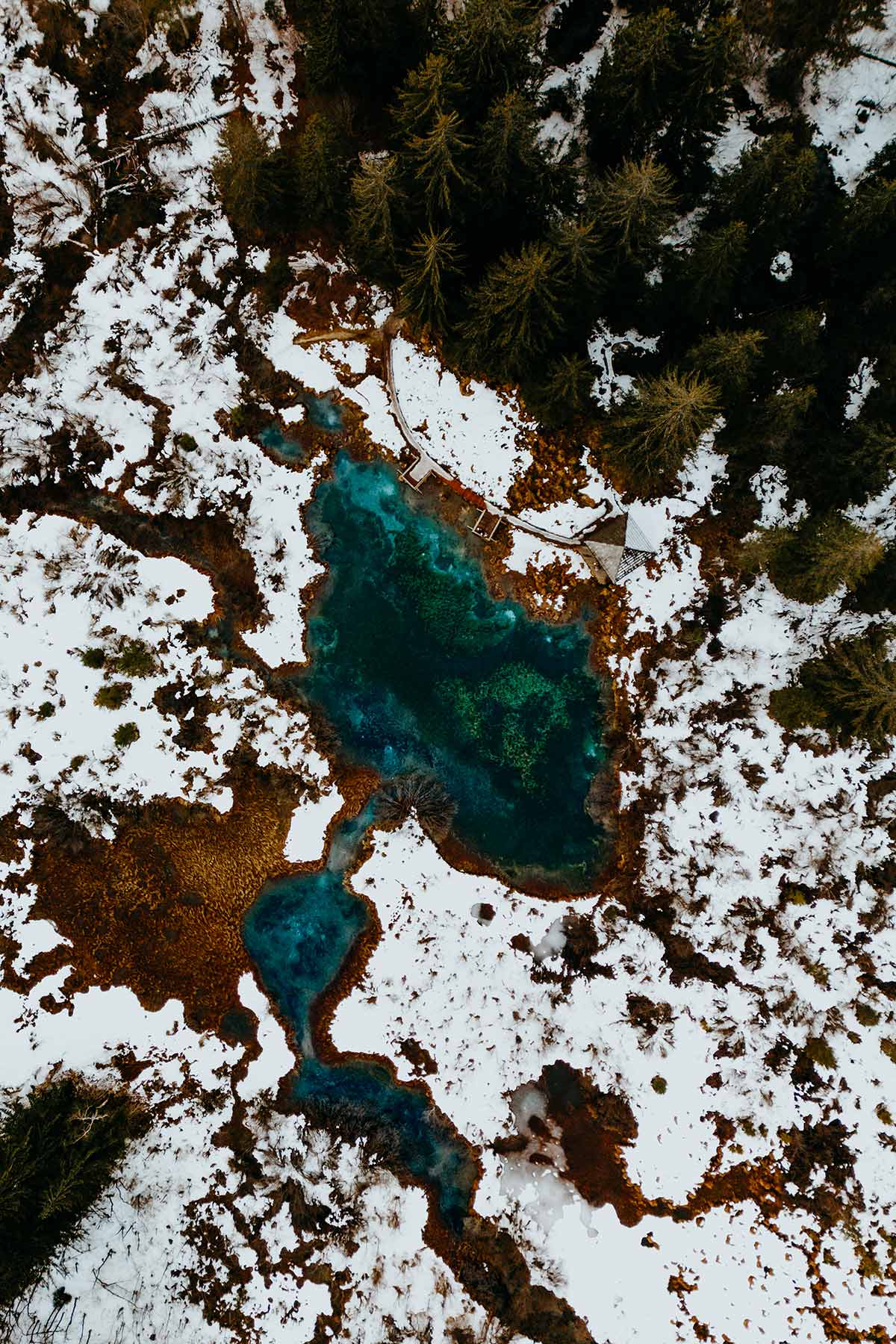
Covering roughly 15 hectares of untouched natural splendour, the Zelenci Nature Reserve is well-known for its emerald-green lake and the scenic wetlands surrounding it.
With incredible natural and geological feats, this reserve is home to a wide variety of flora and fauna, including Common Rosefinches, Viviparous Lizards and European Adders to name a few.
For the above reasons, it is highly advised to remain on the path at all times, so don’t think it’s okay to wander off the path to obtain a slightly different perspective of the lake.
Thanks to the combination of the reserve’s phenomenal appearance and the distinctive flora and fauna that is found here, Zelenci was officially declared a nature reserve by the municipality of Jesenice in 1992.
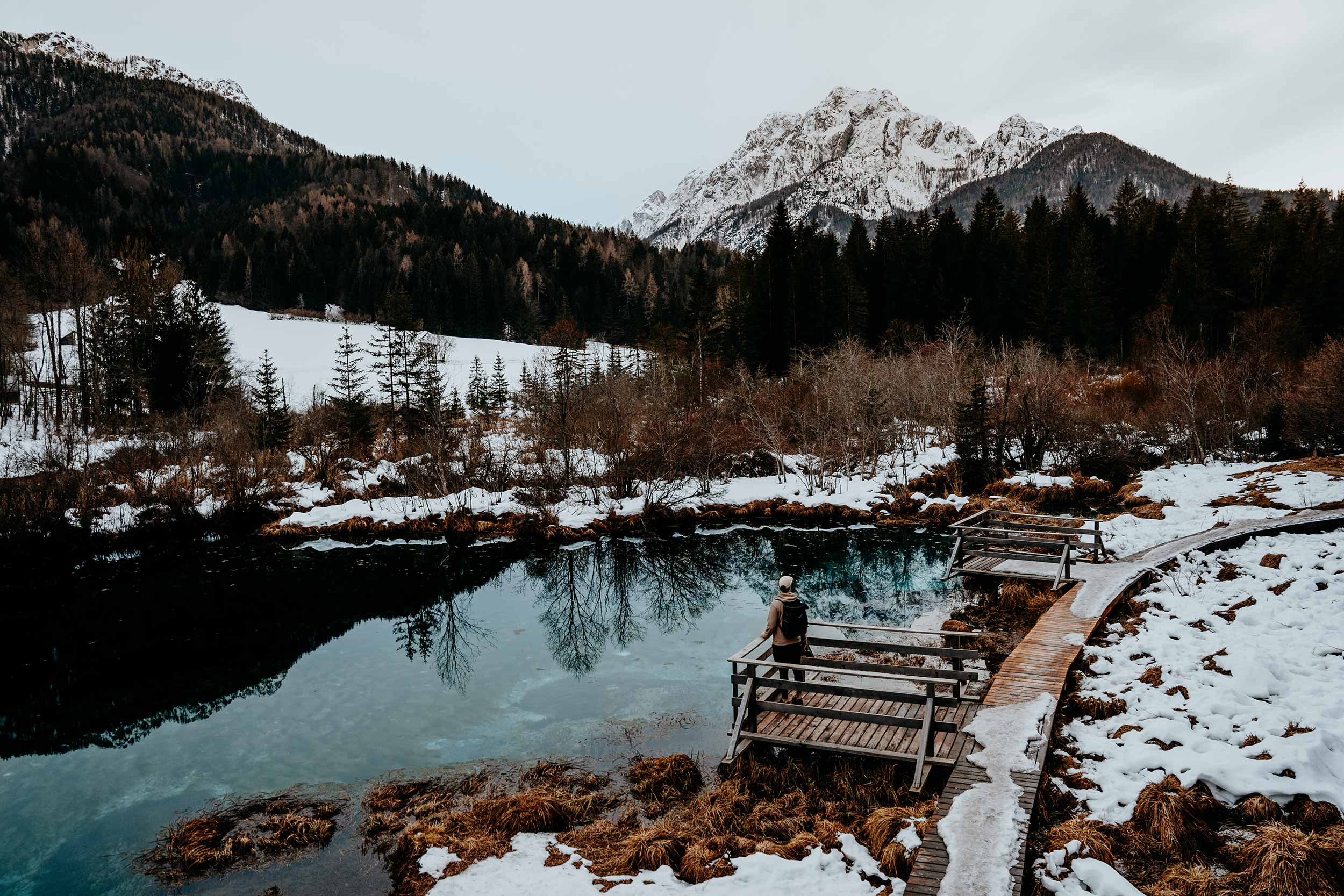
Named after its emerald-green colour (Zelenci meaning green in Slovenian), the eponymous lake is the absolute centrepiece of the reserve, and will not freeze during the colder winter months as the temperature stays pretty constant throughout the year at 6°C.
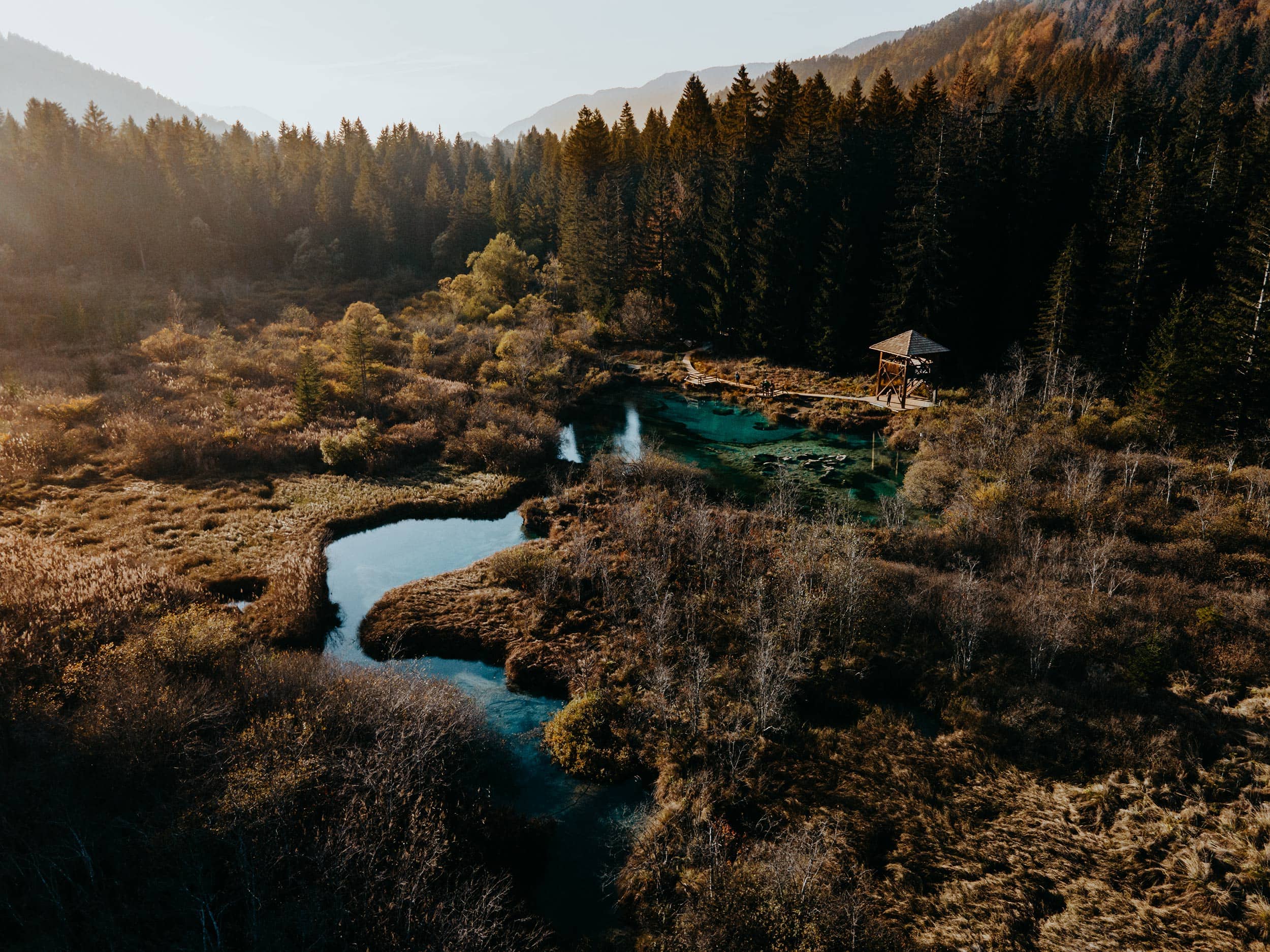
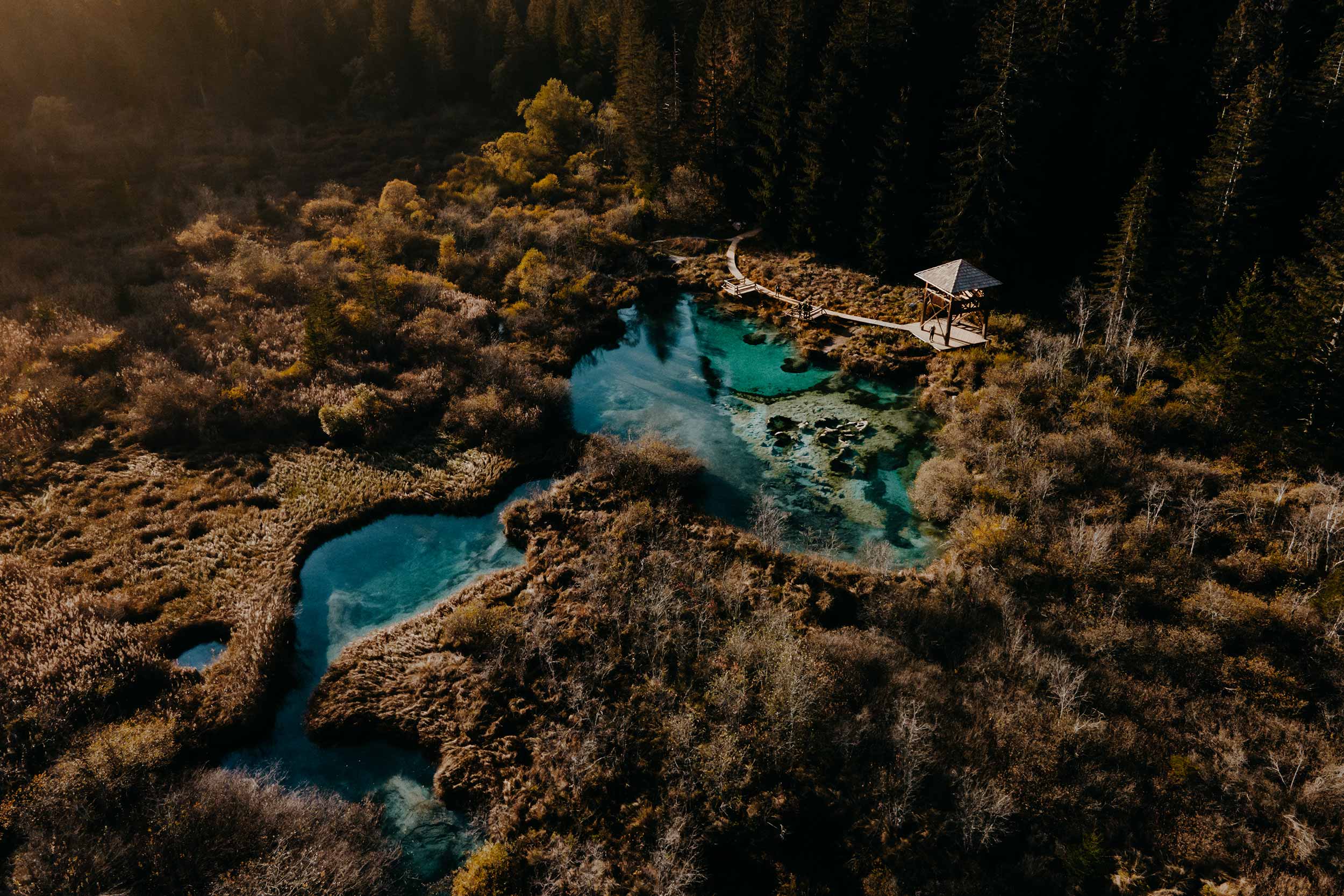
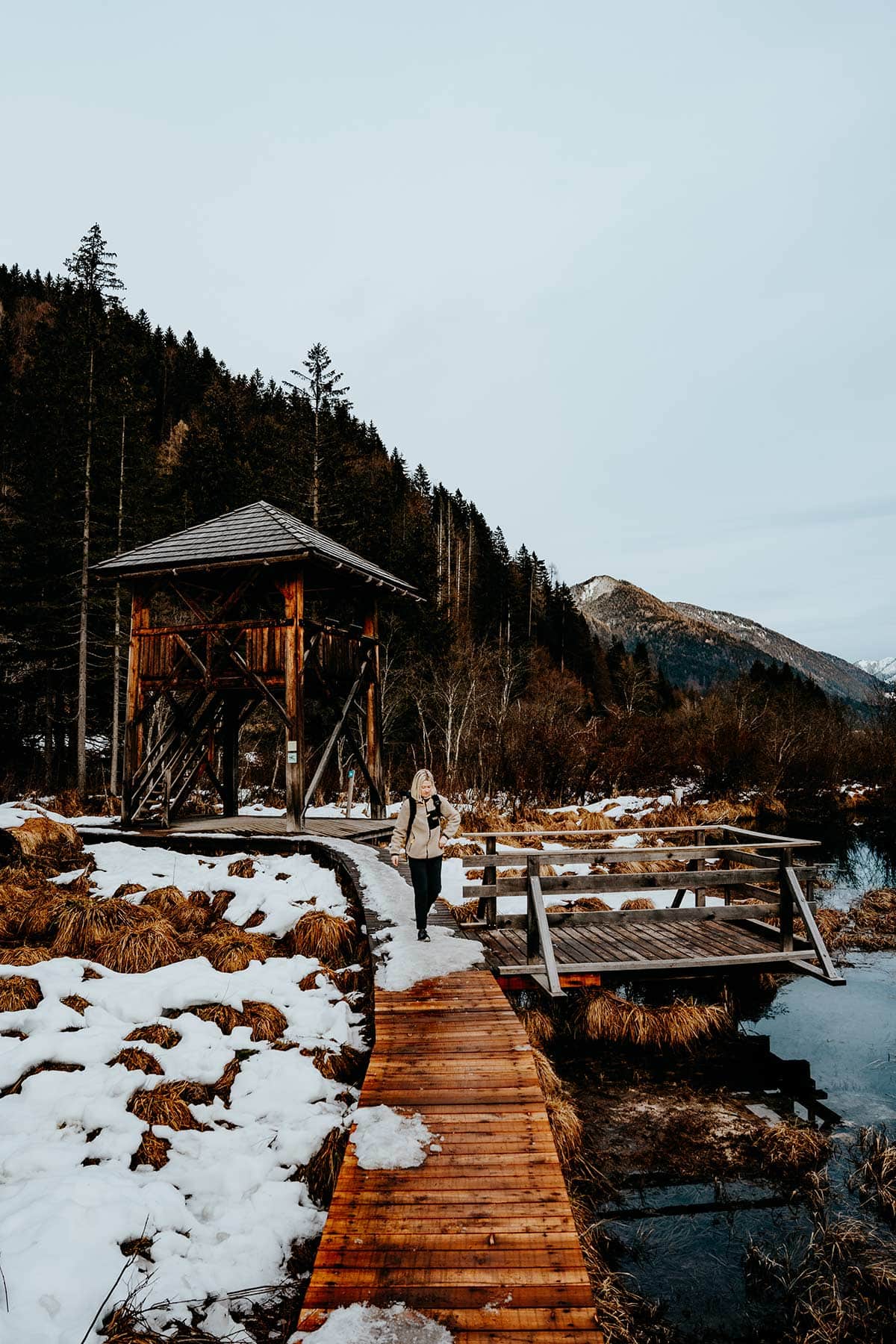
The reserve itself is relatively compact and is home to a short but scenic boardwalk, which eventually guides you to a scenic observation tower that is nestled on the edge of the lake.
As it’s located in the foothills of the Triglav National Park, the views that are obtained here are truly breathtaking and will leave visitors with an unforgettable outdoor experience.
How to get to Zelenci Nature Reserve
Zelenci is impressively easy to visit, especially if you set out on an adventurous road trip in Slovenia (coming soon).
If you’re travelling from Bled, Bovec, Mangart, Vrisc, or Lake Jasna by car, you have to make your way over to Kransjka Gora, before heading west along the #202 road in the direction of Italy.
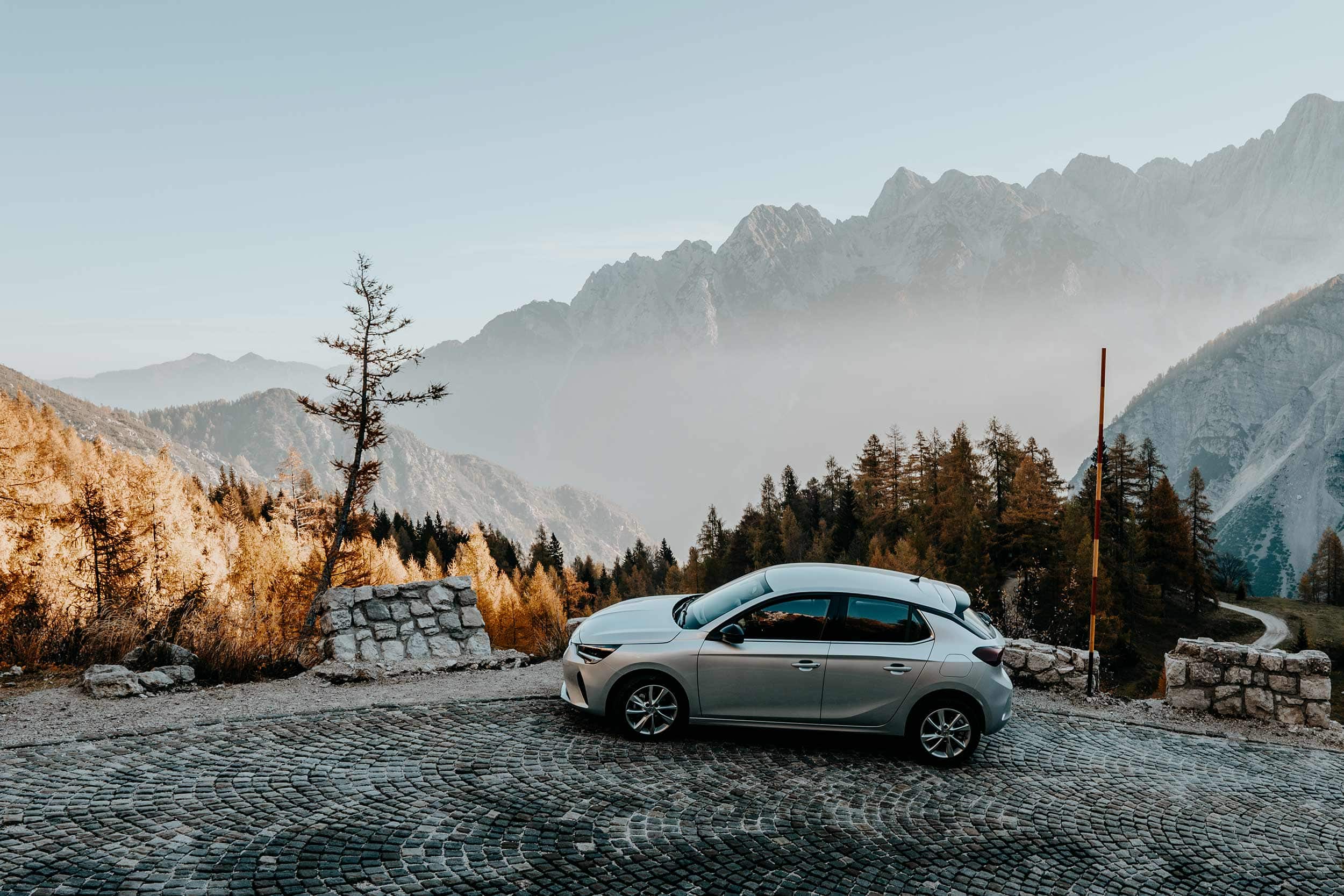
Once you’ve passed Kranjska Gora, it takes only 5km until you reach the Zelenci Nature Reserve, where you’ll notice a small parking lot on the left side of the main road.
If you’re spending a few days in Kranjska Gora, it’s also completely possible to walk to Zelenci.
From Kranjska Gora, it takes about 1 – 1.5 hours to complete the 5km trail from Kransjka Gora to the reserve’s parking lot.
Since Zelenci is tucked away in the very northwest of Slovenia, public transportation options are limited, with no bus stop close to Zelenci Nature Reserve.
If you’re still keen to take the local bus, the closest bus stop is situated in Podkoren, about 15-minutes walk away from the reserve.
Zelenci Nature Reserve Path
When arriving at the reserve, it’s pretty straightforward to reach the Zelenci lake, as there’s only one walking path between the car park and the lake.
Guiding you through the dense forest of Zelenci, the path is scenic, well-maintained and only 500 metres long, and it should take only 15 minutes before you reach Zelenci Lake.
Once you’re done taking in the spectacular views, you simply follow the exact same path back to the car park.
Since the reserve is pretty well maintained, the path is accessible at any time of year.
The pristine Zelenci Lake
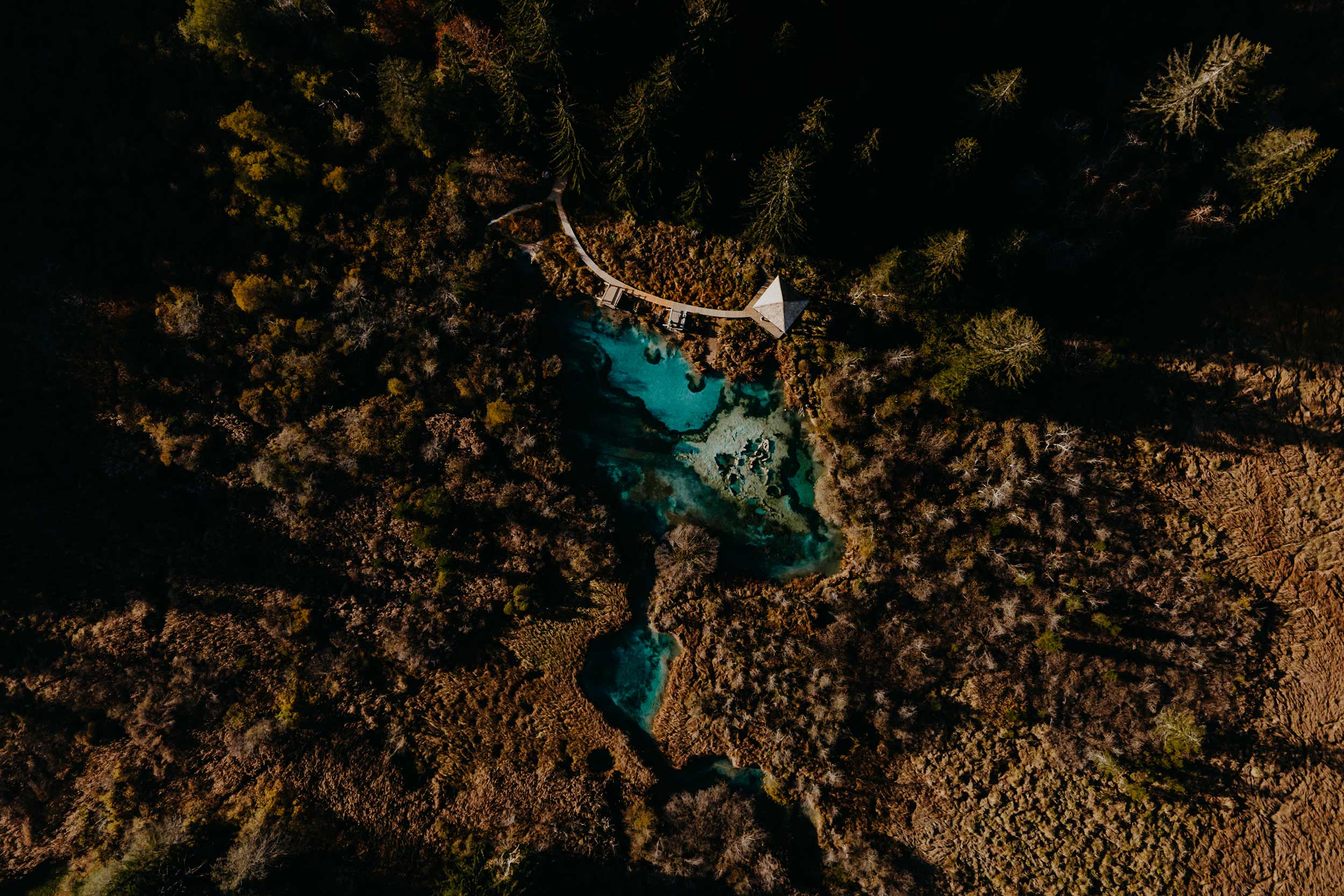
At the core of the Zelenci Nature Reserve is the utterly stunning Zelenci Lake, a pristine emerald lake that is also referred to as the Zelenci Springs.
Crystal clear, and as tranquil as can be, the lake is truly breathtaking, making it the perfect refuge for a wide variety of impressive water creatures, nesting birds, and even amphibians.
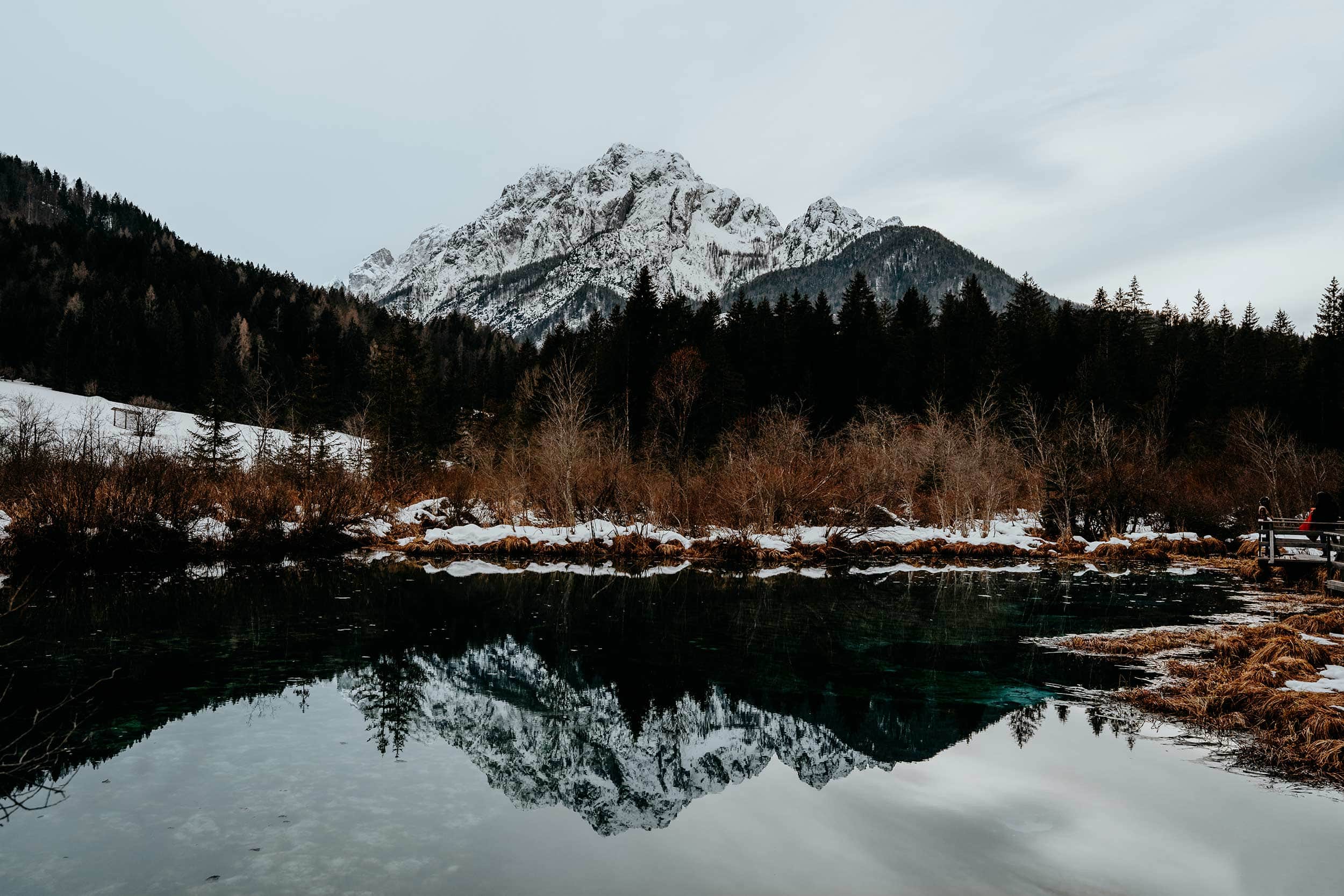
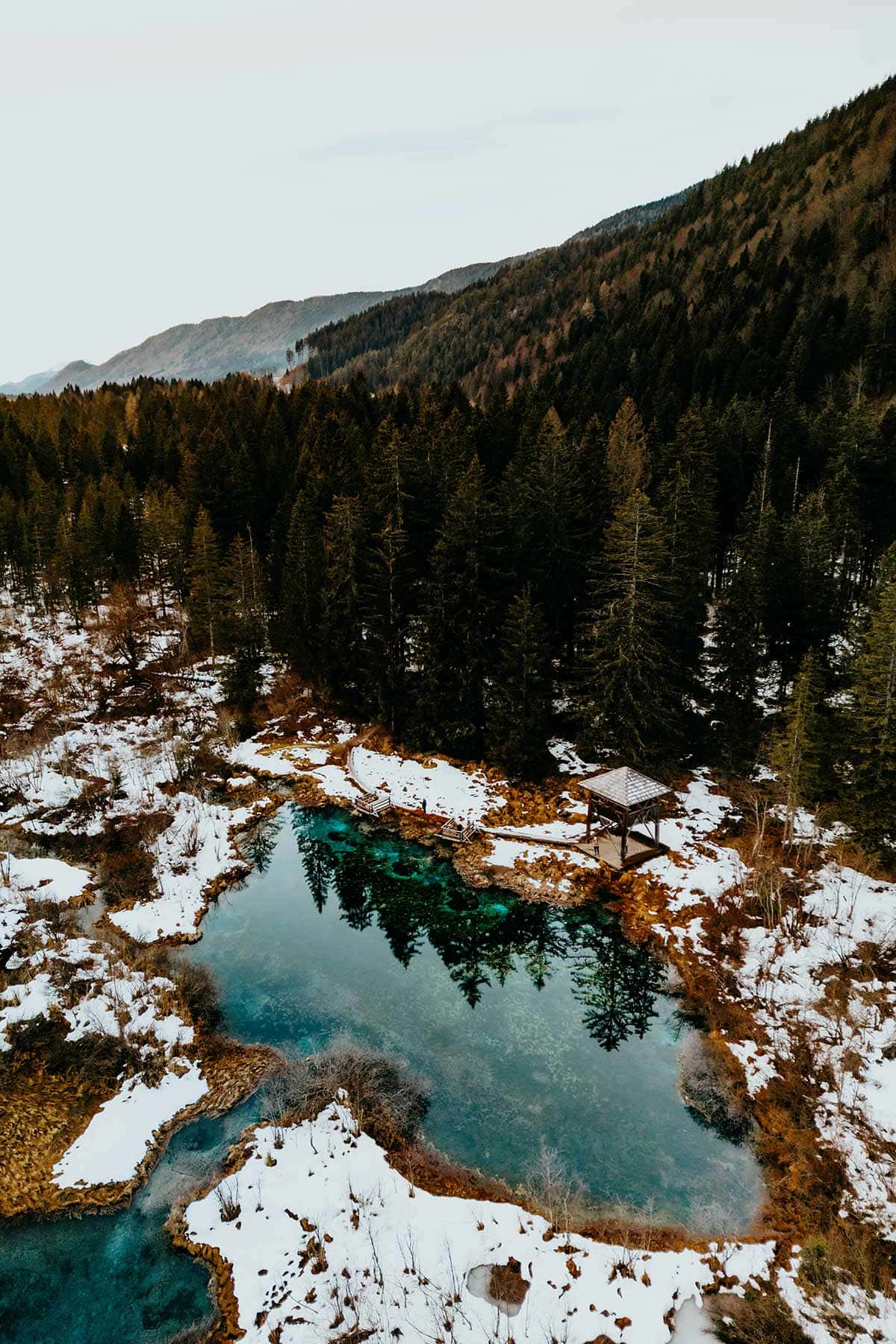
On top of that, the lake is home to an observation tower that provides even more impressive views of Lake Zelenci, not to mention the incredible surroundings; think towering pine trees, lush vegetation, and the snow-topped peaks of the Julian Alps that mirror in the calm waters of the lake.
A moment here is a moment well spent, and if you ask me, Zelenci is one of the absolute highlights on any adventurous road trip through Slovenia.
Zelenci Nature Reserve | The essentials
The best time of year to visit Zelenci Nature Reserve
As with most places in Slovenia, Zelenci Nature Reserve is truly stunning at any time of year.
I’ve visited Zelenci Nature Reserve twice now, and have seen it covered in snow during winter, and completely taken over by the golden hues of autumn in fall – both circumstances were exceptionally beautiful and great for photography.
Then there is summer (June to August), which is generally the best time to visit Slovenia given its excellent weather and lengthy days.
However, it is worth noting that Zelenci gets extremely busy throughout the European summer months, so, therefore, I’d personally prefer a visit during the shoulder seasons.
The best time of day to visit Zelenci Nature Reserve
Since Zelenci’s is rapidly increasing in popularity, I would strongly advise arriving at the reserve early in the morning, when it’s a lot less crowded.
Furthermore, the light conditions will also be more in your favour during an early visit, as the gentle morning light transforms the lake into a huge mirror reflecting the stunningly beautiful surroundings of the lake.
To me, the time of day is significantly more important than the time of year when visiting Zelenci, given the best views are acquired if you look towards the west, meaning you get blinded by the sun in the afternoon.
Another thing worth mentioning is that Zelenci becomes pretty busy during the weekends.
I personally visited Zelenci Nature Reserve in the early morning and had excellent light conditions and only a few other people around, which was great for photography.
Where to stay in Kransjka Gora
If you’re travelling around Slovenia slowly, I’d suggest spending some time in Kransjka Gora, so you can easily explore Zelenci and other surrounding highlights as a day trip from your base in this quaint little town.
Milka Boutique Hotel | By far the most luxurious option in Kransjka Gora, Milka Boutique Hotel offers an exceptional boutique experience in the heart of the Julian Alps. All rooms are decorated to perfection and offer breathtaking vistas over Lake Jasna.
Triangel Boutique Hotel | Located in a pristine alpine valley just outside Kranjska Gora, the Triangel Boutique Hotel boasts spacious well-designed rooms, a fitness centre, free parking and a pretty good in-house restaurant. Though the price is a little on the higher end at €250 a night, this stunning boutique will easily live up to its price tag. Not completely convinced? Let the superb reviews do the talking here.
Hisa Kosobrin | Easily the best apartment I stumbled on during my research, Hisa Kosobrin is a collection of 6 incredibly stunning apartments only a few minutes away from the centre of Kranjska Gora, giving your overall experience a more intimate vibe. Some apartments come with a sauna, which is a great addition too.
Renting a car in Slovenia
If you’re keen to do an epic road trip in Slovenia, I’d highly recommend sorting out a rental car in advance, so you’ll have all the freedom to visit wherever, whenever suits you.
I always use Rentalcars.com for my car rentals, as they have all the major rental car companies on offer, excellent service, and additional insurance – plus, it’s super easy to find yourself a deal here.
Alternatively, Discover Cars is a great reliable option too.
I’ve also written a comprehensive guide on driving in Slovenia (coming soon), so make sure you give that a read too – you can find it here.
What’s next?
The Zelenci Nature Reserve is situated in one of the most popular areas of Slovenia, so there’s a lot more to be sought out and enjoyed here.
Besides Zelenci, this area is also home to other fascinating highlights, including Lake Jasna, the Vrsic Pass, Mangart Saddle, and the Pericnik Falls to name but a few.
If you’re keen to see how to fit these incredible places into your Slovenia itinerary, I highly recommend checking out my 10-day Slovenia itinerary (coming soon), which is packed with useful advice, first-hand tips, and all the Slovenia travel essentials.
Slovenia travel essentials
Though I wouldn’t necessarily label the Zelenci Nature Reserve as a challenging activity, I do think it’s a smart idea to bring some essentials, especially if you have intentions to combine it with other more adventurous natural highlights in the region.
To help you have a comfortable time here, I’d suggest bringing the following items:
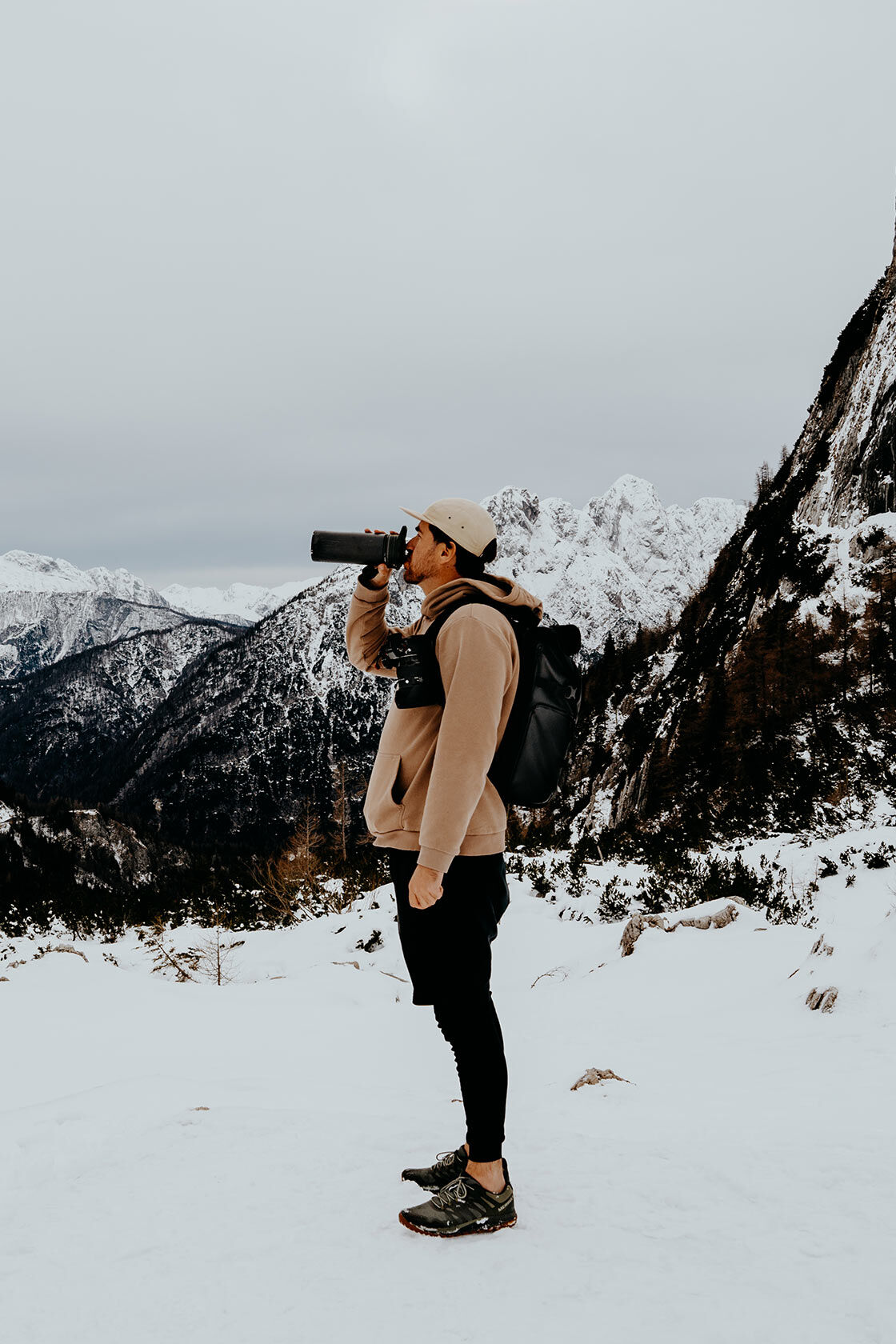
A reusable water bottle | One travel essential that I carry with me at all times is the Grayl Geopress. This reusable water purification bottle allows me to fill up water from almost every water source, making it one of my best investments to date.
A hoodie | Depending on the time of year of course, I advise bringing an extra layer in the form of a hoodie to keep you warm if needed. Since Zelenci is surrounded by forest, this extra layer might come in handy at any given time.
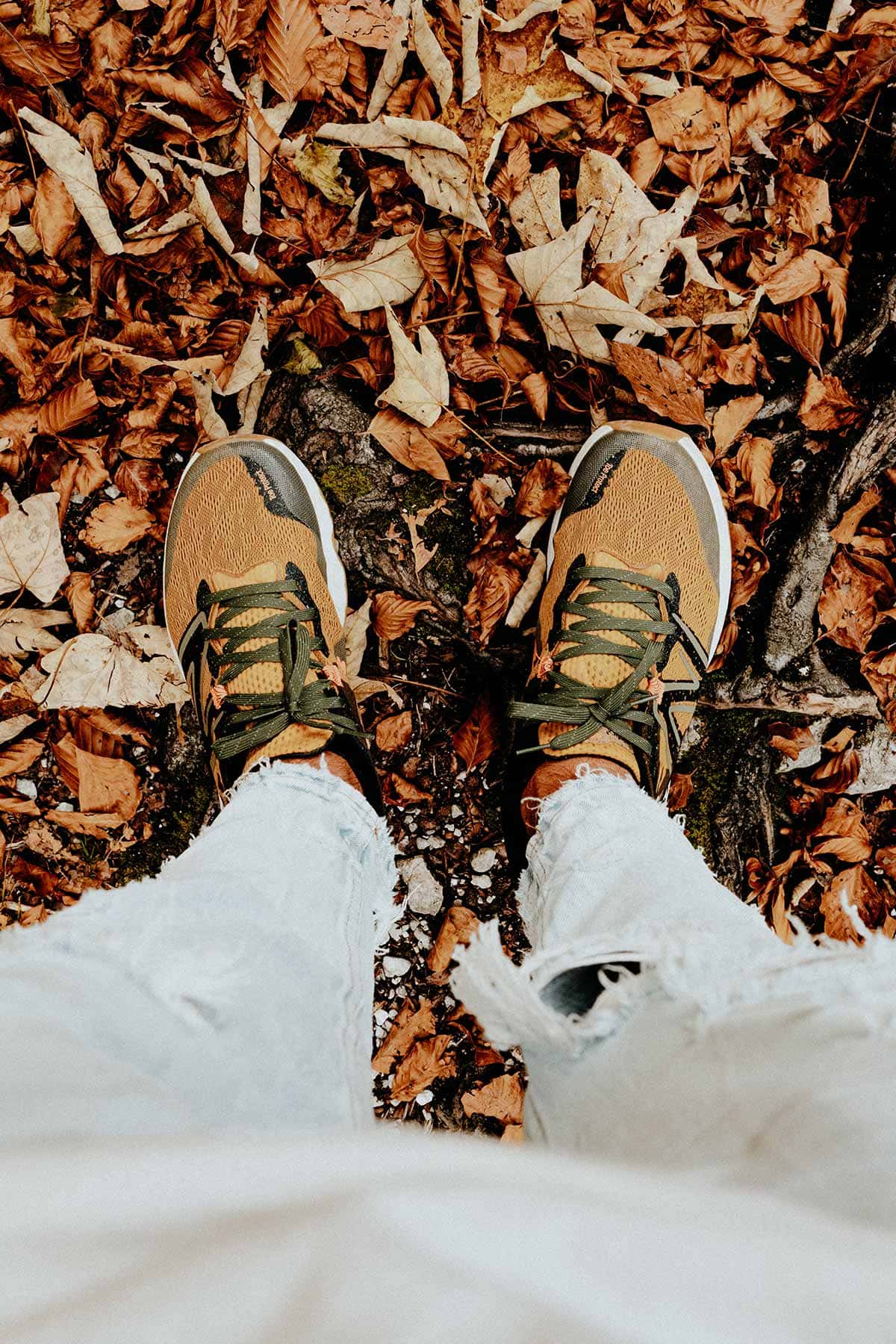
A sturdy pair of sneakers | Though the walk in the Zelenci Nature Reserve is relatively easy, it’s not a bad thing to wear a pair of sturdy trail runners. I often use the New Balance Hierro V7, and I’m pretty satisfied with the grip and comfort they provide me with when I’m out in nature.
A camera | Like most places in Slovenia, Zelenci and its natural features are incredible for hobbyists and professional photographers alike. For that reason, I advise bringing your camera, so you can capture heaps of photos while there. Curious about my photography gear, make sure you see what’s in my camera bag.
Leave no footprints | Slovenia is a slice of untouched natural paradise, and it’s our responsibility to keep it that way. So make sure you expect the location at all times, and bring your trash when wrapping up your time in the Zelenci Nature Reserve.
Stay safe in Slovenia | Travel insurance
Since Slovenia has plenty of adventurous activities on offer, I advise everyone to sort out good travel insurance before setting out on their own adventure.
While I believe that it’s unlikely to experience any troubles when following the advice in this guide, something unfortunate can happen at any time, whether it’s an injury, a stolen camera, or an accident on the road.
For travel insurance, I use Heymondo, as they offer full covid-19 coverage, as well as a handy app with 24-hour medical assistance. Make sure you check it out – readers of WTSW receive 5% off any insurance policy too.
Cheers!
I’ve been on this travel blogging journey since 2019.
If you appreciate what I do here, these are some ways you can support me.
14 Incredible things to do in Valencia, Spain's La capital del Turia
Since I’m currently living in Valencia, this article will be updated regularly with my latest findings.
Valencia, Spain’s third largest city is flooded with history and offers a plethora of captivating things to see and do, yet still manages to feel as if you’re visiting a small pueblo.
It’s a city that will quickly grow on you, as every roam around the historic centre will reveal something new or unexplored. Think authentic tapas eateries, captivating museums, and plenty of historical heritage to appeal to even the most seasoned of travellers.
From the futuristic Ciudad de las Artes y las Ciencias to the age-old Torres de Serranos, the exceptional stretches of beach to Mercado Central; one of Europe’s largest covered markets, there are a myriad of things that will keep you amused when visiting Valencia.
But despite Valencia’s exquisite flair and captivating history, this hasn’t always been the case.
You see, Valencia has long been overlooked in favour of Spain’s big two; Madrid and Barcelona.
However, times change and ‘La Capital del Turia’ is now thriving as ever, with hipster-ish cafes popping up at just about every corner, trendy contemporary restaurants setting the tone for mouthwatering culinary experiences, and long-standing traditions that survived the test of time.
All of this ensured that Valencia became one of the most popular city trip destinations in Europe, with over 2.2 million visitors annually. It even earned the prestigious status of ‘ best city to live in’ by the world’s leading expat community; InterNations, and an equally impressive mention by renowned media outlet Forbes.
After now living in Valencia for over 1 year, I feel confident to say that I have my fair share of expertise on what this vibrant and charming city has to offer to travellers.
In this guide, I’ll cover the absolute best things to do in Valencia, a few personal favourites in terms of where to eat and drink, plus my picks on where to stay.
If you choose to use any of the links on this page, I may receive a small commission at no extra cost to you. By using these links, you’ll have a direct impact on WTSW and my ability to continue to create free insightful travel content for you. If you find any of my tips useful, you can support me by buying a virtual coffee here.
Where is Valencia
Valencia is located on the southeast coast of Spain and is considered the third-largest city in Spain, right after Madrid and Barcelona.
Known for its stunning beaches, vibrant culture, and mouthwatering cuisine, the capital of the eponymous province of Valencia has around 800,000 inhabitants and is unquestionably one of Spain’s most popular coastal cities, if not Europe.
Where to stay in Valencia
If you’re looking to visit Valencia during the popular European summer months, I simply can’t stress it enough to sort out your accommodation rather soon than later.
However, with so many incredible options to choose from, it can be quite daunting at times.
Luckily for you, I’ve already done proper research and curated the best options in my Where to stay in Valencia (coming soon) guide.
Based on my own experiences, choosing the right base from which to explore Valencia is quite an essential part of your research, so my curated guide will be of good use to help you find the right spot for you.
If you’re solely here for some quick inspiration, these are some of my absolute favourites out of the bunch:
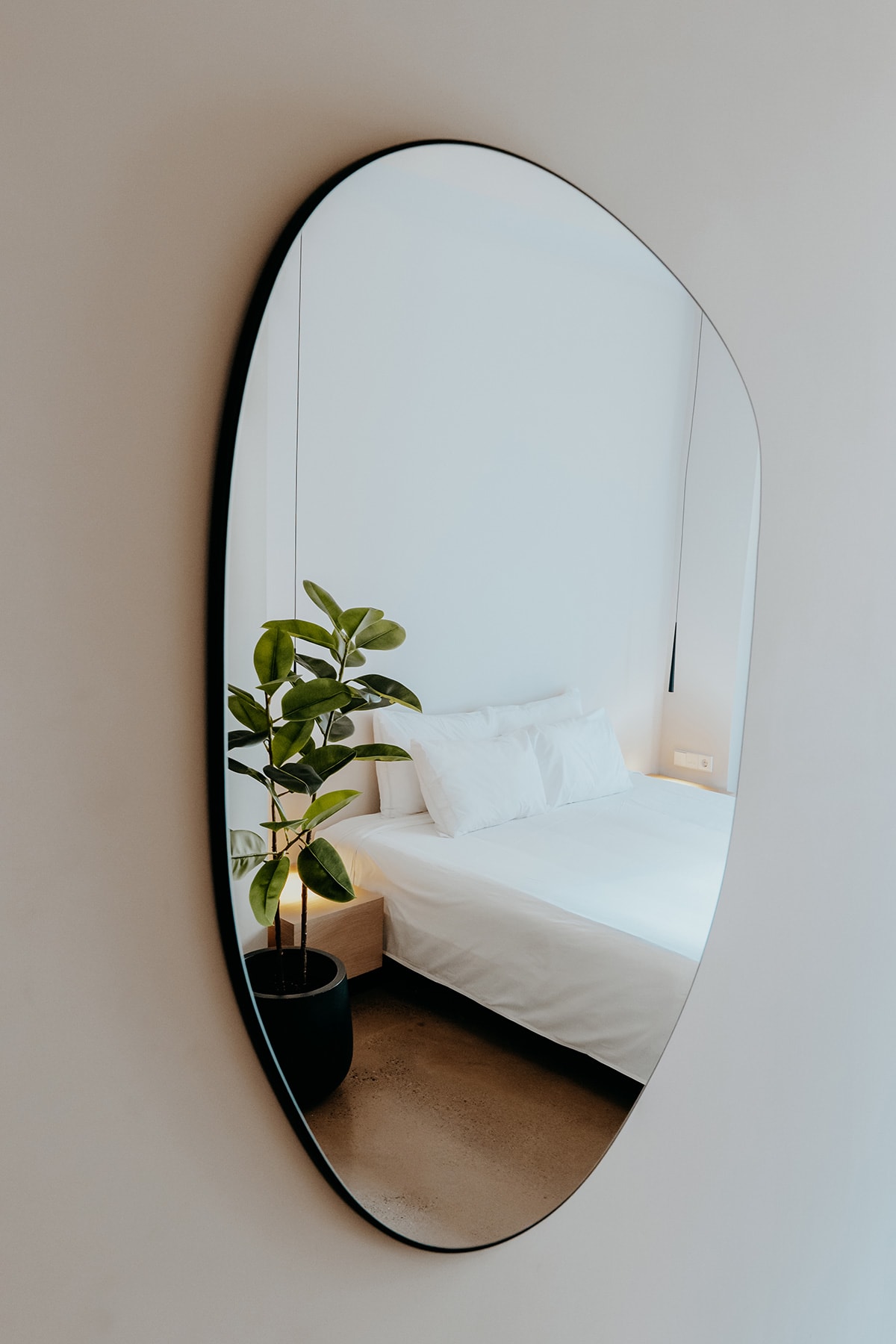
Caro Hotel | Nestled in a picturesque laneway in the heart of Valencia, Caro Hotel is set within a 19th-century palace and boasts a modern design with exciting historical elements. It’s basically as if you’re staying in an art museum, with 26 beautifully designed rooms that all have their own unique features.
YOURS boutique stay | Set within Valencia’s trendy Russafa neighbourhood, this designer apartment is perfected down to the last detail, with an exceptionally minimal and spacious feel to it. The apartment-style YOURS hotel is, in my opinion, the perfect base from which to explore Valencia. If there’s one place that comes close to my ideal apartment, I’m pretty sure it’s this one, so make sure you check it out here.
Marqués House | If you’re looking for a stunning, contemporary hotel with spacious and tastefully decorated rooms in the heart of the historic centre of Valencia, look no further. Located just a stone’s throw away from all the best things to do in Valencia, Marqués House is known for its high standards and excellent hospitality, which is clearly noticeable throughout the entire property.
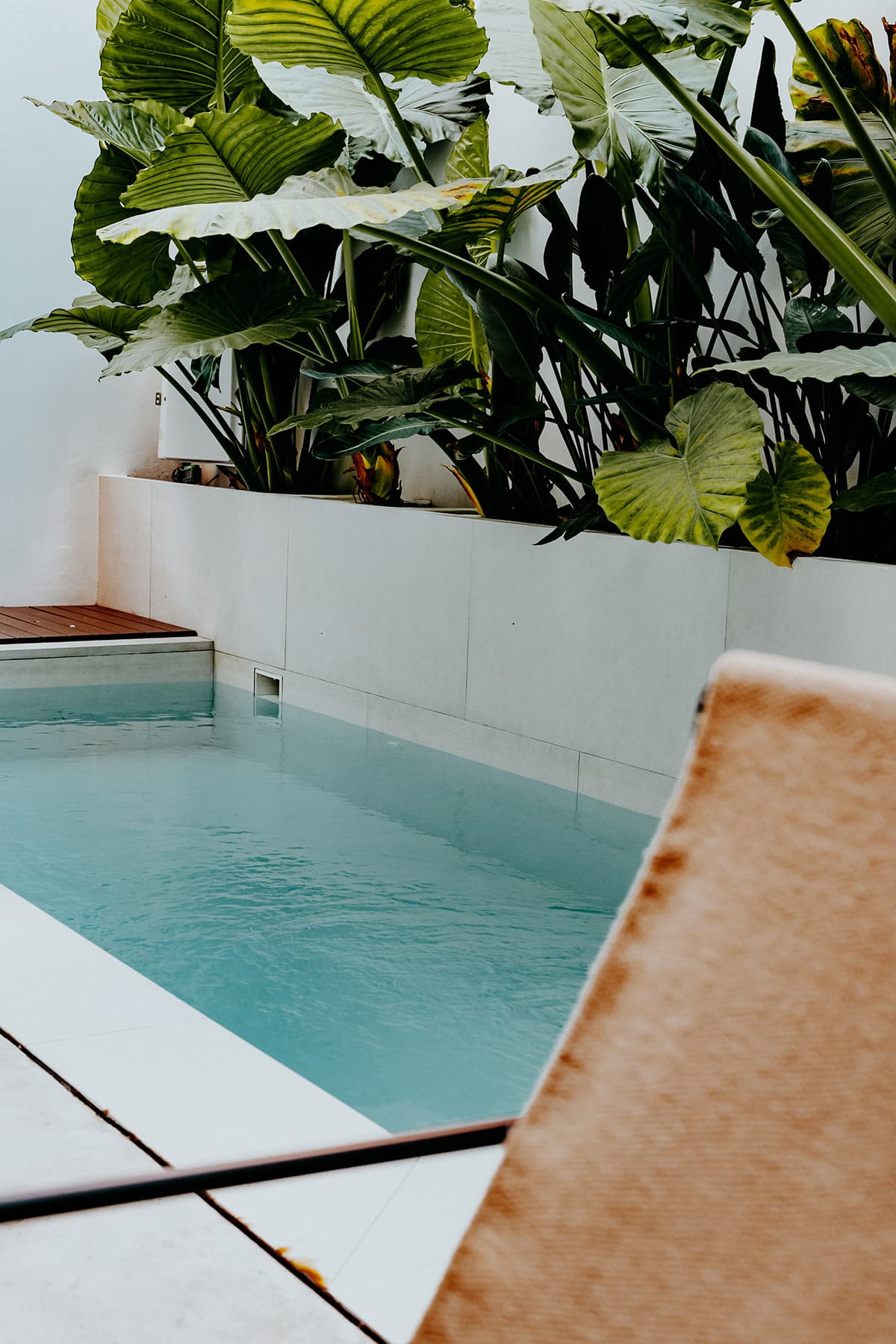

Grab a Valencia Tourist Card – Safe money and time
If you’re anything like me and prefer to get the absolute most out of your time when visiting a new place, I’d recommend getting your hands on a Valencia Tourist Card, as it will give you access to lots of things to do in the city.
Since it combines free public transport (which comes in handy as an airport transfer), entrance to Valencia’s public museums, and up to 50% discount on popular tourist attractions, the Valencia Tourist Card will simply be your key to the city.
The card is available in 24, 48 and 72-hour versions, and is best bought online and in advance so you can instantly use it for the metro to get from the airport to the city centre.
If you’re already in the city, yet still thinking of buying one, they are also available at the official Valencia Tourist Office.
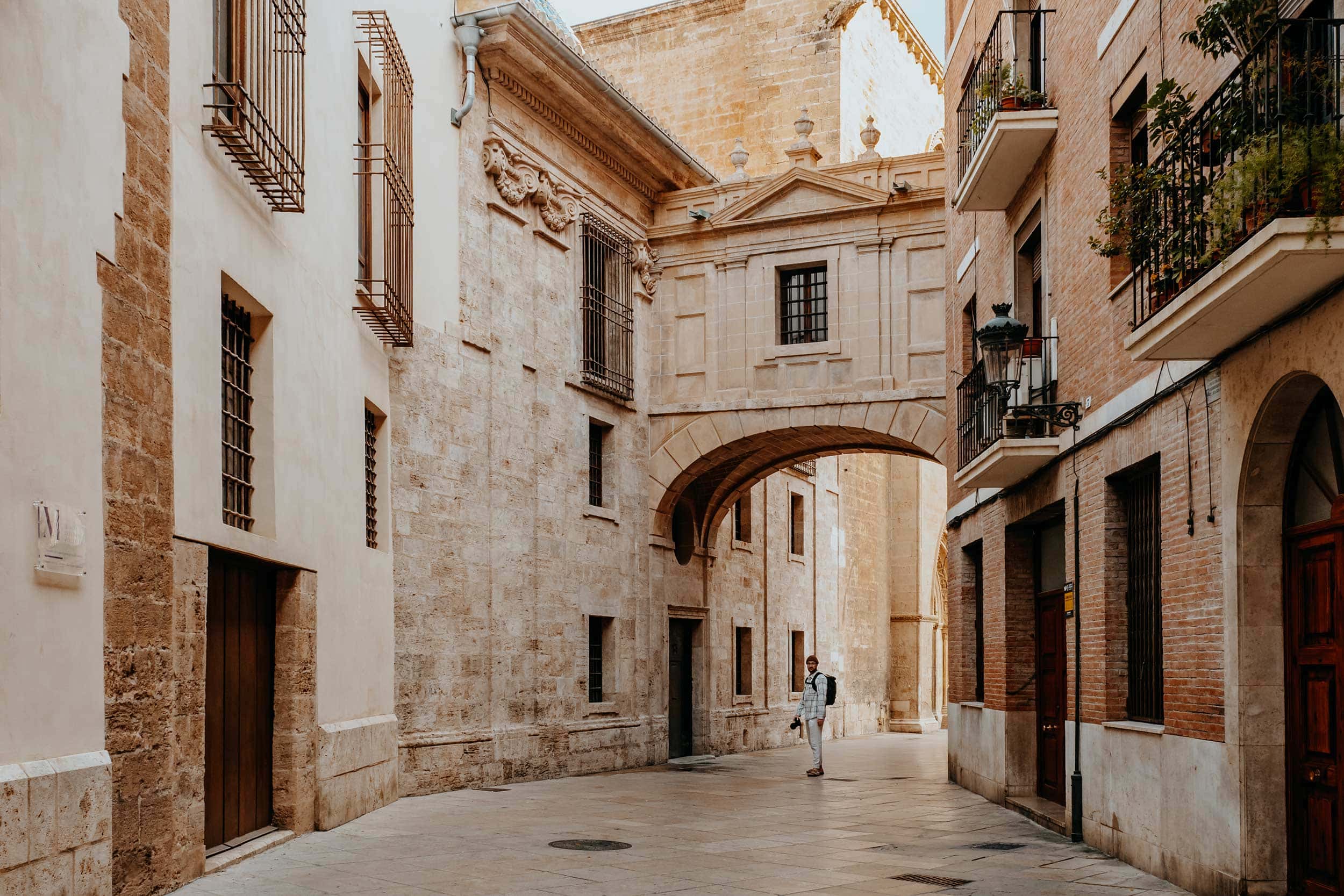
14 incredible things to do in Valencia, Spain
1. Marvel at the Ciudad de las Artes y las Ciencias
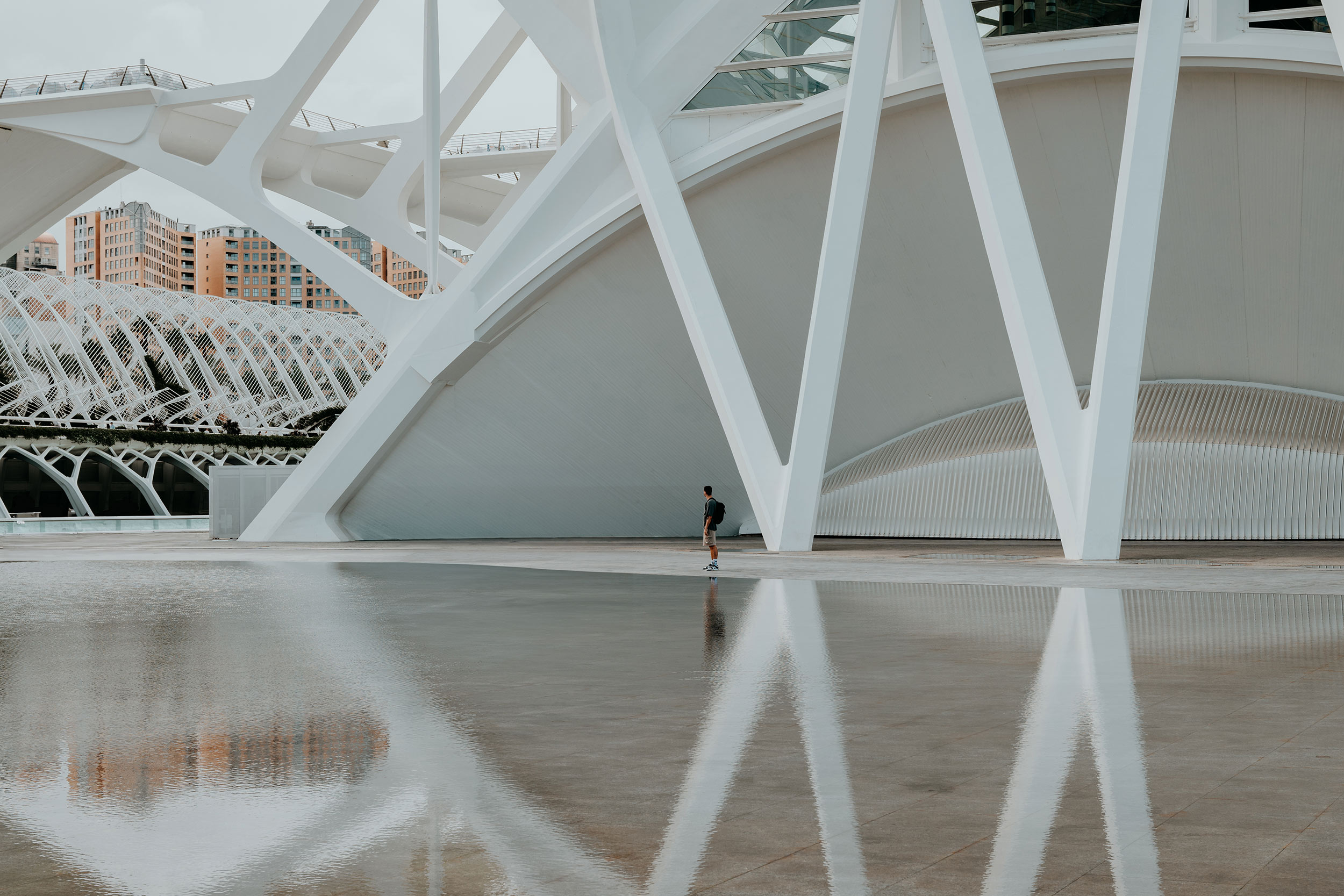
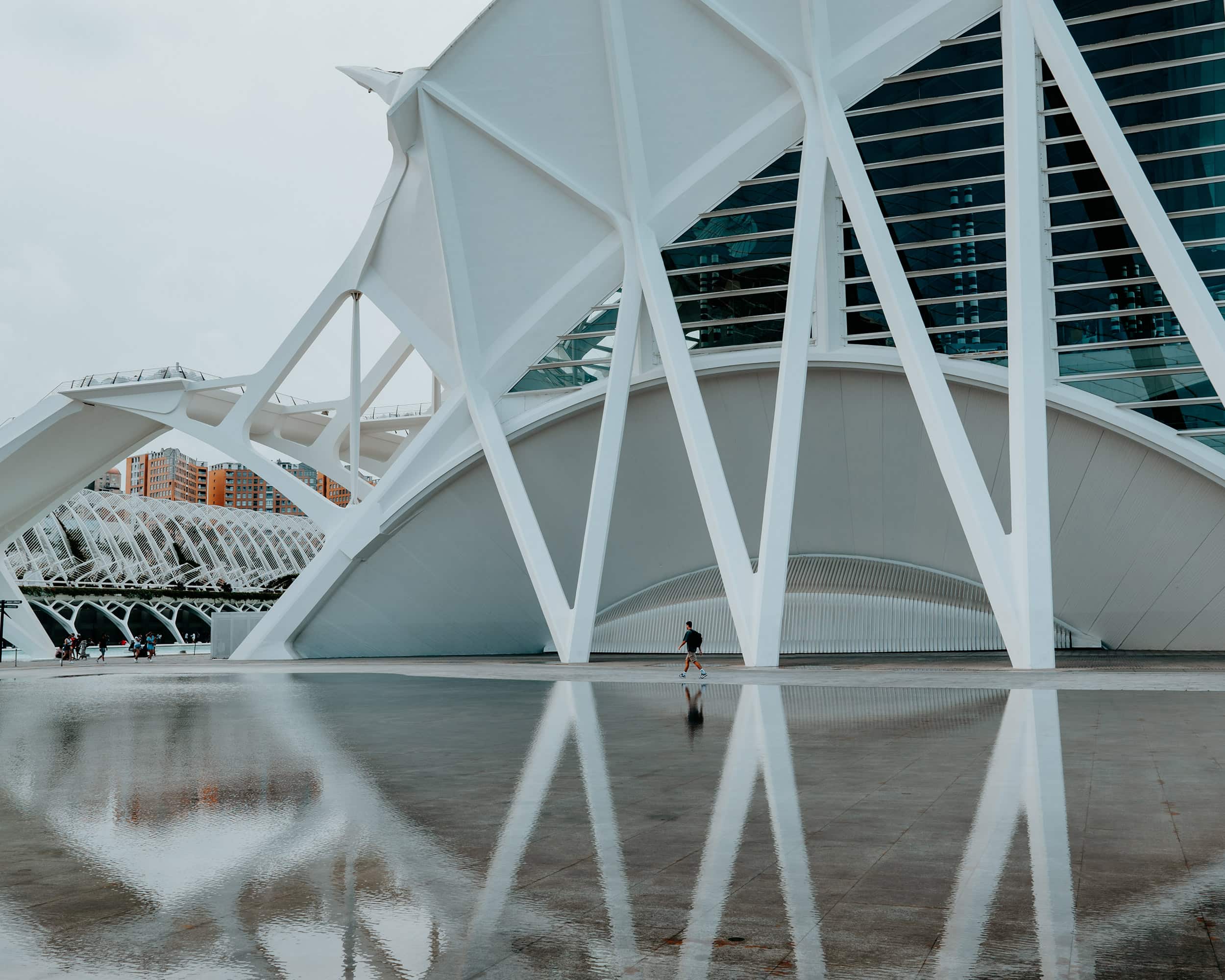
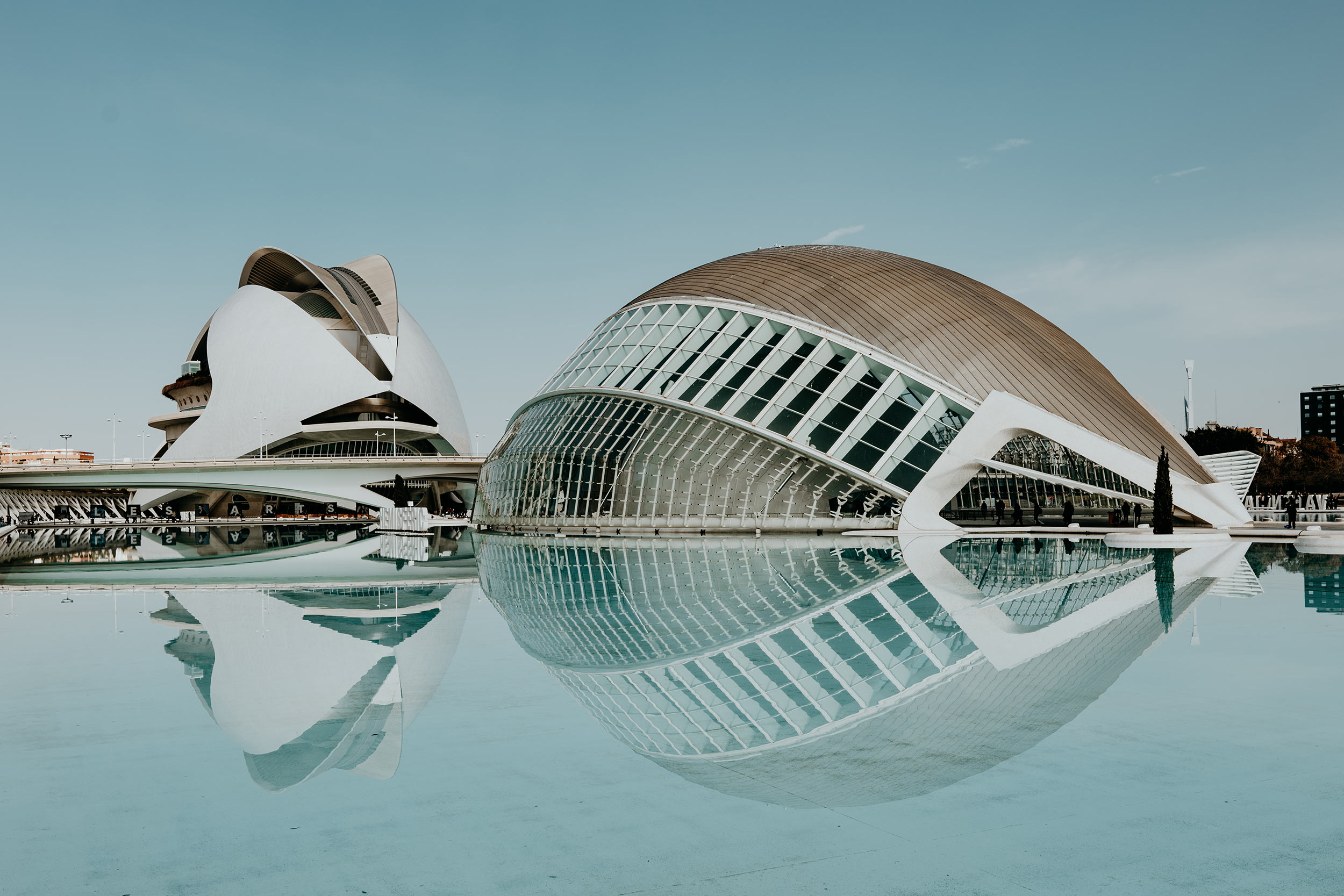
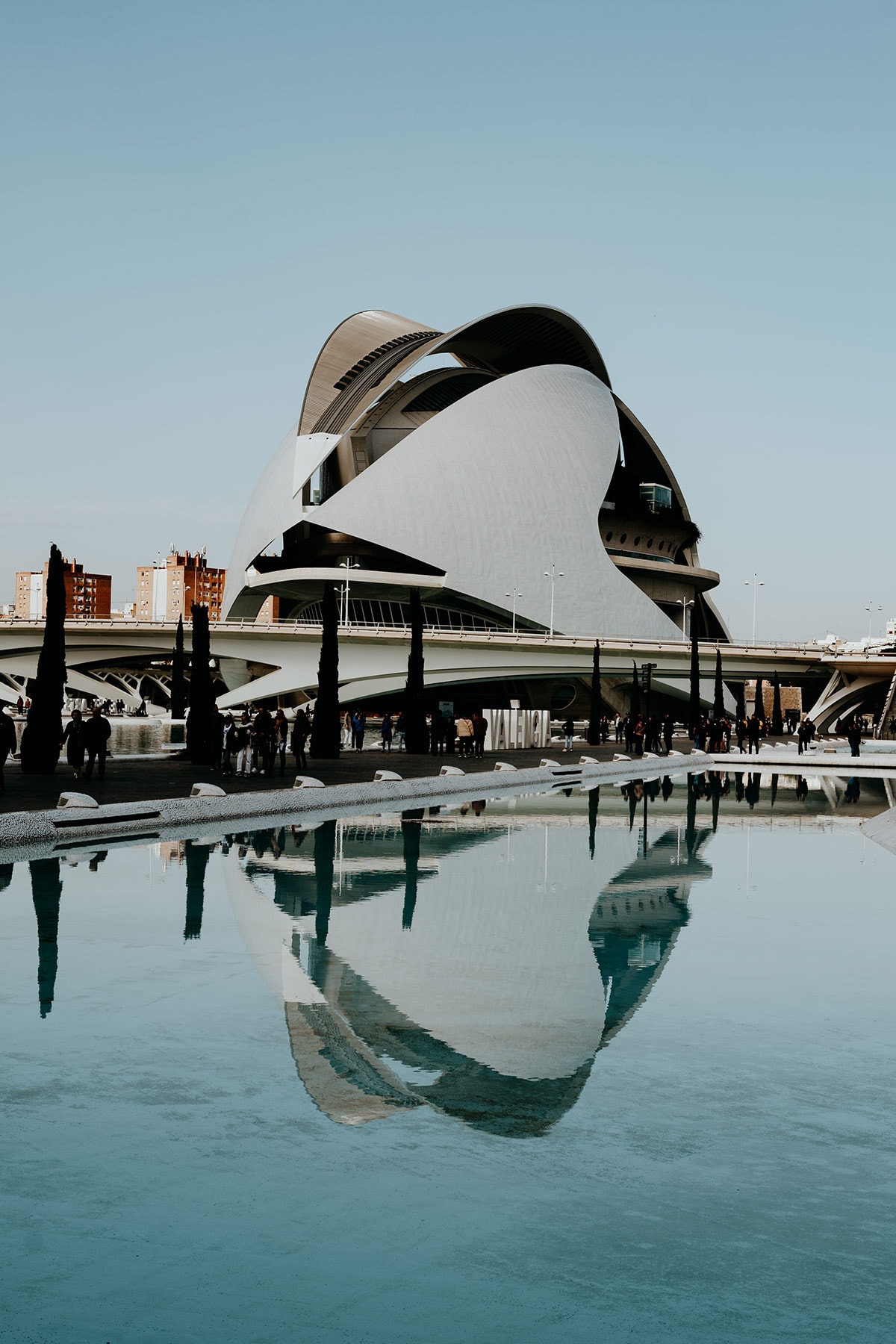
It is fair to say that no visit to Valencia is complete without marvelling at the futuristic architecture of Ciudad de las Artes y las Ciencias, also known as the City of Arts and Sciences.
Set within the picturesque Jardín del Túria, the Ciudad de las Artes y las Ciencias was designed by Valencian-born architect Santiago Calatrava and is defined as a modern architectural masterpiece by many – I totally agree with that statement.
At first, the construction of the complex was estimated to cost around 308 million euros, which is quite a price tag. However, the budget couldn’t be more off in the end, since the project eventually cost the government a whopping 1282 million euros to complete.
Despite its astronomically high price tag, it’s an utterly stunning place that looks and feels way ahead of its time. Fortunately, tourism in Valencia benefits enormously from the construction and it rapidly became one of the most popular things to do in Valencia.
I wander around the complex quite often (still not quite as much as I would like though), and the futuristic features are blowing my mind time and time again.
To give you an overview, the Ciudad de las Artes y las Ciencias consists of the following buildings:
- Palau de les Arts Reina Sofía
- Oceanogràfic
- Hemisfèric
- Museo de las Ciencias
- Umbracle
- Agora
+ Read more | For a more in-depth read, make sure you check out my guide to the Ciudad de las Artes y las Ciencias (coming soon) for photography inspiration, travel advice and all the essentials.


2. Stroll through the streets of El Carmen
The heart of all things historic, Barrio del Carmen is one of the oldest districts in Valencia and has recently acquired new interest as one of the hippest areas in the city.
During the 11th century, Valencia was under Moorish rule and this Northern African influence is still very much present in the streets of El Carmen, with quite a few impressive Medieval remains dotted throughout the trendy neighbourhood.
It is in fact, still possible to see the remains of the Muralla Arabe (Arab Walls) if you stumble through the maze-like alleyways of El Carmen – which is pretty rad if you ask me.
While I could easily write a complete guide to El Carmen (which I might eventually do), these are some of the best things to see while there:
- Torres de Serranos | This age-old defence tower provides stunning views of Valencia
- Galeria del Tossal | An exhibition area featuring remnants of the ancient Islamic city walls
- Paráis Store | A trendy store to find unique streetwear pieces
- Portal Valldigna | A picturesque archway that used to be an entrance to the medieval city
- Calle Roteros | Here you’ll find the remains of the Muralla Arabe
- The Quart Towers | Played a vital part in stopping Napoleon’s battalions in 1808
- Carrer d’en Borràs | Torre del Ángel; the remains of an 11th-century semicircular tower
On top of that, the cobblestone streets of El Carmen are known for their thriving food and nightlife scene too, with plenty of authentic bars, excellent eateries – both local and international, and a few clubs too.
Where | Bario El Carmen

3. Visit Palacio del Marqués de Dos Aguas – Ceramics Museum
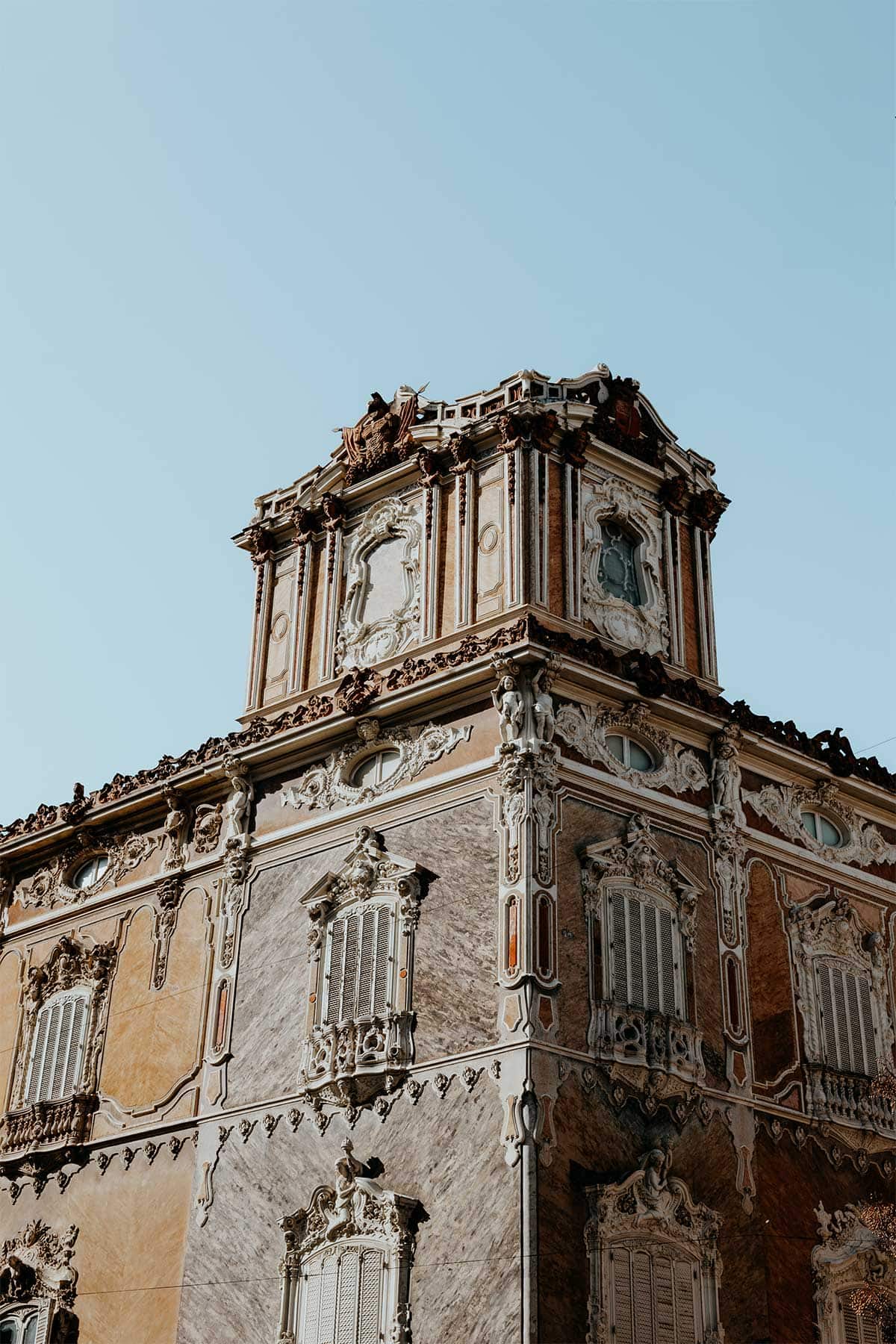
Easily one of the most fascinating buildings in Valencia, the Palacio del Marqués de Dos Aguas is the former home of the Rabassa de Perellós family and dates back to the 18th century.
Characterized by arguably the finest example of Baroque architecture in the whole of Spain, the opulent palace has been restored several times throughout its history and now houses the National Museum of Ceramics – which, on its own, is equally as impressive as the palace’s interior and exterior.
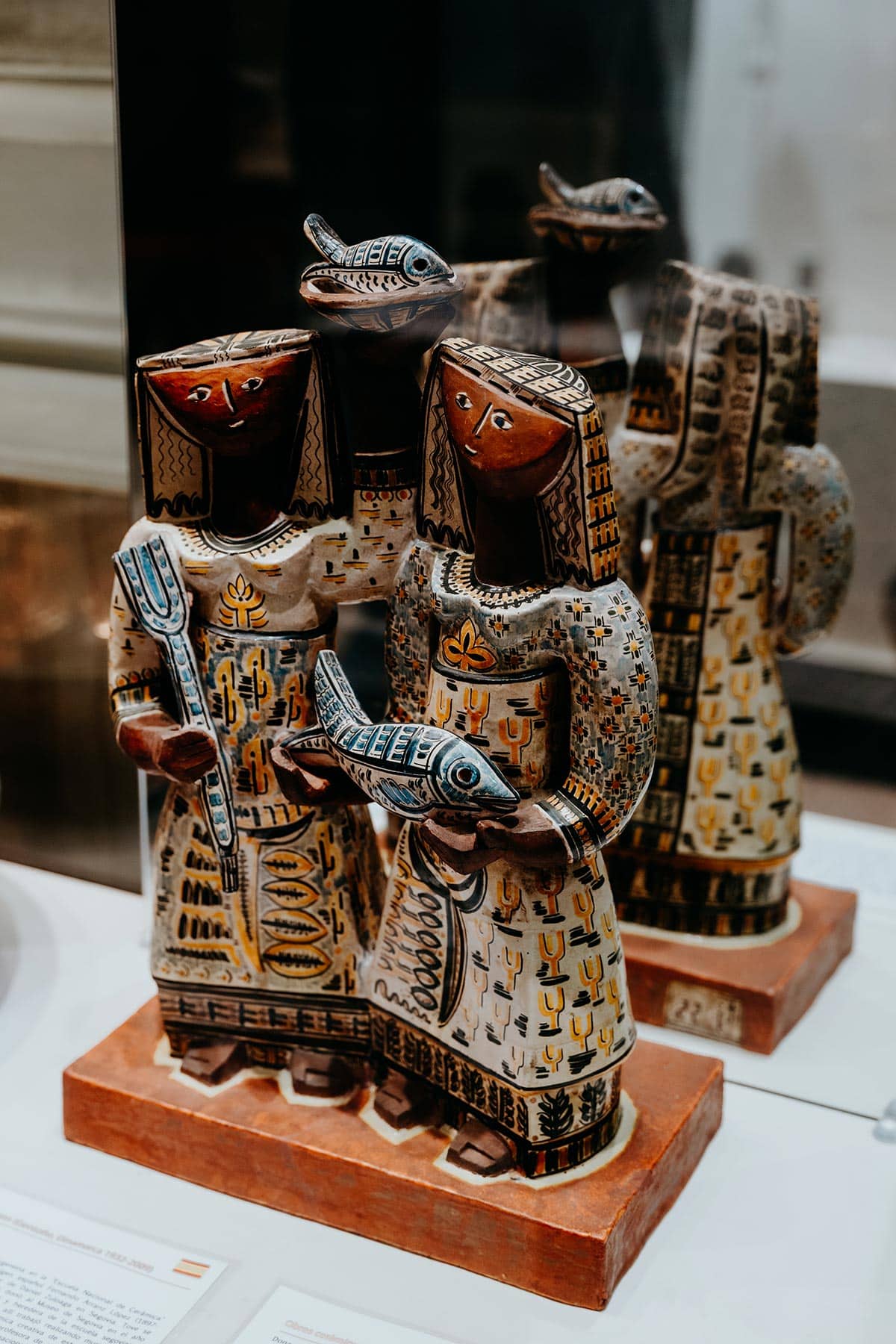
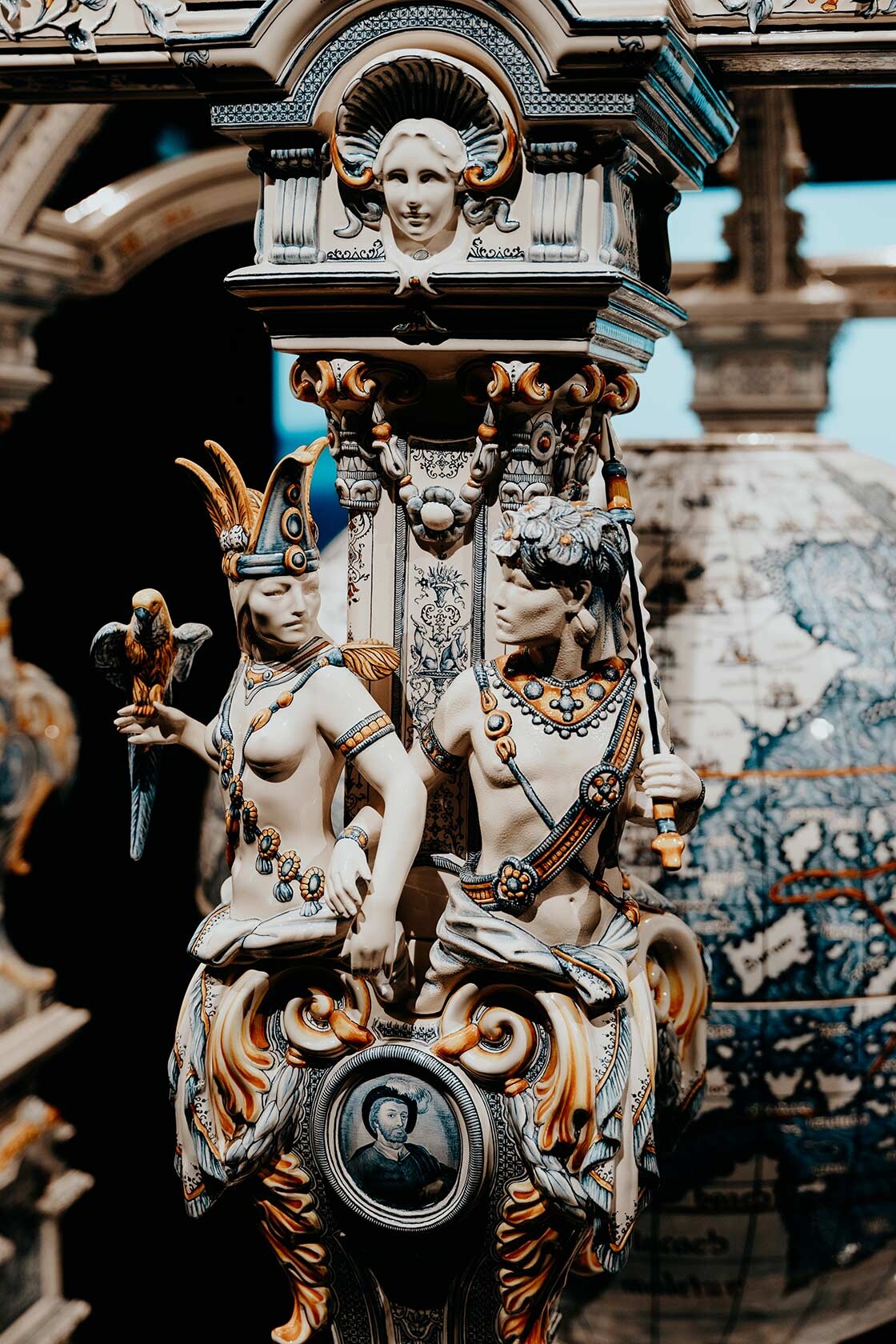
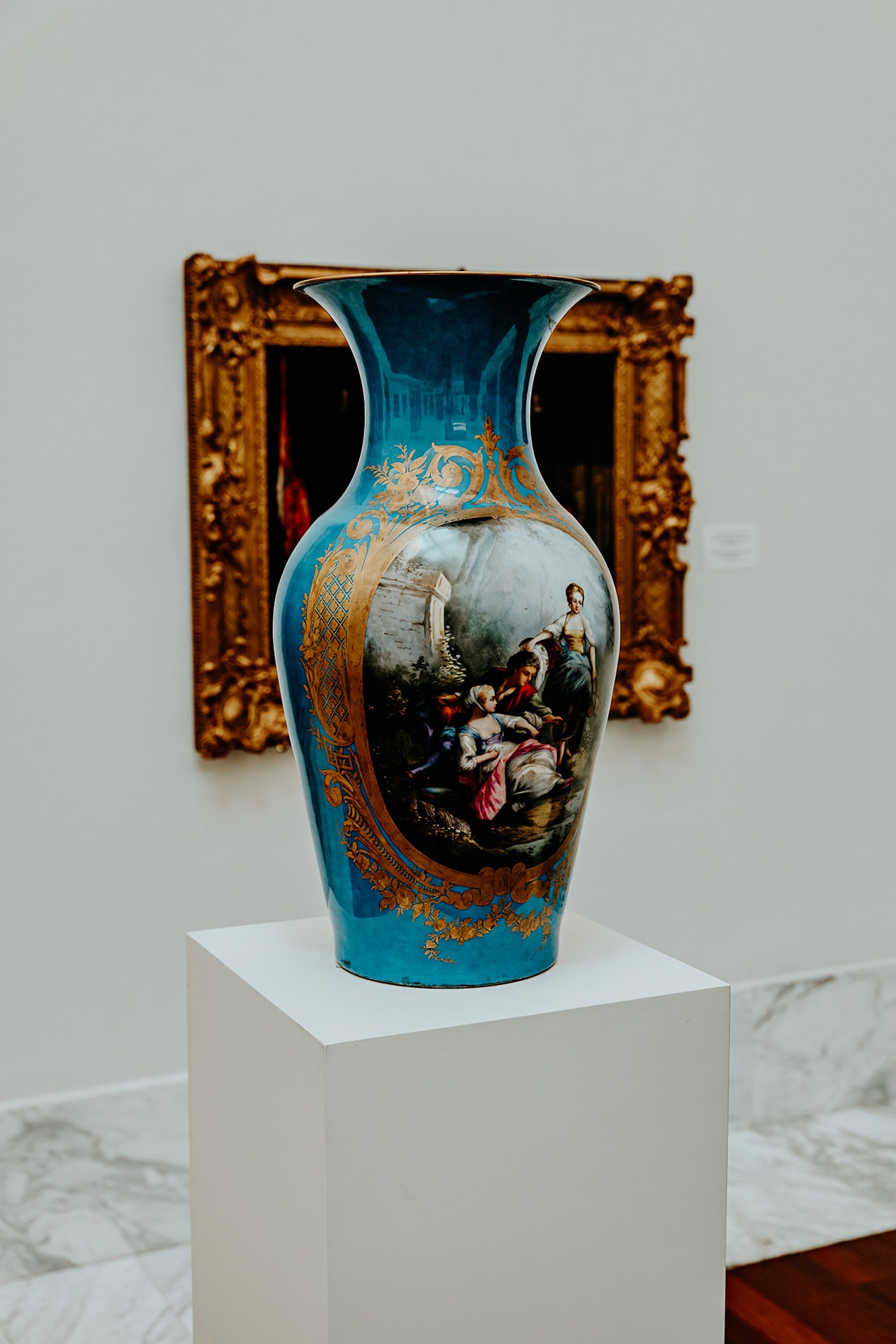
The González Martí National Museum of Ceramics holds an extensive collection of ceramics, porcelain, furniture, clothing and paintings, reflecting the rich ceramics traditions in Valencia, which was strongly influenced by Hispano-Muslim culture.
The museum consists of several different rooms distributed over the main and first floor, including the Medieval Architectural Pottery Room, Mudéjar Pottery Room, Muslim World Room, Chinese Room, and the Porcelain Room to name but a few.
The works found here differ from the 18th century all the way to present times. They even have the work of renowned artist Picasso on display.
If you’re visiting Valencia during the peak summer months, I’d highly recommend visiting around noon, given it’s a great activity to escape the sizzling heat for a few moments.
Additionally, you will have free entrance on Sundays, which is the case with lots of things to do in Valencia. Do keep in mind that you will share your experience with heaps of people during the weekends.
Where | Palacio del Marqués de Dos Aguas
Opening hours | Tuesday to Saturday 1000 – 1400 and 1600 – 1800, Sunday 1000 – 1400
Cost | Entrance fee is €3,- per person, free entrance on Sundays
4. Explore trendy Ruzafa
Home to a plethora of outstanding tapas joints, lively bars, hipster-ish coffee shops, and trendy restaurants, Ruzafa is easily one of the hippest districts in town and one where you should obviously spend a fair amount of your time.
It’s a place well-known among Valencia’s creatives, hipsters and art-minded people, and a neighbourhood where you’ll experience a more intimate and unique vibe, one that could easily be compared to District VII in Budapest, Amsterdam North in Amsterdam, or Kreuzberg in Berlin.
But it’s not just the thriving cafe scene and creative ambience that makes Russafa so special.
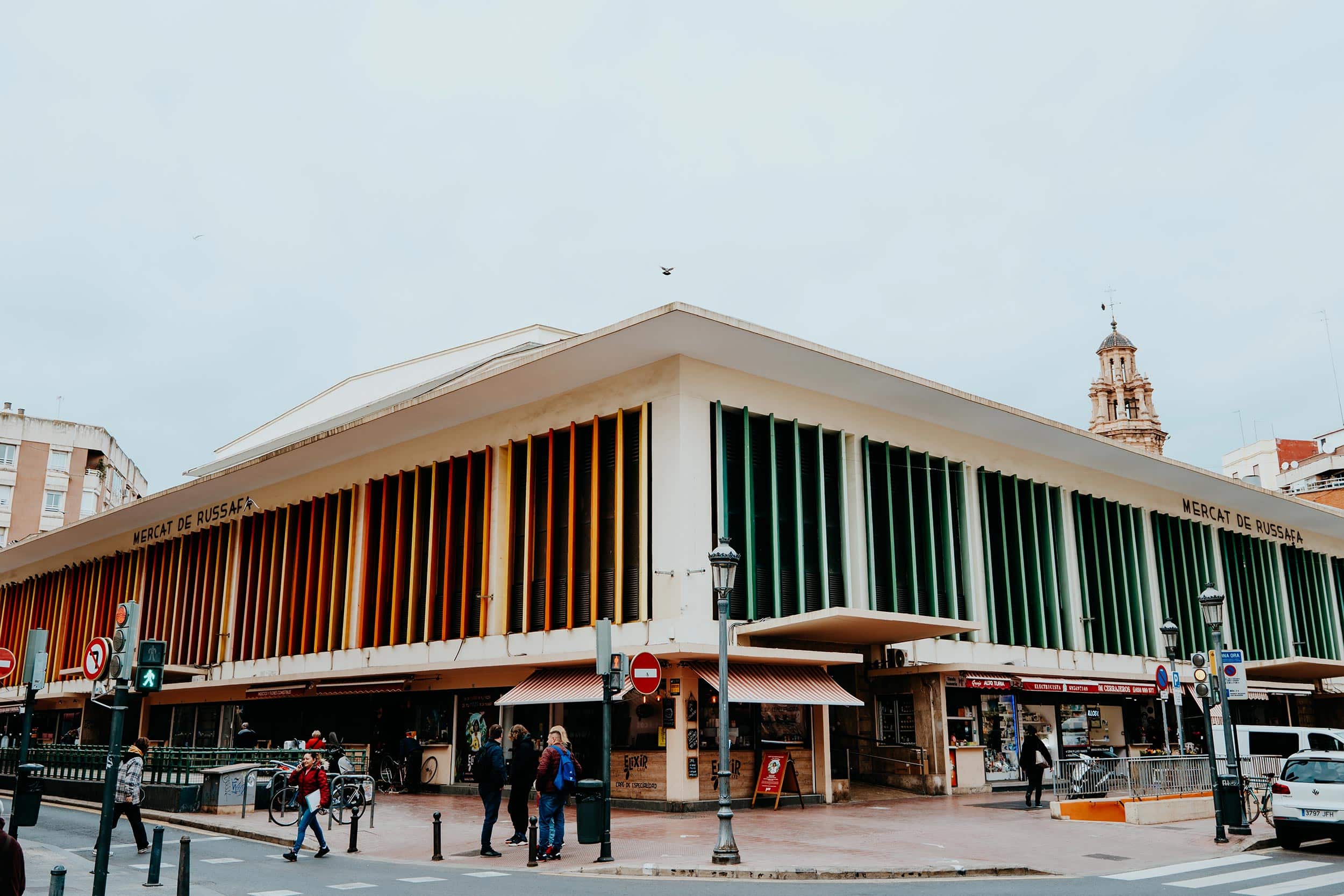
No, it actually has much more to offer, as it’s home to the extensive Russafa market, some of Valencia’s best underground clubs, and plenty of trendy accommodation options – plus it has a rich and captivating history too.
It’s the perfect place to fix your morning coffee, embark on a flâneur walk, hang out on a hot summer’s afternoon, or simply grab a few sundowners while the city slowly cools down.
Some places I recommend visiting in Russafa include:
Russafa Market | Much of Russafa’s lively atmosphere is happening right here in and around the extensive covered Russafa Market, so make sure you check it out.
Bluebell Coffee | Those after a good cup of joe, look no further, Bluebell Coffee is one of the best cafes in Russafa, if not the whole of Valencia. Keen to uncover the best coffee joints in Valencia, make sure you read my guide to the best speciality coffee in Valencia.
Oven Club | If you’re anything like me, and love a good techno party from time to time, Oven Club should be your weapon of choice when looking for a night of funky beats and dancing.
Ubik Café | Somewhat of a fixture within Russafa, and one of the pioneers of the neighbourhood’s revival, Ubik Café is a versatile space where coffee, books, art and music come together in an authentic and inviting manner.
La Más Bonita | Another popular establishment in Russafa is La Más Bonita, a trendy breakfast, brunch and lunch joint that serves a mean smashed avocado toast, home-baked pastries, excellent coffee and plenty of other yum options.
5. Have a refreshing drink at Finca Bar Valencia
With great weather year-round, a daily life that takes place outside most of the time, and a strong cultural interest in small bite-sized snacks and accompanying drinks, you’d probably think that you will stumble upon modern open-air bars at just about every corner.
But despite Valencia’s thriving gastronomic scene, something was missing.
Amidst the plentiful traditional (and oftentimes passé) local bars and eateries, and set directly on a cosy plaza home to an authentic Catholic church is the redeemer: Finca Bar.
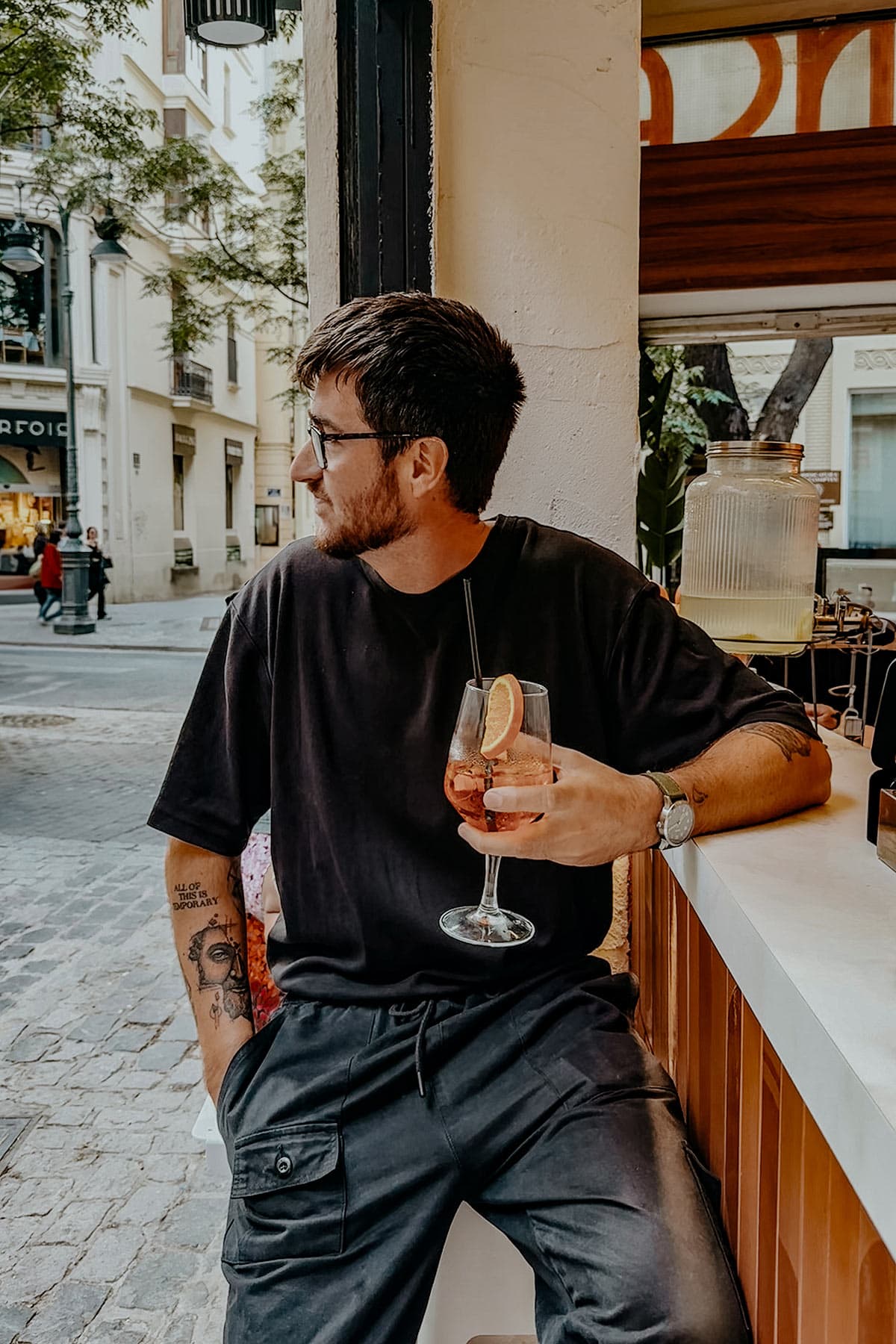
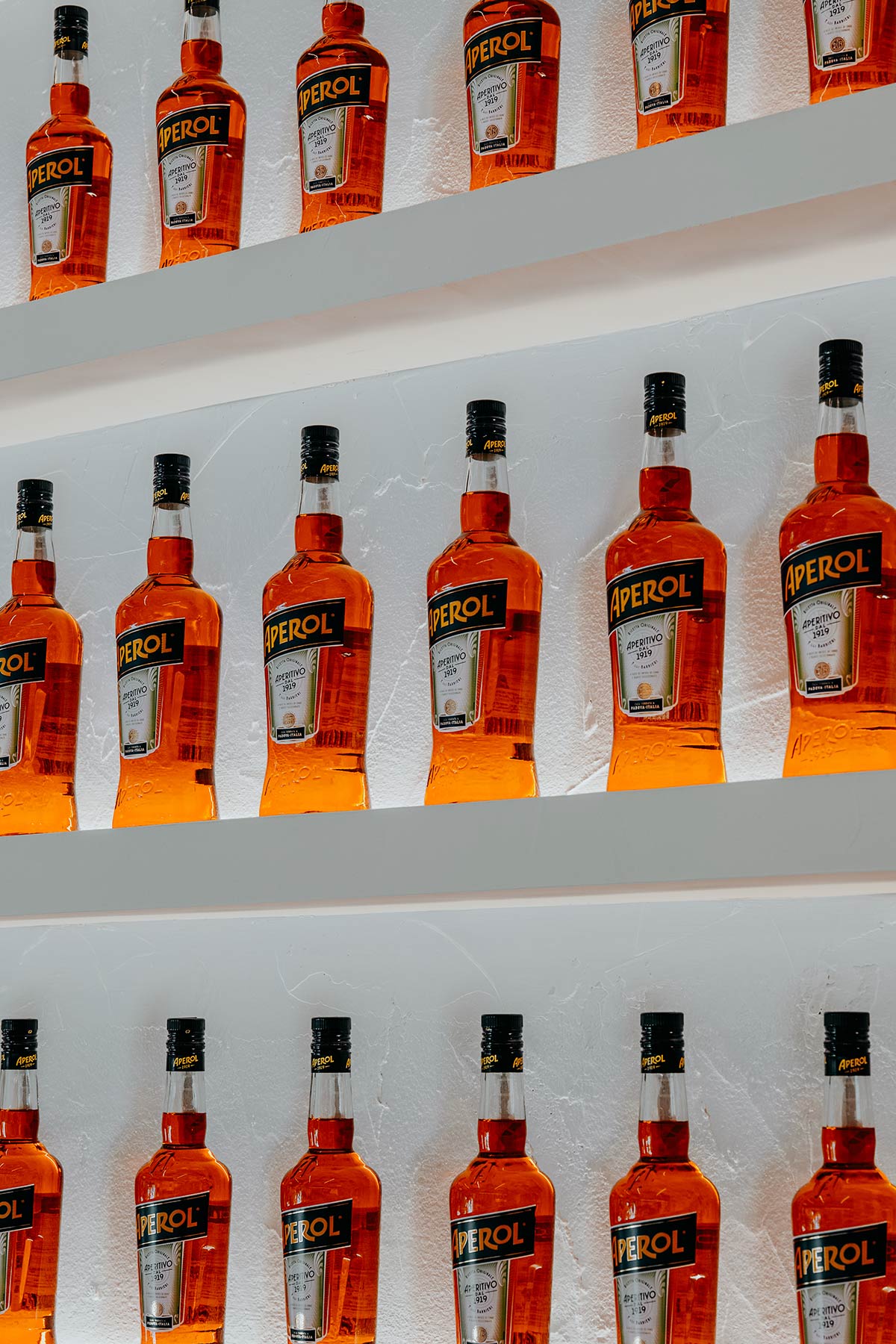
On the menu is Aqua de Valencia; a true Valencian icon, Tinto de Verano, and Aperol Spritz among others, besides a few tapas, that unfortunately, leaves quite a bit to be desired.
I am not ashamed to admit, that lately, lots of afternoons have been spent right here, with an Aperol Spritz in hand, while chitchatting all things life with my close friends.
Finca has somehow turned into our gathering point, which might not come as a surprise to those following along my Instagram stories.
With most travellers spending only a short amount of time in Valencia, and the fact that Finca serves up Valencia’s famous Aqua de Valencia in a to-go version, Finca makes for an excellent stop for those keen to take a short break from their explorations, before continuing on their pursuit to tick of the best things to do in Valencia.
While there’s no doubt that Finca Bar is the ‘place to be’ for a few refreshing drinks on a hot summer’s day, the bar recently gained quite some traction on Instagram too, as their (now) famous ‘Orange Wall’ with the sign Valencia mi Amor has become quite a hype on social media.
Where | Finca Bar Valencia
Opening hours | Daily 10:30 – 00:00

6. Marvel at the Torres de Serranos
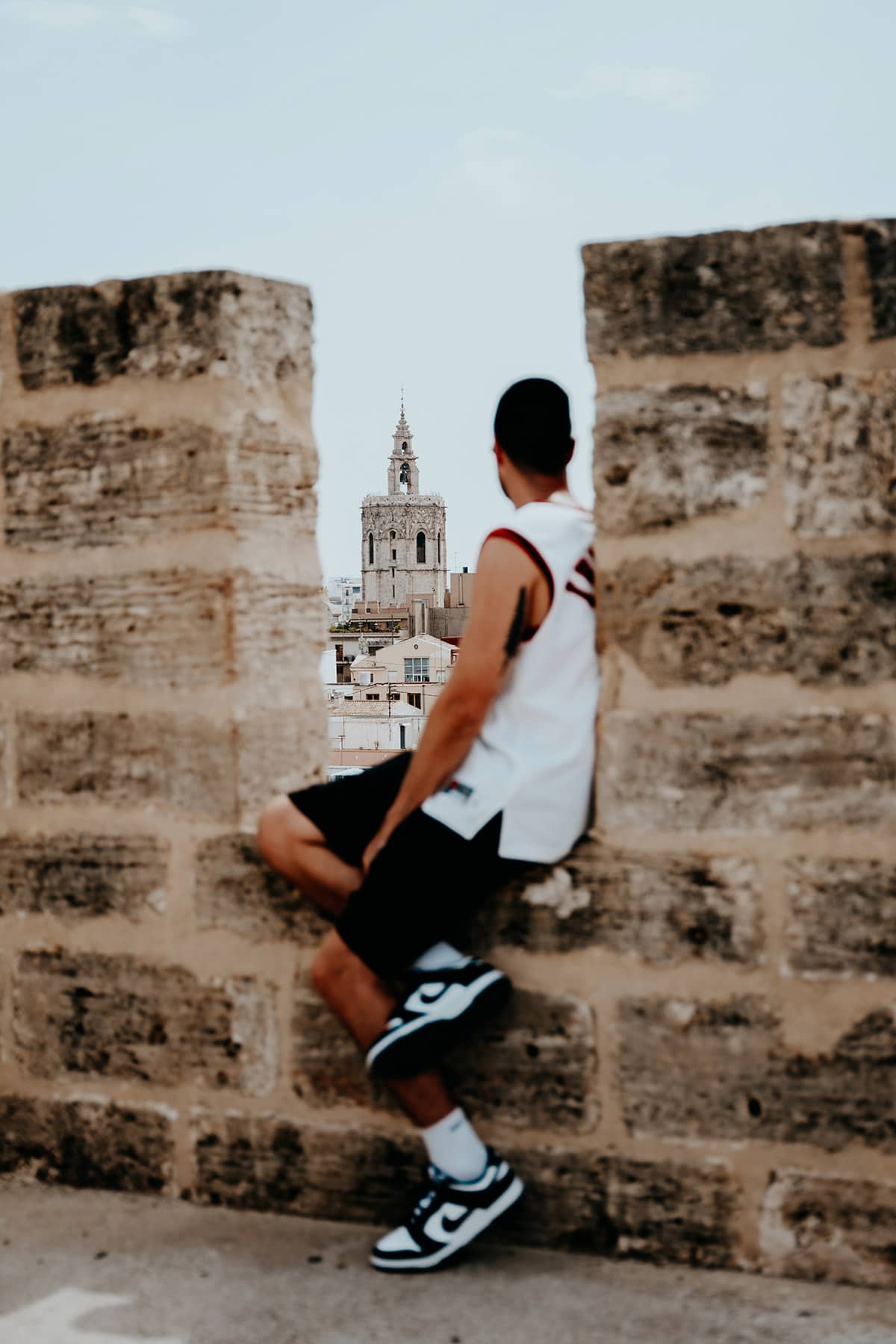
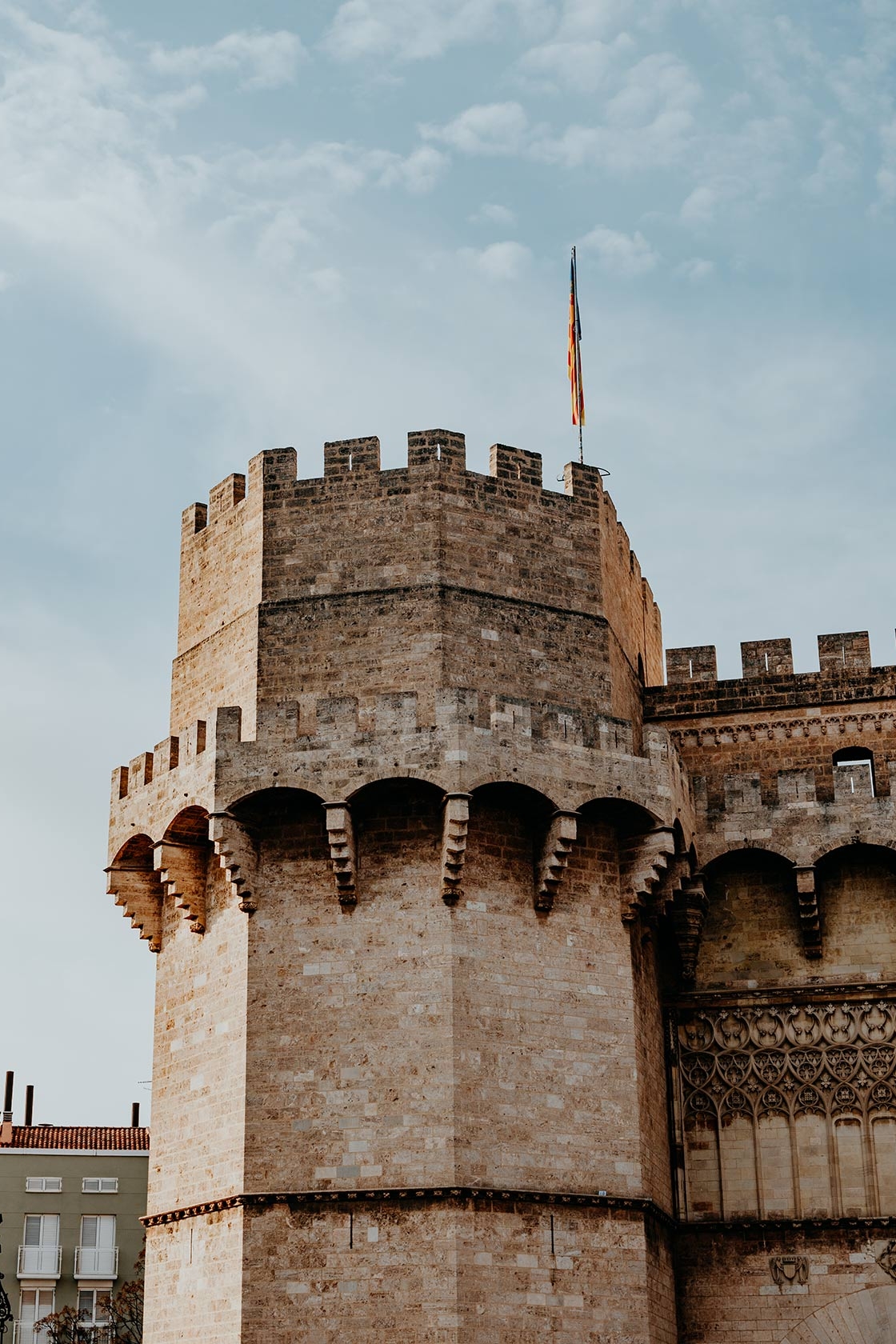
Constructed in the 14th century under the supervision of architect Pere Balaguer, the Torres de Serranos, also known as the Serrano Gate, is a massive ancient city gate that was once part of the Christian Wall that encircled Valencia.
Located in the northeast of the old city centre, Torres de Serranos was built in Valencian Gothic style and served as the walled city’s main access point, connecting Valencia via the former royal road (camí ral) with the district of Els Serrans.
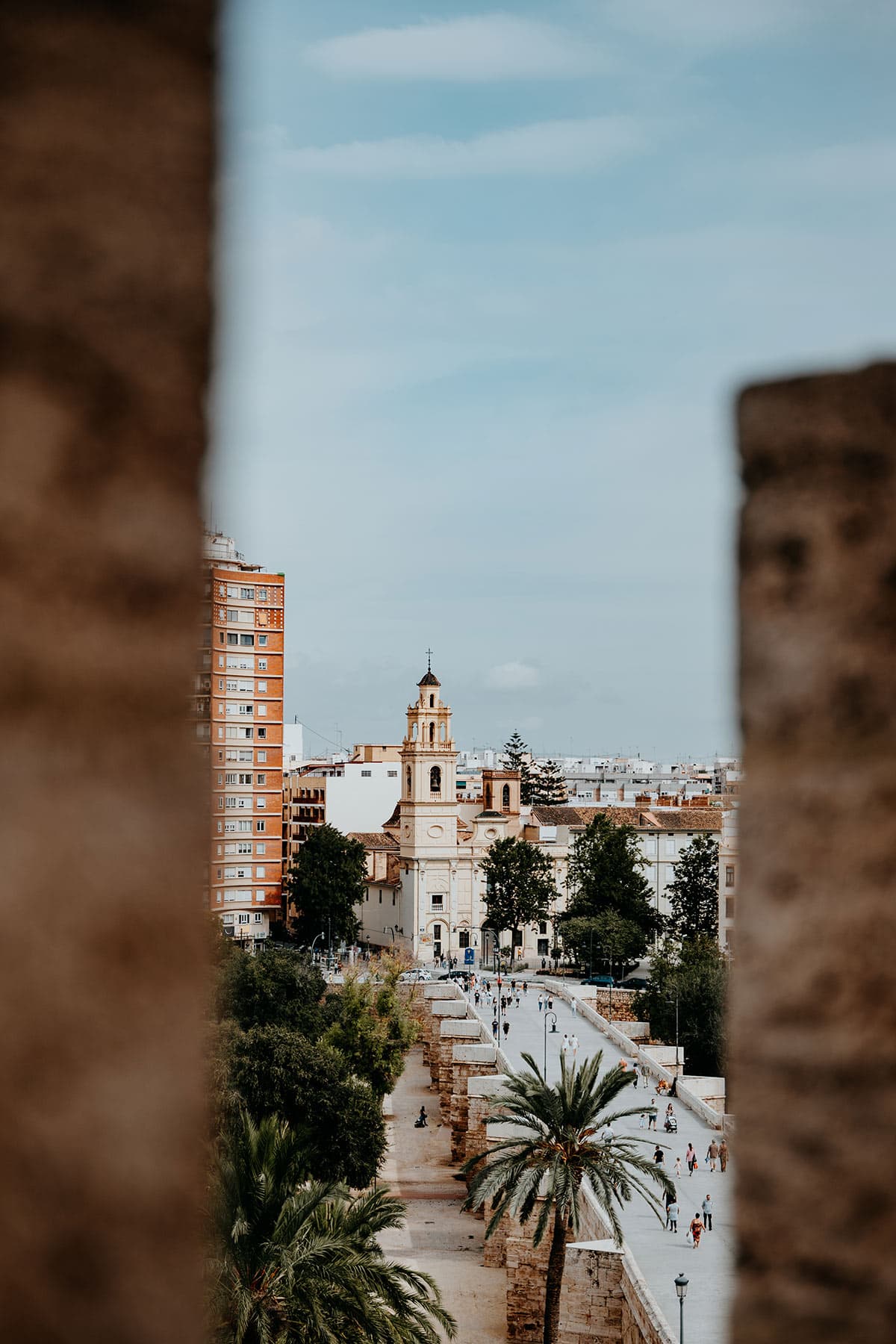
Today, Torres de Serranos is one of two remaining gates and climbing to the summit to overlook the picturesque Valencian alleyways down below is easily one of the best things to do in Valencia.
Though it’s relatively easy to climb, it is worth mentioning that some might find it a little steep and a total of 139 steps should be climbed to get to the top, which shouldn’t be a challenge for those used to moderate physical activity.
Those keen on seeing the city from above should note that there’s another impressive gate; Torres de Quart, which is also still very much in use, and happens to be free of entrance too.
Where | Torres de Serrano
Opening hours | Tuesday – Saturday 1000 to 1900, Sunday 1000 to 1400
Cost | Entrance fee €2,- per person, Sunday free
7. Visit one of the many Valencia Museums
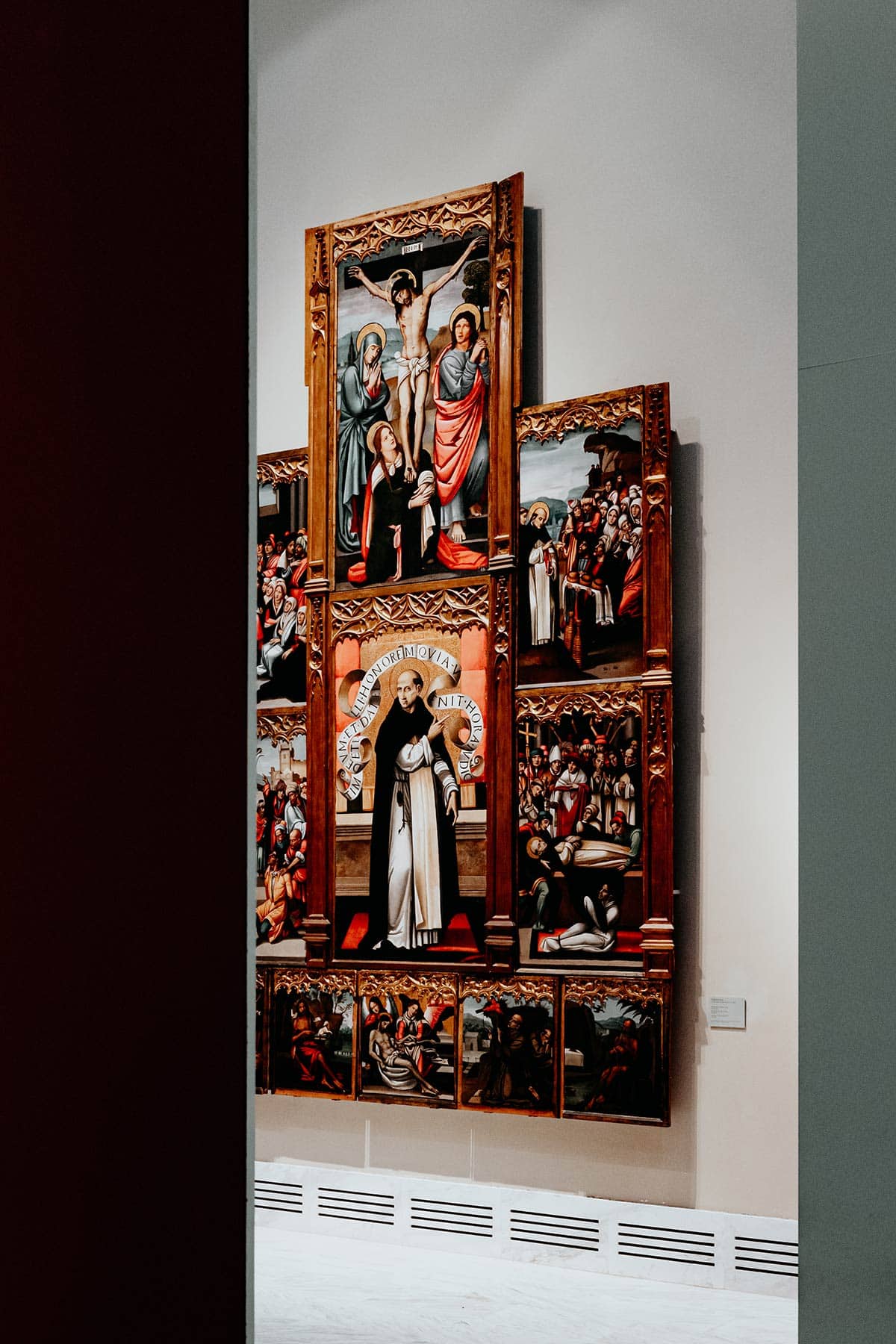
As with most popular cities within Europe, Valencia is teeming with interesting art galleries, eclectic museums and fascinating cultural institutions, all awaiting to be explored by those who are captivated by art, history or culture.
Whether you’re keen to learn about Valencian history, wish to behold incredible modern art pieces of both Spanish and international artists, or simply want to immerse yourself in a world of Spanish heritage, culture, and traditions, rest assured, Valencia is home to over 40 museums, which makes it a paradise for art-minded people and history buffs alike.
Given there are heaps of incredible options, I chose to share some of my favourites more thoroughly in separate sections within this guide, so make sure you check those out too.
Since it’s simply impossible to curate them all, and a little too time-consuming to visit all of ’em, I’ve chosen to list merely a few out of the bunch which I believe are worth a visit too.
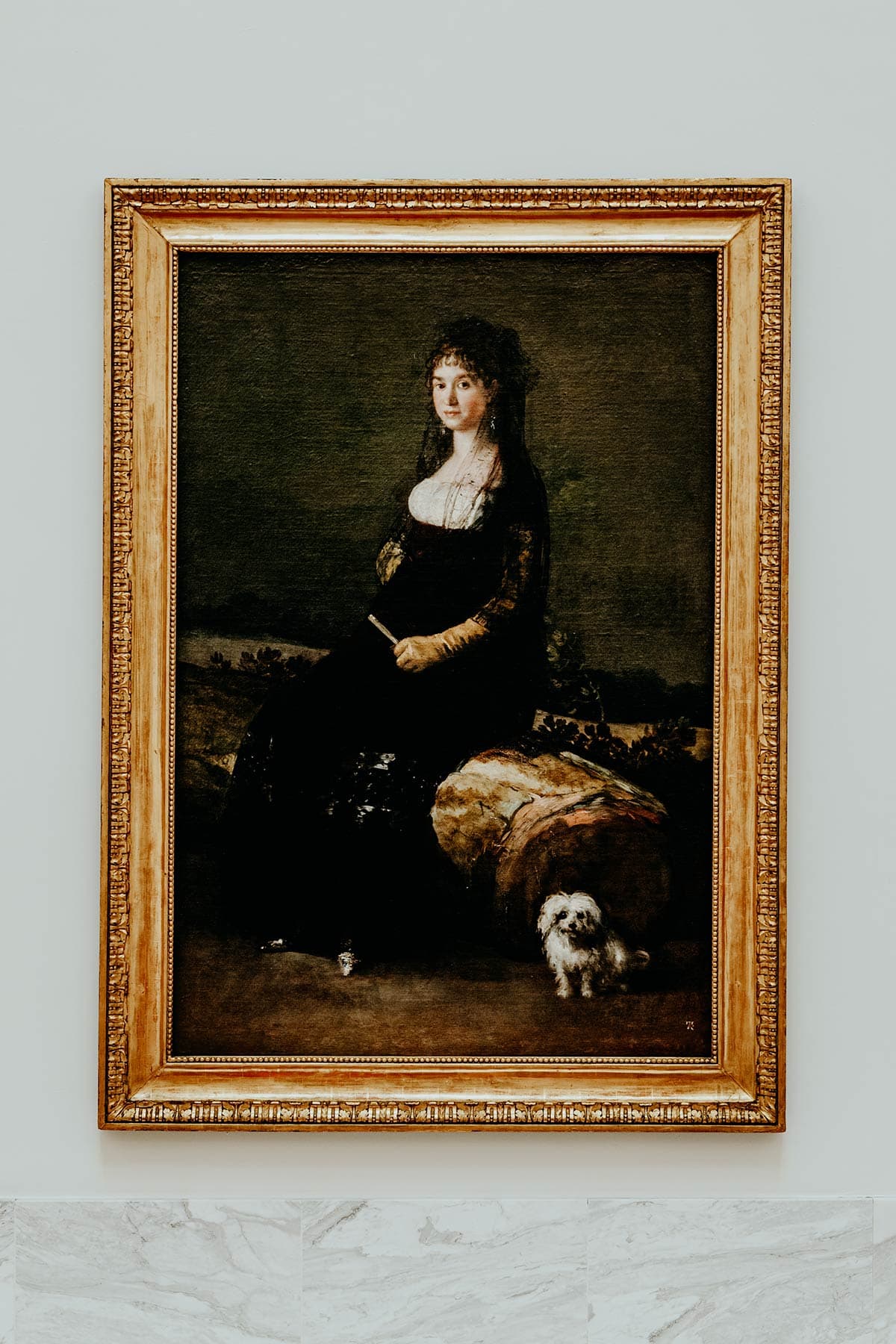
Museum of Fine Arts | Set within the stunning former Sant Pius V Seminary College at the edge of Jardins del Turia, the Museum of Fine Arts is considered one of the best museums in Valencia, with over 2.000 artworks, including that of Joaquín Sorolla and Francisco de Goya.
La Almoina Archaeological Museum | When I explore a new place, I always feel inclined to learn about its foundations and history. In Valencia, La Almoina will satisfy that, as the museum holds an outstanding collection of archaeological remains dating back to influential eras of Valencia’s rich historical timeline.
Museo Fallero de Valencia | Completely dedicated to Valencia’s famous Fallas Festival, Museo Fallero de Valencia gives its visitors an in-depth look into the traditional celebration of Las Fallas, and exhibits the ninots (smaller sculptures or monuments) that were saved from the flames from 1934 onward.
8. Spend the night at Caro Hotel Valencia
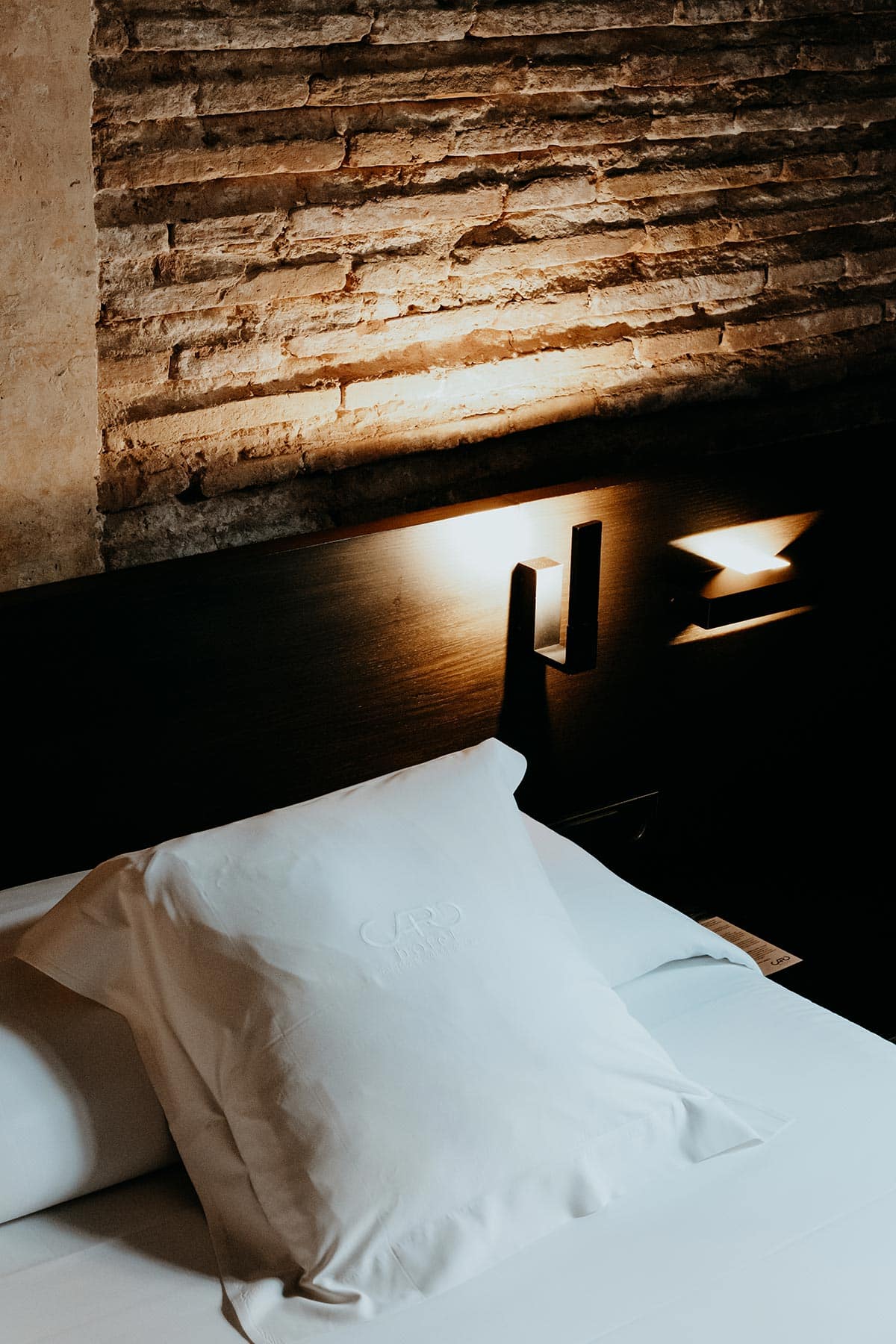
During my first trip to Valencia, I was fortunate enough to spend some time at the incredible Caro Hotel, which made my time in Valencia even better, making it a trip I will not easily forget.
Set within an authentic 19th-century palace, the 5-star Caro Hotel is an outstanding monumental hotel in the heart of Valencia’s historic Old Town.
With plenty of historical elements, a mesmerising blend of ancient and modern architecture, and a distinctive sophisticated character, Hotel Caro will not be your average hotel stay, but more of an unforgettable once-in-a-lifetime experience.
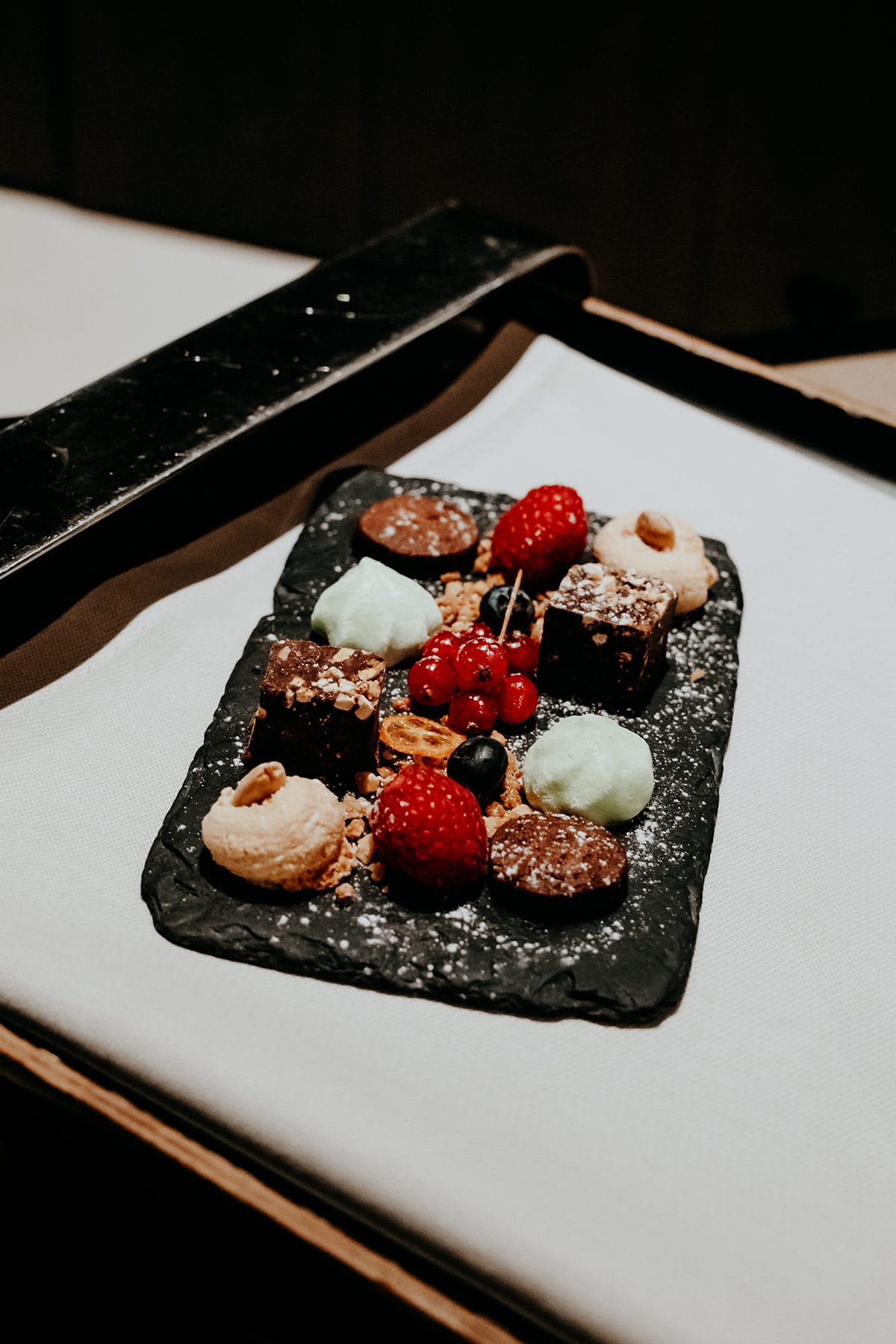
From the most friendly staff to extraordinary gastronomical offerings, from its intimate terrace with outdoor pool to its top-notch location near the best things to do in Valencia, this boutique hotel is simply too good to be true.
The interior of my room even had a piece of the ancient Arab Wall as decoration, which added a notable touch of history and authenticity to my stay.
On top of that, the staff will do everything in their power to make your stay even more memorable, think preparing your room for the night, leaving culinary surprises in your room while you’re out and exploring, as well as providing you with all the useful tips to uncover the city.
Do note that the Caro Hotel is one of the most popular boutique hotels in Valencia, so if you’re keen on staying there it’s wise to secure your room in advance.
Where | Carrer de l’Almirall, 14
Book | The highly-rated Caro Hotel can be booked via Booking.com
Cost | Doubles start at €180 a night, depending on the time of year

9. Unwind on Valencia’s best beaches
What’s better than a lively city rich in history and culture that is also packed with an abundance of trendy coffee shops, top-notch restaurants, and a buzzing nightlife scene?
It’s pretty simple: a city that also happens to have a plethora of wonderful beaches dotted around its coastline.
Luckily for you, Valencia is such a city.
It is for this exact reason that Valencia has become one of the best city trip destinations in Europe.
With the beach only a stone’s throw away from the historical centre, a trip to Valencia will provide its visitors with an ideal combination of leisure and exploration.
Some of my favourite beaches in Valencia include:
Malvarrosa Beach | Lined with palm trees and accompanied by a lively boulevard, Malvarrosa is an energetic beach and an absolute favourite among the Valencian locals. With over 2 kilometres of coastline, this beach has plenty of options for those looking for some fun beachside activities, think volleyball nets, football goals, fitness equipment and playgrounds for the kids.
Playa de Las Arenas | The first stretch of beach you’ll encounter when arriving at the coast from the city centre, Playa de Las Arenas is easily the most popular beach in Valencia. While it is not necessarily my favourite given the larger crowds, this beach is teeming with locals and tourists alike. It’s also home to Marina Beach Club, a trendy luxurious beach club that boasts an infinity pool, sunbeds, cocktails and funky beats.
Playa de la Patacona | Saving the best for last, Playa de la Patacona is by far my favourite beach in Valencia, as it’s a little more secluded and therefore significantly less busy. On top of that, it is home to La Mas Bonita, a quaint little beach bar that provides an inviting and laid-back flair.
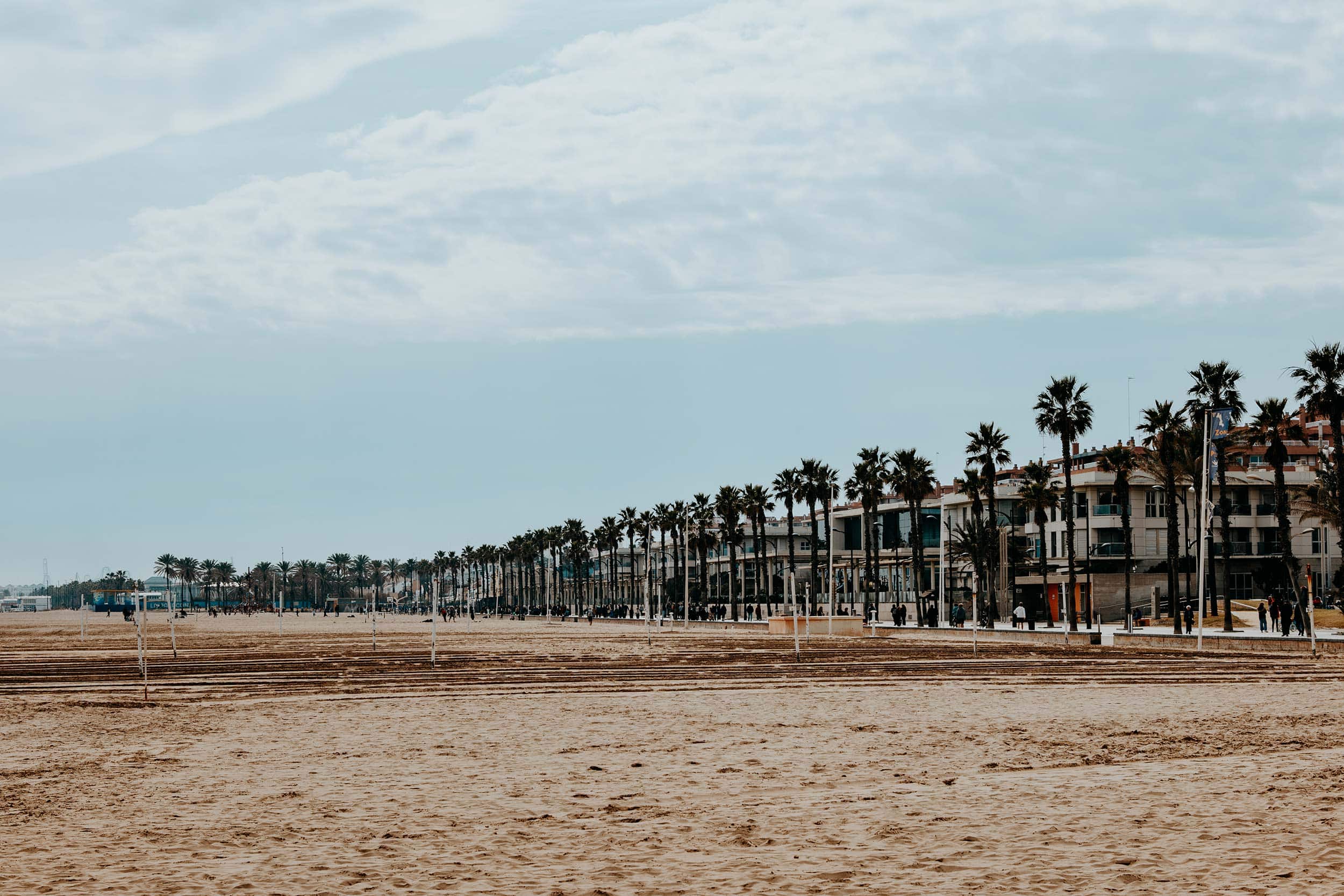
10. Taste Agua de Valencia at Cafe de las Horas
Given oranges are an iconic symbol to Valencia and its people, it’s little wonder that a cocktail was crafted around the flavours of this beloved citrus fruit.
Named Agua de Valencia, this refreshing cocktail is made with either cava or champagne, vodka, gin, perhaps some secret ingredients, and of course, freshly squeezed local orange juice.
But to me, Agua de Valencia is somewhat of a Troyan horse, if you get what I’m saying here.
See, drinking this elixir tends to give you the impression that you’re drinking an alcohol-free fruity drink, yet it’s equally intoxicating as cocktails that do have a boozy taste to it, so keep that in mind while savouring many of this delectable drink.
While this iconic drink can be found just about anywhere in Valencia, I believe the best version of Agua de Valencia is served at Café de las Horas, a lively café known for its ornate bohemian interior and authentic Victorian ambience.
But this eclectic café isn’t just a place to stop by for a jug (or two) of Agua de Valencia. No, it has actually become a cultural and recreational establishment within the city, where both locals and travellers come to mingle while enjoying a drink.
However, its popularity and prime location in the heart of Valencia’s lively Ciudad ensures that Café de las Horas gets extremely busy throughout the day, so make sure you make a reservation before heading that way, especially if you’re visiting during the summer months.
Where | Cafe de las Horas
Opening hours | Daily 1000 – 0130
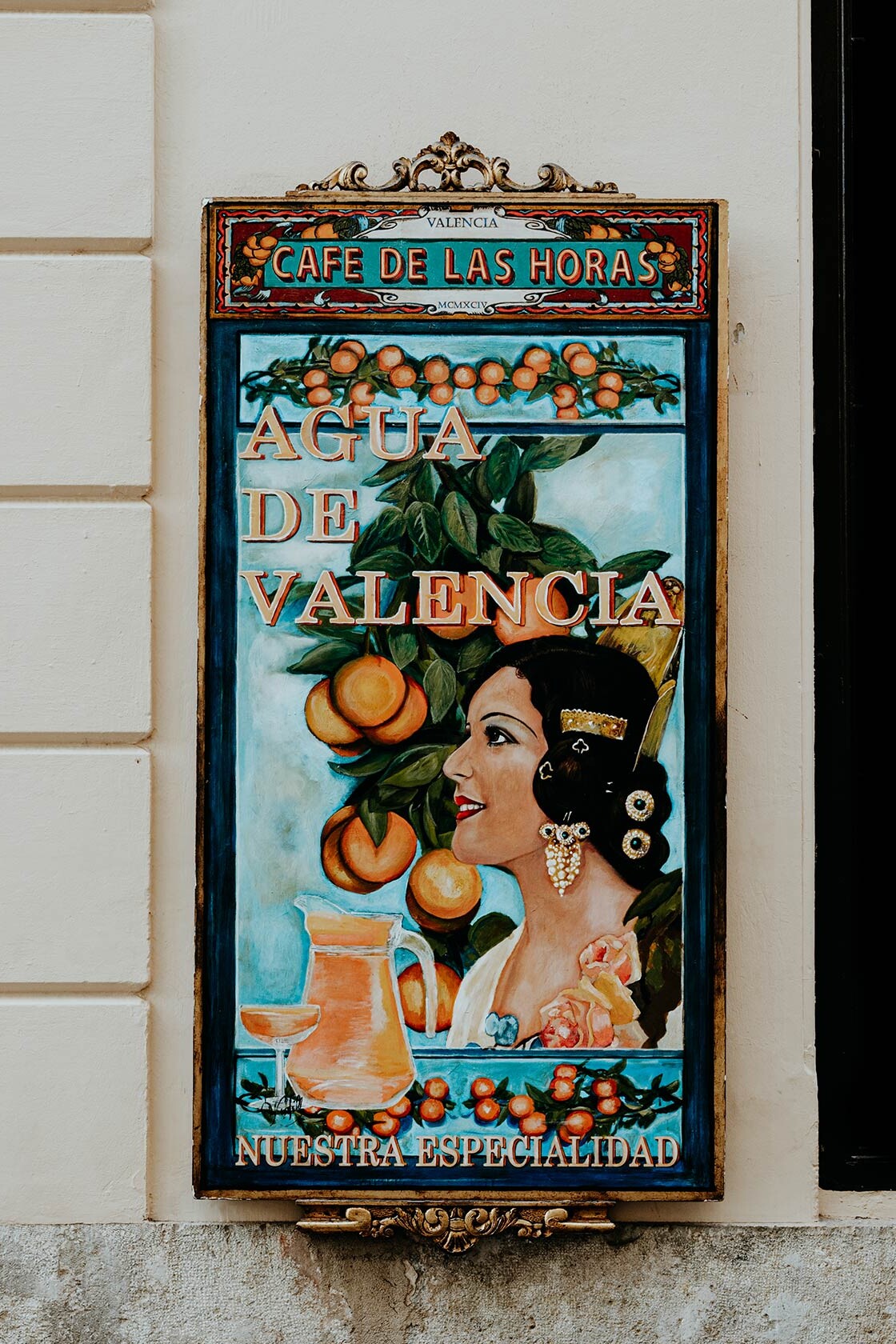
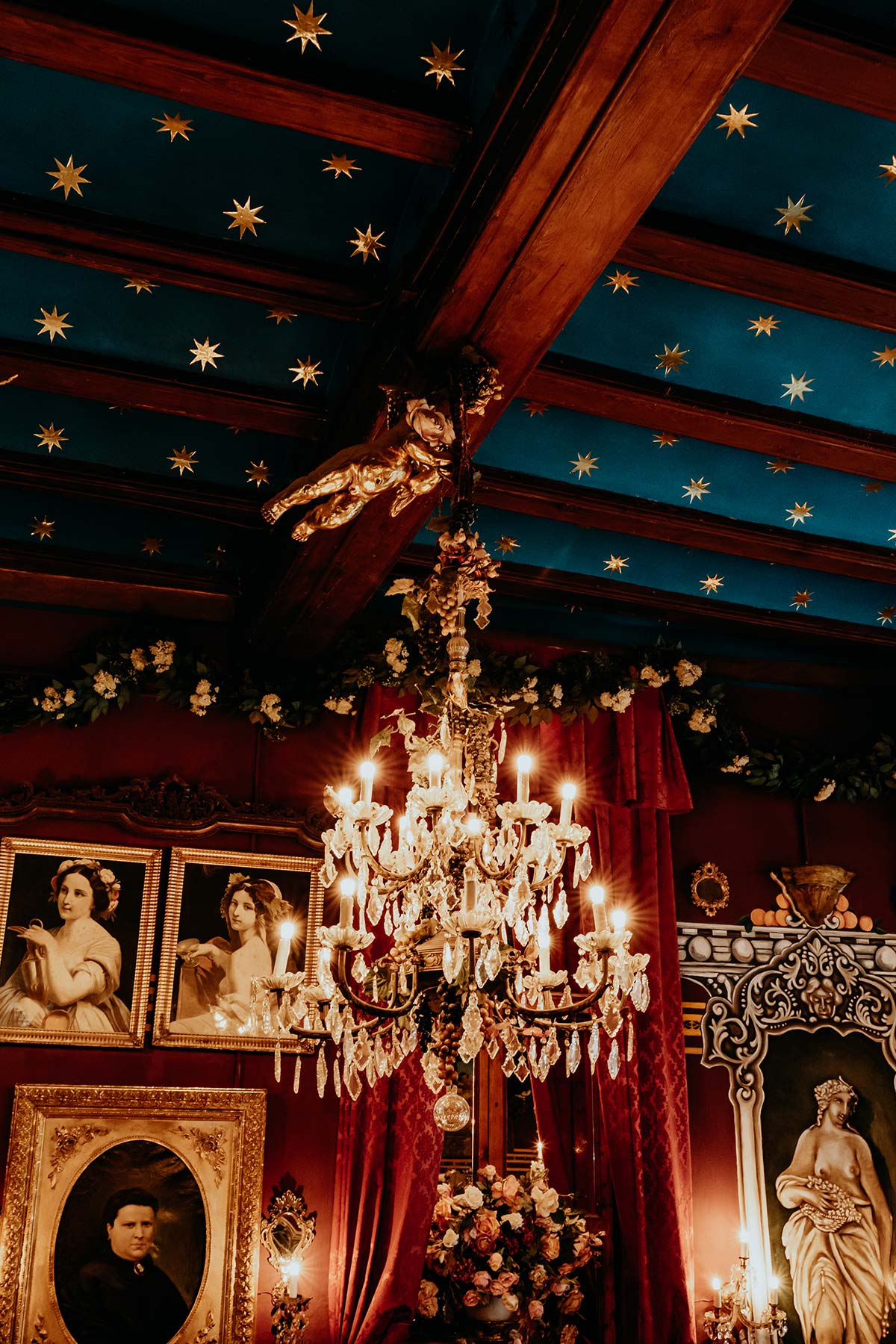
11. Roam around Mercado Central de Valencia
Name one thing that offers a better glimpse into a new destination and its customs other than roaming around the many stalls of an authentic local market, I’ll wait.
Deemed the largest fresh produce market in Europe, the Central Market of Valencia is an extensive 8,000 m2 covered market known for its variation of traditional local produce, mouth-watering tapas and pintxos, and lots of great vino too.
The Valencian agora breaths Mediterranean life, and houses more than 300 stalls, selling everything; from fresh fruits and vegetables to nuts, cheeses & spices, and from the freshest catches of the day to the best locally sourced cuts, there’s just something yummy for everyone.
But as with most popular markets around the world, Mercado Central, is, as you should expect, slightly more expensive than other markets in Valencia, so for that reason, I’d recommend visiting solely to take a roam and experience the hustle and bustle of Valencian daily life.
Ooh, and of course, to marvel at the incredible architectural feats, which are truly in a league of their own and are marked by a huge stained glass dome decorated with painted oranges (Valencia’s signature fruit), solid iron columns and frames, and colourful tiles throughout.
Where | Mercado Central de Valencia
Opening hours | Monday to Friday 0730 – 1500, Sunday closed
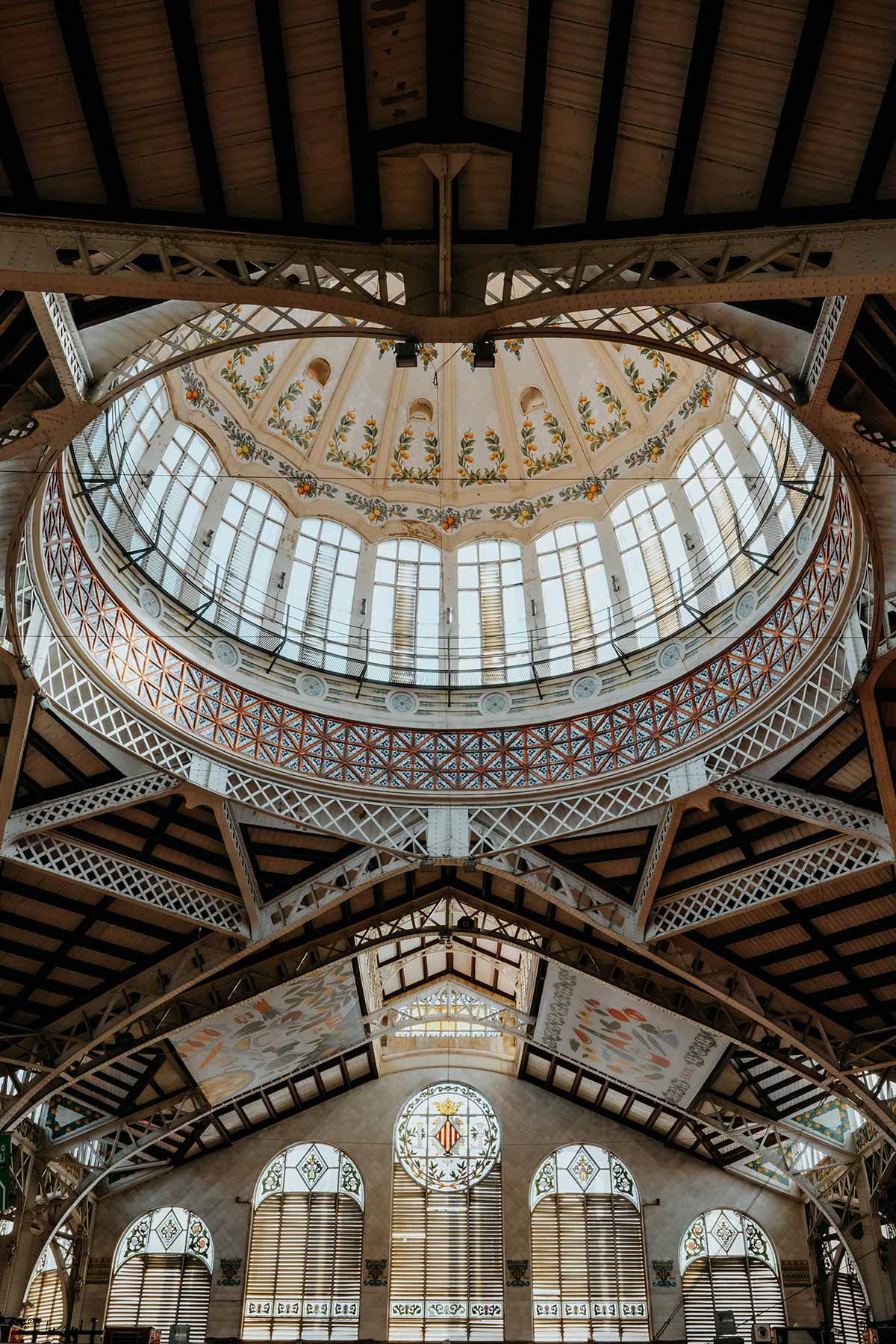
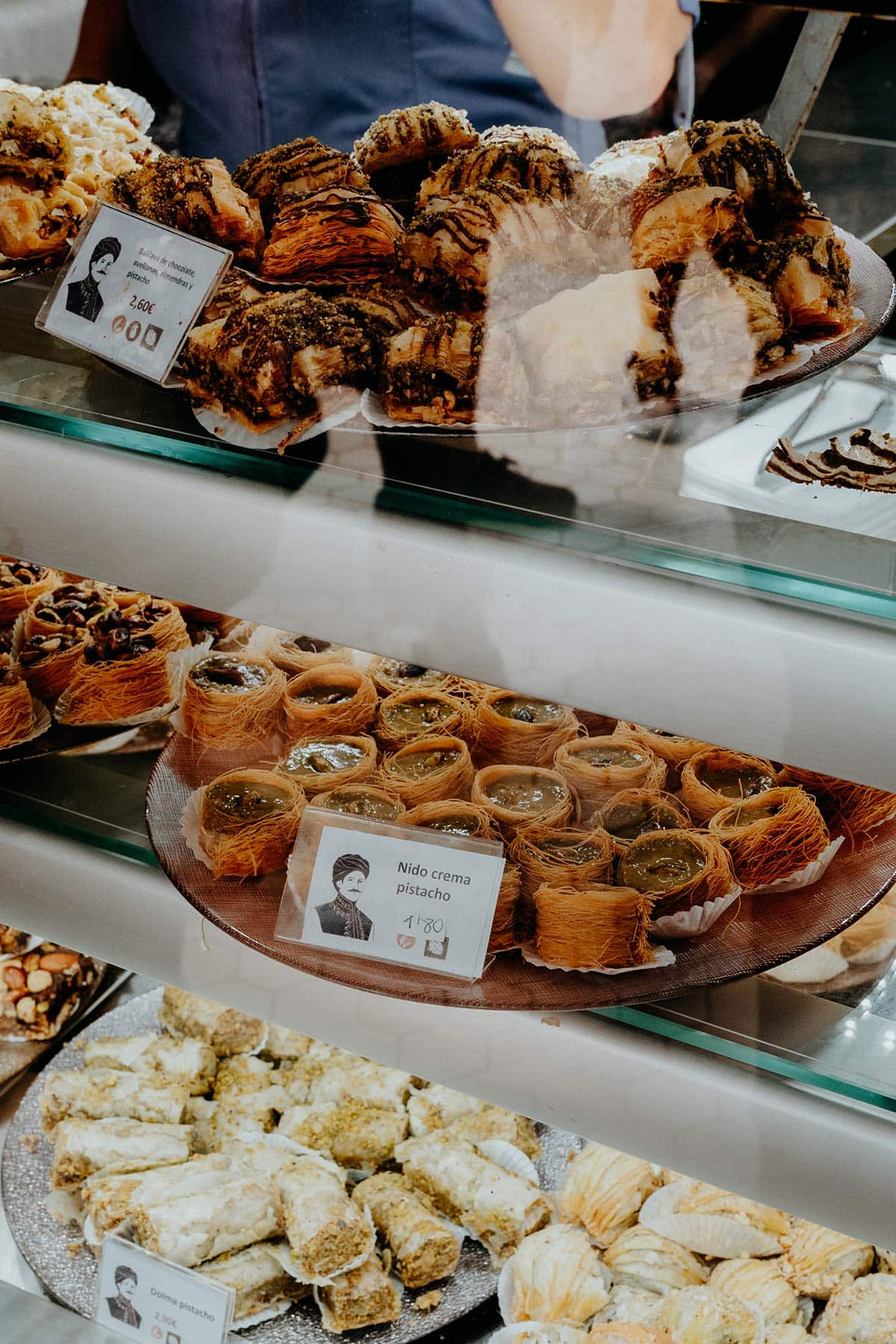
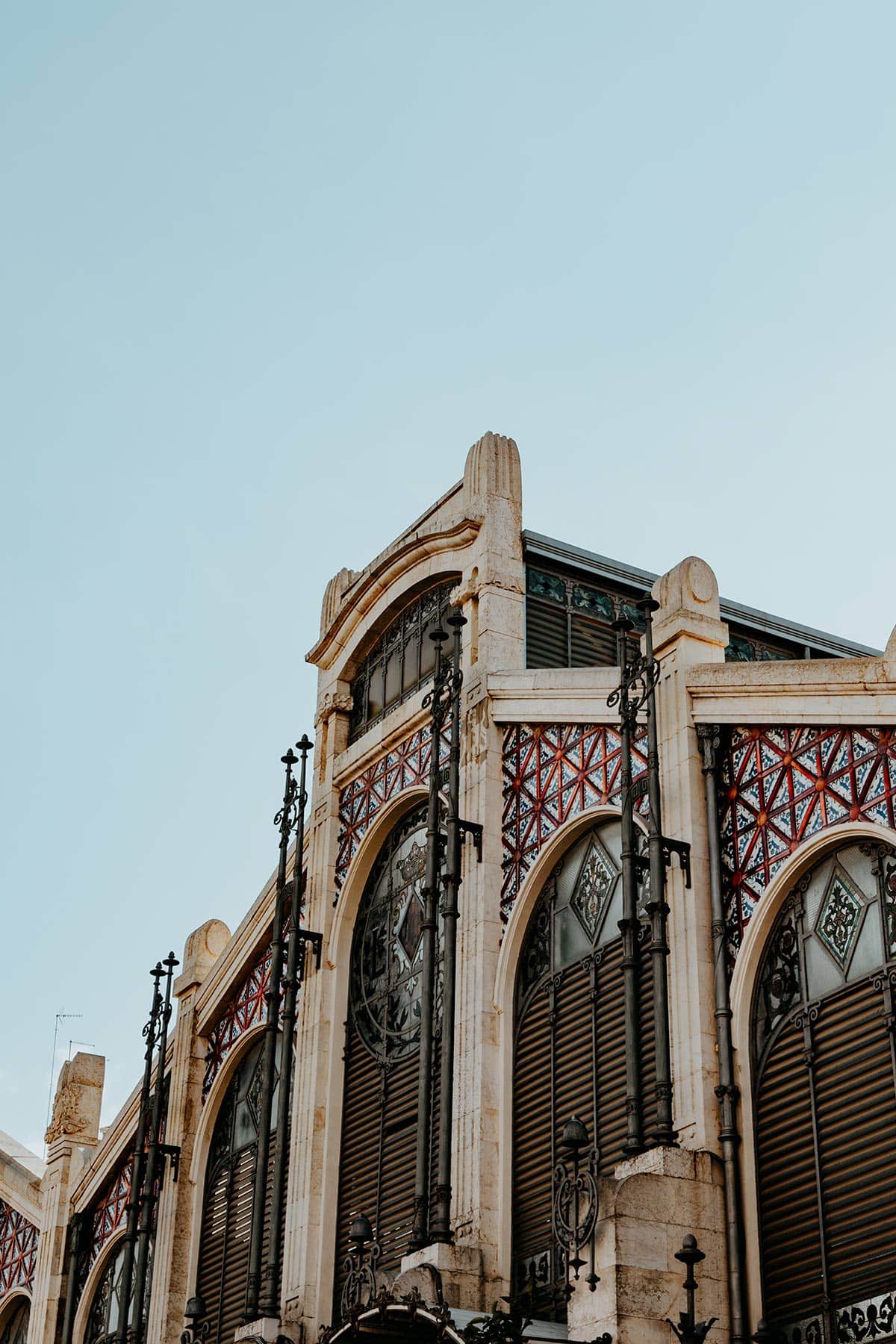
12. Behold Valencia’s magical plazas
When roaming through the picturesque streets of the lively historic centre, you’ll stumble upon one of Valencia’s many plazas time and time again.
Those plazas are the heart of all things social in Valencia, and often teeming with locals and tourists alike, making an early morning stroll here one of my favourite things to do in Valencia.
Though they’re absolutely stunning at any time of day, they’re best enjoyed from the moment the sun starts to set, and these charming squares gradually come to life.
Some of Valencia’s best plazas include:
Plaza de la Virgen | Easily the most popular plaza among tourists, offering great views of both the Turia fountain and the Valencia cathedral.
Plaza del Ayuntamiento | By far the largest square in Valencia, Plaza del Ayuntamiento can be seen as the political and financial heart of Valencia, as well as a gathering place for local festivities, including the popular Las Fallas festival.
Plaza de la Reina | Home to the fascinating El Miguel Bell tower (which you can and should climb), this plaza is without question among the most iconic places in the city.
Plaza Redonda | Enclosed by the encircling buildings, this urban space is a unique piece of Valencian architecture and houses several highly-rated restaurants.
Plaza Negrito | My absolute favourite and one where you’ll find a more authentic, intimate atmosphere.
Plaza del Colegio del Patriarca | Lined with Valencia’s iconic orange trees, this quiet, yet stunning plaza is the perfect place to unwind after an afternoon of exploring.
While those squares are a great place to hang out on a hot summer’s night, it is worth mentioning that prices are often higher than elsewhere in the city. I’ve noticed that this is primarily the case at Plaza de la Virgen, Plaza de la Reina, and Plaza del Ayuntamiento
I personally absolutely love Plaza Negrito, a more intimate square that’s home to a handful of authentic bars that are favourite among the Valencian locals.
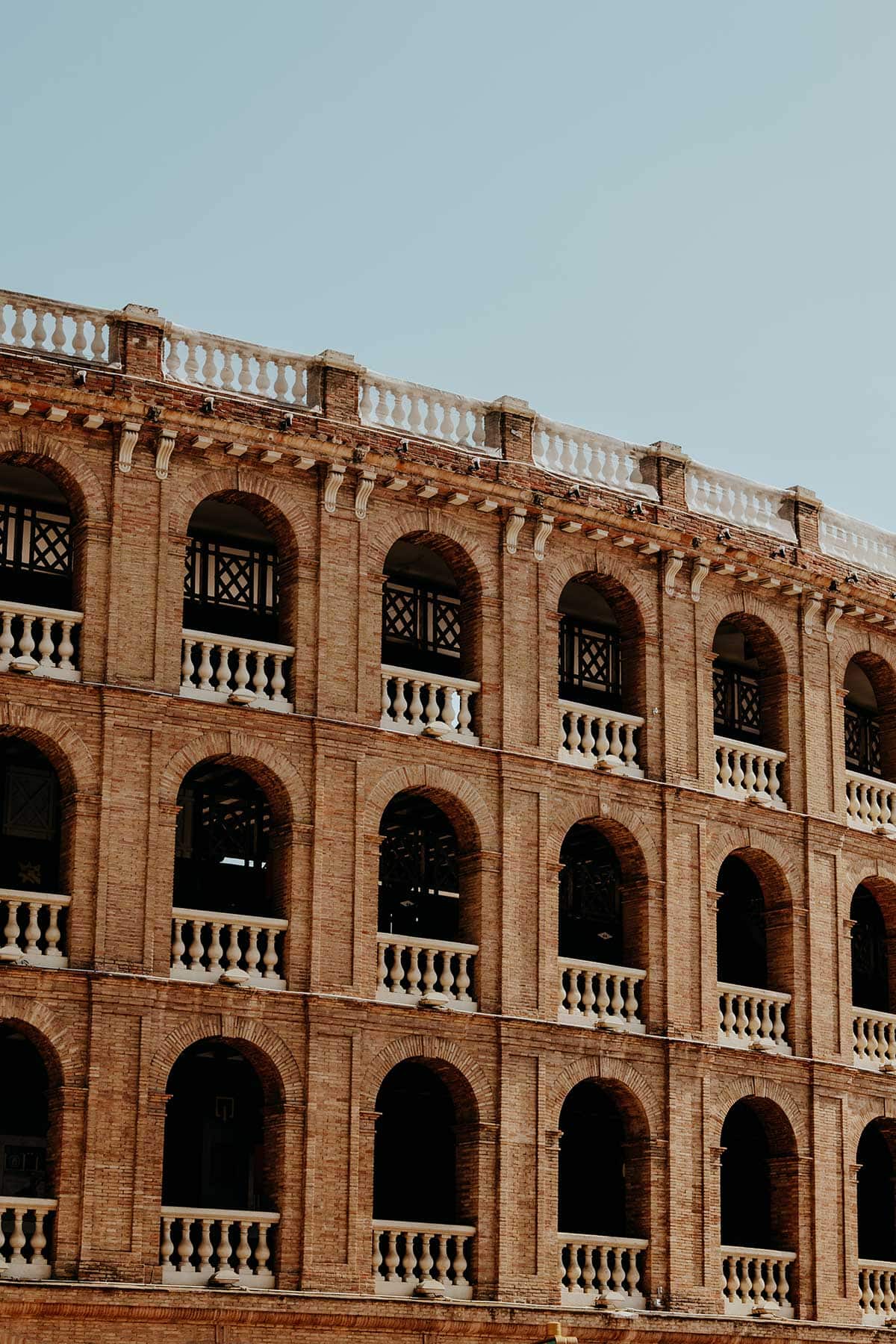
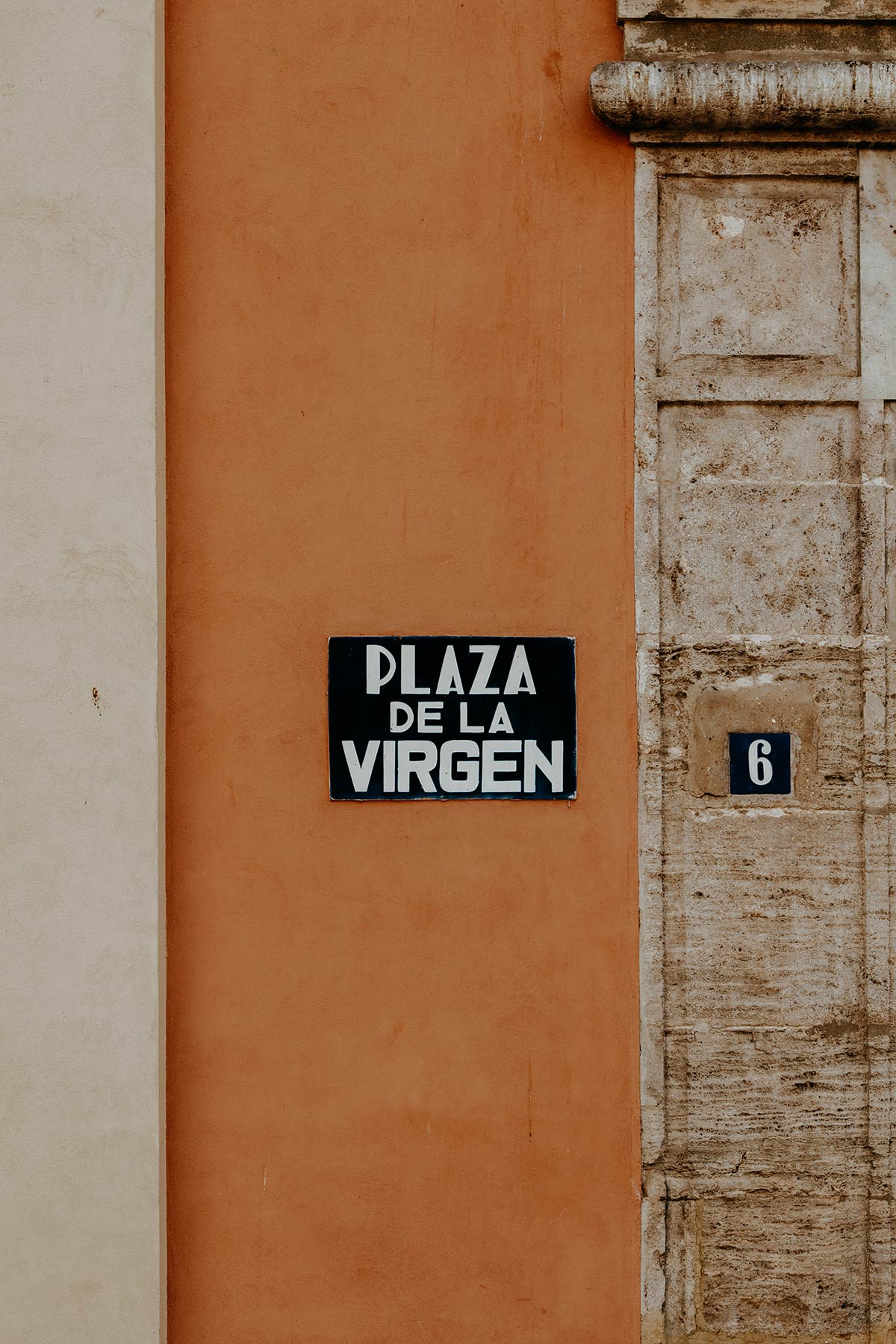
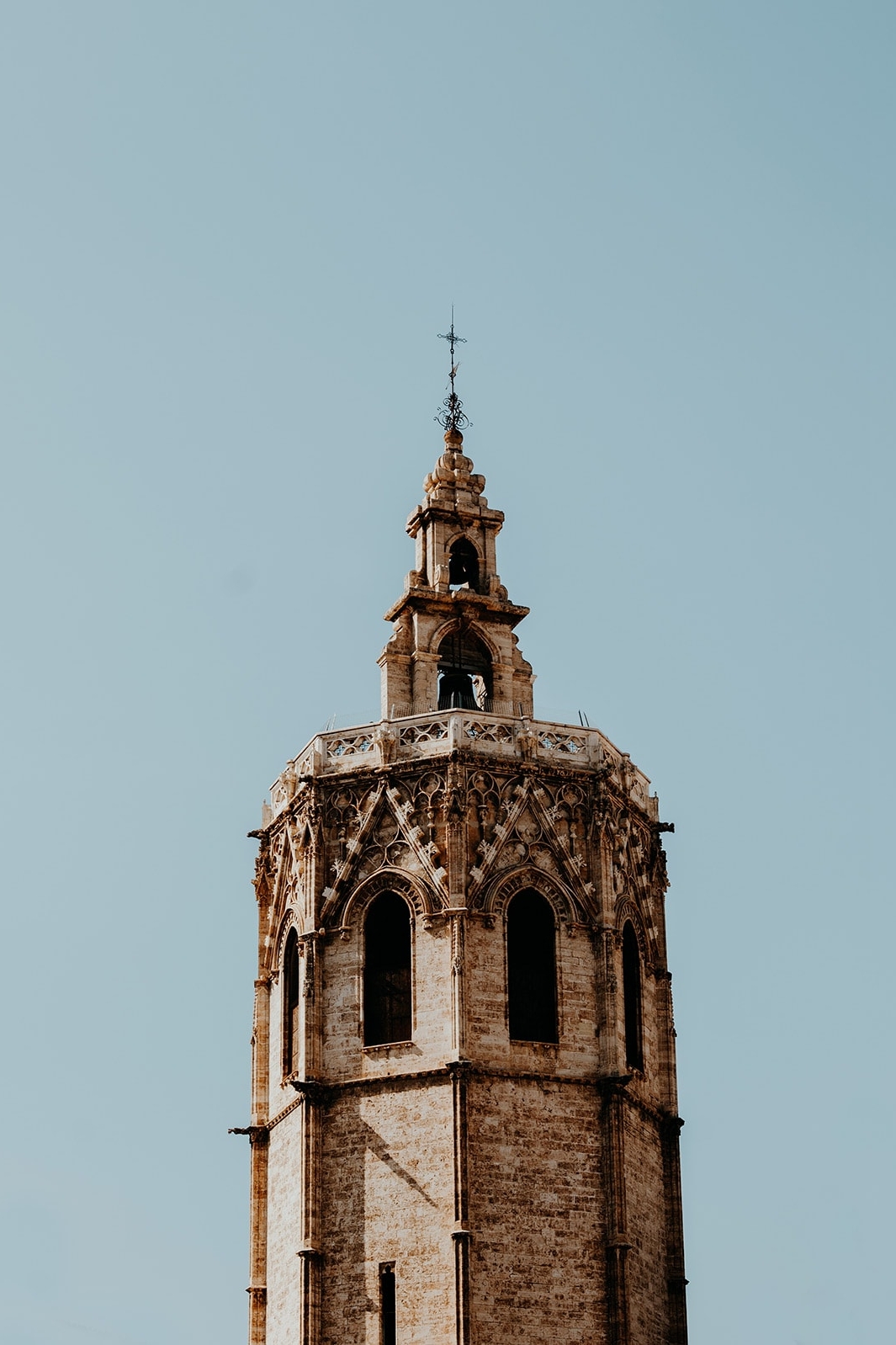
13. Devour all the tacos at TKO Tacos
With a profound love for tacos and a 3-week Mexico trip under my belt, I recognize a good taquería when I see one.
Believe me, if I say this, TKO Tacos sure as hell is one.
Situated in the heart of Valencia, this authentic Mexican taquería has rapidly become a fixture in the city, offering a wide variety of mouthwatering tacos that will be a fiesta for your taste buds.
The best part, the tacos at TKO come in bite-size and will set you back only €1,- a piece, meaning you can sample most of the flavours in one sit (just kidding, they have 16 tacos on offer).
Filled with fresh ingredients and authentic flavours, my tacos of choice are Al Pastor, Cochinita Pibil, Suadero, and my absolute favourite; Tinga de Pollo, a spicy pulled chicken-style taco that is simply too good to be true.
Additionally, they also serve a mean guacamole with nachos, several quesadillas and traditional Mexican beverages to complement the flavours.
For me, having a quick bite at TKO Tacos is easily one of my favourite things to do in Valencia, so if you’re reading this, make sure you give it a try too. It is a refreshing alternative to Paella, Pintxos and tapas (which you should obviously eat a lot during your time in Valencia).
Where | TKO Tacos now has three restaurants in the centre and is currently opening a fourth one.
Opening hours | Daily 1300 to 0100
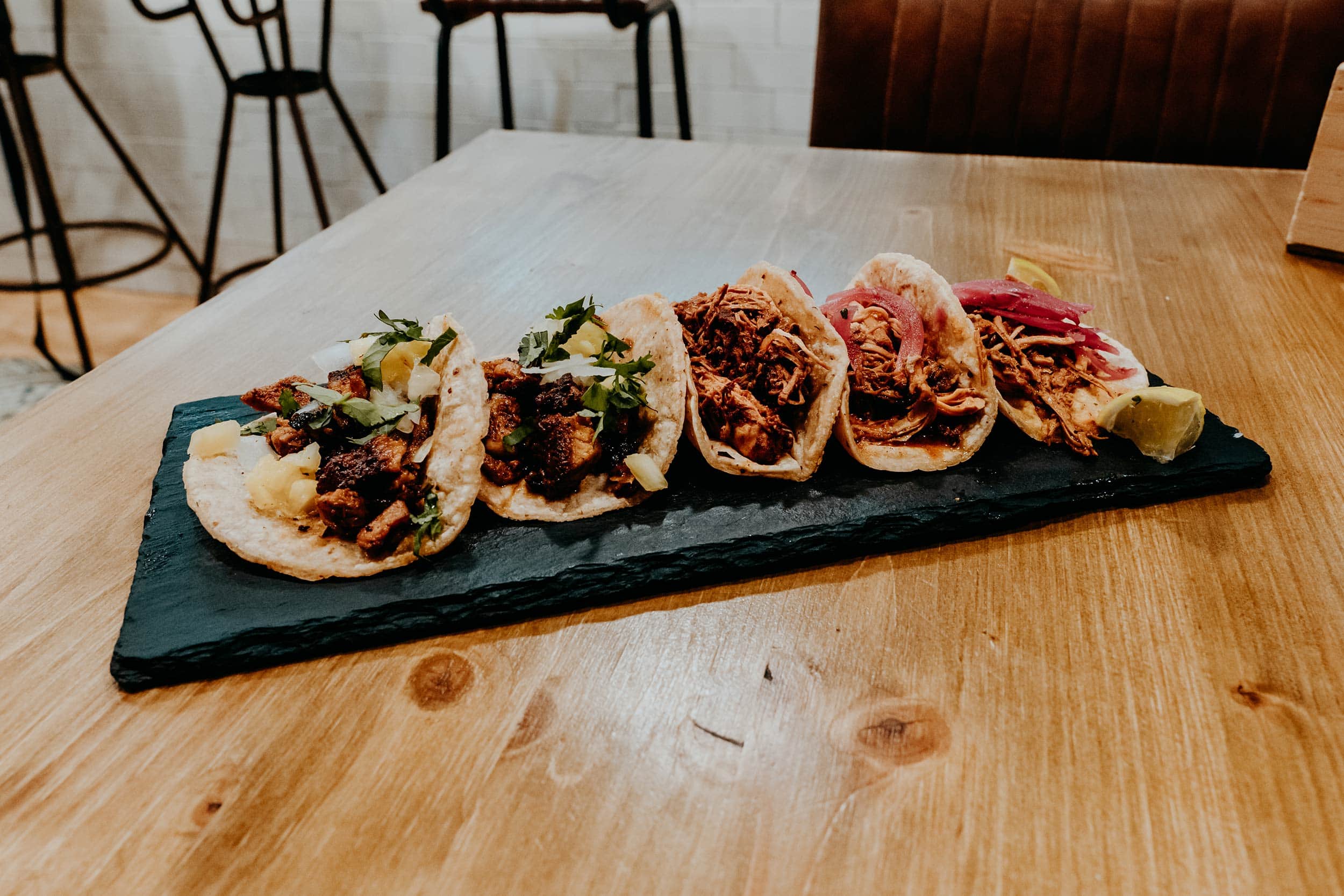
14. Watch a game at Mestalla – or do a stadium tour instead
First opened in 1923, Valencia’s Mestalla Stadium is one of the oldest football grounds in Spain, and watching a game here is quite an exhilarating experience.
Home to Valencia CF, the 55,000-capacity stadium has been the stage to some of football’s most memorable nights, both in the Spanish and European competitions, where great players as Mario Kempes, David Villa, Rubén Baraja, David Silva and many more stepped on the pitch to showcase their talent to the fans.
Even though Valencia CF won the Copa del Rey in the 18/19 season, the club has been going through some seriously challenging times in the last decade, both on and off the pitch.
Yet despite poor performances and financial complications, the fans remain extremely loyal and will produce an amazing electric ambience during home games time and time again.
But it’s not just the fans that make a game at Mestalla a unique and exhilarating experience, nope, due to the incredibly steep stands, you will sit unusually close to the pitch, which isn’t something you will quickly experience in today’s newer football stadiums.
If you can’t get your hands on tickets, you’re in town when Valencia is playing away, or you’re just not in the mood to attend a game, you can opt for a Valencia CF stadium tour instead, where you’ll visit the most interesting areas of the stadium while learning about the impressive history of the club.
Where | Mestalla Football Stadium
Tickets | Tickets for the games and the Mestella Forever Tour can be found here.



14 Things to do in Valencia | The essentials
The best time to visit Valencia
Given Valencia is nestled on the southeastern coast of Spain, La capital del Turia is considered a year-round destination, where temperatures rarely drop below the 15°C mark.
But first things first, summertime in Valencia is clearly not for the faint of heart, as it will be sweltering hot on most days during this period, with temperatures commonly rising above 40 degrees in the months of July and August.
Those who prefer to combine sightseeing with days at the beach will have a good time visiting Valencia in the summer, but I have to say this; it’s not suited for everyone.
You see, travelling during the off-season (April to June and September to October) is an excellent way to combat the heat, which to me, makes exploring and navigating around town a lot more enjoyable, while you still have a solid temperature of around 25°C to enjoy.
Additionally, you could also opt to visit during the winter months, when over-tourism is out of the way, and temperatures still allow for comfortable explorations.
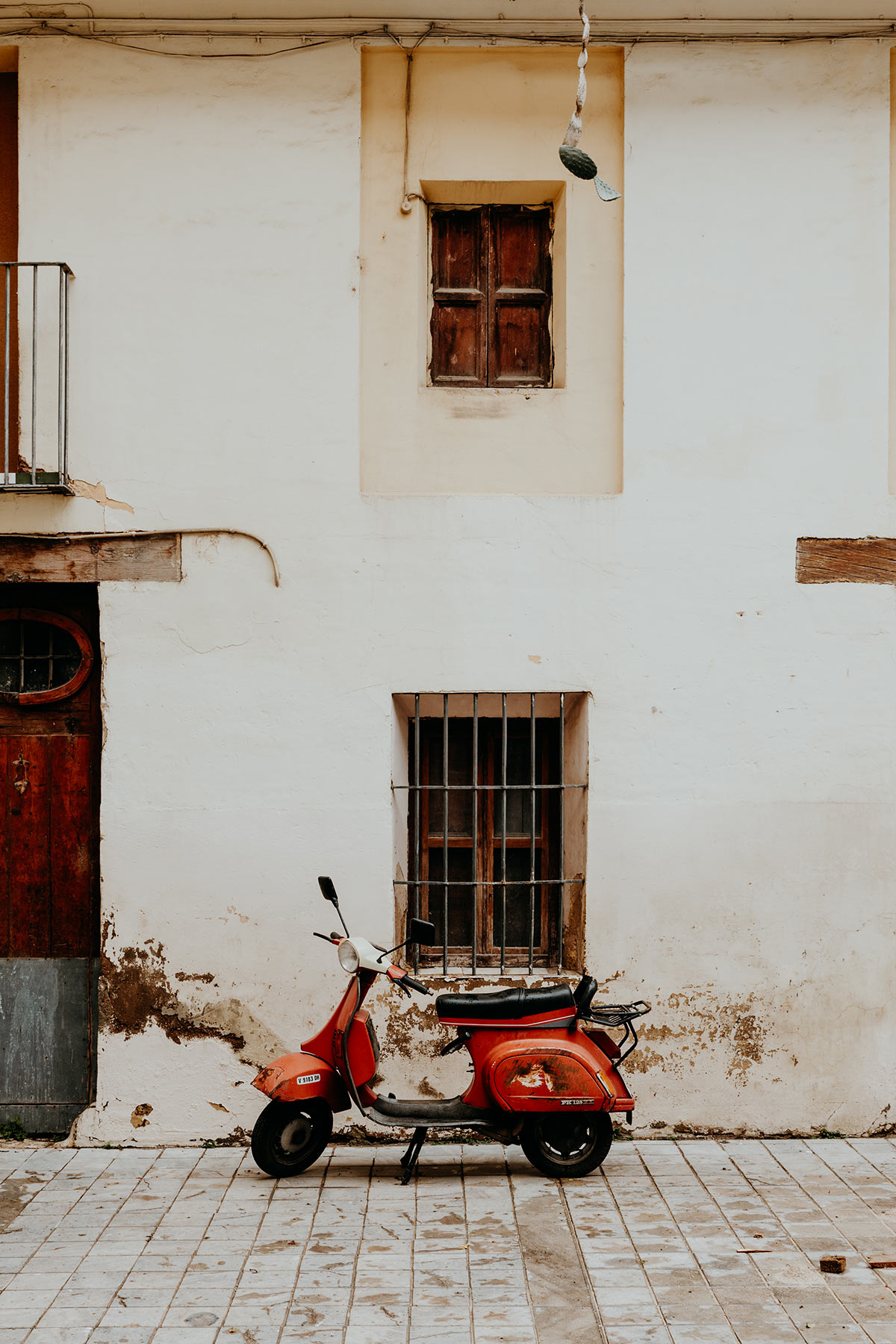
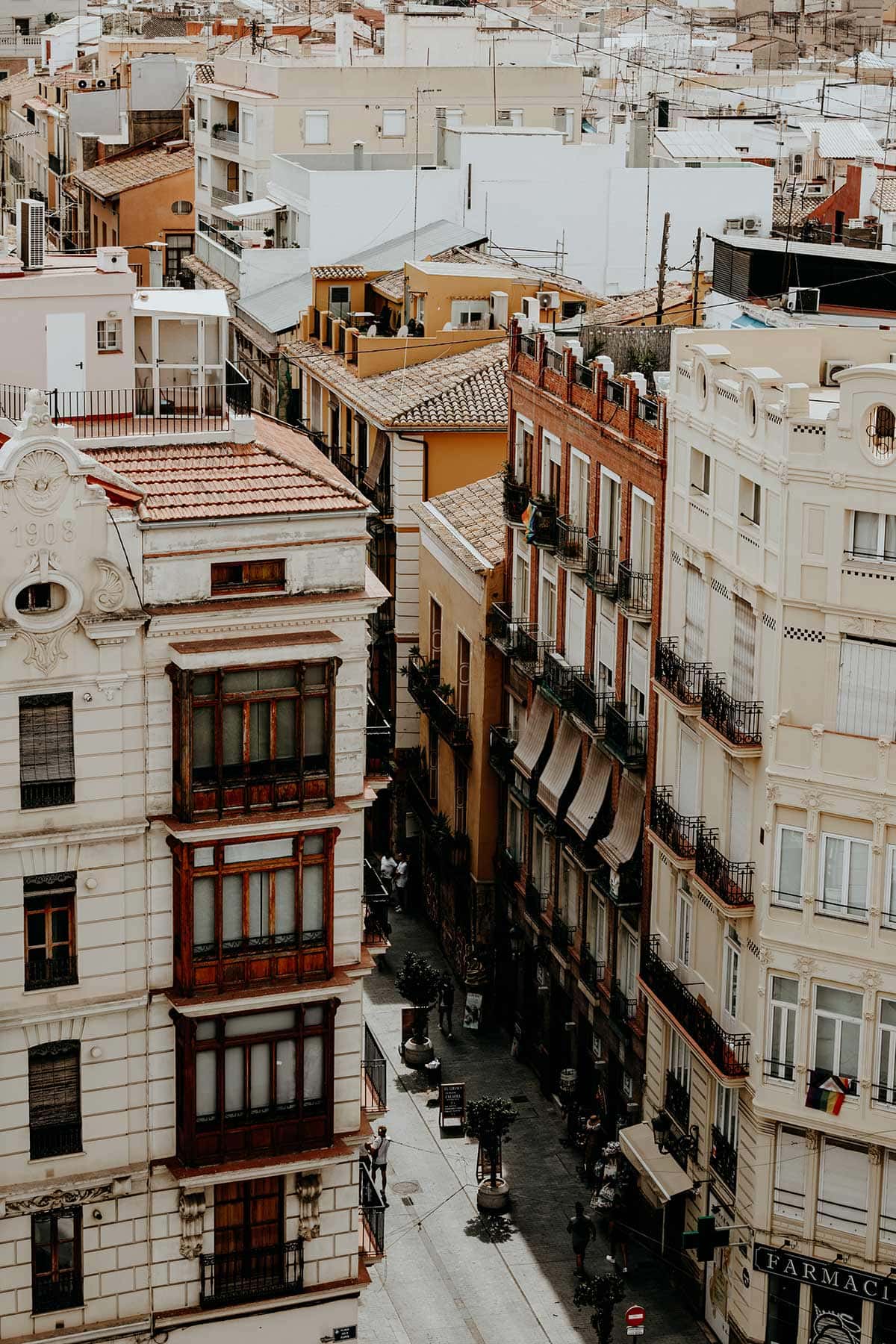
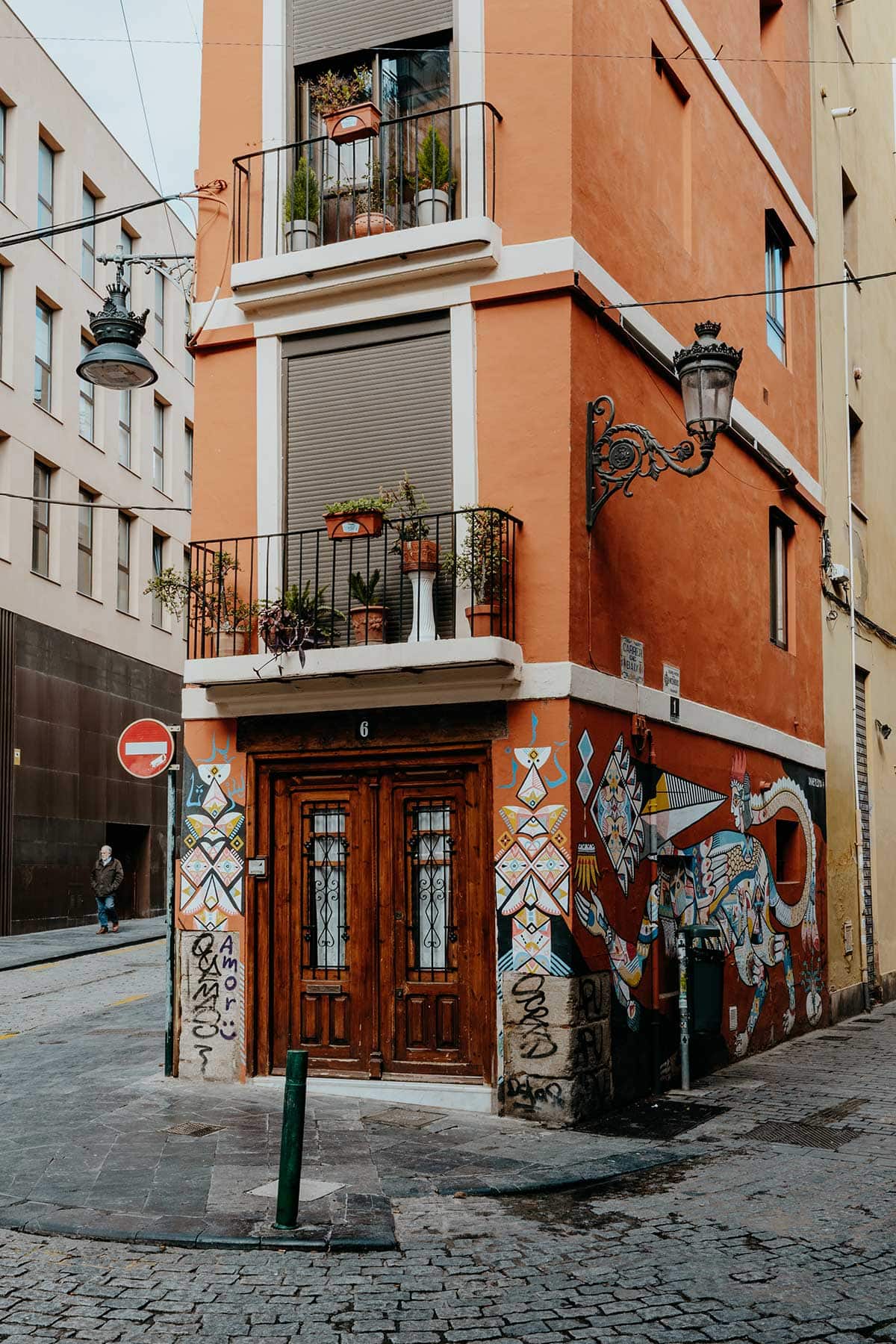
How to get to Valencia
I am text block. Click edit button to change this text. Lorem ipsum dolor sit amet, consectetur adipiscing elit. Ut elit tellus, luctus nec ullamcorper mattis, pulvinar dapibus leo.
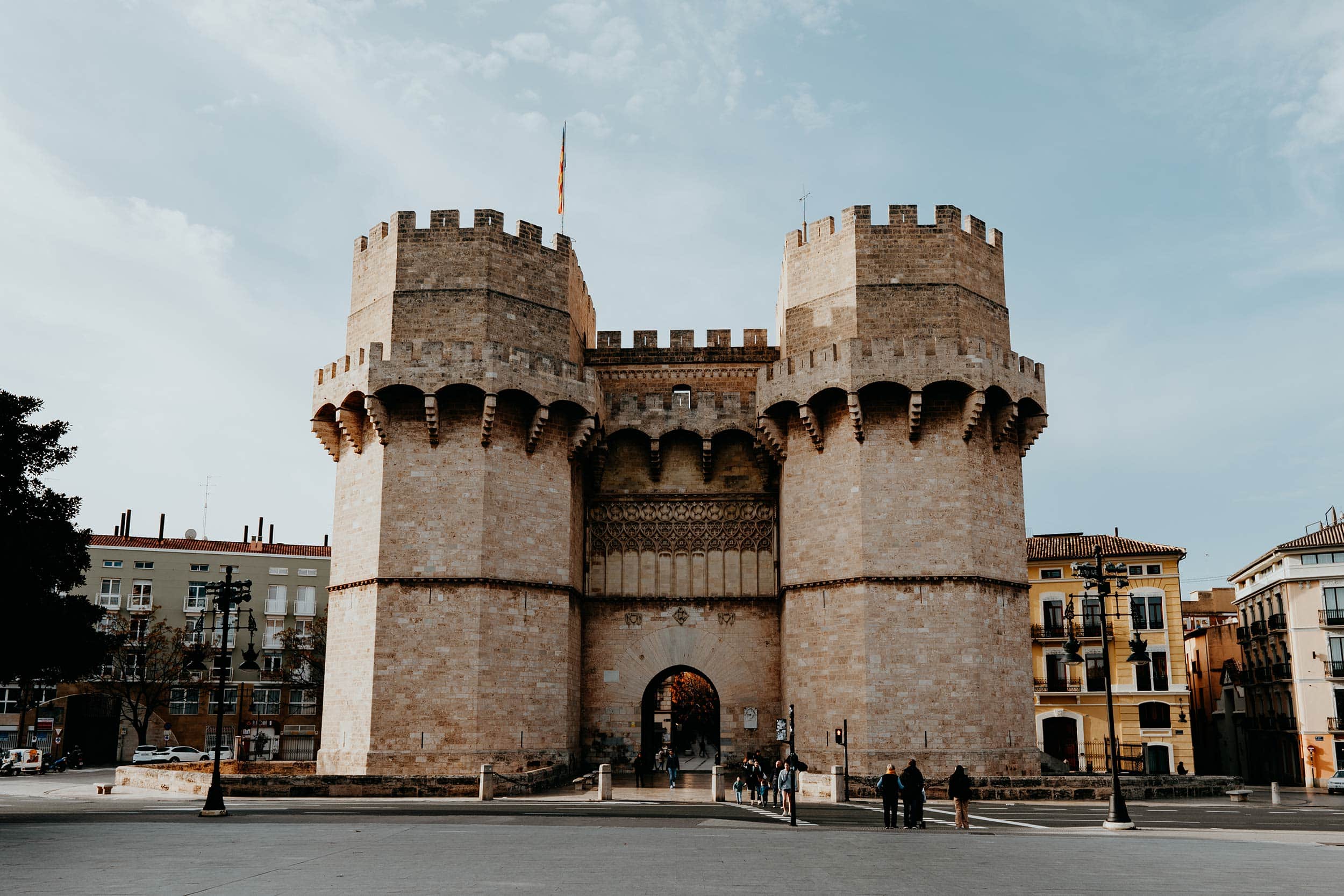
How to get around Valencia
I am text block. Click edit button to change this text. Lorem ipsum dolor sit amet, consectetur adipiscing elit. Ut elit tellus, luctus nec ullamcorper mattis, pulvinar dapibus leo.
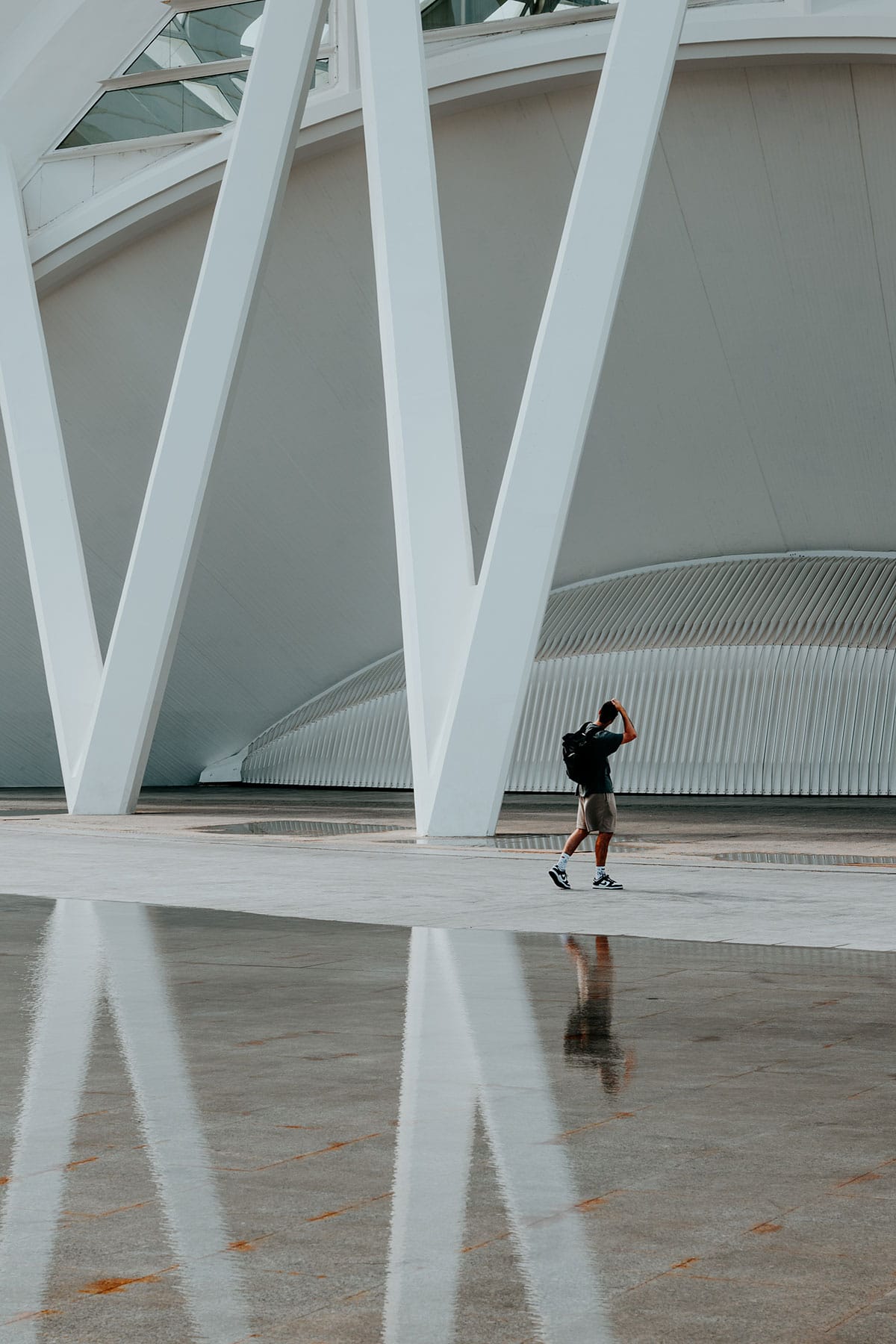
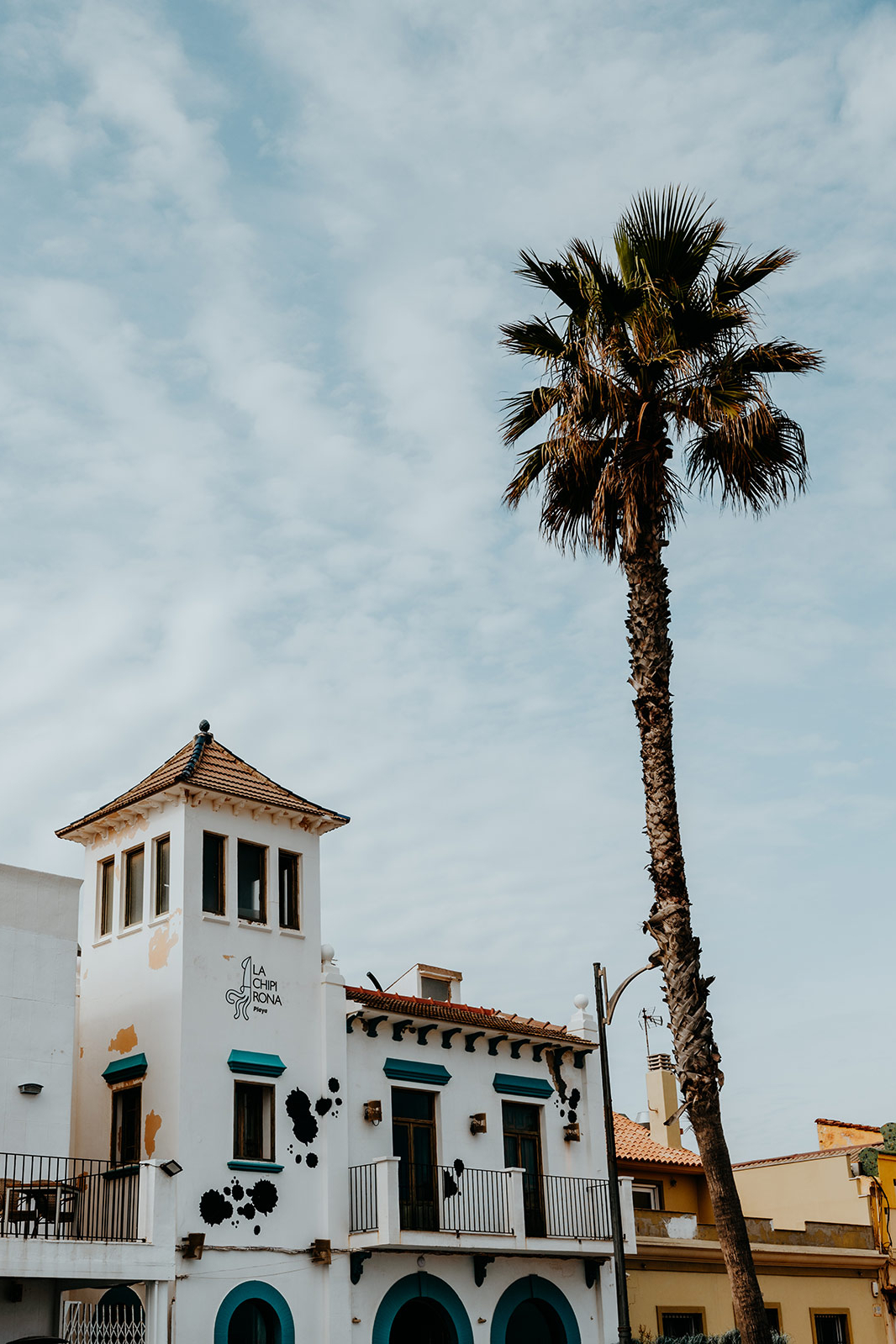
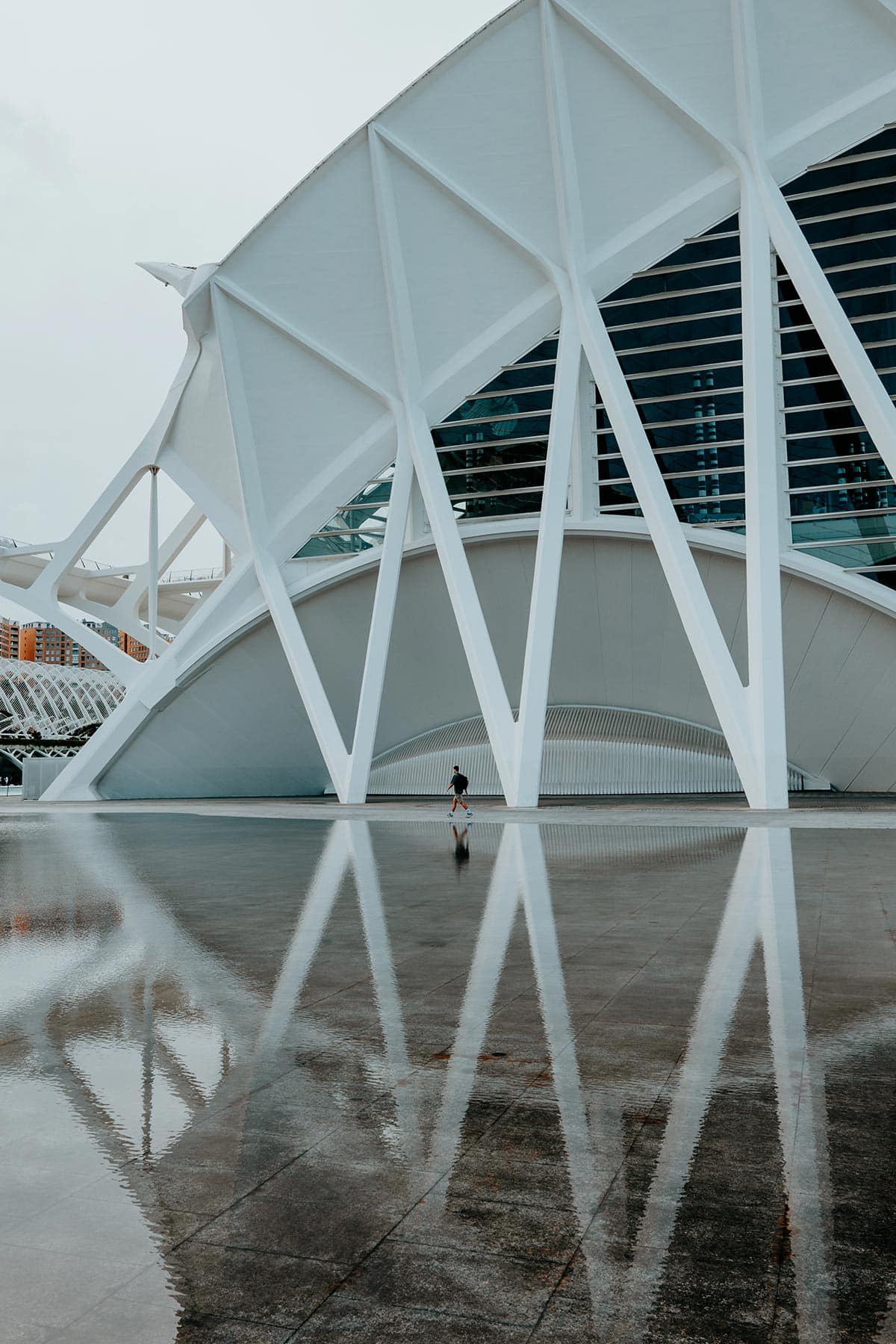
Stay safe in Valencia | Travel insurance
Even though Valencia is completely safe, I always advise everyone to sort out good travel insurance before setting out on their adventure.
While I believe that it’s unlikely to experience any troubles when following the advice in this guide, something unfortunate can happen at any time, whether it’s an injury, a stolen camera, or an accident on the road.
For travel insurance, I use Heymondo, as they offer full COVID-19 coverage, as well as a handy app with 24-hour medical assistance. Make sure you check it out – readers of WTSW receive 5% off any insurance policy too.
Cheers!
I’ve been on this travel blogging journey since 2019.
If you appreciate what I do here, these are some ways you can support me.

My 2-week Uzbekistan itinerary: Uncover the best of the ancient Silk Road
In today’s day and age, there remain only a few destinations in the world that evoke the feeling that you’re about to explore an entirely unknown world – Uzbekistan is absolutely one of them.
It’s a mesmerizing country that is still relatively unexplored by the masses, offering travellers an authentic off-the-beaten-path travel experience – one they will not easily forget.
Once the heart and soul of the ancient Silk Road that connected the East and the West, Uzbekistan is a place like nowhere else in the world, and one I’d so eagerly wanted to witness with my own eyes for many years.
This year, I finally packed my bags and ventured to this hidden gem within the increasingly popular Central Asia region, where ancient cities filled with towering minarets, awe-inspiring domes, and intricate tilework laid the foundation for one of my most memorable trips in 2023.
In just two weeks, I stepped into the footsteps of renowned Italian explorer Marco Polo and uncovered the majestic Silk Road cities of Samarkand, Bukhara and Khiva, where I admired ancient architectural masterpieces, roamed around authentic Central Asian bazaars, and sampled some of the most delicious Uzbek dishes – this trip was a true blessing.
I also took an authentic sleeper train that dated back to Soviet times, watched artisanal craftsmen practise their arts and skills, explored the vibrant capital city of Tahskent, and ate a few too many Ljulja Kebabs here and there – you can’t blame me (those who know, know).
In this in-depth Uzbekistan itinerary, I share my day-to-day itinerary overviews, as well as my first-hand travel advice on where to stay, when to visit, how to get around and more.
Here’s my 2-week itinerary for Uzbekistan, a charming country that will effortlessly awaken the adventurer within you – enjoy this unique once-in-a-lifetime journey.
If you choose to use any of the links on this page, I receive a small commission at no extra cost to you. By using these links, you’ll have a direct impact on WTSW and support me to continue to create free insightful travel content for you. If you find any of my tips useful, you can support me by buying a virtual coffee here.
Where is Uzbekistan
Uzbekistan is a fascinating country in the heart of Central Asia and is bordered by five of the ‘Seven Stans’, including Kazakhstan, Kyrgyzstan, Tajikistan, Afghanistan and Turkmenistan.
Once one of the most important places along the ancient Silk Road due to its exceptional strategic position, Uzbekistan is an intriguing melting pot where world cultures intertwine, as it connects civilizations from the East and West.
Where to stay in Uzbekistan
Even though Uzbekistan is relatively new to tourism, accommodation to suit any travel style and budget can be found here.
Whether you’re after a budget-friendly hostel, a boutique-style luxury hotel, or something in between, Uzbekistan has no shortage of excellent accommodation options waiting for your visit.
One of the first things I noticed, was that the standard of accommodation in Uzbekistan is very good, yet exceptionally cheap in comparison to equivalent options found in the Western world.
Those travelling on a budget could find accommodation for as cheap as €20,- per night, while those keen to splurge have tons of options to choose from in the €50 – €200 range.
Hotels & Guesthouses | Find the best hotels and guesthouses in Uzbekistan on Booking.com
Hostels | Find your hostel in Uzbekistan here
I’ve also listed the accommodation where I stayed during my time in Uzbekistan, which can be found at the end of every destination within this itinerary.
My 2-week Uzbekistan itinerary | Day-by-day
Day 1 – 3 | Tashkent
In most cases, your first point of call on your Uzbekistan itinerary will be Tashkent, the country’s lively capital, where you’ll find the international airport and most likely enter the country.
Known as the largest city in Central Asia, Tashkent is in my opinion a little undervalued compared to other more famous Silk Road cities in Uzbekistan, and therefore often used only as a stepping stone to Samarkand, Bukhara and Khiva.
I, on the other hand, absolutely loved Tashkent and what it had to offer and would clearly recommend spending at least two days here to get one’s bearings and enjoy the many fascinating historical sights.
It’s a city that marches to the beat of its own drum, with a plethora of cultural and historical heritage, enchanting architecture, both modern and old, while having no shortage of excellent restaurant options too.
Though I hope you’ve read my guide to Tashkent (coming soon), here are some suggestions to get a better understanding of Tashkent:
- Roam around the Chorsu Bazar, and experience the hustle and bustle of local life
- Explore the Hazrat Imam Complex – and admire the Samarkand Kufic Quran, which is widely considered the oldest Quran in the world
- Take a look around Tashkent’s impressive Amir Temur Square and enjoy the many surrounding sights
- Visit the Memorial to the Victims of Repression – an impressive memorial dedicated to the people who fought for the independence of Uzbekistan during the times of the Soviet Union
- Sample exceptional Central Asian food – some of my favourite restaurants include Plov City and Na Nebe
Where | Tashkent
Where to stay in Tashkent | I stayed in the stylish Hyatt Regency Tashkent, which was such a comfortable experience after a long flight. Prices and availability here.
You can find alternative accommodation options in Tashkent here.
Read more | For all the best things to see and do in Tashkent, check out my guide here.
Day 3 – 6 | Samarkand
After a few days exploring Tashkent, it’s time to jump aboard the high-speed train to Samarkand, one of the oldest cities in the world and easily one of the most appealing destinations on this two-week Uzbekistan itinerary.
Often nicknamed the crossroads of world cultures, Samarkand was once one of the most important settlements along the Silk Road, which is still very much noticeable at present, given the many breathtaking architectural masterpieces that were left behind.
Due to its exceptional strategical position, Samarkand has always been of great significance, and therefore the city has attracted the attention of many famous conquerors throughout its 2500 years of history, including the likes of Alexander the Great, Genghis Khan and Timur (Tamerlane) to mention but a few.
Samarkand also sparked the interest of renowned world traveller Marco Polo, who is widely known for his travels along the ancient Silk Road.
Following his footsteps to this stunning UNESCO World Heritage sight is truly something out of this world and an absolute highlight on any Uzbekistan itinerary.
Given Samarkand is Uzbekistan’s most famous stop, it does get super busy here, especially when visiting during the peak of high season.
Here are some of my favourite places to visit in Samarkand:
- Visit Gur-e-Amir and discover the resting place of the great conqueror Tamerlane
- Discover amazing local art at the Happy Bird art gallery
- Explore the extensive Registan Square, by far the best-known place in Uzbekistan
- Behold the intricate architecture of the Samarkand school at the Hazrat Khizr Mosque
- Explore the opulent mausoleums of Shakhi-Zinda – my favourite place in Samarkand
- Visit the Bibi Khanum Mosque and explore the extensive courtyard
- Take a wander around the Siab Bazaar, and mingle with the locals
+ Read more | For a more thorough approach, make sure you check out my in-depth guide to Samarkand for inspiration, travel advice and the essentials.
Where | Samarkand
Where to stay in Samarkand | Malika Prime Hotel is a semi-luxury option and a great bang for your buck. Prices and availability here.
Search alternative accommodation options in Samarkand here.
How to get from Tashkent to Samarkand | The journey is best done by the Afrosiyob high-speed train, and takes about 2 hours. It’s scenic, relaxed and pretty straightforward. The high-speed train departs 5 times a day, for up-to-date information, see here.
Day 6 – 9 | Bukhara
Next up on this Uzbekistan itinerary is Bukhara, one of Central Asia’s greatest trading cities during the Silk Road era, and nowadays recognised as a UNESCO World Heritage Site.
And that’s for an excellent reason.
Tucked away in the heart of Uzbekistan, Bukhara is one of the finest examples of ancient Islamic cities in Central Asia, with a wealth of architectural wonders and cultural treasures.
Today, a great deal of Bukhara’s urban layout dates back to the Sheibanid period (1500-1601) and has remained largely untouched, with mesmerizing remnants of the great past to be found in just about every nook or cranny of this mesmerizing city – it is said that Bukhara is home to more than 140 architectural monuments.
All in all, there’s just something special about Bukhara, and while there are plenty of must-see sights, I firmly believe this charming city is best enjoyed on a wander without a plan.
Having said that, some of the best things to see and do include:
- Take an early morning stroll through the historic centre of Bukhara
- Visit the charming Chor Minor mosque, a Bukhara hidden gem
- Admire the intricate Bolo Hauz Mosque
- Wander around the 11th-century Po-i Kalyan Complex
- Shop some souvenirs at the Toqi Telpak Furushon
- Walk along the Ark of Bukhara – and skip entering the fortress itself
- Sample flavourful local cuisine at Minzifa Restaurant
+ Read more | For all the best things to see and do in Bukhara, check out my guide here.
Where | Bukhara
Where to stay in Bukhara | I stayed in the authentic As-Salam Hotel, a lovely budget-friendly hotel in the heart of Bukhara Old Town. I also spent a night in the Wyndham Hotel before taking the night train to Khiva, which was super comfortable.
Search alternative accommodation options in Bukhara here.
How to get from Samarkand to Bukhara | Jump aboard the high-speed train, which takes you to Bukhara in around 2 hours. The high-speed train departs 3 times a day, and a ticket will cost you between 90,000 SOM (€7,-) and 155,000 SOM (€12,-). For up-to-date information, see here.
Day 9 – 10 | Board the night train from Bukhara to Khiva
Although it’s not a destination by itself, I truly believe that the journey from Bukhara to Khiva deserves a separate section in this itinerary, as this authentic train ride will most likely be one of the most memorable moments of your two-week trip through Uzbekistan.
A wise man once said; ‘It’s Not the Destination, but the Journey That Matters’.
These are the words of renowned poet Thomas Stearns Eliot, and I couldn’t agree more.
As you board the train in Bukhara at midnight, you’re up for an intense, yet truly authentic adventure, and believe me, not one you’ll easily forget.
Winding through the rugged Uzbekistan landscape, the overnight train from Bukhara to Khiva is certainly not your everyday train journey and will add a substantial touch of adventure to your travels here.
Warm, intoxicating, and rather cramped, the Platzkartny (shared sleeper) was the option of my choice, and despite a poor night’s sleep, the wagon here was the perfect environment to soak up the distinctive atmosphere that prevailed in the time-worn Soviet-style train.
After a journey of roughly 7 hours – and hopefully some shuteye – you will arrive in Khiva.
Since you’ll arrive in Khiva in the early morning, I’d highly recommend arranging an early check-in at your hotel of choice to get some well-deserved rest.
Where | Bukhara 1 train station
Where to stay in Bukhara | As mentioned above, I spent my last night in Bukhara at the Wyndham Hotel and booked a late checkout to have some rest and extra comfort before embarking on the train journey to Khiva. Prices and availability here.
Where to stay in Khiva | I stayed in Orient Star Khiva, and arranged an early check-in for my first day, and I would highly recommend you do the same. Prices and availability here.
How to get from Bukhara to Khiva | The Bukhara to Khiva train departs daily at 0025 and will set you back around 140.000 SOM (€11,-) per person. Tickets can be booked through 12go.Asia.
Plan | Take a look at my guide to travelling by train in Uzbekistan for all the essentials.

Day 10 – 13 | Khiva
With a slightly intense train journey under your belt, and most likely only a little amount of sleep, you will arrive in the beautiful city of Khiva, where I’d suggest you first take some well-deserved rest, before exploring the town’s many architectural wonders.
While Samarkand and Bukhara may be the most popular of cities in Uzbekistan, I firmly believe that Khiva provides the most accurate representation of how the Silk Road must have been during its heydays.
Giving you the impression as though you’ve been transported to a completely different era, Khiva’s Itchan Kala (Khiva old town) could easily be described as a large open-air museum, with plentiful intricate azure domes, towering minarets, unique clay buildings and ornate mausoleums.
It’s a living example of the legacy and grandeur of the ancient Silk Road, and the first place in Uzbekistan to be inscribed as a UNESCO heritage site.
However, since Khiva is also one of the most remote places to visit in Uzbekistan, travellers often make the mistake of leaving it completely out of their Uzbekistan itinerary.
With over 50 historical sites dotted throughout Itchan Kala’s time-worn laneways, I believe skipping this extraordinary city along the legendary trade route is an absolute mistake, and everyone travelling to Uzbekistan should spend at least 2 full days here.
Since Khiva is rather compact and easy to navigate, it’s completely possible to explore it on a roam without a plan – however, having some sort of structure is always handy.
Some of my favourite things to see and do in Khiva include:
- Stroll through the picture-perfect streets of Itchan Kala – Khiva Old Town
- Watch over Itchan Kala from the Khuna Ark
- Sample all the Lula Kebabs
- Admire intricate wood carvings and painted ceilings at the Tash Hauli Palace
- Climb the towering Khoja Minaret and admire the stunning views over Khiva
- Visit the Jumaa Mosque – and admire the 212 wooden columns
+ Read more | Make sure you check out my in-depth guide to Khiva for inspiration, travel advice and all the essentials.
Where | Khiva
Where to stay in Khiva | I opted for Orient Star Khiva, an authentic hotel set within the ancient Madrasah Muhammad Aminkhan. Prices and availability here
You can find alternative accommodation in Khiva here.
How to get from Khiva to Tashkent | Catch a 1.5-hour domestic flight from Urgench to Khiva. Tickets should cost around 1,000,000 SOM €75,- and can be purchased on Booking.com.
Day 13 – 14 | Tashkent + fly home
After some exciting days in Khiva, it’s time to catch a domestic flight from Urgench to Tashkent – which will save you a lot of time and will allow you one additional day to explore or relax in Uzbekistan’s lively capital city.
Whether you book a luxurious hotel to enjoy some comfort before your journey home, go in search of your last bits of exceptional Central Asian cuisine, or wish to visit some of the places you didn’t make it to on your first few days in the city, your last day in Uzbekistan is all about wrapping up your incredible Uzbekistan trip in a relaxing and convenient manner.
If you’re looking for some final inspiration for your last explorations around Tashkent, make sure you give my guide to the best things to do in Tashkent (coming soon) one more read here.
Where | Tashkent
Where to stay in Tashkent | I chose to enjoy the comfort of Hyatt Regency Tashkent for one more night, before catching my international flight back home. Prices and availability here
Uzbekistan itinerary | The essentials
The best time to visit Uzbekistan
While Uzbekistan is gifted with the most incredible architectural masterpieces that could be visited year-round, this doesn’t imply that it’s a pleasant destination at any time of year.
In reality, Uzbekistan will be scorching hot in summer, when temperatures soar well over 40 degrees Celsius, while during the winter months, the temperature could dip far below freezing.
For that reason, I believe the absolute best time to visit Uzbekistan is either in spring (April to June) or autumn (late August to October), when the temperature is warm and pleasant, yet not too extreme.
Timing your visit for the shoulder seasons means that you’re more likely to enjoy the many sights without having to find cover from the burning sun all the time.
I visited Uzbekistan in May and couldn’t have wished for better circumstances to discover this incredible country and its many historical sights.
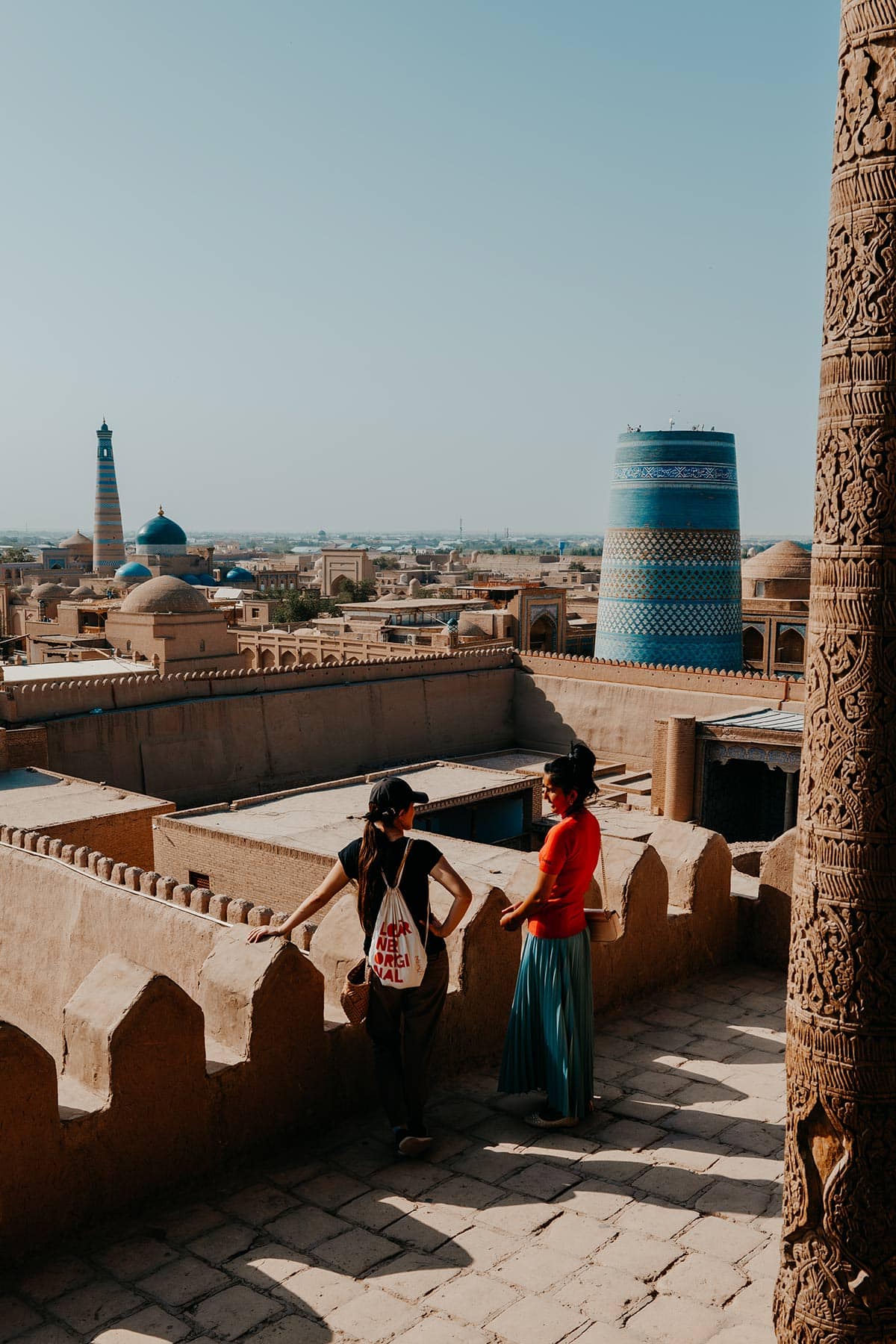
How to get to Uzbekistan
Though Uzbekistan is a relatively offbeat destination, it’s quite well-connected to the rest of the world, with the Tashkent International Airport as the primary gateway to the country.
While it’s reasonably small, the airport is well-kept and hosts a great variety of international flights, including those from major hubs in Europe, North Africa, North America, the Middle East, and Asia.
If you’re looking to find a flight to Uzbekistan, I would advise using Booking.com, a super easy-to-use website that lets you compare a large selection of airlines and travel companies, allowing you to find the best possible rates.
From the airport, it takes about 30 minutes to reach the city centre by taxi, which is best booked through the app Yandex Go and should cost no more than 25,000 SOM (€2,-).
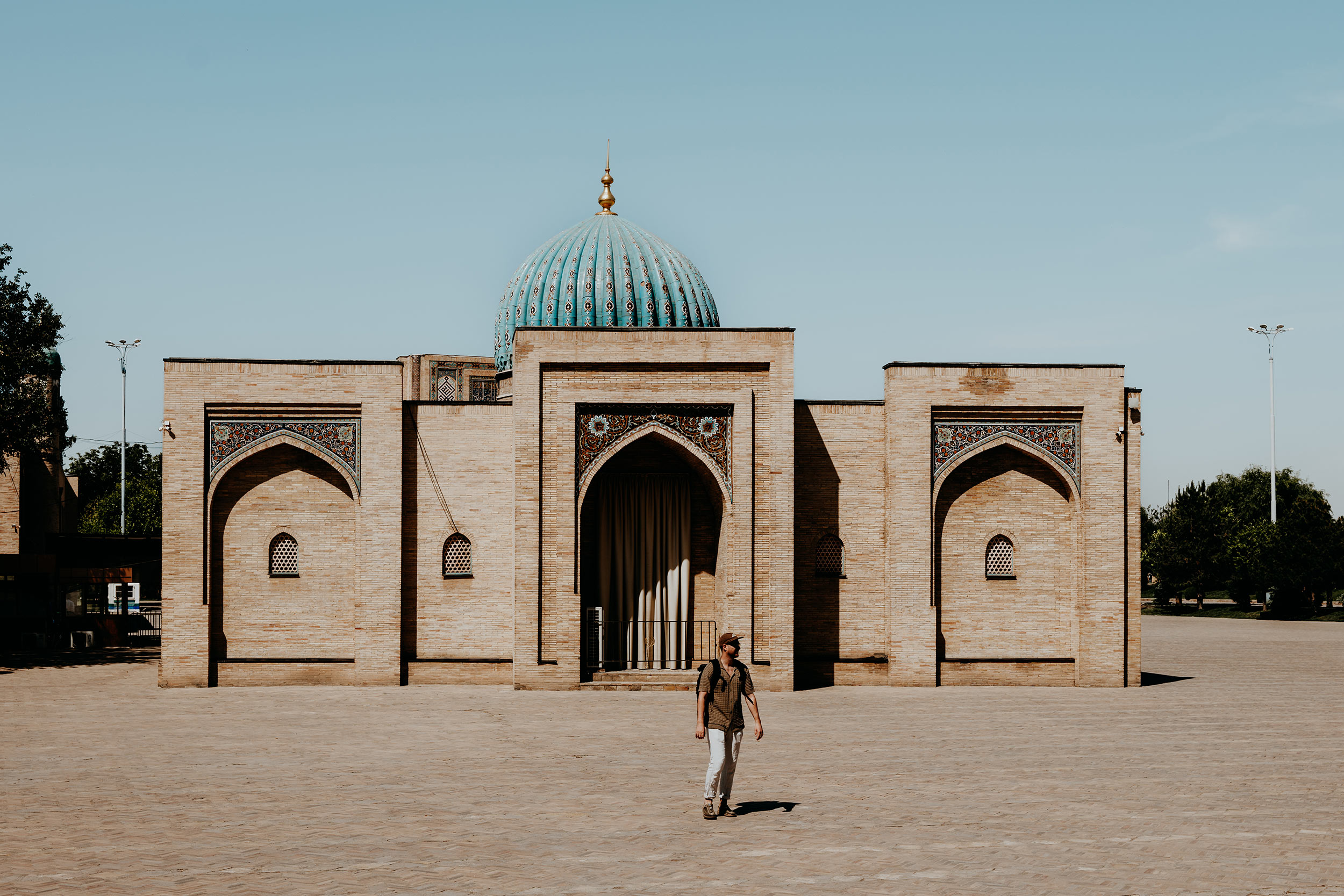
Transport | How to get around Uzbekistan
Due to Uzbekistan’s extensive geography (Uzbekistan stretches over roughly 1,400 kilometres from west to east), you will notice that you’ll have quite a lot of ground to cover when travelling through the country.
Luckily for you, getting around the country is super convenient, affordable and relatively fast.
By train
A name such as the Silk Road might imply that travelling here runs smoothly, which is, in fact, quite true thanks to Uzbekistan’s exceptional rail network.
Rivalling the neatness and comfort found in European trains, the Afrosiyob train is a 210km/h high-speed train that runs daily between Uzebkistan’s major destinations, including Tashkent, Samarkand and Bukhara.
With comfortable spacious seats, USB and power plugs, and the most friendly crew members, travelling through Uzbekistan by train is, in my opinion far more comfortable than taking the plane.
However, when you’re planning to travel to Khiva (which you should), things are a little different.
Those venturing to Khiva will notice that you could only get there by taking the Soviet-style sleeper train, which to me is an authentic experience, if not a little time-consuming.
Since tourism in Uzbekistan is still growing at a rapid pace, acquiring train tickets online can be quite a challenging task.
If you want to learn more, I have an in-depth guide on travelling by train in Uzbekistan (coming soon) which can be found here.
By plane
While I would pick travelling by train over travelling by plane in most cases, I would highly recommend taking a flight from Khiva to Tahskent, or the other way around depending on your itinerary.
The reason for this is that the train connection between Tashkent, Samarkand and Bukhara is by far the most convenient option. You also don’t have to be at the airport at least 2 hours early, and it’s the world’s most sustainable mode of transport, which is great too.
If you do prefer travelling the country by plane, you could also opt for domestic flights between all of the major cities in Uzbekistan, although I can’t stress it enough to make use of the excellent high-speed trains instead.
The domestic flights within Uzbekistan are operated by Uzbekistan Airways, and while you shouldn’t have the highest expectations, it’s actually quite affordable and convenient to fly with.
Uzbekistan travel essentials
While Uzbekistan is extremely convenient for travellers, travelling here will come with a unique set of needs, meaning you have to prepare a little before embarking on your journey.
Some items I recommend include:
Uzbekistan SIM card | First things first. Upon arrival in Uzbekistan, I highly recommend buying yourself a local SIM card with a data plan, given it will make anyone’s travels here significantly more convenient. Curious about the details? Read my guide to a Uzbekistan SIM card here.
Reusable water bottle | One travel essential that I carry with me at all times is the Grayl Geopress. This reusable water purification bottle allows me to fill up water from nearly every water source, making it one of my best investments to date.
Sun protection | Since Uzbekistan will most likely be fiery hot during the peak travel months, I’d highly recommend bringing quality sunscreen with at least 30SPF and a hat to cover your head.
A Powerbank | When travelling through Uzbekistan, you don’t want to risk being in an uncharted area with an empty device in your hands. For that reason, I believe it’s crucial to carry a power bank with you at all times.
Earpods or headphones | If you’re following this itinerary, I can’t stress it enough to bring some high-end earpods or headphones, given the journey from Bukhara to Khiva by night train can be quite hectic happening.
Camera gear | Like most places in Uzbekistan, Khiva is truly stunning, meaning loads of incredible photography opportunities will arise when exploring. For that reason, I’d highly recommend bringing your camera gear, so you can capture loads of photos while there. If you’re curious to learn about my photography gear, make sure you give my ‘What’s in my Camera Bag’ guide a read too.
Leave no footprints | During my travels in Uzbekistan, I noticed that the cities and their people are really neat when it comes to cleanliness and littering. It’s up to us to respect the locations we’re visiting and keep it that way.
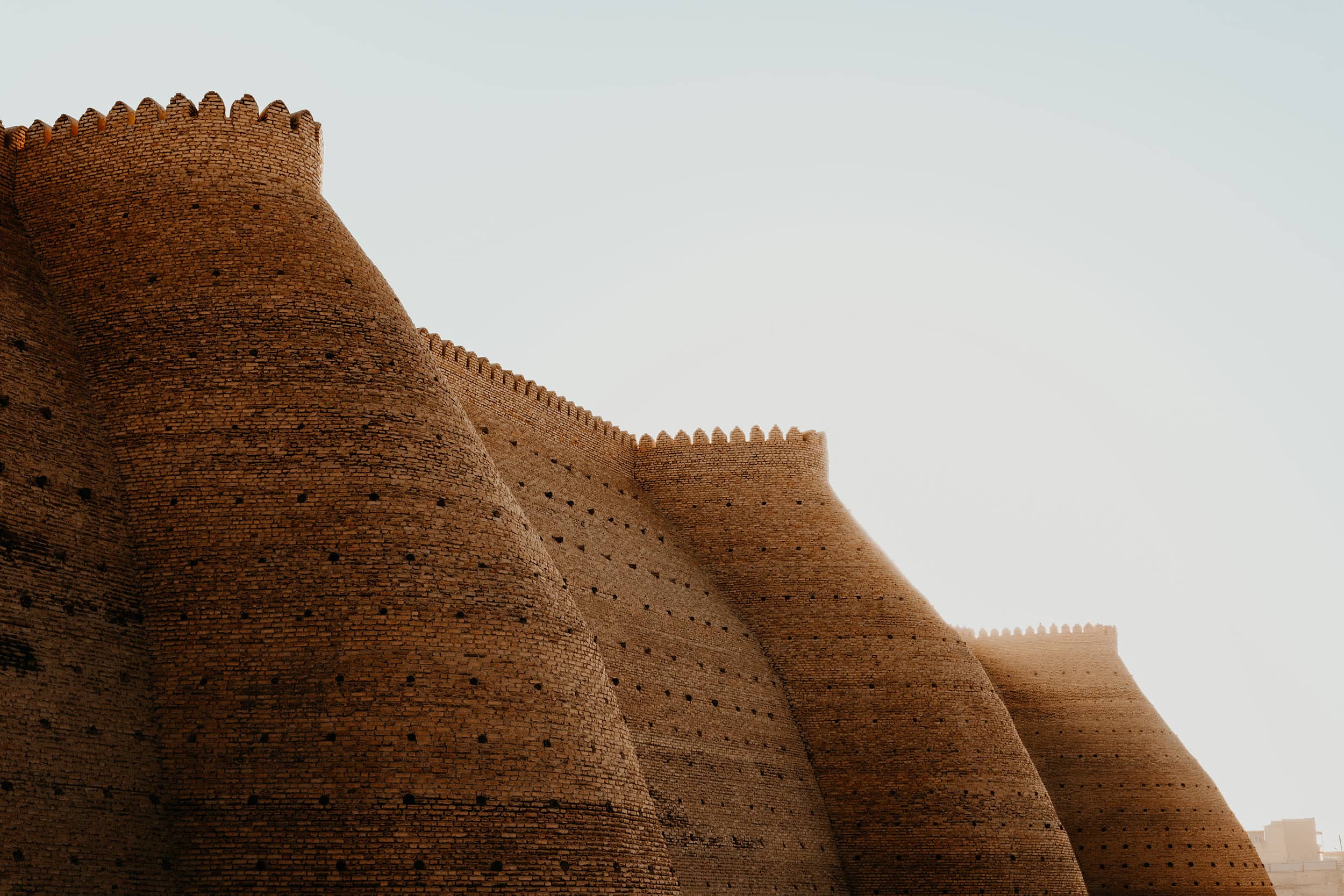
Safety in Uzbekistan | Travel Insurance
When travelling this big wide world, I never go on an adventure without my essential travel insurance sorted out, and though I never felt unsafe in Uzbekistan, I advise anyone travelling here to do the same.
While I believe it’s unlikely to experience any problems when following the suggestions in this itinerary, something unfortunate could happen at any given time, whether it’s an injury, a stolen camera, or an unforeseen cancellation.
For travel insurance, I use Heymondo, as they offer full COVID-19 coverage, as well as a handy app with 24-hour medical assistance. Make sure you check it out – readers of WTSW receive 5% off any insurance policy too.
Cheers!
I’ve been on this travel blogging journey since 2019.
If you appreciate what I do here, these are some ways you can support me.
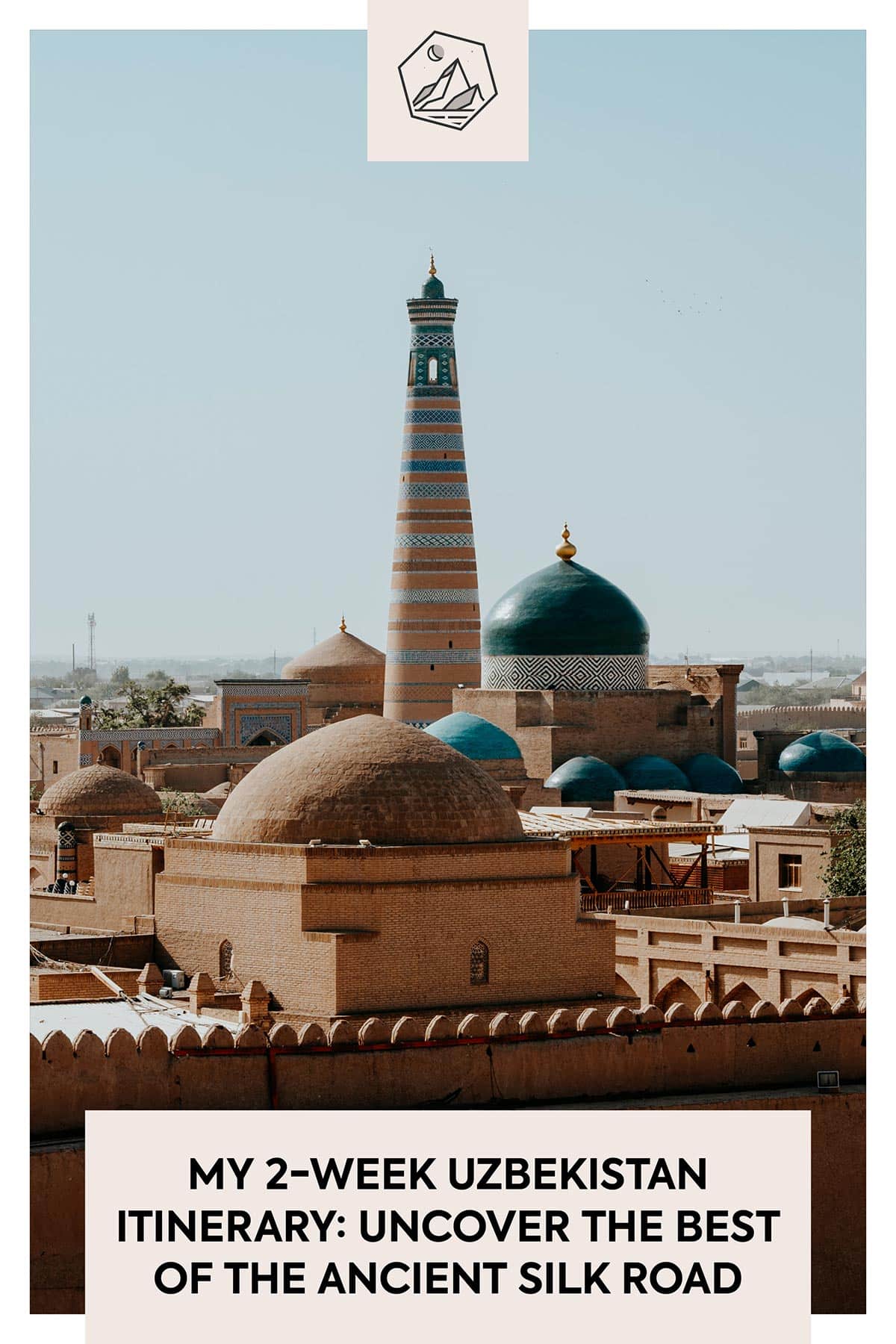
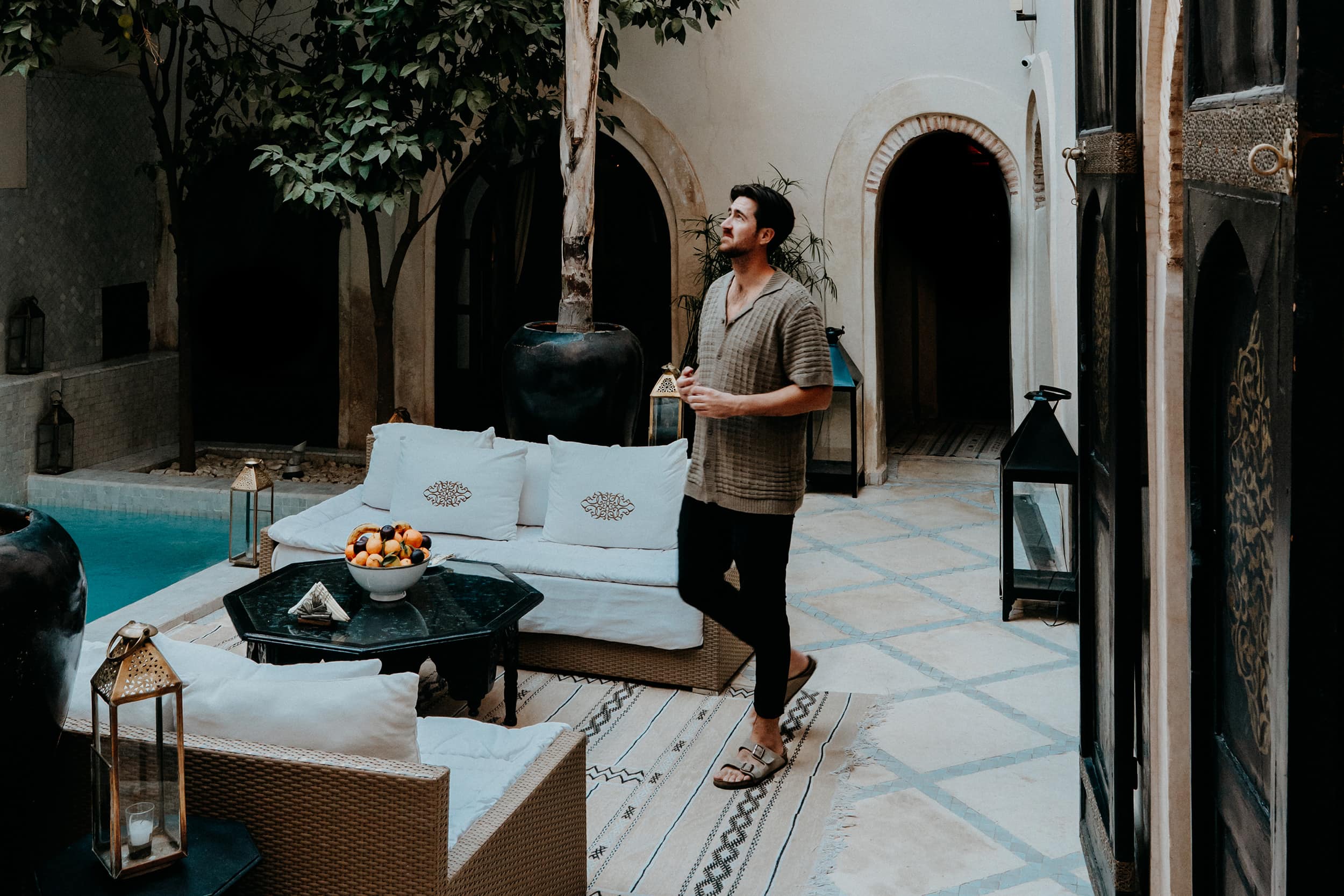
Riad Kheirredine review | Experience an oasis of calm in chaotic Marrakech
Somewhere tucked away in the hectic alleyways of the Marrakech medina, an utterly stunning oasis of calm exists, carefully hidden behind a massive wooden door, and disguised by the intoxicating noises, smells and chaos that prevail in the always bustling streets of Marrakech.
Slightly overwhelmed, a tad hot and a little tired from the journey, we were waited for and greeted by one of the riad’s staff members, who slowly guided us through the narrow streets of a charming residential quarter, in search of our own temporary oasis of calm.
The oasis of calm we were looking for was Riad Kheirredine.
After about 10 minutes, dodging a few too many mopeds Mario-karting through the streets, determined street merchants trying to sell their goods, and a few lost donkeys roaming around, we finally arrived at the wooden door that promised us our slice of paradise.
From the moment we left the chaos of the medina behind, and stepped through Riad Kheirredine’s massive door, a whole new world unfolded in front of our eyes, recovering our sense of inner calm within merely a few seconds.
This was our home for the next 4 days, complete with intimate courtyards with fountains and lush greenery, utterly stylish seating corners, two intimate outdoor pools to refrain from the Moroccan heat, and last but not least, a spacious terrace lined with palms offering stunning views over both Marrakech and the Atlas Mountains.
Honestly, we couldn’t have hoped for a better base from which to explore Marrakech, and not just because of the luxury and comfort, but more so thanks to the incredibly friendly staff, who did everything in their power to make our time in Marrakech as exceptional as it was.
Riad Kheirredine truly made our time in Morocco’s “Red City” one to remember!
If you choose to use any of the links on this page, I may receive a small commission at no extra cost to you. By using these links, you’ll have a direct impact on WTSW and my ability to continue to create free insightful travel content for you. If you find any of my tips useful, you can support me by buying a virtual coffee here.
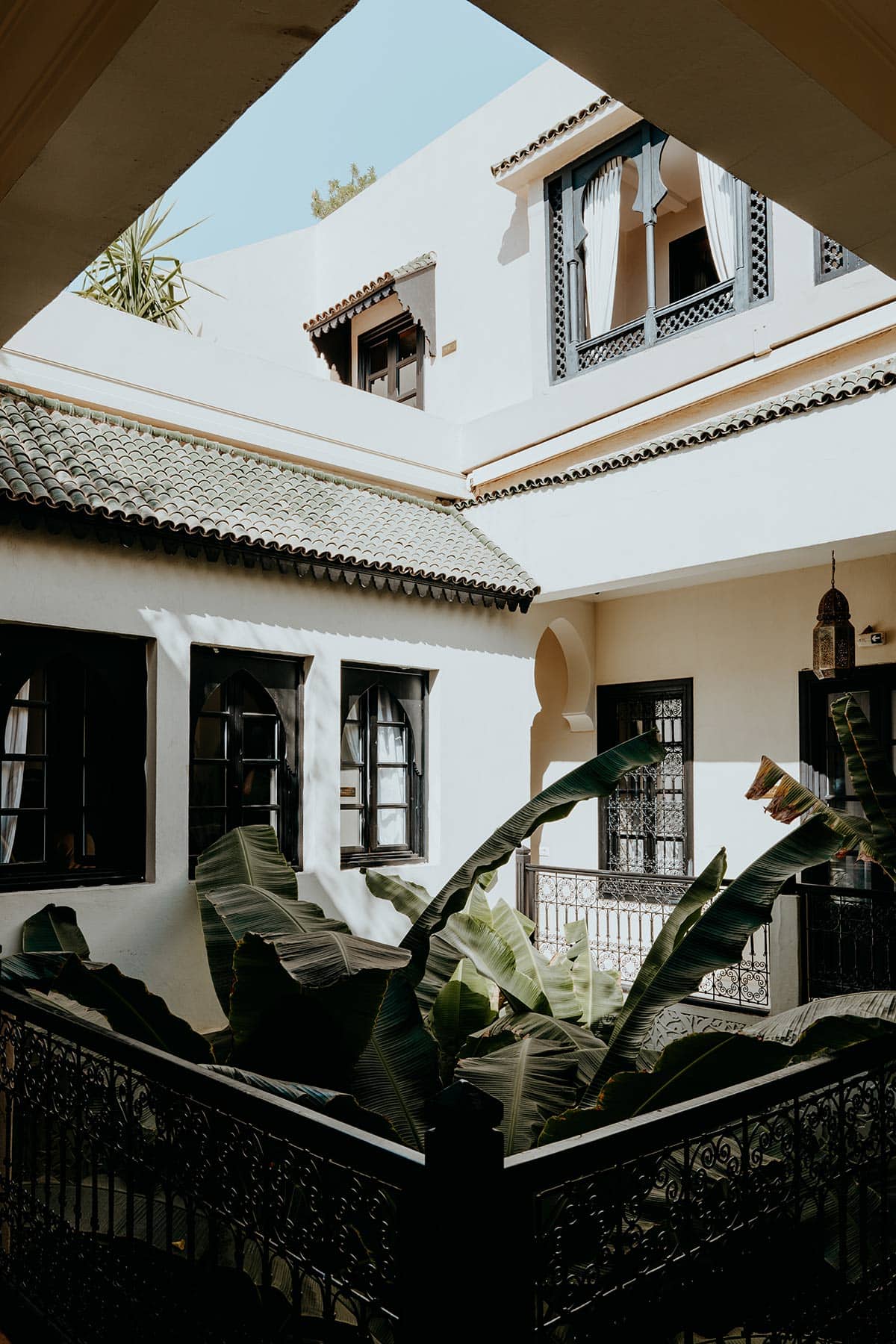
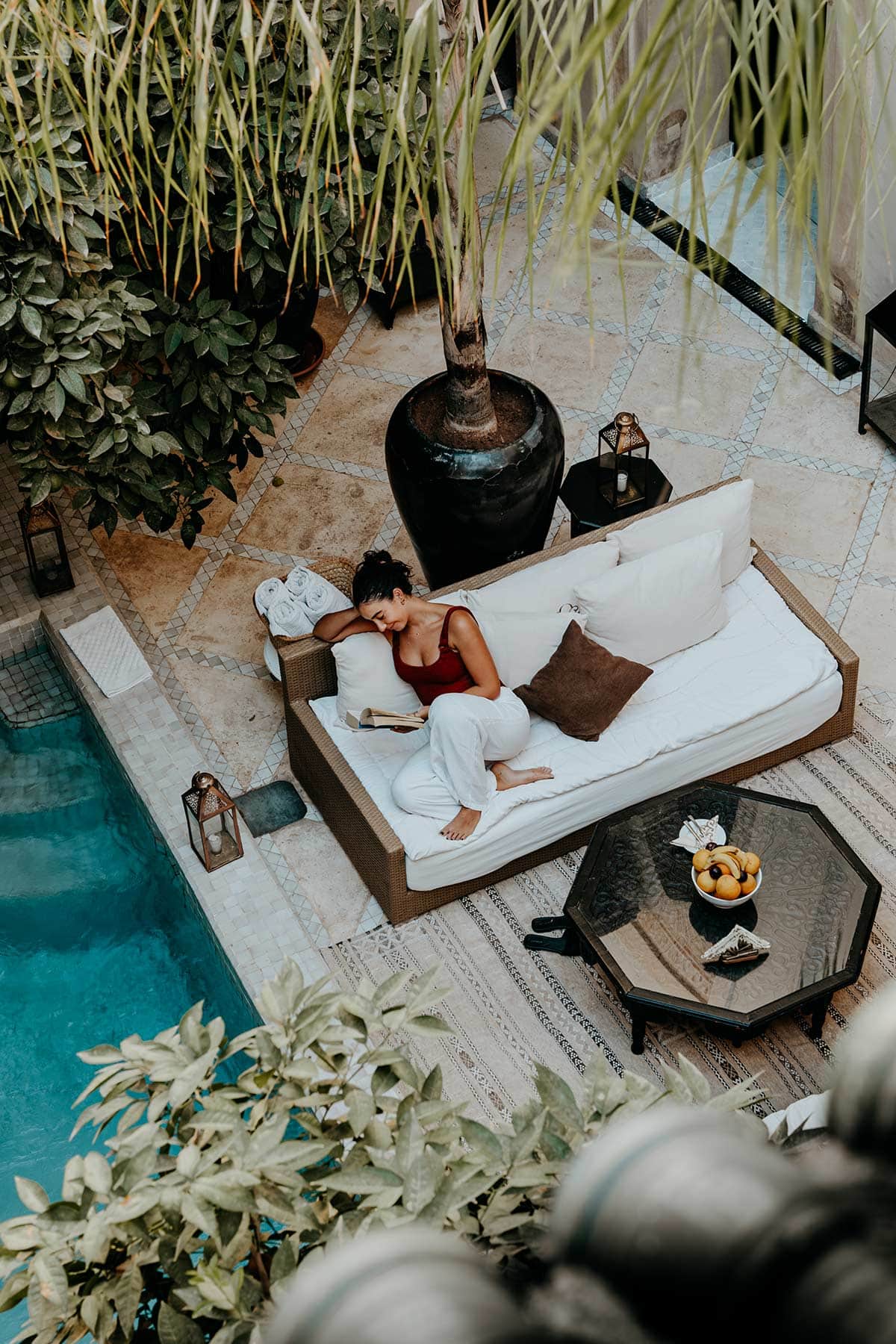
Where is Riad Kheirredine | Riad Kheirredine’s location
As with all riads in Marrakech, Riad Kheirredine is nestled in the bustling streets of the medina.
To be exact, Riad Kheirredine is situated in a charming residential quarter on the outskirts of the medina, roughly 20 minutes away from the famous Djemaa el-Fna square.
Since it’s quite easy to get lost in the medina, Riad Kheirredine will have a staff member ready to guide you to and from the riad at all times. Upon leaving the riad, you’ll receive a local mobile phone, so you can easily contact the staff when you need guidance.
Riad Kheirredine | The Design
Tucked away in the streets of the medina, Riad Kheirredine combines the intricate patterns, colours and spirit of Morocco, with elegant contemporary Italian design elements and all the modern comfort one could wish for.
Centered around a lush and intimate garden patio (riad meaning garden in Arabic), Riad Kheirredine’s design and layout could easily be described as Morocco’s version of Feng shui, as everything feels as though it’s completely in harmony, which gives the space one of the most aesthetically pleasing appearances I’ve ever seen during my travels.
From the moment you leave the bustling medina and step through the massive wooden door, a whole new world unfolds in front of you, with courtyards complete with fountains and verdant greenery, the most stylish seating nooks, two intimate outdoor pools to refrain from the Moroccan heat, and a spacious terrace lined with palms, and last but not least, stunning views over both Marrakech and the Atlas Mountains in the distance.
Then there is the in-house restaurant, which provides a charming, intimate ambience, adding a subtle touch of magic to the fine dining experience – more on that later.
All things considered, it’s impossible not to see how much thought and effort has been put into the design, it’s simply put, an exceptional space that feels like a home away from home.
I even dare to say that Riad Kheirredine is one of the most inspiring hotels I’ve ever stayed in.
Riad Kheirredine | The rooms
With 14 thoroughly designed rooms and suites, Riad Kheirredine has plenty of incredible options, each with its own unique look and feel.
One thing, however, is that all rooms live up to an incredibly high standard, whether you’re choosing a Deluxe Double Room, Junior Suite, Classic Suite, or Imperial Suite – they all offer design, comfort and amenities that are of the highest level.
During my time in Marrakech, I had the fortune to stay in Riad Kheirredine’s Ambra room, a spacious deluxe room equipped with authentic hand-crafted furniture, a traditional ensuite bathroom with a rain shower (one such bathroom that could perfectly fit into my future house), and plenty of modern amenities to make you feel comfortable and at home, think air-conditioning, a Bluetooth music system, and a comfy seating area.
Then there is the huge bed, covered with fancy cushions and silk bedspreads made from top-notch materials, which also happened to be extremely comfortable to sleep on – winner!
Though you probably wouldn’t spend much of your time in your room given Marrakech has a lot to offer, and the common areas of the riad will most likely tempt you to chill there, the rooms at Riad Kheirredine are the perfect place to retreat and regain some energy.
Especially if you consider that you could request fresh mint tea, coffee and freshly squeezed juices at any given time.
I’ve recently also stayed in the Canella room, which was equally as impressive as the above-mentioned Ambra room. Having said that, I fairly think all rooms are stunning, meaning you simply can’t pick wrong here.

Riad Kheirredine | The food and drinks
Let’s get straight to it, breakfast at Riad Kheirredine’s incredible terrace, with its stunning views of both Marrakech and the towering Atlas Mountains in the distance, will, indisputably be one of the absolute highlights of your stay here.
As with everything Riad Kheirredine touches, the breakfast spread here is truly exceptional, with plentiful options to choose from – think freshly-baked bread, croissants and sweet pastries, hummus with grilled vegetables, a wide array of fresh fruits, and eggs in any style on order.
Even though I practice intermittent fasting and normally start eating around noon, I actually decided to deviate from my normal routine and join the feast at Riad Kheirredine.
However, since my body isn’t used to eating a big breakfast, I opted for a light breakfast instead, consisting of fruits, pancakes, a cup of coffee, freshly squeezed orange juice (I love a good OJ), and a sweet pastry on the side – which was quite satisfying.
If you’re in for a fresh mint tea, a cup of coffee, orange juice, or a quick bite, the riad also offers great room service, which can be ordered at any time, whether you’re in your room or in one of the common areas.
Then there’s the full-service restaurant, which serves the most amazing dishes, which you can devour on either the riad’s exceptional rooftop or their carefully hidden patio complete with lush greenery, both extremely elegant and offering an intimate and lavish atmosphere.
Here you can venture into a culinary journey, with an extensive menu offering a delightful array of Moroccan, Mediterranean, and fusion dishes, all prepared with the finest locally sourced ingredients.
In addition, Riad Kheirredine is one of the few accommodations in Marrakech that obtained an exclusive alcohol license from the Moroccan authorities, which gives guests the opportunity to complement their meal with a chilled glass of wine or a beer, adding an extra touch to the overall fine dining experience.
It is worth noting that no reservation is needed for the restaurant, and you can walk in whenever you feel like it, which is quite convenient and overall a pleasant experience.
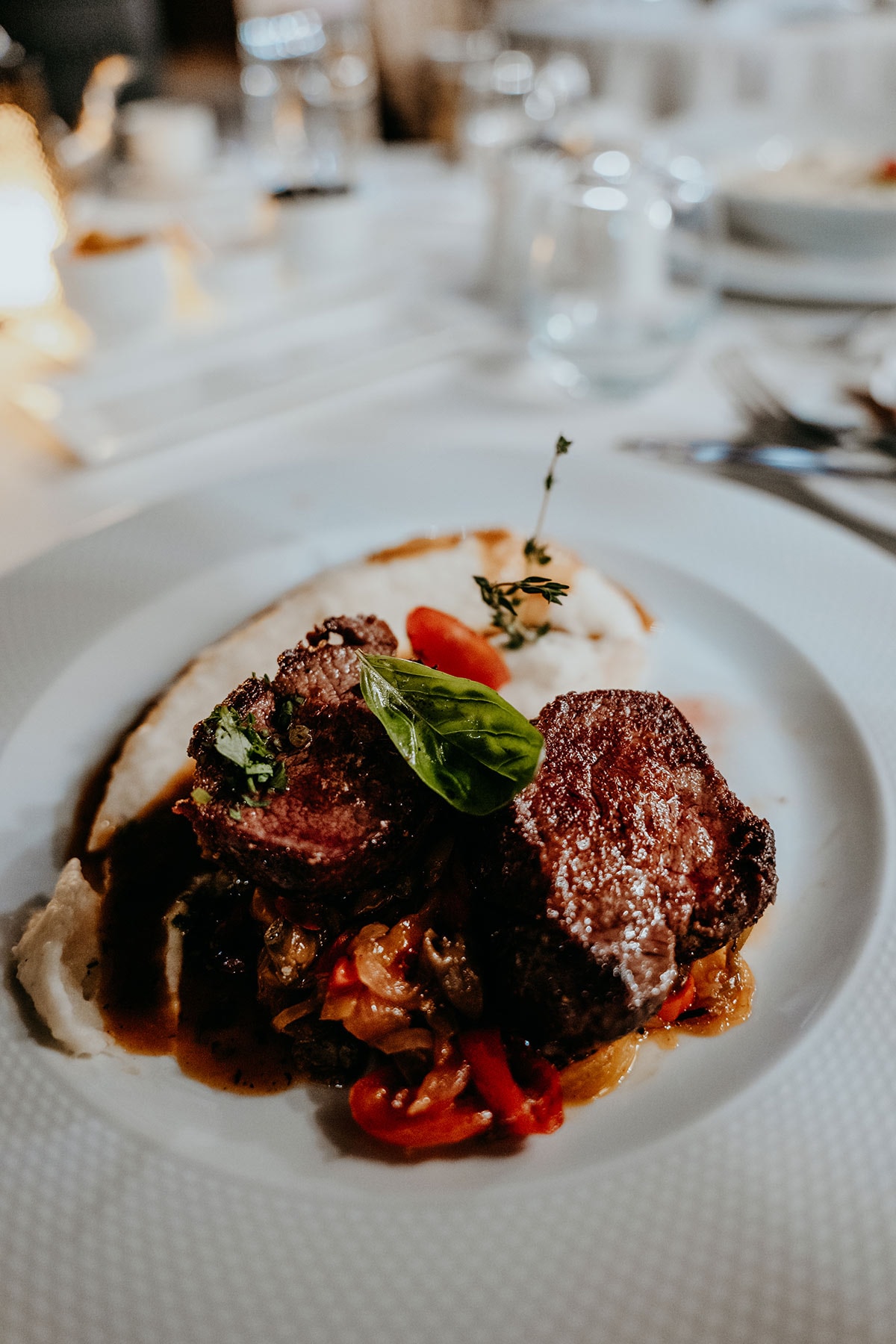
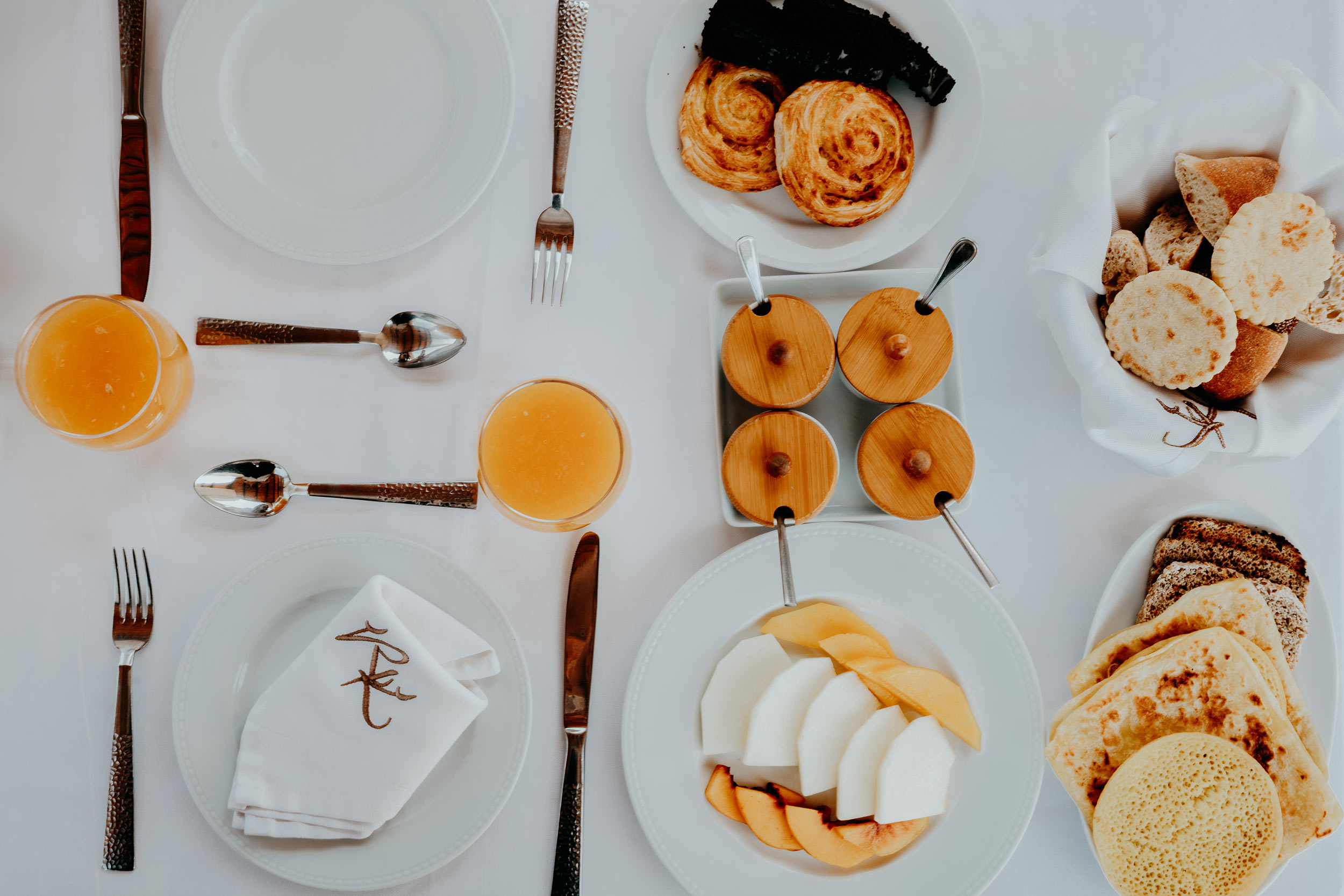
Riad Kheirredine | The Hammam and Spa
While you will surely find inner calm at Riad Kheirredine itself, booking a rejuvenating experience in the Riad’s traditional Hammam and Spa will bring your overall well-being to a whole new level.
Often referred to as the oldest surviving bathing tradition in the world, the hammam is a traditional Moroccan ritual that has been around for ages, and so it become a key component of Morocco’s rich and captivating culture.
As one of the 5 traditional elements in Moroccan culture (bakery, fountain, Hamman, mosque, and school), visiting a Hammam is not only rejuvenating for body and mind but also a great way to experience this side of Morocco’s fascinating traditions.
If you’re keen on trying a hammam, I’m pretty sure you would love a pampering session here; Riad Kheirredine’s in-house luxurious hammam is known for the most skilled therapists and masseuses, using only the finest techniques and natural ingredients; think black soap, rose-based clay masks, argan oil, orange blossom and salts.
It’s the best possible gift you could give to both your body and mind and somewhat of a crime if you skip it (which I sadly did, given I was too busy finding the best things to do in Marrakech).
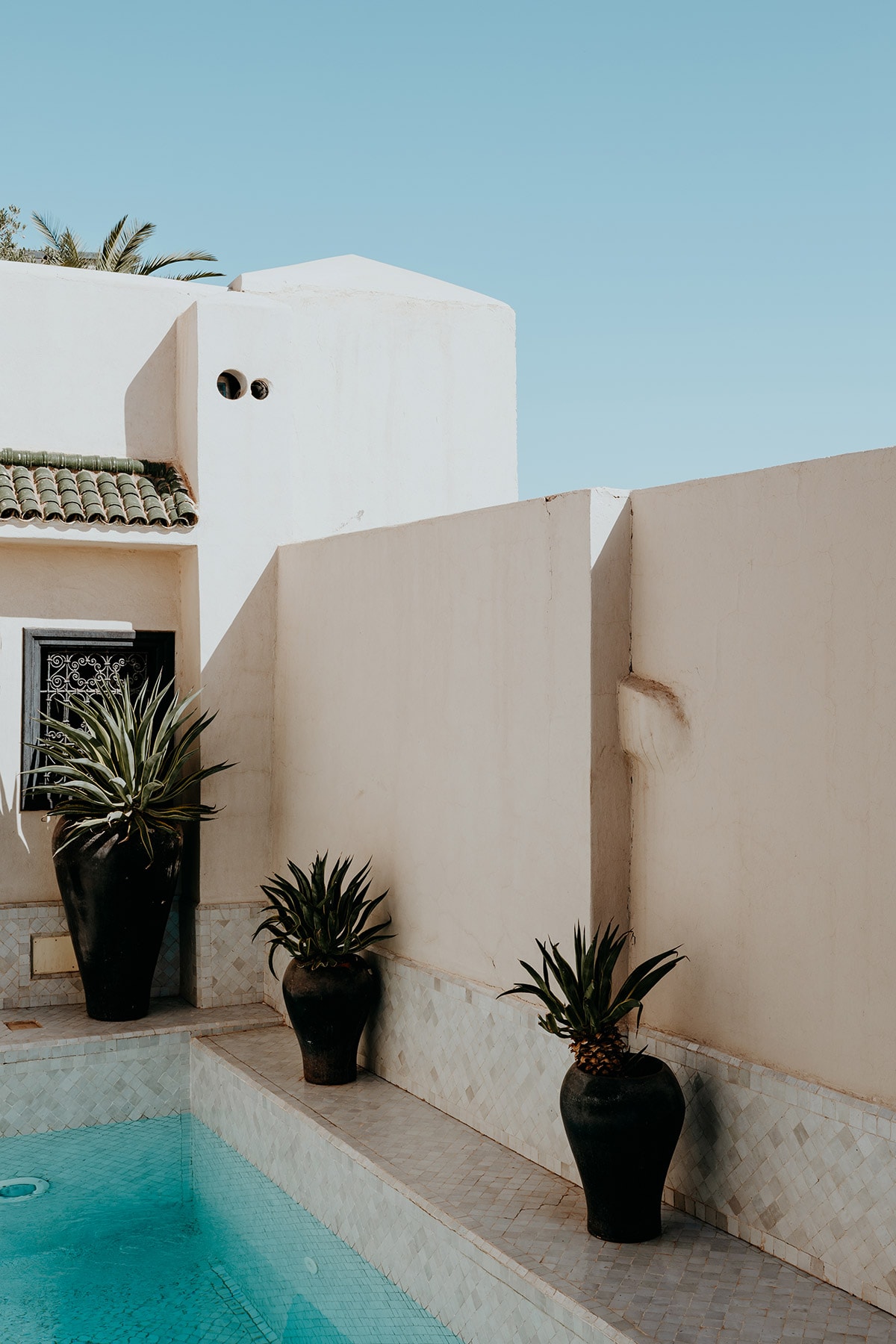

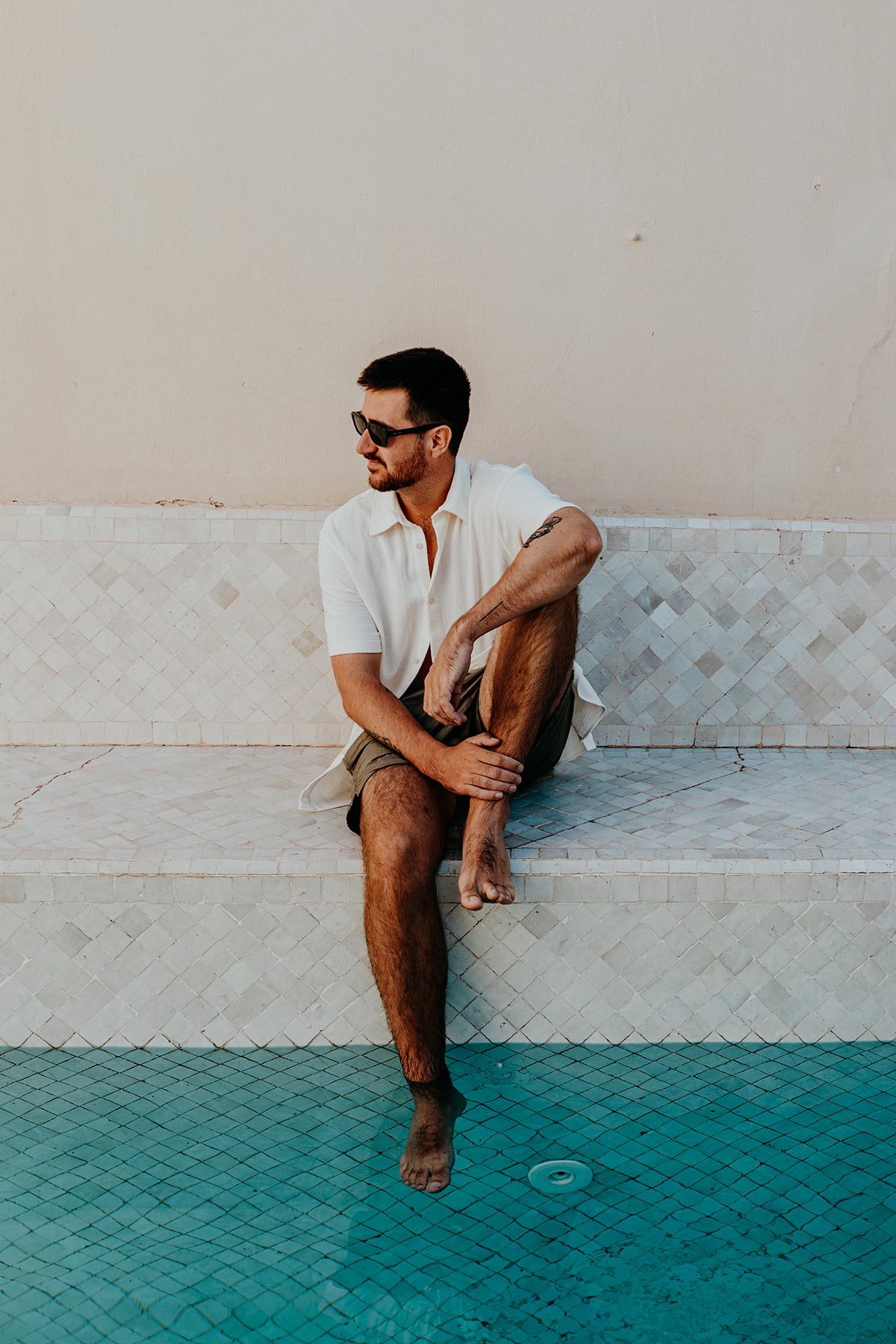
Book your stay at Riad Kheirredine
Riad Kheirredine has 14 luxury rooms and suites on offer, which can be booked effortlessly online via their website, or through Booking.com and Hotels.com.
Each room or suite is distinguished by traditional Moroccan design, yet they’ve managed to give a completely unique look and feel to every single one of them.
The options include;
Deluxe Rooms | €170,- per night
The best option for solo travellers, couples and close friends.
Junior Suites | €205,- per night
Perfect if you’re looking for a slightly more spacious room than the above Deluxe Room.
Classic Suites | €265,- per night
At only €265 per night, this might be the best value for your money.
Imperial Suites | Starting at €360,- per night
Perfect for those on a honeymoon or wishing to splurge.
It is worth noting that there’s high demand for a stay at Riad Kheirredine, so I’d recommend sorting out your room sooner rather than later.
Please also note that a stay of at least 3 nights is required at Riad Kheirredine.

The best time to stay at Riad Kheirredine
Given Riad Kheirredine is based in Marrakech, which is basically situated in the heart of Morocco, your best travel time is during the off-season months of March to May and September to November, when it’s significantly less hot in comparison to the peak summer months.
I stayed at Riad Kheirredine in mid-September and had the most comfortable weather, as well as fairly lengthy days, which was brilliant for both explorations around the medina and relaxing moments within Riad Kheirredine itself.
However, these periods are obviously also the most popular, so if you’re keen to dodge the masses, I’d recommend opting for a visit in November, when the weather is still good, yet the crowds significantly thinner.

How to get to Riad Kheirredine
Despite being tucked away in the bustling alleyways of the Marrakech medina, Riad Kheirredine is actually quite easy to get to – you just have to know the right options.
There are a few ways to get to the riad, which include:
Transfer by Riad Kheirredine
One of the best things about staying at Riad Kheirredine is the fact that they will do everything in their power to make your experience as comfortable as possible.
This is also the case when we’re talking about your arrival in Morocco.
Riad Kheirredine offers airport transfers from and to the Marrakech International Airport, which is easily the most relaxing way to start off your adventures in Morocco.
Upon leaving the airport lobby, someone from the riad will be waiting for you with a sign and will bring you as close to the riad as possible, where another guide awaits you and will handle your luggage, before guiding you to the riad – it doesn’t get any easier than that.
The airport transfer will cost you around 220 MAD (€20,-) one-way, but is worth every penny.
Since Marrakech (and Morocco in general) can be quite hectic for first-time travellers, their airport transfer is actually one of the most convenient ways to get your bearings in Marrakech.
By Taxi
If you did not arrange an airport transfer in advance, and feel a bit overwhelmed when you first set foot out of the airport (which is common in this part of the world), make sure you don’t feel tempted to jump into the first taxi you see, as they will most likely lift way more money out of your pockets than they initially should.
While it is totally possible to find a taxi driver offering fair prices, it’s actually pretty common to negotiate the prices in Morocco. A one-way taxi journey from the Marrakech Menara Airport to the Medina should cost you between 100 to 150 MAD (€9,- to €13,50).
Having said that, make sure you always agree on the price before entering the taxi itself.
By Car
Those who plan to do an adventurous road trip through Morocco will probably think that the best way to get to Riad Kheirredine is by car, and while it is surely an option, I believe it’s far from ideal.
There are actually a few reasons for this.
First, there is the fact that you’re not using your rental car during your time in Marrakech, which is basically a waste of your well-earned money if you ask me.
Secondly, Riad Kheirredine is situated in the midst of the bustling medina, which means that you can not get close to the riad by car, as driving here is simply not an option.
Last but not least, almost every public parking option is situated outside the medina, plus you will add to your expenses. Though the parking in Marrakech will not break the bank, it’s still unnecessary in my opinion.
For that reason, I’d highly recommend sorting out your rental via DiscoverCars with a pick-up date right after your time in Marrakech. For more tips on driving a car in Morocco, make sure you check out my in-depth guide here (coming soon).

What to do in Marrakech
One of the best things about a stay at Riad Kheirredine is that it will be the perfect retreat from which to explore the incredible city of Marrakech, with most of the best things to do at only a stone’s throw away from your front door.
From the intoxicating medina to the serenity found at the lush gardens of Le Jardin Majorelle, the intricate architecture at the Ben Youssef Madrasa to the abundance of trendy restaurants & cafes, there’s simply no shortage of enchanting things waiting for you to uncover.
If you’re looking for unforgettable experiences in Morocco’s fascinating ‘Red City’, make sure you give my in-depth guide on the best things to do in Marrakech a read too.
Stay safe in Morocco
When travelling this big wide world, I never leave home before I’ve sorted out my travel insurance, and while I felt completely safe during my time in Morocco, I recommend anyone travelling here to do the same.
Though I think it’s unlikely to experience any troubles when following the advice in this guide, something unfortunate can happen at any time, whether it’s an injury, a stolen camera, or an accident on the road (yes, we had one).
For travel insurance, I always use Heymondo, as they offer full COVID-19 coverage, as well as a handy app with 24-hour medical assistance. Make sure you check it out – readers of WTSW receive 5% off any insurance policy too.
Cheers!
I’ve been on this travel blogging journey since 2019.
If you appreciate what I do here, these are some ways you can support me.
A quick guide to Slap Kozjak, Slovenia
You will probably have seen numerous pictures of Slap Kozjak on Instagram by now, which clearly indicates that you should visit this amazing waterfall too.
Tucked away in a mysterious gorge in the Kobarid Forest, Slap Kozjak is a mesmerizing waterfall, if not the most scenic one within Slovenia, which to me, makes the hike up there an essential activity on any Slovenia itinerary (coming soon).
The main waterfall – which also goes by Kozjak Waterfall or Mali Kozjak – has gained tremendous popularity over the last couple of years, yet it still feels like a hidden gem that has been discovered by only few, thanks to its mystical ambience.
But it’s not just the waterfall at the end of the hike that is worthy of your time, no, the hike itself is absolutely stunning too and will lead you along the crystal-clear Soca River, over several picturesque stone bridges, and along heaps of little scenic creeks.
A true paradise for nature lovers and waterfall chasers alike.
In this guide, I’ve covered everything you need to know before starting the hike to Slap Kozjak, including the entrance fee, how to get there, the best time to visit, what to pack and more.
If you choose to use any of the links on this page, I may receive a small commission at no extra cost to you. By using these links, you’ll have a direct impact on WTSW and support my ability to continue to create free insightful travel content for you. If you find any of my tips useful, you can support me by buying me a virtual coffee here.
Where is Slap Kozjak
Slap Kozjak is a 15-metre-high waterfall that wouldn’t fall out of place in the midst of the lush jungles of Bali, yet it is situated only just outside of Kobarid, a lively town in the Goriska-Tolmin region of Slovenia.
Part of the famous Triglav National Park and only about a 30-minute drive away from Kobarid, the astonishing Kozjak Waterfall is a must-see for anyone travelling to Slovenia.
The hike itself starts from the parking lot of Kamp Koren, only just off the 203 main road between Kobarid and Bovec.
Slap Kozjak hike details
Hike difficulty | Easy
Hike duration | 1 to 2 hours out and back
Hike distance | 3 kilometres
Elevation gain | 142 metres

Slap Kozjak entrance fee 2024
As of 2024, the entrance fee to Slap Kozjak is set at €5,- per person.
However, it is worth noting that the price for children under the age of 15 is reduced to €3,- per person. Additionally, students, seniors, and groups of 10 or more can enter for only €4,- per person.
For relevant prices, additional information, and opening hours, make sure you see the official Soca Valley website here.
During my visit in early January, the official ticket kiosk of Slap Kozjak was closed, which meant that I had the fortune to have free entrance to the waterfall.
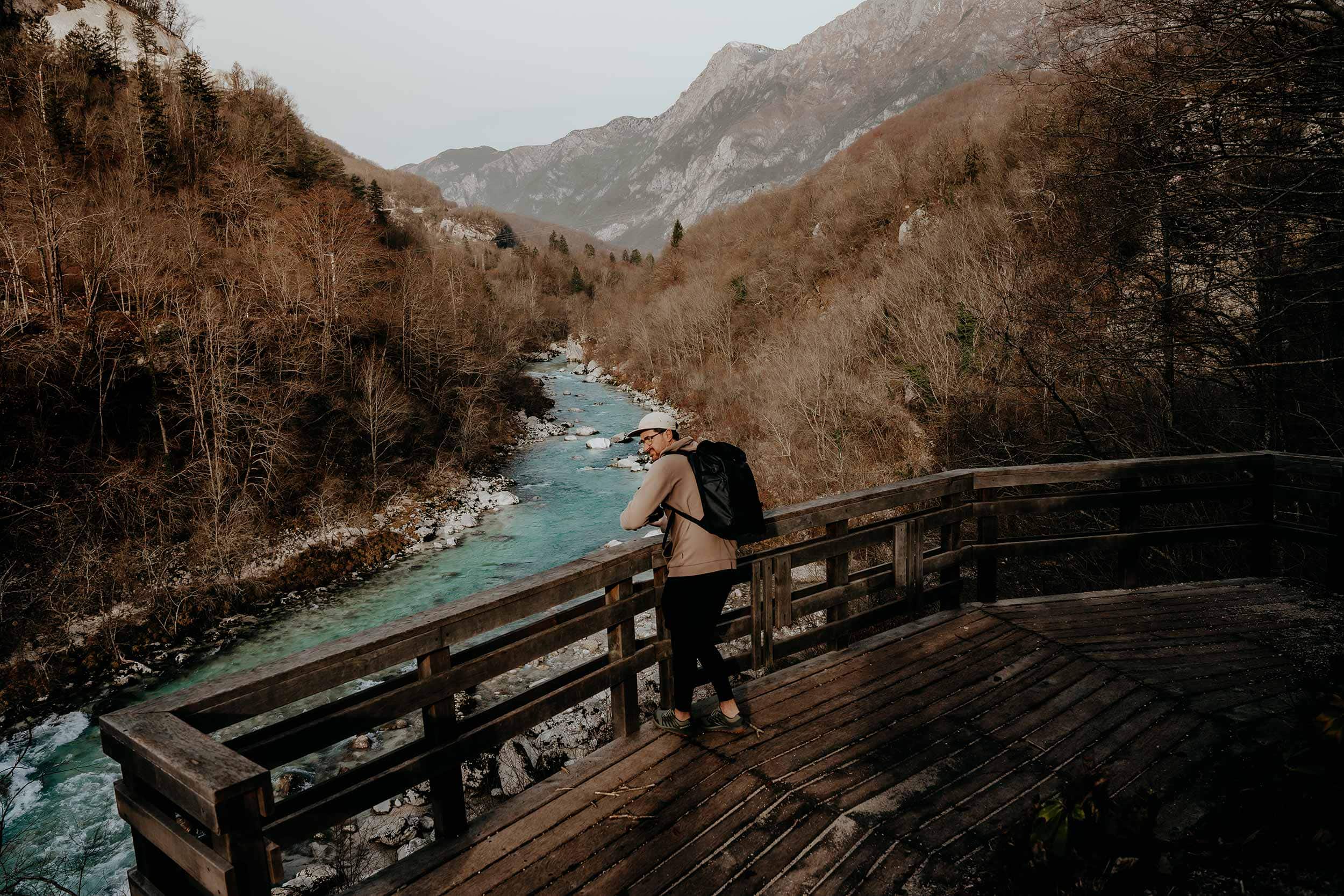
How to get to Slap Kozjak
Slap Kozjak is situated in the Goriska – Tolmin region, which is pretty remote in comparison to other parts of Slovenia, meaning you’ll find very limited public transportation options here.
For the above reason, your best option is to rent your own car for the duration of your trip in Slovenia – this will also give you the flexibility to explore more of the area on a road trip through the country.
When it comes to car rental, my absolute favourite option is Rentalcars.com, as they work with the leading car rental companies, and offer incredible service and additional insurance options – plus it’s pretty easy to find exciting deals.
Once you’ve rented a car, it’s actually quite easy to get to Slap Kozjak, with manageable driving distances from some of Slovenia’s absolute highlights.
Below I’ve listed a few common driving routes:
- Lake Bled to Slap Kozjak: 2 hours
- Bohinj to Slap Kozjak: 1,5 hours
- Ljubljana to Slap Kozak: 2 hours
- Bovec to Slap Kozjak: 30 minutes
If you’re curious about how to include the Kozjak waterfall in your own itinerary, make sure you read my 10-day Slovenia itinerary (coming soon) too.
Parking at Slap Kozjak
When arriving at the starting point of the hike to Slap Kozjak, you’ll soon notice Parking Kozjak, which is located on the grounds of Kamp Koren.
The cost of parking is €1,50 per hour or €10,- for the entire day, and payments can be made with both cash and EasyPark.
The parking itself has plenty of space and is well-kept – plus there’s a toilet on the terrain too.
Although the parking gives the impression that it is free during the offseason, I’ve read that the local police drives around the area to hand out parking tickets multiple times now, which will set you back about €70,-
The hike to Slap Kozjak
Start of the hike
First things first, the starting point of the hike to Slap Kozjak is rather easy to find, as it’s located right next to the parking lot of Kamp Koren.
Easy walk along the Soca River
The first part of the trail starts off completely flat, yet it takes only a few moments before you begin to wind along the emerald-blue waters of the Soca River – which in itself, is already quite the highlight.
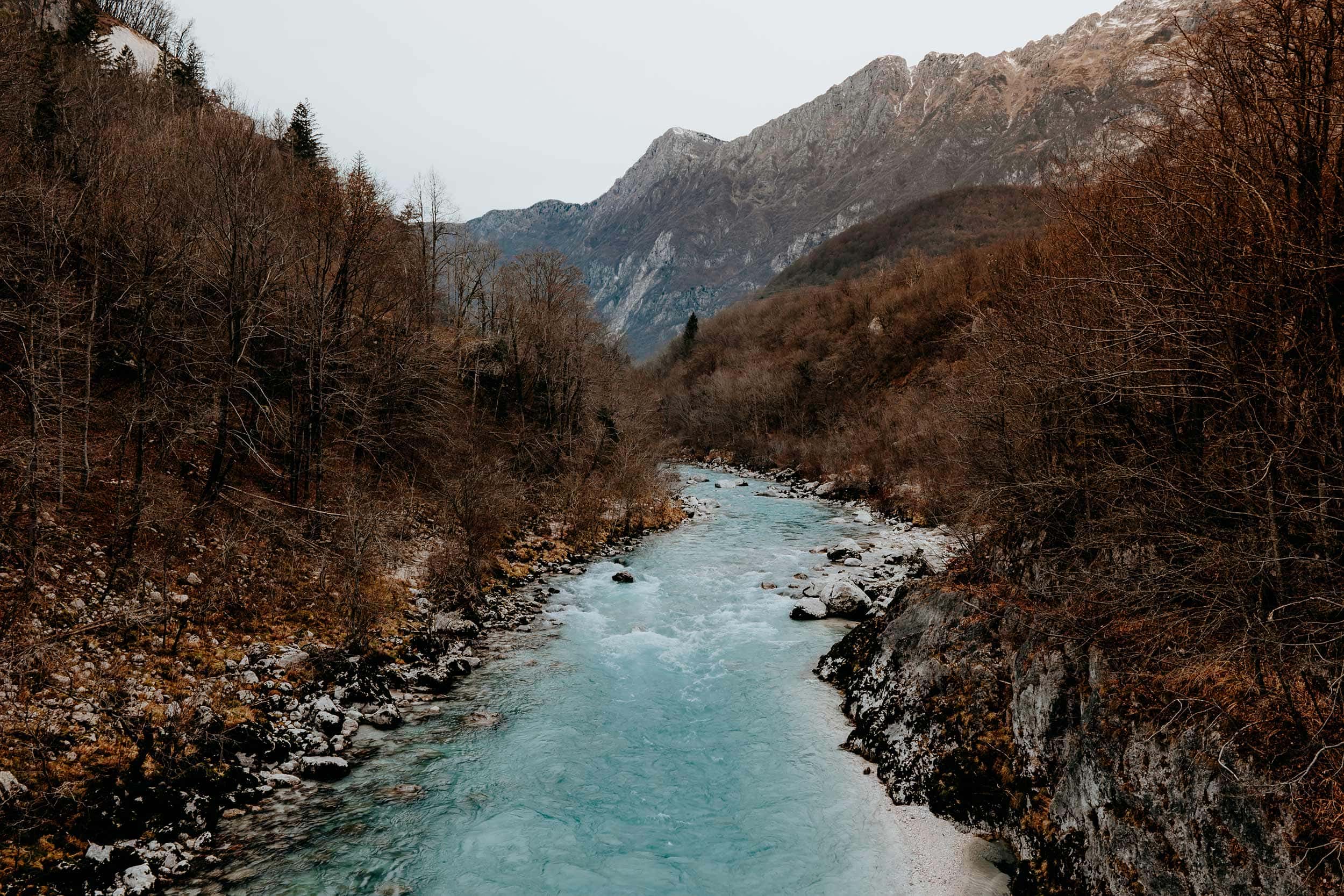
The suspension bridge
After roughly 15 minutes, you’ll stumble upon the first real highlight; an extensive suspension bridge on the left-hand side that provides some epic views of the surrounding Triglav National Park as well as the Soca River that flows underneath.
On top of that, you also have Reka Soča Razgledna točka, a small observation point offering an even better view of the impressive Soca Valley.
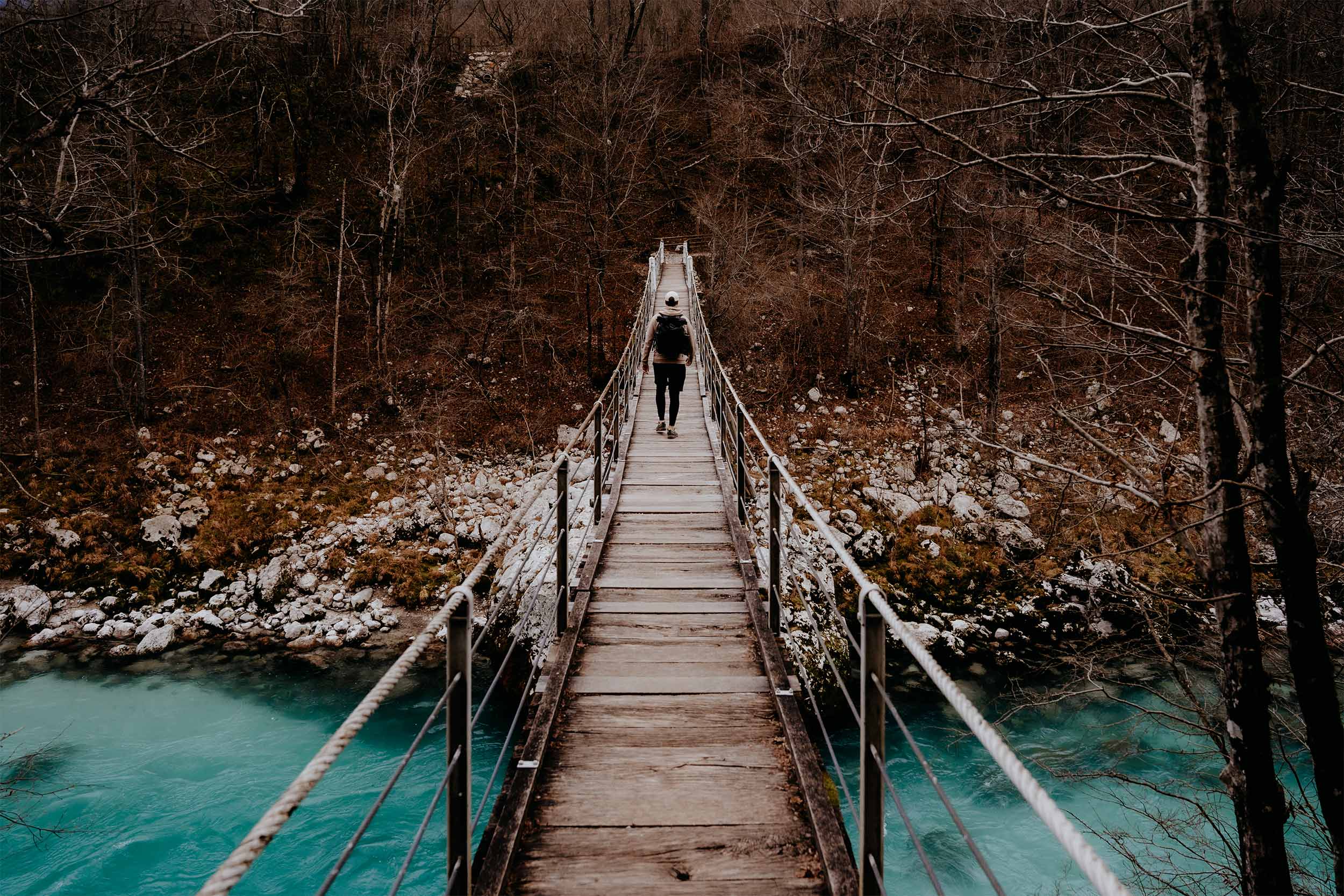
Hike through the forest
After taking in the incredible views, make sure you turn right and continue to follow the trail, which will now slowly lead you into the lush and somewhat mystical Kobarid Forest.
Though it’s still relatively easy, you will now gradually start to gain some elevation and will soon pass the official ticket office of Slap Kozjak, where you can buy your ticket for €5,- per person.
However, since I was there in the offseason, the ticket office was closed, meaning I had free entrance to the waterfall.
Little Kozjak
From here, you’ll venture deeper into the Kobarid forest, and after a short while, you will stumble upon Little Koziak, an impressive 8-metre-high waterfall that flows underneath the stone bridge that you’ll have to cross to reach the main waterfall.
Though it’s named Little Koziak, it is actually quite an impressive waterfall, which could be observed from various interesting angles, so make sure you take some time to admire it before moving on to the main attraction.
Ariving at Slap Kozjak
After taking in Little Koziak, it’s time to move on to Slap Kozjak by crossing several stony bridges and a wooden walkway attached to the steep moss-covered rock walls of the gorge that leads to the waterfall and its natural pool.
Only a few moments later, you’ll arrive at the foot of the stunningly beautiful Slap Kozjak waterfall, which is slightly hidden between towering cave walls, creating a mystical ambience which makes it feel as if lifted straight out of a fairytale world somewhere far, far away.
Wrapping up the hike
Once you’re done taking in Slap Kozjak, and of course, snapping lots of photos (trust me, you will take loads as it’s truly breathtaking here), it’s time to retrace your steps back down the trail.
The trail back is exactly the same, and you shouldn’t experience any problems getting back to the parking, besides a few additional stops, to take in the amazing scenery one last time.
Slap Kozjak hike | The essentials
How long does the hike to Slap Kozjak take
From the parking lot at Kamp Koren, it shouldn’t take longer than 30 minutes to reach Slap Kozjak.
This is obviously without the essential stops you should make to take in the amazing surroundings that you hike through. With that in mind, the hike will take at least 2 to 3 hours to complete, especially if you’re into photography too.
You could also do the Slap Kozjak hike in combination with other hikes in the area – which will add some extra time to your overall hiking itinerary.
The best time of year to visit Slap Kozjak
If you ask me, the Kozjak waterfall is best visited between early April and late October, when the weather conditions are comfortable and the days long.
This is also the time when the Slap Kozjak trail is officially open to the public, as the entrance point to the waterfall is open from the 2nd of April until the 31st of October.
Depending on the severity of winter, the waterfall is also a great option for those visiting Slovenia during the colder winter months.
I visited Slap Kozjak in early January, and was fortunate enough to have excellent weather conditions, while also enjoying free access to the hiking trail and the waterfall – winner!
The best time of day to visit Slap Kozjak
Whether you’re a photographer like me, or just looking to have a more serene experience, I’d highly suggest visiting Slap Kozjak first thing in the morning, when it’s still fairly quiet on the trail.
Starting from mid-morning, it begins to get pretty busy at Slap Kozjak and continues to get even busier as the day progresses – mostly because it’s a Slovenian road trip favourite, as well as a popular day trip from Bovec, Bohinj and Lake Bled.
If you’re not an early bird or planned other activities for the morning, the late afternoon is also a great time to do the Slap Kozjak hike.
Also, I highly recommend avoiding a visit during noon, as it’s by far the most crowded time of day. So unless you want to share your experience with a bunch of other people, I would not opt for this timeframe unless it’s your only option.
What to pack for the Slap Kozjak hike
As with most outdoor adventures, hiking Slap Kozjak comes with a unique set of needs.
To help you have a comfortable time here, I’d suggest bringing the following items:
A reusable water bottle | One travel essential that I carry with me at all times is the Grayl Geopress. This reusable water purification bottle allows me to fill up water from almost every water source, making it one of my best investments to date.
A hoodie | Given you’ll walk in the shadows of a moss-covered gorge for a fair amount of the hike, I’d highly recommend bringing an extra layer to keep you warm if needed.
A sturdy pair of sneakers | Though the hike to Slap Kozjak is relatively easy, it’s not a bad idea to wear a pair of sturdy trail runners. I’ve recently bought the New Balance Hierro V7, and I’m quite happy with the grip and comfort they provide me with when I’m on the trail.
Snacks | During my visit to Slap Kozjak in January, I noticed little to no restaurants and cafes near the trail. For that reason, I’d suggest bringing a lunchbox with some fruits, sandwiches, nuts, and a protein bar, in case you need to refuel yourself during the hike.
A camera | Slap Kozjak is truly a stunning sight to behold, so I’d advise bringing your camera, so you can click plenty of photos while you’re there. Curious about my photography gear, make sure you see what’s in my camera bag.
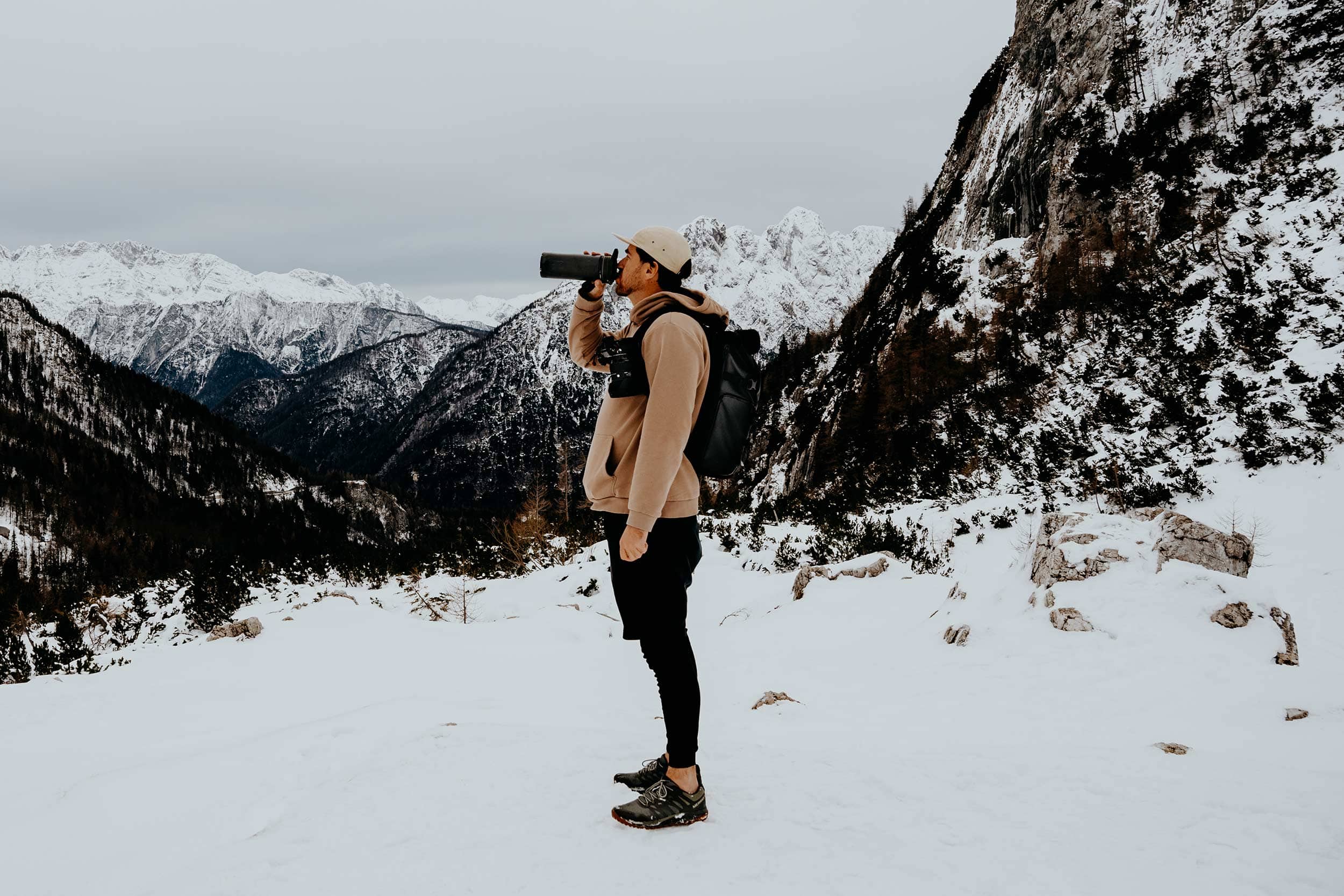
Stay safe in Slovenia | Travel insurance
Since Slovenia has plenty of adventurous activities on offer, I advise everyone to sort out good travel insurance before setting out on their own adventure.
While I believe that it’s unlikely to experience any troubles when following the advice in this guide, something unfortunate can happen at any time, whether it’s an injury, a stolen camera, or an accident on the road.
For travel insurance, I use Heymondo, as they offer full covid-19 coverage, as well as a handy app with 24-hour medical assistance. Make sure you check it out – readers of WTSW receive 5% off any insurance policy too.
Cheers!
I’ve been on this travel blogging journey since 2019.
If you appreciate what I do here, these are some ways you can support me.