
Buying an Uzbekistan sim card in 2026: Everything you need to know
In today’s digital age, staying connected to the online world has quickly become the new standard, even more so if you’re working remotely or in the online field.
However, buying an Uzbekistan SIM card isn’t something that only remote workers should consider.
No, having a SIM with data connectivity in Uzbekistan will make anyone’s travels here significantly more convenient – not to mention cheaper, given you can use services such as Yandex.
As with most off-the-beaten-path travel destinations, Uzbekistan can be rather challenging to navigate at times, so picking up a SIM card with a data connection is an absolute game changer that makes travelling here so much more accessible.
From finding directions on Google Maps to obtaining the latest information on your train journeys, to keeping in touch with the homefront and booking last-minute accommodation, there are simply too many benefits of having a reliable internet connection in Uzbekistan.
Add to that, that it’s super easy to find a reliable mobile provider and a SIM with a data plan will set you back just a few bucks, and you realize why you came to this article in the first place.
In this in-depth guide, I’ve covered everything you need to know about buying a SIM card in Uzbekistan, including where to buy one, the best providers, the cost, plus advice based on my first-hand experiences.
If you choose to use any of the links on this page, I may receive a small commission at no extra cost to you. By using these links, you’ll have a direct impact on WTSW and my ability to continue to create free insightful travel content for you. If you find any of my tips useful, you can support me by buying a virtual coffee here.
Why buy a sim card in Uzbekistan
With everything that’s going on in the online space today, it has somewhat become the norm to stay connected to the World Wide Web at all times; this is clearly also the case when travelling around the world.
From finding directions on Google Maps to collecting inspiration from your favourite blog or Instagram page, to checking the time schedule of your train and keeping in touch with family and friends, there are simply too many reasons why you should buy a SIM card in Uzbekistan.
Add to that that an Uzbekistan SIM card will set you back only a few bucks, and you simply can’t go around the fact that you should buy one yourself.
Though I noticed that most places have public WIFI in Uzbekistan, it isn’t the most reliable in terms of connectivity, and it’s pretty common that those networks are unsecured too. For that reason, I’d prefer a data connection from a trustworthy provider.
If you do intend to use public WiFI abroad, make sure you use a VPN to keep your data secure, such as NordVPN.
Can I use my existing phone number while using WhatsApp?
One of the benefits of buying a local SIM card in Uzbekistan is that you’ll use this SIM solely for your data connection, meaning you can still use your own phone number while using Whatsapp.
The reason for this is that your WhatsApp account is linked to your existing number, so swapping sim cards has no impact on your existing account, as long as you don’t change the number in your WhatsApp settings.
Though I understand that it’s a tad confusing, your WhatsApp will continue to work as usual, yet now with the data plan that is active on your newly acquired local sim card – winner!
I’ve had my fair share of experiences regarding local SIM cards while travelling, so I’m pretty sure you won’t stumble upon any difficulties.
Also, if you purchase your Uzbekistan SIM card at the Tashkent Airport like me, you will receive assistance with installing your SIM card on your phone from the vendor.
Where to buy a sim card in Uzbekistan
When it comes to buying a sim card in Uzbekistan, there are several excellent options available.
From buying one directly upon arrival at the airport to grabbing one from a mobile provider store to getting an eSIM online and in advance from services such as Airola.
To help you find the right option, I’ve listed the options down below:
Tashkent Airport
If you ask me, the best and cheapest option is to buy your SIM card at the Tashkent International Airport, directly after you’ve arrived in the country.
Once you arrive in the baggage claim zone of the airport, you’ll notice the stands of Uzbekistan’s leading mobile providers, including those of BeeLine and Ucell.
From what I’ve seen, these providers have a wide variety of data plan packages on offer, meaning it’s pretty clear to choose an option that suits your needs.
Since it’s not always possible to pay with credit or debit cards, it is good to acquire some local currencies from the ATM at the airport before going to the SIM card vendor.
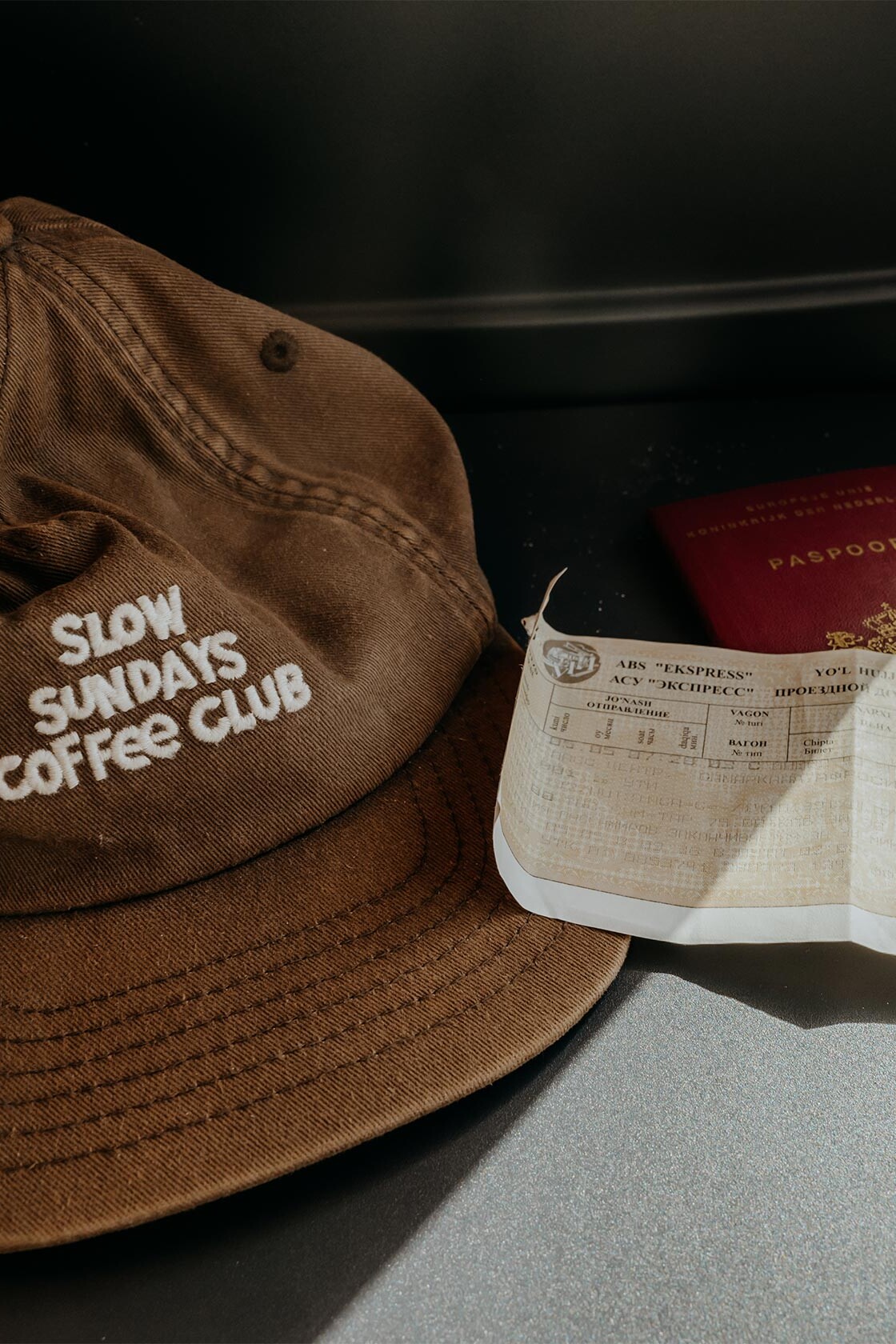
One thing worth mentioning though is that these SIM card providers often require your passport, but that shouldn’t be a problem considering you just entered the country from abroad.
Mobile provider stores
If, for whatever reason, you didn’t buy a SIM card at the airport, rest assured – there are several mobile provider stores situated in the cities of Tashkent, Samarkand, Bukhara and Khiva.
From what I’ve heard, the prices and data packages at these stores are very similar to those bought at the airport.
For those keen to buy a SIM card from a mobile provider store, make sure you take your passport, as well as a copy of it, since they require it when registering a new SIM.
However, as with so many stores in Uzbekistan, you’ll most likely stumble upon an employee with limited English skills, which makes it a tad more challenging to buy one here.
eSIM card
If you’re anything like me and prefer to have everything sorted out before your trip starts, I’m pretty sure you’d like to read about how to buy an eSIM online and in advance.
The eSIM is a digital sim card that is easily activated on your mobile device by scanning the QR code that you receive in your mail after you purchase your eSIM online.
If you’re looking to buy an eSIM, it’s good to note that you are only able to buy one from a 3rd party.
I’ve recently stumbled upon Airalo, which has now become my go-to when it comes to eSIMs.
Airalo is the world’s first eSIM store and offers data packages for over 200 countries, making it super easy to connect to the internet from the moment you land.
More information on the Airola eSIM for Uzbekistan can be found here.
Uzbekistan sim card Providers
There’s no shortage of excellent mobile network providers in Uzbekistan, offering a wide range of data packages to travellers.
I’ve listed the best sim card Providers down below:
Ucell
One of the leading mobile network providers in Uzbekistan, Ucell is known for its extensive coverage and reliable services.
With a wide range of SIM card data packages on offer, it’s easily one of the best options, both for short-term and long-term visitors of the country.
The data packages at Ucell include:
– 20 GB data, unlimited minutes and 1500 SMS that are valid for 30 days | 50.000 SOM (€4,-)
– 35 GB data, unlimited minutes and 1500 SMS that are valid for 30 days | 70.000 SOM (€5,65)
– 50 GB data, unlimited minutes and 1500 SMS that are valid for 30 days | 100.000 SOM (€8,-)
– 200 GB data, unlimited minutes and 1500 SMS that are valid for 30 days | 150.000 SOM (€12,-)
There’s one downside though, Ucell doesn’t allow users to make a personal hotspot, which makes working remotely a tad more challenging at times.
BeeLine
With over 10 million active users, BeeLine is deemed Uzbekistan’s number-one mobile network provider and developed an excellent reputation in terms of network speed and signal strength.
Add to that, that they have knowledgeable English-speaking staff, a wide range of data plans to choose from, and pretty affordable prices, and you instantly understand why BeeLine has become the most popular provider in Uzbekistan.
At BeeLine, you can choose the following data packages:
– 10 GB data that is valid for 30 days | 50.000 SOM (€4,-)
– 20 GB data that is valid for 30 days | 65.000 SOM (€5,25)
– 30 GB data that is valid for 30 days | 75.000 (€6,-)
– 50 GB data that is valid for 30 days | 90.000 (€7,25)
– 75 GB data that is valid for 30 days | 110.000 (€8,90)
– 100 GB data that is valid for 30 days | 130.000 (€10,50)
– 150 GB data that is valid for 30 days | 150.000 (€12,-)
Mobiuz
Another great option is Mobiuz, a major mobile network provider that is considered BeeLine’s greatest competitor, and that’s for a good reason.
Known to have excellent coverage throughout the entire country, Mobiuz is easily one of the most reliable options, with a wide range of monthly Internet packages on offer.
The internet packages at Mobiuz include:
– 5 GB of data that is valid for 30 days | 33.000 SOM (€2,70)
– 10 GB of data that is valid for 30 days | 50.000 SOM (€4,-)
– 20 GB of data that is valid for 30 days | 55.000 SOM (€4,40)
– 30 GB of data that is valid for 30 days | 65.000 SOM (€5,30)
– 50 GB of data that is valid for 30 days | 75.000 SOM (€6,-)
Airalo
Ever since the now extremely popular eSIM came on the market, Airalo had established its position as the leading company in terms of this innovative digital alternative.
For Uzbekistan, Airalo released the Uzbeknet eSim, a data-only SIM card that operates on the popular network of Beeline and offers instant connectivity.
At Airalo, you can choose the following data packages:
– 1 GB of data that is valid for 7 days | 55.000 SOM (€4,50)
– 2 GB of data that is valid for 15 days | 90.000 SOM (€7,50)
– 3 GB of data that is valid for 30 days | 115.000 SOM (€9,50)
– 5 GB of data that is valid for 30 days | 165.000 SOM (€13,50)
– 10 GB of data that is valid for 30 days | 270.000 SOM (€22,-)
– 20 GB of data that is valid for 30 days | 415.000 SOM (€34,-)
Though Airalo is the priciest option on this list, I still believe that it could be an excellent pick, as you can easily arrange it upfront so you’ll have instant connectivity when you arrive in Uzbekistan.
On top of that, the Airalo eSIM allows users to make a personal hotspot too, which makes it perfect for those working remotely.
My advice
Given I bought my SIM card for Uzbekistan from Ucell upon arrival at the Tashkent International Airport and had a good experience, I’d highly recommend anyone to buy the same.
For 50.000 SOM (€4,-), you’ll receive a data package of 20 GB, unlimited minutes and 1500 SMS that you can use for 30 days after activation.
Additionally, you could also opt for 35GB for 70.000 SOM (€5,65), 50GB for 100.000 SOM (€8,-), or 200GB for 150.000 SOM (€12,-), perfect for large consumers or those that spent more time in Uzbekistan. Do note that these packages are also valid for 30 days.
I opted for the 20GB package, and had more than enough data for 14 days in Uzbekistan – plus the connection was stable for most of my trip, with the exception of the train journey from Bukhara to Khiva.
Additionally, If you like to have everything sorted out before your trip and need to use your SIM as a personal hotspot to work online, I’d highly recommend buying an eSIM from Airalo online.
Travel Essentials for Uzbekistan
Where to stay in Uzbekistan
Even though Uzbekistan is relatively new to tourism, accommodation to suit any travel style or budget can be found here.
Whether you’re after a budget-friendly hostel, a boutique-style luxury hotel, or something in between, Uzbekistan has no shortage of excellent accommodation options waiting for your visit.
One of the first things I noticed, was that the standard of accommodation in Uzbekistan is very good, yet exceptionally cheap in comparison to equivalent options found in the Western world.
Those travelling on a budget could find accommodation for as cheap as €20 per day, while those keen to splurge have tons of options to choose from in the €50 – €200 per night range.
Hostels | Check hostels in Uzbekistan on Booking.com
Hotels & Guesthouses | Find the best hotels and guesthouses in Uzbekistan on Booking.com
How to get around Uzbekistan
Due to Uzbekistan’s extensive geography (Uzbekistan stretches roughly 1,400 kilometres from west to east), you will notice that you’ll have quite a lot of ground to cover when travelling through the country.
Luckily for you, getting around the country is super convenient, affordable and relatively fast.
By train
A name like the Silk Road might imply that travelling here runs smoothly, which in fact, is true thanks to Uzbekistan’s exceptional rail network.
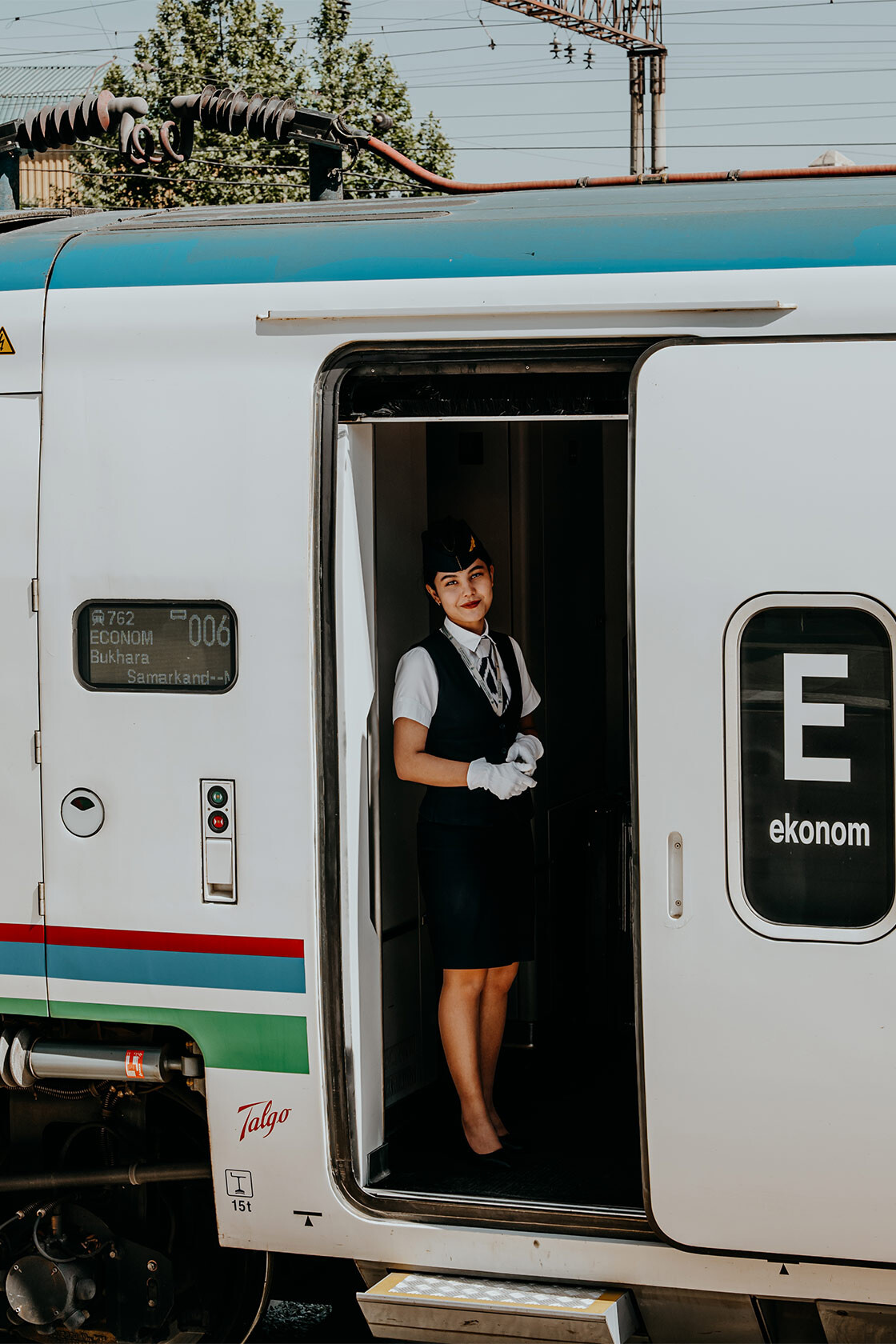
Rivalling the neatness and comfort found in European trains, the Afrosiyob train is a 210km/h high-speed train that runs daily between Uzebkistan’s major destinations, including Tashkent, Samarkand and Bukhara.
With comfortable spacious seats, USB and power plugs, and the most friendly crew members, travelling through Uzbekistan by train is far more comfortable than taking the plane.
However, when you’re planning to travel to Khiva (which you should), things are a little.
Those venturing to Khiva will notice that you could only get there by taking a Soviet-style sleeper train, which to me is an authentic experience, if not a little time-consuming.
Since tourism in Uzbekistan is still growing at a rapid pace, acquiring train tickets online can be quite a challenging task.
If you want to learn more, I have an in-depth guide on travelling by train in Uzbekistan (coming soon) which can be found here.
By plane
While I would pick travelling by train over travelling by plane in most cases, I would highly recommend taking a flight from Khiva to Tahskent, or the other way around depending on your itinerary.
The reason for this is that the train connection between Tashkent, Samarkand and Bukhara is easily the most convenient option since you don’t have to be at the airport at least 2 hours early – plus it’s the world’s most sustainable mode of transport, which is great too.
Additionally, you could also opt for domestic flights between all of the major cities in Uzbekistan, though I can’t stress enough to make use of the excellent high-speed trains instead.
The best time to visit Uzbekistan
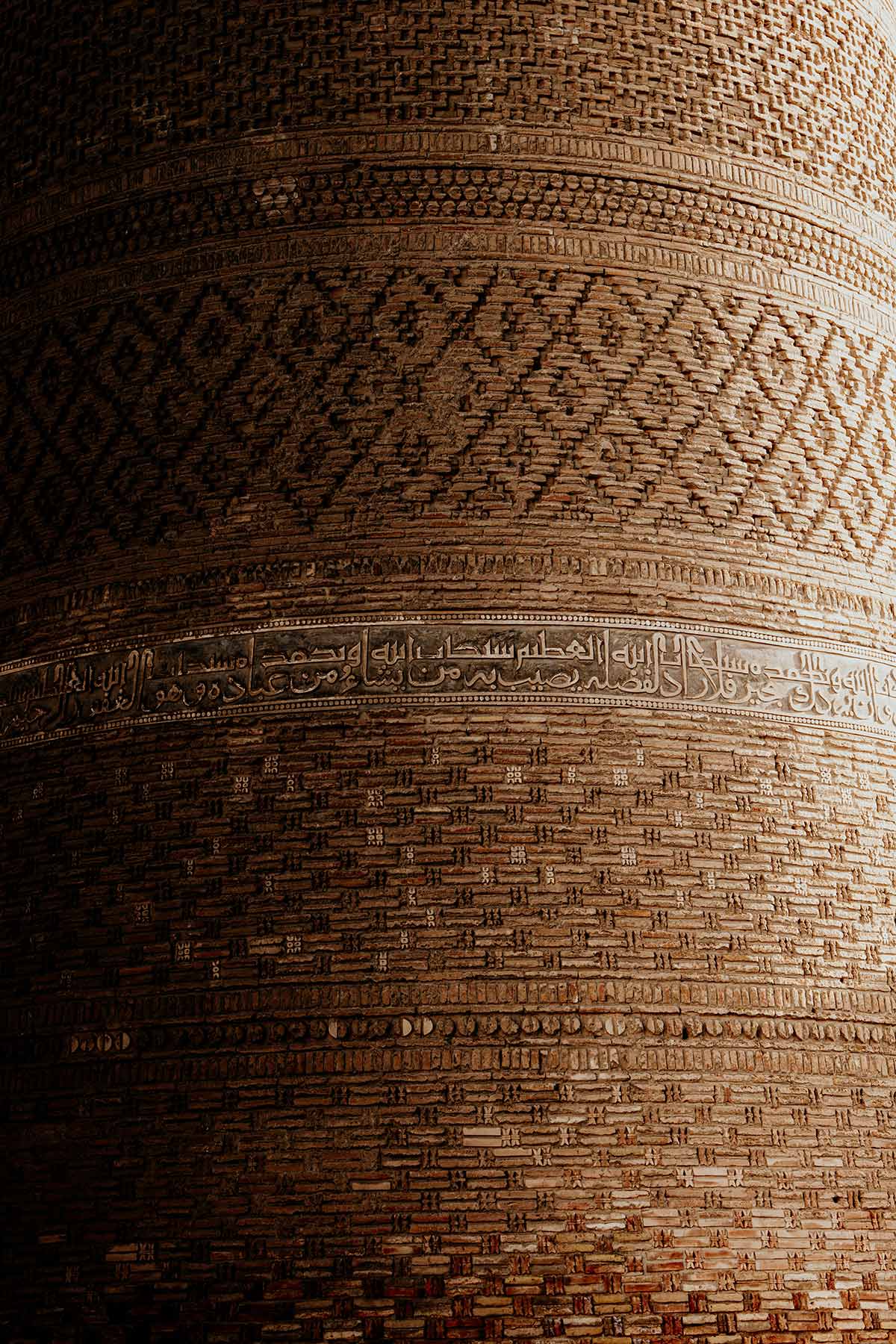
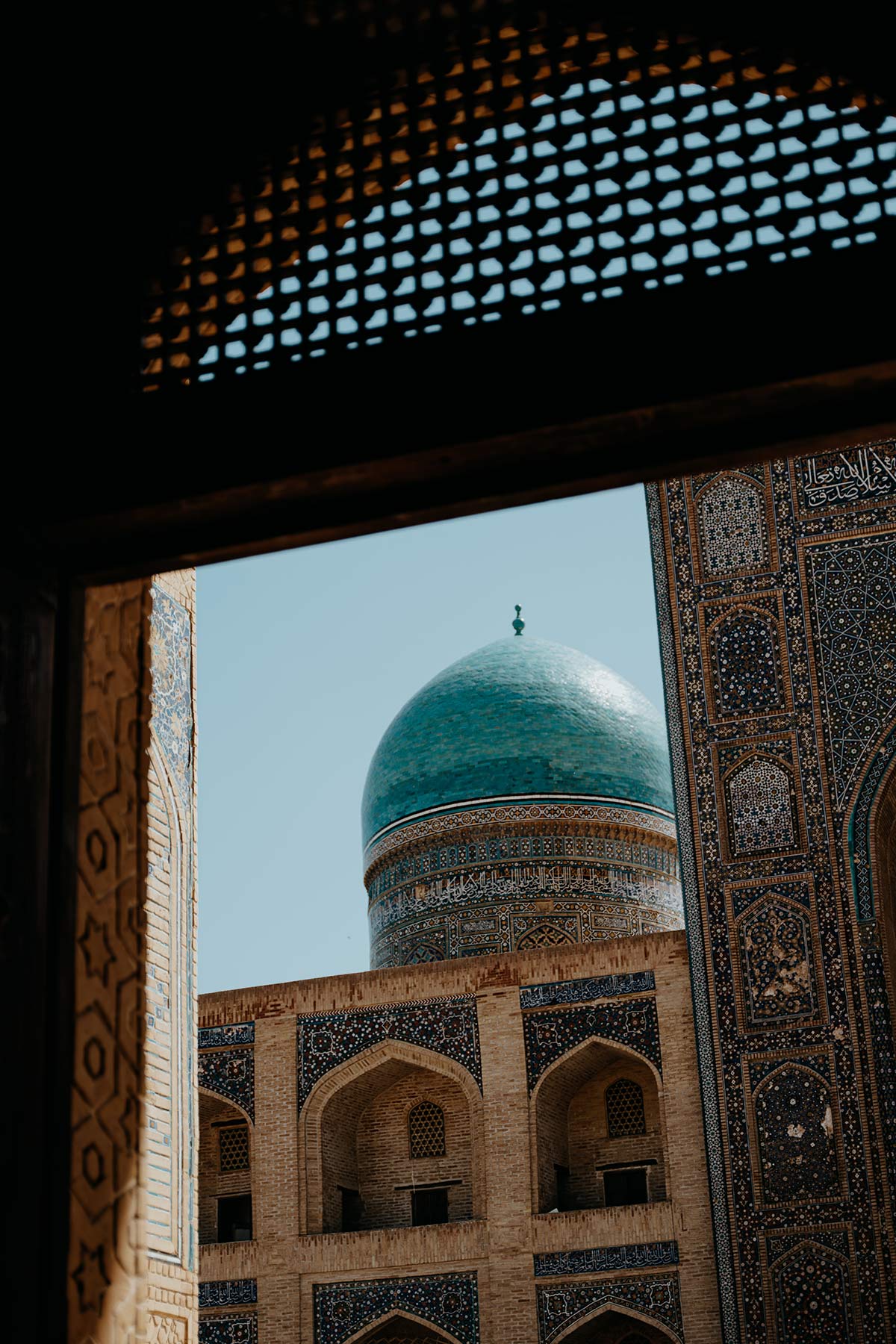
While Uzbekistan is gifted with the most incredible architectural masterpieces that could be visited year-round, this doesn’t necessarily mean that it’s a pleasant destination at any time of year.
In reality, Uzbekistan will be scorching hot in summer, when temperatures soar well over 40 degrees Celsius, while during the winter months, the temperature could dip far below freezing.
For that reason, I believe the absolute best time to visit Uzbekistan is either in spring (April to June) or autumn (late August to October), when the temperature is warm and pleasant, yet not too extreme.
Timing your visit for the shoulder seasons means that you’re more likely to enjoy the many sights without having to find cover from the burning sun all the time.
I personally visited Uzbekistan in May and couldn’t have wished for better circumstances to discover this incredible country and its many historical sights.
Safety in Uzbekistan | Travel Insurance
When travelling this big wide world, I never go on an adventure without my essential travel insurance sorted out, and though I never felt unsafe in Uzbekistan, I advise anyone travelling here to do the same.
While I believe it’s unlikely to experience any problems when following the suggestions in this guide, something unfortunate could happen at any given time, whether it’s an injury, a stolen camera, or an unforeseen cancellation.
I use Heymondo for travel insurance, as they offer full covid-19 coverage and a handy app with 24-hour medical assistance. So make sure you check it out – readers of WTSW will receive 5% off any insurance policy too.
Cheers!
I’ve been on this travel blogging journey since 2019.
If you appreciate what I do here, these are some ways you can support me.
A guide to the Vrsic pass, Slovenia's breathtaking mountain pass
As a road trip aficionado by heart, a winding mountain pass like Vrsic is set to get me hyped up.
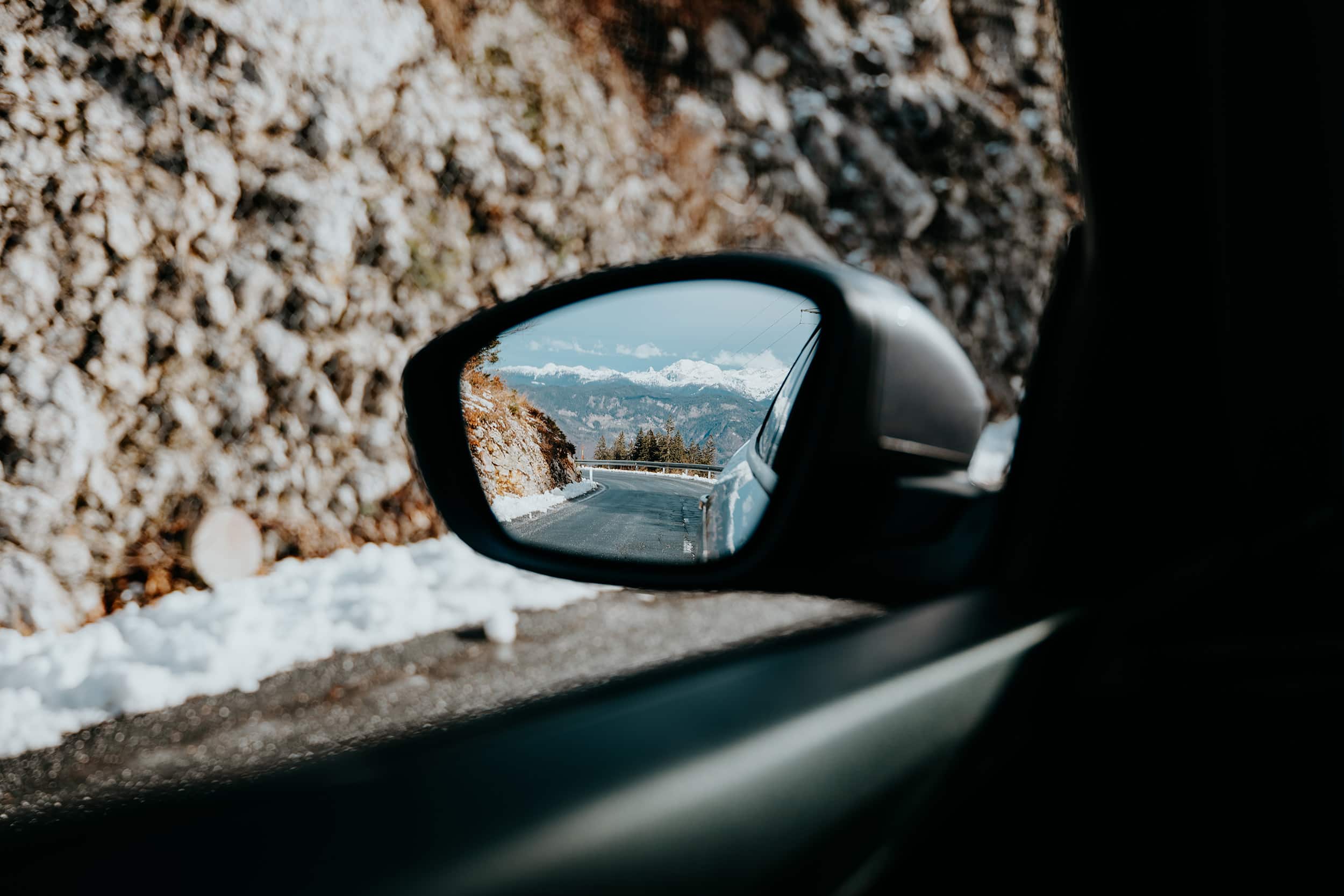
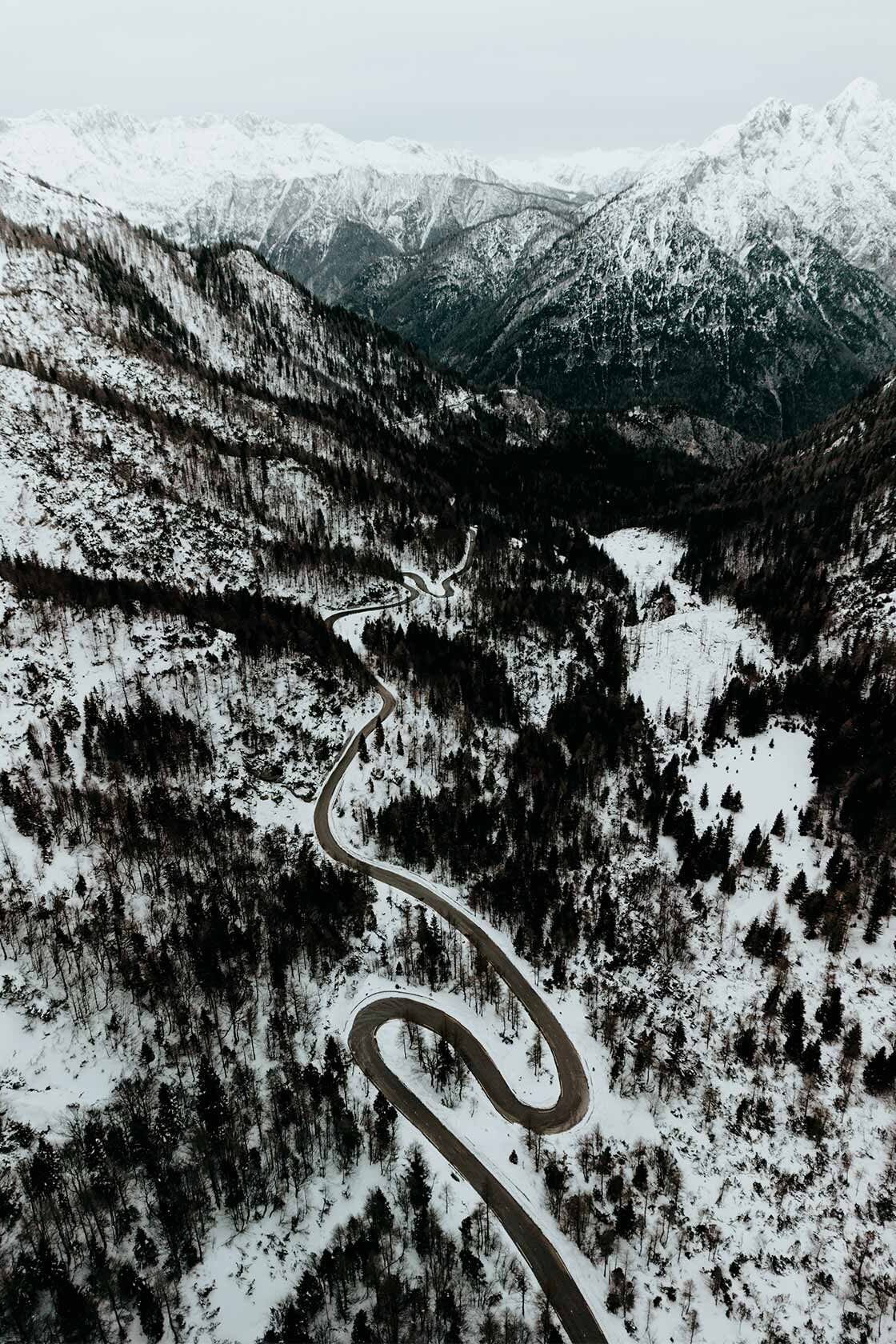
Running between Kranjska Gora and the pristine Soca valley, the Vrsic pass is without question one of the most spectacular drives in Slovenia, as it showcases the immense beauty of the Julian Alps in an utterly fascinating way.
After driving the Vrsic pass twice (in fall and winter), it’s safe to say that no Slovenia road trip itinerary is complete without a drive over the exciting, yet slightly feared mountain pass – there’s simply nothing that matches the feeling of taking on the many hairpin bends, while the mesmerising views unfold before you.
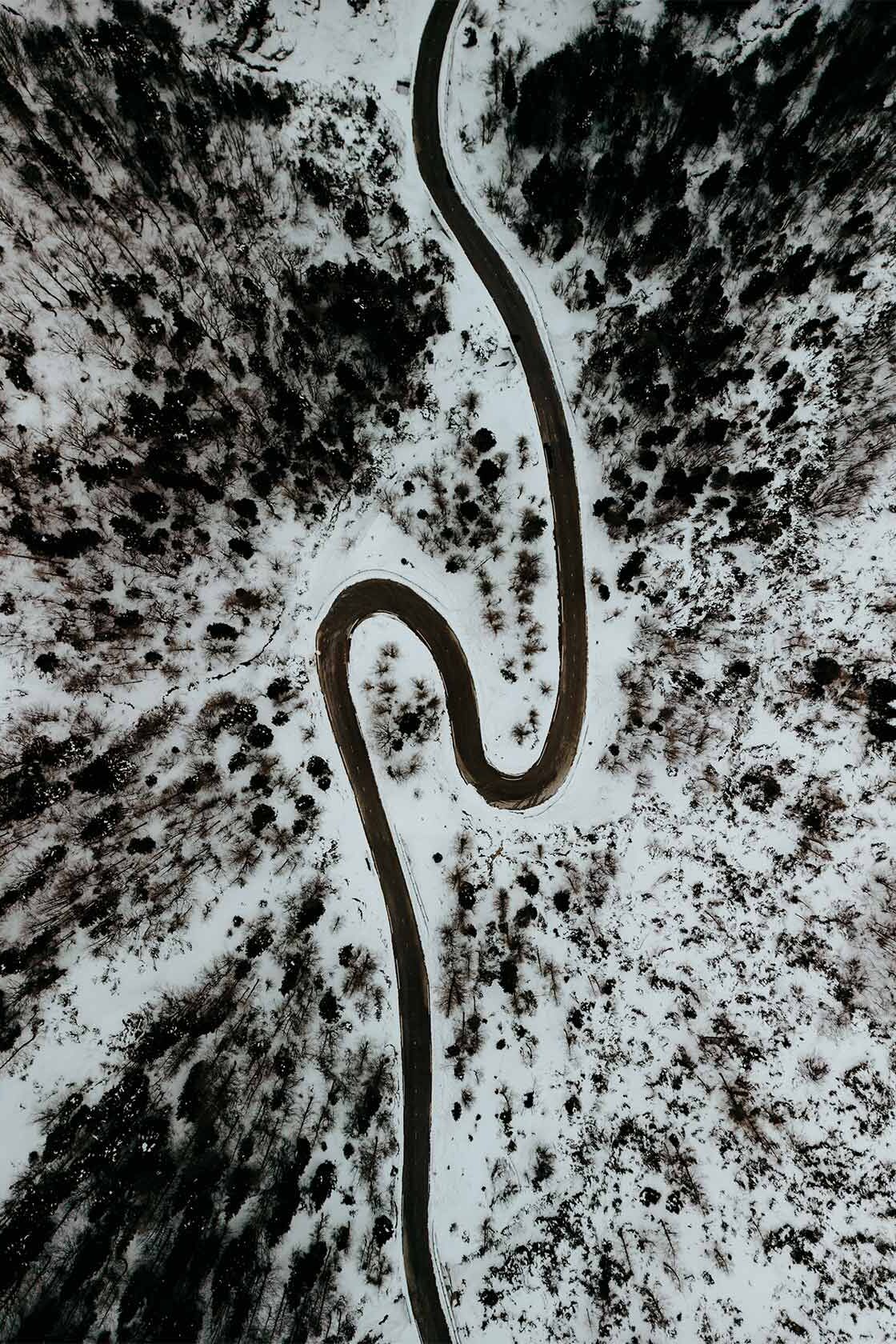
However, with a height of 1,611m and exactly 50 hairpin bends to conquer, driving the pass comes with quite a unique set of challenges, which is why I’ve put together this guide.
This in-depth guide includes everything you need to know before driving the Vrsic pass, including where to stop, car rental in Slovenia, the best time to visit, and some of my personal tips.
Enjoy, and remember to keep your eyes on the road.
If you choose to use any of the links on this page, I may receive a small commission at no extra cost to you. By using these links, you’ll have a direct impact on WTSW and my ability to continue to create free insightful travel content for you. If you find any of my tips useful, you can support me by buying a virtual coffee here.
Where is the Vrsic Pass?
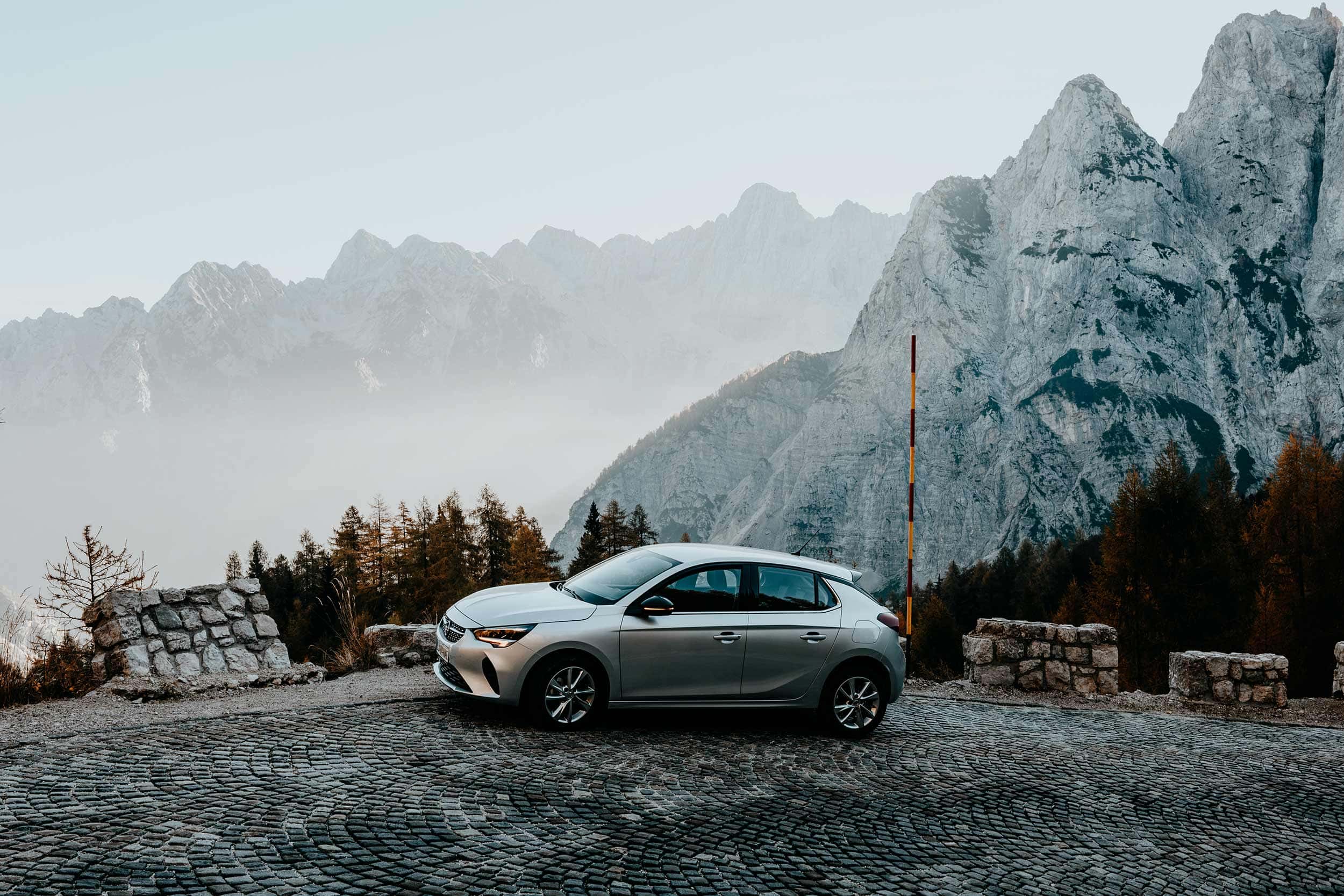
The Vrsic Pass is a 1,611m high mountain road amongst the stunning Julian Alps in the northwest of Slovenia.
With exactly 50 hairpin turns, this stunning mountain pass connects two of Slovenia’s most popular areas; Kranjska Gora and the Soca Valley.
Those who’d like to conquer the Vrsic Pass can access the road from Trenta or Kranjska Gora, which makes it an exceptional addition to your road trip through Slovenia.
About the Vrsic pass
The winding mountain road of the Vrsic Pass has been around for more than a hundred years, and has a rich history that dates back as far as World War 1.
But sadly, much of its history is a rather tragic one.
Throughout World War I, the Vrsic Pass served as a crucial supply route for the Austro-Hungarian soldiers battling the infamous Isonzo Front; one of the most brutal battlefronts of the Great War, where a total of twelve battles took place.
Given the importance of this route, the army drafted roughly 10.000 Russian prisoners of war to improve and maintain the Vrsic pass throughout the war.
It was an utterly gruelling task, as it required the prisoners to work under extremely harsh conditions, which, sadly, resulted that many of them lost their lives in the process.
On March 8, 1916, more tragedy struck, when heavy snowfall triggered an avalanche which wiped out the entire camp of prisoners, leaving a death toll of over 300.
At present, the road serves as a war memorial to the lost soldiers, while also being one of the most scenic stretches of pavement in the country, where fifty adrenaline-inducing hairpin turns guide travellers from one Alpine valley to another.
With a height of 1,611m, the Vrsic pass is deemed the highest mountain pass in the whole of Slovenia, making it an incredibly popular destination on any Slovenia itinerary.
Driving the Vrsic Pass | Where to stop and what to see
Admire Lake Jasna before taking on the Vrsic Pass
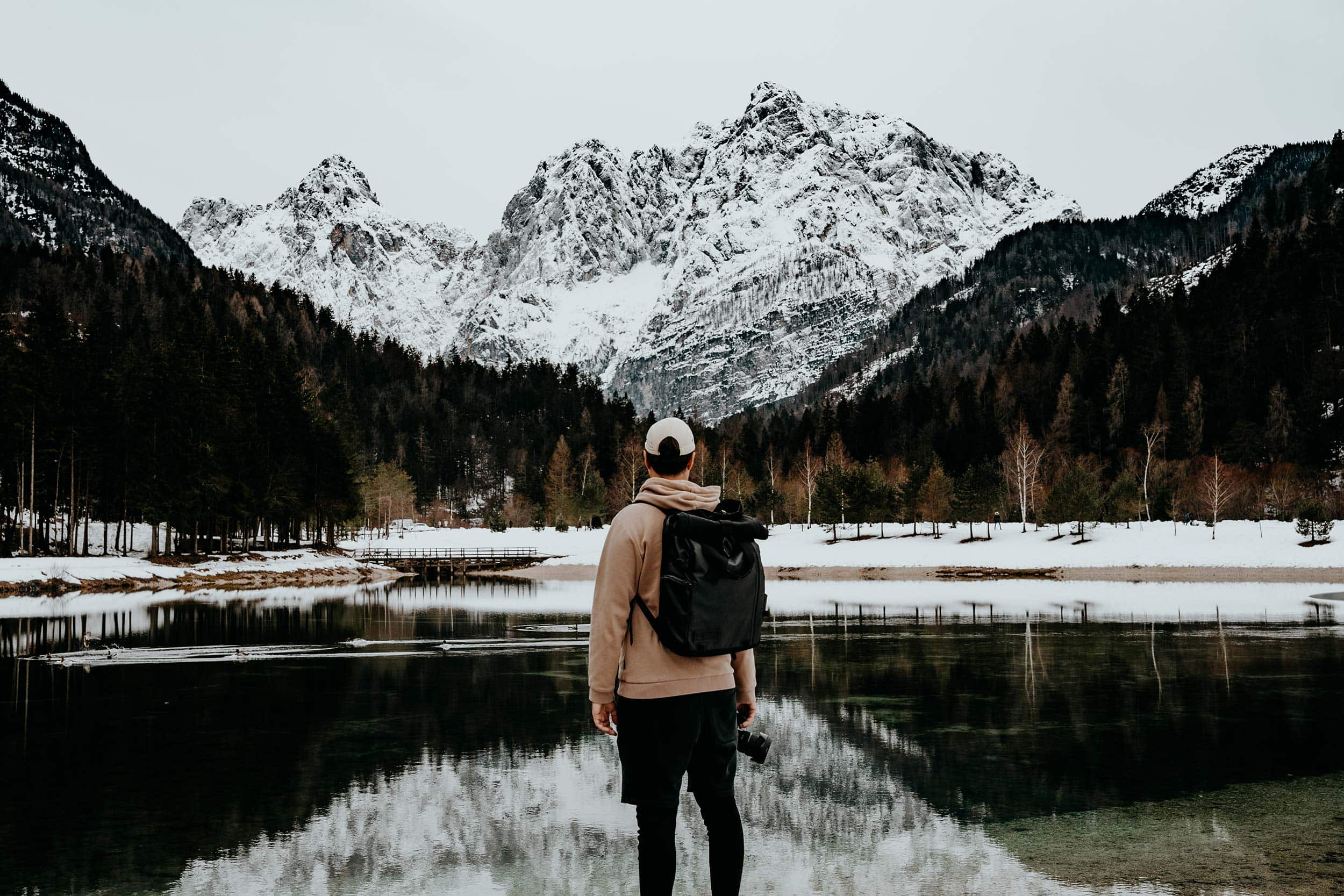
While it’s not officially on the Vrsic pass, I do highly recommend dropping by the incredibly scenic Lake Jasna, before zigzagging your way along the winding roads of Vrsic.
Nestled in the foothills of the Jullian Alps, Lake Jasna is a set of two interconnected lakes, surrounded by the stunning mountain peaks of the Triglav National Park, including that of Mangart, Jalovec and Prisank.
Make sure you spend a few moments around the lake and witness how the crystal clear water acts as the perfect mirror to reflect the spectacular peaks of Spik, Razor and Prisank.
After taking in the beauty of Lake Jasna, it’s time to take on the somewhat challenging, yet extremely rewarding drive along the Vrsic pass.
Where | Lake Jasna
The Russian Chapel
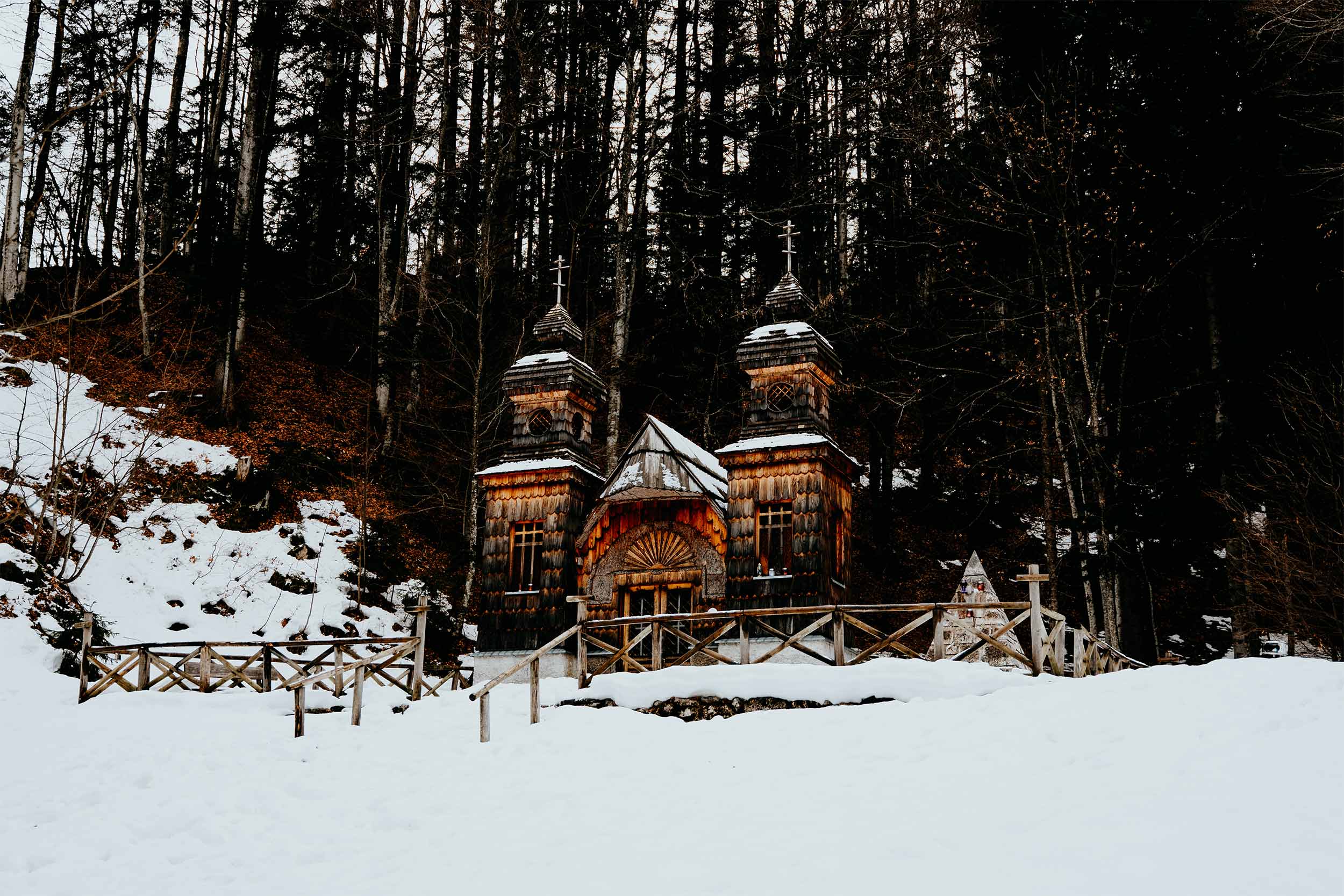
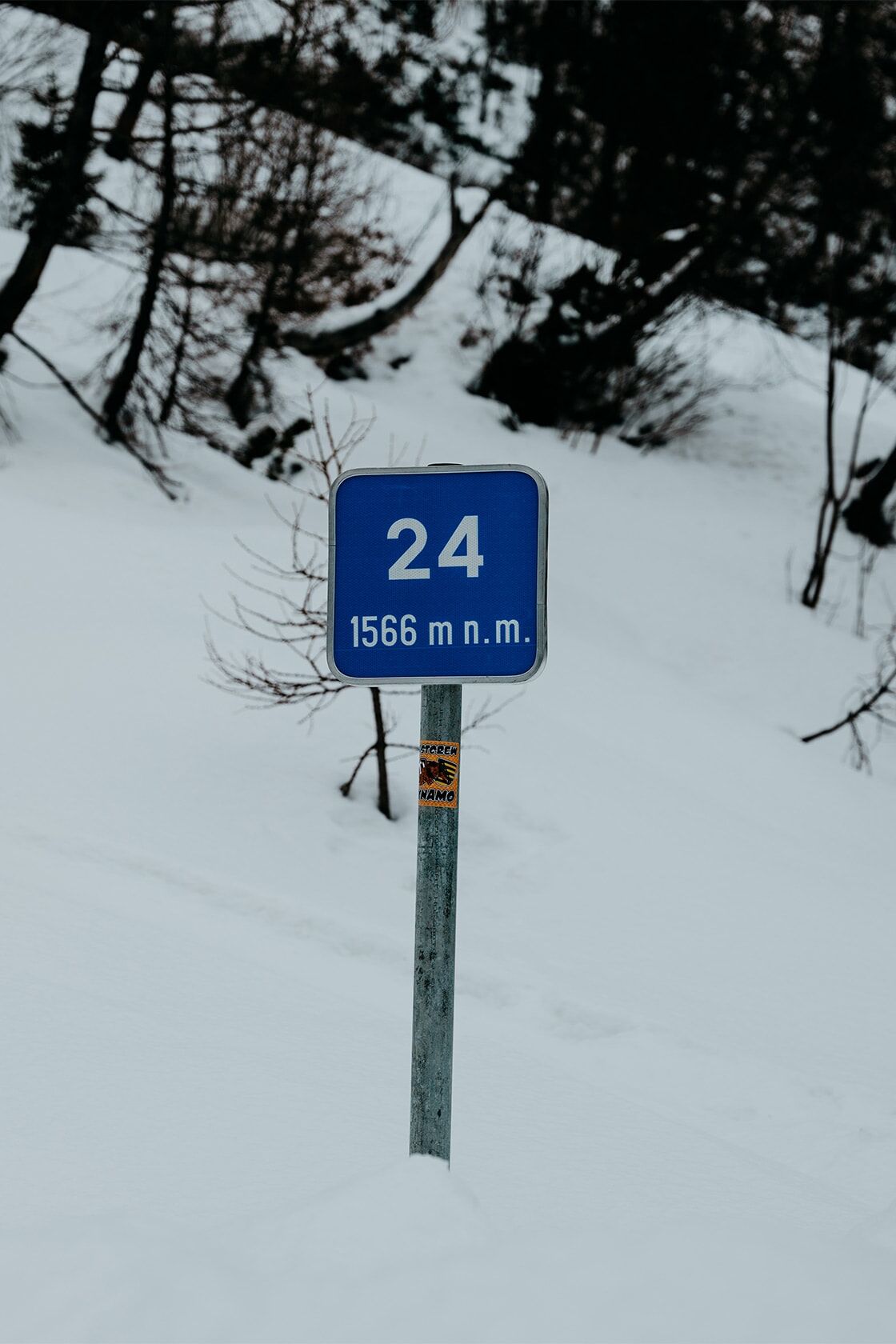
Situated just after hairpin turn #8 from the Kranjska Gora side, the Russian Chapel is a small wooden chapel built in memorial of the Russian prisoners of World War 1, who died here in the process of constructing the pass.
This traditional Russian orthodox chapel is dedicated to Saint Vladimir and was built in the year 1917 by the prisoners who survived the avalanche that had struck the area.
While the chapel is a relatively simple structure, I have to say that it’s still very authentic and impressive, making it an essential stop for anyone driving the Vrsic pass.
Though its purpose is to reflect on the past and honour those who died, the church itself is also the perfect subject for some aesthetically pleasing Instagram shots.
Given the chapel is somewhat of a blink-and-you-miss-it spot, I’d advise keeping an eye out for a blue sign with #8 on it, as the chapel is hidden in a dense forest right after that turn.
Where | The Russian Chapel
Prisank Viewpoint
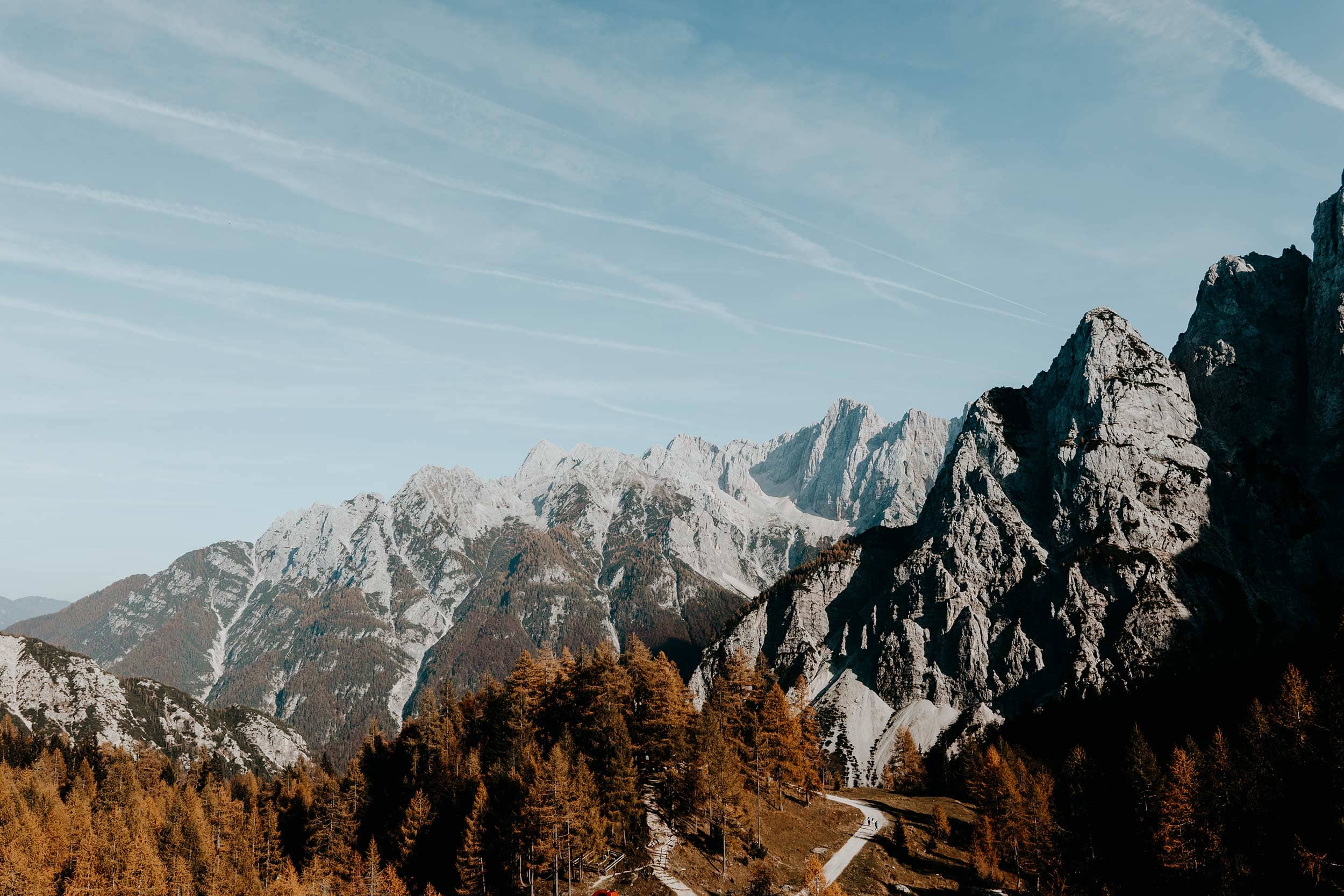
The Prisank viewpoint is one of the most popular stops along the Vrsic pass, given it is often referred to as the ideal gateway to the stunning nature of the Triglav National Park.
From Prisank, you can explore Ajdovska Deklica (Heathen Maiden), a carved-out rock formation that looks like the face of a female, as well as the famous Prisank window, which is the best-known mountain window in the Julian Alps, with a size of roughly 80 by 40m.
Prisank is also home to a small mountain meadow with a wooden cabinet, which makes for an ideal place to sit down and enjoy lunch or a cup of coffee. The meadow is located right next to hairpin #16, where you will also find a small parking area.
This area is seriously stunning, so make sure you bring out your camera gear and snap some bangers while exploring the scenic mountain meadow.
Where | Prisank viewpoint
The Vrsic pass – the highest point of the road
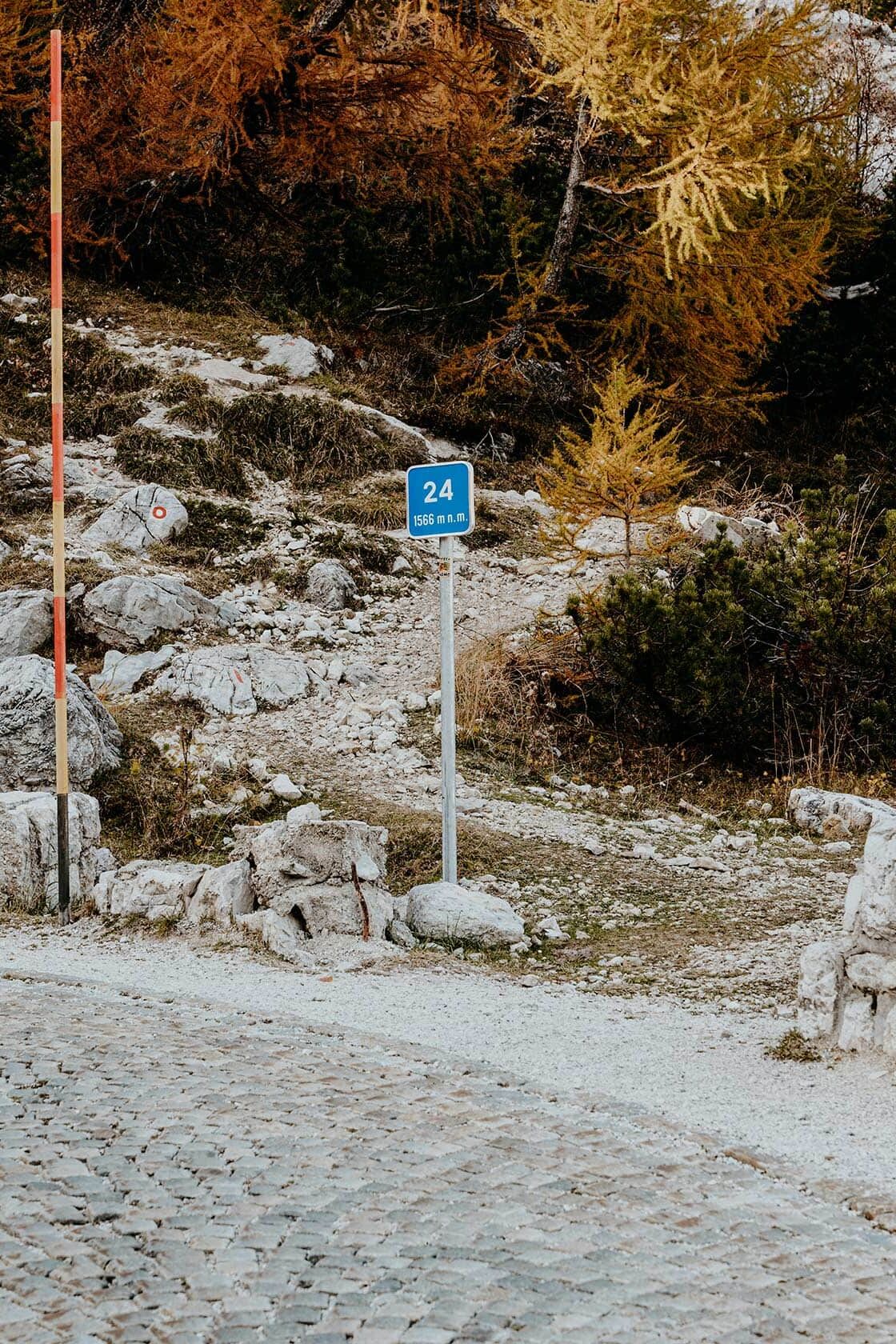
After completing the first 24 turns, you’ve finally made it to the highest point of the road; the Vrsic Pass at 1,611 metres above sea level.
From this point, you’ll be welcomed by some of the best views in Slovenia, so drop your car in the parking, and seek out a quiet spot to take in the stunning panoramic vistas of the rugged peaks of the Triglav National Park.
It’s worth mentioning that the Vrsic pass gets extremely busy early in the day, given it’s marked as the starting point for most of the hikes in the Triglav National Park.
If you’re keen to grab a coffee or lunch before taking on the remaining 26 hairpin turns, there’s a mountain hut about 5 minutes from the parking, which serves delicious local food, and excellent coffee too.
Where | The Vrsic Pass
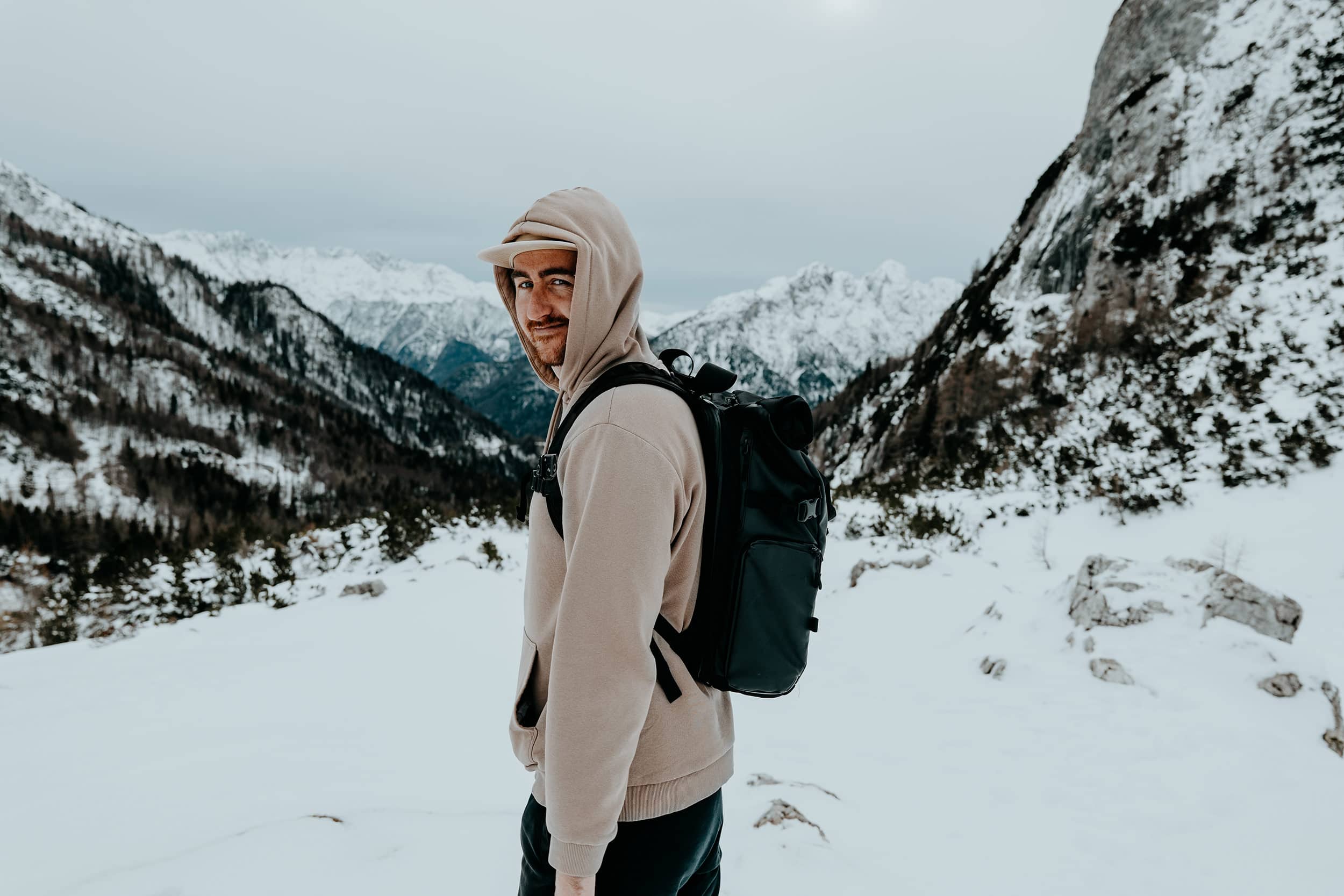
The upper Soca Valley
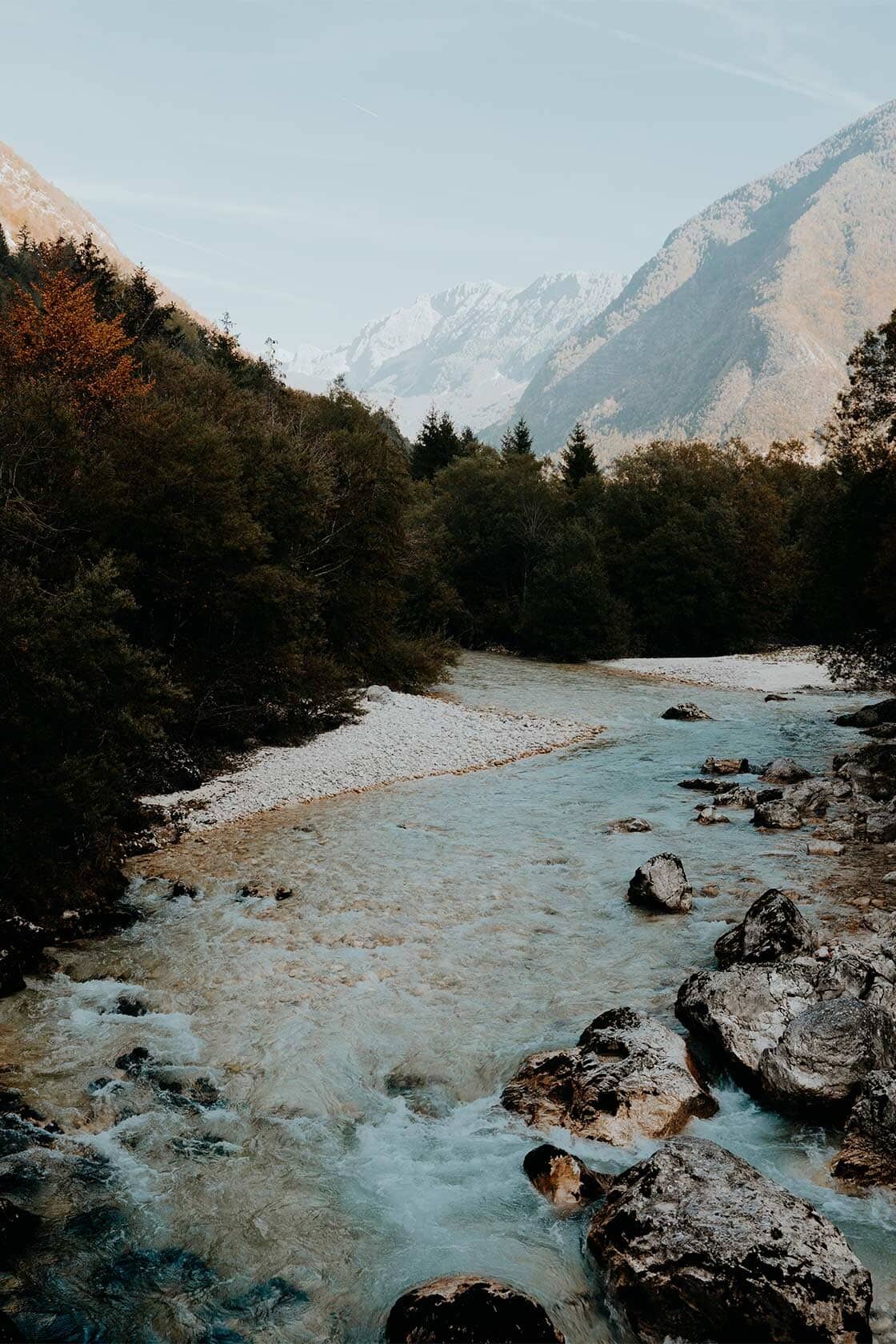
As you make your way down the winding roads of the Vrsic pass, the views of the Julian Alps slowly give way to the breathtaking beauty of the Soca valley.
With every hairpin turn, the road flattens out further, offering a relaxing drive that allows you to take in the natural grandeur that surrounds you.
But it’s not just the picturesque drive that will capture your heart.
Famous for its distinctive emerald green waters, the gushing Soca river is a constant companion as you make your way in the direction of Bovec, inviting you to stop at just about every turn.
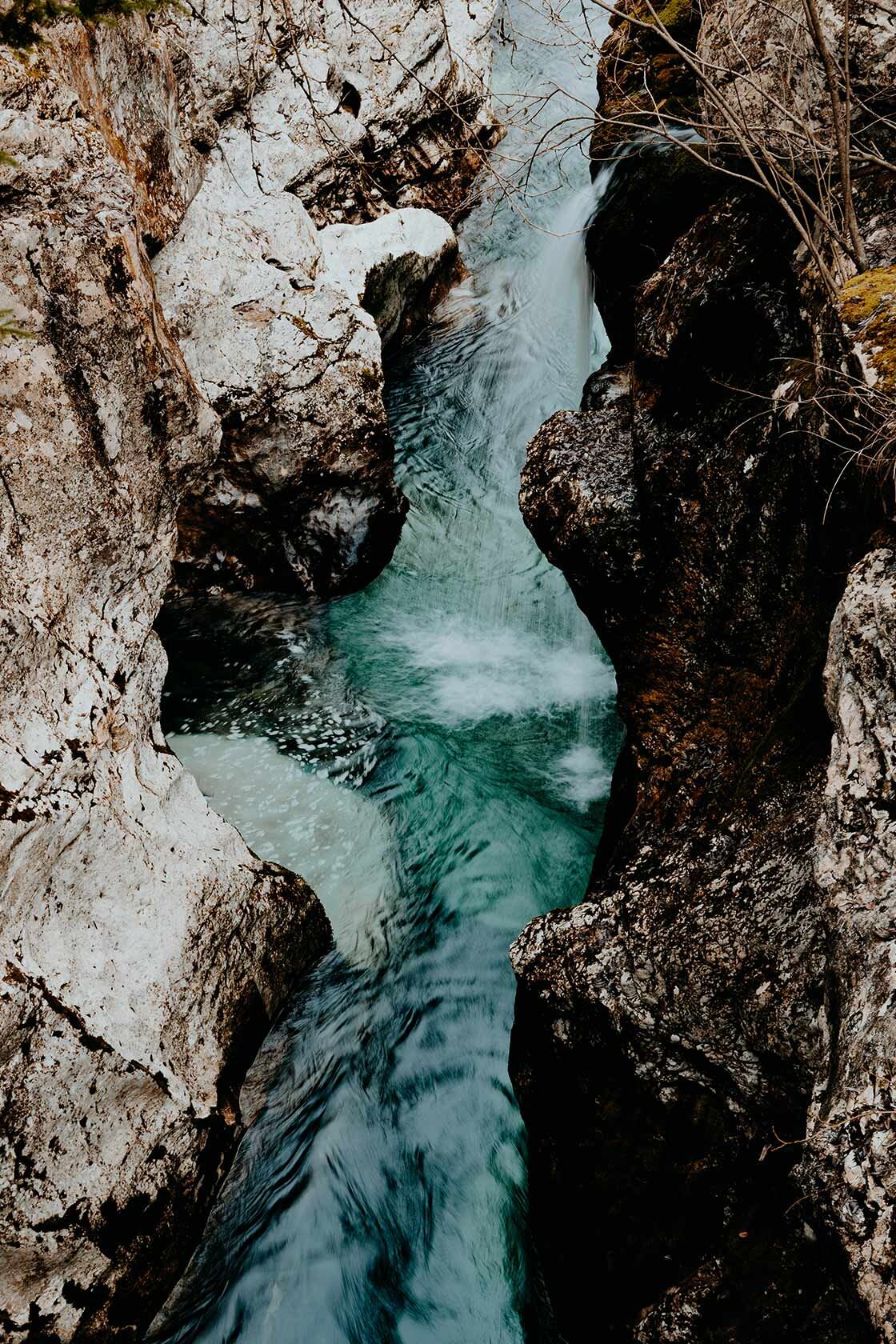
Though the Soca valley breathes unparalleled beauty throughout, I believe there’s one absolute highlight here; the magnificent Soca gorge.
Make sure you stop here, and experience how the powerful Soca river carves its way through the steep, rocky walls of the gorge – it’s truly a spectacle to behold.
Where | The upper Soca Valley
Conquer the road to Mangart Saddle
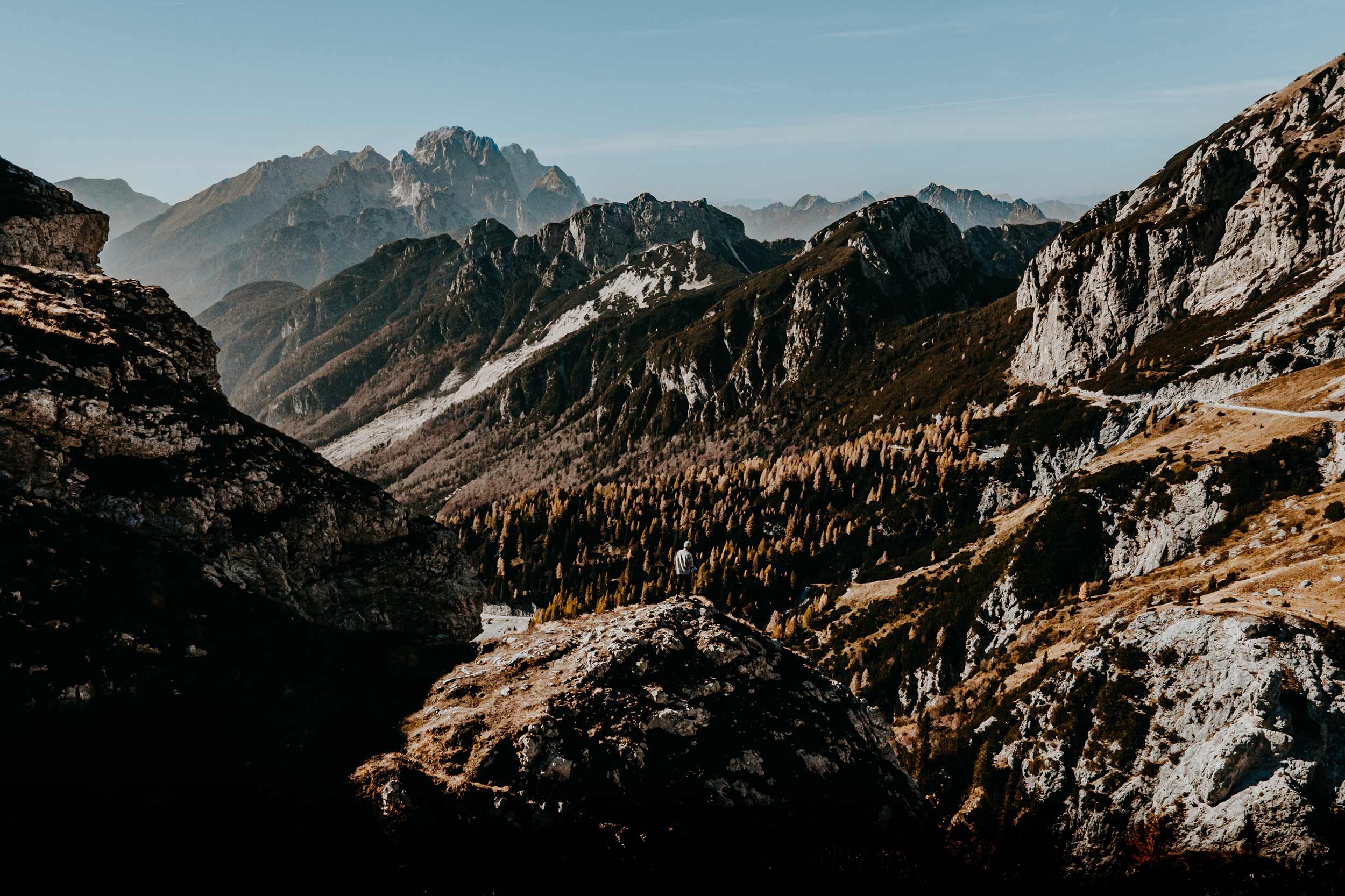
Those who want to turn it up a notch, continue driving in the direction of Mangart Saddle, Slovenia’s highest mountain road and easily one of the most captivating places in the country.
Marked by extremely narrow parts – just wide enough to fit one car, sharp hairpin turns, and steep drop-offs with sporadically a crash barrier, the road to Mangart is not for the faint of heart, especially during the peak summer months.
However, those who take on the challenge will quickly learn that the reward is absolutely worth it.
Once you arrive at the top of Mangart, you’ll be welcomed by breathtaking panoramic views of the surrounding peaks and valleys – you can even see the lakes of Fusine in Italy in the distance.
Hiking enthusiasts will be pleased to know that some of Slovenia’s most exciting hiking trails start exactly here, at Mangart Saddle.
One word of caution though; while I managed the drive to Mangart fairly effortlessly, I believe there’s nothing that can fully prepare you for the drive up.
For that reason, I’d highly suggest taking it one step at a time, and more importantly; don’t feel rushed by other drivers.
Where | Mangart Saddle
Read more | A guide to Mangart Saddle, Slovenia’s highest mountain road (coming soon)
Things to know before driving the Vrsic Pass
Though I firmly believe that experienced drivers will have an easy time driving here, there are a few things that you should know before taking on the winding roads of Vrsic.
After driving the Vrsic pass twice (in autumn and winter), I’ve put together a comprehensive list of useful tips and tricks that will hopefully make your journey as comfortable as mine.
To prepare you for the journey, I’d highly recommend paying attention to the following:
The turns are steep and narrow | Do exactly as Kanye West raps in one of my favourite tracks of Ye’s Late Registration; drive slow, homie – I highly recommended to navigate the hairpin turns at a steady pace (10 to 15km/ph).
Driving experience is a must | To me, driving the Vrsic pass requires at least a few years of driving experience, since the somewhat challenging circumstances are far from ideal for those new to driving.
Go in the early morning | Like so many popular tourist places in the world, Vrsic pass gets extremely busy throughout the day, especially during the peak summer months. For that reason, I can’t stress enough to drive the road in the early hours, when the road is still relatively empty.
There could be road closures in winter | While I’d passed the Vrsic pass on a snowy Thursday in January, road closures are actually pretty common during the winter. In general, the road is open for around 7 months a year, depending on the severity of the winter months. Just to be sure, I’d advise keeping an eye out for the latest updates on road closures on the Vrsic pass here.
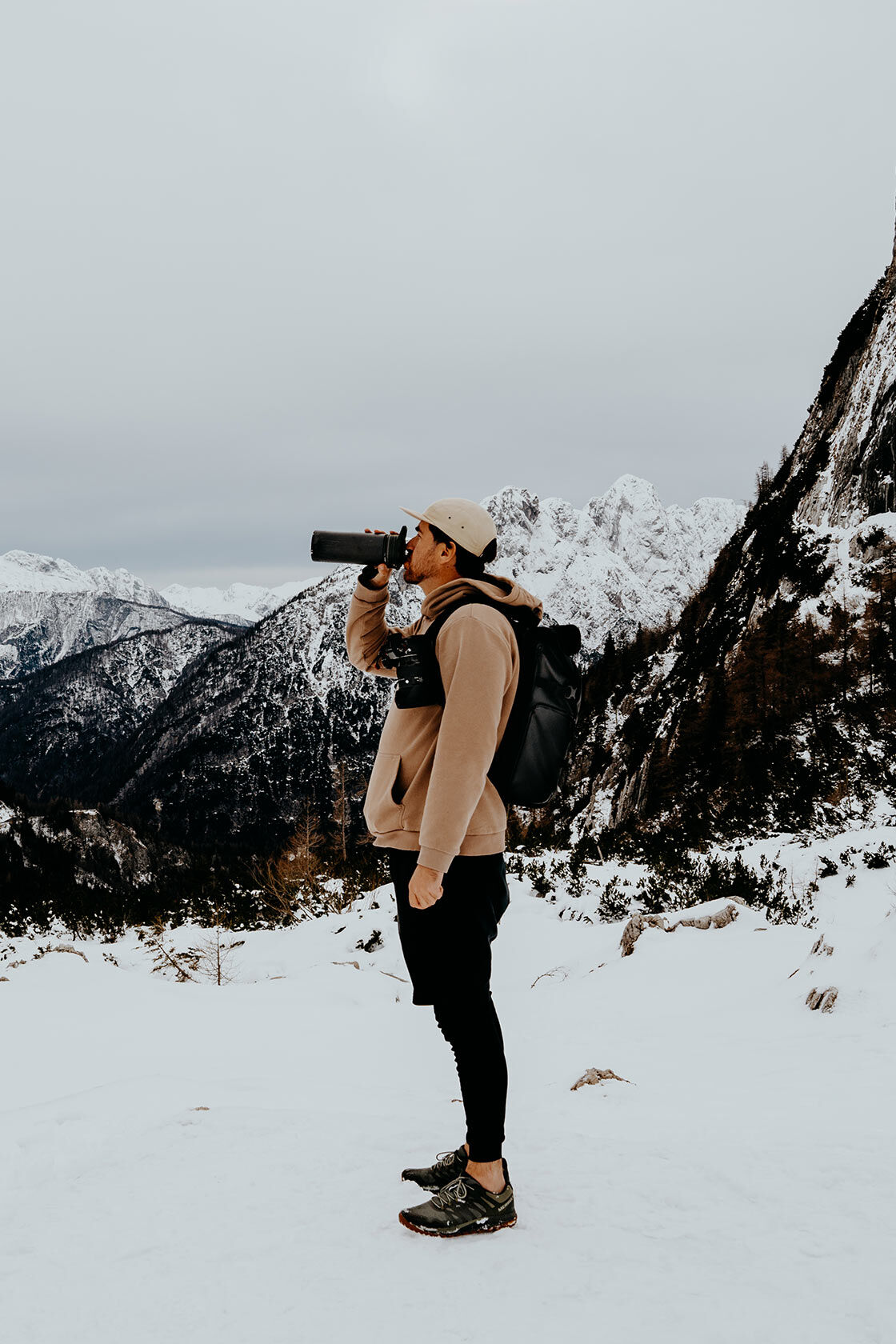
Bring lunch, snacks and coffee | While there is a restaurant on the Vrsic pass, I’d highly recommend packing your own lunch, a few snacks and a thermos filled with coffee, to enjoy in the midst of nature.
Keep an eye out for cyclists | Since the Vrsic Pass is popular among cyclists, you’ll share the road with lots of them, especially in the peak summer season. As a driver, it’s therefore pretty important to drive with caution, while also giving plenty of space in narrow areas.
Make use of the parking | Throughout your journey along the Vrsic pass, you’ll notice plenty of parking spaces, and I highly recommend making use of them. Although it’s tempting to take in the views from behind the steering wheel, I believe it’s essential to keep your eyes on the road at all times here. So, if you see something that piques your interest, don’t mind parking along the road, so you can experience it in a relaxing manner.
Limited phone connection is common | Even though Vrsic counts only one road, it is wise to set up your maps for offline use, since phone connection could be limited in the mountains. This is especially handy if you’re planning to do some hiking in the area.
The best time of year to visit the Vrsic Pass
The road along the Vrsic pass is without question one of the most spectacular drives in Slovenia (Mangart I see you), as it showcases the Julian Alps in an utterly stunning way.
I’d highly recommend visiting the Vrsic pass between March and November, when the weather is perfect for hiking and explorations, and it’s almost guaranteed that the pass is open.
But to me, the absolute best time to visit the Vrsic pass is during the shoulder months of March to May and September to November, when it’s significantly less crowded.
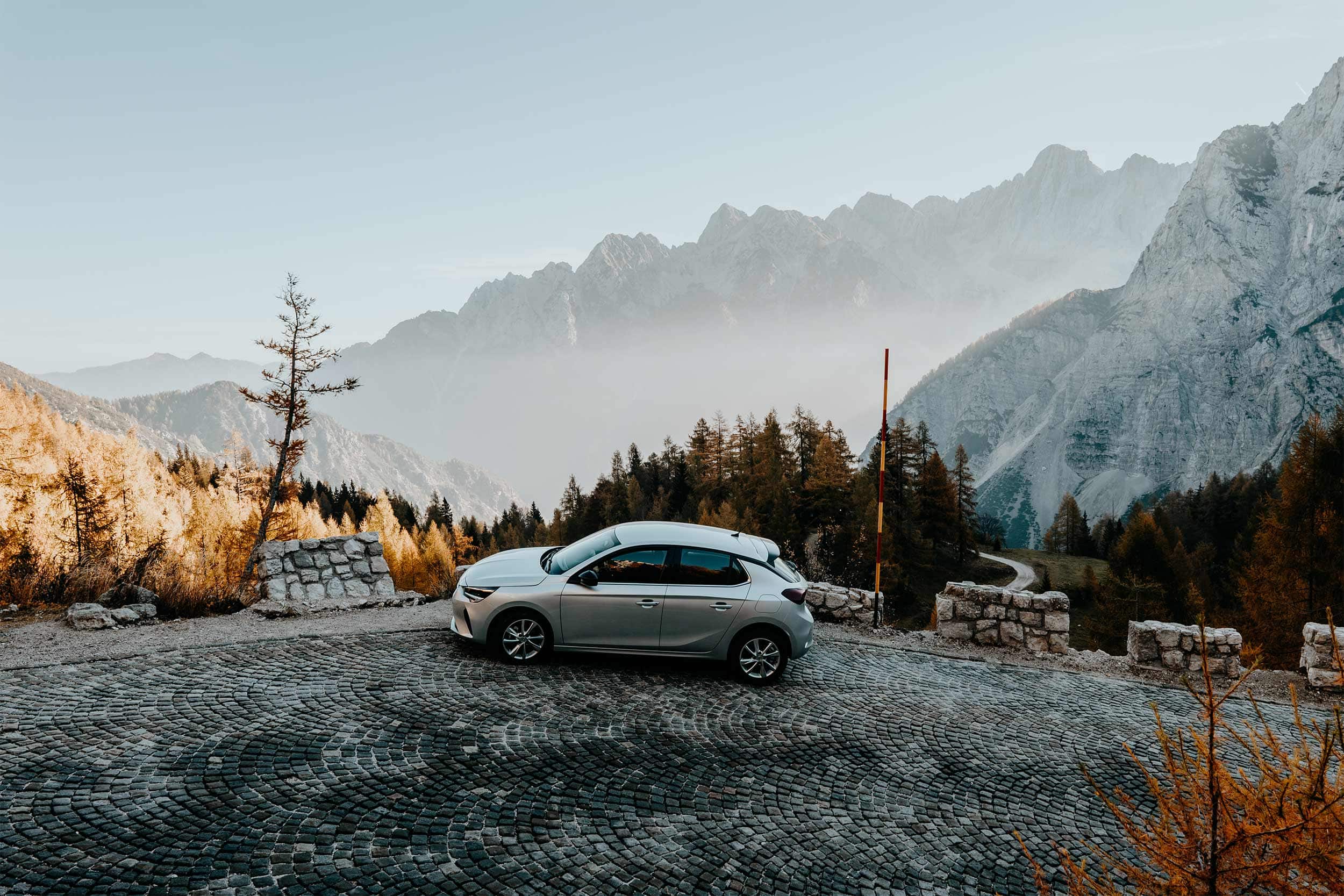
I first visited the Vrsic Pass in the fall, and was blown away by the warm orange colours – it truly was an epic time of year to explore Slovenia.
While the Vrsic pass is stunning at any time of year, it is worth noting that the road closes during the winter months, due to heavy snowfall and the potential threat of avalanches.
Since these road closures depend on the severity of the weather conditions, I’d highly suggest checking if the pass is open here, before planning your visit.
Surprisingly, the Vrsic pass was open during my second visit in the midst of winter – so road closures are not set to a fixed period.
Renting a Car in Slovenia
If like me, you’re planning an epic road trip in Slovenia, I’d recommend sorting out a rental car in advance, so you have all the freedom to visit wherever, whenever suits you.
I always use Rentalcars.com to book my car rentals, as they offer all the major rental car companies, excellent service, and additional insurance – plus, it’s super easy to find yourself a deal here too.
I’ve also written a comprehensive guide on driving in Slovenia (coming soon), so make sure you give that a read too – you can find it here.
Where to stay near the Vrsic Pass
Given that the Vrsic pass is more of a day trip between two popular areas, where you’ll plan to spend the night will highly depend on the starting point of your Vrsic pass journey.
Since I explored Kobarid, Bovec and the Soca Valley before taking on the Vrsic pass, it was quite logical to choose Bovec as my Vrsic pass base.
I stayed at Hotel Soca, a comfortable hotel with spacious rooms in the heart of Bovec, about 20 20-minute drive away from the beginning of the Vrsic pass, making it a solid base from where to start your Vrsic pass adventures.
Depending on your itinerary (make sure you check out my Slovenia itinerary), you could also opt for a stay in Kranjska Gora or the Soca Valley, both of which are great places to include in your Slovenia itinerary.
Stay safe in Slovenia | Travel insurance
Since Slovenia has plenty of adventurous activities on offer, I advise everyone to sort out good travel insurance before setting out on their own adventure.
While I believe that it’s unlikely to experience any troubles when following the advice in this guide, something unfortunate can happen at any time, whether it’s an injury, a stolen camera, or an accident on the road.
For travel insurance, I use Heymondo, as they offer full covid-19 coverage, as well as a handy app with 24-hour medical assistance. Make sure you check it out – readers of WTSW receive 5% off any insurance policy too.
Cheers!
I’ve been on this travel blogging journey since 2019.
If you appreciate what I do here, these are some ways you can support me.

A guide to Yala National Park, Sri Lanka’s best safari destination (Update 2023)
Looking to do a jeep safari in Yala National Park? Here’s my guide to Sri Lanka’s best safari destination, including what to see and do, the jeep safari price, and insightful travel tips.
For me, someone who never went on a wildlife safari before, Yala National Park was, without a doubt the most rewarding and exciting adventure during my trip to Sri Lanka.
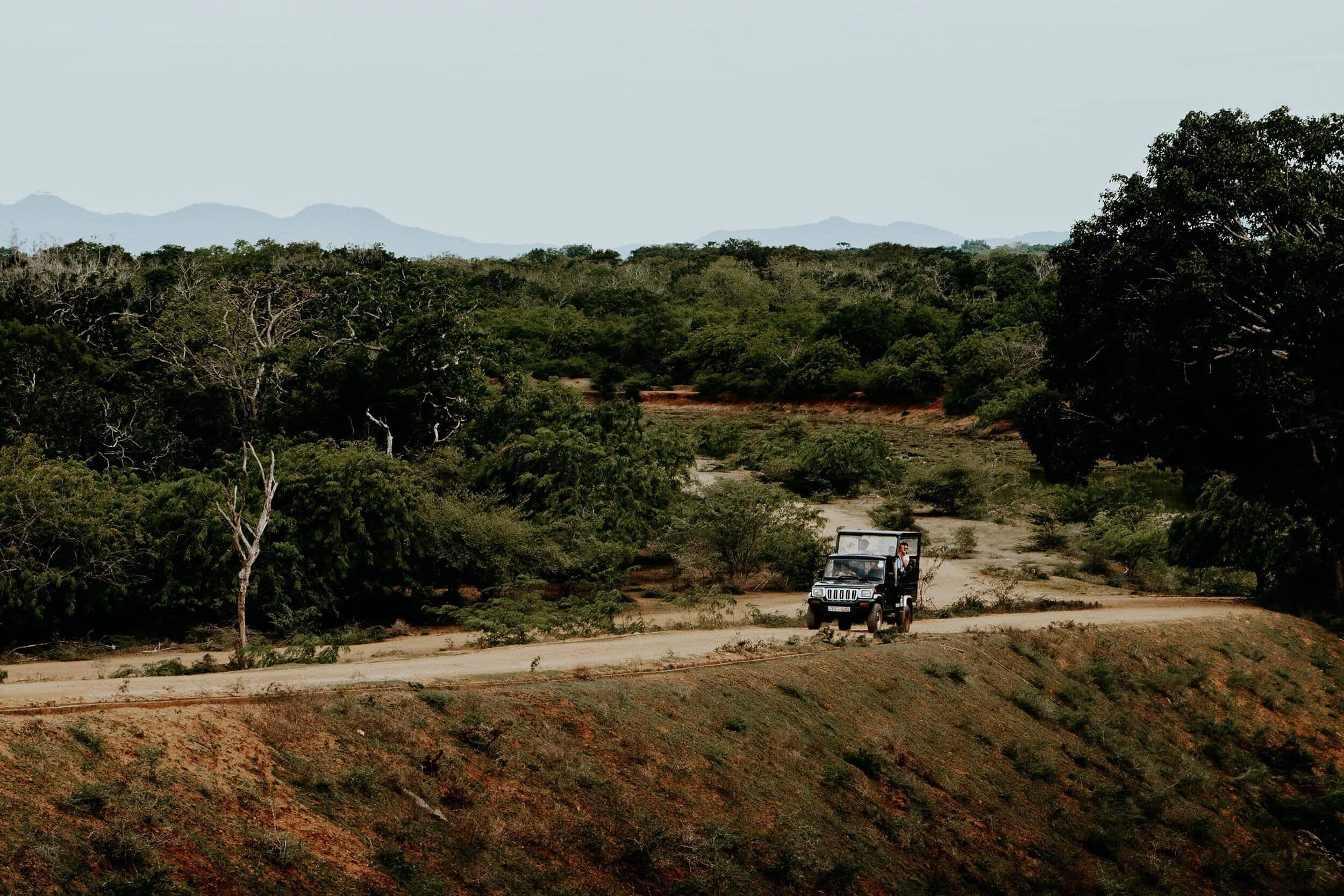
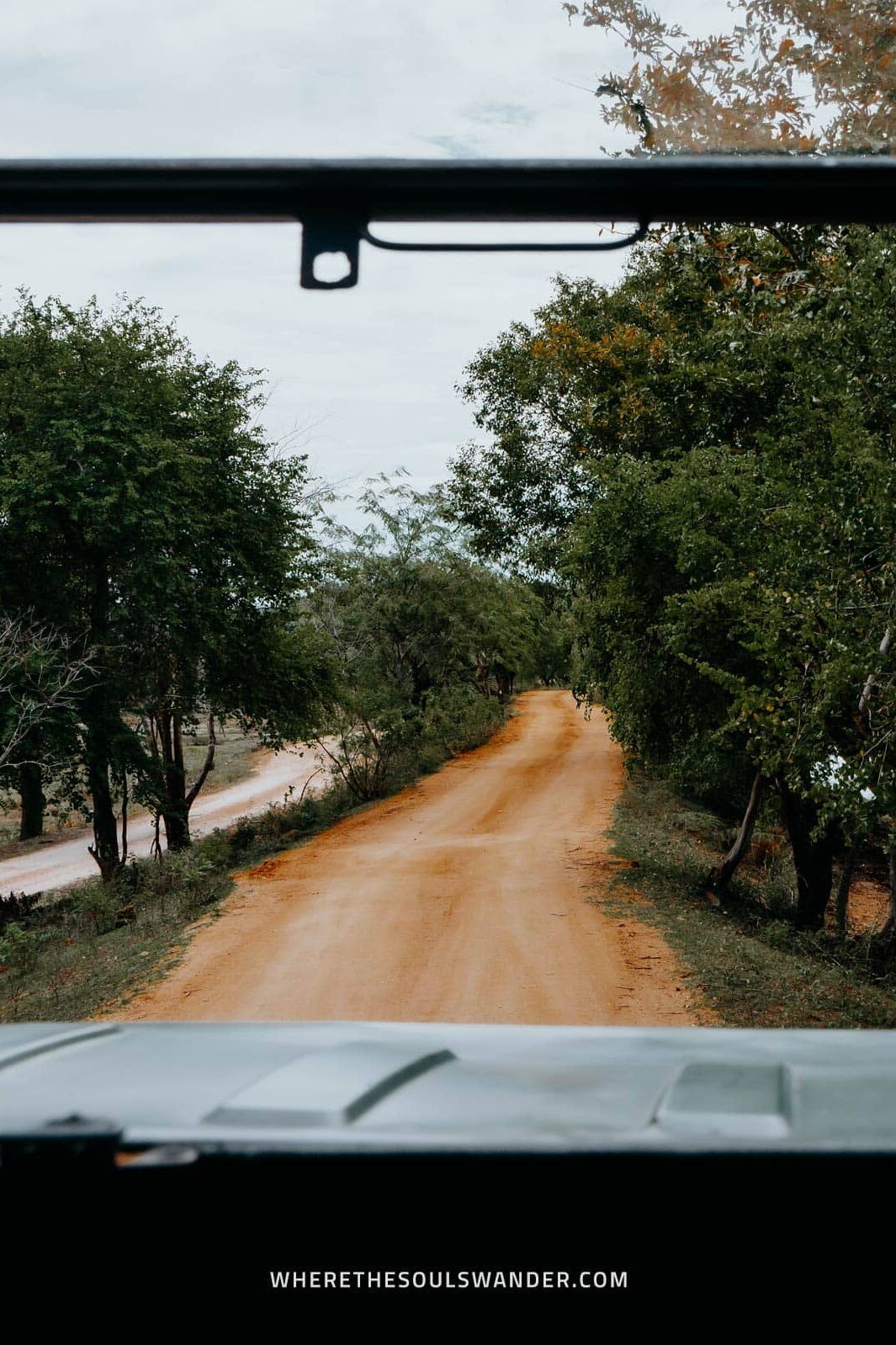
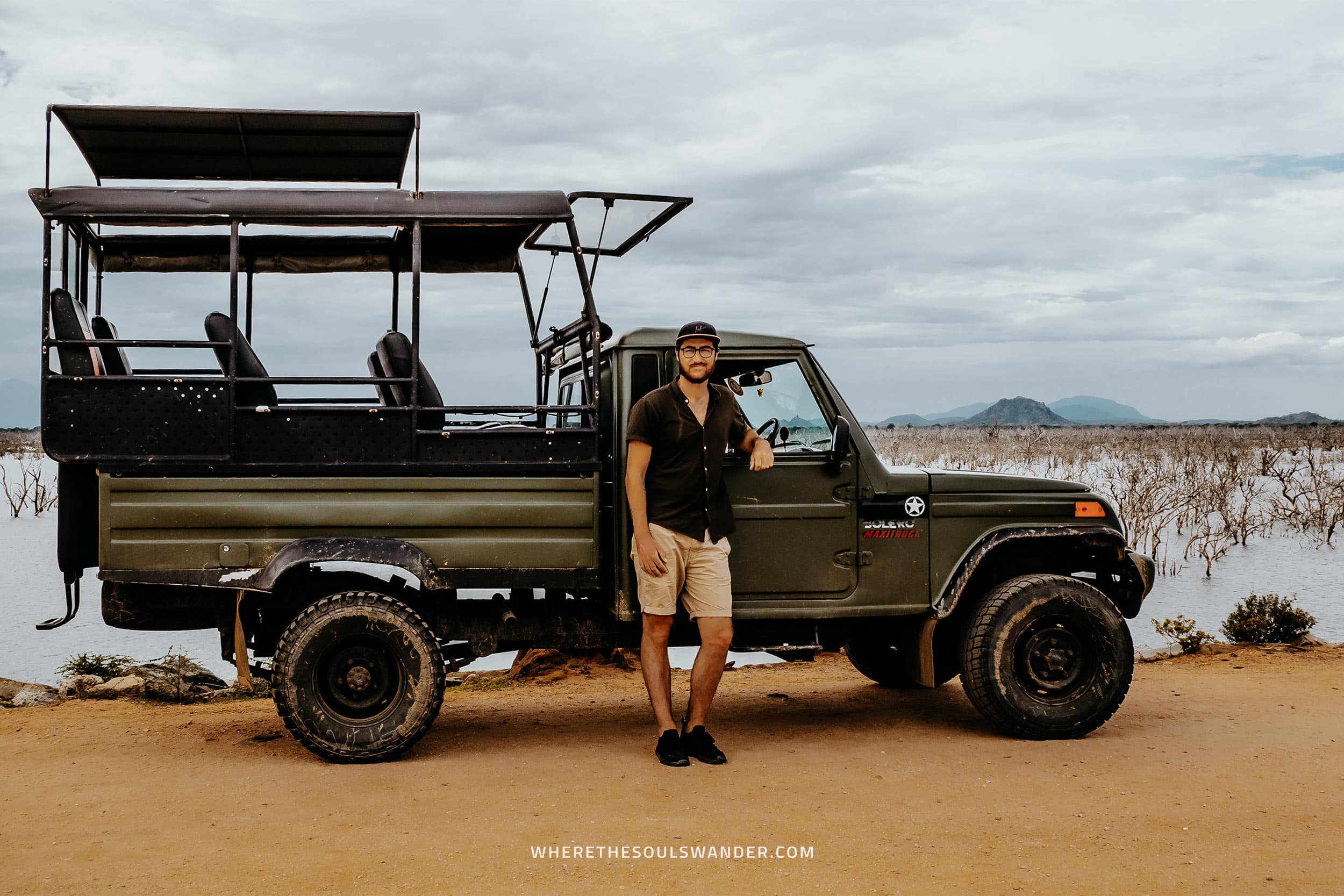
It’s an exhilarating happening to embark on a jeep safari, knowing you’re about to observe extraordinary animals in their natural habitat while driving along the bumpy roads of the wildlife park.
Especially if you realize that Yala National Park is considered the most popular wildlife park on Sri Lanka’s teardrop-shaped island.
This excellent reputation is due to its dynamic landscape, great variety and density of wildlife – plus the fact that the park is acknowledged as one of the best places in the world to see leopards in the wild.
Here’s my guide to Yala National Park, featuring what to see and do, which safari to choose, and where to stay – plus insightful travel tips, including costs, the best time to visit, and how to get to Yala National Park.
If you choose to use any of the links on this page, I may receive a small commission at no extra cost to you. By using these links, you’ll have a direct impact on WTSW and my ability to continue to create free insightful travel content for you. If you find any of my tips useful, you can support me by buying a virtual coffee here.
Where is Yala National Park?
Yala National Park is situated in the southeast region of Sri Lanka’s teardrop-shaped island and stretches over the two provinces, Hambantota and Monaragala.
The Yala National Park is quite remote, and therefore it’s almost inevitable to visit a town named Tissamaharama.
Tissamaharama itself isn’t the most interesting town and it’s also quite difficult to get to. Nevertheless, it functions perfectly as the only official gateway to the wildlife park.
The official Yala visitor centre is around 20km east of the town, which is easily reached by joining a Yala National Park tour from Tissamaharama.
Yala National Park opening hours
The Yala National Park is open daily from 06:00 to 18:00 and is pretty strict regarding the regulations of the opening hours.
If you’re joining a morning safari, the goal is to arrive at the gate well before it opens. Being one of the first in line provides the benefit of entering the park as early as possible.
It’s also essential that all jeeps are out of the park before it closes at 18:00. This is monitored by the official wildlife officers who note and check the license plates of the jeeps that enter and leave the park.
Where to stay near Yala National Park
You’ll find an abundance of excellent accommodations (both in and outside the park) that suit almost every budget and travel style.
Tissamaharama has no shortage of budget-friendly options, comfortable lodges and luxury hotels, while there’s also a great number of luxurious wildlife campings and chalets inside the Yala National Park itself.
Going on a safari in Yala National Park is extremely popular and therefore it’s wise to book your accommodation a couple of weeks in advance, especially if you’re planning to visit during the high season.
Some of the accommodations I recommend include:
Hotel River Front |A charming riverfront hotel with spacious air-conditioned rooms, comfortable beds, and a great outdoor swimming pool. The hotel has a good in-house restaurant that serves excellent local, Chinese and Continental food.
Thaulle Resort | Located directly at Yoda Lake, Thaulle Resort is a great hotel with traditional Sri Lankan-style rooms, spectacular lakeside views, a large outdoor pool and a courteous and helpful staff. This hotel provides all the essentials to unwind after an adventurous safari tour in Yala National Park.
Cinnamon Wild Yala | If you’re looking for a once-in-a-lifetime experience, look no further. Cinnamon Wild offers astonishing eco-friendly chalets in the midst of the lively jungle of the beloved Yala National Park. Undisputedly one of the best picks when it comes to uniqueness, comfort and world-class service.
Jetwing Yala | A luxurious hotel with a marvellous outdoor pool, spacious air-conditioned rooms, and a charming ambience. Given the location of the hotel, you’ll be encircled by delicate nature and fascinating wildlife. The friendly staff also provide great service and hospitality.
What animal could you see during a Yala National Park Safari?
Yala National Park is a vast dynamic reserve, consisting of dense jungle, endless grasslands and several lakes and lagoons.
This distinct landscape ensures the perfect habitat for a great variety and density of wildlife, making Yala one of the best national parks in Sri Lanka.
But it isn’t just the variety of animals that makes Yala National Park so popular. No, it’s mostly the fact that it’s acknowledged as one of the best spots in the world to see wild leopards.
The animals of Yala National Park
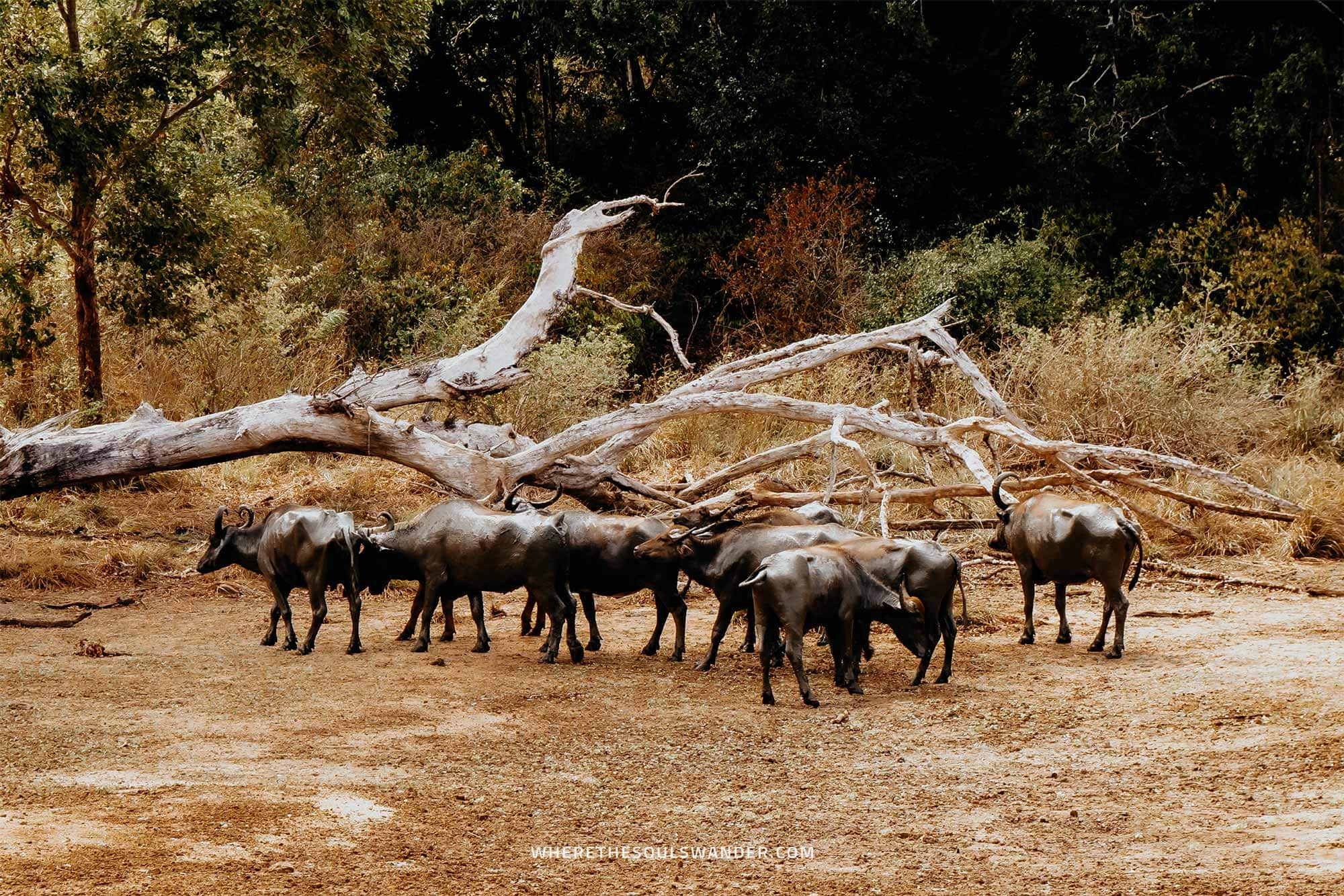
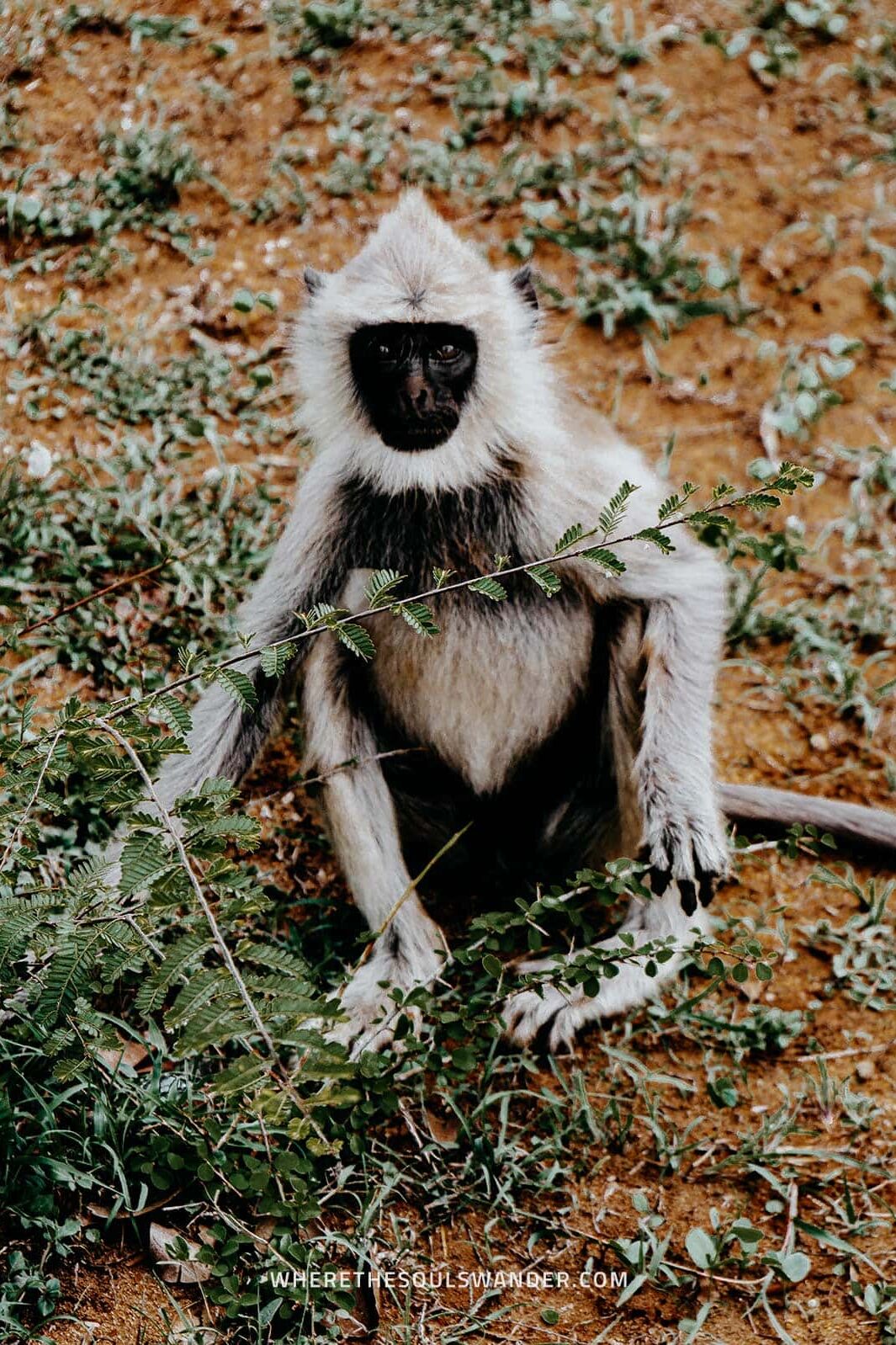
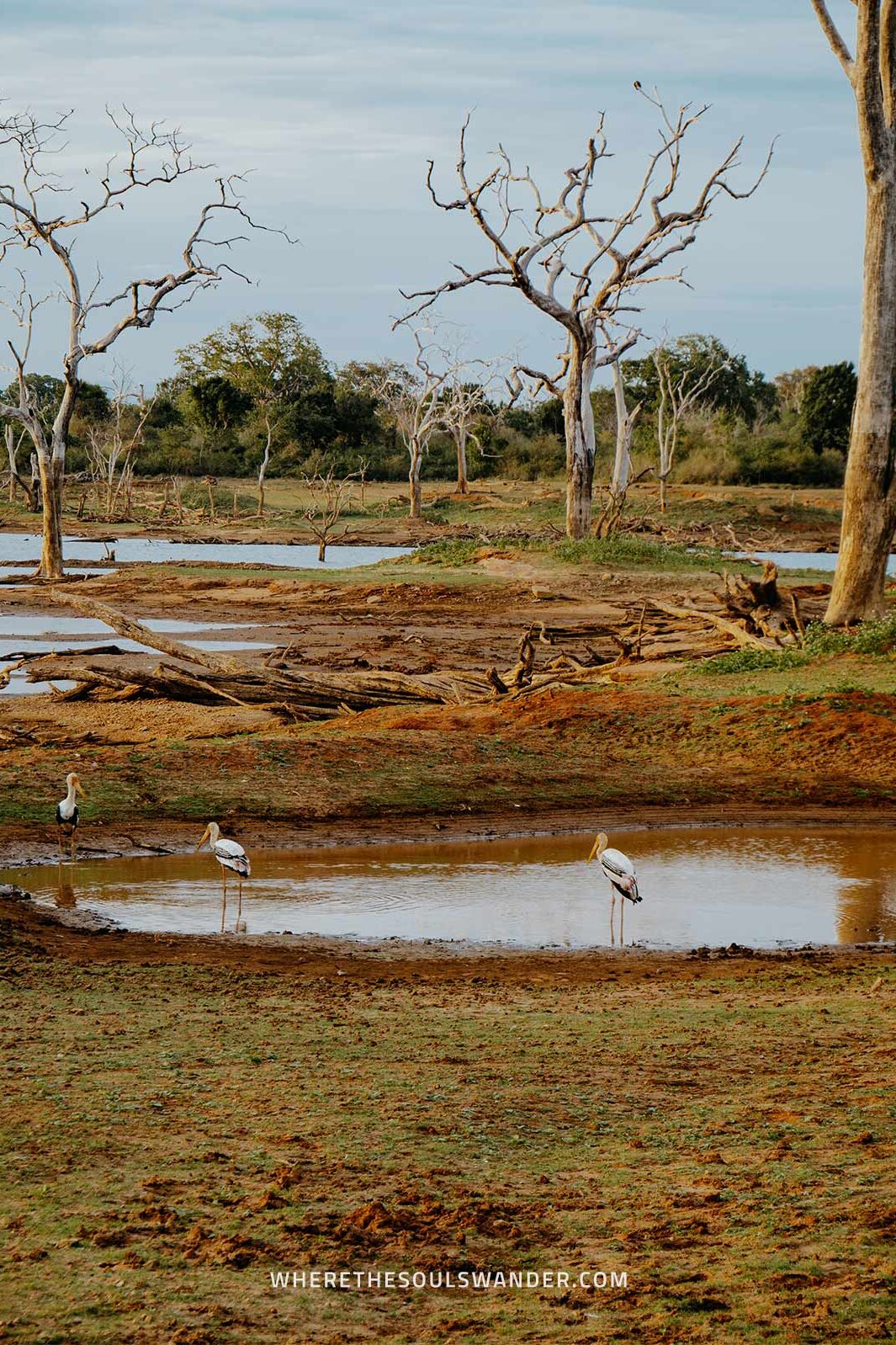
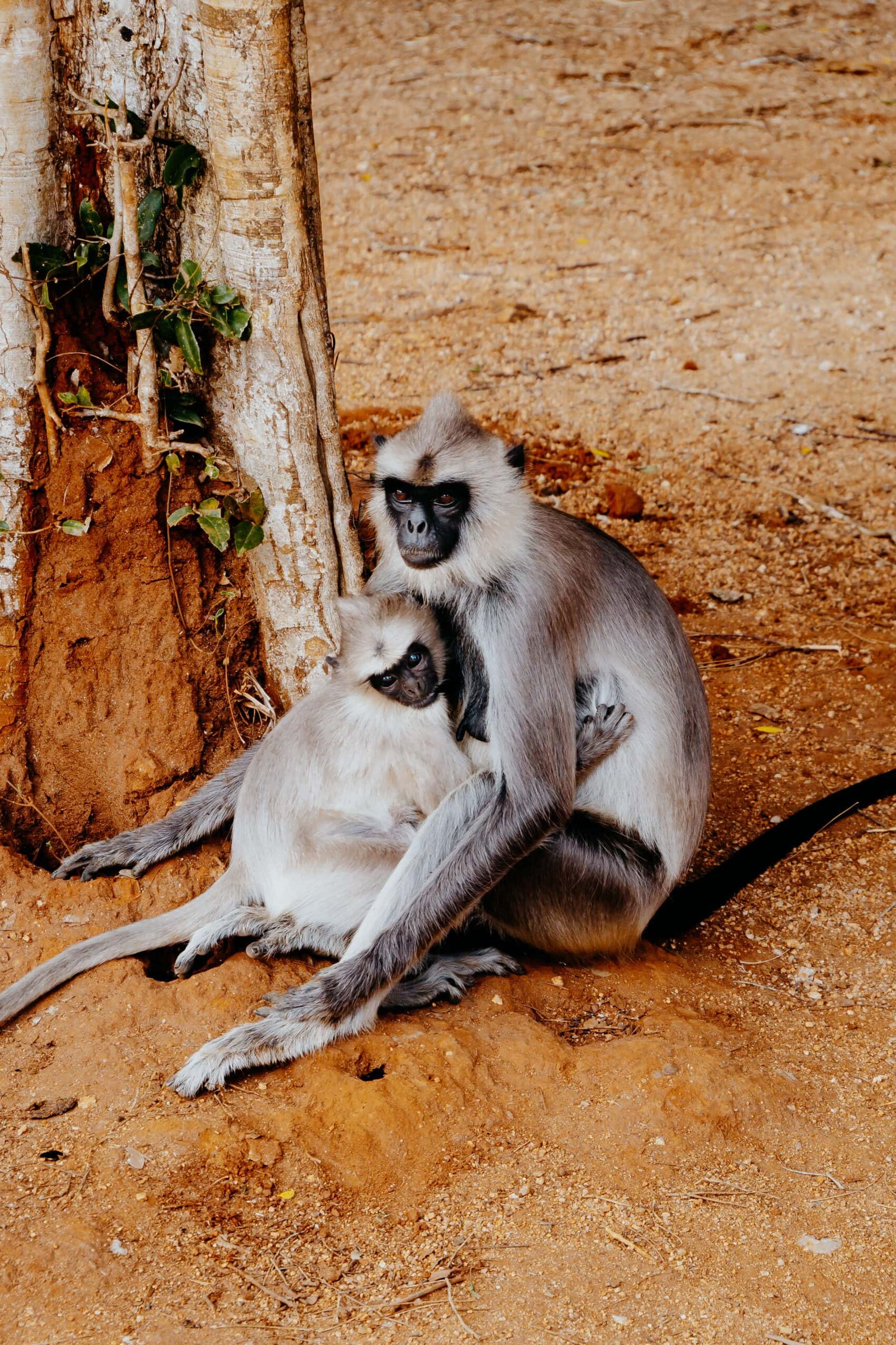
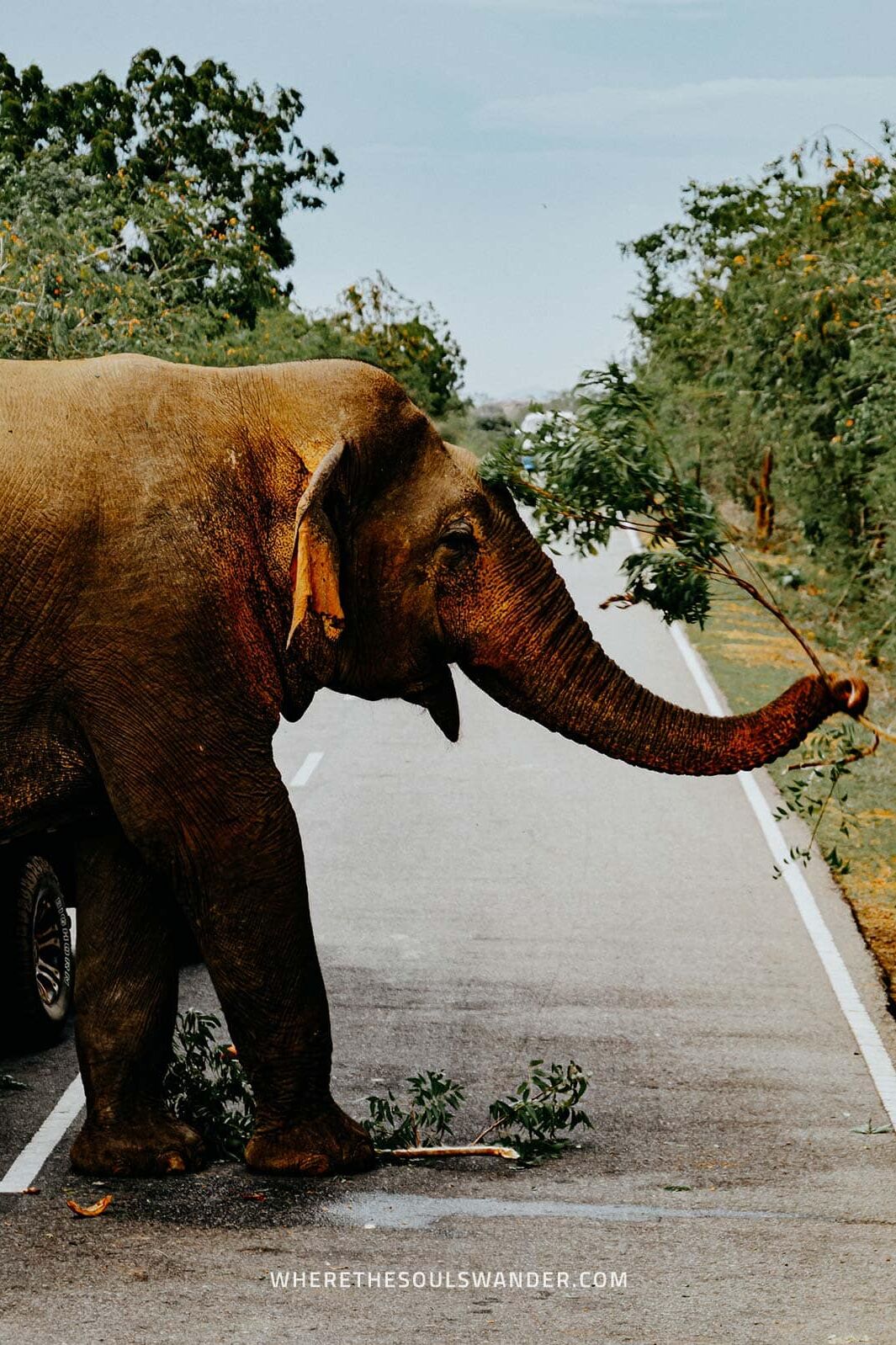
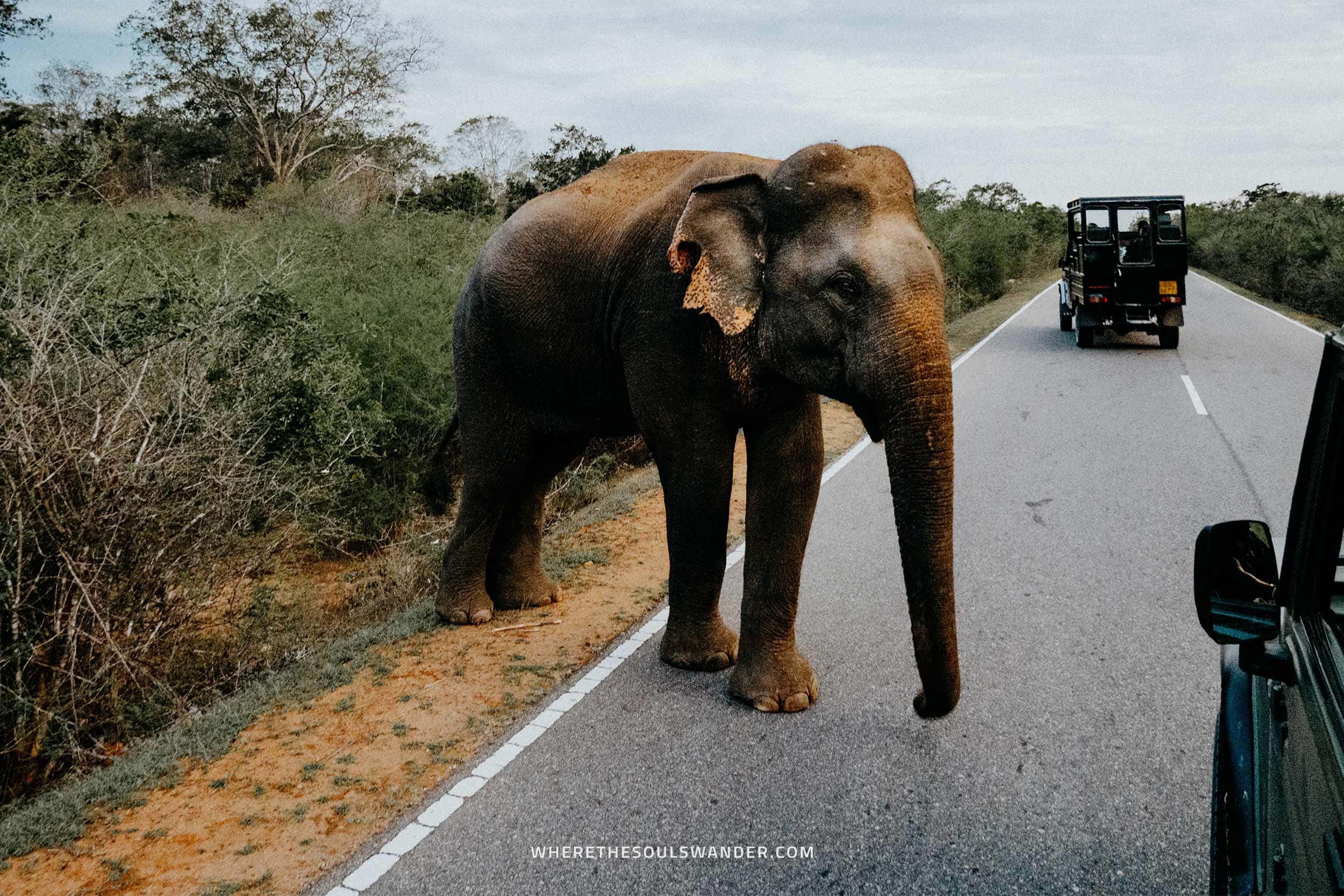
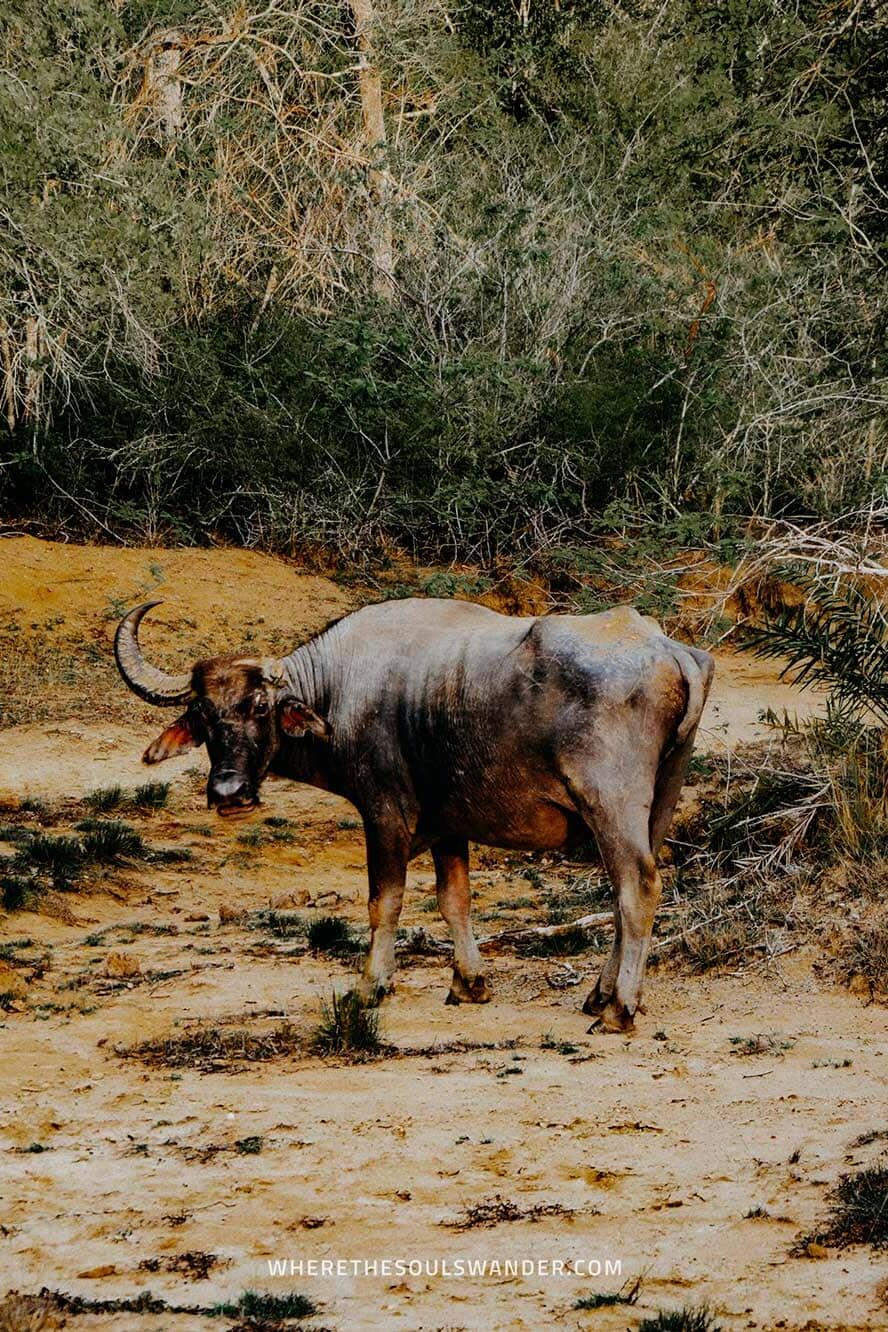
Although taking a safari tour doesn’t guarantee that you’ll see every animal that lives in the Yala National Park, it’s safe to expect to get up close and personal with water buffalos, wild boars, spotted deer, monkeys and peacocks.
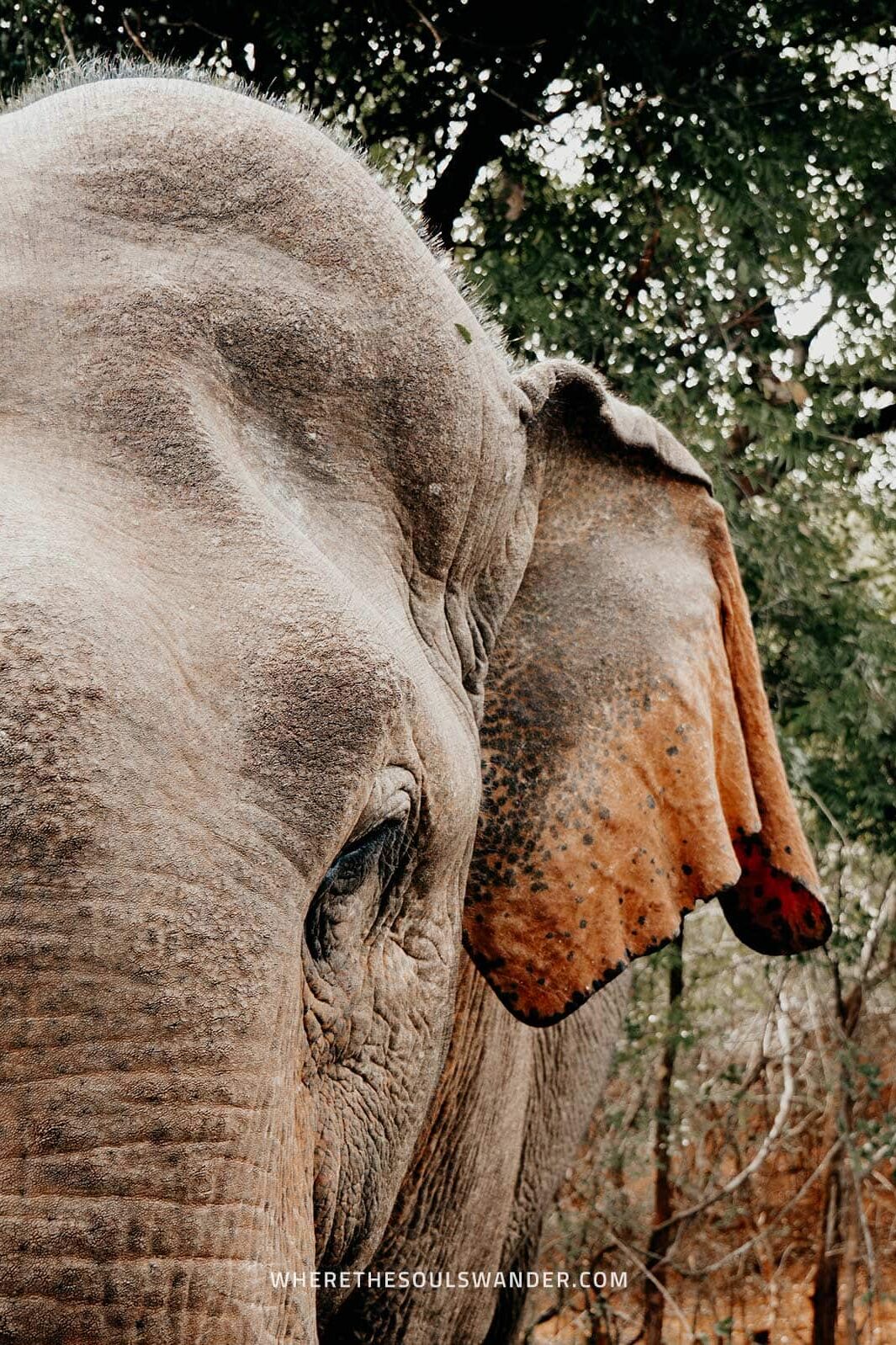
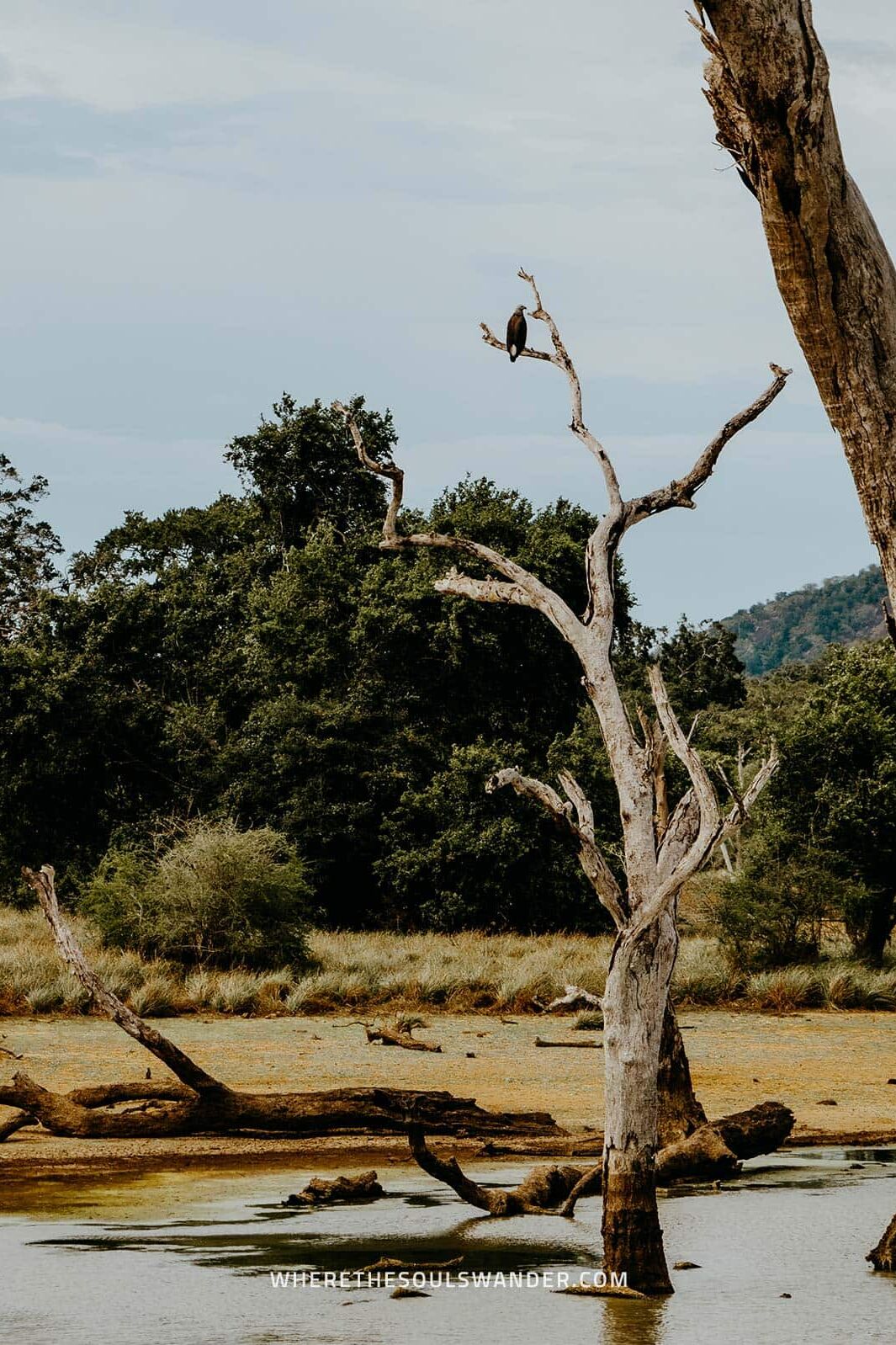
Beyond the aforementioned wildlife, there is the potential sighting of leopards, elephants, Black Sloth bears, Fishing cats, Red Slender loris and crocodiles.
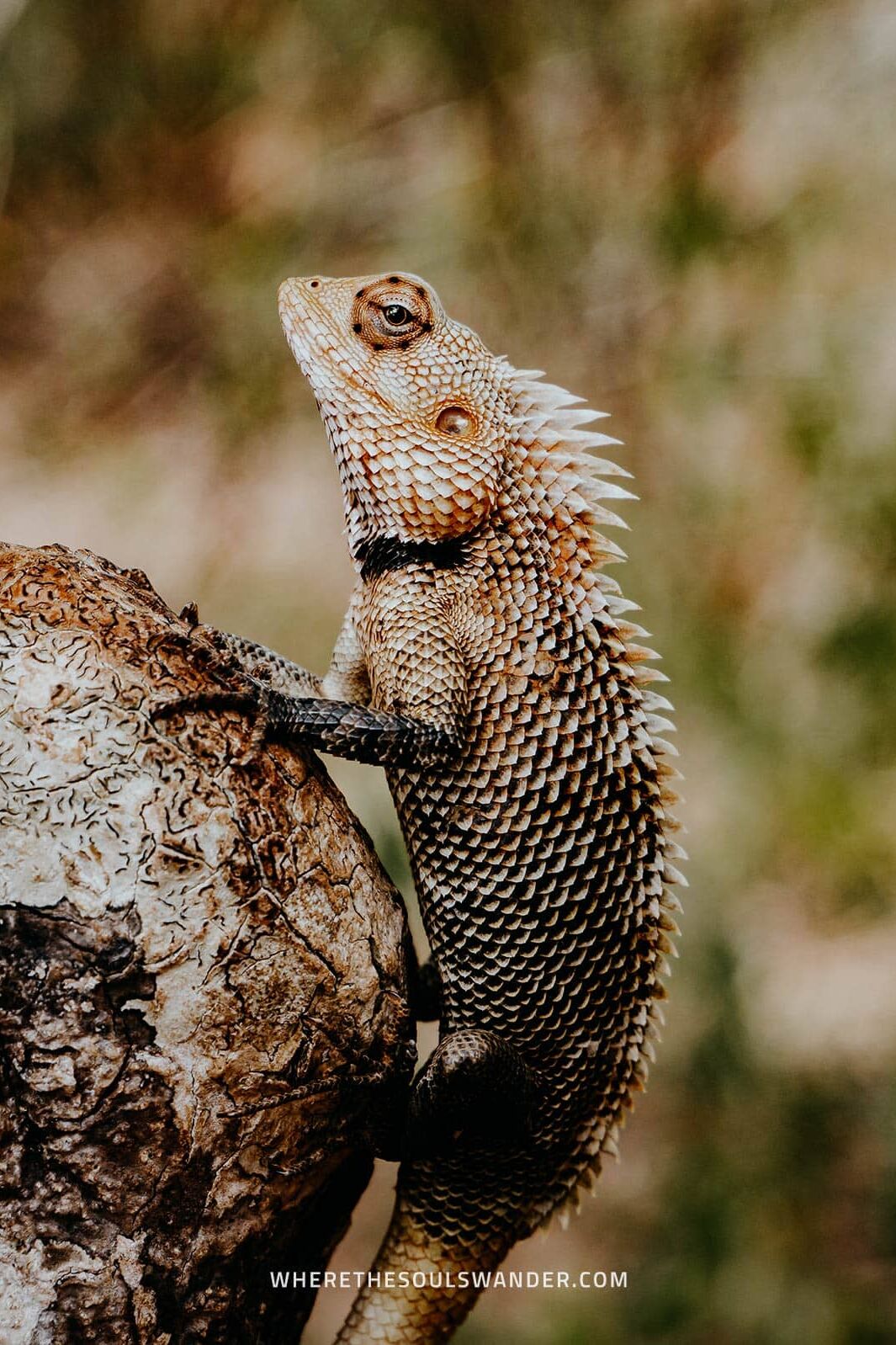
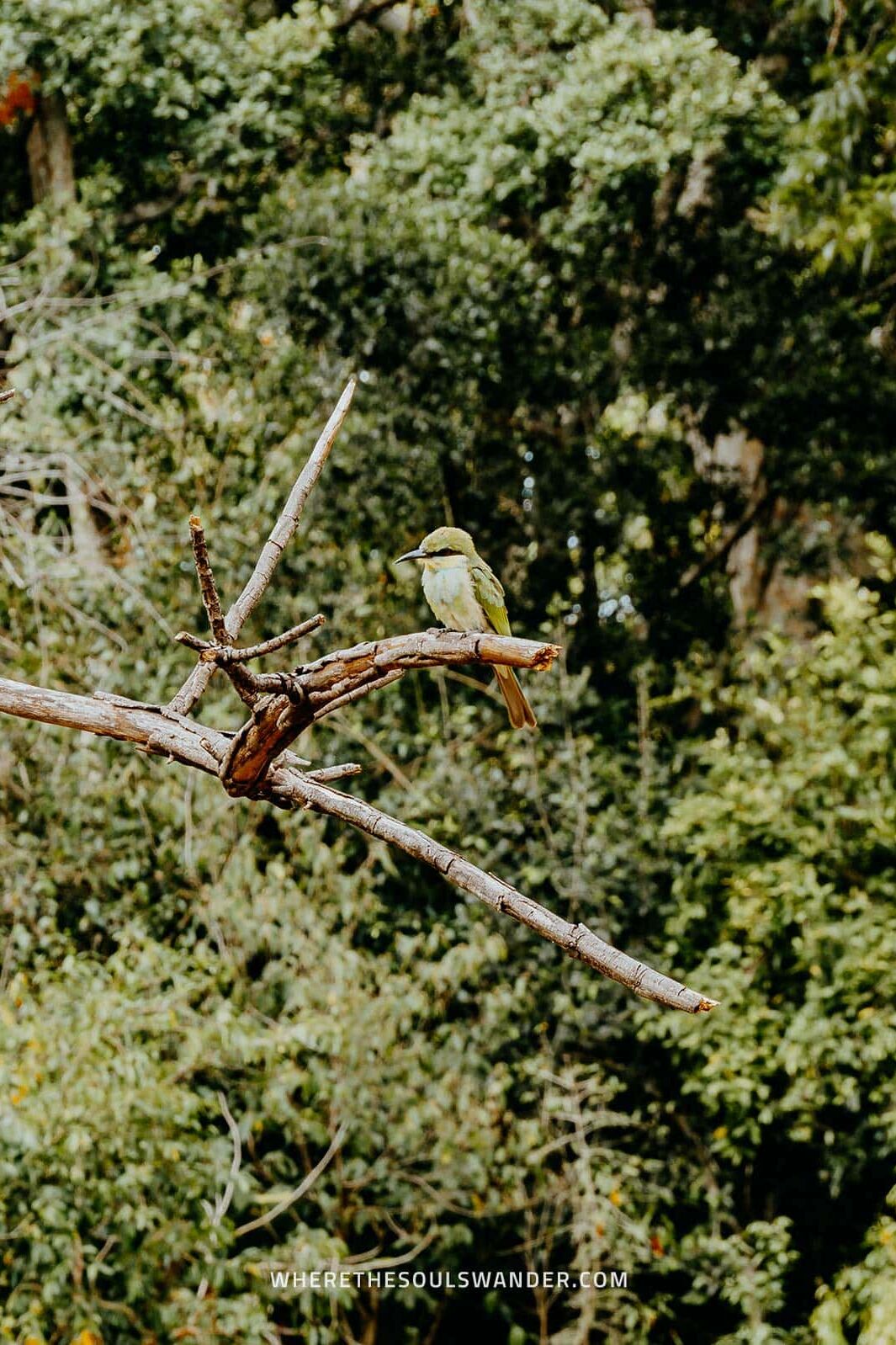
In total, the Yala National Park is home to 44 species of mammals, 215 species of birds and 46 species of reptiles, which makes it impossible not to spot any animals during your safari.
Leopard sightings in Yala National Park
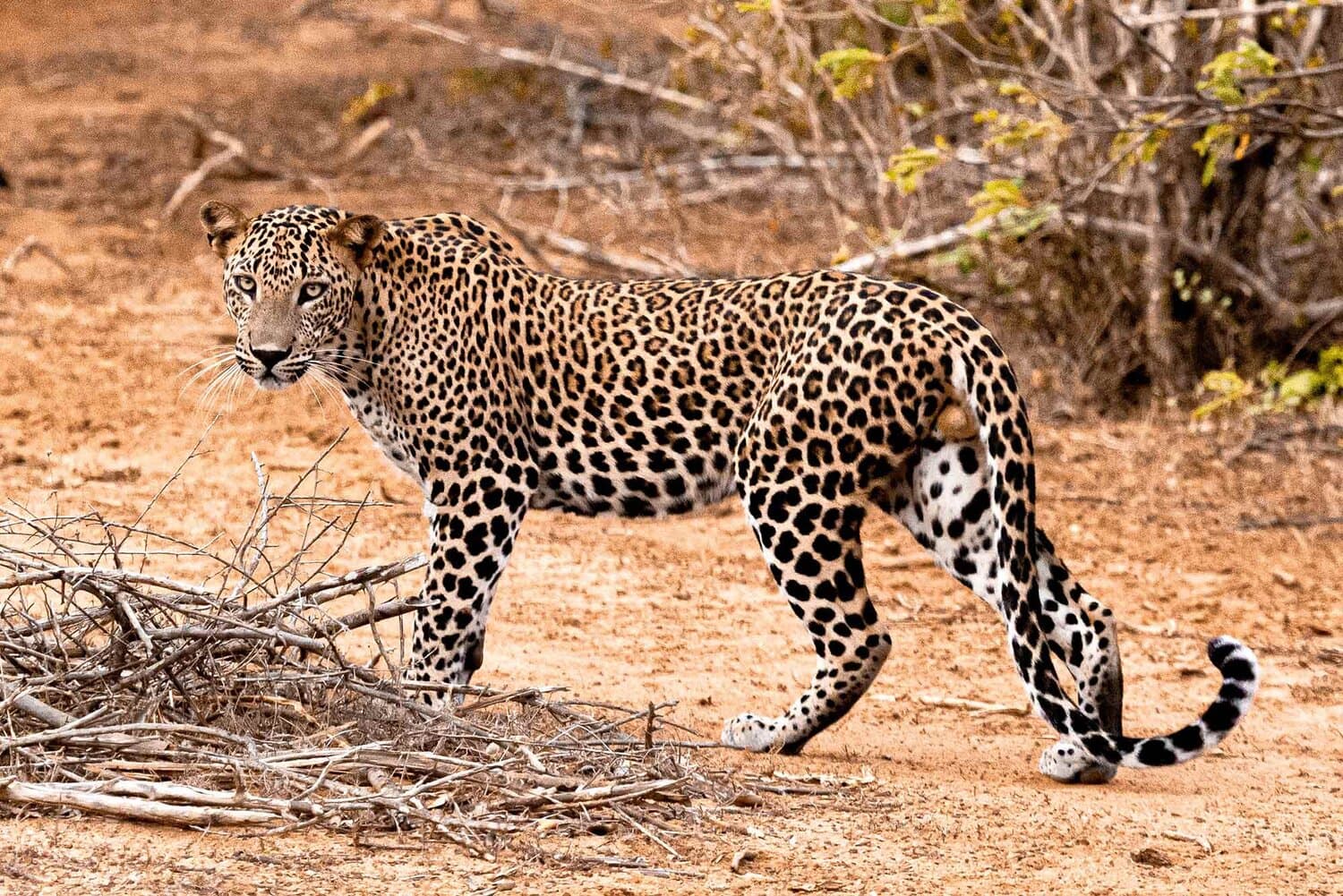
According to extensive research, Yala National Park is said to have the biggest concentration of leopards in the world.
And given there live roughly 55 leopards within the park, you might have the good fortune to encounter one during your jeep safari in Yala.
However, each safari is completely unique and it’s impossible to guarantee what animals you’re going to see (especially the rare species). Therefore I highly recommend lowering your expectations, as it’s less common to encounter leopards.
Join a Yala National Park tour
Tissamaharama is home to an abundance of safari tour operators, that are all extremely willing to take you on your once-in-a-lifetime Yala National Park safari experience.
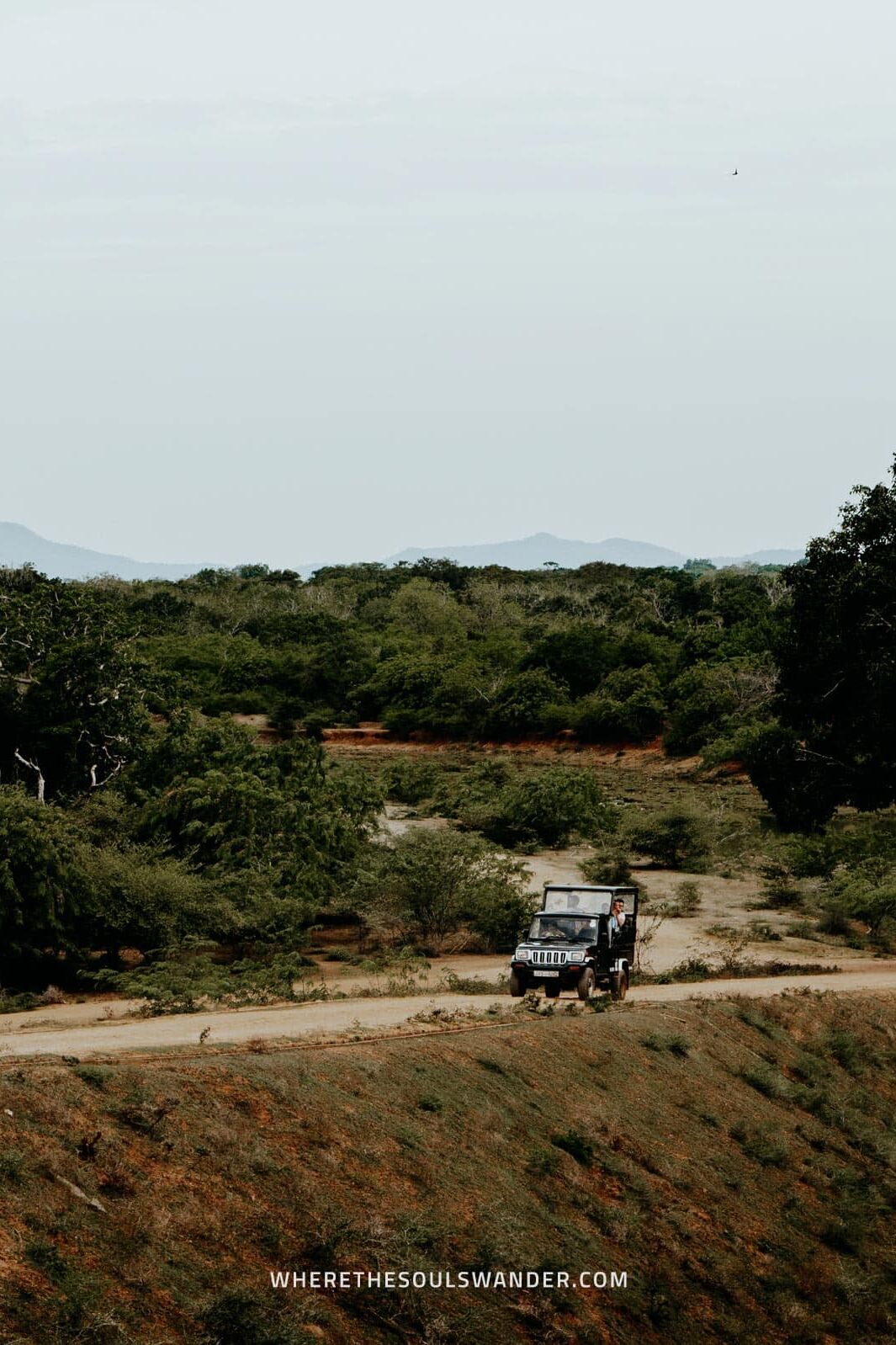
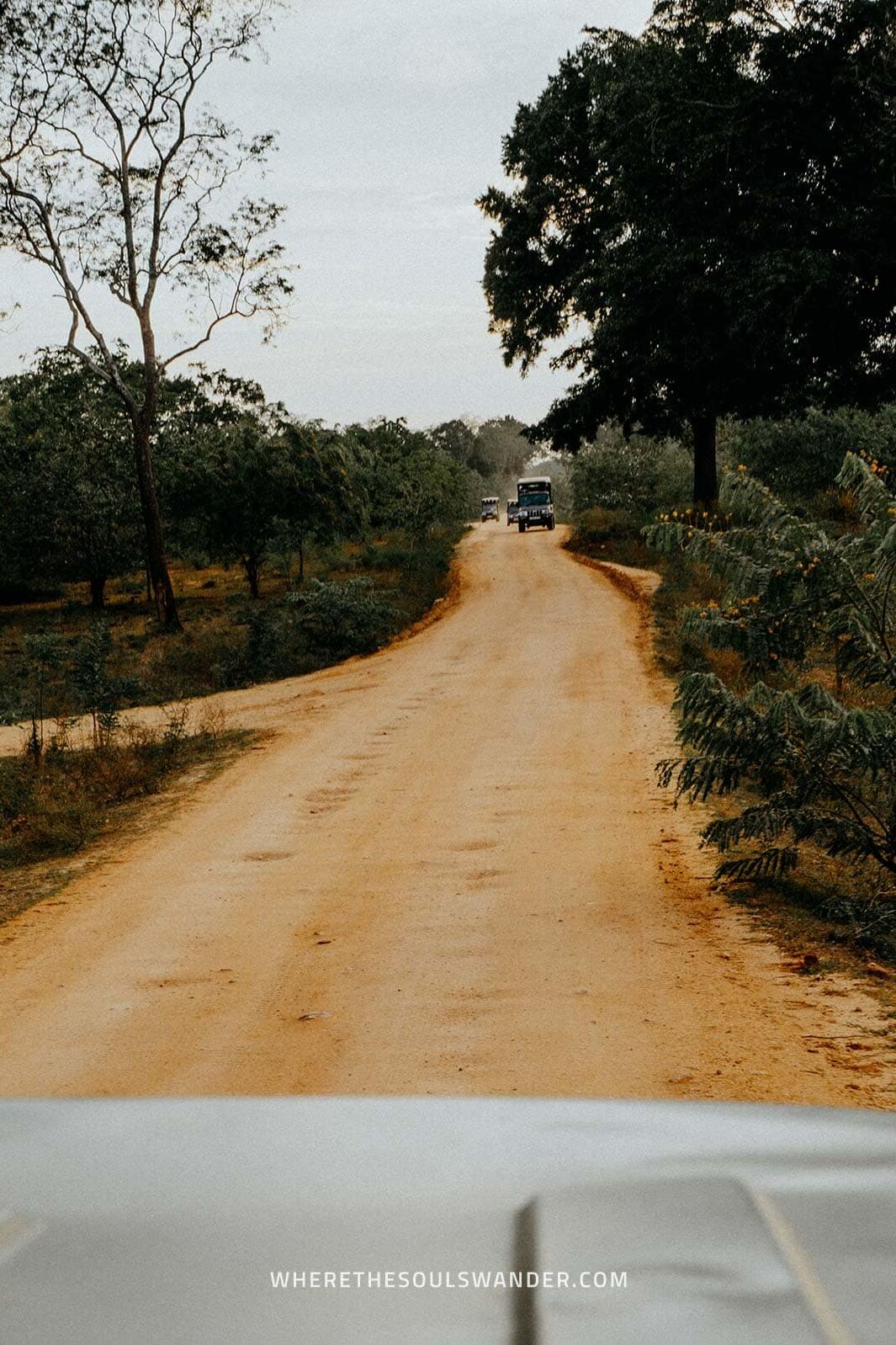
A Yala safari jeep has the capacity for up to 6 people and the safari tour operator will usually arrange a pick-up and drop-off at your accommodation.
Yala National Park can be visited as part of a morning, afternoon or full-day jeep safari.
Book | Arrange your Yala National Park Safari Tour in advance
Morning safari in Yala National Park
It is often said that a morning safari in Yala National Park provides the best circumstances when it comes to the potential sightings of elusive wildlife.
This is mainly due to the fact that the animals aren’t yet disturbed by the countless amount of jeeps that drive along the park’s dusty roads throughout the day.
Even though waking up at 04.30 is pretty intense, it’s safe to say that it’s completely worth it.
By joining a morning safari, you’ll get picked up at your accommodations around 05.00 with the mission to arrive at the entrance of the park before it opens at 06.00.
In my opinion, the best part of a morning safari is the exciting journey to the park whilst it’s still dark, knowing you’re about to witness exquisite wildlife while it’s still relatively quiet in the park.
BOOK | This extremely popular guided safari during the golden hour
Duration | 05:00 – 10:00 with approximately 3 hours in the park.
Afternoon safari in Yala National Park
A great alternative for those who experience difficulties when waking up early is taking the slightly more popular afternoon safari in Yala National Park.
According to most Yala safari rangers, there isn’t a significant difference between the morning and afternoon safari when it comes to the sightings of wildlife.
I’ve seen a great variety of animals during my afternoon safari in Yala National Park, and found it a tranquil yet adventurous experience – plus I witnessed a magnificent sunset while leaving the park.
Duration | 13:00 – 18:00 with approximately 3 hours in the park.
Full-day safari in Yala National Park
Although it sounds pretty attractive, I personally wouldn’t recommend going on a full-day safari in Yala National Park.
Being in the park for 12 hours straight is extremely exhausting – plus you should keep in mind that you’re in the park during the hottest part of the day. Believe me, this can be quite intense in Sri Lanka.
It is also not guaranteed that you’ll see more animals during a full-day safari than during a morning or afternoon safari in Yala National Park.
Duration | 05:00 – 19:00 with approximately 12 hours in the park.
Yala National Park cost overview
The price of a jeep safari is made up of the official Yala National Park entrance fee – plus the price that you’ll arrange with your safari tour operator.
The price of a safari tour operator varies and depends on the following elements: the duration of the tour, the tour operator and the number of people that join the safari tour.
The jeep safari tour prices are often per jeep, which can hold up to six persons, and are easy to organize at nearly every accommodation in Tissamaharama.
I made an insightful summary, so you’ll have a clear indication of the costs of a jeep safari in Yala National Park.
Yala National Park entrance fee in 2024 | 11.000 LKR, ($37.50) per person
Half-day jeep safari | 14.000 – 17.000 LKR ($47.60 – 57.80) per jeep
Full-day jeep safari | 28.000 – 34.000 LKR ($95 – 115) per jeep
Yala National Park | The essentials
The best time to visit Yala National Park
Although you can visit the park year-round, the absolute best time to visit Yala National Park is during the dry season. This season runs from February to June, with February and March as the undisputed peak months to spot leopards.
It is said that it’s easier to spot wildlife during this period, mainly because of the deficient natural water resources that are available in the park. For that reason, animals get active to go out of their hideouts and drink from the accessible water ponds.
I personally visited Yala National Park during the offseason in September and had a great safari experience with an impressive number of animal sightings.
Do keep in mind that there is a great possibility you’ll find the park closed for maintenance in September.
How to get to Yala National Park
The Yala National Park is slightly off the beaten path compared to other popular sights in Sri Lanka. This doesn’t mean you’ll have to be discouraged, it’s more than worth the extra effort.
The only gateway to the Yala National Park is a town named Tissamaharama, which is best reached by local bus or car.
The journey by bus can be quite long, intense and exhausting, but trust me, it’s one of the best ways to experience daily local life.
Do keep in mind that the local bus stops frequently and that you’ll need to change busses on several occasions to reach Tissamaharama.
The Yala National Park is usually visited after Mirissa, Ella or Arugam Bay.
From Mirissa to Tissamaharama
Bus journey | Mirissa – Matara – Tissamaharama
Cost | 250 – 330 LKR, ($1.30 – 1.80) per person
Travel time | Around 3.5 hours
From Ella to Tissamaharama
Bus journey | Ella – Tissamaharama
Cost | 220 – 250 LKR, ($1.20 – 1.35) per person
Travel time | Around 2.5 hours
From Arugam Bay to Tissamaharama
Bus journey | Pottuvil – Monaragala – Wellawaya – Tissamaharama
Cost | 350 – 380 LKR, ($1.90 – 2.10) per person
Travel time | Around 6.5 hours
Insightful travel tips for a visit to Yala National Park
Photography gear | If you’re into serious photography you might want to bring your camera and zoom lens. See what’s in my camera bag here.
Sunscreen | Even though the jeep is partly covered, the sun can be extremely harsh during a safari in Yala. Better safe than sorry.
Bug repellent | It’s always good to have a good bug repellent within hand reach.
Sweater | Bring a warm sweater. This will be your best friend during a morning safari.
Drinking water | Bring drinking water to stay hydrated throughout the day.
No toilets in the park | Do keep in mind that there are no toilets available inside the park.
Visit without expectations | Last but not least, lower your expectations before going on a safari. Every safari is unique and there is no guarantee that you’ll see all the animals you hope to see.
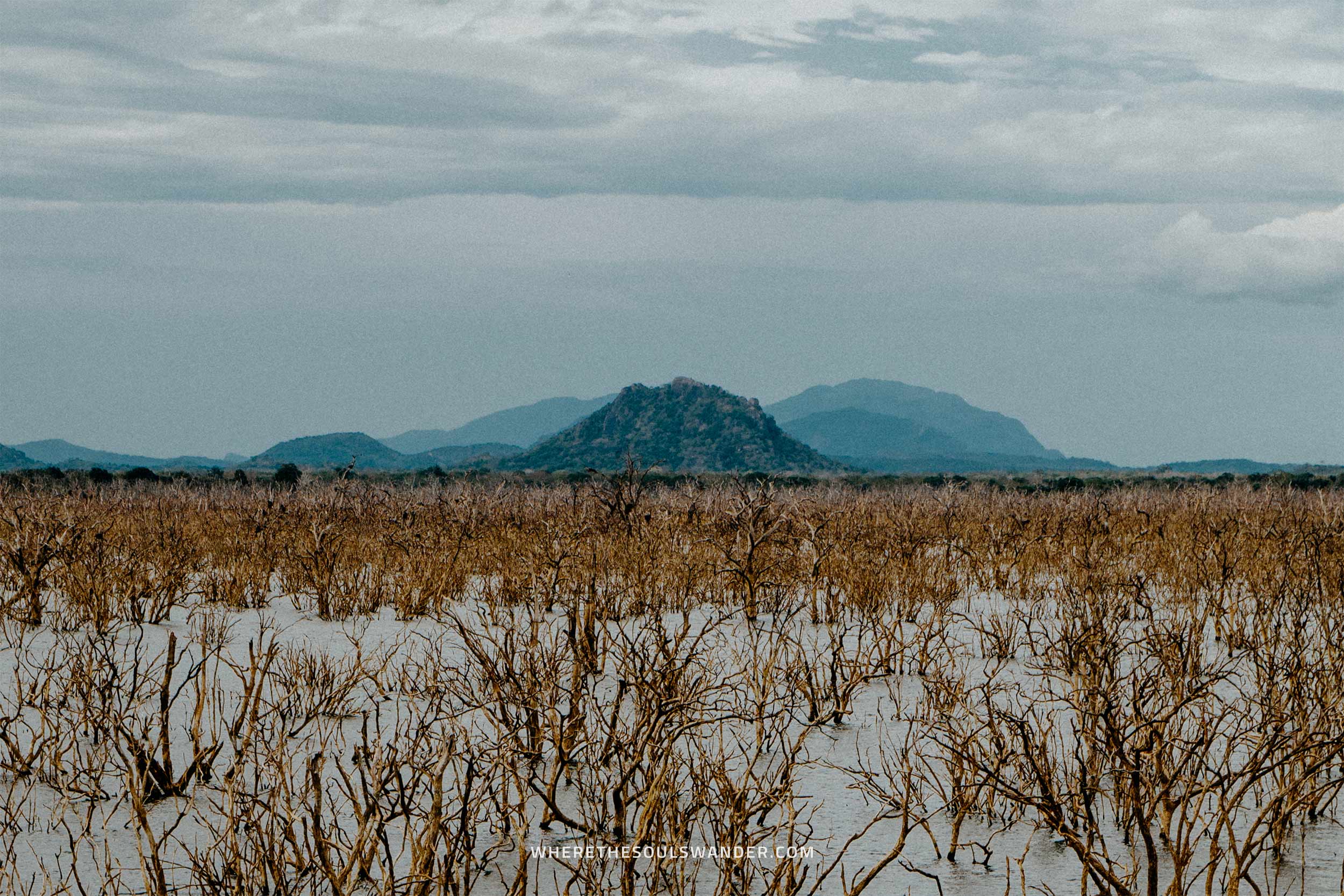
Stay safe in Sri Lanka | Travel insurance
Though Sri Lanka is perfectly safe for travellers, I always strive to sort out my travel insurance before arriving in a foreign country, and I highly advise anyone else to do the same.
Where we prefer that everything goes smoothly during our travels, something unfortunate can happen at any moment, whether it’s an injury or an accident on the road. When that happens, it is better to be safe than sorry.
Heymondo | Whether you’re going on a 3-week backpacking trip, or planning a long stay somewhere abroad, Heymondo has excellent insurance options either way – plus full COVID-19 coverage and a handy app with 24-hour medical assistance. Readers of WTSW receive 5% off any insurance policy, more information here.
Cheers!
I’ve been on this travel blogging journey since 2019.
If you appreciate what I do here, these are some ways you can support me.
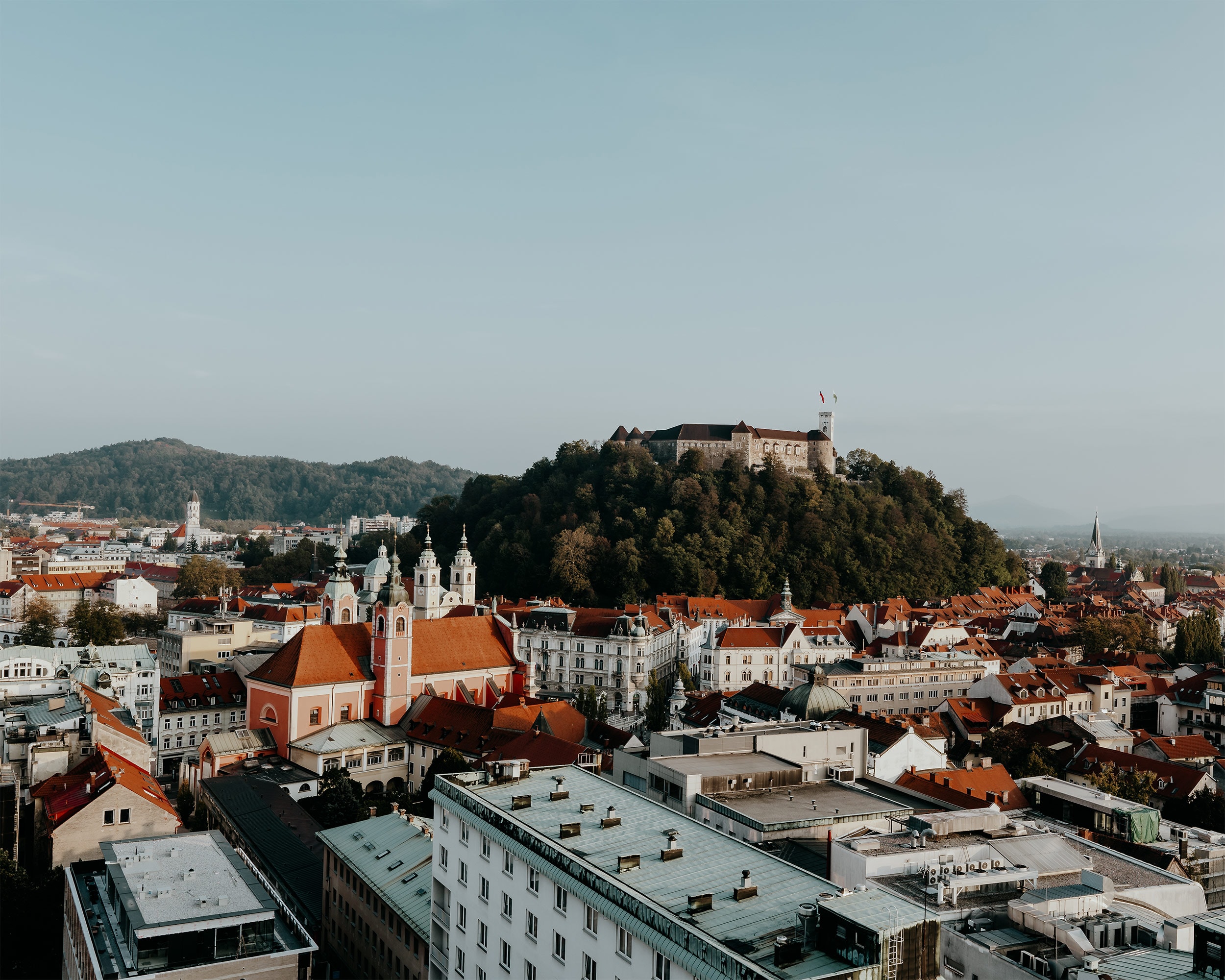
11 Incredible things to do in Ljubljana, Slovenia's lively capital
Ljubljana, Slovenia’s small yet lively capital will quickly steal your heart.
You see, Ljubljana is relatively compact, which gives the city a unique and more intimate feel compared to other better-known capital cities on this side of Europe.
Often used solely as a stepping stone to popular destinations such as Lake Bled, Bohinj, the Soca Valley or Kranjska Gora, Ljubljana is a beautiful place in its own right and one where you’ll easily spend a couple of days.
While it’s home to only 300.000 people, the city sure knows how to charm and captivate, with no shortage of unique things to see and do – especially on a warm summer’s day.
From charming cobblestone laneways filled with quaint Art Nouveau and Baroque architecture to the iconic Dragon Bridge, the trendy restaurants and cafes along the Ljubljanica river to the city’s vibrant artistic atmosphere, Ljubljana is quite frankly one of Europe’s best-kept secrets.
In this guide, I’ll cover the absolute best things to do in Ljubljana, a few personal tips on where to eat and drink, plus my picks on where to stay.
If you choose to use any of the links on this page, I may receive a small commission at no extra cost to you. By using these links, you’ll have a direct impact on WTSW and my ability to continue to create free insightful travel content for you. If you find any of my tips useful, you can support me by buying a virtual coffee here.
Where is Ljubljana
Situated in the heart of Slovenia and home to only 300.000 people, Ljubljana is the country’s small, yet lively capital city, as well as one of Europe’s best-kept secrets.
But despite that Ljubljana is rather compact in size, it’s extremely vibrant, with plenty of trendy cafes and restaurants, scenic cobblestone alleyways, and no shortage of captivating architecture dotted throughout the city centre.
Encircled by the Dinaric Alps, Ljubljana is also considered the least populated capital city in Europe, which to me, adds a special touch to this already amazing place.
Where to stay in Ljubljana
When it comes to accommodation, Ljubljana has no shortage of excellent options, catering to any budget and travel preferences.
Since Ljubljana is compact, most properties are situated in the old town, which is a great way to experience its authentic, medieval atmosphere.
Here are some of my personal favourites:
+ Stella Sky | Located right in the middle of Ljubljana’s old town, this super trendy apartment is well-priced, fairly spacious, fully equipped with a kitchen, and also has a lovely rooftop terrace with a pool.
+ Hotel Cad | Situated on the edge of Park Tivoli, about 2 kilometres from the city centre, the stunning Hotel Cad has been designed in an utterly stylish way, with fascinating details throughout.
Hotel Cubo | Another surprisingly affordable option, Hotel Cubo is situated only a stone’s throw away from all the best things to do in Ljubljana and offers modern rooms with fantastic breakfast included.
Atik Rooms | If you’re looking for a super comfortable apartment, without paying a fortune, look no further. With spacious rooms, a comfy bed, and its excellent location in the heart of the city, this option is great for those spending a few days in the city.
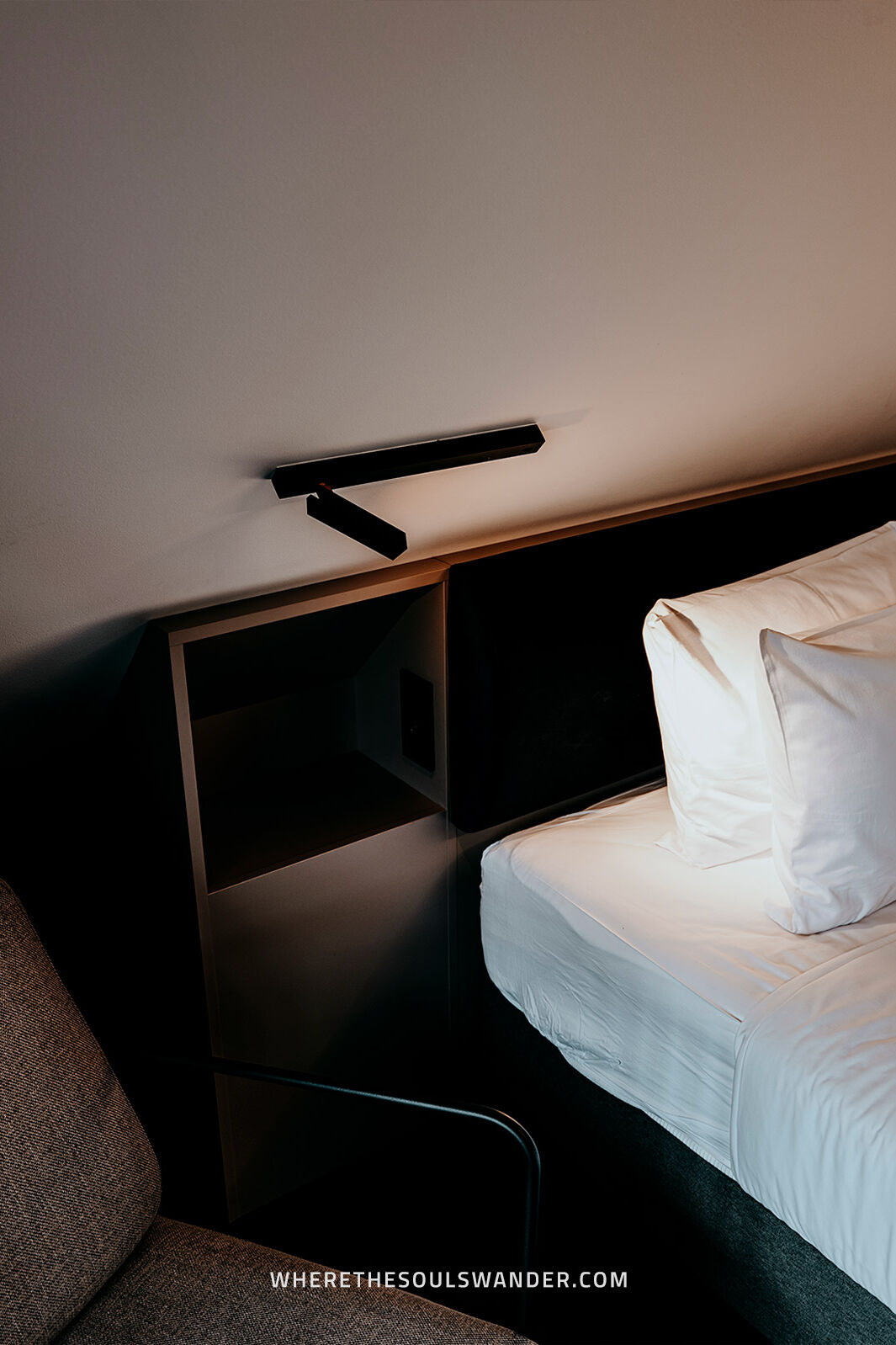
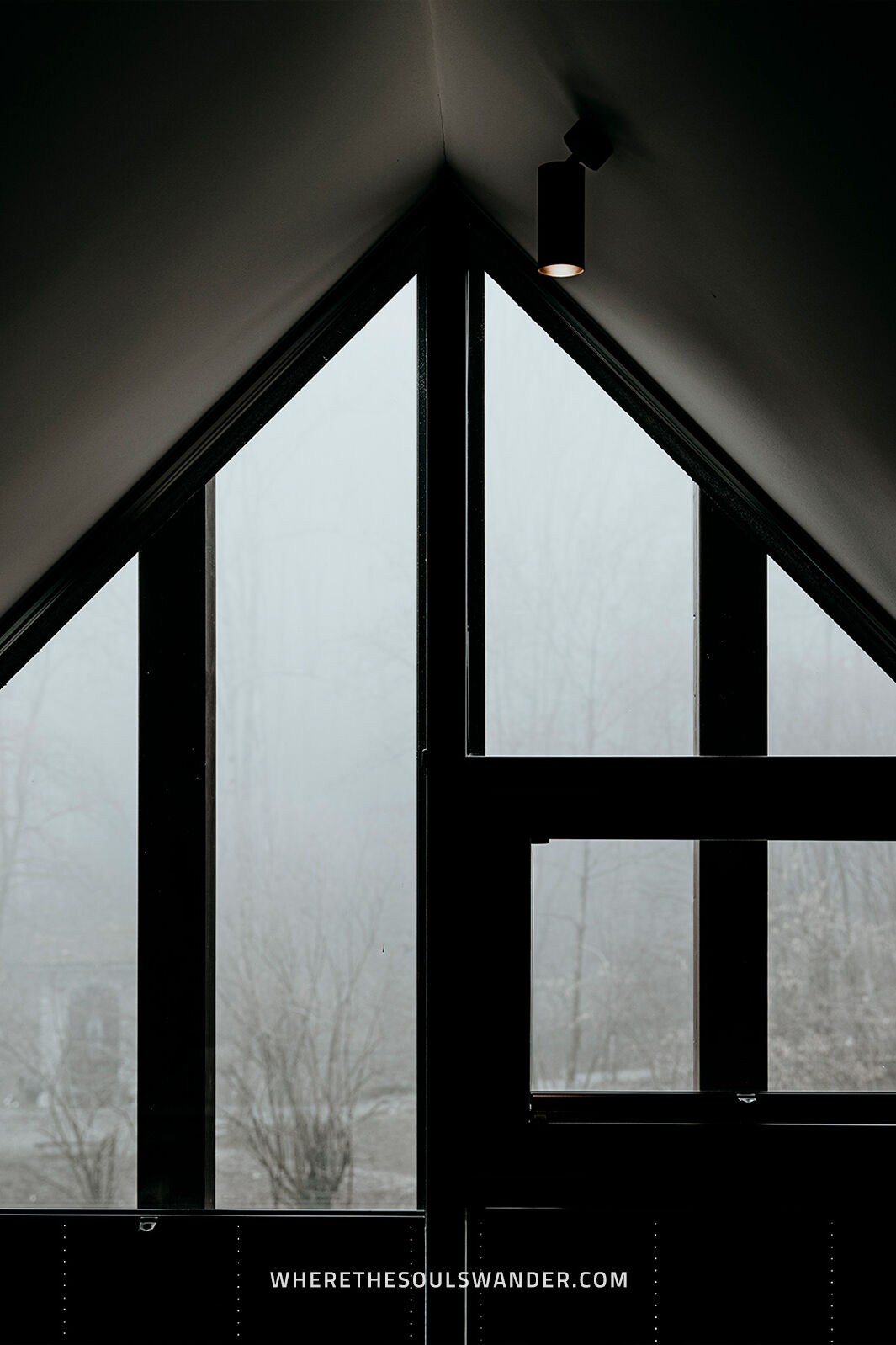
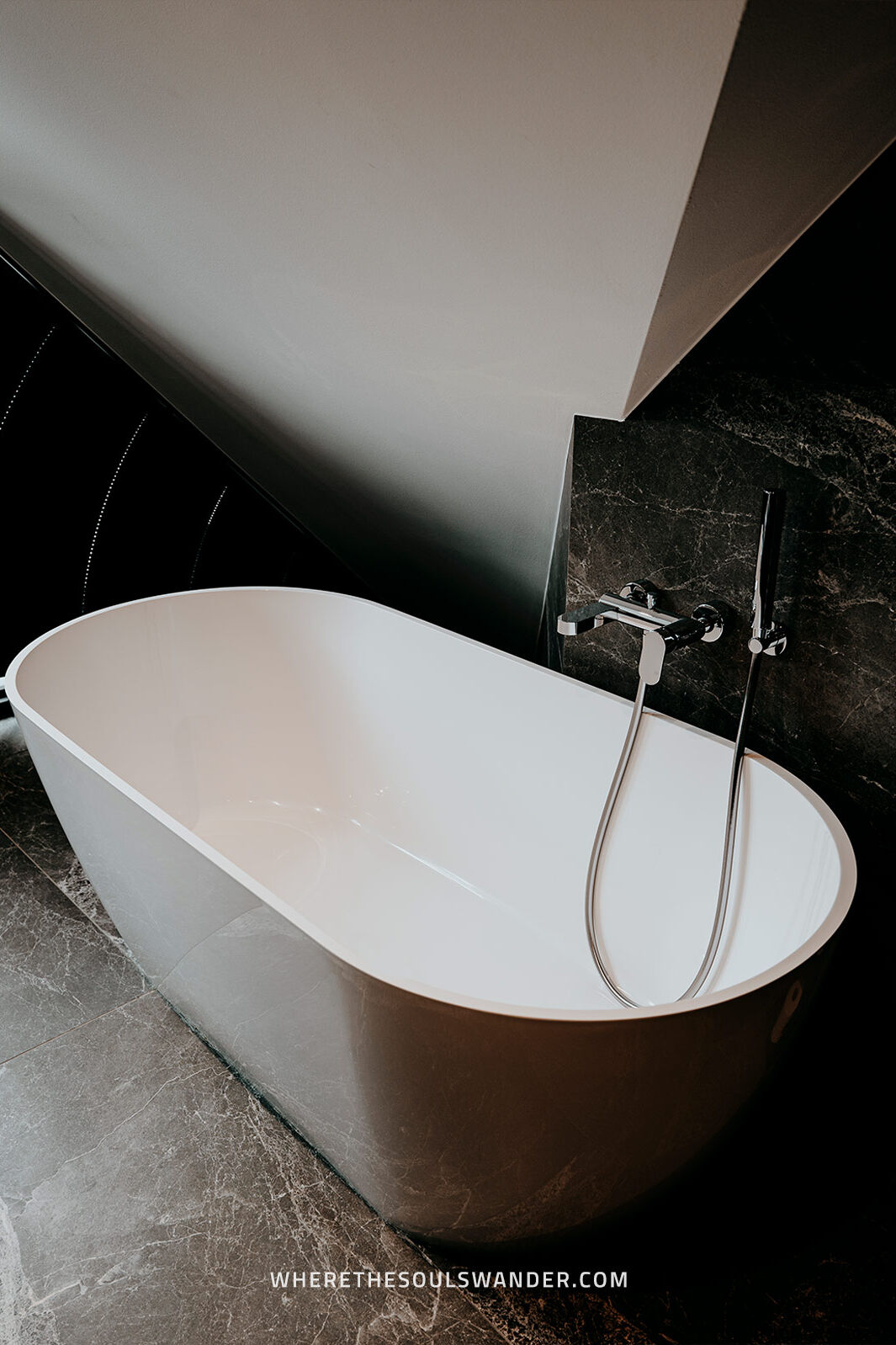
11 Incredible things to do in Ljubljana, Slovenia
1. Meander at the old town’s incredible architecture
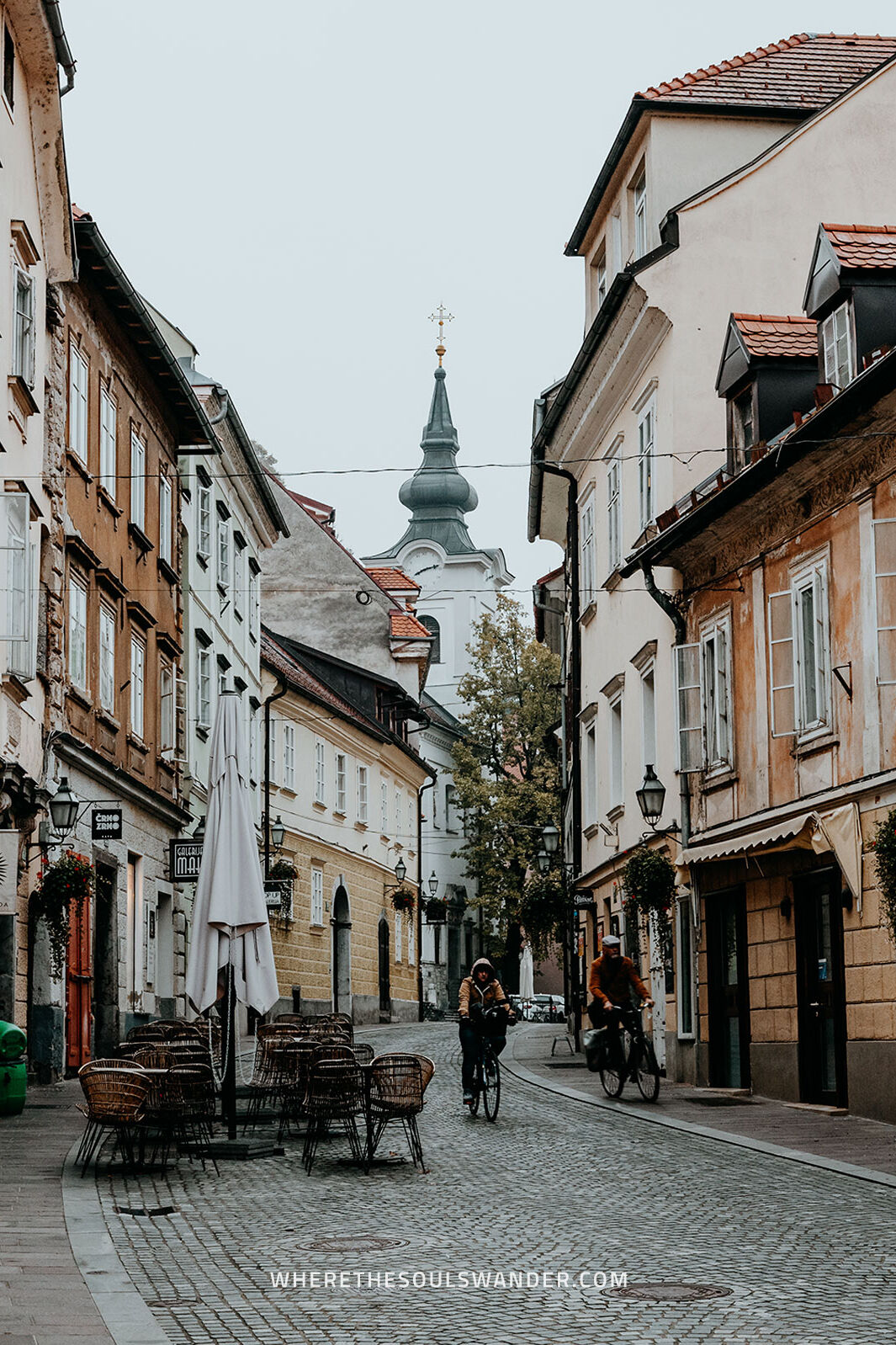
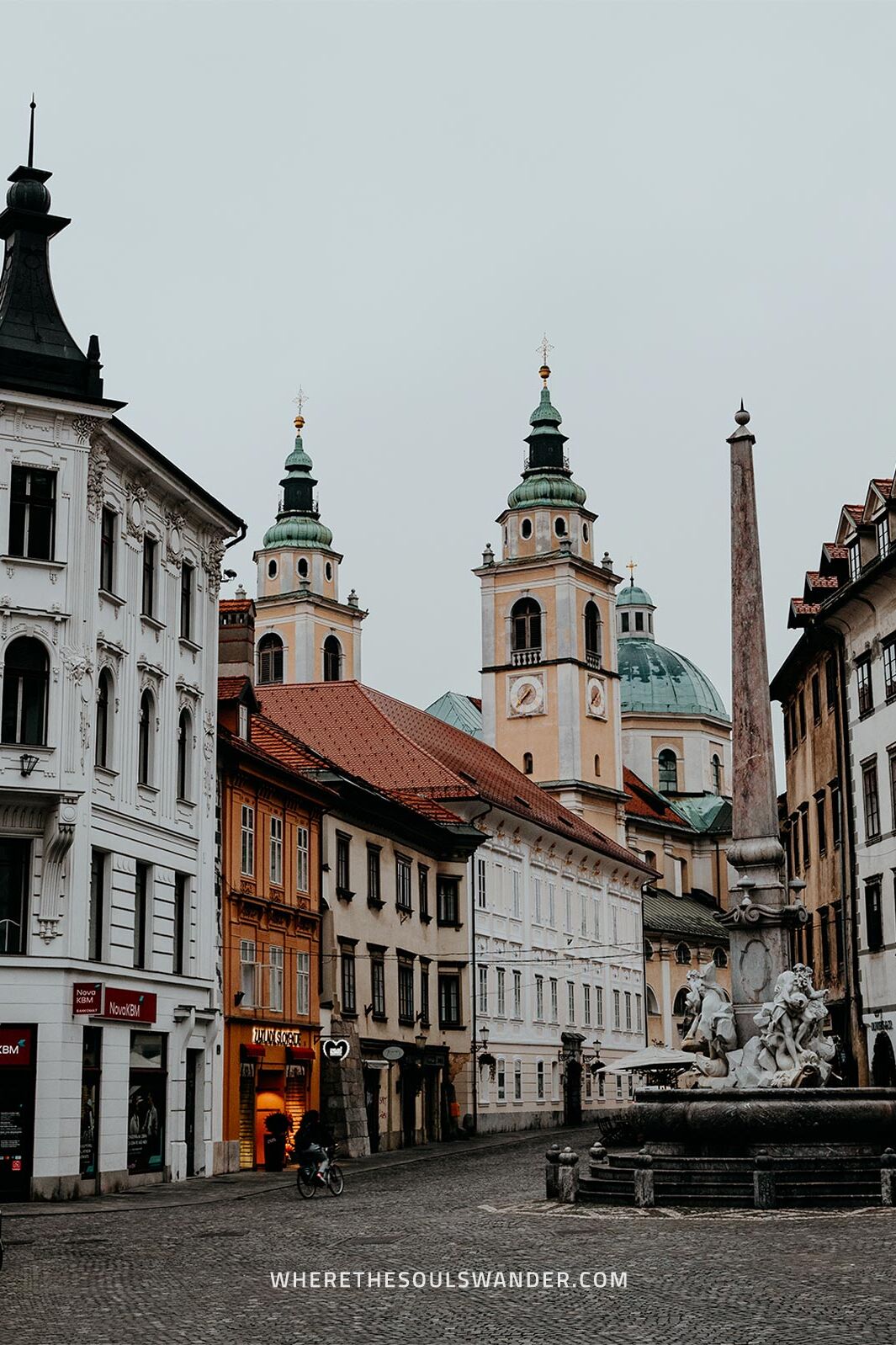
Defined by its quaint Art Nouveau and Baroque architecture, charming cobblestone laneways, and iconic bridges, Ljubljana is without question one of the most attractive towns in Europe.
While the old town itself is relatively compact, it has become my favourite part of town, given there’s no shortage of astonishing architectural highlights dotted throughout its narrow laneways.
These characteristic streets and alleyways are best explored first thing in the morning when the streets are nearly empty and the gloomy morning fog slowly reveals the town’s medieval charm.
Though it would be fair if I split out all that the old town has to offer as separate highlights, I decided to sum it up so you can easily tick them off all at once, if you’d like.
Below are my favourite places to find Ljubljana’s finest architecture.
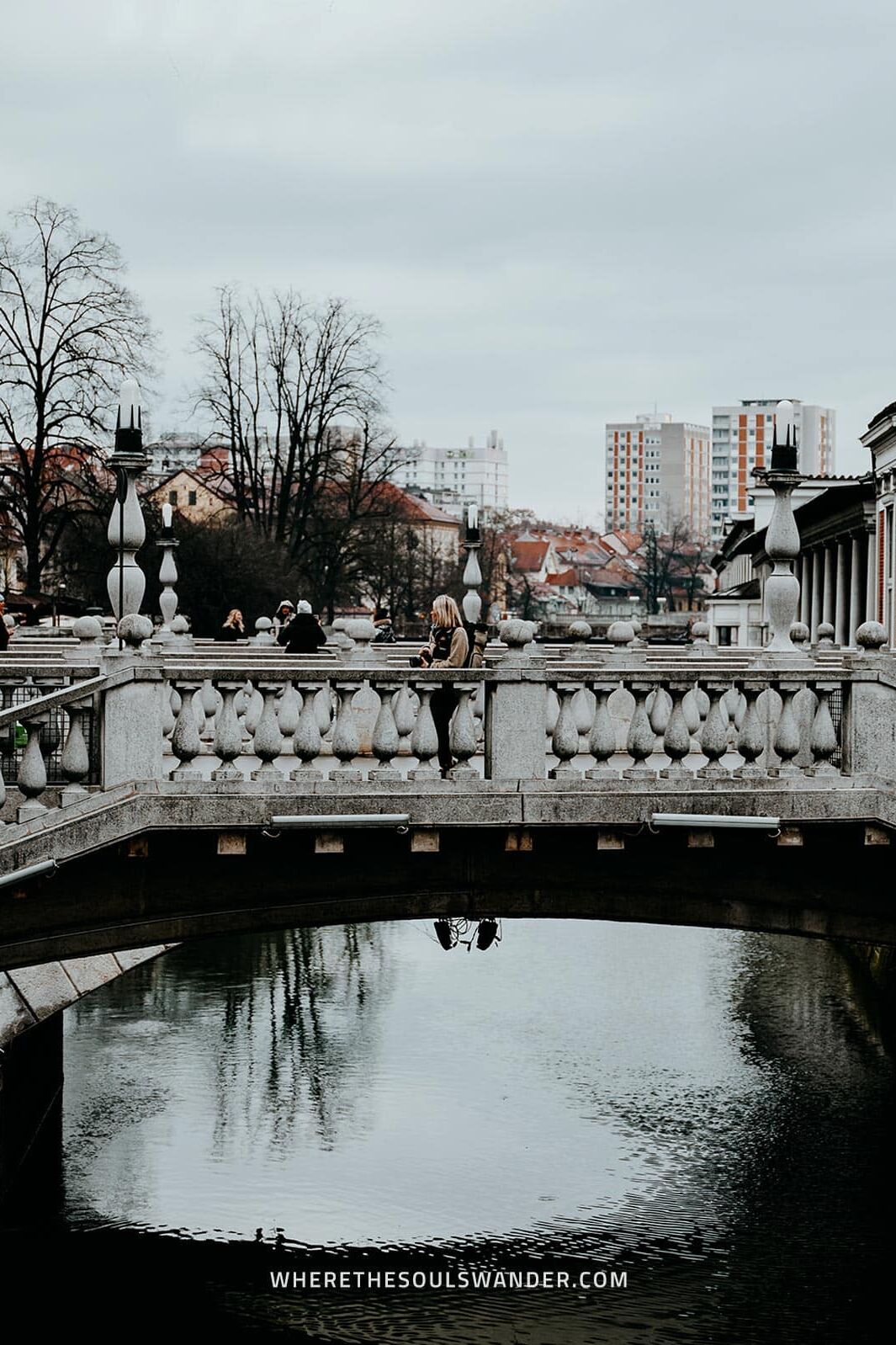
Preseren Square | Located at the heart of the city and home to the impressive 17th-century Franciscan Church, the monument of poet France Prešeren, and the white-washed Triple Bridge that connects the old with the new, the Preseren Square is arguably one of the most beautiful squares in Europe.
Mestni Trg square | Adjacent to Preseren Square is Mestni Trg square, a spacious medieval square where you’ll stumble upon the Ljubljana Town Hall and the famous Robba Fountain.
Stari Trg and Gornji Trg | Only 5 minutes away from the hustle and bustle of Preseren Square, the Gornji Trg Square might be a more quiet alternative, but it’s equally as charming, with fine Baroque architecture and plenty of charming cafes and boutiques.
2. Have a burger at Pop’s Place
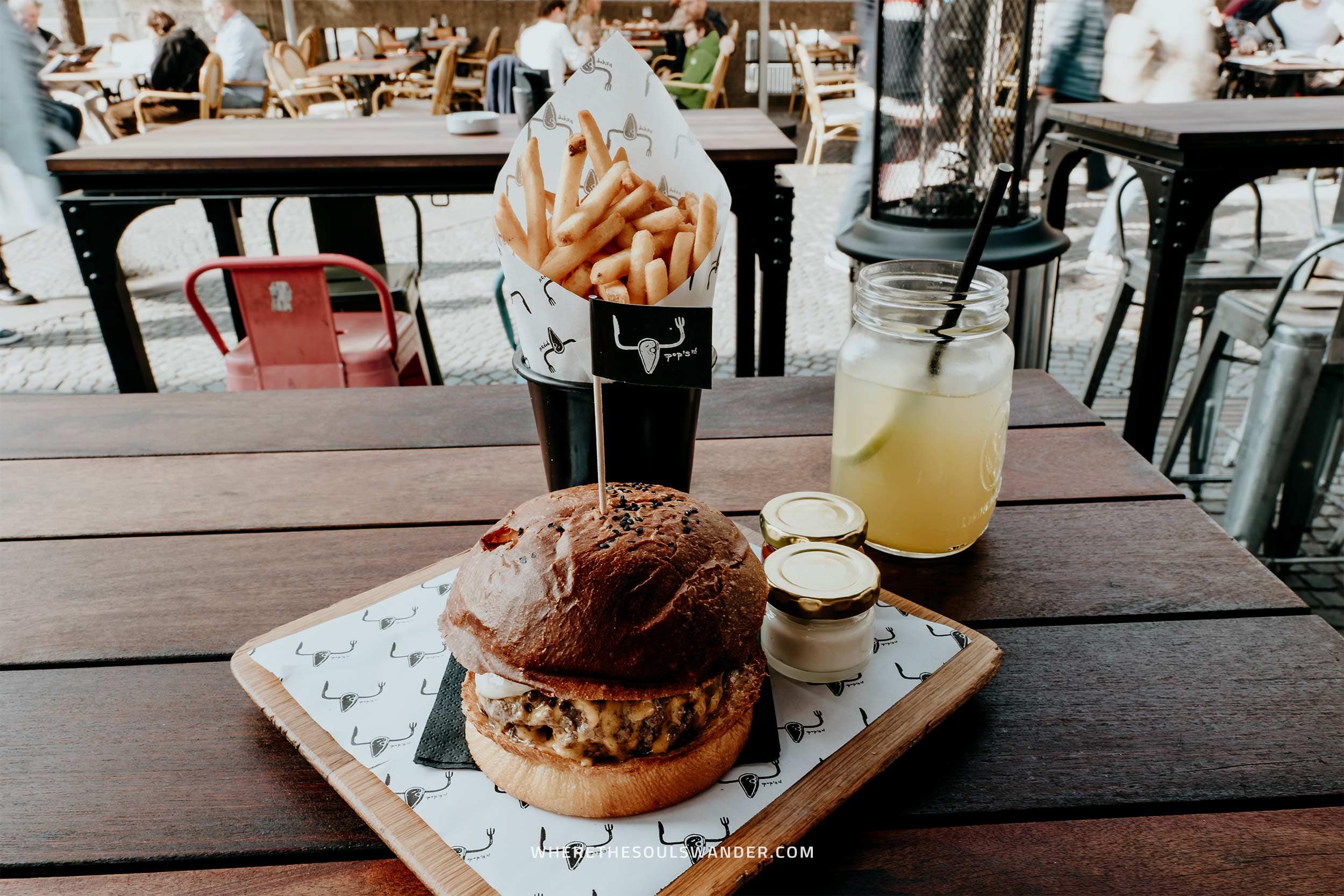
As a burger enthusiast by heart, I have to admit; my first stop in Ljubljana was Pop’s.
Nestled on the banks of the Ljubljanica River, Pop’s Place is a trendy burger joint, offering a wide range of mouthwatering gourmet burgers, as well as an excellent selection of Slovenian, regional, and international craft beers.
My burger of choice was the classic bacon cheeseburger; a 200g locally sourced beef patty with aged English cheddar, Pop’s signature sauce, and maple bacon jam on a perfectly toasted homemade brioche bun – it was outstanding.
If you’re not feeling like eating a burger, Pop’s Place also serves authentic barbecue dishes, including slow-cooked smoked ribs, Asian-style chicken wings and grilled Spanish peppers with Maldon sea salt to name but a few.
All in all, Pop’s is a place of excellent vibes and flavours, making it a must-visit for any burger enthusiast spending time in Ljubljana.
Where | Pop’s Place
Opening hours | Daily from 1200 to 0000
3. Explore vibrant street art at Metelkova
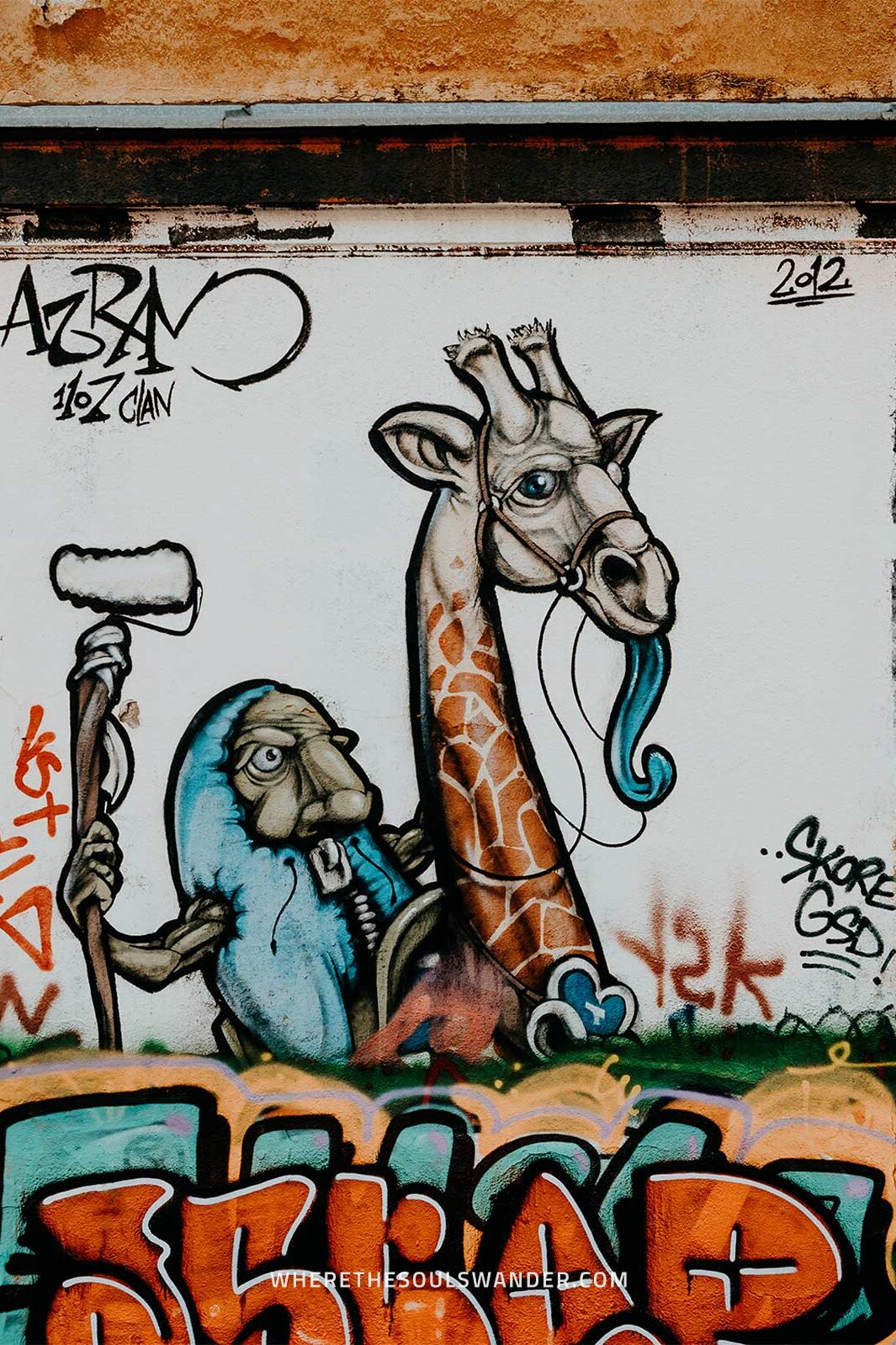
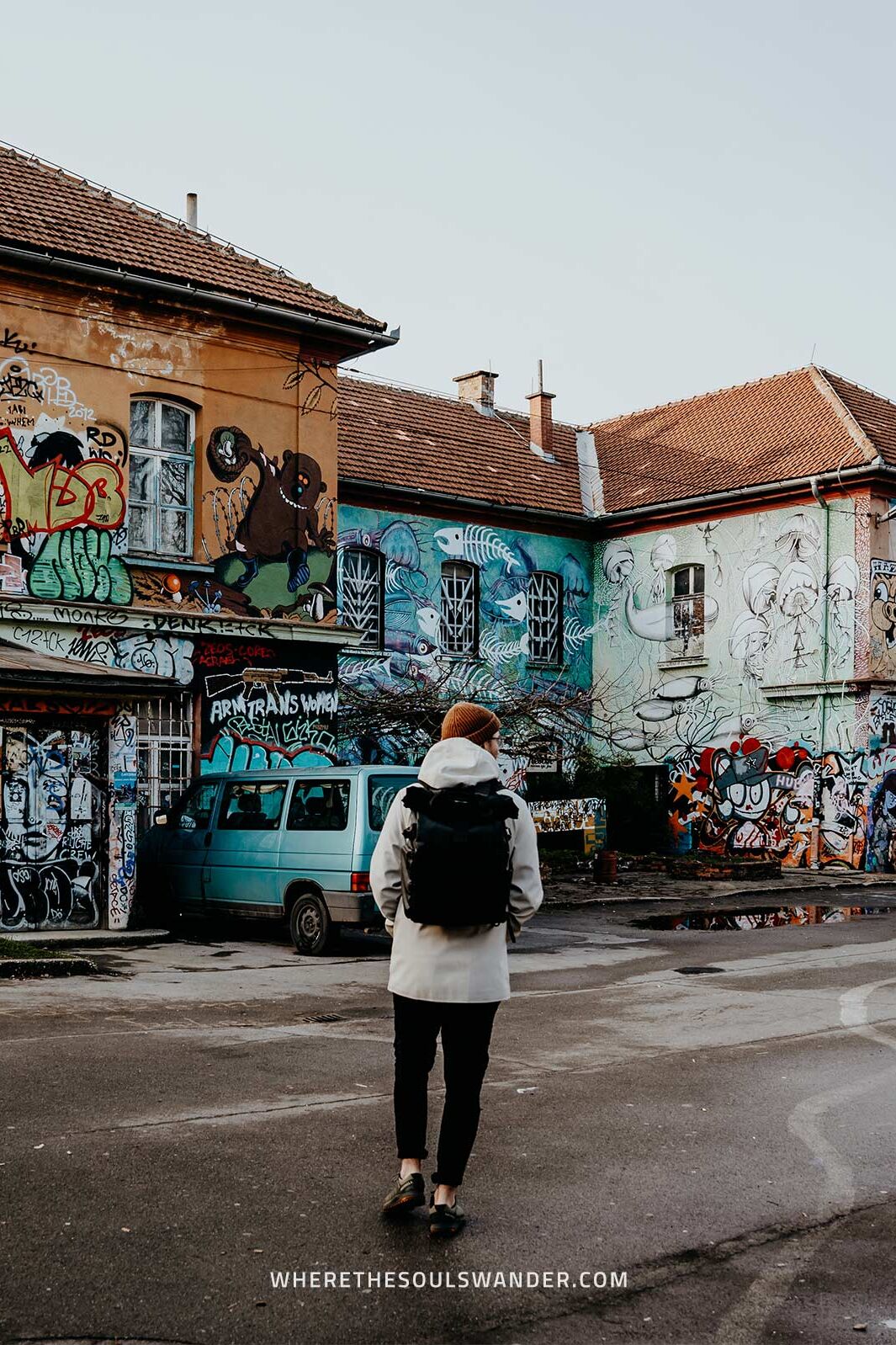
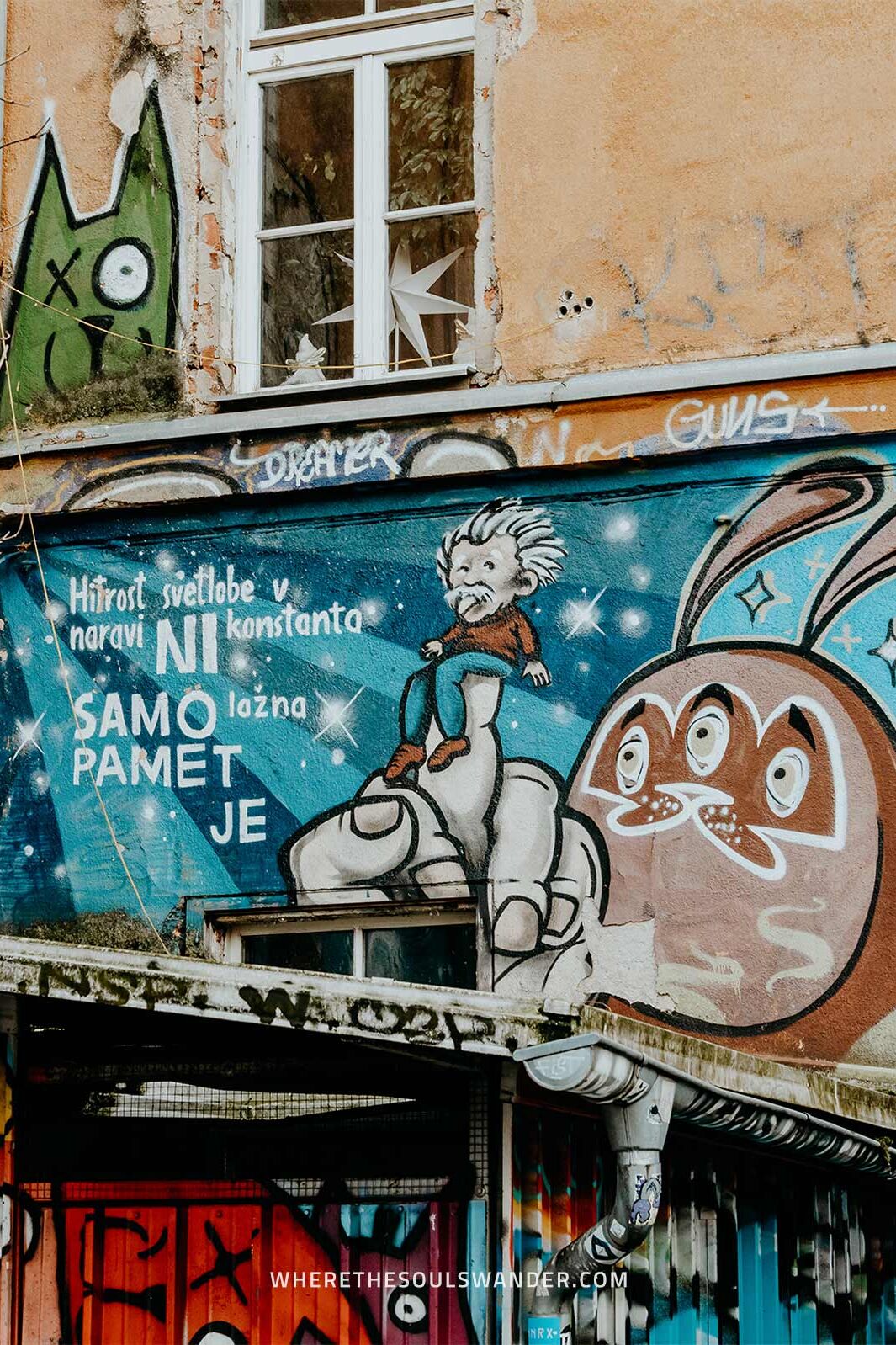
If finding the dopest street art in an unexplored city gets your blood pumping, I’m pretty sure you’ll take lots of joy wandering through the vibrant neighbourhood of Metelkova.
Metelkova, with its unusual and somewhat atrocious appearance, is considered one of the best-known centres of independent artistic activity in Europe.
Situated in the heart of Ljubljana, Metelkova is a former military barracks turned cultural hub and is packed with vibrant street art, extravagant graffiti murals and contemporary art galleries, which makes it one of the more unique things to do in Ljubljana.
At night, Metelkova turns into a bustling place for those after a party, with underground raves, reasonably priced drinks and live Dj sets from both Slovenian and international DJs.
Not to mention, that you’ll find one of Ljubljana’s most unique accommodations in Metelkova; hostel Celica, a former Yugoslavian prison that has been transformed into a trendy hostel – talking about unique travel experiences.
All of this is discovered at just a 10-minute walk from the lively city centre, so make sure you pay a visit to this Ljubljana sightseeing gem!
Where | Metelkova
4. Admire modern art at Moderna Galerija
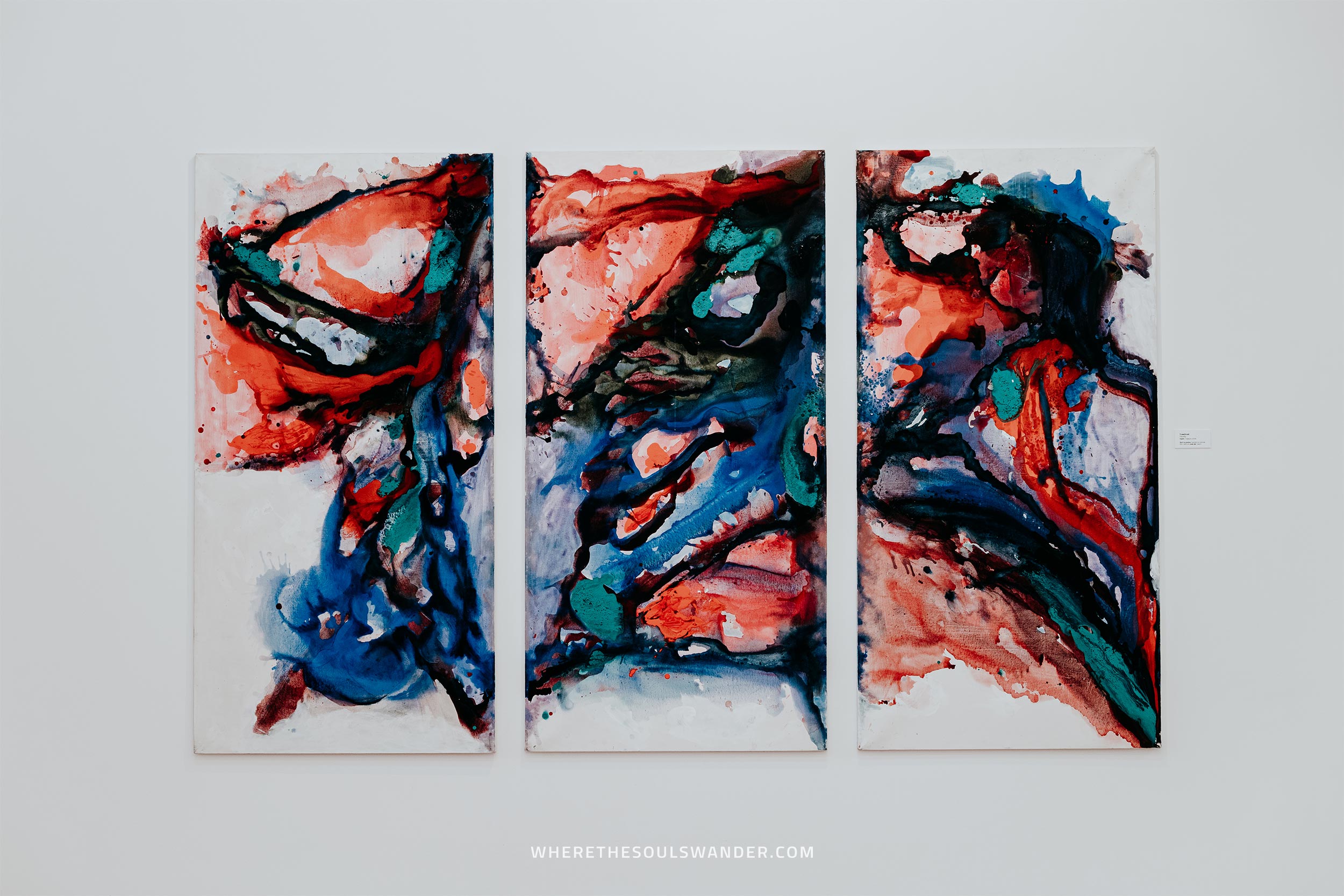
Set within a stunning 1930s building designed by Edvard Ravnikar; one of Slovenia’s most notable architects, the Ljubljana Museum of Modern Art is fully dedicated to the works of modern artists.
At present, visitors to the Moderna Galerija can lay their eyes on some of Slovenia’s finest modern artworks, with an extensive collection of fascinating paintings, sculptures, photographs and graphic art on display.
Some of my favourite works in the museum are the acrylic paintings of the collection: Abstract Art and Visual Art Theory by Marijan Trsar.
The works that are on display represent the final stage of his explorations of abstract art, with a clear focus on colours that he admired from works of impressionists and post-impressionists.
Other highlights include the paintings of Tone Kralj and Stane Kregar, the graphics of France Mihelic and the sculptures of Jakob Savinsek.
So, if you have time to add a museum to your list of things to do in Ljubljana, I’d highly recommend spending some time at the Museum of Modern Art.
Where | Ljubljana Museum of Modern Art
Opening hours | Tuesday to Sunday 1000 to 1800
Cost | €5,- per person
5 | Take in the views from the Nebotičnik Skyscraper
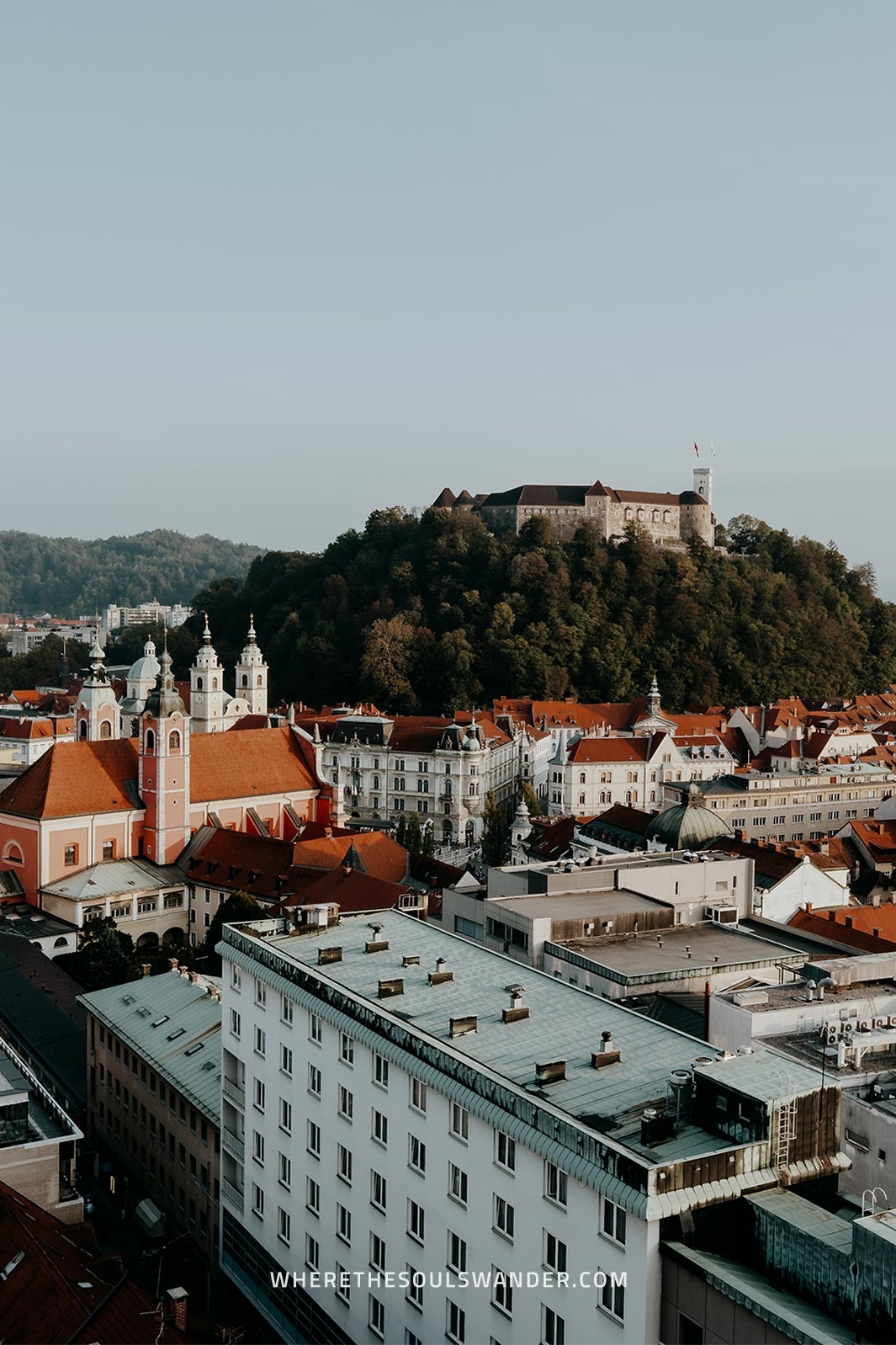
To get a better perspective of Ljubljana, make your way to the panoramic observation deck on the highest floor of the Neboticnik Skyscraper.
Build in 1933, this imposing building in neoclassical and art-deco style was once the tallest building in Yugoslavia and offers an extraordinary bird’s eye view of the city.
From atop, you’ll see some of the city’s most iconic landmarks, including the Ljubljana Castle, the Franciscan Church, and the Dragon Bridge. On a clear day, you can even see the majestic Julian Alps in the distance.
But it’s not just the views that make the Neboticnik Skyscraper one of the best things to do in Ljubljana.
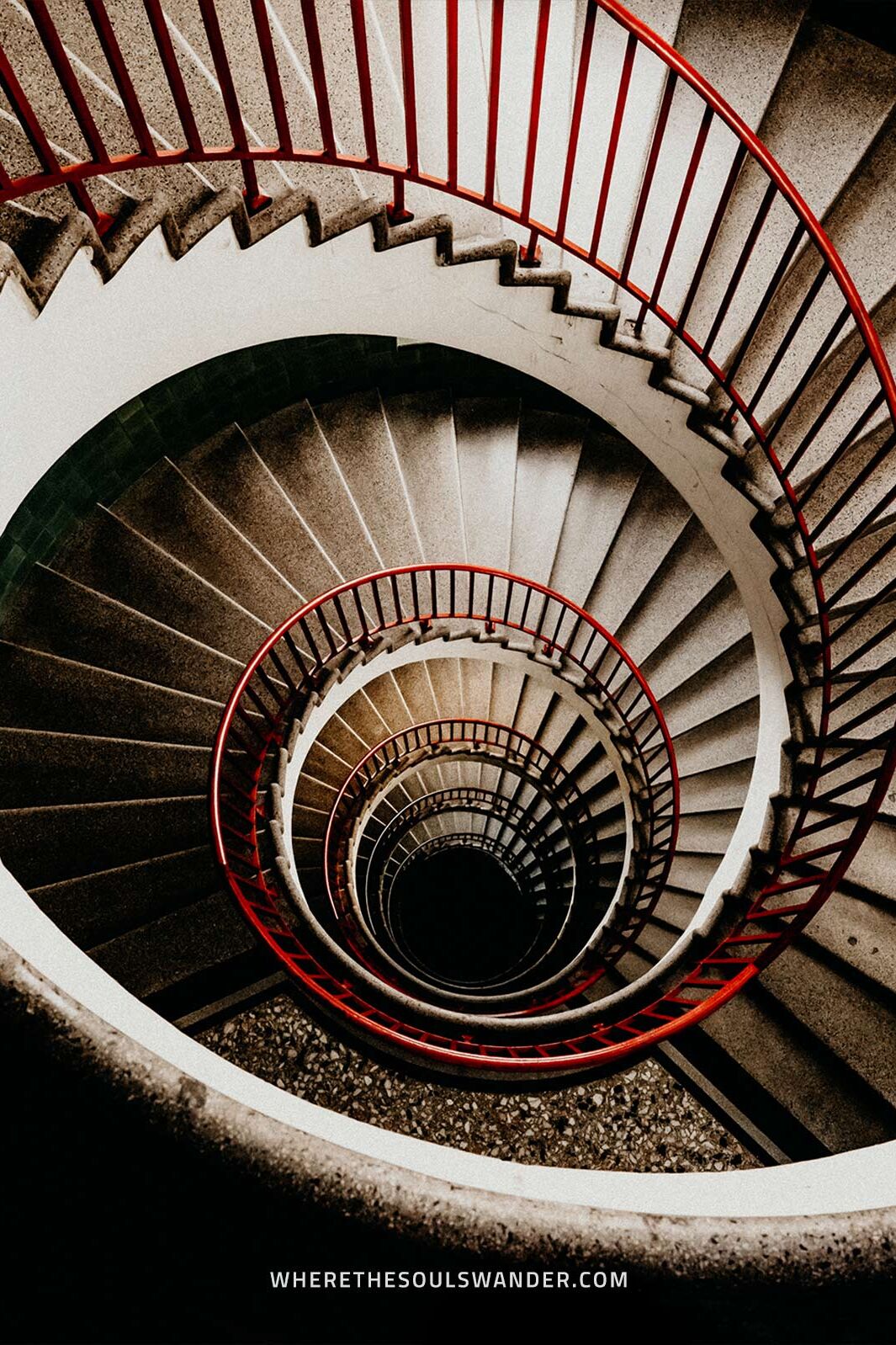
No, another great part of the skyscraper (and somewhat of a hidden gem), is the extremely beautiful art-deco-style spiral staircase, which is truly one of the building’s most remarkable features.
There’s also a restaurant, bar and cafe set on the 12th floor, perfect for lunch or sunset drinks.
Where | Neboticnik Skyscraper
Opening hours | Daily 0900 to 0000
6. Grab a coffee at Stow
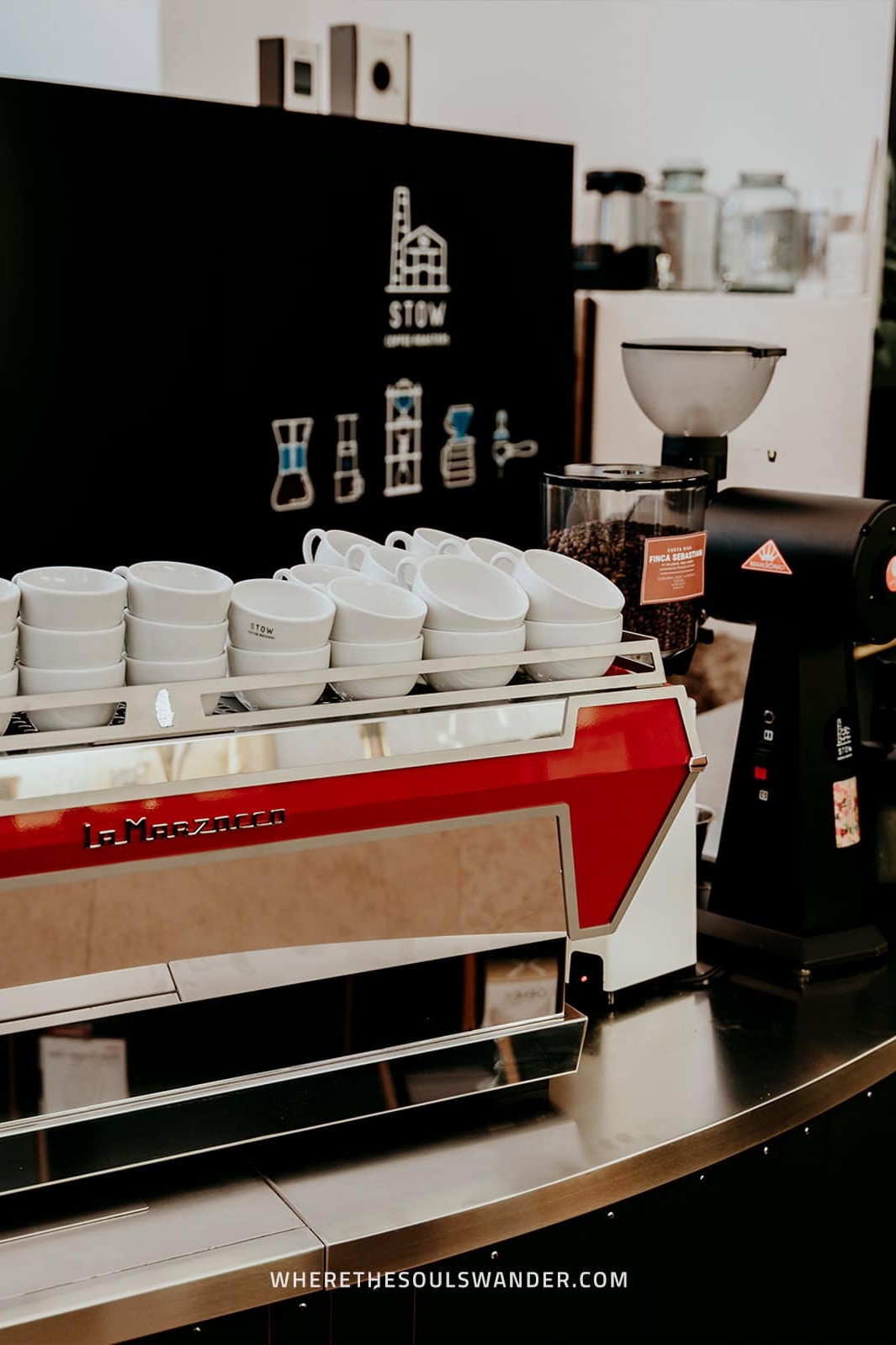
In my humble opinion, Stow Coffee is clearly the best place to get your caffeine fix in Ljubljana.
With a clear focus on freshly roasted speciality coffee, Stow opened its doors in 2015 to bring unique flavours into its visitors’ cups, by acquiring hand-harvested beans directly from farmers, before roasting them into perfection in their in-house roastery.
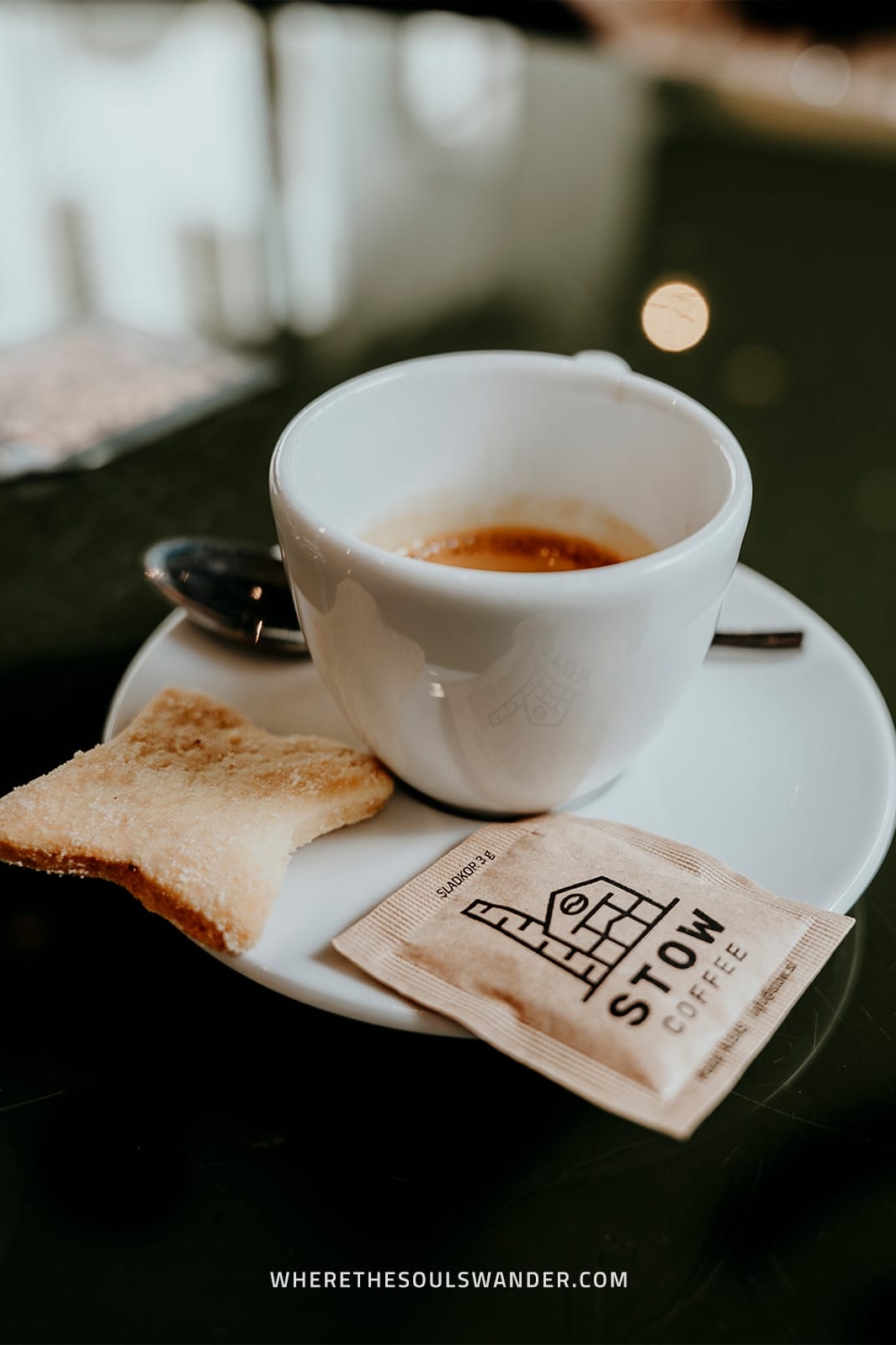
Tucked away in the City Museum of Ljubljana, this trendy cafe serves rocket-fuel espresso, a distinctive range of filter and cascara coffee, as well as freshly baked sweet and savoury pies.
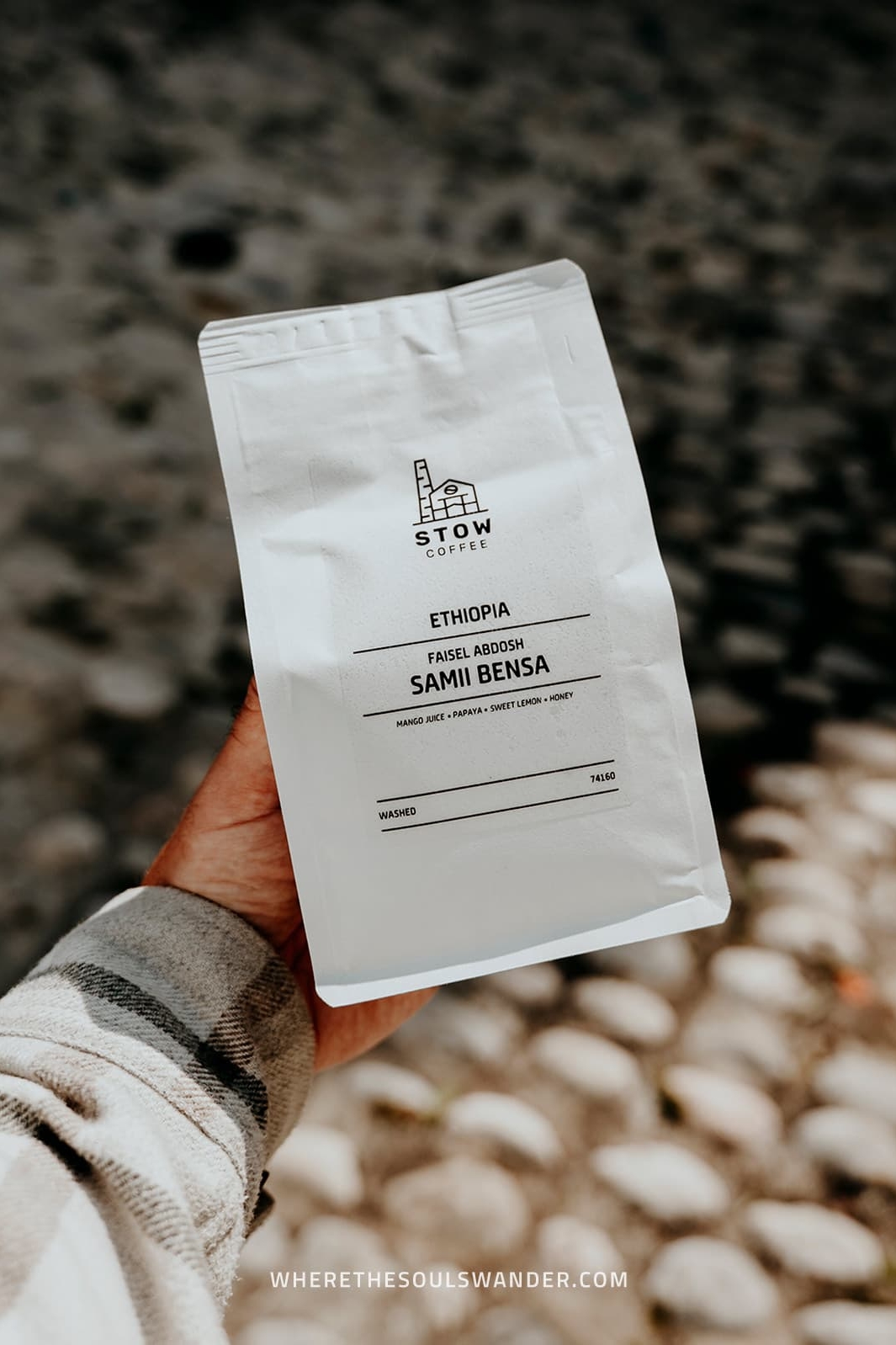
During my time in the city, I enjoyed a fair share of caffeinated goodness, which I mostly drank at Stow – my favourite was clearly the Samii Bensa Lot #1; a rich espresso from Ethiopia with notes of mango juice, papaya, sweet lemon, honey.
The cafe itself is light and spacious with a robust cobblestone floor, large floor-to-ceiling windows and a vibrant, yet soothing atmosphere, as mellow jazz tunes echo in the background.
If you’ve gone head over heels for one of the flavours, Stow also has a small store where you can buy freshly roasted beans, coffee blends, and barista equipment.
Where | Stow Coffee
Opening hours | Tuesday to Sunday from 1000 to 1800
7. See the iconic Dragon Bridge
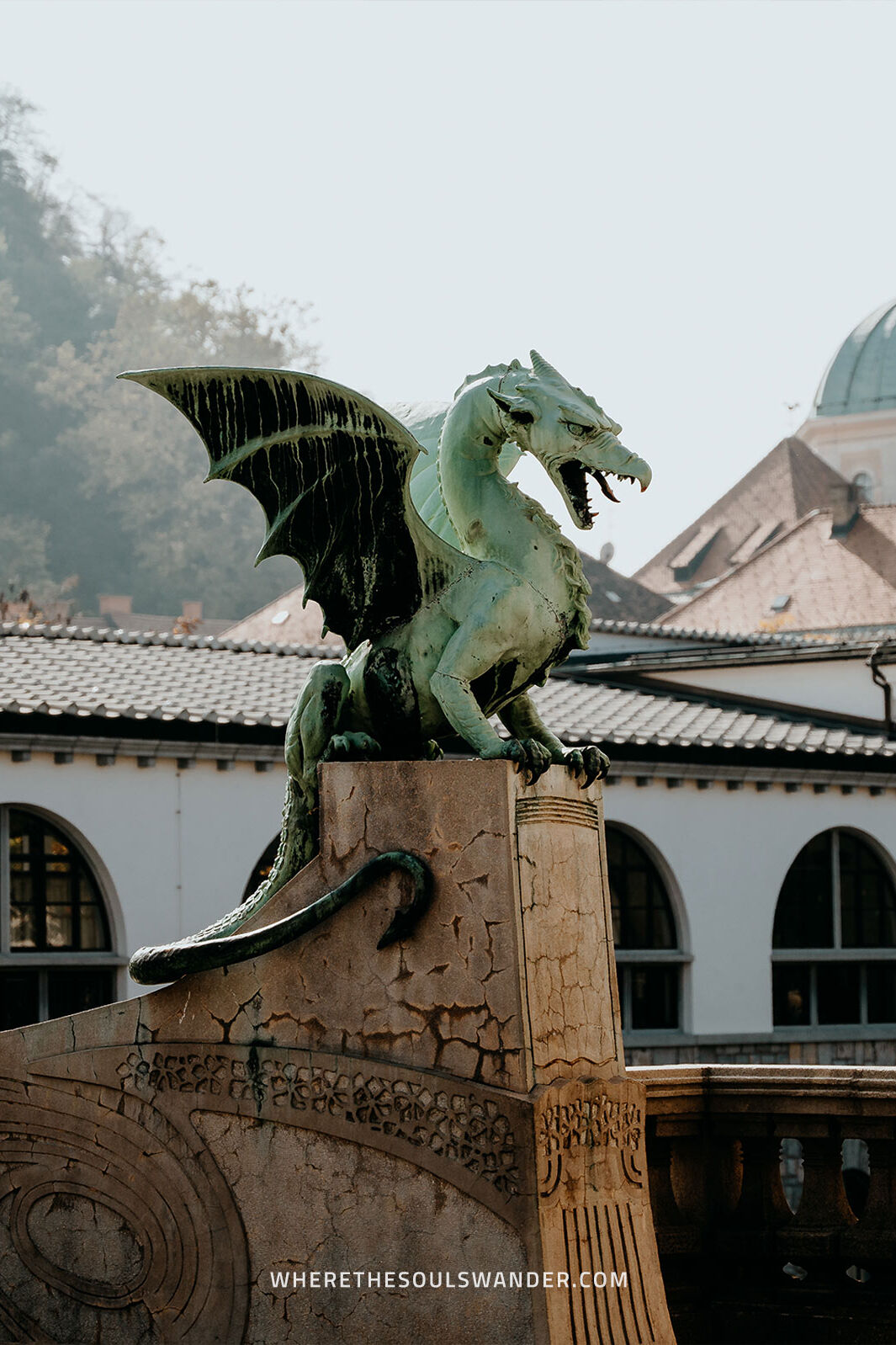
The enchanting Dragon Bridge, connecting Ljubljana’s medieval centre with the modern part of town, is an absolute icon.
Marked by four copper dragon statues, the bridge reflects the story of Jason and the Argonauts, who according to a local legend had killed a dragon that lived near the source of the Ljubljanica river.
Designed by famous Italian architect Jurij Zaninović, the iconic bridge was built in 1901, and is considered one of the finest examples of Art Nouveau architecture worldwide.
Since it has become a symbol of the city, hundreds of people flock here every day, so it’s best to visit the bridge first thing in the morning, especially if you’re keen to get some awesome photography.
But it’s not the only bridge worth seeing in Ljubljana. Other attractive bridges in Ljubljana include the Butchers’ Bridge, Triple Bridge, and Shoemaker’s Bridge.
Where | The Dragon Bridge
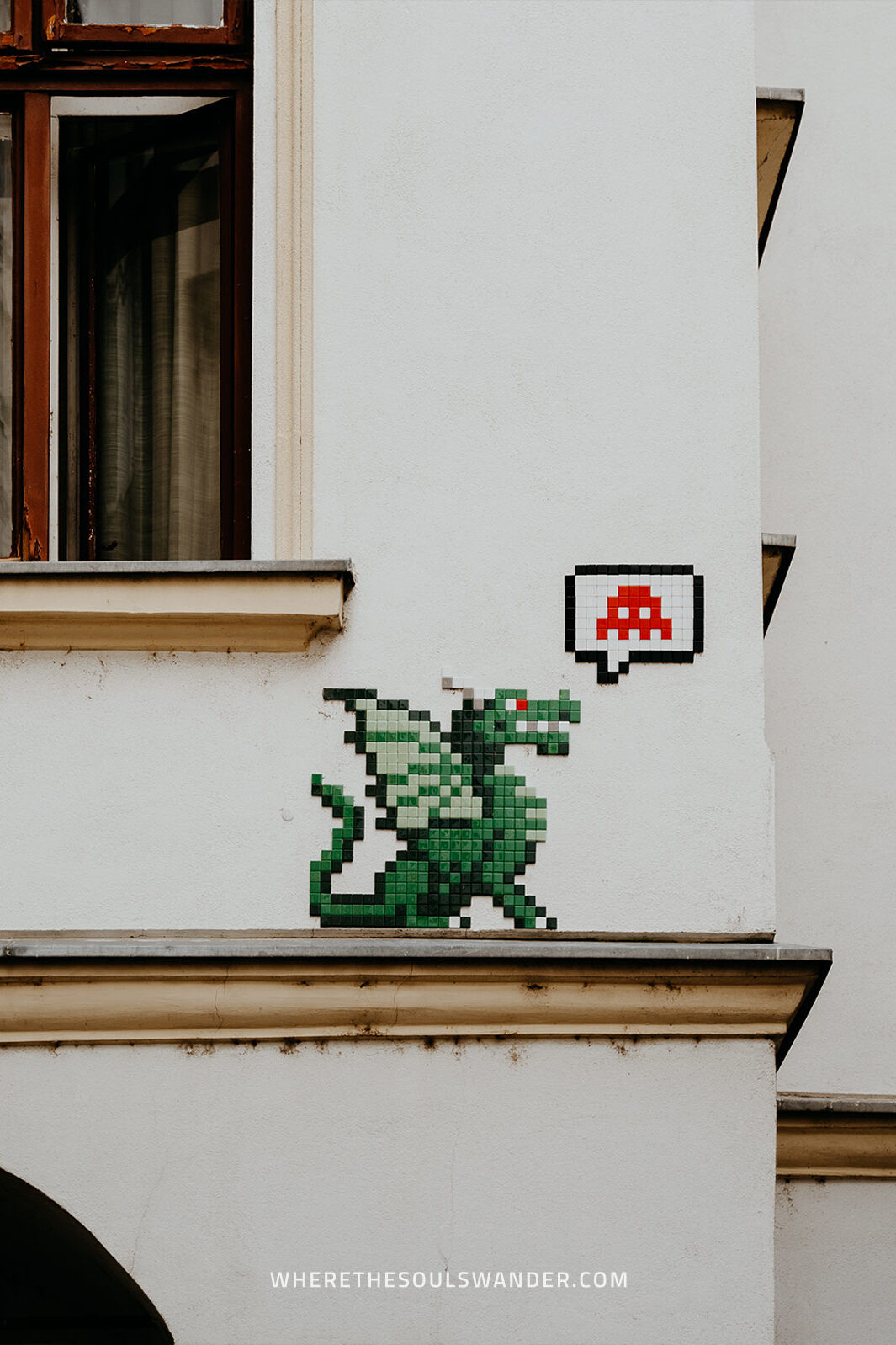
8. Get creative at TipoRenesansa
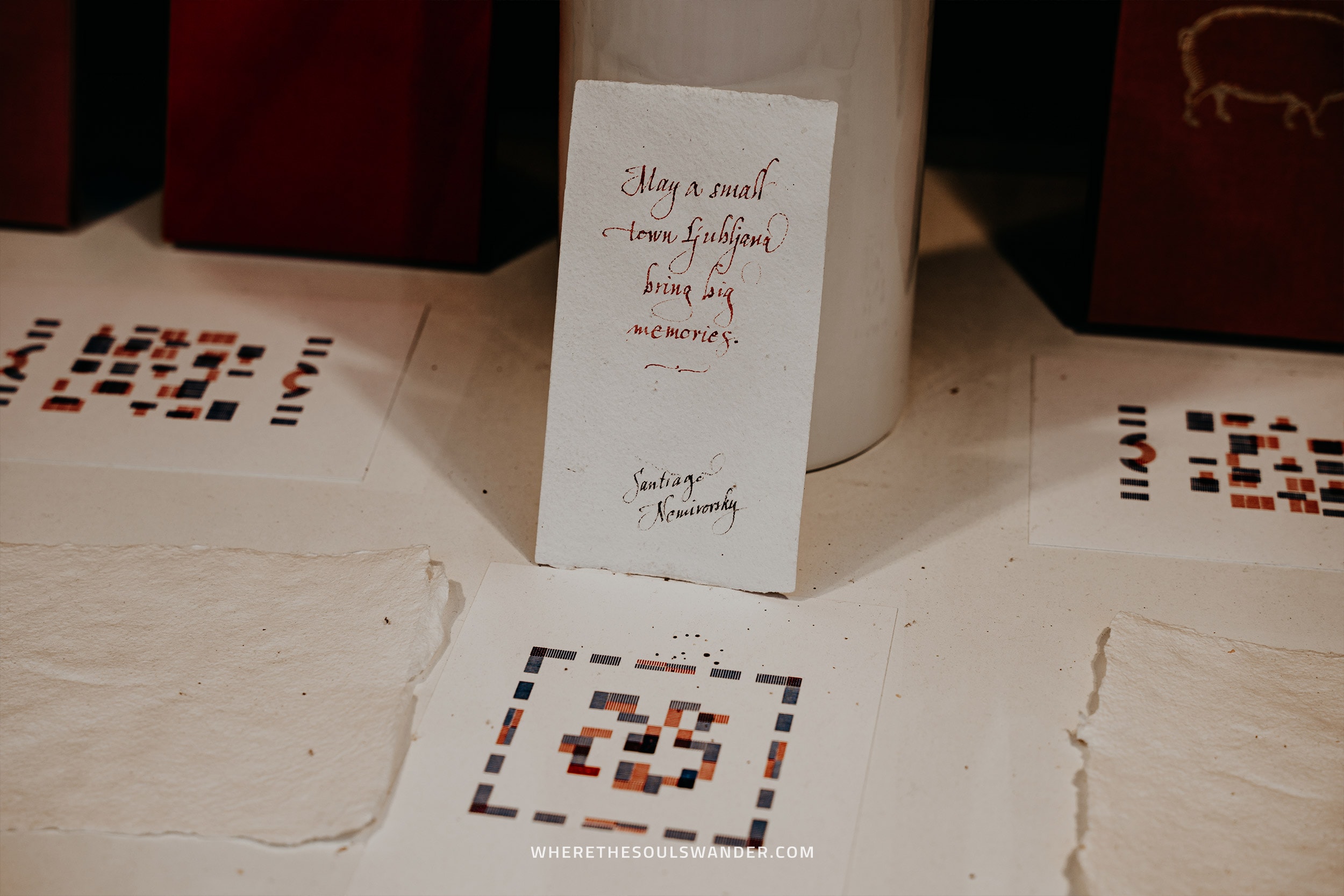
If you’re after unique places in Ljubljana and admire the art of letterpress, calligraphy and graphic design, make sure you stop by TipoRenesansa, a small nonprofit studio that specialises in the above-mentioned crafts.
As a graphic designer graduate with a specialisation in typography myself, I was pretty excited when I first read about TipoRenesansa – unfortunately for me, the studio was closed during my time in the city.
However, this guide to the best things to do in Ljubljana is all about delivering you my personal recommendations – so I still desired to share this authentic spot with you here.
Founded in 2010 by graphic designer and calligrapher Marko Drpic, this studio is the last place in Slovenia where you can experience the art of traditional printing before modern technology took over.
It’s a place where typography lovers and letterpress enthusiasts alike will gain lots of inspiration, but also a place where you’ll find one-in-a-kind souvenirs.
Since TipoRenesansa is a small, independent studio, opening hours might differ, so make sure you contact Marko on his Instagram just to be sure.
Marko also offers printing workshops, where you’ll learn about his art, the printing techniques he uses, and where you’ll eventually make your custom prints to take back home.
Where | TipoRenesansa
Opening hours | Daily 1000 to 1700 – longer during the summer
9. Sample Ljubljana’s best ice cream at Cacao
If you’re in for a sweet treat, a good cup of joe, or just want to enjoy the excellent views over the Ljubljanica River, look no further.
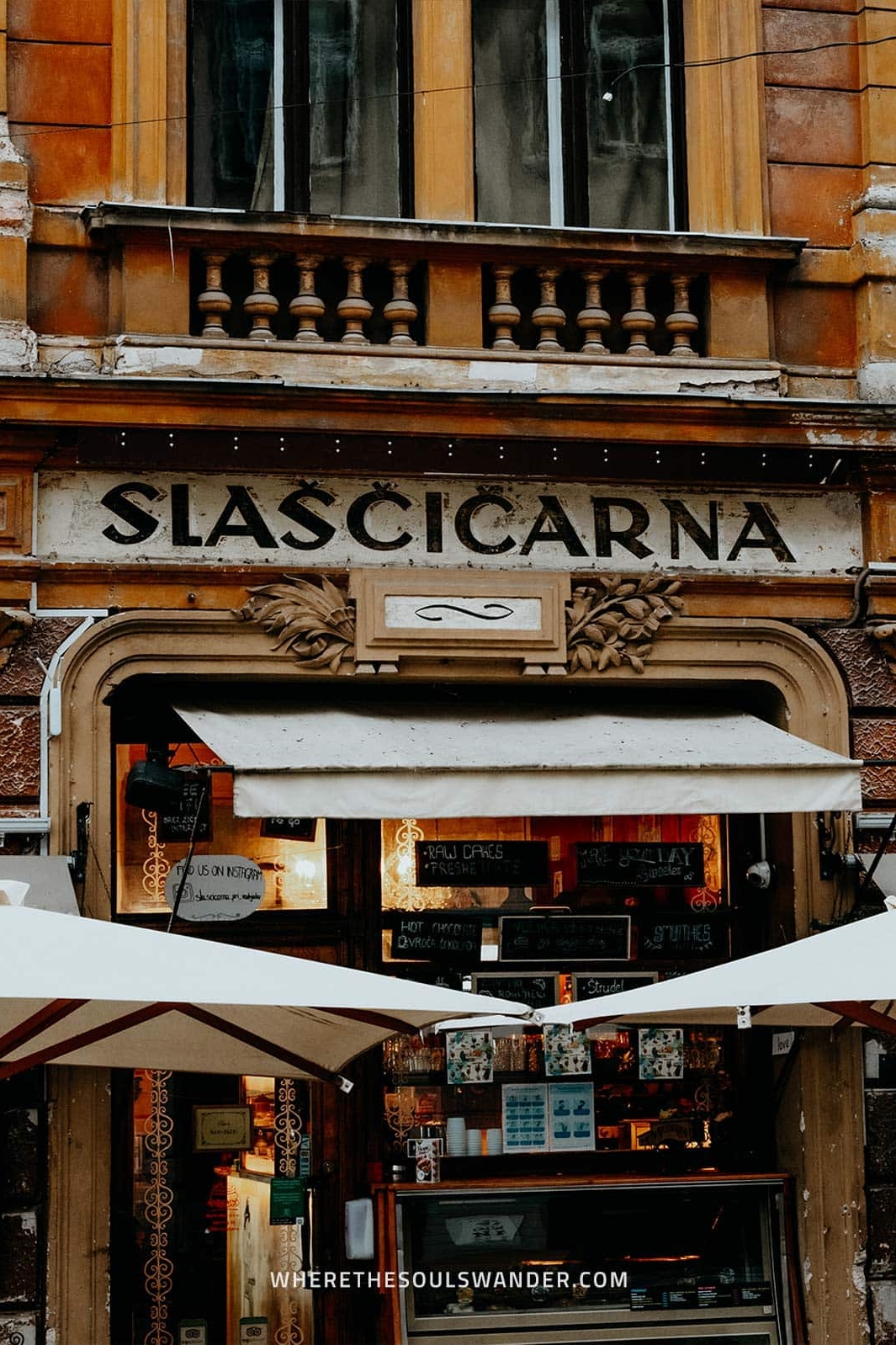
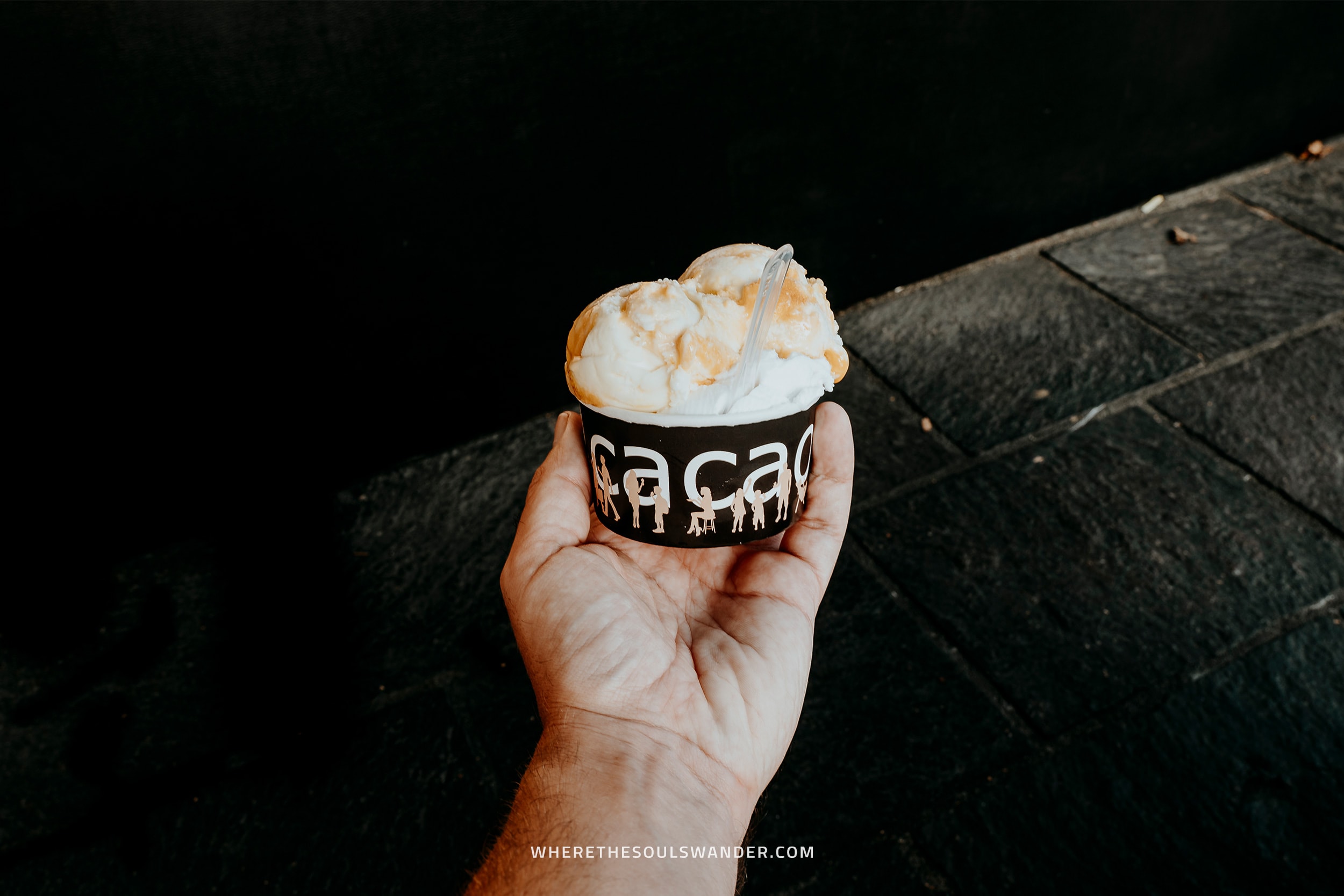
Located along the promenade of the Ljubljanica River, Cacao is a trendy Kavarna (coffee shop) that specialises in artisanal ice cream, freshly baked cakes and desserts, and great coffee.
If you’ve followed me for a while, you know that I take my gelato seriously, so when I stumbled upon Cacao, I knew I had to stop by to sample a scoop of creamy goodness.
As always, I sampled a scoop of lime (which is my all-time favourite) – plus a scoop of Rafffaelo and both tasted exceptionally good. The flavours were balanced out perfectly and it was easy to notice that only the best ingredients made the cut.
If you’re not quite sure which flavours to choose, the friendly and knowledgeable staff will be happy to help and you can even ‘taste before you buy’, which is awesome (but will make it slightly more difficult too).
Where | Cacao Ljubljana
Opening hours | Daily 0800 – 2200
10. Visit the Ljubljana Castle
To me, the Ljubljana Castle was a little too boring for my liking, but despite my underwhelming experience, I still believe it’s worth your time since the fortress played a pivotal role in the history of Ljubljana.
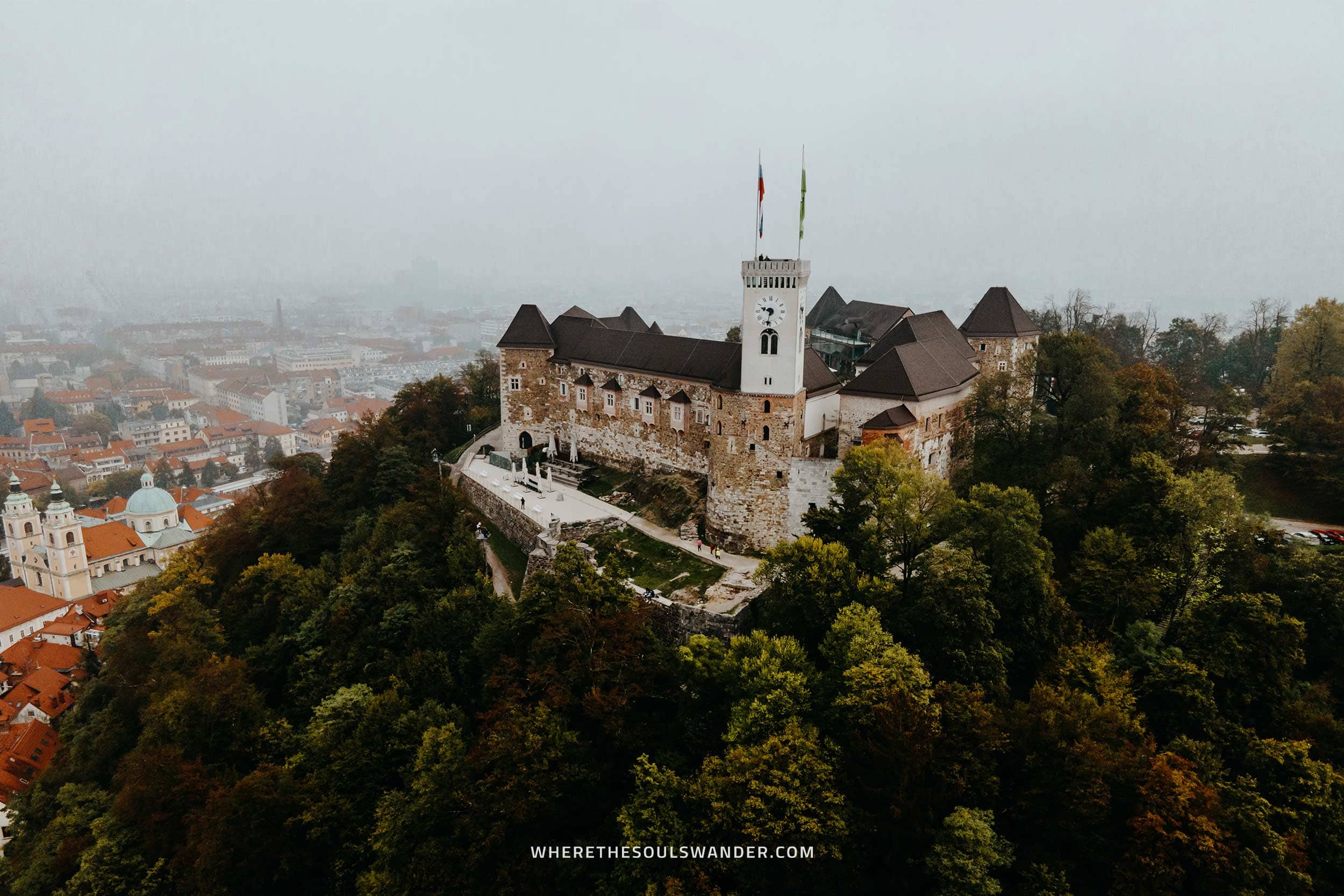
Nestled high on the hill above Ljubljana, overlooking the tangerine-coloured roofs of the old town is the Ljubljana Castle, a medieval castle that dates back to as far as the 11th century.
Getting to the castle is pretty straightforward, simply follow a 20-minute hike from the old town, or opt for a one-minute funicular ride from Krekov Trg instead.
Once you arrive at the castle walls, you’ll be welcomed by some of the most spectacular views of Ljubljana, as well as the Kamnik Alps in the distance.
Though the courtyard is free to enter, you can also choose to join the “Time Machine” tour, which includes access to the watchtower of the castle.
While I can imagine that the views from there are stunning, I don’t necessarily believe you miss out if you decide to skip the guided tour.
Additionally, the castle houses a cafe, art gallery, restaurant and even an escape room, which is actually quite cool if you ask me.
Where | Ljubljana Castle
Opening hours | Daily 0900 to 1800
Funicular | Daily 1000 to 1800
Cost funicular | One-way ticket €2,20 – Return €4,-
11. Take a stroll along the Ljubljanica river
Running straight through the heart of the city, the Ljubljanica river is without question the heart of all things social life in Ljubljana.
Every day, locals and tourists alike come here to gather in one of the many trendy cafes and restaurants that are dotted along its vibrant riverbanks.
But taking a stroll around Cankarjevo Nabrezje (the car-free street that lines the river), will not only take you past dozens of cafes, restaurants and bars, but it will also give you a good feel for the city and its people.
So whether you’re looking for an exceptional dining experience, in need of a coffee break, or simply want to sit and watch the world go by, the banks along the Ljubljanica river will easily charm you with its inviting atmosphere.
It’s also likely to be the starting point of all your explorations in Ljubljana – and that’s a good thing!
If you’re looking for something a little different, you can also choose to see the city from a whole nother perspective by joining a Ljubljana river cruise.
Where | Ljubljanica River
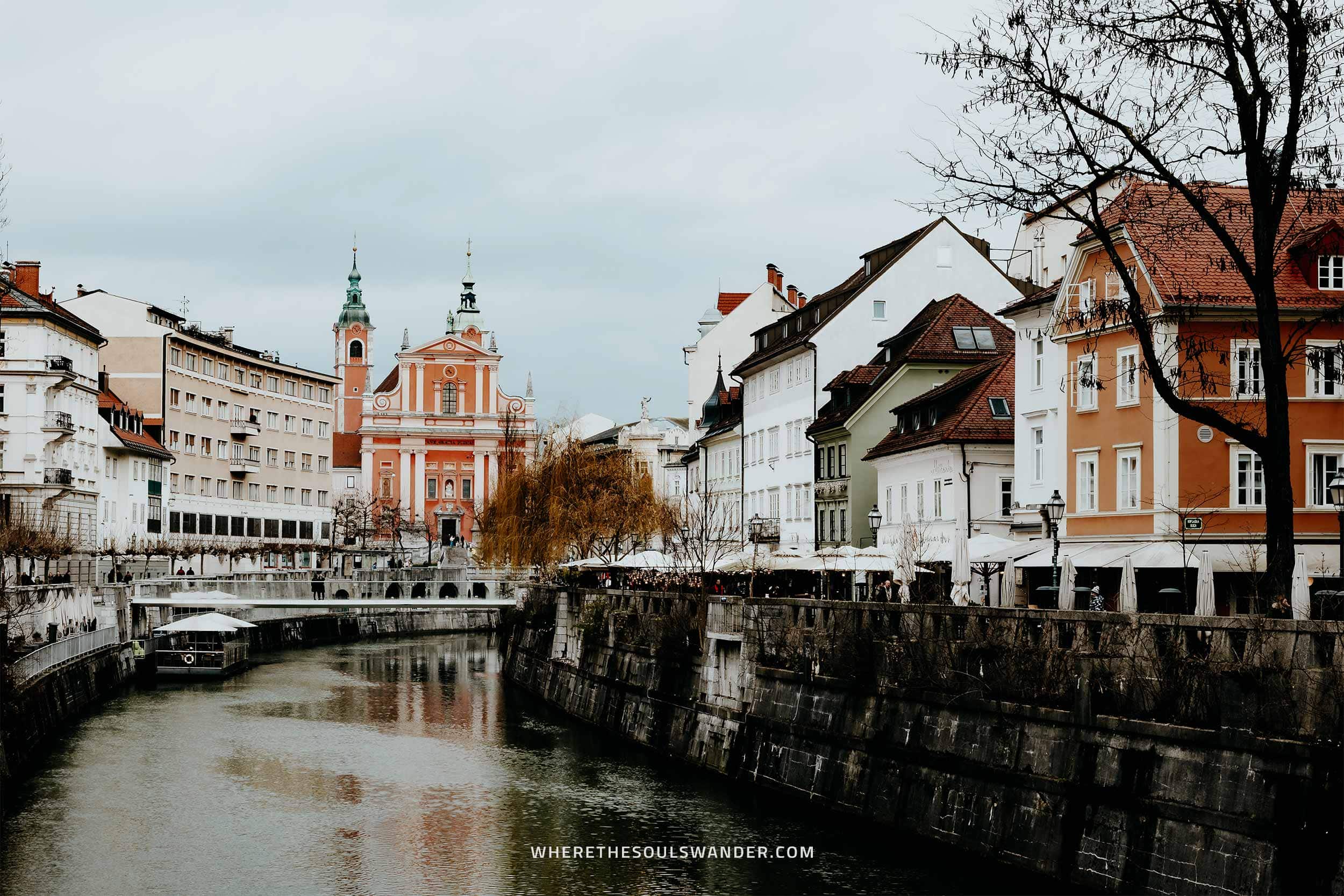
Things to do in Ljubljana | The essentials
The best time to visit Ljubljana
To be fair, I firmly believe that any time is a good time to visit Slovenia, as it’s stunningly charming at any time of year.
Of course, summer (June to September) is a big thing here in Europe, as it brings excellent weather and long days. But unfortunately, this is also the time when you’re elbow to elbow with lots of other visitors.
For that reason, I believe that the absolute best time to visit Ljubljana is during the shoulder months of April to May, or September to November, when pleasant weather and thinner crowds provide the perfect weather to go out and about.
If you’re strictly visiting Slovenia for a city trip, Ljubljana is also an amazing place during the winter months, when there’s a magical wintery vibe and plenty of festivities.
I visited Ljubljana on a road trip through Slovenia in October, which I found just perfect.
How to get to Ljubljana
By plane | If you’re planning a trip to Ljubljana from overseas, you likely enter Slovenia via plane through the Joze Pucnik International Airport in Ljubljana, as it hosts the majority of European and international airlines.
For flights to Ljubljana, I would highly recommend checking out Skyscanner, since their website is user-friendly, holds a great variety of airlines and grants the possibility to find great deals.
From the airport, make sure you take bus 28, which takes you to the city centre in roughly 50 minutes. Tickets cost €4,10 one-way and the bus leaves every 30 minutes, starting from 05:00 on weekdays and 07:00 during the weekend. More information here.
By car | If like me, you’re planning to do an epic road trip through Slovenia, I would advise sorting out a rental in advance, so you have all the freedom to visit wherever, whenever suits you.
For both of my recent trips to Slovenia, I rented a car for the entire journey (including my time in Ljubljana) and was quite satisfied with the flexibility that it provided.
Since car rentals are quite affordable in Slovenia, I’d recommend renting a car for the duration of your time in the country, given a shuttle or taxi to the city will most likely cost you more than having the car for additional days.
However, do make sure you book accommodation with free parking in Ljubljana as parking prices can add up very quickly.
If you have not yet sorted out a rental car, make sure you explore the options at Rentalcars.com, as they have a wide selection of cars on offer, and provides excellent service as well as extra insurance options.
Once you’ve picked up your rental car, it takes only 20 minutes to drive to the city centre.
To see prices and availability, check rentalcars.com here
By bus | Whether you’re travelling exclusively within Slovenia, or plan to visit from one of the neighbouring countries, Ljubljana is extremely well-serviced by public transport.
There are quite a few international bus routes that make a stop in Ljubljana, including those that depart from cities such as Venice, Zagreb, Vienna and Munich.
For international bus journeys to Ljubljana, I’d highly recommend the green FlixBus coaches.
Local bus connections in Slovenia are brilliant too, which means that Ljubljana is easily reached from the most popular places, including Lake Bled, Bohinj, Maribor and Koper.
If you’re looking to travel through Slovenia by bus, make sure you check out the Ljubljana Bus Station website for relevant timetables and information.
By train | It is also possible to travel through Slovenia by train, which is an affordable, convenient and scenic way to explore the country.
If you’re already in Slovenia, it is easy to get to Ljubljana by train as there’s an excellent connection with some of the country’s most popular places, including Lake Bled, Bohinj and Koper.
It is worth mentioning that you should buy your tickets in advance. For relevant timetables, tickets and the latest information, see here.
For those travelling around Europe, Slovenia is also well connected to popular cities of the neighbouring countries; Belgrade, Budapest, Munich, Zagreb and Zurich to name a few.
For international train connections to Ljubljana, make sure you visit interrail.
Stay safe in Slovenia | Travel insurance
Since Slovenia has plenty of adventurous activities on offer, I advise everyone to sort out good travel insurance before setting out on their own adventure.
While I believe that it’s unlikely to experience any troubles when following the advice in this guide, something unfortunate can happen at any time, whether it’s an injury, a stolen camera, or an accident on the road.
For travel insurance, I use Heymondo, as they offer full covid-19 coverage, as well as a handy app with 24-hour medical assistance. Make sure you check it out – readers of WTSW receive 5% off any insurance policy too.
Cheers!
I’ve been on this travel blogging journey since 2019.
If you appreciate what I do here, these are some ways you can support me.
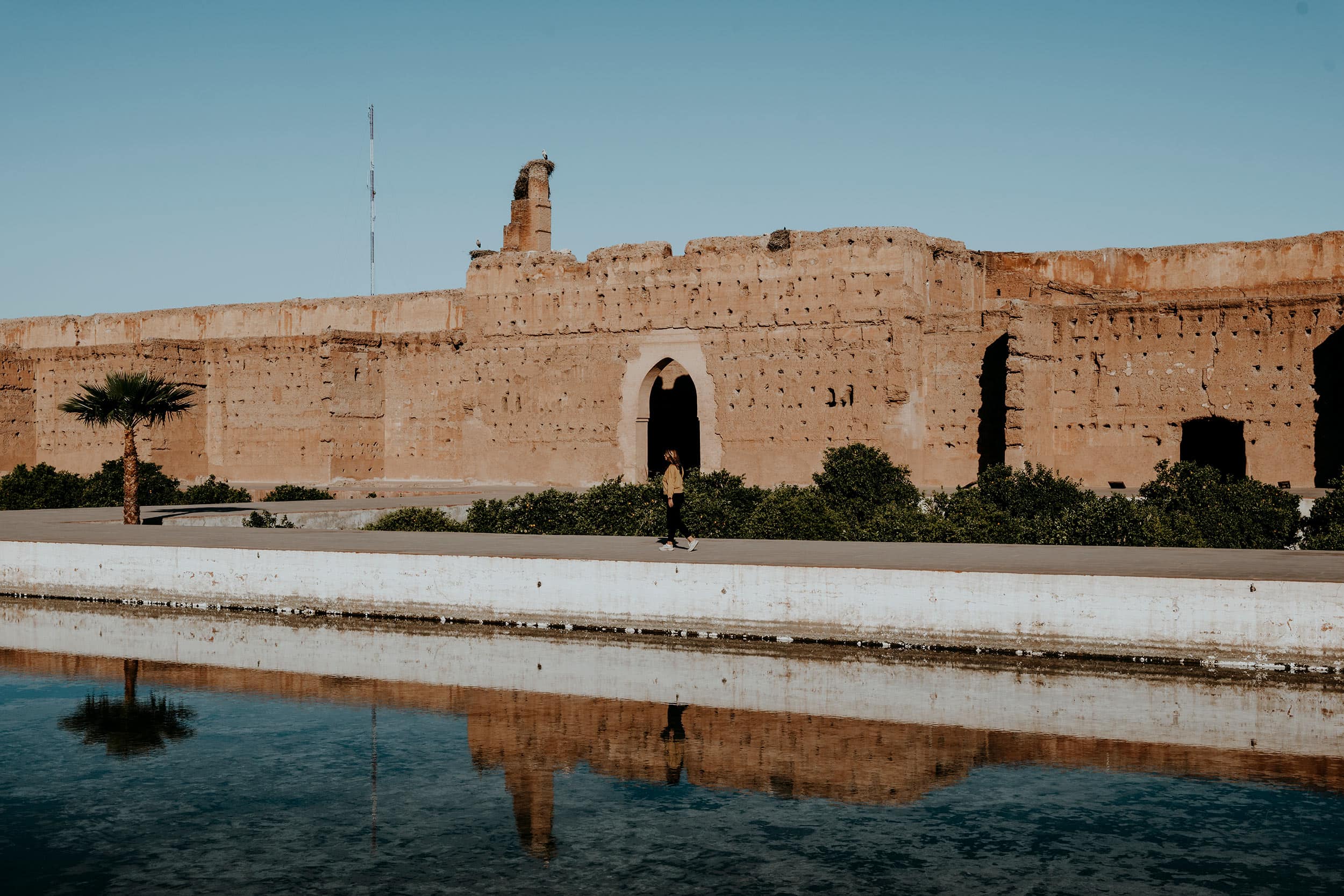
Buying a Morocco SIM card: Everything you need to know to have an stress-free trip
I believe, now more than ever, it’s crucial to stay connected at all times, especially if you work in the online field like me.
But a local SIM card is not just for those who work online, it’s also a great tool to make your travels a tad more relaxed – this is clearly also the case in Morocco.
Given Morocco is quite a challenging country to navigate at times, having a Morocco SIM card with data makes the country so much more accessible – plus you won’t ruin your trip with excessively high roaming costs for using your usual data overseas.
Whether you need help with directions on Google Maps, want to collect inspiration from a blog or Instagram, need roadside assistance or simply want to stay in touch with your family and friends, having a reliable internet connection in Morocco makes things a lot easier.
Luckily for you, it is extremely easy to connect your phone to the internet in Morocco since there are plenty of providers that offer local sim cards with data plans for those visiting the country.
In this guide, I’ve shared everything you need to know about buying a Morocco SIM card, including where to buy one, the best providers, the cost, as well as my personal advice.
If you choose to use any of the links on this page, I may receive a small commission at no extra cost to you. By using these links, you’ll have a direct impact on WTSW and my ability to continue to create free insightful travel content for you. If you find any of my tips useful, you can support me by buying a virtual coffee here.
Why buy a Morocco SIM card
In these current times, it’s essential to stay connected while travelling around the world, especially if you work online like me.
Whether you need help with directions on Google Maps, want to collect inspiration from a blog or Instagram, need roadside assistance or simply want to stay in touch with your family and friends, having a reliable internet connection in Morocco makes things so much easier.
Add to that, that a Morocco sim card comes at a fair price, and buying one becomes an absolute no-brainer.
While there are quite a few places that offer public WiFI, it’s pretty common that those networks are unsecured – so I personally prefer a data connection from a trustworthy provider instead.
If you do prefer to use public WiFI abroad, make sure you use a reliable VPN such as NordVPN.
Can I use my current phone number to use WhatsApp?
To me, one of the best things about buying a Morocco SIM card is the fact that you can still use your own phone number while using the Whatsapp service.
The reason is that your existing WhatsApp account is registered to your existing number, so switching sim cards makes no difference as long as you don’t change the number in your WhatsApp settings.
While I can imagine that this sounds rather confusing, it will continue to work as before, but now with the data plan package that is active on your local sim card.
I’ve personally done this quite a few times during my travels, so I’m pretty confident that it works for you too.
Also, if you purchase a data plan package at the Marrakech Airport (which I did myself), the vendor will assist you with setting up the sim card to your phone.
Where to buy a Morocco SIM card
When it comes to buying a Morocco SIM card, you can either buy one upon arrival at the airport, grab one from the many mobile provider stores, get one online and in advance and even buy one from the street vendors at the famous Djemaa El Fna square.
I’ve listed the four options down below:
Marrakech Airport
To me, the best option is to buy a local sim card straight away at the Marrakech Airport, right after you touched down in the country.
As soon as you’ll arrive in the baggage claim area, you’ll stumble upon the stands of Morocco’s leading mobile providers; Orange, Maroc Telecom, and INWI.
These providers have a wide variety of data plan packages on offer, so you can easily select the option that suits your needs.
One thing that’s worth mentioning, is that if you wish to buy your sim card for Morocco at the Marrakech Airport, you’ll have to buy it at one of the above-mentioned stands since you can’t re-enter the baggage hall after you went through customs.
Also, in some cases it is not possible to pay with credit or debit cards – so make sure you have some local currency on hand too.
Mobile provider stores
If you missed the opportunity to buy a sim card at the airport, don’t worry – there are plenty of phone stores situated in Morocco’s major cities, including Marrakech, Fez, Casablanca, and Rabat.
In general, the prices and packages at these stores are similar to those at the airport.
For those looking to buy a sim card from a phone store, make sure you’ll bring your passport, as well as a copy of your passport just to be sure.
As with so many stores in Morocco, English-speaking employees are often limited, which makes those stores slightly more challenging than the stands at the airport.
Street Vendors
Another option is buying a Morocco sim card directly from one of the many vendors found at the popular Djemaa El Fna square in Marrakech.
While these vendors do offer sim card packages from trustworthy providers such as Orange, INWI and Maroc Telecom, you’ll never know which package you receive unless you know Arabic.
Since this option is highly prone to all sorts of scams, I would strongly discourage buying a sim card from street vendors.
However, given the fact that I haven’t purchased a sim card here myself, and had a great experience at Orange at the airport, I’m slightly biased.
Having said that, if you somehow end up picking this option; be cautious and keep in mind that the prices are always negotiable.
E-sim cards
If you’re the type of person that prefers to have everything sorted out before a trip, you likely value the benefits that come with buying an eSIM online.
The eSIM is a completely digital sim card and is by far the most straightforward option. Just order the Choukran eSIM card from Airalo and activate your data package by scanning the QR code that you received in your mail, and you’re good to go!
When in the market for an eSIM, it’s good to know that it’s only possible to obtain one from a 3rd party. I recently stumbled upon Airalo and ever since it has become my go-to when it comes to eSIMs.
Airalo is the world’s first eSIM store and offers data plans for over 190 countries, which makes it super straightforward to be connected to the internet from the moment you land.
More information on the Choukran eSIM for Morocco here.
Morocco SIM card Providers
Orange
Even though Orange has the smallest 4G network in Morocco, I still believe it is one of the best options if you’re looking to grab a sim card with a data plan in Morocco.
The data packages at Orange include
- 10 GB data and 300 minutes that are valid for 30 days | 165 MAD(€15,-)
- 20 GB data and 600 minutes that are valid for 30 days | 330 MAD (€30,-)
INWI
A great option for those looking for flexibility, since INWI offers the possibility to create your own package, which operates at the best 4G/5G network in Morocco.
At INWI, you can either choose a custom amount of data that suits your needs at €1,- per gigabyte, or opt for their unlimed plan for 550 MAD (€50,-).
It is good to note that both of these packages are valid for 30 days.
Maroc Telecom
Known to have the best 4G/5G network strength in the whole of Morocco, Maroc Telecom offers a wide variety of prepaid data packages.
The data packages at Maroc Telecom include
- 20 GB of data that is valid for 30 days | 220 MAD (€20,-)
- 30 GB of data that is valid for 30 days | 330 MAD (€30,-)
- 40 GB of data that is valid for 30 days | 440 MAD (€40,-)
Airalo
Ever since the rise of the now extremely popular eSIM, Airalo has become the leading company when it comes to this innovative digital alternative.
For Morocco, Airalo created the Choukran eSIM, a data-only package that operates on the networks of Orange or Maroc Telecom.
The Choukran data package at Airalo includes
- 1 GB of data that is valid for 7 days | 98 MAD (€9,-)
Also, at Airalo you can easily top up your data with 1 GB at a time for 98 MAD (€9,-) through the Airalo app on your phone.
My advice
Given I bought my Morocco SIM card from Orange upon arrival at the Marrakech Airport and had great connectivity throughout my trip, I would obviously recommend anyone to do the same.
For 150 MAD (€13,60), you’ll receive 10GB of data and 300 minutes that is valid for 30 days.
If you’re a large consumer or spent more time in the country, you can also opt for 20GB and 600 minutes at a price of 300 MAD (€27,20). Do note that this package is also valid for 30 days.
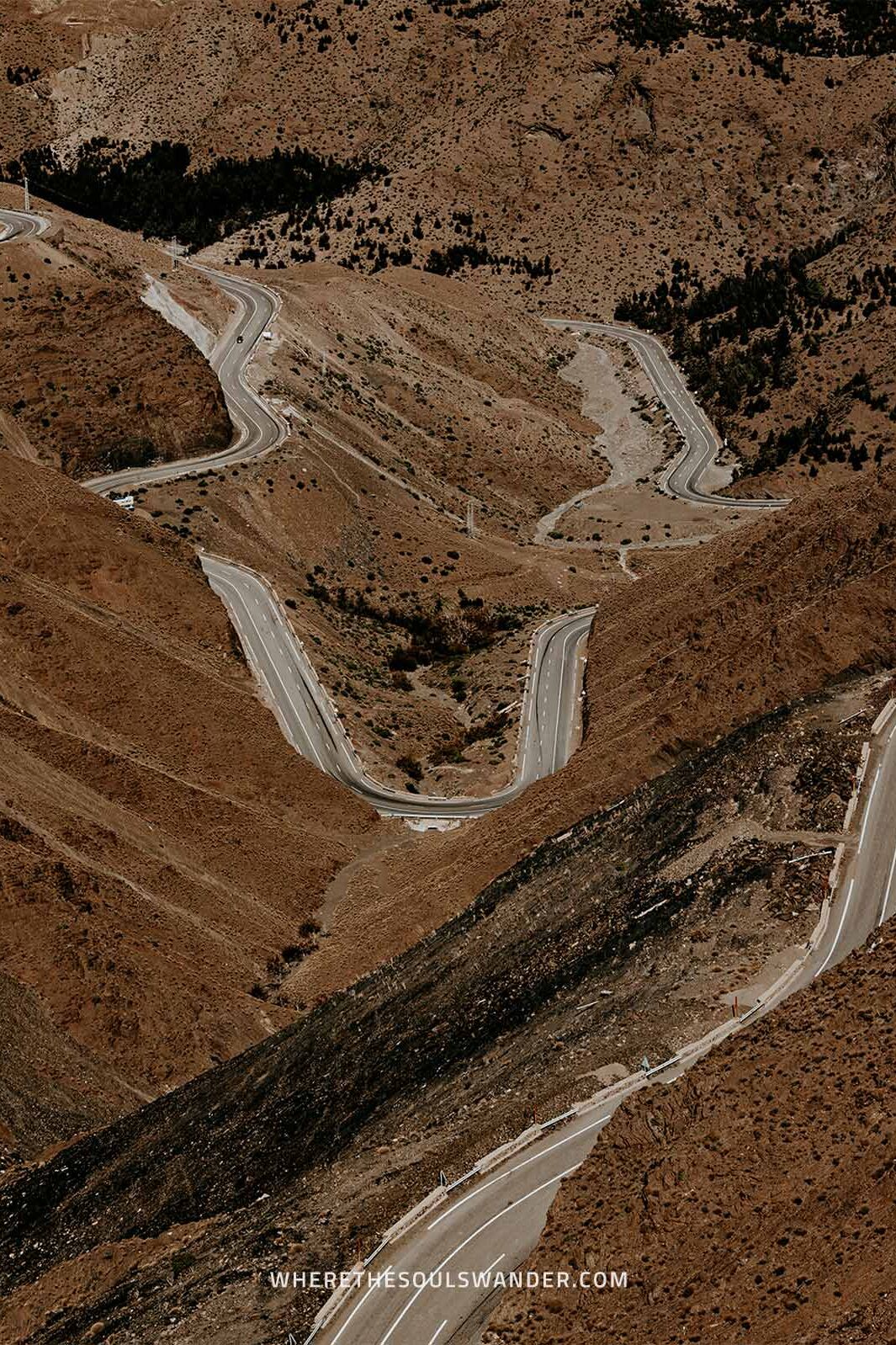
I opted for the first option, and had more than enough data for a week in Morocco – plus had a reliable connection for most of the time (except for the High Atlas Mountains).
Alternatively, if you’re the type of traveller that likes to have everything sorted out before your trip, you probably enjoy the benefits of buying an eSIM online too.
Safety in Morocco | Travel insurance
When travelling this big wide world, I never go on an adventure without my essential travel insurance sorted out, and though I felt safe in Morocco, I recommend anyone travelling here to do the same.
Though you rather don’t think about the things that could go wrong, there’s always a chance that something happens, and when that’s the case, it is better to be safe than sorry.
To help you find the right policy, I’ve listed two of my favourite options below:
Heymondo | Whether you’re going on a 3-week backpacking trip, or planning a long stay somewhere abroad, Heymondo has excellent insurance options either way – plus full covid-19 coverage and a handy app with 24-hour medical assistance. Readers of WTSW receive 5% off any insurance policy, more information here.
World Nomads | If you’re an adventure seeker, backpacker, or planning your once-in-a-lifetime world trip, make sure you check out World Nomads, they designed the perfect travel insurance to help you travel safer and smarter. Do note that they’re not covering covid-19 related claims.
Cheers!
I’ve been on this travel blogging journey since 2019.
If you appreciate what I do here, these are some ways you can support me.
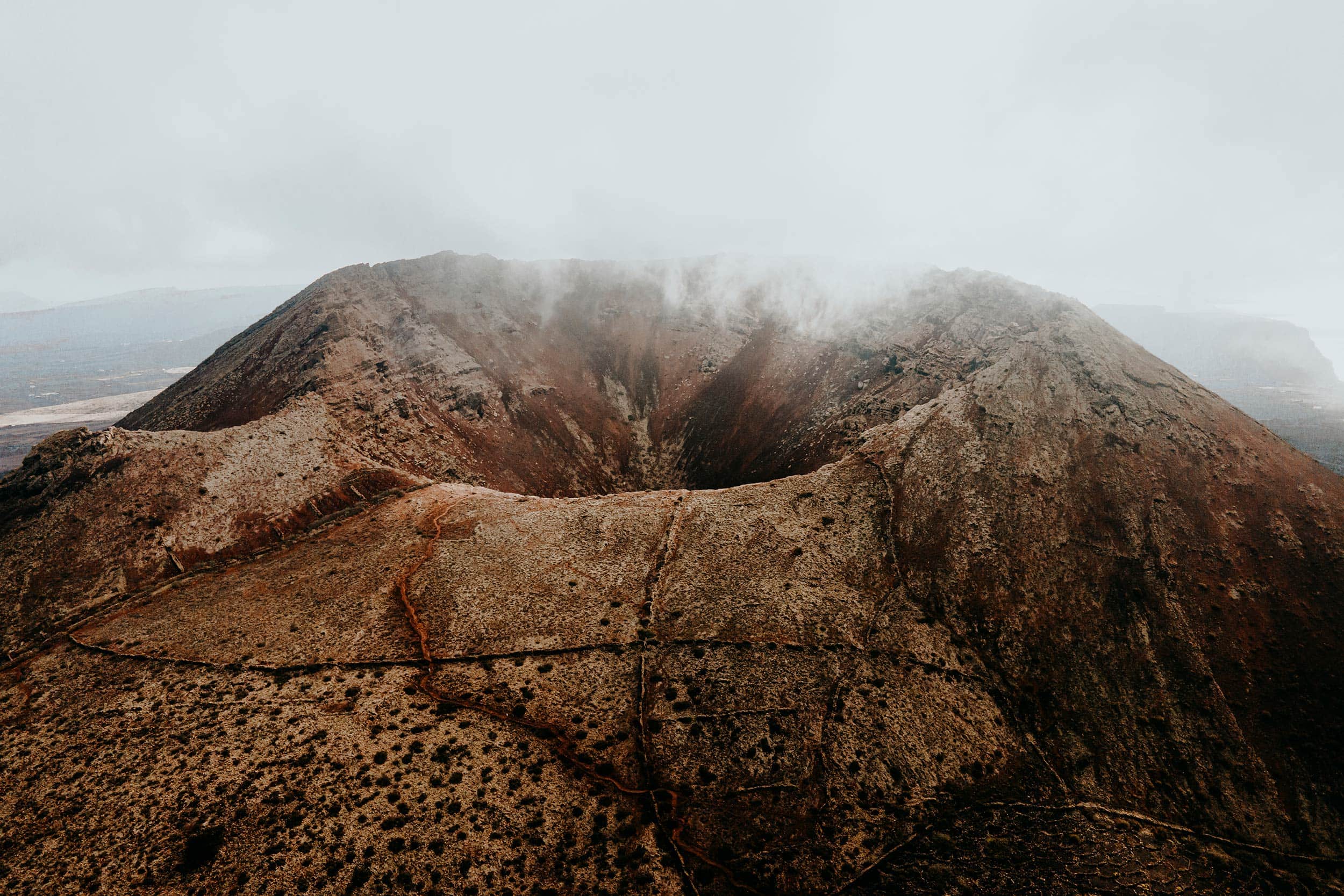
A hiking guide to the otherworldly Volcán de La Corona, Lanzarote
Lanzarote
A hiking guide to the otherworldly Volcán de La Corona, Lanzarote
If it wasn’t for Volcán de la Corona, Lanzarote would be merely a fraction of the island we know today.
Deemed among the highest – and most fundamental – vulcanos on the island, Volcán de La Corona and its lengthy history are closely related to the history of Lanzarote as a whole.
First erupted roughly 5.000 years ago, the now-extinct volcano laid the foundation of the island, given its lava merged the islands of Famara and Ajaches into one.
With a whopping height of 609 meters above sea level, the impressive crater of Volcán de La Corona is still very much dominating the island today, as it rises high above the quaint villages of Northern Lanzarote.
Its dramatic scenery, proximity to other highlights on the island, and the possibility to hike all the way up to the crater rim, make Volcán de La Corona a remarkable place to visit when exploring “The Island of Fire”.
In this guide, I’ve shared everything you need to know before hiking Volcán de la Corona, including how to get there, what to pack and plenty of useful tips too.
Without any further ado, here’s my hiking guide to Volcán de la Corona – enjoy!
If you choose to use any of the links on this page, I may receive a small commission at no extra cost to you. Please know that by using these links, you’ll have a significant influence on my ability to keep creating free insightful travel content for you. Thanks for your ongoing support – Glenn.
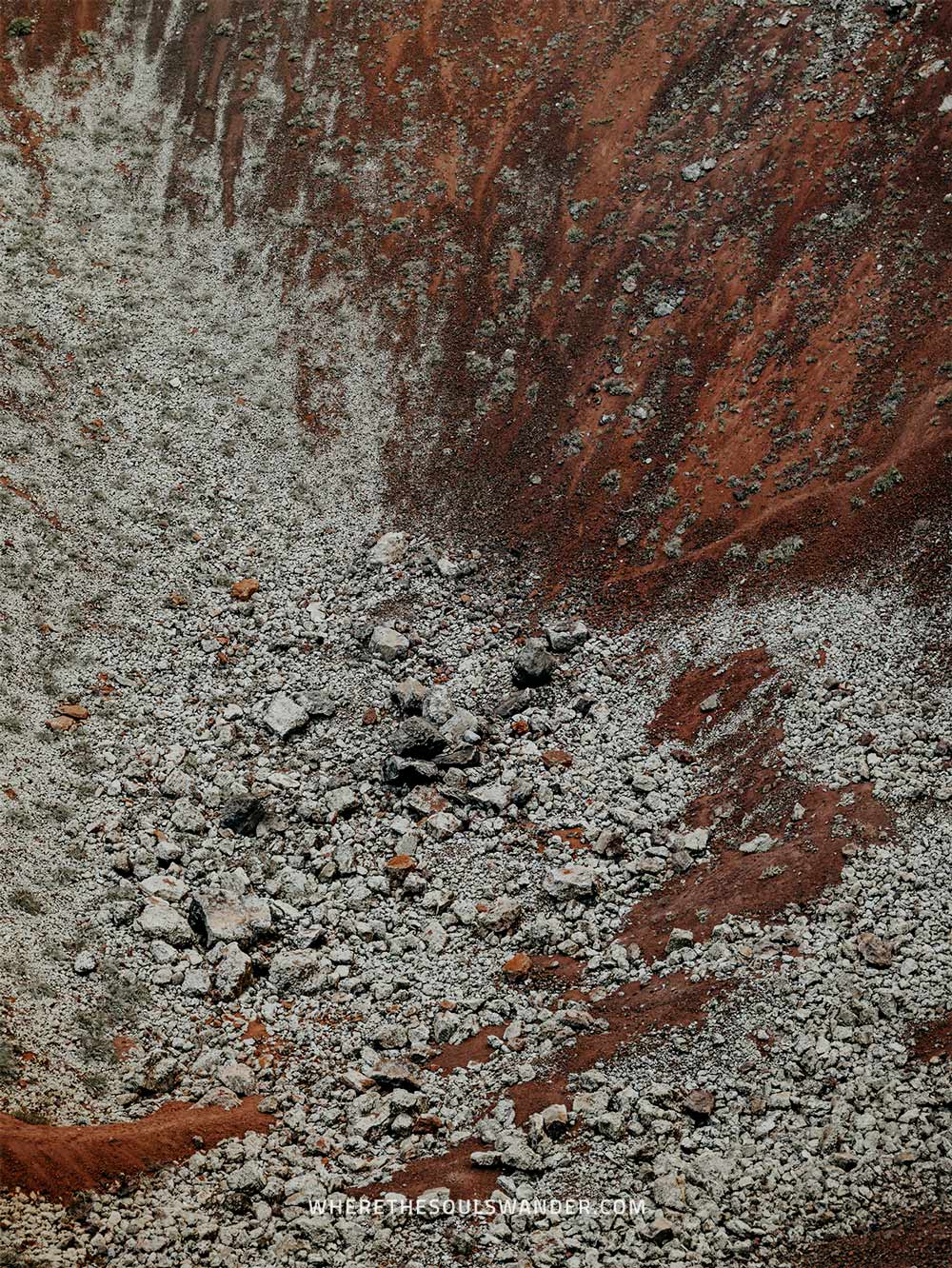
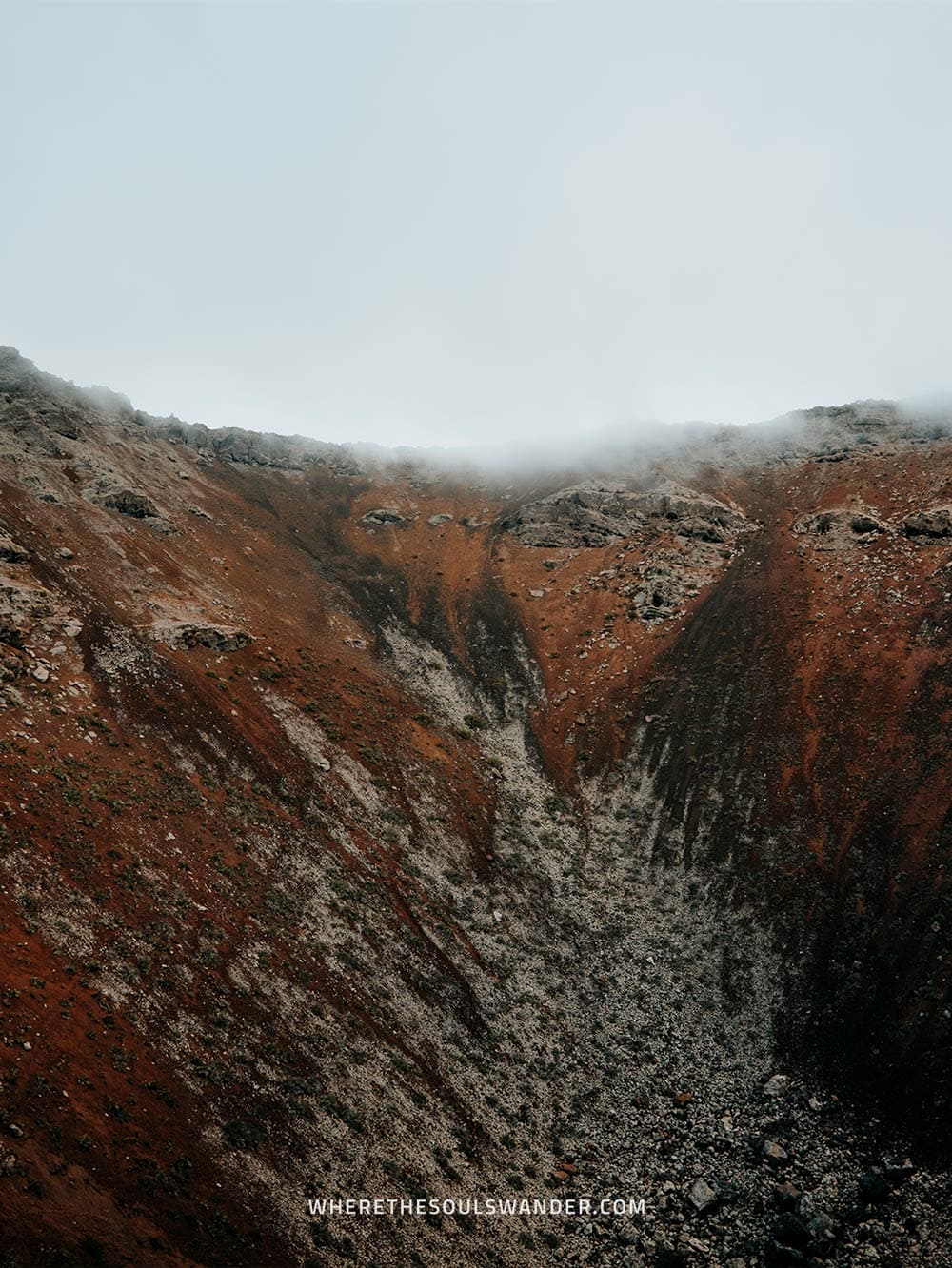
Where is Volcán de La Corona
Volcán de La Corona is a 609-meter-high extinct volcano located near the village of Yé in the municipality of Haría on the northeast of Lanzarote, Spain.
Lanzarote itself is a Spanish island found in the Atlantic Ocean around 125 kilometres (80 miles) west of the coast of Morocco and is encircled by the neighbouring Canary Islands, including the likes of Fuerteventura, Gran Canaria, Tenerife and La Graciosa.
Volcán de La Corona History
The history of Volcán de la Corona is closely related to the history of Lanzarote as a whole.
Legend has it that Volcán de La Corona first erupted roughly 5.000 years ago, at the same moment as the neighbouring vulcanos of La Quemada de Maguez, Los Helechos, La Cerca and La Quemada de Orzola.
At that point in time, there was basically only the island of Risco de Famara.
It wasn’t until the eruptions of the above-mentioned vulcanos that the foundation of what is now Lanzarote was formed, as they released so much lava that the island nearly doubled in size.
As a result, Malpais de la Corona was created, as well as two of Lanzarote’s most-visited geological attractions; Cueva de Los Verdes and Jameos del Agua.
Years later, more eruptions followed, which eventually led to the merging of Famara Island in the north and Ajaches Island in the south.
It was from that exact moment, that the island of Lanzarote as we know it today was formed.
While the 609-metre-high Volcán de La Corona is now extinct, the volcano is still by far the most interesting place to see in this area of the island.
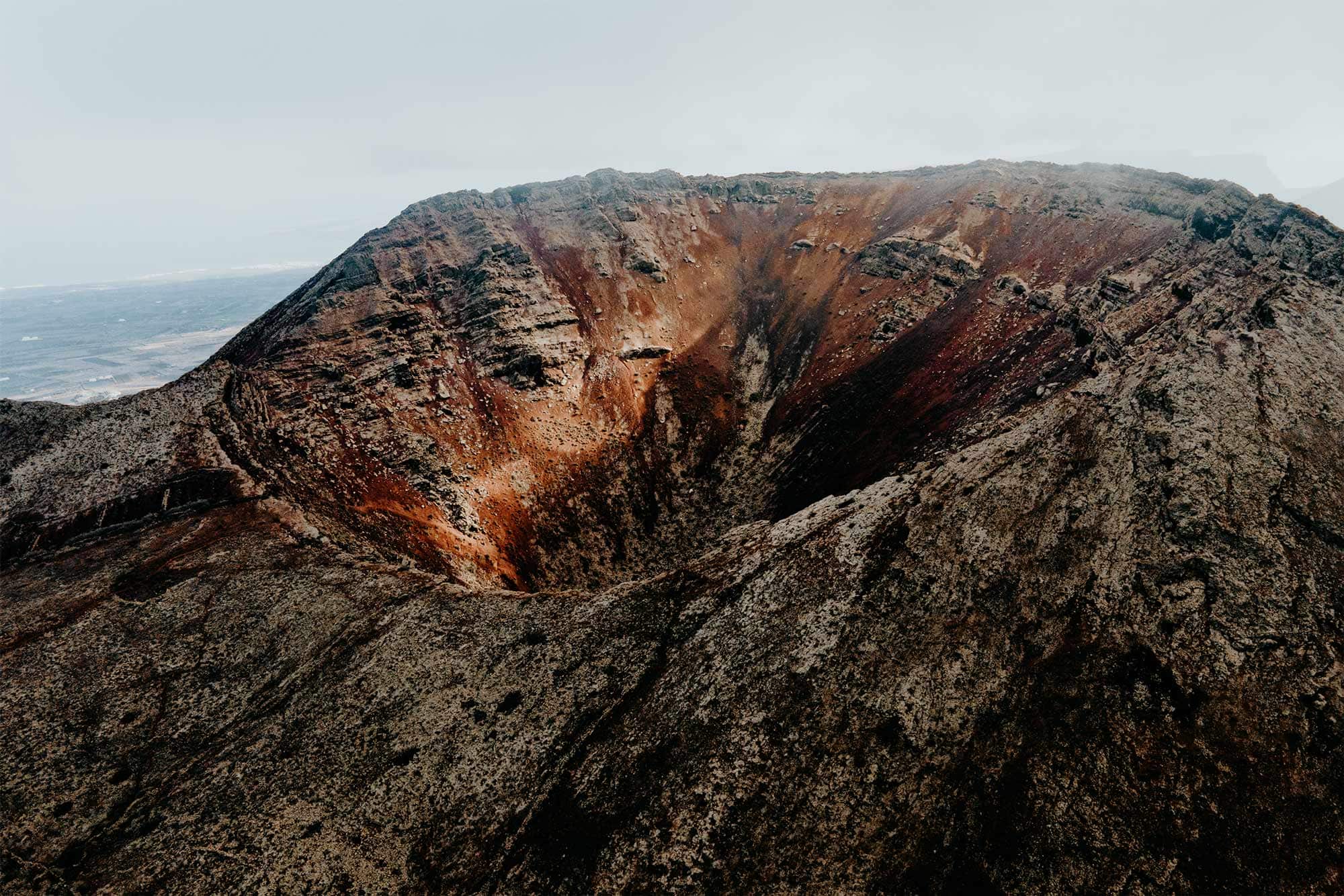
How to get to the Volcán de La Corona
By car
As with most of the things to see and do on Lanzarote, Volcán de La Corona is best to get to by renting your own set of wheels.
For that reason, I highly recommend sorting out a trustworthy car that is suitable for all the different sorts of terrain you’ll stumble upon while cruising over the island.
For car rental on Lanzarote, I would advise Rentalcars.com, as they offer excellent service, additional insurance, and a wide variety of cars available, all at a reasonable price.
Upon arrival in Yé, you’ll notice a small church in the heart of the city with plenty of free parking spaces available – perfect since this is also the official starting point of the hike.
By bus
While I can’t stress it enough to rent a car for the duration of your stay on Lanzarote, it is also possible to get around the island by public bus.
However, it is worth mentioning that public buses aren’t the most reliable ways of transport on the island, given most bus lines do not operate too regularly.
For information on bus routes and up-to-date timetables, make sure you visit IntercityBus.
Join a guided tour
One of the most popular ways to visit Volcán de La Corona is on a guided tour from either Costa Teguise, Arrecife, Puerto del Carmen or Costa Calero.
Volcán de La Corona and the Famara Cliffs
This half-day guided tour includes takes you hiking the immense crater rim of Volcán de La Corona as well as the edge of the impressive Famara Cliffs. The tour includes hotel pickup service in Costa Teguise, Arrecife, Puerto del Carmen or Costa Calero – plus an experienced guide that tells you all the nitty gritty facts about the area.
Volcán de La Corona hike | The details
Hike difficulty
Easy
Hike duration
1 to 2 hours
Hike distance
3.4 km round trip
Elevation gain
145 Meters
The starting point of the Hike
The starting point of the Volcán de La Corona Hike is found in Yé, a small village in the picturesque municipality of Haría.
Upon arrival in the village, you’ll unquestionably notice the church of Yé, where there’s plenty of space to park your car.
From the parking, it’s only a short walk to the right until you see a gap between the fields, this is the official starting point of the trail.
Climbing the volcano
As soon as you arrive on the trail, you’ll be surrounded by authentic Lanzarote vineyards, which are characterised by a unique technique that protects the grapes from heavy winds and desert-like conditions.
The trail itself starts off relatively flat and gives you a great insight into Lanzarote’s unique flora and fauna, such as wildflowers, cactuses and a few palm trees.
After a short while, you arrive at the foot of the volcano and start the climb to the summit. While there’s definitely some incline to handle, I believe it’s manageable for basically any level of physical fitness.
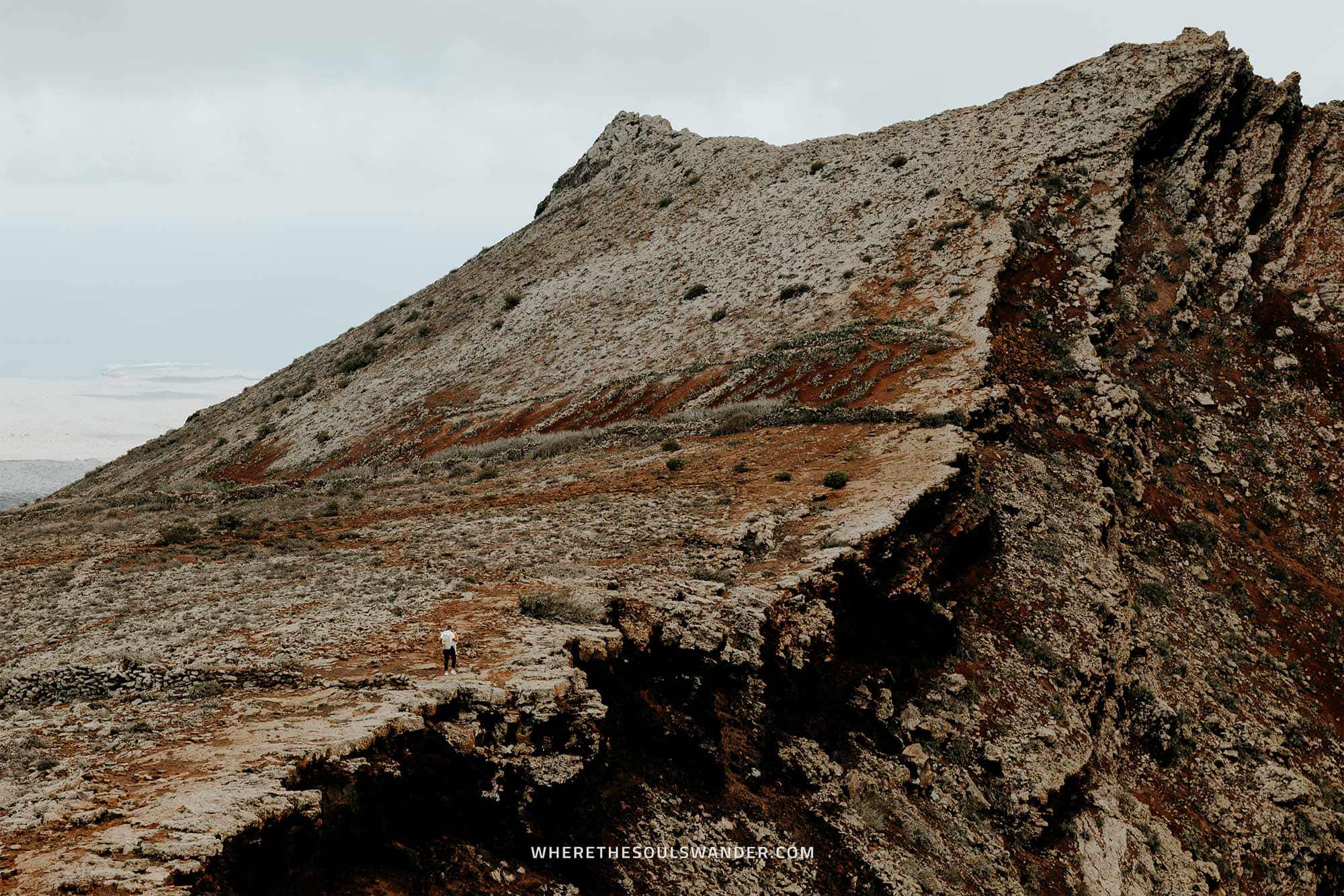
Reaching the summit
Once you’ve completed the short climb up, you’ll be welcomed by some of the most spectacular views of the island – which, on a clear day, reach as far as the eye can see.
At this point, you’re standing at a height of roughly 609 meters above sea level.
When I arrived at the summit of the volcano, I wandered around the ridge and was rather surprised, as both the size and the depth of the crater were exceptionally impressive.
I’ve spent about an hour taking it all in, before starting the journey back to my car.
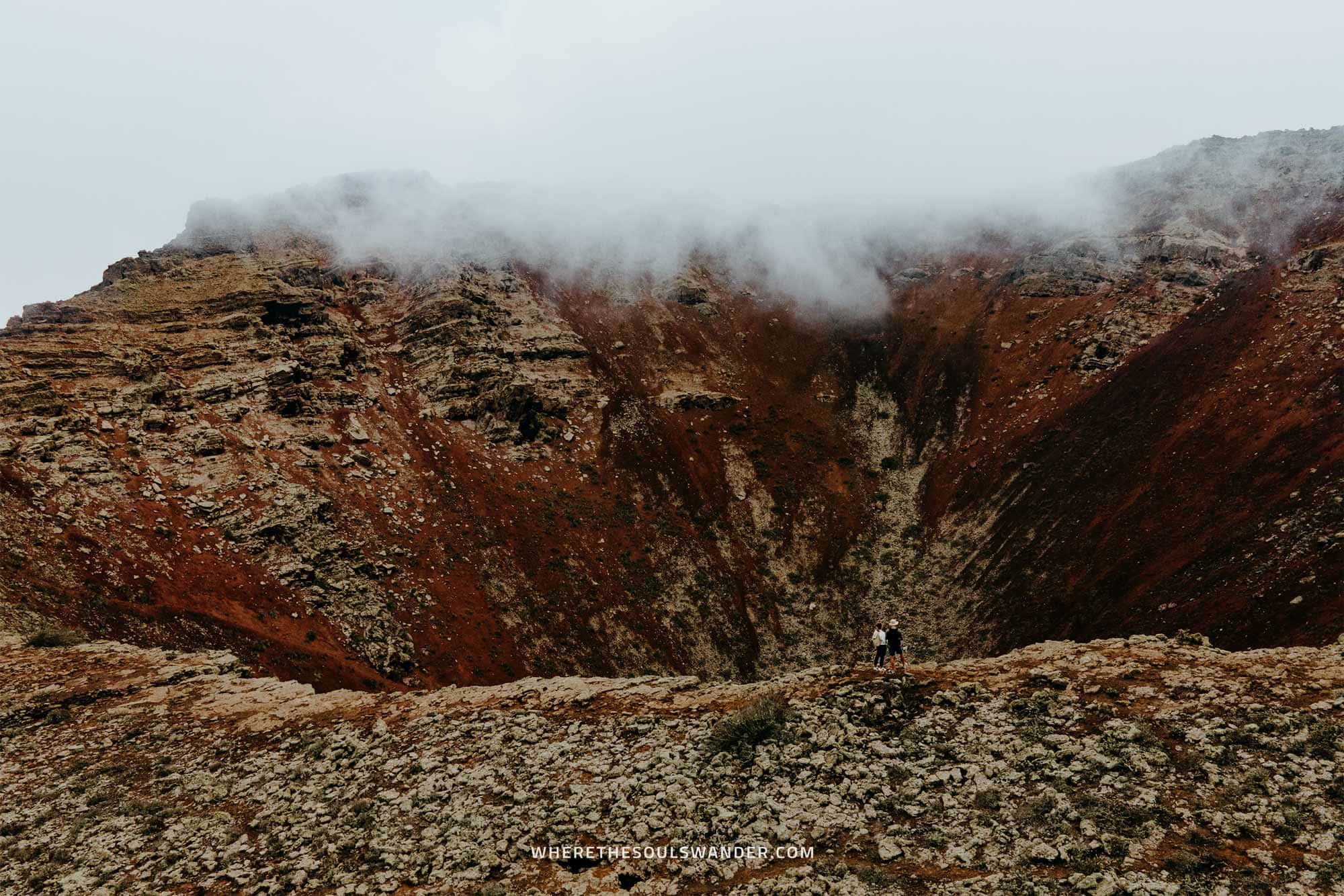
Walking the ridge
Whilst it is said that you could walk around the crater of Volcán de La Corona, I noticed several warning signs that said it wasn’t allowed.
After my recent visit, it’s easy to see why, as the terrain looked rather unreliable the further you move up the ridge.
Add to that, that it’s extremely windy here, and you instantly realize why they put those signs in place.
Although I can’t tell if those signs are there year-round, I strongly discourage trespassing – so be sure to respect the local rules as per usual.
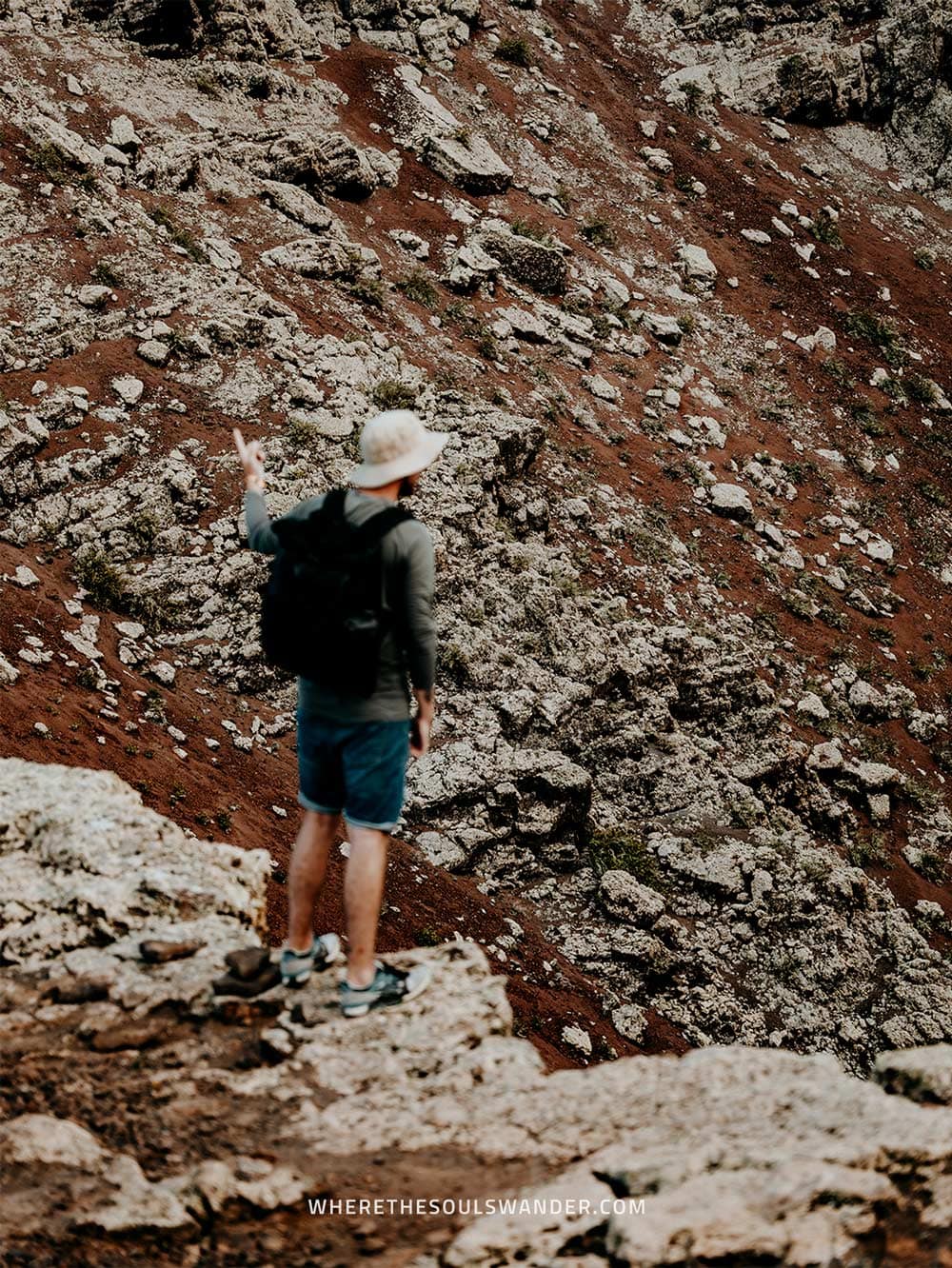
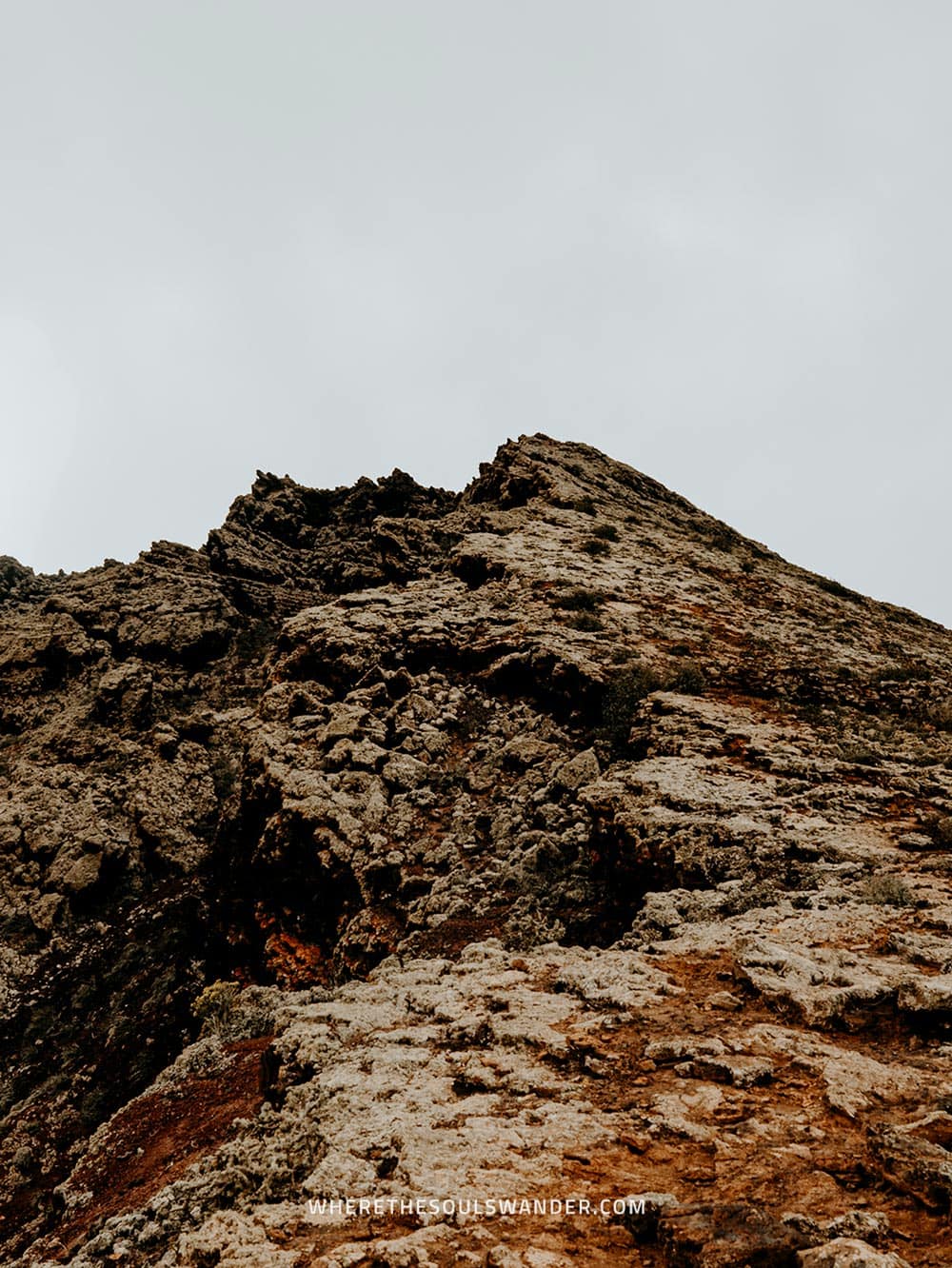
The way back
Once you’re done at the top, simply follow the same route back until you reach the road.
While it’s completely possible to make the hike circular, I wouldn’t recommend it as the other trail is much more challenging, with lots of thorny bushes that you have to dodge.
Also, you won’t miss anything spectacular if you opt for the same route back – so don’t make it unnecessarily hard for yourself.
A cinematic drone video of Volcán de La Corona
Where to stay on Lanzarote
Lanzarote is relatively compact in size and is easily navigated by car, meaning you could basically choose to base yourself anywhere along its picturesque coastline.
I personally opted to stay in different areas to make explorations around the island as convenient as possible, which also gave me the possibility to experience various towns and their specific atmospheres.
For my adventures on this side of the island, I based myself in Costa Teguise around half an hour’s drive from Volcán de La Corona.
To help you find the right accommodation, I’ve listed some of the best picks out of the bunch below;
Tequise
Situated in the heart of the authentic town of Teguise, Hotel Casa de las Flores is a truly stunning boutique hotel with an excellent blend of local and modern design elements. Deluxe double rooms start at €147 a night.
Costa Teguise
Barceló Lanzarote Active Resort
One of Costa Tequises’ most popular accommodations, Barceló Active Resort is a well-designed all-inclusive resort, perfect for those looking for a stress-free stay. Double rooms start at €90 a night
Puerto del Carmen
If you’re looking for a budget-friendly apartment in Lanzarote’s number one beachside town, Apartamentos Acuario Sol will certainly be for you! With spacious rooms, a large outdoor swimming pool and its excellent position near both the boulevard and the beach, I believe this apartment is great value for the money. One-bedroom apartments start at €78 a night.
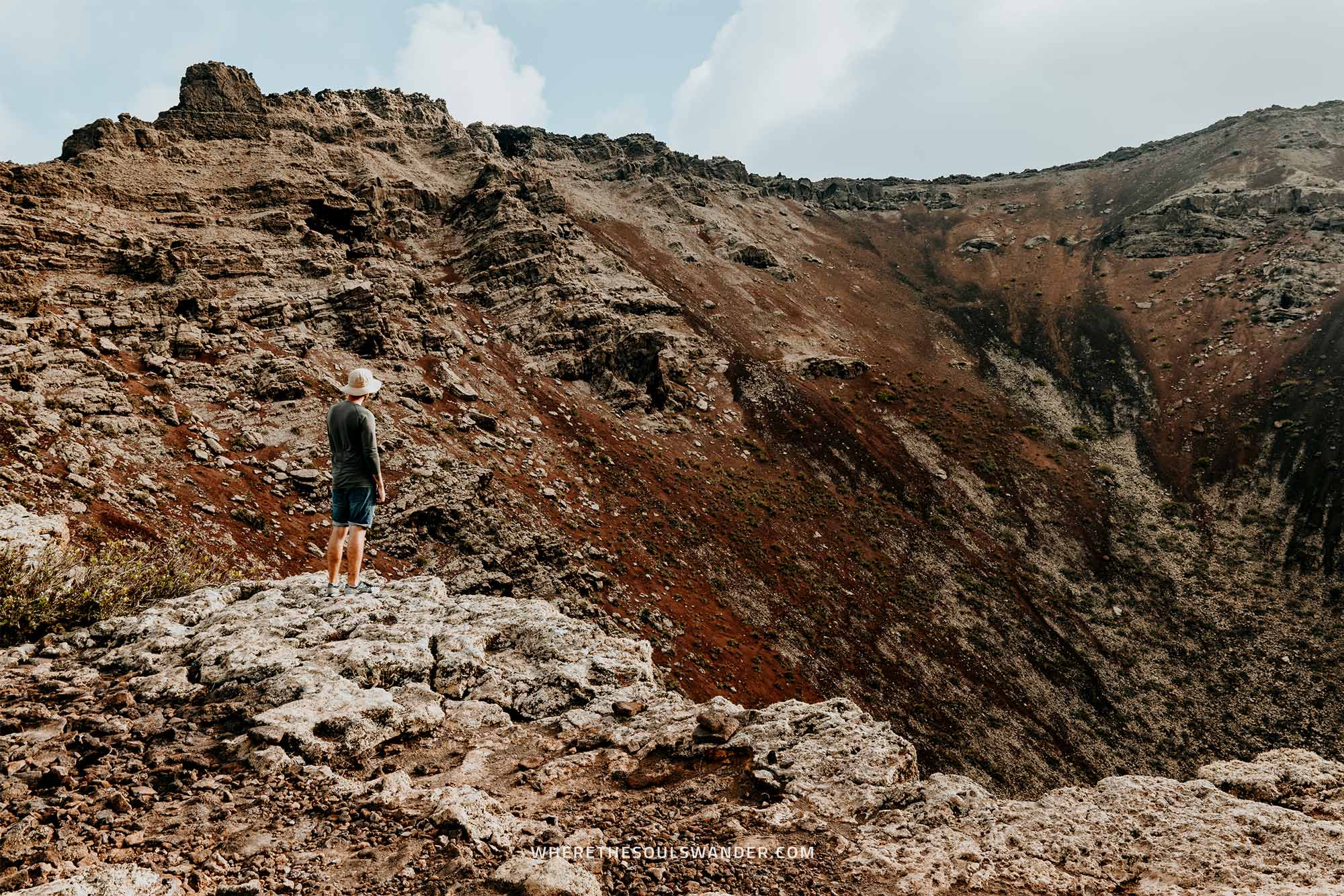
The best time of year to visit Volcán de La Corona
Given that Lanzarote is situated just off the coast of Morocco, the island is considered a year-round destination, with comfortable weather conditions most days of the year.
However, the peak season on Lanzarote is during the summer months of May to September.
During this period, the temperature frequently rises above the 30°C mark, which could make hiking trips slightly challenging if you ask me.
For that reason, I’d highly recommend visiting Lanzarote for the shoulder months, which is basically every month outside the peak summer months mentioned above.
I personally visited Lanzarote in September and had mostly clear days, with temperatures ideal for hiking activities and days spent relaxing on the beach.
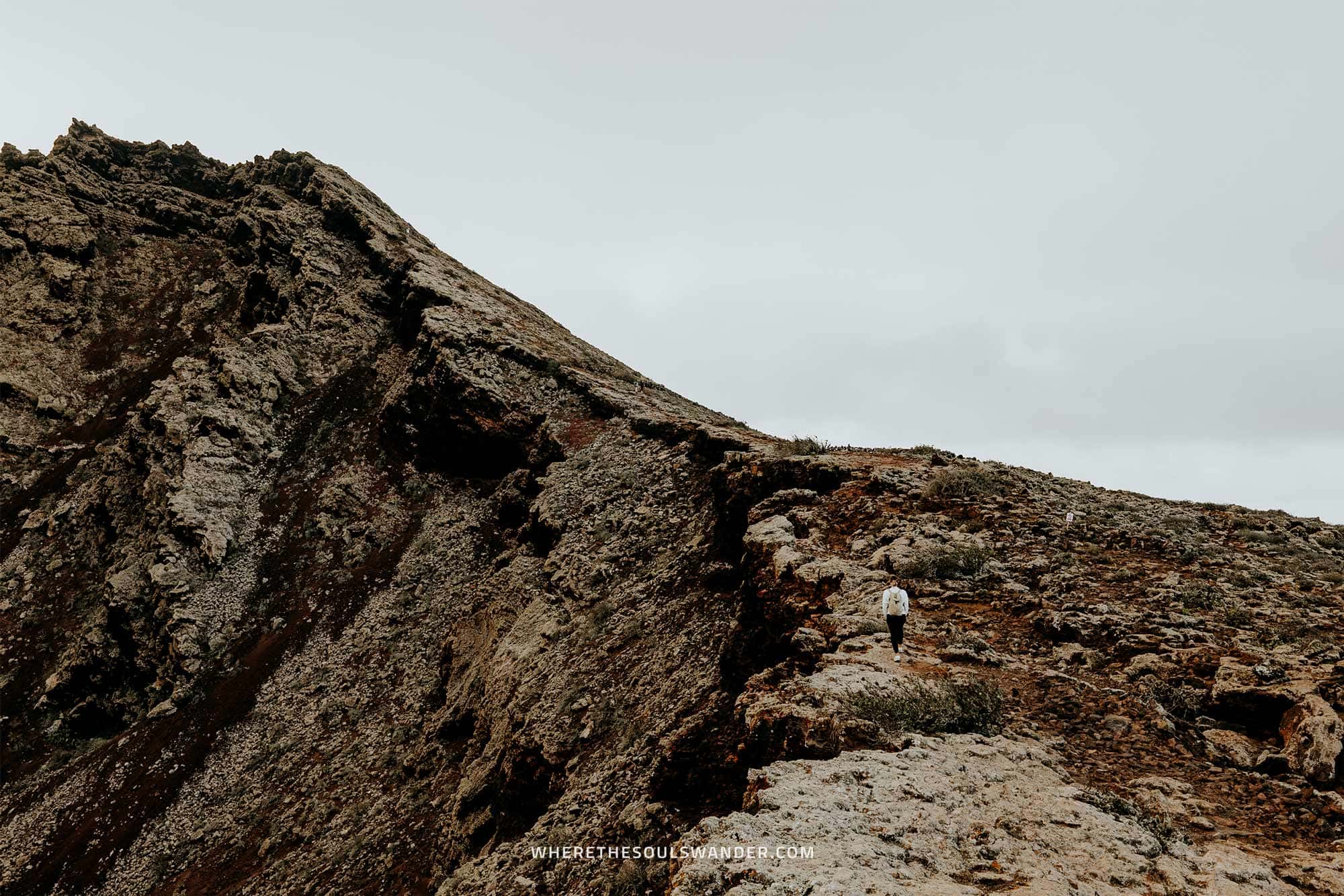
The best time of day to visit Volcán de La Corona
Since Volcán de La Corona offers some of the most fascinating views on the whole of Lanzarote, I’d highly recommend visiting in the late afternoon, as it’s widely known that the island starts off the day cloudy.
Also, I can’t stress it enough to avoid hiking here during the middle of the day when the sun is out and blazing. Trust me, the trail is fully exposed, and there’s literally no place to take cover.
Personally, I visited Volcán de La Corona in the late afternoon, and I believe it’s safe to say that this is the absolute best time to visit, especially if you are travelling to Lanzarote during the warmer summer months.
While the weather wasn’t particularly in my favour during the hike, it was still pretty awesome, with thick layers of fog setting a mystical, yet moody vibe.
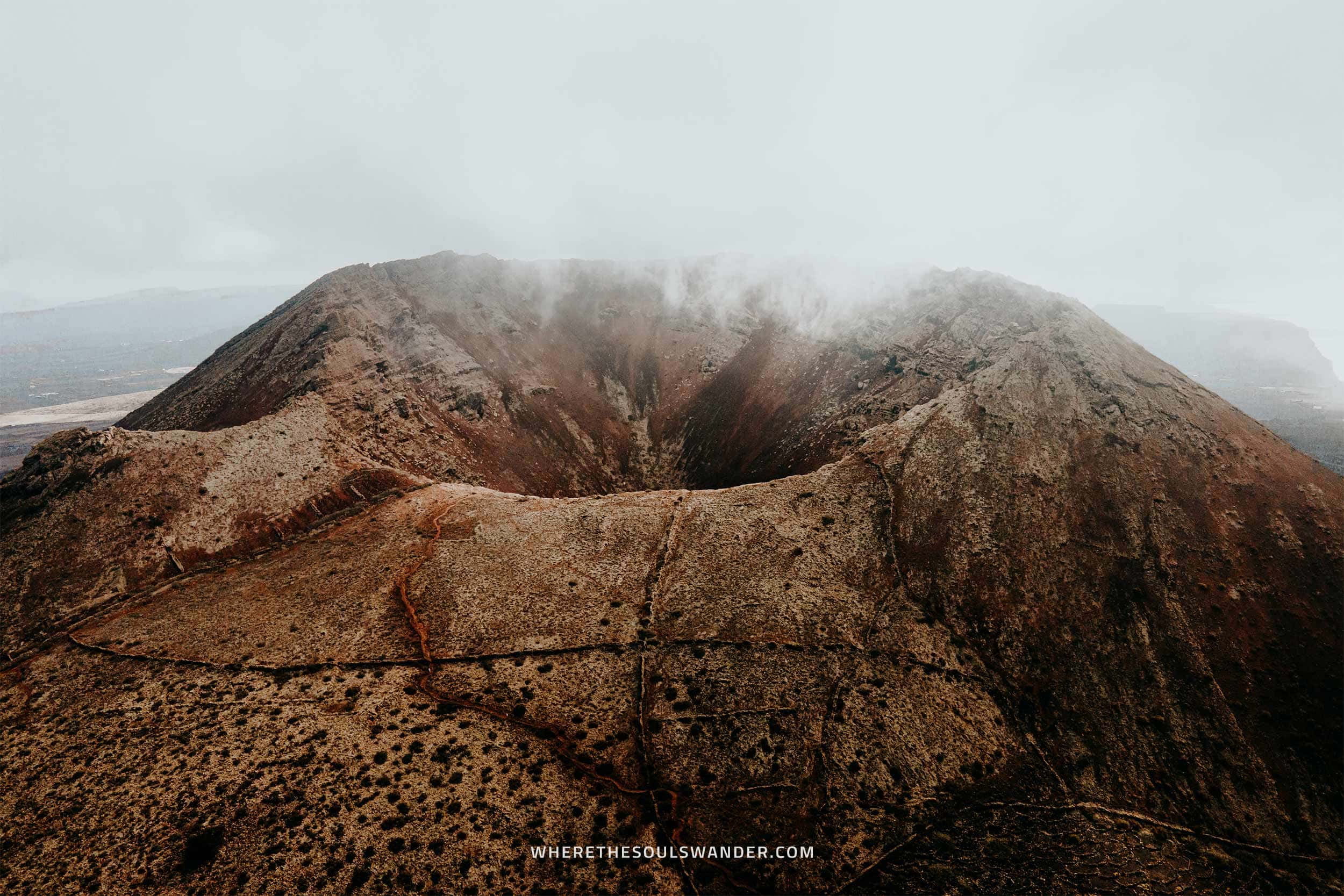
What to pack for the Volcán de La Corona hike
Given that Lanzarote is spoiled with tropical weather and rough landscapes, it is essential to travel through Lanzarote with the right type of kit.
Having said that, there are a few items that will make your explorations around the island a bit more relaxed.
To help you have comfortable adventures, I’d highly advise packing the following items:
Reusable water bottle | One travel essential that I carry with me at all times is the Grayl Geopress. This reusable water purification bottle allows me to fill up water from nearly every water source, making it one of my best investments to date.
Hiking boots or a sturdy pair of sneakers | The terrain at Volcán de La Corona is relatively rough, gravelly and uneven. While you don’t necessarily need hiking boots, it’s absolutely essential to wear a sturdy pair of sneakers. I recently bought the New Balance Hierro v7, and am really pleased with them, as they offer all the feats of a hiking boot, while still looking like a dope sneaker.
Sun protection | Since the heat is oftentimes fierce on Lanzarote, I wouldn’t recommend attempting any hiking adventures without the right type of sun protection. For that reason, I can’t stress it enough to bring sunscreen and a hat.
Snacks | There are not many shops near Volcán de La Corona, so I suggest bringing a few snacks to avoid that you might get hangry during the hike.
A camera | In my opinion, Volcán de La Corona is one of the most impressive vulcanos on the island, so I’m sure you’ll click plenty of photos while you’re there. Curious about my photography gear, make sure you see what’s in my camera bag.
Leave no footprints | Always keep in mind to respect the locations you’re visiting. I can’t stress it enough to bring your trash back with you when wrapping up the hike.
Stay safe on Lanzarote | Travel insurance
Since Lanzarote has no shortage of adventurous activities, I advise everyone to sort out good travel insurance before setting out on their adventure to the island.
Though I firmly believe that it’s unlikely to experience any troubles when following the advice in this guide, something unfortunate can happen at any time, whether it’s an injury, a stolen camera, or an accident on the road.
For travel insurance, I use Heymondo, as they offer full covid-19 coverage, as well as a handy app with 24-hour medical assistance. Make sure you check it out – readers of WTSW receive 5% off any insurance policy too. Additionally, I also recommend World Nomads.
Cheers!
I’ve been on this travel blogging journey since 2019.
If you appreciate what I do here, these are some ways you can support me.
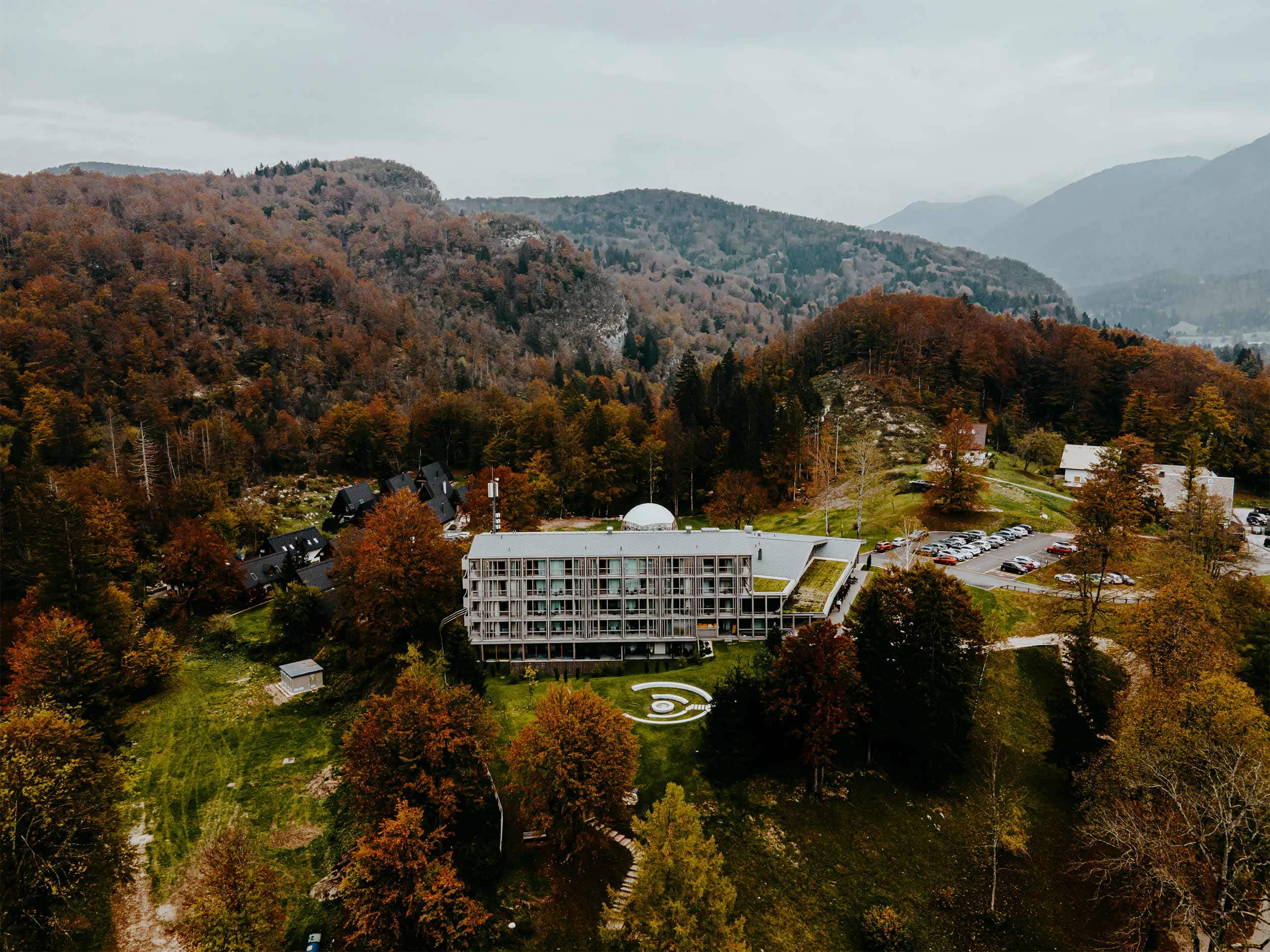
Hotel Bohinj review: experience unrivalled eco-friendly luxury in Slovenia
I have to admit, when Hotel Bohinj first appeared on my radar, I instantly thought of booking a trip to Slovenia, even if it was just to spend a couple of nights here.
Fast forward a few weeks, and my idea had come to fruition, with a 2-night stay at Hotel Bohinj as one of the absolute highlights of my road trip throughout the country (make sure you read my Slovenia itinerary too).
Tucked away in the heart of the Triglav National Park, Hotel Bohinj is a super stylish hideaway that could easily be considered a destination on its own.
From the moment I walked through the gigantic wooden doors, I was amazed by the look and feel of this place – it truly embodies the unique ambience of Bohinj in the best possible way.
Defined by its natural surroundings and distinctive eco-friendly philosophy, Hotel Bohinj is the perfect place to escape the hustle and bustle of daily life, and by far the most authentic hotel I’ve stayed in lately.
But to say that Hotel Bohinj is solely an accommodation is an understatement, as it’s more of an experience crafted to perfection – more on that later.
Since I had the most wonderful time here, I decided to share a detailed review of my experience, as well as a few tips on how to get there, when to visit and how to book your stay
Here’s a review of my experience at Hotel Bohinj.
If you choose to use any of the links on this page, I may receive a small commission at no extra cost to you. By using these links, you’ll have a direct impact on WTSW and my ability to continue to create free insightful travel content for you. If you find any of my tips useful, you can support me by buying a virtual coffee here.
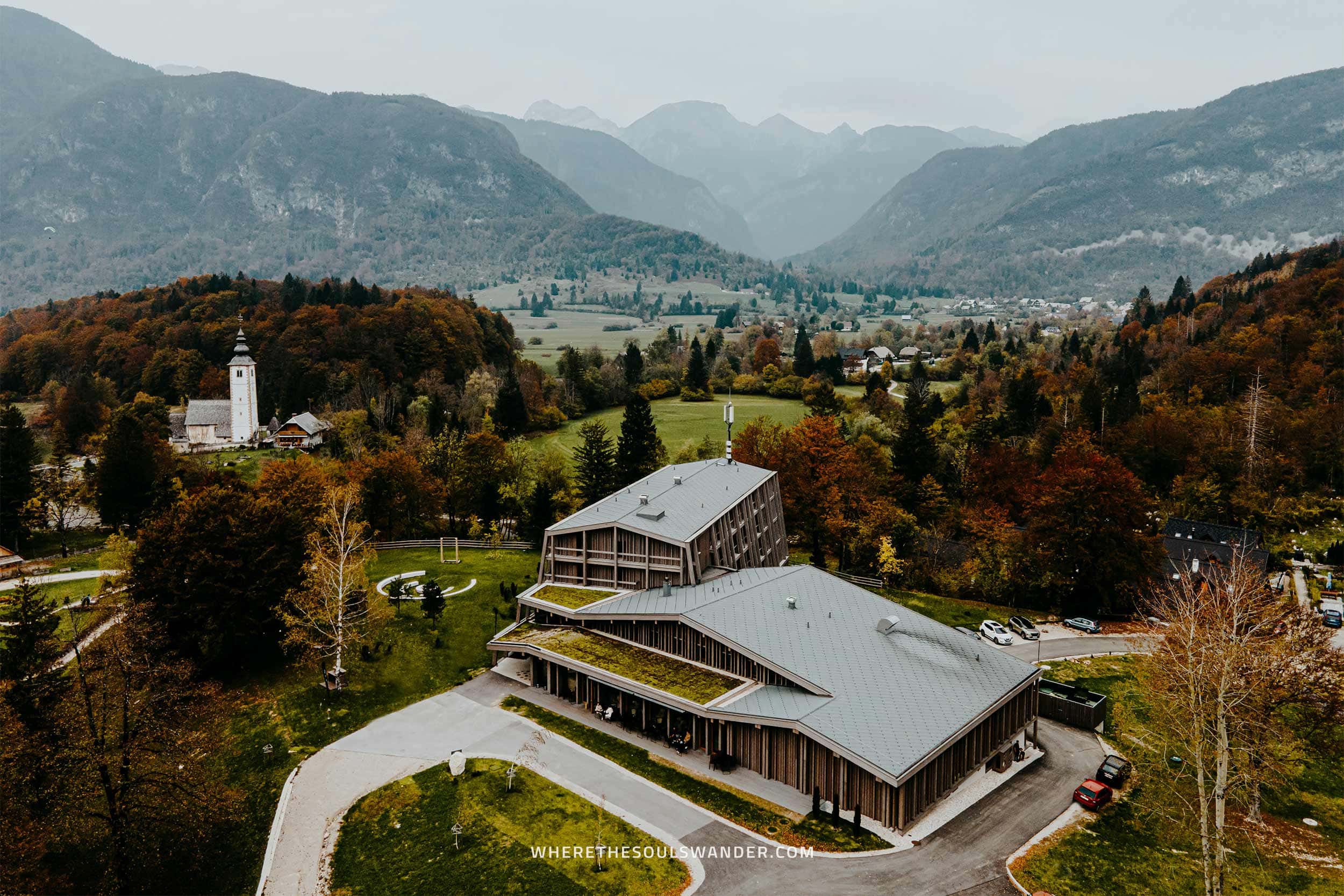
Hotel Bohinj review: experience unrivalled eco-friendly luxury in Slovenia
Where is Hotel Bohinj | Hotel Bohinj’s location
When it comes to location, Hotel Bohinj is truly unrivalled.
Encircled by pristine alpine meadows, Hotel Bohinj is located in the heart of the Triglav National Park, which makes it the perfect base for all things nature, hiking and outdoor activities.
While you might be under the impression that you’re completely cut off from the world, Hotel Bohinj is actually pretty close to some of Slovenia’s most popular highlights – it is in fact only about an hour’s drive from the stunningly beautiful capital of Ljubljana.
Bohinj itself is a paradise for those after nature and outdoor pursuits, which, in my opinion, gives it a more authentic and untouched feel than its better-known sister; Lake Bled.
Hotel Bohinj | The Design
Uniquely designed by Ofis Arhitekti, Hotel Bohinj is a modern architectural masterpiece set upon a raised plateau, providing dazzling views of Lake Bohinj, the church of St. John the Baptist and the Triglav Mountains in the distance.
Defined by a characterizing wooden framework, the exterior of the hotel has been given a naturally polished appearance, making it not only stand out but also completely in harmony with its natural environment.
Once you step through the massive wooden doors, you’ll be welcomed in a spacious lobby with raised ceilings and plenty of aesthetically pleasing design elements, which effortlessly reflect the philosophy that’s behind Hotel Bohinj.
The hotel common area is designed in an open-plan layout with an Instagram-worthy lounge area and a cosy fireplace at the heart of it all, which also happens to separate the lobby from the restaurant
The in-house restaurant itself is spacious, yet intimate and exceptionally charming, with numerous eye-catching fragments sprinkled throughout.
All in all, it’s easy to see how much thought has gone into the details, and to me, Hotel Bohinj is by far the most original hotel I have stayed in lately.
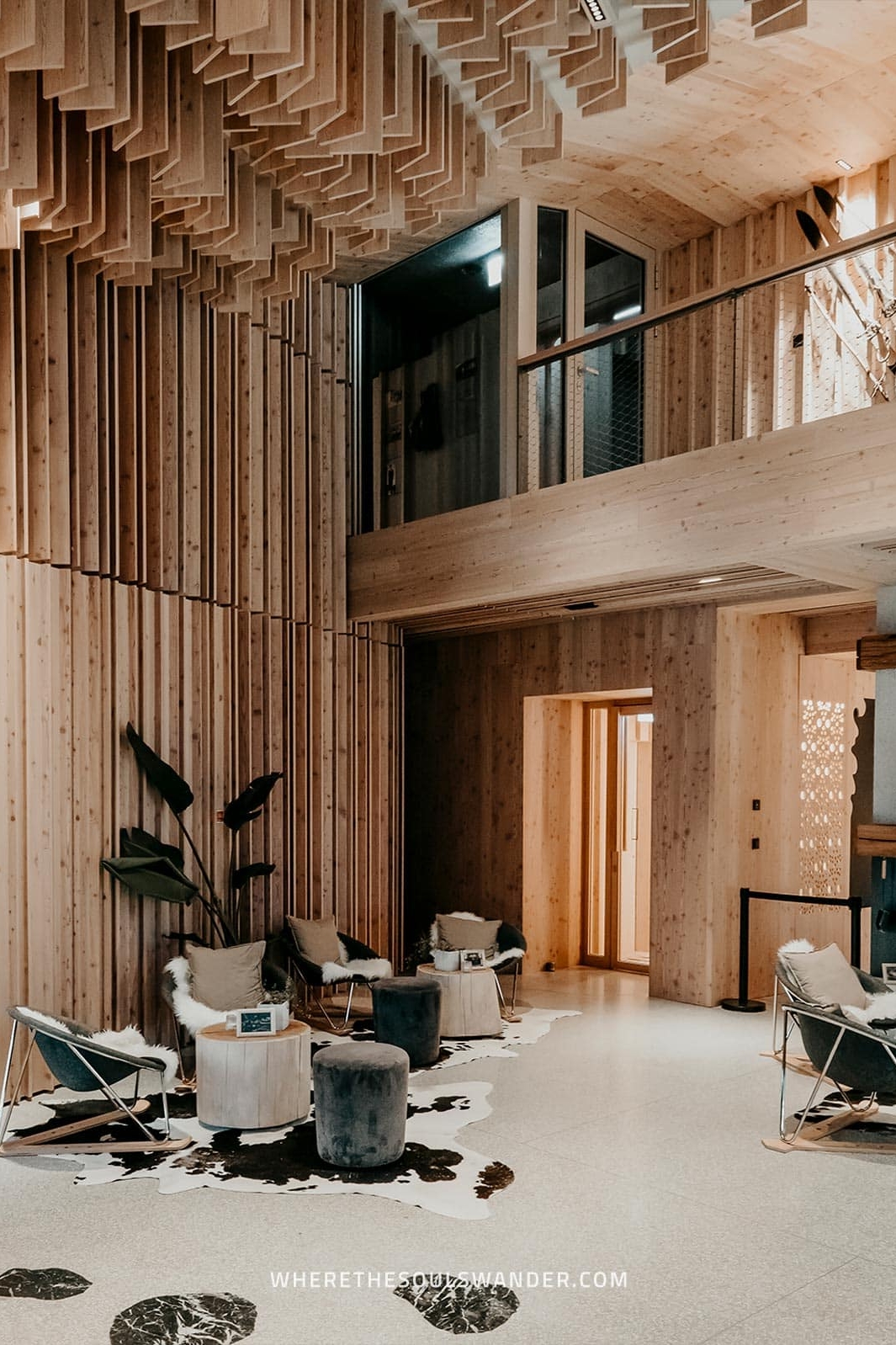
Hotel Bohinj | The rooms
From the moment I walked into my room at Hotel Bohinj, I was hyped by the level of detail that went into the design – everything breathes the unique vibe of Bohinj in the best possible manner.
All 69 rooms are decorated by following a minimalistic, yet original approach, with carefully chosen materials giving the rooms a rich and distinctive feel to them.
Illuminated by a unique silhouette of Mount Triglav, the rooms boast one of the most comfortable beds I’ve ever slept in. Add to that the fact that you can request a pillow to your own liking at the reception, and you’re up for a perfect night of sleep.
The minimalist bathroom has a great rain shower and is designed according to the same sustainable values as the rooms. They are also equipped with organic hair and body wash, which are both distinguished by an exceptional combination of scents.
If you’re like me and work online, the rooms are also equipped with a spacious desk, perfect for those that need to get some work done during their travels.
While there is a television tucked away in a wooden cabinet, I’m pretty sure that it will be the incredible views from the floor-to-ceiling windows that grasp your attention.
Hotel Bohinj | The food and drinks
First things first, all stays at Hotel Bohinj come with an excellent breakfast spread, which is available to guests every day from 07:00 until 10:00.
While I normally survive the morning solely on coffee due to intermittent fasting, I chose to start off my days in Bohinj with a light, but healthy and nourishing breakfast.
The reason for this is that Hotel Bohinj takes its breakfast spread extremely seriously, with a great range of options to choose from – think fresh bread and croissants, cheese from local farmers, plenty of fresh egg styles, seasonal fruit, and farmer yoghurt to name but a few.
Then there’s dinner.
For as far as I know, Hotel Bohinj works with a seasonal menu, with a focus on seasonal flavours and locally grown ingredients.
In my case, this meant that during my stay in October there was a thoroughly curated menu based on the savoury flavours of autumn.
On these special dates, guests have the option to choose from a perfectly curated menu of cold and warm starters, salads, main dishes, and desserts, as well as a selection of local cheeses.
I opted for the veal oyster blade steak with beetroot purée and potato pavé, paired with a glass of locally produced red wine – which was absolutely wonderful.
For dessert, I chose the honey semifreddo with oat crumble, pollen, and honey sponge, which was tasty and completely made of locally sourced ingredients.
If you’re keen to have dinner at Hotel Bohinj, make sure you book a table in advance, since it has rapidly become one of the best and most popular restaurants in Bohinj.
Hotel Bohinj | The Wellness
Tell me, what’s better after an adventurous day in the alpine air than the comfort of having an excellent wellness centre right at your doorstep?
Despite that the wellness is relatively compact, it is actually really pleasant, with a high level of quality clearly visible throughout the various areas.
For a start, you can choose to settle in the Finnish and Turkish sauna, followed by an ice fountain or cold shower to cool yourself down.
After the sauna, make sure you lay down in the distinctive room with a salt wall and feel the negatively charged ions of the salt instantly elevate your overall health and mood.
Now that you’re completely Zen, you can take it easy in the heated outdoor whirlpool, or opt for one of the many massages and facial treatments for further relaxation.
While I’m usually not a huge spa and sauna fanatic, the wellness centre was in fact quite a welcoming addition to my stay at Hotel Bohinj.
Hotel Bohinj | Events and activities
While there are plenty of things to do in Bohinj and its surrounding, the people at Hotel Bohinj itself will also do everything in their power to ensure that you’ll never have a dull moment during your time there.
The result?
An ever-expanding list of unique and exciting events and activities, both in and outside of the hotel grounds. Think culinary weekends, morning workouts, evenings by the fireplace, wine tastings and movie nights just to name a few.
On top of that, Hotel Bohinj also has a few exhilarating activities outside of the hotel grounds on offer, including zip lining, rafting and paragliding in summer, and ski lessons during the colder winter months.
If you’re keen to see the latest events or wish to read more about the activities, hop over to the official Hotel Bohinj website.
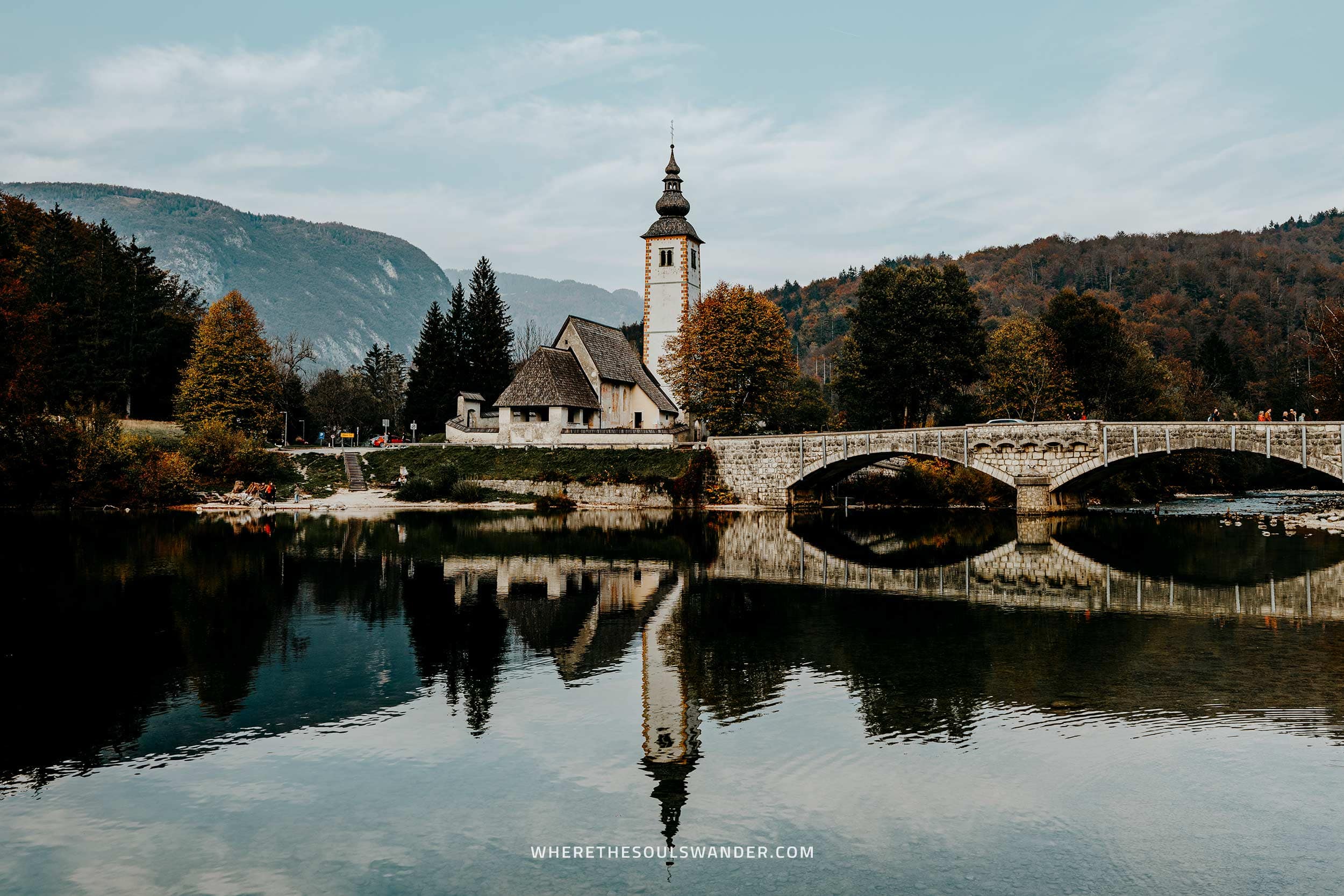
Book your stay at Hotel Bohinj
Hotel Bohinj has several rooms to choose from and these can easily be booked through their website or online at Booking.com.
The rooms include;
Classic Double Room | €175,- per night
For solo travellers, couples or close friends.
Comfort Double Room | €219,- per night
Slightly more spacious than the classic.
Family Room | €304,- per night
As the name suggests, a great option for families.
Superior Suite | €403,- per night
Perfect for those wishing to splurge
However, given the rooms at Hotel Bohinj are in popular demand, I highly recommend booking your room well in advance.
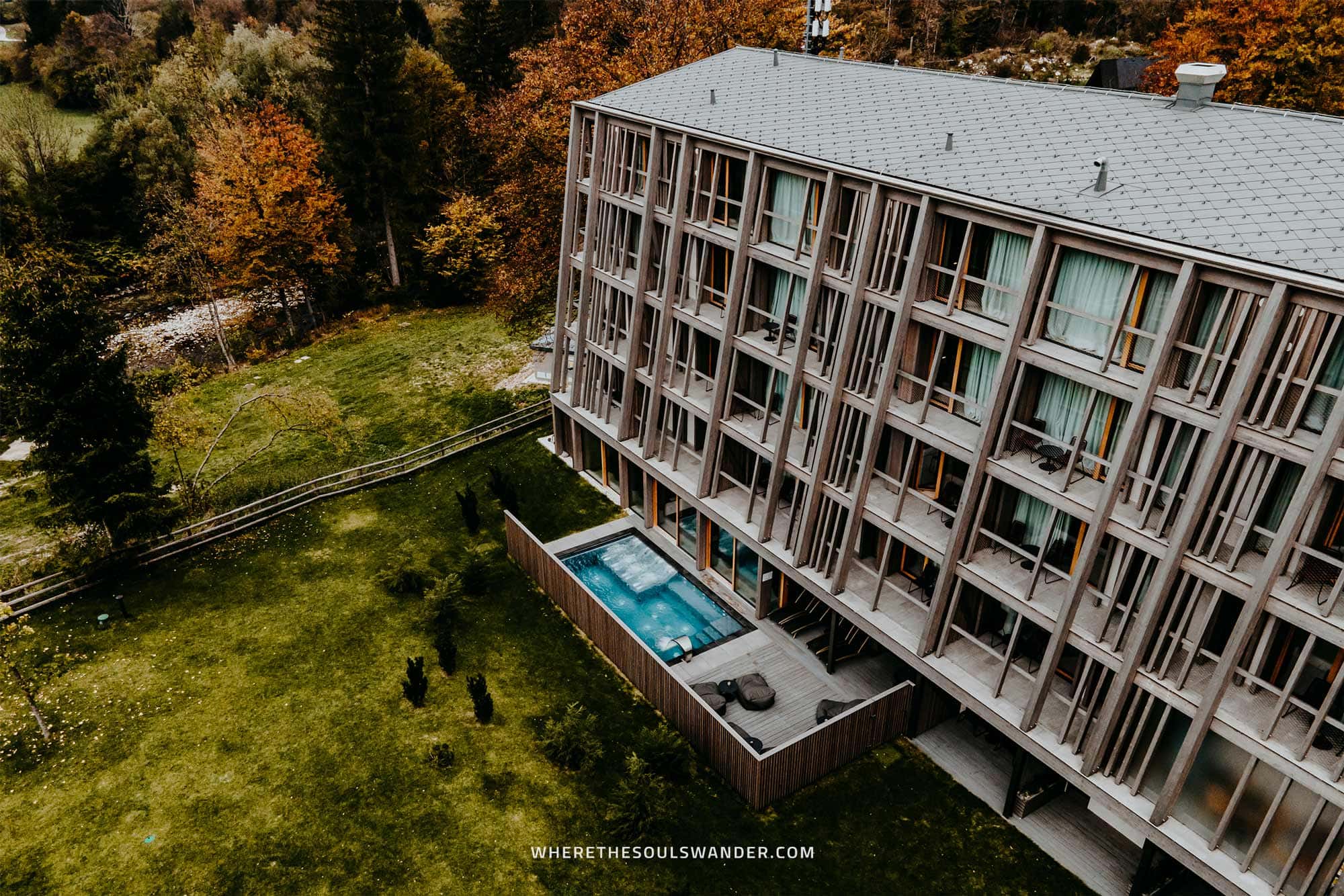
How to get to Bohinj
Despite its position within the remote nature of Triglav National Park, Hotel Bohinj is actually well connected to all the major tourist hotspots in Slovenia.
By Car | Since Slovenia is made out of all the stuff that makes a road trip epic, I can’t stress it enough to hire your own car for the duration of your time in the country.
With excellent road conditions, manageable driving distances and sensational scenery throughout, going on a road trip will easily be one of the absolute highlights of your travels through Slovenia.
In terms of distance, Hotel Bohinj is only an hour’s drive away from the Jože Pučnik Airport in Ljubljana – the international airport of Slovenia.
For car rental in Slovenia, I’d highly recommend Rentalcars.com, as they offer great service, additional insurance options, and a great variety of cars to choose from. For prices and availability check here.
Also, Hotel Bohinj has plenty of parking spaces available in front of the property.
By bus | For those who prefer a more local experience, Hotel Bohinj is also easily reached by public transportation.
Given Bohinj is well connected to the rest of Slovenia, buses run to Bohinj from several cities, including Kranjska Gora, Bled and Ljubljana.
Bus tickets can be purchased directly from the bus driver and most of the major cities have larger bus stations where you can buy your tickets in advance.
For more information and up-to-date timetables check here.
VIP transfer by Hotel Bohinj | While this doesn’t suit my travel style, Hotel Bohinj also has another option on offer; a VIP transfer with a luxuriant Cadillac Escalade, perfect for those who wish to celebrate a special occasion or simply want to splurge.
Though there are fixed prices for transfers from Brnik and the Ljubljana city centre, the price for other destinations includes €3,50 per kilometre.
The VIP transfer can hold up to 6 passengers and should be arranged upfront with the hotel team. For additional information and inquiries, check here.
Best time to stay at Hotel Bohinj
Given Bohinj is all about nature and outdoor activities, I believe that it’s safe to say that you could easily plan your trip for all four seasons.
Of course, the most popular period to visit Slovenia is during the peak summer months of June till September, when the days are long and the temperatures perfect for hiking and sightseeing.
But that doesn’t mean that it isn’t equally as beautiful during the other seasons.
I stayed at Hotel Bohinj in early October and had excellent autumn weather, which gave a unique feel to my overall experience. It is in fact an epic time of year for photographers like myself.
While I absolutely believe that autumn is a great time to explore Slovenia, I do want to mention one minor downside; the days are significantly shorter, which limits your time outside – luckily there are plenty of cool experiences at Hotel Bohinj itself.
Alternatively, you could also choose to spend winter in Slovenia, which is said to be absolutely magical – for that reason, I already planned to return in the upcoming winter.
That being said, if you’re looking to avoid the crowds that come with Europe’s extremely popular summer season, you might want to opt for a trip in the offseason instead.
What to do in Bohinj
The wonderful thing about staying at Hotel Bohinj is that it’s the perfect base from which to explore Bohinj and its stunningly beautiful surroundings.
From impressive viewpoints to gushing waterfalls, pristine alpine meadows to activities on the lake itself, there’s truly no shortage of unforgettable things to see and do in Bohinj.
If you’re looking for unique things to do in Bohinj, make sure you go and see my favourite things to do in Bohinj (coming soon) here.
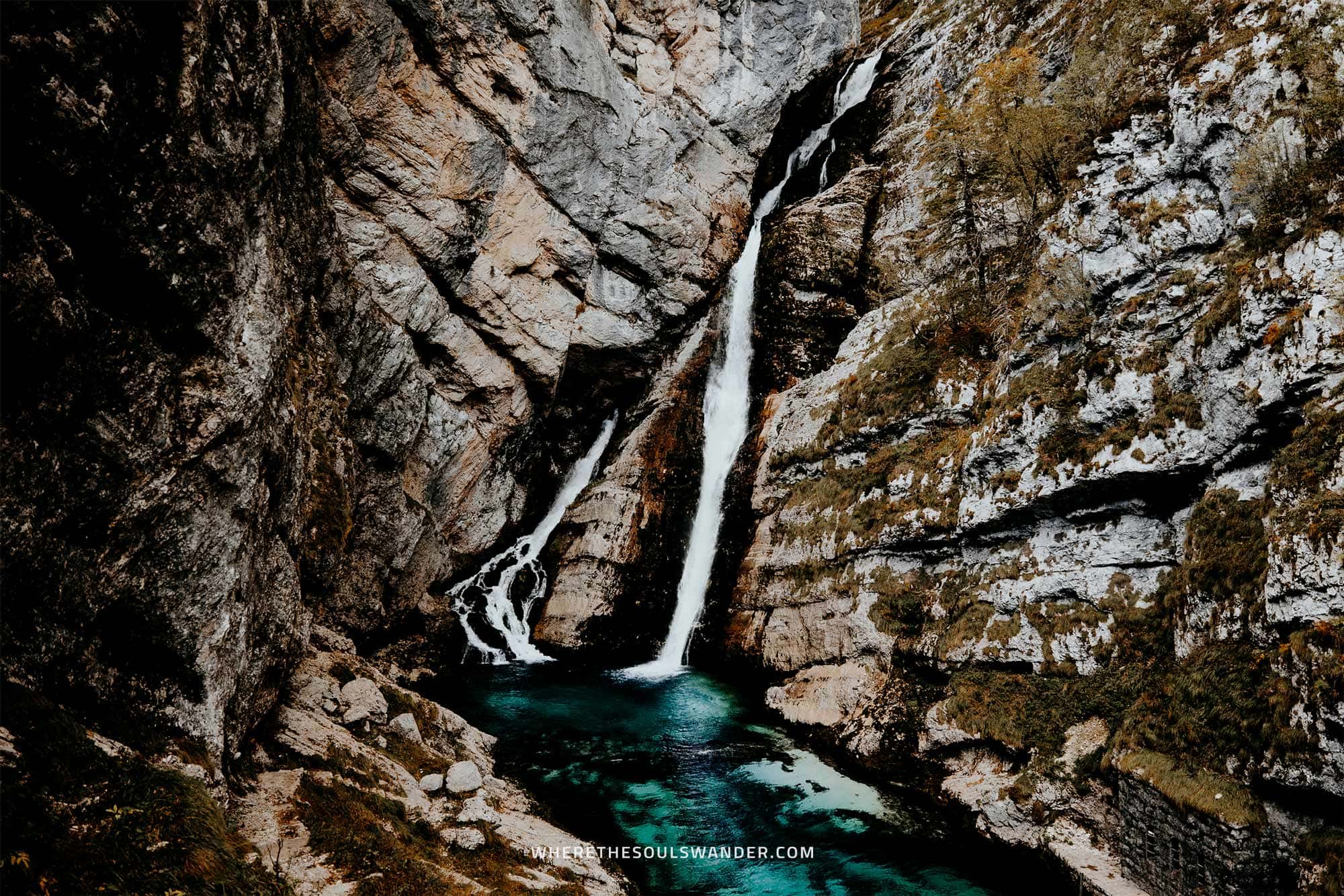
Stay safe in Slovenia | Travel insurance
Since Slovenia has plenty of adventurous activities on offer, I advise everyone to sort out good travel insurance before setting out on their own adventure.
While I believe that it’s unlikely to experience any troubles when following the advice in this guide, something unfortunate can happen at any time, whether it’s an injury, a stolen camera, or an accident on the road.
For travel insurance, I use Heymondo, as they offer full covid-19 coverage, as well as a handy app with 24-hour medical assistance. Make sure you check it out – readers of WTSW receive 5% off any insurance policy too. Additionally, I also recommend World Nomads.
Cheers!
I’ve been on this travel blogging journey since 2019.
If you appreciate what I do here, these are some ways you can support me.
A definite guide to the incredible Kolsai Lakes, Kazakhstan - Updated 2024
Often nicknamed the ‘Pearls of the Tien Shan’, the Kolsai Lakes National Park is unquestionably one of Central Asia’s best-kept secrets.
Situated in a region that is famed for its rough canyons, secluded desserts and vast steppe terrain, the Kolsai Lakes are completely the opposite and an astonishing place for you to disconnect and experience the Kazakh countryside.
The tranquil lakes are a popular stop along Kazakhstan’s famous Golden Triangle and are flanked by lush alpine forests and hillsides covered with wildflowers and berries, making it a haven for nature lovers and culture enthusiasts alike.
Though it’s slightly challenging to get there on your own, given its location at roughly 300 kilometres east of Almaty, those who decide to make the relatively exhausting journey will certainly be rewarded.
In this guide, I’ve covered everything you need to know before setting off to the Kolsai Lakes National Park, including how to get there, what to pack and heaps of insider tips.
If you choose to use any of the links on this page, I may receive a small commission at no extra cost to you. By using these links, you’ll have a direct impact on WTSW and my ability to continue to create free insightful travel content for you. If you find any of my tips useful, you can support me by buying a virtual coffee here.
Where are the Kolsai Lakes
The Kolsai Lakes National Park is nestled in the northern slope of the Tian Shan Mountain Range in southeast Kazakhstan, roughly 300 kilometres from Almaty.
The gateway to the national park is Saty, a small rural village situated just a short distance away from both the Kolsai Lakes National Park and the border with Kyrgyzstan.
Where to stay near the Kolsai Lakes
As mentioned before, the gateway to the Kolsai Lakes is Saty, a small rural village with no shortage of traditional Kazakh homestays.
Though you will not find the most luxurious of stays in this neck of the woods, I can assure you that you will have one of the most authentic local experiences instead – which to me, made my trip to the Kolsai Lakes so much more memorable.
Also, it is worth mentioning that the Kolsai Lakes are extremely popular during the weekends, so if you’re planning to make it there at the weekend, make sure you book your accommodation in advance.
If you’re looking to book your accommodation in advance, make sure you explore the available options in Saty on Booking.com.
Kolsai Lakes tickets | Entrance fee 2024
At the moment of writing – September 2024, the entrance fee to the Kolsai Lakes National Park was 845 KZT (€1,60) per person.
As with many places in this region, I was offered to pay the entrance fee directly and unofficially to the guard, which saved me some money at 500 KZT (€1,-).
After the payment, it is normal that you receive a receipt, which you’ll need upon leaving the park. To avoid paying the entrance twice, make sure you ask for a receipt at the entrance.
Things to see and do at the Kolsai Lakes
Take a walk around the first lake
Whether you’re visiting in the morning or at noon, a walk around the clear blue waters of the first Kolsai Lake is an absolute must.
Start the hike by following the dusty path that runs over the slope on the right-hand side of the lake, and find yourself among lush alpine forests while being welcomed by several stunning vantage points along the way.
Though it’s totally possible to return via the other side of the lake, I wouldn’t recommend it as it’s significantly more challenging, since the trail on the left side is overgrown with all kinds of greenery.
All in all, you should note that the hike takes around 3 to 4 hours out and back.
Head out on the water
If you’re looking for a unique perspective of both the first Kolsai Lake and the surrounding peaks of the Tien Shan mountain range, make sure you rent yourself a boat and head out on the water.
For boat rental, simply walk down to the waterfront, where you’ll stumble upon a few vendors that will rent out boats by the hour at 10.000 KZT (roughly €20,-).
The boats themselves are easy to navigate and a paddle around the lake is done in about one to two hours if you take it easy, which I highly recommend you to do.
Do note that if you visit the Kolsai Lakes during the weekend, there might be a chance that you have to wait until there’s a boat available.
Spent the night at the Kolsai Lakes
Whether you’re pitching out your tent next to one of the lakes, having a local experience in a traditional yurt overlooking the first Kolsai Lake, or staying in the Jibek Jolly Guesthouse, spending a night within the Kolsai Lakes National Park is in many ways an incredible adventure.
Off all of the above options, camping is by far the most popular option, especially among locals.
If you’re keen to go camping, your best option is to hike to the second lake, where you’ll find plenty of space to set up your camp. Alternatively, there are a few grassy areas around the first lake too.
It is worth mentioning that you have to pay a small additional fee at the entrance if you’re planning to go camping within the national park.
Alternatively, you will also find several private yurts on the hillside of the first lake, with prices ranging from 7.000 – 10.000 KZT (€14,60 – 20,90) per yurt per night. Do keep in mind that these yurts are most likely only available for rent during the summer months.
Those after some more comfort can also opt for the slightly more pricey Jibek Jolly Guesthouse, a cosy guest house nestled in the hills of the first Kolsai Lake.
Hike to the second and third lake
While the first lake is usually spectacular enough for most of the visitors to the Kolsai Lakes National Park, there’s actually also a great hiking trail that brings you to lakes two and three.
Running straight through lush alpine forests and hillsides covered with wildflowers and berries, this trail is truly a pleasure to follow.
However, hiking this gorgeous trail comes with a few side notes.
First, there is the time that you have within the park, given it takes at least three to four hours to get to the second lake.
Then there is the fact that this area is close to the border of Kyrgyzstan, which means you’ll have to obtain a special permit before making your way any further – so make sure you have one before starting the hike.
Don’t consider that you can easily hike the area without a permit, as there are guards that patrol the area between the second and third lakes.
All in all, the hike between the first and the second lake is extremely beautiful and a round trip should take around six to seven hours to complete.
Unfortunately, during my trip here, I had to discontinue the hike to the second lake midway due to the wintry weather conditions that approached from the mountains.
Kolsai Lakes | The essentials
The best time of year to visit the Kolsai Lakes
Given the Almaty region experiences fiery heat during the summer and freezing colds during the winter, I believe the best time to visit the Kolsai Lakes is during the shoulder months of April – June, and September – October.
Besides the comfortable weather during these time frames, you will also have an easier time getting there by car or as part of a guided tour from Almaty.
I visited the Kolsai Lakes early in November and was fortunate enough to spend two days here, which granted me the opportunity to see it both on a sunny and a snowy day.
Best time of day to the Kolsai Lakes
As with most natural sceneries in the world, the Kolsai Lakes are stunningly beautiful at sunrise, meaning you might want to set off on an early morning adventure.
However, since the Kolsai Lakes are pretty far from Almaty, it is essential to visit the lakes as part of a multiple-day trip to reap the benefits of an early visit.
While it’s absolutely possible to visit the Kolsai Lakes at any time of day, I wouldn’t necessarily recommend visiting at noon – especially if you’re into serious photography, as the harsh light and reflections on the lake will make shooting here a tad challenging.
Also, given the Kolsai Lakes are part of Kazakhstan’s famous Golden Triangle, the lakes do become quite crowded during the weekends.
How to get to the Kolsai Lakes
Given its remote location in the southeast corner of Kazakhstan, the Kolsai Lakes National Park can be quite challenging to get to.
While I was fortunate enough to travel in a car with a local friend, I totally realize that this option isn’t available to everyone.
For that reason, I’ve listed down some of the best options to get to the Kolsai Lakes National Park.
Join a day tour | Sure, it’s quite an adventure figuring out how to travel to one of the most remote places in the country, but if you’re looking for a hassle-free option, joining a private day trip from Almaty is by far your safest bet.
Though guided tours are somewhat expensive by Kazakh standards, I sincerely believe that it’s one of the most comfortable ways to experience the Kolsai Lakes and Kazakhstan’s Golden Triangle.
While it’s totally possible to book a tour from one of the tourist companies in Almaty, I’d highly recommend sorting out a tour online and in advance.
For those interested, this 2-day tour brings you to the Kolsai Lakes, Lake Kaindy and Charyn Canyon and includes accommodation, air-conditioned transport, meals and entrance fees.
By car | The Kolsai Lakes National Park is located in Kazakhstan’s famous Golden Triangle, where you will also find some of the country’s other major highlights, including Kaindy Lake, Charyn Canyon and the Altyn-Emel National Park.
Since public transportation is limited and tours are often on the higher price end, renting a car is by far the most convenient option – plus you have all the freedom to craft your hand-tailored Almaty region itinerary and travel at your own pace.
It is for this exact reason that I highly recommend renting a car here.
If you’re looking to visit the Kolsai Lakes National Park by car, I suggest combining your visit with both Kaindy Lake and the Charyn Canyon National Park.
If you’re planning to rent a car yourself, make sure you check out DiscoverCars, as they have a broad range of cars on offer, additional insurance options, and brilliant overall service.
Upon arrival at the Kolsai Lakes National Park, you’ll have parking facilities free of use.
By bus | Getting to the Kolsai Lakes National Park from Almaty by public transport isn’t by any means a trouble-free experience.
Though it is said that a marshrutka (a local bus) leaves from Almaty’s Sayakhat bus station for Saty at 6 in the morning, there is only little information circulating in terms of the departure place, time schedule and reliability of this journey.
If you do manage to catch this bus (please let me know if it exists), you’ll need to continue the journey to Kolsai Lake by either taking a taxi or using your hitchhiking skills to get a ride from Saty.
The return to Almaty is slightly easier, as most homestays have close contact with the marshrutka driver that travels back to Almaty.
All in all, I believe this option is quite a challenge, yet it will be quite rewarding for those who manage to complete the exhausting, yet adventurous journey.
What to pack for the Kolsai Lakes
As with any adventure in this neck of the woods, I believe it’s essential that you travel with the right type of kit.
To avoid surprises when travelling to this remote corner of the country, I’d highly suggest packing the following items:
Reusable Water Bottle | One travel essential that I carry with me at all times is the Grayl Geopress. This reusable water purification bottle allows me to fill up water from nearly every water source, making it super convenient and one of my absolute best investments to date.
Hiking boots or pair of sturdy sneakers | The terrain at the Kolsai Lakes National Park can be a tad slippery and muddy. While you don’t necessarily need hiking boots, I’d highly recommend wearing a sturdy pair of sneakers. For the last 3 years, I have been using the New Balance Hierro v7, a trail runner that offers all the features of a hiking boot, while still providing the looks of a trendy sneaker.
Wear layers | Although it may be warm in Almaty, the weather out here in the mountains is a totally different experience. For that reason, make sure you wear layers just in case.
Your passport | From what I’ve heard, there is now a checkpoint at Saty where they will ask you for your documents before entering the village.
Snacks | Since there are not many facilities within the national park, I suggest bringing lunch and a few snacks to fuel your adventures around the lakes.
Cash | Even though there’s only one restaurant in the area, it’s always good to carry enough money with you just to be sure.
Sun protection | Most parts around the lakes are fully exposed to the sun, and for that reason, I’d highly recommend packing yourself some sunscreen and a hat.
A camera | It is safe to say that the Kolsai Lakes are one of the best things to see in Kazakhstan, so you’re going to snap loads of photos while you’re there. Make sure you see what’s in my camera bag.
Leave no footprints | As always, remember to respect and appreciate the location, so keep your trash with you at all times.
Onward travel | What’s next
The Kolsai Lakes National Park is part of Kazakhstan’s famous Golden Triangle, a trio of major natural sights in southeast Kazakhstan.
Besides the Kolsai Lakes, this famous region is also home to the Charyn Canyon National Park, the Altyn-Emel National Park and the Kaindy Lake, which are all clearly worthy of your time too.
Stay safe in Kazakhstan | Travel insurance
Since travelling in Kazakhstan is all about hiking and off-the-beaten path adventures, I recommend everyone to sort out adequate travel insurance before setting out on their own adventure.
Where we prefer that everything runs smoothly during our travels, something unfortunate can happen at any moment, whether it’s a hiking injury, stolen goods or an accident on the road.
For travel insurance, I use Heymondo, as they offer full COVID-19 coverage, as well as a handy app with 24-hour medical assistance. Make sure you check it out – readers of WTSW receive 5% off any insurance policy too.
Cheers!
I’ve been on this travel blogging journey since 2019.
If you appreciate what I do here, these are some ways you can support me.