

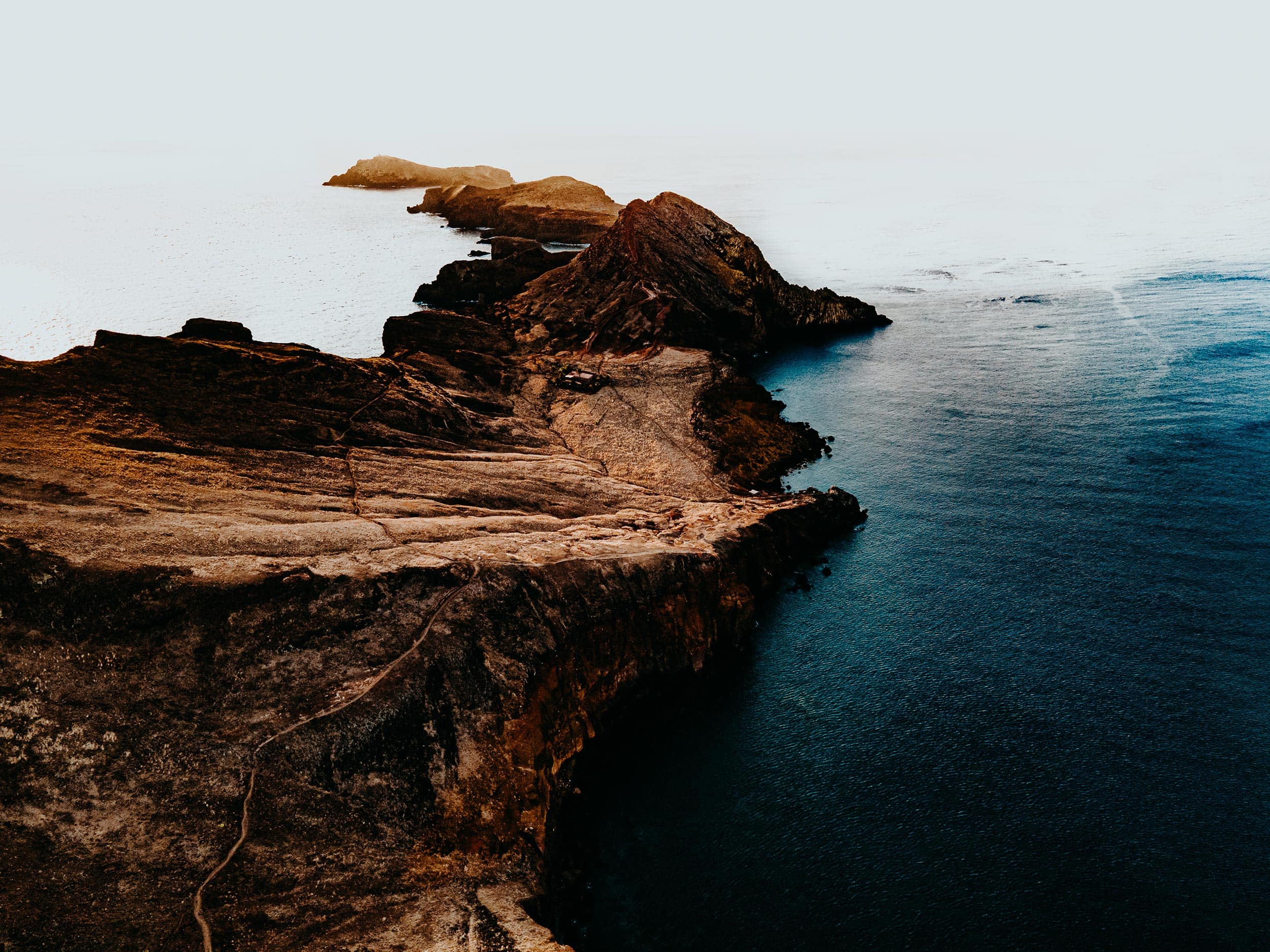
The PR8 hike on Vereda da Ponta de São Lourenço: Madeira's unique volcanic peninsula
The PR8 hike on Vereda da Ponta de São Lourenço: Madeira's unique volcanic peninsula - Updated 2024
My first impression of Vereda da Ponta de São Lourenço came from the window of my plane as it slowly descended to the Cristiano Ronaldo International Airport in Funchal.
As I was welcomed by these incredible views, I instantly remembered why I’d put Vereda da Ponta de São Lourenço atop my list with things to do on Madeira.
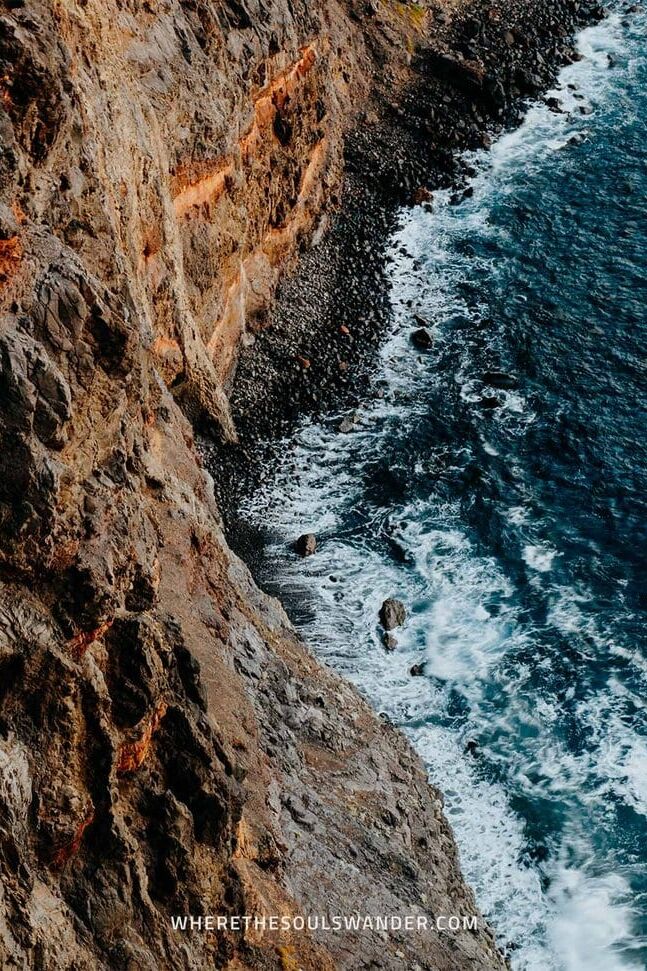
Situated on the easternmost point of Madeira, the Vereda da Ponta de São is volcanic in origin, which makes it utterly unique in comparison to landscapes elsewhere on the island.
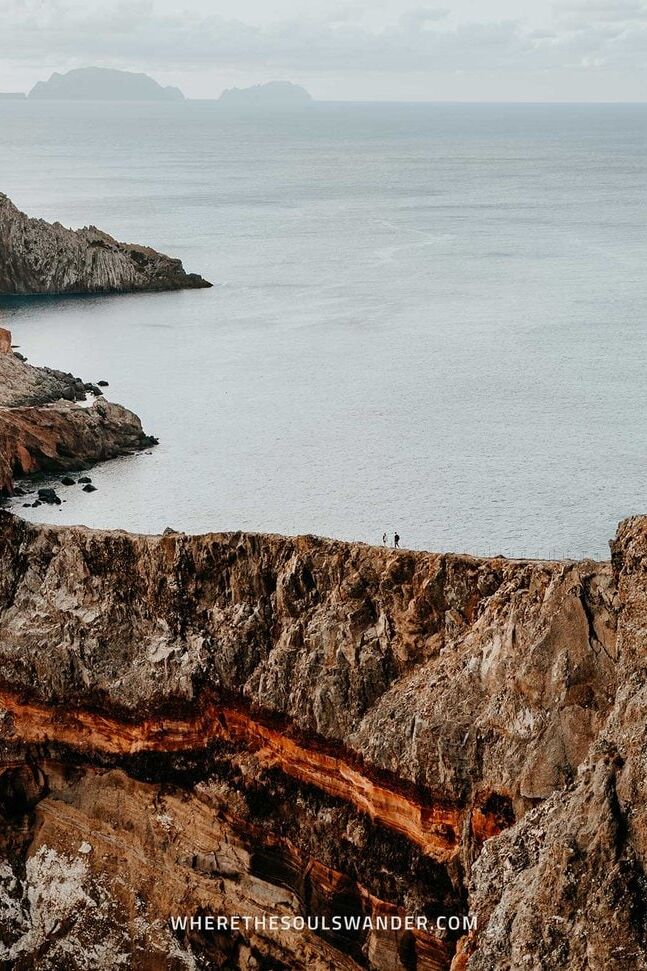
Accordingly, the PR8 hike on Ponta de São Lourenço has become one of the most popular hiking trails on Madeira. Though it’s relatively easy and only seven kilometres round trip, the area’s scenery is hard to outrival. For me, it was definitely one of my favourite hikes on Madeira.
In this guide, I’ve covered everything you need to know before hiking Vereda da Ponta de São Lourenço, including how to get to the trailhead, the best time to visit, insights on a cool extra viewpoint and more.
If you choose to use any of the links on this page, I may receive a small commission at no extra cost to you. By using these links, you’ll have a direct impact on WTSW and my ability to continue to create free insightful travel content for you. If you find any of my tips useful, you can support me by buying a virtual coffee here.
Where is Ponta de São Lourenço
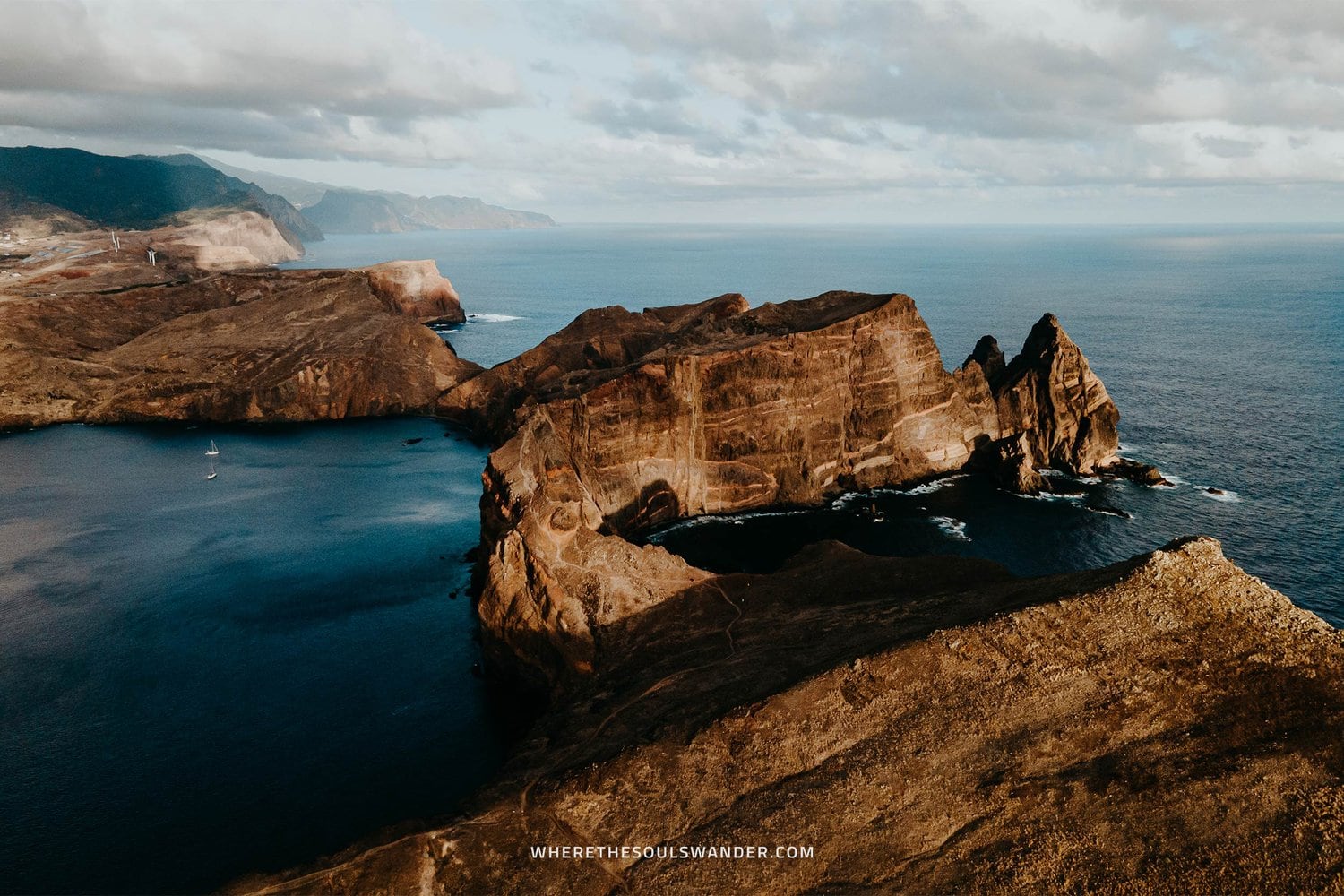
Ponta de São Lourenço is a spectacular peninsula, situated on the easternmost point of Madeira’s rugged coastline, at about half an hour drive from Funchal.
Named after the vessel sailed by João Gonçalves de Zarco, this extraordinary peninsula is volcanic in origin and is now home to one of the most popular hiking trails on Madeira.
Vereda da Ponta de São Lourenço hike overview
HIKE DIFFICULTY
EASY
HIKE DURATION
2 TO 3 HOURS
HIKE DISTANCE
7 KM ROUND TRIP
ELEVATION GAIN
400 TO 450 METERS
How to get to Vereda da Ponta de São Lourenço
CAR | As mentioned before, Vereda da Ponta de São Lourenço is located just 30 minutes from Funchal, which makes it one of the easiest hikes to reach by car.
The drive itself is pretty straightforward, and as with most of the highlights on Madeira, you’ll find lots of parking space at the beginning of the trail.
If visiting Vereda da Ponta de São Lourenço is just one of the many activities you plan to do on the island, I highly recommend renting a car for the entire duration of your stay. I booked my car for Madeira at Rentalcars and can highly recommend their service. Additionally, I also highly recommend DiscoveryCars.
I’ve also written a complete guide about driving on Madeira, so make sure you give that one a shot too.
TOUR | Another great way to hike the PR8 trail on Vereda da Ponta de São Lourenço is by joining a tour.
Having said that, I would recommend this tour of Vereda da Ponta de São Lourenço, as it’s organized by an expert local guide who shares lots of entertaining facts about the island and its ecosystems.
On top of that, this tour includes pickup and dropoff service at your hotel in Funchal, Caniço or Machico – plus it’s limited to 15 people per tour, which, to me is quite an important factor if I’m considering joining a tour.
BUS | Alternatively, if you prefer to visit on your own terms, yet not sure if you want to rent a car, there’s also the option to go by public transport from Funchal.
The SAM 113 bus leaves from Funchal Edificio 2000 and stops at Baia D’Abra, which is situated directly at the start of the trail. Costing €3,- per person, the travel time should take around 1 hour and 15 minutes.
For the latest bus schedules, make sure you check the official SAM website.
The PR8 hike on Vereda da Ponta de Sao Lourenço
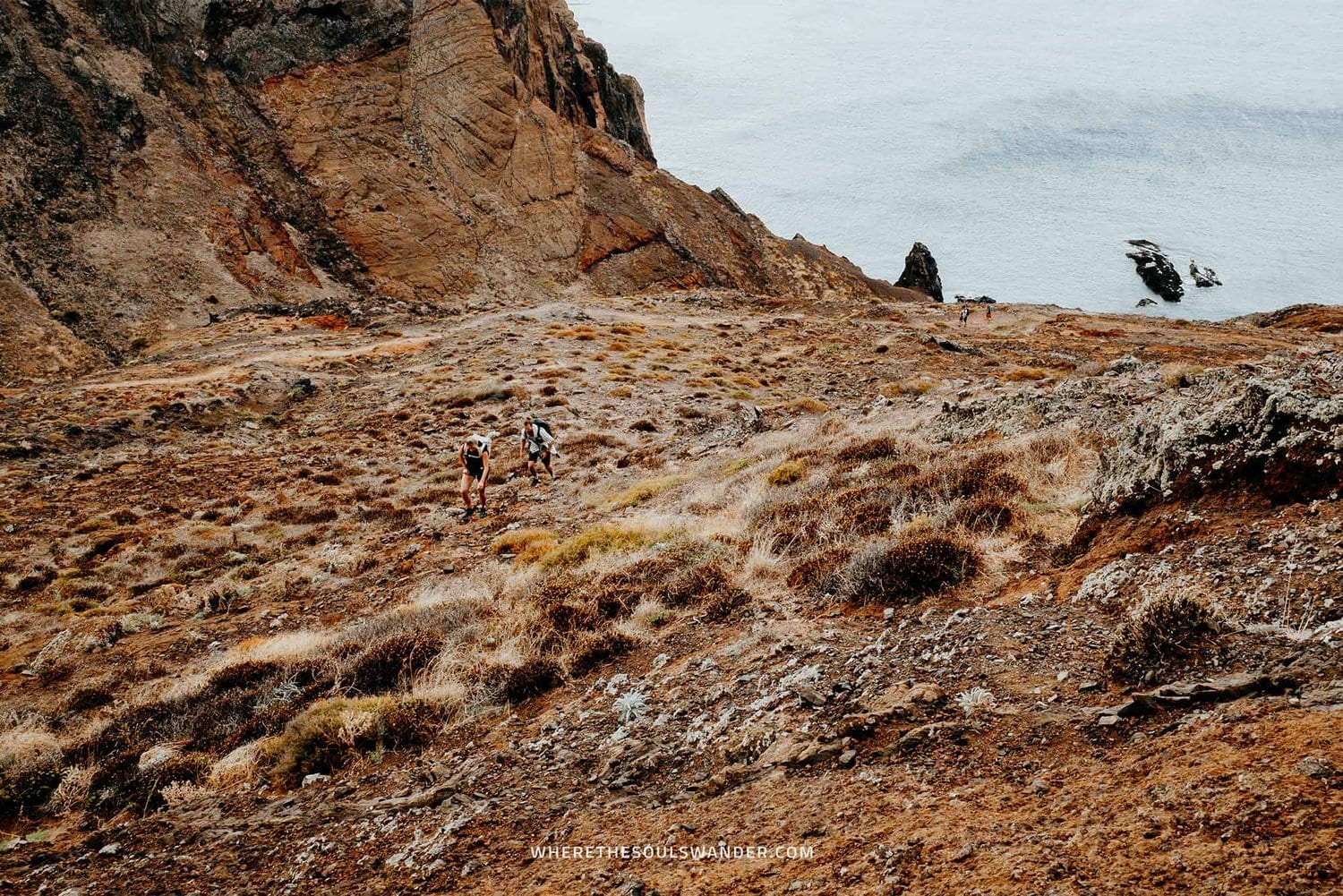
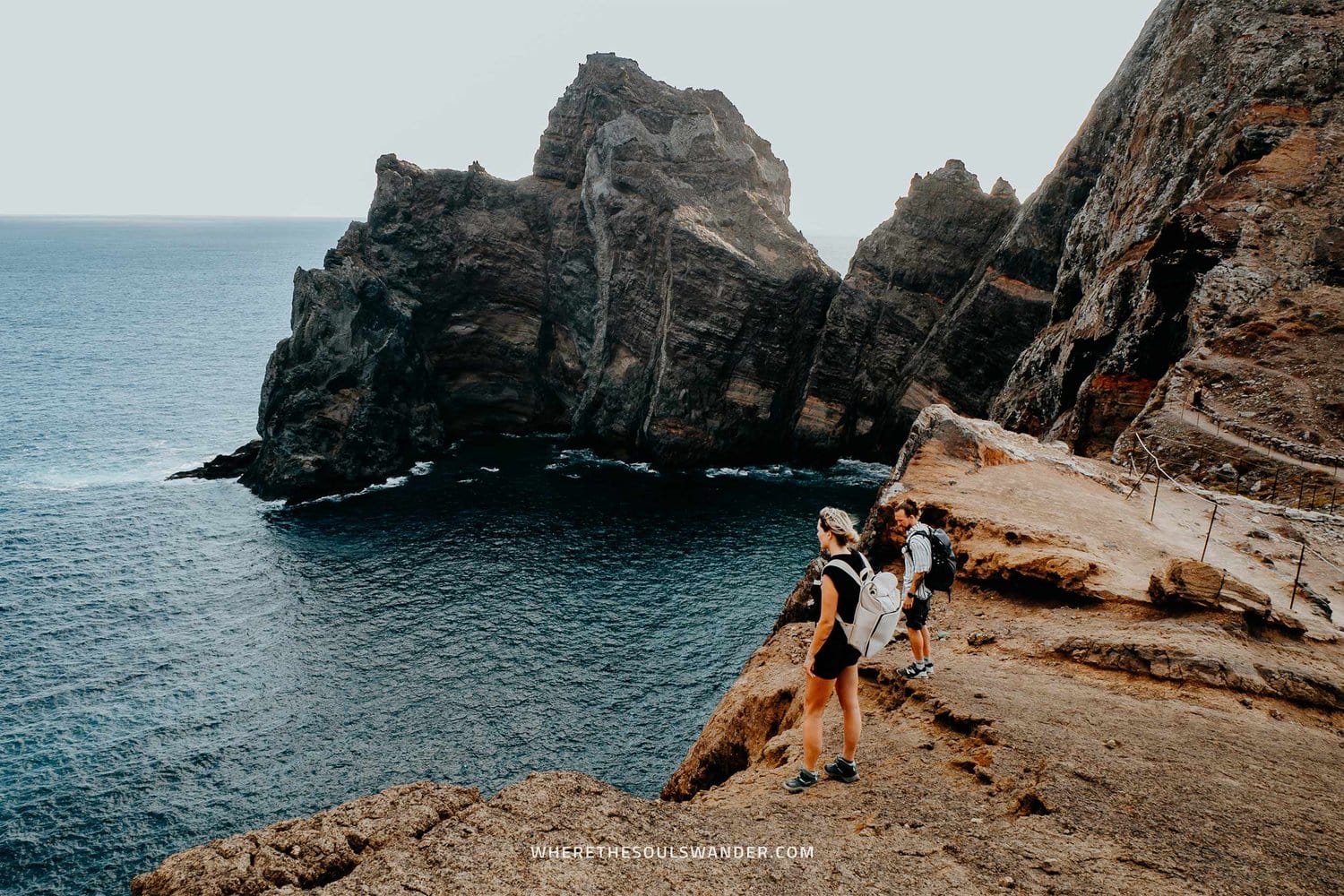
The PR8 hike on Vereda da Ponta de São Lourenço is without question one of the most popular hikes on Madeira since it is quite easy, with a well-defined path throughout the entire hike.
The starting point of the hike is not to be missed, since it’s located at the roundabout immediately after the parking area.
From the roundabout, walk down the paved steps on the left and follow the wooden boardwalk until you reach a well-defined dirt path. From here, the path is clear and easy to follow since it’s wrapped around the first section of the peninsula.
After following the path for roughly 10 minutes, you’ll reach the first viewpoint; Miradouro de São Lourenço. Depending on the time of your visit, you have two options here: one, have a short break to rest and take some photo’s, or two, head straight for Ponta do Castelo or Ponta do Furado.
Since I went before sunrise, I opted for the second option and climbed to the Ponta do Castelo viewpoint, where I waited for the sunrise to unfold, which was quite a dope experience.
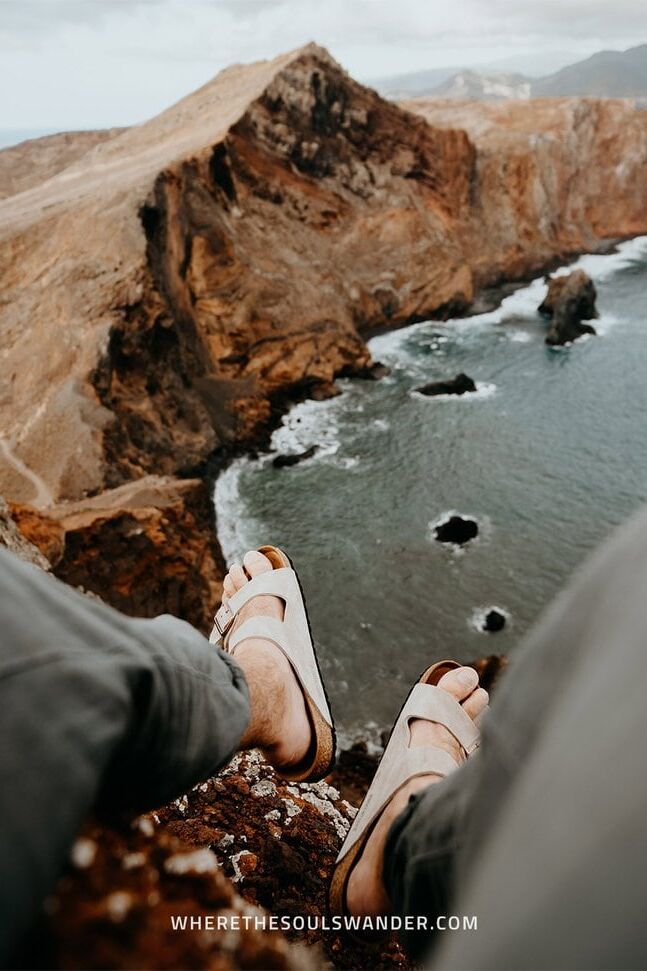
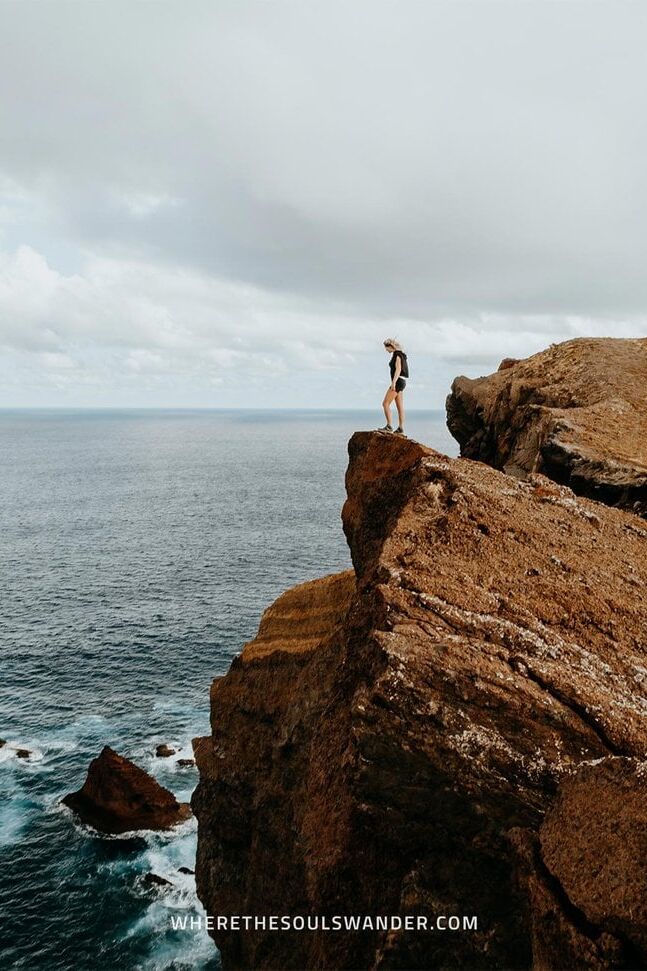
From the Ponta do Castelo viewpoint, it takes another 30 minutes before you reach the stairs to the final viewpoint named Miradouro Ponta do Furado.
Once you reach the end of the trail, you’ll notice a warning sign that says it’s not allowed to climb to the viewpoint. Despite the sign, there isn’t actually a reason to be worried. Yeah, the climb is sort of steep, but in overall the way up is more than safe.
However, there must be a valid reason for the sign – so being extra cautious doesn’t hurt you.
Though I believe this section of the trail isn’t nearly as impressive as the first section, the fascinating views that you’ll get at the Miradouro Ponta do Furado viewpoint make up for a lot.
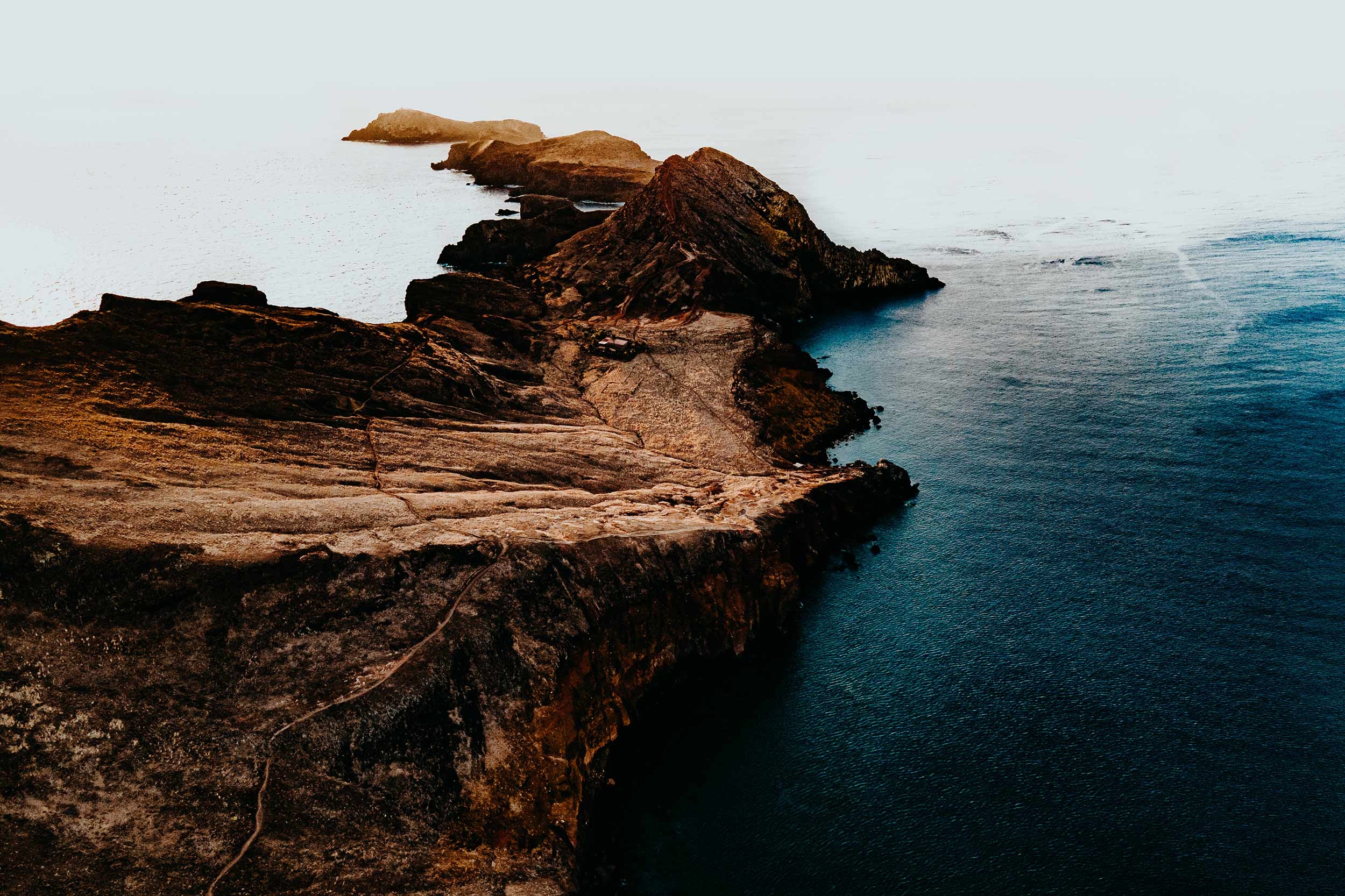
On your way back you’ll notice a small cafe named Casa do Sardinha, where you can have a short coffee break before heading back out on the trail. From here, you basically follow the same path back to the beginning of the PR8 trail. If you did the hike before sunrise, make sure you add an extra stop at the Miradouro de São Lourenço viewpoint on your way back.
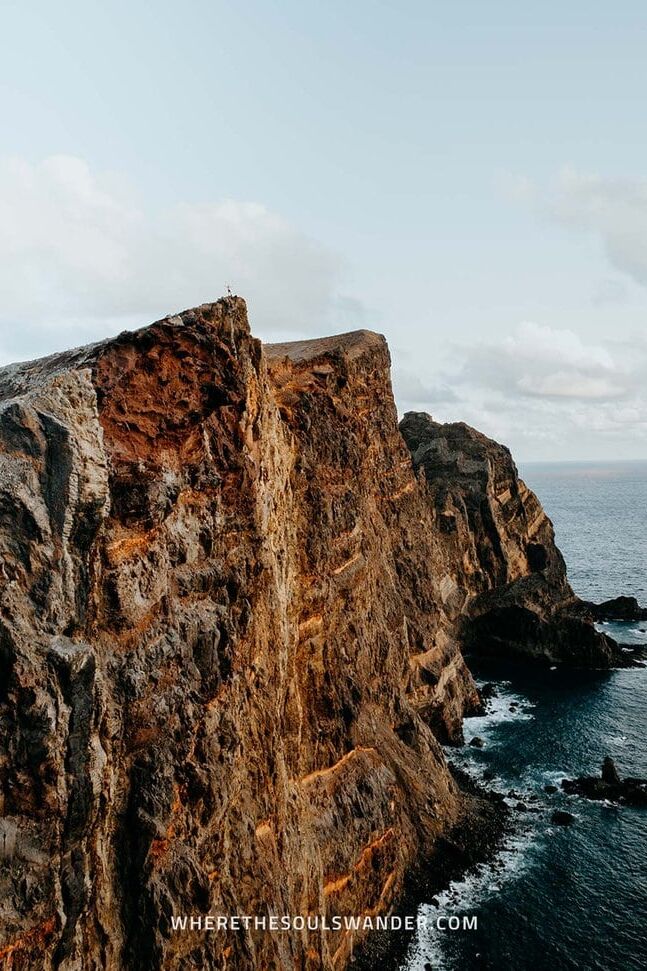
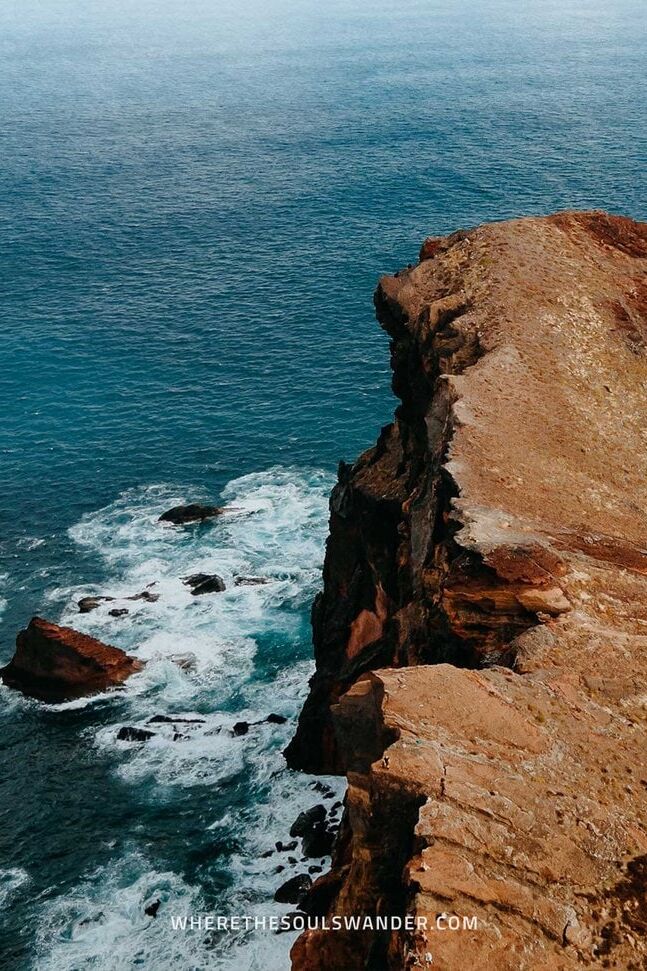
Ponta de Sao Lourenço | The essentials
The best time of day to hike Vereda da Ponta de São Lourenço
As with most hikes on Madeira, the Vereda da Ponta de São Lourenço is magnificent at sunrise, meaning the best time to start your hike is about one hour before the sun comes up.
While it’s possible to visit Ponta de São Lourenço at every time of day, I wouldn’t advise visiting during noon, as the light will probably be too harsh for photography – plus it can get really hot here during the day, and there’s no shelter on the trail.
Additionally, Vereda da Ponta de São Lourenço makes for an excellent afternoon or sunset hike, making it perfect for those that opted for another hike in the morning or simply don’t like waking up early during the holidays.
The best time of year to hike Vereda da Ponta de São Lourenço
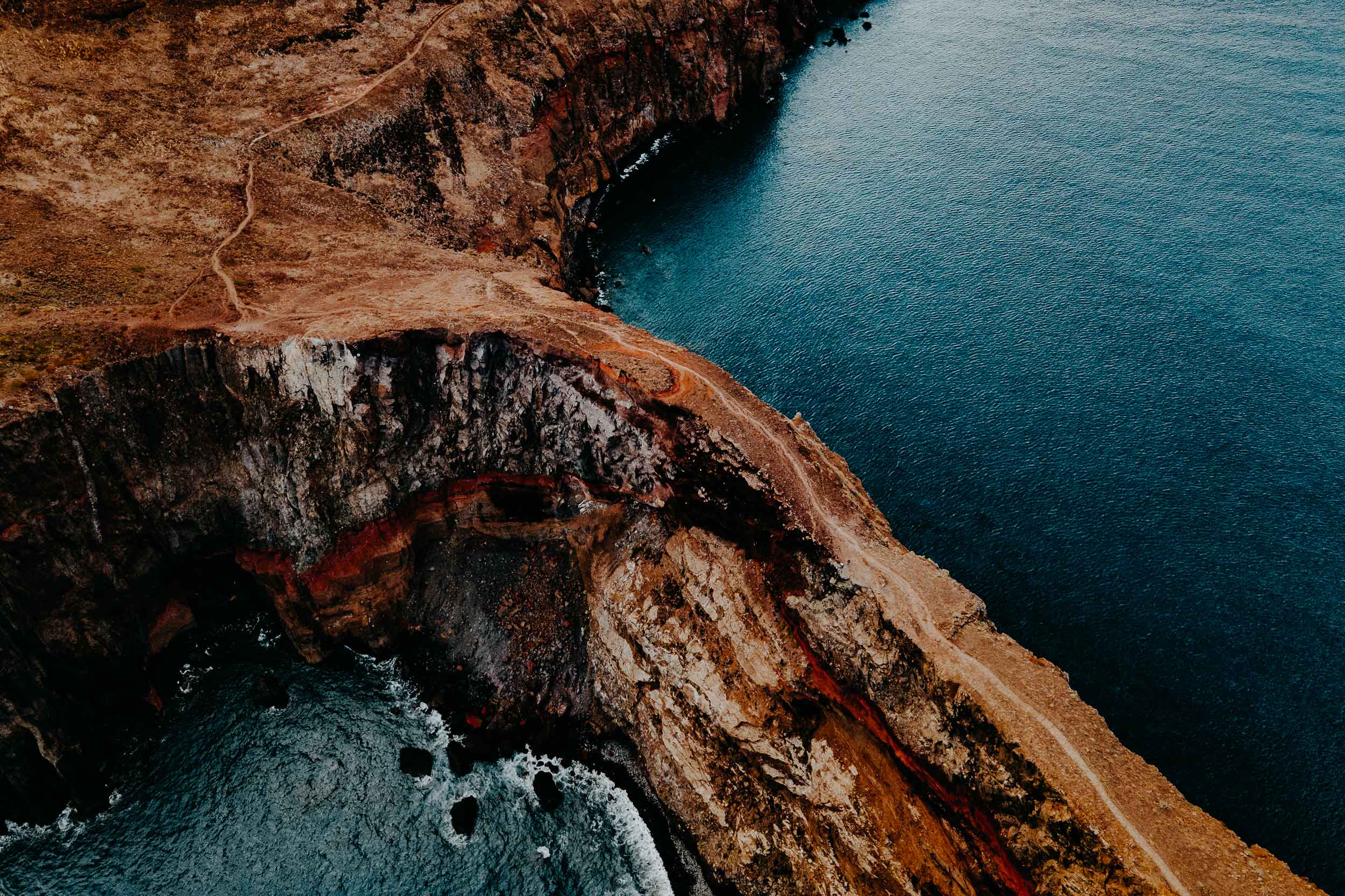
The PR8 hike on Vereda da Ponta de São Lourenço can be done year-round, however, I believe the best time to visit is during the drier months of April to October. Not only will there be little to no rainfall, but you will also experience the characteristic landscape in its otherworldly burnt-orange colourway.
If you opt for a winter getaway on Madeira, the rugged cliffs of Ponta de São Lourenço will most likely be covered by a green blanket of grass due to rainfall that occurs during the offseason.
I did the PR8 hike on Vereda da Ponta de São Lourenço at the start of October and had warm and comfortable weather, despite a short rainshower halfway through the hike.
What to pack for the PR8 hike on Vereda da Ponta de São Lourenço
As with any hike, I believe it’s crucial that you’re well-equipped before you begin the PR8 hike on Vereda da Ponta de São Lourenço.
To help you have a stress-free journey, I’d highly suggest packing the following items:
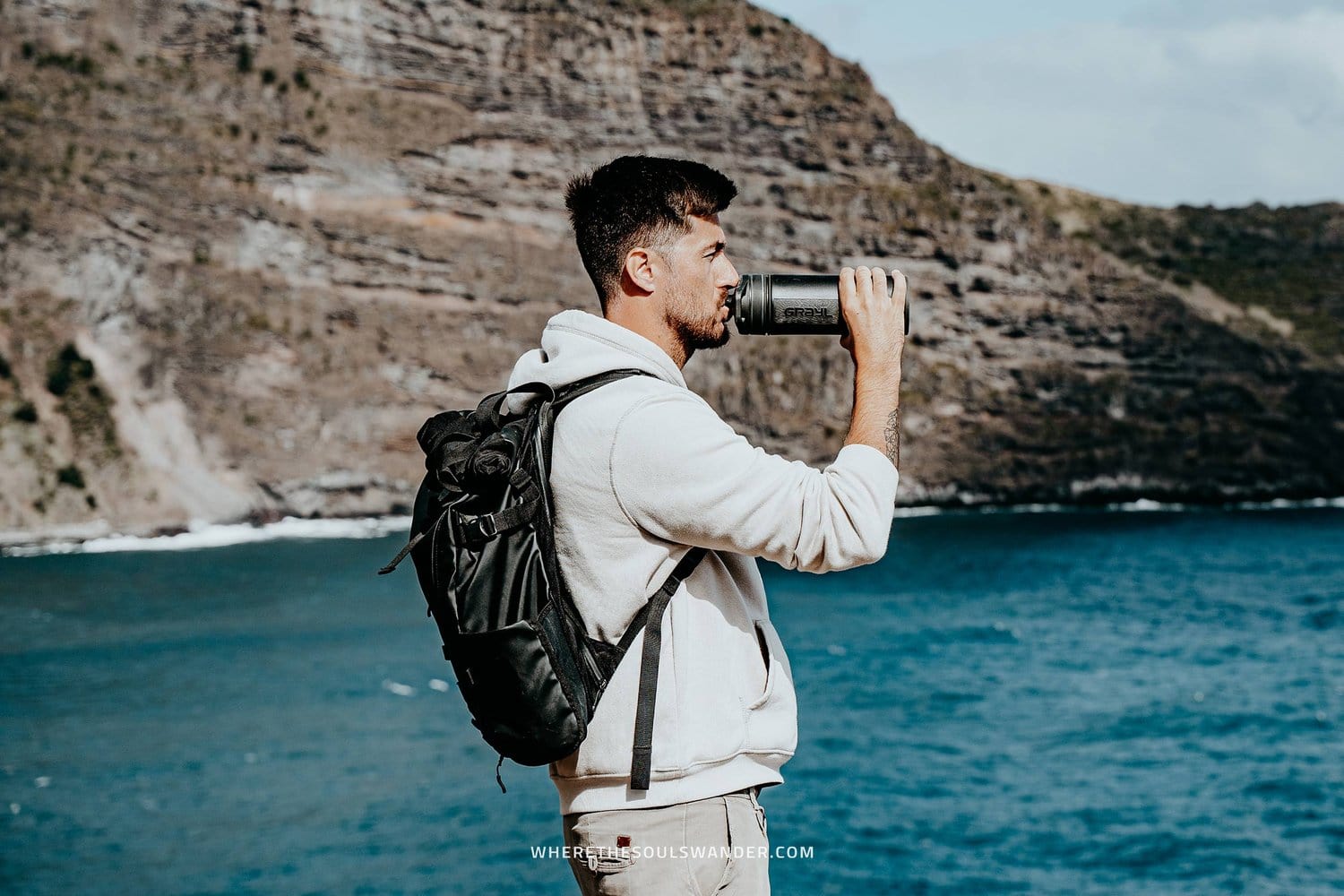
A REUSABLE WATER BOTTLE | One travel essential that I carry with me at all times is the Grayl Geopress. This reusable water purification bottle allows me to fill up water from nearly every water source, making it one of my best investments to date.
LAYERS | Since this hike is best started before sunrise, I highly recommend wearing layers. I took a hoodie with me, which was much needed, especially in the early morning. Also, given that the temperature can change dramatically at various points of the hike, it’s not a bad thing to bring a raincoat too.
HIKING BOOTS OR A GOOD PAIR OF SNEAKERS | While hiking boots definitely provide more stability to your ankles, I believe you could easily get the job done in a good pair of sneakers – just be sure that they have a firm sole with enough grip, so you’re supported when things get slippery. I recently bought the New Balance Hierro v7, and am really happy with them, as they offer all the feats of a hiking boot, while still looking like a dope sneaker.
SUN PROTECTION | Given that there is hardly any shelter throughout the hike, it is wise to bring good sunscreen and a hat. Even when the sun hides behind the clouds, it is still possible to get burnt.
SNACKS | Even though I practise intermittent fasting, and prefer to hike on an empty stomach, I always bring a few snacks to fuel me during my hikes. And I advise everyone to do the same, especially since you’ll only be able to buy something at the starting point of the PR8 hike. So, don’t mind bringing some fruits, nuts and a few protein bars. Also, bring enough cash to get a coffee or some snacks from the food truck if necessary.
HIKING POLES | I did the PR8 hike without hiking poles, but if you have poor knees or prefer a little support during the more strenuous parts of the trail, I highly advise bringing a set of quality hiking poles. These Montem Ultra Strong Hiking Poles are light, collapsible, and a great value for the price.
Where to stay near Ponta de São Lourenço
Given Madeira is rather compact, I highly recommend anyone to base themselves in Funchal, Madeira’s vibrant capital city.
Funchal is an awesome city in its own right and is home to plenty of excellent accommodation options, is packed with history and culture, plus has trendy restaurants and cafes at just about every corner.
To help you find a suitable place, I’ve listed three of my favourites below, one of which is marked – this is where I stayed.
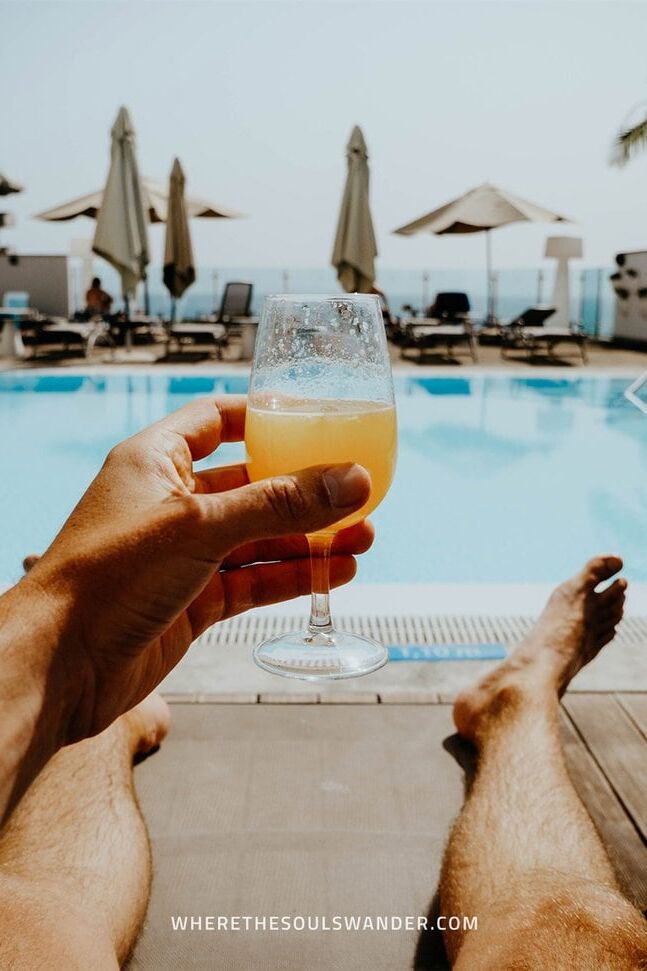
+ Vila Baleira | This was my base for the whole of my trip, and if you’re seeking comfort without spending your entire budget straight away, Vila Baleira will be perfect for you too. Located within the popular Lido area, this hotel offers spacious rooms, comfortable beds, and a large rooftop terrace with a swimming pool. They also have a tasty breakfast spread, excellent wifi throughout the entire property, and a secured parking lot right under the property.
Hotel Cajú | Set within the heart of Funchal, Hotel Cajú is a great place to stay, with stylish double rooms, friendly staff, and a small yet excellent in-house fitness centre. All bookings come with an exceptional breakfast too. One small downside though, they don’t have private parking.
NEXT – Savoy Signature | This budget-friendly hotel in the centre of Funchal has spacious, modern-style rooms with comfortable double beds and a brilliant private bathroom with a rain shower. They also have an incredible rooftop swimming pool with amazing sea views. Double rooms at only €50,- per night make this place one of the best picks in Funchal.
Stay safe on Madeira | Travel insurance
Since travelling on Madeira is all about hiking and nature, I recommend everyone to sort out good travel insurance before setting out on their own adventure.
Where we prefer that everything goes smoothly during our travels, something unfortunate can happen at any moment, whether it’s an injury during a hike or an accident on the road.
For travel insurance, I always use Heymondo, as they offer full covid-19 coverage, as well as a handy app with 24-hour medical assistance. Make sure you check it out – readers of WTSW receive 5% off any insurance policy too.
Cheers!
I’ve been on this travel blogging journey since 2019.
If you appreciate what I do here, these are some ways you can support me.

A guide to driving on Madeira: 12 useful tips to get you going
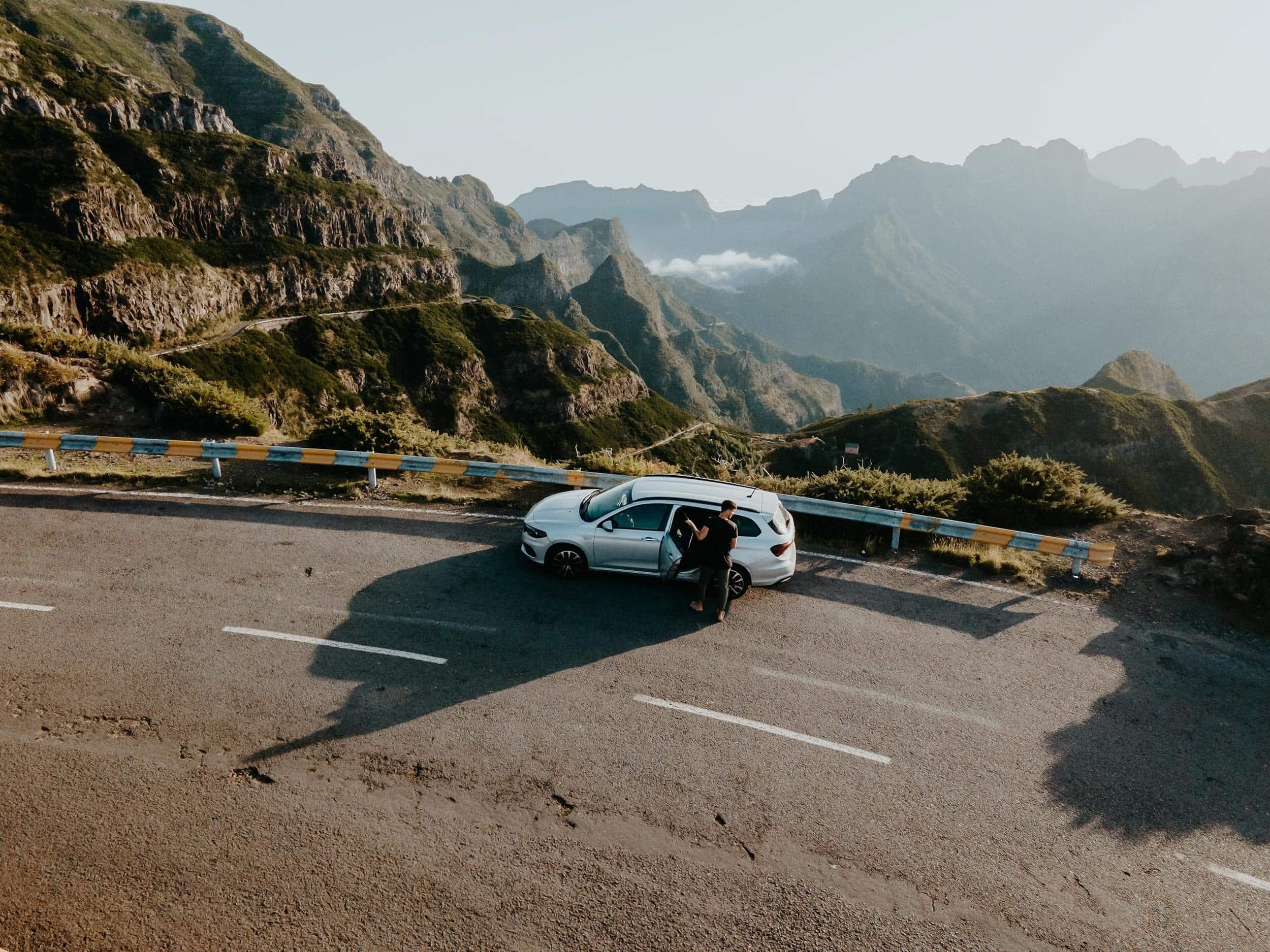
Madeira, with its many natural highlights, is a marvellous island in the North Atlantic Ocean, perfect for those who like to cruise freely in their own set of wheels.
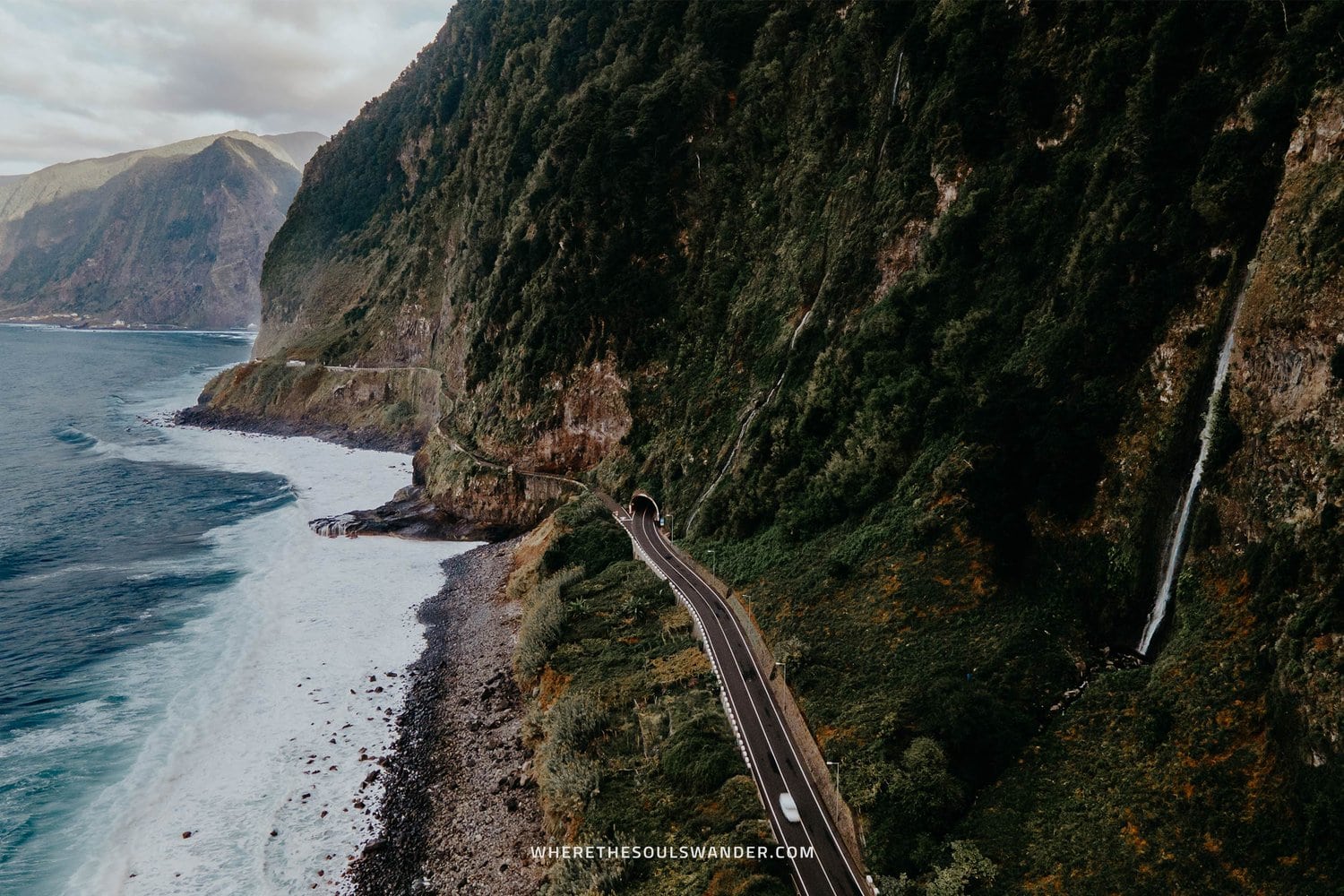
From stunning coastlines flanked by rugged cliffs on the one hand and the ocean on the other to magnificent mountains teeming with dense woodlands and gushing waterfalls; Madeira is stunningly beautiful and driving a car is by far the best way to experience this bit-sized paradise.
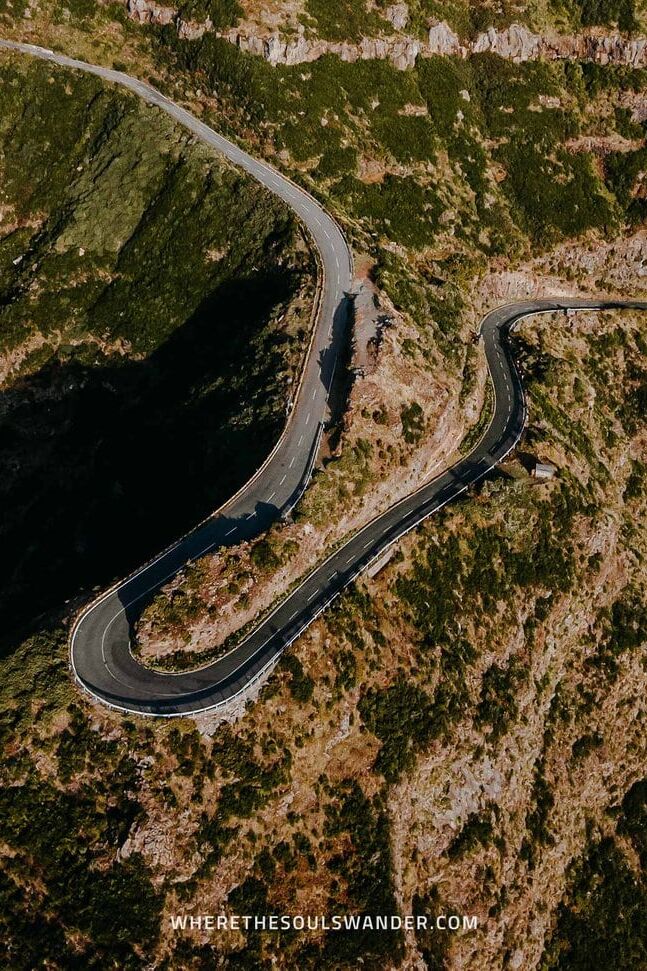
But it isn’t all fun and games, as driving in Madeira can be pretty challenging at times, especially if you’re not used to navigating through steep mountain roads and sharp hairpin bends.
To get you going, I’ve curated a comprehensive list of useful tips for driving on Madeira – plus all the essentials in terms of car rental, money-saving, insurance and more!
If you choose to use any of the links on this page, I may receive a small commission at no extra cost to you. By using these links, you’ll have a direct impact on WTSW and my ability to continue to create free insightful travel content for you. If you find any of my tips useful, you can support me by buying a virtual coffee here.
A guide to driving on Madeira: 12 useful tips
1 | Rent and drop off your car at Funchal Airport
While it’s totally possible to rent a car in the Funchal city centre, I would highly recommend picking up your rental car at the Funchal airport, directly after your flight.
By doing so, you’re not only saving quite some time, but you also save nearly €80,- worth of taxi rides, which is quite expensive considering that the Funchal city centre is only a 20-minute drive from the airport.
Also, the majority of car rental companies are situated directly at the airport, which makes it pretty convenient to rent and drop off your car here.
Nevertheless, I wouldn’t risk renting a car upon arrival, since it’s likely that the availability is limited. For that reason, I highly advise booking a car in advance (more on that later).
2 | Save money by renting your car in advance
I assume we all prefer to keep the cost of our trips low, and one of the easiest ways to do so is by sorting out your rental car in advance through a trusted online car supplier.
For car rental on Madeira, I would highly recommend the use of RentalCars; an excellent online car rental service that holds over 900 of the world’s leading rental car suppliers. Additionally, I also highly recommend DiscoveryCars.
However, my best advice for car rental on Madeira is to book your car as soon as you confirm your flights since last-minute rates are remarkably higher than when you book in advance, especially during the peak summer months.
Additionally, if you want to book a rental car spontaneously when already on the island, make sure you ask at the reception of your hotel, they will most likely fix you a cheaper rate.
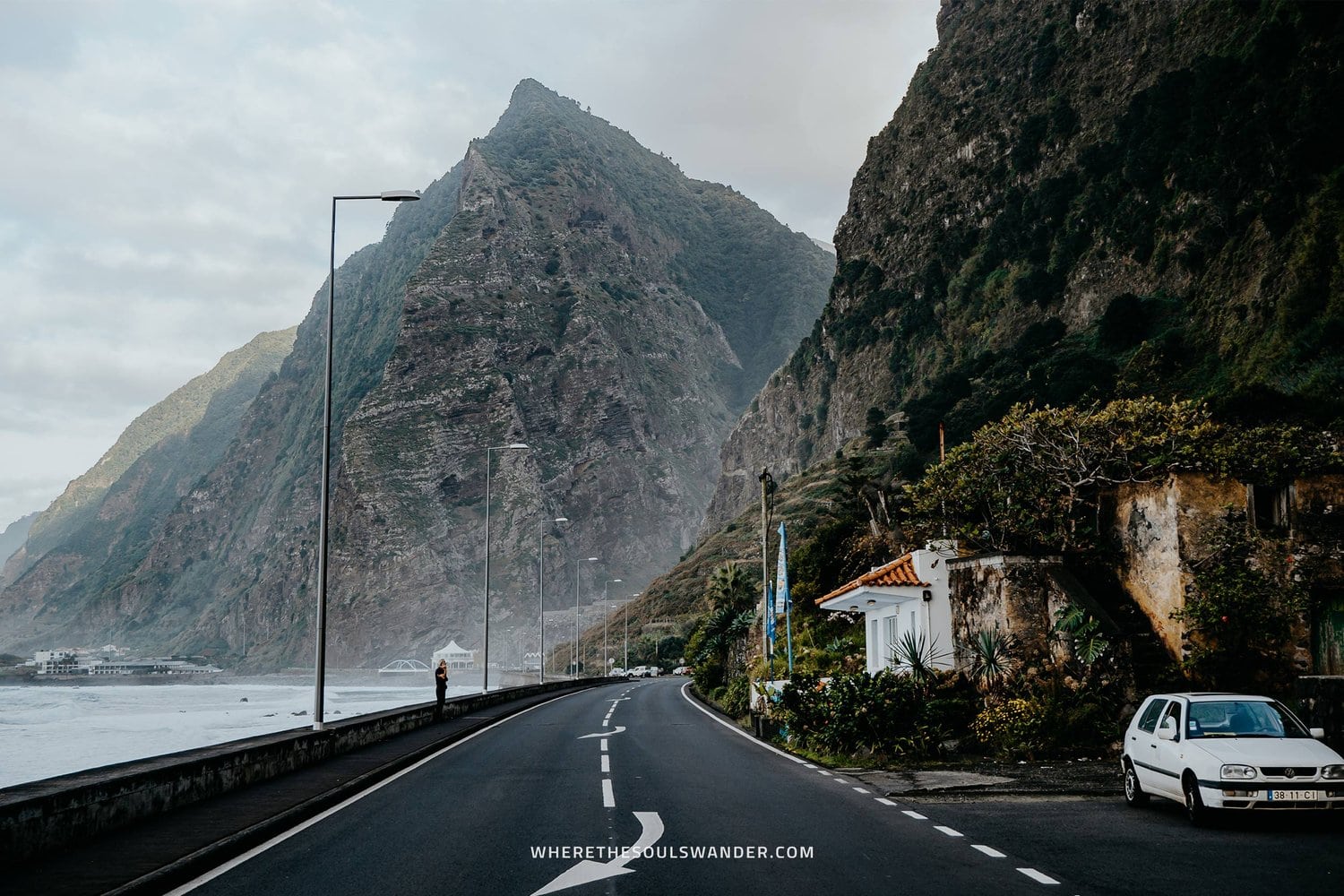
3 | Drive on the right-hand side of the road
Like most places in the world, you’ll be driving your car on the right side of the road. So unless you’re from the United Kingdom, Australia, New Zealand, South Africa or a former British colony, there isn’t really a big adjustment for you
However, if you are from a left-driving country, and it’s your first time driving on the right side, allow yourself a few days to get used to handling the car in the complete opposite way.
Though I’ve never driven on the opposite side of the road myself, I can totally understand if only the thoughts of driving on the other side stressing you out already.
If that’s the case, hiring an automatic car will make things a lot easier, as you don’t have to worry about changing the gears constantly.
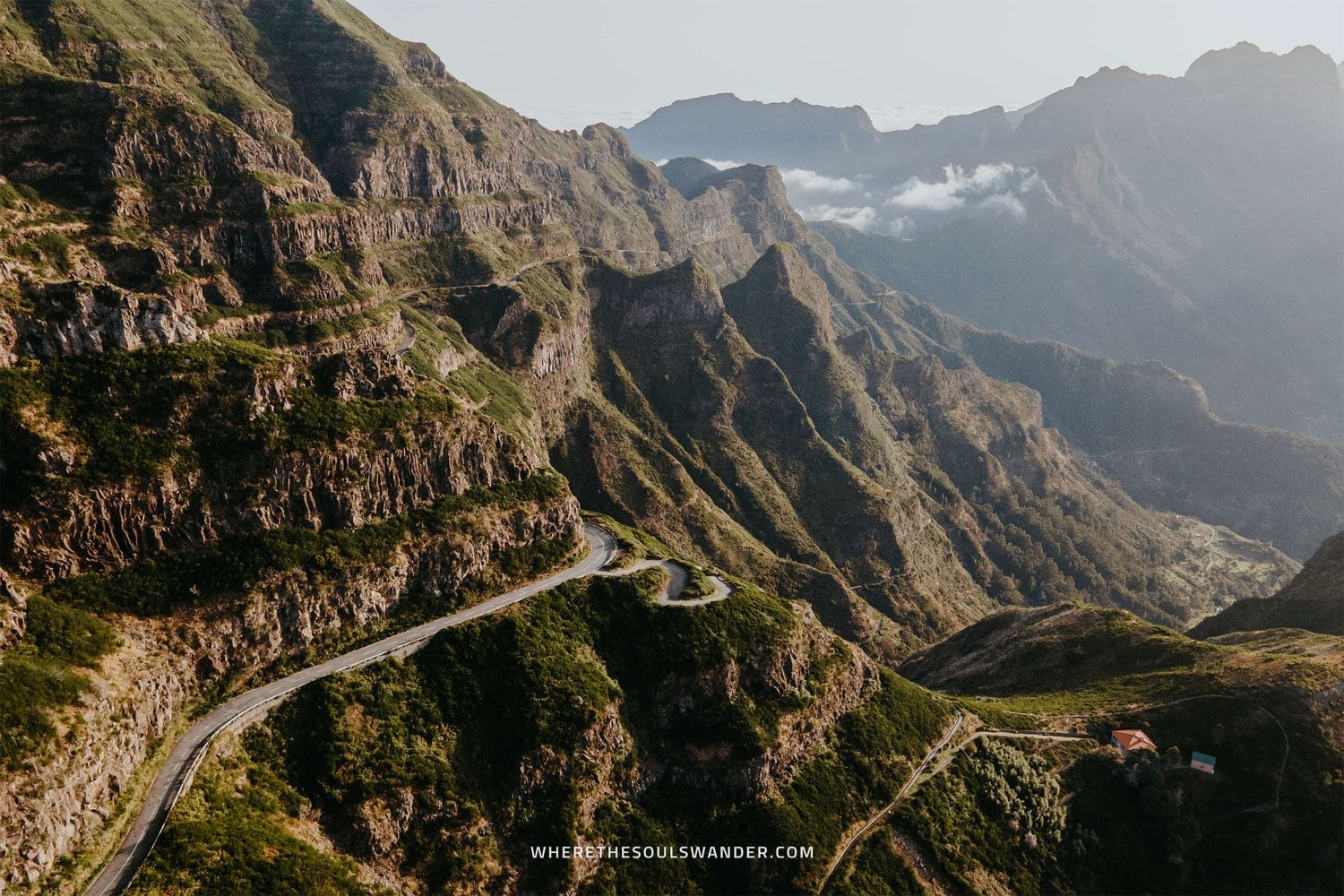
4 | Drive one gear lower in the mountains
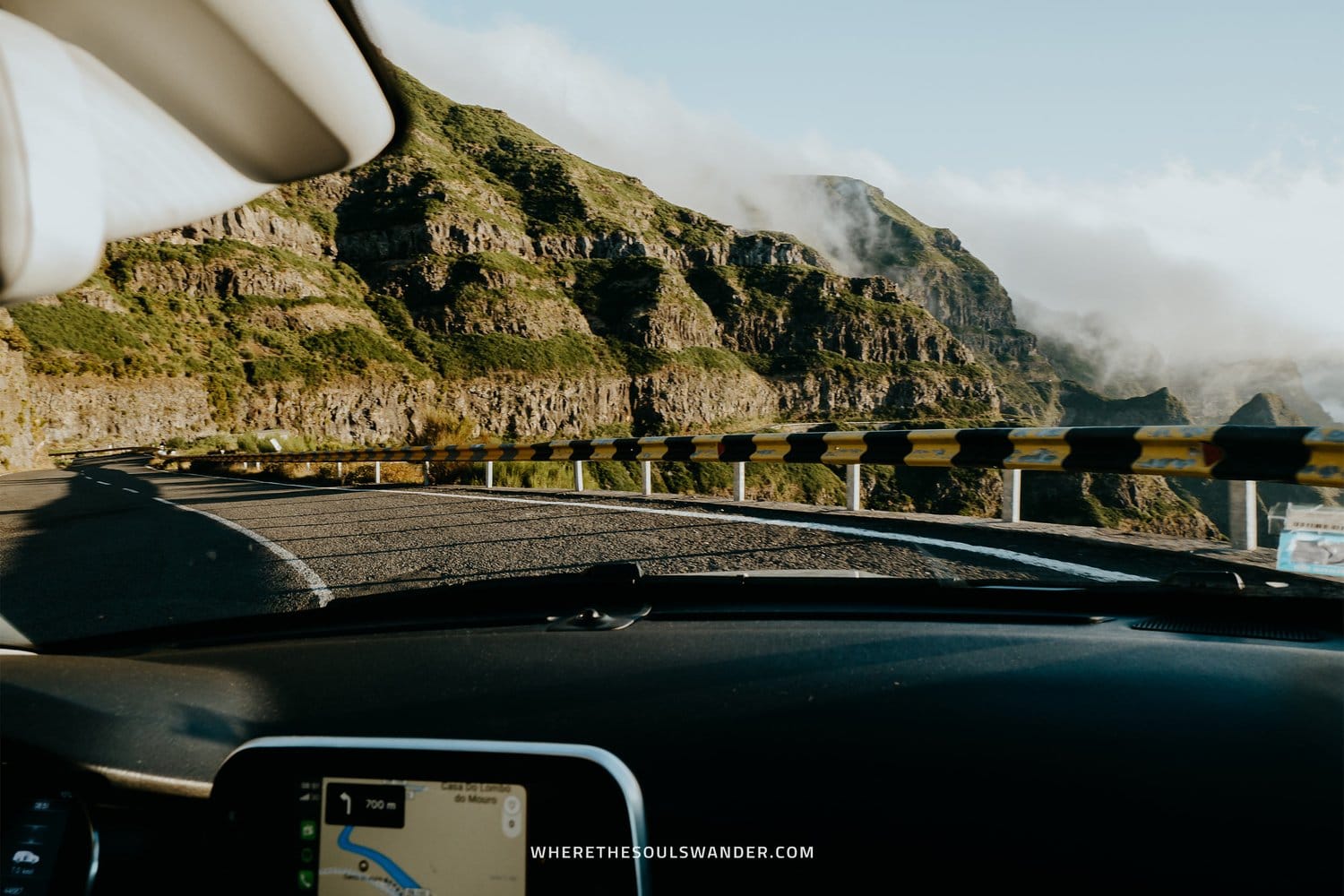
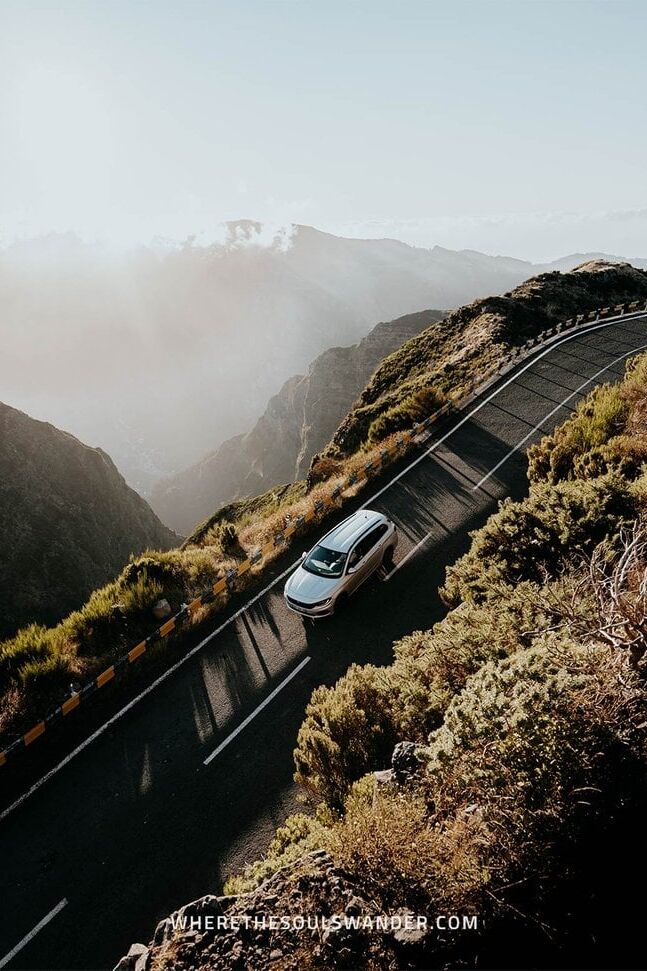
Madeira is famed for its extremely picturesque mountains and the steep roads that run through them, making driving here one of the absolute highlights on the island.
However, driving these roads can be quite a challenge at times. It also requires a slightly different approach than most of us are used to, including me.
When driving uphill, I would always advise downshifting to a lower gear so your car has the extra power to handle the incline.
This rule also applies when driving downhill, as driving in a lower gear causes your car to brake on the engine, which means there’s significantly less pressure on the brakes.
Of course, this doesn’t mean you shouldn’t use your brakes at all. In most cases, it is still necessary to use them, but just be a little more cautious to prevent overheated brake discs.
Also, make sure you live by this rule; don’t drive down a mountain road any faster than you drove up to it.
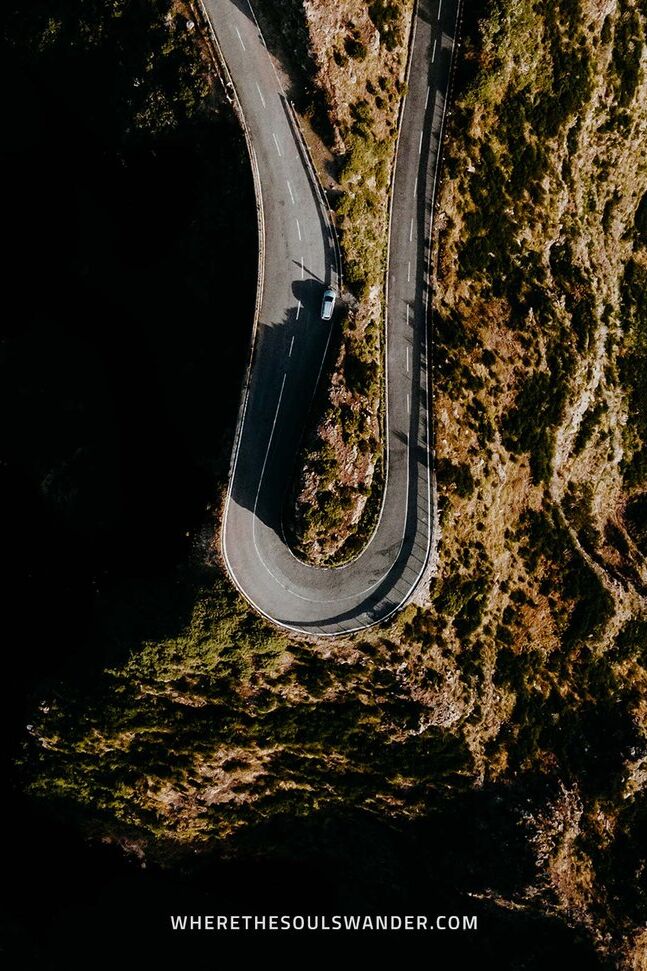
5 | Be extra cautious when leaving the access roads
One thing that quickly caught my attention when picking up my rental, was the fact that the access roads on Madeira were notably shorter compared to other countries I had driven.
The reason for this is that the road rules on Madeira imply that you stop your car on the access road, where you should wait until the lane is completely clear of passing cars, before inserting your own car.
Though it takes some time to get used to, I believe this rule is actually pretty good for the flow of traffic, as well as general road safety.
6 | Always fill up your tank before hitting the mountains
Winding through steep mountain roads requires significantly more fuel than your ordinary ride through the city, and filling up your car should be an absolute no-brainer before hitting the mountains.
Pair that with the absence of gas stations in the mountains, insufficient mobile services, and often only a few other people around, and you have yourself a blueprint to prevent stranding along the roadside.
So if you’re heading fort the mountains, live by this rule; fill up your car – and don’t say that I didn’t warn you!
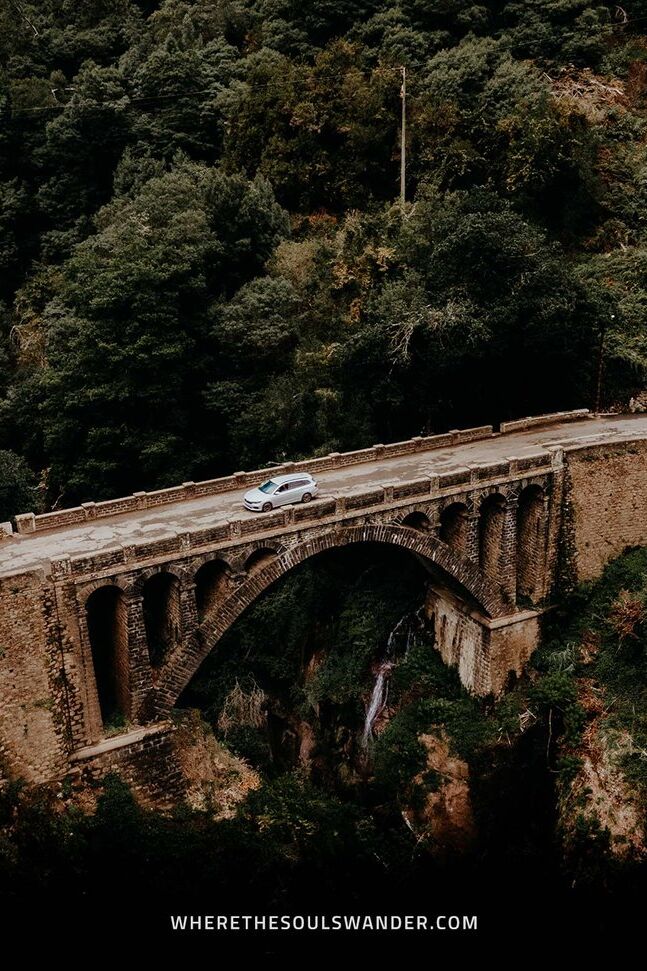
7 | Don’t get confused by Gasolina and Gasóleo
One thing I can’t stress enough is that the Portuguese language can be quite misleading for those renting a car on Madeira.
As soon as you need to fill up your tank for the first time, you’ll notice that the words gasoline and diesel are only a few letters different from each other.
I hope this will clear up the confusion; Gasoline is Gasolina. | Diesel is Gasóleo.
If you’re not sure, don’t worry, it’s nearly always possible to quickly check with one of the gas station attendants to avoid filling up your car with the wrong fuel.
8 | Study the maps and download them to your phone
Before your road trip adventures, I advise downloading the offline map of Madeira on your Google Maps app, so you can also navigate the island when you lose phone services.
Believe me, this will happen quite often when driving in the mountains or through a tunnel.
Additionally, I would also recommend investing some time to research the best routes to take, as well as the duration to get to the highlights of your itinerary – more on that later.
9 | Plan your route in advance
Even though Madeira is pretty compact in size, you’ll be surprised how much time you could actually lose when driving from A to B.
While this obviously isn’t a problem, considering the stunning scenery along the way (trust me, you will stop a lot during your first days), it isn’t really useful if you want to make the most out of your time on Madeira.
Therefore, it’s wise to thoroughly research the highlights, and then bundle them in a logical day-to-day itinerary. I personally bundled my highlights per area. But I quickly noticed that I was a bit too enthusiastic, given the driving part took more time than I thought beforehand.
If you’re not from the logistics side of things, that’s ok. I’ve put together an easy-to-follow 10-day Madeira road trip itinerary, so make sure you check that one out too.
10 | Pick a hotel with free parking
One thing that is often overlooked when renting a car on Madeira, is the hidden expenses. One of those expenses is parking, especially if you choose to base yourself in the city centre of Funchal.
For that reason, I’d highly recommend finding accommodation with a free parking service before planning out your Madeira road trip itinerary.
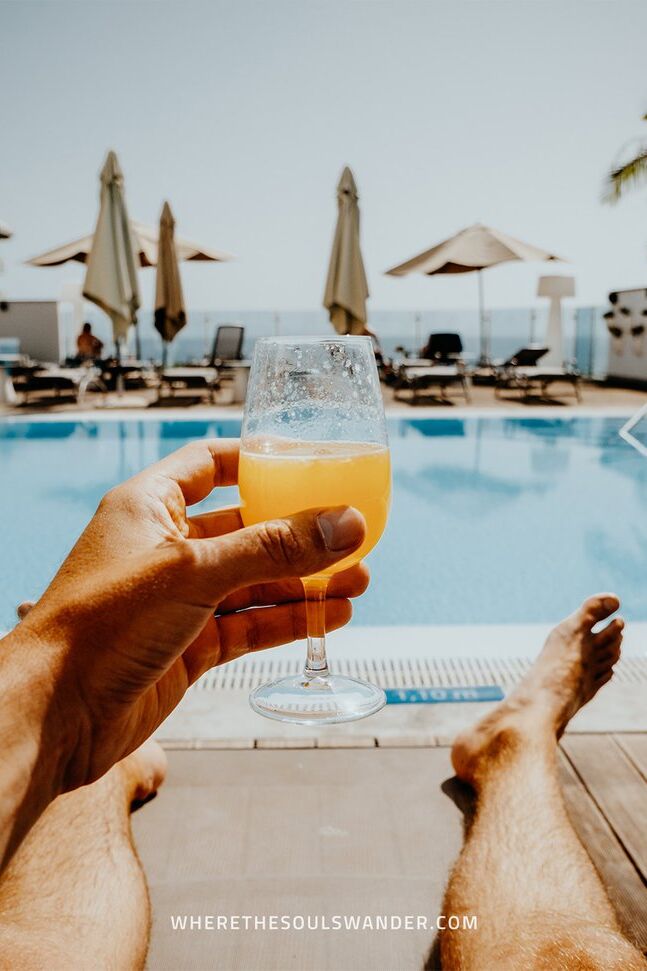
I’ve stayed at the newly renovated Vila Baleira, an excellent hotel that provides its guests with a spacious and secure parking lot right under the property.
Add to that brilliant rooms, and a large rooftop terrace with a bar and swimming pool, and you understand why I chose Vila Baleira as my base.
Additionally, if you choose to select one of the fancy hotels in the heart of Funchal Old Town (these often don’t include parking), make sure you check out Almirante Reis Parking, where you can find a relatively cheap parking space too.
11 | Sort out your insurance
Even though I never felt unsafe throughout my Madeira road trip, I wouldn’t advise anyone to travel without having their necessary insurance sorted out.
First of all, I believe it’s quite unwise to leave out the full insurance option just to lower the cost of your car rental. By adding this, in my opinion, an essential option, the supplier will fully cover the car’s excess – plus the possible damage to the windows, mirrors, wheels and tyres.
Of course, full insurance comes at a price, but with Madeira’s fluctuating driving conditions, an accident may happen far more likely too. So I would say; it’s better to be safe than sorry!
Then there is your travel insurance, which, I believe, you should always purchase when travelling abroad, especially if you’re planning a road trip on Madeira.
For travel insurance, I use Heymondo, as they offer full COVID-19 coverage, as well as a handy app with 24-hour medical assistance. Make sure you check it out – readers of WTSW receive 5% off any insurance policy.
12 | Prepare for quickly changing weather conditions
Given that Madeira is made almost entirely out of rugged mountains, the island is home to several different microclimates.
During my 10 days on Madeira, the roads took me to sunny coastal towns, misty forests, mountain passages above the clouds, and everything in between.
For road-trippers, it’s therefore important to know that the weather conditions could change extremely quickly on Madeira – and I mean zero to one hundred, real quick.
As you drive around the island you will have to adjust to all sorts of unpredictable weather circumstances, and it’s exactly this that makes a road trip on Madeira unique.
Where to stay on Madeira
Since Madeira is rather compact, I highly recommend anyone to base themselves in Funchal, Madeira’s vibrant capital city.
Funchal is an awesome city in its own right and is home to plenty of excellent accommodation options, is packed with history and culture, plus it has trendy restaurants and cafes at just about every corner.
To help you find suitable accommodation, I’ve listed three of my favourites below, one of which is marked – this is the place where I stayed.
+ Vila Baleira | This was my base for the whole of my trip, and if you’re seeking comfort without spending your entire budget straight away, Vila Baleira will be perfect for you too. Located within the popular Lido area, this hotel offers spacious rooms, comfortable beds, and a large rooftop terrace with a swimming pool. They also have a tasty breakfast spread, excellent wifi throughout the entire property, and a secured parking lot right under the property.
NEXT – Savoy Signature |This budget-friendly hotel in the centre of Funchal has spacious, modern-style rooms with comfortable double beds and a brilliant private bathroom with a rain shower. They also have an incredible rooftop swimming pool with amazing sea views. Double rooms are only €50 per night, which makes this place one of the best picks in Funchal.
Hotel Cajú | Set within the heart of Funchal, Hotel Cajú is a great place to stay, with stylish double rooms, friendly staff, and a small yet excellent in-house fitness centre. All bookings come with an exceptional breakfast too. One small downside though, they don’t have private parking.
Stay safe on Madeira | Travel insurance
Since a trip to Madeira is all about hiking and nature, I recommend everyone sort out good travel insurance before setting out on their own adventure.
Where we prefer that everything goes smoothly during our travels, something unfortunate can happen at any moment, whether it’s an injury during a hike or an accident on the road.
For travel insurance, I use Heymondo, as they offer full COVID-19 coverage, as well as a handy app with 24-hour medical assistance. Make sure you check it out – readers of WTSW receive 5% off any insurance policy too.
Cheers!
I’ve been on this travel blogging journey since 2019.
If you appreciate what I do here, these are some ways you can support me.

A traveller's guide to Krka National Park, Croatia (Update 2022)
While Croatia is best known for its charming coastal towns, endless stretches of beach and stunning islands sprinkled through the Adriatic, there’s another great reason why travellers flock to the country; its exceptional national parks.
One of these parks is the incredible Krka National Park, located just an hour’s drive from two of Croatia’s most popular summer destinations Split and Zadar.
With its world-class waterfalls, picturesque lakes, medieval castles, and plenty of hiking trails running through its scenic landscape, Krka National Park is an absolute highlight for everyone travelling to Croatia.
Although most visit solely to admire the incredible Skradinski Buk waterfall, there’s plenty of other untouched natural beauty to behold; from the stunning Visovac Island at the heart of the lake, to an abundance of smaller cascades and rapids flowing through Krka’s immersive woodlands.
To help you plan your trip here, I’ve put together this in-depth Krka National Park guide, packed with all the essential information, as well as a few of my best travel tips.
If you choose to use any of the links on this page, I receive a small commission at no extra cost to you. By using these links, you’ll have a direct impact on WTSW and support me to continue to create free insightful travel content for you. If you find any of my tips useful, you can support me by buying a virtual coffee here.
Where is Krka National Park
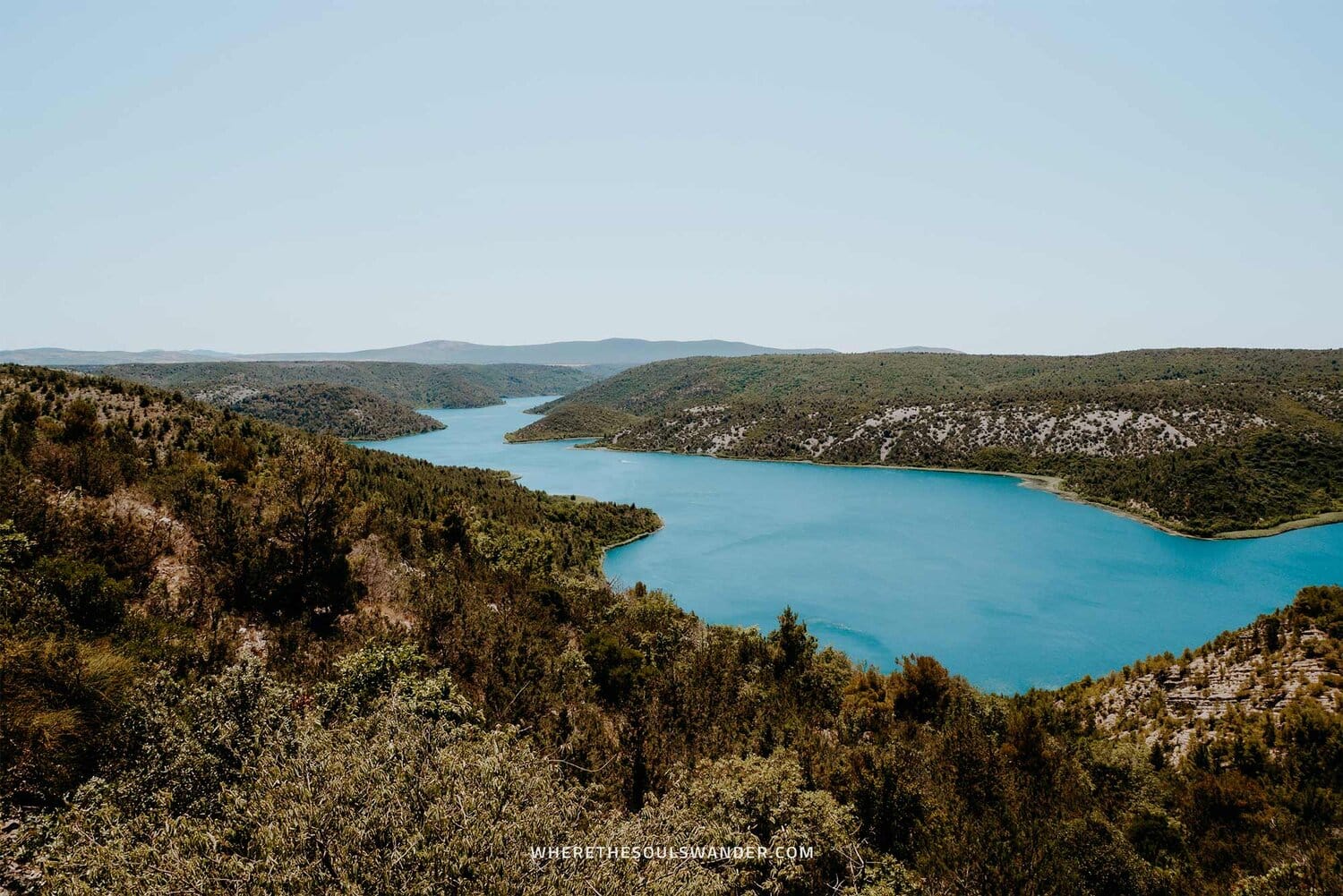
Named after the Krka River, Krka National Park is located in the lush region of Sibenik-Knin County in central Dalmatia, just a few kilometres northeast of Sibenik.
Krka has become a must-see destination for travellers to Croatia, not just for its sheer natural beauty, but also for its convenient position around an hour’s drive away from the popular summer hotspots of Split and Zadar.
Where to stay near the Krka National park
If you’re not planning to visit Krka National Park as part of a day trip from Split, Zadar or Trogir, I highly advise staying either in Sibenik or close to the Krka entrance itself.
By choosing accommodation close to Krka National Park, you’ll have the advantage of being one of the first to enter the park, while also saving time travelling back and forth.
To help you find the right place to stay, this section has been broken down into two sections.
Near Krka National Park
Hotel Vrata Krke | Located in Lozovac, right next to the Krka main entrance, Hotel Vrata Krke is easily one of the best picks near Krka National Park. This budget-friendly hotel offers clean Dalmatian-style rooms, a great outdoor pool with a sundeck and good breakfast options.
Hotel Bonaca | Situated at just 5 5-minute drive from the Krka entrance, Hotel Bonaca boasts clean and spacious rooms, a large outdoor pool with a stunning river view, and a varied breakfast spread.
Sibenik
Hotel Panorama | Perched on a cliff above the Krka Canyon, this hotel provides everything for a relaxing stay. Think modern rooms with comfortable beds, a large outdoor swimming pool, a great in-house restaurant and a fitness centre.
The residence | If you’re looking for some extra comfort, this modern apartment is for you. The residence offers a spacious air-conditioned apartment with a homey vibe, a terrace with lake views, as well as a beautiful outdoor pool area. It’s also just a 15-minute drive away from the Skradin entrance.
If the above accommodations do not resonate with your travel preferences, search accommodations near Krka on booking.com.
A brief introduction of Krka National Park
Proclaimed as a national park in 1985 due to its stunning natural features, Krka National Park has become one of Croatia’s best-visited national parks ever since, with nearly 1 million annual visitors.
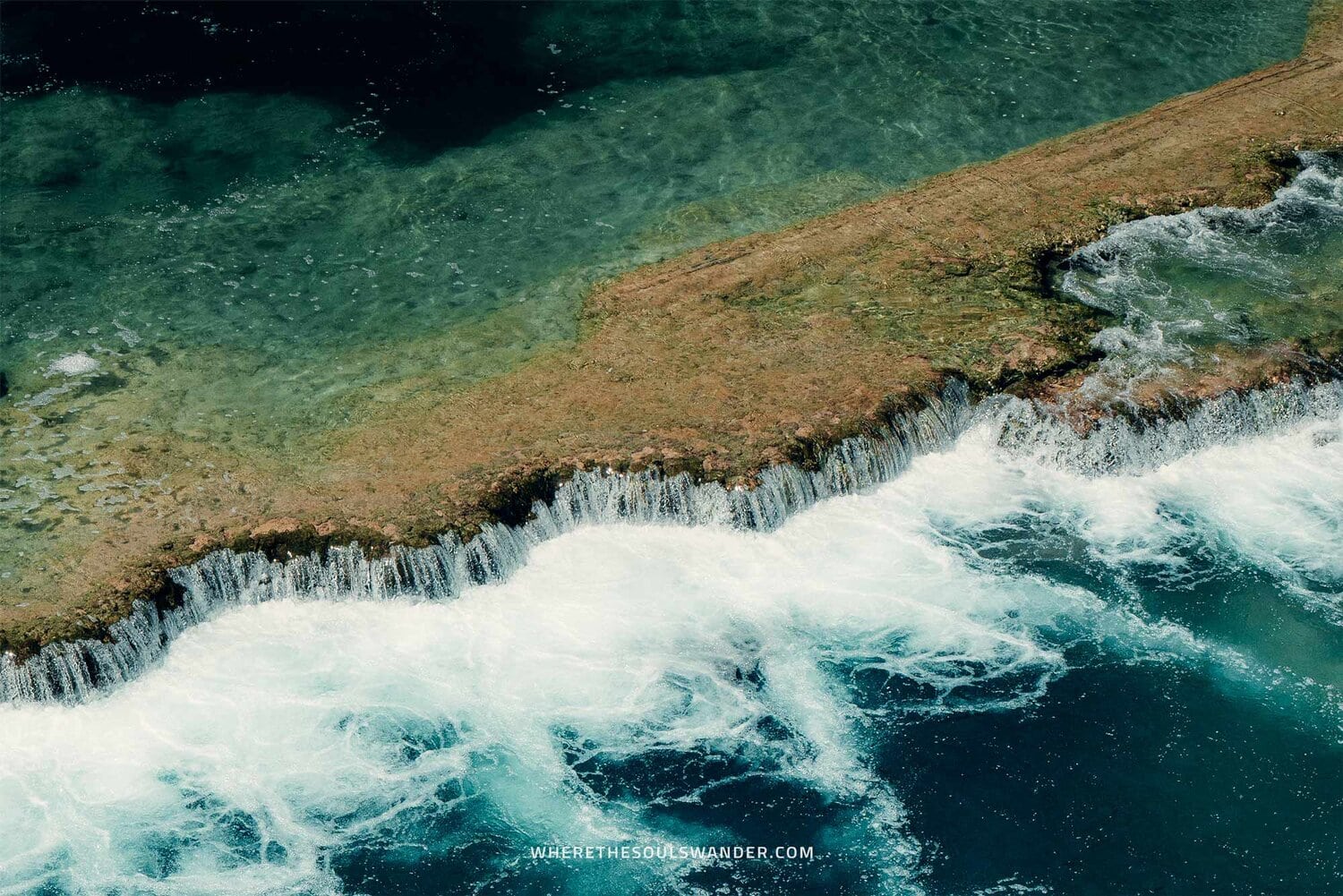
Situated along the Krka River, the park covers nearly 109 square kilometres, where you’ll find 7 impressive waterfalls, several scenic lakes, medieval fortresses, and plenty of adventurous hiking trails. Also, Krka is known for being the first-ever hydroelectric power station in Europe.
On top of that, Krka is home to several distinctive ecosystems, which provide the perfect conditions for rich and interesting biodiversity in flora and fauna, among which are more than 850 types of plants, over 200 species of birds, as well as 18 species of fish and bats.
Krka National Park Entrance Fee 2024
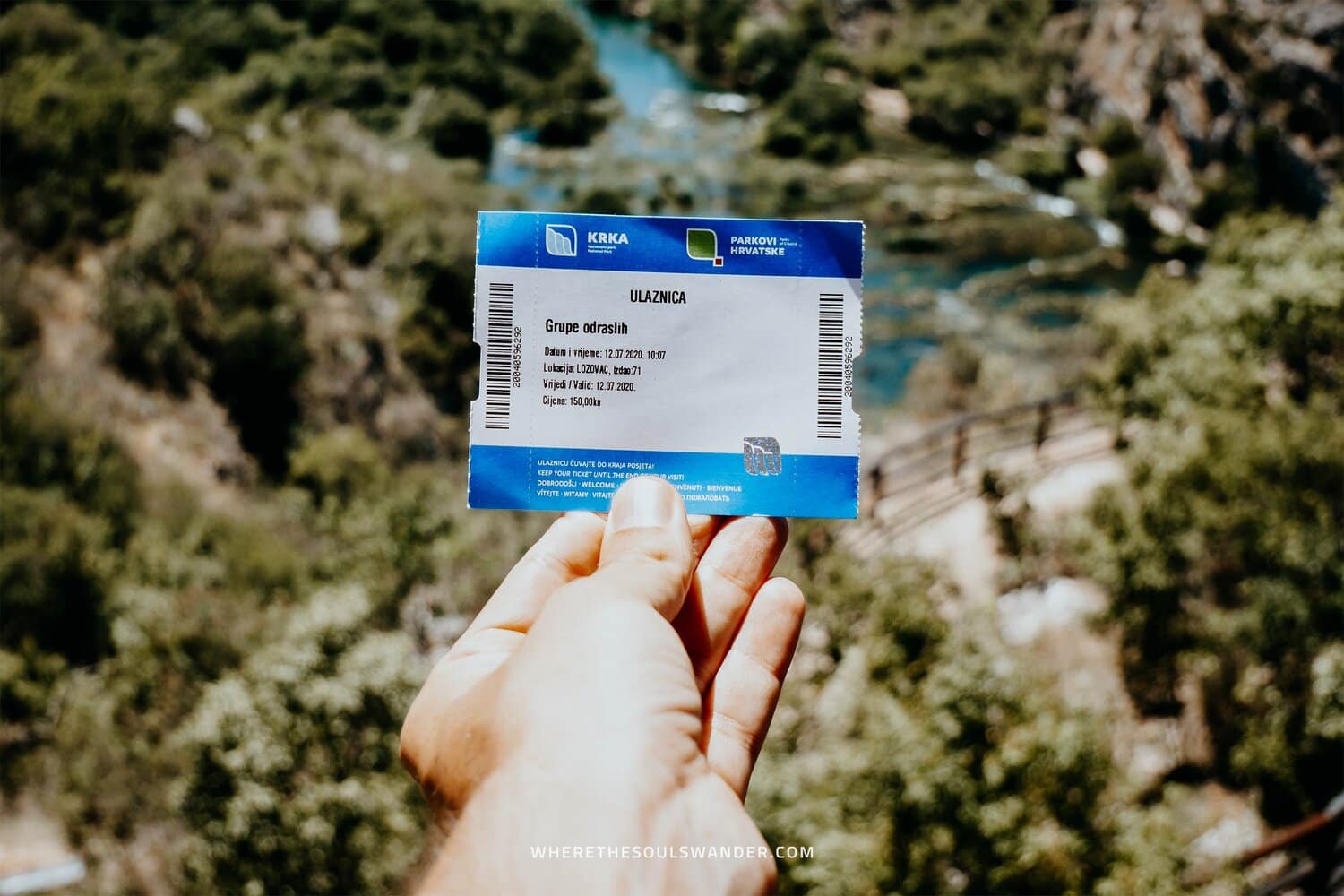
At the moment of writing, the entrance fee to Krka National Park depends on two key factors; the time of year, and whether you travel solo or as part of a larger group.
During the high season, a solo adult ticket will cost 300 HRK (€40,-), while a child ticket comes at just 115 HRK (€15,-) per person.
In winter, the entrance fee gets as low as 52 HRK (€7,-) per person.
- Krka National Park Entrance Fee: 300 HRK (€40,-)
- Solely Roski Slap Waterfall: 150 HRK (€20,-)
Tickets can be bought at all five entrances, but it’s most common to do so at the Lozovac and Skradin entrances, especially if you’re heading for Skradinski Buk.
Additionally, you can also buy your tickets online at the official Krka website.
For those looking to visit as part of a guided tour, the Krka National Park entrance fee is often already included in the price. However, to avoid extra costs, make sure you read the tour description thoroughly.
Things to see at Krka National park
Krka National Park is home to several impressive waterfalls and for the best experience, I’d advise spending at least a full day here to take it all in.
That said, these are the absolute highlights of Krka National Park:
Skradisnki Buk Waterfall
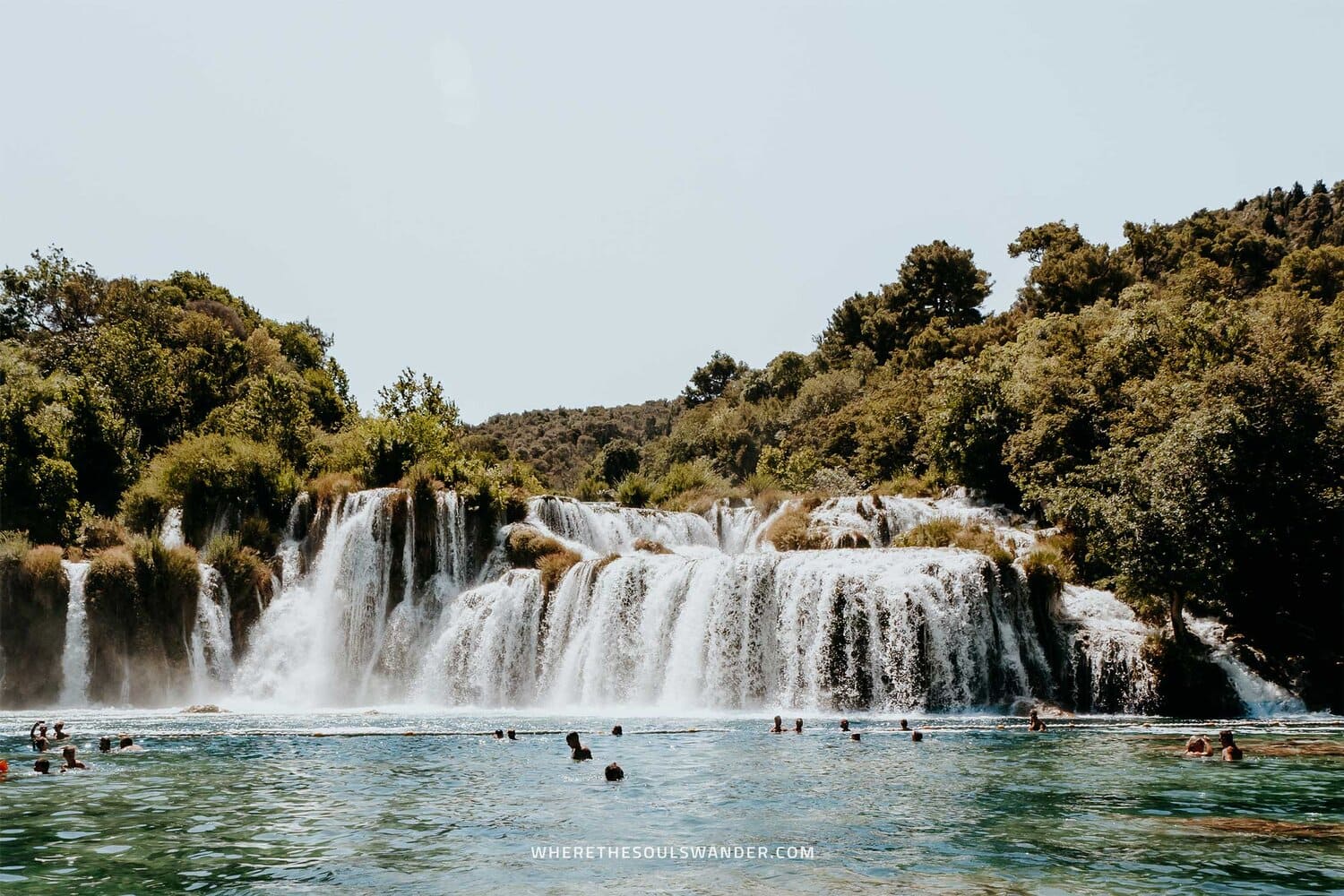
Often referred to as the Krka waterfall, Skradinski Buk is without question the most popular stop for anyone travelling to Krka National Park.
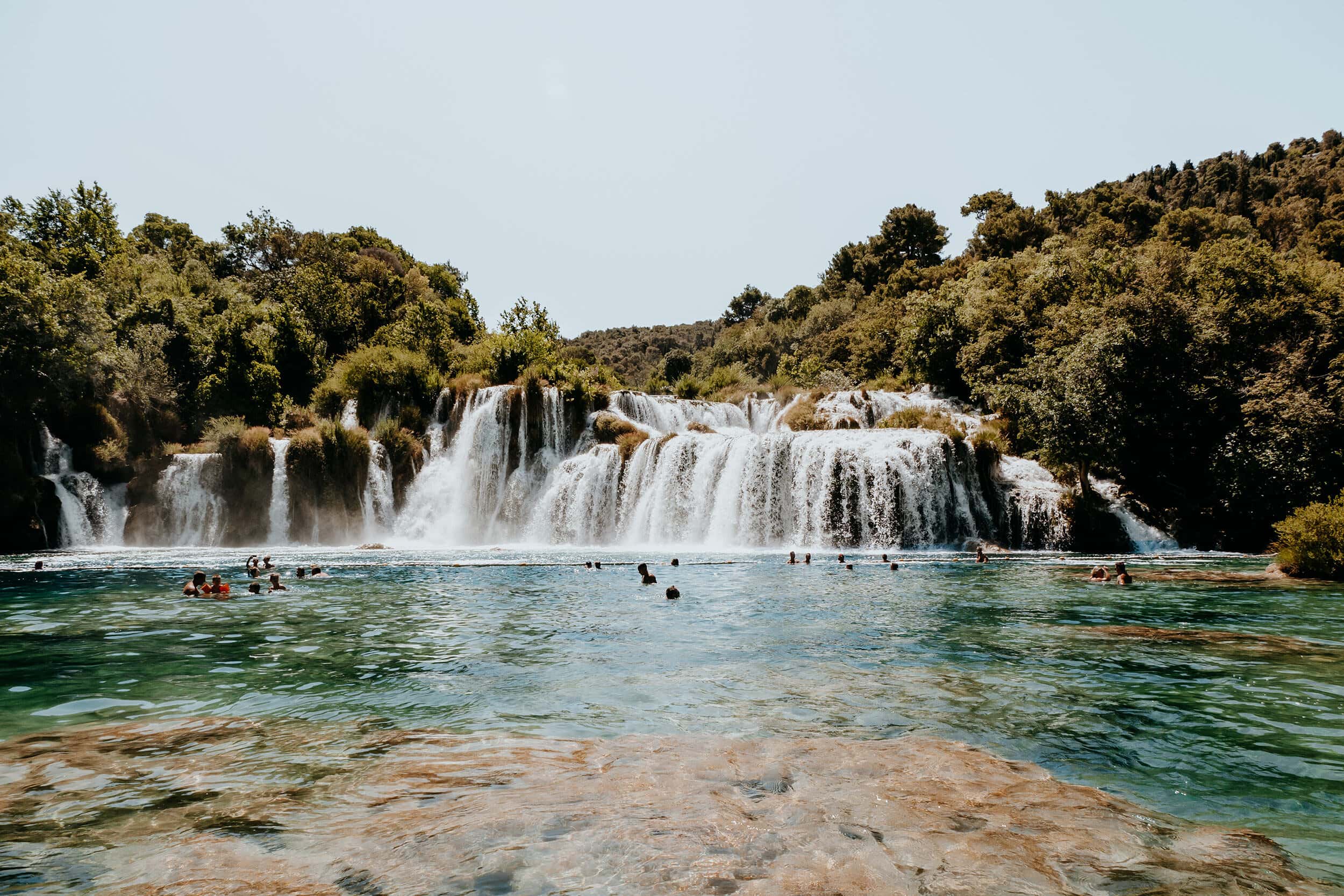
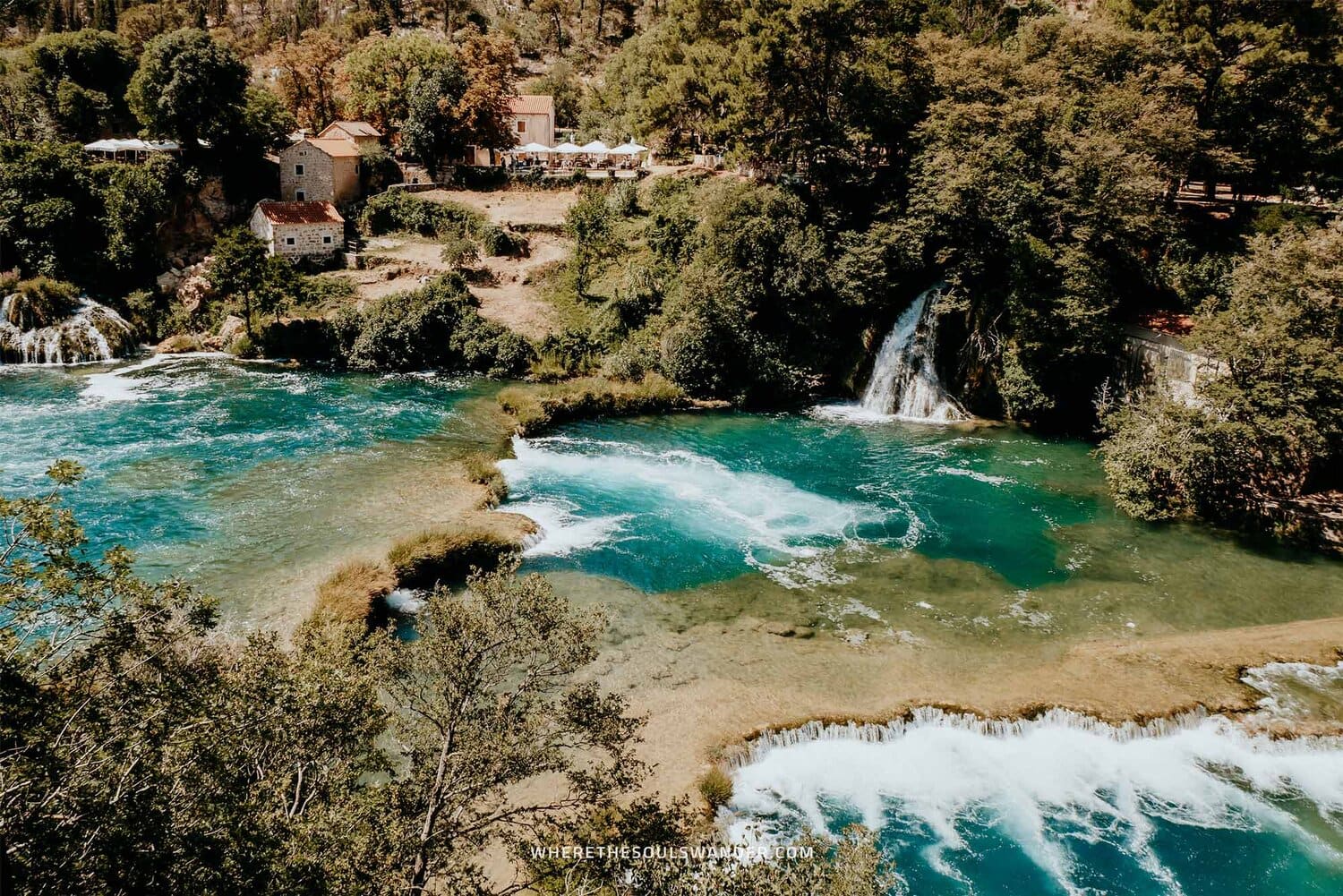
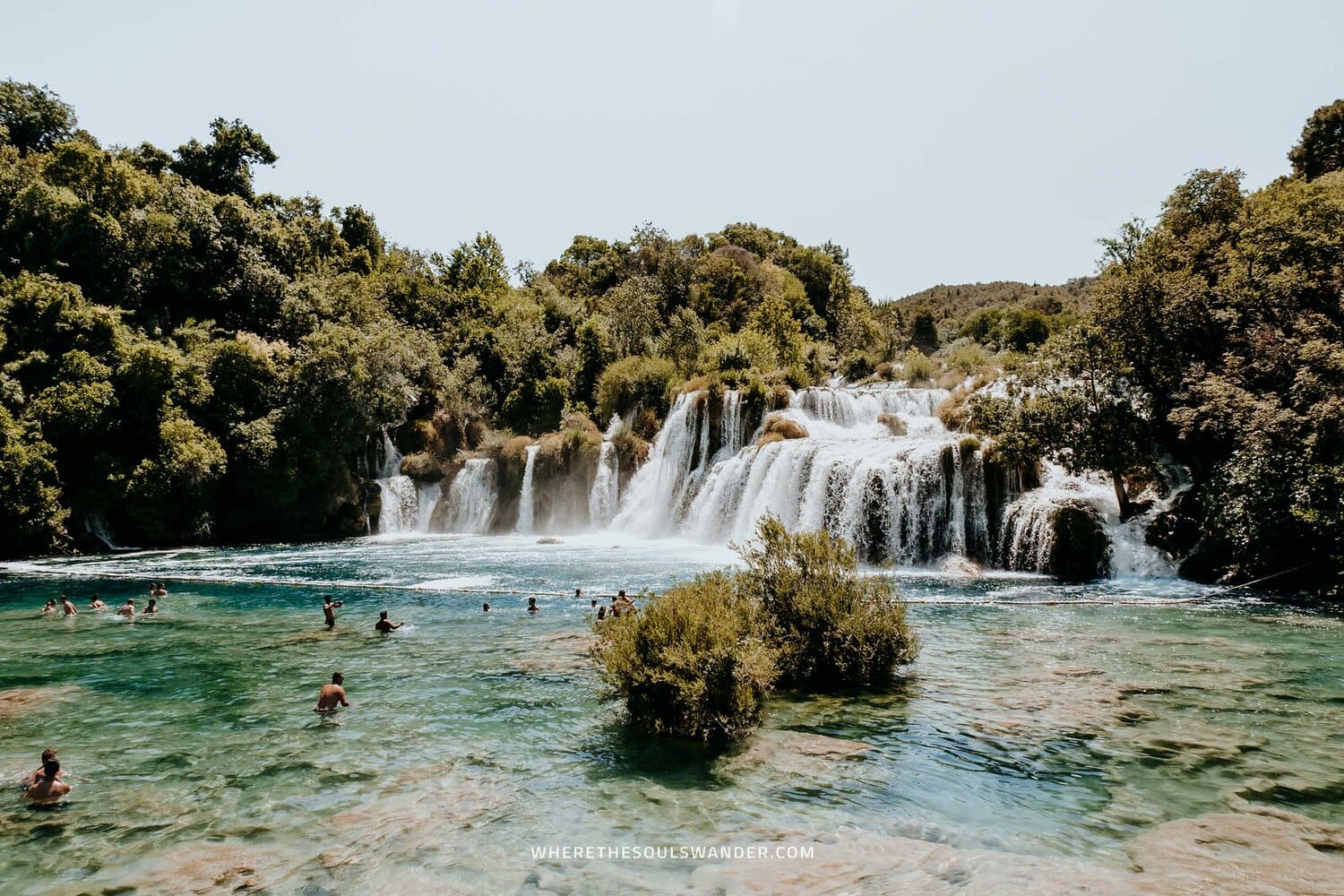
Situated just a short walk from both the Skradin and Lozovac entrances, the Skradinski Buk is an extensive waterfall series with 17 cascades scattered over a total length of 800 metres.
At the base of the final, and most impressive waterfall is a large natural pool, which I’m pretty sure you’ve seen loads of times while scrolling through your Instagram feed.
Though it was first possible to take a refreshing dive here, the park decided it is no longer allowed since the beginning of 2021.
As the main attraction of Krka, I highly advise making Skradinski Buk your first stop in the park. Not only does the number of visitors increase significantly throughout the day, but it’s also way easier to photograph in the gentle morning light.
Visovac Island
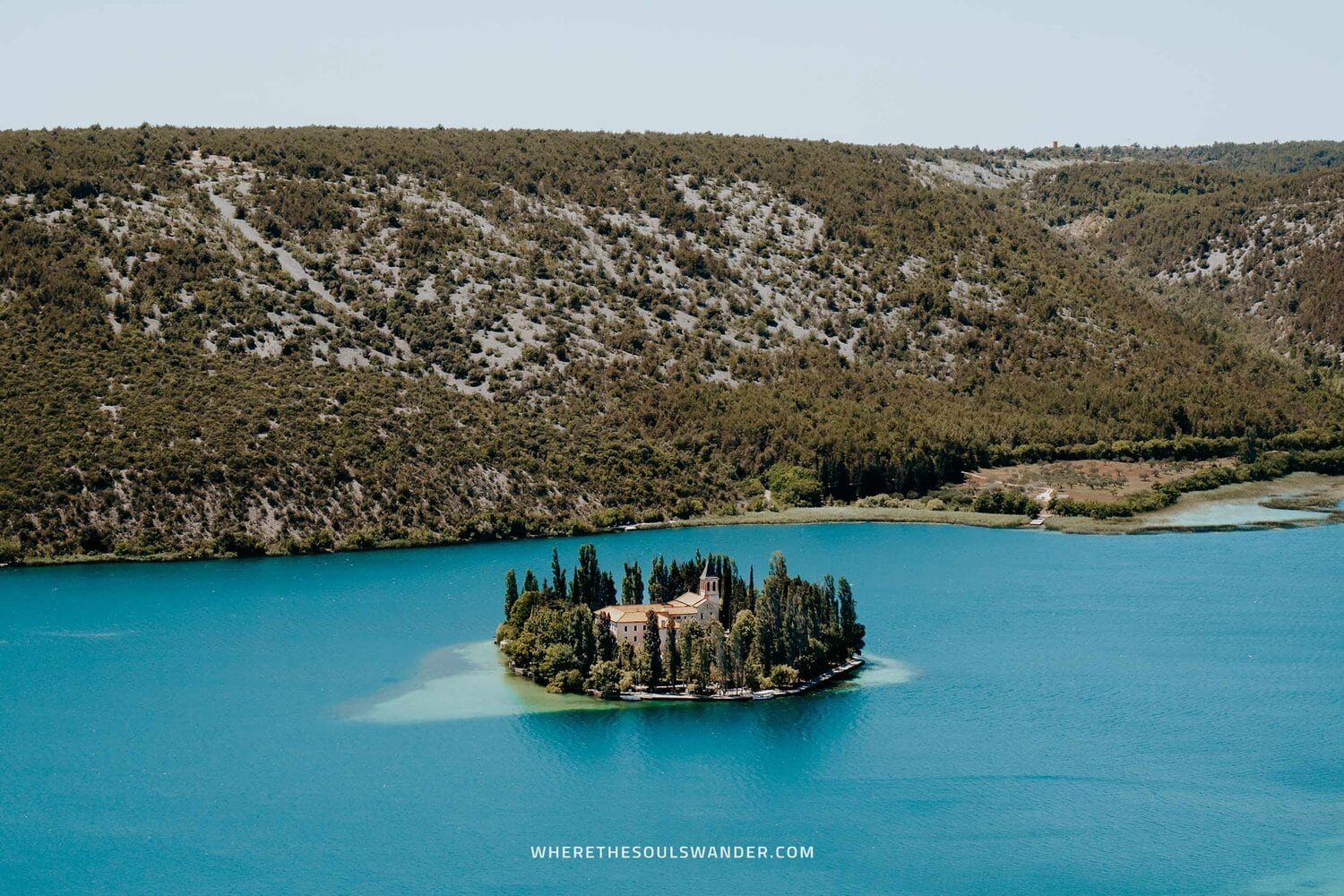
Without question, my favourite place in Krka National Park is at the viewpoint next to the monument of Croatian King Petar Svacic, as it provides the most stunning views of Visovac Island and its lush surroundings.
Nestled in the heart of Visovac Lake is the incredibly scenic Visovac Island, a tiny island that is home to a Franciscan monastery that dates back as far as 1445.
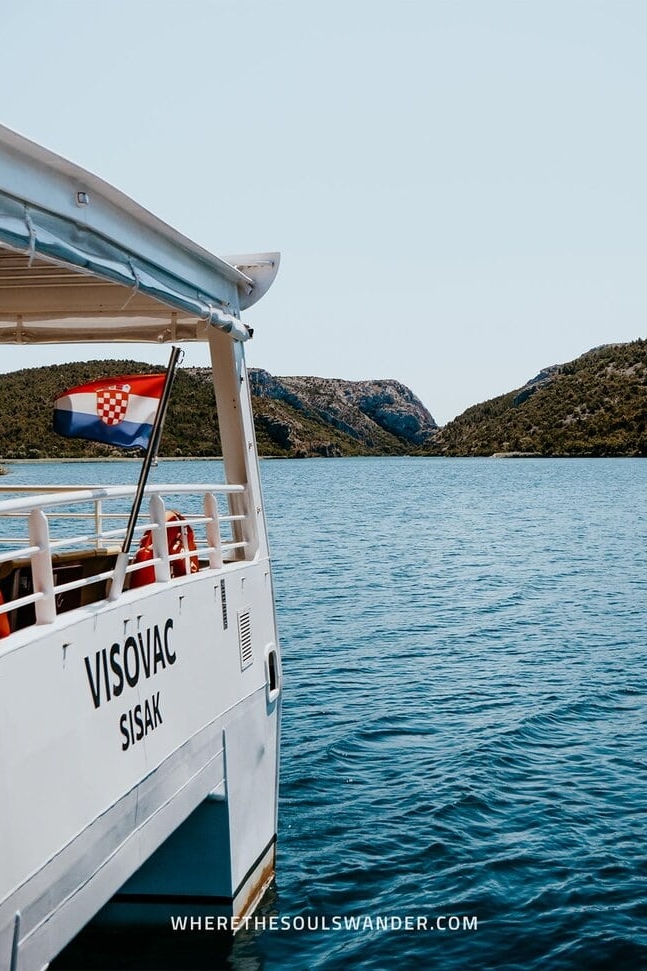
Although I believe that Visovac Island is best seen from the viewpoint, it is also possible to visit by joining a boat excursion from Skradinski Buk.
The Franciscan monastery itself is open to visitors and houses an interesting archaeological collection, as well as one of three rare illustrated copies of Aesop’s fables.
Roski Slap
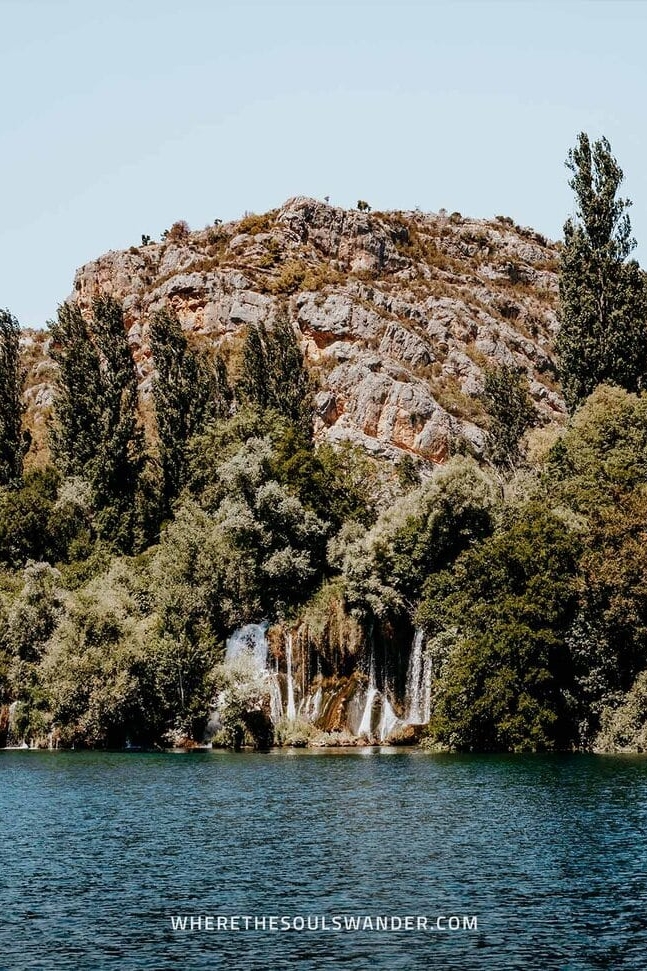
Despite its appearance, which looks rather disappointing at first glance, Roski Slap is actually quite an awesome point of interest, especially if you look beyond its main waterfall.
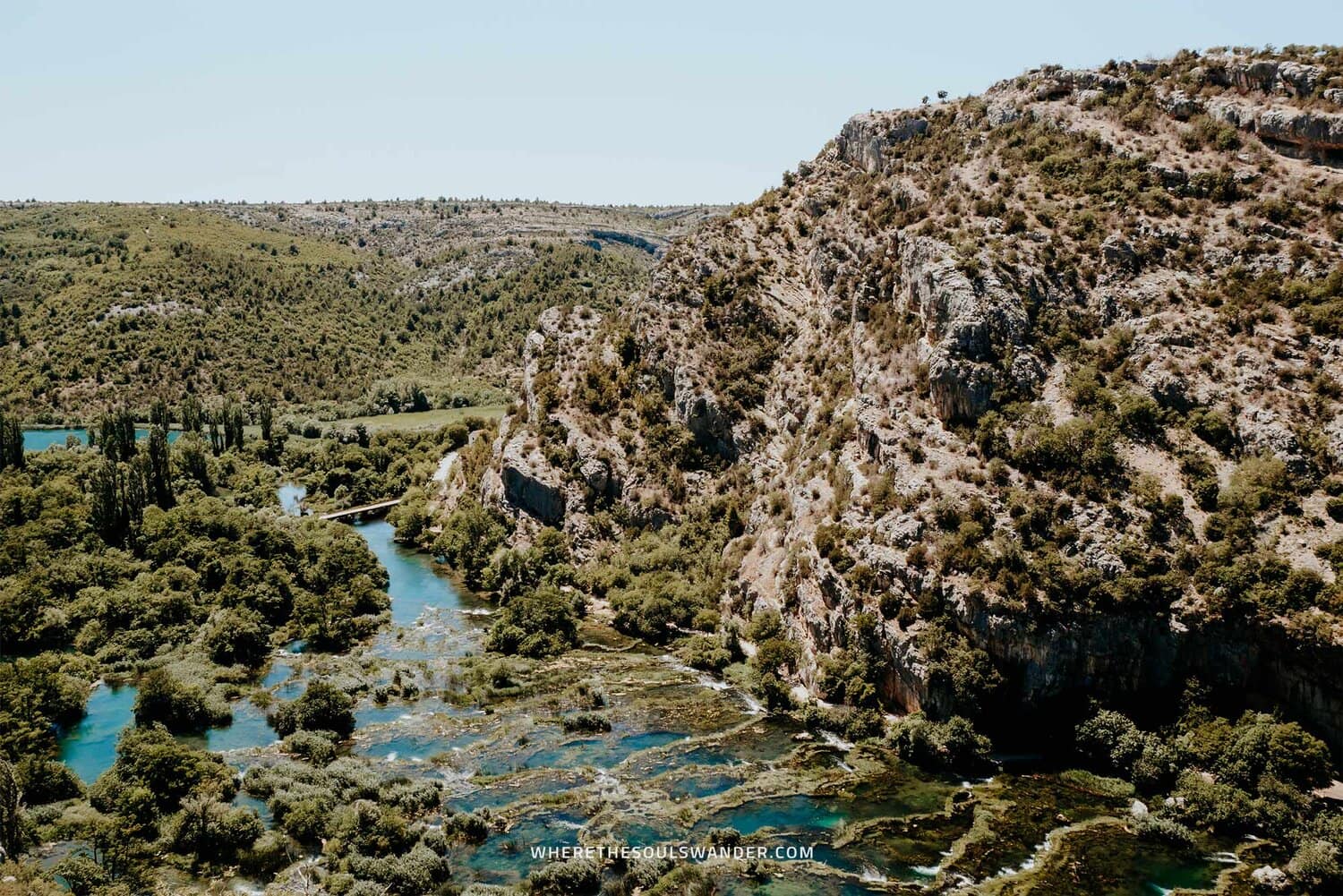
At Roski Slap, the Krka River runs through a 450-metre-wide gorge, where the river flows via loads of smaller cascades and dense vegetation before gushing into the scenic Visovac Lake.
Ogrlice – Krka’s necklace, as the locals like to name it, is home to an easy hiking route, while the shore at the 15-metre-high main waterfall provides the perfect spot for swimming and relaxing.
Ozidana Pecina Cave Viewpoint
To truly admire the beauty of Roski Slap, climb to the viewpoint of the Ozidana Pecina Cave, as its amazing views display both the magnificence and complexity of this series of cascades.
It isn’t until you see it from above that you realize why Roski Slap was given the name ‘Krka’s Necklace’.
The Ozidana Pecina Cave itself is a 59-metre deep tunnel-shaped cave, where you see many traces of Neolithic human settlements, including the remains of ceramic dishes, stone artefacts and human bones.
Although it’s possible to enter the cave, I believe you won’t miss anything special if you decide to skip it.
How to explore Krka National Park | Solo or with a tour
Without question, the best way to explore Krka National Park is by renting a car and driving through the park.
Not only are the park’s best waterfalls quite far apart from each other, but you also have the flexibility to move throughout the park at your own pace.
However, if you’re not planning to rent a car, joining a guided tour is a great alternative option. Not only is it one of the most popular ways to explore Krka National Park, but also surprisingly convenient.
Given Krka National Park is one of the absolute highlights of Croatia, there’s no shortage of tour operators offering plenty of excellent tours from Split, Trogir and Zadar.
Most of these tours take in the park’s highlights, including the famous Skradinski Buk waterfall, Roski Slap and Visovac Island. Plus, you also have some free time within the park.
If you’re keen on joining a guided tour, it is worth noting that it’s smart to book your preferred tour in advance, especially during the high season.
My Krka National Park tour recommendations
For those keen to book a guided tour of Krka National Park upfront, make sure you have a look at the options listed down below.
One thing worth mentioning is that the recommended tours do not include the Krka entrance fee.
+ Full-day Krka NP & Sibenik Tour From Split or Trogir | I visited Krka National Park as part of this excellent full-day tour from Split and had a wonderful time exploring the incredible waterfalls, without having to stress about an itinerary or transportation. Throw in the fact that you also have a short stop in Sibenik, and you’ll understand why this tour has earned a rating of 4.7 stars.
Krka Waterfalls Day Tour From Split | This full-day guided tour of Krka National Park from Split includes transportation, an English-speaking guide and a boat ride – plus it allows you to have some free time in the park.
Krka National Park Day + Primosten Tour From Split | Explore the stunningly beautiful Krka National Park by joining this full-day guided tour from Split. It also includes a boat ride, some free time within the park and a stop in Primosten. For those who haven’t yet booked their entrance tickets, it is possible to add on a skip-the-line ticket too.
Krka National Park | The essentials
The best time of year to visit Krka National Park
Croatia, like most countries in the south of Europe, is most popular during summertime.
As a result, Krka National Park is teeming with both foreign and local tourists during the peak summer months of July and August.
However, if you opt for a trip during the off-season months of May, June, September and October, the park will be far less crowded – which makes exploration significantly more fun.
Additionally, the park is extremely beautiful during the winter months, when layers of snow often transform the park into a winter wonderland.
The best time of day to visit Krka National Park
During summertime, the Krka National Park is open daily from 08:00 till 20:00. However, to avoid long queues, there’s a maximum number of visitors that are allowed in the park at once.
For that reason, the best time to explore the Krka National Park is right after the doors open, especially if you’re visiting between May and September.
For those visiting in the off-season months of October to April, it is good to note that the park opens one hour later. For up-to-date opening hours, see the official Krka National Park website.
How to get to Krka National Park
By car | As with most highlights in Croatia, the best way to visit Krka National Park is by car.
Not only is it easier to reach the various waterfalls dotted throughout the park, but it also grants more freedom to visit at your own pace.
If you’re keen to rent a car in Croatia, Rentalcars.com is easily your safest bet, as they offer additional insurance, a wide range of cars to choose from, as well as excellent overall service.
While all five entrances provide free parking facilities, I highly advise parking at the Lozovac entrance, where you’ll find most of the available parking spaces.
Join a guided tour | Another easy way to get to Krka National Park is by joining a guided tour, as many tour operators offer excellent options from Split, Trogir and Zadar.
Most Krka National Park tours involve stops at the park’s absolute highlights, including Skradinski Buk, Roski Slap, and Visovac Island, as well as a visit to the coastal town of Sibenik.
I visited Krka National Park as part of this guided tour, and had a wonderful time, without having to stress about any itinerary or transportation.
It is worth mentioning that the Krka National Park is one of the best-visited tourist attractions in Croatia, meaning if you’re keen to join a tour, it’s better to book the one you prefer in advance.
By bus | If joining a guided tour or renting a car isn’t for you, it’s also possible to catch a bus in the direction of Skradin, a small town where you’ll find Krka’s popular main entrance.
If you’re looking to visit Krka by bus, I noticed that Flixbus was the most reliable. Not only does Flixbus provide comfortable, airconditioned busses, but they also run to Skradin from the major cities in Croatia, including Split, Zadar, Trogir, Dubrovnik and Zagreb.
For up-to-date information, availability and online tickets, visit the official Flixbus website.
Safety in Croatia | Travel insurance
While Croatia is completely safe for travellers, I always aim to enter a foreign country with my travel insurance sorted out, and I highly advise anyone else to do the same.
Where I prefer to assume that everything runs smoothly during my travels, the reality is often that something can go wrong at any given moment – when that happens, it is better to be safe than sorry.
Heymondo | Whether you’re going on a 3-week backpacking trip, or planning a long stay somewhere abroad, Heymondo has excellent insurance options either way – plus full COVID-19 coverage and a handy app with 24-hour medical assistance. Readers of WTSW receive 5% off any insurance policy, more information here.
Cheers!
I’ve been on this travel blogging journey since 2019.
If you appreciate what I do here, these are some ways you can support me.
13 Awesome things to do in Istanbul, Turkey
Situated on the crossroads of Europe and Asia, Istanbul is a vibrant cosmopolitan city, where extraordinary architecture and an intriguing history set the tone for an authentic, yet somewhat intoxicating travel experience.
Once the epicentre of the world’s greatest dynasties; the Roman, Byzantine and Ottoman empire, Istanbul remained home to an astounding mix of cultural and historical heritage, which continue to draw adventure seekers and curious travellers alike.
Meander through vibrant maze-like bazaars, admire incredible ancient Ottoman creations, jump aboard a unique cruise between two continents, and sample distinctive Turkish cuisine.
While Istanbul tends to catch visitors off guard in many ways, especially first-time visitors, the city also has a whole ’nother side to it – think trendy restaurants and cafes, an incredible modern art scene, as well as hip and happening neighbourhoods away from the hustle and bustle.
To help you enjoy the best of both worlds, here’s my definite list of things to do in Istanbul.
If you choose to use any of the links on this page, I receive a small commission at no extra cost to you. By using these links, you’ll have a direct impact on WTSW and support me to continue to create free insightful travel content for you. If you find any of my tips useful, you can support me by buying a virtual coffee here.
The Istanbul Welcome Card
Though I understand that you’re here to dive into my list of things to do in Istanbul, there’s one thing that I’m pretty excited about: the Istanbul Welcome Card.
Given Istanbul is home to loads of highlights, I’d highly advise you to grab an Istanbul Welcome Card too, especially if you’re planning to explore most of ‘em.
Benefits of the card include a guided tour of Hagia Sophia and Topkapi Palace, free entrance to 12 of Istanbul’s major sights, including Galata Tower and Basilica Cistern, a Bosphorus Cruise, 10 vouchers for public transport, as well as several other discounts.
Where to stay in Istanbul
As one of the world’s leading city break destinations, Istanbul is filled with excellent accommodation options, suiting pretty much any travel style and budget.
To help you find the right accommodation, this section has been broken down into two of the city’s most popular neighbourhoods; Fatih and Beyoglu.
I’ve listed my favourite options below, some of which are marked – these are the ones I stayed.
+ Orka Royal Hotel & Spa | If you’re looking for comfort and wellness, this excellent hotel is for you. Offering well-designed rooms, in-house spa facilities, a gym and a rooftop pool, while still having the city’s most popular landmarks on your doorstep. Double rooms at just €41,- a night make this place one of the best picks in Istanbul.
Boss Hotel Sultanahmet | Nestled at the heart of the lively Fatih district, this budget-friendly option boasts a great place to stay, with clean air-conditioned rooms, friendly staff, and a great buffet breakfast.
Historic Galata | Set within the hipster-ish Karaköy area, this modern apartment is clean, stylish and just a few minutes away from the iconic Galata Tower. Comes with a seating area and a private bathroom.
10 Karakoy Istanbul | This luxury option is easily one of the best picks in Istanbul’s lively Karaköy area. All rooms are designed with class and come with high-end furniture, a large double bed, and a spacious bathroom. Make sure you click the link to see how stylish this place actually is!
Hotel Villa Zurich | Just 500 metres from Istanbul’s popular Taksim Square, this well-priced hotel offers clean and spacious rooms, some with incredible views over the Bosphorus. Given its brilliant location, a double room at just €36 a night is considered an absolute bargain.
If the above accommodations do not resonate with your travel preferences,
search accommodations in Istanbul on booking.com.
13 Things to do in Istanbul, Turkey
1. Admire the iconic Hagia Sophia
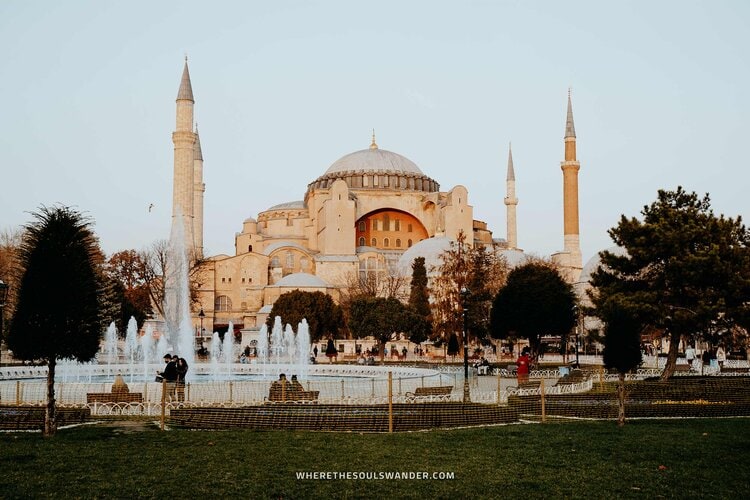
As one of Turkey’s most precious historical landmarks, I believe that visiting the iconic Hagia Sophia is essential to anyone travelling to Istanbul.
Situated in the middle of former Constantinople, this architectural marvel was built at the order of the Byzantine Roman Emperor Justinian in the midst of the 6th century.
While the Hagia Sophia was initially built to serve as a basilica for the Greek Orthodox Christian Church, its purpose, much like its architectural looks, altered several times throughout history.
The most notable period in Hagia Sophia’s intriguing history was in 1453, when the Ottomans conquered Constantinople, and Sultan Mehmet the Conqueror converted the Hagia Sophia into his imperial mosque – this was also the era when Constantinople became Istanbul.
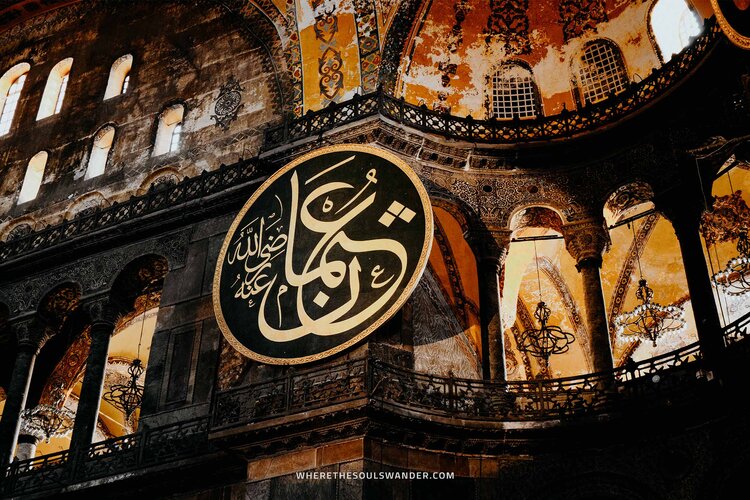
Inside, Christian frescoes and Islamic prayer signs set the tone for this masterpiece, as those features of the interior best reflect the ever-changing religious occupation of Hagia Sophia.
If you’re interested in learning more about the Hagia Sophia and its historical journey, I highly advise this guided tour of the Hagia Sophia.
2. Visit the incredible Topkapi Palace
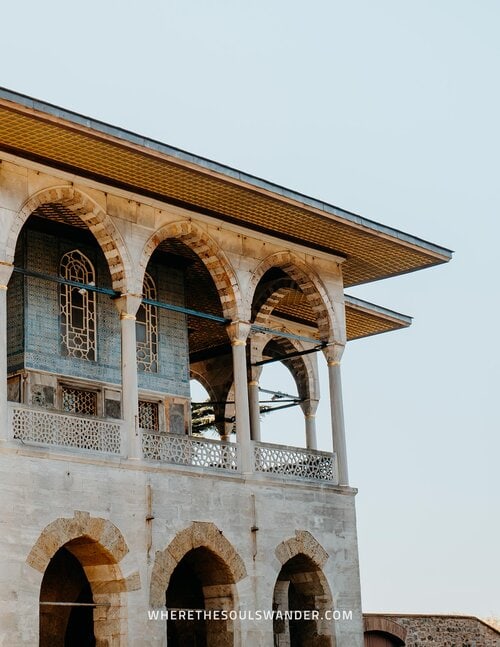
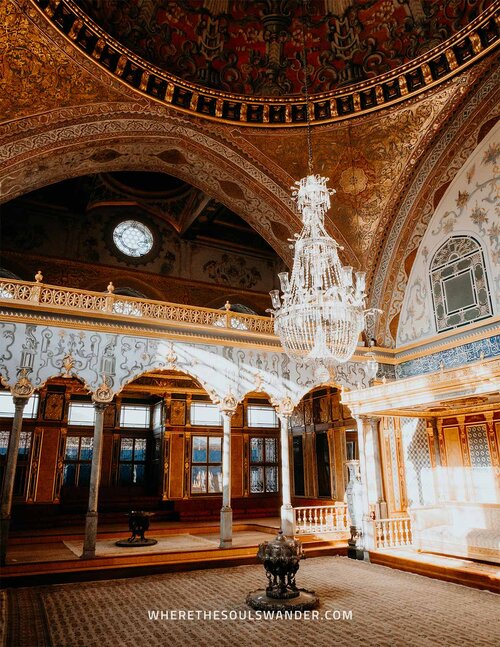
The Topkapi Palace is a famous imperial Palace that was built following the Ottoman conquest of Constantinople in 1453 to become the main residence of Sultan Mehmet the Conqueror, as well as his successors.
Located atop the Eastern Roman Acropolis on Istanbul’s historical peninsula, the Topkapi Palace has long been the administrative, educational and artistic centre of the Ottoman Empire.
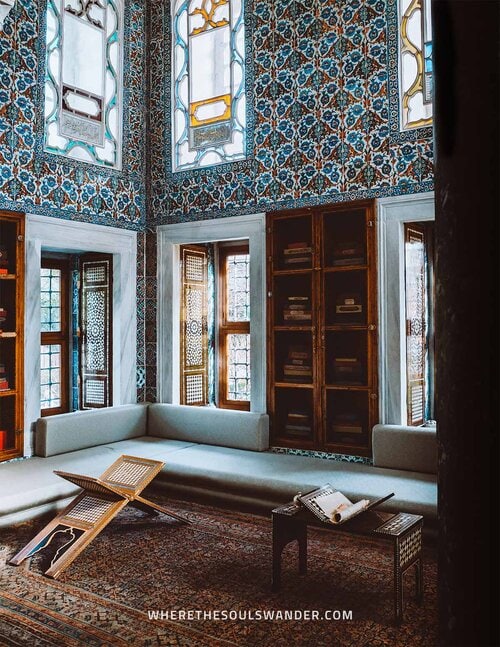
At present, the palace serves as a museum, where heaps of opulent pavilions, an extensive harem and the imperial treasury grant visitors an interesting glimpse into the life of a wealthy Ottoman sultan and his loved ones.
Although the palace is easy to visit by yourself, note that it takes around half a day to uncover the extensive palace. If you prefer to wander through the palace with a knowledgeable local guide, make sure you check out this tour of the Topkapi Palace.
If you purchased the Istanbul Welcome Card, you’re already covered for a guided tour of the palace.
3. Cruise the Bosphorus
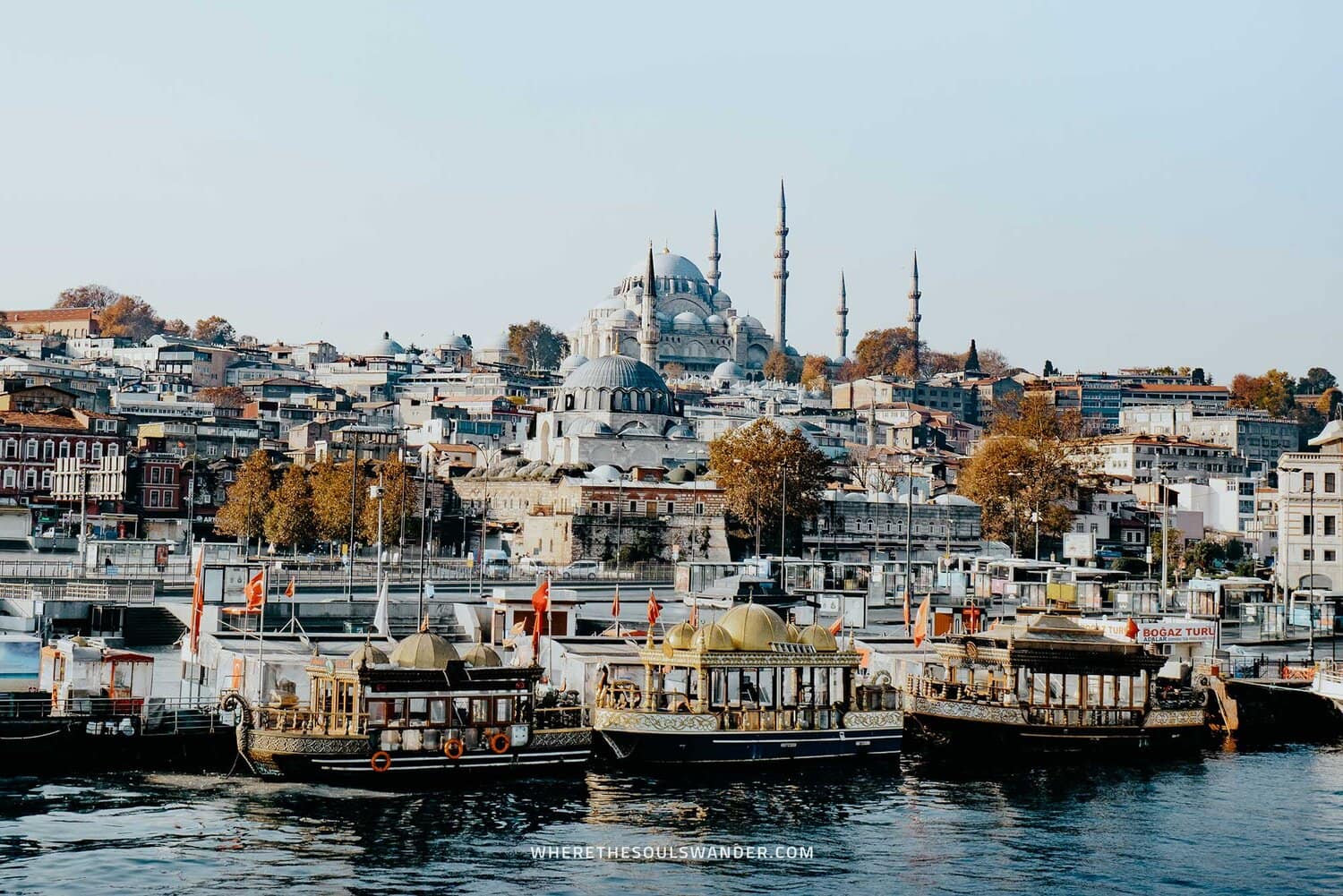
If you’re somewhat overwhelmed by the hustle and bustle of the city, jump aboard a Bosphorus Cruise and experience the city from a whole new perspective, while also learning about its importance throughout history.
The Bosphorus, also known as the Strait of Istanbul, is a narrow strait that separates the continents of Europe and Asia and is considered one of the most important trading routes in the region, connecting the Marmara Sea with the Black Sea.
During a Bosphorus Cruise, you’ll be welcomed by awesome views of Istanbul’s waterfront, with several historical landmarks flanked on either side of the shores; Ortaköy Mosque, Topkapi Palace and Rumeli Hisarı to name but a few.
On top of that, you’ll have a unique perspective on the Hagia Sopha, Galata Tower and Süleymaniye Mosque, which makes cruising a great option if you’re on a shorter trip to the city.
At night, Istanbul becomes a completely different world, and this magical ambience is best experienced on a dinner cruise on the Bosphorus while enjoying traditional folk dance and entertainment.
4. Roam the Egyptian Spice Market
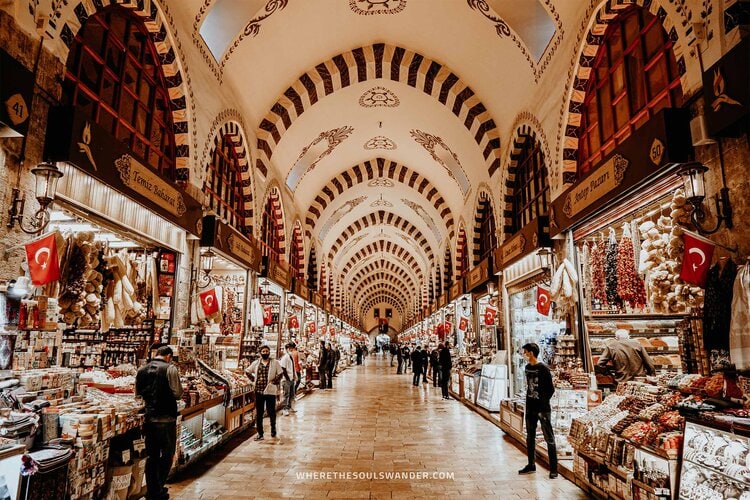
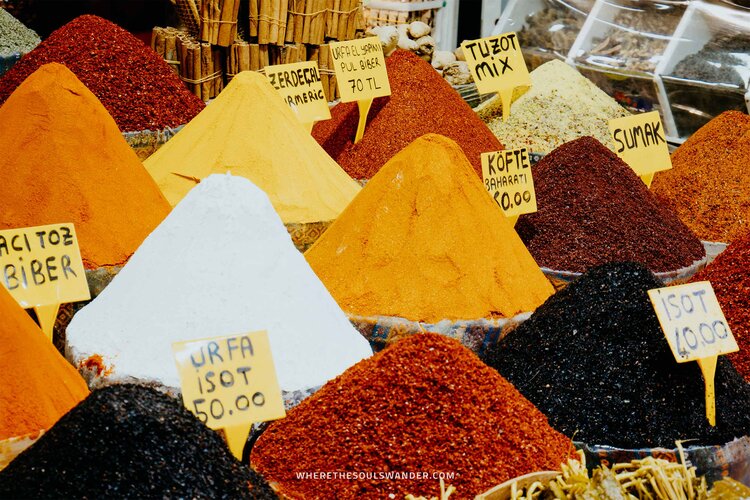
Just a short walk from the southern end of the Galata Bridge is Istanbul’s intoxicating spice market, a large covered bazaar that is teeming with goods from the exotic East.
Nicknamed the Egyptian Bazaar, the market is flanked by loads of stalls, selling a wide variety of spices, dried fruits, nuts and of course, Turkey’s famous Lokum (Turkish Delight).
For centuries, this buzzing bazaar has been the epicentre of trade in Istanbul and roaming it in search of a particular spice, tea or delight remains a happening like no other.
5. Visit the Istanbul Museum of Modern Art
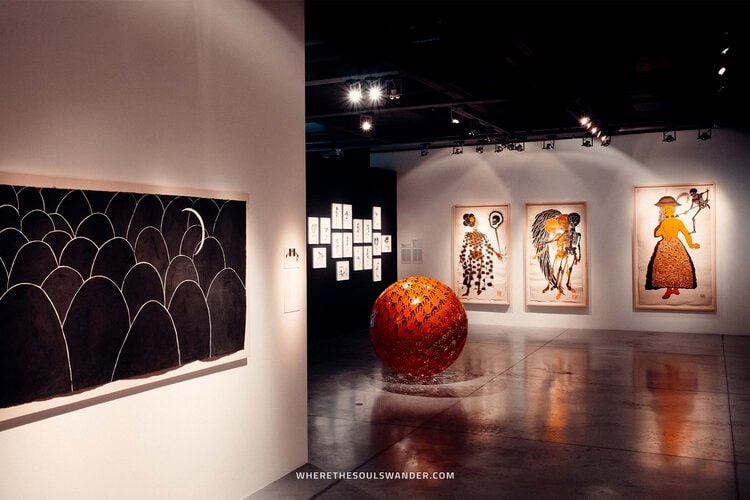
Set within a former maritime warehouse, the Istanbul Museum of Modern Art is Istanbul’s most progressive art museum and showcases the artworks of Turkey’s finest artists, as well as those from artists overseas.
In 2004, Istanbul Modern became Turkey’s first private museum to organize modern and contemporary art exhibitions and now holds a broad selection of paintings, sculptures and photography, as well as a few interactive artworks on installation and video.
If Istanbul Modern piqued your interest, I’m pretty sure you’ll be delighted by Istanbul’s incredibly diverse art scene. Other great museums that are worthy of a visit include the Museum of Innocence, the Pera Museum, the Panorama 1453 Museum, the Istanbul Archaeological Museum, and Tophane-I.

6. Take in the views from Galata Tower
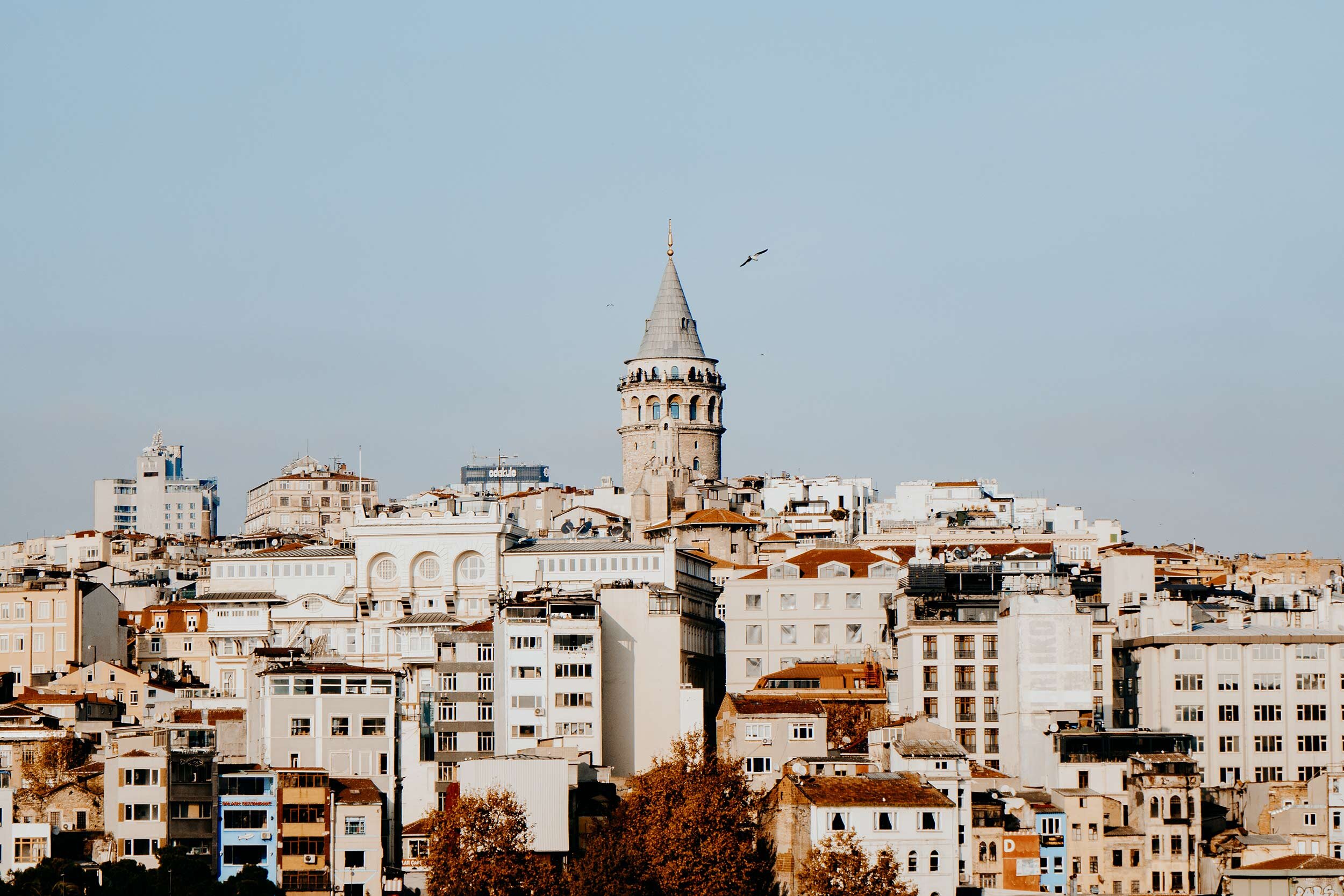
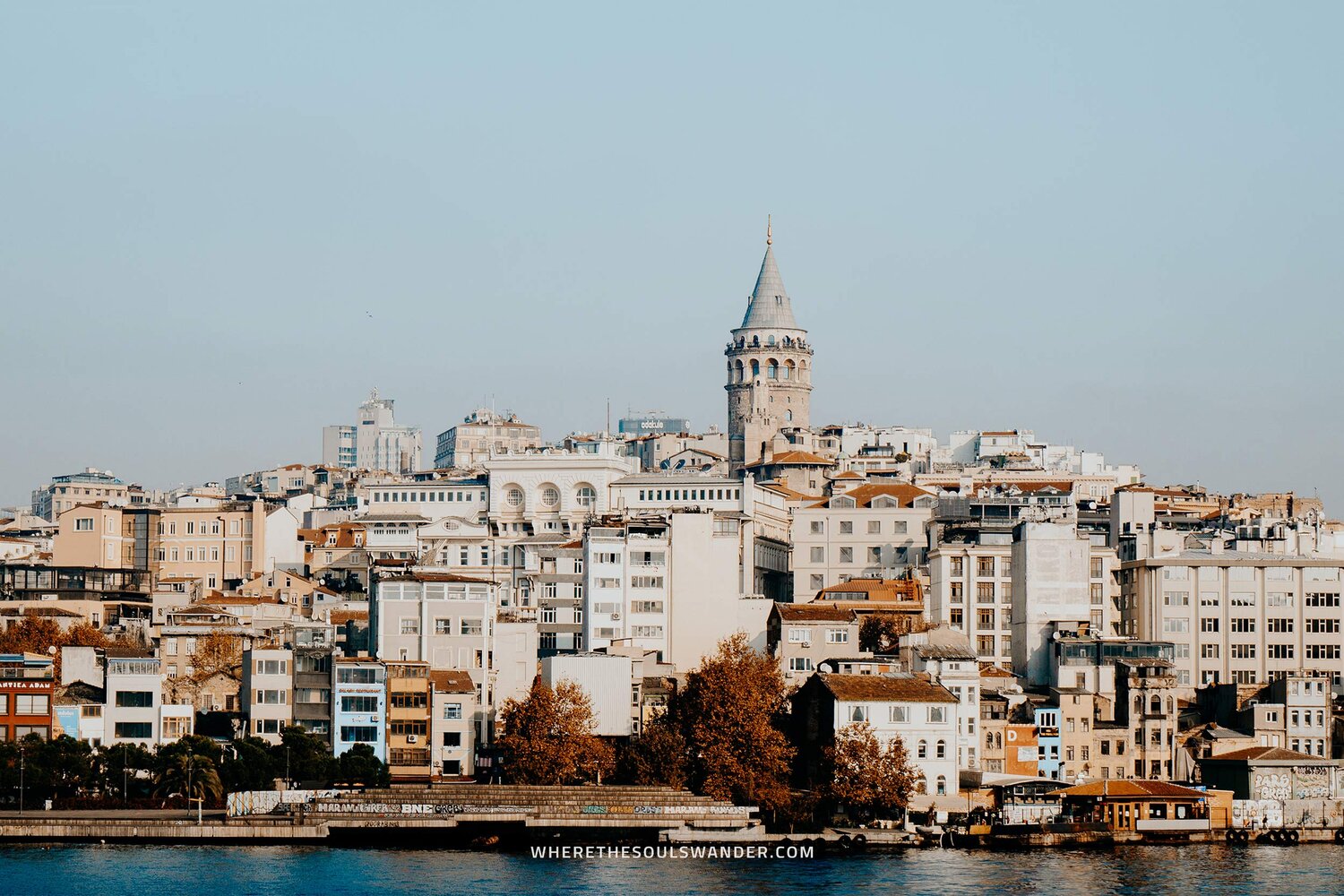
Set in the middle of Istanbul’s lively Karaköy district is one of the city’s most iconic historical landmarks; the medieval Galata Tower.
Built to keep an eye on Constantinople, this tower is said to date back as far as the 5th century, when the city was under the rule of the Byzantine Empire.
While the original wooden tower perished due to several tragic events, the Genoese chose to build an even more impressive tower in exactly the same place, this time solely out of stones.
These days, the Galata Tower is still very much as it was built by the Genoese in 1348.
From atop, visitors are spoiled by the most stunning panoramic views over the whole of Istanbul, including the Golden Horn, the Bosphorus and the city’s Historical Peninsula.
As with most of the city’s historical landmarks, the Galata Tower is often overrun by visitors – so I absolutely advise planning your visit wisely.
7. Admire the Süleymaniye Mosque
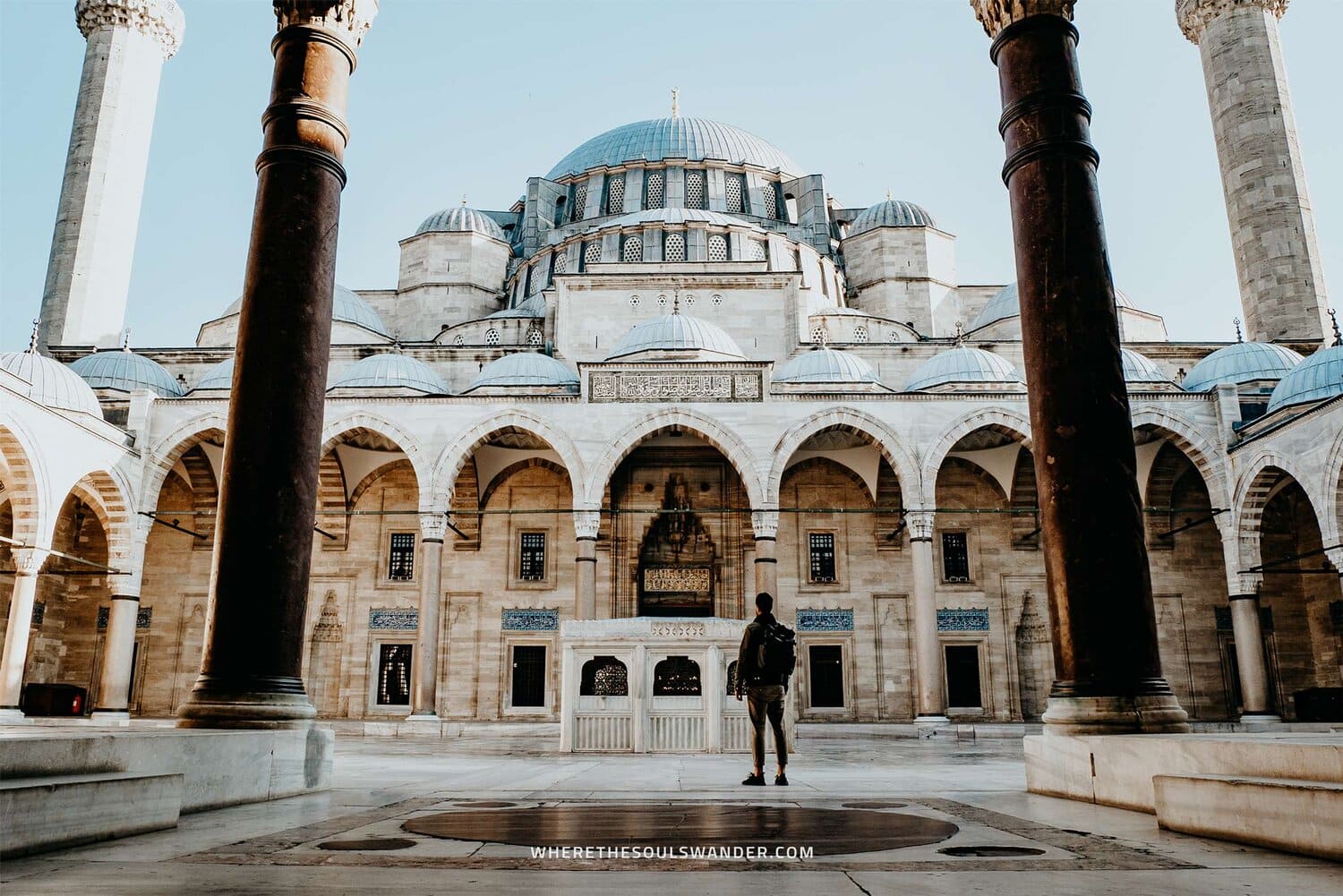
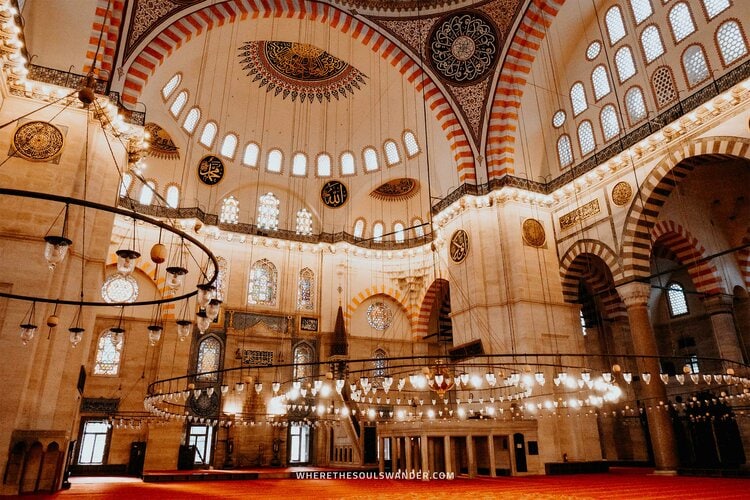
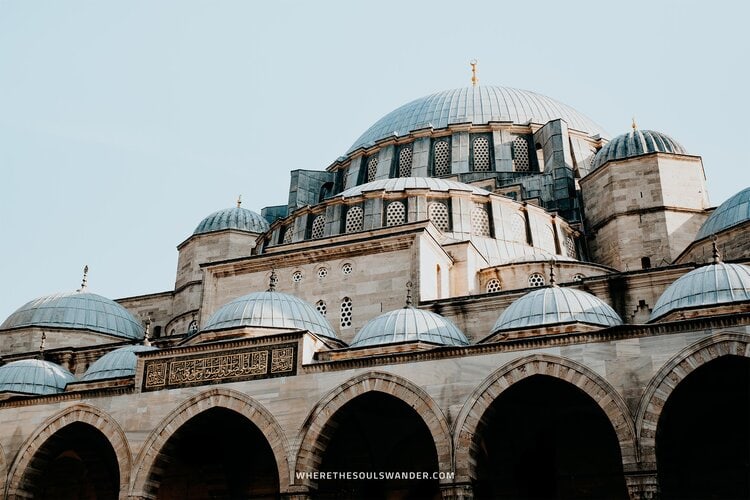
Settled high atop the Third Hill of Istanbul, the magnificent Süleymaniye Mosque is undeniably one of the best examples of the quintessential Ottoman imperial architectural style.
In the order of Suleiman the Magnificent, the mosque was designed by renowned Ottoman architect Mimar Sinan, who is said to be one of the greatest to ever do it.
After its opening in 1557, the Süleymaniye Mosque remained the largest mosque in the city for nearly 462 years. It wasn’t until the completion of the Çamlıca Mosque in 2019 that the Süleymaniye Mosque handed over this honourable status.
While it’s no longer the largest mosque in Istanbul, the Süleymaniye Mosque remains as beautiful as ever, both inside and out. For that reason, I absolutely recommend going inside to take in the incredible interior, too – if doing so, make sure you respect the religious customs.
Also, the complex is home to a courtyard, which grants visitors some of the best views of Istanbul
8. Take a walk around Balat
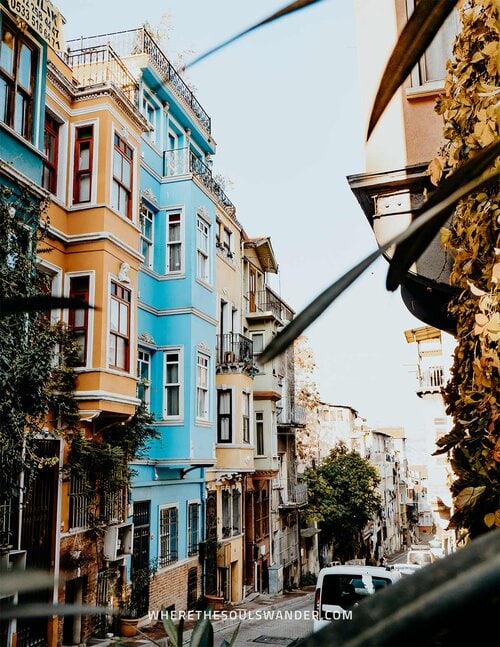
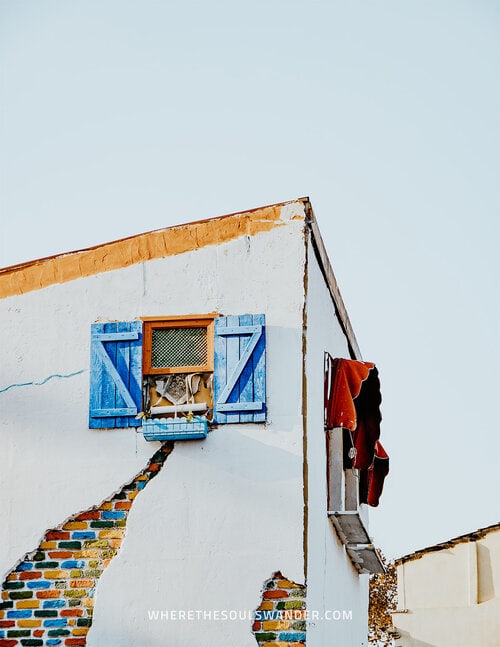
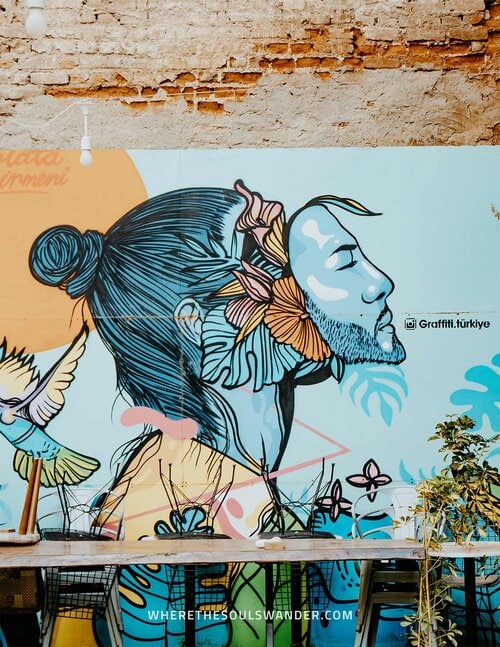
If you have a spare afternoon and wish to see a more unique side of Istanbul, make sure you head over to Balat, a hip and happening neighbourhood that is flanked by colourful houses.
Located only a 10-minute drive away from the historical peninsula, Balat is considered one of the oldest districts in Istanbul, and roaming through its cobblestone laneways is slowly becoming one of the most popular things to do within the city.
The reason for this is a laidback, hipster-ish vibe, obtained by the many trendy restaurants, bars and antique shops dotted throughout Balat’s colourful pastel-painted streets.
As Istanbul’s traditional Jewish quarter, Balat is also home to several fascinating buildings, with the distinctive Phanar Greek Orthodox College as its absolute centrepiece – more on that later.
While Balat is still largely off the radar for travellers to Istanbul, I believe this hidden gem is having great momentum making its way to become one of the best things to do in Istanbul.
9. Visit the Blue Mosque – Sultan Ahmed Mosque
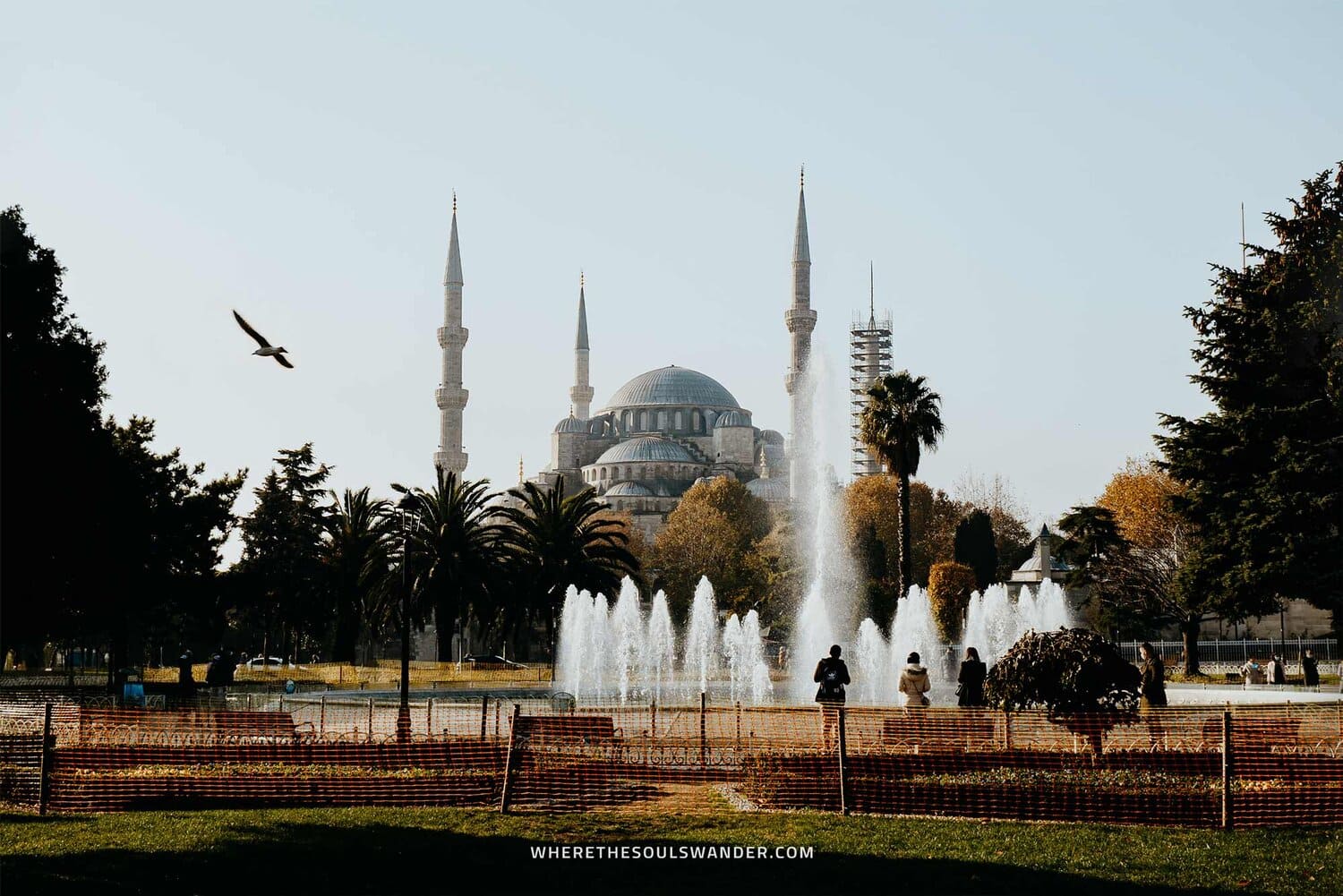
Built atop of the foundations of the prestigious Ayse Sultan Palace, the Blue Mosque has become one of Istanbul’s most iconic landmarks ever since.
Officially, the mosque was named after Sultan Ahmed who ruled the Ottoman Empire in the 17th century. However, due to its iconic domed ceilings decorated by blue Iznik tiles, the mosque is more commonly referred to as the Blue Mosque.
It is often said that the sultan chose to build it next to the Hagia Sophia on purpose to show off the greatness of the Ottoman Empire – it is fair to say that it worked out exactly as he thought!
While non-Muslims are allowed to visit, make sure you’re dressed appropriately. Also, the Blue Mosque is still very much an active place of worship, meaning it closes during prayer time.
10. Get lost in the Grand Bazaar
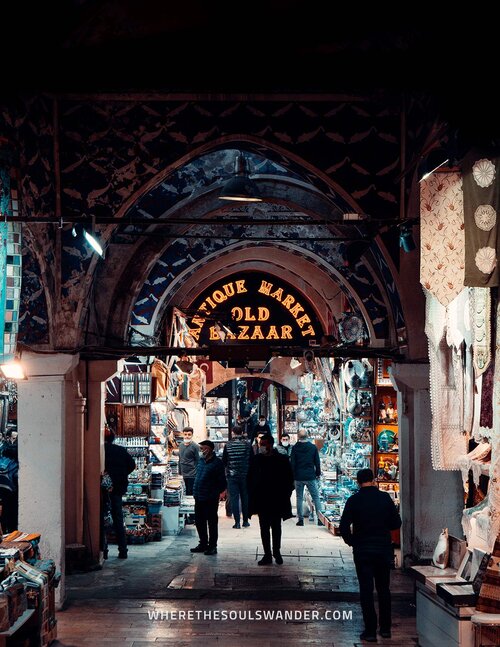
As with most historical landmarks in Istanbul, the Grand Bazaar was built shortly after the Ottoman took over Constantinople in 1453.
Ever since, the large covered market has been the centre point of all things shopping in Istanbul, teeming with a lively, yet intoxicating atmosphere from dusk till dawn.
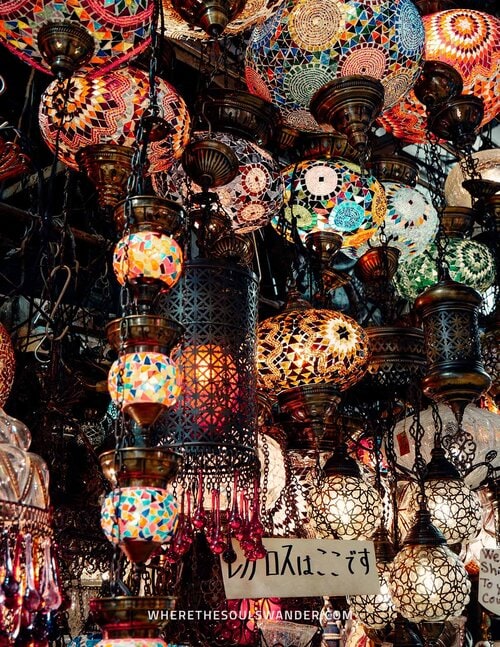
With over 4.000 shops dotted throughout its maze-like lanes, you’ll find basically everything you can imagine; lanterns, carpets, jewellery and silk just to name a few.
Whether you’re visiting in search of an authentic souvenir, wish to get a feel for daily local life, or just to chat with the many shop merchants, getting lost in the extensive Grand Bazaar is an unmissable experience in Istanbul anyhow.

11. Visit the Phanar Greek Orthodox College
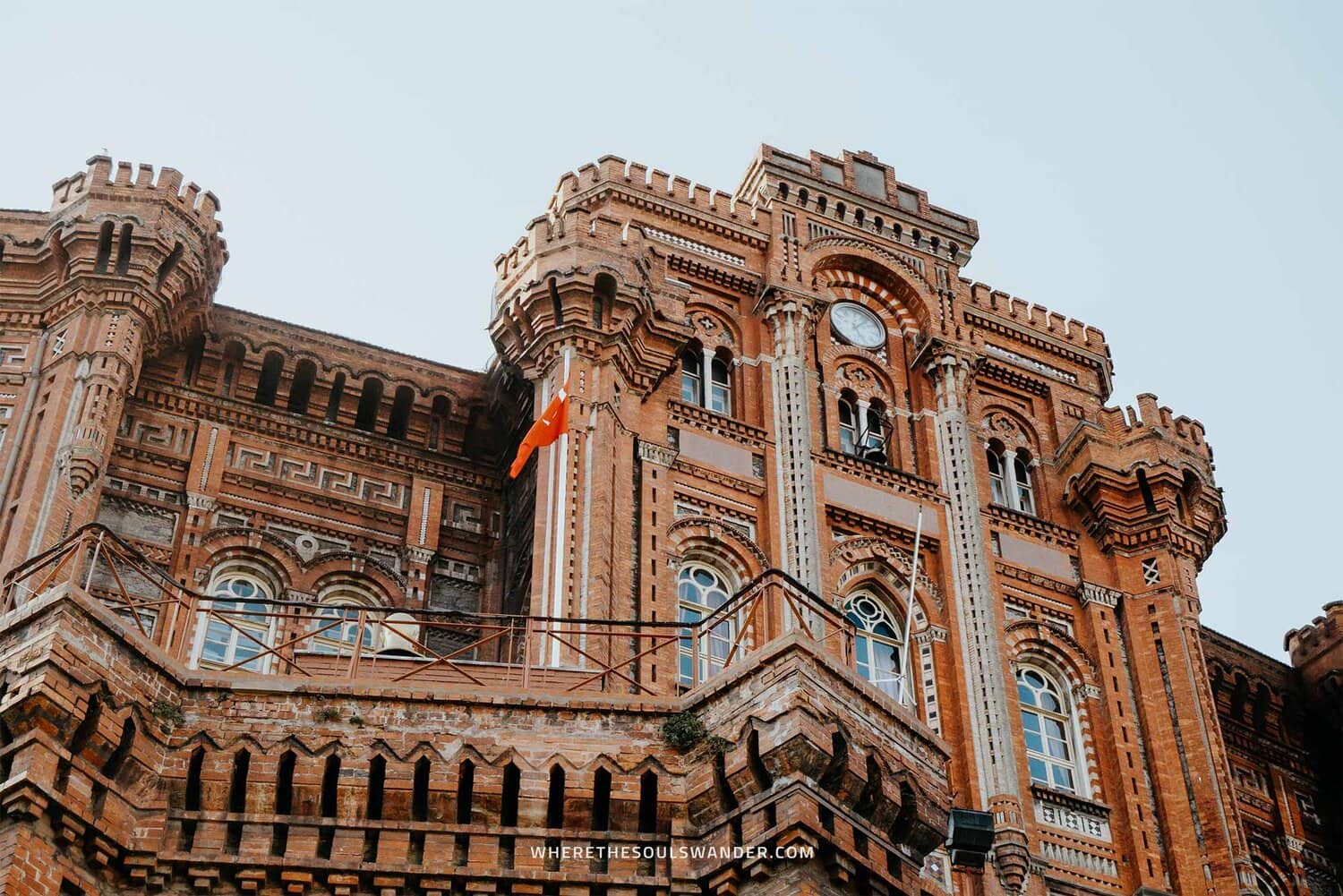
Towering high above the time-worn streets of Balat, the Phanar Greek Orthodox College is a traditional Greek school that is known for its distinctive castellated red-brick facade.
Often named the Red Castle due to its castle-like appearance, the school was designed by Ottoman Greek architect Konstantinos Dimadis in the year 1880.
It is said, that the institute within the Phanar Greek Orthodox College predates the Ottoman arrival in Constantinople, which if true, makes it the oldest educational body in Turkey.
While its heydays are no longer here, this exceptional building still serves to provide the education of 50 students today, which is pretty cool if you ask me.
Since the school is still in use, I’m not quite sure if visitors can go inside. If that isn’t the case, make sure you take a walk around the college to see it from the outside.
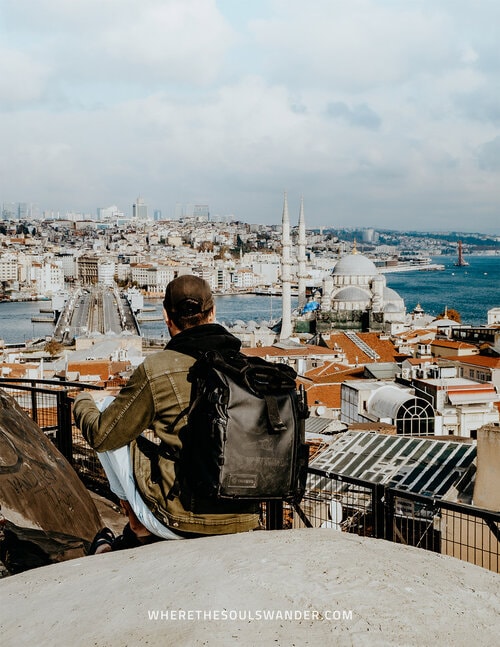
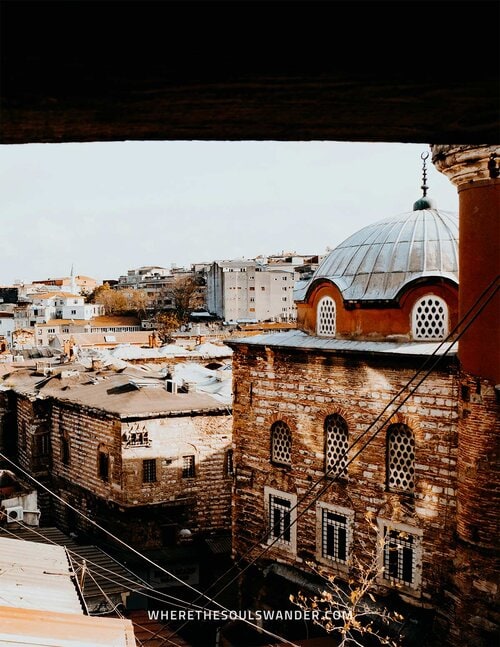
12. See Istanbul from a secret rooftop – Buyuk Valide Han
One side of Istanbul that became extremely popular in the last few years, is the incredible rooftop scene, with loads of secret rooftops scattered throughout the city.
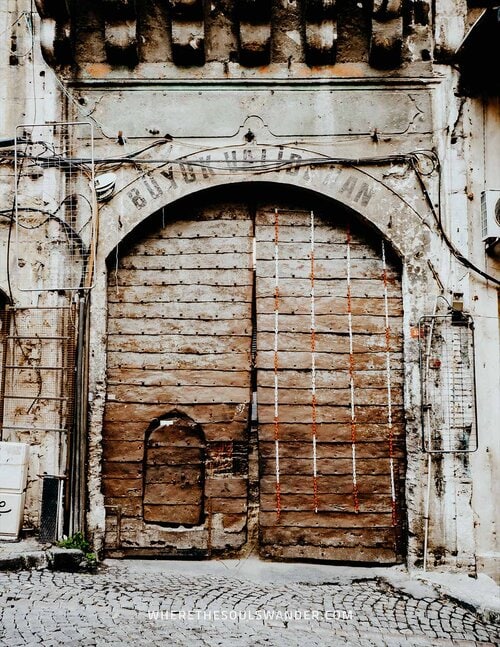
Though there are several rooftops that are set up with cosy pillows and picturesque carpets to attract those in search of their next viral Instagram post, I’ve somehow stumbled upon Buyuk Valide Han, an old urban caravanserai whose rooftop provides stunning views over Istanbul.
Visiting Buyuk Valide Han, was easily my most authentic experience in Istanbul, as it happened quite unexpectedly. When I roamed the time-worn streets of Fatih, a friendly man shouted; ‘rooftop views’ and ‘James Bond’ to me.
After doing some quick research on sight, I decided to go for it, and after an adventurous walk through the decayed building, I reached the rooftop – the views were bloody awesome!
While I highly recommend this experience, I also advise being cautious at all times and planning your visit with more people just to be sure.
13. Marvel at the Ortaköy Mosque
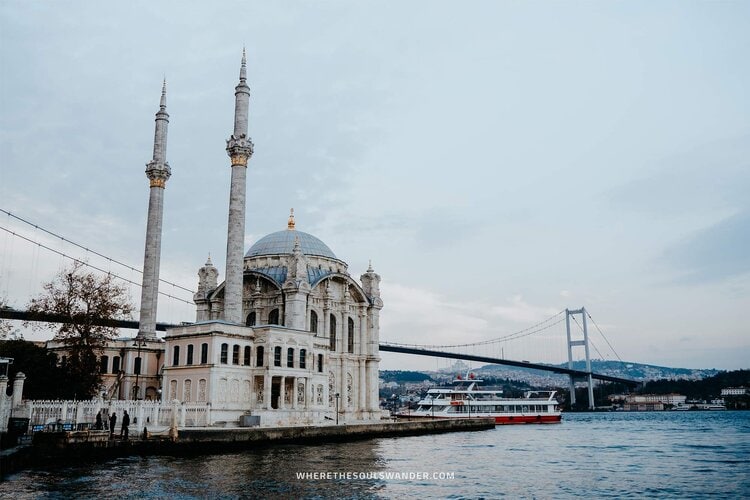
Istanbul has no shortage of historic mosques, but the marvellous Ortaköy Mosque perched on the bank of the Bosphorus is without question my favourite.
Designed by Armenian architect Nikogos Balyan, who also designed the neighbouring Dolmabahçe Palace, this Baroque mosque is one of the finest examples of the late Ottoman architecture style.
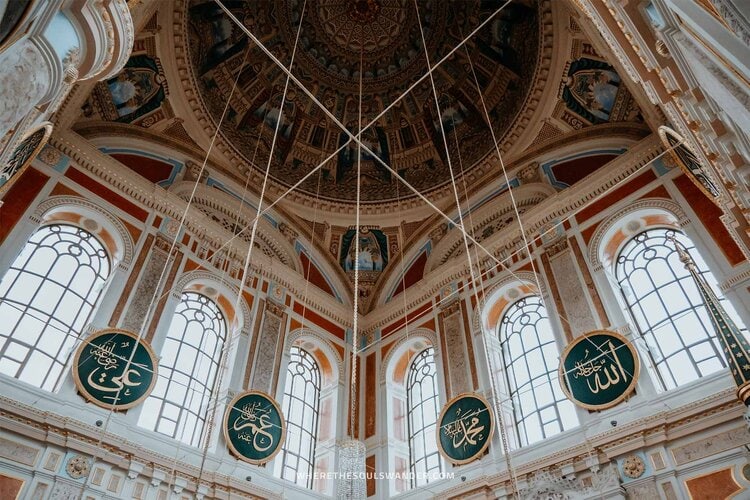
Within you’ll notice several medallions decorated with Arabic calligraphy, large decorative windows and a raised dome-shaped ceiling full of incredible mosaic paintings.
Though the mosque is open to non-Muslim visitors, make sure you respect religious customs by avoiding a visit during prayer times.
Things to do in Istanbul | The essentials
The best time to visit Istanbul
Istanbul is a city like no other, and I’m quite sure that it will leave you in awe at any time of year.
But as with most of the popular cities in Europe, Istanbul is at its absolute best during the peak summer months of May and October.
However, this is also the period when the temperature reaches insane heights, which might make explorations around town pretty unbearable at times.
For that reason, I’d advise planning your trip around the months of April, October, or November, when the weather is ideal for all sorts of activities and the streets less overrun by fellow travellers.
I’ve visited Istanbul in late November and was lucky enough to enjoy excellent weather during my entire stay – perfect to uncover the city and its incredible highlights.
Safety in Istanbul | Travel insurance
While Istanbul is completely safe for travellers, I always aim to enter a foreign country with my travel insurance sorted out, and I highly advise anyone else to do the same.
Where we prefer to assume that everything runs smoothly during our travels, the reality is often that something can go wrong at any given moment – when that happens, it is better to be safe than sorry.
Heymondo | Whether you’re going on a 3-week backpacking trip, or planning a long stay somewhere abroad, Heymondo has excellent insurance options either way – plus full COVID-19 coverage and a handy app with 24-hour medical assistance. Readers of WTSW receive 5% off any insurance policy, more information here.
Cheers!
I’ve been on this travel blogging journey since 2019.
If you appreciate what I do here, these are some ways you can support me.
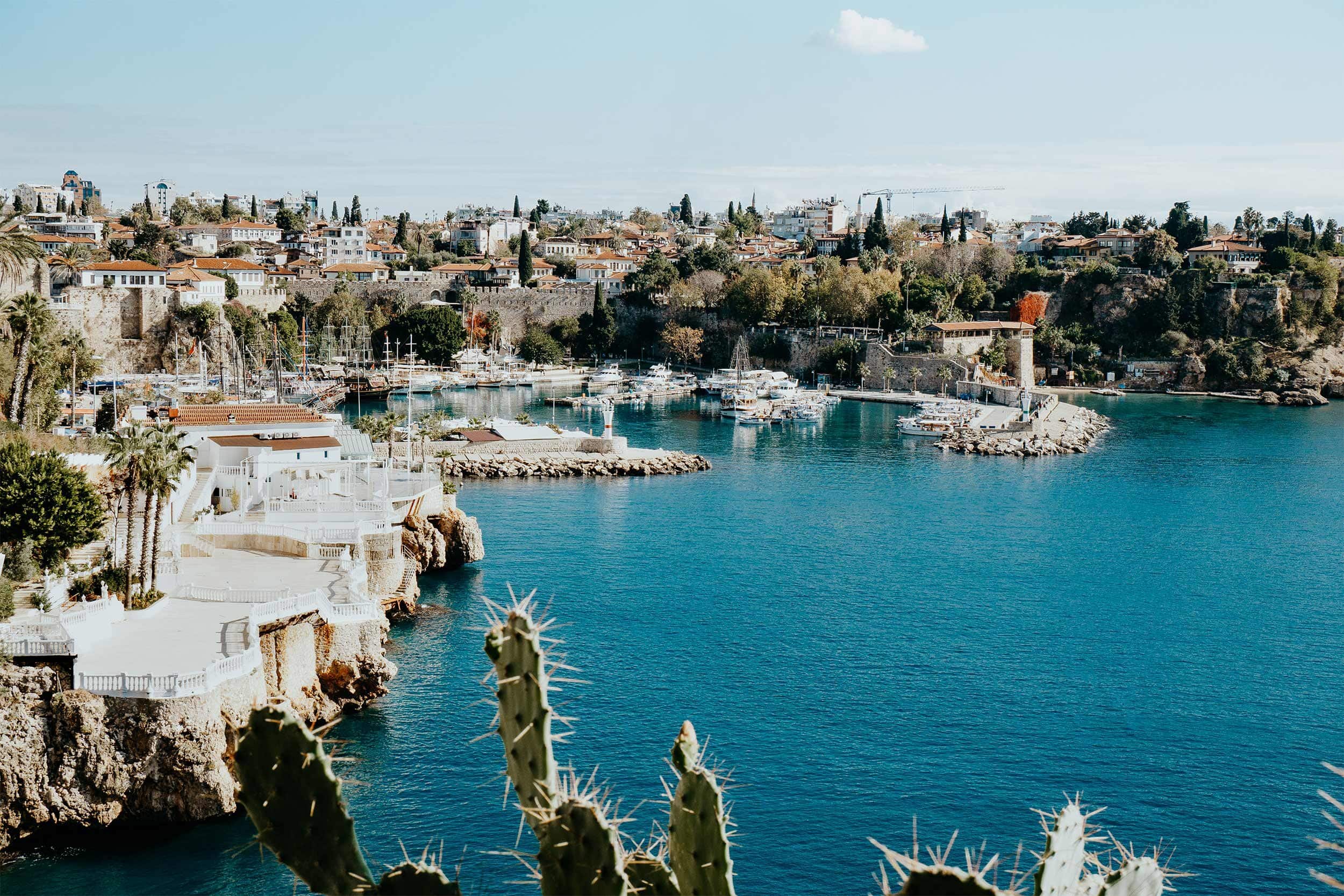
7 Wonderful things to do in Antalya, Turkey
Often referred to as the pearl of the Turkish Riviera, Antalya and its stunning coastline are famed as one of the best summer destinations in Turkey, if not Europe.
While I can’t deny Antalya’s phenomenal beaches and pleasant temperature, I also know that this is merely a fraction of what Turkey’s number-one beach getaway has to offer.
The starting point of all these incredible things to see and do is the old town; Antalya’s historical centre, celebrated for its maze-like cobblestone laneways, lively harbour and ancient Roman structures.
Add to that incredible nature (make sure you check out the Düden Waterfalls), loads of excellent dining options, and several exciting day trips within reach, and you understand why Antalya has become a favourite among travellers and locals alike.
To help you make the most out of your time here, I’ve created this in-depth guide, including my favourite things to do in Antalya, where to stay, first-hand travel tips and more.
So whether you solely visit Antalya for everything beach related or wish to dive deeper into the history of this fascinating town on the paradisiac Turkey coast, I’ve got you covered!
Where is Antalya
Antalya is a popular beachside destination on Turkey’s picturesque southwest coast and is flanked by the incredible Taurus Mountains and the Mediterranean Sea.
With over 1 million inhabitants – and loads of travellers during the summer months, the capital of the Antalya region is considered Turkey’s fifth-most populous city.
Where to stay in Antalya
As one of the main summer destinations along Turkey’s paradisiac Mediterranean coast, Antalya is home to accommodation that caters to every budget and travel style.
Whether you’re after an upscale beachfront resort, a comfortable apartment with a swimming pool, or something in between, this coastal town is teeming with brilliant accommodation options.
All that is left to do is pick the right accommodation for you – to make choosing easier, I’ve listed some of my personal favourites below:
Apartments & Hotels in Antalya
Casa Sur Antalya | Situated in the heart of Antalya Old Town, this place is easily one of my most authentic finds in Antalya. The rooms are minimalistic, yet utterly stylish – think brick walls, wooden furniture, patterned carpets, and rustic design elements. It also boasts a garden of calm with plenty of comfy lounge corners as well as a rooftop terrace with views over Hadrian’s Gate.
Pacco Boutique Hotel & SPA | If you’re looking for a comfortable boutique hotel without breaking the bank, Pacco Boutique Hotel & SPA is a high-rated hotel with a spacious outdoor swimming pool for less than €60,- a night. It also has direct access to Konyaalti Beach, a trendy bar, several lounge areas, and an in-house fitness centre.
Elegance East Hotel | As the name might already suggest, the Elegance East Hotel is probably the most elegant hotel in Antalya Old Town. Traditional Kaleici architecture set the tone for an excellent stay, while a large outdoor pool and its prime location in the historical centre offer you the ultimate holiday feeling. Make sure you click the link to see if this palace-like hotel is for you.
Beachfront Resorts in Antalya
Ramada Plaza Antalya | Just 700 metres from Antalya’s historic Kaleiçi, Ramada Plaza offers world-class service, modern spacious rooms with sea view, a swimming pool, and a superb sundeck on a cliff next to the Mediterranean. Ramada Plaza also offers all-inclusive stays for those craving a fully arranged summer getaway.
Rixos Downtown Antalya | Set within the exotic gardens of the Ataturk Culture Park, this luxurious hotel offers the best of both worlds. With extremely comfortable rooms, a large outdoor swimming pool, a gym, and an excellent location next to Konyaalti Beach, Rixos offers all the amenities for a relaxing stay. Add that you’re only a stone’s throw away from the lively old town and its historical ambience, and it is clear why Rixos is travellers’ favourite in Antalya.
7 Wonderful things to do in Antalya, Turkey
1. Take a walk around Antalya Old Town – Kaleiçi
I fairly believe that any trip to Antalya should involve at least one day of exploration in its most picturesque part; Antalya Old Town, locally known as Kaleiçi.
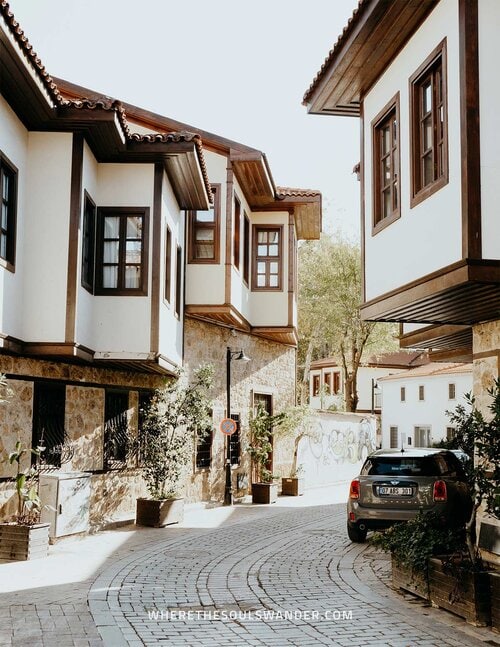
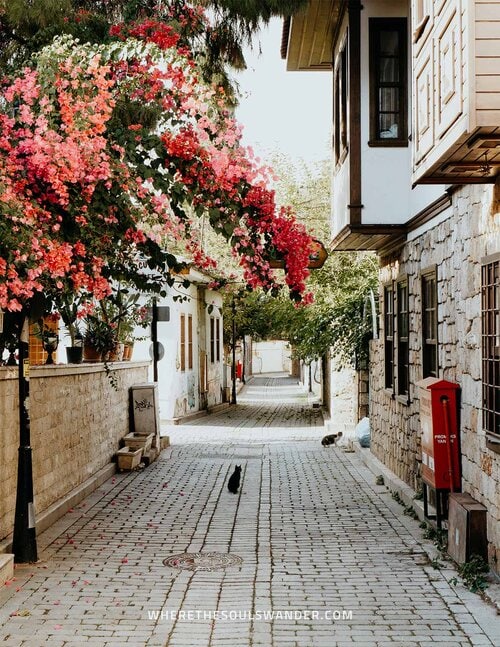
Perched between the Mediterranean and Antalya’s somewhat chaotic city centre, Kaleiçi is a charming old town full of maze-like cobblestone laneways, historical architecture, and trendy cafes and restaurants.
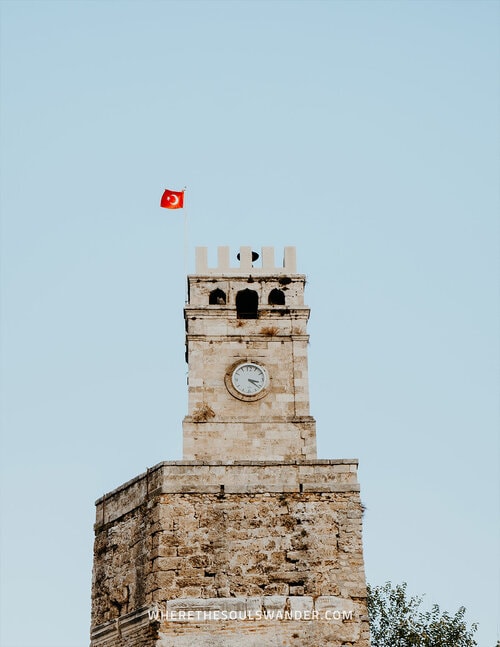
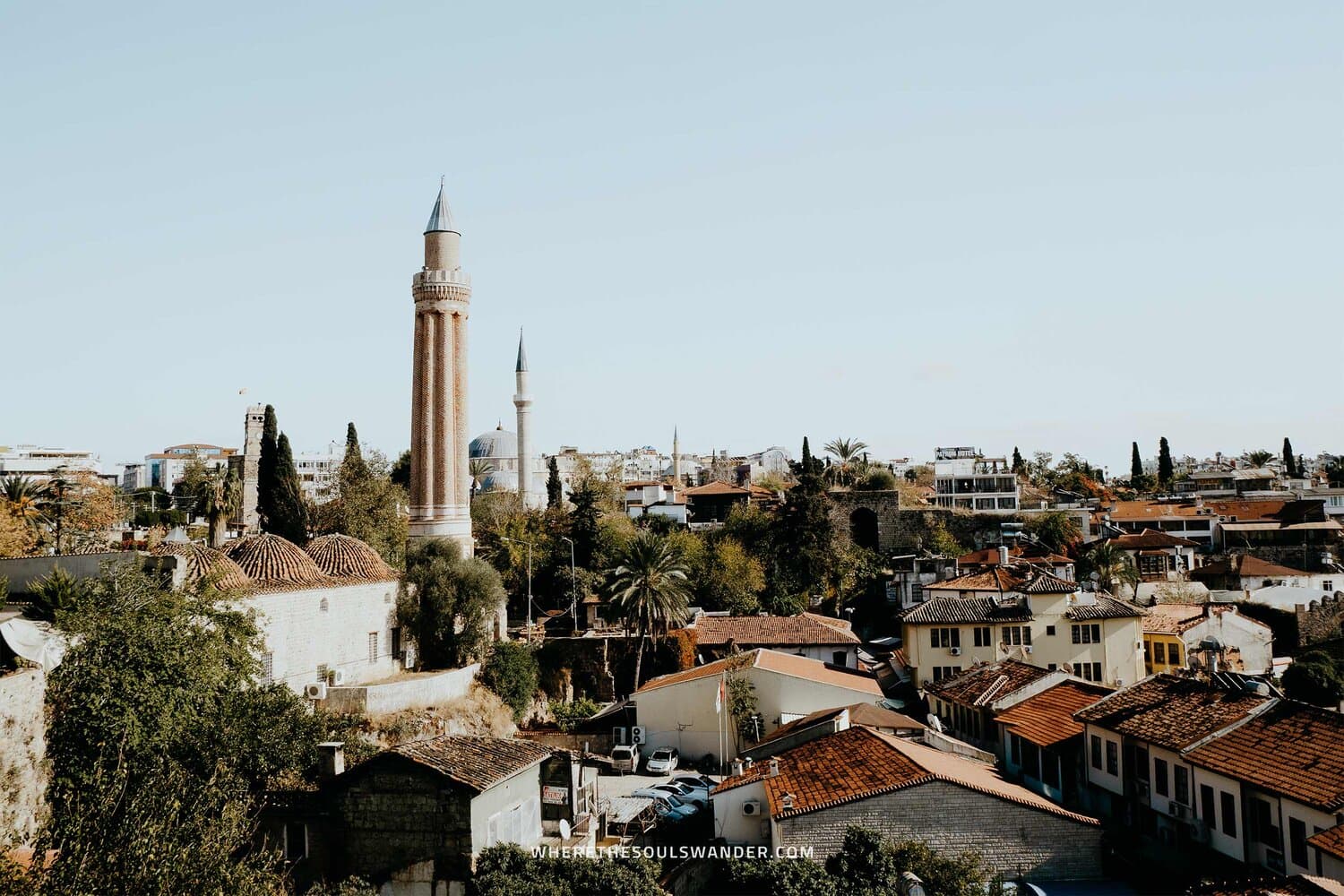
Although Antalya Old Town is pretty compact in size, it is home to several intriguing historical sights, including Hadrian’s Gate, Hidirlik Tower, and the Yivli Minaret to name a few.
I’ve spent plenty of time in the streets of Antalya Old Town, and have to say that it’s best explored on an early morning walk when the temperature is still bearable and the light perfect for photography.
If you’re in the mood for a tasty dinner or a few late-night drinks, the old town has plenty of excellent options to satisfy those needs too.
Where | Antalya Old Town
2. Behold the ancient Yivili Minare
Rising high above Antalya Old Town is the ancient Yivli Minare, an incredibly elegant ‘fluted’ minaret that is known as the symbol of Antalya.
The towering minaret and its adjacent mosque were built in the early 13th century by Seljuk Sultan Aladdin Keykubad I, and are still very much in use today.
Besides its value to serve worshippers, the ornate building is also one of the best visited historical monuments in the region, as it displays the beauty of Anatolian Seljuk architecture.
Something worth noticing is an ancient inscription placed next to the entrance of the Yivli Minare, as it seems to illustrate the building process of the minaret.
Merely for its distinctive Turkish Anatolian design, the Yivli Minare should be on any list of things to do in Antalya. Luckily, it is inevitable that you’ll encounter this towering masterpiece when planning a visit to the historic old town.
Where | Yivli Minare, Antalya Old Town
3. Swim and relax at Konyaalti Beach
You can’t come to one of Europe’s hottest summer destinations and not spend at least a couple of days relaxing on a lounger next to the inviting Mediterranean sea.
And if you ask me, there’s no better place to do so than at Konyaalti Beach.
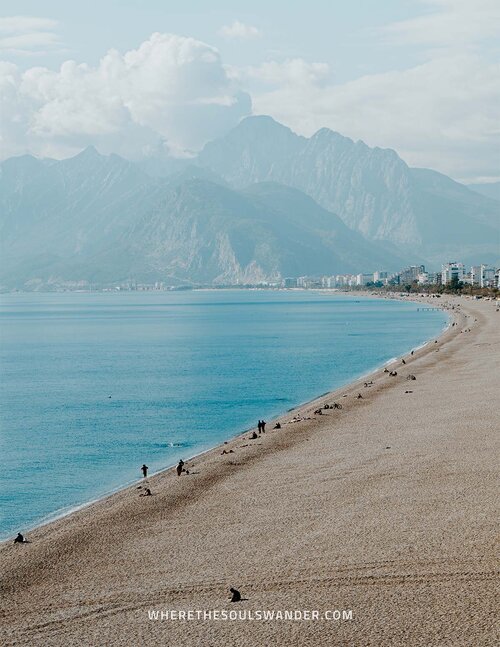
Situated at only a short walk of Antalya Old Town, this extensive pebbly beach is one of Antalya’s best beaches and perfectly suited for an afternoon of sunbathing and swimming.
Konyaalti Beach is also backed by a lively boulevard that is packed with trendy restaurants and cafes, public shower facilities, and incredible views of the Taurus Mountains in the distance.
All in all, Konyaalti Beach has everything on offer for a lazy beach day under the Turkish sun.
Where | Konyaalti Beach
Cost | Sun loungers and umbrellas should cost 20 to 40 TL (€2 – 4) a day
Bring | Swimwear, a towel and a good book
4. Watch the gushing Düden Waterfalls
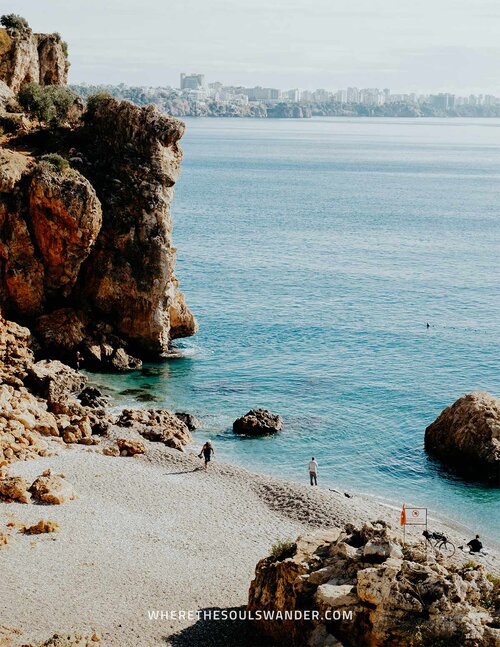
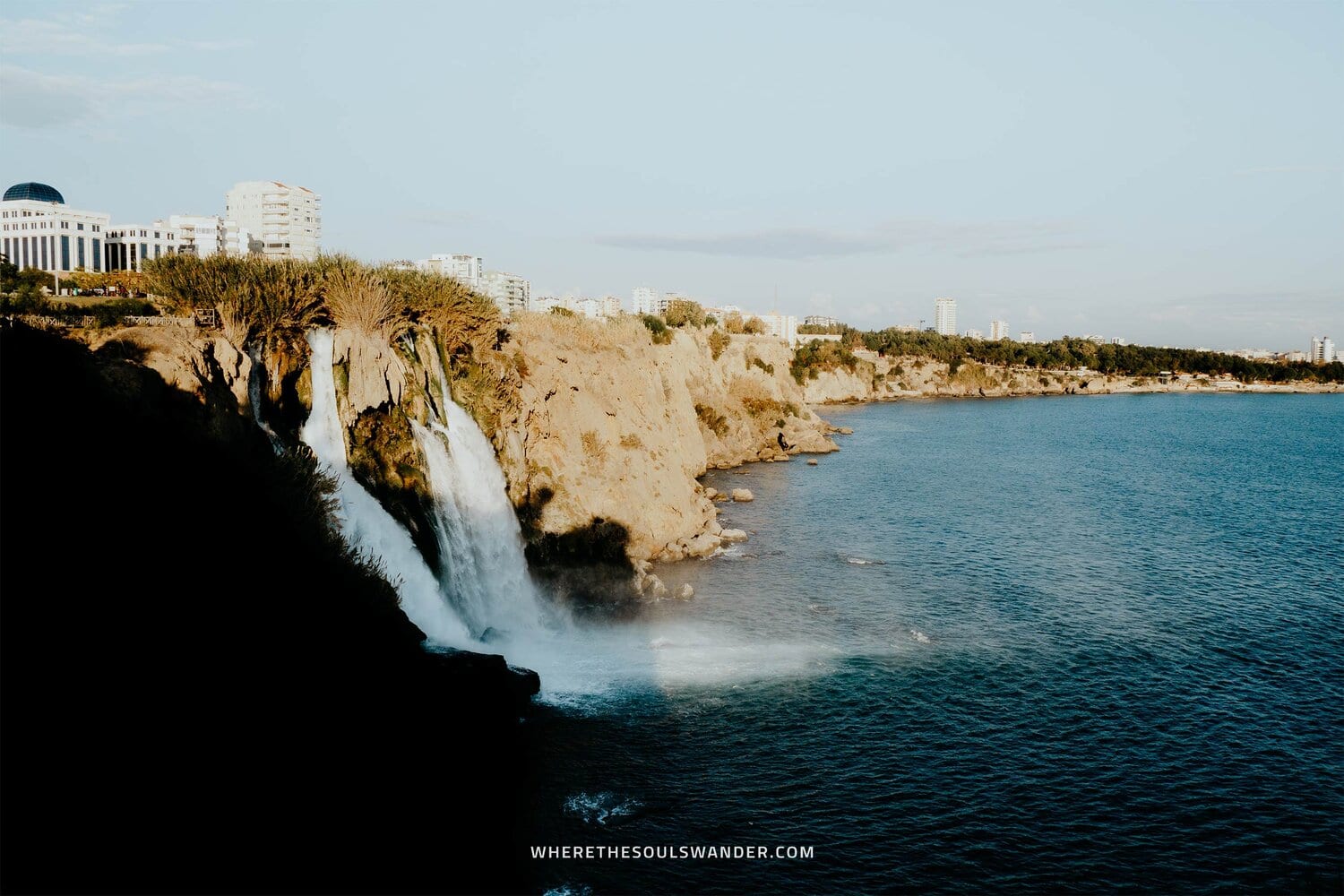
Nestled on a towering cliff on Antalya’s stunning coastline, the Lower Düden Waterfall is a 40-metre-high waterfall that flows directly into the Mediterranean.
While I’ve seen quite a few waterfalls throughout my travels, this was the first time I’ve seen one ending in the ocean, which makes the Lower Düden Waterfall a pretty unique sight to behold.
It was in fact, one of the most surprising places that I’ve stumbled upon in Antalya.
But as impressive as the Lower Düden Waterfall might be, the Düden Waterfalls are actually a set of two separate waterfalls that are interconnected by a stream.
Unfortunately, I only heard of the Upper Düden Waterfall after leaving for Istanbul, but from what I’ve heard, it must be equally impressive as the Lower Düden Waterfall.
So if you have a day spare, you now know what to do with it!
Where | Düden Waterfalls
Recommended tour | This 8-hour tour of Antalya includes a boat ride to the Lower Düden Waterfall – plus a trip to the Upper Düden Waterfall and Antalya Old Town. Prices and availability here
5. Admire Hadrian’s Gate
During my travels, I often feel fascinated by the greatness of the former Roman Empire and the amount of incredible ancient architecture that they actually left behind.
It was the ornate Hadrian’s Gate that initiated this exact feeling in Antalya.
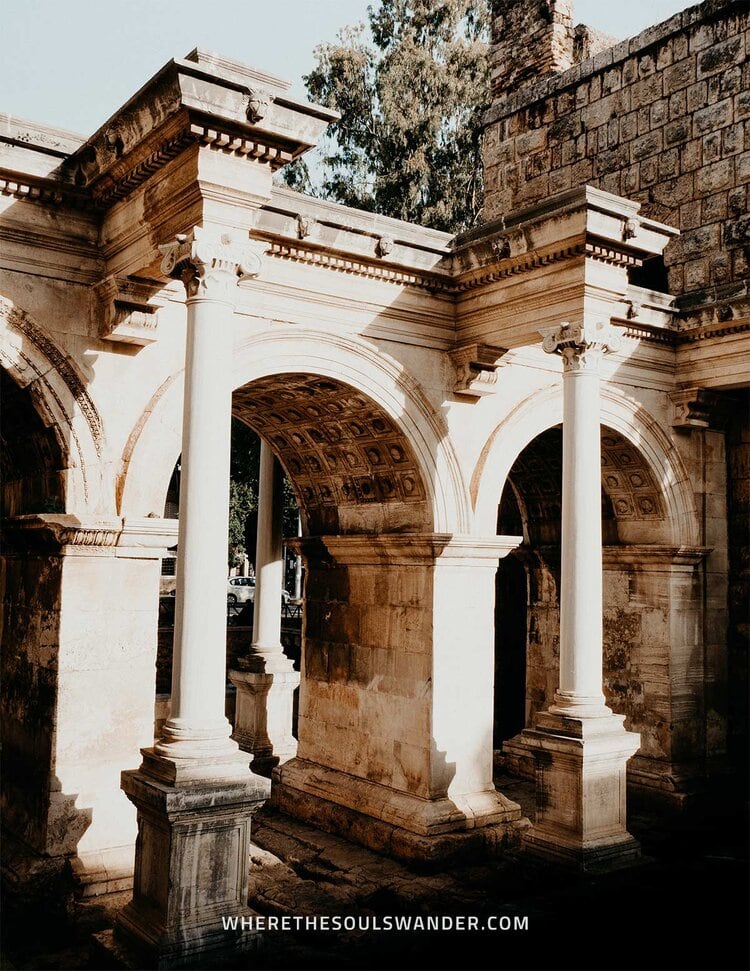
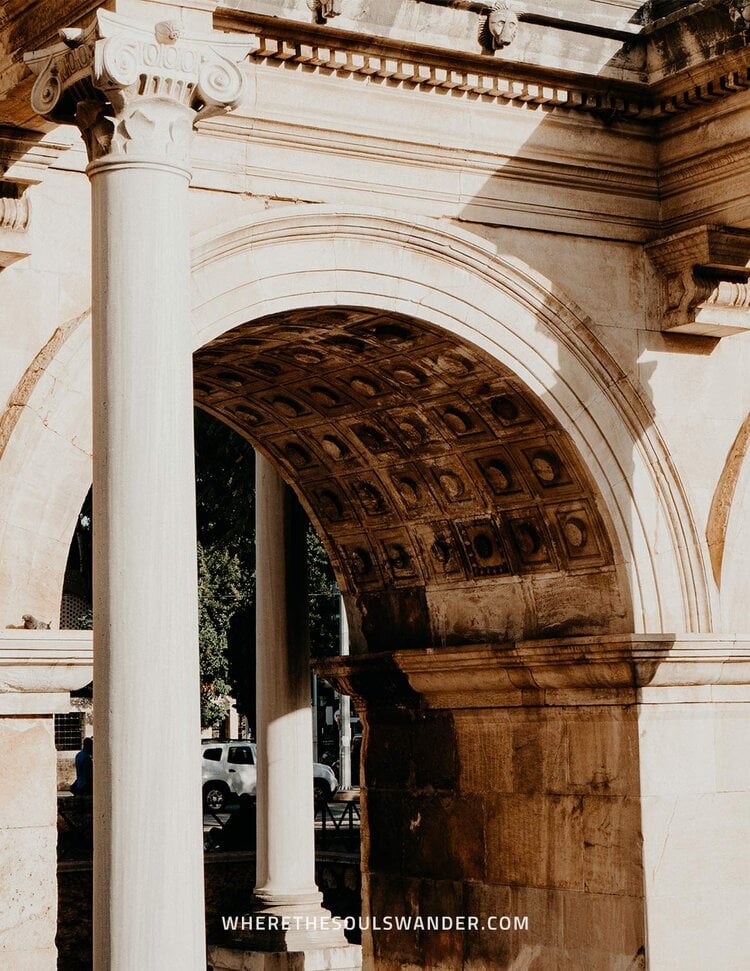
Built in the name of Roman emperor Hadrian back in 130 AD, this triumphal arch is now one of Antalya’s most important historical sights, and entering the old town through it is quite a happening.
If you look closely, you’ll notice that the two towers on either side of the gate hold architectural elements that indicate different periods in history.
Most notable is an Arabic inscription that dates back to the reign of Seljuk sultan Alaeddin Keykubat on the upper part of the Northern Tower.
At present, Hadrian’s Gate is the only remaining entrance gate to Kaleiçi (old town), and therefore the perfect starting point for explorations within it.
Where | Hadrian’s Gate, Antalya Old Town
6. Watch the sunset in Kaleici Harbour
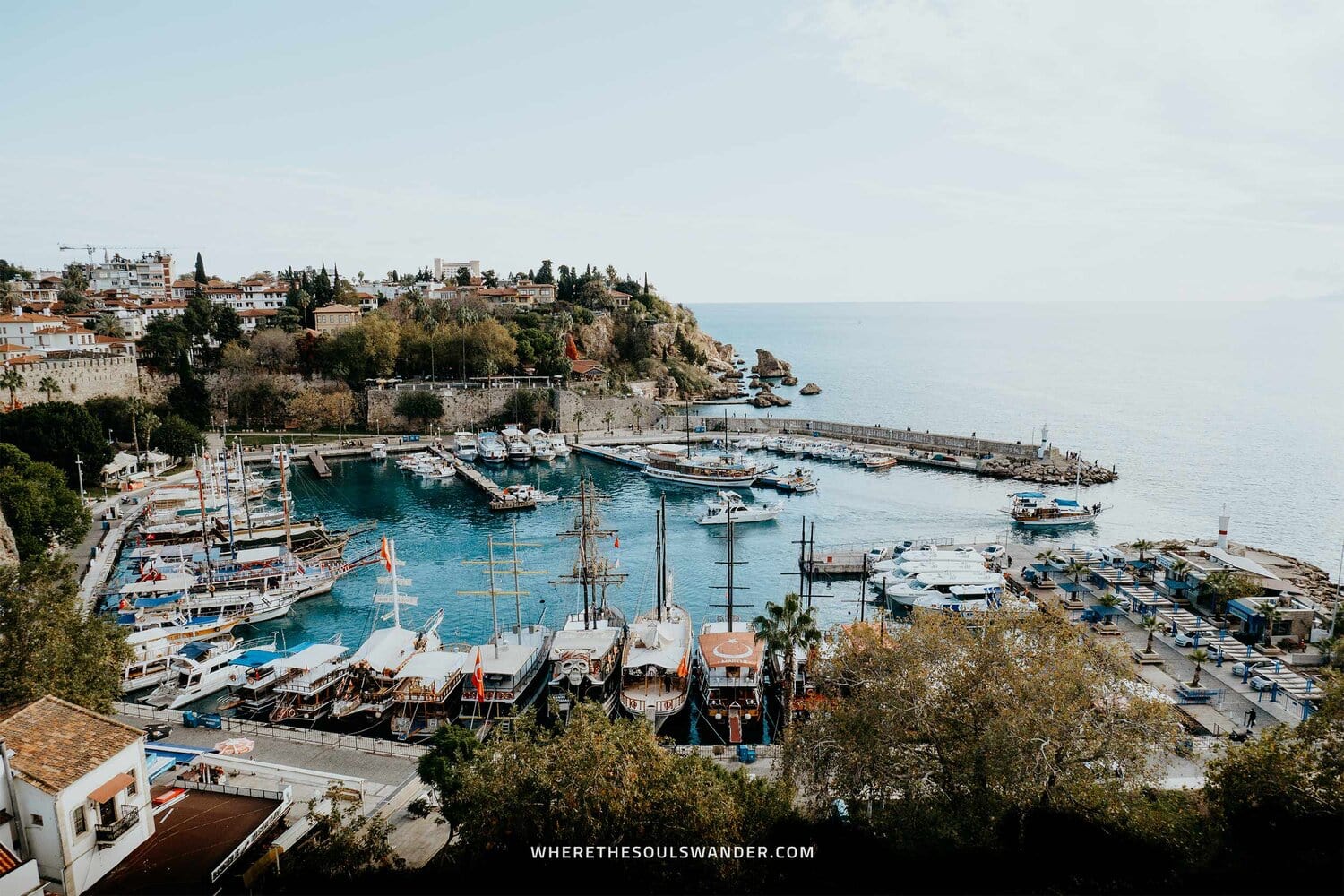
When wandering through the twisting laneways of Antalya Old Town, you’re fortunately never too far from the old town’s picture-perfect Harbour.
Tactically situated at the core of Antalya’s fortified old town, the Kaleici Harbour is a hip and happening place that is bursting with positive energy, especially on a warm summer’s evening.
Whether you’re planning to enjoy a few sunset drinks in a trendy bar, take a relaxing evening stroll with a scoop of gelato in hand, or sit down at a dock to take in the sunset instead, you’re guaranteed a wonderful evening anyhow.
7. Spend an afternoon relaxing in Karaalioglu Park
Taking it easy in Antalya’s lush Karaalioglu Park is easily one of my favourite things to do in Antalya, as it’s a great way to see daily local life unfold.
Situated at only a stone’s throw away from Antalya Old Town, the Karaalioglu Park is a large oasis of calm where locals and travellers alike come to escape the hustle and bustle of the city.
In addition to an extensive collection of imposing exotic plants and trees, the park is also home to the Hidirlik Kalesi, a striking Roman structure that dates back nearly 2.000 years.
Add to that the shimmering Mediterranean and Taurus Mountains as its backdrop, and you instantly realise why Karaalioglu Park has become such a popular summer hangout.
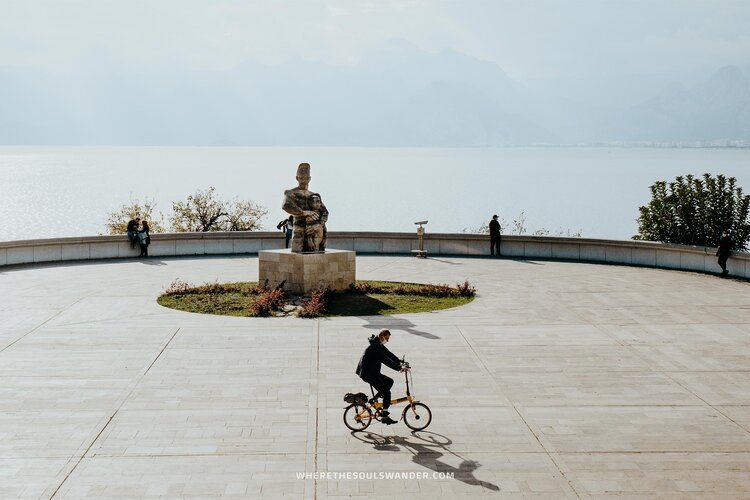
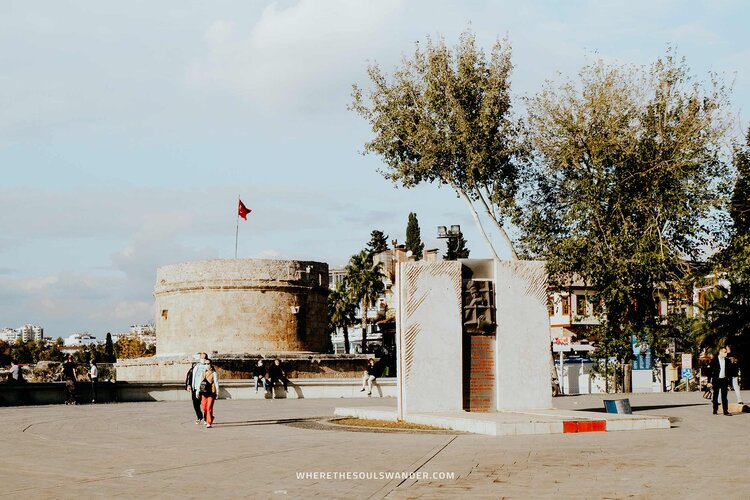
Things to do in Antalya | The essentials
The best time to visit Antalya
Given its position in the Mediterranean, Antalya is an attractive destination at any time of year.
However, I believe most of you travel to a beach destination to enjoy good weather, and in that case, the best time to visit Antalya is between April and October, when temperatures reach up to 36 degrees, especially in the peak summer months of June, July and August.
With long summer days overflowing with the sun, the conditions are excellent for spending time poolside or at the beach, while explorations around the old town are completely possible too.
One thing worth mentioning is that summertime in Turkey is pretty popular, meaning you’ll share the beach with many sun-seeking tourists during the peak season.
How to get around Antalya
With so many awesome places near Antalya, Pamukkale, Perge and Aspendos, just to name a few, picking up a rental at the airport is actually one of the best things you can do.
If you wish to have the freedom to travel around Antalya on your own terms, you might want to consider renting a car. Not only is it easier to reach the nearby highlights, but it also saves you time and money.
For car rental in Turkey, I would recommend searching for an option that suits your needs on Rentalcars.com. They offer excellent service, additional insurance, and a broad selection of cars, all at an affordable price. More information and availability here.
Safety in Turkey | Travel insurance
While Turkey is completely safe for travellers, I always aim to enter a foreign country with my travel insurance sorted out, and I highly advise anyone else to do the same.
Where we prefer to assume that everything runs smoothly during our travels, the reality is often that something can go wrong at any given moment – when that happens, it is better to be safe than sorry.
Heymondo | Whether you’re going on a 3-week backpacking trip or planning a long stay somewhere abroad, Heymondo has excellent insurance options either way – plus full COVID-19 coverage and a handy app with 24-hour medical assistance. Readers of WTSW receive 5% off any insurance policy.
How to get to Antalya
As a major summer destination in Europe, you’ll be amazed at how easy it actually is to get to Antalya via plane, especially during the peak summer months.
Both Domestic and International flights arrive at the Antalya Airport, located only 13 kilometres northeast of Antalya’s picturesque old town.
For cheap flights to Antalya, make sure you check out Skyscanner. Not only is their website user-friendly, but they also offer a large range of airline options – plus it’s easy to find good rates.
A shuttle bus leaves from the Antalya Airport every 30 minutes and takes you to the city centre in roughly 50 minutes. A one-way ticket costs 3,60 TL (€0,70) per person.
If you prefer some extra comfort, taxis are a relatively cheap alternative too. A taxi should cost no more than 60 TL (€15,-), and takes only 20 minutes.
Cheers!
I’ve been on this travel blogging journey since 2019.
If you appreciate what I do here, these are some ways you can support me.
10 Wonderful things to do in Petra | An in-depth guide to Jordan's mesmerizing ancient city
Only a few places on earth require zero introduction, the ancient city of Petra is one of them.
Whether it’s its listing as one of UNESCO’s New World Wonders, the myriad displays on your Instagram feed, its appearance in the movie Indiana Jones, or its dominant presence in the history books, I’m sure you’re familiar with this iconic ancient city in the heart of the Jordanian desert.
Though its prime days are now long gone, the ancient city of Petra remains a place of unparalleled charm, and believe me, seeing it in person for the first time is both mystical and astonishing.
Exceptional architectural masterpieces and ornate rock-cut facades set the tone for an unforgettable experience, while the unique rose-red coloured landscape and adventurous hiking trails make it even more phenomenal.
The complex itself is of tremendous size, and as the number one tourist attraction in Jordan, it shouldn’t come as a surprise that Petra is jam-packed from the moment they open its doors.
For that reason, I’ve put together this guide to the best things to do in Petra, loaded with everything you need to enjoy this jewel of the ancient Nabatean world, including a few essential things to know before you visit.
If you choose to use any of the links on this page, I may receive a small commission at no extra cost to you. By using these links, you’ll have a direct impact on WTSW and my ability to continue to create free insightful travel content for you. If you find any of my tips useful, you can support me by buying a virtual coffee here.
Where is Petra, Jordan
The enchanting archaeological site of Petra is situated between the rough mountain ridges that encircle Wadi Musa, a small town in southwest Jordan.
With nearly 1 million visitors annually, this New World Wonder is considered the number-one tourist attraction in the Hashemite Kingdom of Jordan.
A brief history of Petra
Before you start exploring the incredible grounds of Petra, I believe it’s essential to learn about the ancient city’s intriguing history, so here’s a brief overview.
It is said, that the region of present-day Petra was first inhabited around 7.000 BC, as historians and archaeologists found traces that lead back to several Neolithic villages.
Around the 4th century BC, a nomadic Arab tribe named the Nabataeans reached the area, who in the following years decided it was time to leave their nomadic ways of living behind.
With incredible riches and a set of advanced engineering skills, the Nabataean people started building their settlement, that many historians believe to be one of the most sophisticated ancient cities ever made.
From that moment on, Petra became the capital of the Nabataean kingdom and prospered into a major trading hub for luxuriant goods, such as incense from Arabia, silk from China and spices from India. At its peak, more than 30.000 people called Petra their home.
At some point, the international trade routes shifted, and along with it the power, wealth and reputation of the Nabataean kingdom and its people. This significant change left Petra vulnerable to the Romans, who eventually took over the rock-cut city in the year 106 AD.
Under Roman rule, Petra thrived once again, and in addition to the utterly fascinating rock-cut buildings of the Nabataeans, the Romans added several new structures to the city.
Unfortunately, due to two earthquakes in 363 and 551, Petra was partly ruined, which resulted that it became abandoned by its people, and eventually forgotten.
Though the local Bedouin people knew exactly where it was, ‘the lost city of Petra’ had been kept secret to the rest of the world for over a thousand years.
It wasn’t until Swiss explorer Johann Ludwig Burckhardt rediscovered it in 1812, that the ‘rose-red city is half as old as time’ was put on the map of those from the western world.
Today, Petra is among Unesco’s New World Wonders with nearly 1 million visitors annually.
Petra tickets | Entrance fee 2024
At the moment of writing (August 2024), there are three ticket options available for Petra, and the one you choose depends on the number of days you wish to explore the rose-red city.
It is worth mentioning that entrance to Petra by Night is not included in the above tickets. These tickets need to be purchased separately at a cost of $24 per person. Also, kids under the age of 12 have free entrance to Petra.
The options include:
One-day ticket | An excellent option if you’re short on time, but keep in mind that it’s stressful, if not impossible to see Petra in one day. Cost $70.
Two-day ticket | If you’re keen to explore Petra in a more relaxing manner, I would highly prefer this option. I’d chosen this option and had enough time to visit the highlights and follow some hiking trails. Cost $78.
Three-day ticket | Petra is such an impressive place, that it’s easy to see why one would spend three days here. This option is perfect If you wish to uncover Petra thoroughly, with the flexibility to do it at your own pace. Cost $85.
One word of caution, your passport is required at all times.
Petra ticket online | The Jordan Pass
Though it is easy to purchase your entrance ticket upon arrival at the Petra Visitor Centre, I believe it’s better to acquire a Jordan Pass before flying into the country.
Not only does the Jordan Pass grants entrance to Jordan’s most popular highlights, including Petra, but it also waives the visa fees for those planning to spend more than 4 days in Jordan.
I applied for the Jordan Pass in advance, and thought it was great value for the money – plus I was able to skip the ticket line at the Petra Visitor Centre – winner!
For more information, availability, and applying, make sure you visit the iVisa website.
Things to do in Petra, Jordan
With hundreds of impressive structures, dazzling viewpoints and a number of adventuresome hiking trails dotted throughout Petra, it’s hard to imagine that 85 per cent of this ancient Nabataean city is still hidden under the dusty soil.
Though it sounds overwhelming, it is actually quite straightforward to explore the valley, with one well-mapped-out walking route from the Petra Visitor Centre to the Monastery.
On top of that, there are several alternative trails that take you to the lesser-known structures, as well as panoramic viewpoints offering incredible vistas of Petra and its surrounds.
Also, I highly advise having realistic expectations – the Petra complex is simply too extensive to see in its entirety.
That said, let’s get into the highlights of Petra.
1. Al-Siq, Petra’s famous entrance passage
It is inevitable that the first part of your Petra adventure starts by walking through the Siq, a narrow 1.2-kilometre-long gorge that slowly guides you into the hidden rose-red city.
Take it from me, it’s a sensational experience to follow the path between the towering natural rock walls, knowing that Petra’s famous Treasury could show up at any given time.
At some point, the gorge narrows to a width of roughly 2 metres, while it is flanked by towering rock walls. Given the light still enters the Siq from above, these incredible circumstances create loads of awesome photography opportunities.
The Siq is also the place to see the Nabataean’s progressive water system, leading water from Wadi Musa into the city via small channels that are carved directly out of the rock walls.
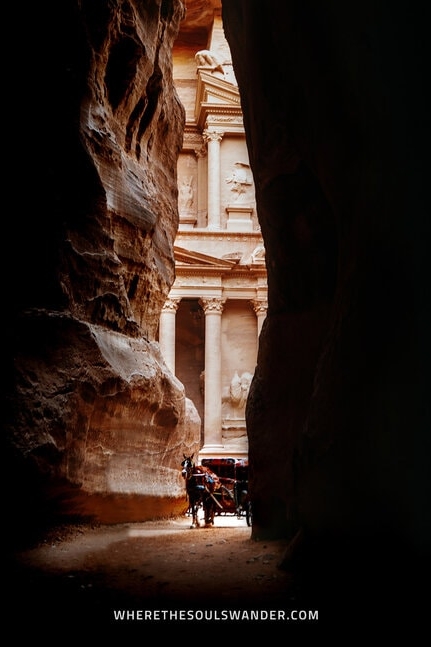
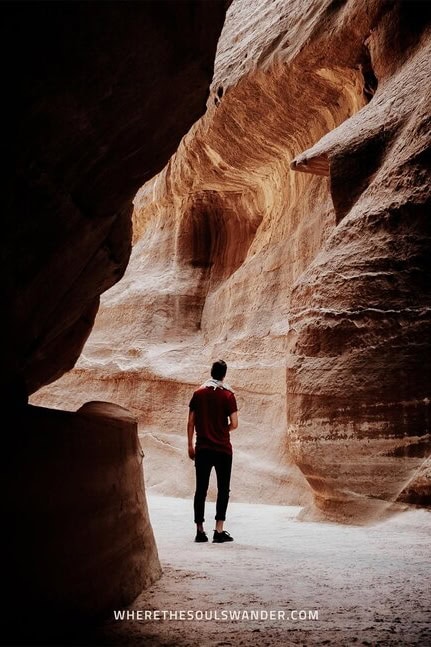
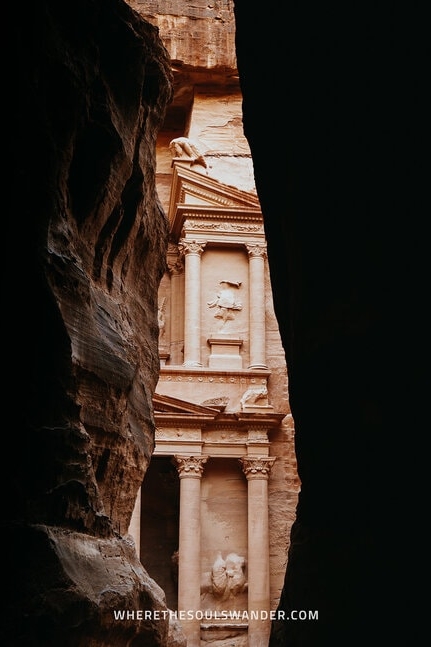
2. The Treasury – Al-Khazneh
There it is, Petra’s absolute centrepiece – the otherworldly Treasury, locally known as Al-Khazneh.
Seeing the famous facade of the Treasury through the narrow crack of the Siq is in many ways a once-in-a-lifetime travel experience.
Cut out of rose-red sandstone rocks, the Treasury is an impressive 39-metre-high structure that is said to be the mausoleum of Nabatean King Aretas IV, who ruled Petra during the 1st century AD.
Legend has it that an Egyptian pharaoh hid his treasure in the urn on the upper part of the facade, which resulted in the name; Al-Khazneh – Treasury of the Pharaoh.
At present, the urn is marked by rifle shots, given the local Bedouin people hoped that the believed ‘treasure’ would eventually fall out of the facade.
For an unforgettable experience, make sure you’ll arrive at the Treasury as one of the first – I know, waking up early on holidays sounds like a no-go, but believe me, it’s totally worth it!
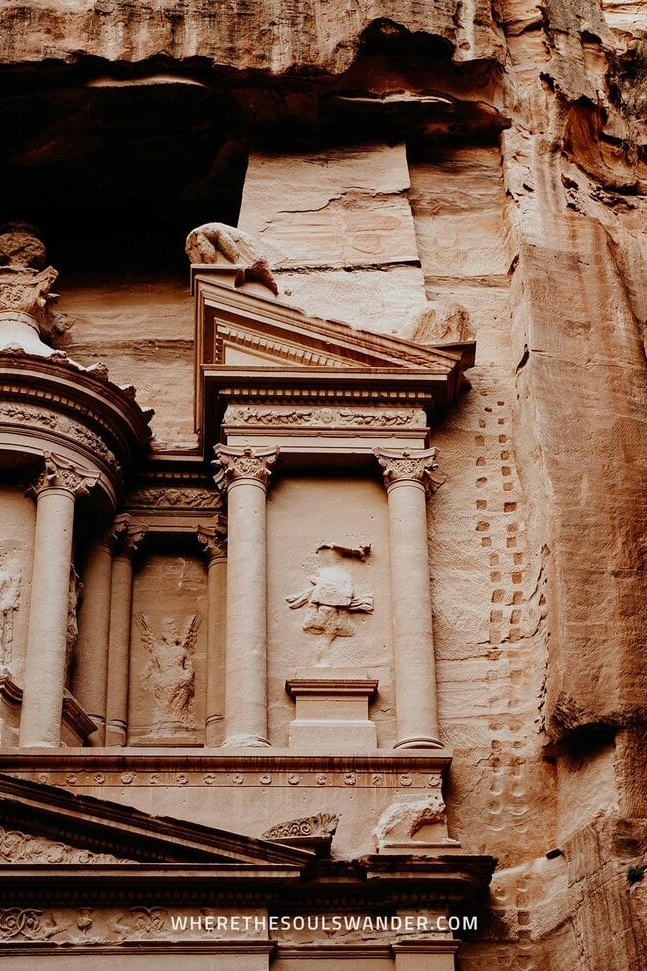
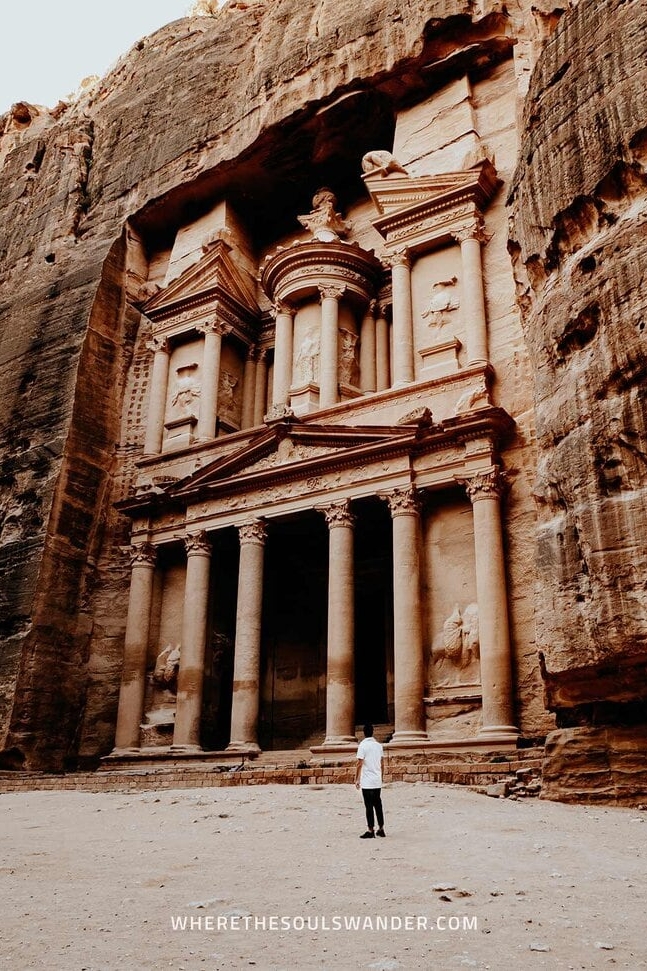
3. The Street of Facades
Running straight through the heart of Petra is the Street of Facades, a picturesque street that is lined with more than 40 rock-cut tombs and houses.
At some point in history, this street became the epicentre of Petra, and it’s pretty cool to imagine how the atmosphere must have been back in the day.
Today, the Street of Facades is known as the main tourist route in Petra, as it connects the Treasury with Hadrian’s Gate.
Adjacent to the street are some of Petra’s best landmarks, including the Royal Tombs – the Urn Tomb, the Silk Tomb, the Corinthian Tomb and the Palace Tomb, as well as the Petra Theater.
4. The Nabatean Theatre
Situated on the left side of the Street of Facades lies the Nabatean Theatre, a time-worn theatre that was built more than 2000 years ago.
Though it is often assumed that the theatre descends from the Romans, it is actually built under Nabatean rule – which is reflected in the distinctive rock-cut architecture for which the latter is known.
The initial theatre had a capacity of 3000 seats, but the Romans eventually enlarged it to 8500, which made it one of the largest theatres in Jordan.
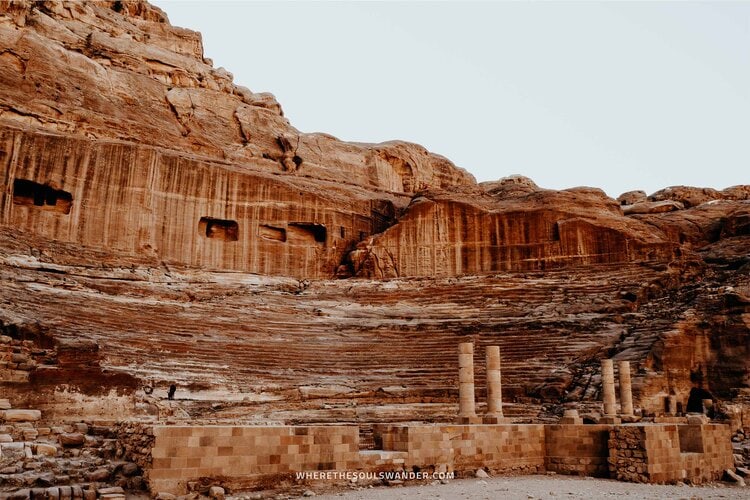
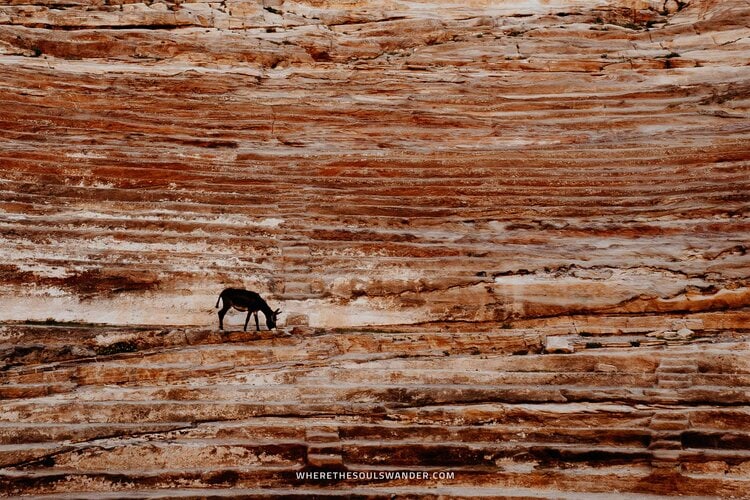
5. The Royal Tombs of Petra
Next in line are the Royal Tombs, a series of four unique tombs; the Urn Tomb, the Silk Tomb, the Corinthian Tomb and the Palace Tomb.
What makes the Royal Tombs one of the most impressive things to see in Petra, is that these four tombs cover the entire side of a humongous mountain.
And though the Royal Tombs look stunning from afar, I would also recommend visiting each tomb individually if you have the time.
Do note that all four tombs are positioned on an elevated platform, and can only be reached by following the steps up on the right side of the Street of Facades.
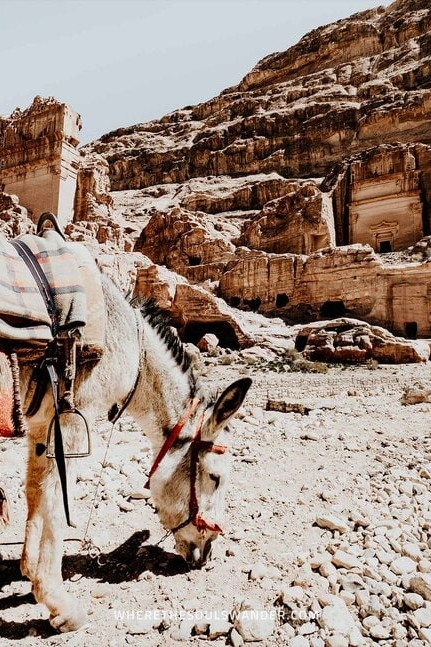
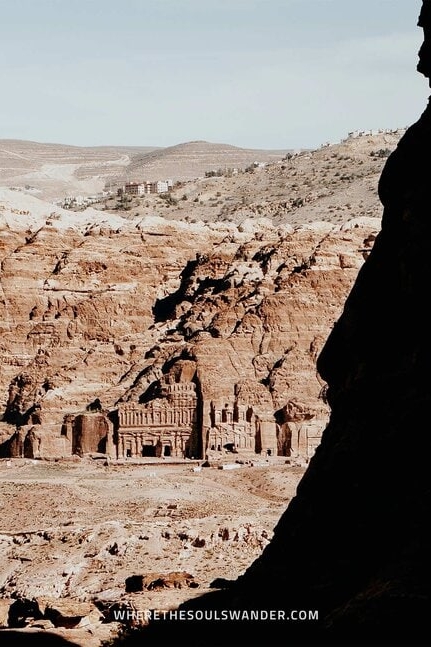
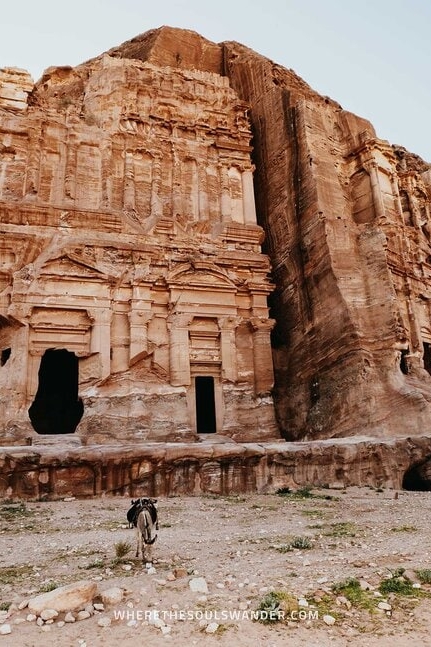
6. The Monastery | Ad-Deir
Despite being the furthest away from the Petra Visitor Centre, the Monastery is actually one of the most popular monuments in the complex, and given its incredible appearance, this is no surprise.
Hidden high in the mountains of Petra, this incredible place is reached by following the rocky 800 steps up, which should take no longer than an hour if you have hiking experience.
Following the scenic hike up, you’ll be welcomed by a stunning rock-cut facade (both in size and looks), and seeing it up close and personal, is in many ways something to look forward to.
In addition to the Monastery’s impressive facade, the area also houses several awe-inspiring panoramic viewpoints, as well as an excellent restaurant to grab some well-deserved refreshments.
For the best perspective and photography possibilities, make sure you climb the viewpoints behind the restaurant too.
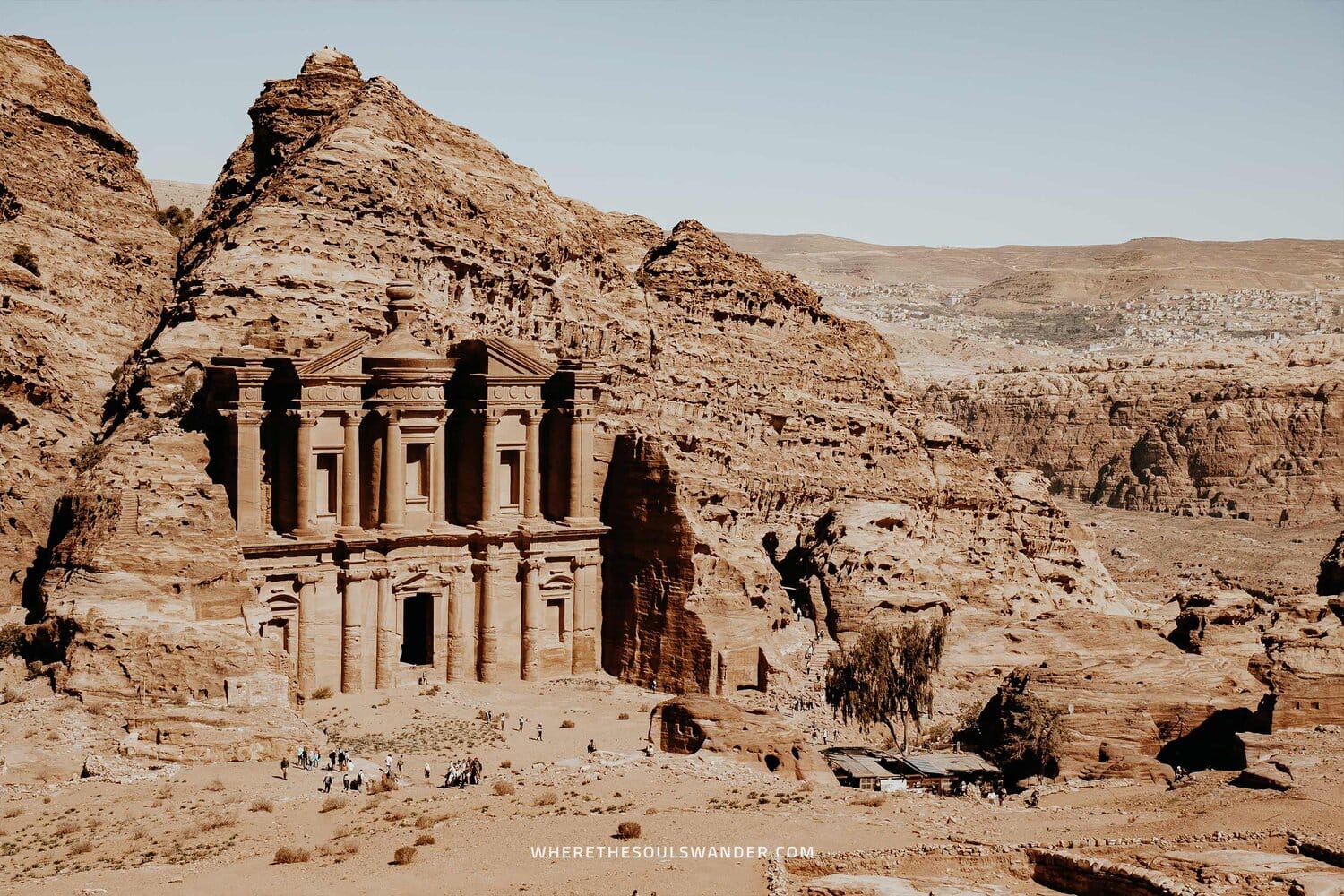
7. The Garden Temple
Situated in a scenic valley just off the popular main trail, the Garden Temple is actually a bit of a hidden gem.
One of my favourite moments in Petra was exactly here, enjoying a cup of fresh mint tea while a local Bedouin played me some traditional melodies.
While it requires somewhat more effort to get to the Garden Temple, it was one of my favourite places in Petra, given the authentic atmosphere and only a handful of other people exploring it.
From here, you can also follow the stairs up in the direction of the High Place of Sacrifice.
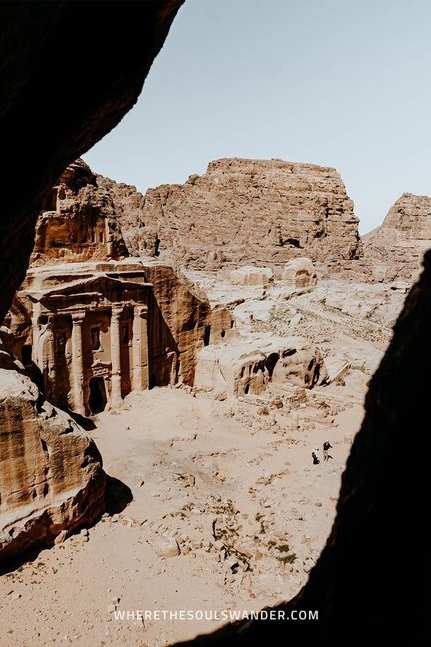
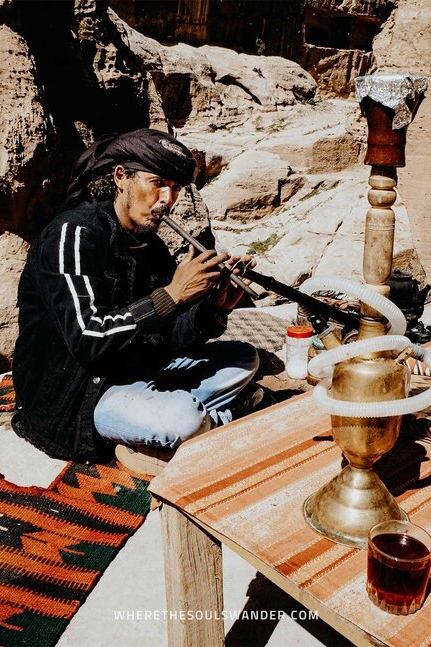
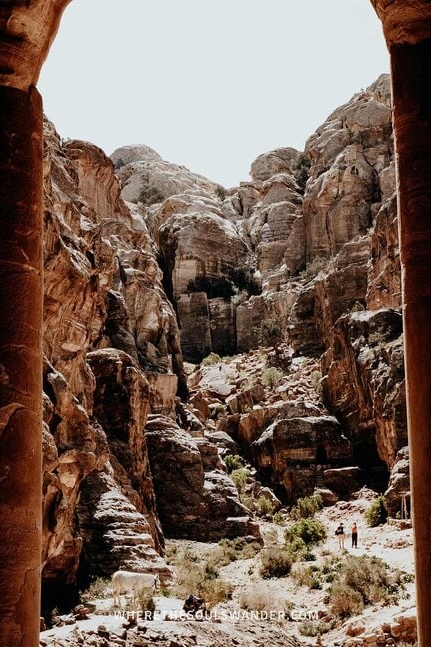
8. Al-Khubtha Trail | Admire the Treasury from above
If you’re keen to see the iconic facade of the Treasury from above, the adventurous Al-Khubtha Trail should definitely be on top of your list of things to do in Petra.
Starting at the Street of Facades, the Al-Khubtha Trail takes you along the Royal Tombs of Petra, before you climb the steep stairs to the summit of the Jabal Al-Khubtha.
From here you’ll have stunning panoramic views of the Petra theatre, the Street of Facades, the Colonnaded Street, as well as the surrounding valleys of Petra.
After taking in the views, turn left into the valley, where a sketchy downhill trail takes you to the most iconic viewpoint in the whole of Petra – believe me, I’m not exaggerating.
At the end of the trail, you see a small bedouin hut that serves as a cafe. Though the costs are inflated here, it is quite an experience to enjoy the epic view with a cup of tea or a refreshing juice.
One thing worth mentioning is that the Al-Khubtha Trail runs in one direction, meaning you have to hike the same way back.
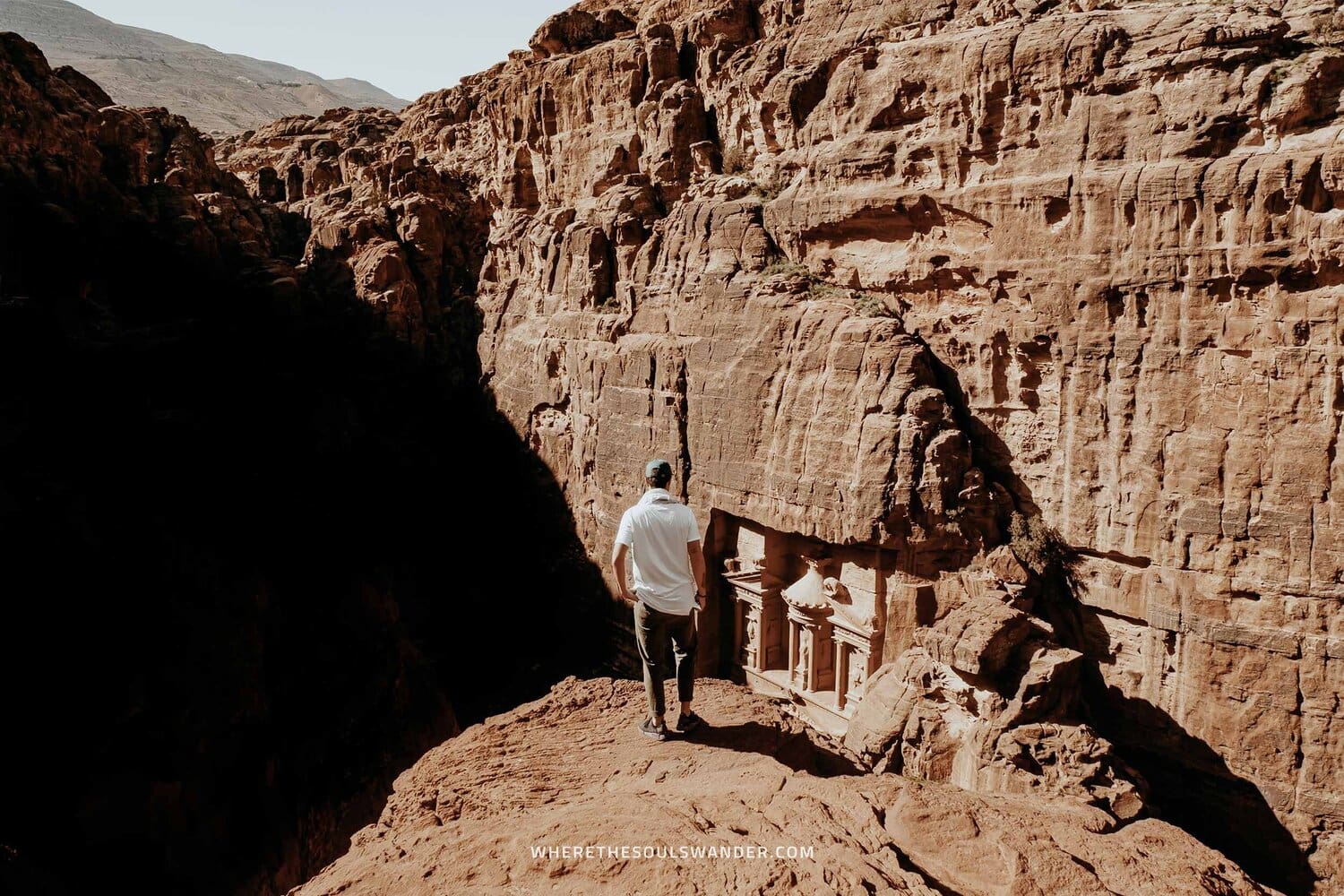
Additional things to see in Petra
As you probably already know by now, Petra is huge in size, meaning you’ll have to plan your visit thoughtfully if you want to make the most of it.
While exploring the above-listed highlights will easily consume two days of your time, there are a few additional landmarks that shouldn’t be left unnoticed.
So if you have enough time in the complex, consider visiting these ones too:
9. The High Place of Sacrifice
Situated atop the towering Jebel al-Madhbah mountain is the High Place of Sacrifice, a holy area that, as the name might suggest, was used for sacrifices and spiritual ceremonies.
These days, the High Place of Sacrifice is the most accessible of Petra’s high places, and reaching the summit takes only 45 minutes.
With no shelter from the sun during the hike, I’d advise visiting early morning or late afternoon.
10. Petra by night
In addition to your daytime adventures in Petra, it is also possible to behold the iconic Treasury under the starry Jordanian sky.
Three nights a week, Petra is all about its popular light show performance, when local Bedouin people make music and tell stories in front of the illuminated Treasury.
While I totally understand that a walk through the candle-lined Siq is a magical experience to many, the overall experience just wasn’t for me.
For those of you who want to visit Petra by night, it is held on Monday, Wednesday and Friday from 20:30 to 22:30, and tickets can be bought at most hotels for 17 JOD ($24) per person.
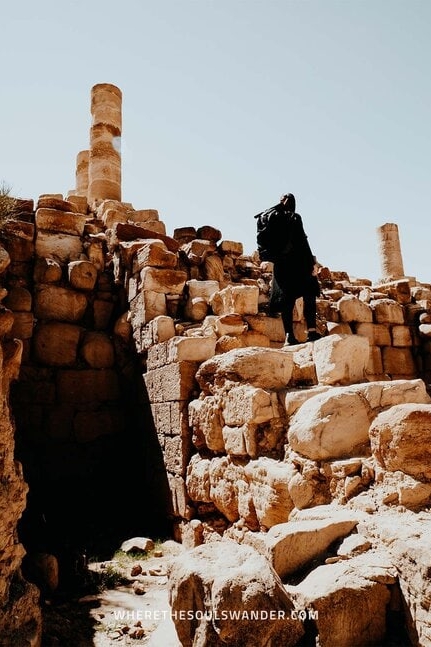
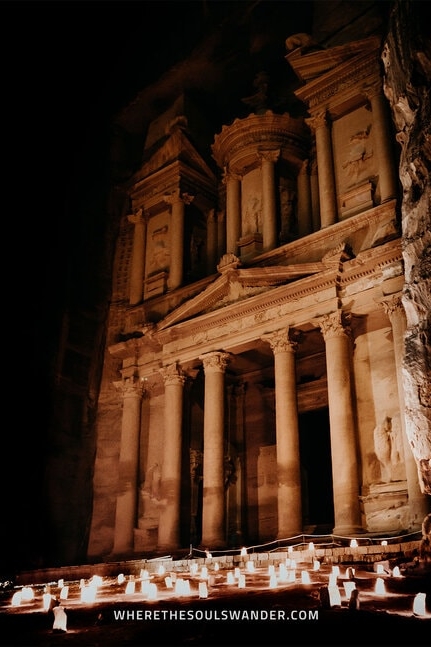
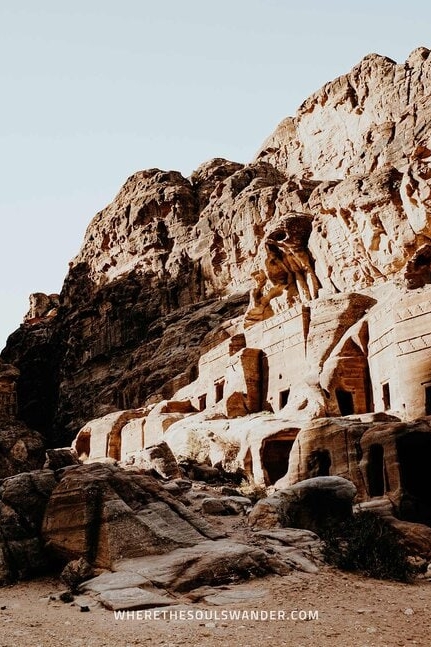
Things to do in Petra | The essentials
Where to stay in Wadi Musa, the gateway to Petra
It is good to note, that all explorations in Petra begin in Wadi Musa, and for that reason, this cosy little town is where you want to base yourself.
Right, Wadi Musa is only a small town, but when it comes to accommodation, you’ll have no problem finding an option that caters to your travel preferences and budget.
To help you find a place that suits your needs, I’ve listed some of my personal favourites below, one of which is marked – this is the place where I stayed.
Town Season Hotel | If you’re looking for comfort without breaking the bank, Town Season’s is for you. Located within only 20 minutes of the Petra Visitor Centre, this hotel offers well-designed rooms, comfy beds, a great in-house restaurant, and an excellent breakfast spread. Deluxe twin rooms at just $67 a night, make this place an absolute bargain.
+ Anbat Midtown Hotel | Located at the doorstep of Wadi Musa’s lively cafe and restaurant scene, this newly renovated hotel offers air-conditioned private rooms, a great breakfast, and several spacious common areas, including a rooftop terrace with a view. Add a free shuttle service to the Petra Visitor Centre, and you will understand why I stayed here.
Petra Guest House Hotel | Those looking for something more luxurious might want to check out this one. Located right next to the Petra entrance, this highly-rated hotel brings comfort and hospitality to a whole new level. Not only do they offer stylish air-conditioned rooms, a large garden, and incredibly friendly staff, but they also have an authentic cave bar set within a 1st-century Nabatean house. If you’re looking for a unique hotel experience, I highly believe this is your best option.
Alternatively, search for accommodations in Wadi Musa on booking.com.
The best time of year to visit Petra
Petra is situated in the vast desert landscape of Jordan, meaning it’s somewhat challenging in terms of the weather.
Given Jordan lies in the Middle East, it is good to note that it becomes sweltering hot during the peak summer months, yet freezing cold during the winter months.
Whilst Petra is open every day of the year, I believe the best time to visit is from early March to late May, and from early October to late November.
By planning your trip outside the peak summer months, you’ll steer clear of the intense summer heat, while you also share your experience with significantly fewer crowds.
However, the early mornings and evenings are often still pretty chilly in contrary to the pleasant day temperature. So make sure you bring at least one pair of trousers and a comfy hoodie!
The best time of the day to visit Petra
Let’s get right to it, the best time to visit Petra is early in the morning, or in the late afternoon.
Not only do you have better lighting for photography during these times, but there are also notably fewer people around the park.
Petra itself is open every day from 06:00 to 18:00 during the summer months, and from 06:00 to 16:00 during the winter months.
Given most of the large groups and guided tours arrive at Petra around 08:00, I would highly recommend waking up early for this one – believe me, it is more than worth it!
How to get to Petra
Given Petra is the most popular tourist attraction in the country, you’ll find a variety of transportation options to reach Wadi Musa.
To help you choose the option that works best for you, I’ve listed three options below – including the pros and cons of each.
CAR | Definitely, the most scenic way to get to Petra, Wadi Musa is by renting a car, which takes you through a set of rough and otherworldly landscapes along the way.
Another upside about driving in Jordan is the fact that most of the roads are actually in great condition, plus it is pretty cheap to fill up your tank.
Also, I believe that Jordan is one of the world’s best road trip destinations, meaning this option is obvious – make sure you check my Jordan itinerary too.
For car rental in Jordan, I highly recommend DiscoverCars, as they offer brilliant service, additional insurance options (which is not an unnecessary luxury in Jordan), and a wide selection of cars to choose from.
GUIDED TOUR | Though I wouldn’t join a guided tour of Petra myself, it is actually quite a good option for those with limited time in the country.
Also, it is possible to visit Petra on a day trip from several cities in neighbouring Israel, including Eilat, Tel-Aviv and Jerusalem.
If a guided tour sounds interesting to you, I recommend booking one of the following options before arriving in Jordan.
Do keep in mind that some of the tours do not include the entrance fee to Petra itself.
Petra Full-Day Private Tour from Amman | This full-day private tour of Petra takes in all the major sights and includes an English-speaking driver who picks you up at your Hotel in Amman.
Petra Full-Day Guided Tour from Eilat | Discover the incredible history of Petra with an expert guide by joining this full-day private or shared tour from Eilat – entrance fee and transport included in the price. Additional cost includes Border fees ($65) and visa fee ($60).
BUS | Since public transport in Jordan is limited, I would not necessarily recommend the use of it.
However, this doesn’t mean that it’s impossible to get to Petra by bus; it is Jordan’s number one tourist destination after all.
For those looking to visit Petra from Amman, JETT is a great private bus company that runs between Amman and Petra daily.
Do keep in mind that these buses operate on a fixed time schedule, meaning you’ll arrive in Petra around noon, which isn’t a problem if you’re planning to stay multiple days in Wadi Musa.
For tickets, availability, departures, and travel information, visit the JETT website.
Safety in Jordan | Travel insurance
When travelling this wide world, I never go on an adventure without my essential travel insurance sorted out, and though I felt completely safe in Jordan, I recommend that anyone travelling here do the same.
Though you rather don’t think about the things that could go wrong, there’s always a chance that it might happen, and when that’s the case, it is better to be safe than sorry.
To help you find the right policy, I’ve listed two of my favourite options below:
Heymondo | Whether you’re going on a 3-week backpacking trip, or planning a long stay somewhere abroad, Heymondo has excellent insurance options either way – plus full covid-19 coverage and a handy app with 24-hour medical assistance. Readers of WTSW receive 5% off any insurance policy, more information here.
World Nomads | If you’re an adventure seeker, backpacker, or planning your once-in-a-lifetime world trip, make sure you check out World Nomads, they designed the perfect travel insurance to help you travel safer and smarter. Do note that they’re not covering covid-19 related claims.
Cheers!
I’ve been on this travel blogging journey since 2019.
If you appreciate what I do here, these are some ways you can support me.
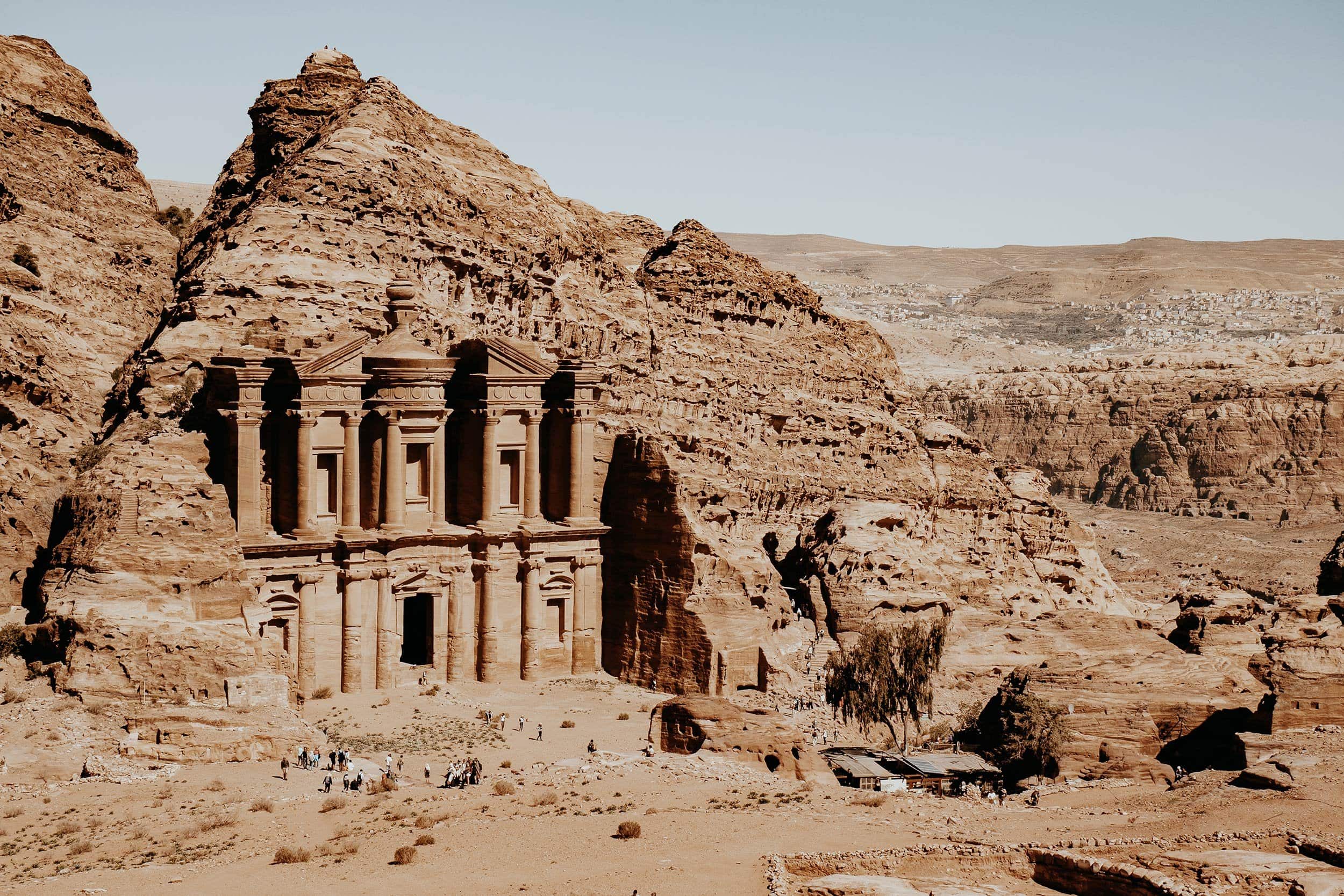
My wonderful 10-day Jordan itinerary: the best of Jordan
Jordan was my first-ever trip to this corner of the world, but will certainly not be my last.
Located at the heart of the Middle East, this bit-size paradise has righteously earned its fame, and after my unforgettable road trip here, it is safe to say that Jordan has become one of my all-time favourite destinations.
There’s a myriad of reasons to add Jordan to your bucket list, and I’m not just talking about visiting the ancient city of Petra and the insanely scenic Wadi Rum desert.
Though these highlights are unmissable on any Jordan itinerary indeed, there’s a whole lot more to see and do in this exceptional country.
From the lowest point on earth – the Dead Sea, to the ancient Roman ruins of Jerash, to the amazing diving spots in Aqaba, to the lively streets of Downtown Amman – Jordan is no stranger to both exciting travel experiences and world-class cultural heritage.
This Jordan itinerary is based on my 10-day road trip and talks you through the above highlights, while it also provides all the essential information in terms of accommodation, weather, transportation and more.
Here’s my wonderful Jordan road trip itinerary – enjoy planning your trip!
Where is Jordan
Jordan, also known as the Hashemite Kingdom in the Middle East, is located on the crossroads of Asia, Africa and Europe and borders Israel, Iraq, Saudi Arabia and Syria, while also sharing maritime borders with Egypt.
With its compact size and many interesting cultural and natural highlights, Jordan has rapidly become one of the most popular road trip destinations in the world.
Visa requirements for Jordan | The Jordan Pass
Though it is relatively easy to obtain a tourist visa upon your arrival in Jordan, I believe the better deal is to acquire a Jordan Pass before flying into the country.
Not only does the Jordan Pass save you time at the airport, but it also grants free entrance to 40 of the country’s most famous highlights; Petra, Wadi Rum, Jerash and the Amman Citadel, just to name a few.
One thing that is worth mentioning is the fact that travellers should spend a minimum of 4 days in Jordan to waive the visa fees. Also, the Jordan Pass is equal to a single entry visa, allowing visitors a maximum of 30 days in the country.
I applied for a Jordan Pass in advance, and had an easy time exploring the country – plus the option to skip the line at most of the tourist highlights – winner!
For more information, availability, and applying, make sure you visit the iVisa website.
Useful guides on travelling in Jordan
In my opinion, a written guide is the perfect tool to fall back on, and I seriously advise you to look into one too before travelling to Jordan.
In terms of essential travel information and tips, this Lonely Planet Jordan guide helped me on several occasions during my road trip. Search your guide here.
My 10-day Jordan itinerary - daily overview
Day 1 | Arrival in Aqaba
The coastal town of Aqaba was the perfect place to start my adventurous road trip itinerary through Jordan.
Not only is Aqaba home to the excellent King Hussein International Airport, but it is also a welcoming place to get your bearings. For that reason, I’d advise spending at least one day here to recover from your flight, before venturing deeper into Jordan’s immeasurable natural beauty.
Though I haven’t seen much of Aqaba due to late arrival, I’ve read plentiful articles that say that this coastal town is actually a great place for those into sunbathing, history and top-notch diving.
Perched next to the Red Sea, Aqaba is home to some of the world’s best scuba diving sites, with over 20 diving spots dotted along the coastline, providing a perfect setting for any level of diving.
That said, if you have more days to follow my itinerary, I’d advise taking some extra time to appreciate Aqaba’s lively underwater world and the quaint beaches adjacent – unfortunately, my time here was limited.
Where | Aqaba
Where to stay in Aqaba | DoubleTree by Hilton provides comfortable rooms at an excellent rate, perfect for those keen to unwind after a long flight. Additionally, I would recommend Jordan Seasons Hotel.
Alternatively, search for accommodation in Aqaba on Booking.com.
Day 2 – 3 | Wadi Rum – Jordan’s vast desert paradise
The first highlight on this Jordan road trip itinerary, and by far my favourite destination in the country, is the otherworldly Wadi Rum desert.
The UNESCO World Heritage-listed Wadi Rum is an utterly magnificent landscape that is home to rippled sand dunes, towering rock formations, and burnt-orange desert terrain that stretches far in all directions.
With more than 720 square kilometres, Wadi Rum is actually known as one of the largest deserts in the world, and for that reason, best explored by a 4×4 jeep.
If you’re keen to uncover Wadi Rum as part of a full-day jeep tour, make sure you’ll be driven around by an authentic Bedouin guide. By doing so, you’ll be taken along all the nitty-gritty hotspots.
After your jeep tour, it is time to pick a sand dune, sit down and watch a breathtaking sunset light up the otherworldly dunes and rock formations of Wadi Rum – this truly is a spectacle to behold.
On top of that, there’s a bunch of other great things to do within Wadi Rum, such as uncovering the dunes on foot or beholding one of the desert’s famous movie scenes, including those of The Martian and Aladdin.
But to me, the absolute highlight on any visit to Wadi Rum is spending the night under the starry Jordanian sky in a luxurious Martian dome or one of the many traditional Bedouin camps.
Where | Wadi Rum
Where to stay in Wadi Rum | I stayed at Hasan Zawaideh Camp and had an excellent once-in-a-lifetime experience. Make sure you check the link to see how awesome sleeping in a Martian dome actually is.
+ Related | Check out my Wadi Rum guide for inspiration, travel advice and all the essentials.
Driving time | 1 – 2 hours
Distance | 74 kilometres from Aqaba to Wadi Rum
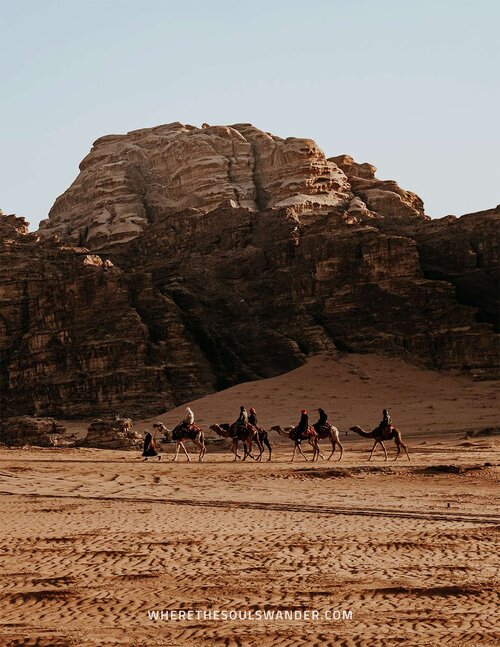
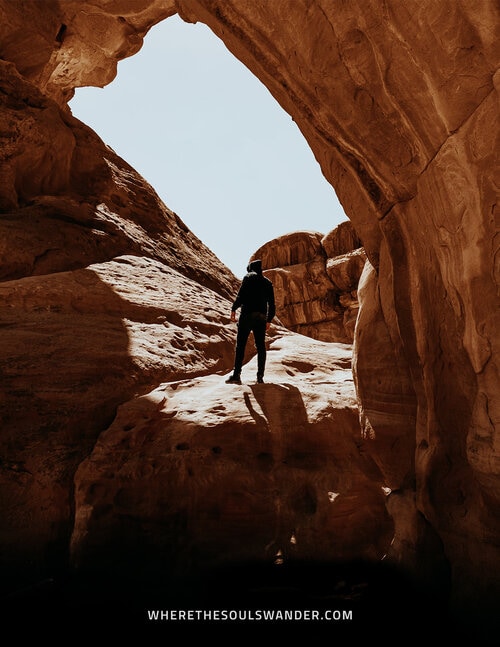
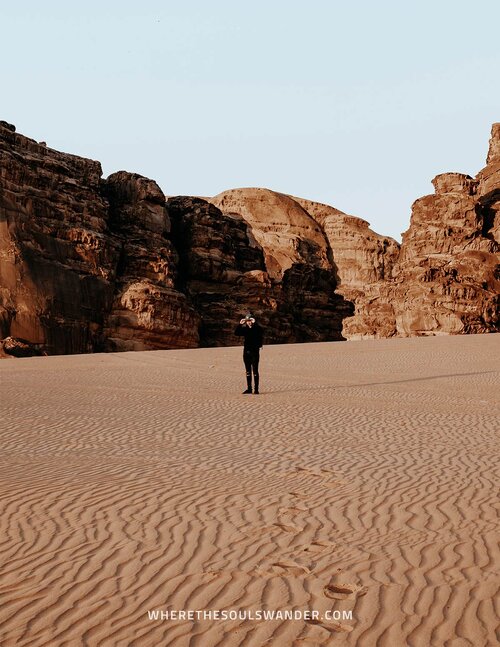
Day 4 – 5 | Petra – the ancient Nabatean city
I’m pretty sure that the ancient Nabatean city of Petra is one of the key reasons why you’ve planned an adventurous road trip through Jordan, and it is easy to understand why.
Hidden between the rough mountains that encircle Wadi Musa lies Petra, an exceptional ancient city that is carved directly out of the sandstone rose-red rock formations that the area holds.
After a long period of being completely hidden from the Western world, the mesmerising archaeological site was eventually rediscovered by Swiss traveller Johann Ludwig Burckhardt in 1812. For the above reason, Petra is often referred to as ‘The Lost City’.
At present, the former capital of the Nabataean empire is acknowledged as one of the new wonders of the world, and only a few words can describe how it feels when you first encounter the exquisite facade of Petra’s famous Treasury.
But it is not just the Treasury that put Petra on the map of travellers and adventure seekers alike.
Other incredible sights that are equally impressive include the Monastery, the Royal Tombs, the Al Kubtha Trail, the Siq and the High Place of Sacrifice, just to name a few.
To make the most out of your time in Petra, I’d recommend spending at least two days here to take it all in. Also, I highly advise visiting early in the morning (Petra opens at 06:00) to beat the crowds.
Where | Petra, Wadi Musa
Where to stay in Wadi Musa | I stayed at Town Season Hotel, a great budget-friendly hotel only a stone’s throw away from the Petra visitor centre. Prices and availability here.
How to get around Petra | Petra is best explored on foot; however, be prepared to walk a bunch. Also, please be aware to travel in a responsible and ethical manner, meaning you consider skipping transport by horse or donkey.
+ Related | Check out my Petra guide for inspiration, travel advice and all the essentials.
Driving time | 2 – 2,5 hours
Distance | 114 kilometres from Wadi Rum to Wadi Musa
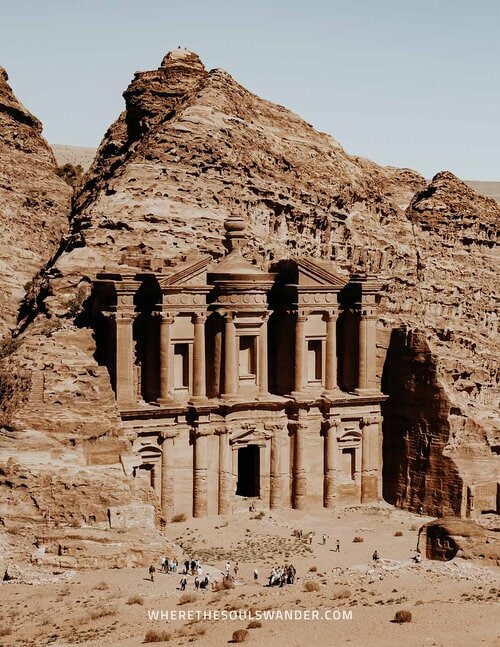
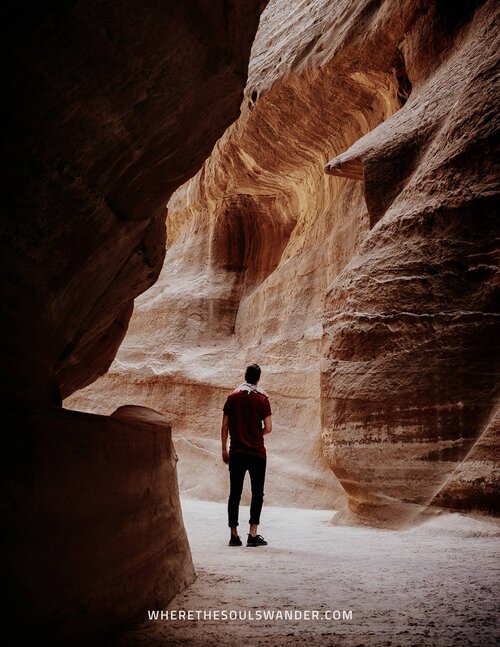
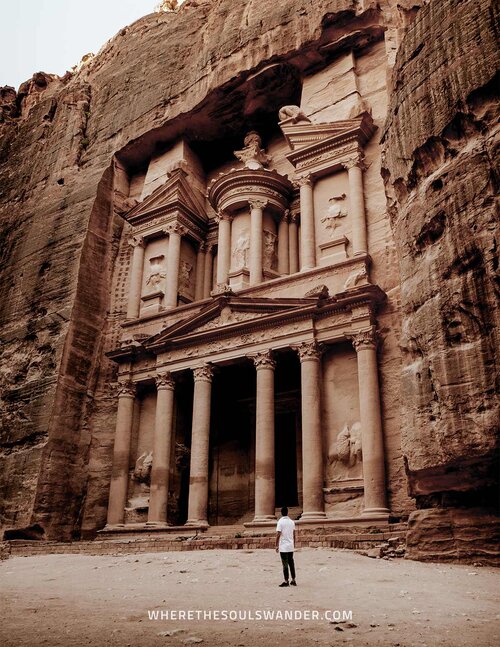
Day 6 | Unwind at the iconic Dead Sea
Next up is the iconic Dead Sea, one of the most impressive natural phenomena in the country, and in my opinion ,an unmissable destination on any Jordan itinerary.
Unlike its name, the Dead Sea is actually more of a lake that is known for its incredibly high salinity, containing around 10 times more salt than any given ocean on earth.
As a result, it is impossible for organisms to inhabit the sea, hence its name, ‘The Dead Sea’.
Also, the area is deemed to be the lowest point on earth, as it lies 400 metres below sea level.
In terms of location, the Dead Sea is perched between Jordan and Israel, at around 3,5 hours away from Wadi Musa, which is quite a drive. The good news, though, it’s a damn scenic journey!
If you’re into photography, make sure you make a stop left of the Wadi Mujib Adventure Centre, where you’ll find some pretty neat photography options, as well as some of the best salt formations.
Upon arrival in your hotel, I’d recommend heading straight to the beach for an unforgettable experience, namely, swimming in the Dead Sea, or better said, floating in the Dead Sea.
Besides this quirky happening, there’s not much else going on around the Dead Sea, and therefore, I recommend making your time here all about relaxing and sunbathing.
Where | The Dead Sea
Where to stay near the Dead Sea | I stayed at Ramada Resort Dead Sea, a comfortable option located directly next to the Dead Sea. Prices and availability here.
+ Read more | Check out my guide to the Dead Sea for inspiration, travel advice and the essentials.
Driving time | 3 – 3,5 hours
Distance | 205 kilometres from Wadi Musa to the Dead Sea
Day 7 – 9 | Amman – Jordan’s bustling capital city
After relaxing at the Dead Sea, it is time to move further north to Amman, Jordan’s lively capital.
Although Amman is significantly more chaotic than other destinations on this itinerary, I believe it’s a city of its own accord, with many interesting things to see, do and of course, taste.
I’ve personally spent two days here, one while staying at the phenomenal W Amman Hotel (this place is unreal, and so is the food), and one to uncover the many highlights that this energetic city has to offer. A brilliant combination that worked out perfectly fine for me.
All in all, Amman is definitely worthy of your visit, and given that it is pretty compact in size and easy to navigate, the city is, in my opinion, a great introduction for first-time travellers to the Middle East.
Some of my favourite things to do in Amman include:
The Amman Citadel | Situated high atop the Jabal Al Qala’a hill is the Amman Citadel, an area rich in history that has been under the rule of many great civilisations, including the Romans, Byzantines, Persians, and Greeks. If you have time to visit only one place while in Amman, make sure it’s the city’s time-worn citadel.
King Abdullah I Mosque | Though it is located slightly outside the city centre, the ornate King Abdullah I Mosque is an absolute must-see in Amman. Recognised by its vivid blue dome, the mosque is truly mesmerising and can house up to 7.000 worshippers at a time. It is possible for non-Muslims to enter, but make sure to follow the religious customs.
The Roman Amphitheatre | With the capacity to house roughly 6.000 people, the Roman Amphitheatre is said to be the most impressive remnant of Roman Philadelphia, and it’s easy to see why. What’s even more impressive is the fact that it is still in use for concerts and plays at present. Additionally, if you’ve managed to acquire a Jordan Pass, you’ll have access to the adjacent Folklore Museum.
Where | Amman
Where to stay in Amman | I stayed at W Amman and it is safe to say that it is my most luxurious travel experience I’ve had to date. Make sure you check it out here.
+ Related | Check out my guide to Amman for inspiration, travel advice and all the essentials.
Driving time | 1 hour
Distance | 50 kilometres from The Dead Sea to Amman
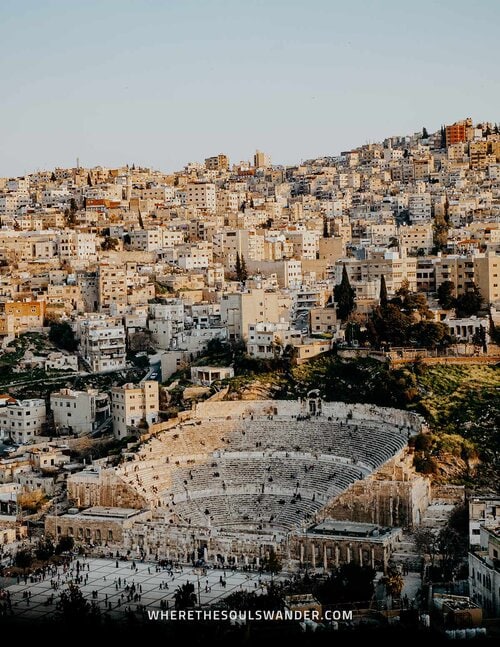
Day trip | The Roman Ruins of Jerash
The Roman ruins of Jerash are located only an hour away from Amman and are therefore easily visited as part of a self-drive day trip.
Often referred to as the ‘Pompeii of the East’, Jerash is acknowledged as the best-preserved Greco-Roman city outside of Italy, and believe me, it is truly a delight to behold.
As a result, Jerash is extremely popular among travellers and locals alike, making it the second most visited tourist destination in Jordan – behind Petra, obviously!
That said, the interior of Jerash is absolutely breathtaking, and some sights that I highly suggest visiting include the Arch of Hadrian, the Temple of Artemis, Oval Square and the Northern Theatre, among many others.
Though Jerash was high on my list of things to see in Jordan, I, unfortunately, planned way too little time to fully explore the extensive archaeological site. Therefore, I advise planning at least four hours to explore in a relaxing manner.
Where | Jerash
Cost | Entrance fee 10 JOD ($14,10) – free with the Jordan Pass
Related | Check out my guide to Jerash for inspiration, travel advice and all the essentials.
Driving time | 1 hour
Distance | 50 kilometres from Amman to Jerash
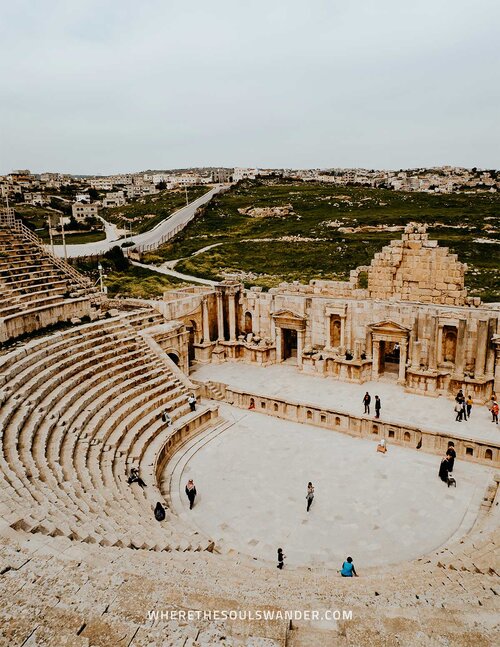
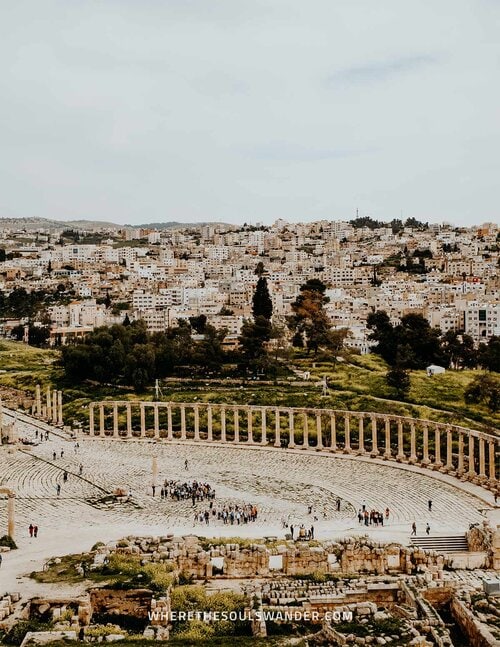
Day 10 | Time to leave Jordan
After 10 incredible days in Jordan, where you’ve discovered incredible landscapes, ancient architectural masterpieces, and everything in between, it is time to pack your stuff and head for the airport.
Whether you need to drive back to Aqaba or Amman, your last moments in Jordan are all about heading home, so it is a full day of travelling anyhow.
However, one thing I like to spare you is a long exhausting drive back from Amman to Aqaba on the day of your outbound flight.
I personally opted to leave Jordan by plane from the Queen Alia International Airport in Aqaba, but would have done this part of my itinerary differently if I had to do it again – epic fail.
For that reason, I believe it is best to book separate flights, especially if spending your final 6 hours in Jordan behind the wheel isn’t your way to end this awesome road trip.
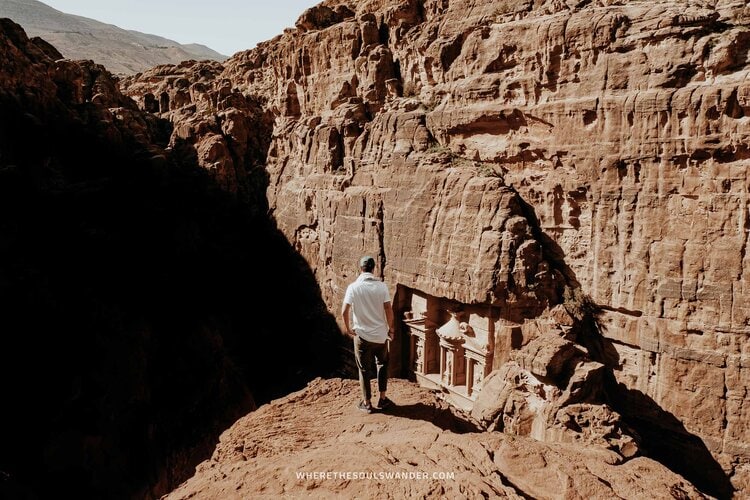
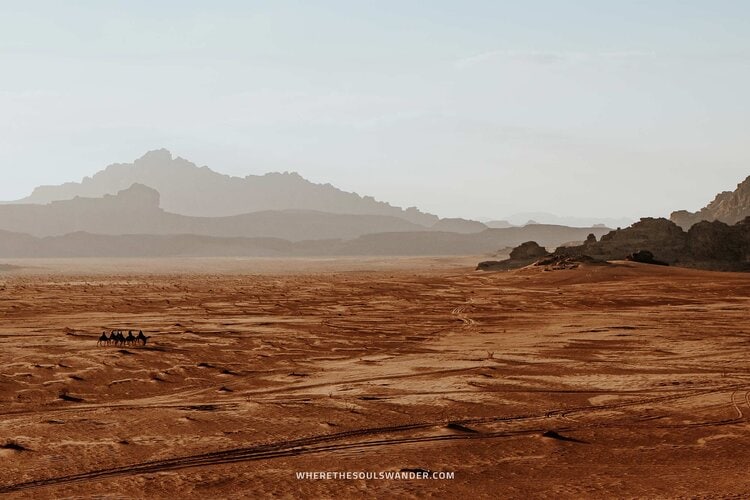
Jordan itinerary | The essentials
Accommodation | Where to stay in Jordan
Jordan is hands down among the most popular travel destinations of the last few years, meaning you’ll be delighted to find awesome accommodation here too.
Through the course of my Jordan itinerary, I was surprised by a wide variety of excellent accommodation options, suitable for pretty much every travel style and budget.
Whether you’re after a budget-friendly hostel, family-run apartment, authentic Bedouin tent, or luxurious high-end hotel – like this unique Martian experience in the heart of the desert, there are simply endless options available.
In terms of budget, it is completely up to you, with costs varying anywhere between €20 – €200 per night, depending on your personal requirements.
Booking.com
As a solo adventure traveller, my favourite website to search for accommodation is booking.com.
Not only is it home to a broad selection of accommodation, but it’s also user-friendly and offers options that suit any budget.
Also, you can cancel your booking at any given time, without any extra cost – perfect if you like (or dislike) a place and wish to change your travel plans accordingly.
If I made you enthusiastic to travel to Jordan, make sure you explore the many accommodation options on booking.com.
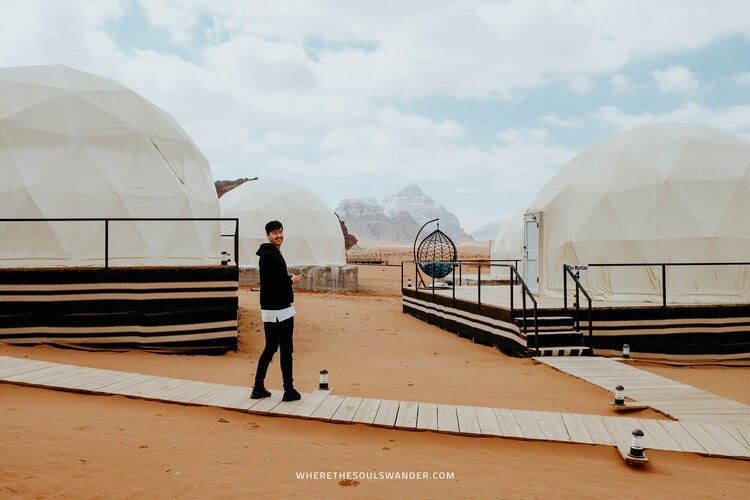
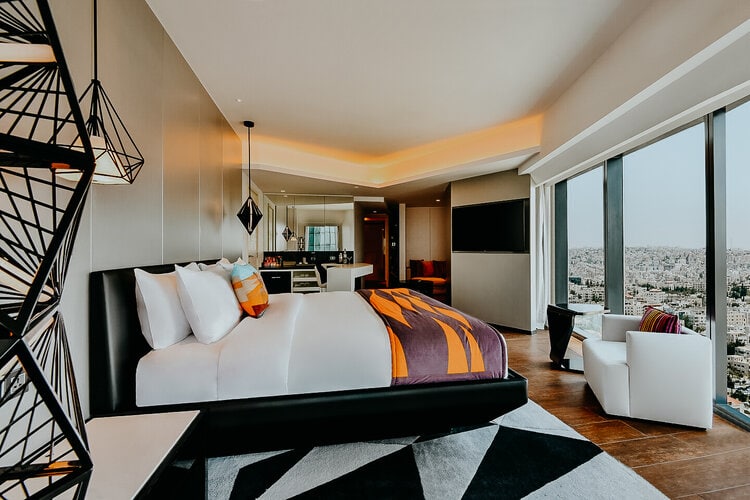
The best time to visit Jordan
Given that Jordan almost entirely consists of desert landscapes, the country is rather tricky in terms of weather.
For that reason, it is good to note that Jordan can be scorching hot during the peak summer months, while at the same time, it is freezing cold during the winter months.
Depending on what you’re looking for, I believe the best time to visit Jordan is from early March to late May, especially if you’re bent on exploring Jordan’s most popular points of calls, including Petra, Wadi Rum and the Dead Sea.
However, if you wish to uncover the Red Sea’s lively underwater world, or work on your tan on a sun lounger next to it, the summer months of June to September might be the better option for you.
I followed this Jordan road trip itinerary in March and had excellent weather to tick the sights I wished to visit off my bucket list.
One thing that is worth mentioning though, is that despite the pleasant temperature during the days, the nights often become pretty chilly, specifically in the desert. So make sure you pack at least one pair of trousers and a comfy hoodie!
Renting a car in Jordan| How to get around Jordan
Jordan is a true spectacle in terms of rough, mystic landscapes, and by renting a car, you easily experience the absolute best of this exceptional feature.
Not only is a rental the easiest way to uncover Jordan, but it also provides the ultimate freedom to travel at your own pace, not to mention that it means you’ll be driving through the most incredible landscapes too.
Another great thing about driving in Jordan is the fact that most of the roads are actually in excellent condition, plus it is pretty cheap to fill up your tank.
Meaning Jordan is made out of all the good stuff that makes a road trip, a ROAD TRIP.
For car rental in Jordan, I highly recommend Rentalcars.com. They offer brilliant service, additional insurance options (which is not an unnecessary luxury in Jordan), as well as a wide selection of cars to choose from. Prices and availability here.
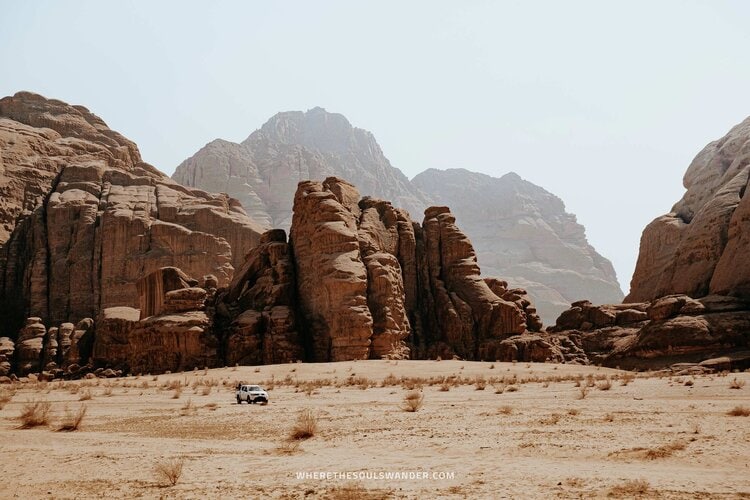
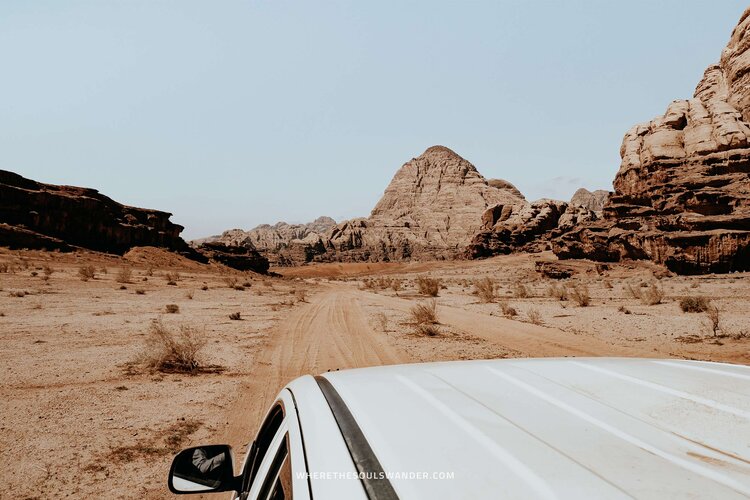
How to get to Jordan
Though Jordan is a relatively compact country, it is home to two excellent international airports.
However, most flights arrive at the Queen Alia International Airport, situated around 30 kilometres south of Amman, the capital city of Jordan.
Alternatively, there is the King Hussein International Airport, located only a 10-minute drive away from Aqaba. I noticed that this option was significantly cheaper for flights from Europe.
Both airports are well kept and host a great variety of international flights, including those from major hubs in Europe, North Africa, North America, the Middle East, and Southeast Asia.
For flights to Jordan, I would highly advise the use of Skyscanner. Not only is their website super easy to use, but they also offer a large selection of airlines – plus the possibility to find good rates.
In my opinion, both cities are equally good to start your Jordan road trip itinerary, as they both provide car rental pickup and drop-off services.
Safety in Jordan | Travel insurance
When travelling this big, wide world, I never go on an adventure without my essential travel insurance sorted out, and though I felt completely safe in Jordan, I recommend anyone travelling here to do the same.
Though you would rather not think about the things that could go wrong, there’s always a chance that it might happen, and when that’s the case, it is better to be safe than sorry.
To help you find the right policy, I’ve listed two of my favourite options below:
Heymondo | Whether you’re going on a 3-week backpacking trip or planning a long stay somewhere abroad, Heymondo has excellent insurance options either way – plus full COVID-19 coverage and a handy app with 24-hour medical assistance. Readers of WTSW receive 5% off any insurance policy; for more information here.
Cheers!
I’ve been on this travel blogging journey since 2019.
If you appreciate what I do here, these are some ways you can support me.
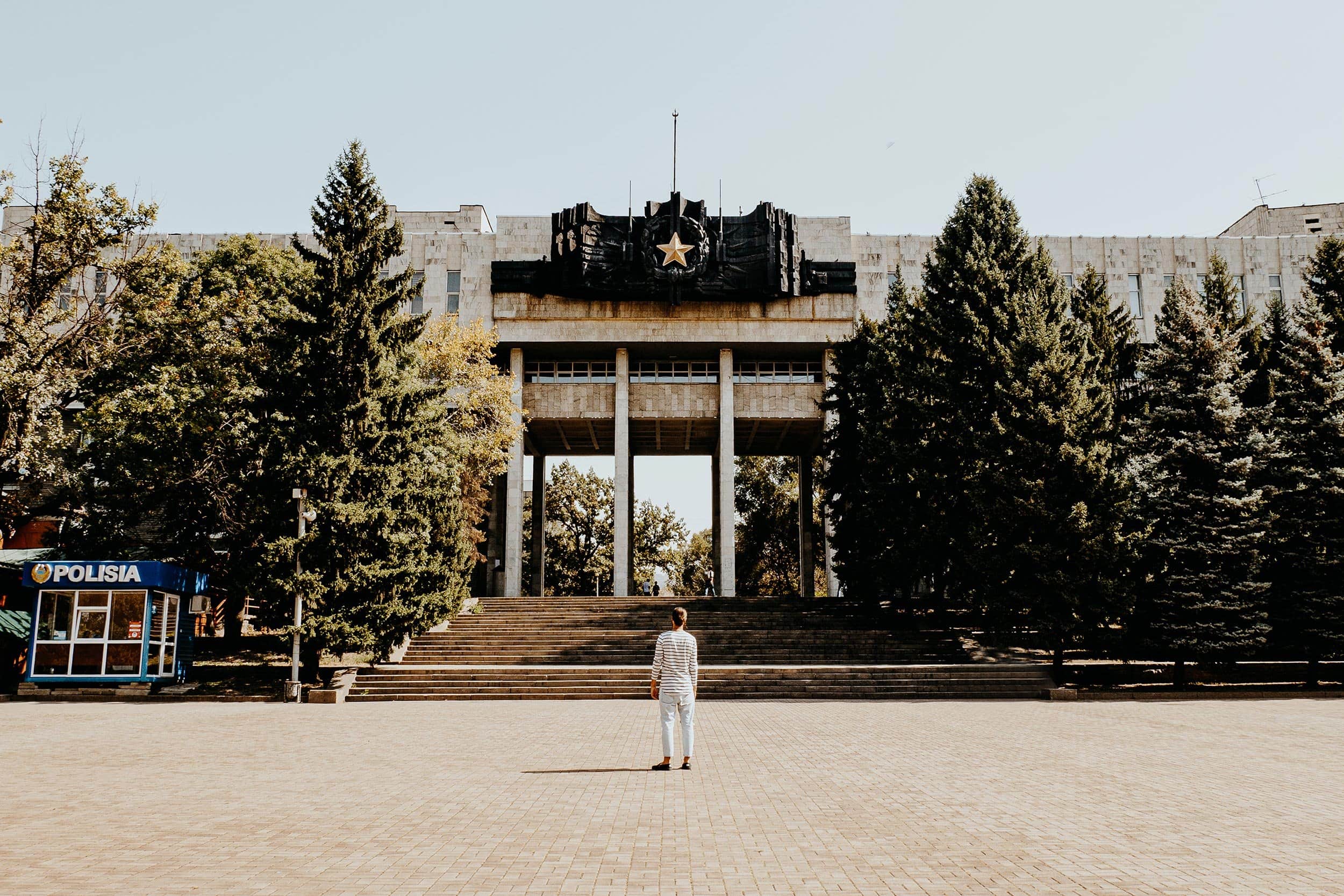
15 Incredible things to do in Almaty, Kazakhstan's lively metropolis
Curious to visit Almaty, a welcoming city that is waiting to be explored? I’ve got you covered! My guide features the best things to see and do, adventurous day trips, as well as travel tips on where to stay, transport and more.
In the year that travel seemed completely off the radar due to the Covid 19 pandemic, my adventures unexpectedly took me to one of the coolest places I’ve ever visited.
The lively metropolis of Almaty, Kazakhstan.
A city of its own accord, given its exceptional geographical location at the foothills of untouched mountain ranges, surprisingly trendy cosmopolitan atmosphere, captivating Silk Road history, intriguing Soviet-style architecture, and last but not least, extremely welcoming people.
As one of the largest metropolis in Central Asia, as well as the perfect gateway to some of Kazakhstan’s finest natural environments, you might think that Almaty has become popular among travellers, but nothing could be further from the truth.
Instead, it turns out that Almaty (and Kazakhstan in general) is still left largely undiscovered, if not underrated, which is quite a shame.
Or maybe not.
Let me quickly explain. Due to Almaty’s anonymous reputation, both the city and its natural surroundings offer an off the beaten path travel experience, which feels both unique and adventurous.
While on the other hand, I believe Almaty, with its rich history and utterly friendly people, deserves to be recognized as a spectacular travel destination.
Luckily, I spent nearly 5 months in Almaty to assemble a great dose of inspiration, with the intention to bring this incredible city and its ridiculously beautiful surroundings to light.
Here’s my definite list of things to do in Almaty.
If you choose to use any of the links on this page, I may receive a small commission at no extra cost to you. By using these links, you’ll have a direct impact on WTSW and my ability to continue to create free insightful travel content for you. If you find any of my tips useful, you can support me by buying a virtual coffee here.
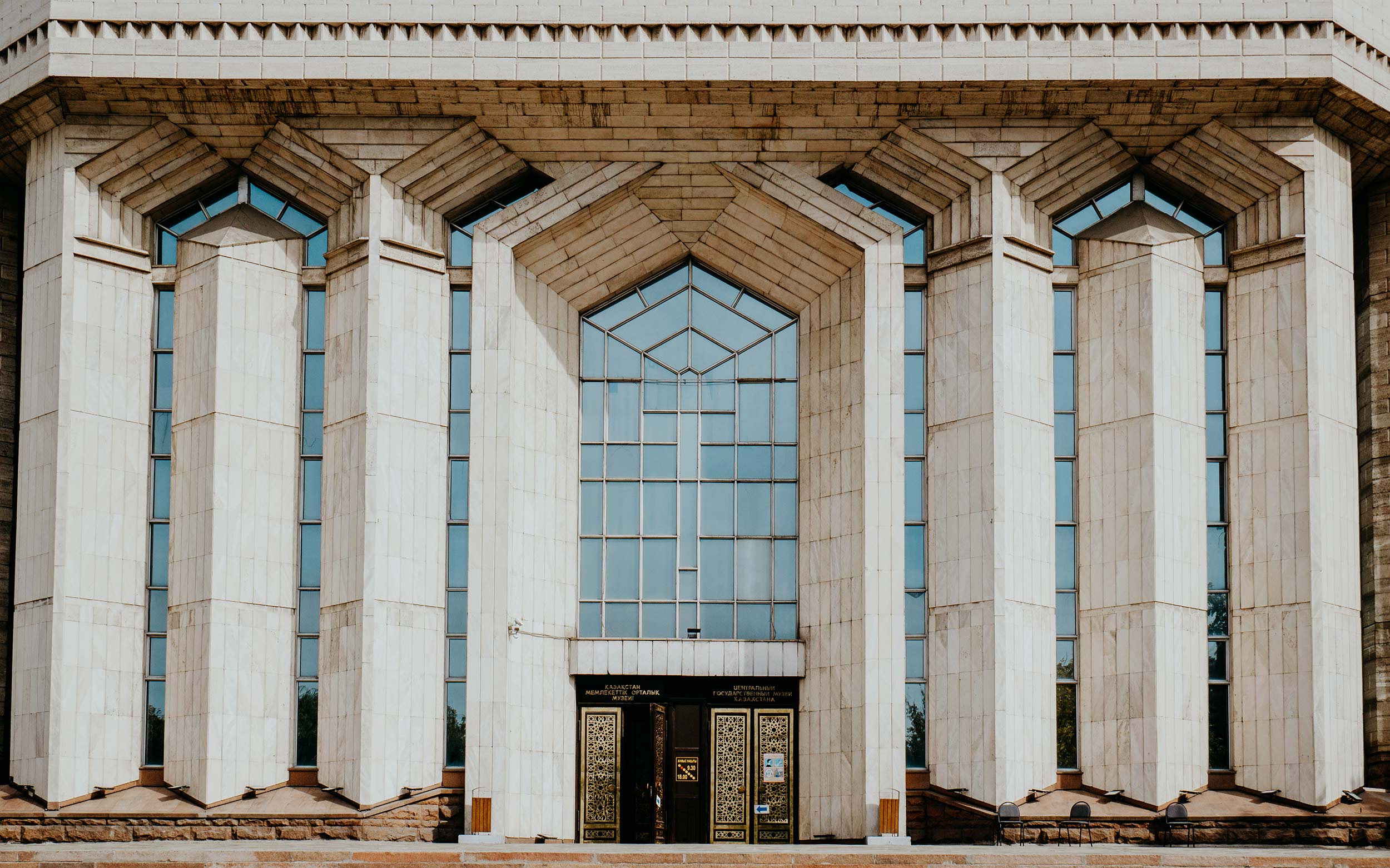
Where is Almaty
Almaty is located in the foothills of the Trans-Ili Alatau mountains in Southeast Kazakhstan, close to the border of neighbouring Kyrgyzstan.
Once the capital of Kazakhstan in 1997, Almaty remains the largest city in Kazakhstan and is still deemed one of the most significant cities in terms of cultural, economic and transport importance.
Where to stay in Almaty, Kazakhstan
Though Kazakhstan is still largely unknown to upscale tourism, it isn’t compromising on accommodation options by any means.
Instead, you’ll notice plenty of excellent options, whether you’re looking for budget-friendly hostels, cosy Airbnbs, comfortable hotels or a more luxurious splurge.
In terms of location, the Golden Square of Almaty is where you want to base yourself.
Not only is this neighbourhood home to some of the best things to do in Almaty, a well-working metro connection, and the city’s most trendy restaurants and cafes, but this area is also the safest and most accessible.
Here are some of my personal favourites in Almaty.
Kazakhstan Hotel | Kazakhstan’s most famous hotel, the Kazakhstan Hotel provides stylish rooms with spectacular views of both Almaty and the Ile-Alatau Mountains. With its convenient location on Dostyk Avenue, it’s easy to visit the city centre, mountains and Almaty’s popular ski resort Shymbulak. Also, the hotel is home to several excellent in-house restaurants and a panoramic bar.
Ambassador | If you’re aiming to find an awesome budget-friendly hotel, this is the place for you. Situated in the heart of Almaty, Ambassador offers large classic-style rooms that provide great comfort, perfect for those looking to unwind after a day of exploring. Double rooms at only $37 a night make Ambassador an absolute bargain.
Mercure Almaty City Center | Inspired by local cultural and traditional art, Mercure Almaty City Center pays great attention to its design, with amazingly decorated rooms that provide a luxurious experience. Guests also have access to a free rooftop spa and fitness area. Make sure you click the link below, just to see how awesome it looks.
Renion Park Hotel | Established right in the action of Almaty’s Golden Square, Renion Park Hotel offers spacious, air-conditioned rooms at an excellent price-to-quality ratio. It also houses an in-house restaurant, fitness centre, indoor swimming pool and sauna, which is perfect if you’re after some extra comfort.
Alternatively, search for accommodations in Almaty on booking.com.
15 Things to do in Almaty, Kazakhstan
1. Roam around the Green Bazaar
One of the best introductions to a country and its culture is by roaming along the myriad of stalls from an authentic local market.
Not only is it the perfect way to get a feel for the locals and their ways, but it’s also the number-one place to sample new flavours and locally-grown produce.
Established at the heart of Almaty is the Green Bazaar, an extensive covered market that is home to loads of vendors, offering their visitors the most authentic flavours of Central Asia.
From Kazakhstan’s traditional Kymyz (fermented horse milk) to delicious dried fruits and nuts, Almaty’s famous apples to distinguishing spices and vegetables, it is all found here.
Though I mostly came to the Green Bazaar to stock up on mouth-watering dried fruits and nuts, it is also a place to find all sorts of other goods, including clothes, souvenirs, electronics and more.
If you’re after a genuine, authentic vibe, make sure you experience the hustle and bustle of Almaty’s exciting Green Bazaar.
Where | Green Bazaar, Almaty
Opening hours | Tuesday to Sunday 09:00 – 19:00, Monday closed
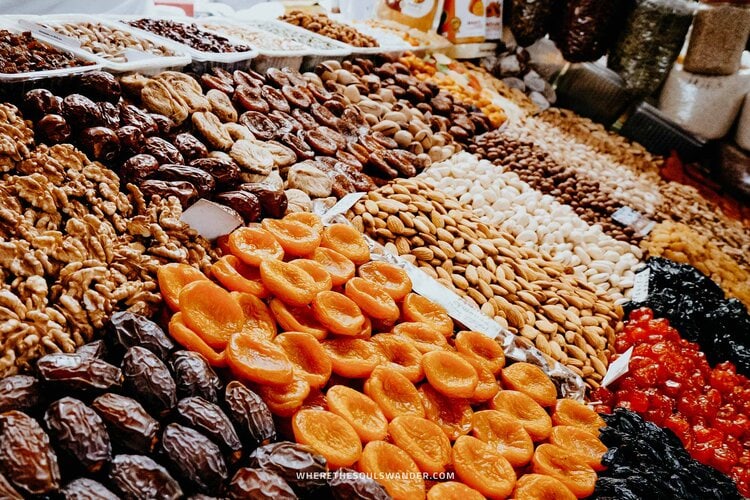
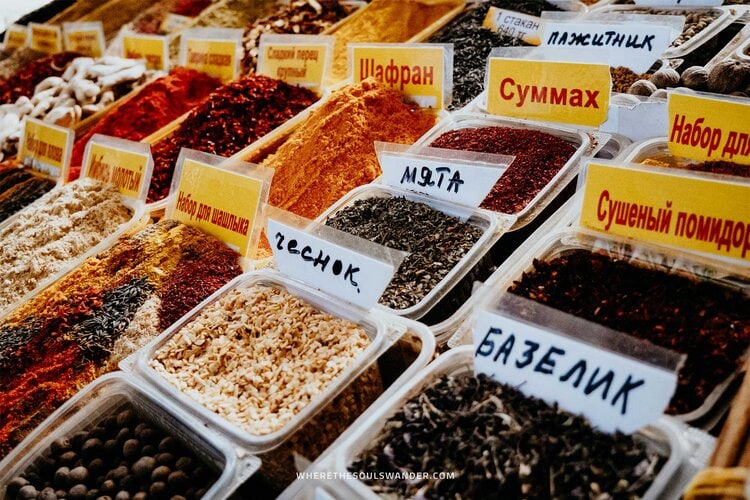
2. Behold inspiring art at the Kasteev State Museum of Arts
First established in 1935, the intriguing Kasteev State Museum of Art is not only the largest art museum in Kazakhstan but also the most interesting if you ask me.
Today, visitors to Kasteev can behold some of Kazakhstan’s finest artworks, with a total of more than 25.000 intriguing art objects dotted throughout the museum.
The distinctive collection is an excellent mix of past and present, with fascinating contemporary art objects and intriguing historical pieces alike – I even noticed several extraordinary paintings from my country of birth, the Netherlands.
But some of my favourite works in the museum include the glorified paintings that represent the Soviet Union. Though I realize that these paintings give a biased glimpse into this eventful period, they clearly are of high artistical value.
Other highlights found in the museum include paintings of Kazakhstan’s famous poet Abay Kunanbaev, modern sculptures and highly regarded works of Asian, European and Russian artists.
If you’re short on time, and only have time to visit one museum in Almaty, I’d advise taking in the exquisite artworks that are on display in the Kasteev State Museum of Arts.
Where | Kasteev Art Museum, Almaty
Opening hours | Tuesday to Sunday 10:00 – 17:00, Monday closed
Cost | Entrance fee 500 KZT ($1,20) per person
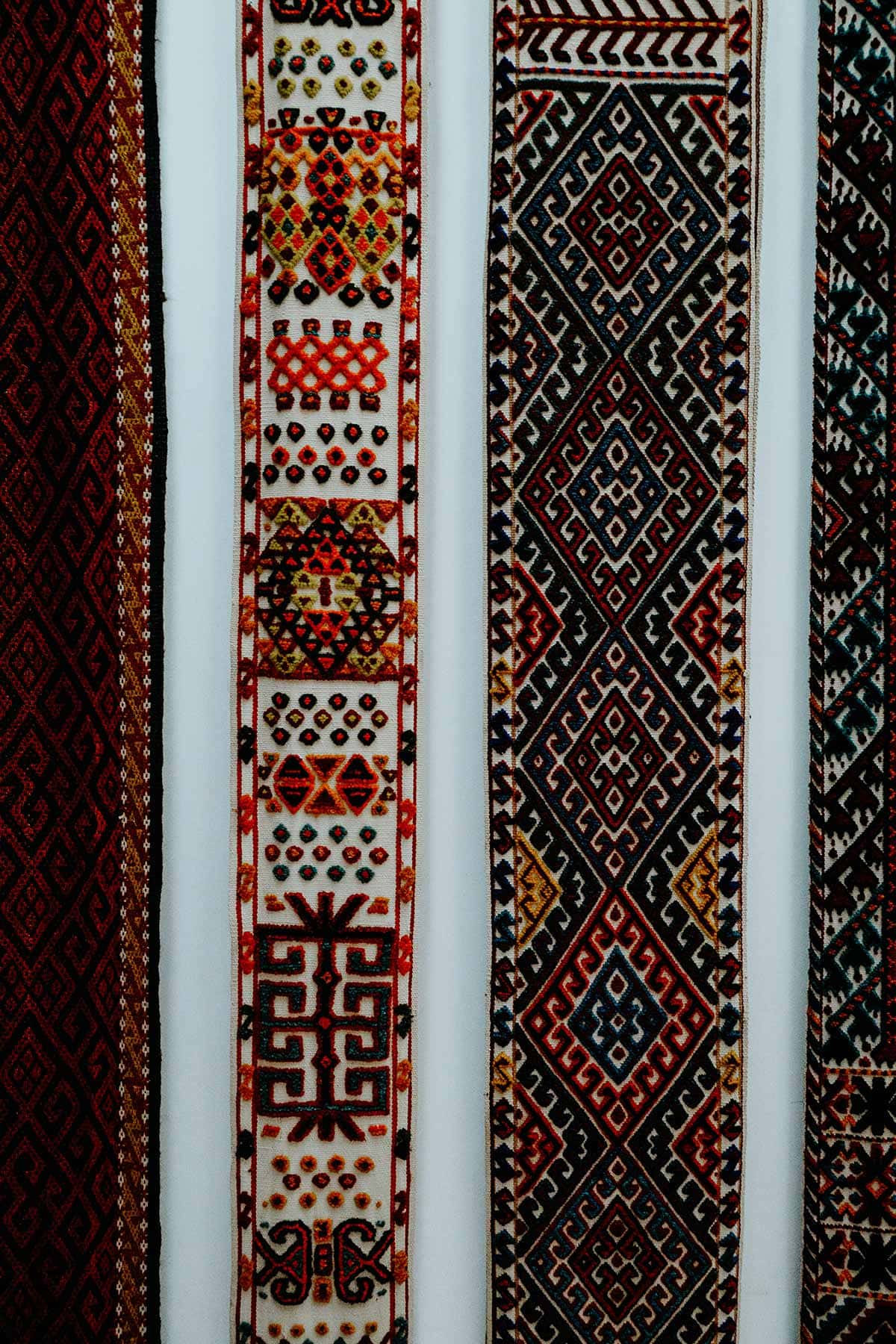
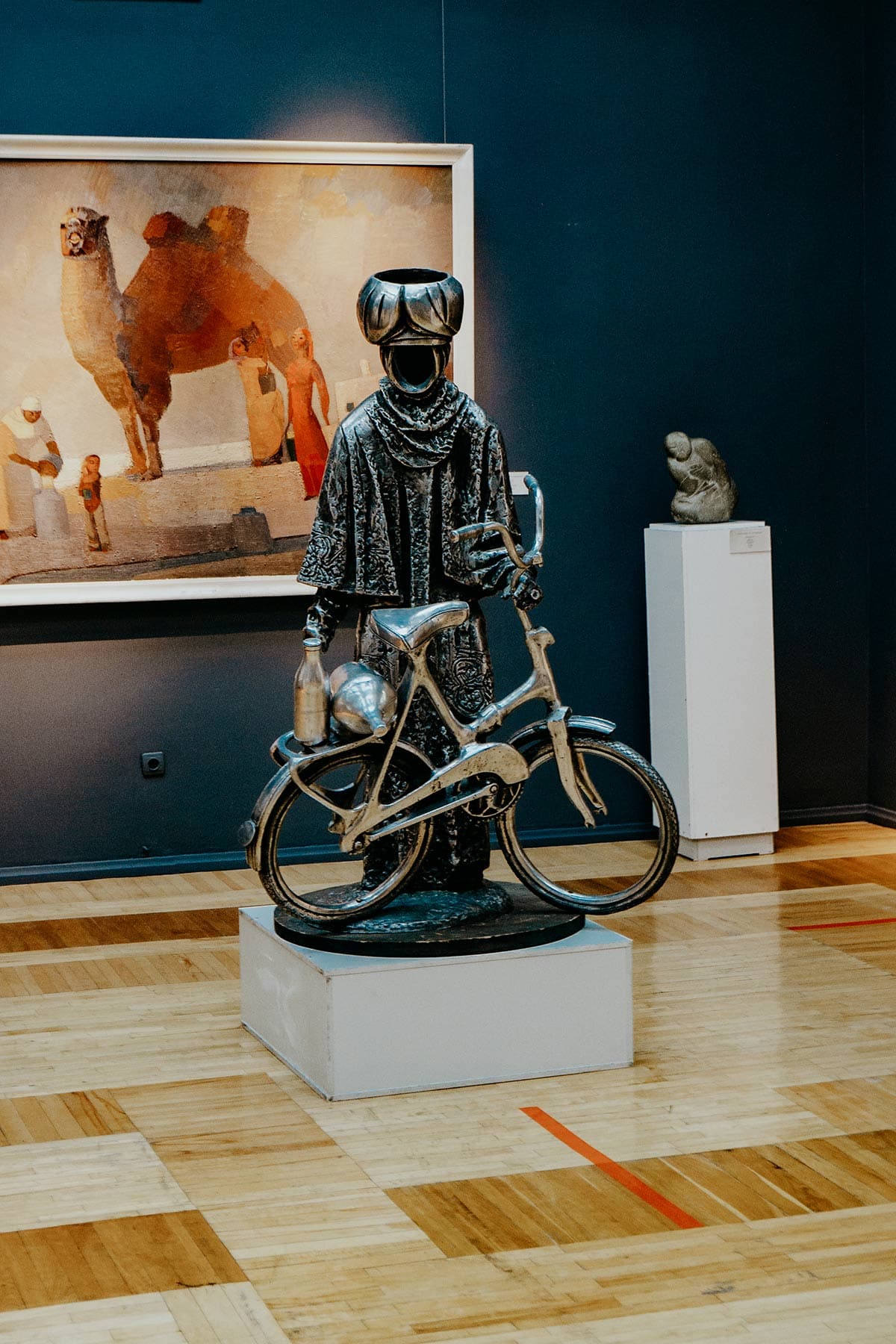
3. Take a walk around Panfilov Park
Wandering through the spruce tree-lined Panfilov Park is in many ways, one of my absolute favourite things to do in Almaty.
At the heart of downtown Almaty, a lush urban park occupies, granting its visitors the perfect place to escape the rush of the city.
Named after Almaty’s famous Panfilov heroes (who gave their lives in the defence of Moscow during World War II), the park is home to a gigantic memorial statue, showcasing 28 soldiers as well as an eternal flame.
But it’s not just the Statue of Panfilov’s 28 Guardsmen that make the Panfilov Park an excellent place to venture to for an afternoon stroll.
There are actually loads of other highlights nestled in the verdant park; the Russian Orthodox Ascension Cathedral, the Kazakh Museum Of Folk Musical Instruments, and the Military History Museum to name a few.
Also, you’ll find Bowler Coffee Roasters here, a trendy cafe with the most excellent coffee and pastries on the menu. These yummy treats are best enjoyed in hand while watching local life unfold on a relaxing walk.
If there is one thing I learned during my time in Almaty, it surely is that Kazakh people appreciate spending time in one of the many urban parks – and so did I!
Where | Panfilov Park, Almaty
4. Admire the Ascension Cathedral
Defined by its distinctive palette of bright pastel colours, the majestic Ascension Cathedral stands proud against the lush greenery of Panfilov Park.
Built entirely out of locally obtained Tien-Shan spruce trees by architect Andrei Pavlovich Zenkov in 1907, the Russian Orthodox Cathedral is considered one of the tallest wooden buildings in the world.
Also, the cathedral survived 2 massive earthquakes due to the building’s distinctive engineering and design, which is even more impressive if you note that most of the buildings in Almaty were left damaged or in ruins.
In my opinion, the Ascension Cathedral is one of the most extraordinary buildings in Almaty, and for that reason, unmissable on any list of things to do in Almaty.
Where | Ascension Cathedral, Almaty
5. Visit the Kazakh Museum of Folk Musical Instruments
Almaty has a myriad of interesting museums, and the Kazakh Museum Of Folk Musical Instruments is definitely one that is worth a visit, especially if you’re into music.
Those familiar with Kazakstan’s deep-rooted nomadic culture, realize that living on the road constantly, largely shaped their customs, religion and beliefs – this is clearly reflected in their musical expression and the instruments that they’ve mastered.
Luckily for us, these intriguing traditional music instruments are now on display.
Occupying an authentic Russian-style wooden house in the midst of Panfilov Park, the Ykhlas Museum of Kazakh Folk Instruments houses more than 1.000 items related to Kazakhstan’s captivating musical heritage.
Most notable of these items contain distinctive instruments that were used to perform Küy, a short solo composition played on traditional Kazakh instruments; the famous Dombyra, Kobyz and Syrnai to mention a few.
Additionally, the museum is home to a great collection of Turkish, Uzbek and Kyrgyz folk instruments, which are definitely worth checking out too.
Where | Kazakh Museum Of Folk Musical Instruments
Opening hours | Tuesday to Sunday 10:00 – 19:00, Monday closed
Cost | Entrance fee 350 KZT ($0,85) per person
6. Go hiking in Almaty’s untouched mountains
Encircled by the untouched mountains of the Ile-Alatau National Park, Almaty is actually a true paradise for those into hiking and off-the-beaten-path adventures.
These towering mountain ridges form an enchanting backdrop against the city’s modern skyline, and will constantly lure you towards them, day in, day out.
And though I loved the energetic contemporary ambience in Almaty, it is safe to say that the city’s real treasure lies in the sheer natural beauty surrounding it.
It’s a place of rough adventures and bare landscapes. Think snow-covered peaks, sharp mountain ridges, steep forest hills and loads of hiking trails running through them.
I’ve spent several days in the mountains of Almaty and had some of my favourite days here.
If you’re keen to escape the hustle and bustle of downtown Almaty for the day, I’ve written several guides on hiking in Almaty, so be sure to have a look there too!
+ Read more | A complete guide to Terra Forest Meadow, Almaty
+ Read more | A guide to Kok-Zhailau, Almaty (coming soon)
7. Explore Almaty’s wide variety of culinary options
After living in Almaty for over 2 months, it is safe to say that Almaty is a delight for foodies.
Whether you’re after traditional local dishes or contemporary cuisine, Almaty has no shortage of excellent dining options, serving a wide choice of distinctive cuisines.
I sampled Laghman, a local favourite at the Green Bazaar, enjoyed Georgian’s finest khachapuri and khinkali at Patsatsina and Daredzhani, ate yum spicy Indian curries at Maharaja, and grabbed my daily dose of coffee at Bowler Coffee Roasters to name but a few.
However, one thing worth mentioning is that Kazakhstan’s culture is pretty meat-oriented due to its nomadic origins, which can make it slightly challenging to find a good vegan dish. Luckily, it slowly improves, with some restaurants already having some vegan options on their menu.
For those who like to see my favourite restaurants in Almaty, I’ve written a complete guide on where to eat in Almaty (coming soon).
8. Visit the Central State Museum
Those attracted by history will be pleased to hear that The Central State Museum in Almaty is titled the largest museum in Central Asia, displaying an extensive collection of artefacts, including items used by the ancient nomadic people of Kazakhstan.
With more than 300.000 artefacts on display, a stroll through the Central State Museum is an excellent occasion to acquire knowledge on the country’s history, archaeology, culture and politics.
The museum is home to seven different exhibition halls, showcasing palaeontology and archaeology collections, traditional Kazakh artefacts, as well as items from the time when Kazakhstan became independent.
Some of my personal highlights include a replica of Kazakhstan’s National hero; the Golden Man, items related to Genghis Khan and the Silk Road, and traditional Kazakh folklore costumes.
The Central State Museum is a fascinating place from the inside and out, and in my verdict, worthy of an afternoon of your time, even if it’s only to see the museum’s grand exterior.
Where | Central State Museum, Almaty
Opening hours | Wednesday to Monday 09:00 – 17:30, Tuesday closed
Cost | Entrance fee 500 KZT ($1,25) per person
9. Relax in the Arasan Baths
Kazakh people are pretty serious when it comes to their spa day, and after looking into their wellness & spa facilities, it’s easy to see why.
Situated in the heart of Almaty, the Arasan Baths are known as one of the finest bathhouses in Central Asia, providing its visitors all the assets for a luxurious spa experience.
The Arasan Baths were built in 1980 in a modernized Soviet-style, and are home to several steam rooms, including Finnish and Russian, as well as Turkish and Moroccan style hammams.
For the traditional Russian banya experience, I would advise buying a bundle of leafy tree branches, locally known as a venik. By slapping yourself on the body with one of them, you improve blood circulation, experience deep relaxation, and several other health benefits.
I know, it sounds crazy, but it’s true!
Should you wish to opt for a more peaceful treatment, Arasan also has a number of rejuvenating massages on offer in their detox and spa facilities.
Something else that fascinated me, is that Arasan is designed in the most exquisite way. Think polished marble floors, pinewood elements, beautiful mosaic patterns, and delicate ceramic tiles.
I visited the Arasan Baths on my first day, and found it an excellent remedy to fight my jet lag!
Where | Arasan Baths, Almaty
Opening hours | Daily 07:00 – 22:40
Cost | 1.500 – 2.000 KZT ($3,60 – 4,80) per hour

10. Get some winter sports action at the Shymbulak Ski Resort
As mentioned earlier, Almaty is one of the most diverse natural environments I’ve ever visited, and when the winter season arrives, it also doubles as a brilliant winter sports destination.
Yeaaah, you’ve read that right!
Hidden between the picturesque mountains of the Ile-Alatau National Park, at only a 30-minute drive from the Almaty city centre is Shymbulak, a high-end ski resort that provides everything you need for an exciting day of winter sports action.
With several excellent slopes (the highest is 3.200 meters above sea level), the resort is welcoming skiers and snowboarders of any level. The lower section is great for beginners and those after lessons, while the upper slopes are more suited for experienced free riders and daredevils.
All necessary equipment can be rented near the entrance, or at the first summit, and it is unbelievably cheap compared to leading winter sports destinations in Europe. I rented a snowboard, boots and helmet, and paid only 7.000 KZT ($16,70) for an entire day.
When I booked my flight to Almaty in early autumn, I’d never imagined that I would strap on a pair of snowboarding boots to experience my first ever snowboarding lesson, but I’m happy I did – it was freakin awesome!
So, if you’re in Almaty during winter, I advise spending at least one day on the slopes of Shymbulak, even if you’re a beginner like me.
Where | Shymbulak Ski Resort, Almaty
Opening hours | Weekdays 10:00 – 18:00 and weekends 10:00 – 19:00 during the season.
Cost | 34.900 KZT ($83,-) for a ski pass, equipment rental and 2-hour snowboard lesson.
When | From late November to early March
11. Visit Big Almaty Lake
If you’ve been doing your research for Almaty, then I’m pretty sure you stumbled across the Big Almaty Lake plenty of times, and that’s for a good reason.
Enchanting many with its unusual teal waters, the Big Almaty Lake is an extensive natural reservoir, nestled in the hills of the Ile-Alatau mountains only just outside of Almaty.
With its awesome backdrop and encircling mountain ridges, the area around the lake is considered one of the regions most popular hiking environments.
Do, however, note that Big Almaty Lake is near the Kyrgyzstan border, so be cautious in which direction you head on your hiking. Also, take your passport just to be safe.
But Big Almaty Lake is more than just a place to seek immeasurable natural beauty and peace.
It is in fact, Almaty’s most precious natural wonder, functioning as the region’s number-one source of mineral-rich drinking water. For that reason, it is strictly forbidden to swim in the lake.
As always, respect nature and be sure to bring your belongings and garbage on the way back.
Unfortunately, when I visited Almaty in autumn-winter, the roads to Big Almaty Lake were closed, so I couldn’t make it here on this trip. But with my intention to go back to Almaty soon, it’s only a matter of time before I see this stunning lake with my own eyes.
Where | Big Almaty Lake
Opening hours | This depends on several factors, so it is best to check before your visit.
Cost | Entrance fee 200 KZT ($0,50) per person
+ Recommended tour | Check out this half-day tour of Big Almaty Lake
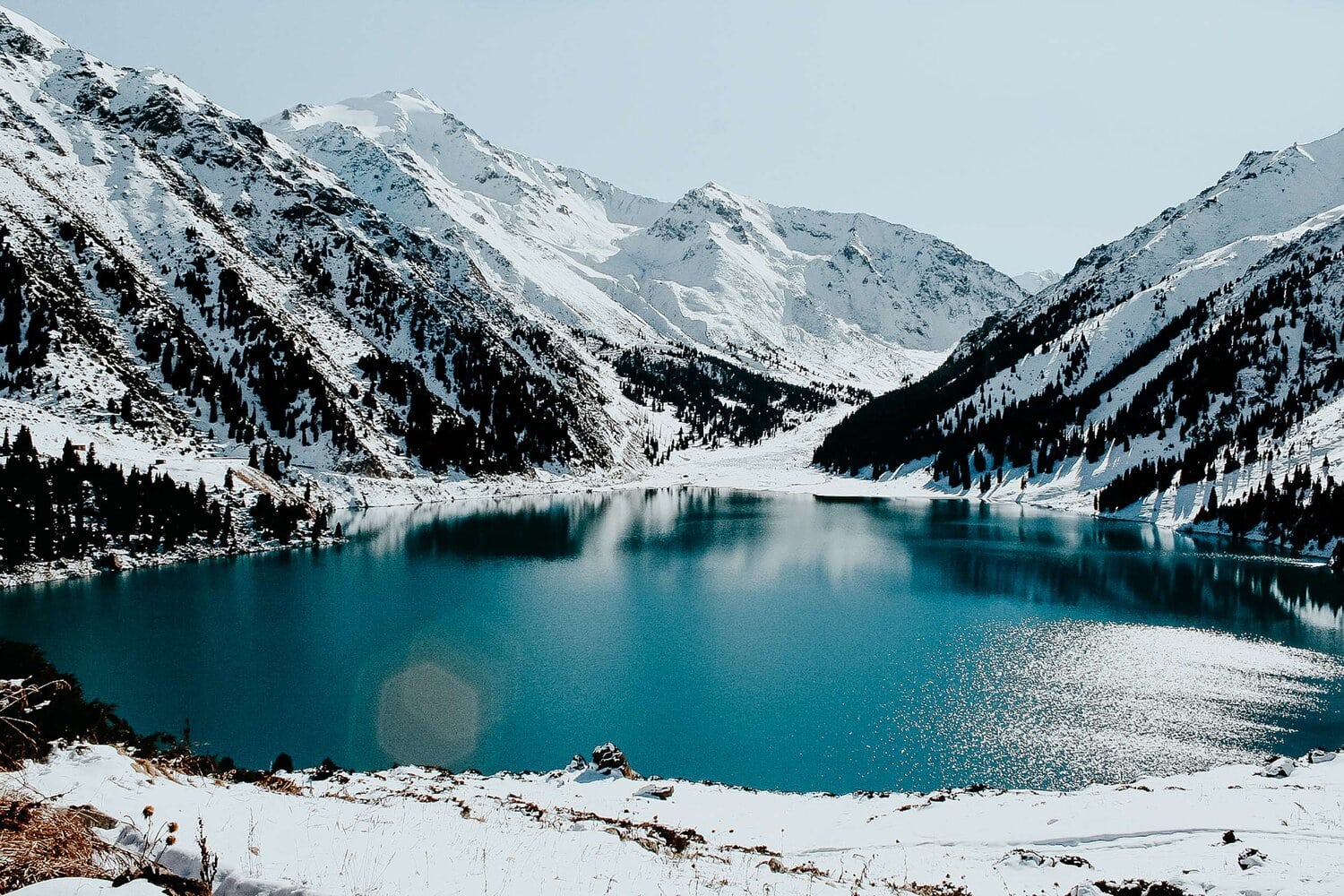
12. Explore the Altyn-Emel National park
One of my absolute favourite things to do in Almaty involves venturing to the tremendously beautiful Altyn-Emel National Park.
Situated at roughly 265 kilometres northeast of Almaty, the Altyn-Emel National Park makes for a great road trip adventure, and for that reason, it is best explored as part of a multiple-day trip.
The extensive national park is home to a broad range of distinctive landscapes, with maybe even the most appealing in all of Kazakhstan. Yes, I said it!
From otherworldly Mars-like mountain ridges to massive sand dunes to some of the countries rarest animal species, the Altyn-Emel National Park is a gateway to the diverse great outdoors of Kazakhstan.
Some of the highlights include:
The Singing Sand Dunes | The number one reason why travellers go on an adventure to the Altyn-Emel National Park, is to admire the golden sands of the towering Singing Sand dunes. And I must admit, these 150-metre high dunes, rising suddenly out of the flat steppe territory make for a postcard-perfect scenery.
The Aktau Mountains | Perched on the edge of the park, the Aktau Mountains are the main reasons why I wished to visit Altyn-Emel in the first place. These Mars-like mountains are in my opinion, the perfect example of how magical this planet we call home truly is. The distinctive ridges boast a marvellous colour palette, with deep red and white sandstone surfaces fluctuating over and over again. It is a true spectacle to behold, and wandering among them feels as though you’ve set foot on another planet.
Wildlife | With roughly 260 different animal species, the Altyn-Emel National Park is often referred to as Kazakhstan’s very own wildlife destination. During a visit, you’ll have the chance to encounter unusual animals, including Argali, lynx and dziggetai (Mongolian wild ass) just to mention a few. Also, the area is home to a series of rare and endangered birds including the Black stork and the Imperial eagle.
Where | Altyn-Emel National Park
Opening hours | All day, every day
Cost | Entrance fee 1.100 KZT ($2,65) per person
+ Recommended tour | This full-day tour of Altyn-Emel takes you to both the singing sand dunes and the Aktau Mountains – plus it includes admission and pickup service. Prices and availability here.
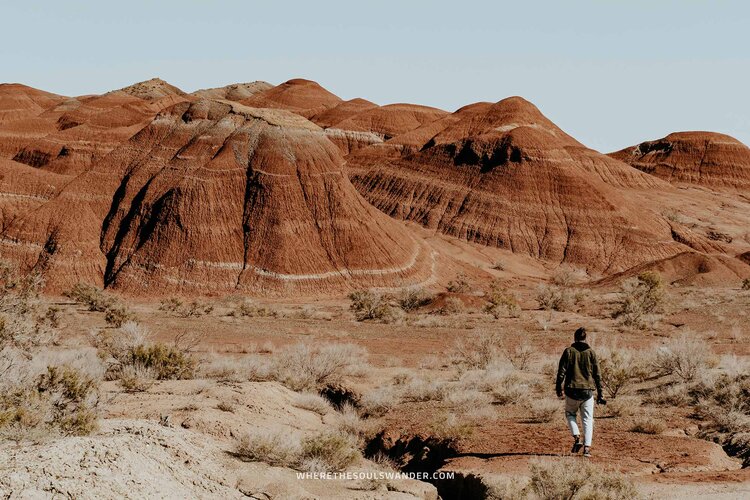
13. Behold the iconic Kaindy Lake
I remember exactly what I said to my hiking buddy Anuar, when we arrived at the enchanting Kaindy Lake after our exciting hike through the freshly fallen snow.
‘‘This is the most beautiful place I have ever seen’’.
Nestled in the Tien Shan mountains at roughly 30 minutes south of Saty lies one of Kazakhstan’s most unique natural phenomena; the fairytale-like Kaindy Lake, also known as the sunken forest.
After a powerful earthquake in the year 1911, a lush forested valley slowly transformed itself into a lake, as a result of a major landslide.
Over the following years, the valley gradually filled up with rainwater, while the trees died in the process, by the reason of their new unfavourable circumstances.
Today, the idyllic lake is an utterly surreal sight to behold, with its towering dead spruce trunks arising from the vivid turquoise waters of the lake – it is absolutely stunning.
Despite its sheer beauty, the lake sees little visitors. The reason for this is not only its remote location but also due to the fact that Kazakhstan is largely untouched by international tourism companies.
I was fortunate enough to witness Kaindy Lake in winter, but I can’t wait to go back there during spring or summer.
Where | Kaindy Lake, Saty
Cost | Entrance fee 785 KZT ($1,90) per person
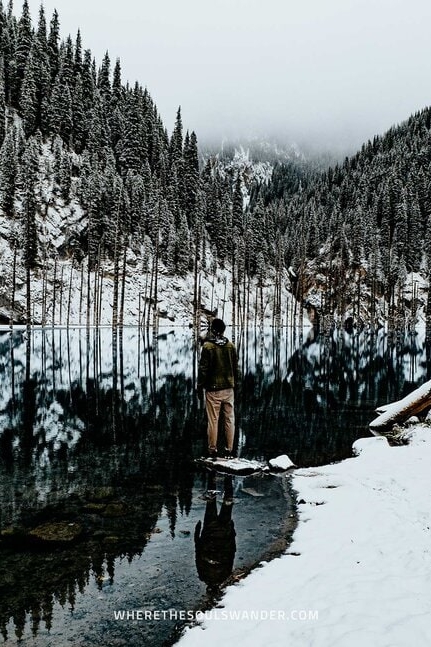
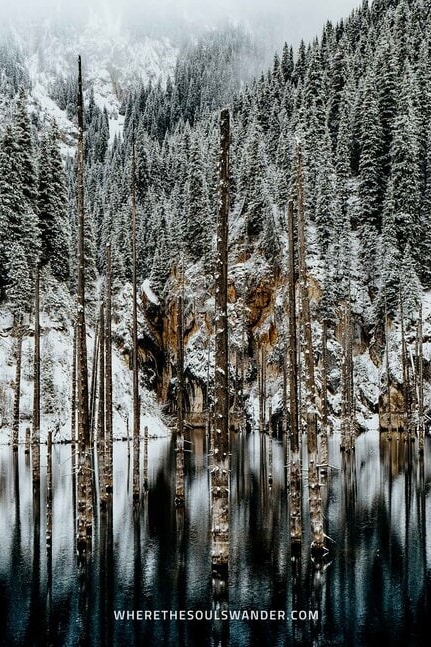
14. Explore Charyn Canyon
While the Charyn Canyon National Park is not necessarily close to Almaty, I firmly believe that it’s worth mentioning in any guide that involves the best things to do in Almaty.
Often nicknamed the Grand Canyon of Kazakhstan due to its twin-like similarities, the Charyn Canyon National Park is truly an impressive destination to explore.
From the moment you arrive, you’ll be welcomed by the most striking views of the ‘Valley of Castles’, a 150-metre deep canyon that was shaped out of the rough steppe terrain, following more than a million years of erosion.
From the parking lot, you can explore the entire left flank of the canyon walls, which I obviously advise you to do – some of the best vistas are obtained exactly here! However, note that it gets extremely steeps at times, so please be cautious.
While these views are definitely the highlight of your visit, it is also possible to roam endlessly between the deep-orange sandstone rock formations of the canyon. A dusty path takes you along several eye-catching rock formations, before ending up at a valley next to the idyllic Charyn River.
Due to its remote location at roughly 200 kilometres east of Almaty, Charyn Canyon is best explored on a multiple-day trip. By doing so, you can easily combine it with other destinations of Almaty’s famous Golden Triangle, such as Altyn-Emel National Park, Kolsai Lakes and Kaindy Lake.
Also, don’t forget to bring lunch, snacks and sufficient amounts of drinking water, Charyn Canyon can be significantly warm during the peak summer months.
Where | Charyn Canyon
Opening hours | All day, every day
Cost | Entrance fee 800 KZT ($1,90) per person
+ Read more | My in-depth guide to Charyn Canyon
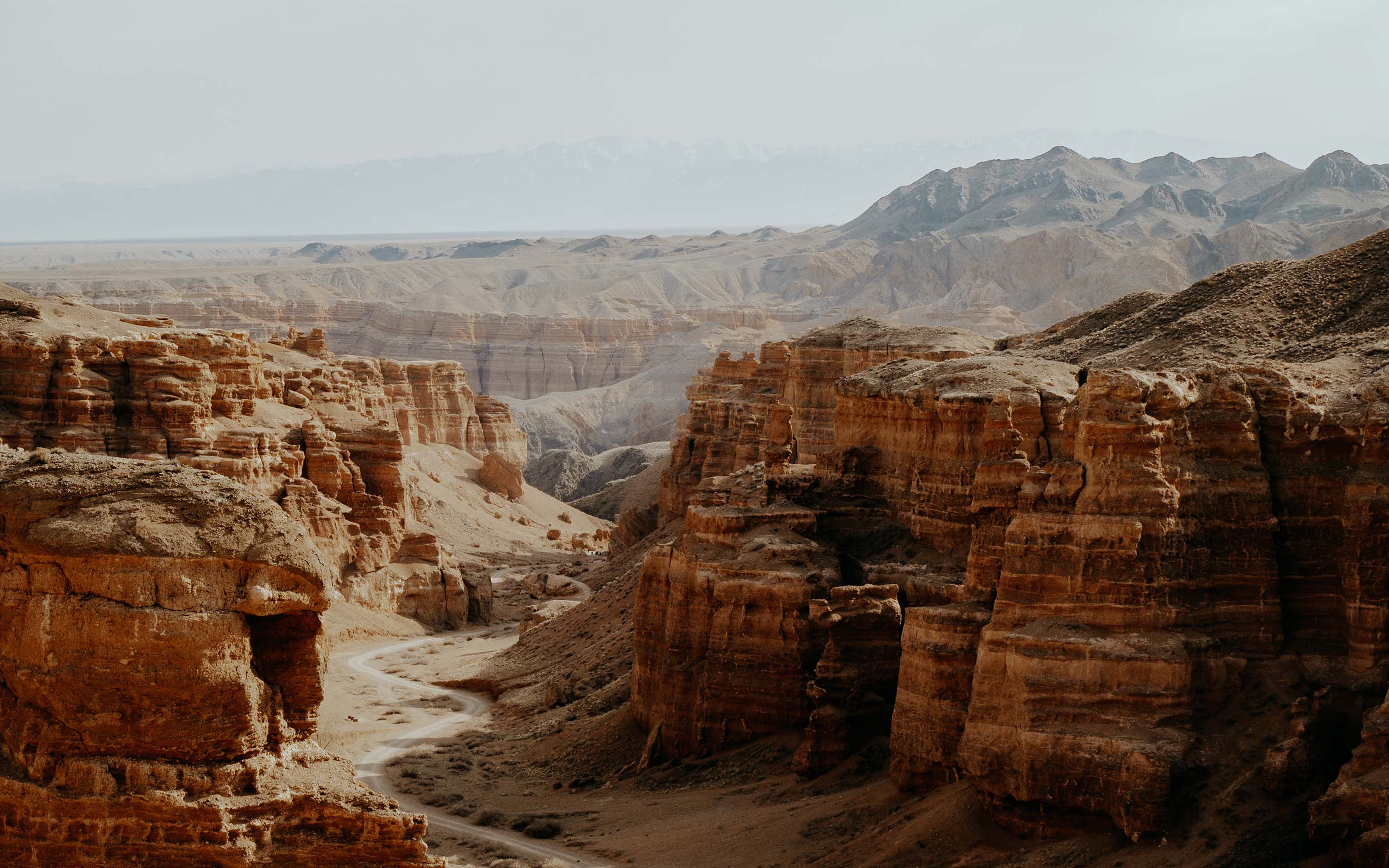
15. Admire the incredible Kolsai Lakes
Locally known as ‘the pearl of the northern Tien Shan’, the Kolsai lakes are an impressive series of three mirror-like mountain lakes.
Accompanied by robust pine trees, dense meadows and snowy mountain peaks, these crystal clear lakes often reflect the beauty that surrounds them, making it a stunning scene to take in.
For those after adventure, there is a trail that takes you all the way to the second and third lakes. Though I didn’t follow the trail myself, I’ve read that it’s pretty awesome.
What I did do, and advise you to do too, is take a walk around the first lake, which grants several excellent viewpoints, especially on the significantly higher right side of the trail.
And while the left side has a trail too, I wouldn’t advise you to walk it, this side is densely forested and therefore quite a challenge. If you do so, please be careful.
As with many tourist attractions in Kazakhstan, the Kolsai Lakes are truly a place of tranquillity, and when visiting during the week, you’ll most likely end up there completely alone.
If you’re thinking of visiting the Kolsai Lakes as part of an organised tour, the chances are high that it will be during the weekend. At first, this option sounds great, but it often means that you have limited time and share the lake with large groups of local tourists.
Where | Kolsai Lakes, Saty
Cost | Entrance fee 778 KZT ($1,85) per person
Things to do in Almaty | The essentials
The best time to visit Almaty
Almaty is an appealing destination at any given time of the year, and when you plan to visit, depends largely on your travel purpose.
For explorations around town, hiking in the surrounding mountains, and day trips to some of the region’s untouched gems, a trip in early May to begin November will be your best option. During this period, great weather conditions occur, while Almaty’s nature reveals itself in the finest colours possible.
Then there are the winter months of early December to February, which grant the perfect circumstances for adventuresome winter sports activities, such as skiing, snowboarding and ice skating. Though Winter in Almaty is mostly fun, be prepared, they can be pretty harsh too.
I visited Almaty from early September to late November and enjoyed the best of both worlds, and I can’t wait to explore the region again in the bloom of spring.
My favourite tours & activities in and around Almaty
If you’re keen to join an organized tour to discover Almaty and its stunning surrounds, here are some of the best-rated tours of the region.
How to get to Almaty
By plane | The Almaty International Airport, situated about 15 kilometres north of the city centre, hosts both Domestic and international flights, meaning you most likely enter Kazakhstan here.
For flights to Almaty, I would recommend Skyscanner. Not only is their website easy to use, but they also offer a large variety of airlines – plus the possibility to find good rates.
From the airport, it’s pretty straightforward to get to the city centre, with local buses running every 15 minutes between 06:00 and 21:00.
But to me, the easiest option is to request a taxi with the Yandex app. From the airport to the city centre will cost between 1.500 and 3.000 KZT ( $3,60 – 7,20) depending on the season.
By car | With its pure untouched nature, Kazakhstan is the perfect destination for an adventurous road trip.
And with most of the greatest things to see and do scattered throughout the vast scenic landscape, renting a car is actually the best way to fully experience Kazakhstan.
Though I was fortunate enough to move around with friends who live in Kazakhstan, I would advise looking into the many car rental options available.
Exploring Kazakhstan on your own terms is in many ways a big, big win. Not only is it significantly easier to venture to the country’s hidden gems, but it’s also time-saving and more comfortable.
For car rental in Almaty, Kazakhstan, I’d highly recommend searching DiscoverCars. They offer excellent service, additional insurance, and a broad selection of cars at an affordable price.
More information and availability here.
By train | Though it’s possible to travel through Kazakhstan by train, I wouldn’t advise it, especially if you have limited time in the country.
Not only is it slow and time-consuming, but train travel also comes at roughly the same price as the way more convenient domestic flights. These flights operate between all the major cities in Kazakhstan.
However, if you insist on experiencing a train journey in Kazakhstan, this website is by far your best bet to arrange your railway adventure.
Stay safe in Kazakhstan | Travel Insurance
Though Kazakhstan is safe for travellers, I always strive to sort out my travel insurance before arriving in a foreign country, and I highly advise anyone else to do the same.
Where we prefer that everything goes smoothly during our travels, something unfortunate can happen at any moment, whether it’s an injury or an accident on the road. When that happens, it is better to be safe than sorry.
Heymondo | Whether you’re going on a 3-week backpacking trip, or planning a long stay somewhere abroad, Heymondo has excellent insurance options either way – plus full COVID-19 coverage and a handy app with 24-hour medical assistance. Readers of WTSW receive 5% off any insurance policy, more information here.
Cheers!
I’ve been on this travel blogging journey since 2019.
If you appreciate what I do here, these are some ways you can support me.